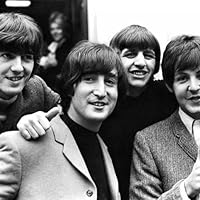
In Long and Winding Roads: The Evolving Artistry of the Beatles, Kenneth Womack brings the band's story vividly to life—from their salad days as a Liverpool Skiffle group and their apprenticeship in the nightclubs and mean streets of Hamburg through their early triumphs at the legendary Cavern Club and the massive onslaught of Beatlemania itself. By mapping the group's development as an artistic fusion, Womack traces the Beatles' creative arc from their first, primitive recordings through Abbey Road and the twilight of their career.
In order to communicate the nature and power of the band's remarkable achievement, Womack examines the Beatles' body of work as an evolving art object. He investigates the origins and creation of the group's compositions, as well as the songwriting and recording practices that brought them to fruition. Womack's analysis of the Beatles' albums transports readers on a journey through the Beatles' heyday as recording artists between 1962 and 1969, when the band enjoyed a staggering musical and lyrical leap that took them from their first album Please Please Me, which they recorded in the space of a single day, to Sgt. Pepper's Lonely Hearts Club Band, the White Album, and Abbey Road—albums that collectively required literally thousands of hours to produce. In addition to considering the band's increasing self-consciousness about the overall production, design, and presentation of their art, Womack explores the Beatles' albums as a collection of musical and lyrical impressions that finds them working towards a sense of aesthetic unity. In Long and Winding Roads, Womack reveals the ways in which the Beatles gave life to a musical synthesis that would change the world.
Kenneth Womack is a world-renowned authority on the Beatles and their enduring cultural influence. His latest book project involves a two-volume, full-length biography devoted to famed Beatles producer Sir George Martin.
Womack's Beatles-related books include Long and Winding Roads: The Evolving Artistry of the Beatles (2007), The Cambridge Companion to the Beatles (2009), and The Beatles Encyclopedia: Everything Fab Four (2014).
Womack is also the author of four novels, including John Doe No. 2 and the Dreamland Motel (2010), The Restaurant at the End of the World (2012), Playing the Angel (2013), and I Am Lemonade Lucy! (2019).
"We can comprehend the nature of [Lennon & McCartney's] greatness by recognizing the comparatively subtle difference in their roles in the fabric of the Beatles [.] On the one hand, Lennon was a pop-music visionary, a songwriter with the innate musical talent to breathe reality into his artistic revelations. [.] On the other hand, McCartney was a pop-music virtuoso, a timeless composer who concocted musical and lyrical images with exquisite ease. [.] John and Paul's partnership wasn't a marriage of opposites - it was a marriage made in heaven. For the Beatles, it made all the difference." -- on page 304
Author Womack was previously unknown to me - this book states he is/was a professor at Penn State University - but since the Long and Winding Roads publication in 2007 he has written at least six or seven more Beatle-related books. On the basis of this introductory volume alone I am now keen to search for those subsequent works. While he begins with biographical data on the group that will be familiar to most fans, the actual narrative focus is much more on the songwriting and composition aspect of their tunes. (I don't think any of the 30+ Beatles books I've read have done a better job explaining and highlighting their expertise at crafting the 'middle-eight' section that was a signature in many of their songs. Examples include Paul warbling "When I'm home . . . " in 'A Hard Day's Night' or the backwards-tracked piano solo from 'In My Life.') While the Lennon/McCartney duo certainly and understandably gets the most attention and discussion, as well as producer (and arguable 'fifth Beatle' status-holder) George Martin's indispensable skill, the author is also fair to point out George Harrison's eventual ascension to becoming a first-rate songwriter and even Ringo Starr's occasional contributions. It is sort of amazing that these largely self-taught young men began with simple but strong love songs like 'P.S. I Love You' and 'Please Please Me' in 1963 and graduated to complex work such as the entire side B 'medley' of sorts on the Abbey Road album less than seven years later. While the author's 'nostalgia' focus goes a little overboard in the concluding chapters, this was otherwise another fine addition to the endless bibliography on a certain rock/pop quartet.
This book goes over pretty much the same ground as Can't Buy Me Love -- some bio, with a lot of song analysis. If you have a choice between the two, go with Can't Buy Me Love: it considers external cultural factors a lot more (and better), and some of the analysis for Long and Winding Roads goes overboard.
Plus he uses the word 'nostalgia' roughly 4,321,409 times by my count. The book is fine, and if it's all you have available I would say read it ... but if you can read Can't Buy Me Love and only have time for one, go for that one.
Completists might want to read both in order to get multiple interpretations on some songs.
I give this book a 4 because I enjoy reading anything regarding the Beatles and their music. There were some interesting tidbits about how the songs came into being and evolved but perhaps a little too much "Inside Baseball" information like what kind of guitar John played on "I Am the Walrus" or what speakers the engineer used for "Let It Be". Sometimes the book read more like a college thesis on the philosophy of the Beatles' music. Overall though, I enjoyed it and would recommend it to those who are more than just casual Beatles fans.
"Long and Winding Roads" is a self-consciously literary attempt to grapple with the self-consciously literary corpus of one "The Beatles." Though it spends a requisite amount of time on the band's origins, and dips a toe in the various manias, controversies, etc that encircled the group over the course of their (shockingly brief) reign, the thing that Kenneth Womack finds most interesting here is the Text, dammit. We love these guys and their funny little jokes and stuff but let's be real-- it's the Beatles' studio albums and singles that made them truly great. This is a point that's worth repeating because... well one still encounters misbegotten souls who think the Beatles are all hype, like some kind of fad. Some of us even have idiotic co-workers who refer to them as the "first boy band."
Paul McCartney said it best on his tragically underrated debut with Wings: some people never know. I don't think "Long and Winding Roads" is going to convince these... degenerates... of the band's brilliance. But for those of us who do thrill to the pleasures of, oh, "The Inner Light," Womack's book is fun, thoughtful, and intriguing. Much of it seems to exist in conversation with Ian MacDonald's "Revolution in the Head," which also used close analysis of individual songs to make a broader point about the Beatles' musical and cultural impact. Womack is not as arresting a stylist as MacDonald, and is a whole lot less mean (especially to George... hilariously drubbed just about every time one of his compositions comes up in RITH), but I think his argument about the band is more convincing. If memory serves, the "revolution" MacDonald spoke of was one of maximized personal freedom-- of everlasting fun-- at the expense of community norms, and was epitomized in the band's psychedelic period. A cool, cynical take, for sure, and it doesn't seem wrong at all... until MacDonald basically writes off everything post-"I Am the Walrus" as self-indulgent, directionless nonsense.
Bish bosh, says Womack. The stuff after Magical Mystery Tour, particularly the White Album, is not only the best stuff the band ever did... it's also the most conceptually and philosophically rich. The motifs that Womack is interested in are not simply "are they doing drugs or not," but ideas about love, about personal identity, and especially, about nostalgia. It's the Beatles' feverish reckoning with the past-- from psych dreamscapes like "Strawberry Fields Forever" to ridiculous pastiches like "Honey Pie"; from deeply personal memories like "Julia" to highly stylized "ados" to a life lived looking backward, like the second side Abbey Road medley-- that guides "Long and Winding Roads," and had me re-examining all kinds of ideas and opinions I have about the band.
Yeah sure some of it maybe is a teensy bit labored over (the stuff about "stealing" versus "robbing" in "She Came in Through the Bathroom Window") but come on, it's the freaking Beatles man, who doesn't like reading about the freaking Beatles man.
This is, I think, the authors first of a number of Beatles-linked books. It looks at their career from the perspective of their creative/artistic development.
Any biographical information is within this context, so it's not a book for someone looking to find out about the Beatles story.
There is a large element of post-event analysis which provides links and themes which may have been far from the thoughts of the four Beatles but it does nevertheless hang together pretty well.
Much like the book "A Day in the Life," this one details all the songs, recording sessions and goings-on behind the scenes of the Beatles' studio career. Unlike "A Day in the Life," this book was able to make use of the Anthology interviews, and other tidbits that have surfaced the past 12 years. It is very interesting and doesn't fail to hold your attention throughout, all while reinforcing many things you already know about the Beatles' recording sessions, as well as giving you new insight into many songs. Nostalgia and loneliness are two themes the author returns to more than a few times when analyzing the Beatles' music.
Much like Abe Lincoln material, Beatle books are ubiquitous and a dime a dozen. This one deserves to be on your bookshelf with a few select others. Besides, the picture on the front cover is cool.
I'm so sick of authors who think they know everything about The Beatles. Some information I can believe, others it's like how do you know? You weren't there.
I think this book gives a detailed description of the Beatles lives and song writing. You see what brought them together and what brought them apart. So far I think this is a good read