

What do you think?

Fronteras del tiempo
La frontera de cristal
Carlos Fuentes examina la separación entre México y Estados Unidos con el cristal de la discriminación, el racismo, la violencia, pero también la fuerza de la vida mexicana, que parece sobrevivir a todas las agresiones.
En La frontera de cristal, Carlos Fuentes es el mismo narrador de sus mejores libros: agresivo, vital, poderoso. Encuentra todos los ángulos posibles en una historia, con una variante insospechada: la comicidad.
Esta es una novela relatada a través de nueve cuentos que transcurren, de un lado y del otro, en las proximidades de la raya fronteriza entre México y Estados Unidos. Más allá de lo inevitable, que suele presentarse en forma de discriminación, violencia y desamparo, los personajes que habitan estas páginas encuentran material para los sueños y energía para el humor, así sea tan sólo porque saben que "la única frontera real está entre el cuerpo y el alma".
Carlos Fuentes reproduce la separación que se ha dado entre ambos países a lo largo de 200 años y la examina con el cristal de la discriminación, el racismo, la violencia, pero también la fuerza de la vida mexicana, que parece sobrevivir a todas las agresiones.
En La frontera de cristal, Carlos Fuentes es el mismo narrador de sus mejores libros: agresivo, vital, poderoso. Encuentra todos los ángulos posibles en una historia, con una variante insospechada: la comicidad.
Esta es una novela relatada a través de nueve cuentos que transcurren, de un lado y del otro, en las proximidades de la raya fronteriza entre México y Estados Unidos. Más allá de lo inevitable, que suele presentarse en forma de discriminación, violencia y desamparo, los personajes que habitan estas páginas encuentran material para los sueños y energía para el humor, así sea tan sólo porque saben que "la única frontera real está entre el cuerpo y el alma".
Carlos Fuentes reproduce la separación que se ha dado entre ambos países a lo largo de 200 años y la examina con el cristal de la discriminación, el racismo, la violencia, pero también la fuerza de la vida mexicana, que parece sobrevivir a todas las agresiones.
352 pages, Mass Market Paperback
First published January 1, 1995
About the author
Carlos Fuentes
403 books1,828 followersCarlos Fuentes Macías was a Mexican writer and one of the best-known novelists and essayists of the 20th century in the Spanish-speaking world. Fuentes influenced contemporary Latin American literature, and his works have been widely translated into English and other languages.
Fuentes was born in Panama City, Panama; his parents were Mexican. Due to his father being a diplomat, during his childhood he lived in Montevideo, Rio de Janeiro, Washington, Santiago, and Buenos Aires. In his adolescence, he returned to Mexico, where he lived until 1965. He was married to film star Rita Macedo from 1959 till 1973, although he was an habitual philanderer and allegedly, his affairs - which he claimed include film actresses such as Jeanne Moreau and Jean Seberg - brought her to despair. The couple ended their relationship amid scandal when Fuentes eloped with a very pregnant and then-unknown journalist named Silvia Lemus. They were eventually married.
Following in the footsteps of his parents, he also became a diplomat in 1965 and served in London, Paris (as ambassador), and other capitals. In 1978 he resigned as ambassador to France in protest over the appointment of Gustavo Diaz Ordaz, former president of Mexico, as ambassador to Spain. He also taught courses at Brown, Princeton, Harvard, Penn, George Mason, Columbia and Cambridge.
---
کارلوس فوئنتس در ۱۱ نوامبر ۱۹۲۸ در پاناماسیتی به دنیا آمد. مادرش برتا ماسیاس ریواس و پدرش رافائل فوئنتس بوئهتیگر است. پدر وی از دیپلماتهای مشهور مکزیک است. وی سفیر مکزیک در هلند، پاناما، پرتغال و ایتالیا بود.
دوران کودکیاش در واشنتگتن دی.سی. و سانتیاگوی شیلی گذشت. فوئنتس در دانشگاه مکزیک و ژنو در رشتهٔ حقوق تحصیل کرد. او به زبانهای انگلیسی و فرانسه تسلط کامل دارد.
آثار
* مرگ آرتمیوکروز، ۱۹۶۲
* آئورا، ۱۹۶۲
* زمین ما، ۱۹۷۵
* گرینگوی پیر، ۱۹۸۵
* ملکهٔ عروسکها
* آسوده خاصر، ترجمهٔ محمدامین لاهیجی.
* مرگ آرتمیو کروز، ترجمهٔ مهدی سحابی.
* آئورا، ترجمهٔ عبدالله کوثری.
* سرهیدا.
* خودم با دیگران (به تازگی با نام از چشم فوئنتس) ترجمهٔ عبدالله کوثری.
---
Carlos Fuentes Macías fue un escritor mexicano y uno de los novelistas y ensayistas más conocidos en el mundo de habla española. Fuentes influyó en la literatura contemporánea de América Latina, y sus obras han sido ampliamente traducidas al inglés y otros idiomas.
Fuentes nació en la ciudad de Panamá, Panamá, sus padres eran mexicanos. Debido a su padre era un diplomático, durante su infancia vivió en Montevideo, Río de Janeiro, Washington, Santiago y Buenos Aires. En su adolescencia regresó a México, donde vivió hasta 1965. Estuvo casado con la estrella de cine Rita Macedo de 1959 hasta 1973, aunque era un mujeriego habitual y, al parecer, sus asuntos - que se ha cobrado incluyen actrices como Jeanne Moreau y Jean Seberg, su llevados a la desesperación. La pareja terminó su relación en medio del escándalo, cuando Fuentes se fugó con un periodista muy embarazada y entonces desconocido de nombre Silvia Lemus. Se casaron finalmente.
Siguiendo los pasos de sus padres, también se convirtió en un diplomático en 1965 y sirvió en Londres, París (como embajador), y otras capitales. En 1978 renunció al cargo de embajador en Francia en protesta por el nombramiento de Gustavo Díaz Ordaz, ex presidente de México, como embajador en España.
Fuentes was born in Panama City, Panama; his parents were Mexican. Due to his father being a diplomat, during his childhood he lived in Montevideo, Rio de Janeiro, Washington, Santiago, and Buenos Aires. In his adolescence, he returned to Mexico, where he lived until 1965. He was married to film star Rita Macedo from 1959 till 1973, although he was an habitual philanderer and allegedly, his affairs - which he claimed include film actresses such as Jeanne Moreau and Jean Seberg - brought her to despair. The couple ended their relationship amid scandal when Fuentes eloped with a very pregnant and then-unknown journalist named Silvia Lemus. They were eventually married.
Following in the footsteps of his parents, he also became a diplomat in 1965 and served in London, Paris (as ambassador), and other capitals. In 1978 he resigned as ambassador to France in protest over the appointment of Gustavo Diaz Ordaz, former president of Mexico, as ambassador to Spain. He also taught courses at Brown, Princeton, Harvard, Penn, George Mason, Columbia and Cambridge.
---
کارلوس فوئنتس در ۱۱ نوامبر ۱۹۲۸ در پاناماسیتی به دنیا آمد. مادرش برتا ماسیاس ریواس و پدرش رافائل فوئنتس بوئهتیگر است. پدر وی از دیپلماتهای مشهور مکزیک است. وی سفیر مکزیک در هلند، پاناما، پرتغال و ایتالیا بود.
دوران کودکیاش در واشنتگتن دی.سی. و سانتیاگوی شیلی گذشت. فوئنتس در دانشگاه مکزیک و ژنو در رشتهٔ حقوق تحصیل کرد. او به زبانهای انگلیسی و فرانسه تسلط کامل دارد.
آثار
* مرگ آرتمیوکروز، ۱۹۶۲
* آئورا، ۱۹۶۲
* زمین ما، ۱۹۷۵
* گرینگوی پیر، ۱۹۸۵
* ملکهٔ عروسکها
* آسوده خاصر، ترجمهٔ محمدامین لاهیجی.
* مرگ آرتمیو کروز، ترجمهٔ مهدی سحابی.
* آئورا، ترجمهٔ عبدالله کوثری.
* سرهیدا.
* خودم با دیگران (به تازگی با نام از چشم فوئنتس) ترجمهٔ عبدالله کوثری.
---
Carlos Fuentes Macías fue un escritor mexicano y uno de los novelistas y ensayistas más conocidos en el mundo de habla española. Fuentes influyó en la literatura contemporánea de América Latina, y sus obras han sido ampliamente traducidas al inglés y otros idiomas.
Fuentes nació en la ciudad de Panamá, Panamá, sus padres eran mexicanos. Debido a su padre era un diplomático, durante su infancia vivió en Montevideo, Río de Janeiro, Washington, Santiago y Buenos Aires. En su adolescencia regresó a México, donde vivió hasta 1965. Estuvo casado con la estrella de cine Rita Macedo de 1959 hasta 1973, aunque era un mujeriego habitual y, al parecer, sus asuntos - que se ha cobrado incluyen actrices como Jeanne Moreau y Jean Seberg, su llevados a la desesperación. La pareja terminó su relación en medio del escándalo, cuando Fuentes se fugó con un periodista muy embarazada y entonces desconocido de nombre Silvia Lemus. Se casaron finalmente.
Siguiendo los pasos de sus padres, también se convirtió en un diplomático en 1965 y sirvió en Londres, París (como embajador), y otras capitales. En 1978 renunció al cargo de embajador en Francia en protesta por el nombramiento de Gustavo Díaz Ordaz, ex presidente de México, como embajador en España.
Ratings & Reviews
Friends & Following
Create a free account to discover what your friends think of this book!
Community Reviews
Displaying 1 - 30 of 142 reviews

April 25, 2025
The Crystal Frontier is a collection of unusual stories… Some of them are full of jeering overtones and some are filled with sadness…
A Capital Girl is about getting married… A tale with a twist…
Pain is a story of unhappy homosexual love of two medical students.
Spoils is about a Mexican chef on a trip in the States… It is a satire of cooking, eating, loving and consuming…
The Line of Oblivion is written in Samuel Beckett’s style…
Malintzin of the Maquilas is a story of factory girls and their problems.
Las Amigas is about troubled relationships of an old hag and her Mexican maid.
In The Crystal Frontier Mexican men go to the States to clean offices on the weekend…
The Bet is a tourist trip to Cuernavaca, the town made famous by Malcolm Lowry… And a bit more… Some bets are fatal.
Río Grande, Río Bravo isn’t just a river… It is also a borderline…
Wherever one is one wishes to find a place in the sun.
A Capital Girl is about getting married… A tale with a twist…
That very night the young lady from the capital and the provincial, the goddaughter and the son, could go out dancing on the other side of the border, in the United States, half an hour away from here, dance, get to know each other, learn about each other. Of course. What could be more logical?
Pain is a story of unhappy homosexual love of two medical students.
Spoils is about a Mexican chef on a trip in the States… It is a satire of cooking, eating, loving and consuming…
He spent weeks sitting outside the places that most tested his patience and good taste – McDonald’s, Kentucky Fried Chicken, Pizza Hut, and, abomination of abominations, Taco Bell – so he could count the fat people who came to and left from those cathedrals of bad eating.
The Line of Oblivion is written in Samuel Beckett’s style…
I’ll see the void. Now I realize I can’t fall into the abyss. I’m already there. That’s a relief. Also a horror.
Malintzin of the Maquilas is a story of factory girls and their problems.
Las Amigas is about troubled relationships of an old hag and her Mexican maid.
In The Crystal Frontier Mexican men go to the States to clean offices on the weekend…
On Saturday morning at six, it was most certainly possible to feel, smell, touch, but not yet see the city. The fog, laden with ice, made it invisible, but the smell of Manhattan entered Lisandro Chávez through his nose and mouth like a steel dagger: it was smoke, acrid, acid smoke from sewers and subways, from enormous twelve-wheel trailers with exhaust pipes and grills at the level of the hard, shiny streets, like patent-leather floors.
The Bet is a tourist trip to Cuernavaca, the town made famous by Malcolm Lowry… And a bit more… Some bets are fatal.
Río Grande, Río Bravo isn’t just a river… It is also a borderline…
They all raise their arms, spread them in a cross, clench their fists, silently offer their labor on the Mexican side of the river, hoping someone takes note of them, saves them, pays them heed. They prefer to risk being caught than not to advertise themselves, declare their presence: Here we are. We want work.
Wherever one is one wishes to find a place in the sun.

July 16, 2015
[Revised, picture and shelves added 11/15/22]
The master Mexican storyteller has assembled stories of lives on the Tex-Mex border. The stories are loosely interconnected in that a few characters appear in more than one story. In addition, many of the characters have some connection to a Mexican “Master of the Universe” - a multimillionaire mover and shaker who can make and break lives.
We learn a lot about the politics, economics and sociology of the US-Mexico interrelationship. On occasion though, it gets heavy-handed and the story suffers from a kind of “…before we go on, I’m going to explain the bracero program.”
But we get some good stories. The Mexican Donald Trump character entices a beautiful woman to marry his socially inept son, whom he genuinely loves, and yet he thinks nothing of keeping the woman for his mistress as well. Obviously the rules don’t apply to him. (Any of them.)
One poignant moment that sticks with me is when a Mexican window washer flirts through the glass with a beautiful gringa lawyer and she writes her name in lipstick on the window: “Audrey.” He writes “Mexican” and moves to another window.
There are stories about the perils of the border crossing, the life of women in the maquiladoras (border factories), and the special burden of being Mexican American if you are a US border guard: “…gonna let all your friends and relatives slip through, aren’t you?”
A young gay Mexican man lives with a politically conservative American family while he’s a student at Cornell. The mother of the family never refers to their guest as Mexican “…because she is afraid of offending him.” The young man has a heartbreaking relationship with an American man.
Good stories by a prolific writer. Fuentes (1928-2012) wrote two dozen novels, a dozen collections of short stories, and plays and screenplays. Most of his work has been translated into English. His best-known novels in English are The Death of Artemio Cruz and The Old Gringo. The Old Gringo was made into a movie in 1989 (Jane Fonda, Gregory Peck).
Here are links to reviews of other books I’ve read by Carlos Fuentes:
The Years With Laura Diaz
The Old Gringo
The Death of Artemio Cruz
Happy Families (short stories)
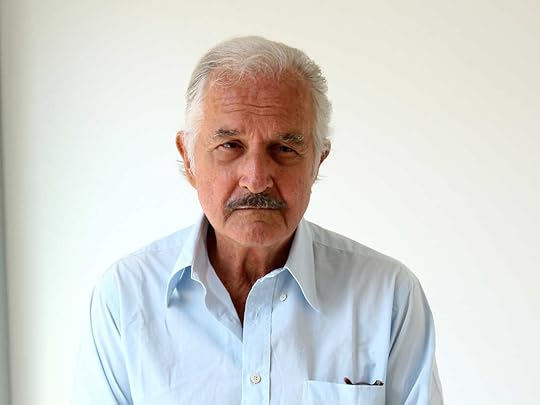
Photo of the author from npr.org
The master Mexican storyteller has assembled stories of lives on the Tex-Mex border. The stories are loosely interconnected in that a few characters appear in more than one story. In addition, many of the characters have some connection to a Mexican “Master of the Universe” - a multimillionaire mover and shaker who can make and break lives.
We learn a lot about the politics, economics and sociology of the US-Mexico interrelationship. On occasion though, it gets heavy-handed and the story suffers from a kind of “…before we go on, I’m going to explain the bracero program.”
But we get some good stories. The Mexican Donald Trump character entices a beautiful woman to marry his socially inept son, whom he genuinely loves, and yet he thinks nothing of keeping the woman for his mistress as well. Obviously the rules don’t apply to him. (Any of them.)
One poignant moment that sticks with me is when a Mexican window washer flirts through the glass with a beautiful gringa lawyer and she writes her name in lipstick on the window: “Audrey.” He writes “Mexican” and moves to another window.
There are stories about the perils of the border crossing, the life of women in the maquiladoras (border factories), and the special burden of being Mexican American if you are a US border guard: “…gonna let all your friends and relatives slip through, aren’t you?”
A young gay Mexican man lives with a politically conservative American family while he’s a student at Cornell. The mother of the family never refers to their guest as Mexican “…because she is afraid of offending him.” The young man has a heartbreaking relationship with an American man.
Good stories by a prolific writer. Fuentes (1928-2012) wrote two dozen novels, a dozen collections of short stories, and plays and screenplays. Most of his work has been translated into English. His best-known novels in English are The Death of Artemio Cruz and The Old Gringo. The Old Gringo was made into a movie in 1989 (Jane Fonda, Gregory Peck).
Here are links to reviews of other books I’ve read by Carlos Fuentes:
The Years With Laura Diaz
The Old Gringo
The Death of Artemio Cruz
Happy Families (short stories)
Photo of the author from npr.org

June 28, 2012
It was the late dictator Porfirio Diaz who once enunciated the great theme of 20th Century Mexican literature: "Poor Mexico, so far from God and so close to the United States!" To an extent That few Norteamericanos realize, the interpenetration of Mexico and the United States in a strange kind of yin-yang embrace is also becoming a major fact of life on both sides of the border. Living as I do in Los Angeles, a city that is soon to become one of the major Hispanic cities of the world, I see it happen on a daily basis.
The late Carlos Fuentes wrote The Crystal Frontier: A Novel in Nine Stories in 1995, but it is still remarkably current -- except for the prevalence narcotraficantes along the border today. In each of the nine stories, there is a pendulum swinging between the north and the south, with some characters going back and forth across the border.
My favorite of the stories, "Spoils," is seen from the point of view of Dionisio "Baco" Rangel, a Mexican epicure who savagely attacks gringo food and, most especially, the women:
It is always enlightening, however, to read a book that shows what other people think of us, especially when they are as articulate as Carlos Fuentes was. I shall miss him.
The late Carlos Fuentes wrote The Crystal Frontier: A Novel in Nine Stories in 1995, but it is still remarkably current -- except for the prevalence narcotraficantes along the border today. In each of the nine stories, there is a pendulum swinging between the north and the south, with some characters going back and forth across the border.
My favorite of the stories, "Spoils," is seen from the point of view of Dionisio "Baco" Rangel, a Mexican epicure who savagely attacks gringo food and, most especially, the women:
Forty million persons in the United States were obese, more than in any other country in gthe world. Fat -- seriously fat -- people: pink masses, souls lost under rolls and rolls of flesh, to the point of rendering characteristics like eys, noses, mouths, even their sexes ephemeral. Dionisio watched a 350-pound woman pass by and wondered where her vein of pleasure might be. How, among the multiple slabs along her thighs and buttocks, would you get to the sanctum sanctorum of her libido? Would her male counterpart dare ask, Honey, could you just fart so I can get my bearings here?And then the food:
In each potbelly that went by Dionisio suspected the presence of millions of paper and cellophane bags zealously safeguarding, in the void the precedes the flood, hundreds of millions of french fries, tons of popcorn, sugar cakes frosted with nuts and chocolate, audible cereals, mountains of tricolored ice cream crowned with peanuts and hot caramel sauce, hamburgers of toughened dog meat, thin as shoe soles, served between tombstones of greasy, insipid, inflated bread, the national American host, smeared with ketchup (This is my blood) and loaded with calories (This is my body).Some of the stories are better than others. Perhaps he is least successful with his occasional poetic monologues, but even these have some interest. There are a few characters that appear in multiple stories, especially the rich cabrón Don Leonardo Barroso and his much younger daughter-in-law (and mistress) Michelina Laborde. In these stories, he runs the gamut from captains of industry like Barroso to single mothers who work for the maquiladores along the border to racist U.S. Border Patrol officers. At his best, as in "Spoils" or "Les Amigas," he is very good indeed.
It is always enlightening, however, to read a book that shows what other people think of us, especially when they are as articulate as Carlos Fuentes was. I shall miss him.
September 21, 2015
4.5*
This book is an exploration of the relations between the two neighbor countries, The United States of America and Mexico, from Carlos Fuentes’ perspective, that is to say a Mexican perspective. Of course he is subjective and taking sides with his fellow Mexicans, but that was to be expected.
In this context of continuous migration, history writes and rewrites itself: if in the past Americans took by force very large parts of Mexico (like Texas, for instance) and Americanized them, as a non-intended payback or maybe Universe’s way of balancing reality, Mexicans have their way of getting back the lost terrain through immigrants:
The stories are delightful and really charged with feeling. Some of them are really charming hiding real gems of eloquence. I am glad I started discovering Fuentes’ literary universe with this so-called novel. I really enjoyed all the stories (although some of them were not as good as others) and I’ll be sure to visit Fuentesland soon in the future.
This book is an exploration of the relations between the two neighbor countries, The United States of America and Mexico, from Carlos Fuentes’ perspective, that is to say a Mexican perspective. Of course he is subjective and taking sides with his fellow Mexicans, but that was to be expected.
The Crystal Frontier is about things that both unite and separate these two countries ideologically, gastronomically, behaviorally, historically and so on. Under the hat name of a novel, Fuentes actually talks in short stories about different people from Mexico who are one way or another connected to a very rich oligarch from Mexico (Leonardo Baroso). All the characters have this in common and the fact that in order to survive they have to cross the border to the States and cope with all the cultural differences this crossing entails.
In this context of continuous migration, history writes and rewrites itself: if in the past Americans took by force very large parts of Mexico (like Texas, for instance) and Americanized them, as a non-intended payback or maybe Universe’s way of balancing reality, Mexicans have their way of getting back the lost terrain through immigrants:
Since the gringos had screwed Mexico in 1848 with their manifest destiny so now Mexico would give them a dose of their own medicine, reconquering them with the most Mexican of weapons, linguistic, racial, and culinary.However, they also have to cope with exploitation from their very much richer neighbors, with prejudices and these two nations' coexistence in a common space is sometimes a clash not only between individuals, but rather between past and present, different beliefs and cultural values.
The stories are delightful and really charged with feeling. Some of them are really charming hiding real gems of eloquence. I am glad I started discovering Fuentes’ literary universe with this so-called novel. I really enjoyed all the stories (although some of them were not as good as others) and I’ll be sure to visit Fuentesland soon in the future.

October 16, 2021
O que dizer desta leitura?...
Um livro que, inicialmente, e segundo a experiência que eu estava a ter com a sua leitura, era constituído por contos, nos quais era notória e bem objetiva a intenção do autor, mas que depois, se tornou numa deliciosa novela, cuja estratégia narrativa de Carlos Fuentes foi, na minha modesta opinião, sublime.
Independentemente do estilo literário presente na obra, as histórias que nos são contadas abordam a vida de pessoas: de pobres e ricos, de marginais e marginalizados, de críticos e criticados, de corajosos e medrosos, de fiéis e infiéis, dos afortunados e infortunados, e de tantos outros que vivem numa sociedade retratada neste livro à luz "da discriminação, do racismo, da violência, mas também da força da vida mexicana".
A pluralidade dos espaços, a diversidade de personagens, e os vários enredos permitiram, de uma forma aprimorada, um retrato da sociedade e da vida mexicana, tendo como pano de fundo a relação com os Estados Unidos.
Recorrendo a um estilo objetivo e muito bem estruturado, o autor apresenta-nos histórias de vida que merecem a nossa atenção e que refletem a separação existente entre o México e os Estados Unidos.
Foi a primeira vez que li Carlos Fuentes e quero, sem dúvida, ler outras obras suas.
Um livro que, inicialmente, e segundo a experiência que eu estava a ter com a sua leitura, era constituído por contos, nos quais era notória e bem objetiva a intenção do autor, mas que depois, se tornou numa deliciosa novela, cuja estratégia narrativa de Carlos Fuentes foi, na minha modesta opinião, sublime.
Independentemente do estilo literário presente na obra, as histórias que nos são contadas abordam a vida de pessoas: de pobres e ricos, de marginais e marginalizados, de críticos e criticados, de corajosos e medrosos, de fiéis e infiéis, dos afortunados e infortunados, e de tantos outros que vivem numa sociedade retratada neste livro à luz "da discriminação, do racismo, da violência, mas também da força da vida mexicana".
A pluralidade dos espaços, a diversidade de personagens, e os vários enredos permitiram, de uma forma aprimorada, um retrato da sociedade e da vida mexicana, tendo como pano de fundo a relação com os Estados Unidos.
Recorrendo a um estilo objetivo e muito bem estruturado, o autor apresenta-nos histórias de vida que merecem a nossa atenção e que refletem a separação existente entre o México e os Estados Unidos.
Foi a primeira vez que li Carlos Fuentes e quero, sem dúvida, ler outras obras suas.

March 31, 2013
Carlos Fuentes es mi escritor mexicano preferido, no considero sin embargo, que sea el mejor escritor mexicano. Siempre me pareció mejor novelista y narrador que escritor, y lo que siempre me ha gustado de sus novelas es su ritmo ágil y su estilo crítico muy propio, mordaz e incisivo, un poco cínico incluso, nada discursivo, con un humor refinado muy sutil, nada obvio o exhibicionista.
El título de esta novela es "La Frontera de Cristal: una Novela en Nueve Cuentos", y aunque parecieran nueve cuentos independientes conectados por un muy delgado hilo conductor, la verdad es que esta es una novela en toda la extensión de la palabra; sólo que la trama y protagonista de la novela no son ni las historias ni los personajes de los relatos, sino la frontera México-Americana misma. Siendo una frontera tan heterogénea y extensa -la décima del mundo por extensión-, es natural que su novela tenga que contarse en diferentes pedazos. Además la frontera se extiende mucho más allá del Río Bravo, está en todos lados: está en el estudiante mexicano en Ítaca, está en la conservadora mujer norteamericana en Chicago y en el trabajador que limpia cristales en Manhattan.
Como en la mayor parte de sus novelas, al menos las que he leído, La Frontera de Cristal es más de lo mismo, sigue la fórmula de siempre (lo cual en Fuentes es algo bueno). Fuentes escribe en dualidades, sin tonos grises, la sociedad mexicana y los personajes que la componen parten de la dualidad de clase social privilegiados-marginados, los personajes siempre son diametrales: políticos y poderosos hijos de la fregada contrapuestos a otros personajes más modestos, no heroicos o nobles, pero meritorios. Pero por más contrapuestas, las realidades en sus libros siempre están conectadas, casi umbilicalmente, no pueden disociarse unas de otras, son yin y yang, luz y sombra, perro y gato, Viruta y Capulina.
El ritmo de sus novelas siempre es vertiginoso, siempre pasa algo, siempre hay una historia interesante que contar, no hay demasiado espacio para la instrospección, intimismo, flujos de conciencia, perfiles psicológicos; lo que si hay -y de sobra- es crítica, velada y no tan velada a las realidades mexicanas, o en este caso mexico-norteamericanas. Esas realidades aquí son fronteras también, ya no sólo entre clases o grupos sociales, sino entre modos de vida de dos naciones que son una muchas veces.
Nuestros países a veces son un matrimonio feliz, a veces son personas divorciadas, pero la mayor parte del tiempo son amantes adúlteros, one-night standers pues.
El título de esta novela es "La Frontera de Cristal: una Novela en Nueve Cuentos", y aunque parecieran nueve cuentos independientes conectados por un muy delgado hilo conductor, la verdad es que esta es una novela en toda la extensión de la palabra; sólo que la trama y protagonista de la novela no son ni las historias ni los personajes de los relatos, sino la frontera México-Americana misma. Siendo una frontera tan heterogénea y extensa -la décima del mundo por extensión-, es natural que su novela tenga que contarse en diferentes pedazos. Además la frontera se extiende mucho más allá del Río Bravo, está en todos lados: está en el estudiante mexicano en Ítaca, está en la conservadora mujer norteamericana en Chicago y en el trabajador que limpia cristales en Manhattan.
Como en la mayor parte de sus novelas, al menos las que he leído, La Frontera de Cristal es más de lo mismo, sigue la fórmula de siempre (lo cual en Fuentes es algo bueno). Fuentes escribe en dualidades, sin tonos grises, la sociedad mexicana y los personajes que la componen parten de la dualidad de clase social privilegiados-marginados, los personajes siempre son diametrales: políticos y poderosos hijos de la fregada contrapuestos a otros personajes más modestos, no heroicos o nobles, pero meritorios. Pero por más contrapuestas, las realidades en sus libros siempre están conectadas, casi umbilicalmente, no pueden disociarse unas de otras, son yin y yang, luz y sombra, perro y gato, Viruta y Capulina.
El ritmo de sus novelas siempre es vertiginoso, siempre pasa algo, siempre hay una historia interesante que contar, no hay demasiado espacio para la instrospección, intimismo, flujos de conciencia, perfiles psicológicos; lo que si hay -y de sobra- es crítica, velada y no tan velada a las realidades mexicanas, o en este caso mexico-norteamericanas. Esas realidades aquí son fronteras también, ya no sólo entre clases o grupos sociales, sino entre modos de vida de dos naciones que son una muchas veces.
Nuestros países a veces son un matrimonio feliz, a veces son personas divorciadas, pero la mayor parte del tiempo son amantes adúlteros, one-night standers pues.

October 3, 2021
Fuentes sevdiği konularda gezinmiş yine. Ülkesinin derdiyle böyle meşgul olup bundan iyi edebiyat devşirebilen yazarlara bayılıyorum ya, Fuentes de şüphesiz bunların başında geliyor. Meksika-Amerika sınırından (cam sınırımız o) geçen 9 öykü var kitapta, bazı karakterler tekrar tekrar karşımıza çıkıyor, dolayısıyla bir tür yarı-roman da diyebiliriz. Çok spoiler olmasın ama Meksikalı bir Donald Trump diyebileceğimiz bir karakter de var kitapta, Fuentes’in nefis karakterler çizdiğinin kanıtı gibi şimdi okuyunca. Bu iki ülke arasındaki simbiyotik ama sıkıntılı ilişkiyi harika anlatıyor öyküler ve her zamanki gibi sistemin ve siyasetin korkunç iki yüzlülüğünü suratınıza suratınıza vuruyor. “Zavallı Meksika, zavallı Amerika Birleşik Devletleri, Tanrı’dan öylesine uzak, birbirlerine bu denli yakın.”

August 10, 2012
The subtitle to THE CRYSTAL FRONTIER defines the book as a "Novel in Nine Stories". Is it a novel at all? Not really, I find. The connections between the stories themselves are tenuous or indirect at best. However, seen as a whole, they present a critical perspective on Mexican society and its complex relations to its northern neighbour. The "crystal frontier" is both real and in the minds of the protagonists. Indeed, it may be useful for the reader to take Fuentes' book as a collection of short stories and ponder the recurrent underlying themes. As a short story collection it is interesting, with some stories more engaging and even moving than others and some characters eventually reappearing briefly.
While some stories appear to be ending in limbo and others more or less abruptly and tragically, taken together they form a portrait of the complicated, often fractious relations between Mexico and the United States, especially in the border region. For us to move beyond the obvious depictions of cross-border conflicts or the plight of immigrant (legal and illegal) workers in the US, it helps to be familiar with Mexican history and politics. Fuentes drops many references to historical events, cultural figures, etc. While most protagonists are from the poorer sectors of society, there are those, like Don Leonardo Barroso, who benefit greatly from US-Mexican border deals and play important political and business roles on both sides of the "frontier". Don Leonardo appears in the first of the story as a central figure and in most others he is a minor, yet powerful, background presence pulling strings...
Carlos Fuentes is widely respected as one of the primary writers of Mexico. His writing style here can be detached, matter of fact, or, in some stories animated, emotive and even lyrical. In general, he captures atmosphere and settings very vividly and convincingly. Still, his recognizable political and social agenda and perspective are noticeable and ever present in the stories. In some they can overshadow the content, character depictions and plot lines, and make outcomes predictable. For me one of the most engaging stories was PAIN that follows Juan Zamora to the US to study medicine thanks to financial support of none other than Don Leonardo. One scene exemplifies the subtle beauty of some of Fuentes' writing in CRYSTAL FRONTIER: "Instinctively, passionately, he [Juan Zamora ] turns his face towards us, he brings it close to the lips of the other, they join in a liberating, complete kiss that washes away all his insecurities, all his solitude, all his pain and shame. The two […] kiss in order to conquer death, if not for all time, then at least for this moment." Another favourite of mine is LAS AMIGAS, a story of old Miss Amy Dunbar and her learning to appreciate the persons looking after her.
While some stories appear to be ending in limbo and others more or less abruptly and tragically, taken together they form a portrait of the complicated, often fractious relations between Mexico and the United States, especially in the border region. For us to move beyond the obvious depictions of cross-border conflicts or the plight of immigrant (legal and illegal) workers in the US, it helps to be familiar with Mexican history and politics. Fuentes drops many references to historical events, cultural figures, etc. While most protagonists are from the poorer sectors of society, there are those, like Don Leonardo Barroso, who benefit greatly from US-Mexican border deals and play important political and business roles on both sides of the "frontier". Don Leonardo appears in the first of the story as a central figure and in most others he is a minor, yet powerful, background presence pulling strings...
Carlos Fuentes is widely respected as one of the primary writers of Mexico. His writing style here can be detached, matter of fact, or, in some stories animated, emotive and even lyrical. In general, he captures atmosphere and settings very vividly and convincingly. Still, his recognizable political and social agenda and perspective are noticeable and ever present in the stories. In some they can overshadow the content, character depictions and plot lines, and make outcomes predictable. For me one of the most engaging stories was PAIN that follows Juan Zamora to the US to study medicine thanks to financial support of none other than Don Leonardo. One scene exemplifies the subtle beauty of some of Fuentes' writing in CRYSTAL FRONTIER: "Instinctively, passionately, he [Juan Zamora ] turns his face towards us, he brings it close to the lips of the other, they join in a liberating, complete kiss that washes away all his insecurities, all his solitude, all his pain and shame. The two […] kiss in order to conquer death, if not for all time, then at least for this moment." Another favourite of mine is LAS AMIGAS, a story of old Miss Amy Dunbar and her learning to appreciate the persons looking after her.

August 13, 2020
This is, fortunately, a lot better than the usual novel that consists of stories, as so many do today. It was an occasion for Fuentes to play and experiment. There is a theme of sorts (the Mexico/U.S. border), but it is in the book's play with form, style, and genre that I found the greatest joys. Fuentes showed how well he could handle freedom and variety, as he did in his oeuvre as a whole. I was disappointed only by the over-the-top third story, and I wasn’t taken with the last story, which is somewhat à la Dos Passos and in which Fuentes felt obliged to tie up the protagonists’ strings.

February 2, 2017
En este libro Carlos Fuentes nos enseña una lección magistral sobre la literatura post-boom: cuando te quedes sin ideas, solo retoma los experimentos cuestionables de tu primera novela, habla otra vez sobre la figura del cacique pero en otro espacio-tiempo, repite, repite las ideas, la estructura, el lenguaje y mezcla algunas tesis sociales con palabras como "coger", "nalgas", "chingada" y "Coca-Cola".
¿Qué demonios tenía Fuentes en contra de las mujeres obesas?
¿Qué demonios tenía Fuentes en contra de las mujeres obesas?

January 11, 2008
They don't call Fuentes a genius for nothin'. This is one of my favorite books ever. If I could give it ten stars I would! It's written as multiple short stories with a central thread of which each story exploits a different aspect. Highly recommend.

December 7, 2007
I was ordered to read this because of the fact that I am a native of Southern California. My life, and especially my childhood has been influenced by growing up so close to the San Ysidro border crossing. I lived in predominantly hispanic neighborhoods at times, ate so much Mexican food (including homemade tamales at friends' houses), hearing mariachi music blaring over cheap boomboxes, and feeling slightly intimidated by the cholas with their hoop earrings and crispy bangs during middle and high school. I have to say that a huge part of me misses that cultural presence.
Needless to say, the Crystal Frontier was able to conjure up some memories and the people that used to be a big part of my community. Even if you do not personally have a connection to hispanic culture, I think anyone can appreciate these stories. A lot of them are weird love stories...or stories about relationships: lovers, families, employer/employee. The title is a blatant reference to the US/Mexico border, and the nine stories that make up this novel, repeatedly make the case that "the border" is more fluid than many Americans would like to acknowledge, and the two cultures overlapping more and more. I look forward to reading another work from Fuentes.
Needless to say, the Crystal Frontier was able to conjure up some memories and the people that used to be a big part of my community. Even if you do not personally have a connection to hispanic culture, I think anyone can appreciate these stories. A lot of them are weird love stories...or stories about relationships: lovers, families, employer/employee. The title is a blatant reference to the US/Mexico border, and the nine stories that make up this novel, repeatedly make the case that "the border" is more fluid than many Americans would like to acknowledge, and the two cultures overlapping more and more. I look forward to reading another work from Fuentes.

February 22, 2016
Was expected to read 2 stories for class. Read them all. Magnificent prose.

April 18, 2020
Este es mi primer contacto con Carlos Fuentes. Leyendo este libro entiendo bien porque hace parte de lo más fino de la literatura latinoamericana. Esta novela contada en cuentos perfectos, con personajes muy bien trazados y una muy bonita composición de frases, me lo dejan muy claro.
“Las estaciones suplen aquí la falta de encanto de la ciudad. Ahora es el otoño y el bosque se desnuda, los árboles de los montes parecen palillos de dientes carbonizados y el cielo desciende dos o tres peldaños para comunicarnos a todos el silencio y la pena de Dios ante la muerte pasajera del mundo. Pero el invierno en Cornell le devuelve una voz a la naturaleza, que se venga de Dios, vistiéndose de blanco, regando polvo congelado y estrellas de nieve, extendiendo grandes mantos albos que son como sábanas suntuosas de la tierra, y también una respuesta al cielo. La primavera estalla rápida y agónica en puñados de rosas espléndidas que perfuman y dejan una ráfaga de olvidos antes de que el verano se instale pesado, soñoliento, lento él cambio de la de la veloz primavera, vagabundo y perezoso verano de aguas estancadas, mosquitos traviesos, gran respiración húmeda y montes intensamente verdes.”
Así de bonito escribe Fuentes para contar la historia a lado y lado de una frontera móvil, que es división, es oportunidad, es riesgo.
“Las estaciones suplen aquí la falta de encanto de la ciudad. Ahora es el otoño y el bosque se desnuda, los árboles de los montes parecen palillos de dientes carbonizados y el cielo desciende dos o tres peldaños para comunicarnos a todos el silencio y la pena de Dios ante la muerte pasajera del mundo. Pero el invierno en Cornell le devuelve una voz a la naturaleza, que se venga de Dios, vistiéndose de blanco, regando polvo congelado y estrellas de nieve, extendiendo grandes mantos albos que son como sábanas suntuosas de la tierra, y también una respuesta al cielo. La primavera estalla rápida y agónica en puñados de rosas espléndidas que perfuman y dejan una ráfaga de olvidos antes de que el verano se instale pesado, soñoliento, lento él cambio de la de la veloz primavera, vagabundo y perezoso verano de aguas estancadas, mosquitos traviesos, gran respiración húmeda y montes intensamente verdes.”
Así de bonito escribe Fuentes para contar la historia a lado y lado de una frontera móvil, que es división, es oportunidad, es riesgo.

January 5, 2024
2,5
manche der Storys waren besser, andere schlechter idk
hat sich am Ende aber echt gezogen
manche der Storys waren besser, andere schlechter idk
hat sich am Ende aber echt gezogen

January 24, 2026
tego nie dało się czytać... 0/10

November 12, 2012
Despite being the most difficult book I've read to date in Spanish -- not only because of the vocabulary, but because of all the "mexicanismos" Fuentes uses, this is one of the most captivating and authentic books I've read about the symbiotic, and unbalanced, relationship between the United States and Mexico.
A novel told in nine chapters, each an independent story, Fuentes traverses the entire cultural geography the two countries share, from the uber-rich of the Mexican upper class to working stiffs of the U.S. Border Patrol, with the Mexican laborers caught in between -- on both sides of the border.
Fuentes extols and castigates throughout, celebrating the entrepreneurial core of the American (U.S.) spirit while also displaying its racism and condescension toward the Mexicans who work the fields and clean the toilets in "el norte, and flaying open the corruption and cronyism of Mexican oligarchy while romanticizing the simple traditions of Mexican family, food and honor.
Through it all, Fuentes unfolds the stories rapidly, leaping from the quick dialog of women workers in the maquiladoras to lengthy, unbroken paragraphs of fury (rabia) in which he indicts both the gringos and mexicanos for their crimes against each other and against themselves.
I haven't read the English version of La Frontera de Cristal, so I cannot say whether the translation captures Fuentes' sentiments well, but I recommend the Spanish original for anyone looking for core-level understanding of the complicated dependency between the U.S. and Mexico.
A novel told in nine chapters, each an independent story, Fuentes traverses the entire cultural geography the two countries share, from the uber-rich of the Mexican upper class to working stiffs of the U.S. Border Patrol, with the Mexican laborers caught in between -- on both sides of the border.
Fuentes extols and castigates throughout, celebrating the entrepreneurial core of the American (U.S.) spirit while also displaying its racism and condescension toward the Mexicans who work the fields and clean the toilets in "el norte, and flaying open the corruption and cronyism of Mexican oligarchy while romanticizing the simple traditions of Mexican family, food and honor.
Through it all, Fuentes unfolds the stories rapidly, leaping from the quick dialog of women workers in the maquiladoras to lengthy, unbroken paragraphs of fury (rabia) in which he indicts both the gringos and mexicanos for their crimes against each other and against themselves.
I haven't read the English version of La Frontera de Cristal, so I cannot say whether the translation captures Fuentes' sentiments well, but I recommend the Spanish original for anyone looking for core-level understanding of the complicated dependency between the U.S. and Mexico.

September 19, 2011
This was completed at Table 8; a section of the local public house where I spent the better part of a decade, rambling, reading and quaffing espresso and Guinness.
I liked this gestalt of a story collection, its novelistic pulse crossing its own borders and checkpoints with a pessimism that can't be waived by visa requirements.
I liked this gestalt of a story collection, its novelistic pulse crossing its own borders and checkpoints with a pessimism that can't be waived by visa requirements.

September 11, 2014
Este es el único libro de Carlos Fuentes que volvería a leer, porque si tiene UNA frase que me gustó mucho... Lo que sí es que es la frase más cruel y racista que he leído, así que no creo que sea bueno decir que me gusta, hahahaha. (Como frase de antagonista estuvo preciosa).

February 20, 2012
Después de volverlo a leer, me di cuenta que no se acerca ni un poco a las experiencias reales de las personas fronterizas.
June 27, 2020
Un 3.5/5 estrellas.
Me siento identificada con la relatoria fronteriza que propone Fuentes en cuanto a que ese horizonte histórico que alcanza a proyectar sigue vigente. Es una buena dilucidación de la condición fronteriza en términos generales. En Paso del Norte, fuimos una ciudad de paso hacia la conquista y búsqueda de ciudades de oro, también hemos sido lugar de paso hacia el sueño gringo; una repetición de la repetición, de la condición primera, pues ni los mismos indios se atrevían a asentarse indefinidamente en los azares del desierto.
Pareciera tragedia griega, destino infalible. Cierto que eso mismo es lo que se convirtió en la identidad del margen del Río Bravo, perseguir lo imperseguible; ese ni de aquí ni de allá. Buscar en el sueño, ir de paso al sueño de la mano de la esperanza.
Aunque esto es brillantemente relatado en algunos de los cuentos, otros como El Despojo, el cual no embona del todo en esta exploración fronteriza, el y pareciera propio de otra compilación, hace flaquear la línea.
En cambio, creo que resalta La pena, como un retrato de las décadas que alcanza Fuentes en sus años de vida; el momento más álgido de la promesa del sueño Americano. Un paradigma de vida; lo que muchísimos migrantes aspiraban, y que, sin embargo hoy es sumamente cuestionable tras el desvergonzado racismo que se fue permitiendo el país vecino.
Además, da justo en el blanco de la pena del mexicano norteño, o esa línea entre la pena y el temor al exilio de la región del sueño y la promesa. Ese negar tu pasado para sobrevivir.
Lo que me lleva al brillante final, Río Grande, río bravo, que nos invita a abrazar la dualidad, a resistir. Abracemos el ni de aquí ni de allá, el sincretismo.
Aquí nos tocó, ¿qué le vamos a hacer?, dijo Fuentes unas décadas antes.
Por otro lado, el punto que me parece flaco, y me gustaría creer que haría de este libro una serie más robusta, es la carencia de la exploración en una dimensión simbólica de la región norteña y su cultura indígena. ¿Qué más nos caracteriza a lado de la conquista?
Mencionan a los indios, pero no los veo en todos estos relatos.
Quizá se debe a que el autor no es de la región, y por esto mismo, me parece un trabajo osado.
La historia, y la reflexión en base a ella, es una de las fortalezas del autor, eso ha quedado claro a lo largo de toda su obra. Empero, siento que se queda corto, que faltó un pedazo más aquí.
Sin embargo, tal expectativa pudiera ser a causa de la clara reminiscencia con la forma de La Región Más Transparente, que sí profundiza en este ámbito. Comparando ese ejercicio que emprendía en aquella obra y viene a repetir en esta varias décadas después, le merece mucho mayor mérito en la primera entrega.
Por último, retomando esta lucidez de la mirada de Fuentes, doy una mención especial a los cuentos Malintzin de las maquilas, La frontera de cristal y La apuesta, que caben como mis favoritos.
Me siento identificada con la relatoria fronteriza que propone Fuentes en cuanto a que ese horizonte histórico que alcanza a proyectar sigue vigente. Es una buena dilucidación de la condición fronteriza en términos generales. En Paso del Norte, fuimos una ciudad de paso hacia la conquista y búsqueda de ciudades de oro, también hemos sido lugar de paso hacia el sueño gringo; una repetición de la repetición, de la condición primera, pues ni los mismos indios se atrevían a asentarse indefinidamente en los azares del desierto.
Pareciera tragedia griega, destino infalible. Cierto que eso mismo es lo que se convirtió en la identidad del margen del Río Bravo, perseguir lo imperseguible; ese ni de aquí ni de allá. Buscar en el sueño, ir de paso al sueño de la mano de la esperanza.
Aunque esto es brillantemente relatado en algunos de los cuentos, otros como El Despojo, el cual no embona del todo en esta exploración fronteriza, el y pareciera propio de otra compilación, hace flaquear la línea.
En cambio, creo que resalta La pena, como un retrato de las décadas que alcanza Fuentes en sus años de vida; el momento más álgido de la promesa del sueño Americano. Un paradigma de vida; lo que muchísimos migrantes aspiraban, y que, sin embargo hoy es sumamente cuestionable tras el desvergonzado racismo que se fue permitiendo el país vecino.
Además, da justo en el blanco de la pena del mexicano norteño, o esa línea entre la pena y el temor al exilio de la región del sueño y la promesa. Ese negar tu pasado para sobrevivir.
Lo que me lleva al brillante final, Río Grande, río bravo, que nos invita a abrazar la dualidad, a resistir. Abracemos el ni de aquí ni de allá, el sincretismo.
Aquí nos tocó, ¿qué le vamos a hacer?, dijo Fuentes unas décadas antes.
Por otro lado, el punto que me parece flaco, y me gustaría creer que haría de este libro una serie más robusta, es la carencia de la exploración en una dimensión simbólica de la región norteña y su cultura indígena. ¿Qué más nos caracteriza a lado de la conquista?
Mencionan a los indios, pero no los veo en todos estos relatos.
Quizá se debe a que el autor no es de la región, y por esto mismo, me parece un trabajo osado.
La historia, y la reflexión en base a ella, es una de las fortalezas del autor, eso ha quedado claro a lo largo de toda su obra. Empero, siento que se queda corto, que faltó un pedazo más aquí.
Sin embargo, tal expectativa pudiera ser a causa de la clara reminiscencia con la forma de La Región Más Transparente, que sí profundiza en este ámbito. Comparando ese ejercicio que emprendía en aquella obra y viene a repetir en esta varias décadas después, le merece mucho mayor mérito en la primera entrega.
Por último, retomando esta lucidez de la mirada de Fuentes, doy una mención especial a los cuentos Malintzin de las maquilas, La frontera de cristal y La apuesta, que caben como mis favoritos.
December 3, 2025
¡Qué joya!
Me encantó leer este libro de Carlos Fuentes.
Para una persona que vive en frontera, este libro representa mucho: una descripción de cómo convivimos diariamente en la ambivalencia cultural que te ofrece este intercambio entre dos países muy diferentes y, al mismo tiempo, tan parecidos en sus límites fronterizos.
Y también una reflexión profunda sobre cómo se teje un contraste absoluto entre las condiciones socioeconómicas de ambas poblaciones. Me parece particularmente destacable la forma en que retrata a Ciudad Juárez, ese espacio donde existe muchísima explotación laboral en la industria maquiladora, donde hay mujeres que tienen que dejar solas a sus familias al asistir a largas jornadas con tal de cubrir las necesidades básicas de sus hijos.
En fin, es una obra que reflexiona sobre cómo los migrantes sostienen la economía de un país capitalista que solo ve mano de obra barata en ese “Otro” migrante.
Y, por supuesto, también hace una dura crítica a la política en México y cómo está influye en que las familias se vean obligadas a separarse, porque se ha vuelto insostenible vivir en sus países.
En fin, me gustó muchísimo, sobre todo esa hibridez genérica de la obra, donde son una serie de cuentos que se pueden leer de manera autónoma y que, al mismo tiempo, están interconectados para construir una novela compleja, llena de personajes que se cruzan, se desplazan y se confrontan.
Me encantó, una de mis lecturas favoritas del año.
Me encantó leer este libro de Carlos Fuentes.
Para una persona que vive en frontera, este libro representa mucho: una descripción de cómo convivimos diariamente en la ambivalencia cultural que te ofrece este intercambio entre dos países muy diferentes y, al mismo tiempo, tan parecidos en sus límites fronterizos.
Y también una reflexión profunda sobre cómo se teje un contraste absoluto entre las condiciones socioeconómicas de ambas poblaciones. Me parece particularmente destacable la forma en que retrata a Ciudad Juárez, ese espacio donde existe muchísima explotación laboral en la industria maquiladora, donde hay mujeres que tienen que dejar solas a sus familias al asistir a largas jornadas con tal de cubrir las necesidades básicas de sus hijos.
En fin, es una obra que reflexiona sobre cómo los migrantes sostienen la economía de un país capitalista que solo ve mano de obra barata en ese “Otro” migrante.
Y, por supuesto, también hace una dura crítica a la política en México y cómo está influye en que las familias se vean obligadas a separarse, porque se ha vuelto insostenible vivir en sus países.
En fin, me gustó muchísimo, sobre todo esa hibridez genérica de la obra, donde son una serie de cuentos que se pueden leer de manera autónoma y que, al mismo tiempo, están interconectados para construir una novela compleja, llena de personajes que se cruzan, se desplazan y se confrontan.
Me encantó, una de mis lecturas favoritas del año.

February 10, 2021
Carlos Fuentes realiza un tratamiento de la relación entre México y EUA, a través de de 9 cuentos en donde aborda magistralmente los tópicos más relevantes sobre la discriminación que viven los inmigrantes mexicanos (y latinoamericanos) al cruzar esa frontera del Río Bravo/Río Grande: racismo, xenofobia, homofobia, aporofobia, machismo, además de la violencia desmedida y los abusos que sufren los mexicanos encarnados en personajes que reflejan al mexicano promedio a través de los años: “pobre México, pobre Estados Unidos, tan lejos de Dios, tan cerca el uno del otro”.

April 24, 2022
Me gustó mucho la forma en que Carlos Fuentes aborda el tema de la frontera Mexico/EU. Son varias historias en la que va hilando a partir de los personajes.
A través del libro te va quedando clara la complejidad y los distintos enfoques que tiene el tener tan cerca a Estados Unidos. Es un gran libro. Me gustó mucho la forma de escribir de Fuentes.
A través del libro te va quedando clara la complejidad y los distintos enfoques que tiene el tener tan cerca a Estados Unidos. Es un gran libro. Me gustó mucho la forma de escribir de Fuentes.

June 25, 2020
Qué maravilloso libro. Tiene fuerza, tiene contexto, un par de cuentos memorables que me conmovieron profundamente (La frontera de cristal y Las amigas) y una agilidad mezclada con innovación que me reconcilió con la literatura.
Gracias, Carlos Fuentes, por seguir dando tanto al mundo con estas historias de gente real y vital.
Gracias, Carlos Fuentes, por seguir dando tanto al mundo con estas historias de gente real y vital.

December 30, 2025
4.5 stars. i hate the USA, colonialism, and the concept of “illegal” humans 😸

May 4, 2021
Fuentes: een relevatie
September 18, 2026
Nunca había leído algo que resumiera tan bien y tan bellamente la experiencia de ser mexicano en EEUU. El cuento del chef fue con el que más me identifiqué. Como siempre, un tratamiento hermoso del lenguaje con una construcción del relato que va más allá de la anécdota
October 15, 2012
“The Crystal Frontier” collection of stories by Mexico leading novelist Carlos Fuentes tells different stories about different themes. He has a unique style of writing that i’ve never read before. You have different themes so it was hard to figure why he wrote a novel with nine stories. I personally didn’t like the the whole idea of including nine stories because it didn’t make any sense to me since i’m just beginning to read books and might of been hard for me to read.
The plot is kind of hard to figure since I’ve only found very few connection to other characters in the story. The writing was very nice but a little way too hard for me. The little stories really changes my perspective of Mexico and North America relationship and now I know a little more about how my relatives lived because when I asked my father he said some of the stories also happened to our family.
I don’t know if i’ll recommend the book because it was hard for me to pick up the stories but if you’re an advance reader then go ahead. But if you’re just starting out like me try reading books more according to your reading level. As soon as I build my reading skills I will definitely pick up this book and start reading it again and see if I catch anything I missed before.
The plot is kind of hard to figure since I’ve only found very few connection to other characters in the story. The writing was very nice but a little way too hard for me. The little stories really changes my perspective of Mexico and North America relationship and now I know a little more about how my relatives lived because when I asked my father he said some of the stories also happened to our family.
I don’t know if i’ll recommend the book because it was hard for me to pick up the stories but if you’re an advance reader then go ahead. But if you’re just starting out like me try reading books more according to your reading level. As soon as I build my reading skills I will definitely pick up this book and start reading it again and see if I catch anything I missed before.

March 20, 2015
This was more assigned reading. I find it difficult to objectively analyze a book when I'm reading to answer specific prompts. I'm afraid that when I'm reading and analyzing only what serves the purpose of completing my assignment that I'm missing out on the larger relevance/quality of the story. I guess an easy solution would be to read it the same way I'd read any other book, but I'm not sure I could make that work. I tried to find a balance with The Crystal Frontier. The book consisted of nine short stories, all somewhat connected by the figure of Leonardo Barroso. The stories all dealt with separate themes regarding the relationship between the United States and Mexico (e.g., immigration, NAFTA, Cold War/communism, Mexican-American War, juxtaposition of wealth and poverty). Judged separately, I enjoyed probably five out of the nine included. The conclusion, which tied a few of them together, was powerful, but I don't think ultimately served to bring the overarching story/theme the cohesion for which he was looking. Fuentes's prose is elegant, sometimes to a fault (note: likely above my reading level). The book is very cultural. Fuentes clearly loves Mexico and presents it--its history, its people, its culture, its landscape--as such. 3.5 stars.
Displaying 1 - 30 of 142 reviews