

What do you think?

The Stone Girl's Story
Exploring the power of stories and storytelling, Sarah Beth Durst presents the mesmerizing adventure of a girl made of living stone who braves unforeseen dangers and magical consequences on a crucial quest to save her family.
Mayka and her stone family were brought to life by the stories etched into their bodies. Now time is eroding these vital marks, and Mayka must find a stonemason to recarve them. But the search is more complex than she had imagined, and Mayka uncovers a scheme endangering all stone creatures. Only someone who casts stories into stone can help—but whom can Mayka trust? Where is the stonemason who will save them?
Action and insight combine in this magical coming-of-age novel as the young heroine realizes the savior she’s been searching for is herself.
336 pages, Hardcover
First published April 3, 2018
About the author
Sarah Beth Durst
47 books10.3k followersSarah Beth Durst is the New York Times bestselling author of over twenty-five books for adults, teens, and kids, including cozy fantasy The Spellshop. She's been awarded an American Library Association Alex Award, as well as a Mythopoeic Fantasy Award. Several of her books have been optioned for film/television, including Drink Slay Love, which was made into a TV movie and was a question on Jeopardy! She lives in Stony Brook, New York, with her husband, her children, and her ill-mannered cat. Visit her at sarahbethdurst.com.
Ratings & Reviews
Friends & Following
Create a free account to discover what your friends think of this book!
Community Reviews
Displaying 1 - 30 of 147 reviews

April 3, 2018
4.5 stars - really a delightful middle grade novel, and it's standalone! Review first posted on Fantasy Literature:

Fearless Girl statue
High up in the mountains, in a marble house, live a stone girl and her animal friends, who are also carved from stone. In this world, magical symbols and marks carved into stone make the stone come alive, giving it the power to move above, see, speak and hear, think, and even fly. Mayka, the stone girl, and her family of living stone birds, rabbits, a cat, an owl and others, were all carved and brought to life by a kindly master stonemason. The marks tell their stories, and the stories give them life.
Mayka and her friends live an isolated and contented life. Any harm or danger is far away in the valleys below them … except the danger of time. Their beloved Father, the stonemason, died many years ago, and gradually the magical marks etched on Mayka and her stone friends are wearing away and breaking. Harlisona the rabbit can’t speak any more ― her mark for speech accidentally chipped off ― and Turtle and most of the stone fish in their stream have stopped moving and turned back into ordinary stone.
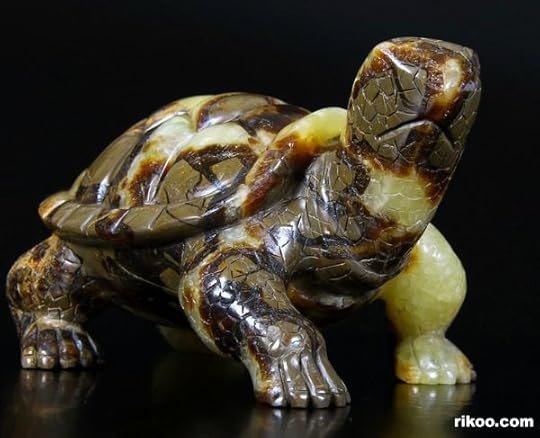
There appears to be only one solution: Mayka decides to go down into the distant valley to find another stonemason who will be willing to climb the mountain to their home and re-etch the magical marks into their bodies. It’s a scary journey into the unknown, even for a girl made of stone … but the quest will be even more difficult than Mayka imagines.
The Stone Girl’s Story (2018) is such a charming middle grade fantasy! Mayka, carved in the semblance of a twelve year old girl, is an admirable heroine with a can-do attitude and courage in the face of the unknown. At the same time, she’s also a kind and loyal friend, determined to do whatever is necessary to save the lives of her friends, but also seeing the bigger picture when a danger arises that could threaten the free will of all living stone animals, and even lead to harm for the humans who are their keepers. Her creative approach to solving a difficult problem will entrance readers.
This story includes lots of humor, most of it supplied by Jacklo, a gray stone bird with an irrepressible personality and a joy for life.
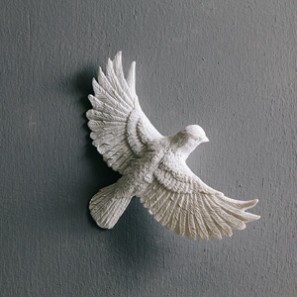
Jacklo and his bird sister Risa insist on joining Mayka on her journey down to the human lands.

And I won’t soon forget Kisonan the noble stone griffin, offended by the questioning of his loyalty and determined to do what is right.
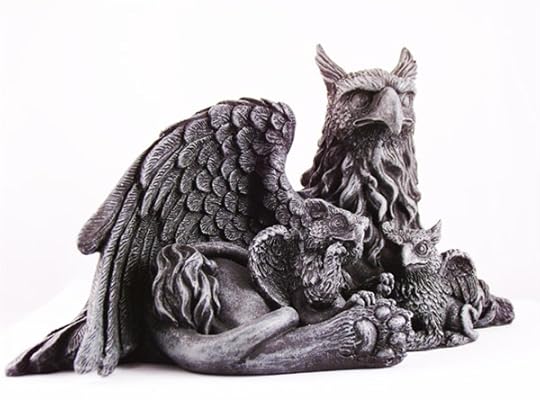
The Stone Girl’s Story is a delightful, magical tale, with depth and insight as well as action and adventure. I highly recommend it for young readers in the 10-13 age range, and for those of any age who enjoy children’s fantasies.
I received a free copy of this book from the publisher, Houghton Mifflin Harcourt, for review. Thank you so much!
Fearless Girl statue
High up in the mountains, in a marble house, live a stone girl and her animal friends, who are also carved from stone. In this world, magical symbols and marks carved into stone make the stone come alive, giving it the power to move above, see, speak and hear, think, and even fly. Mayka, the stone girl, and her family of living stone birds, rabbits, a cat, an owl and others, were all carved and brought to life by a kindly master stonemason. The marks tell their stories, and the stories give them life.
Mayka and her friends live an isolated and contented life. Any harm or danger is far away in the valleys below them … except the danger of time. Their beloved Father, the stonemason, died many years ago, and gradually the magical marks etched on Mayka and her stone friends are wearing away and breaking. Harlisona the rabbit can’t speak any more ― her mark for speech accidentally chipped off ― and Turtle and most of the stone fish in their stream have stopped moving and turned back into ordinary stone.
There appears to be only one solution: Mayka decides to go down into the distant valley to find another stonemason who will be willing to climb the mountain to their home and re-etch the magical marks into their bodies. It’s a scary journey into the unknown, even for a girl made of stone … but the quest will be even more difficult than Mayka imagines.
The Stone Girl’s Story (2018) is such a charming middle grade fantasy! Mayka, carved in the semblance of a twelve year old girl, is an admirable heroine with a can-do attitude and courage in the face of the unknown. At the same time, she’s also a kind and loyal friend, determined to do whatever is necessary to save the lives of her friends, but also seeing the bigger picture when a danger arises that could threaten the free will of all living stone animals, and even lead to harm for the humans who are their keepers. Her creative approach to solving a difficult problem will entrance readers.
This story includes lots of humor, most of it supplied by Jacklo, a gray stone bird with an irrepressible personality and a joy for life.
Jacklo and his bird sister Risa insist on joining Mayka on her journey down to the human lands.
“We were elected to come with you.”Sarah Beth Durst has a knack for describing the living stone carvings, their magical markings, and the Stone Quarter in the city of Skye, where the stonemasons live and work, with vivid details that bring them to life. Kalgrey the cat’s marks say, in symbolic language, “Sharp of tongue and claws, nimble of paws and mind.” Si-Si is a knee-high dragon carved of a lovely, translucent orange stone, but she struggles with knowing that she’s always been valued only for being decorative, and longs with all her heart to be able to fly like Jacklo and Risa.
“Oh? Who elected you?” Mayka asked.
“It was a small election,” Jacklo said. “Very small. Only two votes. But we won in a landslide! There was a lot of cheering.”
And I won’t soon forget Kisonan the noble stone griffin, offended by the questioning of his loyalty and determined to do what is right.
The Stone Girl’s Story is a delightful, magical tale, with depth and insight as well as action and adventure. I highly recommend it for young readers in the 10-13 age range, and for those of any age who enjoy children’s fantasies.
I received a free copy of this book from the publisher, Houghton Mifflin Harcourt, for review. Thank you so much!
May 3, 2018
Review posted on Fafa's Book Corner!
Beware spoilers ahead!
Trigger warning: Abuse towards stone creatures, mention of war, and an abusive society.
I have read The Queen of Blood by this author and thoroughly enjoyed it! When I heard that Sarah Beth Durst was releasing a middle grade I didn't hesitate to add this. I am happy to say that I enjoyed it!
The Stone Girl's Story begins with Mayka saying good-bye to Turtle. Turtle is a stone creature whose marks have completely faded. Mayka and the rest of her family is upset but seeing no other option choose to move on. Risa and Jacklo see Mayka by Turtle.
Upon Jacklo's request Mayka gathers the other stone creatures around and tells them a story. Feeling courageous Mayka announces that she will go out into the city and find them a stonemason. Essentially saving all the stone creatures. Some stone creatures protest, but in the end Mayka, Risa and Jacklo go.
The Stone Girl's Story was such a cute book! Narrated in third person all in Mayka's point of view. There are also chapter numbers. There is a large emphasis in finding yourself, free will, and friendship throughout the story. The stone creatures were such a delight to read about! Created using different types of stone with such vibrant personalities.
The world building was incredible! Durst clearly did her research regarding the different types of stone and aerodynamics. Even the history regarding Mayka's Father and the Stone War. The marks and the stonemasons job was explained in vivid detail without info-dumping.
The characters were extremely well written! Mayka was so sweet and a surprisingly mature main character for a middle grade book. Jacklo and Risa were such great siblings! They got along so well despite being total opposites. Risa being the older and more wise sibling. With Jacklo being bighearted and dedicated to his friends and family. Sisi is a dragon stone creature that the three meet on their journey. Sisi was fun-loving but also insecure. I felt that her insecurities is something we can all relate to. Kisonan was loyal and just. Garit and Ilery are two humans. Ilery was very brave and Garit was a bit awkward but stood by his friends.
Each of the characters begin to develop through their relationships with one-another. I personally felt that Garit, Sisi, and Mayka went through the most character development. Mayka had to navigate her world after finding out some information about her Father she didn't previously know. Garit had to learn and understand that stone creatures deserved choice and had emotions. Sisi needed to overcome her insecurities and learn that she mattered.
The Stone Girl's Story had quite a bit of traveling in the beginning. As Mayka, Sisi (whom they meet on the way) Jacklo, and Risa traveled to Skye. I'd say that 20 percent of the story was spent traveling. Once they reached Skye the story picked up and it got more interesting.
The villain of the book was Master Siorn whom Garit was apprenticed too. During a stonemason's festival Master Siorn planned on revealing an 'Obedience' mark. He was successfully able to create one and used it on all his stone creatures. I personally found this to be abusive hence the trigger warning. Skye's society was also abusive towards stonemasons and stone creatures. There was a curfew for the stone creatures and the stonemasons were only allowed to live in a specific area.
The highlight off The Stone Girl's Story (aside from the characters and world-building) was Mayka's observations on basic human behaviour. Like how odd she found shoes and how she realized that while Master Siorn was a villain he believed his reasons were good. It was fun to read about how she grew based on her interactions with humans. Seriously though what she said about sweat was on point.
Unlike most books The Stone Girl's Story actually has an epilogue. The ending took place a few years after Mayka's adventure in Skye. All the characters come in. And you got to see how all the characters grew (not just literally). It wrapped up the story and I liked it.
I didn't have any problems while reading. The Stone Girl's Story just felt like a 3 star.
Overall I thought this book was really cute and well done! I recommend everyone to read this as there is something for everyone.
Beware spoilers ahead!
Trigger warning: Abuse towards stone creatures, mention of war, and an abusive society.
I have read The Queen of Blood by this author and thoroughly enjoyed it! When I heard that Sarah Beth Durst was releasing a middle grade I didn't hesitate to add this. I am happy to say that I enjoyed it!
The Stone Girl's Story begins with Mayka saying good-bye to Turtle. Turtle is a stone creature whose marks have completely faded. Mayka and the rest of her family is upset but seeing no other option choose to move on. Risa and Jacklo see Mayka by Turtle.
Upon Jacklo's request Mayka gathers the other stone creatures around and tells them a story. Feeling courageous Mayka announces that she will go out into the city and find them a stonemason. Essentially saving all the stone creatures. Some stone creatures protest, but in the end Mayka, Risa and Jacklo go.
The Stone Girl's Story was such a cute book! Narrated in third person all in Mayka's point of view. There are also chapter numbers. There is a large emphasis in finding yourself, free will, and friendship throughout the story. The stone creatures were such a delight to read about! Created using different types of stone with such vibrant personalities.
The world building was incredible! Durst clearly did her research regarding the different types of stone and aerodynamics. Even the history regarding Mayka's Father and the Stone War. The marks and the stonemasons job was explained in vivid detail without info-dumping.
The characters were extremely well written! Mayka was so sweet and a surprisingly mature main character for a middle grade book. Jacklo and Risa were such great siblings! They got along so well despite being total opposites. Risa being the older and more wise sibling. With Jacklo being bighearted and dedicated to his friends and family. Sisi is a dragon stone creature that the three meet on their journey. Sisi was fun-loving but also insecure. I felt that her insecurities is something we can all relate to. Kisonan was loyal and just. Garit and Ilery are two humans. Ilery was very brave and Garit was a bit awkward but stood by his friends.
Each of the characters begin to develop through their relationships with one-another. I personally felt that Garit, Sisi, and Mayka went through the most character development. Mayka had to navigate her world after finding out some information about her Father she didn't previously know. Garit had to learn and understand that stone creatures deserved choice and had emotions. Sisi needed to overcome her insecurities and learn that she mattered.
The Stone Girl's Story had quite a bit of traveling in the beginning. As Mayka, Sisi (whom they meet on the way) Jacklo, and Risa traveled to Skye. I'd say that 20 percent of the story was spent traveling. Once they reached Skye the story picked up and it got more interesting.
The villain of the book was Master Siorn whom Garit was apprenticed too. During a stonemason's festival Master Siorn planned on revealing an 'Obedience' mark. He was successfully able to create one and used it on all his stone creatures. I personally found this to be abusive hence the trigger warning. Skye's society was also abusive towards stonemasons and stone creatures. There was a curfew for the stone creatures and the stonemasons were only allowed to live in a specific area.
The highlight off The Stone Girl's Story (aside from the characters and world-building) was Mayka's observations on basic human behaviour. Like how odd she found shoes and how she realized that while Master Siorn was a villain he believed his reasons were good. It was fun to read about how she grew based on her interactions with humans. Seriously though what she said about sweat was on point.
Unlike most books The Stone Girl's Story actually has an epilogue. The ending took place a few years after Mayka's adventure in Skye. All the characters come in. And you got to see how all the characters grew (not just literally). It wrapped up the story and I liked it.
I didn't have any problems while reading. The Stone Girl's Story just felt like a 3 star.
Overall I thought this book was really cute and well done! I recommend everyone to read this as there is something for everyone.

April 14, 2018
DISCLAIMER: I have met the author of this book at various book shows and she has come to our store to do a book signing before, so I already have a positive feeling towards this author. She is sweet and nice and funny and while I am sure that plays a part in her writing ability, that doesn't sway me in this review. This book stands on its merits and not on the author's sweet personality. : )
This book was really amazing. It's geared towards middle grade readers, but had me at least three times gasping in suspense. (I admit, I am a chicken when it comes to suspense. So that may not be all that impressive!) I actually put the book down once because I was too chicken to continue! But once I picked it back up, it had me for good and I couldn't put it down if I had tried!
I love it when a good character grows. I hate it when a character is written as a bad/stupid/mean person, just so their growth is apparent to the reader. This was not the case here. All of the characters grew and learned and wanted to. Even though they were stone and couldn't physically grow, they all grew in knowledge, wisdom, personality and talent, just like a flesh and blood person would.
I also loved how inventive the world was. Stone could come to life, with the right story and symbols on them. It could be sentient in the form it was carved. It could feel, love, fear, and want to do good. It could be innocent, and have that innocence shatter. It could recognize evil and act to stop it.
Slight quibble with how only the flesh and blood humans were good or evil. All of the stone creatures seemed to be naturally good. But it is a small issue. I kind of want to think that all humans have a core of good to them, so why not have stone creatures show it?
This book also raised a VERY big question, to me at least.
Which is worse, doing evil and KNOWING it is bad, or doing evil and THINKING you are doing good? To be so mixed up that you think you are being a savior instead of really being the bad guy the world needs to be saved from? Where does intent come into it as a mitigating factor? Does intent make it better or worse? Is it easier to fool people into thinking you are good when you truly believe it or if you know you have to hide the bad? Can the misguided bad guy be saved or are they as doomed as the bad guy who knows he is evil?
Ok, that was actually a lot of questions, but that's one of the things I LOVE about this book, it makes me think and ask questions, deep questions. Questions that, unfortunately, matter today more than ever.
So this book gets 5 full stars from me. Excellent characters, great world, awesome storyline and while some reviewers didn't like the epilogue-like ending, I LOVED it. I felt it fit and flowed well and it gave me the closure I wanted. Highly recommended, for young readers on up to adults. Great book!
My thanks to NetGalley and Houghton Mifflin Harcourt Children's Book Group Clarion Books for an eARC copy of this book to read and review.
This book was really amazing. It's geared towards middle grade readers, but had me at least three times gasping in suspense. (I admit, I am a chicken when it comes to suspense. So that may not be all that impressive!) I actually put the book down once because I was too chicken to continue! But once I picked it back up, it had me for good and I couldn't put it down if I had tried!
I love it when a good character grows. I hate it when a character is written as a bad/stupid/mean person, just so their growth is apparent to the reader. This was not the case here. All of the characters grew and learned and wanted to. Even though they were stone and couldn't physically grow, they all grew in knowledge, wisdom, personality and talent, just like a flesh and blood person would.
I also loved how inventive the world was. Stone could come to life, with the right story and symbols on them. It could be sentient in the form it was carved. It could feel, love, fear, and want to do good. It could be innocent, and have that innocence shatter. It could recognize evil and act to stop it.
Slight quibble with how only the flesh and blood humans were good or evil. All of the stone creatures seemed to be naturally good. But it is a small issue. I kind of want to think that all humans have a core of good to them, so why not have stone creatures show it?
This book also raised a VERY big question, to me at least.
Which is worse, doing evil and KNOWING it is bad, or doing evil and THINKING you are doing good? To be so mixed up that you think you are being a savior instead of really being the bad guy the world needs to be saved from? Where does intent come into it as a mitigating factor? Does intent make it better or worse? Is it easier to fool people into thinking you are good when you truly believe it or if you know you have to hide the bad? Can the misguided bad guy be saved or are they as doomed as the bad guy who knows he is evil?
Ok, that was actually a lot of questions, but that's one of the things I LOVE about this book, it makes me think and ask questions, deep questions. Questions that, unfortunately, matter today more than ever.
So this book gets 5 full stars from me. Excellent characters, great world, awesome storyline and while some reviewers didn't like the epilogue-like ending, I LOVED it. I felt it fit and flowed well and it gave me the closure I wanted. Highly recommended, for young readers on up to adults. Great book!
My thanks to NetGalley and Houghton Mifflin Harcourt Children's Book Group Clarion Books for an eARC copy of this book to read and review.

February 6, 2021
Wow! Sarah Beth Durst is well on her way to becoming a favorite author. This is the 2nd book by her I’ve read, & I absolutely loved it! Mayka is a stone girl created by her father, who was a stonemason. He lived alone w/her & his many other stone creatures until he died several years earlier. The markings on their stone tell their individual stories, & also keep them alive. The markings are beginning to fade though, & 1 member of the family has already “went to sleep”. So Mayka makes the decision to leave the mountain, & head into the valley to find a stonemason to bring back & recarve & save her family. The journey is more dangerous & treacherous than she imagined. She uncovers a world of stone she never knew existed, a plan that could be deadly for her kind, & secrets of the past. This was such a creative, unique, detailed, vivid, action-packed story! Full of so much heart. This shows the importance of stories, & how everyone is different & decides what their own story will mean to them. Peoples misconceptions can be so harmful. What is different isn’t always bad, or any less real. There are so many important underlying messages/lessons to take away in here. There’s danger, suspense, heart, family, friendship, adventure, & more. Everyone has a story, & it’s up to each person to write how theirs will go..Amazing. Mayka was an amazing lead character. So brave, smart, & loyal. A hero in her own story, & many others as well. So many amazing stone creatures in here. I loved Jacklo, Risa, Si-Si, & Kisonan w/my whole heart though. She also makes a few flesh & blood friends along the way, & they were the best. I highly recommend, & can’t wait to read another book by this author very soon! Absolutely beautiful cover by Brandon Dorman. So gorgeous!💜

September 13, 2026
cute.

April 3, 2018
Full disclosure for people who've never read any of my other reviews: I've basically got two settings, Coldly Intellectual and Ball of Mush. The book caught me in Ball of Mush mode, and I started crying within sentences. Following is a rough transcript of what followed, serving the dual function of catharsis and book review.
Coldly Intellectual Plum (hereafter CIP, pronounced 'Kip', I suppose, if you're thinking aloud) said (to myself, not aloud, and certainly not calling me Mushy Plum, or BoMP): Sarah Beth Durst has written a couple other good books [Vessel, for instance, reviewed by yours truly], but nothing to make you suspect that she would suddenly come out with the Most Poignant Book you've ever read, or will ever read.... But maybe stop reading the book if it's getting you upset....
To which BoMP replied (soggily): But it seems really beautiful! In a really sweet and poignant way that's making me cry. I don't know if I can handle it! But it might be so good I have to read it anyway!
CIP then suggested (true to character and a common pattern of ours): So check the ending. Just see whether Turtle comes back at the end. If he does, you can probably stop crying and handle the book.
BoMP: (checked to see. started writing a review.)
CIP (interrupting BoMP's reviewing activities): Remember, even among sensitive people, you're kinda... extra sensitive sometimes. No offense or anything. But maybe you don't need to write a spoiler-y review for all the relatively normal people who aren't going to wonder by page 2 whether this book could literally break their hearts and destroy them. Other fairly decent people might just calmly like it, or think it's pretty good but maybe a little juvenile. I could see complaining about the fact that there’s a bit too much repetition of fairly simply and straightforward thoughts. And someone looking for a book for middle grade readers (allegedly the target demo) might say that MG readers would find Mayka too childish — her lack of interaction with anyone other than animals has left her much more innocent, ignorant, and childlike than any 12 year old probably thinks she is (or wants to be), herself. I think even 7-8 year old me would have thought Mayka was sweet but sometimes awkwardly naive. Oh, and even the people who will love this book might not want to know Turtle's fate before reading the whole book....
BoMP: But those people probably stopped reading this review already! Or else they're just reading it to flame and hate me, in which case they can have a spoiler and bite me! But otherwise, people who are wondering whether this book really is anywhere near as poignant and lovely as it might be and whether the most important things (TURTLE) are okay in the end should feel emotionally empowered by my reassurances to endure the poignancy of the premise for the payoff of a really sweet, lovely story suitable for nearly all ages, with a happy ending that should make all but the most soulless or curmudgeonly critics happy! There were even multiple times I laughed out loud!
CIP: Yeah, I'm pretty sure you giggled. I might have gagged.
BoMP: Nope. It was Serious Laughing. Even someone as coldly intellectual as you might laugh at the silly bird sidekicks' hijinx and dialogue.
CIP: Never.
BoMP: You forget -- we almost share a brain! I totally know you laughed, too!
CIP: Are you really going to post this on my GR?
BoMP: Yup! (sniffle. smile.) This is my account, too! So take a snooze, Cippy, and let me send some love to Turtle and Sarah Beth Durst, and recommend this book to all the sweet readers out there who might like to read this to themselves or any imaginative child of their acquaintance.
CIP: Thank [insert god(s) of your choice] you don't know how to make GIFs full of glitter hearts. I could never show my face here again.
BoMP: <3 <3 <3 <3 <3 <3 manatees and flowers and t(T)urtle(s) and <3s! <3 <3 <3
CIP: Plum out.
BoMP: last word!
Coldly Intellectual Plum (hereafter CIP, pronounced 'Kip', I suppose, if you're thinking aloud) said (to myself, not aloud, and certainly not calling me Mushy Plum, or BoMP): Sarah Beth Durst has written a couple other good books [Vessel, for instance, reviewed by yours truly], but nothing to make you suspect that she would suddenly come out with the Most Poignant Book you've ever read, or will ever read.... But maybe stop reading the book if it's getting you upset....
To which BoMP replied (soggily): But it seems really beautiful! In a really sweet and poignant way that's making me cry. I don't know if I can handle it! But it might be so good I have to read it anyway!
CIP then suggested (true to character and a common pattern of ours): So check the ending. Just see whether Turtle comes back at the end. If he does, you can probably stop crying and handle the book.
BoMP: (checked to see. started writing a review.)
CIP (interrupting BoMP's reviewing activities): Remember, even among sensitive people, you're kinda... extra sensitive sometimes. No offense or anything. But maybe you don't need to write a spoiler-y review for all the relatively normal people who aren't going to wonder by page 2 whether this book could literally break their hearts and destroy them. Other fairly decent people might just calmly like it, or think it's pretty good but maybe a little juvenile. I could see complaining about the fact that there’s a bit too much repetition of fairly simply and straightforward thoughts. And someone looking for a book for middle grade readers (allegedly the target demo) might say that MG readers would find Mayka too childish — her lack of interaction with anyone other than animals has left her much more innocent, ignorant, and childlike than any 12 year old probably thinks she is (or wants to be), herself. I think even 7-8 year old me would have thought Mayka was sweet but sometimes awkwardly naive. Oh, and even the people who will love this book might not want to know Turtle's fate before reading the whole book....
BoMP: But those people probably stopped reading this review already! Or else they're just reading it to flame and hate me, in which case they can have a spoiler and bite me! But otherwise, people who are wondering whether this book really is anywhere near as poignant and lovely as it might be and whether the most important things (TURTLE) are okay in the end should feel emotionally empowered by my reassurances to endure the poignancy of the premise for the payoff of a really sweet, lovely story suitable for nearly all ages, with a happy ending that should make all but the most soulless or curmudgeonly critics happy! There were even multiple times I laughed out loud!
CIP: Yeah, I'm pretty sure you giggled. I might have gagged.
BoMP: Nope. It was Serious Laughing. Even someone as coldly intellectual as you might laugh at the silly bird sidekicks' hijinx and dialogue.
CIP: Never.
BoMP: You forget -- we almost share a brain! I totally know you laughed, too!
CIP: Are you really going to post this on my GR?
BoMP: Yup! (sniffle. smile.) This is my account, too! So take a snooze, Cippy, and let me send some love to Turtle and Sarah Beth Durst, and recommend this book to all the sweet readers out there who might like to read this to themselves or any imaginative child of their acquaintance.
CIP: Thank [insert god(s) of your choice] you don't know how to make GIFs full of glitter hearts. I could never show my face here again.
BoMP: <3 <3 <3 <3 <3 <3 manatees and flowers and t(T)urtle(s) and <3s! <3 <3 <3
CIP: Plum out.
BoMP: last word!

March 24, 2018
*I received an advance reader copy of this book in exchange for an honest review*
This such a great book. It's really original, and managed to surprise me a lot. There's a charming cast of characters, a wonderful focus on how stories define you and who gets to tell those stories, but still incorporates high stakes and tension. It's about courage and autonomy and family, and it does it in my favorite middle-grade way: keeping it short and simple enough to be an easy read, but without dumbing it down.
Mayka, our main character, is a twelve-year-old-girl carved out of stone who must leave her mountain home to find a stonemason to re-carve the magical marks on her stone friends, before they fade and become nothing more than statues. But in the city where she hopes to find a stonemason she also finds a terrible threat to stone creatures everywhere.
First of all, I like how the fantasy aspects of this world are revealed. I know the blurb hints at some of it, but I'd forgotten the blurb by the time I started so I wasn't even sure if Mayka and her stone friends were an oddity in their own world, or if stone creatures were common. Discovering the nature of the living stone people and animals in this world, at the same time Mayka was discovering what the relationship between flesh-and-blood creatures and stone creatures and stonemasons is outside her mountain, was a really fun experience.
One of the first stone creatures we meet after leaving the mountain is a small dragon named Si-Si who wants to be re-carved so she can fly, and I love her so much! (There's a definite cute factor to the book, although it can be perfectly serious) Mayka is surrounded by a cast of characters who have their own goals and personalities, and that makes the journey so much more fun.
Also, I know I said this was an easy read, but I was legitimately stressed out at times. The book does not shy away from raising the stakes, and it's based on a really interesting backstory that you learn along the way with Mayka.
I love that the backstory/history is another example of how stories change depending on who's given the power over them. The interpretation of stories is kind of a huge thing in this book, because stone creatures are brought to life by magical marks that tell a story — who they are, their personality, what they want to do. And if you're thinking that that gives the person who carves the stone creature a lot of power over them, that could potentially be taken advantage of... then you're on the right track with this book.
There are only two things that I feel the book didn't do as well as the rest of it. First of all, as the blurb tells you, Mayka needs to realize "the savior she’s been searching for is herself" — which is true, and a great message, but it could have used more focus. I think Mayka's realization could have used more set up throughout the story to be a little more powerful when it happens. But there is also so much else going on in the story that it's forgivable that this got less focus.
I also felt like the very end, just the last page or two, could have been clipped a little shorter; we didn't need to know that much about twenty years in the future. Which the author clearly knows, because that part is very quick, but I think she could have cut it off a little sooner.
To end on a good note: the writing is beautiful, and I have so many quotes highlighted in my ebook. This is exactly the kind of whimsical middle-grade I love to read.
This such a great book. It's really original, and managed to surprise me a lot. There's a charming cast of characters, a wonderful focus on how stories define you and who gets to tell those stories, but still incorporates high stakes and tension. It's about courage and autonomy and family, and it does it in my favorite middle-grade way: keeping it short and simple enough to be an easy read, but without dumbing it down.
Mayka, our main character, is a twelve-year-old-girl carved out of stone who must leave her mountain home to find a stonemason to re-carve the magical marks on her stone friends, before they fade and become nothing more than statues. But in the city where she hopes to find a stonemason she also finds a terrible threat to stone creatures everywhere.
First of all, I like how the fantasy aspects of this world are revealed. I know the blurb hints at some of it, but I'd forgotten the blurb by the time I started so I wasn't even sure if Mayka and her stone friends were an oddity in their own world, or if stone creatures were common. Discovering the nature of the living stone people and animals in this world, at the same time Mayka was discovering what the relationship between flesh-and-blood creatures and stone creatures and stonemasons is outside her mountain, was a really fun experience.
One of the first stone creatures we meet after leaving the mountain is a small dragon named Si-Si who wants to be re-carved so she can fly, and I love her so much! (There's a definite cute factor to the book, although it can be perfectly serious) Mayka is surrounded by a cast of characters who have their own goals and personalities, and that makes the journey so much more fun.
Also, I know I said this was an easy read, but I was legitimately stressed out at times. The book does not shy away from raising the stakes, and it's based on a really interesting backstory that you learn along the way with Mayka.
I love that the backstory/history is another example of how stories change depending on who's given the power over them. The interpretation of stories is kind of a huge thing in this book, because stone creatures are brought to life by magical marks that tell a story — who they are, their personality, what they want to do. And if you're thinking that that gives the person who carves the stone creature a lot of power over them, that could potentially be taken advantage of... then you're on the right track with this book.
There are only two things that I feel the book didn't do as well as the rest of it. First of all, as the blurb tells you, Mayka needs to realize "the savior she’s been searching for is herself" — which is true, and a great message, but it could have used more focus. I think Mayka's realization could have used more set up throughout the story to be a little more powerful when it happens. But there is also so much else going on in the story that it's forgivable that this got less focus.
I also felt like the very end, just the last page or two, could have been clipped a little shorter; we didn't need to know that much about twenty years in the future. Which the author clearly knows, because that part is very quick, but I think she could have cut it off a little sooner.
To end on a good note: the writing is beautiful, and I have so many quotes highlighted in my ebook. This is exactly the kind of whimsical middle-grade I love to read.

April 12, 2018
Mayka's creator made his stone creatures come to life through intricate markings that are telling their story. Mayka is a girl made of stone with her history etched on her body. Because stone lasts longer than a human life, Mayka and the stone animals she lives with now no longer have anyone to recarve their markings. When those marks are fading the stone creatures lose functions, until they stop moving completely. To prevent that from happening to her friends and herself, Mayka leaves home for the first time to look for a stonemason willing to come to their aid. Will she find someone?
Mayka's journey is more difficult than she thought it would be. She's glad her stone bird friends Jacklo and Risa have joined her, so she doesn't have to face each new challenge and experience on her own. She hasn't got much knowledge about the world beyond the mountain that she calls home. Not everyone has good intentions and Mayka learns the hard way that she won't find just friendly faces and that not all stone creatures are being treated well. She has a long and difficult journey ahead of her. Is there someone she can trust and will her mission be a success?
The Stone Girl's Story is a beautiful magical story. I immediately fell in love with Mayka and her friends. I loved the idea of stone coming to life because of marks that tell a story. It's such a wonderful thought. Mayka is sweet, clever and generous. She has a loving sparkling personality that makes her story a true gem to read. I liked her friends, I enjoyed Mayka's storytelling, she explains the markings of her friends with care and gorgeous fitting words. I couldn't turn the pages quickly enough to find out more about this very special main character.
Sarah Beth Durst has written a gripping adventure. I loved the way she writes about magic and her world building is amazing. I was especially impressed by the different ways she shares the same history, seeing one situation through the eyes of several characters gives it extra dimensions and versatility, which makes it come to life in an incredible way. She put so many interesting layers in her story and they all have something valuable to add. There's a great message in the book as well and the fabulous thought-provoking ending made me smile. Each chapter brings a new surprise, which is a real treat. I was enchanted by The Stone Girl's Story, it's a terrific book that captivated me from beginning to end.
Mayka's journey is more difficult than she thought it would be. She's glad her stone bird friends Jacklo and Risa have joined her, so she doesn't have to face each new challenge and experience on her own. She hasn't got much knowledge about the world beyond the mountain that she calls home. Not everyone has good intentions and Mayka learns the hard way that she won't find just friendly faces and that not all stone creatures are being treated well. She has a long and difficult journey ahead of her. Is there someone she can trust and will her mission be a success?
The Stone Girl's Story is a beautiful magical story. I immediately fell in love with Mayka and her friends. I loved the idea of stone coming to life because of marks that tell a story. It's such a wonderful thought. Mayka is sweet, clever and generous. She has a loving sparkling personality that makes her story a true gem to read. I liked her friends, I enjoyed Mayka's storytelling, she explains the markings of her friends with care and gorgeous fitting words. I couldn't turn the pages quickly enough to find out more about this very special main character.
Sarah Beth Durst has written a gripping adventure. I loved the way she writes about magic and her world building is amazing. I was especially impressed by the different ways she shares the same history, seeing one situation through the eyes of several characters gives it extra dimensions and versatility, which makes it come to life in an incredible way. She put so many interesting layers in her story and they all have something valuable to add. There's a great message in the book as well and the fabulous thought-provoking ending made me smile. Each chapter brings a new surprise, which is a real treat. I was enchanted by The Stone Girl's Story, it's a terrific book that captivated me from beginning to end.

March 4, 2018
THE STONE GIRL'S STORY is a wonderful middle grade fantasy. Mayka is a girl who was carved of stone by Father who also carved many other creatures: birds Jacklo and Risa, rabbits Dersy and Harlisona, the owl Nianna, Etho the lizard, Turtle, Badger, the cat Kalgray, and the fish. But Father died many years previously and the marks he carved into their stone are fading. When they have faded enough, all the carvings stop. Recently Mayka's friend Turtle has stopped and she is grieving his loss.
She decides that the only thing for her to do is to venture down the mountain from their home to the valley below to find a new stonemason to recarve the marks needed to keep her friend and herself alive. She was planning to go alone but Risa and Jacklo decide to follow her and join her on the adventure. And what an adventure it is.
On their journey, they meet many people. Some are dangerous and want to return them to their "Keeper" in the hopes of a reward. Others are kind like the young girl Ilery who is also visiting the city of Skye and Garit who is an apprentice stonemason. They also meet a carved small dragon named Si-Si who has been forgotten by her owners and who was made as a decoration but wants to rewrite her story to make herself useful and heroic.
Most troubling of all those Mayka meets on her journey is Garit's Master Siorn who has discovered something new - a way to add a mark of obedience to all his stone carvings. Siorn is hoping that his discovery will raise the status of stonemasons who have been distrusted since the Stone Wars but Mayka is appalled that someone else would take control of stone creature's stories. She needs to find a way to rescue Jacklo was was captured by Siorn and had a mark of obedience carved on him. But that isn't enough. She needs to find a way to stop Siorn from convincing others to use the mark.
This was a wonderful coming of age story as Mayka learns about her own strengths and learns that she is rewriting her story as she changes because of her adventures. It was a wonderful story of friendship and the lengths people go to for their friends. I loved the idea that everyone is the author of their own story. I highly recommend this book for is lyrical language and engaging heroine.
She decides that the only thing for her to do is to venture down the mountain from their home to the valley below to find a new stonemason to recarve the marks needed to keep her friend and herself alive. She was planning to go alone but Risa and Jacklo decide to follow her and join her on the adventure. And what an adventure it is.
On their journey, they meet many people. Some are dangerous and want to return them to their "Keeper" in the hopes of a reward. Others are kind like the young girl Ilery who is also visiting the city of Skye and Garit who is an apprentice stonemason. They also meet a carved small dragon named Si-Si who has been forgotten by her owners and who was made as a decoration but wants to rewrite her story to make herself useful and heroic.
Most troubling of all those Mayka meets on her journey is Garit's Master Siorn who has discovered something new - a way to add a mark of obedience to all his stone carvings. Siorn is hoping that his discovery will raise the status of stonemasons who have been distrusted since the Stone Wars but Mayka is appalled that someone else would take control of stone creature's stories. She needs to find a way to rescue Jacklo was was captured by Siorn and had a mark of obedience carved on him. But that isn't enough. She needs to find a way to stop Siorn from convincing others to use the mark.
This was a wonderful coming of age story as Mayka learns about her own strengths and learns that she is rewriting her story as she changes because of her adventures. It was a wonderful story of friendship and the lengths people go to for their friends. I loved the idea that everyone is the author of their own story. I highly recommend this book for is lyrical language and engaging heroine.

September 5, 2020
This was a charmingly crafted story, with an extremely original plot.
The setting is/was beautifully crafted. Very thoroughly visual, showing once again that the author is a master storyteller.
I can see this story being an all time favorite for its intended audience.

September 24, 2018
To be completely honest, I picked up this book because of the cover. I'm a sucker for a good cover, especially one that is illustrated (hallelujah middle grade books almost always having illustrated covers!). I didn't know a single thing about the plot except what the title and cover gave me.
In short, this is a story about a world where stonemasons can carve animals into stone and bring them to life by carving runes of a sort into the stone. Deep in the forest mountain, Mayka and her stone friends live in the house that their stonemason "Father" lived in long ago. (I'm thinking it's been at least a century, maybe two or three.) Mayka is the only known living stone girl, which makes her very special. When her friends, and her own, start to lose their life-giving markings to erosion, she takes it on herself to go on a quest to the city of Skye, where she will find a stonemason to help recarve the marks on her friends and herself. Her journey will not be simple and easy and while she does make friends along the way, she will also be faced with new adversaries.
This was such a good book! I loved the concept so much, and Mayka was such a lovely protagonist. Her entire story was about independence, loyalty and changing/growth. She was written as a perfect role model for young kids, and I was more than happy to read a story about such a strong young character. Her animal friends were also adorable to read about, as were the few flesh-and-bone children that we met as well. Even the "bad guy" was relatable for a time, as Mayka said often that he thought he was doing the right thing (at the beginning, then things get CRAZY).
I have nothing really to say about the writing style. The plot moved swiftly, the language fit the world and it didn't bombard the reader with too much information in the way of worldbuilding, but slowly introduced thing so it was easy to follow along. I breezed through this and enjoyed myself every step of the way. My most favorite thing was the overall theme, which was about not letting other people guide your life or tell you what to do if it's not something you want to do. It was about being and becoming your own person and being true to yourself and loyal to your friends and family. I usually don't pay tooooooo much attention to themes or morals of children's literature, but this one was incredibly strong and fitting for the plot.
In short, this is a story about a world where stonemasons can carve animals into stone and bring them to life by carving runes of a sort into the stone. Deep in the forest mountain, Mayka and her stone friends live in the house that their stonemason "Father" lived in long ago. (I'm thinking it's been at least a century, maybe two or three.) Mayka is the only known living stone girl, which makes her very special. When her friends, and her own, start to lose their life-giving markings to erosion, she takes it on herself to go on a quest to the city of Skye, where she will find a stonemason to help recarve the marks on her friends and herself. Her journey will not be simple and easy and while she does make friends along the way, she will also be faced with new adversaries.
This was such a good book! I loved the concept so much, and Mayka was such a lovely protagonist. Her entire story was about independence, loyalty and changing/growth. She was written as a perfect role model for young kids, and I was more than happy to read a story about such a strong young character. Her animal friends were also adorable to read about, as were the few flesh-and-bone children that we met as well. Even the "bad guy" was relatable for a time, as Mayka said often that he thought he was doing the right thing (at the beginning, then things get CRAZY).
I have nothing really to say about the writing style. The plot moved swiftly, the language fit the world and it didn't bombard the reader with too much information in the way of worldbuilding, but slowly introduced thing so it was easy to follow along. I breezed through this and enjoyed myself every step of the way. My most favorite thing was the overall theme, which was about not letting other people guide your life or tell you what to do if it's not something you want to do. It was about being and becoming your own person and being true to yourself and loyal to your friends and family. I usually don't pay tooooooo much attention to themes or morals of children's literature, but this one was incredibly strong and fitting for the plot.

August 20, 2018
Okay book. I was a little bit disappointed.

February 6, 2020
This early middle grade novel is an unusual tale with a gentle, good-hearted protagonist; and I especially loved the way the author depicted friendship and loyalty.
In the world of the story, stonemasons can add special marks to their stone carvings that bring them alive. It is possible for a stone creature to be designed to be capable only of fulfilling a single purpose (such as pulling a plow or cart), but more detailed marks create a being with a complex, vibrant personality. Ultimately, the theme of the story ends up revolving around the question of free will.
The heroine is a stone girl. She says several times that we must “seize our stories” and make them our own by living out our own choices. The bad guy is a stone mason who has discovered how to make an “obedience mark” that renders his creations absolutely incapable of disobeying his commands--even though they otherwise possess fully developed, human-equivalent personalities. Our heroine finds the mark abhorrent and sets out to stop him.
This title would be a good choice for a kids’ book group, because the moral dilemma is crying out to be discussed. One question I would want to ask is how the story would have been different if any of the stone creatures had attempted to do something evil (or even just something the heroine genuinely disagreed with). Not a single one uses their freedom to make selfish choices. Can the question of free will really be discussed in a context that skips the possibility of sin? In addition, do beings with free will need a moral code that comes from outside of themselves instead of merely from within? It would make for good conversation.
One aspect of the story I disliked was the use of lying. The point is very clearly made that choosing to lie is a way of taking charge of one’s own story, and this is presented as a good thing. I would have to disagree.
From an adult perspective, the happy ending is implausible and far too easily achieved, but I have the feeling the target audience will find it satisfying.
In the world of the story, stonemasons can add special marks to their stone carvings that bring them alive. It is possible for a stone creature to be designed to be capable only of fulfilling a single purpose (such as pulling a plow or cart), but more detailed marks create a being with a complex, vibrant personality. Ultimately, the theme of the story ends up revolving around the question of free will.
The heroine is a stone girl. She says several times that we must “seize our stories” and make them our own by living out our own choices. The bad guy is a stone mason who has discovered how to make an “obedience mark” that renders his creations absolutely incapable of disobeying his commands--even though they otherwise possess fully developed, human-equivalent personalities. Our heroine finds the mark abhorrent and sets out to stop him.
This title would be a good choice for a kids’ book group, because the moral dilemma is crying out to be discussed. One question I would want to ask is how the story would have been different if any of the stone creatures had attempted to do something evil (or even just something the heroine genuinely disagreed with). Not a single one uses their freedom to make selfish choices. Can the question of free will really be discussed in a context that skips the possibility of sin? In addition, do beings with free will need a moral code that comes from outside of themselves instead of merely from within? It would make for good conversation.
One aspect of the story I disliked was the use of lying. The point is very clearly made that choosing to lie is a way of taking charge of one’s own story, and this is presented as a good thing. I would have to disagree.
From an adult perspective, the happy ending is implausible and far too easily achieved, but I have the feeling the target audience will find it satisfying.

March 27, 2020
Mayka is just like any other girl - she loves her friends, she completes daily chores, and she delights in stories. The only difference is while some people are flesh and blood, she, and all her animal friends, are made of stone. Long ago, they were carved by Father, a master stonemason who lived with them on their idyllic, though isolated, home on the mountain. With skill and care, he gave each creature the magical ability to become alive, as well as a personalized story, using the carved language of those who can create life from stone. But Mayka and her friends have long outlived Father, and their carvings are worn thin. If they wear away completely, they will become silent statues. There is only one solution Mayka can think of: journey to the valley, enter the city called Skye, and find another stonemason to re-carve their markings. It's her first adventure beyond her home, and though she and her flying stone-bird friends, Jacklo and Risa, are optimistic, they quickly learn that Father was unique in his love and respect for stone creatures. The people of Skye treat those of stone as objects or servants, and the stonemasons are hidden away in a secluded part of town. How will they find a master carver, and convince him or her to help them?
I've been meaning to pick up one of Sarah Beth Durst's books for a while, and I'm so glad I did. Her fantasy offers original, intriguing ideas, but is still pleasantly accessible for young readers. Those who want some Big Thoughts will enjoy contemplating ideas of identity, ownership, and free will. And those who want an entertaining, not-too-intense adventure will find that here, as well.
I've been meaning to pick up one of Sarah Beth Durst's books for a while, and I'm so glad I did. Her fantasy offers original, intriguing ideas, but is still pleasantly accessible for young readers. Those who want some Big Thoughts will enjoy contemplating ideas of identity, ownership, and free will. And those who want an entertaining, not-too-intense adventure will find that here, as well.
December 28, 2022
Fun, light jaunt into a fantasy world that resembles our own closely. Just with the addition of stone creatures being alive. This makes it easy to picture and to get into without first needing to understand a complex world.
This wasn't super deep but it was enjoyable. Clean read with an important lesson about stereotyping. For this it was certain humans assuming that stone creatures were a potential danger that needed prevention measures taken for their safety. They were so worried about what stone creatures "could" do that they forgot that just like humans each stone animal(as Mayka is the only person) has the ability to choose. Yes, they could choose harm, but so can people. And just like we wait for a person to cause harm before taking steps to stop them and prevent a repeat, the people of Mayka's world needed to learn that those rules should apply for the other living beings in their world.
I did see the ending coming but I was glad that it was what happened. It made the most sense and I think it placed the power and future of Mayka's family in the best hands.
This wasn't super deep but it was enjoyable. Clean read with an important lesson about stereotyping. For this it was certain humans assuming that stone creatures were a potential danger that needed prevention measures taken for their safety. They were so worried about what stone creatures "could" do that they forgot that just like humans each stone animal(as Mayka is the only person) has the ability to choose. Yes, they could choose harm, but so can people. And just like we wait for a person to cause harm before taking steps to stop them and prevent a repeat, the people of Mayka's world needed to learn that those rules should apply for the other living beings in their world.
I did see the ending coming but I was glad that it was what happened. It made the most sense and I think it placed the power and future of Mayka's family in the best hands.
June 17, 2018
This was different. I liked the stone creatures and the magic. I also liked the characters, especially Si-Si and Mayka. They had interesting stories. I liked the mountain and journey chapters better the town chapters. I thought they were more interesting.

January 8, 2023
Although I read it in one day the book was kinda boring. I thought it was really predictable, and followed the lines of a lot of other stories. But it did remind me of the true meaning on family and new friends.

August 10, 2026
Such a cool world and fun magic system! Definitely worth a read.
May 29, 2021
While a book that I believe started off slow, in the second half of the book I couldn’t put it down. It truly was an amazing book. 4.33 stars.

Read
October 16, 2018This was a wonderfully touching book about loyalty, bravery and friendship.
Sarah Beth Durst has a very distinctive, thoughtful kind of writing style, at least to me. This book brought up things like what really makes a person alive, not letting others determine your story for you, and freedom. It was interesting to read through the perspective of an innocent stone girl. At times, her innocence was refreshing, like in the fact that she had never purposely lied before. At other times, I was like: "What are you so trusting??!!!!!" The whole idea of being stone, barely changing as decades pass, was very interesting, if not very personally appealing to me.
There's a lot of "writing your own story" in this book. I don't completely agree with that, but I do like the overlying theme of not letting other people determine who you are, what you do, or what you're worth.
Sarah Beth Durst's books (I've read two, so far) have really made me think, and, as I said in my review of Journey Across the Hidden Islands, I like that.
I also liked something Mayka said: "...But we're like you in all the ways that matter. We think, we feel, we live!" I think Sarah Beth Durst is making a point here; that it doesn't matter what people look like on the outside- they all think, they feel, they live.
There are two main plots in this book (no worries, this isn't a spoiler. It talks about it on the inside front cover). The second one doesn't actually appear until more than halfway through the book. Despite this, I still found the book pretty interesting.
Like Journey Across the Hidden Islands, I probably enjoyed this book more for the thinking it made me do than for the plot, but I did like the plot as well. Overall, a well-done and
captivating read.
Sarah Beth Durst has a very distinctive, thoughtful kind of writing style, at least to me. This book brought up things like what really makes a person alive, not letting others determine your story for you, and freedom. It was interesting to read through the perspective of an innocent stone girl. At times, her innocence was refreshing, like in the fact that she had never purposely lied before. At other times, I was like: "What are you so trusting??!!!!!" The whole idea of being stone, barely changing as decades pass, was very interesting, if not very personally appealing to me.
There's a lot of "writing your own story" in this book. I don't completely agree with that, but I do like the overlying theme of not letting other people determine who you are, what you do, or what you're worth.
Sarah Beth Durst's books (I've read two, so far) have really made me think, and, as I said in my review of Journey Across the Hidden Islands, I like that.
I also liked something Mayka said: "...But we're like you in all the ways that matter. We think, we feel, we live!" I think Sarah Beth Durst is making a point here; that it doesn't matter what people look like on the outside- they all think, they feel, they live.
There are two main plots in this book (no worries, this isn't a spoiler. It talks about it on the inside front cover). The second one doesn't actually appear until more than halfway through the book. Despite this, I still found the book pretty interesting.
Like Journey Across the Hidden Islands, I probably enjoyed this book more for the thinking it made me do than for the plot, but I did like the plot as well. Overall, a well-done and
captivating read.

March 13, 2018
"Turtle had stopped moving last week.
He'd warned Mayka and the others a year ago, when he first began to slow - but he moved so slowly anyway that she hadn't believed him. Not really. She'd always thought they'd have one more afternoon. On the mountain, there was always another afternoon. Another sunset. Another sunrise.
Until there wasn't."
Sarah Beth Durst is a master storyteller! In her newest book, we meet a girl named Mayka. She just so happens to be made out of living stone.
High up on her mountain where her and her friends live, she realizes that her friends are going to eventually pass away if she doesn't find a stonemason to re-carve their stories into them.
We join her on a brave adventure filled to the brim with danger around every corner for her and her friends who accompanied her on her journey.
I loved Mayka as a main character. She was strong and introspective. She relied heavily on her friends for support and they relied on her as well. She had amazing problem-solving skills that proved to get her and her friends out of multiple sticky situations.
She is loyal and knows the difference between rights and wrong and puts an importance on friendship, freedom to do as you please (within reason) and love.
All of these traits add up to a wonderful strong female lead any pre-teen should be able to look up to.
He'd warned Mayka and the others a year ago, when he first began to slow - but he moved so slowly anyway that she hadn't believed him. Not really. She'd always thought they'd have one more afternoon. On the mountain, there was always another afternoon. Another sunset. Another sunrise.
Until there wasn't."
Sarah Beth Durst is a master storyteller! In her newest book, we meet a girl named Mayka. She just so happens to be made out of living stone.
High up on her mountain where her and her friends live, she realizes that her friends are going to eventually pass away if she doesn't find a stonemason to re-carve their stories into them.
We join her on a brave adventure filled to the brim with danger around every corner for her and her friends who accompanied her on her journey.
I loved Mayka as a main character. She was strong and introspective. She relied heavily on her friends for support and they relied on her as well. She had amazing problem-solving skills that proved to get her and her friends out of multiple sticky situations.
She is loyal and knows the difference between rights and wrong and puts an importance on friendship, freedom to do as you please (within reason) and love.
All of these traits add up to a wonderful strong female lead any pre-teen should be able to look up to.

August 20, 2018
I picked this up several times and then put it down again before finally settling down into reading it. I loved Durst's books; she always has an unusual take on things, a different way of looking at the usual, that I adore, and this book took it to a whole new level.
I feel like a fraud when I use phrases like "richly-layered" however this was richly layered in meaning and characterization. Not that it was pretentious or pompous or anything, just that there was so much more than a simple story of statues brought to life looking to prolong their lives, which is what you could take away from this if you didn't do a thorough reading. There is so much more!
First, statues brought to life! You don't get to read about that every day, and I'm not talking about gargoyles here. I'm talking about people, and animals, and monsters, and other wonders. Next, they have distinct personalities and mythology all their own which lends itself to the next point--they have existence in themselves. They have a right to life. Pretty deep, right? If you have a right to life, that carries with it certain other rights, and then we start going deeper and deeper here!
The story does not shirk away from that. It may be told through the character of a stone girl, an "ornament," but she has much to show us. Incredibly moving! I would love to come back to this world.
I feel like a fraud when I use phrases like "richly-layered" however this was richly layered in meaning and characterization. Not that it was pretentious or pompous or anything, just that there was so much more than a simple story of statues brought to life looking to prolong their lives, which is what you could take away from this if you didn't do a thorough reading. There is so much more!
First, statues brought to life! You don't get to read about that every day, and I'm not talking about gargoyles here. I'm talking about people, and animals, and monsters, and other wonders. Next, they have distinct personalities and mythology all their own which lends itself to the next point--they have existence in themselves. They have a right to life. Pretty deep, right? If you have a right to life, that carries with it certain other rights, and then we start going deeper and deeper here!
The story does not shirk away from that. It may be told through the character of a stone girl, an "ornament," but she has much to show us. Incredibly moving! I would love to come back to this world.

September 23, 2018
I was super excited to read this and it ended up being good but not great. The story was a bit slow and boring for me, but I think younger readers would find it more entertaining and interesting. This book would be great for kids of all ages.
Mayka is a girl carved from stone whose Stonemason died. While Mayka and his creations live on in the mountains, some of the creations are starting to wear out and fade. As a result of this, Mayka decides to begin her long journey down the mountain to find a Stonemason to help save her friends.
This is a unique concept and I loved the idea of stories carved into stone making stone alive and real. Unfortunately, I thought the whole thing was a bit oversimplified and never really engaged with the characters or story. This was a super simple and easy read that left me feeling a bit wanting.
I think younger kids will probably enjoy this story a bit more. It’s a simple story with some interesting concepts and some adventure.
Overall this was a good read but not as wonderful as I had been hoping for. The whole thing felt a bit simple and under-thought to me. I think younger readers will enjoy this more than adults.
Mayka is a girl carved from stone whose Stonemason died. While Mayka and his creations live on in the mountains, some of the creations are starting to wear out and fade. As a result of this, Mayka decides to begin her long journey down the mountain to find a Stonemason to help save her friends.
This is a unique concept and I loved the idea of stories carved into stone making stone alive and real. Unfortunately, I thought the whole thing was a bit oversimplified and never really engaged with the characters or story. This was a super simple and easy read that left me feeling a bit wanting.
I think younger kids will probably enjoy this story a bit more. It’s a simple story with some interesting concepts and some adventure.
Overall this was a good read but not as wonderful as I had been hoping for. The whole thing felt a bit simple and under-thought to me. I think younger readers will enjoy this more than adults.
May 27, 2019
The Stone Girl's Story by Sarah Beth Durst
****4****
The Stone Girl's Story reminded me a bit of Toy Story at first, but with stone creatures instead of toys. Each creature is carved by a Stonemason and their stories are told in the lines and marks of their carving. Mayka's father passed long ago however and the lines on her and her friends are beginning to fade. Turtle's marks have already faded and he no longer moves. Mayka sets out to find a Stonemason to re carve their marks and save them. What she ends up finding is her own story, bravery and new friends both human and stone. Together they fight an evil that Mayka didn't even know existed until she left her mountain home.
Stone Girl did sag a tiny bit for me at about the 30% mark, but it picked up again once Mayka actually reached the city and didn't let me go after that. Another good read from Ms. Durst.
****4****
The Stone Girl's Story reminded me a bit of Toy Story at first, but with stone creatures instead of toys. Each creature is carved by a Stonemason and their stories are told in the lines and marks of their carving. Mayka's father passed long ago however and the lines on her and her friends are beginning to fade. Turtle's marks have already faded and he no longer moves. Mayka sets out to find a Stonemason to re carve their marks and save them. What she ends up finding is her own story, bravery and new friends both human and stone. Together they fight an evil that Mayka didn't even know existed until she left her mountain home.
Stone Girl did sag a tiny bit for me at about the 30% mark, but it picked up again once Mayka actually reached the city and didn't let me go after that. Another good read from Ms. Durst.
July 1, 2018
A creative premise here - stone carved animals and a young girl that are ambulatory. All are created by the same master carver who the girl (Mayka) considers her dad. The problem is that over time they have to be recarved or they stiffen up. So Mayka must journey from their mountain home (since dad died) to find a master carver in the city to update their cuts. They meet many on their quest including a very evil carver who wants to control the stone images by carving an obedience mark on them. The weakness in this book is they spend too much time discussing their plans about what they are going to do and too little time doing it. Kids will like it.

July 11, 2018
This book was a little confusing at times, and I think it could have ended a chapter earlier, then had an epilouge that only included the last bits.
OTHER than that (all minor) this was a great book! A middle-gread novel, so content-free and a nice story. I liked the ending.
Note: this was one of my vacation books
OTHER than that (all minor) this was a great book! A middle-gread novel, so content-free and a nice story. I liked the ending.
Note: this was one of my vacation books
July 26, 2018
A fresh story! A live stone girl surrounded by stone animals, her family! It confirms the power of stories and storytelling, you make your family from those around you whom you love, and tells of a girl's journey of choices. An enjoyable read!!!

September 9, 2022
A really sweet, fun fantasy book for middle readers. I knew I was going to enjoy it when the very first pages made me sad over a character we hadn't even met. I felt like there was a smidge of slow-down in the middle of the book, but otherwise this was a quick and enjoyable read.

March 26, 2018
I loved this story of a girl who, though she is made of stone, is just as alive as anyone else, with the capacity to grow, and change, and act on the side of justice.
Displaying 1 - 30 of 147 reviews