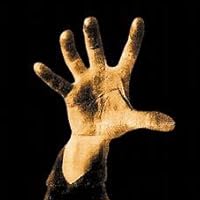
Minnie Bruce Pratt’s Crime Against Nature was the 1989 Lamont Poetry Selection from the Academy of American Poets, which recognizes a poet’s second collection of poetry. Crime Against Nature has been long out of print, until now. This new edition includes an introduction by Julie R. Enszer, a new afterword by Pratt, a reprint of Pratt’s speech at the Lamont award ceremony, photographs of Pratt and her family, and a bibliography.
"In spare and forceful language Minnie Bruce Pratt tells a moving story of loss and recuperation, discovering linkages between her own disenfranchisement and the condition of other minorities. She makes it plain, in this masterful sequence of poems, that the real crime against nature is violence and oppression.--From the Judges' Statement, Lamont Poetry Prize 1989, CRIME AGAINST NATURE
"Minnie Bruce Pratt's CRIME AGAINST NATURE is, for a number of reasons, a work at the poetic crossroads. It extends the subject of love poetry; it extends the subject of feminist and lesbian poetry; it looks in several directions through the lens of a strong, sensuous poetics, through that fusion of experience with imagination that is the core of poetry, and through cadences founded in the music of speech, tightened and drawn to an individual pitch."--Adrienne Rich
Minnie Bruce Pratt (b. September 12, 1946 in Selma, Alabama) is an U.S. educator, activist, and award-winning poet, essayist, and theorist. Pratt was born in Selma, Alabama, grew up in Centreville, Alabama and graduated with an honors B.A. from the University of Alabama (1968) and a Ph.D. in English literature from the University of North Carolina (1979). She is a Professor of Writing and Women’s Studies at Syracuse University where she was invited to help develop the university’s first Lesbian/Gay/Bisexual/Transgender Study Program. She emerged out of the women’s liberation movement in the 1970s and 1980s and has written extensively about race, class, gender and sexual theory. Pratt, along with lesbian writers Chrystos and Audre Lorde, received a Lillian Hellman-Dashiell Hammett award from the Fund for Free Expression to writers "who have been victimized by political persecution." Pratt, Chrystos and Lorde were chosen because their experience as "a target of right-wing and fundamentalist forces during the recent attacks on the National Endowment for the Arts."[1] Her political affiliations include the International Action Center, the National Women's Fightback Network, and the National Writers Union. She is a contributing editor to Workers World newspaper. Pratt's partner is author and activist Leslie Feinberg. [from Wikipedia http://en.wikipedia.org/wiki/Minnie_B...]
Crime Against Nature is a poetry collection by Leslie Feinberg’s partner, Minnie Bruce Pratt, who had her kids taken away from her for being a lesbian. So glad Sinister Wisdom re-released this title to the newer generations of sapphics!
I felt like a good number of the poems in this collection didn’t completely reach me. Not because they weren’t moving in their own right, but because the formatting and style choices took me out of it. That being said, poetry is obviously subjective and there were a few that moved me to the point of tears. I particularly liked, “Another Question.” I feel like what carried this collection for me was Pratt’s story and the prose that followed at the end.
I do want to nod to Pratt’s remarks in her, included, Lamont ceremony Speech, “When I began to live as a lesbian, what I needed to know to survive my own despisal, and do my work, was knowledge that was rooted for me in those who had come before me.” I hope Pratt lived out the rest of her life knowing that these works have given people like me that same knowledge that she too craved.
I think regardless of how you feel about the poetic choices, you will find that in this collection– a sense of queer kinship. One that is triumphant.
I love how Minnie Bruce refuses to compromise any part of herself the way shame sought to coerce her to; thoughts like “maybe being less lesbian could make me more mother” creep in, but even the sons that were ripped away from her say that her honesty about who she is is what they love most about her poems. Also, much like how her roles as lesbian, mother, and poet bleed together as one, I really appreciate how the grief over the loss of her own sons melds with her grief over US imperialism, how she makes clear that every lost son is her own.
Must be read out loud! Soulful and painful and gorgeously rhythmic. We very rarely get to peer into someone's regret and shame so consciously. This book is brave. Her relationship to gender and sexuality is so honest and so interesting.
Touching sad beautiful account of losing custody of her children for being a lesbian, her ongoing relationship with her boys and to nature, and a damning account of homophobia and the sexist double standards we hold women to.
Minnie Bruce Pratt wrote this heartbreaking poetry collection in her struggle to continue to live a life true to herself while being forced and attempted to be completely removed from her two sons adolescences simply because she chose to live outwardly as a lesbian. Due to the laws in the state of North Carolina, where she lived at the time, during 1975, it was then criminalized to participate in homosexual relationships and live a life conducive to queer identities, and if she had sought a fight for custody, she would ve been arrested as a lesbian woman.
It is heart wrenching to experience second-hand the conflicting deeply rooted identities of mother and lesbian that Pratt has to constantly navigate and weigh between in order to live as true to herself as she possibly can, and the intensely painful ways this desperate attempt at genuineness to her comprehensive identity negatively impacts her life.
Aside from the collection of poems garnered in this edition, there is also included pieces such as an enlightening introduction of Pratt's circumstances, her acceptance speech for a prestigious award she received for this collection, and an added revision and update further acknowledging the egregious discrimination against the queer community, how it has evolved over the years, and as well an appropriate and respectful recognition of the intersections inherent in any homosexual woman's identity, including the WOC and trans individuals who have significantly forged a path before and alongside her.
"—what I needed to know to survive my own despisal, and do my work, was knowledge that was rooted for me in those who had come before me, who I had not acknowledged, in the Black civil rights movement, in the women's liberation movement, in our gay and lesbian past."
This more recent addendum to the text truly elevates the value of something that could've been seen as dated, and I think this kind of recognition of previous history, time past, and circumstances changed throughout time by the author or by a contributor provides further nuance and history that can be extremely valuable.
White feminism too often dominates the focus of the women's movement and so toxically attempts to aggregate the focus onto intensely self-involved primarily white leaning issues, failing to consider the bigger picture of the presence of intersectionality and the depth of diversity when it comes to institutional bias and criminal behavior against women of all identities and how those identities impact the ways in which any woman is oppressed.
With these extra added inclusions, Pratt further completes the impact of her personal poetry collection by touching emotionally on her own struggles being a lesbian woman trying to live her truth in her own way, but still managing to somewhat explore the deeper intricacies of what it means "—to be lesbian in the complex matrix of our lives.'
This is not the first book of poetry I have read of Pratt’s, but I liked this one much more than the other I read. I am not really a poetry fan so I did not like the formatting choices or the poetry portion of this book, instead I really enjoyed reading Pratt’s story. The poems focused on her feelings around losing custody of her two children when she came out as a lesbian. This was a terrible time in her life, but she handles it and seems to be getting through.
While I did not like how meta this was at times (mentioning how her sons were reading the poems made me feel like she was detached from it and not putting her heart into the work anymore), I did enjoy seeing how her and her sons progressed. The more Pratt mentioned that she showed off her poems or that she wrote poems to deal the less attached I got. It felt like she was trying to hammer home the point that she was not hiding, but the fact that she came out and stayed out is enough to show that she not hiding anymore.
While this book of poetry was more powerful than some of her others, it does not compare with her prose. I only started reading her because of her long term partner Leslie Feinberg. As a stand-alone piece this one left me feeling like I knew very intimately a small portion of the poet’s life. I was very pleased and surprised by the level of intimacy that Pratt gives us through these poems.
It was a quick and easy read. Pratt is usually an easy read as she writes very accessibly and emotionally. While it was not my favorite book, I would probably read it again (probably due to not remembering having read it as I easily forget poetry I have read).
My copy of this book comes from my grandparents' library. It arrived there the year after my grandmother died. It must have been a poetry book club selection, something my grandfather forgot to cancel. Or perhaps my grandmother, who was a poet, had herself submitted to the Lamont Poetry Prize? I try to imagine my grandmother reading the book, and I hope she'd have sympathized with Minnie Bruce Pratt, but I can't be sure. My grandmother believed we were put on this earth to have children, and while my grandmother lived, her daughter (my mother) believed that I couldn't possibly raise a psychologically healthy child with another woman, because a child needed a mother and a father.
I know two women of different generations who each had a romance with a woman while married to a man. The first woman did so in the period Minnie Bruce Pratt describes, when a woman could be declared an unfit mother for that. The first woman left her children in the care of their father for a brief period while she explored her relationship with her new female lover. The second, younger woman condemned the first one for "abandoning her children" for months. The younger woman didn't seem to realize that the first woman could have lost her children permanently.
In this collection of poems Minnie Bruce Pratt writes about coming out as a lesbian and as a result not being able to be in contact with her children. Unfortunately stories like this are still relevant now. It's not easy to read these poems but it is a very essential collection and they're engaging as well. While reading this I thought about how me being childfree means I won't have a "real" family according to lawmakers and people who use the phrase "starting a family" to express that they're having a child. This is annoying because a family without children is still a complete and whole family. Also as someone who's aromantic (demi) it really fucking sucks that marriage is necessary in order for a relationship to be seen as valid. Anyway I did like this poetry collection despite the descriptions of pregnancy and birth and I would suggest to read who are interested in poetry about LGBTQIA+ life.
An absolute must-read! While most of the lesbian poetry I have read either proudly celebrates wlw's love or expresses the social struggles that are specific to our experience of being gay in a heteronormative environment, this collection is very unique as it mostly focuses on motherhood. It is a book about conciliating motherhood and queerness. It takes us back to a time when gay people were not allowed to grow a family. Minnie Bruce Pratt was denied motherhood because she was a lesbian. It is a political book because of the dynamics of stigmatization, social injustice and rejection that shaped MBP's existence. But deep down, for me this book was less about the social stigma (yet well depicted in the poems) than about Minnie Bruce Pratt's own path in overcoming guilt and shame. It is a very introspective, personal piece of writing, raw and intimate.
Incredible read from Minnie-Bruce Pratt, outlining the traumatic incident of her losing custody of her children in 1975 after coming out as a lesbian. Minnie-Bruce uses such beautiful poetic imagery to convey such trauma, but not to make you feel for her, but for you to understand how powerful she is despite that. And she is; I am honored time and time again to call her a personal friend.
The 2013 version of the book includes a foreword and afterword, contextualizing the work as a lesbian poetry classic. A lot of this is working through her experiences being separated from her young children after she came out; the experience of motherhood through separation. The poetry is really accessible, and while there’s joy here, there’s also a lot of sadness
Reread. An incredible poetry collection about the trauma of Pratt losing custody of her children when she was declared an unfit mother for being a lesbian. This is a classic and I'm so glad it was reissued by Sinister Wisdom--it deserves to be widely read.
Minnie Bruce Pratt writes about losing custody of her sons when she chooses to live openly as a lesbian after her divorce from her husband. Her story is written in exquisite and heart wrenching poetry, leaving this reader shaking her head out of sadness and admiration.
Powerful book of poetry detailing Pratt’s life and experience with losing her children for being a lesbian in the South. Deals with reclamation of identity and choosing to be oneself despite the losses it may amass. Not my favorite writing style though definitely provoked much to think about!
flew through this. i wasn’t able to connect to some of it simply because i am not a mother but definitely made me think about the dichotomy of motherhood and lesbianism.
Pratt's poetry tells a story of resilience against anti gay laws in this country. I really enjoyed this collection of poems, and I am always in awe of how beautifully Pratt writes.
Poetry is a genre I am not all too familiar with, I believe this is only my second one I have read (which will be changed). That being said, this requires another read for me but my goodness is it devastating and moving.
In 2016, this year of gay marriage in every state of the US, it feels too easy for queers to forget their history. We take for granted that we can have families, be partners to one another, be parents. It feels too easy to forget that very recently, our lives and our love were not only illegal but under constant threat of vigilante violence. The smallest of expressions of queer love could be enough to beget severe repercussions. (It's easy to forget that this is still a reality for many in our community today).
These poems will teach you the injustices and sufferings that Minnie Bruce Pratt, who should be one of our most dearly held queer elders, faced in the 70s and 80s. Courts and judges and laws validating the rough man at the gas station who calls you dyke. The community turning against you for your sexual desires, and for expressing them without fear. And commingled with these sufferings, the dyke bars, the community, the fearlessness, the pleasures of the sex itself.
These poems are really beautiful. And this work seems like it is not widely read, not nearly enough. The constant turn to empathy here reminds me of Rankine's Citizen. The everyday folk remind me of Frost.
There's more to say: about bodies and ancestry and parenthood and how history lives in the landscape, and in us.
It's been a long time since I opened a book of poetry and read it front to back, but these poems, raw and rich, compelled me through them.