A treasury of forty stories chronicles the life of a village schoolteacher in the Berkshires in England and captures the scenes and nuances of village school life
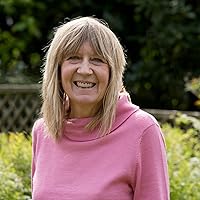
Dora Jessie Saint MBE née Shafe (born 17 April 1913), best known by the pen name Miss Read, was an English novelist, by profession a schoolmistress. Her pseudonym was derived from her mother's maiden name. In 1940 she married her husband, Douglas, a former headmaster. The couple had a daughter, Jill. She began writing for several journals after World War II and worked as a scriptwriter for the BBC.
She wrote a series of novels from 1955 to 1996. Her work centred on two fictional English villages, Fairacre and Thrush Green. The principal character in the Fairacre books, "Miss Read", is an unmarried schoolteacher in a small village school, an acerbic and yet compassionate observer of village life. Miss Read's novels are wry regional social comedies, laced with gentle humour and subtle social commentary. Miss Read is also a keen observer of nature and the changing seasons.
Her most direct influence is from Jane Austen, although her work also bears similarities to the social comedies of manners written in the 1920s and 1930s, and in particular the work of Barbara Pym. Miss Read's work has influenced a number of writers in her own turn, including the American writer Jan Karon. The musician Enya has a track on her Watermark album named after the book Miss Clare Remembers, and one on her Shepherd Moons album named after No Holly for Miss Quinn.
In 1996 she retired. In 1998 she was made a Member of the Order of the British Empire for her services to literature. She died 7 April, 2012 in Shefford Woodlands.
I love Miss Read's books. This is one of her more minor ones - a collection of the essays she write about life as a country schoolteacher for magazines like Punch and the Times Educational Supplement - but still a pleasure for its scenes of English village life and her great ability to connect the reader to nature and the seasons.
I love Miss Read. Over the years I've collected all of her books and read them many times. This one is a collection of short pieces surrounding an anonymous village school. There's not plot but the stories are arranged around one year of school. Light and fun reading celebrating life with small children and the outdoors.
Charming to a point, but the vignettes get repetitive, and the narrative voice is condescending. Even allowing for the different times in which this was written, I don't think I'd be thrilled if Miss Read were my kids' teacher.
This is probably my first Miss Read book and the only one my library had at hand. I didn't realize it was short essays, rather than a connected story. Enjoyed it, will be looking forward to the others, the first 3 of which I have just ordered from Amazon.
Short, sweet, funny stories of teaching early grades in England post WWII. Charming and in bite-sized chapters, it’s a wonderful look at a bygone era that gives a distinct flavor of having lived it.
A collection of short tales of life in an English village schoolhouse originally published in magazines primarily in the 1950s. Miss Read was a longtime teacher and author of several novels. These had a sweet, Reader’s Digest feel. Early on I wasn’t sure fi they were fiction or nonfiction, but later in the book, they were just a bit too tidy in terms of resolution. A closer look at the copyright page confirms they are fiction, but no doubt Read draws on personal experience.
The tales are arranged chronologically, so they take you through a full school year. The class seems to be a mix of ages, I think 5 to 7 perhaps? The children are never really developed as characters, so it’s never all that absorbing. They feel like intentionally generic children. But it’s a nice enough light, episodic read.
Very short vignettes of a post-WWII village school in Northern England. Warm and nostalgic. Perfect for bedtime reading, as each "chapter" is only 2-4 short pages, and the gentle subject matter allows one to let go of the day's stress before drifting off.
I've only read a few other of Miss Read's books. This one was more like short essays rather than having a plot and story-line. The chapters can stand alone and be read out of order (being American, I skimmed the ones about the cricket match and the lesson about making change for a one pound note, not having the foundational knowledge one would need to appreciate them).
At the back of the classroom is the weather chart, headed in wobbly capitals "SPRING TERM." Each square represents a day, and snowmen, umbrellas and kites give some idea of the mixed weather we have endured; but four heartening suns in a row beam, lime yellow daisies, from the last spaces. 109
... young Henry ... surrounded by the tokens of spring in the classroom, had realized that they were only substitute for the real thing. It was he, the babe among us, who had led his befuddled elders to reality when when he had cut straight to the heart of the matter with those three words, 'Let's go out!' 110
I know whenever I pick up a Miss Read book that I'm in for a sweet story of a time gone by in rural England. Tales from a Village School is a atandalone collection of short tales from Miss Read's experiences as a school teacher. The stories were originally published in the 1950s in various magazines before being collected together for publication. Miss Read is not an author one reads for action and adventure. Instead, her gentle stories bring a sense of peace and yearning for simpler times amidst our hectic, digital age.
Adorable book of short pieces on the subject of a village school in rural England. These are vignettes from an old-fashioned, innocent world that has disappeared. I was hoping to read a novel set in an English village because I love books about English village life and this isn't quite it, but it's a quaint, gentle read.
These books are so comforting: the kids listen, and even obey, the teacher and the parents. The village folk are kind and helpful. And yet they're not goody-goody. There's order and kindness in the world, and the kids get up to stuff, but everyone's fine in the end. I'd forgotten how much fun they are.
Pure nostalgia about a time long since gone when schools had no targets, OFSTED, set curricula etc. A series of short stories or vignettes, told from the teacher's point of view, interspersed with monologues. I'm certainly pleased we no longer talk to children in the way portrayed in the book but does give an insight into the close knit community of a school in a small village pre 1960s.
armsad lühikesed tõsielulised lookesed 50ndate briti külakooliõpetaja argipäevast, originaalis ilmunud vist ajalehtedes-ajakirjades kolumnide vormis. mõtlesin lugedes kogu aeg kahe asja peale: 1) haridussüsteem pole 75 aastaga suuremat muutunud, 2) aga kas peabki, arvestades, et lapsed ei ole ju ka muutunud?
Like most people colonised by the British I have a love-hate relationship with early England, especially the idyllic, bucolic picture painted by books from the period. This is a sweet book, evoking a by-gone era.
This book was not bad, it just wasn’t something I’d read again or recommend unless it was for a specific reason. It is a compilation of essays that are cute and sometimes hard to follow, but not amazing.
I read a lot of her books before. I was lucky enough to get about 6 or so for myself awhile ago. I do like reading about the goings on in the schools. It makes for a most enjoyable time.
Short stories set in a village school some are in Fairacre with characters from that series some aren’t. It was lovely to be back in Fairacre though, so worth the purchase.
I suppose that, given the age of this, I should have expected to encounter racism, but I really wasn't prepared for a six year old who is bad in all sorts of ways just because he's a 'gypsy.' It doesn't get better as the book goes along.
I also had difficulty with the prose style. This is a collection of vignettes, and in many cases, the author seems to glide right past the details that I would have liked to see so that I felt like I was reading fragments of a scene instead of a complete work. I suspect that some of that is that I have no experience with the time, place, and culture that the stories are embedded in.
Its another of those "one off" Miss Read books, light reading at its best, you can dip in and out of this book, amusing little anecdotes in the life of a village school, my favourite short story was "the lucky hole". I would imagine Miss Read drew on her memories as a teacher herself, all in all a sweet book.
I read this book thinking that it was book number one in the series, Miss Read's Village School from the Fair Acres Series.
I read it, but found it a bit confusing. Still, I kept reading. It's lots of little two and three page stories of things that happened in the village school.
My mother loved all the Miss Read books - yikes ! This book consists of tiny vignettes of village school life in rural England - the charming rural England of rooks and vicars and jam pasties. I hate to say this but it made me smile and sometimes laugh. A very soothing read.