Nace en la plaza de Santa Ana2 (entre su iglesia homónima y Plaza Nueva, a la que está anexa), e inicia sus estudios primarios en el Centro Público Municipal y en el Colegio de la Concepción. En 1901, a la edad de seis años recibe diploma y premio de entre todos los alumnos de las escuelas públicas granadinas.
Terminó sus estudios de bachillerato en 1910; y en noviembre de 1913 intervino de forma activa en la Asamblea de la Federación Escolar celebrada en Granada. Sus inquietudes intelectuales en esa época le llevaron a tomar en consideración la teoría del regeneracionismo que plasmó mediante colaboración en la publicación universitaria Granada Escolar.5
Licenciado en Derecho, y en Filosofía y Letras el 30 de junio de 1914 por la Universidad de su ciudad natal, recibiendo por su trabajo-tesis Evoluciones de la arquitectura en España como intento de arte nacional, premio extraordinario fin de carrera. En 1915,6 en plena juventud y con una viva actitud política e intelectual se afilió a las Juventudes mauristas granadinas,7 impulsadas por su compañero y amigo Melchor Fernández Almagro. Hacia 1917 se aparta de un maurismo dividido, y dirige su mirada hacia el regionalismo encarnado por el catalán Francisco Cambó.
En 1918 pone en marcha el proyecto editorial de la revista Renovación, de filiación regionalista,8 al estilo de la figura del catalán Cambó, frente al radicalismo nacionalista y federal que propugnaba Blas Infante, posicionándose de forma unívoca en su artículo Afirmaciones de su primer ejemplar, en el que defendía la conciencia "regional" como único camino para despertar a Andalucía de su letargo.910 Fundando más tarde El Sur que no llegó a aparecer. Ante la ansiada "regeneración municipal", en 1920, se presenta a las elecciones a concejal del Ayuntamiento de Granada, por el distrito de San Gil-San Pedro, su proyecto electoral dado a conocer en la revista Noticiero no tuvo el respaldo suficiente al no ser elegido. Ante esta adversidad política, su vida intelectual se desplaza durante unos años al mundo cultural.
En 1922 contrajo matrimonio con Eloísa Morell Márquez en la iglesia de San Matías11 y obtuvo por oposición la plaza de funcionario del Cuerpo de Archiveros, Bibliotecarios y Arqueólogos, siendo su primer destino la Biblioteca Nacional, a las órdenes de su director Francisco Rodríguez Marín,12 siendo posteriormente nombrado archivero de la Delegación de Hacienda de Granada, y más tarde director del Museo de la Casa de Castril. En ese año, publicó su primera monografía histórica, Granada en la Guerra de la Independencia, que había presentado como tesis doctoral en la facultad. El desarrollo político-social de la dictadura de Primo de Rivera (1923), le desencantó pronto a pesar de seguir afiliado a Unión Patriótica13 y que su tío Rafael Benjumea y Burín,14 fuera ministro de Fomento bajo el gobierno del general Primo de Rivera.
Preocupado por la vida cultural e intelectual de su Granada de principios del siglo xx, trabajó en fomentar la cultura, fundando con sus antiguos compañeros de bachillerato y parte de la intelectualidad local, la tertulia de El Rinconcillo en el Café Alameda de Granada, en donde acudían entre otros de forma habitual, Melchor Fernández Almagro, el pintor Manuel Ángeles Ortiz, los hermanos Francisco y Federico García Lorca, Manuel de Falla, José Acosta Medina, José Mora Guarnido, el ingeniero de caminos Juan José Santa Cruz, Constantino Ruiz Carnero, Francisco Soriano, Miguel Pizarro, José y Manuel Fernández Montesinos, Hermenegildo Lanz, Ángel Barrios, Ismael González de la Serna,15 Andrés Segovia y otros compañeros.16 Junto con su amigo Fernández Almagro fundó la Institución Ganivet. Fue en la tertulia donde Antonio efectuó un profético brindis inmortal: a Federico, que va a morir una noche de estrellas, sintiendo a Chopin en su alma y una mano suave sobre su alma y su corazón. Como periodista, escribió asiduamente para los diarios Patria, La Gaceta del Sur y el No
Armed with this erudite and encyclopaedic guide of the town of Granada, I left for a short visit of the town. That was a frustrating endeavour--not the visit, for any length of time that one can spend in that beautiful and gay city is well spent, but because the book made me think that to be able to explore all the corners and absorb the degree of detail it provides, I would require to spend at least three months in Granada.
The book was first published in 1936 and has gone through eleven editions. It was translated into English in 1992. It is organized in five parts. The first and introductory one presents geological, climatic information and a simple historical overview. The other four parts are routes to take in the city. Holding a position of honour is the first one describing the hike up to the Alhambra.
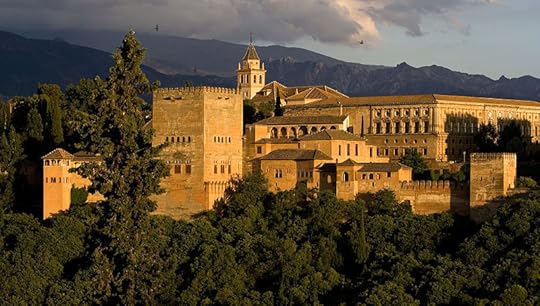
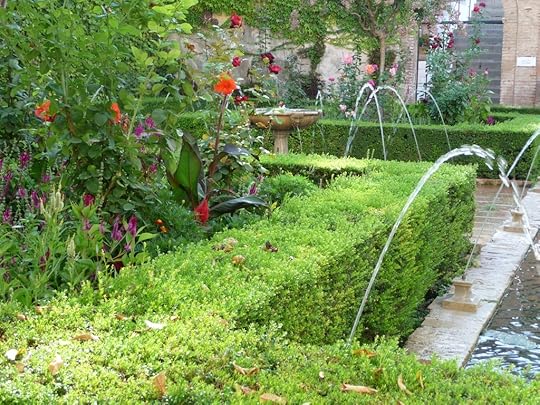
With over 6k visitors a day, or around 2,5mm in a year, this is the most visited monument in Spain, a country that already ranks as one of the top 5 most visited worldwide (France is the first). But do not let this detail put you off. The Alhambra is rather large. It consists of a walled citadel on top of a steep hill. The Edenic gardens are ample and lush and airy and blooming, so visitors happily distribute themselves across its surfaces. There are also several palaces and other buildings, one of which, formerly a monastery, is now a hotel. The throngs of tourists are also parcelled along extended opening hours, with night tours available too.
Gallego’s description of the hike is slow and paced so that the reading makes more sense once one has already visited the place--it is so very descriptive and enriched with historical detail. He reminds us that the times when the Alhambra was built were very different from those of the Cordoba Caliphate. Different people built them. Gone were the heydays of the Umayyad dynasty. The Nasrids arrived later and established themselves on the Alhambra at a time when the Reconquista by the Christians had long begun. They were therefore on the defensive and became vassals to the Castilian kings. It was not until they refused to pay their monetary dues that they were invaded and expelled by Isabel & Fernando, the Catholic Kings.
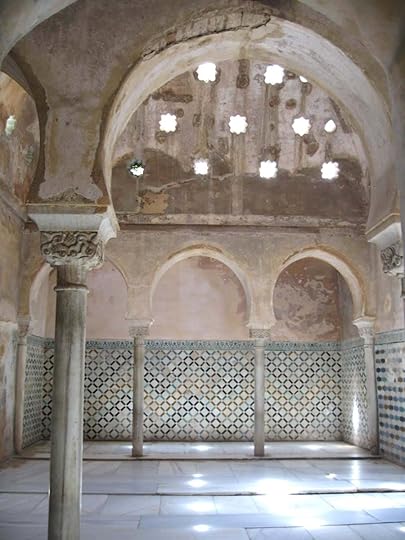
In spite of the aims at the Reconquista, the relationship between the Christians and the Muslims had been rather calm for extended periods of time. One of the guards in the Museum told us of the friendship of the Castilian King Pedro I, who came to the Alhambra as a guest of his good friend Mohammed V, to undergo a spa and bathing cure that would help him for he was severely overweight.
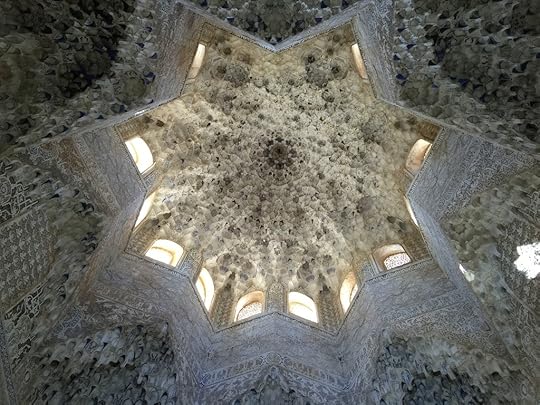
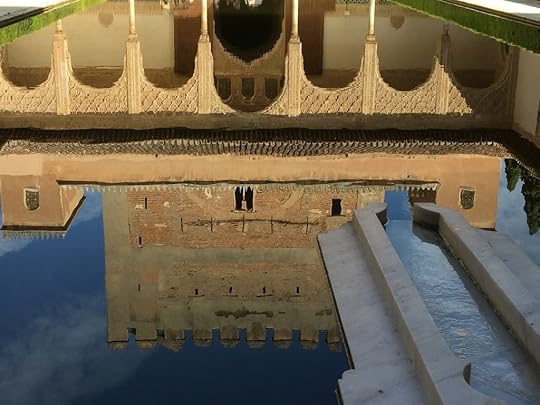
The citadel, though fortified and designed to be self-sufficient, contained several buildings designed for a life of comfort, luxury and delectation. The Nasrids felt relatively secure and independent—both from the Christians and from other Muslims realms. The materials they used for many of their buildings were not stone and marble, but malleable clay. It is all on the surface. Even their sophisticated hydraulic system was exploited to be able to enjoy the mirrors that water can provide. The pond on the Court of the Myrtles anticipates the much-photographed reflection of the Taj Mahal.
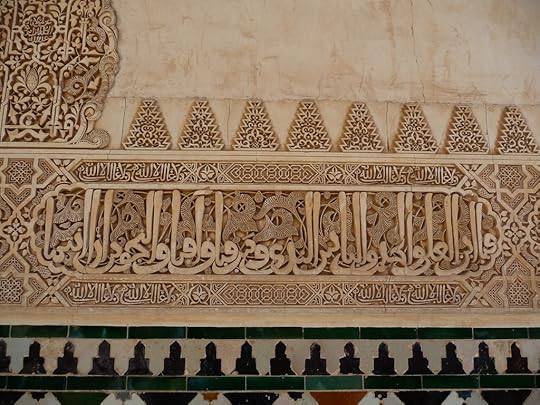
If water is a running feature, Gallego in his exhaustive approach brings out the textual and literary nature of the buildings, filling his pages with the beautiful poems (translated) that cover the walls. For the Alhambra palaces were open books of painted and cooked mud. The beautiful inscribed calligraphy, framed in glorious geometric patterns, was meant to be read.
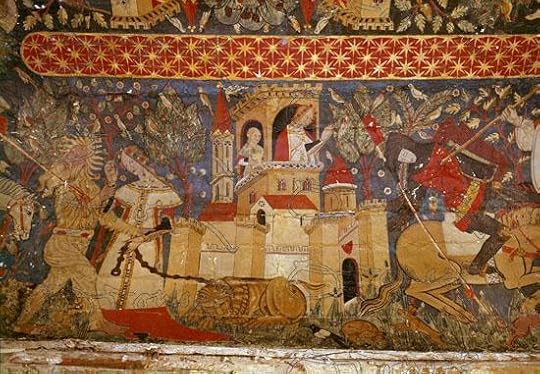
Even though I have been to the Alhambra several times, the last one was a while ago. Reading Gallego I was floored to discover that there are figurative paintings in the vault of one of the rooms. Knights, both Muslim and Christian, figure in an ostensibly narrative and courtly scene in the Hall of the Kings. With still unexplained origins, these were to the liking of the Nasrids, who seemed to have forgotten the antagonism that the Muslim creed feels for representation in art. Unfortunately, this room was closed under restoration, which will take a while since the figures are painted on leather.
The other three routes in Gallego’s book, combine more Muslim sites in the lower part of Granada--such as the Madraza or the Bañuelo (Baths) or the Corral del Carbón (Coal Yard), with many Renaissance sites. Even though it is obvious, the sudden shift in the history of Granada transforming from a Muslim to a triumphal Renaissance culture in a very abrupt and a short span is shocking, and one feels as if overtaken by schizophrenic cultural spasms.
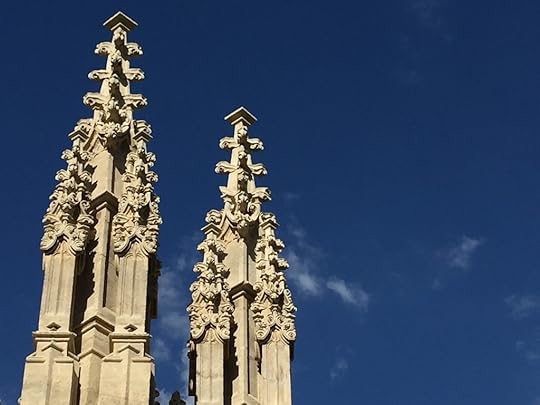
When Granada was taken over by the Christians it created a major commotion for this came at a time when the Ottoman menace had been felt very strongly and too closely. The new Granada also created a great demand of architects, artists, administrators and financiers, attracting visitors from the rest of Europe. Amongst the most famous is Hieronymus Münzer who visited the town two years after the conquest, or the Sicilian Luciu Marineu Siculu. The Renaissance that we see in Granada has therefor a strong Flemish and Italian influence. And even if the large Cathedral is obstreperous and makes one wonder what the original great Mosque would have been like, I found the Capilla Real (Royal Chapel), with its beautiful collection of Flemish panels, more to my liking. This was to be the Royal Pantheon for the country but after a couple of generations the great-grandson of the Granada conquerors decided to establish the royal sepulchres in the vicinity of the then much smaller city of Madrid.
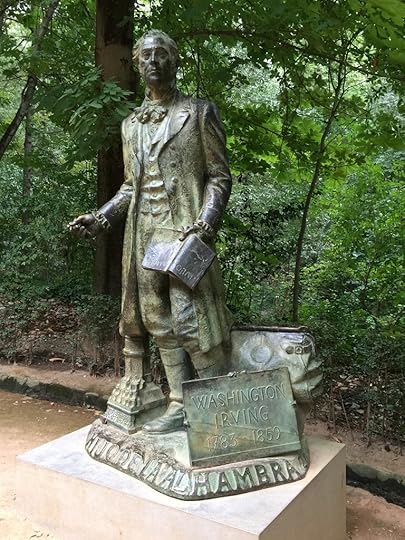
The figure of Decay also extended its grey mantle over the beautiful Alhambra. It all started with the change of monarchy as the Bourbons withdrew the support from the Counts of Tendilla who had been in charge for generations as Administrators of the Citadel. The bombings perpetrated by the Napoleonic troops, as they existed obviously did not help either. Romanticism and Exoticism came to the rescue and the American diplomat Washington Irving was one of the redeemers, and he is now duly remembered in all the tourist shops and on the path up the hill.
My only qualm with this book is that even if it is nicely illustrated is that it lacks maps. As for my frustration of only spending a couple of days with this copious guide under my arm is that this was a Due Diligence trip as I plan to come back with friends for a longer stay next year.
And if this beautiful place does not lure you to join the tourist pilgrimage, may be the extraordinary quality of the, very cheap, tapas in Granada will do the trick.