

What do you think?

The Case for Miracles: A Journalist Investigates Evidence for the Supernatural
Lee Strobel trains his investigative sights on whether it's credible to believe God intervenes supernaturally in people's lives today.
This book starts with an unlikely interview in which America's foremost skeptic builds a seemingly persuasive case against the miraculous. But then Strobel travels the country to quiz scholars to see whether they can offer solid answers to atheist objections. Along the way, he encounters accounts of healings and other phenomena that simply cannot be explained away by naturalistic causes. The book features the results of exclusive new scientific polling that shows miracle accounts are much more common than people think.
What's more, Strobel delves into the most controversial question of all: what about miracles that don't happen? If God can intervene in the world, why doesn't he do it more often to relieve suffering?
This book starts with an unlikely interview in which America's foremost skeptic builds a seemingly persuasive case against the miraculous. But then Strobel travels the country to quiz scholars to see whether they can offer solid answers to atheist objections. Along the way, he encounters accounts of healings and other phenomena that simply cannot be explained away by naturalistic causes. The book features the results of exclusive new scientific polling that shows miracle accounts are much more common than people think.
What's more, Strobel delves into the most controversial question of all: what about miracles that don't happen? If God can intervene in the world, why doesn't he do it more often to relieve suffering?
320 pages, Paperback
First published January 1, 2018
About the author
Lee Strobel
233 books1,932 followersLee Patrick Strobel is an American Christian author and a former investigative journalist. He has written several books, including four that received ECPA Christian Book Awards (1994, 1999, 2001, 2005)[2] and a series which addresses challenges to the veracity of Christianity. He also hosted a television program called Faith Under Fire on PAX TV and runs a video apologetics web site.
Ratings & Reviews
Friends & Following
Create a free account to discover what your friends think of this book!
Community Reviews
Displaying 1 - 30 of 218 reviews

December 6, 2018
4.0 stars -- Ever since Lee Strobel wrote "The Case for Christ" I have been a big fan, even convincing my Sunday School class to use the DVD series "The Case for Faith" when they wanted to discuss major issues of concern they had regarding God and their personal issues of doubt. Strobel's books are all organized the same way as he conducts his own investigation and interviews the leading authorities in the fields he is researching. He chooses the areas of inquiry as well as the experts to interview, so inevitably it leads to some portions of the book being stronger than others just depending on the expert who is being questioned. "The Case for Miracles" also follows this format and starts out with some really strong interviews with some impressive scholars who have extensively researched miracle claims and documented the results. The most interesting interview is Craig Keener who discusses his research on miracles and gives specific examples of case after case of documented medical miracles that cannot be explained by science. The book also shines at the end when Strobel interviews Douglas R. Groothuis who is a Christian author and scholar whose wife is slowly dying of dementia. Strobel interviews him about the issue of unanswered prayers/when you don't get the miracle from God. His explanation of the difference between resignation and relinquishment is one of the best explanations I have ever read on how to deal with the disappointment of unanswered prayers. The book would have been a definite 5 star but Strobel retreads some of the same areas covered in "The Case for Christ" and "The Case for the Creator" albeit with different authors that didn't add anything to the debate that wasn't covered in those books far better. But, both the first few chapters and the last are so strong that the book is worth reading just to learn from some of the best apologists and Christian scholars their opinions as to whether miracles can be documented and proven and whether they result from prayer and God or just mere good fortune.

March 27, 2018
On Pentecost Sunday evening, 1981, a young woman walked down the aisle of Wheaton Wesleyan Church in Wheaton, Illinois. Church attendance wasn’t uncommon in that city, which housed the headquarters of many evangelical institutions, including Wheaton College. And yet, this young woman’s steps elicited gasps from those in attendance.
Why? Because Barbara — that was the young woman’s name — had been diagnosed with progressive multiple sclerosis 16 years earlier. She hadn’t been able to walk for seven years. Indeed, at that point, the progression of her illness was so severe that she was in hospice care at her home, with a life expectancy of six months.
What accounted for the change? A prayer request for Barbara had been communicated to Moody Bible Institute’s radio program. Over 450 people wrote letters to her church, indicating they were praying for her. As Barbara’s aunt read some of those letters to her at her bedside, Barbara heard a man’s voice say, “My child, get up and walk.” And she did. She’s been free of MS ever since and now lives with her husband, a pastor, in Fredericksburg, Virginia.
Lee Strobel recounts Barbara’s story in his new book, The Case for Miracles. Strobel was the award-winning legal editor of The Chicago Tribune and an atheist before coming to Christ in the early 1980s. Since then, he has written The Case for Christ and other books investigating evidence for the truth claims of Christianity.
Christianity is an inherently supernatural religion. Among its supernatural truth claims are the existence of God, the creation of the world, the inspiration of the Bible, the incarnation of Jesus Christ, and Christ’s resurrection from the dead, among many other miracles. In the modern world, under the influence of science, many have come to doubt the reality of the supernatural.
To understand their doubts, Strobel interviews Michael Shermer, a well-known atheist and editor of Skeptic magazine. Shermer agrees with the critique of miracles outlined by the Scottish philosopher David Hume in his essay, “On Miracles.” Hume defined a miracle as a violation of the law of nature. He believed that claims of miracles come from uneducated persons in less advanced societies, people and places unaware of how the world works. And he argued that, in any case, it was more likely that there was a natural explanation for an event than a supernatural one. Shermer considers this the best argument against the miraculous.
Barbara’s case provides evidence that Hume was wrong. Here was a modern person, treated by doctors at the Mayo Clinic no less, whose instantaneous healing was documented by her doctors in two separately published books. And that healing took place in the context of a spiritual experience. Those facts indicate that naturalistic explanations — remission, psychosomatic cure, placebo effect, etc. — are insufficient empirically.
And Barbara’s case is not the only one Strobel cites. Strobel interviews Craig Keener for further evidence in favor of miracles. Keener was an atheist who became a Christian. He is a well-known New Testament scholar and author of the two-volume book, Miracles. While writing a commentary on the Book of Acts, Keener realized that too many scholars believe Acts is unreliable historically because it contains accounts of miracles. Keener decided that if he could provide evidence that miracles happen today, it would buttress the historicity of Acts. He provides documentations for hundreds of modern miracles, including Barbara’s.
Strobel goes on to interview other scholars about Christianity’s supernatural truth claims: Candy Guenther Brown on the efficacy of prayer and Michael Strauss on the Big Bang and the fine-tuning of the universe, for example. And he summarizes the case for the resurrection of Jesus through an interview with atheist-turned-Christian J. Warner Wallace, a cold-case homicide detective.
Of course, miracles don’t always happen. They’re exceptions to the laws of nature, not the way that nature ordinarily works, after all. Strobel interviews Christian philosopher Douglas Groothuis (pronounced GROTE-hice) to understand how Christians can remain faithful in the absence of miracles. Groothuis’ wife, Rebecca, a scholar in her own right, was diagnosed with primary progressive aphasia, which has slowly robbed her of her ability to speak and to think. It’s been agonizing to watch, but Groothuis’ faith has helped him. “I’m hanging by a thread,” he says. “But, fortunately, the thread is knit by God.”
Whether through their presence (Barbara’s case) or through their absence (Rebecca’s case), miracles are signposts pointing to God. On the one hand, if readers approach miracle claims with an open mind — i.e., one that doesn’t rule out miracles because of a dogmatic naturalistic worldview — they might come to believe that there’s more to nature than meets even the scientifically trained eye. On the other hand, if they realize that this-worldly suffering poses unavoidable questions of meaning and significance, they might come to believe that they need more out of this life than this life can offer.
Either way, that “more” is God. If you’ve never thought about the case for miracles or the importance of finding meaning in life, I encourage you to read The Case for Miracles and reach your own verdict.
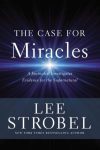 Book Reviewed
Lee Strobel, The Case for Miracles: A Journalist Investigates Evidence for the Supernatural (Grand Rapids, MI: Zondervan, 2018).
P.S. I wrote this article for InfluenceMagazine.com. It appears here by permission.
P.P.S. If you found my review helpful, please vote "Yes" on my Amazon.com review page.
P.P.P.S. In my article, "When the Healing Doesn't Come," I wrestle with the problem of miracles that don't happen, based on my own experience with chronic illness.
Why? Because Barbara — that was the young woman’s name — had been diagnosed with progressive multiple sclerosis 16 years earlier. She hadn’t been able to walk for seven years. Indeed, at that point, the progression of her illness was so severe that she was in hospice care at her home, with a life expectancy of six months.
What accounted for the change? A prayer request for Barbara had been communicated to Moody Bible Institute’s radio program. Over 450 people wrote letters to her church, indicating they were praying for her. As Barbara’s aunt read some of those letters to her at her bedside, Barbara heard a man’s voice say, “My child, get up and walk.” And she did. She’s been free of MS ever since and now lives with her husband, a pastor, in Fredericksburg, Virginia.
Lee Strobel recounts Barbara’s story in his new book, The Case for Miracles. Strobel was the award-winning legal editor of The Chicago Tribune and an atheist before coming to Christ in the early 1980s. Since then, he has written The Case for Christ and other books investigating evidence for the truth claims of Christianity.
Christianity is an inherently supernatural religion. Among its supernatural truth claims are the existence of God, the creation of the world, the inspiration of the Bible, the incarnation of Jesus Christ, and Christ’s resurrection from the dead, among many other miracles. In the modern world, under the influence of science, many have come to doubt the reality of the supernatural.
To understand their doubts, Strobel interviews Michael Shermer, a well-known atheist and editor of Skeptic magazine. Shermer agrees with the critique of miracles outlined by the Scottish philosopher David Hume in his essay, “On Miracles.” Hume defined a miracle as a violation of the law of nature. He believed that claims of miracles come from uneducated persons in less advanced societies, people and places unaware of how the world works. And he argued that, in any case, it was more likely that there was a natural explanation for an event than a supernatural one. Shermer considers this the best argument against the miraculous.
Barbara’s case provides evidence that Hume was wrong. Here was a modern person, treated by doctors at the Mayo Clinic no less, whose instantaneous healing was documented by her doctors in two separately published books. And that healing took place in the context of a spiritual experience. Those facts indicate that naturalistic explanations — remission, psychosomatic cure, placebo effect, etc. — are insufficient empirically.
And Barbara’s case is not the only one Strobel cites. Strobel interviews Craig Keener for further evidence in favor of miracles. Keener was an atheist who became a Christian. He is a well-known New Testament scholar and author of the two-volume book, Miracles. While writing a commentary on the Book of Acts, Keener realized that too many scholars believe Acts is unreliable historically because it contains accounts of miracles. Keener decided that if he could provide evidence that miracles happen today, it would buttress the historicity of Acts. He provides documentations for hundreds of modern miracles, including Barbara’s.
Strobel goes on to interview other scholars about Christianity’s supernatural truth claims: Candy Guenther Brown on the efficacy of prayer and Michael Strauss on the Big Bang and the fine-tuning of the universe, for example. And he summarizes the case for the resurrection of Jesus through an interview with atheist-turned-Christian J. Warner Wallace, a cold-case homicide detective.
Of course, miracles don’t always happen. They’re exceptions to the laws of nature, not the way that nature ordinarily works, after all. Strobel interviews Christian philosopher Douglas Groothuis (pronounced GROTE-hice) to understand how Christians can remain faithful in the absence of miracles. Groothuis’ wife, Rebecca, a scholar in her own right, was diagnosed with primary progressive aphasia, which has slowly robbed her of her ability to speak and to think. It’s been agonizing to watch, but Groothuis’ faith has helped him. “I’m hanging by a thread,” he says. “But, fortunately, the thread is knit by God.”
Whether through their presence (Barbara’s case) or through their absence (Rebecca’s case), miracles are signposts pointing to God. On the one hand, if readers approach miracle claims with an open mind — i.e., one that doesn’t rule out miracles because of a dogmatic naturalistic worldview — they might come to believe that there’s more to nature than meets even the scientifically trained eye. On the other hand, if they realize that this-worldly suffering poses unavoidable questions of meaning and significance, they might come to believe that they need more out of this life than this life can offer.
Either way, that “more” is God. If you’ve never thought about the case for miracles or the importance of finding meaning in life, I encourage you to read The Case for Miracles and reach your own verdict.
Book ReviewedLee Strobel, The Case for Miracles: A Journalist Investigates Evidence for the Supernatural (Grand Rapids, MI: Zondervan, 2018).
P.S. I wrote this article for InfluenceMagazine.com. It appears here by permission.
P.P.S. If you found my review helpful, please vote "Yes" on my Amazon.com review page.
P.P.P.S. In my article, "When the Healing Doesn't Come," I wrestle with the problem of miracles that don't happen, based on my own experience with chronic illness.

October 30, 2023
So thorough and interesting. Definitely recommend.
July 28, 2026
Miracles happen and are real. God is at work in a supernatural way that we don’t get to see often in the US because of our access to the Word. I pray we don’t forget God works in miraculous ways and can heal, save, change, etc just as Jesus did when he walked the Earth.
Read
December 20, 2023This book was just ok. I loved his book ‘The Case for Grace’ and was looking forward to this one, but it fell flat for me. There were things I found extremely interesting, but other things caused me to cringe.
Chapter 7 was a mess, it brings up Heidi Baker’s ministry and the pushiness of some charismatics when it comes to prayer and miracles. I’ve lived through this manipulation and because of that I almost dnf’d the book.
But I’m glad I pushed through, because two of the following chapters, one on the resurrection and the other on why miracles don’t always happen, were
favourites.
A quote by Nancy Guthrie, in the conclusion of this book, sums up my feelings on miracles…
“Some claim that strong faith is defined by throwing our energies into begging God for a miracle that will take away our suffering and then believing without doubting that He will do it. But faith is not measured by our ability to manipulate God to get what we want; it is measured by our willingness to submit to what He wants.”
I also love this hymn by A.B. Simpson and thought I’d share it…
Once it was the blessing,
Now it is the Lord;
Once it was the feeling,
Now it is His Word;
Once His gift I wanted,
Now, the Giver own;
Once I sought for healing,
Now Himself alone
Chapter 7 was a mess, it brings up Heidi Baker’s ministry and the pushiness of some charismatics when it comes to prayer and miracles. I’ve lived through this manipulation and because of that I almost dnf’d the book.
But I’m glad I pushed through, because two of the following chapters, one on the resurrection and the other on why miracles don’t always happen, were
favourites.
A quote by Nancy Guthrie, in the conclusion of this book, sums up my feelings on miracles…
“Some claim that strong faith is defined by throwing our energies into begging God for a miracle that will take away our suffering and then believing without doubting that He will do it. But faith is not measured by our ability to manipulate God to get what we want; it is measured by our willingness to submit to what He wants.”
I also love this hymn by A.B. Simpson and thought I’d share it…
Once it was the blessing,
Now it is the Lord;
Once it was the feeling,
Now it is His Word;
Once His gift I wanted,
Now, the Giver own;
Once I sought for healing,
Now Himself alone
Read
May 6, 20194/5 stars!
I always love Lee Strobel’s books and the mass amount of evidence he gives to support his claims from all kinds people who are both agreeable and on opposing sides of the argument or topic.
I always love Lee Strobel’s books and the mass amount of evidence he gives to support his claims from all kinds people who are both agreeable and on opposing sides of the argument or topic.

September 1, 2022
The book is unconvincing. Strobel's style follows a now well-established pattern, but this time he doesn't do a good job keeping to his theme, nor does he seriously investigate the miracle claims of faith-healers. That is the real issue, and he dodges it.
On his style, I think he should move on from the folksy story telling, at least to some extent. His books would be shorter, for one thing! But they really add nothing to whatever argument he is trying to make, so I don't think it helps him.
There are some positives, he gave some background on Craig Keener, for example, that warranted a closer look at some of Keener's work. (I already had some books by Keener, but was motivated to buy another from this reading.) So this book wasn't a total loss!
However, bottom line, Strobel didn't start with a blank slate or an open mind here. He started as a non-cessationist and really tried to work himself to affirming that conclusion. I think this is where the weakness lies. In his first book, The Case for Christ, he started holding the opposite view and showed how he was convinced by the evidence. Here, he convinced himself of his presupposition.
On his style, I think he should move on from the folksy story telling, at least to some extent. His books would be shorter, for one thing! But they really add nothing to whatever argument he is trying to make, so I don't think it helps him.
There are some positives, he gave some background on Craig Keener, for example, that warranted a closer look at some of Keener's work. (I already had some books by Keener, but was motivated to buy another from this reading.) So this book wasn't a total loss!
However, bottom line, Strobel didn't start with a blank slate or an open mind here. He started as a non-cessationist and really tried to work himself to affirming that conclusion. I think this is where the weakness lies. In his first book, The Case for Christ, he started holding the opposite view and showed how he was convinced by the evidence. Here, he convinced himself of his presupposition.

February 17, 2024
It is somewhat of a trend with Lee Strobel's books, as in they either rock your beliefs or strengthen them, and The Case for Miracles is no exception.
Yet again, Lee Strobel has produced a wonderful book, this time treating the case of the supernatural, arguing for the continual intervention of God in our society. The interviews that Lee Strobel has organised for his research are sometimes satisfactory, but in some instances, I think they don't hit the mark. For example, one of the interviews that I wanted something more resounding was that of Craig Keener. In a way, I felt this interview could have been more rich with information judging by Keener's experience. Again, sometimes, the interviews are crystal clear. Other times, they come lacking, and sometimes they're simply gut-wrenching (the last interview).
Overall, it's a good book that I would recommend to those who are still skeptical of God's intervention in today's world, and perhaps they will be convinced by the overwhelming evidence that there is.
Yet again, Lee Strobel has produced a wonderful book, this time treating the case of the supernatural, arguing for the continual intervention of God in our society. The interviews that Lee Strobel has organised for his research are sometimes satisfactory, but in some instances, I think they don't hit the mark. For example, one of the interviews that I wanted something more resounding was that of Craig Keener. In a way, I felt this interview could have been more rich with information judging by Keener's experience. Again, sometimes, the interviews are crystal clear. Other times, they come lacking, and sometimes they're simply gut-wrenching (the last interview).
Overall, it's a good book that I would recommend to those who are still skeptical of God's intervention in today's world, and perhaps they will be convinced by the overwhelming evidence that there is.

January 31, 2019
Picking up The Case for Miracles: A Journalist Investigates Evidence for the Supernatural, I was expecting something of the standard devotional book. I had just read one that was very disappointing and wasn’t expecting to see a balanced book built around in-depth interviews. I expected to see some heart-warming anecdotes about healing and God’s provision, but I wasn’t expecting to see a lengthy and fascinating interview with Skeptic magazine’s founder and editor, Michael Shermer. But that’s where Lee Strobel started—with “The Case Against Miracles.” Even then, I thought there would be a lot of quotations out of context set up as “straw men.” Yet, I was surprised at the balanced and intriguing interview, despite Shermer’s belief that Hume’s argument against miracles (something many philosophers think is built on circular reasoning) stands today (pp. 53-54). Shermer insisted that the miracle that would really convince him was to see an amputee’s limb grow back in front of him. And when Strobel reminded Shermer of an anecdote about a transistor radio that the latter had written for Scientific American, Shermer admitted that he couldn’t explain the event or its timing.
It seems a transistor radio which had belonged to his wife’s late grandfather had been broken for 10 years and she had kept it, though broken, for sentimental reasons. Prior to their wedding, his wife-to-be expressed her sadness that her grandfather couldn’t be with them at the wedding. So, Shermer tried everything possible to repair the radio with no result. So, he put it in a drawer of his desk. On the day of the wedding, his wife cried because she missed her grandfather and both she and her new husband heard music playing. They traced the music to the transistor radio in the desk. The wife said she felt like her grandfather was with them and instantly felt better. The radio played for that occasion, and never again (pp. 67-69).
Balancing that interview was an equally exhaustive interview with Dr. Craig S. Keener, an evangelical seminary professor/scholar who has written extensively on miracles. Although this interview was replete with feel-good stories, the stories had a key difference over many I’ve heard. The ones Keener cited were incidents with medical evidence (X-rays, cat-scans, and tests) both before and after the alleged miracles. But despite that evidence, there was one medical study to which Michael Shermer had alluded which was still bugging Strobel, the famous STEP study on intercessory prayer where no correlation between prayer and medical improvement took place (pp. 51, 129). When he interviewed an Indiana University professor who had done extensive research in the correlation between intercessory prayer and healing, he discovered something interesting about the STEP study. No Christians were involved. That’s pretty strange considering that study often gets cited (as it did in the Shermer interview) to refute Christianity.
My favorite interview was with physics professor Michael G. Strauss of the University of Oklahoma. Strauss, one of the team at CERN working on the Higgs-Boson (erroneously called the “god particle”) particle, believes that the strongest evidence for creation is the fine-tuning argument. He asserts that if the strong nuclear force that holds the nuclei of atoms together were just two-percent stronger, there would be a lot of new elements introduced, but they would all be radioactive and life-destroying (p. 177). On the other hand, he observed that if that bond were five percent weaker, all there would be is hydrogen and you’d have a dead universe where life could not begin (p. 178). Strauss doesn’t build on this evidence just from his own work, he cites worthy authorities such as Roger Penrose, co-author of The Nature of Space and Time with Stephen Hawking, to further support his argument.
The most surprising interview of all was with a seminary professor whose wife was dying of a debilitating disease despite the multitude of prayers made on this woman’s behalf. This individual had to learn to pray the Prayer of Relinquishment, when you realize that God is not going to heal (p. 249). His hope is trusting God’s goodness and wisdom, while knowing that, at least, she will be whole in eternity (p. 245). Intriguingly, Strobel’s wife is on a similar path and Strobel is struggling with that idea of his prayer not being answered for her healing, even though he has researched so many miracles for others.
The Case for Miracles: A Journalist Investigates Evidence for the Supernatural seems like an honest book, a balanced book. And even though some people, like Michael Shermer, may not concede probable miracles when they occur, this book would give most readers (even skeptics) something interesting to think about.
It seems a transistor radio which had belonged to his wife’s late grandfather had been broken for 10 years and she had kept it, though broken, for sentimental reasons. Prior to their wedding, his wife-to-be expressed her sadness that her grandfather couldn’t be with them at the wedding. So, Shermer tried everything possible to repair the radio with no result. So, he put it in a drawer of his desk. On the day of the wedding, his wife cried because she missed her grandfather and both she and her new husband heard music playing. They traced the music to the transistor radio in the desk. The wife said she felt like her grandfather was with them and instantly felt better. The radio played for that occasion, and never again (pp. 67-69).
Balancing that interview was an equally exhaustive interview with Dr. Craig S. Keener, an evangelical seminary professor/scholar who has written extensively on miracles. Although this interview was replete with feel-good stories, the stories had a key difference over many I’ve heard. The ones Keener cited were incidents with medical evidence (X-rays, cat-scans, and tests) both before and after the alleged miracles. But despite that evidence, there was one medical study to which Michael Shermer had alluded which was still bugging Strobel, the famous STEP study on intercessory prayer where no correlation between prayer and medical improvement took place (pp. 51, 129). When he interviewed an Indiana University professor who had done extensive research in the correlation between intercessory prayer and healing, he discovered something interesting about the STEP study. No Christians were involved. That’s pretty strange considering that study often gets cited (as it did in the Shermer interview) to refute Christianity.
My favorite interview was with physics professor Michael G. Strauss of the University of Oklahoma. Strauss, one of the team at CERN working on the Higgs-Boson (erroneously called the “god particle”) particle, believes that the strongest evidence for creation is the fine-tuning argument. He asserts that if the strong nuclear force that holds the nuclei of atoms together were just two-percent stronger, there would be a lot of new elements introduced, but they would all be radioactive and life-destroying (p. 177). On the other hand, he observed that if that bond were five percent weaker, all there would be is hydrogen and you’d have a dead universe where life could not begin (p. 178). Strauss doesn’t build on this evidence just from his own work, he cites worthy authorities such as Roger Penrose, co-author of The Nature of Space and Time with Stephen Hawking, to further support his argument.
The most surprising interview of all was with a seminary professor whose wife was dying of a debilitating disease despite the multitude of prayers made on this woman’s behalf. This individual had to learn to pray the Prayer of Relinquishment, when you realize that God is not going to heal (p. 249). His hope is trusting God’s goodness and wisdom, while knowing that, at least, she will be whole in eternity (p. 245). Intriguingly, Strobel’s wife is on a similar path and Strobel is struggling with that idea of his prayer not being answered for her healing, even though he has researched so many miracles for others.
The Case for Miracles: A Journalist Investigates Evidence for the Supernatural seems like an honest book, a balanced book. And even though some people, like Michael Shermer, may not concede probable miracles when they occur, this book would give most readers (even skeptics) something interesting to think about.

August 19, 2019
Excelente
Definitivamente Lee le pone pasión a sus libros, tiene esa capacidad de sorprenderte. Una de las cosas que más me gusta es que te presenta las pruebas de su investigación y deja a disposición de los lectores que ellos sean los que den el veredicto de si consideran ciertas o no; instando siempre a que cada uno investigue y llegue a sus propias conclusiones.
Al igual que Lee, yo también tenía varias dudas sobre, si los milagros son verdaderamente milagros o no; o porque algunas personas reciben milagros y otros no; es Dios el que actúa o son resultado de los avances de la tecnología y del efecto placebo como dicen los entendidos en la materia.
Pero al final he llegado a una conclusión; que en parte ya sabía pero aún me costaba aceptarla al 100% y es que Dios es soberano. Como dice Tricia Williford "Lo cierto es que no hay fórmula en la cual podamos confiar sobre cuándo Jesús dice que sí y cuándo dice que no. Esa es la trampa que tiene la soberanía: Él es quién decide que sí, que no, si, cuándo y cómo. No podemos averiguar lo que él va a hacer, ni podemos fundamentar nuestra propia seguridad en su favor. En cambio, sí podemos fundamentar nuestra seguridad en su fidelidad". Es algo muy complicado de entender y mucho menos de aceptar, pues eso implica no tener el control absoluto sobre nosotros mismos y lo que nos rodea.
Otro punto que destaco del libro es el comentario de J. Warner Wallace "Las pre-suposiciones pueden ser impedimentos para llegar a la verdad"; debo admitir que ese comentario fue muy difícil de asimilar para mí, pues muchas veces en ciertos asuntos ya tenía pre-suposiciones y no dejaba que los demás den sus argumentos, simplemente los descartaba desde el inicio.
Recomiendo el libro para todos aquellos que quieren tener un punto de vista diferente sobre asuntos sobrenaturales, pero obviamente para leerlo deberían estar dispuestos a escuchar, analizar y luego emitir un veredicto lo suficientemente objetivo.
Definitivamente Lee le pone pasión a sus libros, tiene esa capacidad de sorprenderte. Una de las cosas que más me gusta es que te presenta las pruebas de su investigación y deja a disposición de los lectores que ellos sean los que den el veredicto de si consideran ciertas o no; instando siempre a que cada uno investigue y llegue a sus propias conclusiones.
Al igual que Lee, yo también tenía varias dudas sobre, si los milagros son verdaderamente milagros o no; o porque algunas personas reciben milagros y otros no; es Dios el que actúa o son resultado de los avances de la tecnología y del efecto placebo como dicen los entendidos en la materia.
Pero al final he llegado a una conclusión; que en parte ya sabía pero aún me costaba aceptarla al 100% y es que Dios es soberano. Como dice Tricia Williford "Lo cierto es que no hay fórmula en la cual podamos confiar sobre cuándo Jesús dice que sí y cuándo dice que no. Esa es la trampa que tiene la soberanía: Él es quién decide que sí, que no, si, cuándo y cómo. No podemos averiguar lo que él va a hacer, ni podemos fundamentar nuestra propia seguridad en su favor. En cambio, sí podemos fundamentar nuestra seguridad en su fidelidad". Es algo muy complicado de entender y mucho menos de aceptar, pues eso implica no tener el control absoluto sobre nosotros mismos y lo que nos rodea.
Otro punto que destaco del libro es el comentario de J. Warner Wallace "Las pre-suposiciones pueden ser impedimentos para llegar a la verdad"; debo admitir que ese comentario fue muy difícil de asimilar para mí, pues muchas veces en ciertos asuntos ya tenía pre-suposiciones y no dejaba que los demás den sus argumentos, simplemente los descartaba desde el inicio.
Recomiendo el libro para todos aquellos que quieren tener un punto de vista diferente sobre asuntos sobrenaturales, pero obviamente para leerlo deberían estar dispuestos a escuchar, analizar y luego emitir un veredicto lo suficientemente objetivo.

January 17, 2019
This is a good book about modern day miracles. I especially liked that the author interviewed both (Christian) believers and non-believers so the reader can hear both sides of the argument (whether God exists and whether He still performs miracles) and make up his/her own mind. Overall, I found the book to be very inspirational and uplifting, except for the chapter on when Miracles don't occur (which brings the reader back to the harsh reality that miracles are indeed rare and that makes it difficult to understand why God doesn't grant them to everyone, especially to all believers). If you enjoyed the Case for Christ (recent movie written by the same author as this book), then you will probably enjoy this book!

April 5, 2020
I just loved this book! It was way better than “The Case for Christ!” I’m a Christian! And I am totally convinced that miracles do happen and can still happen! This is especially in the Bible by Jesus or to reach Muslims in evangelistically unreachable nations! I loved how this book shared inspiring miracle stories and how it prepared me to be able to “offer an answer for the Hope that’s within me!”
Recommend: for everyone but especially those doubting their Faith
Warnings: none
Reading level of interest: totally absorbing for me
Do I like author: yes, I’ll be reading more of his soon
Recommend: for everyone but especially those doubting their Faith
Warnings: none
Reading level of interest: totally absorbing for me
Do I like author: yes, I’ll be reading more of his soon
May 20, 2019
The author titled the book in a way that made me think it would be an unbiased look into specific cases of possible miracles. While he does do this near the beginning of the book, it quickly devolves into a treatise on why Christianity is the only true religion. I enjoyed the chronicling of the miraculous events that happened to certain individuals, but did not expect or enjoy his pivoting into why historic Jesus is the Messiah and why the Gospel is factual. While the latter topics are fine for a book, I felt as though I read this under false pretenses.

April 11, 2018
Easy to read and very clear. Lee starts by interviewing skeptic Michael Shermer to build a case against miracles. Then he interviews people to build the case for miracles, even touching on when prayers aren't answered.
Overall a very good book.
Overall a very good book.

May 12, 2018
Any book by Lee Strobel is worth reading, and thus I lift this work up with high regard for the author and his other apologetic work. Where this one falls a bit short of the others is that there is so much thown at the reader at once. For instance, wherein his "Case for Christ" the reader enjoys a bit of the ride as a newshound uses his vocational detecting skills to slowly, piece by piece, unveil the reality surrounding Jesus and his miracles, this work does not fit that same pattern.
Instead the reader is slammed, like water coming from a fire-hose, with miracle story after miracle story. On the one hand, I love the fact that the author provides so many modern examples of miracles still happening around us. On the other hand, as I refer to above, the author's style, from previous books, is something I enjoy, and I found with that element gone, this work was poorer for it.
Still, as I say, any book by Strobel is worth reading, and this one is as well.
Instead the reader is slammed, like water coming from a fire-hose, with miracle story after miracle story. On the one hand, I love the fact that the author provides so many modern examples of miracles still happening around us. On the other hand, as I refer to above, the author's style, from previous books, is something I enjoy, and I found with that element gone, this work was poorer for it.
Still, as I say, any book by Strobel is worth reading, and this one is as well.

January 10, 2019
Extraordinary book! I already knew miracles were not something of the past. I've experienced them. But it was really nice to see all of these different points of view and perspectives. I especially liked the part talking about miracles in some countries where they're more spectacular and why. And the part with the testimonies of people who prayed for miraculous healings and didn't get any answer, it was heartbreaking while giving me hope because no matter what happens, we will go to a place where there is no disease, no suffering.

March 4, 2019
This is by far one of the most extraordinary books I have ever read. Strobel, a one time lawyer and investigative journalist looks at BOTH sides of the question of whether miracles can occur. He interviews and gives free rein to atheists and miracle believing Christians as well. His fairness is unquestionable. The number of miracles he identifies ( and which are backed up by medical records) is stunning. This book is extremely easy to read, is well researched, footnoted with a massive bibliography. Thoroughly recommended for miracle believers and doubters alike.

December 26, 2023
I enjoyed in particular the prayer study, how the step study has been refuted, and actually is used to promote prayers of Christians, and in a way shows that prayers of Christian are more effective than the prayers of nonChristians. Even though I did not account for many other things that Christians would’ve liked to to count for, such as people who have a gift, the types of prayers, etc. I also like that they challenged the circular logic found in the arguments of the different philosophers, like Hume when it comes to the bias against miracles, I also like that it showed that even Christians have a bias against miracles, even though Jesus commanded us to pray for healing for one another. Overall, it had a couple chapters that were very impressive and a few chapters that were just OK but it’s a solid book and I would recommend it.
This entire review has been hidden because of spoilers.
November 23, 2023
I've read at least 5 of Strobel's "Case for.." books and this is one of my favorites. Some of the well-documented stories of healing moved me to tears. I really appreciate the introduction to Craig Keener's work and will get his book on Miracles soon.

August 10, 2018
Excellent book. a great refresher.
November 2, 2019
a good read
May 21, 2020
A friend recommended I read this book when I confessed my questions about God's healing work in America today. Another book authored by a physician caused me to think God no longer does many healing miracles in America today. This well-documented account dispels such unbelief with actual miracles in great numbers. Chapter 13, however, discusses when miracles don't happen. This book has brought me clarity. I highly recommend it to skeptics and believers alike.
July 15, 2023
I don’t read many books twice, but this one I did. It’s a great read.
October 2, 2019
Strobel, a former atheist, delves into the case for modern day miracles. Whether you’re a believer or not I found this to be an honest, investigative read. He interviews both sides of the subject. Concluding with what happens when, as a believer, miracles don’t happen.

February 1, 2019
"The Case for Miracles" is a fascinating read or listen. Lee Strobel, award winning journalist, turned minister, and author, investigates the evidence for miracles. His research is compelling. If you are wondering if miracles exist today, this book will answer those questions.
The book is a little lengthy and at times a some what dry, so listening to a download may fit your fancy. It is read by Strobel, himself.
The book is a little lengthy and at times a some what dry, so listening to a download may fit your fancy. It is read by Strobel, himself.

April 3, 2018
If you are a Protestant who thinks everyone should believe like you do about religion and God, by all means, read this book. If you are not, Lee Strobel’s writings may quickly start to bore you. He supposedly is asking “hard” questions to skeptics and such about miracles, claiming great concern about answers that contradict his faith; but, never fear, believers, he soon and always will present “evidence” that what he and you believe is actually true. More tiresome was the author’s obvious belief that his God and his Protestant religious beliefs were the only true ones. Anyone who believes differently is wrong, and, in one case, even sabotaged a scientific study about the effects of intercessory prayers. Mr. Strobel was discussing the STEP project, where three different religious groups were praying for heart surgery patients. The study ended up showing praying did nothing for those patients.
Ah, but the author dug deeper and discovered the only “Protestant” STEP group praying was the Unity School of Christianity; not a mainline Protestant church, but little more than a New Age group, in Mr. Strobel’s opinion; even though they have been around praying since 1889. No wonder the project failed! Interestingly, he did not mention at all the other two praying groups, which happened to be both Catholic--St. Paul's Monastery in St. Paul, Minnesota and the Community of Teresian Carmelites in Worcester, Massachusetts. Did he thing the Unity group messed up the project for the Catholics, too, or did he think the Catholics were just two more groups who prayed the wrong way? Namely, not like Protestants. Real Protestants.
It gets worse, though. Right after reading about the STEP project, Lee Strobel then proceeds to tell how many, many Muslims are miraculously encounter Jesus in their dreams, where he is telling them their religious beliefs are wrong, and they need to convert to Christianity. Of course, one of those dreamers was a battered wife, since the Quran supposedly says it’s okay to beat wives. One might point out to the author that countless Christian women have been physically and mentally abused by Christian men using passages in the Bible to justify their abuse; but certainly he would state they were misinterpreting those passages. Funny, according to a recent ARC I read by a Muslim woman, those who believe the Quran says it’s okay to beat wives are misinterpreting what the Quran actually says. For more on that, read Daisy Khan’s Born with Wings. It's a highly readable memoir, and presents a much clearer picture of the lives of contemporary Muslim women than usually found in the media.
But back to this book . . . in all fairness, Lee Strobel never claims to be a nondiscriminatory man where religion is concerned. Before becoming a dedicated Christian, he was an atheist “living an immoral, drunken, and narcissistic lifestyle”. Christianity provided him with “grace–a free gift of forgiveness and eternal life to all her receive it in repentance and faith”. Faith as he sees it and believes it–the only genuine faith in God, the only genuine God. Mr. Strobel then apparently made it his mission to build cases about spiritual matters that offer proof of the rightness of his beliefs. I don’t know. From my observations about life and believers, those who are most secure in their beliefs feel no need to seek proof of the realness of those beliefs, feel no need to convert others to what they believe. It’s narcissistic to think what helps you, or “saved” you, will help or “save” all others, as if everyone else is just like you, or should be just like you.
Moreover, miracles, like God and the soul and the afterlife, are things science will never be able to prove or disprove. Why spend time and money trying to get scientists to prove what they can’t prove, why try to get atheists to believe what they don’t believe? Of course, the same things can be asked about atheists. Why do some of them spend so much time and energy trying to get believers to not believe? It all comes down to the question of what sort of individuals need to make others think like they think about metaphysical matters? Are they sincere, secure souls or insecure, narcissistic souls who can’t accept the fact that not everyone thinks or should think like they do about God?
(Note I received a free copy of this book from Amazon Vine.)
Ah, but the author dug deeper and discovered the only “Protestant” STEP group praying was the Unity School of Christianity; not a mainline Protestant church, but little more than a New Age group, in Mr. Strobel’s opinion; even though they have been around praying since 1889. No wonder the project failed! Interestingly, he did not mention at all the other two praying groups, which happened to be both Catholic--St. Paul's Monastery in St. Paul, Minnesota and the Community of Teresian Carmelites in Worcester, Massachusetts. Did he thing the Unity group messed up the project for the Catholics, too, or did he think the Catholics were just two more groups who prayed the wrong way? Namely, not like Protestants. Real Protestants.
It gets worse, though. Right after reading about the STEP project, Lee Strobel then proceeds to tell how many, many Muslims are miraculously encounter Jesus in their dreams, where he is telling them their religious beliefs are wrong, and they need to convert to Christianity. Of course, one of those dreamers was a battered wife, since the Quran supposedly says it’s okay to beat wives. One might point out to the author that countless Christian women have been physically and mentally abused by Christian men using passages in the Bible to justify their abuse; but certainly he would state they were misinterpreting those passages. Funny, according to a recent ARC I read by a Muslim woman, those who believe the Quran says it’s okay to beat wives are misinterpreting what the Quran actually says. For more on that, read Daisy Khan’s Born with Wings. It's a highly readable memoir, and presents a much clearer picture of the lives of contemporary Muslim women than usually found in the media.
But back to this book . . . in all fairness, Lee Strobel never claims to be a nondiscriminatory man where religion is concerned. Before becoming a dedicated Christian, he was an atheist “living an immoral, drunken, and narcissistic lifestyle”. Christianity provided him with “grace–a free gift of forgiveness and eternal life to all her receive it in repentance and faith”. Faith as he sees it and believes it–the only genuine faith in God, the only genuine God. Mr. Strobel then apparently made it his mission to build cases about spiritual matters that offer proof of the rightness of his beliefs. I don’t know. From my observations about life and believers, those who are most secure in their beliefs feel no need to seek proof of the realness of those beliefs, feel no need to convert others to what they believe. It’s narcissistic to think what helps you, or “saved” you, will help or “save” all others, as if everyone else is just like you, or should be just like you.
Moreover, miracles, like God and the soul and the afterlife, are things science will never be able to prove or disprove. Why spend time and money trying to get scientists to prove what they can’t prove, why try to get atheists to believe what they don’t believe? Of course, the same things can be asked about atheists. Why do some of them spend so much time and energy trying to get believers to not believe? It all comes down to the question of what sort of individuals need to make others think like they think about metaphysical matters? Are they sincere, secure souls or insecure, narcissistic souls who can’t accept the fact that not everyone thinks or should think like they do about God?
(Note I received a free copy of this book from Amazon Vine.)

December 31, 2018
I have been a Christian for a long time and picked up Strobel's book on miracles. As I read through the arguments against by Shermer and Hume and all those arguments for miracles, I am astonished by the sheer weight of evidence in favor.
Ruling out the fakers, the medical misdiagnosis, there are some truly cases that have no naturalistic, materialistic explanations. For example, dreams in the Muslim world. Dreams are wildly subjective and can be chalked up to over active imaginations, but for Jesus to appear and tell a Muslim woman to go to the market and look for a man dressed a certain way, and it came true exactly as told, that's not explained away easily. For instance, when I am being picked up or meeting a new person at an airport, I usually tell them in advance, by email or phone, that I will be dressed a certain way: blue shirt, khakis, and black shoes. Depending on security, I might even attach a photo. Meanwhile, that person most likely will have a sign with my name on it. They do not dream about it. But for this to happen repeatedly to many Muslims looking for the real Christ, through dreams and not hotmail, that boggles the mind.
Whether the reader is a Christian or not, one important value to have when discussing miracles is to have an open mind. There are some who have already ruled out supernatural before the discussion begins or have placed such a high bar for evidence that they can never happen. Even PhDs do that so I truly wonder whether or not they are indeed open to such discussion. They have set up straw men arguments like: a miracle has never happened to me; therefore miracles can exist. Well, what happens if it happens to your mother? Would you still deny? Hmmm... Or miracles can't violate natural law; as Hume argues, therefore no miracles. It's like saying: birds fly; therefore anyone who believes in gravity is wrong.
The problem with Shermer's argument in the first two chapters is that he rehashes beliefs in the resurrection that has long been debunked. There was an argument floating around the early 1800s that Jesus did not actually die, but merely swooned. Unfortunately, modern doctors who read about the actual accounts from the four Gospels all agree that Jesus certainly died. Zero people out of zero people survive crucifixions. Or that there were mass hallucinations. Again, also medically incorrect. Either Jesus actually died and rose again, or not.
In the end, I think Strobel did build a good case for miracles, especially allowing for doubts and charlatans. And it also depends on your own view of God; if God can raise Jesus from the dead after 3 days in a tomb, can create a universe from nothing, then he can do any miracle. If you don't believe in God at all, or redefine "miracles", then no rational argument will ever persuade you.
Ruling out the fakers, the medical misdiagnosis, there are some truly cases that have no naturalistic, materialistic explanations. For example, dreams in the Muslim world. Dreams are wildly subjective and can be chalked up to over active imaginations, but for Jesus to appear and tell a Muslim woman to go to the market and look for a man dressed a certain way, and it came true exactly as told, that's not explained away easily. For instance, when I am being picked up or meeting a new person at an airport, I usually tell them in advance, by email or phone, that I will be dressed a certain way: blue shirt, khakis, and black shoes. Depending on security, I might even attach a photo. Meanwhile, that person most likely will have a sign with my name on it. They do not dream about it. But for this to happen repeatedly to many Muslims looking for the real Christ, through dreams and not hotmail, that boggles the mind.
Whether the reader is a Christian or not, one important value to have when discussing miracles is to have an open mind. There are some who have already ruled out supernatural before the discussion begins or have placed such a high bar for evidence that they can never happen. Even PhDs do that so I truly wonder whether or not they are indeed open to such discussion. They have set up straw men arguments like: a miracle has never happened to me; therefore miracles can exist. Well, what happens if it happens to your mother? Would you still deny? Hmmm... Or miracles can't violate natural law; as Hume argues, therefore no miracles. It's like saying: birds fly; therefore anyone who believes in gravity is wrong.
The problem with Shermer's argument in the first two chapters is that he rehashes beliefs in the resurrection that has long been debunked. There was an argument floating around the early 1800s that Jesus did not actually die, but merely swooned. Unfortunately, modern doctors who read about the actual accounts from the four Gospels all agree that Jesus certainly died. Zero people out of zero people survive crucifixions. Or that there were mass hallucinations. Again, also medically incorrect. Either Jesus actually died and rose again, or not.
In the end, I think Strobel did build a good case for miracles, especially allowing for doubts and charlatans. And it also depends on your own view of God; if God can raise Jesus from the dead after 3 days in a tomb, can create a universe from nothing, then he can do any miracle. If you don't believe in God at all, or redefine "miracles", then no rational argument will ever persuade you.
February 17, 2019
Atheist-turned-Christian, Lee Strobel, was the award-winning legal editor of The Chicago Tribune [newspaper] who has since written a flurry of other books related to "The Case for..." theme (i.e. Christ, Faith, Hope, the Real Jesus, Grace, etc.).
This was the best book I read this past year [I just took a WHILE to write this review]!
The book starts off with Strobel interviewing the author of Skeptic magazine, Michael Shermer, who makes his case AGAINST miracles. The rest of the book addresses these reasons to disbelieve in miracles, and ultimately, in God. But the reasons Shermer provides lines up with the long-standing source for disbelief in miracles--18th century philosopher, David Hume. These reasons primarily relate to "the uniformity of nature." Shermer said that people often misunderstand things through confirmation bias, hindsight bias, wishful thinking, etc. He also had a girlfriend years ago who broke her back when she got into a car accident after not wearing a seatbelt. The failure of her healing when he prayed didn't surprise him since he did not think God was there in the first place. Lastly, Shermer brings up one of the most famous case studies done on the topic of miracles: The Study of the Therapeutic Effects of Intercessory Prayer (STEP), conducted under the auspices of the Harvard Medical School, was a ten year, $2.4 million clinical trial of the effects of prayer on 1,802 cardiac bypass patients at six hospitals.
There were 3 groups:
1-They were prayed for by intercessors
2-They were NOT prayed for
3-They were prayed for after they were told they definitely would receive prayer
"The results were very revealing," said Shermer. "There was no difference in the rate of complications for patients who were prayed for and those who were not. Nothing. Zero. And, in fact, those who knew they were being prayed for had MORE complications. This is the best prayer study we have. So when you get beyond anecdotes and use the scientific method, there's no evidence for the miraculous (51).
Shermer went on to share about why he doesn't believe in things from the Bible: miracles were coincidences, the multiple universes theory is more likely than Genesis 1:1, etc.
In Part 2 of the book, Strobel interviews Dr. Craig S. Keener, who, in 2011, wrote the most comprehensive book on the topic of miracles since David Hume. However, Keener came to a different conclusion--that God really IS a miracle worker! He wrote 1,100 pages packed with evidence of miracles from all the inhabited continents, along with about 200 pages of sources. Keener has quite a story he tells that Strobel includes.
In Part 3, Strobel interviews Dr. Candy Gunther Brown, who is not a Christian, but went on to address the STEP study that Shermer mentioned. She pointed out how other studies have been done:
-Dr. Randolph Byrd, peer reviewed [1988], which those praying were born again Christians. The results: "Patients in the prayer group had less congestive heart failure, fewer cardiac arrests, fewer episodes of pneumonia, were less often intubated and ventilated, and needed less diuretic and antibiotic therapy" (126-127).
Brown also went on to emphasize how important it is in terms of who was actually doing the praying. In other words, the STEP study, that Shermer mentioned, was prayed for by the Unity School of Christianity, which by traditional Christian standards, are a cult, as they do not even believe in miracles or that God intervenes (130). However, the other study, by Byrd, was done by those who DO believe that God intervenes, which impacts the prayer study SIGNIFICANTLY.
Dr. Brown, along with her husband [PhD in cognitive science and neuroscience] and several others, have recently been traveling back and forth to Mozambique [Africa] to conduct studies on the effects of Pentecostal [Christian] prayer. To sum it up, after the studies have been done, "significant visual improvements were measured across the group that was tested for eyesight," Brown added. "In fact, the average improvement in visual acuity was more than tenfold" (135). [They did both pre and post tests of both eye and hearing abilities.] It shows "SOMETHING is going on, and it surely warrants further investigation" (137). Now, the Browns are spearheading the Global Medical Research Institute to apply rigorous empirical methods to investigate claims of miraculous healings.
In addition to these findings, Christian missionary Tom Doyle, who has written almost a dozen books on the topic of Muslims having dreams and visions of Jesus [Isa]. They include dreams people have had, and then, for example, Doyle was walking down the street in the middle of Cairo, Egypt and a complete stranger walked up to him and said, "It's you! You were the one Jesus [Isa] was talking about in my dream last night. He told me I should ask you to tell me whatever you can about what you know about Jesus."
Then Strobel interviews Dr. Michael G. Strauss, who delves into the astonishing miracle of creation, along with all the scientific evidence for it, as opposed to the universe being here for forever.
Detective J. Warner Wallace [author of Cold Case Christianity, God's Crime Scene], who has been on NBC's Dateline, and spent 30 years of his life as a cold-case homicide detective, utilizes his expertise [of looking into 'closed cases'] as to what we can conclude regarding the Gospels and the claims about Jesus' resurrection. He shares a unique perspective that I had not heard before, although it makes a lot of sense as it covers how Matthew, Mark, Luke and John have some of the details of their resurrection accounts can be reconciled.
The book concludes in a VERY helpful and humble way. Strobel interviews Dr. Roger E. Olsen, Foy Valentine Professor of Christian Theology of Ethics at George W. Truett Theological Seminary at Baylor University, who has had a variety of experiences with God in different Christian denominations. Olsen shares how God does things in our lives, but so many struggle to accept it--sometimes even in Christian circles.
The final chapter, when Strobel interviews Dr. Douglas R. Groothuis, is SO helpful and beneficial because it is called "When Miracles Don't Happen." It made me cry SEVERAL times, and is worth the price of the book in and of itself. Groothuis' wife has severe health struggles and it just breaks one's heart to hear about their DAILY experience. Groothuis confessed he wanted to cancel the interview because of how difficult it is to even talk about it all--the pain is still just so raw! However, he is a Professor of Philosophy at Denver Seminary, and this is what he does for a living.
All in all, this book is priceless and I used some of the material in my Philosophy and Worldview class this year. I think it includes some fascinating things that is both challenging and encouraging for anyone to read. I hope and pray that if you read this far of my review, that you'll read the actual book. There's SO much to think about!
This was the best book I read this past year [I just took a WHILE to write this review]!
The book starts off with Strobel interviewing the author of Skeptic magazine, Michael Shermer, who makes his case AGAINST miracles. The rest of the book addresses these reasons to disbelieve in miracles, and ultimately, in God. But the reasons Shermer provides lines up with the long-standing source for disbelief in miracles--18th century philosopher, David Hume. These reasons primarily relate to "the uniformity of nature." Shermer said that people often misunderstand things through confirmation bias, hindsight bias, wishful thinking, etc. He also had a girlfriend years ago who broke her back when she got into a car accident after not wearing a seatbelt. The failure of her healing when he prayed didn't surprise him since he did not think God was there in the first place. Lastly, Shermer brings up one of the most famous case studies done on the topic of miracles: The Study of the Therapeutic Effects of Intercessory Prayer (STEP), conducted under the auspices of the Harvard Medical School, was a ten year, $2.4 million clinical trial of the effects of prayer on 1,802 cardiac bypass patients at six hospitals.
There were 3 groups:
1-They were prayed for by intercessors
2-They were NOT prayed for
3-They were prayed for after they were told they definitely would receive prayer
"The results were very revealing," said Shermer. "There was no difference in the rate of complications for patients who were prayed for and those who were not. Nothing. Zero. And, in fact, those who knew they were being prayed for had MORE complications. This is the best prayer study we have. So when you get beyond anecdotes and use the scientific method, there's no evidence for the miraculous (51).
Shermer went on to share about why he doesn't believe in things from the Bible: miracles were coincidences, the multiple universes theory is more likely than Genesis 1:1, etc.
In Part 2 of the book, Strobel interviews Dr. Craig S. Keener, who, in 2011, wrote the most comprehensive book on the topic of miracles since David Hume. However, Keener came to a different conclusion--that God really IS a miracle worker! He wrote 1,100 pages packed with evidence of miracles from all the inhabited continents, along with about 200 pages of sources. Keener has quite a story he tells that Strobel includes.
In Part 3, Strobel interviews Dr. Candy Gunther Brown, who is not a Christian, but went on to address the STEP study that Shermer mentioned. She pointed out how other studies have been done:
-Dr. Randolph Byrd, peer reviewed [1988], which those praying were born again Christians. The results: "Patients in the prayer group had less congestive heart failure, fewer cardiac arrests, fewer episodes of pneumonia, were less often intubated and ventilated, and needed less diuretic and antibiotic therapy" (126-127).
Brown also went on to emphasize how important it is in terms of who was actually doing the praying. In other words, the STEP study, that Shermer mentioned, was prayed for by the Unity School of Christianity, which by traditional Christian standards, are a cult, as they do not even believe in miracles or that God intervenes (130). However, the other study, by Byrd, was done by those who DO believe that God intervenes, which impacts the prayer study SIGNIFICANTLY.
Dr. Brown, along with her husband [PhD in cognitive science and neuroscience] and several others, have recently been traveling back and forth to Mozambique [Africa] to conduct studies on the effects of Pentecostal [Christian] prayer. To sum it up, after the studies have been done, "significant visual improvements were measured across the group that was tested for eyesight," Brown added. "In fact, the average improvement in visual acuity was more than tenfold" (135). [They did both pre and post tests of both eye and hearing abilities.] It shows "SOMETHING is going on, and it surely warrants further investigation" (137). Now, the Browns are spearheading the Global Medical Research Institute to apply rigorous empirical methods to investigate claims of miraculous healings.
In addition to these findings, Christian missionary Tom Doyle, who has written almost a dozen books on the topic of Muslims having dreams and visions of Jesus [Isa]. They include dreams people have had, and then, for example, Doyle was walking down the street in the middle of Cairo, Egypt and a complete stranger walked up to him and said, "It's you! You were the one Jesus [Isa] was talking about in my dream last night. He told me I should ask you to tell me whatever you can about what you know about Jesus."
Then Strobel interviews Dr. Michael G. Strauss, who delves into the astonishing miracle of creation, along with all the scientific evidence for it, as opposed to the universe being here for forever.
Detective J. Warner Wallace [author of Cold Case Christianity, God's Crime Scene], who has been on NBC's Dateline, and spent 30 years of his life as a cold-case homicide detective, utilizes his expertise [of looking into 'closed cases'] as to what we can conclude regarding the Gospels and the claims about Jesus' resurrection. He shares a unique perspective that I had not heard before, although it makes a lot of sense as it covers how Matthew, Mark, Luke and John have some of the details of their resurrection accounts can be reconciled.
The book concludes in a VERY helpful and humble way. Strobel interviews Dr. Roger E. Olsen, Foy Valentine Professor of Christian Theology of Ethics at George W. Truett Theological Seminary at Baylor University, who has had a variety of experiences with God in different Christian denominations. Olsen shares how God does things in our lives, but so many struggle to accept it--sometimes even in Christian circles.
The final chapter, when Strobel interviews Dr. Douglas R. Groothuis, is SO helpful and beneficial because it is called "When Miracles Don't Happen." It made me cry SEVERAL times, and is worth the price of the book in and of itself. Groothuis' wife has severe health struggles and it just breaks one's heart to hear about their DAILY experience. Groothuis confessed he wanted to cancel the interview because of how difficult it is to even talk about it all--the pain is still just so raw! However, he is a Professor of Philosophy at Denver Seminary, and this is what he does for a living.
All in all, this book is priceless and I used some of the material in my Philosophy and Worldview class this year. I think it includes some fascinating things that is both challenging and encouraging for anyone to read. I hope and pray that if you read this far of my review, that you'll read the actual book. There's SO much to think about!

June 17, 2024
The Case for Miracles is another of Lee Strobel's investigative research books into a subject. This time it's the reality of miracles. He starts off by interviewing Dr. Michael Shermer, the editor of Skeptic magazine. Shermer had been a Christian believer who lost his faith. Strobel wants Shermer's reasoning behind his rejection of Christianity and miracles.
Next, he talked with Dr. Craig Keener who has written a scholarly book of almost 1200 pages named Miracle. Keener had hunted down people who claimed to have experienced a miracle in their lives. Some had doctors' reports of before and after they experienced a miraculous healing.
He then goes on to interview several others on issues varying from creation to dreams and visions to forensic evidence for the resurrection. He even discusses the problem of when God chooses not to give you a miracle when it's needed.
Because I already believed in miracles, I found this book supportive and encouraging. I suppose agnostics would have varying reactions to it. Having been an investigative journalist, Strobel knows how to research a subject. He has written several other books along this line, all worth reading.
Next, he talked with Dr. Craig Keener who has written a scholarly book of almost 1200 pages named Miracle. Keener had hunted down people who claimed to have experienced a miracle in their lives. Some had doctors' reports of before and after they experienced a miraculous healing.
He then goes on to interview several others on issues varying from creation to dreams and visions to forensic evidence for the resurrection. He even discusses the problem of when God chooses not to give you a miracle when it's needed.
Because I already believed in miracles, I found this book supportive and encouraging. I suppose agnostics would have varying reactions to it. Having been an investigative journalist, Strobel knows how to research a subject. He has written several other books along this line, all worth reading.

October 11, 2020
Every Pentecostal ought to read it. Every Christian ought to read it. Every unbeliever ought to read it.
Strobel is not a Pentecostal, but he gives us our due. He provides significant statistical and case study evidence to demonstrate, scientifically and journalistically, that the miraculous does indeed occur today. His information is mind blowing and faith building.
He decimates cessationism. He refutes theories regarding psycho-semantics. He touches on the biblical motives behind miracles, and why they seem to occur much more frequently in third world countries. And he acknowledges the ever present problem of “what about when we pray, and miracles don’t happen,” as is (most) often the case.
It’s a tremendous faith builder, and an easy read. Long enough just justify itself. Brief enough to be finished after a few sittings. Also provides an excellent framework for a Sunday school series IMO.
Displaying 1 - 30 of 218 reviews