

What do you think?

The Girl Who Owned a City
A killing virus has swept the earth, sparing only children through the age of twelve. There is chaos everywhere, even in formely prosperous mid-America. Gangs and fierce armies of children begin to form almost immediately. It would be the same for the children on Grand Avenue but for Lisa, a year-year-old girl who becomes their leader. Because of Lisa, they have food, even toys, in abundance. And now they can protect themselves from the fierce gangs that roam the neighborhoods. But for how long? Then Lisa conceives the idea of a fortress, a city in which the children could live safely and happily always, and she intends to lead them there.
189 pages, Paperback
First published January 1, 1975
Ratings & Reviews
Friends & Following
Create a free account to discover what your friends think of this book!
Community Reviews
Displaying 1 - 30 of 685 reviews

January 2, 2011
This is hands-down one of the worst books I have ever read. Pedantic in the extreme, nonsensically plotted and full of so many holes it looks like lace. And the writing is abysmal. Wait, what's worse than abysmal? Right, this book.
A plague has wiped out all the adults, so they are freshly dead. Except there aren't any bodies. Not one. They seem to have vanished, poof. Electricity doesn't work and there's no water to any of the houses, but there aren't any sanitation discussions. Apparently the plague made the children immune to cholera. Whatever, suspended my disbelief and moved on.
Lisa, our heroine, is ten but has been raised Libertarian. So the first thing she thinks of during a crisis is that she needs to stockpile food and raise a militia and be the leader who makes all the decisions. And if people don't like to do things her way they are free to leave. There will be no sharing. No charity. Only people earning their way, and fair trade at every turn. Pedantic. Heavy-handed. Preachy enough that one reads along and wonders "Why do my teeth hurt?" and realizes that one's jaw is clenched from annoyance.
I kept thinking of poor Dylan Thomas and the Christmas books he always got: "And pictureless books in which small boys, though warned with quotations not to, would skate on Farmer Giles' pond and did and drowned..."
The book exists to push hardcore Libertarian philosophy. I'm a Libertarian, but not so hardcore as this screed would like kids to grow up to be. Actually, after reading this book I think I understand why people back away when I say I'm a Libertarian. I think I'll just say from now on that I'm "socially liberal and fiscally conservative" so that no one who has read this book will think I am in favor of making small children work at night sentry duty to earn toys.
A plague has wiped out all the adults, so they are freshly dead. Except there aren't any bodies. Not one. They seem to have vanished, poof. Electricity doesn't work and there's no water to any of the houses, but there aren't any sanitation discussions. Apparently the plague made the children immune to cholera. Whatever, suspended my disbelief and moved on.
Lisa, our heroine, is ten but has been raised Libertarian. So the first thing she thinks of during a crisis is that she needs to stockpile food and raise a militia and be the leader who makes all the decisions. And if people don't like to do things her way they are free to leave. There will be no sharing. No charity. Only people earning their way, and fair trade at every turn. Pedantic. Heavy-handed. Preachy enough that one reads along and wonders "Why do my teeth hurt?" and realizes that one's jaw is clenched from annoyance.
I kept thinking of poor Dylan Thomas and the Christmas books he always got: "And pictureless books in which small boys, though warned with quotations not to, would skate on Farmer Giles' pond and did and drowned..."
The book exists to push hardcore Libertarian philosophy. I'm a Libertarian, but not so hardcore as this screed would like kids to grow up to be. Actually, after reading this book I think I understand why people back away when I say I'm a Libertarian. I think I'll just say from now on that I'm "socially liberal and fiscally conservative" so that no one who has read this book will think I am in favor of making small children work at night sentry duty to earn toys.

November 6, 2015
I read this book in elementary school and loved it. Even the premise for this book is really unique. Children often dream of a world without parents and without rules, but this book puts an entirely different spin on that sort of world by making it dangerous and scary.
Lisa was such a powerful character, and I really enjoyed how she evolved as a leader. At the same time, we saw the softer side to her when she interacted with her younger sibling.
I won't lie - there are definitely parts to this book that were unrealistic, but it was easy to get pulled in nevertheless, and it's definitely not the first book where we see how children have had to grow up too fast.
Lisa was such a powerful character, and I really enjoyed how she evolved as a leader. At the same time, we saw the softer side to her when she interacted with her younger sibling.
I won't lie - there are definitely parts to this book that were unrealistic, but it was easy to get pulled in nevertheless, and it's definitely not the first book where we see how children have had to grow up too fast.

September 7, 2012
I read this in junior high. I can't remember a lot of details, just certain specific incidents come back to me at different times. Sometimes I think - remember when that girl in that book went to the grocery store and was glad the gang members hadn't taken the medicine, just the potato chips? Or, remember when that girl from that book had to learn to drive and didn't do so badly and was glad there was gas in the car? Then I start to think how hard it would be to start over again when all the adults are gone - how to get those oil refineries running again, how to get those cars built at the factories - stuff like that. Maybe I should re-read this book as an adult!
***And now that I've perused the other reviews about this, I realize I completely forgot that Lisa became the leader (dictator?) of a bunch of kids and used the school as a fortress. That apparently did not make a dent in my psyche! And I think that was probably the point of the book. All I took away from this book was that sad letter her dad wrote her and how she was smart enough to take the meds from the grocery store. And rather then remembering all those plot loopholes, I've spent the rest of my life thinking just how would a society rebuild itself without the wisdom and maturity of the past? At least it gave me food for thought.
***And now that I've perused the other reviews about this, I realize I completely forgot that Lisa became the leader (dictator?) of a bunch of kids and used the school as a fortress. That apparently did not make a dent in my psyche! And I think that was probably the point of the book. All I took away from this book was that sad letter her dad wrote her and how she was smart enough to take the meds from the grocery store. And rather then remembering all those plot loopholes, I've spent the rest of my life thinking just how would a society rebuild itself without the wisdom and maturity of the past? At least it gave me food for thought.
August 21, 2019
This book is conservative propaganda.
I say this (and am writing a review) because I very rarely give books one star--in fact, this is the first one star rating I've ever given, and I've given plenty of books I didn't actually like three stars. But this book takes a nominal message about earning the things you have and turns it into a message about seizing power and refusing to share it with others in a way that promotes a very dangerous ideology.
Specific points this books makes:
- Sharing is bad and should be avoided at all costs. Sharing always makes people unhappy and impinges on freedom (and this is never an acceptable trade off); in fact, when you share with people, they then own you. If you do have to share (the horror), you must demand something in return.
- If you find a place, you can claim it as yours alone (despite whoever might have helped you found it) and have every right to require that anyone play by your own rules, as long as you're a benevolent dictator. In particular, you should be concerned about the safety of your space and carefully vet anyone who wants to be a part of it, always erring on the side of caution in this matter.
- While you shouldn't be violent or actively cruel to your own people, outsiders are fair game, and everyone should be trained to respond to outside "invaders" with violence, often of the type that can kill or permanently maim people. Everyone does and should own a gun.
- No special consideration should be given to the sick, traumatized, very young, or otherwise weak. If they can't put in the same work (often involving physical labor and/or violence) as the others and "earn" their place, they should not be given anything and should be left to suffer until they can suck it up.
- Women are bad drivers. (Okay, this one is not as central an issue, but it is a plot point that a 10-year-old character memorized how to drive a car by hearing her father repeat basic driving instructions to her mother every time her mother drove, which is treated as a normal thing with no extra explanation about the mother's driving background/abilities, and I feel like that's indicative of the the sort of person the author is.)
I could point out other squabbles about the book--the tone would be heavy-handed even if I liked the messaging, and the author makes some absolutely wild assumptions (e.g. more people owning guns than can openers), but they pale in comparison to the messages this book is pushing. I certainly don't expect every children's book to align with my own politics and ideals--I'm a Jewish girl who still loves Narnia for one--but the ideas being presented in this book, which is now a well known children's book that's taught in schools, feel legitimately dangerous.
I say this (and am writing a review) because I very rarely give books one star--in fact, this is the first one star rating I've ever given, and I've given plenty of books I didn't actually like three stars. But this book takes a nominal message about earning the things you have and turns it into a message about seizing power and refusing to share it with others in a way that promotes a very dangerous ideology.
Specific points this books makes:
- Sharing is bad and should be avoided at all costs. Sharing always makes people unhappy and impinges on freedom (and this is never an acceptable trade off); in fact, when you share with people, they then own you. If you do have to share (the horror), you must demand something in return.
- If you find a place, you can claim it as yours alone (despite whoever might have helped you found it) and have every right to require that anyone play by your own rules, as long as you're a benevolent dictator. In particular, you should be concerned about the safety of your space and carefully vet anyone who wants to be a part of it, always erring on the side of caution in this matter.
- While you shouldn't be violent or actively cruel to your own people, outsiders are fair game, and everyone should be trained to respond to outside "invaders" with violence, often of the type that can kill or permanently maim people. Everyone does and should own a gun.
- No special consideration should be given to the sick, traumatized, very young, or otherwise weak. If they can't put in the same work (often involving physical labor and/or violence) as the others and "earn" their place, they should not be given anything and should be left to suffer until they can suck it up.
- Women are bad drivers. (Okay, this one is not as central an issue, but it is a plot point that a 10-year-old character memorized how to drive a car by hearing her father repeat basic driving instructions to her mother every time her mother drove, which is treated as a normal thing with no extra explanation about the mother's driving background/abilities, and I feel like that's indicative of the the sort of person the author is.)
I could point out other squabbles about the book--the tone would be heavy-handed even if I liked the messaging, and the author makes some absolutely wild assumptions (e.g. more people owning guns than can openers), but they pale in comparison to the messages this book is pushing. I certainly don't expect every children's book to align with my own politics and ideals--I'm a Jewish girl who still loves Narnia for one--but the ideas being presented in this book, which is now a well known children's book that's taught in schools, feel legitimately dangerous.

January 16, 2013
Oh, this book. The eight-year-old me who first discovered it would give it a 5-star rating. Twelve year old me would probably put it at 3. And as an adult, I want to give it a 1. So, I have given it a 2, overall.
This book is why I became interested in dystopian fiction. It is also why, as other reviewers have commented, I pass by school buildings and wonder what it'd be like to build a community within them.
But it really isn't that good. It's actually poorly written in many ways - the timeline is sloppily done. When we first meet Lisa, there is mention of how quickly the virus struck - that "last week" she was in class...later details contradict this.
Also, while I realize that kids do not really need graphic depictions of the aftermath of society's collapse, it began to bother me, as I grew older, that animals bodies were mentioned, but not those of humans. If the disease really struck so quickly, where are all of the bodies? How did the postal service manage to keep functioning throughout the crisis, so parents could deliver farewell letters to their kids?
Also...what happens to children who turn thirteen now? Will the virus kill them as well? How did the virus know to abide by this magical age line?
As I have said, I owe this book for introducing me to dystopian works. But there are far better works now for young readers in this genre.
This book is why I became interested in dystopian fiction. It is also why, as other reviewers have commented, I pass by school buildings and wonder what it'd be like to build a community within them.
But it really isn't that good. It's actually poorly written in many ways - the timeline is sloppily done. When we first meet Lisa, there is mention of how quickly the virus struck - that "last week" she was in class...later details contradict this.
Also, while I realize that kids do not really need graphic depictions of the aftermath of society's collapse, it began to bother me, as I grew older, that animals bodies were mentioned, but not those of humans. If the disease really struck so quickly, where are all of the bodies? How did the postal service manage to keep functioning throughout the crisis, so parents could deliver farewell letters to their kids?
Also...what happens to children who turn thirteen now? Will the virus kill them as well? How did the virus know to abide by this magical age line?
As I have said, I owe this book for introducing me to dystopian works. But there are far better works now for young readers in this genre.
February 3, 2010
Let me start by saying that I didn't finish this so-called novel -- in fact, I didn't get past chapter 5. I kept thinking to myself that it would get better, but as the plot got rolling the unrealistic elements leaped out even more strongly than before. From page one, I felt the writing was less than acceptable for a published novel. (And when I saw the author's dedication to 'Lisa and Todd' I knew that a large conceit like super-characterizing your own children would lead to many, many others.)
The protagonist, Lisa, is unbelievably prescient, especially in comparison to the other children. She also exhibits rather dated, contrived child-speak that many adult authors used to force from their young characters on a regular basis. She also has a surprising lack of empathy for others, and shows little emotion for their scary, heart-wrenching plight. All the kids think and talk and interact like robots. The prose is stilted, and the author is way too eager to spout his objectivist/libertarian philosophy--and, he does it rather clumsily. (Don't compare yourself to the American founders, as in chapter 5, and then set yourself up as a benevolent dictator later in the story.) There are a number of very well-written post-apocalyptic young adult and juvenile novels that are far more worth your time than this one.
Try instead: Scott Westerfeld's "Uglies" series, "The Hunger Games" by Suzanne Collins, or even "Gone" by Michael Grant.
The protagonist, Lisa, is unbelievably prescient, especially in comparison to the other children. She also exhibits rather dated, contrived child-speak that many adult authors used to force from their young characters on a regular basis. She also has a surprising lack of empathy for others, and shows little emotion for their scary, heart-wrenching plight. All the kids think and talk and interact like robots. The prose is stilted, and the author is way too eager to spout his objectivist/libertarian philosophy--and, he does it rather clumsily. (Don't compare yourself to the American founders, as in chapter 5, and then set yourself up as a benevolent dictator later in the story.) There are a number of very well-written post-apocalyptic young adult and juvenile novels that are far more worth your time than this one.
Try instead: Scott Westerfeld's "Uglies" series, "The Hunger Games" by Suzanne Collins, or even "Gone" by Michael Grant.

October 31, 2009
Okay, this is a review with major qualification.
I read this first when I was nine, and I loved it. I think I read it along with some other apocalyptic scenarios, and this was also the time I started in on sci fi, so altogether I was looking for adventure. Somehow this book lodged in my mind and I only recently got my hands on it again. And once I did, I burst out laughing: this is a libertarian call to action!
I'm much savvier politically than I was at 9 years old, and it's hilarious to realize that all of the elements I'd either disliked or blanked out are the libertarian bits. The main character can act draconian at times, very my-way-or-the-highway, and I actually remember disliking that when I first read it. (Most of what I vividly remembered involved fortifying a castle-like structure, raiding a warehouse, and eventually pouring boiling oil on an attacker.)
I sought out the book again because I couldn't remember how it ended, and now I've read it again? Hah. The book ends with wholesale libertarian conversion, THAT'S how it ends. Totally improbable, and very funny that apparently even my 9 year old mind wouldn't accept it.
Anyhow, I'm torn on the recc. On one hand, it was incredibly enjoyable to bloodthirsty little me, and I clearly grew up unaffected by the attempted brainwashing. On the other, the book now doesn't seem as awesome. Shame -- should've stuck with the ruthless childhood memories of repelling invaders with oil.
I read this first when I was nine, and I loved it. I think I read it along with some other apocalyptic scenarios, and this was also the time I started in on sci fi, so altogether I was looking for adventure. Somehow this book lodged in my mind and I only recently got my hands on it again. And once I did, I burst out laughing: this is a libertarian call to action!
I'm much savvier politically than I was at 9 years old, and it's hilarious to realize that all of the elements I'd either disliked or blanked out are the libertarian bits. The main character can act draconian at times, very my-way-or-the-highway, and I actually remember disliking that when I first read it. (Most of what I vividly remembered involved fortifying a castle-like structure, raiding a warehouse, and eventually pouring boiling oil on an attacker.)
I sought out the book again because I couldn't remember how it ended, and now I've read it again? Hah. The book ends with wholesale libertarian conversion, THAT'S how it ends. Totally improbable, and very funny that apparently even my 9 year old mind wouldn't accept it.
Anyhow, I'm torn on the recc. On one hand, it was incredibly enjoyable to bloodthirsty little me, and I clearly grew up unaffected by the attempted brainwashing. On the other, the book now doesn't seem as awesome. Shame -- should've stuck with the ruthless childhood memories of repelling invaders with oil.

October 2, 2021
2021-10-02 I am surprised I have not reviewed this book before, since I love it and it has meant so much to me over the years. But a good friend mentioned that he loved the copy I gave him 25+ years ago and wanted to get a copy for his kids who are 6 & 8 now last night, so I knew I had to write up a little review here.
The story is about a group of kids and how they survive after a plague wipes out all adults in their area (Western suburbs of Chicago - or the world?) How the main character plans, leads, comforts, and helps her siblings and neighbors survive is very touching.
- The author lived next door to one of my best friends in grade school/high school
- The story was set about 4-5 blocks from the house where I grew up in Glen Ellyn, IL
- It described the neighborhood very well, including the distinctive high school building just a few blocks away that looked like a castle with parapets, battlements and such
- The book sold very well
- The book still appears to be in print
- I just noticed the book now has a graphic novel based on the original
- I also noted it has a study guide
- It is a "teacher's pick"
- It is quite libertarian
- It is very well written and a joy to read
- etc.
Just some of the reasons why I remember it so fondly and continue to recommend it highly.
The story is about a group of kids and how they survive after a plague wipes out all adults in their area (Western suburbs of Chicago - or the world?) How the main character plans, leads, comforts, and helps her siblings and neighbors survive is very touching.
- The author lived next door to one of my best friends in grade school/high school
- The story was set about 4-5 blocks from the house where I grew up in Glen Ellyn, IL
- It described the neighborhood very well, including the distinctive high school building just a few blocks away that looked like a castle with parapets, battlements and such
- The book sold very well
- The book still appears to be in print
- I just noticed the book now has a graphic novel based on the original
- I also noted it has a study guide
- It is a "teacher's pick"
- It is quite libertarian
- It is very well written and a joy to read
- etc.
Just some of the reasons why I remember it so fondly and continue to recommend it highly.

April 9, 2013
I've been looking for this book forever. All I could remember is reading an older book about a city where the adults died and the kids had to survive. Finally found it! I checked this book out over and over and over and over and over from the library when I was in middle school. Loved it. Was addicted to it. Finally found it. So happy!

September 13, 2013
Some stories come around and you can’t help but keep reading them. One of those books is The Girl Who Owned a City by O.T. Nelson. It’s an amazingly descriptive story about a world that is only inhabited by kids.
The story starts by 10 year old Lisa, the main character, breaking into a vacant house to steal supplies like food and candles. At first, it just seems like she’s a thief, but you will soon change your mind. She spots a note on the way out written by a father explaining to his sons that “On the last news broadcast, November 10th, they said the virus was spreading all over the world. It’s the worst plague in history. They say that for some strange reason the sickness is not fatal to children under the age of about 12 years.”
Lisa, along with every other kid younger than twelve on the planet, is fighting to survive. The kids compete for food and necessities along with battling the dangerous gangs in the area.
And one of the reasons I liked this book so much is because the gangs make life challenging, but not impossible. For example, when the most harmful gang around, led by Tom Logan, attacks Lisa’s younger brother, Todd, Lisa knows it’s time to strengthen her defense. So, she calls a meeting with the rest of the kids on her street in order to form an alliance. Everyone agrees to join the Grand Avenue Militia. In turn, Lisa agrees to give them food from the secret location she has looted, which will be revealed shortly, so keep reading!!!
Another reason I really enjoyed this book is because of Lisa’s exceptional ideas. Pulling a wagon around with you is kind of helpful because it offers some space to put things, but Lisa decides to learn to drive her family’s old car. That way, she can bring more supplies back to her house in one trip than a wagon can in ten trips. Also, who thinks of checking the warehouse where food is stored?? If you guessed Lisa, you’re right! When she arrives there with Craig, she can’t believe her eyes.
“What treasures they saw! It seemed that everything they would ever need was there. At first they walked in silence, not believing their eyes. They found more than just food. There were tools, books, medicines, clothing, matches, candles, charcoal, flashlights, paper plates, can openers, soap, and much, much more.” All the food and supplies in that warehouse could support the city for years to come.
“Someone had been busy in Glenbard, changing the old school building into the place where they now live.”
Another one of Lisa’s brilliant ideas is to transform the old high school into a fortress called Glenbard. “The classrooms had been converted into small apartments, with mattresses on the floor and blinds closed over the windows. Each apartment had a wash table in one corner with a pail of water, a metal pan, soap, towels, and a large mirror. A family name was written on each door.”
The other classrooms that were not used as apartments were renovated, based on what would be taught in that room. For example, since Charlie would be showing the kids different battle plans so that they would be prepared when the gangs show up, his room was covered in maps and battle diagrams. Other classrooms included the automobile shop, woodworking classroom, and the home economics room.
The last reason I enjoyed reading this book was Lisa’s detailed ideas of turning the high school into a city. She said that all the work would have to be done quietly and discreetly so that no one outside of the city would see or hear them. According to Lisa, “There will be no candles or lights at any time. You must not leave the building except at night, and then only if you’re sent on a special mission. You must never, ever shout. Always talk softly or whisper.”
By the time the work on the former school’s renovation was done, it contained numerous classrooms and apartments, a cafeteria which served two meals a day, a “hospital” which was the former nurse’s office, a library, a game room, three food storage rooms, two supply storage rooms, a room for storing weapons and a gym.
Just like at her own house, Lisa thinks the defense plan is strong until the gangs show up. Seven different gangs tried to attack Glenbard. Six failed, but one kept coming back… Tom Logan’s gang; the Chidester Gang. His gang tried three times to conquer the city, and on the third time, they attained their goal, but not without some roadblocks. On the second attempt, Tom’s face was scarred when a lookout commander on the roof poured burning oil on his face.
The third attack was clever, though. Glenbard was guarded by fierce dogs who barked when anyone or thing came by. But, Tom poisoned them so they died. With no warning from the dogs, Glenbard was caught off guard. When Lisa went down to the ground to investigate why the dogs weren't barking, she was accidentally shot by someone in Tom’s army…..
I won’t spoil anything else for you, but I do recommend you read the book, The Girl Who Owned a City, by O.T. Nelson.p
The story starts by 10 year old Lisa, the main character, breaking into a vacant house to steal supplies like food and candles. At first, it just seems like she’s a thief, but you will soon change your mind. She spots a note on the way out written by a father explaining to his sons that “On the last news broadcast, November 10th, they said the virus was spreading all over the world. It’s the worst plague in history. They say that for some strange reason the sickness is not fatal to children under the age of about 12 years.”
Lisa, along with every other kid younger than twelve on the planet, is fighting to survive. The kids compete for food and necessities along with battling the dangerous gangs in the area.
And one of the reasons I liked this book so much is because the gangs make life challenging, but not impossible. For example, when the most harmful gang around, led by Tom Logan, attacks Lisa’s younger brother, Todd, Lisa knows it’s time to strengthen her defense. So, she calls a meeting with the rest of the kids on her street in order to form an alliance. Everyone agrees to join the Grand Avenue Militia. In turn, Lisa agrees to give them food from the secret location she has looted, which will be revealed shortly, so keep reading!!!
Another reason I really enjoyed this book is because of Lisa’s exceptional ideas. Pulling a wagon around with you is kind of helpful because it offers some space to put things, but Lisa decides to learn to drive her family’s old car. That way, she can bring more supplies back to her house in one trip than a wagon can in ten trips. Also, who thinks of checking the warehouse where food is stored?? If you guessed Lisa, you’re right! When she arrives there with Craig, she can’t believe her eyes.
“What treasures they saw! It seemed that everything they would ever need was there. At first they walked in silence, not believing their eyes. They found more than just food. There were tools, books, medicines, clothing, matches, candles, charcoal, flashlights, paper plates, can openers, soap, and much, much more.” All the food and supplies in that warehouse could support the city for years to come.
“Someone had been busy in Glenbard, changing the old school building into the place where they now live.”
Another one of Lisa’s brilliant ideas is to transform the old high school into a fortress called Glenbard. “The classrooms had been converted into small apartments, with mattresses on the floor and blinds closed over the windows. Each apartment had a wash table in one corner with a pail of water, a metal pan, soap, towels, and a large mirror. A family name was written on each door.”
The other classrooms that were not used as apartments were renovated, based on what would be taught in that room. For example, since Charlie would be showing the kids different battle plans so that they would be prepared when the gangs show up, his room was covered in maps and battle diagrams. Other classrooms included the automobile shop, woodworking classroom, and the home economics room.
The last reason I enjoyed reading this book was Lisa’s detailed ideas of turning the high school into a city. She said that all the work would have to be done quietly and discreetly so that no one outside of the city would see or hear them. According to Lisa, “There will be no candles or lights at any time. You must not leave the building except at night, and then only if you’re sent on a special mission. You must never, ever shout. Always talk softly or whisper.”
By the time the work on the former school’s renovation was done, it contained numerous classrooms and apartments, a cafeteria which served two meals a day, a “hospital” which was the former nurse’s office, a library, a game room, three food storage rooms, two supply storage rooms, a room for storing weapons and a gym.
Just like at her own house, Lisa thinks the defense plan is strong until the gangs show up. Seven different gangs tried to attack Glenbard. Six failed, but one kept coming back… Tom Logan’s gang; the Chidester Gang. His gang tried three times to conquer the city, and on the third time, they attained their goal, but not without some roadblocks. On the second attempt, Tom’s face was scarred when a lookout commander on the roof poured burning oil on his face.
The third attack was clever, though. Glenbard was guarded by fierce dogs who barked when anyone or thing came by. But, Tom poisoned them so they died. With no warning from the dogs, Glenbard was caught off guard. When Lisa went down to the ground to investigate why the dogs weren't barking, she was accidentally shot by someone in Tom’s army…..
I won’t spoil anything else for you, but I do recommend you read the book, The Girl Who Owned a City, by O.T. Nelson.p
May 30, 2017
This book was completely terrible. I got it from Value Village because it had a Boris Vallejo cover and it's about a girl who owns a city. How could that not be good? Like most of the other reviewers have said this is a book about a 10 year old girl with the personality of a 35 year old Ayn Rand-loving dad from the 70s who makes the apocalypse into one long long lecture about earning your happiness. When I picked this book up I was amazed I had never heard of it before but now that I've read it I'm surprised anyone has heard of it.
There were many terrible things about this book but I think the saddest thing is that a five year old learns to drive a car in this book and that's all there is to it. He learns to drive and then you never even get to take any fun drives with him whatsoever. I literally had to put the book down and have a good long daydream about 5 year olds driving around a post apocalypse because the author refused to write any other words about the scenario.
I do kind of recommend this book for a curiosity if you are interested in the terrible.
There were many terrible things about this book but I think the saddest thing is that a five year old learns to drive a car in this book and that's all there is to it. He learns to drive and then you never even get to take any fun drives with him whatsoever. I literally had to put the book down and have a good long daydream about 5 year olds driving around a post apocalypse because the author refused to write any other words about the scenario.
I do kind of recommend this book for a curiosity if you are interested in the terrible.

Read
January 6, 2022[JUVENILE BOOK, Adult Reader]
PLOT: Disease has wiped out everyone over age 12. In a small-ish town, a girl named Lisa looks after her little brother, and tries to organize survivors.
SAY SOMETHING NICE: Good concept. Probably more impressive when read in the 1970s--IF the reader was age 13 or younger. Some of the cover art choices over the years were good. I believe it was later made into a graphic novel/comic book?
DOWNERS: Everything else.
JUVIE VERDICT (in 2021): ~2 stars.
YA VERDICT: No.
ADULT VERDICT: NO.
Apparently a very white Apocalypse (a cover variant not yet present on Goodreads):
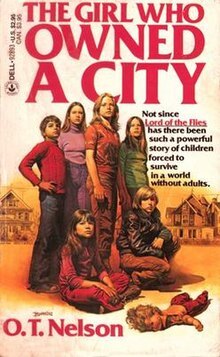
[click image to see larger]
Source: the Wikipedia entry
I can't recommend this book unless you insist on reading every YA/Juvenile post-Apoc book ever written. This is an earlier example (c. 1975) of the genre. The dialogue and much of the situation is unrealistic, and the writing/grammar/flow is below average.
WARNING: SPOILER BELOW
One example of realism fail: Perhaps the author's intent was to not scare very young readers?
One example of silly plot development:
PLOT: Disease has wiped out everyone over age 12. In a small-ish town, a girl named Lisa looks after her little brother, and tries to organize survivors.
SAY SOMETHING NICE: Good concept. Probably more impressive when read in the 1970s--IF the reader was age 13 or younger. Some of the cover art choices over the years were good. I believe it was later made into a graphic novel/comic book?
DOWNERS: Everything else.
JUVIE VERDICT (in 2021): ~2 stars.
YA VERDICT: No.
ADULT VERDICT: NO.
Apparently a very white Apocalypse (a cover variant not yet present on Goodreads):

[click image to see larger]
Source: the Wikipedia entry
I can't recommend this book unless you insist on reading every YA/Juvenile post-Apoc book ever written. This is an earlier example (c. 1975) of the genre. The dialogue and much of the situation is unrealistic, and the writing/grammar/flow is below average.
WARNING: SPOILER BELOW
One example of realism fail: Perhaps the author's intent was to not scare very young readers?
One example of silly plot development:

May 1, 2021
I had to wait three hours in a car repair shop today, so I read a middle years novel that I remember liking as a kid- The Girl Who Owned A City. Oh friends. What a spectacular hate read it is. It’s pure, spiteful, far right propaganda.
I remember the story of plague wiping out everyone over 12, and the remaining kids’ efforts to rebuild society, learn skills, and defend their citadel in a war to be exciting and fascinating. The MC, Lisa, was a tough cookie: a natural leader who was smart and capable.
It’s relevant to my interests now as research for my current novel, and I was interested in how post apocalyptic issues were described in a kids’ book from 1975.
Folks. Pour one out for 10 year old Phoenix, because this novel is literally far right, Ayn Rand, libertarian fever dream trash. It’s a training manual for little Tucker Carlsons. It’s xenophobic, disgustingly violent, assumes the worst about humanity, and cringingly sexist to boot. It’s a preachy lil’ how-to guide for baby’s first war crimes.
Blonde, whi t e, thin, able-bodied Lisa enjoys this post-parental world of Individual Rights and personal freedom (seriously). She’s a regular baby Megyn Kelly, and we’re supposed to admire her for it. We don’t have to love or like her, because nobody in this book likes another human.
Lisa assumes leadership of the other 100% able-bodied and whi t e children by literally colonizing existing places and supplies, claiming them as her own, and manipulating starving children to do her bidding. Everyone else in the book is either a Weak Child or Someone With A Useful Quality. Jobs are divided strictly along traditional gender lines.
It’s laughably simplistic and jingoistically nationalist. All the kids on Lisa’s street are allies, and literally all the kids anywhere else are violent, terrorist gangs coming to beat up Lisa and steal her food. Lisa spends the entire middle third of the book training on guns, building homemade weapons, setting rocks and bottles to fall from rooftops, training attack dogs, teaching the younguns how to make Molotov cocktails, and finally setting up sentries with DRUMS OF BOILING OIL on the rooftop of her school/castle. Lisa talks tough to the leader of the rival gang, intimidating him with her cool power, like the wildest self invention of the softest, laziest Fox News bloviator imagining himself putting Iran in its place.
Lisa goes on and on about how the smartest and cleverest deserve all the riches of society, how people learn value through work, and how sharing is overrated. She makes the five year olds scavenge gas cans and their dead parents’ car keys in exchange for Earning Their Toys, which makes them finally stop crying and fighting because they were being forced to share too much.
We get paragraphs of lavish description about beautiful barbed wire and warning signs as Lisa plots supply runs to a grocery warehouse that she keeps secret, in order to keep control over her community. She barks work orders and the kids can either submit completely or GTFO, to be presumably killed by the roving street gangs. This includes starving, sick, orphaned toddlers, by the way. Lisa makes a deal to give them medicine in return for pledging allegiance to her militia.
Once more- Lisa makes a deal to give starving, sick, orphaned toddlers medicine in return for pledging allegiance to her militia.
In a ridiculous Mary Sue turn of events that only a whi t e dude author could write, the kids immediately recognize Lisa as their natural-born superior and meekly do her bidding.
Have you met kids? Or any humans, for that matter?
There are no arts, storytelling, or playtime in Lisa’s city. What good would it be to waste precious weapons time on keeping their humanity and collective history alive? Working through their collective trauma, tending to their mental health, thinking their own thoughts? Caring for each other?
Not in Lisa’s city, kiddos! Everyone gladly gets up at six am and starts planning military strategies for bombing the shit out of other surviving children. (All totally defensive, of course. Lisa is A Good Person With Good Values.)
Books are good, insomuch as they can teach useful skills or military strategies. There is no room for self-improvement, comfort, or imagination in Lisa’s city. Unless you’re imagining new ways to skewer your fellow children!
There’s no grief for all of the dead family members, either. Dead parents? More like dead weight, amirite?
Kids? Hey, kids. This is Phoenix from 2021 talking. I’ve seen a plague, and I’ve seen a world run by Lisas. You’re gonna wanna do something different. Execute Lil’ John Galt Jr. and run that citadel communally. Take over the empty farms that Lisa raids at the beginning of the book, then lets go to waste. Grow your own food like that one kid keeps wanting to do.
You don’t need a Lisa. Bash that fash.
Now I realize that the slightly odd, stilted title- The Girl Who OWNED A City- was entirely purposeful. Property ownership, as in, claiming ownership over essential community resources and forcing everyone to work for you, then stealing the fruits of their labor to become the richest and most powerful- all under a benevolent image- is the major theme of this book.
The declarative, unadorned, literal storytelling style is the author’s weapon of choice for firing off these fascist worldview truth-bombs. The plot makes no sense. Nobody ever accused the right of being good writers, but they hammer their points home in a simplistic way that makes their whi t e supremacist settler bullshit seem only natural.
Anyway, Lisa gets shot in the penultimate battle of the book, so you can look forward to that! I hate-read this steaming pile of flaming assholes, so I can turn around and write about exactly the opposite world.
Thanks, O. T. Nelson! I hate it!
I remember the story of plague wiping out everyone over 12, and the remaining kids’ efforts to rebuild society, learn skills, and defend their citadel in a war to be exciting and fascinating. The MC, Lisa, was a tough cookie: a natural leader who was smart and capable.
It’s relevant to my interests now as research for my current novel, and I was interested in how post apocalyptic issues were described in a kids’ book from 1975.
Folks. Pour one out for 10 year old Phoenix, because this novel is literally far right, Ayn Rand, libertarian fever dream trash. It’s a training manual for little Tucker Carlsons. It’s xenophobic, disgustingly violent, assumes the worst about humanity, and cringingly sexist to boot. It’s a preachy lil’ how-to guide for baby’s first war crimes.
Blonde, whi t e, thin, able-bodied Lisa enjoys this post-parental world of Individual Rights and personal freedom (seriously). She’s a regular baby Megyn Kelly, and we’re supposed to admire her for it. We don’t have to love or like her, because nobody in this book likes another human.
Lisa assumes leadership of the other 100% able-bodied and whi t e children by literally colonizing existing places and supplies, claiming them as her own, and manipulating starving children to do her bidding. Everyone else in the book is either a Weak Child or Someone With A Useful Quality. Jobs are divided strictly along traditional gender lines.
It’s laughably simplistic and jingoistically nationalist. All the kids on Lisa’s street are allies, and literally all the kids anywhere else are violent, terrorist gangs coming to beat up Lisa and steal her food. Lisa spends the entire middle third of the book training on guns, building homemade weapons, setting rocks and bottles to fall from rooftops, training attack dogs, teaching the younguns how to make Molotov cocktails, and finally setting up sentries with DRUMS OF BOILING OIL on the rooftop of her school/castle. Lisa talks tough to the leader of the rival gang, intimidating him with her cool power, like the wildest self invention of the softest, laziest Fox News bloviator imagining himself putting Iran in its place.
Lisa goes on and on about how the smartest and cleverest deserve all the riches of society, how people learn value through work, and how sharing is overrated. She makes the five year olds scavenge gas cans and their dead parents’ car keys in exchange for Earning Their Toys, which makes them finally stop crying and fighting because they were being forced to share too much.
We get paragraphs of lavish description about beautiful barbed wire and warning signs as Lisa plots supply runs to a grocery warehouse that she keeps secret, in order to keep control over her community. She barks work orders and the kids can either submit completely or GTFO, to be presumably killed by the roving street gangs. This includes starving, sick, orphaned toddlers, by the way. Lisa makes a deal to give them medicine in return for pledging allegiance to her militia.
Once more- Lisa makes a deal to give starving, sick, orphaned toddlers medicine in return for pledging allegiance to her militia.
In a ridiculous Mary Sue turn of events that only a whi t e dude author could write, the kids immediately recognize Lisa as their natural-born superior and meekly do her bidding.
Have you met kids? Or any humans, for that matter?
There are no arts, storytelling, or playtime in Lisa’s city. What good would it be to waste precious weapons time on keeping their humanity and collective history alive? Working through their collective trauma, tending to their mental health, thinking their own thoughts? Caring for each other?
Not in Lisa’s city, kiddos! Everyone gladly gets up at six am and starts planning military strategies for bombing the shit out of other surviving children. (All totally defensive, of course. Lisa is A Good Person With Good Values.)
Books are good, insomuch as they can teach useful skills or military strategies. There is no room for self-improvement, comfort, or imagination in Lisa’s city. Unless you’re imagining new ways to skewer your fellow children!
There’s no grief for all of the dead family members, either. Dead parents? More like dead weight, amirite?
Kids? Hey, kids. This is Phoenix from 2021 talking. I’ve seen a plague, and I’ve seen a world run by Lisas. You’re gonna wanna do something different. Execute Lil’ John Galt Jr. and run that citadel communally. Take over the empty farms that Lisa raids at the beginning of the book, then lets go to waste. Grow your own food like that one kid keeps wanting to do.
You don’t need a Lisa. Bash that fash.
Now I realize that the slightly odd, stilted title- The Girl Who OWNED A City- was entirely purposeful. Property ownership, as in, claiming ownership over essential community resources and forcing everyone to work for you, then stealing the fruits of their labor to become the richest and most powerful- all under a benevolent image- is the major theme of this book.
The declarative, unadorned, literal storytelling style is the author’s weapon of choice for firing off these fascist worldview truth-bombs. The plot makes no sense. Nobody ever accused the right of being good writers, but they hammer their points home in a simplistic way that makes their whi t e supremacist settler bullshit seem only natural.
Anyway, Lisa gets shot in the penultimate battle of the book, so you can look forward to that! I hate-read this steaming pile of flaming assholes, so I can turn around and write about exactly the opposite world.
Thanks, O. T. Nelson! I hate it!

January 5, 2008
One day my girlfriend was actually out of the apartment and attending some obligation without dragging me along . In strict accordance with her habits, she continuously suspected I was scampering about with a bevy of well-endowed trollops and expected to come home to our domicile to find it reeking like the summer of 69. In actuality, I spent a large portion of these three glorious hours reading pre-teen literature....
I can’t even guess as to when I first read this book but I think it must have been recommended some time around junior high. I am assuming the only reason our school promoted this is due to it being a local piece of work. Local not as in the U.S., not even as in the fine state of Illinois, but local as in taking place in DuPage county, and teachers know that nothing stirs the imagination quite so much as a yarn spun around the following central points:
1.All humans over the age of 12 have suddenly been struck dead by some unknown twist of fate. Kids eat that sh!t up.
2.A conglomerate of childhood friends and neighbors must hold together and form a rudimentary society in order to withstand the building external threats which constantly endanger their cause. NOTE: They actually have a television show with this very concept these days - 2007
It worked for the Lord of The Flies….but can it work when this burgeoning society is led by a selfish little bitch named Lisa?
In my estimation: No.
Some tales, no matter how engrossing, no matter how awesome, can be completely undone by a crappy focal character, and Lisa fits this niche with unbound perfection. I’m sure at 12 years old I though “Golly, this chick is a dreamboat; clever, cunning, resourceful, ambitious, and firm in her way!” Approaching 30, all I can think is “If I was one of the children in Lisa’s bullshit little society, she’d best sleep with one eye open or I’m cutting her flucking neck in her sleep”. Her nemesis, the unforgiving and ruthless Tom Logan, was probably the only character I could relate to in this recent reading. Everything out of Lisa’s mouth is ‘my city’, ‘my plans’, ‘my new world order’, and she feels self-assured enough to lecture all those who foolishly follow her on how all the plans were hers, and that since she begat their whole enterprise of turning Glenbard High School into a self-sustaining city, she’s the only one with any say whatsoever, anyone who contributes through labor and thought is simply giving forth a willing contribution in return for her unerring leadership and inexhaustible diplomatic skills. When Tom Logan snakes that shit from beneath her, she complains to him in a woebegone oratory as to how low it is for him to come along and steal from her, to come and take her work, blah blah blah. If the morons and cretins that surrounded her could only come to grips with the fact that Lisa is probably a far shittier dictator than Tom Logan, this book would have some form of redemptive worth in it, especially when they inevitably revolt and understandably commit an act of blessed regicide on this deserving beotch. Alas, such hopes are foolish and for naught; her destined-to-be-gay tyke brother Toddy-Boy and the other assheads at the epicenter of this pitiful society are all duped, and all deserve to clash with a real and unmerciful legion of bandits such as the one which most of us would envision over this prepubescent ocelot excrement.
Despite the novelty of this being a variant of the post-apocalypse set in Lombard, Illinois, the wretched stupidity which is prevalent throughout can’t help raise this novel into becoming anything better than a lame read. If the story even had one Chris-Szkl@ny-like character studying and espousing the virtues of The Social Contract, this might have a chance at being somewhat decent. Instead, the megalomaniacal bitch rules with her authoritative fist, self-centered, self-indulgent, and miserable to the last.
I can’t even guess as to when I first read this book but I think it must have been recommended some time around junior high. I am assuming the only reason our school promoted this is due to it being a local piece of work. Local not as in the U.S., not even as in the fine state of Illinois, but local as in taking place in DuPage county, and teachers know that nothing stirs the imagination quite so much as a yarn spun around the following central points:
1.All humans over the age of 12 have suddenly been struck dead by some unknown twist of fate. Kids eat that sh!t up.
2.A conglomerate of childhood friends and neighbors must hold together and form a rudimentary society in order to withstand the building external threats which constantly endanger their cause. NOTE: They actually have a television show with this very concept these days - 2007
It worked for the Lord of The Flies….but can it work when this burgeoning society is led by a selfish little bitch named Lisa?
In my estimation: No.
Some tales, no matter how engrossing, no matter how awesome, can be completely undone by a crappy focal character, and Lisa fits this niche with unbound perfection. I’m sure at 12 years old I though “Golly, this chick is a dreamboat; clever, cunning, resourceful, ambitious, and firm in her way!” Approaching 30, all I can think is “If I was one of the children in Lisa’s bullshit little society, she’d best sleep with one eye open or I’m cutting her flucking neck in her sleep”. Her nemesis, the unforgiving and ruthless Tom Logan, was probably the only character I could relate to in this recent reading. Everything out of Lisa’s mouth is ‘my city’, ‘my plans’, ‘my new world order’, and she feels self-assured enough to lecture all those who foolishly follow her on how all the plans were hers, and that since she begat their whole enterprise of turning Glenbard High School into a self-sustaining city, she’s the only one with any say whatsoever, anyone who contributes through labor and thought is simply giving forth a willing contribution in return for her unerring leadership and inexhaustible diplomatic skills. When Tom Logan snakes that shit from beneath her, she complains to him in a woebegone oratory as to how low it is for him to come along and steal from her, to come and take her work, blah blah blah. If the morons and cretins that surrounded her could only come to grips with the fact that Lisa is probably a far shittier dictator than Tom Logan, this book would have some form of redemptive worth in it, especially when they inevitably revolt and understandably commit an act of blessed regicide on this deserving beotch. Alas, such hopes are foolish and for naught; her destined-to-be-gay tyke brother Toddy-Boy and the other assheads at the epicenter of this pitiful society are all duped, and all deserve to clash with a real and unmerciful legion of bandits such as the one which most of us would envision over this prepubescent ocelot excrement.
Despite the novelty of this being a variant of the post-apocalypse set in Lombard, Illinois, the wretched stupidity which is prevalent throughout can’t help raise this novel into becoming anything better than a lame read. If the story even had one Chris-Szkl@ny-like character studying and espousing the virtues of The Social Contract, this might have a chance at being somewhat decent. Instead, the megalomaniacal bitch rules with her authoritative fist, self-centered, self-indulgent, and miserable to the last.

March 29, 2013
A dismal and hugely overrated experience.
We all have a weak spot in our literary preferences, and I have a particular one for post-apocalyptic settings. But while most 'PA' stories smartly take advantage of the thrills found in survivalism and violent conflict, I'm a real sucker for the focus on rebuilding, on the need for organization and structure, and the intricate task of reintroducing it into the world. So I thought I would enjoy "The Girl Who Owned A City", which I'd heard focused on this idea.
Sadly, what I got was something of a mess. The basic premise and structure showed the right idea: Lisa, a 10-year-old girl, is a survivor of a plague which has wiped out the entire adult population of the earth. The novel follows her progression 'from survivor to savior' as she expands her influence via her ingenuity and hard work.
The tone of the story is pretty disjointed, to the point where it's quite the guessing game to figure out what age group this story is intended for. For example, the story takes place in a world where literally every child has just lost both of their parents... but amazingly, not a single character ever seems to mourn the loss of their mother or father, and no mention of dead bodies is made. Or take another case: the novel seems explicitly survivalist, with a strong focus on the children forming militias, arming themselves with guns, setting deadly booby-traps, training attack dogs, and yet there never seems to be a sense of fright or danger: even in supposed clashes with gangs and armies, most injuries are 'off stage' and amount to minor scratches.
The writing is no better. Even with an unnecessarily omniscient narrator who jumps between different points of view, characters have essentially no personalities or even physical traits, only slight differences of opinions. They explicitly state their thoughts and feelings in drab complete sentences and explanatory arguments. Villains aren't nasty, threatening, or intimidating: they simply say what they want, and it happens to contradict what the main character wants. Imagine the Big Bad Wolf simply being a dog who comes up to the pigs and says "I want to eat you. I'm going to try to eat you," while the pigs respond with "No, don't eat us. We don't want you to eat us!"
Mr. Nelson was explicit in his goal of translating the values of Objectivism in terms simple enough for children to understand, and while I actually have no beef with this in itself, in the book this translates to characters simply stating 'morals' outright at different points in the story. It gives the hideous impression that while being written, the value of this book was seen chiefly in its ability to transmit a philosophy, rather than engage or entertain. Some might say that in this sense Mr. Nelson follows Mrs. Rand's example.
The only good part of this book is the blurb on the cover, which compares it to Lord Of The Flies. This line made me laugh and laugh.
We all have a weak spot in our literary preferences, and I have a particular one for post-apocalyptic settings. But while most 'PA' stories smartly take advantage of the thrills found in survivalism and violent conflict, I'm a real sucker for the focus on rebuilding, on the need for organization and structure, and the intricate task of reintroducing it into the world. So I thought I would enjoy "The Girl Who Owned A City", which I'd heard focused on this idea.
Sadly, what I got was something of a mess. The basic premise and structure showed the right idea: Lisa, a 10-year-old girl, is a survivor of a plague which has wiped out the entire adult population of the earth. The novel follows her progression 'from survivor to savior' as she expands her influence via her ingenuity and hard work.
The tone of the story is pretty disjointed, to the point where it's quite the guessing game to figure out what age group this story is intended for. For example, the story takes place in a world where literally every child has just lost both of their parents... but amazingly, not a single character ever seems to mourn the loss of their mother or father, and no mention of dead bodies is made. Or take another case: the novel seems explicitly survivalist, with a strong focus on the children forming militias, arming themselves with guns, setting deadly booby-traps, training attack dogs, and yet there never seems to be a sense of fright or danger: even in supposed clashes with gangs and armies, most injuries are 'off stage' and amount to minor scratches.
The writing is no better. Even with an unnecessarily omniscient narrator who jumps between different points of view, characters have essentially no personalities or even physical traits, only slight differences of opinions. They explicitly state their thoughts and feelings in drab complete sentences and explanatory arguments. Villains aren't nasty, threatening, or intimidating: they simply say what they want, and it happens to contradict what the main character wants. Imagine the Big Bad Wolf simply being a dog who comes up to the pigs and says "I want to eat you. I'm going to try to eat you," while the pigs respond with "No, don't eat us. We don't want you to eat us!"
Mr. Nelson was explicit in his goal of translating the values of Objectivism in terms simple enough for children to understand, and while I actually have no beef with this in itself, in the book this translates to characters simply stating 'morals' outright at different points in the story. It gives the hideous impression that while being written, the value of this book was seen chiefly in its ability to transmit a philosophy, rather than engage or entertain. Some might say that in this sense Mr. Nelson follows Mrs. Rand's example.
The only good part of this book is the blurb on the cover, which compares it to Lord Of The Flies. This line made me laugh and laugh.

March 16, 2016
School read, review to come.
I read this with one of my students for her instructional level reading group. The premise of the story was fantastic, a plague has killed everyone over the age of 12 and now children have to learn how to survive on their own in a new dark age. But I could not get over all the things that made no effing sense. Where were all the dead bodies? If every single person on the planet over the age of 12 died, did they just disappear? Doubtful because toward the end when Lisa and her little band of soldiers are looking for an army to help them, at one town it is discussed that death was everywhere and the children didn't have to look inside the homes to know what they would find. This is implying of course that in almost 2 years since the plague, all of the children in that town had starved to death because they had not figured out what they needed to do to survive. This was truly the only point in the story where I felt any emotion, because it made me sad to think that those children had suffered and died.
So where are the dead bodies of the 12+ crowd to begin with? And since there was no running water, what did they use for toilet, washing their hands, or bathing? This is never mentioned. Yet Somehow no one ended up with dysentery.
Lisa is long-winded and a blowhard and regardless of circumstances there's no way any 11-year-old talks or thinks the way she does even in the most trying of circumstances. The characters were not even believable as children, except for the little ones who were scared.
FYI I'm also dictating this review on my phone because I am too lazy to type it, so if there are typos or errors or words that just don't make sense it is because my voice recognition did not understand what I was saying, and I don't really care to edit this one.
I read this with one of my students for her instructional level reading group. The premise of the story was fantastic, a plague has killed everyone over the age of 12 and now children have to learn how to survive on their own in a new dark age. But I could not get over all the things that made no effing sense. Where were all the dead bodies? If every single person on the planet over the age of 12 died, did they just disappear? Doubtful because toward the end when Lisa and her little band of soldiers are looking for an army to help them, at one town it is discussed that death was everywhere and the children didn't have to look inside the homes to know what they would find. This is implying of course that in almost 2 years since the plague, all of the children in that town had starved to death because they had not figured out what they needed to do to survive. This was truly the only point in the story where I felt any emotion, because it made me sad to think that those children had suffered and died.
So where are the dead bodies of the 12+ crowd to begin with? And since there was no running water, what did they use for toilet, washing their hands, or bathing? This is never mentioned. Yet Somehow no one ended up with dysentery.
Lisa is long-winded and a blowhard and regardless of circumstances there's no way any 11-year-old talks or thinks the way she does even in the most trying of circumstances. The characters were not even believable as children, except for the little ones who were scared.
FYI I'm also dictating this review on my phone because I am too lazy to type it, so if there are typos or errors or words that just don't make sense it is because my voice recognition did not understand what I was saying, and I don't really care to edit this one.

June 17, 2015
I read this book in junior high and I remember hating to read it because it was required but I secretly loved the story. It made me imagine really awesome stories in my head when I read this wondering what would happen if I had to go through something like this. I think about this book sometimes out of the blue and remember it being really intense. I would love to read this again but I don't want to change the way I think or felt about this book when I was younger.

May 8, 2018
So anyway:
I don't understand the one-star reviews. There are some implausibilities in this book, sure. But mostly it feels believable. Children age 8-10 are very likely to love it... what child doesn't dream of a world without adults, a world of freedom and adventure? To learn that the same world also brings want and responsibilities is fascinating. And it's perfectly well written, with a lot of dialogue, heart, drama, and a sprinkle of humor. I wish I could have read it when I was a child as I would have thought of Lisa as a good role model, while at the same time enjoyed a unique adventure.

January 8, 2011
I originally read this book back in Grade Seven, (1977-1978) and loved the concept. No parents! I was surprised that the author, Terry Nelson, didn't write any sequels. I see in searching for this book today, another author may have taken the lead from Terry and done just that. This book could have easily gone into a 10 volume set of Lisa's adventures.
The Girl who owned a city definitely influenced two of my own books; Castle Lake and Fun City. My character of Alicia Murdock in Castle Lake has striking similarities to Lisa in this book, although Lisa is only 10, and my Alicia is 16. They are both fearlessly independent and use their unique survival instincts to get through the worst of situations.
My novel Fun City used a similar concept of isolation shown in The Girl Who Owned a city, and the cliques that various groups of people found themselves in; alliances that were broken and trust that was misused.
I read The Girl Who Owned a City when I was about 13, and it's amazing how the book stuck with me after all those years. I didn't write Castle Lake until I was 42, and Fun City when I was 43!
Terry Nelson books holds up today as well as it did back in the summer of '78!
The Girl who owned a city definitely influenced two of my own books; Castle Lake and Fun City. My character of Alicia Murdock in Castle Lake has striking similarities to Lisa in this book, although Lisa is only 10, and my Alicia is 16. They are both fearlessly independent and use their unique survival instincts to get through the worst of situations.
My novel Fun City used a similar concept of isolation shown in The Girl Who Owned a city, and the cliques that various groups of people found themselves in; alliances that were broken and trust that was misused.
I read The Girl Who Owned a City when I was about 13, and it's amazing how the book stuck with me after all those years. I didn't write Castle Lake until I was 42, and Fun City when I was 43!
Terry Nelson books holds up today as well as it did back in the summer of '78!

July 22, 2009
Preachy, preachy, preachy! The book may well have been intended for the middle school set, but it’s written for third-grade reading comprehension. The characters are flat and/or totally out of their minds (I’m talking to about you, Lisa), the story is weak and barely supported, and the plot themes are completely unrealistic. If the author had brought the age of most of the kids up to, say, 15 or 16, the book would have been much more believable, and she could have utilized more dark, adult themes to keep the story interesting and much less childish.
Terrible excuse for post-apocalyptic fiction...
Terrible excuse for post-apocalyptic fiction...

June 16, 2016
Ayn Rand for kids. Preachy, preachy, preachy. "Happiness comes from working for your stuff. Sharing is for chumps. Love thy neighbor is for the weak." I wouldn't mind so much if the writing was good, but it's not. Horrible writing. There is absolutely no showing and only telling. "She was brave," "they were angry," "he felt scared." There has got to be at least three be verbs per line. Bland characters, bland, bland, nonsensical story, boring writing. I wouldn't have finished this book except that it will be part of the sixth grade curriculum next year, and I will be teaching it. Le sigh.
If you love objectivism shoved down your throat and bad writing, this book is for you.
If you love objectivism shoved down your throat and bad writing, this book is for you.

December 13, 2015
THIS BOOK IS UNREALISTIC!!!!!!!!! At one point they make a tunnel which should have collapsed because they made it with loose soil. Another time a 12 year old with no medical experience is able to heal a bullet wound in 2 days. They shouldn't have enough food and water to support about 500 kids for a year. UHHHHH!!!!!

August 19, 2022
I find I'm reading more graphic novels of late. We wander by Books4Brains in Comox or The Laughing Oyster, in Courtenay and I drift over to their selection of graphic novels and find one that seems interesting. Yesterday it was The Girl Who Owned a City: The Graphic Novel by O.T. Nelson.
Sort of a simple premise. Plague has turned all adults into dust, leaving children behind. this is set in Illinois. Young girl, Lisa Nelson, is trying to survive and protect her younger brother, Todd, from gangs of teens. She comes up with the idea of forming her own militia of neighborhood kids. They take over the local high school (secretly) and turn it into her city.
Typical sort of plot; troubles with other gangs, friction within their own group. But presented logically and in an entertaining story. Great artwork, bright coloring, and interesting story with positive ending. (3.0 stars)
Sort of a simple premise. Plague has turned all adults into dust, leaving children behind. this is set in Illinois. Young girl, Lisa Nelson, is trying to survive and protect her younger brother, Todd, from gangs of teens. She comes up with the idea of forming her own militia of neighborhood kids. They take over the local high school (secretly) and turn it into her city.
Typical sort of plot; troubles with other gangs, friction within their own group. But presented logically and in an entertaining story. Great artwork, bright coloring, and interesting story with positive ending. (3.0 stars)

September 9, 2023
Living in Fear?
This book is intended for middle grade school but as an adult I found it to be a compelling dystopian story. I was surprised that I had never read this book in 5th or 6th grade. I think I would have enjoyed it even more.
As I read I found myself totally absorbed into this world where young children were trying to survive without adults. Everyone over 12 dies from a plague. The children, filled with fear of the unknown, must learn to survive; learn to take care of themselves. With the help of Lisa and her creative mind can they overcome the odds?
Great book about overcoming fear and perseverance. Wish the end hadn't been so rushed.
This book is intended for middle grade school but as an adult I found it to be a compelling dystopian story. I was surprised that I had never read this book in 5th or 6th grade. I think I would have enjoyed it even more.
As I read I found myself totally absorbed into this world where young children were trying to survive without adults. Everyone over 12 dies from a plague. The children, filled with fear of the unknown, must learn to survive; learn to take care of themselves. With the help of Lisa and her creative mind can they overcome the odds?
Great book about overcoming fear and perseverance. Wish the end hadn't been so rushed.

August 25, 2020
It was interesting to see how people might react if there were no adults around but it was pretty much what I expected. Some would die, some would barely survive, and some would take charge. Kind of predictable, but interesting at the same time.
This entire review has been hidden because of spoilers.
September 16, 2013
The Girl Who Owned a City
Picture yourself in a world without parents, without TV and other electronics. Now picture yourself looking for food in abanded homes. If you can picture that, than you understand some of Lisa’s life. Lisa is a 10 year old girl whose parents were taken by the plague. Lisa has a 6 year old brother Todd. Lisa has to get food for Todd and her. A problem is that when the plague struck gangs formed immediately. So Lisa has to look in places that haven’t been ransacked already. Lisa has to join with the other members of her street to resist the rising power of the near by gangs.
I recommend this book because it makes kids try new things. Lisa had to drive a car to get around. “Behind the wheel, she struggled to adjust the seat. Even on the thick cushion she seemed swallowed up by the dash board. Her feet just barely touched the pedals.” It makes kids cook for each other. “‘I Know Todd, but look what I found for us. Soup and matches. I was afraid we’d run out. Hide the food in the space under the stairs. Give me the matches I’ll light the charcoal.”’
I also would recommend this book because it gets rid of parents in a realistic way. Plagues have happened in the past and they have gotten rid of tons and tons of people. “’ They say that for some strange reason the sickness is not fatal to children under the age of 12 years. The latest reports claim that no adult can survive the infection.”‘ Plagues have destroyed parts of the human race in the past. “’ On the last news broadcast, November 10th, they said the virus was spreading all over the world. It’s the worst plague in history.”’
This book makes kids think in new and creative ways. For instants, they made a rock slide on top of the roofs. “The militia captions from each house met with Craig every morning to discuss the day’s plans.” The kids have dogs as watch guards and each home has an alarm system. “I watched the gang leave. At first, I was afraid we’d killed Logan.”
I would really recommend this book. It was really good. I hope you read The Girl Who Owned a City.
Picture yourself in a world without parents, without TV and other electronics. Now picture yourself looking for food in abanded homes. If you can picture that, than you understand some of Lisa’s life. Lisa is a 10 year old girl whose parents were taken by the plague. Lisa has a 6 year old brother Todd. Lisa has to get food for Todd and her. A problem is that when the plague struck gangs formed immediately. So Lisa has to look in places that haven’t been ransacked already. Lisa has to join with the other members of her street to resist the rising power of the near by gangs.
I recommend this book because it makes kids try new things. Lisa had to drive a car to get around. “Behind the wheel, she struggled to adjust the seat. Even on the thick cushion she seemed swallowed up by the dash board. Her feet just barely touched the pedals.” It makes kids cook for each other. “‘I Know Todd, but look what I found for us. Soup and matches. I was afraid we’d run out. Hide the food in the space under the stairs. Give me the matches I’ll light the charcoal.”’
I also would recommend this book because it gets rid of parents in a realistic way. Plagues have happened in the past and they have gotten rid of tons and tons of people. “’ They say that for some strange reason the sickness is not fatal to children under the age of 12 years. The latest reports claim that no adult can survive the infection.”‘ Plagues have destroyed parts of the human race in the past. “’ On the last news broadcast, November 10th, they said the virus was spreading all over the world. It’s the worst plague in history.”’
This book makes kids think in new and creative ways. For instants, they made a rock slide on top of the roofs. “The militia captions from each house met with Craig every morning to discuss the day’s plans.” The kids have dogs as watch guards and each home has an alarm system. “I watched the gang leave. At first, I was afraid we’d killed Logan.”
I would really recommend this book. It was really good. I hope you read The Girl Who Owned a City.

March 9, 2015
The Girl Who Owned A City, by O.T. Nelson, is a Fiction novel in full bounce. This book reminds me of a book called The Class Trip, which shares the theme of loneliness with this book. This book is about a girl named Lisa and her brother Todd. All adults are dead because of a disease that kills everyone over 12. Lisa and Todd, and all the other kids that live on grand Avenue are determined to stay alive during this deadly plague. At first when they're fortress in the neighborhood gets burned down, they decide to move into a high school, which contains resources, food and shelter. But will the gangs break-in? And will the children be able to survive? Read this book and find out.
I recommend this book to kids or adults over 10, because not only is it a little bit hard to understand, it also shares moments that have to do with blood and gore. Four instance, "The alcohol drizzled out of her arm along with the red and watery blood." This is why this book can be a little to deep for younger children. On the positive side, the author did a nice job of putting descriptive language in the text. "We were kids again, laughing and playing and having that good feeling, that nobody had had in a long lonesome time."Another example is "The wind in her face had plastered her hat to her head as she drove along the shady road to the farm."I rated this book 3 stars because I usually enjoy books that have one long plot, but it seemed like this one had 3 or 4. But other than that, this book hit the spot and kept me on my toes the whole time I was reading it.
I recommend this book to kids or adults over 10, because not only is it a little bit hard to understand, it also shares moments that have to do with blood and gore. Four instance, "The alcohol drizzled out of her arm along with the red and watery blood." This is why this book can be a little to deep for younger children. On the positive side, the author did a nice job of putting descriptive language in the text. "We were kids again, laughing and playing and having that good feeling, that nobody had had in a long lonesome time."Another example is "The wind in her face had plastered her hat to her head as she drove along the shady road to the farm."I rated this book 3 stars because I usually enjoy books that have one long plot, but it seemed like this one had 3 or 4. But other than that, this book hit the spot and kept me on my toes the whole time I was reading it.

June 7, 2018
I read this book when I was 12. It was great!!! Good read for middle school children

April 22, 2019
I enjoyed this book because it was based on a dystopian society, which I have stated before is one of my favorite genres. I had this book recommended to me by a friend a while ago and I was excited to have a reason to read it. This book was challenged in Maine schools due to promotion of violence "Including explaining how to make a Molotov cocktail". While I can understand that there is a high level of violence in this novel, I still disagree with the censoring of the book. That being said, I would not recommend this book as a good read for elementary students, rather I would recommend this book for middle to high school age students due to complex topics such as loss, violence, and just overall dystopian nature. This book is based in a society where a virus has killed off everyone over the age of twelve, and follows the story of ten year old Lisa Nelson and her little brother, Todd. Lisa raids a warehouse and lays claim to it, which inspires her to become a leader and build a community with the other children in the neighborhood due to necessity of food. However, things begin to get messy when gangs begin to form and children begin to fight and threaten each other for food and property. This book is extremely interesting and it is safe to say I devoured it, however I stand by not recommending it to elementary aged students for the same reasons that it was challenged.
Middle school students could benefit from reading this book because it is an age group that they can relate to. Lisa portrays a strong, female lead that is crafty and thinks on her feet. Many girls who are in middle school need a character that is around their age that is strong and who they can relate to, which is why books such as Divergent and The Hunger Games have become so popular. This portrayal of strength even in complicated circumstances is something that both girls and boys relate to and admire. This book has relatable basic lessons such as "stand up for yourself and stand up for what is right", however it takes these ideas to an extreme level due to the setting and circumstances in the book. Because of this, a more mature audience would be able to understand that these are not things that should be done in real life, but are rather an extreme circumstance with a base idea that they can relate to. Overall, I would say that this book is a good read for an older audience, and while I could understand limiting it to an older audience, I would not agree with challenging or banning it completely from schools.
Middle school students could benefit from reading this book because it is an age group that they can relate to. Lisa portrays a strong, female lead that is crafty and thinks on her feet. Many girls who are in middle school need a character that is around their age that is strong and who they can relate to, which is why books such as Divergent and The Hunger Games have become so popular. This portrayal of strength even in complicated circumstances is something that both girls and boys relate to and admire. This book has relatable basic lessons such as "stand up for yourself and stand up for what is right", however it takes these ideas to an extreme level due to the setting and circumstances in the book. Because of this, a more mature audience would be able to understand that these are not things that should be done in real life, but are rather an extreme circumstance with a base idea that they can relate to. Overall, I would say that this book is a good read for an older audience, and while I could understand limiting it to an older audience, I would not agree with challenging or banning it completely from schools.

June 10, 2019
To learn to survive is the most important goal of every human being to learn to cope with tragedy and to cope with pain and to heal through all of it and use what intelligence you have and use your thinking instead of using violence to come up with a way to survive in a world where everything has been destroyed there's no electricity and there is no running water you have to learn to live by your wits ends like an old times of the pioneers and Indians this is a true story about the Fate that may lie ahead of a lot of people maybe one day it will be the Fate and real life and we will have to face these types of choices so learn all the knowledge you can about these types of events and see if it does not teach you what would happen or what you would become if you had the choice to choose what decisions you would make in a world like this post-apocalyptic survival science fiction and dystopia
Displaying 1 - 30 of 685 reviews