

What do you think?

Mis(h)adra
An Arab-American college student struggles to live with epilepsy in this starkly colored and deeply-cutting graphic novel.Isaac wants nothing more than to be a functional college student—but managing his epilepsy is an exhausting battle to survive. He attempts to maintain a balancing act between his seizure triggers and his day-to-day schedule, but he finds that nothing—not even his medication—seems to work. The doctors won’t listen, the schoolwork keeps piling up, his family is in denial about his condition, and his social life falls apart as he feels more and more isolated by his illness. Even with an unexpected new friend by his side, so much is up against him that Isaac is starting to think his epilepsy might be unbeatable. Based on the author’s own experiences as an epileptic, Mis(h)adra is a boldly visual depiction of the daily struggles of living with a misunderstood condition in today’s hectic and uninformed world.
288 pages, Kindle Edition
First published October 13, 2017
About the author
Iasmin Omar Ata
13 books63 followersI'm Iasmin Omar Ata, a Middle Eastern & Muslim comics artist, game developer and illustrator who creates art about coping with illness, self-acceptance, and Islamic futurism. I’m currently working on two books with Viking Books, the first of which is to release in 2022! (They/them pronouns, please!)
I'm an Ignatz Award winner and Excellence In Graphic Literature Award finalist; I’ve been interviewed & reviewed by Kirkus, Publishers Weekly, Electronic Intifada, Library Journal, and NPR. I've worked with clients/groups such as PEN America, L’Institut du Monde Arabe, Palestine International, Bigmouth Comix, O/R Books, and more; I’ve also spoken/taught at Harvard University, the New York Public Library, and University of Maryland.
I'm an Ignatz Award winner and Excellence In Graphic Literature Award finalist; I’ve been interviewed & reviewed by Kirkus, Publishers Weekly, Electronic Intifada, Library Journal, and NPR. I've worked with clients/groups such as PEN America, L’Institut du Monde Arabe, Palestine International, Bigmouth Comix, O/R Books, and more; I’ve also spoken/taught at Harvard University, the New York Public Library, and University of Maryland.
Ratings & Reviews
Friends & Following
Create a free account to discover what your friends think of this book!
Community Reviews
Displaying 1 - 30 of 286 reviews

October 12, 2017
Read in a single sitting. What an extraordinary graphic novel about a student living--and fighting--with epilepsy. Absolutely loved.

November 2, 2017
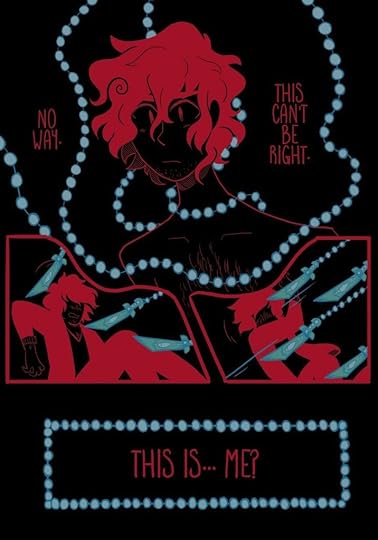
"This is...me?"
Mis(h)adra is a tremendously powerful debut graphic novel written and illustrated by a young artist, Iasmin Omar Ata, who has epilepsy.
The title represents two Arabic words : 'mishadra' means 'cannot', and 'misadra' means 'seizure'.
The story about Isaac, the author's alter-ego, tries to convey to the reader the inner conflicts he experienced due to his condition, and shows us how helpless and unconfident it made him and just how hard it was for him to be functional in his day-to-day life.
Paralyzed by his anxiety having seizures, feeling unsupported by his father who is in denial about his disease, and confronted with misunderstanding doctors and medicines that don't seem to work, Isaac is teetering on the edge of the abyss, seemingly with no way out.
The art is manga-like, and switches to colorful, psychedelic-like illustrations which visualize the indescribable experience of having epileptic attacks.
"All I ever wanted
Was for someone
To tell me I was doing a good job"
Mis(h)adra is a tremendously powerful debut graphic novel written and illustrated by a young artist, Iasmin Omar Ata, who has epilepsy.
The title represents two Arabic words : 'mishadra' means 'cannot', and 'misadra' means 'seizure'.
The story about Isaac, the author's alter-ego, tries to convey to the reader the inner conflicts he experienced due to his condition, and shows us how helpless and unconfident it made him and just how hard it was for him to be functional in his day-to-day life.
Paralyzed by his anxiety having seizures, feeling unsupported by his father who is in denial about his disease, and confronted with misunderstanding doctors and medicines that don't seem to work, Isaac is teetering on the edge of the abyss, seemingly with no way out.
The art is manga-like, and switches to colorful, psychedelic-like illustrations which visualize the indescribable experience of having epileptic attacks.
"All I ever wanted
Was for someone
To tell me I was doing a good job"


January 28, 2018
I cried. It’s stunning visually and emotionally.

April 4, 2018
Wonderful and unique - this look at a collage student suffering from epilepsy is heartfelt and vivid - the different battles that have to be fought just to function on a daily basis will bring a definitive understanding to this horrible condition. It will also help you to see your own challenges in a different light.

February 1, 2019
Mis(h)adra is the autobiographical story of a young Middle Eastern student struggling with epilepsy. The title refers to two Arabic words: “mishadra”, which means “cannot”, and “misadra”, which means “seizure”. There isn’t really a story. The author’s stand-in, Isaac, suffers from epilepsy and… by the end, he’s still suffering?
I didn’t like this one very much. Of course I’m sympathetic to anyone with serious illnesses but Isaac is such an utterly irresponsible twat, I ended up hating him! So, almost anything triggers seizures in Isaac, but here are some things that he could avoid, knowing they are harmful to him. Like drinking, which leads to dehydration, which leads to seizures - so don’t booze to start with! And don’t self-medicate with illegal drugs and take your prescribed meds as and when you’re meant to! It’s hard to feel sympathy for someone who self-sabotages like this.
Then there’s the illness itself. I’m not an expert but does epilepsy cause you to gouge your eyes out? Or break glass and cut yourself with it? And when I say almost anything triggers Isaac, I mean almost anything! Not getting eight hours of sleep, going to class, not going to class, even getting a stern talking to from medical professionals and this dude CRUMBLES! It just seems like, for a book supposedly about the troubles of living with epilepsy, it’s not an accurate portrayal of the illness as the author seems to have numerous severe mental issues additionally.
And the self-pity! Oh my god, I can’t stand it. Poor him, life’s so hard - go to a couple of hour long classes AND a doctor’s appointment in one day? Best fall apart instead! Then why not skip the meds and drink tons of beer so you’ll be no good tomorrow either?! There are also several medical professionals who disagree with his own self-diagnoses and we’re meant to feel sorry for him because nobody understands. But, if so many medical professionals are in consensus on his illness, are they really wrong or is the author just trying to once more play the victim, something he clearly relishes?
His Middle-Eastern father doesn’t believe in his illness, because Islamic culture or something, which I guess is shitty but he clearly still cares about his son, frequently calling him up to check on his health. And he must be bankrolling his education and medications because Isaac does nothing but mope about when he’s skipping class. But, he’s still chalked up as yet another stress trigger in Isaac’s tragic life!
There’s no real point to the book either. He’s basically as fragile and dependent on medication at the end as he was at the start only now he’s decided to stick to his medication schedule because… ? Woah, what a totally not forced character arc!
I really appreciated the presentation though. The book is printed on different coloured paper and the anime-style art is drawn in different coloured inks, all of which added to understanding the disorientation and unstableness of epilepsy. I also liked that the illness is portrayed as numerous floating daggers with eyes on the blade, like shoals of menacing fish.
I’m certain living with epilepsy is difficult but Iasmin Omar Ata’s portrayal of it in Mis(h)adra does its sufferers no favours through the characterisation of ultra-snowflake Isaac. Good visuals aside, David B’s Epileptic is still the best comic on epilepsy I’ve read yet.
(Hat tip to Greta for the rec)
I didn’t like this one very much. Of course I’m sympathetic to anyone with serious illnesses but Isaac is such an utterly irresponsible twat, I ended up hating him! So, almost anything triggers seizures in Isaac, but here are some things that he could avoid, knowing they are harmful to him. Like drinking, which leads to dehydration, which leads to seizures - so don’t booze to start with! And don’t self-medicate with illegal drugs and take your prescribed meds as and when you’re meant to! It’s hard to feel sympathy for someone who self-sabotages like this.
Then there’s the illness itself. I’m not an expert but does epilepsy cause you to gouge your eyes out? Or break glass and cut yourself with it? And when I say almost anything triggers Isaac, I mean almost anything! Not getting eight hours of sleep, going to class, not going to class, even getting a stern talking to from medical professionals and this dude CRUMBLES! It just seems like, for a book supposedly about the troubles of living with epilepsy, it’s not an accurate portrayal of the illness as the author seems to have numerous severe mental issues additionally.
And the self-pity! Oh my god, I can’t stand it. Poor him, life’s so hard - go to a couple of hour long classes AND a doctor’s appointment in one day? Best fall apart instead! Then why not skip the meds and drink tons of beer so you’ll be no good tomorrow either?! There are also several medical professionals who disagree with his own self-diagnoses and we’re meant to feel sorry for him because nobody understands. But, if so many medical professionals are in consensus on his illness, are they really wrong or is the author just trying to once more play the victim, something he clearly relishes?
His Middle-Eastern father doesn’t believe in his illness, because Islamic culture or something, which I guess is shitty but he clearly still cares about his son, frequently calling him up to check on his health. And he must be bankrolling his education and medications because Isaac does nothing but mope about when he’s skipping class. But, he’s still chalked up as yet another stress trigger in Isaac’s tragic life!
There’s no real point to the book either. He’s basically as fragile and dependent on medication at the end as he was at the start only now he’s decided to stick to his medication schedule because… ? Woah, what a totally not forced character arc!
I really appreciated the presentation though. The book is printed on different coloured paper and the anime-style art is drawn in different coloured inks, all of which added to understanding the disorientation and unstableness of epilepsy. I also liked that the illness is portrayed as numerous floating daggers with eyes on the blade, like shoals of menacing fish.
I’m certain living with epilepsy is difficult but Iasmin Omar Ata’s portrayal of it in Mis(h)adra does its sufferers no favours through the characterisation of ultra-snowflake Isaac. Good visuals aside, David B’s Epileptic is still the best comic on epilepsy I’ve read yet.
(Hat tip to Greta for the rec)

November 2, 2017
Arab college student Isaac has epilepsy and it is ruining his life in this autobiographical fiction by Ata, who also has epilepsy. The value of this book would be endless if one were reading this as a young person with epilepsy. It is also valuable for medical and psychiatric professionals in gaining insight into the ways a disease impacts all aspects of life. Isaac isolates himself, doesn't ask for help, does badly in school, becomes suicidal.
I had to look up the title and found some help, but borrow this from Goodreads reviewer Paulie, whose review I read after I had written a quick draft of this review:
misadra - arabic word for seizure
mishadra - arabic slang for "i can't"
mis(h)adra - isaac hammoudeh's daily struggle with epilepsy, which affects his sleep, his schooling, his socialising, his core of self. (thanks, Paulie)
Isaac gets help from some doctors, less so from others. Some down't listen to him, and are annoyed by him. One friend who proves she cares (because she has gone through something difficult as well, physically) makes a difference, too.
The only other graphic narrative I can recall reading is a classic, one of the best, Epileptic by David B. about his family's struggles with David's brother's epilepsy in the seventies. They are distraught, trying everything to find a cure. The story focuses also on David's attempts to understand and communicate just what his brother is experiencing when he seizes. He uses what his brother communicates to him to render it in artistic terms, brilliantly.
The main contribution this book makes to the literature of epilepsy is that it is a first person account (even if it is fiction) from the perspective of a young person with epilepsy, and not one who is verbally all that proficient in what is happening to him. It's hard for him to communicate with family, friends, us. So it's not a "literary" memoir; it communicates the very visceral experience of having epilepsy in all its dimensions largely through abstraction, through specific shapes and colors. It's an emotional story more than a philosophical one. I didn't always "like" Isaac, but I liked his sharing his story with us, in part for the ultimate hope it engenders.
I had to look up the title and found some help, but borrow this from Goodreads reviewer Paulie, whose review I read after I had written a quick draft of this review:
misadra - arabic word for seizure
mishadra - arabic slang for "i can't"
mis(h)adra - isaac hammoudeh's daily struggle with epilepsy, which affects his sleep, his schooling, his socialising, his core of self. (thanks, Paulie)
Isaac gets help from some doctors, less so from others. Some down't listen to him, and are annoyed by him. One friend who proves she cares (because she has gone through something difficult as well, physically) makes a difference, too.
The only other graphic narrative I can recall reading is a classic, one of the best, Epileptic by David B. about his family's struggles with David's brother's epilepsy in the seventies. They are distraught, trying everything to find a cure. The story focuses also on David's attempts to understand and communicate just what his brother is experiencing when he seizes. He uses what his brother communicates to him to render it in artistic terms, brilliantly.
The main contribution this book makes to the literature of epilepsy is that it is a first person account (even if it is fiction) from the perspective of a young person with epilepsy, and not one who is verbally all that proficient in what is happening to him. It's hard for him to communicate with family, friends, us. So it's not a "literary" memoir; it communicates the very visceral experience of having epilepsy in all its dimensions largely through abstraction, through specific shapes and colors. It's an emotional story more than a philosophical one. I didn't always "like" Isaac, but I liked his sharing his story with us, in part for the ultimate hope it engenders.

July 28, 2017
This is the story of an Arab-American college student, Isaac, who struggles with living his life with epilepsy which is represented in the story by a chain of knives constantly pointed at him, ready to strike at any moment. Balancing the weight of an unsupportive family, a college courses, disbelieving doctors, and day-to-day responsibilities, Isaac is constantly under stress and feels at the end of his rope. The title, Mis(h)adra, is a play on the Arabic words “misadra,” which means “seizure,” and “mish adra,” which is slang for “I can not.”
The art in this was absolutely perfect. I think it honestly may be the best art I’ve seen in a graphic novel ever, and I bumped this book up to 5 stars for that alone. The story pacing was a bit off in some places and the ending didn’t strike as hard as the rest of the story, but the overall message and plot were solid.
+ The color scheme is gorgeous. The pinks, purples, and blues worked well together, and I really like how the shade of color shifted to show different scenarios. (e.g. When Isaac experiences one type of attack, the shades got lighter, but a different type of attack and the shades became very saturated.)
+ The art is really well done. The text becomes part of the story. The angles are fresh and interesting. If Ata needed to show flashbacks or time jumps or relay the
+ Great commentary on mental health as well as invisible illness.
Triggers: detailed suicidal thoughts, condescending doctors, some graphic medical situations
I received an ebook from NetGalley in exchange for an honest review.
The art in this was absolutely perfect. I think it honestly may be the best art I’ve seen in a graphic novel ever, and I bumped this book up to 5 stars for that alone. The story pacing was a bit off in some places and the ending didn’t strike as hard as the rest of the story, but the overall message and plot were solid.
+ The color scheme is gorgeous. The pinks, purples, and blues worked well together, and I really like how the shade of color shifted to show different scenarios. (e.g. When Isaac experiences one type of attack, the shades got lighter, but a different type of attack and the shades became very saturated.)
+ The art is really well done. The text becomes part of the story. The angles are fresh and interesting. If Ata needed to show flashbacks or time jumps or relay the
+ Great commentary on mental health as well as invisible illness.
Triggers: detailed suicidal thoughts, condescending doctors, some graphic medical situations
I received an ebook from NetGalley in exchange for an honest review.

March 14, 2018
Visually arresting - colors that bleed all the way to the edge of the page, some really interesting visual representations of what's going on in the characters mind, some obvious influence from manga/anime styles... I flip through this and can't feel anything but admiration.
However, when reading it front-to-back, the plot felt a little thin. I wanted more context, more character work, less focus on the central issue. The storytelling didn't pull me through as much as I wanted it to.
Great if you're studying epilepsy/seizure triggers or other health challenges, and a really beautiful piece of art.
However, when reading it front-to-back, the plot felt a little thin. I wanted more context, more character work, less focus on the central issue. The storytelling didn't pull me through as much as I wanted it to.
Great if you're studying epilepsy/seizure triggers or other health challenges, and a really beautiful piece of art.

June 3, 2019
I won this book in a giveaway. I was excited when I won it, but the material hit really close to home and I put off reading it for quite a while. Well, today I finally picked it up, and read it in one sitting. I don't really read graphic novels but I thought this was good. I liked the depiction of aura, and the darkness and violence of the seizures. My husband has had seizures since he was 14. He has tried multiple medications. He has been told by family that he is weak and needs to handle stress better. Oh, OK, why didn't we just think of that? Snap out of it right? Doctors have told him it's panic attacks, in his head, for attention, you name it. Except for the Dr. that told him it was a rare brain disorder and he would just go to sleep one night and never wake up. he was 15 at the time. We are still living with the seizures. We have figured out certain triggers, even though Dr.'s don't always think we know what we are talking about. He has lost his independence, his ability to work. He now has traumatic brain injury and post concussion syndrome. This book made me tear up, because it shows me that we are not alone, and so many other people are going through this nightmare and fighting just to make it through.

May 17, 2018
The blurb on the front says this is visceral and I have to agree: the colors in this book are stunning and effective in relating the message. Definitely this is a graphic novel worthy of discussion and I learned new things about epilepsy and seizures. I think what didn't work for me were the characters and overall flow of the story. I wished it had been a bit more subtle and intricate... I expected more of that considering the page count.

January 26, 2018
I picked this up by chance at my library's new release stand. It's probably the best graphic novel I've ever read. (And I'm disabled myself, so my review counts as double. Don't worry about the math; just accept it.)
Book content warnings:
in-book ableism
extreme eye strain
eye horror/gore
Isaac Hammoudeh is an Arab-American college student whose epilepsy has him leading a very different life from his peers. Instead of staying up late to binge-watch shows, he's the kid ""nagging"" his roommates to keep it quiet so he can make sure to get his eight hours of sleep. He's the dude shouting at the parties outside to shut up, the skipping all his classes and failing all his tests. All this just to avoid extra triggers.
Isaac takes his medication, but nothing works. Work, tests, missed assignments, and even calls from home pile up until everything become to much for him to handle. He has to eventually decide if fighting his own body is worth it.
So, firstly, I'm gonna talk about disability. Because, yeah, I'm disabled. And this graphic novel spoke to me in a HUGE way.
I also have illnesses that -- for lack of a better phrase -- want to kill me, the way epilepsy is described by Isaac in Mis(h)adra. For people like me, this book ... gets really personal in a lot of ways. Firstly, those doctor visits are not exaggerated. Doctors really do treat chronic illness patients like shit. They will dismiss you to the moon and back and will think you're mistreating your drugs pretty much no matter what (ESPECIALLY if you're on an opioid).
Secondly, Isaac's many inner monologues are so relatable it's painful. Jo's no-nonsense attitude and speech near the end can be Really helpful to many disabled people like us. We often feel distanced from everyone, including our loved ones and friends. Hearing that speech in words from one friend to another in this context ... it really helped. Even in fiction. Especially written by a disabled author.
Okay, I'm done with that. Speaking about the actual graphic novel itself...
The composition of this thing is breathtaking. The way panels and colors and characters are laid out on pages are so damn creative. It uses probably the most original way of framing and composition I've ever seen (not that I'm the most Widely-Read person when it comes to graphic novels, but still).
Style falls pretty similar to anime and characters are similarly drawn, but even then there's tons of diversity when it comes to characters and characterization. I looove the way characters are designed. Really, there's lots of diversity here, with Muslim characters and lots of different races depicted (even if there are very few Actual characters). The main two characters are even very different and recognizable from each other--Isaac: thin, hairy, brown; Jo: pudgy, very dark-skinned, two-toned hair.
The story is beautiful and moving. It's a story of strength and self-acceptance. For once, not a story about abled people accepting disabled people. It's about disabled people accepting themselves.
Which is why this novel is so needed right now. Why #ownvoices are so important.
I know this review is really messy, but it's hard to sort out my feelings about it when it made me so emotional. Basically: read it. Just ... read it.
Book content warnings:
in-book ableism
extreme eye strain
eye horror/gore
Isaac Hammoudeh is an Arab-American college student whose epilepsy has him leading a very different life from his peers. Instead of staying up late to binge-watch shows, he's the kid ""nagging"" his roommates to keep it quiet so he can make sure to get his eight hours of sleep. He's the dude shouting at the parties outside to shut up, the skipping all his classes and failing all his tests. All this just to avoid extra triggers.
Isaac takes his medication, but nothing works. Work, tests, missed assignments, and even calls from home pile up until everything become to much for him to handle. He has to eventually decide if fighting his own body is worth it.
So, firstly, I'm gonna talk about disability. Because, yeah, I'm disabled. And this graphic novel spoke to me in a HUGE way.
I also have illnesses that -- for lack of a better phrase -- want to kill me, the way epilepsy is described by Isaac in Mis(h)adra. For people like me, this book ... gets really personal in a lot of ways. Firstly, those doctor visits are not exaggerated. Doctors really do treat chronic illness patients like shit. They will dismiss you to the moon and back and will think you're mistreating your drugs pretty much no matter what (ESPECIALLY if you're on an opioid).
Secondly, Isaac's many inner monologues are so relatable it's painful. Jo's no-nonsense attitude and speech near the end can be Really helpful to many disabled people like us. We often feel distanced from everyone, including our loved ones and friends. Hearing that speech in words from one friend to another in this context ... it really helped. Even in fiction. Especially written by a disabled author.
Okay, I'm done with that. Speaking about the actual graphic novel itself...
The composition of this thing is breathtaking. The way panels and colors and characters are laid out on pages are so damn creative. It uses probably the most original way of framing and composition I've ever seen (not that I'm the most Widely-Read person when it comes to graphic novels, but still).
Style falls pretty similar to anime and characters are similarly drawn, but even then there's tons of diversity when it comes to characters and characterization. I looove the way characters are designed. Really, there's lots of diversity here, with Muslim characters and lots of different races depicted (even if there are very few Actual characters). The main two characters are even very different and recognizable from each other--Isaac: thin, hairy, brown; Jo: pudgy, very dark-skinned, two-toned hair.
The story is beautiful and moving. It's a story of strength and self-acceptance. For once, not a story about abled people accepting disabled people. It's about disabled people accepting themselves.
Which is why this novel is so needed right now. Why #ownvoices are so important.
I know this review is really messy, but it's hard to sort out my feelings about it when it made me so emotional. Basically: read it. Just ... read it.

January 17, 2018
This resonated with me a lot more than expected. I don't have epilepsy, I have depression/anxiety, but the depiction of the struggles with chronic illness mirrored my own experiences - the hopelessness, the isolation, the frustrated search for meds that work.
TWs: abuse/gaslighting from medical professionals, epilepsy, dissociation, suicidal ideation, self-harm
TWs: abuse/gaslighting from medical professionals, epilepsy, dissociation, suicidal ideation, self-harm

December 21, 2017
Ok so confession, I have epilepsy. I have had it for going on 9 years now. It is a hard disease to talk about just like so many that affect the brain. The stigma of having anything wrong with your brain, especially something that causes you to lose control of your body is terrifying for people who both have the disease and those who don't. It can be difficult to comprehend just how unnerving it is to have to constantly explain how your epilepsy works to people and just wait for their unconscious facial reactions. It is a little like coming out, it is never just once.
I have tried reading books about epilepsy before, Epileptic by David B. comes to mind, but I had never really seen myself in the book. I can say with 100% certainty that Mis(h)adra is different. I read it and just paused in shock on so many pages because here was my story. Ok it is more dramatic than my story and my family never denied my disease, but the auras, overwhelming tiredness, constant sleep and water tracking, declining invites because I know they will be full of alcohol and late nights. Parts of the author's story are my story and I can't tell you what it means to finally see that part of myself reflected on the page.
So I can say wholeheartedly and without reservation that this is a fantastic read for epileptics, their families, anyone who wants to better understand this disease, or someone who just wants to read a beautiful graphic novel.
I have tried reading books about epilepsy before, Epileptic by David B. comes to mind, but I had never really seen myself in the book. I can say with 100% certainty that Mis(h)adra is different. I read it and just paused in shock on so many pages because here was my story. Ok it is more dramatic than my story and my family never denied my disease, but the auras, overwhelming tiredness, constant sleep and water tracking, declining invites because I know they will be full of alcohol and late nights. Parts of the author's story are my story and I can't tell you what it means to finally see that part of myself reflected on the page.
So I can say wholeheartedly and without reservation that this is a fantastic read for epileptics, their families, anyone who wants to better understand this disease, or someone who just wants to read a beautiful graphic novel.

June 15, 2018
Mis(h)adra gets a five star rating not because it is a perfect story, but because it's such a vibrant, emotional explosion about a topic that desperately needs more attention. The protagonist in this work has epilepsy and it hugely impacts his life, often because the people around him don't believe in his illness. The plot is a bit spare, but the emotional roller coaster and the visuals Ata employs tell a brilliant, difficult story. The art is just breathtaking in how it seems to shatter as the protagonist struggles more and more. I am heartbroken that this one sold out at TCAF and I missed picking up a signed copy!

April 2, 2018
When I first found out about this comic, I was so excited to read it. Following an MC who’s Arab-American, queer, and suffers from a disability , this ticks a lot of boxes and presents a lot of interesting intersections of marginalization. Iasmin’s work succeeds in presenting these intersections in some aspects, but it was clear that this is a debut work.
This is a beautifully illustrated comic. There are some manga influences happening here, and Iasmin uses colour to great effect: when the main character is experiencing a seizure, the colours become vibrant and intense, perfectly illustrating to sense of disorientation the character is feeling.
There’s not much plot - the story follows Isaac’s day-to-day life and how his seizures can severely debilitate that due to those around him (his parents, his uni professors, etc.) not understanding his disability or making much effort to accommodate it. I believe this story is heavily based off of Iasmin’s real life, so this is an #ownvoices perspective, making it truly insightful.
The only downside, and why I rated this 3-stars, is that the writing leaves a bit to be desired. The dialogue is stiff, and it reads a bit like a PSA. Otherwise, this is an incredibly important work and I’m glad it exists!
This is a beautifully illustrated comic. There are some manga influences happening here, and Iasmin uses colour to great effect: when the main character is experiencing a seizure, the colours become vibrant and intense, perfectly illustrating to sense of disorientation the character is feeling.
There’s not much plot - the story follows Isaac’s day-to-day life and how his seizures can severely debilitate that due to those around him (his parents, his uni professors, etc.) not understanding his disability or making much effort to accommodate it. I believe this story is heavily based off of Iasmin’s real life, so this is an #ownvoices perspective, making it truly insightful.
The only downside, and why I rated this 3-stars, is that the writing leaves a bit to be desired. The dialogue is stiff, and it reads a bit like a PSA. Otherwise, this is an incredibly important work and I’m glad it exists!
October 24, 2017
So good. Really relatable for me, even though I don't have epilepsy (but I do have narcolepsy with cataplexy).Really enjoyed the unique illustration style and the different palette switches to convey various states of existing.

December 19, 2017
A visually stunning and much needed addition to the realm of graphic medicine.

February 7, 2019
2.5 Stars
The artwork in this graphic novel was very unique and trippy. Unfortunately, I didn’t connect to the actual storyline and I still don’t feel like I understand the experience having epilepsy.
The artwork in this graphic novel was very unique and trippy. Unfortunately, I didn’t connect to the actual storyline and I still don’t feel like I understand the experience having epilepsy.

August 20, 2018
I got this out from the library but I need my own copy. As someone who had seizures as a child, this really captured what it feels like, especially the misdiagnoses, I had a doctor tell my mom I was just faking it for attention 😑 I wish I could give this book to 13 y/o me.

September 15, 2018
Powerful use of the graphic novel format. This memoir explores the author's struggles with epilepsy in a visceral and moving way. The images are haunting.

April 14, 2018
like, almost 4 stars?
This is an extremely poignant graphic novel about the struggles of living with epilepsy. I knew going into this that it was an own voices story and although it is fictional, I often felt like this read like a memoir. I do not have epilepsy so there were a lot of aspects of this book that taught me a lot and opened me up to an experience with which I was completely unfamiliar. But I also found that I could intensely relate to other points of the story. The way that Isaac's epilepsy interfered in both social and academic settings was extremely similar to ways mental illness has affected me in my life. This made for a really successful balance for me, personally. I felt like I could completely understand the protagonist in some ways but in others, his life was fresh and interesting.
One of my favorite parts of this book was the art and the way everything was laid out! It was so lovely--I absolutely adored that this book was large and bright and colorful. I genuinely felt like the art depicted what it was like to experience a seizure in a way that words couldn't. It was evocative and effective.
As far as criticisms go, I do feel like sometimes the conflict in this book was streamlined.... it was more repetitive than nuanced. At points I felt like it was on the borderline of being too cheesy in its messages and in showing character growth.
But on the whole I really enjoyed this! I sat down with it and got completely sucked in and ended up finishing the entire book in one setting. It's a story that I'm glad Iasmin Omar Ata is allowed to share with the world and I'm really glad it was in this medium.
Thank you so much to the publisher for providing me a copy of the book in exchange for an honest review!
This is an extremely poignant graphic novel about the struggles of living with epilepsy. I knew going into this that it was an own voices story and although it is fictional, I often felt like this read like a memoir. I do not have epilepsy so there were a lot of aspects of this book that taught me a lot and opened me up to an experience with which I was completely unfamiliar. But I also found that I could intensely relate to other points of the story. The way that Isaac's epilepsy interfered in both social and academic settings was extremely similar to ways mental illness has affected me in my life. This made for a really successful balance for me, personally. I felt like I could completely understand the protagonist in some ways but in others, his life was fresh and interesting.
One of my favorite parts of this book was the art and the way everything was laid out! It was so lovely--I absolutely adored that this book was large and bright and colorful. I genuinely felt like the art depicted what it was like to experience a seizure in a way that words couldn't. It was evocative and effective.
As far as criticisms go, I do feel like sometimes the conflict in this book was streamlined.... it was more repetitive than nuanced. At points I felt like it was on the borderline of being too cheesy in its messages and in showing character growth.
But on the whole I really enjoyed this! I sat down with it and got completely sucked in and ended up finishing the entire book in one setting. It's a story that I'm glad Iasmin Omar Ata is allowed to share with the world and I'm really glad it was in this medium.
Thank you so much to the publisher for providing me a copy of the book in exchange for an honest review!

November 1, 2017
Thank you to Netgalley for providing me an advanced reader copy in exchange for my honest review.
Mis(h)adra follows the story of Isaac, who has epilepsy, and his journey of friendship and personal acceptance.
This was a beautiful and heart wrenching graphic novel. I don't suffer from epilepsy but I do have a chronic illness so I related with Isaac so much!
I understood what it was like to want to give up because everything just hurts too much and it's all too hard so you lay in bed and refuse to do anything, only that makes it worse when you do try and do things because now you're behind or in trouble.
It feels like you walking through quicksand. No matter what you do, you still feel like you're sinking and when you're in that frame of mind it is so very hard to let people in, to let people help.
I think this story will resonate with a lot of people fighting invisible battles. It was such a painful read for me, but I'm thankful for it nonetheless.
___
│Blog│Instagram│Twitter│Tumblr│
Mis(h)adra follows the story of Isaac, who has epilepsy, and his journey of friendship and personal acceptance.
This was a beautiful and heart wrenching graphic novel. I don't suffer from epilepsy but I do have a chronic illness so I related with Isaac so much!
I understood what it was like to want to give up because everything just hurts too much and it's all too hard so you lay in bed and refuse to do anything, only that makes it worse when you do try and do things because now you're behind or in trouble.
It feels like you walking through quicksand. No matter what you do, you still feel like you're sinking and when you're in that frame of mind it is so very hard to let people in, to let people help.
I think this story will resonate with a lot of people fighting invisible battles. It was such a painful read for me, but I'm thankful for it nonetheless.
___
│Blog│Instagram│Twitter│Tumblr│

June 19, 2018
A sympathetic ground-level depiction of a college student's struggles with epilepsy.
It's a logistical nightmare. The lack of support from his confused, skeptical family is frustrating. Doctors are as likely to dismiss him (You're probably having a panic attack, there's nothing we can do) as they are to be helpful. Stress and lack of sleep are seizure triggers, so normal aspects of college life--parties, exams, roommates--have an outsized and generally negative effect on his life, health, and academic prospects.
Except for the portrayal of seizures themselves--looming attacks are depicted as hovering, menacing ghost knives that could attack at any second--I didn't care for the oversized monochromatic illustration. So many pages look like the kind of abstract art that sitcoms poke fun at.
The subject was interesting and eye-opening...but in the end Mis(h)adra is just not very good.
It's a logistical nightmare. The lack of support from his confused, skeptical family is frustrating. Doctors are as likely to dismiss him (You're probably having a panic attack, there's nothing we can do) as they are to be helpful. Stress and lack of sleep are seizure triggers, so normal aspects of college life--parties, exams, roommates--have an outsized and generally negative effect on his life, health, and academic prospects.
Except for the portrayal of seizures themselves--looming attacks are depicted as hovering, menacing ghost knives that could attack at any second--I didn't care for the oversized monochromatic illustration. So many pages look like the kind of abstract art that sitcoms poke fun at.
The subject was interesting and eye-opening...but in the end Mis(h)adra is just not very good.

November 9, 2017
This was a fairly interesting glimpse into the life of a person struggling with epilepsy. Unfortunately, it made use of the same old cliched structure of a person going off their meds and snowballing toward a full-blown crisis. I read the same thing in Turtles All the Way Down (OCD) and Calvin (schizophrenia) earlier this year. Surely there must be some other way to tell these stories.

November 6, 2017
”I am okay. Right now. At least, maybe I won’t feel okay tomorrow. Or the next day. But that’s alright.”
Thank you Iasmin Omar Ata for sharing this story with us. I do not have epilepsy, but this story really spoke to me, specifically surrounding the severe anxiety that has really been affecting my life recently. The art, the message it touched me deeply. This story really helped me get through the night. And I hope beyond hope that there will be many others who can find themselves in this book, whether they have epilepsy or depression. I’m crying and it’s fine. Full RTC.
Thank you Iasmin Omar Ata for sharing this story with us. I do not have epilepsy, but this story really spoke to me, specifically surrounding the severe anxiety that has really been affecting my life recently. The art, the message it touched me deeply. This story really helped me get through the night. And I hope beyond hope that there will be many others who can find themselves in this book, whether they have epilepsy or depression. I’m crying and it’s fine. Full RTC.
February 11, 2018
I don't usually review books on here, but I couldn't not with this one. If I could I would give it six out of five stars. It is extremely powerful, and even for all it's dark moments, truly inspiring at the end. Even though the struggle described in the book is very different than my own, I found such familiarity in how terrible it is to feel betrayed by one's own body or mind. So yeah, read it.

September 29, 2017
This graphic novel was an illuminating exploration of an Arab American's experience of epilepsy, while navigating graduate studies amid ableism from loved ones and professionals alike.

October 2, 2018
4.5 A powerful look at the author living with and coming to terms with epilepsy.
In dealing with my own medical issues I found a lot of this novel really relatable almost painfully so. Including his dealings with the medical profession and how his illness affected his everyday life and his isolating because sometimes you can't just explain something. It leans heavily on the art which is beautiful but not always my cup of tea. (Also eye trauma if that bothers you!)
In dealing with my own medical issues I found a lot of this novel really relatable almost painfully so. Including his dealings with the medical profession and how his illness affected his everyday life and his isolating because sometimes you can't just explain something. It leans heavily on the art which is beautiful but not always my cup of tea. (Also eye trauma if that bothers you!)

May 31, 2019
What a beautifully drawn and thoughtful graphic novel! It makes you understand much better a fraction of the life of those with epilepsy. I really like how provoking so scenes were; they make you see how real and hard the struggles Isaac goes through. I really really enjoyed this!

September 12, 2019
The art is fantastic, really evocative and emotional. I think it’s amazing that the author was able to shed light onto his illness and experience with this work. Really well done.
Displaying 1 - 30 of 286 reviews