

What do you think?

Grotesker #1
Menneskeløget Kzradock, den vårfriske Methusalem : af Dr. Renard de Montpensiers Optegnelser
En vaskeægte kultroman; glemt i dansk litteraturhistorie, men med et lille, men dedikeret publikum i ind- og især udland. Romanen er lige dele bizar gotik, detektivroman og -parodi, metafiktion og avantgardelitteratur, glemt og forbløffende moderne og fyldt med mere eller mindre gakkede teorier om telepati, hypnose, personlighedsspaltning og mennesket som løgvækst.
Romanen begynder på en parisisk galeanstalt, hvor psykiateren dr. Renard de Montpensier udfører hypnotiske seancer med menneskeløget Kzradock. Herfra udvikler begivenhederne sig i et manisk tempo med mord, en puma, et hallucinerende biografpublikum og revolte på galeanstalten. Fra Paris bevæger romanen sig til Brighton, hvor de Montpensier må konfronteres med den mystiske lady Florence og deres fælles spøgelsesbarn, en døvstum hund, et personlighedsspaltet skelet, en skalperet detektiv og en mand, der måske er Kzradock, som styres af en manipulerende bændelorm, før han lærer menneskeløgets lektie.
Romanen begynder på en parisisk galeanstalt, hvor psykiateren dr. Renard de Montpensier udfører hypnotiske seancer med menneskeløget Kzradock. Herfra udvikler begivenhederne sig i et manisk tempo med mord, en puma, et hallucinerende biografpublikum og revolte på galeanstalten. Fra Paris bevæger romanen sig til Brighton, hvor de Montpensier må konfronteres med den mystiske lady Florence og deres fælles spøgelsesbarn, en døvstum hund, et personlighedsspaltet skelet, en skalperet detektiv og en mand, der måske er Kzradock, som styres af en manipulerende bændelorm, før han lærer menneskeløgets lektie.
147 pages, Paperback
First published January 1, 1910
Ratings & Reviews
Friends & Following
Create a free account to discover what your friends think of this book!
Community Reviews
Displaying 1 - 20 of 20 reviews

July 28, 2017
"What is the truth, and what are the lies in this damned business?"
Well, that certainly is the question at the heart of this book, which our narrator tells us is a
"dreadful and bloody mystery, one that is still not entirely understood by the author."
The word "mystery" here is certainly in line with the back-cover blurb which calls this book "a fevered pulp novel," but really, it is anything but. There are certainly a number of pulp elements found here that make for fun reading; on the other hand, the story and the true mystery it presents is deadly serious.
When Dr. Renard de Montpensier first took on Kzradock's case, he soon realized that Kzradock was not "really insane," but that he'd "been made insane" because he holds the solution to a heinous crime, one which had been "encased" inside his psyche by a certain Lady Florence. As the novel opens, we are made privy to what the good doctor calls a "séance" -- in truth a session of hypnosis -- where he's attempting to unlock the dark secrets that are the source of Kzradock's ongoing torment. The only way to help him, thinks de Montpensier, is to "investigate the crimes forming the basis of Kzradock's state," and using his own "science," he hopes to "send him back into society." Okay -- so far so good, sounds right up my alley, but then, after a crazy night out at a theater where the crime itself is the movie, and a wild scene that greets him on his return to the Paris asylum where Kzradock is a patient, everything shifts as the doctor finds himself "At the edge of the abyss between madness and reason." From this point on, things become surreal (and I don't use the term lightly) as de Montpensier tries to get to the root of the secrets buried deeply in Kzradock's soul.
The back-cover blurb says that this book combines "elements of the serial film" (check), "detective story" (check), and "gothic horror novel" (check), but what it doesn't say is that ultimately it is a nightmarish journey into "the sufferings of a sick soul." Reading this book felt like standing in constantly shifting sands where I was trying to gain some sort of foothold on solid ground but couldn't. As quickly as some sort of rational explanation for it all would come to mind, things would change so I just gave up trying to go the rational route and let the book speak for itself, which is a good way to approach this story. This book is not your usual narrative sort of thing but rather a gigantic puzzle that doesn't yield up its secrets until the very end, and to say that I was gobsmacked is an understatement. It is the epitome of cryptic, and obviously what I say here doesn't even begin to scratch the surface of this novel, but there's a good reason for that which is all explained at the book's conclusion.
Wakefield is publishing some incredible books, and I certainly enjoyed this one and enjoyed the journey although there were times I had to walk away because it was so intense. I mean, there is horror, and then there is horror, and to me the most horrific things often have their roots in the human psyche. As de Montpensier says at one point,
"... a strained soul creates an entire world within the skin that surrounds it..."
and truer words have never been spoken.
Anyone who wants an intense psychological experience that twists your brain inside and out several times while reading would love this novel.
Well, that certainly is the question at the heart of this book, which our narrator tells us is a
"dreadful and bloody mystery, one that is still not entirely understood by the author."
The word "mystery" here is certainly in line with the back-cover blurb which calls this book "a fevered pulp novel," but really, it is anything but. There are certainly a number of pulp elements found here that make for fun reading; on the other hand, the story and the true mystery it presents is deadly serious.
When Dr. Renard de Montpensier first took on Kzradock's case, he soon realized that Kzradock was not "really insane," but that he'd "been made insane" because he holds the solution to a heinous crime, one which had been "encased" inside his psyche by a certain Lady Florence. As the novel opens, we are made privy to what the good doctor calls a "séance" -- in truth a session of hypnosis -- where he's attempting to unlock the dark secrets that are the source of Kzradock's ongoing torment. The only way to help him, thinks de Montpensier, is to "investigate the crimes forming the basis of Kzradock's state," and using his own "science," he hopes to "send him back into society." Okay -- so far so good, sounds right up my alley, but then, after a crazy night out at a theater where the crime itself is the movie, and a wild scene that greets him on his return to the Paris asylum where Kzradock is a patient, everything shifts as the doctor finds himself "At the edge of the abyss between madness and reason." From this point on, things become surreal (and I don't use the term lightly) as de Montpensier tries to get to the root of the secrets buried deeply in Kzradock's soul.
The back-cover blurb says that this book combines "elements of the serial film" (check), "detective story" (check), and "gothic horror novel" (check), but what it doesn't say is that ultimately it is a nightmarish journey into "the sufferings of a sick soul." Reading this book felt like standing in constantly shifting sands where I was trying to gain some sort of foothold on solid ground but couldn't. As quickly as some sort of rational explanation for it all would come to mind, things would change so I just gave up trying to go the rational route and let the book speak for itself, which is a good way to approach this story. This book is not your usual narrative sort of thing but rather a gigantic puzzle that doesn't yield up its secrets until the very end, and to say that I was gobsmacked is an understatement. It is the epitome of cryptic, and obviously what I say here doesn't even begin to scratch the surface of this novel, but there's a good reason for that which is all explained at the book's conclusion.
Wakefield is publishing some incredible books, and I certainly enjoyed this one and enjoyed the journey although there were times I had to walk away because it was so intense. I mean, there is horror, and then there is horror, and to me the most horrific things often have their roots in the human psyche. As de Montpensier says at one point,
"... a strained soul creates an entire world within the skin that surrounds it..."
and truer words have never been spoken.
Anyone who wants an intense psychological experience that twists your brain inside and out several times while reading would love this novel.

June 2, 2010
As I have limited knowledge of pulp literature from the early 20th-century, and as the entirety of this knowledge consists of this book and the Fantomas novels, I will use the Fantomas novels to gain an understanding of Kzradock.
Like the Fantomas series, Kzradock is pure pulp, conveying the feeling it was written in a single rush of nicotine-fueled inspiration, with the narrative boiled down to its essentials so to provide a head-long reading experience. But this overall atmosphere of quickness, brevity, and concision (and slapdashedness) also can do the books a disservice as the reader rushes along with little ability or desire to pause to plumb the depths beneath the narrative matrix.
Both the Fantomas series and Kzradock are more than they first appear, as both are keenly interested in the pervasive vagueness of evil; in evil as a kind of cunning miasma. Fantomas represents this as an ever-elusive villain, or series of villains, or an ever-shifting organization of villains; the main point being that they are everywhere and nowhere and can strike at anytime, seemingly unconstrained by the laws of physics, defiantly operating outside any set of moral or ethical standards. It is the task of the investigator to track them down while eluding their ingenious traps. Kzradock on the other hand, while still a crime novel in its accoutrements, internalizes this evil, shifting it from the endless nooks and crannies of a shadowy urban world to the individual’s psyche, essentially replacing the long octopus arms of a web of organized crime with the individual’s own unconscious. In Kzradock what begins as an investigation of a crime ends as a realization that the crime occurred in the protagonist’s own psyche. In this way it hints at being the record of a dark night of the soul.
With pulp novels like these it’s often very hard to tell how seriously the writers themselves take their books, so it's hard to tell how seriously to take them. Did they write it merely to meet a deadline? Did they write it just to make a buck? Did someone else, a non-writer, tell them what to write? It’s difficult to tell how personal such books are. The authors of the Fantomas novels clearly delighted in their powers of invention, and while delighting in this delight were also probably venting personal apprehensions of the world as muddled, corrupted, and decayed. But other than that I don’t detect a deep personal engagement or urgency, other than to get off on a writing rush (or make a buck). But in Kzradock I detect something more; as if the author, Louis Levy, had undergone a psychic/existential crisis and wrote this book to figure out what had happened, in effect becoming a detective on the case of his own psyche.
This gives the book a certain “meta” quality. The translator W. C. Bamberger, posits in his afterword that Levy wrote Kzradock with metafictional intent. It's certainly possible, but I’m not so sure. Again, being such pure pulp, it’s hard to tell how intentional anything in the book is. My guess is that any meta qualities are just by-products of Levy investigating his own psyche through the character of Dr. Renard de Montpensier; that these distancing effects give the impression of meta-fiction, but in actuality are a result of “sincerity” rather than meta-wink-winking. But of course any author who’s worth a lick has inherent meta-qualities, as there’s always the realization that what one is writing is “unreal”, even as one works very hard to make it realer than real. Only the purist diarist lacks meta-qualities.
What most impressed me about this book was how quickly and effortlessly what were cutting-edge psychological theories of the time, specifically Jung’s theory of the anima, were digested and incorporated into a pure genre novel. The book is somewhat puzzling now, after more than a century of Jung and Freud, so I can only imagine how it was received in 1909. What this book boils down to is a recognition of the evil inherent in one’s soul, specifically one’s adult soul, as children are free to dally to their hearts’ content in their own souls/psyches/unconsciousnesses without fear of corruption. But adults, having been exposed to the utter corruption of the world, have comparably untrustworthy souls that must be rigorously doubted. The failure to doubt the products of one’s own souls, and the eruptions from one’s own unconscious, can lead to madness. In this novel it’s the narrator’s anima that emerges from his psyche to wreak havoc on his rational mind; convincing him (first) that he’s investigating a crazed medium embroiled in a set of heinous murders, and (second) that he is the crazed medium and that he's been investigating himself. Then it becomes something out of Faust part 2...
So there are many levels to this book – levels of narrative, levels of consciousness – all hard boiled down into a potent stew of psychological mystery, and even soul searching, clothed in all the trappings of pure pulp - melodrama, exclamation points galore, danse macabres in madhouses, ridiculous disguises, etc.
Like the Fantomas series, Kzradock is pure pulp, conveying the feeling it was written in a single rush of nicotine-fueled inspiration, with the narrative boiled down to its essentials so to provide a head-long reading experience. But this overall atmosphere of quickness, brevity, and concision (and slapdashedness) also can do the books a disservice as the reader rushes along with little ability or desire to pause to plumb the depths beneath the narrative matrix.
Both the Fantomas series and Kzradock are more than they first appear, as both are keenly interested in the pervasive vagueness of evil; in evil as a kind of cunning miasma. Fantomas represents this as an ever-elusive villain, or series of villains, or an ever-shifting organization of villains; the main point being that they are everywhere and nowhere and can strike at anytime, seemingly unconstrained by the laws of physics, defiantly operating outside any set of moral or ethical standards. It is the task of the investigator to track them down while eluding their ingenious traps. Kzradock on the other hand, while still a crime novel in its accoutrements, internalizes this evil, shifting it from the endless nooks and crannies of a shadowy urban world to the individual’s psyche, essentially replacing the long octopus arms of a web of organized crime with the individual’s own unconscious. In Kzradock what begins as an investigation of a crime ends as a realization that the crime occurred in the protagonist’s own psyche. In this way it hints at being the record of a dark night of the soul.
With pulp novels like these it’s often very hard to tell how seriously the writers themselves take their books, so it's hard to tell how seriously to take them. Did they write it merely to meet a deadline? Did they write it just to make a buck? Did someone else, a non-writer, tell them what to write? It’s difficult to tell how personal such books are. The authors of the Fantomas novels clearly delighted in their powers of invention, and while delighting in this delight were also probably venting personal apprehensions of the world as muddled, corrupted, and decayed. But other than that I don’t detect a deep personal engagement or urgency, other than to get off on a writing rush (or make a buck). But in Kzradock I detect something more; as if the author, Louis Levy, had undergone a psychic/existential crisis and wrote this book to figure out what had happened, in effect becoming a detective on the case of his own psyche.
This gives the book a certain “meta” quality. The translator W. C. Bamberger, posits in his afterword that Levy wrote Kzradock with metafictional intent. It's certainly possible, but I’m not so sure. Again, being such pure pulp, it’s hard to tell how intentional anything in the book is. My guess is that any meta qualities are just by-products of Levy investigating his own psyche through the character of Dr. Renard de Montpensier; that these distancing effects give the impression of meta-fiction, but in actuality are a result of “sincerity” rather than meta-wink-winking. But of course any author who’s worth a lick has inherent meta-qualities, as there’s always the realization that what one is writing is “unreal”, even as one works very hard to make it realer than real. Only the purist diarist lacks meta-qualities.
What most impressed me about this book was how quickly and effortlessly what were cutting-edge psychological theories of the time, specifically Jung’s theory of the anima, were digested and incorporated into a pure genre novel. The book is somewhat puzzling now, after more than a century of Jung and Freud, so I can only imagine how it was received in 1909. What this book boils down to is a recognition of the evil inherent in one’s soul, specifically one’s adult soul, as children are free to dally to their hearts’ content in their own souls/psyches/unconsciousnesses without fear of corruption. But adults, having been exposed to the utter corruption of the world, have comparably untrustworthy souls that must be rigorously doubted. The failure to doubt the products of one’s own souls, and the eruptions from one’s own unconscious, can lead to madness. In this novel it’s the narrator’s anima that emerges from his psyche to wreak havoc on his rational mind; convincing him (first) that he’s investigating a crazed medium embroiled in a set of heinous murders, and (second) that he is the crazed medium and that he's been investigating himself. Then it becomes something out of Faust part 2...
So there are many levels to this book – levels of narrative, levels of consciousness – all hard boiled down into a potent stew of psychological mystery, and even soul searching, clothed in all the trappings of pure pulp - melodrama, exclamation points galore, danse macabres in madhouses, ridiculous disguises, etc.
August 23, 2024
Am I the one who is insane here?
Dr. Renard de Montpensier is the director of a Parisian insane asylum containing spaces dubbed with such titles as the 'Hall of Pain' and the 'Rotunda of Hope.' After a strange seance/session with his mysterious patient, the medium Kzradock, Montpensier is tossed into an even stranger journey to uncover the truth of his own identity. Along the way he encounters some very odd characters indeed.
This dreamlike novella is steeped in mystical and Biblical symbolism. I'd be lying if I claimed to understand it all, but then again with an opening sentence like What will be related here is a dreadful and bloody mystery, one that is still not entirely understood by the author, you're probably not liable to anyway. But it's wonderfully grotesque and supremely weird, and well worth a read.
Dr. Renard de Montpensier is the director of a Parisian insane asylum containing spaces dubbed with such titles as the 'Hall of Pain' and the 'Rotunda of Hope.' After a strange seance/session with his mysterious patient, the medium Kzradock, Montpensier is tossed into an even stranger journey to uncover the truth of his own identity. Along the way he encounters some very odd characters indeed.
This dreamlike novella is steeped in mystical and Biblical symbolism. I'd be lying if I claimed to understand it all, but then again with an opening sentence like What will be related here is a dreadful and bloody mystery, one that is still not entirely understood by the author, you're probably not liable to anyway. But it's wonderfully grotesque and supremely weird, and well worth a read.

February 16, 2021
Kzradock the Onion Man and the Spring-Fresh Methuselah is a hell of a title, and this short book's contents are just as strange as that title suggests. The work is divided into two parts, the first of which centers on a doctor trying to peel back the layers of his patient's psyche to understand his underlying trauma. This patient, the titular Kzradock, is involved in “murders and mystifications” that the doctor attempts to probe. This first half of the work is fascinating in that it felt like a detective story told from the perspective of a secondary character, like if the doctor who performed the autopsy in a police procedural was trying to tell the story of the crime with only two scenes's worth of information. Our narrator Dr. Renard Montpensier feels like a man in over his head, not the figure meant to solve the vile murders.
In the second half Kzradock the Onion Man and the Spring-Fresh Methuselah morphs into something else, with the trappings of a pulp murder mystery gradually falling away entirely. Without getting into spoilers, this half continues the previously developed theme of insanity versus reason, but in a more direct way. By its ending the book becomes a sermon in support of pride and doubt (especially the latter). This brief quote gives a feel for the book's final section:
Levy is very aware that this conclusion will likely be unsatisfying to a vast swath of people that picked up a book actually expecting to get the gothic detective story that the book’s opening suggested it was telling. But Levy was writing this work for a specific subset of people struggling with sanity in the face of the absurdity of life. Is a surreal meta-detective story the best vehicle to reach those people? I doubt it, but more power to Levy for trying.
That being said, when it comes to Kzradock the Onion Man and the Spring-Fresh Methuselah, I fall into the aforementioned vast swath. This was an intriguing short work, but I preferred the more clichéd first half to what the work eventually became, and the ideas it presented in its back half are interesting but did not resonate with me. The Wakefield edition’s translation seemed solid, but the translator’s essay left me unimpressed. I wasn’t the target audience for Levy’s story, and that’s perfectly fine, but I can only rate the book accurately from my own perspective. I give this one a 3/5, but don’t let the fact that it didn’t work very well for me discourage you from picking up a copy if it sounds intriguing to you.
In the second half Kzradock the Onion Man and the Spring-Fresh Methuselah morphs into something else, with the trappings of a pulp murder mystery gradually falling away entirely. Without getting into spoilers, this half continues the previously developed theme of insanity versus reason, but in a more direct way. By its ending the book becomes a sermon in support of pride and doubt (especially the latter). This brief quote gives a feel for the book's final section:
The soul is the best detective. But it can never find the solution to its own riddle, because this lies in itself. It can look at itself, it can believe and it can doubt. It can do no more.
Levy is very aware that this conclusion will likely be unsatisfying to a vast swath of people that picked up a book actually expecting to get the gothic detective story that the book’s opening suggested it was telling. But Levy was writing this work for a specific subset of people struggling with sanity in the face of the absurdity of life. Is a surreal meta-detective story the best vehicle to reach those people? I doubt it, but more power to Levy for trying.
That being said, when it comes to Kzradock the Onion Man and the Spring-Fresh Methuselah, I fall into the aforementioned vast swath. This was an intriguing short work, but I preferred the more clichéd first half to what the work eventually became, and the ideas it presented in its back half are interesting but did not resonate with me. The Wakefield edition’s translation seemed solid, but the translator’s essay left me unimpressed. I wasn’t the target audience for Levy’s story, and that’s perfectly fine, but I can only rate the book accurately from my own perspective. I give this one a 3/5, but don’t let the fact that it didn’t work very well for me discourage you from picking up a copy if it sounds intriguing to you.

October 13, 2017
The slender blade of reason is no more than a probe against the tomahawk of insanity, which can crush a skull with a single blow.
Doubt.
Doubt about our surroundings, about our reality, about ourselves.
But where should doubt start, and when? What do we gain by being the detectives of our minds and souls?
These are the themes at the core of—take a deep breath—Kzradock the Onion Man and the Spring-Fresh Methuselah: From the Notes of Dr. Renard de Montpensier by Louis Levy (1910).
A moment to parse the title of this novella:
Dr Renard is the protagonist.
Kzradock the Onion Man is the title of Part I.
The Spring-Fresh Methuselah is the title of Part II.
The novella reads as a sensible, if surrealist thriller chasing down real crimes and real culprits. For a while. After the first twist, you might sense a tinge of Edgar Allan Poe’s short story The System of Dr Tarr and Prof Fether (1845), with its comparably elaborate title and its mental asylum setting.
That said, Levy's Onion Man is a suitably modern narrator, unreliable despite himself, unpredictable and layered beyond even his own comprehension, and at times sufficiently questioning of his mind to be deemed sane by the injunctions of Joseph Heller’s Catch-22.
For example:
Is there no difference? Is reason only disciplined insanity, an insane hallucination that has taken on form, and under whose influence we all live? Is reason a dream created by chance, made useable by necessity?
Spring-Onion, however, is not a philosophical show-and-tell surrealist, mentalist, dreamscape, nonsense family drama and ghost thriller. It’s rather hard to say what it is. Bizarre, most likely. But a good bizarre.

January 27, 2026
This is the most capital w Weird book I have ever read in the best way.
May 27, 2025
A very fun little book. It is a shame that the ending has been so overdone at the this point, but you can’t blame the author for that.

May 7, 2017
Louis Levy's "Kradock the Onion Man" is a fantastic novel. Reads and written as pulp, but has many layers (like an onion - ha) that at the surface seems to be a crazed thriller, but alas, it's very 20th-century angst. In a nutshell, the plot is regarding a doctor in a mental hospital who is looking over a patient with troublesome patterns that leads to violence and surreal overtures to what is and what isn't reality. Our Dr. Renard de Montpensier chronicles the narration, where in essence do we trust his point-of-view? The novel was written and published in 1910, and I believe the novel was serialized in a newspaper or publication. It reads like a serial, where there is a cliffhanger at the end of the chapter. So it is pulp, but I think this piece of Danish literature is picking up the vibes of 1910 Europe. Like all good art, its ears are picking up things that we the public are not aware of. The book is full of surreal horror scenes that are theatrically set pieces, where one can almost meditate on its meaning or how it conveys within the plotting of the novel. It's interesting that both Gershom Scholem and Walter Benjamin were fans of "Kzradock," so they must have picked up on the vibrations that are within the story. The afterword by the novel's translator W.C. Bamberger is enlightening and enjoyable. Thanks to him and Wakefield Press bringing Levy's book to the 21st century. A superb book.

May 19, 2026
Dr. Renard de Montpensier is a 1910 Parisian psychiatrist that has a very peculiar patient on his green sofa. The patient calls himself Kzradock, and he lies there bound hand and foot, clutching an Egyptian bronze dagger between his palms, repeating the same cryptic litany over and over, like a broken phonograph of the soul: "Bound hand and foot, with a dagger in hand... so pale on a sofa, a green one!"
Kzradock, the good doctor explains, is a medium, a man whose mind has been loaded with somebody else's secrets. His eyes glow in the dark. His opal ring pulses like a green cat's eye with a will of its own. And in his hypnotic trance states, pressed down onto that sofa like a specimen in a jar, he begins to murmur the outlines of a crime that has kept the Paris police occupied and the American detective magazines in profitable business, involving two dead women, Alice and Yvonne, their blood soaking into a red studio carpet on the Rue Vaugirard, and a yellow South American puma named Bayle, whose owner, the mysterious, black-haired Lady Florence, last seen on the chalk cliffs of Brighton, may or may not have masterminded all of it.
"Lady Florence, I have always thought only of your black hair. And, nevertheless, you know that I understand everything. That is why you have enchanted me... turned me into a plant... an onion... a body with living seeds and energies."
Monsieur Carbonel, a French detective with hawk's eyes and the facial expression of a man who has seen everything twice, and Mister Wells, a red-haired American with the fiery scalp of a man God lit from above, materialize at a small Montmartre cinema where "The Mysterious Murder" is screening to a garlic-scented audience. The film is, in fact, a reconstruction of the very crime scene Kzradock described from his sofa, puma and all, and the plan involves revolvers, a woman in disguise, a cab chase down the hill, and a collaboration between French police and American detective instinct that goes about as smoothly as one would expect.
As this circus reaches the lunatic asylum, the patients have staged a full insurrection under Bengal lights, appointed an emperor, barricaded the corridors, and are dancing a silent midnight minuet on the lawn while Kzradock conducts from a window with an outstretched hand and wide, luminous eyes, and the fire chief insists there is a revolution but also insists there is absolutely no fire, which is technically accurate. "You have to doubt. You have to doubt your own soul."
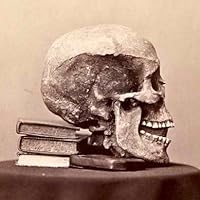
Three months later, Dr. Renard de Montpensier wakes up, picks up his manuscript, and notices with some professional alarm that it is written in two different colors of ink, red and green, on his desk, and that Kzradock, the patient who has consumed his every waking thought, apparently has no official existence in any record of the institute. There is also a scented handkerchief whose fragrance sends blood rushing to his temples, a calling card found on his unconscious body in an underwater construction chamber beneath the Seine, and a skeleton in a Brighton cliff cave with a cardboard sign reading "Methuselah Kzradock," which raises the entirely reasonable question of whether the doctor and his patient are two people, the same person, or a third option the book has in reserve.
The doctor travels to Brighton to find Lady Florence, walks the same chalk strand he mysteriously already knows from a rainy midnight visit he cannot consciously recall, and discovers the two old women with the deaf-mute bulldog, the man locked in an attic who counts on his fingers in multiples of thirty-two, and a bar owner with a tapeworm that controls his criminal impulses like a moral thermostat, whose name ia perhaps … Methuselah Kzradock. The onion, as Kzradock foretold, has many layers.
Louis Levy, a Danish journalist and author born in Copenhagen in 1875, wrote this peculiarity as a serial in 1909, published it in book form in 1910, and then, with casual cruelty, spent the rest of his career writing nursery rhymes.
Kzradock, the onion of a man whose layers peel back into emptiness, is what the soul produces when it stops doubting itself and starts believing its own actions. Lady Florence, the black-haired architect of everyone's suffering, is the soul's own invention, its femme fatale of the interior. The doctor, pompous Renard de Montpensier, a fox by name and a fool by function, is reason itself, chasing its own tail through a burning asylum at midnight.
Kzradock is a warped journey of self-discovery, prompting unsettling questions: Is sanity just a controlled form of insanity, a deranged delusion given structure, the unseen force governing us all? Or is reason a fleeting dream, a random product of necessity?
Kzradock pushes the narrator to the brink. Language fails at "the precipice between sanity and reason." However, Levy's masterful creation of atmosphere and action provide a glimpse into the chilling depths he explores. While likely more impactful in its original era, Kzradock remains a compelling read. The mind games Levy employs and the contrasting elements, from detective novel tropes to the near-surreal, make for a strangely captivating and bizarre adventure, albeit not an easy read at all. Weirdness personified!
❤️ 🇮🇱
Kzradock, the good doctor explains, is a medium, a man whose mind has been loaded with somebody else's secrets. His eyes glow in the dark. His opal ring pulses like a green cat's eye with a will of its own. And in his hypnotic trance states, pressed down onto that sofa like a specimen in a jar, he begins to murmur the outlines of a crime that has kept the Paris police occupied and the American detective magazines in profitable business, involving two dead women, Alice and Yvonne, their blood soaking into a red studio carpet on the Rue Vaugirard, and a yellow South American puma named Bayle, whose owner, the mysterious, black-haired Lady Florence, last seen on the chalk cliffs of Brighton, may or may not have masterminded all of it.
"Lady Florence, I have always thought only of your black hair. And, nevertheless, you know that I understand everything. That is why you have enchanted me... turned me into a plant... an onion... a body with living seeds and energies."
Monsieur Carbonel, a French detective with hawk's eyes and the facial expression of a man who has seen everything twice, and Mister Wells, a red-haired American with the fiery scalp of a man God lit from above, materialize at a small Montmartre cinema where "The Mysterious Murder" is screening to a garlic-scented audience. The film is, in fact, a reconstruction of the very crime scene Kzradock described from his sofa, puma and all, and the plan involves revolvers, a woman in disguise, a cab chase down the hill, and a collaboration between French police and American detective instinct that goes about as smoothly as one would expect.
As this circus reaches the lunatic asylum, the patients have staged a full insurrection under Bengal lights, appointed an emperor, barricaded the corridors, and are dancing a silent midnight minuet on the lawn while Kzradock conducts from a window with an outstretched hand and wide, luminous eyes, and the fire chief insists there is a revolution but also insists there is absolutely no fire, which is technically accurate. "You have to doubt. You have to doubt your own soul."
Three months later, Dr. Renard de Montpensier wakes up, picks up his manuscript, and notices with some professional alarm that it is written in two different colors of ink, red and green, on his desk, and that Kzradock, the patient who has consumed his every waking thought, apparently has no official existence in any record of the institute. There is also a scented handkerchief whose fragrance sends blood rushing to his temples, a calling card found on his unconscious body in an underwater construction chamber beneath the Seine, and a skeleton in a Brighton cliff cave with a cardboard sign reading "Methuselah Kzradock," which raises the entirely reasonable question of whether the doctor and his patient are two people, the same person, or a third option the book has in reserve.
The doctor travels to Brighton to find Lady Florence, walks the same chalk strand he mysteriously already knows from a rainy midnight visit he cannot consciously recall, and discovers the two old women with the deaf-mute bulldog, the man locked in an attic who counts on his fingers in multiples of thirty-two, and a bar owner with a tapeworm that controls his criminal impulses like a moral thermostat, whose name ia perhaps … Methuselah Kzradock. The onion, as Kzradock foretold, has many layers.
Louis Levy, a Danish journalist and author born in Copenhagen in 1875, wrote this peculiarity as a serial in 1909, published it in book form in 1910, and then, with casual cruelty, spent the rest of his career writing nursery rhymes.
Kzradock, the onion of a man whose layers peel back into emptiness, is what the soul produces when it stops doubting itself and starts believing its own actions. Lady Florence, the black-haired architect of everyone's suffering, is the soul's own invention, its femme fatale of the interior. The doctor, pompous Renard de Montpensier, a fox by name and a fool by function, is reason itself, chasing its own tail through a burning asylum at midnight.
Kzradock is a warped journey of self-discovery, prompting unsettling questions: Is sanity just a controlled form of insanity, a deranged delusion given structure, the unseen force governing us all? Or is reason a fleeting dream, a random product of necessity?
Kzradock pushes the narrator to the brink. Language fails at "the precipice between sanity and reason." However, Levy's masterful creation of atmosphere and action provide a glimpse into the chilling depths he explores. While likely more impactful in its original era, Kzradock remains a compelling read. The mind games Levy employs and the contrasting elements, from detective novel tropes to the near-surreal, make for a strangely captivating and bizarre adventure, albeit not an easy read at all. Weirdness personified!
❤️ 🇮🇱

Read
May 20, 2022So, what is this? You'll notice that it has several good reviews, which makes sense to me because the people who are drawn to a metaphysical pulp mystery are probably the type who don't mind if the mystery dissolves into the philosophical, as this does, with its ending about how the soul needs doubt.
OK, so back up: published in Danish serially in 1909, Levy's "Kzradock" has a pulp-serial feel, with an unsolved murder that might be traceable to a tame wild cat (notes of Rue Morgue), murder scenes played out for the detective in a new film, American and French secret police who don't work well together, a mysterious woman, a riot in an insane asylum, etc. Clearly, Levy is working with pulp and gothic tropes here, and the story moves headlong towards --
Well, what? I have to say, like a lot of early and to our eyes, hard to read pulp, Levy's protagonist, Dr. Renard de Montpensier, often tells us how horrid, horrifying, amazing, etc., something is; which, with the headlong rush where, for instance, the American secret policeman is introduced and then discarded in a chapter, gives the book a very quick and light touch. That is, never in reading this did I ever feel engaged with the illusion that these were real people with real feelings facing real problems. Which makes it a pretty easy read, in some ways, since it is purely an intellectual exercise.
But is that what it was meant to be? Or was this -- again, published serially and then published as a novel in 1910 and then translated into German in 1912, where Walter Benjamin and Gershom Scholem appreciated it -- meant to be a fun adventure story? If so, then it seems like a failure since the adventure doesn't really resolve.
But the book doesn't feel like a failure, and like I said when chatting with the publisher (who I wrote to ask "what's up with this book?"), the book doesn't engage in camp/kitsch towards the pulp and weird aspects, but it's certainly not playing it straight.
Anyway, there's definitely something here to say about the obsessively rational Montpensier (mountain of thought) falling into an abyss of nonsense and unknowability, and like Roland Barthes in S/Z (weirdly one of the books my 5yo keeps asking to be read from), I'm not so sure that the end is meant to be read triumphantly or as a man making love to the idea of irrationality after rationality has failed him, which is a big swing of the pendulum.
I really wish I had something to say other than "this weird one-off novel clearly has links to other works going on but is also something that hasn't been done that much or to this extent," but that's what I've got.
That, and also a couple of scenes of weirdness that I think would do really well in a less surreal work.
OK, so back up: published in Danish serially in 1909, Levy's "Kzradock" has a pulp-serial feel, with an unsolved murder that might be traceable to a tame wild cat (notes of Rue Morgue), murder scenes played out for the detective in a new film, American and French secret police who don't work well together, a mysterious woman, a riot in an insane asylum, etc. Clearly, Levy is working with pulp and gothic tropes here, and the story moves headlong towards --
Well, what? I have to say, like a lot of early and to our eyes, hard to read pulp, Levy's protagonist, Dr. Renard de Montpensier, often tells us how horrid, horrifying, amazing, etc., something is; which, with the headlong rush where, for instance, the American secret policeman is introduced and then discarded in a chapter, gives the book a very quick and light touch. That is, never in reading this did I ever feel engaged with the illusion that these were real people with real feelings facing real problems. Which makes it a pretty easy read, in some ways, since it is purely an intellectual exercise.
But is that what it was meant to be? Or was this -- again, published serially and then published as a novel in 1910 and then translated into German in 1912, where Walter Benjamin and Gershom Scholem appreciated it -- meant to be a fun adventure story? If so, then it seems like a failure since the adventure doesn't really resolve.
But the book doesn't feel like a failure, and like I said when chatting with the publisher (who I wrote to ask "what's up with this book?"), the book doesn't engage in camp/kitsch towards the pulp and weird aspects, but it's certainly not playing it straight.
Anyway, there's definitely something here to say about the obsessively rational Montpensier (mountain of thought) falling into an abyss of nonsense and unknowability, and like Roland Barthes in S/Z (weirdly one of the books my 5yo keeps asking to be read from), I'm not so sure that the end is meant to be read triumphantly or as a man making love to the idea of irrationality after rationality has failed him, which is a big swing of the pendulum.
I really wish I had something to say other than "this weird one-off novel clearly has links to other works going on but is also something that hasn't been done that much or to this extent," but that's what I've got.
That, and also a couple of scenes of weirdness that I think would do really well in a less surreal work.

July 1, 2025
Somewhere between the unsolved mystery and surrealist novel, Kzradock might seem like your dime-a-dozen pre-Lynchian nightmare narrative except for a few things (not that pre-Lynchian nightmare narratives are all that common, but you know what I mean.) The main element that stands this out is how self aware it is. At the front end, it confronts its rationality like an idealogical refutation of reality, and by the end it embraces a metaphysical doubt that, beyond a kind of pre-Jungian shadow self (this was 1910) also allows the titular "onion man"—layers upon layers—to also be prescient to the multiplicities in Guattari and Deleuze. No wonder Gershom Scholem was recommended it by his pal Walter Benjamin.
Beyond that self-awareness, it also is just pure fun. There are some meta-textual effects, specifically aimed at genre fiction, like detective novels and gothic horror, but also just true delights: murderous pumas, mute dogs, ghost children, silent conductors. The benefit of all this is not just the effervescence of dream logic but that of a casual symbolism that is both literary and psychological. Like a puzzle box that never ends, or indeed an onion that is never peeled.
Beyond that self-awareness, it also is just pure fun. There are some meta-textual effects, specifically aimed at genre fiction, like detective novels and gothic horror, but also just true delights: murderous pumas, mute dogs, ghost children, silent conductors. The benefit of all this is not just the effervescence of dream logic but that of a casual symbolism that is both literary and psychological. Like a puzzle box that never ends, or indeed an onion that is never peeled.

June 29, 2017
"Menneskeløget Kzradock, den vårfriske Methusalem" Alene titlen giver jo én lyst til at læse denne fuldstændig gakkede og udflippede, glemte, men nu nyudgivne danske roman fra 1910.
Læs hele anmeldelsen her: http://bognoter.dk/2017/06/29/louis-l...
Læs hele anmeldelsen her: http://bognoter.dk/2017/06/29/louis-l...

June 20, 2026
An absurdist adventure detective novella. Towards the end I laughed out loud at the absurdity to the point of tears. It reads suspiciously modern for being over 100 years old. Obviously well ahead of its time. My only complaint is the ending makes the story fall quite flat, but it's a short fun read anyway.

January 29, 2018
Fuldstændigt kriminelt at den ikke blev genudgivet før nu.

April 14, 2018
Like a detective story by Poe, but tuned to a more insane pitch.

August 3, 2023
Whilst I like absurdist fiction, this was difficult to read and not very well written to be quite honest. There were some entertaining sections though and it certainly is unique!

August 12, 2025
Wtf wtf wtf wtf

August 31, 2026
"Is reason only disciplined insanity, an insane hallucination that has taken on form, and under whose influence we all live? Is reason a dream created by chance, made useable by necessity?"

July 31, 2026
This largely forgotten Danish novel from 1910 starts out with a wild scene, of a spiritual medium named Kzradock being treated by the narrator, a psychiatrist at a mental institution. He is in a trance state, bound hand and foot on a green couch, with a dagger in his hands. The patient has visions of a Lady Florence and scenes of murder, and there is also a puma on the loose in Paris, a nod to Poe. There is a policeman, a detective and some doppelgängers and a lot of other stuff. There are some wild sentences as when Krazdock is screaming: “Leaves in the forest primeval would have turned over at this screaming; every terror and all the depths of night were in it.”
If you enjoy weird fiction you might enjoy this.
Unfortunately, spoiler I guess, the whole thing seems to be a hallucination in the mind of the narrator, who goes on to have more confusing encounters. This may have been fresh and original in 1910, but it barely hangs together and seems trite to a modern reader. It’s a short book and interesting, but I wish it had more of a plot. Instead, it seems to be aiming to be a philosophical meditation on identity. Great opening chapters, though. Mercifully short.
If you enjoy weird fiction you might enjoy this.
Unfortunately, spoiler I guess, the whole thing seems to be a hallucination in the mind of the narrator, who goes on to have more confusing encounters. This may have been fresh and original in 1910, but it barely hangs together and seems trite to a modern reader. It’s a short book and interesting, but I wish it had more of a plot. Instead, it seems to be aiming to be a philosophical meditation on identity. Great opening chapters, though. Mercifully short.
September 17, 2019
There's an episode of Bob's Burgers, early on, where Linda wants to hold a murder-mystery in the restaurant. After explicitly stating that the killer isn't her, she reveals that she was the killer. Her audience is not very receptive to her twist/lie.
It's perhaps belittling to bring popular culture into a review of what is considered an unknown masterwork of 100+ years ago, but I kept hearing that twist echo over and over through Kzradock.
This is a text which, if the historical notes are accurate, was seen as a departure in dutch literature, something avant garde enough to still feel modern. What feels more true is that this is a text which finds itself coming as unhinged as the narrator is. The first section is a certain self-conscious style, something that feels very much of a certain era: the narrator continually re-states his name, his title, his status. It's rigid and buttoned down even at its wildest, the sort of style that makes so many classic mysteries feel more like a chore than a puzzle. It exaggerates and hyperbolizes, it needs to tell the reader how shocking every shock is. The second section... well, it's more natural, even as the narrative becomes more outlandish. The narration feels more normal, less pompous, feverish but natural.
Is this intentional? Presumably. The first section is dedicated to reason, to solving madness with calm resolve and logic. It exists in a world where the world of the "proper" is separate from that of the crazed, where status is sane and insanity comes with a remove of status. The second section? We immediately see that break down. We start seeing layers of insanity, exposing how tenuous the walls between normalcy and wildness really are. We see the contrast, the claustrophobic settings of the "sane" chapters, and the free, airy, more spacious settings of the "crazy" ones, suggesting the duality of the two, or the way that maintaining the appearance of normalcy is so binding compared to the freedom of just doing what we feel the need to do. It's interesting to work with mentally, but stylistically, it feels its age.
It's perhaps belittling to bring popular culture into a review of what is considered an unknown masterwork of 100+ years ago, but I kept hearing that twist echo over and over through Kzradock.
This is a text which, if the historical notes are accurate, was seen as a departure in dutch literature, something avant garde enough to still feel modern. What feels more true is that this is a text which finds itself coming as unhinged as the narrator is. The first section is a certain self-conscious style, something that feels very much of a certain era: the narrator continually re-states his name, his title, his status. It's rigid and buttoned down even at its wildest, the sort of style that makes so many classic mysteries feel more like a chore than a puzzle. It exaggerates and hyperbolizes, it needs to tell the reader how shocking every shock is. The second section... well, it's more natural, even as the narrative becomes more outlandish. The narration feels more normal, less pompous, feverish but natural.
Is this intentional? Presumably. The first section is dedicated to reason, to solving madness with calm resolve and logic. It exists in a world where the world of the "proper" is separate from that of the crazed, where status is sane and insanity comes with a remove of status. The second section? We immediately see that break down. We start seeing layers of insanity, exposing how tenuous the walls between normalcy and wildness really are. We see the contrast, the claustrophobic settings of the "sane" chapters, and the free, airy, more spacious settings of the "crazy" ones, suggesting the duality of the two, or the way that maintaining the appearance of normalcy is so binding compared to the freedom of just doing what we feel the need to do. It's interesting to work with mentally, but stylistically, it feels its age.
Displaying 1 - 20 of 20 reviews