

What do you think?

Peculiar People: The Story of My Life
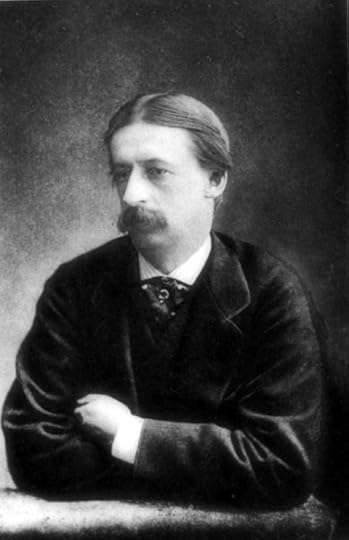
Augustus John Cuthbert Hare (1834-1903) was a Victorian writer who had clung, so to speak, to the edges of fame. He was born into the maddest of upper-class English families and survived one of the cruelest of childhoods to write monumental travel guides to the Continent and a six-volume autobiography, The Story of My Life. That autobiography is now extremely rare and growing rarer - since every day copies of it, even in libraries, crumble into dust. This is a one-volume condensation of this remarkable work, containing what the editors consider to be the highlights of Augustus Hare's harrowing tale, beginning with his birth, shortly following which his lackadaisical parents gave him to a relative, assuring her that if she wanted more children she should let them know, because they had others.
- GenresBritish Literature
303 pages, Paperback
First published January 1, 1995
About the author
Augustus John Cuthbert Hare
325 books5 followersAugustus John Cuthbert Hare (13 March 1834 – 22 January 1903) was an English writer and raconteur.
He was the youngest son of Francis George Hare of Herstmonceux, East Sussex, and Gresford, Flintshire, Wales, and nephew of Augustus William Hare and Julius Hare. Augustus Hare was born in Rome; later he was adopted by his aunt, the widow of Augustus Hare, and his parents renounced all further claim to him. His autobiography The Story of My Life details both a devotion to his adopted mother, Maria, and an intense unhappiness with his home education at Buckwell Place. He spent one year at Harrow School in 1847 but left due to ill health. In 1853, he matriculated at University College, Oxford, graduating in 1857 with a BA.
Hare was the author of a large number of books, which fall into two classes: biographies of members and connections of his family, and descriptive and historical accounts of various countries and cities. To the first belong Memorials of a Quiet Life (about his adoptive mother), Story of Two Noble Lives (about Charlotte Canning, Countess Canning and Louisa Beresford, Marchioness of Waterford, sisters and artists), The Gurneys of Earlham (about the bankers and social reformers of Earlham Hall near Norwich), and an autobiography in six volumes. This last included a number of accounts of encounters with ghosts. A reviewer in the New York Times concluded that "Mr Hare's ghosts are rather more interesting than his lords or his middle-class people".[2]
He also compiled numerous travel books, including a couple for John Murray, as well as many others under his own name, such as Walks in Rome, Walks in London, Wanderings in Spain, Cities of Northern, Southern, and Central Italy (separate works), Days near Rome and Sussex. He used the money he obtained on his house Holmhurst St Mary in Hastings.
In his biography of Somerset Maugham, writer Ted Morgan mentions that Hare, whom he refers to as "the last Victorian," befriended Maugham who became a frequent guest at his country house, Holmhurst in Baldslow, Sussex.[
He was the youngest son of Francis George Hare of Herstmonceux, East Sussex, and Gresford, Flintshire, Wales, and nephew of Augustus William Hare and Julius Hare. Augustus Hare was born in Rome; later he was adopted by his aunt, the widow of Augustus Hare, and his parents renounced all further claim to him. His autobiography The Story of My Life details both a devotion to his adopted mother, Maria, and an intense unhappiness with his home education at Buckwell Place. He spent one year at Harrow School in 1847 but left due to ill health. In 1853, he matriculated at University College, Oxford, graduating in 1857 with a BA.
Hare was the author of a large number of books, which fall into two classes: biographies of members and connections of his family, and descriptive and historical accounts of various countries and cities. To the first belong Memorials of a Quiet Life (about his adoptive mother), Story of Two Noble Lives (about Charlotte Canning, Countess Canning and Louisa Beresford, Marchioness of Waterford, sisters and artists), The Gurneys of Earlham (about the bankers and social reformers of Earlham Hall near Norwich), and an autobiography in six volumes. This last included a number of accounts of encounters with ghosts. A reviewer in the New York Times concluded that "Mr Hare's ghosts are rather more interesting than his lords or his middle-class people".[2]
He also compiled numerous travel books, including a couple for John Murray, as well as many others under his own name, such as Walks in Rome, Walks in London, Wanderings in Spain, Cities of Northern, Southern, and Central Italy (separate works), Days near Rome and Sussex. He used the money he obtained on his house Holmhurst St Mary in Hastings.
In his biography of Somerset Maugham, writer Ted Morgan mentions that Hare, whom he refers to as "the last Victorian," befriended Maugham who became a frequent guest at his country house, Holmhurst in Baldslow, Sussex.[
Ratings & Reviews
Friends & Following
Create a free account to discover what your friends think of this book!
Community Reviews
Displaying 1 - 8 of 8 reviews

January 14, 2023
Two things that stand out from Augustus Hare's memoir are ones that we moderns tend to associate with the Victorians (one of whom was he): a Dickensian childhood and ghost stories.
Poor Augustus had a horrible childhood. Not only was he given away to be raised by a childless aunt, but he was also separated and isolated from his real parents and siblings. He never really knew them although he knew of them. He was sent away to schools where he was bullied and never got enough to eat. His first teacher was Francis Kilvert's father, of whom he has terrible things to say. This is interesting because I was led to Hare by way of Kilvert, who mentions his books in his diary. Did Kilvert know about what Hare wrote about his father? I never got the impression that he did. I wonder if Francis remembers Augustus as a boy, seeing as they were about the same age. He didn't mention this either.
The first part of Hare's memoir is his childhood and young adulthood, his travels in Italy and the death of his mother. The rest is entirely taken up with strange or humorous stories he heard from others or from his own experience, about famous people, writers and poets, artists and the nobility. Some funny stories, but a lot I mean a lot, of ghost stories that supposedly happened to people he knew. Those Victorians and their ghost stories! They just couldn't get enough.
Poor Augustus had a horrible childhood. Not only was he given away to be raised by a childless aunt, but he was also separated and isolated from his real parents and siblings. He never really knew them although he knew of them. He was sent away to schools where he was bullied and never got enough to eat. His first teacher was Francis Kilvert's father, of whom he has terrible things to say. This is interesting because I was led to Hare by way of Kilvert, who mentions his books in his diary. Did Kilvert know about what Hare wrote about his father? I never got the impression that he did. I wonder if Francis remembers Augustus as a boy, seeing as they were about the same age. He didn't mention this either.
The first part of Hare's memoir is his childhood and young adulthood, his travels in Italy and the death of his mother. The rest is entirely taken up with strange or humorous stories he heard from others or from his own experience, about famous people, writers and poets, artists and the nobility. Some funny stories, but a lot I mean a lot, of ghost stories that supposedly happened to people he knew. Those Victorians and their ghost stories! They just couldn't get enough.

July 23, 2019
Oh my this heatwave is scorching.
Anyway I first read this years ago and like a favorite film or song it's good to revisit old favorites.
Augustus Hare has long slipped from memory but he was in Victorian times the most talked about author, famous for his travel monologs. This volume is his autobiographical life story, from his deeply unpleasant and often cruel childhood to national celebrity. Also good to read about history from someone who lived it.
Anyway I first read this years ago and like a favorite film or song it's good to revisit old favorites.
Augustus Hare has long slipped from memory but he was in Victorian times the most talked about author, famous for his travel monologs. This volume is his autobiographical life story, from his deeply unpleasant and often cruel childhood to national celebrity. Also good to read about history from someone who lived it.

December 12, 2012
This would be yet another book I own that I can't quite place where I first bumped into it. I had discovered the story of Augustus Hare somewhere - the words eccentric and horrible childhood sum up a lot - and then tracked this book down. I enjoyed reading it and somehow haven't come around for a reread until now. (Now that I think about it, I think it may have been cited in an article about the Unfortunate Events books and real life bad childhoods in literature. Or perhaps it was an article/book review of Peculiar People.)
This edition of Hare's biography is the edited version - Gutenberg has the three volumes of the original The Story of My Life here. Where you'll also find copies of Life and Letters of Maria Edgeworth (two volumes) and Walks in Rome. So you can hop over to those if you feel the need for an immediate read.
I should also add that this version contains Hare's drawings - if you get one of the ebook versions check and see if there's one with illustrations. And the preface of this book is really worth it for setting the scene and Hare's accomplishments. According to it, The Story of My Life in the original form was six volumes long - the first three came out in 1896 and the next three in 1900. No idea which three are in the Gutenberg version. Also helpful is the family trees which take up two pages, because there are two families involved and who's who becomes a bit cryptic at times.
I'll probably quote a bit much from his childhood, which is only one part of the book, but it's because his childhood is so awful that you can't help focusing on it. It's worth remembering that psychological abuse isn't stuck in one time period, nor physical abuse. But then the Victorians didn't view children or childhood the way we do now. Hare also notes that servants were liable to have their ears boxed just as children were "and would as little have thought of resenting it" and that "people were not so tender in those days as they are now." (p. 28) Very different times.
His godmother writes Hare's parents and offers to raise him - the Hares had five children. Their reply:
Much is made of Hare's childhood disobedience and his fussing over lessons - his knuckles are hit with a ruler, and when he's very naughty his uncle uses a riding whip on him. And what exactly are these lessons? (Make sure to note Hare's age.):
The hardest part to read is those where Hare is disciplined because of something his godmother (and uncle) believes she sees in him, or interprets as selfishness and greed. It's one thing to see this in his scuffling with a cousin whom he hates when that cousin takes his toys or hits him first. It's another to see selfishness in wanting to play with nearby neighbor children, and then denying that so the child will learn by not getting anything he wants/wishes for. There's something sadistic in all this, and it's all because the adults are interpreting something as "the way Christians behave" in a really illogical, unfathomable way. We know this because Hare explains an incident, and then includes his godmother Maria's journal entries on the subject, so we can be fairly sure that this isn't all a product of Hare's interpretation.
Example:
The concept of having a young child undergo (adult-imposed) self denial is really difficult to read about. In much of this it seems that it is his Uncle Julius and family (the Maurices) that are especially encouraging of Maria raising Hare in this manner. And the heavy duty religiosity probably has a lot to do with the fact that Uncle Julius is a minister.
...That's enough of the unhappy childhood - short version, let's just say that Aunt Esther is completely awful and villainous. Besides seeing that Hare is locked up in various freezing rooms in winter, there's the incident where she takes his pet and has it killed. That's something I can't forgive, especially as Hare tells the story. (It's not a lengthy telling, but still the kind of thing that sticks with you.)
Hare continues to makes excuses for his mother Maria's behavior in all this, though he does note that her love for him doesn't make her any less unkind. She "gets better" later in Hare's life - there's no suspense there because Hare assures us early on that they eventually have a much more friendly and openly loving relationship.
Once Hare is old enough and finishes school his life becomes much more happy, especially once he discovers writing as a vocation and comes to enjoy it. Then the book is all traveling and vising various homes and sketches of various, often eccentric people and their stories. Here and there he tosses in a few lines about a famous author, poet or artist he crosses paths with.
One thing that made me absolutely love Hare - besides his gathering and re-telling various ghost stories - are the weird details that are in most of his stories. When traveling he spent a lot of his time staying at the homes of various friends and relatives:
Here's a longer description, from his brother who was fighting for Garibaldi in Italy:
...Lines to remember:
This edition of Hare's biography is the edited version - Gutenberg has the three volumes of the original The Story of My Life here. Where you'll also find copies of Life and Letters of Maria Edgeworth (two volumes) and Walks in Rome. So you can hop over to those if you feel the need for an immediate read.
I should also add that this version contains Hare's drawings - if you get one of the ebook versions check and see if there's one with illustrations. And the preface of this book is really worth it for setting the scene and Hare's accomplishments. According to it, The Story of My Life in the original form was six volumes long - the first three came out in 1896 and the next three in 1900. No idea which three are in the Gutenberg version. Also helpful is the family trees which take up two pages, because there are two families involved and who's who becomes a bit cryptic at times.
I'll probably quote a bit much from his childhood, which is only one part of the book, but it's because his childhood is so awful that you can't help focusing on it. It's worth remembering that psychological abuse isn't stuck in one time period, nor physical abuse. But then the Victorians didn't view children or childhood the way we do now. Hare also notes that servants were liable to have their ears boxed just as children were "and would as little have thought of resenting it" and that "people were not so tender in those days as they are now." (p. 28) Very different times.
His godmother writes Hare's parents and offers to raise him - the Hares had five children. Their reply:
p. 9 "My dear Maria, how very kind of you! Yes, certainly, the baby shall be sent as soon as it is weaned; and if anyone else would like one, would you kindly recollect that we have others"Whenever he uses the word mother he always means his godmother Maria. When he refers to his biological family he makes sure that we know who is "real" and who is not.
...There the formal exchange took place which gave me a happy and loving home. I saw my father afterwards, but he seldom noticed me. Many years afterward I knew Mrs. Hare well and had much to do with her; but I have never at any time spoken to her or of her as a "mother," and I have never in any way regarded her as such. She gave me up wholly and entirely."
Much is made of Hare's childhood disobedience and his fussing over lessons - his knuckles are hit with a ruler, and when he's very naughty his uncle uses a riding whip on him. And what exactly are these lessons? (Make sure to note Hare's age.):
p. 18 "After breakfast I began my lessons which, although my mother an uncle always considered me a dunce, I now think to have been rather advanced for a child of five years old, as beside English reading, writing and spelling, history, arithmetic, and geography, I had to do German reading and writing, and a little Latin. Botany and drawing I was also taught, but they were an intense delight."Granted education was much more advanced in those days (it wasn't odd to be started reading at a young age, and on adult material), but still, it's actually hard to get any five year old to sit still and continuously intake knowledge on any subject.
The hardest part to read is those where Hare is disciplined because of something his godmother (and uncle) believes she sees in him, or interprets as selfishness and greed. It's one thing to see this in his scuffling with a cousin whom he hates when that cousin takes his toys or hits him first. It's another to see selfishness in wanting to play with nearby neighbor children, and then denying that so the child will learn by not getting anything he wants/wishes for. There's something sadistic in all this, and it's all because the adults are interpreting something as "the way Christians behave" in a really illogical, unfathomable way. We know this because Hare explains an incident, and then includes his godmother Maria's journal entries on the subject, so we can be fairly sure that this isn't all a product of Hare's interpretation.
Example:
p. 24 - From my mother's journal, Lime, June 18 [1839]
"...Augustus would, I believe, always do a thing if reasoned with about it, but the necessity of obedience without reasoning is especially necessary to such a disposition as his. The will is the thing that needs to be brought into subjection."
The concept of having a young child undergo (adult-imposed) self denial is really difficult to read about. In much of this it seems that it is his Uncle Julius and family (the Maurices) that are especially encouraging of Maria raising Hare in this manner. And the heavy duty religiosity probably has a lot to do with the fact that Uncle Julius is a minister.
p. 23-24 "I was not six years old before my mother - under the influence of the Maurices - began to follow out a code of penance with regard to me which was worthy of the ascetics of the desert. Hitherto I had never been allowed anything but roast mutton and rice pudding for dinner. Now all was changed. The most delicious puddings were talked of dilated on - until I became, not greedy, but exceedingly curious about them. At length "le grande moment" arrived. They were put on the table before me, and then, just as I was going to eat some of them, they were snatched away, and I was told to get up and carry them off to some poor person in the village."I should add here that Uncle Julius and (his wife) Aunt Esther didn't have any children of their own. Hare being adopted probably had a lot to do with their treatment of him as well.
...That's enough of the unhappy childhood - short version, let's just say that Aunt Esther is completely awful and villainous. Besides seeing that Hare is locked up in various freezing rooms in winter, there's the incident where she takes his pet and has it killed. That's something I can't forgive, especially as Hare tells the story. (It's not a lengthy telling, but still the kind of thing that sticks with you.)
Hare continues to makes excuses for his mother Maria's behavior in all this, though he does note that her love for him doesn't make her any less unkind. She "gets better" later in Hare's life - there's no suspense there because Hare assures us early on that they eventually have a much more friendly and openly loving relationship.
Once Hare is old enough and finishes school his life becomes much more happy, especially once he discovers writing as a vocation and comes to enjoy it. Then the book is all traveling and vising various homes and sketches of various, often eccentric people and their stories. Here and there he tosses in a few lines about a famous author, poet or artist he crosses paths with.
One thing that made me absolutely love Hare - besides his gathering and re-telling various ghost stories - are the weird details that are in most of his stories. When traveling he spent a lot of his time staying at the homes of various friends and relatives:
p. 124 "...We are called at eight, and at ten march in to breakfast with the same procession as at dinner, only at this meal "Madame Bowes" - Mary Eleanor Bowes, 9th Countess of Strathmore - does not appear, for she is then reclining in a bath of coal-black acid, which "refreshes her system," but leaves her nails black."
Here's a longer description, from his brother who was fighting for Garibaldi in Italy:
p. 144 "...The Contessa della Torre was exceedingly handsome. She wore a hat and plume, trousers, boots and a long jacket. She was foolhardy brave. When a shell exploded by her, instead of falling on the ground like the soldiers, she would stand looking at it, and making a cigarette all the time. The hospital was a building surrounding a large courtyard, and in the centre of the court was a table where amputations took place. By the side of the surgeon who operated stood the Contessa della Torre, who held the arms and legs while they were being cut off, and when they were severed chucked them away to join others on a heap close by."
...Lines to remember:
p. 35 "...Frequently also the spare rooms were filled by former pupils - "young ladies" of a kind who would announce their engagement by: "The infinite grace of God has put it into the heart of his servant Edmund to propose to me," or "I have been led by the mysterious workings of God's providence to accept the hand of Edgar"..."If those sentence don't reel you in then perhaps Mr. Hare is not to your taste. Meanwhile I'm hoping to remember to tell someone that I must "evade the use of vegetables" at dinner some day.
p. 163 "...She was warned to evade a damp climate or the use of vegetables."
p. 188 Lady Waterford: "...In our days it was different; young ladies never walked, ate nothing but white meat, and never washed their faces. They covered their faces with powder, and then put cold cream on, and wiped it off with flannel: that was the way to have a good complexion."
p. 266 "...Seeing her astonished look, Lady Colin said "Oh, I see you are looking at my snake: I always wear a live snake round my throat in hot weather; it keeps one's neck so cool;" and it really was a live snake."
June 21, 2023
This book is an abridgement of the six-volume autobiography of a late 19th-century British travel writer Augustus John Cuthbert Hare. It it may sound like the epitome of Victorian dullness, but it gives as much pleasure as a country-house weekend with good shooting, lots of champagne and brilliantly amusing guests. A born storyteller, Hare vividly describes his travels and the unusual people he met as well as shares his favorite anecdotes and supernatural tales.
Introduction by James Papp ✔
Note on the Text by Anita Miller ✔
Family Tree ✔
I. Antecedents
II. My Childhood (1834-1843)
III. My Boyhood (1843-1848)
IV. Lyncombe
V. Southgate
VI. Oxford Life
VII. Foreign Life
VIII. Tales and Excursions
IX. Home Life with the Mother
X. English Pleasures and Roman Trials
XI. Esmeralda
XII. Dreadful Floods and the Last of the Mother
XIII. My Solitary Life
XIV. The Vampire of Croglin Grange and Other Stories 3.5⭐
XV. London Walks and Society
XVI. Visits and Tales
XVII. A Halt in Life
XVIII. An Adventure in France
XIX. In Pleasure and Pain
XX. Farewell
Introduction by James Papp ✔
Note on the Text by Anita Miller ✔
Family Tree ✔
I. Antecedents
II. My Childhood (1834-1843)
III. My Boyhood (1843-1848)
IV. Lyncombe
V. Southgate
VI. Oxford Life
VII. Foreign Life
VIII. Tales and Excursions
IX. Home Life with the Mother
X. English Pleasures and Roman Trials
XI. Esmeralda
XII. Dreadful Floods and the Last of the Mother
XIII. My Solitary Life
XIV. The Vampire of Croglin Grange and Other Stories 3.5⭐
XV. London Walks and Society
XVI. Visits and Tales
XVII. A Halt in Life
XVIII. An Adventure in France
XIX. In Pleasure and Pain
XX. Farewell
August 17, 2017
It was mostly about his miserable childhood and his constant relocations. I was eagerly awaiting the amusing anecdotes - in the mood for some light reading - but halfway through the book there were only one or two worth noting. A big bore.

August 1, 2007
Augustus John Cuthbert Hare (1834-1903), one of the Victorian era's most notable eccentrics, wrote a six-volume memoir, which was (happily) edited and compressed into this more manageable edition. Hare's upbringing was so horrendous that it's scarcely believable, but somehow he managed to survive and went on to become a noted travel writer and well-known social figure. Hare's family was deliciously eccentric, almost an Addams family assemblage, complete with creaky mansion, ghostly visitations, and elderly invalids. Hare's gifts as a storyteller are fully employed in his recollections of notable people he met and exotic places he traveled. Arm chair travelers, ghost story enthusiasts, and those with an interest in Victorian times will especially enjoy this one-of-a-kind book.

March 16, 2007
I haven't finished this peculiar memoir yet, however, I must include this quote that seems to epitomize upper class, Victorian parenting. Augustus Hare's godmother made an offer to his birth mother to take Augustus off her hands and raise him as her own. To which his birth mother replied, "My dear Maria, how very kind of you! Yes, certainly, the baby shall be sent as sooned as weaned; and if anyone else would like one, would you kindly recollect that we have others."

April 1, 2015
A nice glimpse into the past. I love reading memoirs written within the era I write in because it gives a real flavor most historians miss. Nothing writes history better than the people who lived it.
Displaying 1 - 8 of 8 reviews