

What do you think?
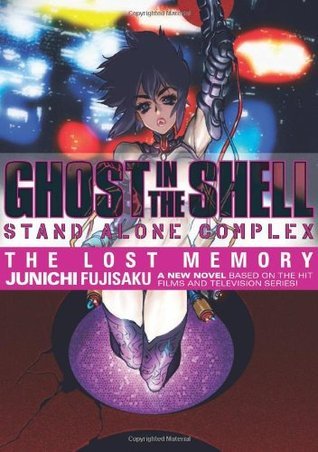
Ghost in the Shell: Stand Alone Complex #1
Ghost in the Shell: Stand Alone Complex, Volume 1: The Lost Memory
Since being formed as a shadow peacekeeping organization, Section 9 has faced almost countless adversaries both in the real world and in cyberspace, but none like "The Awakened," a group of terrorists who seem to have the ability to take over the minds and bodies of almost anyone and use them to commit crimes against the state, leaving their pawns unaware of who was controlling them. When Major Motoko Kusanagi is able to capture one of the boys used as a pawn she hacks into his cyberbrain to find out who the ringleader is, but what she discovers will take her and the operatives of Section 9 on a journey deep into the heart of cyberspace, and the answers she finds will shake Section 9 to its core.
213 pages, Paperback
First published June 7, 2006
Ratings & Reviews
Friends & Following
Create a free account to discover what your friends think of this book!
Community Reviews
Displaying 1 - 16 of 16 reviews

January 8, 2023
En buena hora he descubierto que en Kindle también venden novela gráfica, y encima algunos también incluidos en Kindle Unlimited, aunque sea en inglés como es el caso.
Para varios retos tenía que leer ciencia ficción ciberpunk y buscando, buscando, di con este manga que aunque me sonaba de haber oído hablar de él nunca le había echado un vistazo.
Lo he leído, no, devorado, en una hora de reloj. Y eso que no suelo leer manga; eso de leer del fin al principio me rompe los esquemas, pero me ha atrapado en la historia. Una muy buena lectura y un problema para mí: ¿podré evitar buscar los siguientes? ¿Qué apostáis?
Para varios retos tenía que leer ciencia ficción ciberpunk y buscando, buscando, di con este manga que aunque me sonaba de haber oído hablar de él nunca le había echado un vistazo.
Lo he leído, no, devorado, en una hora de reloj. Y eso que no suelo leer manga; eso de leer del fin al principio me rompe los esquemas, pero me ha atrapado en la historia. Una muy buena lectura y un problema para mí: ¿podré evitar buscar los siguientes? ¿Qué apostáis?

May 31, 2022
Ghost In The Shell: The Lost Memory By Junichi Fujisaku, is media tie-in novel based on the anime TV series “Ghost In The Shell: Stand Alone Complex”.
The novel takes place somewhere around the timeline of the first season of the show; it references the Laughing Man plot, but in a way that implies we are somewhere between the middle and the end of the first season and before the 2nd GiG plotline. It opens with the criminal hijinks of a gang of cyber-revolutionaries, dubbed the “Good Morning Terrorists”—so named for the way they hijack people’s brains, mostly young men in their teens and twenties, and force them to commit various terrorist acts. Major Motoko Kusanagi and the rest of Section 9 are called in to deal with one such young man, an army recruit named Shikawa, who takes hostages and straps a bomb to his chest in an electronics store. They lock him down without much trouble, but the data they pull from his brain doesn’t seem to provide them with anything useful. Like all the other victims, he doesn’t remember a thing about the incident
As in many of the episodes from the anime TV show, Major Kusanagi has to go digging for answers in unexpected places. Her trail of clues, however meager, leads her to an underground establishment where people can get illegally hijacked memories, “realies”, implanted for a fee—and as the title of the book suggests, one of those memories was something that probably should have stayed buried. And as with the Laughing Man plot itself, all of these incidents tie together to point at a crime in the past, one that has lain unresolved and has sown the seeds for a broad-scale act of vengeance.
What I liked most about the GitS series, and what’s reproduced capably well here, is how the show was not really about the future but about the present. As far-flung as some of the technological advancements in the story are—artificial memories, “cyberbrain” systems that merge hardware and “wetware”, and so on—they’re not openly absurd, and they’re used to make oblique comments about the way we have become an information society. If everything, including human memory and experience, can be reduced to mere data, does human life itself become a race to the bottom to see who can be the most digital? But the book (and the show) isn’t so much interested in predictive answers about any of these questions as it is simply raising them and then creating an absorbing entertainment that involves them.
A problem I often have with science fiction is how the story sometimes turns into a handwaving exercise—we don’t know the real limitations of what’s going on, so the author can use techno-gibberish as an excuse to get away with murder. One of the joys of the GitS stories is that while the technology is used as a way to set the scene or move the plot, it’s not used to invalidate danger. Kusanagi and the rest of Section 9 have to think their way out of their problems; they’re up against enemies who are at least as smart (or clever, or resourceful) as they are. The one exception to this is a climactic fight onboard a jet airliner, where the law of physics seem to have been briefly suspended at a couple of key moments—but the whole way the characters in question got there was by using their heads in the first place, so it’s not a show-stopper.
All in all, If you’re a fan of cyberpunk or mystery stories in general, and also want to see some action, you’ll also enjoy Ghost in the Shell: Stand Alone Complex: The Lost Memory. One of the calling cards of the Ghost in the Shell: Stand Alone Complex franchise is its ability to blend dystopian eccentricity with mystery and action. The book is about 200 pages long, but it’s a small paperback, so if you have the time, you can get through it in one sitting. I got through it in three days.
The novel takes place somewhere around the timeline of the first season of the show; it references the Laughing Man plot, but in a way that implies we are somewhere between the middle and the end of the first season and before the 2nd GiG plotline. It opens with the criminal hijinks of a gang of cyber-revolutionaries, dubbed the “Good Morning Terrorists”—so named for the way they hijack people’s brains, mostly young men in their teens and twenties, and force them to commit various terrorist acts. Major Motoko Kusanagi and the rest of Section 9 are called in to deal with one such young man, an army recruit named Shikawa, who takes hostages and straps a bomb to his chest in an electronics store. They lock him down without much trouble, but the data they pull from his brain doesn’t seem to provide them with anything useful. Like all the other victims, he doesn’t remember a thing about the incident
As in many of the episodes from the anime TV show, Major Kusanagi has to go digging for answers in unexpected places. Her trail of clues, however meager, leads her to an underground establishment where people can get illegally hijacked memories, “realies”, implanted for a fee—and as the title of the book suggests, one of those memories was something that probably should have stayed buried. And as with the Laughing Man plot itself, all of these incidents tie together to point at a crime in the past, one that has lain unresolved and has sown the seeds for a broad-scale act of vengeance.
What I liked most about the GitS series, and what’s reproduced capably well here, is how the show was not really about the future but about the present. As far-flung as some of the technological advancements in the story are—artificial memories, “cyberbrain” systems that merge hardware and “wetware”, and so on—they’re not openly absurd, and they’re used to make oblique comments about the way we have become an information society. If everything, including human memory and experience, can be reduced to mere data, does human life itself become a race to the bottom to see who can be the most digital? But the book (and the show) isn’t so much interested in predictive answers about any of these questions as it is simply raising them and then creating an absorbing entertainment that involves them.
A problem I often have with science fiction is how the story sometimes turns into a handwaving exercise—we don’t know the real limitations of what’s going on, so the author can use techno-gibberish as an excuse to get away with murder. One of the joys of the GitS stories is that while the technology is used as a way to set the scene or move the plot, it’s not used to invalidate danger. Kusanagi and the rest of Section 9 have to think their way out of their problems; they’re up against enemies who are at least as smart (or clever, or resourceful) as they are. The one exception to this is a climactic fight onboard a jet airliner, where the law of physics seem to have been briefly suspended at a couple of key moments—but the whole way the characters in question got there was by using their heads in the first place, so it’s not a show-stopper.
All in all, If you’re a fan of cyberpunk or mystery stories in general, and also want to see some action, you’ll also enjoy Ghost in the Shell: Stand Alone Complex: The Lost Memory. One of the calling cards of the Ghost in the Shell: Stand Alone Complex franchise is its ability to blend dystopian eccentricity with mystery and action. The book is about 200 pages long, but it’s a small paperback, so if you have the time, you can get through it in one sitting. I got through it in three days.

August 24, 2026
Accessible to readers who have not watched the Stand Alone Complex series or the 1995 film. A few technical issues stood out, primarily related to weapon systems (e.g. repeating the myth that the polymer frame Glock 17 is or was impervious to metal detectors) but on the whole an enjoyable narrative. Hopefully Dark Horse Comics will offer a new printing to make copies readily available.
March 25, 2021
What sets this above the show is that the author is always chiming in with lost post scripts that talk about nerdy little issues he has only implied. There is a big brain behind this work and only some of it is on display.

February 17, 2023
Young children are causing horrible crimes for no apparent reason. Section 9 looks into it. This takes place in the middle of the first year. Its interesting. This world translates well into book form. The characters and story feel right. Will look for forward to other book in this series.

June 4, 2011
Based on Ghost in the Shell: Stand Alone Complex, this light novel reads pretty much like an episode out of the series. While having seen the series is probably best before reading this book, as its nice to know the characters well beforehand, it could also be read on its own with little confusion. Brief mention is made of the Laughing Man from SAC season one, but other than that it's fairly independent.
The story follows section nine in their attempt to solve the logic behind a rash of seemingly spontaneous teenage terrorists dubbed as the Good Morning Terrorists. Most of the story focuses completely on the Major and Yo Kazei, a teenage student whose roommate was a Good Morning Terrorist. Most of the other characters of section nine are given little time in the plot and mostly serve as background. The characterization and feel was fairly consistent with the television series. Even the occasional specifications about cyberbrains or weaponry feel true to the series.
My only complaint would be some of the odd descriptions or strangely out of place details. For example, only a few pages from the end of the story Batou is referred to as "Batou, the lens-eyed man". I found this odd for two reasons. First, it's nearly the end of the books, it shouldn't be necessary to still have to give what seems like introductory descriptions of the characters in order to identify them. Second, Batou is not the only "lens-eyed man" in section nine, so the description becomes potentially confusing. Not sure whether this was translation weirdness or if it was just as out of place in the original.
Overall it's a nice addition to the world of GitS. It sticks with the feel of the series while having an entertaining plot of its own that could easily be a missing episode. I'd recommend it to fans of the series, though anyone looking to start on GitS for the first time might want to become familiar with the characters first through the series before picking this up.
The story follows section nine in their attempt to solve the logic behind a rash of seemingly spontaneous teenage terrorists dubbed as the Good Morning Terrorists. Most of the story focuses completely on the Major and Yo Kazei, a teenage student whose roommate was a Good Morning Terrorist. Most of the other characters of section nine are given little time in the plot and mostly serve as background. The characterization and feel was fairly consistent with the television series. Even the occasional specifications about cyberbrains or weaponry feel true to the series.
My only complaint would be some of the odd descriptions or strangely out of place details. For example, only a few pages from the end of the story Batou is referred to as "Batou, the lens-eyed man". I found this odd for two reasons. First, it's nearly the end of the books, it shouldn't be necessary to still have to give what seems like introductory descriptions of the characters in order to identify them. Second, Batou is not the only "lens-eyed man" in section nine, so the description becomes potentially confusing. Not sure whether this was translation weirdness or if it was just as out of place in the original.
Overall it's a nice addition to the world of GitS. It sticks with the feel of the series while having an entertaining plot of its own that could easily be a missing episode. I'd recommend it to fans of the series, though anyone looking to start on GitS for the first time might want to become familiar with the characters first through the series before picking this up.

January 31, 2015
What can I say...novels based on something hardly ever work on their own. The story was extremely sporadic and didn't introduce its characters. This happens often with "based on" stories, when the writer believes everyone knows the original product by heart. I've read Ghost in the Shell manga and seen the movie and I liked them a lot - I especially loved Kusanagi. Now we only got a glimpse of her and Batou. The whole setting was unclear and the pieces did't really fit together well.
The plot is average with its conspiracy. Fujisaku tries to create this great mystery that in the end reveals to be something more. The problem is that there are too many characters and most of them don't have any role in the book. The Good Morning Terrorists have a role only in name and then we have this weird airplane fiasco, which is stupid, really. Like why wait for six years to reveal the true happenings behind the plane crash? Makes no sense. The whole ghost boy thing was lame too as its potential was lost along the way. I didn't really get why Fujisaki had to depict the guns so thoroughly either and tell their history too. All in all this book is mainly for those who've seen the Stand Alone Complex series and loved it to boot - for anyone else this offers next to nothing.
The plot is average with its conspiracy. Fujisaku tries to create this great mystery that in the end reveals to be something more. The problem is that there are too many characters and most of them don't have any role in the book. The Good Morning Terrorists have a role only in name and then we have this weird airplane fiasco, which is stupid, really. Like why wait for six years to reveal the true happenings behind the plane crash? Makes no sense. The whole ghost boy thing was lame too as its potential was lost along the way. I didn't really get why Fujisaki had to depict the guns so thoroughly either and tell their history too. All in all this book is mainly for those who've seen the Stand Alone Complex series and loved it to boot - for anyone else this offers next to nothing.

March 11, 2010
The Good Morning terrorists are a group of seemingly unassociated teenagers ranging from 14 to 16. The one thing they all have in common though are missing memories. When Section 9 gets involved they are able to bring one of the boys, they dive into his e-brain to look for clues!
The Lost Memory was written by Junichi Fujisaku, who was a script writer (at the behest of Mamoru Oshii) for the Ghost in the Shell Complex TV series. Thus this novel contains the same grit, action, suspense and well-devised plot as the series did. Mr Fujusaku understands the characters that Shirow Masamune has created, and he faithfully re-creates them.
The Lost Memory was written by Junichi Fujisaku, who was a script writer (at the behest of Mamoru Oshii) for the Ghost in the Shell Complex TV series. Thus this novel contains the same grit, action, suspense and well-devised plot as the series did. Mr Fujusaku understands the characters that Shirow Masamune has created, and he faithfully re-creates them.
![Profile Image for [boredom.is.overrated].](https://i.gr-assets.com/images/S/compressed.photo.goodreads.com/users/1393269879i/29013992._UY200_CR3,0,200,200_.jpg)
March 3, 2015
This reads just like an episode! 5 stars may be a high rating for a light book from a well known franchise, but I really enjoyed how it fit right in with the series. I have known people to call Stand Alone Complex, bloated, pompous, boring, and overly-complicated for the sake of being over-complicated.
That's what I like about it. It's like a modern version of Blade Runner and they don't care if you get it or not. So, if you're like me, you just keep trying to get it. (Sometimes you start the episode over or go back a page or two to make sure.)
This book fits right in with that and then has the big action-y ending everyone expects. Everyone loves the Major.
That's what I like about it. It's like a modern version of Blade Runner and they don't care if you get it or not. So, if you're like me, you just keep trying to get it. (Sometimes you start the episode over or go back a page or two to make sure.)
This book fits right in with that and then has the big action-y ending everyone expects. Everyone loves the Major.

July 28, 2008
This is a good one...based on the TV series Ghost in The Shell, Stand Alone Complex, this one is about a faction of terrorists that implant a real-life tragic event into a manufactured sexual memory, in order to provoke angry violent thoughts in the cyber-brains of teenagers; these thoughts force them to commit suicidal terrorists acts. Section 9 needs to figure out who's behind it all, before they strike their next target: an Islamic diplomat.
This is a light novel, so it isn't high lit--it's something written for older teens; but it's well done!
This is a light novel, so it isn't high lit--it's something written for older teens; but it's well done!
This entire review has been hidden because of spoilers.

December 5, 2009
Just finished reading this short novel. It was mostly "meh".
I am partially biased here. I felt like it was filled up with too much introductory information on characters that I'm already super familiar with due to my obsession with the TV series.
The story wasn't too bad...this one explored memory manipulation which is a fun concept. I thought the end was really lackluster and felt kind of rushed. In fact, in the last chapter I counted 3 different urban myths that sort of spoiled my immersion in the fiction.
It wasn't terrible, but I would only recommend it for GitS fans.
I am partially biased here. I felt like it was filled up with too much introductory information on characters that I'm already super familiar with due to my obsession with the TV series.
The story wasn't too bad...this one explored memory manipulation which is a fun concept. I thought the end was really lackluster and felt kind of rushed. In fact, in the last chapter I counted 3 different urban myths that sort of spoiled my immersion in the fiction.
It wasn't terrible, but I would only recommend it for GitS fans.

January 18, 2011
Premessa: questo romanzo è unicamente rivolto ai fan dell'universo di "Ghost in the shell" di Masamune Shirow.
Non aspettatevi alta letteratura: lo stile dell'autore è prefettamente funzionale alla narrazione dell'ottima storia, ma nulla di più.
Detto questo, se vi interessa approfondire il background dell'universo di "Ghost in the shell" (in particolare la serie tv), questo è il libro per voi. Vengono forniti numerosi dettagli ad esempio sul funzionamento dei cyberbrain (dettagli mai menzionati nel fumetto nè nella serie tv).

May 3, 2009
It wasn't the most amazing book I ever read, but it followed along in the style of the movies/series and definitely kept my attention. If you enjoyed the movies, series or manga, you will probably enjoy this book as well.

March 14, 2011
The first of the Ghost in the Shell: Stand Alone Complex light novels was really enjoyable. It isn't too heavy on the tech-speak, and a lot of the tech was well explained without detracting too much from the story. The Major rocks as always.

November 10, 2012
I love the whole 'Ghost in the Shell' series and this light novel is a great representation of the universe created in the manga and anime. It follows the anime series and provides another great look at the story line.

August 11, 2008
I love Ghost in the Shell.
Displaying 1 - 16 of 16 reviews