Effective citizens--engaged, knowledgeable, and persistent, and united in common cause--are the most powerful force that ever was, or ever will be. I hope this book will help citizens to be more effective.
In his uniquely straightforward and accessible style, Political insider Graham Steele pulls back the curtain on our political system and gives readers a look inside. A lawyer, analyst, former Nova Scotia cabinet minister, and author of the Globe & Mail bestselling memoir What I Learned About Politics, Steele answers the burning questions of Canadians: Who really runs the parties? What does a backbencher do? How does a citizen effectively navigate the system, and achieve change through a politician? What is "truthiness?"
A primer for anyone who wants to become a politician or influence one, The Effective Citizen explains how politicians think and what factors influence that thinking; how to interpret the "non-answer" in political speech; and acknowledges that in politics, "bland is safe." Ideal for political neophytes and junkees all the same, Steele's newest book will have the whole country talking.
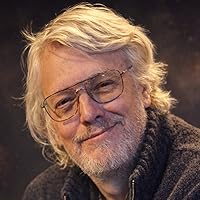
Graham Steele was a member of the Nova Scotia legislature from 2001 to 2013. He was the minister of finance and minister of Acadian affairs (2009–2012) and minister of economic and rural development and tourism (2013) in the Dexter government.
Graham is now heard regularly as a Nova Scotia political analyst for CBC. Before entering politics, Graham was a lawyer in private practice and in government.
He is a Rhodes Scholar and originally from Winnipeg. He lives in Halifax.
This is a strong orientation on how politics works from the executive to constituency level. Graham Steele gives a good lay of the political ecosystem, why politicians act as they do and how citizens can maximize their impact by working with or as politicians. The book's final fifty pages are prescriptive, whereas preceding content is largely descriptive. Significant time and care went into organizing this book, and to simplifying the otherwise gordian knots of the political world. Steele does not overly rely on personal anecdotes, nor does he display a pessimistic view of the Canadian system. Instead, he tells readers that there are "rules off the game", and politicians cling to these as a means to claim party loyalty and win re-election. This book allows citizens to determine if they should take the political route to making a difference in society, and what steps are most effective if this route is chosen. Well done on all fronts.
This was a great, to the point, prescriptive book. Working in government relations, this is essential reading. It compellingly breaks down how politicians think and lays out a strategic template for how to effectively approach engagement. In short, an effective citizen is engaged, knowledgeable, and persistent.
The broad context: A politicians hands are never tied - what they’re really saying is they put a higher value on maintaining their political status than on solving your problem.
For politicians the most important thing is getting re-elected. They do this by allocating their political capital towards shoring up support amongst their constituents and other party members that can bolster their standing.
People are broadly ineffective because they (either ignorantly or arrogantly) think that they have some new idea or issue to offer that by its very virtue should galvanize support. The issue is politics isn’t about ideas; there are no new ideas, and there is an infinite list of issues… but what there are is limited resources. Almost every public policy issue is at bottom an issue about money, where it is going to come from, and what it should be spent on. Therefore, what actually drives politicians to spend political capital is relevant and sustained public support on an issue. Unless you make clear how you can hurt or help the politician electorally, expect to be treated like a chore.
Politicians “rules of the game”: • Nothing is more important than getting elected and re-elected • Focus on voters beliefs not the facts • Keep everything as simple as possible • Fight for influence and status • Always be loyal to your party and leader • Always attack the other parties • Take credit often and avoid blame always • Focus on constituency work • Deny these are the rules
How to be effective: • Build real public support (don’t try to fake it, politicians are the public opinion experts). • Know what you want and be clear about what you’re trying to achieve. • Make your requests concrete and measurable. • Understand where the politician is coming from & who they represent. • Bring their constituents to your meetings, they’ll respond best to them. • Mesh their objectives with your objectives. • Know your audience and tell the right story. • Stories about people appeal to politicians (particularly their constituents); Stories about statistics appeal to civil servants. • Have expert knowledge of your organization to spot opportunities. • Invest in sustained relationships. • Set yourself up to be a hurdle —> Working with you will raise their political stock and conversely you have the power to hurt them if they don’t play along.
Watch out for: • Political promises lacking the how to get things done. • Political blackmail: politician or staffer says you will get nothing unless you agree to say that you’re happy. Any politician who does this is not your friend. • Political bullshit (claims that aren’t true but can’t easily be disproved).
Choice of instrument: • Statute: a law that has to pass through the assembly. • Regulation: a law but it doesn’t need to pass through the assembly. • Policy: not a law but is guidance provided by a department. Often treated like a law. • Program: an organized set of decisions, which has legal authority and funding. For example the awarding of grants for building repairs.
Make the meeting work for you: • Time, location, length matter. • After the meeting you should know where you stand: what you and them are going to do and when. • Take notes, and share them to create accountability. • If you take pictures, you’re in control of how it gets used (you don’t need permission). • Canadian law does not require you have permission to record a conversation in which you are a participant.
What doesn’t work: • Confrontation: a politician can’t be seen to give in to confrontational tactics. • Don’t give away credit for nothing, the politician cares deeply about it.
This is a fast paced, practical book. The Effective Citizen is well organized and offers clear, tangible advice as well as good insight into how politicians think and their priorities. I read this book as a citizen advocate who has engaged with politics — I feel equipped with stronger advocacy tools, as well as a reality check of challenges in politics, namely scarce resources and remaining authentic in a strong political culture.
I found some parts a bit repetitive, but it does work to drive certain points home. I also think this book could have benefitted from some description of jurisdictional responsibilities for people with less political knowledge.
At times I found myself wondering if some advice was equally applicable to everyone — as a woman and as a racialized person I am very aware of how I engage and how I am perceived in political spaces. There wasn’t any discussion about equity and access to politics in this book.
Steele has a wealth of experience as a politician and this book is a great resource and an accessible read.
Having read both of Steele's published works, his first, What I Learned About Politics, would be the better of the two. Even though Steele introduces quite of few concepts in this book, many of them are retreads of things he's mentioned in his first, and his first had the benefit of including real life experiences as examples of them. I think The Effective Citizen would have benefited from more stories about Steele's own experiences using and grappling with the techniques politicians use to avoid unnecessary confrontation, without them the work felt more like a dry "how-to" for a situation I've honestly never been in and probably won't be in for quite awhile, if ever. I think the biggest benefit I got from reading this book, after having already read his first, would be the plethora of references to other works that have helped him understand the mindset of politicians. As a fan of Japanese culture, his out of the blue reference to Rashomon, a black and white classic from the 1950s, to highlight the idea of how people spin the truth to their favor was a great surprise. I still think this work is worth checking out, but only to readers who haven't read Steele's first work, and honestly that's the one I would be recommending anyways.
Some quotes of his I enjoyed:
"It's too easy to be intimidated by a politician. Don't be. They're regular people who are temporarily occupying an elected position. They were regular people before they were elected, they will be regular people after they're done, and while they're in office, they're still regular people. They just happen to be temporarily thinking like politicians." (Page 176)
"My experience is that the people who get what they want are not the smartest, or the loudest, or the richest, but the people who simply don't give up." (Page 204)
"...any new policy proposal should be compared to the status quo, not to perfection. The status quo is often deeply unsatisfactory. Sticking with it is a choice, although we don't usually see it that way. Finding fault with a proposal for change, or the person making the proposal, is not an answer to the question of whether the proposal on the whole is better than the status quo. Don't smother your own ideas. Don't let your ideas be smothered. And don't smother others' ideas. Take the bread, and eat. It's not perfect, but it's better than going hungry. And you can always keep on working for better." (Page 224)
What more can you want: this book is short, fun, interesting, informative, and useful. The basic idea is that by knowing more about the world politicians live in and what motivates them, you will be more successful in garnering their help when you need it. The style of the book, written by a former politician, is decidedly straightforward:
“Politicians don’t like to lie, but they have developed so many techniques for shading the truth that it’s no wonder citizens think of them as liars. But technically they’re not liars. They’re bullshitters, and there’s a big difference. Now let’s talk about what you’re going to do about it.”
I don’t need anything from a politician just now, but I still enjoyed reading about their world. For example, if a politician says the name of the person interviewing them it means the interview is going badly since the politician knows other channels will not pick up a clip that mentions the name of a competing journalist.
This book would be excellent for people who run non-profit groups that often need tangible aid or policy changes from politicians. And I will certainly take it out from the library again if I find myself in need of a politician’s help.
I waffled between giving this book either a 3 or a 4 star rating. Ultimately, my opinion on the quality of the book does not matter. I thought it was an incredibly easy read that got down to brass tacks on political thought and opened the curtains on political behaviour. I believe it provided the necessary tools to tackle a politician’s evasive or dismissive behaviour, or utilize their desire to chase re-election to your advantage. I didn’t feel that the book gave me in particular a whole lot to build upon based on previous experiences with politicians. If you are not in that world, this is a must-read. If you sit down with or grab beers with or receive handwritten holiday cards from your local politician, you might already have what it takes! Overall, I would recommend this book to a friend, so I’ll give it the four stars it deserves. It’s also worth mentioning that I wish Graham Steele had been my MLA, and I’ll look into reading more of his writing!
Citizens who are most engaged in politics are more likely to vote in non-Presidential election years while the opposite is a fact and factor in the next November election.
A federal election can be called at any time in Canada when a minority government is in power as is the case for the current Liberal government.
Former Nova Scotia member of provincial parliament Graham Steele's book speaks from his experience in Canadian politics. In my experience having lived on both sides of the border and worked as a journalist and civil servant in the U.S., in a democracy politics is politics, no matter the system of governance.
Politicians want to be re-elected. Citizens want to be heard. In a democracy, citizens are the majority but only when we vote. This is our privilege and constitutional right. The author wrote a handbook for effective citizenship. The door is open. It's up to us to step through.
A very readable and useful book for anyone who wants to successfully interact with politicians. Written by a former (recovering?) politician, it details the political mindset and how best to interact with it. What I liked about the book is that it not a "how to game the system" sort of book. Rather, it shows both sides of the fence and shows how to achieve a meeting of the minds ... negotiation, rather than confrontation. Along the way, he illustrates pitfalls and mindtraps that are all-too-easy for politicians to fall into. As such, it would make good reading for politicians (and anyone with leanings in that direction). I wish more former politicians would make the time to write books like this, rather than the heavily-partisan screeds that are all too common.
I wanted to like this book but found, a la Neil Postman, it could have been summed up in a well-written essay.
For sure offers pragmatic advice but lacks examples of what does work and how things are able to change. As a result, what is meant to be framed as realistic book borders on cynicism.
I feel like Steele also kind of misses other reasons to do community organizing and that there are many examples where public pressure, coming from multiple angles, can work. There are other more thoughtful and well-researched books about successful social change movements that I wish he’d referenced.
How as a citizen to connect your needs with politicians' motivations. The author, Graham Steele, is the former Finance Minister in the Nova Scotia government. He presents his case with such transparency that it appears cynical at times. What's always first and foremost on any politician's mind he says is 1) getting re-elected, and 2) destroying the competition. However, Steele maintains he is pragmatic, not cynical -- it is only by understanding the political mind that citizens can influence political outcomes. Without this understanding, citizens are nothing more than helpless bystanders.
The author provides insight into the political system, and shines a bright light on why change is so challenging to achieve. With politicians and political parties having such a vested interest in winning the next election, the motivation to make change is so easily set aside.
Read while on vacation in Newfoundland. Very good and lots of good points. Working in politics in Nova Scotia I found it very relevant and relatable, anyone interested in making change in Canada should read this
An interesting look at the inner workings of political office in Canada. Easy to read with lots of examples that can guide you towards more successful interactions with politicians.
I'm not sure how to review this. Steele writes an engaging description of working with politicians that seems to confirm all ones fears of politicians being slimy and useless and then how to hold their feet to the fire - but you might need to read a couple other books and get some hand-holding from an insider to make progress - unless you have more power than most regular citizens. Real power, media savvy, a coalition of grassroots behind you, money, I don't know.
This was a great and informative read about how to work with politicians to advance your goals as a private citizen or organization and will definitely help many advocates on any issue.