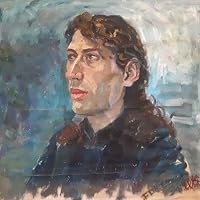
הסיפור הראשון "העשב האדום בוער לאט, הנהר הירוק זורם לעד" - הוא סיפורו של ליל אהבה, מסתורין ומוות. שני הגיבורים, אבשלום ואביגיל, יוצאים לשוטט בחצות-לילה בחוצות ירושלים, מחוץ לעיר ובין ההרים, ואולם מי היא הדמות המסתורית, דמותו של "בחור ששפתיו משוחות באודם", העוקבת אחריהם? אבשלום ואביגיל זוכים באהבה קסומה, אך זו מסתיימת במחזה של בלהה, דם וטירוף. "באביגיל מרכז המחבר את היופי הפראי והרך, את מסתורין הצמיחה והקמילה, והוא אמנם הצליח ליצור באביגיל דמות יפה להפליא, החיה את הטבע..." - נאמר ב"משא" - המוסף הספרותי של העיתון "למרחב". הסיפור השני - "הסיפור על אודות איילה" - אף הוא סיפור אהבה, אהבתם של הגיבור-המספר והנערה היפה איילה. הוא לקוח מתוך "החיים כמשל", ספרו האוטוביוגרפי של פנחס שדה
Pinchas Sadeh, also Pinhas Sadeh, (Hebrew: פנחס שדה) was a Polish-born Israeli novelist and poet.
Sadehwas born Pinhas Feldman, in Galicia (then part of Poland). His family immigrated to Mandatory Palestine in 1934, settling in Tel Aviv. He lived and studied in Kibbutz Sarid. Later, he studied in England. Sadeh worked as a shepherd at Kvutzat Kinneret. There he met Yael Sacks, whom he married in 1956 but the union lasted only three months. In 1962-1969, he was married to Yehudit. He began publishing his work in 1945.
This was the very first book of Pinhas Sadeh that I ever read. I nicked it from my stepfather many years ago, when I was a teenager, because it was my favorite ‘Tarmil Library’ book. It is still one of my favorite books and I still own it. I read from it every now and then when I feel melancholic, because it goes deep into the human psyche and it connects you with the spiritual world in a cathartic way. It is short book of two passionate stories, filled with emotions, love and romance, but not without tragedy, which is part of life. Death is part of life, like honey and venom, and just as there is a divine current, there is also a beastly one within humanity. In fact I was so infatuated with this book, particularly with the first story about Avshalom and Avigail that it had inspired me to write a theatre play in Hebrew (‘In the heavens soars the seagull’ 2000). I presented the play in Haifa theatre during my short period in the land of my youth at the same year but the play was rejected. Sadly I have lost the last manuscript. Now, each time I read this short book I sigh with remorse that I have failed to preserve the last copy of the manuscript. In 2004 I wrote a love story in English which had also been inspired by Sadeh’s first tale of the above book (Longing for the ancient willow). It hurts me, however, that Pinhas Sadeh didn’t really get the respect and appreciation he deserved as an author and poet. He taught me to embrace poverty and strife, because there is a refinement in human sufferings. I know he didn’t care about being famous and that he only wished to get a platform in order to deliver his messages, but I still think he has been marginalized by the establishment and by the elite because he was a nonconformist by nature. ‘Freedom is priceless’ is a message that reappears in many of his poems and works. Life is a gift that should be cherished, not wasted. Pinhas Sadeh was an ordinary poet who loved humanity; he was the salt of the earth. Sadeh cherished life, and this book, in my humble opinion, is the best one he had ever written. Two of the great messages in this book solidify the two following Latin Phrases
1-Amor est vitae essentia (Love is the essence of life) and 2- Amor et melle et felle est fecundissimus (Love is rich with both honey and venom)