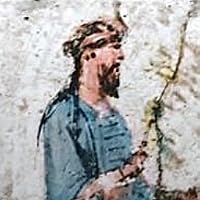
Paula Fredriksen, the Aurelio Professor of Scripture emerita at Boston University, since 2009 has been Distinguished Visiting Professor of Comparative Religion at the Hebrew University, Jerusalem. A fellow of the American Academy of Arts and Sciences, she also holds two honorary doctorates in theology and religious studies. She has published widely on the social and intellectual history of ancient Christianity, and on pagan-Jewish-Christian relations in the Roman Empire. Author of Augustine on Romans (1982) and From Jesus to Christ (1988; 2000), her Jesus of Nazareth, King of the Jews, won a 1999 National Jewish Book Award. More recently, she has explored the development of Christian anti-Judaism, and Augustine’s singular response to it, in Augustine and the Jews: A Christian Defense of Jews and Judaism (2010); and has investigated the shifting conceptions of God and of humanity in Sin: The Early History of an Idea (2012). Her latest study, Paul: The Pagans’ Apostle (2017), places Paul’s Jewish messianic message to gentiles within the wider world of ancient Mediterranean culture.
I wasn't expecting it, but this book has changed several of my ideas about Paul and his thinking. I have always seen him very much as a Jew and an believer in an apocalyptic theology about Jesus and the coming kingdom, but Fredriksen has clarified his complex positions on Jewish and ex-pagan members of the Jesus Sect and the vexed issue of circumcision. This puts Paul very much into his context of Second Temple Jews who accepted Jesus as Messiah and so had to accommodate the rather unexpected number of Gentile "God Fearers" who also did so.
She makes clear that those who see Paul as some kind of post-Jewish Jew who rejected the Law and his former faith and became something called "a Christian" is an anachronistic back-formation. The final coda on how second century Christians and pseudepigraphical writers reinterpreted and reworked Paul to make him fit later theological developments was also very useful. This is a book I will be referring to often in the future.
Basically, I swear by Paula Fredriksen's reading of Paul's Epistles. Her interpretation alone appears the most convincing and the most cognizant of Paul's Jewish identity. I feel like I finally understand Romans. Fredriksen is also a dynamic writer, whose prose retains a conversational tone even while it is scholarly. Nothing makes me happier than compelling, well-written scholarship. I aspire to this level of excellence. Finally, I loved that Fredriksen was attentive to the rhetoric of the seven epistles authored by Paul. So many Biblical scholars today forget that the Bible is literature. The books are informed by literary techniques.
My only criticism has to do with Fredriksen's description of later Christian doctrine. For example, she suggests that ex opere operato applies to the person baptized: ""Death to sin" is not achieved ex opere operato: Paul exhorts baptized gentiles not to yield to the mortal body's passions" (p. 158). Yet, Augustine's teaching is that the efficacy of baptism is not contingent on the holiness of the priest (not the baptized). Furthermore, Fredriksen's reading of Luther's teaching on Law/Gospel and Faith/Works lacks nuance. In my reading of Luther (and of current scholarship on the early Reformation), faith causes the believer to do good works, just as a good tree necessarily produces good fruit.
But since this book is about the first century Apostle and not later Christian doctrine, the above misunderstandings do not interfere with the book's central arguments.
As someone who has followed the developments of Pauline studies in recent years through what has been called the New Perspective(s) on Paul and now into what is often called "Paul Within Judaism" (into which this book belongs) and have found the insights to be indispensable to Christian theology, this was one of the most exhilarating reads I've ever experienced on any topic.
It is amazing what Fredriksen accomplishes in this number of pages. She finds a way to weave very fine points about complicated ideas (that even stretch our available vocabulary at times) into a nicely ordered, flowing progression of reframing what Paul's churches actually are and new understandings of Jew/Gentile, law, faith, righteousness, etc. One of the main contributions of the "Paul Within Judaism" view, especially as it is articulated by Fredriksen, is just how much *ethnicity* has to do with Paul's gospel. The repercussions are surprising, intriguing, and should have enormous impact on how Paul is read from now on. I certainly do not agree at the moment with every point Fredriksen makes, but she definitely has forever changed the way I will encounter Paul's letters. I will have to read the letters over again for greater clarity, but as it stands I agree with the main arguments. They make too much sense of what Paul writes and the realities of his world to be far off.
More than any of her other books, this is a more technical book geared at least for a highly educated audience and ideally for those with training in biblical studies. As one example, oddly enough, I couldn't discern a pattern for how Paul's original Greek is represented. Sometimes it is transliterated into English letters, but sometimes it is left in the Greek alphabet.
Ultimately, I can't think of any other work in biblical studies right now that calls for as much critical engagement (and even revisions in Christian theology) as this one. If you're like me, you'll read it, dive immediately into Paul's letters, and then turn around and read it all over again.
Paula Fredriksen writes an important contribution to the field of Pauline studies, in which she attempts to dismantle the common perception of Paul as an anti-Judaism, anti-Torah predecessor of Christianity. Despite the unfortunate tendencies in Christianity to distance the apostle from his Jewish heritage, Fredriksen argues that “Paul lived his life entirely within his native Judaism” (xii) in full anticipation of the Messiah’s triumphant return, which underscored his resilient urgency in turning pagans from their gods to Israel’s God to ensure the redemption of ethnic Jews once “the fullness of the nations” (Rom. 11.25) was gathered.
In Chapter 1, Fredriksen roots Paul’s outreach mission to the nations firmly within the Israelite apocalyptic traditions that envisioned the nations as active participants in the ultimate redemption of God’s people Israel (Isa. 2.2-4, 49.22-23, 66.21; Zech. 8.23). Although outreach to the nations was not included in Jesus’s immediate agenda, the Jewish gospel message must have unexpectedly resonated with pagans in the diaspora communities (Gal. 1.15-17), leading to intentional efforts from the Jewish Christ-followers like Paul to engage with their pagan neighbours to turn them away from idolatry and toward the worship of Israel’s one God (30).
In Chapter 2, Fredriksen helpfully sketches the contours of Paul’s Greco-Roman world, which requires a vision of Jewish communities in the diaspora dispersed across the Eastern Mediterranean, Asia Minor, Egypt, Syria, and Rome (32-33). These Jewish communities were deeply interconnected with the cultural environments of their non-Jewish neighbours, as evidenced in the Jewish inscriptions paying homage to Greek deities and Jewish citizens participating in theatres, cultic worship sites, and athletic activities (47). Similarly, without giving up their deities, pagans took interest in Jewish Scriptures, feasts, and Israel’s God, while visiting the synagogues across the diaspora, but there was no expectation for pagans to keep the Torah in order to visit the Temple or the synagogues (52-60).
Fredriksen takes up the question of Paul’s persecution in Chapter 3 with the focus on the character of Paul’s mission to the nations. Pagan nations were born into obligations to particular deities and turning away from those obligations upset pagans’ peace with their deities and resulted in calamities incited by those deities (89-90). The emphasis of Paul’s mission on gentile cessation of worship to idols was seen as disruptive by both, the pagan authorities who feared retribution from their deities, and the Jewish authorities who feared that the anxieties of pagan communities would result in violence toward Jews (90-92). Therefore, Paul faced persecution because his mission produced gentile seekers that abandoned their gods, thereby upsetting the delicate balance in the divine-human relationship in pagan religions and endangering the safety of Jewish communities in the diaspora.
In Chapter 4, Fredriksen takes issue with the law/grace dichotomy of the Protestant Reformation, characterizing it as a caricature of Paul’s diverse presentation of the Law in his letters, which addressed gentile audiences only. Paul opposed circumcision for gentiles because it was a covenant marker for God’s elect, and Israelite apocalyptic traditions did not require pagan seekers to become Jews (114). However, for example, Paul promoted Torah-observance for gentile audience in his letters by appealing to Jewish ethics to warn against idolatry (1 Cor. 10.6-14) and encourage love of neighbour (Gal. 5.14). For Christ-following gentiles, “justice/righteousness” with respect to the Law was only possible as a result of their devotion to Christ (119). To that end, Fredriksen argues that Paul engages in a rhetorical exercise in Romans 7.7-25 by depicting a hypothetical gentile seeker who struggles to keep the Law apart from Christ (124). She concludes that while Paul opposed some forms of Judaizing of gentiles like circumcision, he did not oppose Torah-observance made possible through Christ (130).
In Chapter 5, Fredriksen articulates Paul’s view of Christ’s role in the redemption of the cosmos, claiming that Paul never directly identifies Jesus as a deity (138). Instead, Fredriksen argues, Paul portrays Jesus as a heaven-sent human descendant from the line of David who incorporates Christ-following gentiles into the line of David (144-145), which in turn allows them to become adopted into the new family along with Israel and inherit Abrahamic promises (148-149). Paul sees this as the fulfillment of Israelite apocalyptic traditions that saw the union of ethnic Israel with God-fearing gentiles as a sign that God’s kingdom has arrived.
Perhaps the main contribution of Fredriksen’s study is its emphasis on the Jewishness of Paul. As a diaspora Jew in the Greco-Roman cultural milieu, Paul roots his identity and sense of mission in the story of Israel and its apocalyptic traditions, viewing himself as the agent through whom God will gather all Christ-following gentiles to himself. Paul navigates the complexity of the Greco-Roman world by calling gentiles to exclusive devotion to Israel’s God, while using Greco-Roman correspondence and rhetoric as instruments for his mission. Fredriksen helps the reader rehabilitate the image of Paul as a Torah-observant Jew and free him from the shackles of anti-Judaism and anti-Semitism, which others have carelessly read into his work for centuries. Fredriksen effectively demonstrates that the starting point for responsible readings of Paul should be his cultural and historical contexts, rather than Christian doctrinal perspectives and individual biases.
There are two areas in Fredriksen’s arguments that are left wanting. First, Fredriksen’s claim that Paul’s letters were written exclusively to gentiles is not convincing, given Paul’s efforts to establish his Jewish credentials (cf. Rom. 11.1; Phil 3.4-6; Gal. 1.13-17), which only Jewish audiences could fully appreciate. Fredriksen herself argues that the synagogues in the culturally-pluralistic diaspora were frequented by gentile seekers, which probably means that ekklesia communities of Christ-followers were likewise comprised of ethnic Jews and gentiles. Secondly, Fredriksen’s claim that Paul never identifies Jesus as “god” fails to acknowledge that the apostle in several instances indirectly points to Jesus’s pre-existence and divine status (cf. Gal. 3.16; 4.4-7; Phil. 2.6-11). Despite these minor details, Fredriksen’s excellent study merits the attention of scholars, pastors, and seminarians.
With this work slightly behind but also now in front of me, I will no longer be able to read with the Pauline letters or the rest of the New Testament as I have read them. This is to me a revolutionary work though I have for some years now not considered Jesus or Paul as Christian. When I read now I read in a different way.
As in her excellent book on Jesus, Paula Fredriksen artfully reconstructs the self-understanding of Paul by rendering him innocent of the future; rooting him in the ethnoreligious matrix that produced him—the world of Jewish kinship, cult, custom, and eschatology in its larger Greco-Roman context—rather than making him the product of later developments which he could not have anticipated. Despite the transformation that has taken place in Pauline studies over the previous few decades, many lay interpreters still envision Paul as the first Christian theologian (contra Judaism) or as the first Christian (contra Jesus and Judaism), holding that Paul preached the abrogation of the Mosaic Law by a new dispensation based on “faith” rather than “works,” and/or the replacement of Israel—an ethnic group which, like every other in antiquity, was inextricable from its collective filial relationship with its god(s)—by a new institution called the church. In fact, what united Jesus, John the Baptist, Paul, and the other apostles was their immersion in a shared eschatologically-minded Jewish worldview, originating with the classical prophets (especially Isaiah) but given new urgency in the era of Seleucid and Roman rule, according to which the God of the Jews, often acting through a new Davidic king serving as his messianic champion, would soon defeat his divine and human enemies, gather the people of Israel (including those lost in the Egyptian, Assyrian, and Babylonian captivities), resurrect the righteous dead, and turn all the nations and their gods back to the worship of himself as the supreme ruler of the cosmos. The preaching, death, resurrection, and awaited return of Jesus, the evangelization of the Jewish diaspora, and the liberal incorporation of gentiles into the movement must all be understood as occurring within and in reference to this preexisting framework rather than as “Christian” novelties.
Paul’s gentile missions were intrinsic to his Jewish eschatology: the turning of the nations was made possible by, and in turn confirmed, the imminent establishment of God’s Kingdom on earth as it is in heaven. What had previously been the subject of end-times speculation—the exclusive worship of the Jewish God by non-Jews—was, to a degree that seems to have astonished the Jewish apostles who formed the original core of the Jesus movement, becoming a concrete social reality. Many of Paul’s conflicts with fellow apostles, pagans, and synagogue authorities unaffiliated with the Jesus movement revolved around the terms upon which these gentiles-in-Christ were to be received.
In pre-Christian antiquity, there were two basic models for gentile participation in Jewish communal-religious life. The first and most common was the “God-fearer,” a pagan who patronized the local synagogue and venerated the God of the Jews among others, but who was not expected to be exclusive in his worship, observe the Torah commandments, or adopt other Jewish ancestral customs. God-fearers did not become part of the Jewish people, but merely paid their respects to the Jewish God in addition to the gods of their own kin. The second model, rarer and somewhat frowned upon but still a known quantity, was the proselyte: a former pagan who became both ethnically and religiously (in antiquity these categories were not distinct) Jewish. They exclusively worshipped the God of Israel, underwent circumcision (if male), and were responsible for the whole of the Law.
The first generation of gentiles who became part of this new Jewish messianic movement, by contrast, made for a strange, novel, and socially-disruptive breed. They were to abandon their “idols”—the gods of their ancestors, the gods who were their ancestors, the gods who literally or figuratively ran in their blood and that of their family, their clan, their nation, the proper veneration of whom was a duty inherited from birth, ensuring the wellbeing of their people—and worship only the God of another people, while nonetheless remaining distinct from that people. Neither God-fearers nor proselytes, these were “Kingdom pagans” who were not a part of Israel, but would nonetheless share a place with Israel in the World to Come. Fredriksen refers to them as “ex-pagan pagans” to highlight their eccentricity in a world in which ethnicity and religion were mutually constitutive; in which gods shared the ethnicity of their people and divine-human communion was mediated through webs of kinship and lines of descent.
Thus the Ptolemies of Egypt claimed descent from Heracles, and thereby from Zeus; as did the Spartan kings, one of whom established friendly diplomatic relations with the Hasmonean dynasty on the basis of syngeneia, or “kinship”: a granddaughter of Abraham was said to have been one of Heracles’ wives, making relatives of Jews and Lacedaemonians. The Romans were descended from Venus via Aeneas; the Seleucid kings from Apollo. And while the Jewish God had not literally begotten human offspring in this way, he was understood to have adopted his people and the Davidic kings as his “sons” (cf. Ex. 4:22, Ps. 2:7). This adoption (huiothesia) is listed by Paul in Romans 9 as a privilege granted by God to his Israelite kinsmen—alongside the giving of the Law, the covenants, the “glory” (doxa: that is, the divine presence at the Jerusalem Temple), the “worship” (latreia: the sacrificial cult), and the promises. But for Paul, this adoption and its concomitant promises were now—through the divine pneuma of the risen Christ, the very stuff of the Age to Come—available to the ethne, enabling the latter to attain piety (eusebia) and righteousness/justice (dikaiosyne), thus fulfilling the teloi of the Law and particularly of the two tables of the Decalogue apart from the Law and from Israel.
The divine spirit of Christ, the substance of immortality that at present inspires righteousness, piety, and charismatic gifts and in the immediate future will make up the resurrection body in the Age to Come, is what holds the ekklesia together, Jew and Greek. But insofar as Paul and his contemporaries remain in the flesh, distinctions between Jew and Greek, slave and free, male and female, remain operative. This leaves gentiles-in-Christ in a precarious position: having abandoned their ancestral worship they have become “deviant pagans,” disrupting the bonds between heaven and earth and angering the gods and their pagan kin, both of whom retain their power in the interregnum before Christ returns to subjugate the cosmos. And since the ekklesia was indistinguishable from the synagogue in the eyes of the pagan majority of the multiethnic cities of the Roman world, the activities of the former threatened to fray relations between pagan authorities and the Jewish community as a whole. Hence why Paul can say credibly that his movement is scandal to the Jews and folly to the gentiles, both of whom have persecuted him (2 Cor. 11:24-27). His “Judaizing” opponents, by advocating circumcision and thus the full proselytization of pagans, are perhaps trying to spare both the gentiles-in-Christ and themselves from persecution by resolving the disruptive liminality of the former: a Jewish proselyte was more socially acceptable than a deviant pagan (Gal. 6:12). But for Paul, this represents a futile attempt to accomplish “in the flesh” what will only be accomplished by God through Christ in the spirit: the union and “righteousing” of all in the Kingdom of God.
While Fredriksen is certainly correct that Paul maintains a distinction between Jews and Greeks in the flesh, and that the influx of the nations is part of a story that will end with the salvation of Israel (Rom. 11), I think she dramatically understates the significance of Paul’s conviction that flesh itself, whether Jewish or Greek, cannot inherit the Kingdom, and that the whole cosmos in its current state is soon to be transformed into spirit. It is of course true that Paul does not envision the supersession of “Judaism” by “Christianity,” nor that of Israel-in-the-flesh by the church-in-the flesh; that is, the replacement of one ethnos, cult, or covenant by another within the present Age and its fleshly realities. But the spirit will supersede the flesh, which is the site of ethnic distinction, the vehicle of death, and the obstacle to the fulfillment of the spiritual telos of the Law for Jew and Greek alike (Rom. 7:14). Fredriksen is cognizant of the fact that for Paul the current Age is rapidly passing away, but it seems to me she doesn’t fully acknowledge the degree to which this expectation at least radically relativizes fleshly distinctions. If all are one in Christ (Gal. 3:28, Rom. 10:12, etc.), and Christ in his spiritualized form is the firstfruits of the new cosmos, then it seems inevitable that for Paul the threefold division of ethnos, class, and sex is passing away with the flesh. It is true that his Deutero-Pauline successors and the Apostolic Fathers immanentized what was for Paul an impending temporal transformation, thereby effecting a kind of institutional-ethnic supersession within a history that, against Paul’s expectations, continued to roll on; but they were in large part merely drawing out the implications of what in Paul is already a radical reconfiguration of what one might broadly call Abrahamic identity.
Fredriksen claims that in Romans 7, when Paul describes an “I” in whom sin is awakened by the introduction of the Law, bringing about a fruitless struggle between the “inner self” that seeks to serve the holy, spiritual Law and the flesh that makes him captive to sin and death, he is not speaking of his own experience but rather taking on the rhetorical role of a gentile proselyte who is struggling to fulfill the commandments without the spirit. She contrasts this with Philippians 3, in which Paul asserts his blamelessness as to “righteousness under the Law.” But I see no reason to take Romans 7 as a rhetorical roleplaying exercise and Philippians 3 at face value. In the context of Philippians, Paul is arguing that no one should have confidence in the flesh. He (over?)emphasizes the reasons why he himself, more than anyone else, might have such confidence: his Israelitic bona fides, his zeal, and his righteousness. But he does this to make the point that if even he nonetheless does not place his confidence in the flesh, no one else should either. Paul’s boasting in Philippians 3 seems much more like a rhetorical flourish than does Romans 7, which gives no direct indication that Paul is not speaking for himself. The gentile “I” theory also seems to be at odds with other statements that appear categorical, as true for native-born ethnic Jews as for Judaizing gentiles: “For no one is a Jew who is merely one outwardly, nor is circumcision outward and physical. But a Jew is one inwardly, and circumcision is a matter of the heart, by the Spirit, not by the letter. His praise is not from man but from God (Rom. 7:28-29; cf. Deut. 10:16, 30:6; Jer. 4:4).” The inner, spiritual man is entombed in the flesh and the spirit of the Law is encased in the letter, but these realities will be turned inside-out at the resurrection.
Still, this is a very worthwhile reading of Paul from front to back, as it were: looking at the future he imagined through his own eyes rather than looking backward at him through ours.
This book provides some interesting insights into the world in which the NT authors lived, but I wasn’t overall convinced by yet another Perspective on Paul (maintaining a distinction between gentile and jewish converts).
I think Jason Staples’ masterpiece Paul and The Resurrection of Israel does a much better job of explaining the situation in which Paul finds himself.
What an incredible book. A must-read for any students of the NT or the early church. Fredriksen provides an excellent insight into a first century Jewish man named Saul/Paul who is often viewed as anything but that. Too often this enigmatic character is approached as being the first Christian theologian; one who radically abandoned the tradition of their upbringing, received a divine name change (Saul to Paul), and synthesised a “law free” gospel. As Fredriksen points out, this is anything but accurate (and quite anti-Semitic). . Fredriksen begins with a reconstruction of ancient Israel and the surrounding nations. She then provides insight into both Jewish life in pagan contexts (ie the diaspora and hellenisation), and pagan life in Jewish spaces (asking questions like: Were there limitations on pagans? What was a god-fearer? What was a judaized proselyte?). Thus shining a light onto Judaism’s precarious placement among the pagan nations’ systems of gods and imperial cults. . Next Fredriksen provides an overview of the historical Paul, which makes for a strong cypher for engaging with his work. From here Fredriksen exegetes important elements from Pauline letters, suggesting that traditional interpretations have missed the point in some vital areas (circumcision, conversion, eschatological expectation, community identity, and the Galatian controversy; to name just a few). . All up this is a stellar exploration of the data and Fredriksen handles the materials with expertise.
I came to this book after reading Paula Fredriksen's very excellent [[ASIN:B005LMEYOU Augustine and the Jews: A Christian Defense of Jews and Judaism]]. In that book, I appreciated Fredriksen's ability to place Augustine in the context of his time and to dissect the thinking of Augustine in a nuanced way. Fredriksen is Jewish, and she clearly feels no obligation to interpret seminal Christian figures - Augustine in one case and St. Paul in this book - in a manner independent of Christian assumptions.
In this book, Fredriksen spends a great deal of time developing the Jewish historical substrate and how it related to the pagan world that surrounded it. Frederiksen discusses the ambiguous status of gods other than the Jewish Gods in the context of Jewish henotheism, which was the idea that other gods existed but Jewish allegiance was to the God of the Jews. Over time the God of the Jews became the God of the universe to whom all men would eventually accept. This injected the idea of the "eschatological gentile" - the gentiles who at the end of time would accept the God of the Jews.
The idea of eschatological gentiles is Frederiksen's key to understanding Paul. She explains that Paul's experience of gentiles turning to the God of the Jews convinced him that he was in the end-times and that these were the eschatological gentiles spoken of by the prophets, who had always proclaimed that gentiles would worship God as Gentiles, not as Jews. As such, conversion to Judaism - via circumcision - was contrary to the prophecies that Jews and Gentiles, qua gentiles, would come to God at the end of time.
With this in mind, Frederiksen explains that Paul's discussion in Romans was to and about gentiles, particularly about Gentiles who had converted to Judaism via circumcision. Paul's point was that circumcision did nothing for Gentiles and that becoming Jewish, and accepting the Jewish law, was worse than useless. On the other hand, since Romans was written to Gentiles - "Pagan ex-Pagans", according to Frederiksen - it was not written to Jews and Paul did not mean to say that circumcision and Jewish laws would not be of use to Jews.
Frederiksen argues that the issue for Paul was not necessarily "Judaizing." Gentile Christians "Judaized" fundamentally by adhering to the basic tenet of Judaism, which was to abandon their allegiance to pagan gods, even if they did not go further and accept circumcision or dietary laws. However, in Judaizing in this one way, Christianity undercut the social compact on which Jewish interaction with pagan culture was based. Pagans maintained peace with the supernatural by serving their gods just as Jews maintained peace with their God by serving Him. When Christians persuaded pagans to abandon their gods, this was seen by pagans as threatening. Since Christians were part of Judaism, the blowback would fall on Jews, which, according to Frederiksen, explains why Christians were persecuted by Jews, including Paul at one point, and by pagans. (Apparently, the "God-fearers" - Gentiles who associated with Jewish synagogues - were not required to abandon their ancestral gods.) Frederiksen observes:
"Even in the socially blurred case of the god-fearers, no pressure, evidently, was brought to bear upon sympathizing pagans to commit exclusively to the god of Israel. (Later Christian observers will chide Jews precisely on this point.38) Finally, what we call “conversion” was so anomalous in antiquity that ancients in Paul’s period had no word for it; hence their conceptualizing such a transition as confederation to a foreign law, and as disloyalty to one’s own ancestral ethē.39 And if “conversion” itself was an odd thought to think, then the idea of mass-marketing conversion through missions would have been that much odder."
In this way, Frederiksen underscores how alien the world of Paul is to us.
Frederiksen's writing and analysis is tight and involved. This is not a light read, but it is intensely interesting. The chief take-away is that the Jewishness of Paul should never be underestimated. Paul cannot be comprehended if he is read as being opposed to Judaism. Frederiksen concludes:
"Paul’s agonistic rhetoric, with its contrasting binaries of Law and gospel, works and grace; his resolute opposition to proselyte circumcision; his anger with apostolic challengers; his absolute certainty that he knew what was about to happen—once time slipped away and the later gentile churches settled into history, these features of his letters took on the pattern of polarized opposites: Law or gospel; works or grace; and, as Paul’s later theological champions would characterize his position, Judaism or Christianity. Paul would not have recognized his message in these rigid polarities. He conceived of his mission to pagans as entirely consistent with God’s promises to his own people, Israel. And he was utterly convinced—pisteuō, he wholeheartedly “believed”—that he and his assemblies would live to see the realization of those promises. In his undisputed letters, he never wavered in this conviction. Should his own death anticipate Christ’s victorious second coming, Paul averred, he would nevertheless retain his confidence that history’s happy ending would come soon (cf. Phil 1.23–26). If we can move aside the veils of later ecclesiastical tradition, if we can see past their images of Paul the ex-Jew and of Paul the anti-Jew, if we can imagine ourselves back into the full-hearted eschatological conviction of this movement’s founding generation—which thought that it was history’s final generation—it is this other Paul whom we will more clearly see. Paul the dynamic, original, passionately committed late Second Temple visionary. Paul the apostle of the final Davidic messiah. Paul the brilliant student of Jewish law. Paul the expert interpreter of his people’s ancient scriptures. Paul the charismatic worker of mighty deeds. Paul the messenger of the Kingdom. Paul, the pagans’ apostle."
This is a book worth reading for anyone interested in Christian or Jewish history and theology.
Provocative but I'm not (entirely) convinced of her arguments. Although I read the book casually (i.e., not looking up all her references) I do appreciate her interpreting Paul within an entirely 2nd Temple Jewish/Pharasaic perspective. In particular I appreciated her view that Paul regarded that the Jews were a separate race and "the nations" an entirely separate race. And never the twain shall meet! What the Jewish God is doing in Jesus the Messiah is "turning" the nations (pagans) to God in the "conversion" of the gentiles to Christ.
I'm not rating this, since I am a bit biased- this was one of the main secondary sources I used in my honors thesis. I interacted with this text so deeply and over such a long period and it impacted my thinking in many ways. So if you're looking for a new, academic, biography of Paul, pick this one up.
Continuing on my Paula Fredriksen grind, this was another banger. I appreciate the depth with which Fredriksen approaches these topics and her dedication to radically reimagining the earliest Christian movements, and in this book, the very earliest “Christian” author, so as to fit within their own historical, cultural, and religious contexts, rather than, as has often been the case, our own, post-Nicene conceptions of them.
The image that Fredriksen paints of Paul throughout this book is fascinating. a man visited by the spiritually risen Christ, who emerges from that encounter firmly believing that the world was entering its final days. With this knowledge, Paul wandered to the diaspora synagogues throughout the Mediterranean in order to spread the good news of the imminent coming of god’s kingdom. His message was clear: We are the last generation, the conquering messiah will soon return, and with his coming, the world will end, Jews and Gentiles alike must follow Christ in order to be saved.
However, his mission, and those of his fellow apostles, quickly encountered an unexpected complication: this Jewish apocalyptic message was seemingly received much more warmly by Gentile listeners than it was by their fellow Jews. Initially, this seemed to validate the beliefs of the apostles, confirming earlier apocalyptic prophecies like those found in the book of Isaiah, which claimed that at the end of time all of the nations would ultimately turn toward god. But as time dragged on and the world inexplicably continued as it always had, the question of what to do with these gentile Christ-followers became increasingly pressing. It is in this period, 20 years after his original encounter with Christ, that Paul wrote his surviving letters.
Fredriksen contends throughout this book, and in contrast to the prevailing religious and scholarly narratives, that Paul remained steadfastly committed to Judaism and the Law throughout his life and ministry. Nonetheless, he eventually came to see himself as Christ’s divinely appointed emissary to the Gentiles in particular. For Paul, God’s imminently approaching kingdom would be composed of two equal yet distinct populations, Israel and the Gentiles. The Gentiles would ultimately turn toward God, as the prophets had said, but while this act of grace would ultimately save them, it did not make them Jews. It is for this reason that Paul was so virulently opposed to gentile circumcision, it signified something he saw as neither necessary nor true, that in order to be joined to God they needed to be joined to Israel. Paul dedicates a great deal of ink to his condemnations of other apostles or teachers, who he refers to as “false brothers”, who were calling for Gentiles to become full Jewish converts.
As time dragged on and other apostles began to feel more anxious about Christ’s return (or the seeming lack thereof), Paul remained steadfastly committed to his mission. He rationalized the Messiah’s continued absence and the non-conversion of his fellow Jews as being the result of his mission not yet having been completed. Only when all of the gentiles had turned toward god would the kingdom arrive, and only with the clear and undeniable return of Jesus would the Jews be able to see the truth of his gospel. Even through all of this, Paul maintained that his generation would be the last generation, that the days were growing shorter, and that Jesus would return, conquer the lesser powers and authorities of the earth, and raise all of the dead to join him in a new spiritual rather than fleshly kingdom “in the sky”.
I really enjoyed this book, it, like all of Fredriksens books, is pretty dense, but this one was pretty short and helped clarify some lingering questions I had after reading some of her other work.
Una cautivante perspectiva en la obra del apóstol Pablo, más nueva que la nueva perspectiva. Combinando rigor académico con vívidas narraciones, Paula Fredriksen explora a Pablo y su mundo, siendo leal a la historia sin importar que tan contraria sea a dogmas religiosos o ideas tradicionales.
La prosa es accesible y nunca aburrida, las descripciones del mundo greco-romano se sienten reales, y la escritura navega por citas literarias, eventos históricos, mitologías, leyendas y el apocalipsis, el usualmente ignorado centro teológico del apóstol. Con respecto a la temática, tres temas llamaron la atención:
Primero, Pablo nunca habla a individuos, sino a etnias. En el mundo antiguo el individuo no existía, pensar una persona sin idioma, sin pueblo, sin dios, era como pensar una figura sin color. Las relaciones que constituían a los pueblos eran horizontales, uniendo familias, clases sociales y partidos políticos; a la vez que verticales, uniendo al pueblo con sus dioses. Los dioses corrían en la sangre. Es en este contexto en el que Pablo escribe sus cartas, muy distinto a la idea individualista de justificación forense que matizó la lógica protestante. Pablo ardía con la convicción de que la historia estaba a punto de terminar, y, según las escrituras judías, la señal inconfundible de este evento sería la adoración que los paganos darían al Dios de Israel.
Esto nos trae al segundo punto. Algunas posturas del movimiento de Jesús exigían circuncisión y asimilación completa a los extranjeros, otros se contentaban con que añadan a YHWH a su panteón de dioses. Pablo, sin embargo, tenía otras expectativas para sus comunidades. Los gentiles no deberían circuncidarse, no debían dejar de ser gentiles, ni tampoco debían seguir adorando a sus otros dioses, debían dejar de ser paganos. Fredriksen los llama paganos ex-paganos. A los ojos de su cultura, eran una paradoja, una anomalía, era impensable que un griego alabe exclusivamente al Dios de Israel sin dejar de ser griego; para los ojos de Pablo, sin embargo, eran el cumplimiento de las escrituras hebreas que profetizaban un mundo en donde todas las naciones, sin dejar de ser naciones, alaben al Dios de Israel.
Finalmente, el tercer punto. Pablo nunca vio a Jesús cara a cara, como los apóstoles, ni leyó sobre él en libros, como nosotros. Pablo no parece saber casi nada de la vida terrenal de Jesús, cuando lo cita lo hace incorrectamente. Pero el apóstol asegura tener algo mejor: una experiencia mística en donde Jesucristo fue revelado. No nos debe sorprender, entonces, que un tinte cósmico y celestial recubre la figura de Cristo cuando Pablo lo menciona. A diferencia de lo que se suele decir, Pablo no reinterpretó la expectativa mesiánica: él no veía en Jesús al carpintero humilde, sino a un conquistador de los cielos. Jesús sería el descendiente de David que conquistará a los dioses, hará renacer al cosmos, cautivará a las naciones y entregará el reino a Dios. La idea moderna de la salvación individualista queda corta con el carácter universal y cósmico de Cristo: no serán salvos unos pocos, sino todo Israel, todos los gentiles (en conclusión, toda la humanidad), todos los ceres celestiales y demoníacos y toda la creación.
Muchas otras cosas hay para decir, pero es mejor experimentarlas leyendo el libro. Algunos cuestionamientos también valen la pena: muy poco se dice de la crucifixión, varios pasajes son reinterpretados radicalmente sin una explicación necesaria, muchas ideas no se siguen de la (admitidamente) escasa evidencia. Sin embargo, la extensiva bibliografía al final espera a cualquier lector dispuesto a probar su curiosidad. Yo, por mi parte, me contentó con haberlo leído y recomendarlo gratamente.
A good book, although I wouldn't say it is particularly provocative. It is attempting to understanding who Paul was and why he wrote what he did, within the context of his time. The reason I say I wouldn't consider this book particularly provocative, is because it follows a consensus view somewhat, that Paul existed.
An example of provocative views would be in the form of the conclusions of the professors of Oxford University, who produced the work called the Encyclopedia Biblica. In that work they agreed with the conclusion of a group of scholars at the University of Tübingen, led by F. C. Baur, engaged in, what was considered then, radical bible study, including the claim that only Romans, 1 and 2 Corinthians, and Galatians were authored by Paul. The Encyclopaedia Biblica cited the work of Willem van Manen, Rudolf Steck, and A.D. Loman who said that none of the epistles were written by the individual referred to as 'Paul' and all the epistles were pseudepigrapha. Now that is what I call provocative.
Similarly, John Colenso, the biblical scholar who was referred to as Queen Victoria's Bishop, wrote a book called 'St. Paul's Epistle to the Romans'. In that book he questioned the presence of any Christian Church in Rome, stating: "Was there, in fact, any Christian Church at Rome at all, at this time, distinct and definitely marked off from the Jewish community? There would seem to have been none whatever..."
Colenso also wrote: "To what class of persons, then, was this Epistle written? We call it the Epistle to the Romans; that is, of course, to the Christian believer then living at Rome. But who were these? And how did there happen to be any Christians in Rome at this time? It is natural to imagine a Christian Church at Rome, definitely formed and fully developed, like those at Corinth, Antioch, or Ephesus, or, in a later time., at Rome itself...
"But, when we look at the Epistle itself, we are at once struck with the peculiarity of its style, and of its main subject-matter. The first eleven chapters would seem to be addressed to Jews, rather than to Christians. By far the greater part of the Epistle assumes in the reader a very familiar acquaintance with Jewish history, and Jewish practices, and Jewish modes of thought, such as no mere ordinary convert from heathenism, especially at a time when there were only manuscripts, and the Book of the Old Testament were not in everyone's hands, could possibly have possessed."
The thoughts contained in those publications are provocative but never mentioned by scholars. Colenso was even persecuted by the Church up to the House of Commons, for stating his conclusions.
Fredriksen's book is accessible and has a rich writing style. It describes, in the words of Fredriksen, a "Jewish world incandescent with apocalyptic hopes…and a Mediterranean world thick with ancient actors: pagans and Jews, healers and prophets; angels and demons; Greeks and Romans; and, not least, angry superhuman forces, divine powers, and hostile cosmic gods. Both worlds are Paul's, and his convictions about the first shaped his actions in the second. Paul held these convictions as a committed Jew, and he enacted them as a committed Jew. In brief…Paul lived his life entirely within his native Judaism."
Calling Paul controversial is something of an understatement. By far, the most instrumental person whom without his collected letters would have (most likely) resulted in what became known as Christianity fizzling out not too long after its charismatic founder passed away. By far also one who few outside of bible scholars seem to understand.
How did Paul indeed view the Law? Did he consider himself a Law-abiding Jew till his final days? Why was he so against ‘god-fearers’ and pagans who converted to Judaism and thus (for men at least) undergoing circumcision?
While there are tons of book on Paul and almost a Nile’s worth of ink spilled, what our world needs more than ever is yet another one. However, Paul: the Pagans’ Apostle situates itself in a strange no-man’s land and does the impossible: it’s a scholarly book that is still accessible for the lay reader. What’s more, the author manages to keep her own beliefs at bay.
My own beliefs about Paul at least thankfully proved accurate thanks to the easily digestible details covered in the five chapters: yes, he was Jewish and yes, he believed in the Law—for Jews at least. However, according to himself, he did experience ‘something’ and felt that the end was indeed nigh and because of that, there simply was not enough time for gentiles to concern themselves with fully converting.
But there’s more and probably the most salient (and to me, new) point brought up which may very much explain why early Christians (well, whatever they were calling themselves back then, it’s complicated) faced such persecution from all sides: they were Jews but not Jews (not fully observing the law, honoring in ways almost pushing against idolatry a deceased leader), they were Romans, but not Romans (unlike Judaizers who still financially supported pagan temples, they only believed and thus supported the God of Israel).
From start to almost the end, I was hooked. Paul: The Pagans’ Apostle is not a difficult read and the extensive footnotes make it all the better. Do note the final chapter for those not very familiar with Christian Scriptures may go over one’s head, but otherwise, this makes for a good learning experience and a solid entry into more page-heavy Pauline studies.
4/5
---Notable Highlights---
“Why—how—after the passage of so much time, can Paul still be so sure that he knows the hour on God’s clock? This is the question that drives the present study.”
“Apocalyptic traditions are not “doctrine,” an authoritative, internally consistent, and coordinated body of teachings. Rather, they represent various and multivocal speculations, keyed to biblical themes. Nowhere are speculations more varied than on the issue of the role of gentiles at the End.”
“Paul rejects (some forms of) Judaizing, not (all forms of) Judaism.”
Anyone attempting to make sense of and systematize the life and teachings of the Apostle Paul--surely one of history's most persnickety and truculent characters--certainly has their work cut out for them.
Fortunately, Paula Fredriksen--one of the great living historians of early Christianity--is up to the task, and her ability to ride the mechanical bull of Paul's rhetorical injunctions and intricate theological explications without being thrown clear is quite a feat, even if she isn't entirely successful in prosecuting her main claim in the book: namely, that Paul was operating exclusively within a Jewish framework and was not in any way attempting to create a new religion (the credit [sic] for which she assigns to 2nd century Church Fathers).
Jesus was an apocalyptic prophet who taught, quoted, and reframed concepts almost entirely from the Torah; by Paul's own account, when he met the surviving original followers of Jesus in Jerusalem circa 50 CE (~17 years after Jesus' crucifixion), this group, led by Jesus' brother James, still kept to the Mosaic Law. Notably, Paul tells us in his letters that he didn't receive his teachings about Jesus from any man, that all was revealed to him in a vision. Fredriksen shows how that was probably not true, that Paul must have encountered the teachings of some of Jesus' followers when he was driving them out of his synagogue before his own conversion.
Nevertheless the creation of "Christianity" (a religion about Jesus) as a concept was undoubtedly chiefly the work of Paul, and was distinguishable from Judaism (the actual religion that Jesus practiced and preached). Fredriksen seems to be arguing that the distinction between the two was quite narrow, if indeed it existed at all in the mind of Paul. She might be right, but I'm not so sure. She is certainly right in pointing out that the distinctions between the two came into greater focus and sharper clarity over time, so really the issue is one of picking nits. On the one hand, Paul was not the shy retiring type, willing to countenance the views of others; on the other hand, Paul in his arrogance may well have thought he was preaching a message that was entirely concordant with Second Temple Judaism, but the evidence left to us (and the events of succeeding years) tell us that he did in fact create something new and different under the sun.
Fredriksen makes an important contribution to Pauline scholarship and this was a worthwhile read. Some of the ideas she presents as new have in fact been understood for a long time tho perhaps not in conjunction with the whole. For example, Paul’s understanding of his work as fulfillment of Isaiah’s prophecy can be found in any New Oxford Annotated Bible. I am not at all pleased to find her singularly “picking on” Luther, who made just about as many terrible statements as other reformers of his day and who was in his days less directly responsible for human death than reformers like Calvin. At one point she rephrased a “Lutheran” interpretation of Paul to the degree that she felt she was making a proper interpretation of a Pauline viewpoint; yet I as a “born and raised” Lutheran could completely agree with her second statement. She also seems at times to be at the mercy of either-or thinking, which in my understanding is not part of the Jewish heritage. Why I give this book such high marks is due to her return to Paul’s Greek and her deep insights in this regard, which were fresh and important to me. The issues she raises are what I call extremely “discussable” and I will be using them in my theology group meetings. I’ve read several of her other books and will continue appreciating her work.
While well written and accessible, the book nevertheless tackles complex arguments for understanding the apostle Paul, usually reserved for academic studies. This should not have surprised me if I had bothered to note that the book was published by Yale University Press. Still, there was much that I learned--such as that when Gentiles/Pagans became "God-fearers" and attended synagogues, or even if someone married into the Jewish faith, a man was not expected to be circumcised. So who were these people requiring Gentile converts to Christ to be circumcised? Also, Fredriksen made me realize how secular my assumptions are in that I did not realize why the community would be upset with converts. She points out that people would see conversion as betrayal and disloyalty to one's civic responsibilities to your clan and land. Thus one risks the vengeance of the gods at this rebuke. People were genuinely scared that these converts could cause the community harm. I am not sure I fully understood that before. While I did not fully understand or agree with everything Fredriksen argues for, I still found the book worth reading.
Woah, this book was hard to get through (due only to my brain’s inability to readily absorb the intellectual, very scholarly writing; not because of any fault of the author who is inspiring and brilliant in her research and understanding of first century culture). But taking it slow and re-reading many portions brings to light the reality of Paul, his intentions, and the Jewish, Greek, and Roman audiences he faced and wrote to. The author referred specifically and regularly to the books of Acts, Romans, and Galatians throughout this work.
Context context context!! Yes, the Bible is for all time and for all people, but it was written TO specific people at specific times and we do ourselves a disservice when we forget that fact or lay our own current, out-of-context worldview over it.
Fredriksen wants to put/keep Paul in Judaism. With the goal in mind, I guess her main question is how would a fully involved Jew see and go about such a Gentile mission.
I feel this book is extremely overrated. I do not like the author's writing style. It is more conversational and she constantly interrupts herself with clarifying clauses that disrupt her flow. I feel like she tries to show herself as a word smith using a heightened vocabulary when lesser would do. Many of her main conclusions would be dispelled if she accepted the entire Pauline corpus. As it is, she leans heavily on Romans, 1 Corinthians, and Galatians. She has some strange conclusions that do not stem from scripture. Finally, she should include a roadmap in the beginning. I usually had no clue where she was headed and the table of contents does not help.
Fascinating read. Fredriksen's description of the 1st century religious landscape, both within and without the early Christian movement, is arresting. A thorough defense of the "two-covenant" interpretation of Paul, this book argues that his primary focus was neither forensic justification (Old Perspective) nor an attempt at establishing a new, more religiously open movement in contrast with the narrow-minded Judaism of the first century (New Perspective). It was, instead, about "Judaizing" Gentiles by commanding them to renounce their ancestral deities in favor of the Jewish God--and yet, remain categorically distinct from "the house of Israel" (it is for this reason that Paul rejected circumcision)--in light of God's imminent kingdom.
As an aside, it was unsettling to confront Fredriksen's Paul, since he is regressive *even when compared to his contemporaries.* It would be much nicer if he were, like many Jewish synagogue goers of the first century, at least tolerant of the religious sensibilities of God-fearing Gentiles. He was not. For this reason, if he were alive today, he would doubtless find much to condemn on both the right and the left side of the Christian church--not that such condemnation should be accepted uncritically by either camp.
Otro libro sobre el cristianismo del siglo I que leo en estos meses. Creo que me pareció mejor que su libro sobre Jesús y que ayudó a mi comprensión retroactiva de ese otro libro. La lectura de sus cartas me había permitido construir mi propio personaje, bastante disruptivo, pero la Fredriksen la desarma y me devuelve otra. Igual, Pablo sale muy bien parado, su cosmovisión es coherente y atractiva. Por momentos demasiado académico, me hubiera gustado que incluyera también aspectos biográficos, pero por el contrario es 100% una reconstrucción del pensamiento de Pablo a través de sus cartas sin mencionar casi nada de su vida. Eso habrá que buscarlo en otro lado, pero la autora logra claramente lo que se propuso: pensar y leer a Pablo en los términos del siglo I.
When putting together a puzzle, sometimes you come across that one piece which causes a whole clump of pieces to come together. It is the hub around which all those pieces go which you’ve been collecting. This book was like that for me. This helped me greatly in clarifying and coalescing some very specific theological issues I’ve been gnawing on for some time.
As usual, I could say a lot. Could give compliment and critique, caution or commendation. For reasons, the list of people I would recommend this to at the moment is small. But it was greatly helpful to me. And it was enjoyable to boot. Plan to pick up another book or five of Fredriksen’s in the near future.
This book is very well-written, and Fredriksen is very familiar and comfortable with the sources she takes into account, which are very broad and numerous. Her arguments, however, have not convinced me. She seems to have little time and patience for anyone who would still agree with the Reformers on Paul, and while she did raise some good questions that are often neglected, her answers seems way out of left field.
One of the most prominent 'Paul within Judaism' proponents, Fredriksen argues that Paul has a distinct approach regarding ministering to pagans (non-Jewish) which, while Judaizing, did so in a distinctly Pauline way. While I can't follow her exegetical conclusions in all places, I think this stream of interpretation is worth considering and will prove beneficial to serious students of the Pauline corpus.
Fascinating and stimulating revisionist look at Paul produced through a detailed engagement with his writing as well as the unique features of his time and place. A lot to chew on and wrestle with here. I am not enough of a scholar to engage it at the highest level but fascinating for this laymen.
Fredriksen offers a serious and fascinating reading of the Apostle Paul. The book breathes out all decades of engagement with pauline writings and, particularly, Paul's relationship to Judaism. This book, therefore, stands in a long tradition of social approaches to the apostle in his context of Jewish Diaspora, thus incorporating traditions of the ancient Mediterranean Roman empire, but mostly and foremost from Second Temple Judaism. As the author puts it, "Paul lived his life antirely within his native Judaism." (xii) So the language of Paul as a "convert", "ex-Jew" or "First Christian something" is recurrently avoided and criticized. Consequently, the categories of a 'universal' faith that unites Jews and Gentiles alike in Christ is also dismantled—Fredriksen is particularly acid towards the works of N. T. Wright and John Barclay. The author, on another point of the Pauline scholarship spectrum, is way closer to Schweitzer, Martyn and Gaventa, prioritizing Paul's apocalyptical emphasis and more specifically the rushing pace in his apostolic endeavor vis-à-vis the expectation of an imminent return of a victorious Jesus Christ. In short, Fredriksen is focused on a Diaspora Jewish and eschatologically-oriented Paul. This is why he is the 'Pagans' Apostle': Paul, as informed by Isaianic traditions and as an in-Christ Jew, must bring pagans as such towards Israel, not in order that they become Jewish, but that they become both Jews and Pagans in-Christ, worshipping and accessing the Jewish God.
The argument of the book follows a thematic sequence. Firts, the context for Paul's apostolic actions are set in context of the general Jewish Scriptural traditions and expectations (ch. 1), and of the relationship and social exchange between Jews and Pagans in the Roman Empire (ch. 2). Both chapters emphasize the relationships between the access to God's presence and impurity (e.g. were gentiles [even God-fearers] seen as 'impure' in view of the Temple's scheme and transit?) and the expectations of final redemption (e.g. how will the Jewish God's messiah act in order to bring a Kingdom that attracts gentiles to Jerusalem?).
In the following section, Fredriksen analyzes key issues in Paul's ministry. She basically presents the question of Paul's persecution and what kind of message would produce such reactions and in what kinds of groups, both Jewish and Pagan (ch. 3), then developing Paul's positive and negative affirmations concerning the Jewish Law, and particularly circumcision (ch. 4), finally arriving at what is at the heart of Pauline churches and is assumed throughout his letters: the messiahship of Jesus and his role in bringin God's final kingdom, composed of Gentiles alongside Jews (though not completely and homogeneously blended). Finally, the book reaches a postscript that surveys the legacy of Paul in early Christianity, up to the 2nd century, and the need to reconsider Paul, apart from neo-Platonic readings which formed the early Christian tradition.
A few praises: Fredriksen is well-informed. The wide and over 100-page bibliography and index of sources are an inescapable proof of her long-time considerations on her topics. As a consequence, she leaves no loose threads in her arguments and valuable footnotes. I was quite struck by how many of the questions of ehtnicity of Paul are not easily solved and that there is a long-standing tradition trying to resolve the issue, and Fredriksen is very honest with all the difficulties in this exerise. Moreover, the book is another beautiful work by Yale University Press, with pleasing font-sizes, texture and layout.
A few questions: First and foremost, the author aims primarily (and almost exclusively) at Romans, Galatians and 1 Corinthians. Philemon, for instance, is altogether left outside as a particular question solved by Paul, with no particular use to the faith of ex-Pagans in Christ as a Messiah (!). Fredriksen develops the issue as an ancient historian, but how would that look like for modern applications of historically-based interpretations of Paul? What kind of missions would that entail in terms of Jews and non-Jews in the 21st century AD? These questions, obviously, must be answered by Christian readers, but still Fredriksen does not ponder what kind of faith would rise from her readings. I am also not convinced by the author's take on 'divine adoption' in Paul (e.g. Rom 8 and Gal 4) and the permanence of ethnic distinction, where Jews still had to observe the whole Torah in Christ, and pagans were expected to abandon the obedience to parts of it (at the end, the line is blurred in this theme, cp. p. 99, 107-8). For Fredriksen, they are equal kata pneuma ("in spirit"), but distinct kata sarka ("according to the flesh", p. 114). How would this kind of distinction be kept in earliest Christianity? For instance, if we understand that the "WE cry: Abba Father" (Rom 8:15; Gal 4:6) was aimed at gentiles primarily (cf. p. 122, 155), would that not point to a deeply shared and ritually recurrent adoptive sonship that would redefine ethnic distinctions? How would this kind of ethnic distinctions survive in the long term? And why would Luke be twisting Paul's memory in Acts 21.21 in this topic (cf. p.169)?
Having said this, I was highly provoked by Fredriksen questions, and enjoyed the reading very much.
Great book for a Judaism perspective on Paul the apostle. Fredriksen remind the Israel background though 2nd temple Judaism. Her approach to read Paul is with an apocalyptic view, with Paul writing in an eschatological mindset. A mindset to see gentile coming into Israel story. Really helpful for my New Perspective on Paul