

What do you think?

Something Wonderful: Rodgers and Hammerstein's Broadway Revolution
A revelatory portrait of the creative partnership that transformed musical theater and provided the soundtrack to the American Century
They stand at the apex of the great age of songwriting, the creators of the classic Broadway musicals Oklahoma!, Carousel, South Pacific, The King and I, and The Sound of Music, whose songs have never lost their popularity or emotional power. Even before they joined forces, Richard Rodgers and Oscar Hammerstein II had written dozens of Broadway shows, but together they pioneered a new art form: the serious musical play. Their songs and dance numbers served to advance the drama and reveal character, a sharp break from the past and the template on which all future musicals would be built.
Though different in personality and often emotionally distant from each other, Rodgers and Hammerstein presented an unbroken front to the world and forged much more than a songwriting team; their partnership was also one of the most profitable and powerful entertainment businesses of their era. They were cultural powerhouses whose work came to define postwar America on stage, screen, television, and radio. But they also had their failures and flops, and more than once they feared they had lost their touch.
Todd S. Purdum’s portrait of these two men, their creative process, and their groundbreaking innovations will captivate lovers of musical theater, lovers of the classic American songbook, and young lovers wherever they are. He shows that what Rodgers and Hammerstein wrought was truly something wonderful.
They stand at the apex of the great age of songwriting, the creators of the classic Broadway musicals Oklahoma!, Carousel, South Pacific, The King and I, and The Sound of Music, whose songs have never lost their popularity or emotional power. Even before they joined forces, Richard Rodgers and Oscar Hammerstein II had written dozens of Broadway shows, but together they pioneered a new art form: the serious musical play. Their songs and dance numbers served to advance the drama and reveal character, a sharp break from the past and the template on which all future musicals would be built.
Though different in personality and often emotionally distant from each other, Rodgers and Hammerstein presented an unbroken front to the world and forged much more than a songwriting team; their partnership was also one of the most profitable and powerful entertainment businesses of their era. They were cultural powerhouses whose work came to define postwar America on stage, screen, television, and radio. But they also had their failures and flops, and more than once they feared they had lost their touch.
Todd S. Purdum’s portrait of these two men, their creative process, and their groundbreaking innovations will captivate lovers of musical theater, lovers of the classic American songbook, and young lovers wherever they are. He shows that what Rodgers and Hammerstein wrought was truly something wonderful.
400 pages, Hardcover
First published April 3, 2018
Ratings & Reviews
Friends & Following
Create a free account to discover what your friends think of this book!
Community Reviews
Displaying 1 - 30 of 395 reviews

May 9, 2018
A lovely book, a lovely book, a finer book you know you'll never read!
Oh what a beautiful narr'tive, oh what a beautiful text.
I've got a bittersweet feelin', I won't know what to read next.
Some enchanted library... you may see a new booooooook.....
You may see a new booooooooook...... upon a crowded shelf.......
STOP ME PLEASE
I was swept away by the story of the most influential partnership in American pop culture. My only complaint is that the book isn't sold with an accompanying music CD - thank goodness for YouTube. Now, Netflix, I need you to buy the rights to Rodgers and Hammerstein's story and start a terrific dramedy series about these two. You could do the making of one show per season. That's at least seven seasons, more if you include their flops! Get. On. It!
Oh what a beautiful narr'tive, oh what a beautiful text.
I've got a bittersweet feelin', I won't know what to read next.
Some enchanted library... you may see a new booooooook.....
You may see a new booooooooook...... upon a crowded shelf.......
STOP ME PLEASE
I was swept away by the story of the most influential partnership in American pop culture. My only complaint is that the book isn't sold with an accompanying music CD - thank goodness for YouTube. Now, Netflix, I need you to buy the rights to Rodgers and Hammerstein's story and start a terrific dramedy series about these two. You could do the making of one show per season. That's at least seven seasons, more if you include their flops! Get. On. It!

August 3, 2018
A forthright and fun-to-read history of the music-and-lyric team who will probably go down as Broadway's greatest, Richard Rodgers and Oscar Hammerstein. Author Todd Purdum does a fine job detailing the team's process of creation and the ups and downs of their output. When I was a boy, CINDERELLA was still being shown on CBS, THE SOUND OF MUSIC commanded premium prices at the Bijou, and the pair were lionized in semi-mystical terms as unstoppable hitmakers. Yet for every OKLAHOMA!, SOUTH PACIFIC or THE SOUND OF MUSIC there was an ALLEGRO, PIPE DREAM or ME AND JULIET.
Purdum takes us there for all of that, and also gives credit to the composers who influenced R&H ("Larry" Hart and Jerome Kern, among others) and those whom they influenced (particularly "Stevie," later Stephen Sondheim, who was a frequent house guest of the Hammersteins from his childhood on). About my only gripe is that Purdum does a good enough job of showing how Hammerstein's lyrics evolved and were smoothed out during the preparation for a show and its tryouts, that the almost ritualistic presentation of "R&H's" greatness at the end of nearly every chapter is a little superfluous.
Today, many younger people do not understand the role Broadway once had not only in offering mass entertainment, but in injecting hits straight into American mainstream music: even R&H second-stringers like "Everythin's Up to Date in Kansas City," "Lovely Night" and "I Enjoy Being a Girl" are still enjoyed, and frequently played and sung. SOMETHING WONDERFUL would make a fine present for the budding Broadway fan or performance wannabe.
If, after reading this dual biography, the reader's appetite for more Broadway is whetted, here's a good follow-up book: Anything Goes: A History of American Musical Theatre.

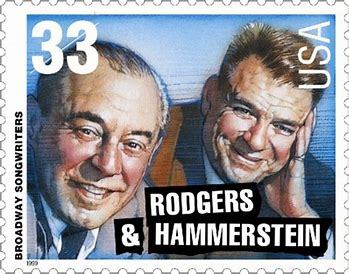
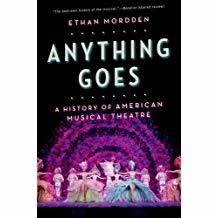
Purdum takes us there for all of that, and also gives credit to the composers who influenced R&H ("Larry" Hart and Jerome Kern, among others) and those whom they influenced (particularly "Stevie," later Stephen Sondheim, who was a frequent house guest of the Hammersteins from his childhood on). About my only gripe is that Purdum does a good enough job of showing how Hammerstein's lyrics evolved and were smoothed out during the preparation for a show and its tryouts, that the almost ritualistic presentation of "R&H's" greatness at the end of nearly every chapter is a little superfluous.
Today, many younger people do not understand the role Broadway once had not only in offering mass entertainment, but in injecting hits straight into American mainstream music: even R&H second-stringers like "Everythin's Up to Date in Kansas City," "Lovely Night" and "I Enjoy Being a Girl" are still enjoyed, and frequently played and sung. SOMETHING WONDERFUL would make a fine present for the budding Broadway fan or performance wannabe.
If, after reading this dual biography, the reader's appetite for more Broadway is whetted, here's a good follow-up book: Anything Goes: A History of American Musical Theatre.

July 11, 2018
I loved this book. I was already predisposed to like the story, because I am a great fan of musicals and in particular, those of Rodgers and Hammerstein. This is the incredibly talented team that came up with Oklahoma!, Carousel, South Pacific, The King and I, and The Sound of Music, inter alia.
But biographies and histories can be dry no matter how appealing the subject might be. This book, however, written in a spritely manner, is consistently entertaining. It took me a while to read it only because I kept having to break off for trips to YouTube to listen to the music. The whole neighborhood must have heard me sobbing while I watched videos of “You’ll Never Walk Alone,” “If I Loved You,” and “Something Wonderful.” Richard Rodgers once said art could be defined “as the expression of an emotion by means of a technique.” This description encapsulates for me exactly why their songs are so appealing.
The book is full of background on where the duo got their ideas, how they came up with the music and the lyrics, their working relationship, how they staged the productions and found the stars for their shows, and the ways in which the other collaborators - from arrangers, conductors, choreographers, and scenic designers - contributed so much to the productions - often without appropriate or adequate credit.
The author also explains the basic format of the American popular song, and how Rodgers and Hammerstein altered it depending on the culture or period they were depicting. For example, for “The King and I,” Rodgers needed to change the notes and the tempos to create a more exotic sounds. Even the instruments used to play the music needed to change. The author also adds earlier versions of lyrics when they are available, to show how they evolved and improved with each rewrite.
Most of the story takes off when Larry Hart, Rodgers long-time lyricist, was hardly functioning anymore because of an advanced state of alcoholism. Rodgers was asked to develop “Green Grow the Lilacs” into a musical, and he needed a partner. Hammerstein had previously worked on the masterpiece Show Boat with Jerome Kern, which opened in 1927 to rave reviews, but then Hammerstein hit a long dry patch and even Hammerstein thought his career in musical theater was over.
It was 1942. Rodgers and Hammerstein met over lunch; agreed to become partners; “Green Grow the Lilacs” became “Oklahoma!”; and Broadway theater would never be the same. “Oklahoma!” won a special honorary Pulitzer Prize and would run for over five years, breaking all previous records. The author observes that the show was more than a Broadway hit - it was “a cultural phenomenon, and much of that had to do with World War II.” As a member of the New York State Federation of Women’s Clubs told one of the stars, it carried a necessary message, “when people are going out to fight for this country, and may die for it, to be reminded of the kind of courage, the unselfconscious courage, that settled this country.” Indeed, Purdum records, men in uniform flocked to the show.
The team went on to win a total of 34 Tony Awards, 15 Academy Awards, two Pulitzer Prizes, two Grammys, and two Emmys, a record unmatched by any other writing team. Stephen Sondheim, who was Oscar’s surrogate son and later protégé, thought Hammerstein’s lyrics were simplistic. But there is no doubt about their staying power, or that of Rodgers’ music. Purdum notes:
“On a single spring evening in 2014, in the United States alone, there were 11 productions of Carousel, 17 of The King and I, 26 of South Pacific, 64 of Oklahoma!, and 106 of The Sound of Music."
Oscar Hammerstein died in 1960 and while Rodgers kept busy, he never again experienced the degree of success he had with Hammerstein. In addition, the nature of what the public wanted had changed. Rodgers died in 1979.
A critic in 1993 wrote deprecatingly that the world of Rodgers and Hammerstein was too much of a wholesome and saccharine place in which good triumphed over evil. Parodying their music he explained:
“If you kept on whistling a happy tune, you would never walk alone. And on some enchanted evening, you might even find your true love. Those who climbed every mountain, beginning with foothills that were alive with the sound of music, would surely find their dreams.”
He concluded that in the light of today’s sexual and racial politics, this perspective seemed no longer relevant. And yet. There is a reason the plays and the music endure. As Julie Andrews said in an interview:
“Rodger’s music was always melodically glorious, simple yet soaring. . . . Hammerstein’s lyrics were equally rich [and] brilliantly constructed…. Their shows managed to be both timely and timeless - the epitome of classic.”
The book includes photos.
Evaluation: You may ask, how can I objectively evaluate this book when clearly I loved it even before I cracked open the cover? Yes, true indeed. But I would also observe that I have a number of other books on musical theater, Broadway, Tin Pan Alley, and Hollywood musicals, and none of them are as well-written as this one. This one does what Rodgers and Hammerstein did at their best: it comes up with a unified story and peppers it with details that are interesting, inspiring, instructive, sentimental, gossipy, and even salacious. It throws in unforgettable lyrics, and thanks to the internet, stirring background music is only as far away as your computer or smart phone.
Rating: 4.5/5
But biographies and histories can be dry no matter how appealing the subject might be. This book, however, written in a spritely manner, is consistently entertaining. It took me a while to read it only because I kept having to break off for trips to YouTube to listen to the music. The whole neighborhood must have heard me sobbing while I watched videos of “You’ll Never Walk Alone,” “If I Loved You,” and “Something Wonderful.” Richard Rodgers once said art could be defined “as the expression of an emotion by means of a technique.” This description encapsulates for me exactly why their songs are so appealing.
The book is full of background on where the duo got their ideas, how they came up with the music and the lyrics, their working relationship, how they staged the productions and found the stars for their shows, and the ways in which the other collaborators - from arrangers, conductors, choreographers, and scenic designers - contributed so much to the productions - often without appropriate or adequate credit.
The author also explains the basic format of the American popular song, and how Rodgers and Hammerstein altered it depending on the culture or period they were depicting. For example, for “The King and I,” Rodgers needed to change the notes and the tempos to create a more exotic sounds. Even the instruments used to play the music needed to change. The author also adds earlier versions of lyrics when they are available, to show how they evolved and improved with each rewrite.
Most of the story takes off when Larry Hart, Rodgers long-time lyricist, was hardly functioning anymore because of an advanced state of alcoholism. Rodgers was asked to develop “Green Grow the Lilacs” into a musical, and he needed a partner. Hammerstein had previously worked on the masterpiece Show Boat with Jerome Kern, which opened in 1927 to rave reviews, but then Hammerstein hit a long dry patch and even Hammerstein thought his career in musical theater was over.
It was 1942. Rodgers and Hammerstein met over lunch; agreed to become partners; “Green Grow the Lilacs” became “Oklahoma!”; and Broadway theater would never be the same. “Oklahoma!” won a special honorary Pulitzer Prize and would run for over five years, breaking all previous records. The author observes that the show was more than a Broadway hit - it was “a cultural phenomenon, and much of that had to do with World War II.” As a member of the New York State Federation of Women’s Clubs told one of the stars, it carried a necessary message, “when people are going out to fight for this country, and may die for it, to be reminded of the kind of courage, the unselfconscious courage, that settled this country.” Indeed, Purdum records, men in uniform flocked to the show.
The team went on to win a total of 34 Tony Awards, 15 Academy Awards, two Pulitzer Prizes, two Grammys, and two Emmys, a record unmatched by any other writing team. Stephen Sondheim, who was Oscar’s surrogate son and later protégé, thought Hammerstein’s lyrics were simplistic. But there is no doubt about their staying power, or that of Rodgers’ music. Purdum notes:
“On a single spring evening in 2014, in the United States alone, there were 11 productions of Carousel, 17 of The King and I, 26 of South Pacific, 64 of Oklahoma!, and 106 of The Sound of Music."
Oscar Hammerstein died in 1960 and while Rodgers kept busy, he never again experienced the degree of success he had with Hammerstein. In addition, the nature of what the public wanted had changed. Rodgers died in 1979.
A critic in 1993 wrote deprecatingly that the world of Rodgers and Hammerstein was too much of a wholesome and saccharine place in which good triumphed over evil. Parodying their music he explained:
“If you kept on whistling a happy tune, you would never walk alone. And on some enchanted evening, you might even find your true love. Those who climbed every mountain, beginning with foothills that were alive with the sound of music, would surely find their dreams.”
He concluded that in the light of today’s sexual and racial politics, this perspective seemed no longer relevant. And yet. There is a reason the plays and the music endure. As Julie Andrews said in an interview:
“Rodger’s music was always melodically glorious, simple yet soaring. . . . Hammerstein’s lyrics were equally rich [and] brilliantly constructed…. Their shows managed to be both timely and timeless - the epitome of classic.”
The book includes photos.
Evaluation: You may ask, how can I objectively evaluate this book when clearly I loved it even before I cracked open the cover? Yes, true indeed. But I would also observe that I have a number of other books on musical theater, Broadway, Tin Pan Alley, and Hollywood musicals, and none of them are as well-written as this one. This one does what Rodgers and Hammerstein did at their best: it comes up with a unified story and peppers it with details that are interesting, inspiring, instructive, sentimental, gossipy, and even salacious. It throws in unforgettable lyrics, and thanks to the internet, stirring background music is only as far away as your computer or smart phone.
Rating: 4.5/5
December 18, 2017
Such an appropriate title, SOMETHING WONDERFUL is indeed all that. Purdum's tour of the American musical theater through the eyes, ears and lips of its' greatest composers was simply a joy to read. I have been singing the songs and his praises all weekend. I would assume cats are tone deaf since mine actually seemed to enjoy the musical rapture that I shared.
This is not just a biography of "then they did and then..." rather this is a delightful tale of the masters of music and the people around them. The style is so fluid that it is a marvelous read. I loved the little anecdotes and the story of their various relationships with others in the musical theater.
Yes, I am an a great fan of the American Songbook so this book was personally pleasing to me, but I certainly highly recommend it for its' readability and the shared love of the music of these geniuses.
This is not just a biography of "then they did and then..." rather this is a delightful tale of the masters of music and the people around them. The style is so fluid that it is a marvelous read. I loved the little anecdotes and the story of their various relationships with others in the musical theater.
Yes, I am an a great fan of the American Songbook so this book was personally pleasing to me, but I certainly highly recommend it for its' readability and the shared love of the music of these geniuses.
September 16, 2019
On page 308 of this book, we read a comment that Stephen Sondheim (an Oscar Hammerstein protege) made about R&H in a 1973 interview: "Sondheim described Hammerstein as a man of limited talent but infinite soul, and Rodgers as a man of infinite talent but limited soul."
Author Todd Purdum doesn’t explicitly endorse this view, but from the evidence he presents in Something Wonderful, I concluded that this pithy observation by Sondheim was pretty accurate. Which I think is part of the reason why, although I learned a bunch of interesting details about Broadway history and found the book always readable, I was just a little disappointed by this book (and less enthusiastic than many other Goodreads reviewers). The book’s strength is telling the creation stories of the team’s great Broadway musicals -- Oklahoma!, Carousel, South Pacific, The King and I, and The Sound of Music -- accompanied by lots of gossipy theater tidbits. But the stories of the two men themselves weren’t always that fascinating.
Rodgers, in particular, just seemed like a tough nut for Purdum to crack. The man's extraordinary talent for creating wonderful, catchy tunes isn't something Purdum (who doesn't have any special musical expertise) is able to shed much light on, other than to amaze us now and then by describing times when Rodgers could just read a new lyric by Hammerstein and then sit down at the piano and knock out a fabulous hit tune in less than half an hour. And that wouldn't be that big a problem for the book, except that apart from his musical genius, Rodgers doesn't come across as a very interesting or appealing personality. He was a hard worker and a shrewd businessman, but not terribly reflective or insightful. Even his vices -- alcohol and chorus girls, mostly -- were pretty ordinary. (Of course -- wine, women, and song!) His own daughter is quoted as saying “I don’t think anybody ever knew who he really was, with the possible exception of one of the five psychiatrists he went to. . . . I don’t think he knew. He was just all locked up in there grinding out gorgeous stuff.”
Hammerstein fares better. After all, he was the "words" guy of the duo, so Purdum has easier material to work with. He can analyze lyrics and storylines and point out ways they may have grown out of Hammerstein’s own life, or tell us about interesting (good or bad) editing choices Hammerstein made in some of the big hits. I grew up thinking the R&H songbook was pretty sappy, and when I later became more familiar with the other composers of the Great American Songbook (the Gershwins, Cole Porter, Jerome Kern, Harold Arlen, among others) I tended to prefer their more sophisticated work to that of R&H. (And in terms of individual songs, I like the best of Rodgers & Hart better than Rodgers' later work with Hammerstein.) But Purdum does a sympathetic job of explaining how Hammerstein used simplicity as a strength in his lyric writing (as compared to the witty wordplay of a Cole Porter or Lorenz Hart). Purdum also doesn’t hide from or deny Hammerstein's sentimentality, but defends it (reasonably, I thought) by emphasizing that it was utterly sincere and heartfelt, which goes a long way to explaining how "corny" can become "beloved." He also does a good job of explaining Hammerstein’s skill as an adapter, showing how Hammerstein’s choices in reworking the stories for the books of the major R&H musicals (based on other stage plays or novels) was a major element of their success. And all in all, Hammerstein is presented as a more complicated, likeable, and decent human being than Rodgers.
It’s kind of funny that Purdum both starts and ends the book noting how although they were superb collaborators, they were not close friends; indeed, neither was ever sure whether the other one really liked him. Again, while Purdum doesn’t come out and say it, it is hard not to see this as more of a reflection on Rodgers.
Author Todd Purdum doesn’t explicitly endorse this view, but from the evidence he presents in Something Wonderful, I concluded that this pithy observation by Sondheim was pretty accurate. Which I think is part of the reason why, although I learned a bunch of interesting details about Broadway history and found the book always readable, I was just a little disappointed by this book (and less enthusiastic than many other Goodreads reviewers). The book’s strength is telling the creation stories of the team’s great Broadway musicals -- Oklahoma!, Carousel, South Pacific, The King and I, and The Sound of Music -- accompanied by lots of gossipy theater tidbits. But the stories of the two men themselves weren’t always that fascinating.
Rodgers, in particular, just seemed like a tough nut for Purdum to crack. The man's extraordinary talent for creating wonderful, catchy tunes isn't something Purdum (who doesn't have any special musical expertise) is able to shed much light on, other than to amaze us now and then by describing times when Rodgers could just read a new lyric by Hammerstein and then sit down at the piano and knock out a fabulous hit tune in less than half an hour. And that wouldn't be that big a problem for the book, except that apart from his musical genius, Rodgers doesn't come across as a very interesting or appealing personality. He was a hard worker and a shrewd businessman, but not terribly reflective or insightful. Even his vices -- alcohol and chorus girls, mostly -- were pretty ordinary. (Of course -- wine, women, and song!) His own daughter is quoted as saying “I don’t think anybody ever knew who he really was, with the possible exception of one of the five psychiatrists he went to. . . . I don’t think he knew. He was just all locked up in there grinding out gorgeous stuff.”
Hammerstein fares better. After all, he was the "words" guy of the duo, so Purdum has easier material to work with. He can analyze lyrics and storylines and point out ways they may have grown out of Hammerstein’s own life, or tell us about interesting (good or bad) editing choices Hammerstein made in some of the big hits. I grew up thinking the R&H songbook was pretty sappy, and when I later became more familiar with the other composers of the Great American Songbook (the Gershwins, Cole Porter, Jerome Kern, Harold Arlen, among others) I tended to prefer their more sophisticated work to that of R&H. (And in terms of individual songs, I like the best of Rodgers & Hart better than Rodgers' later work with Hammerstein.) But Purdum does a sympathetic job of explaining how Hammerstein used simplicity as a strength in his lyric writing (as compared to the witty wordplay of a Cole Porter or Lorenz Hart). Purdum also doesn’t hide from or deny Hammerstein's sentimentality, but defends it (reasonably, I thought) by emphasizing that it was utterly sincere and heartfelt, which goes a long way to explaining how "corny" can become "beloved." He also does a good job of explaining Hammerstein’s skill as an adapter, showing how Hammerstein’s choices in reworking the stories for the books of the major R&H musicals (based on other stage plays or novels) was a major element of their success. And all in all, Hammerstein is presented as a more complicated, likeable, and decent human being than Rodgers.
It’s kind of funny that Purdum both starts and ends the book noting how although they were superb collaborators, they were not close friends; indeed, neither was ever sure whether the other one really liked him. Again, while Purdum doesn’t come out and say it, it is hard not to see this as more of a reflection on Rodgers.

December 25, 2018
Read this as a companion guide while re-watching all the movie versions of their plays. Thoroughly enjoyed it. Lots of neat behind-the-scenes stuff. Didn’t care as much about the autobiographical stuff, but Purdom has a warm quality to his writing that made all of it enjoyable.

September 29, 2021
This account of the creative and business partnership between Richard (Dick) Rodgers and Oscar Hammerstein II, the guys responsible for bringing Oklahoma!, South Pacific, and several other cheery musicals to Broadway in the 1940s and 1950s, is busting at the seams. It is encyclopedic in scope, though it clocks in at just a few hundred pages, and it features careful research, unexpected and memorable anecdotes, interviews with luminaries like Stephen Sondheim, a healthy dollop of nostalgia, and some of the loveliest writing you will find in the vast field of entertainment-related nonfiction. Personally, I would have liked to see Purdum dig a bit deeper into the sexism, racism, colonialism, etc., that pervade the Rodgers & Hammerstein canon, but this one point aside, Something Wonderful delivers everything I wanted it to, and more. Probably the best compliment I can pay is just to say that when I finished it, I did something I almost never do: I went right back to the beginning of the book and started it all over again.
*UPDATE*
Like I said, I immediately read the book a second time through. Overall, it held up well, and with the insight of a prior reading I was able to keep track of songs, shows, names, etc., that would come to play greater importance later in R&H's lives. But at the end of the book there is a Sondheim quote about Hammerstein having limited talent and infinite soul, and Rodgers having infinite talent and limited soul, that haunted me throughout the second reading. Really, as Purdum depicts him, Hammerstein is the more likeable and sympathetic partner, despite his shortcomings. Rodgers, in contrast, comes across as insecure and a predator to the young women he hired for his shows. The first time I read the book, I cried when Hammerstein died and was eager to see what Rodgers did with the almost twenty years he survived him. The second time I read the book, I cried again when Hammerstein died then sped through the last chapter+ with less care for Rodgers. Do I really need to prefer one partner over the other? No, but I think in the end I do accept the author's subtle point that maybe we should know the boys as Hammerstein and Rodgers, not Rodgers and Hammerstein.
*UPDATE*
Like I said, I immediately read the book a second time through. Overall, it held up well, and with the insight of a prior reading I was able to keep track of songs, shows, names, etc., that would come to play greater importance later in R&H's lives. But at the end of the book there is a Sondheim quote about Hammerstein having limited talent and infinite soul, and Rodgers having infinite talent and limited soul, that haunted me throughout the second reading. Really, as Purdum depicts him, Hammerstein is the more likeable and sympathetic partner, despite his shortcomings. Rodgers, in contrast, comes across as insecure and a predator to the young women he hired for his shows. The first time I read the book, I cried when Hammerstein died and was eager to see what Rodgers did with the almost twenty years he survived him. The second time I read the book, I cried again when Hammerstein died then sped through the last chapter+ with less care for Rodgers. Do I really need to prefer one partner over the other? No, but I think in the end I do accept the author's subtle point that maybe we should know the boys as Hammerstein and Rodgers, not Rodgers and Hammerstein.
April 22, 2018
It was extremely interesting reading this book after finishing the Lorenz Hart biography. It's incredible, in the most literal interpretation of the word (not credible), that a man like Richard Rodgers, who'd already secured his place in musical theater history in his first collaboration, should follow it with an even more successful partnership. And delving into Hart's story so deeply, really understanding what an unstable, emotionally raw man he was, makes the stability and even-temperedness of Oscar Hammerstein so understandably appreciated by Rodgers. This book, while largely just a career biography, is briskly paced and eminently readable. It also provides lots of fascinating glimpses into their creative process. Not to discredit Hammerstein's contribution to their work, for indeed I think you could fairly say that he was the real driving force of their collaboration, but it makes me realize as if for the first time that I think Rodger's place as the single best composer ever for the theater is practically inarguable. The sheer NUMBER of songs he's written that any other composer would give their teeth to have written, songs that have left such an indelible mark not just on theater but on the culture at large, is mind boggling. One of my favorite anecdotes in the book is when someone asks him how long it took him to compose the entire score of Oklahoma. He said, "Counting everything, the most I could make it come to was about five hours." On behalf of composers everywhere, Dick, I'd like to extend a hearty "Fuck you". But also, forever and ever, "Thank you".

May 21, 2022
Reading this book was a treat, through and through. I grew up on R&H but knew very little about the two brilliant people from who that enchanting music flowed. Thank you, Todd S. Purdum!
Still, it is almost a case of the creation taking over and rising far above the creators. . .it was hard not to focus more on what they created and who they threw into the spotlight. It felt as though they maybe knew that, and by turns were ok with that, and at times were not. That is what this book did for me - it pulled all the parts of the whole out a little to examine and consider - after all, that would have bearing on the whole project, right?
So thankful these two were born in the same time, with the opportunities to develop talents that could be so well collaborated, and that their paths crossed in a way and on a day that could become Meaningful. Miracles all around, if you believe in coincidence; Destiny if you believe in something more intentional. In either case, though, these two had choices and could have done a million other things, made a different turn at any time. I'm so glad they got together.
This was a dense read, really, filling the reader with all the details of life for each of them, and then where their partnership ends with the death of one and then their heirs and those who end out with their legacy and how it is being handled in the present - all very interesting, but not as interesting as they were.
Still, it is almost a case of the creation taking over and rising far above the creators. . .it was hard not to focus more on what they created and who they threw into the spotlight. It felt as though they maybe knew that, and by turns were ok with that, and at times were not. That is what this book did for me - it pulled all the parts of the whole out a little to examine and consider - after all, that would have bearing on the whole project, right?
So thankful these two were born in the same time, with the opportunities to develop talents that could be so well collaborated, and that their paths crossed in a way and on a day that could become Meaningful. Miracles all around, if you believe in coincidence; Destiny if you believe in something more intentional. In either case, though, these two had choices and could have done a million other things, made a different turn at any time. I'm so glad they got together.
This was a dense read, really, filling the reader with all the details of life for each of them, and then where their partnership ends with the death of one and then their heirs and those who end out with their legacy and how it is being handled in the present - all very interesting, but not as interesting as they were.

July 4, 2018
This was an excellent (and very thorough) look into the lives of Richard Rodgers and Oscar Hammerstein II and their remarkable contributions to musical theater. The author, Todd Purdom, known for his political reporting at the New York Times, Politico and Vanity Fair, is obviously someone who loves Broadway and the musical theater. The book does feel like a labor of love, but because Purdom is such a fine journalist, it is also very balanced and we get deep insights into these men and their working relationship, warts and all.
Purdom has organized and annotated the material well. He takes us through his subjects' individual histories and then brings us to their partnership, and completes the picture with an account of Rodgers's life and work after Hammerstein's early death.
The book is lively and full of anecdotes about the men themselves and others, including Agnes de Mille, Stephen Sondheim, Mary Martin, Julie Andrews, Irving Berlin, Joshua Logan, Gene Kelly and many more. It is a great read, but never descends into gossip.
If you are a devotee of the Broadway theater, you will love this book. Some of the territory has been covered in other biographical books about theater figures, but this is probably one of the best and most professionally written Broadway-oriented books you are likely to encounter.
Purdom has organized and annotated the material well. He takes us through his subjects' individual histories and then brings us to their partnership, and completes the picture with an account of Rodgers's life and work after Hammerstein's early death.
The book is lively and full of anecdotes about the men themselves and others, including Agnes de Mille, Stephen Sondheim, Mary Martin, Julie Andrews, Irving Berlin, Joshua Logan, Gene Kelly and many more. It is a great read, but never descends into gossip.
If you are a devotee of the Broadway theater, you will love this book. Some of the territory has been covered in other biographical books about theater figures, but this is probably one of the best and most professionally written Broadway-oriented books you are likely to encounter.
October 22, 2018
I'll replace this with a more detailed review soon, perhaps this weekend. For now, I'll just say that if I could have given it ten stars, I would have.

August 1, 2018
Purdum focuses on the "how" rather than the "why" of the partnership, and is successful in conveying at least Hammerstein's process by providing examples of his notes and changes during lyric creation. I think he tries to do the same for Rodgers, but my knowledge of theory isn't good enough to follow. What did strike me was how careful Rodgers was to work within the particular framework of each show in creating appropriate melodies. He worked Asian musical homages into The King and I, for example, and so accurate did Edelweiss capture the sound of Austrian folk music that several people claimed to have been familiar with it "in the original German, of course."
He skirts the surface of the relationship between the two men. Hammerstein was apparently a bit darker than the joyous words he left behind would indicate, and Rodgers quite a bit. Both men suffered "nervous breakdowns" as the result of stress. Hammerstein had a happy second marriage, but Purdum alludes to some difficulties with his children. Rodgers' wife, according to her own daughters, was a control freak with problematic private behaviors. Rodgers was a womanizer, and probably a highly functional alcoholic. Neither man was ever certain how the other felt about him, although they signed letters to each other "Love", surely an unusual thing between two unrelated heterosexual men during their lifetimes. Each was protective of the other's work, although each was also his partner's hardest critic. They rarely socialized together, although that at least made sense to me. If you spend so much creative time with one person it has to be exhausting, and theatre by nature is a pressure cooker. And if you are on top of the mountain, as they were until 1960, the pressure is exponentially greater. The end result of this portrait is to enhance Rodgers and Hammerstein's reputation as working professional geniuses (not a word I use lightly).
Purdum goes through the hits, of course. I was particularly interested in the description of the utter ruthlessness with which the duo approached their work during the rehearsals and out of town tryouts. Everything served the story, and if a song or scene was judged to fail, it was removed without argument. Again, they were control freaks, but upon these occasions in the best possible sense of the phrase. They never seem to have suffered from such amour propre that their egos came between their work and success.
Even more interesting than the hits, however, are the accounts of the rare "failures" (I put the word in quotation marks because even Allegro, No Strings and Me and Juliet achieved runs, and left behind memorable music --- such was the impact of following Oklahoma! and South Pacific). But these shows were incredibly frustrating experiences because try as they did, Rodgers and Hammerstein could not get them right. Purdum gives detailed criticism of the minor shows, and pulls together reasonable explanations for their lack of durability.
Stephen Sondheim is one of the biggest sources for Hammerstein information, having been more or less "adopted" by the family as another son. This may have been a complicated relationship for Hammerstein's biological son to handle, and it certainly did not help Rodgers work with Sondheim after Hammerstein's death. He took umbrage at Sondheim's critical assessment of Hammerstein's skills as a librettist, and their relationship lasted for one mildly successful musical together. Sondheim does sound occasionally captious in Something Wonderful, and I recommend the interested reader try his piece on Hammerstein in Sondheim's own Finishing the Hat. Purdum seems to think that Rodgers may have had a bad reaction to the fact that his other collaborators on the Sondheim show were all gay and he felt alienated. This is just a thought, but two of the three --- Arthur Laurents and Jerome Robbins --- were notoriously unpleasant people in and of themselves, and Sondheim can charitably be described as prickly. And Rodgers had been a working theatre professional for decades, including as the partner for Larry Hart. I doubt sexuality had much to do with any difficulties he may have encountered during Do I Hear a Waltz?.
All in all, a good read.
He skirts the surface of the relationship between the two men. Hammerstein was apparently a bit darker than the joyous words he left behind would indicate, and Rodgers quite a bit. Both men suffered "nervous breakdowns" as the result of stress. Hammerstein had a happy second marriage, but Purdum alludes to some difficulties with his children. Rodgers' wife, according to her own daughters, was a control freak with problematic private behaviors. Rodgers was a womanizer, and probably a highly functional alcoholic. Neither man was ever certain how the other felt about him, although they signed letters to each other "Love", surely an unusual thing between two unrelated heterosexual men during their lifetimes. Each was protective of the other's work, although each was also his partner's hardest critic. They rarely socialized together, although that at least made sense to me. If you spend so much creative time with one person it has to be exhausting, and theatre by nature is a pressure cooker. And if you are on top of the mountain, as they were until 1960, the pressure is exponentially greater. The end result of this portrait is to enhance Rodgers and Hammerstein's reputation as working professional geniuses (not a word I use lightly).
Purdum goes through the hits, of course. I was particularly interested in the description of the utter ruthlessness with which the duo approached their work during the rehearsals and out of town tryouts. Everything served the story, and if a song or scene was judged to fail, it was removed without argument. Again, they were control freaks, but upon these occasions in the best possible sense of the phrase. They never seem to have suffered from such amour propre that their egos came between their work and success.
Even more interesting than the hits, however, are the accounts of the rare "failures" (I put the word in quotation marks because even Allegro, No Strings and Me and Juliet achieved runs, and left behind memorable music --- such was the impact of following Oklahoma! and South Pacific). But these shows were incredibly frustrating experiences because try as they did, Rodgers and Hammerstein could not get them right. Purdum gives detailed criticism of the minor shows, and pulls together reasonable explanations for their lack of durability.
Stephen Sondheim is one of the biggest sources for Hammerstein information, having been more or less "adopted" by the family as another son. This may have been a complicated relationship for Hammerstein's biological son to handle, and it certainly did not help Rodgers work with Sondheim after Hammerstein's death. He took umbrage at Sondheim's critical assessment of Hammerstein's skills as a librettist, and their relationship lasted for one mildly successful musical together. Sondheim does sound occasionally captious in Something Wonderful, and I recommend the interested reader try his piece on Hammerstein in Sondheim's own Finishing the Hat. Purdum seems to think that Rodgers may have had a bad reaction to the fact that his other collaborators on the Sondheim show were all gay and he felt alienated. This is just a thought, but two of the three --- Arthur Laurents and Jerome Robbins --- were notoriously unpleasant people in and of themselves, and Sondheim can charitably be described as prickly. And Rodgers had been a working theatre professional for decades, including as the partner for Larry Hart. I doubt sexuality had much to do with any difficulties he may have encountered during Do I Hear a Waltz?.
All in all, a good read.

August 28, 2020
Much like its title, it's a wonderful read indeed! A thoroughly researched book about the creative partnership between Richard Rodgers and Oscar Hammerstein II that revolutionized Broadway musicals. While most of the musical comedies in that era opened by a chorus number with dancing boys and girls in flashy costumes, Oklahoma! opens with the main character’s grandmother churning butter in an empty stage and a cowboy singing about the beautiful morning. As Purdum said on the prologue, "Oklahoma! was as radical in its way as Lin-Manuel Miranda's hip-hop, genre-bending Hamilton would be more than seventy years later." But Purdum doesn't over-glorify the writing duo. He doesn't shy away from the harsh realities behind their success, such as alcoholism, infidelity, backstage drama, and depression that Rodgers & Hammerstein respectively experienced.
As this is the first biography I've read about R&H, there are many interesting facts that I didn't know before regarding the many alterations in the lyrics, casting processes, and people who have worked beside them but not getting the recognition they deserved. Or the tickets for South Pacific were such hot items for many years like Hamilton‘s are now. I've also just learned that they rarely wrote the numbers in the same room unlike Al Hirschfeld's illustration in the cover shown. "To the ends of their days, each maintained that he'd never been sure whether the other really liked him."
Perhaps I cherish their works because I can remember vividly a five-year-old me crawling to the VCD player to replay The Sound of Music countless times and writing the lyrics in my diary. And throughout time, I watched their musicals (bootlegs or pro shots) and movie adaptations, but have no one to fangirl with except my grandmother. With the Broadway revival of The King and I (2015), Carousel (2018), and ongoing Oklahoma (2019), I found many young people with the same adoration too. It's no longer a question whether their musicals will stand the test of time or not. Purdum notes, "On a single spring evening in 2014, in the United States alone, there were 11 productions of Carousel, 17 of The King and I, 26 of South Pacific, 64 of Oklahoma!, and 106 of The Sound of Music." Their works still very dear to many people across generations, and this book will satisfy both newcomers or long-time fans. Reading this will transport you back to the moment in which these masterpieces were being written and produced, just in your own little corner.
"There's a common misconception that you can stand on the top of a mountain and look at a sunset and sit down and write something beautiful. I don't think it goes that way. I think the sunset, the mountain, the experience all go inside and may not come out for fifty years. But they become part of your knowledge, part of your personality…part of your education, part of your technique…and, eventually, you express yourself." -Richard Rodgers
As this is the first biography I've read about R&H, there are many interesting facts that I didn't know before regarding the many alterations in the lyrics, casting processes, and people who have worked beside them but not getting the recognition they deserved. Or the tickets for South Pacific were such hot items for many years like Hamilton‘s are now. I've also just learned that they rarely wrote the numbers in the same room unlike Al Hirschfeld's illustration in the cover shown. "To the ends of their days, each maintained that he'd never been sure whether the other really liked him."
Perhaps I cherish their works because I can remember vividly a five-year-old me crawling to the VCD player to replay The Sound of Music countless times and writing the lyrics in my diary. And throughout time, I watched their musicals (bootlegs or pro shots) and movie adaptations, but have no one to fangirl with except my grandmother. With the Broadway revival of The King and I (2015), Carousel (2018), and ongoing Oklahoma (2019), I found many young people with the same adoration too. It's no longer a question whether their musicals will stand the test of time or not. Purdum notes, "On a single spring evening in 2014, in the United States alone, there were 11 productions of Carousel, 17 of The King and I, 26 of South Pacific, 64 of Oklahoma!, and 106 of The Sound of Music." Their works still very dear to many people across generations, and this book will satisfy both newcomers or long-time fans. Reading this will transport you back to the moment in which these masterpieces were being written and produced, just in your own little corner.
"There's a common misconception that you can stand on the top of a mountain and look at a sunset and sit down and write something beautiful. I don't think it goes that way. I think the sunset, the mountain, the experience all go inside and may not come out for fifty years. But they become part of your knowledge, part of your personality…part of your education, part of your technique…and, eventually, you express yourself." -Richard Rodgers
June 7, 2018
I loved this book. Well written and researched. I knew some of the information but learned a lot. I fun, quick read for the Broadway enthusiast.

March 16, 2020
Wonderfully thorough with enough fun anecdotes to keep things moving apace. Hammerstein’s lyrics are so delicious that I would get excited when I could see a verse was coming up in the text.

October 25, 2019
SOMETHING WONDERFUL
Rodgers and Hammerstein’s Broadway Revolution
At some point in the 1950s, Rodgers and Hammerstein transformed from a pair of hardworking men in the theater into An Enterprise, and by the time I was growing up in the ’70s, that enterprise was an established brand, reliably stodgy and comforting and firmly entrenched in Eisenhower-era values and, for me, not all that interesting. How these writers went from being considered brash, hungry innovators to drab gray-flannel-suit types, and how they have been restored to their rightful position as the progenitors of virtually all modern musical theater, is the story of Todd S. Purdum’s affectionate and richly researched “Something Wonderful: Rodgers and Hammerstein’s Broadway Revolution.”
As the very avatars of middlebrow American culture in the second half of the 20th century, Richard Rodgers and Oscar Hammerstein II have had their lives and work examined, appraised and dissected with wearying regularity. I would have been hard-pressed to come up with reasons for another book about them, and yet “Something Wonderful” offers a fresh look at the milieu and circumstances that contributed to the creation of some of the musical theater’s greatest and most enduring treasures.
As the title and subtitle suggest, Purdum approaches this oeuvre as a fan, and while he is not afraid to be critical of some of his subjects’ work, his purpose is not to interrogate or recontextualize Rodgers and Hammerstein’s extraordinary accomplishments. Rather, taking advantage of the mountain of documentation already available and some delightful firsthand interviews, he meticulously recreates the environment and the atmosphere in which these seminal works were created. Purdum’s evocations of a war-torn America discovering and embracing “Oklahoma!” succeed in making that show seem as vital and all-encompassing a phenomenon as “Hamilton” 70 years later.
After two brisk chapters introducing each of the men, Purdum brings them together in a way that suggests a certain inexorable pull; they have so many things in common (Hammerstein’s eldest children were actually delivered by Rodgers’s father!) that it seems impossible to imagine them not working together at some point. And so here they are in 1942, Hammerstein weighed down by a string of failures, and Rodgers at the end of his collaboration with the brilliant but dangerously unreliable Lorenz Hart. While most show business biographies traffic in the tale of young geniuses finding their way, here we have the surprising story of middle-aged men wrestling with redefining themselves at a moment of crisis. Sitting in an aisle seat as they bring “Oklahoma!” and “Carousel” to life is enormous fun.
Image
Purdum, a contributing editor at Vanity Fair, is a political writer by trade, and understandably has a much easier time parsing Hammerstein’s lyrics than he does making sense of Rodgers’s music, but to his credit, he gamely offers some astute musical analysis — I particularly enjoyed the musical director Bruce Pomahac’s observation that Rodgers’s genius lay in “how many ways he could take you away from ‘do’ and then bring you back to it.” Purdum also unearths an alarming charge by Agnes de Mille that Rodgers stole the Praeludium in “The Sound of Music” from the 16th-century composer Orlando di Lasso. (My own research doesn’t confirm this, but remarks from the arrangers Trude Rittmann and Robert Russell Bennett provide considerable testimony throughout the text that Rodgers had little compunction about taking credit for others’ work.)
Certain preconceptions cling to the Rodgers and Hammerstein mythos, and Purdum doesn’t manage to shake our familiar impression of the two as an emotional odd couple: Hammerstein the warm, nurturing, sincere liberal (despite being a notorious tightwad); Rodgers the cold, controlling, inaccessible (and leering) genius. Indeed, the closest Rodgers gets to our sympathies is during the three months he spends in Payne Whitney being treated for depression after the television broadcast of “Cinderella.”
But Purdum shines when demonstrating Hammerstein’s “masterly skills as an adapter and editor” — his understanding of structure and character are on ample display in the chapters detailing the births of “Oklahoma!,” “Carousel” and “South Pacific” — and the book is cleareyed about the faults of his later librettos. In an excerpt from his essential essay “Notes on Lyrics,” Hammerstein castigates himself for the “insincerity” of his early songs, and we see in that moment that his insistence on sincerity above all other values will both bolster his genius and ultimately limit it.
After the team has their first failure, the ambitious but clumsy “Allegro” in 1947, Purdum writes, “The era of innovation was over for them. The era of empire lay ahead,” and the book likewise moves from the thrill of creation to the more quotidian details of deal making and maintenance as Rodgers and Hammerstein grow from songwriters into theatrical titans. From the shadows emerges the partners’ lawyer, Howard Reinheimer, whose tightfisted and farsighted schemes net “the boys” exceptional wealth and an unprecedented amount of control over their own work. When Joshua Logan has to beg for a writing credit on “South Pacific,” his emasculation and ultimate regret are heartbreaking to read about. (Mary Rodgers on her father’s supposed acumen: “He was an atrocious businessman. He just made a lot of money.”)
Underneath the umbrella of this mammoth partnership, many stories peek out, hinted at but untold. The collaboration and friendship between de Mille and Rittmann — two brilliant women creating their own art and vocabulary in a room run by highly privileged and entitled men — is one such tantalizing thread. Indeed, the women in the stories often make the most incisive impressions, from Diahann Carroll’s conclusion that Rodgers “was really incapable of hearing someone’s point of view without regarding that person as a potential adversary” to the revelation that Alice Hammerstein’s exhaustive research was the real engine behind her father’s lyrics in “Carousel.”
After Hammerstein’s death, the book soldiers dutifully on but the air is out of the balloon. (One moment of blissful relief: a report of Rodgers’s unfulfilled desire to make a musical out of “Arsenic and Old Lace” starring Ethel Merman and Mary Martin!) And yet, Purdum delivers a knockout climax: the rediscovery of the R & H classics that started in earnest with Nicholas Hytner’s galvanizing staging of “Carousel” at London’s Royal National Theater in 1992, the very production that — in concert with Bartlett Sher’s luminous 2008 revival of “South Pacific” — forced me to look at this astonishing body of work with fresh and newly reverent eyes. As the book comes to an end, we see the Rodgers and Hammerstein legacy truly begin to take form — works of theater that not only spoke with searing directness to the times in which they were written, but that have a continual, constantly renewing connection to our hearts and spirits. In giving us access to the world that gave birth to them, Purdum’s authoritative and ultimately moving book brings these masterpieces to light with bracing claritSOMETHING WONDERFUL
Rodgers and Hammerstein’s Broadway Revolution
By Todd S. Purdum
Illustrated. 386 pp. Henry Holt & Company. $32.
At some point in the 1950s, Rodgers and Hammerstein transformed from a pair of hardworking men in the theater into An Enterprise, and by the time I was growing up in the ’70s, that enterprise was an established brand, reliably stodgy and comforting and firmly entrenched in Eisenhower-era values and, for me, not all that interesting. How these writers went from being considered brash, hungry innovators to drab gray-flannel-suit types, and how they have been restored to their rightful position as the progenitors of virtually all modern musical theater, is the story of Todd S. Purdum’s affectionate and richly researched “Something Wonderful: Rodgers and Hammerstein’s Broadway Revolution.”
As the very avatars of middlebrow American culture in the second half of the 20th century, Richard Rodgers and Oscar Hammerstein II have had their lives and work examined, appraised and dissected with wearying regularity. I would have been hard-pressed to come up with reasons for another book about them, and yet “Something Wonderful” offers a fresh look at the milieu and circumstances that contributed to the creation of some of the musical theater’s greatest and most enduring treasures.
As the title and subtitle suggest, Purdum approaches this oeuvre as a fan, and while he is not afraid to be critical of some of his subjects’ work, his purpose is not to interrogate or recontextualize Rodgers and Hammerstein’s extraordinary accomplishments. Rather, taking advantage of the mountain of documentation already available and some delightful firsthand interviews, he meticulously recreates the environment and the atmosphere in which these seminal works were created. Purdum’s evocations of a war-torn America discovering and embracing “Oklahoma!” succeed in making that show seem as vital and all-encompassing a phenomenon as “Hamilton” 70 years later.
After two brisk chapters introducing each of the men, Purdum brings them together in a way that suggests a certain inexorable pull; they have so many things in common (Hammerstein’s eldest children were actually delivered by Rodgers’s father!) that it seems impossible to imagine them not working together at some point. And so here they are in 1942, Hammerstein weighed down by a string of failures, and Rodgers at the end of his collaboration with the brilliant but dangerously unreliable Lorenz Hart. While most show business biographies traffic in the tale of young geniuses finding their way, here we have the surprising story of middle-aged men wrestling with redefining themselves at a moment of crisis. Sitting in an aisle seat as they bring “Oklahoma!” and “Carousel” to life is enormous fun.
Image
Purdum, a contributing editor at Vanity Fair, is a political writer by trade, and understandably has a much easier time parsing Hammerstein’s lyrics than he does making sense of Rodgers’s music, but to his credit, he gamely offers some astute musical analysis — I particularly enjoyed the musical director Bruce Pomahac’s observation that Rodgers’s genius lay in “how many ways he could take you away from ‘do’ and then bring you back to it.” Purdum also unearths an alarming charge by Agnes de Mille that Rodgers stole the Praeludium in “The Sound of Music” from the 16th-century composer Orlando di Lasso. (My own research doesn’t confirm this, but remarks from the arrangers Trude Rittmann and Robert Russell Bennett provide considerable testimony throughout the text that Rodgers had little compunction about taking credit for others’ work.)
Certain preconceptions cling to the Rodgers and Hammerstein mythos, and Purdum doesn’t manage to shake our familiar impression of the two as an emotional odd couple: Hammerstein the warm, nurturing, sincere liberal (despite being a notorious tightwad); Rodgers the cold, controlling, inaccessible (and leering) genius. Indeed, the closest Rodgers gets to our sympathies is during the three months he spends in Payne Whitney being treated for depression after the television broadcast of “Cinderella.”
But Purdum shines when demonstrating Hammerstein’s “masterly skills as an adapter and editor” — his understanding of structure and character are on ample display in the chapters detailing the births of “Oklahoma!,” “Carousel” and “South Pacific” — and the book is cleareyed about the faults of his later librettos. In an excerpt from his essential essay “Notes on Lyrics,” Hammerstein castigates himself for the “insincerity” of his early songs, and we see in that moment that his insistence on sincerity above all other values will both bolster his genius and ultimately limit it.
After the team has their first failure, the ambitious but clumsy “Allegro” in 1947, Purdum writes, “The era of innovation was over for them. The era of empire lay ahead,” and the book likewise moves from the thrill of creation to the more quotidian details of deal making and maintenance as Rodgers and Hammerstein grow from songwriters into theatrical titans. From the shadows emerges the partners’ lawyer, Howard Reinheimer, whose tightfisted and farsighted schemes net “the boys” exceptional wealth and an unprecedented amount of control over their own work. When Joshua Logan has to beg for a writing credit on “South Pacific,” his emasculation and ultimate regret are heartbreaking to read about. (Mary Rodgers on her father’s supposed acumen: “He was an atrocious businessman. He just made a lot of money.”)
Underneath the umbrella of this mammoth partnership, many stories peek out, hinted at but untold. The collaboration and friendship between de Mille and Rittmann — two brilliant women creating their own art and vocabulary in a room run by highly privileged and entitled men — is one such tantalizing thread. Indeed, the women in the stories often make the most incisive impressions, from Diahann Carroll’s conclusion that Rodgers “was really incapable of hearing someone’s point of view without regarding that person as a potential adversary” to the revelation that Alice Hammerstein’s exhaustive research was the real engine behind her father’s lyrics in “Carousel.”
After Hammerstein’s death, the book soldiers dutifully on but the air is out of the balloon. (One moment of blissful relief: a report of Rodgers’s unfulfilled desire to make a musical out of “Arsenic and Old Lace” starring Ethel Merman and Mary Martin!) And yet, Purdum delivers a knockout climax: the rediscovery of the R & H classics that started in earnest with Nicholas Hytner’s galvanizing staging of “Carousel” at London’s Royal National Theater in 1992, the very production that — in concert with Bartlett Sher’s luminous 2008 revival of “South Pacific” — forced me to look at this astonishing body of work with fresh and newly reverent eyes. As the book comes to an end, we see the Rodgers and Hammerstein legacy truly begin to take form — works of theater that not only spoke with searing directness to the times in which they were written, but that have a continual, constantly renewing connection to our hearts and spirits. In giving us access to the world that gave birth to them, Purdum’s authoritative and ultimately moving book brings these masterpieces to light with bracing clarity
Rodgers and Hammerstein’s Broadway Revolution
At some point in the 1950s, Rodgers and Hammerstein transformed from a pair of hardworking men in the theater into An Enterprise, and by the time I was growing up in the ’70s, that enterprise was an established brand, reliably stodgy and comforting and firmly entrenched in Eisenhower-era values and, for me, not all that interesting. How these writers went from being considered brash, hungry innovators to drab gray-flannel-suit types, and how they have been restored to their rightful position as the progenitors of virtually all modern musical theater, is the story of Todd S. Purdum’s affectionate and richly researched “Something Wonderful: Rodgers and Hammerstein’s Broadway Revolution.”
As the very avatars of middlebrow American culture in the second half of the 20th century, Richard Rodgers and Oscar Hammerstein II have had their lives and work examined, appraised and dissected with wearying regularity. I would have been hard-pressed to come up with reasons for another book about them, and yet “Something Wonderful” offers a fresh look at the milieu and circumstances that contributed to the creation of some of the musical theater’s greatest and most enduring treasures.
As the title and subtitle suggest, Purdum approaches this oeuvre as a fan, and while he is not afraid to be critical of some of his subjects’ work, his purpose is not to interrogate or recontextualize Rodgers and Hammerstein’s extraordinary accomplishments. Rather, taking advantage of the mountain of documentation already available and some delightful firsthand interviews, he meticulously recreates the environment and the atmosphere in which these seminal works were created. Purdum’s evocations of a war-torn America discovering and embracing “Oklahoma!” succeed in making that show seem as vital and all-encompassing a phenomenon as “Hamilton” 70 years later.
After two brisk chapters introducing each of the men, Purdum brings them together in a way that suggests a certain inexorable pull; they have so many things in common (Hammerstein’s eldest children were actually delivered by Rodgers’s father!) that it seems impossible to imagine them not working together at some point. And so here they are in 1942, Hammerstein weighed down by a string of failures, and Rodgers at the end of his collaboration with the brilliant but dangerously unreliable Lorenz Hart. While most show business biographies traffic in the tale of young geniuses finding their way, here we have the surprising story of middle-aged men wrestling with redefining themselves at a moment of crisis. Sitting in an aisle seat as they bring “Oklahoma!” and “Carousel” to life is enormous fun.
Image
Purdum, a contributing editor at Vanity Fair, is a political writer by trade, and understandably has a much easier time parsing Hammerstein’s lyrics than he does making sense of Rodgers’s music, but to his credit, he gamely offers some astute musical analysis — I particularly enjoyed the musical director Bruce Pomahac’s observation that Rodgers’s genius lay in “how many ways he could take you away from ‘do’ and then bring you back to it.” Purdum also unearths an alarming charge by Agnes de Mille that Rodgers stole the Praeludium in “The Sound of Music” from the 16th-century composer Orlando di Lasso. (My own research doesn’t confirm this, but remarks from the arrangers Trude Rittmann and Robert Russell Bennett provide considerable testimony throughout the text that Rodgers had little compunction about taking credit for others’ work.)
Certain preconceptions cling to the Rodgers and Hammerstein mythos, and Purdum doesn’t manage to shake our familiar impression of the two as an emotional odd couple: Hammerstein the warm, nurturing, sincere liberal (despite being a notorious tightwad); Rodgers the cold, controlling, inaccessible (and leering) genius. Indeed, the closest Rodgers gets to our sympathies is during the three months he spends in Payne Whitney being treated for depression after the television broadcast of “Cinderella.”
But Purdum shines when demonstrating Hammerstein’s “masterly skills as an adapter and editor” — his understanding of structure and character are on ample display in the chapters detailing the births of “Oklahoma!,” “Carousel” and “South Pacific” — and the book is cleareyed about the faults of his later librettos. In an excerpt from his essential essay “Notes on Lyrics,” Hammerstein castigates himself for the “insincerity” of his early songs, and we see in that moment that his insistence on sincerity above all other values will both bolster his genius and ultimately limit it.
After the team has their first failure, the ambitious but clumsy “Allegro” in 1947, Purdum writes, “The era of innovation was over for them. The era of empire lay ahead,” and the book likewise moves from the thrill of creation to the more quotidian details of deal making and maintenance as Rodgers and Hammerstein grow from songwriters into theatrical titans. From the shadows emerges the partners’ lawyer, Howard Reinheimer, whose tightfisted and farsighted schemes net “the boys” exceptional wealth and an unprecedented amount of control over their own work. When Joshua Logan has to beg for a writing credit on “South Pacific,” his emasculation and ultimate regret are heartbreaking to read about. (Mary Rodgers on her father’s supposed acumen: “He was an atrocious businessman. He just made a lot of money.”)
Underneath the umbrella of this mammoth partnership, many stories peek out, hinted at but untold. The collaboration and friendship between de Mille and Rittmann — two brilliant women creating their own art and vocabulary in a room run by highly privileged and entitled men — is one such tantalizing thread. Indeed, the women in the stories often make the most incisive impressions, from Diahann Carroll’s conclusion that Rodgers “was really incapable of hearing someone’s point of view without regarding that person as a potential adversary” to the revelation that Alice Hammerstein’s exhaustive research was the real engine behind her father’s lyrics in “Carousel.”
After Hammerstein’s death, the book soldiers dutifully on but the air is out of the balloon. (One moment of blissful relief: a report of Rodgers’s unfulfilled desire to make a musical out of “Arsenic and Old Lace” starring Ethel Merman and Mary Martin!) And yet, Purdum delivers a knockout climax: the rediscovery of the R & H classics that started in earnest with Nicholas Hytner’s galvanizing staging of “Carousel” at London’s Royal National Theater in 1992, the very production that — in concert with Bartlett Sher’s luminous 2008 revival of “South Pacific” — forced me to look at this astonishing body of work with fresh and newly reverent eyes. As the book comes to an end, we see the Rodgers and Hammerstein legacy truly begin to take form — works of theater that not only spoke with searing directness to the times in which they were written, but that have a continual, constantly renewing connection to our hearts and spirits. In giving us access to the world that gave birth to them, Purdum’s authoritative and ultimately moving book brings these masterpieces to light with bracing claritSOMETHING WONDERFUL
Rodgers and Hammerstein’s Broadway Revolution
By Todd S. Purdum
Illustrated. 386 pp. Henry Holt & Company. $32.
At some point in the 1950s, Rodgers and Hammerstein transformed from a pair of hardworking men in the theater into An Enterprise, and by the time I was growing up in the ’70s, that enterprise was an established brand, reliably stodgy and comforting and firmly entrenched in Eisenhower-era values and, for me, not all that interesting. How these writers went from being considered brash, hungry innovators to drab gray-flannel-suit types, and how they have been restored to their rightful position as the progenitors of virtually all modern musical theater, is the story of Todd S. Purdum’s affectionate and richly researched “Something Wonderful: Rodgers and Hammerstein’s Broadway Revolution.”
As the very avatars of middlebrow American culture in the second half of the 20th century, Richard Rodgers and Oscar Hammerstein II have had their lives and work examined, appraised and dissected with wearying regularity. I would have been hard-pressed to come up with reasons for another book about them, and yet “Something Wonderful” offers a fresh look at the milieu and circumstances that contributed to the creation of some of the musical theater’s greatest and most enduring treasures.
As the title and subtitle suggest, Purdum approaches this oeuvre as a fan, and while he is not afraid to be critical of some of his subjects’ work, his purpose is not to interrogate or recontextualize Rodgers and Hammerstein’s extraordinary accomplishments. Rather, taking advantage of the mountain of documentation already available and some delightful firsthand interviews, he meticulously recreates the environment and the atmosphere in which these seminal works were created. Purdum’s evocations of a war-torn America discovering and embracing “Oklahoma!” succeed in making that show seem as vital and all-encompassing a phenomenon as “Hamilton” 70 years later.
After two brisk chapters introducing each of the men, Purdum brings them together in a way that suggests a certain inexorable pull; they have so many things in common (Hammerstein’s eldest children were actually delivered by Rodgers’s father!) that it seems impossible to imagine them not working together at some point. And so here they are in 1942, Hammerstein weighed down by a string of failures, and Rodgers at the end of his collaboration with the brilliant but dangerously unreliable Lorenz Hart. While most show business biographies traffic in the tale of young geniuses finding their way, here we have the surprising story of middle-aged men wrestling with redefining themselves at a moment of crisis. Sitting in an aisle seat as they bring “Oklahoma!” and “Carousel” to life is enormous fun.
Image
Purdum, a contributing editor at Vanity Fair, is a political writer by trade, and understandably has a much easier time parsing Hammerstein’s lyrics than he does making sense of Rodgers’s music, but to his credit, he gamely offers some astute musical analysis — I particularly enjoyed the musical director Bruce Pomahac’s observation that Rodgers’s genius lay in “how many ways he could take you away from ‘do’ and then bring you back to it.” Purdum also unearths an alarming charge by Agnes de Mille that Rodgers stole the Praeludium in “The Sound of Music” from the 16th-century composer Orlando di Lasso. (My own research doesn’t confirm this, but remarks from the arrangers Trude Rittmann and Robert Russell Bennett provide considerable testimony throughout the text that Rodgers had little compunction about taking credit for others’ work.)
Certain preconceptions cling to the Rodgers and Hammerstein mythos, and Purdum doesn’t manage to shake our familiar impression of the two as an emotional odd couple: Hammerstein the warm, nurturing, sincere liberal (despite being a notorious tightwad); Rodgers the cold, controlling, inaccessible (and leering) genius. Indeed, the closest Rodgers gets to our sympathies is during the three months he spends in Payne Whitney being treated for depression after the television broadcast of “Cinderella.”
But Purdum shines when demonstrating Hammerstein’s “masterly skills as an adapter and editor” — his understanding of structure and character are on ample display in the chapters detailing the births of “Oklahoma!,” “Carousel” and “South Pacific” — and the book is cleareyed about the faults of his later librettos. In an excerpt from his essential essay “Notes on Lyrics,” Hammerstein castigates himself for the “insincerity” of his early songs, and we see in that moment that his insistence on sincerity above all other values will both bolster his genius and ultimately limit it.
After the team has their first failure, the ambitious but clumsy “Allegro” in 1947, Purdum writes, “The era of innovation was over for them. The era of empire lay ahead,” and the book likewise moves from the thrill of creation to the more quotidian details of deal making and maintenance as Rodgers and Hammerstein grow from songwriters into theatrical titans. From the shadows emerges the partners’ lawyer, Howard Reinheimer, whose tightfisted and farsighted schemes net “the boys” exceptional wealth and an unprecedented amount of control over their own work. When Joshua Logan has to beg for a writing credit on “South Pacific,” his emasculation and ultimate regret are heartbreaking to read about. (Mary Rodgers on her father’s supposed acumen: “He was an atrocious businessman. He just made a lot of money.”)
Underneath the umbrella of this mammoth partnership, many stories peek out, hinted at but untold. The collaboration and friendship between de Mille and Rittmann — two brilliant women creating their own art and vocabulary in a room run by highly privileged and entitled men — is one such tantalizing thread. Indeed, the women in the stories often make the most incisive impressions, from Diahann Carroll’s conclusion that Rodgers “was really incapable of hearing someone’s point of view without regarding that person as a potential adversary” to the revelation that Alice Hammerstein’s exhaustive research was the real engine behind her father’s lyrics in “Carousel.”
After Hammerstein’s death, the book soldiers dutifully on but the air is out of the balloon. (One moment of blissful relief: a report of Rodgers’s unfulfilled desire to make a musical out of “Arsenic and Old Lace” starring Ethel Merman and Mary Martin!) And yet, Purdum delivers a knockout climax: the rediscovery of the R & H classics that started in earnest with Nicholas Hytner’s galvanizing staging of “Carousel” at London’s Royal National Theater in 1992, the very production that — in concert with Bartlett Sher’s luminous 2008 revival of “South Pacific” — forced me to look at this astonishing body of work with fresh and newly reverent eyes. As the book comes to an end, we see the Rodgers and Hammerstein legacy truly begin to take form — works of theater that not only spoke with searing directness to the times in which they were written, but that have a continual, constantly renewing connection to our hearts and spirits. In giving us access to the world that gave birth to them, Purdum’s authoritative and ultimately moving book brings these masterpieces to light with bracing clarity

June 19, 2022
I kept feeling I have read this before, but there was so much information that really surprised me, so I guess not. Purdum does a credible job of capturing the creativity, foibles, and massive egos of the men who changed the face of musical theatre in the mid-20th century. This book flows chronologically which makes it so much easier to follow. It gives wonderful "backstage stories" on all of their shows, including early casting considerations (like Groucho Marx for Ali Hakim in Oklahoma), creating a monster in new talent (Yul Brynner in The King and I), and unchecked star demands (Gertrude Lawrence, Mary Martin, and well, pretty much everybody... The biggest take away for me is their crippling insecurities despite their unparalleled success, and their stinginess with sharing money and/or credit with contributing artistic talent. Richard Rodgers was never accused of being a "nice guy", but here we learn that Oscar Hammerstein could also be cold, particularly with those closest to him. Both men were driven to create and succeed, yet sadly, nothing ever seemed to be "enough" for them.

August 22, 2019
The names Richard Rodgers and Oscar Hammerstein II are synonymous with some of the most beloved music in the American songbook. They also wrote some of Broadway’s biggest hits—Oklahoma, Carousel, South Pacific, The King and I, The Sound of Music—and revolutionized the art form of musical theatre. Rodgers and Hammerstein paved the way for musicals to use song and dance to explore potentially controversial subjects such as spousal abuse, war, racism, capitalism, and cultural divides. In Todd Purdum’s biography of their partnership, he explores the inspiration, development, and cultural impact of Rodgers and Hammerstein’s musicals. By extension, he talks about how these men changed Broadway forever.
Purdum’s book is meticulously researched, yet is still very accessible and readable. Purdum explores who Richard and Oscar were before collaborating, delving into Richard’s successful yet tumultuous partnership with lyricist Lorenz Hart, and Oscar’s string of flops throughout the 1930s. He also takes a look at their careers as joint-producers, producing plays and musicals such as the original productions of I Remember Mama and Annie Get Your Gun starring Ethel Merman. While Purdum delivers many fascinating tidbits about Richard, Oscar, and the colorful characters that surround them (Gertrude Lawrence, Mary Martin, and Yul Brynner, among many others), the book never feels gossipy. Rather, it is a very fair assessment of each man’s legacy, and a full portrait of them as both creators and businessmen.
SOMETHING WONDERFUL is a must-read for anyone who loves musical theatre—especially for Rodgers and Hammerstein fans. Even if you find Rodgers and Hammerstein shows rather dated, Purdum makes a compelling case for their place in the canon of musical theatre, arguing that musical theatre as it is today wouldn’t exist without their innovations. He also charts a partnership between two very different men who were never close friends, and who could be as ruthless in business as they were open-hearted in crafting musicals.
Purdum’s book is meticulously researched, yet is still very accessible and readable. Purdum explores who Richard and Oscar were before collaborating, delving into Richard’s successful yet tumultuous partnership with lyricist Lorenz Hart, and Oscar’s string of flops throughout the 1930s. He also takes a look at their careers as joint-producers, producing plays and musicals such as the original productions of I Remember Mama and Annie Get Your Gun starring Ethel Merman. While Purdum delivers many fascinating tidbits about Richard, Oscar, and the colorful characters that surround them (Gertrude Lawrence, Mary Martin, and Yul Brynner, among many others), the book never feels gossipy. Rather, it is a very fair assessment of each man’s legacy, and a full portrait of them as both creators and businessmen.
SOMETHING WONDERFUL is a must-read for anyone who loves musical theatre—especially for Rodgers and Hammerstein fans. Even if you find Rodgers and Hammerstein shows rather dated, Purdum makes a compelling case for their place in the canon of musical theatre, arguing that musical theatre as it is today wouldn’t exist without their innovations. He also charts a partnership between two very different men who were never close friends, and who could be as ruthless in business as they were open-hearted in crafting musicals.

December 4, 2018
This book is aptly named as it details the fabulous lives and creative output of Rogers and Hammerstein, the team that began the golden age of the American musical. They truly were something wonderful.
This book features a mixture of the scholarly, exploring the musical elements that goes into a The making of a popular song and Broadway history. The book examines the melodies and lyrics of the popular songwriting team as well as their finances in equal proportion.
From the moment a certain cowboy strode upon the stage of the St James Theater in 1943 remarking on the beauty of a particular morning, Rogers and Hammerstein almost had a license to print money. Oklahoma, Carousel, South Pacific, The King and I, The Sound of Music are all some of the most popular creations of the post war period. This book details the way this improbable partnership came together, occasionally stumbled with missteps like Allegro and Pipe Dreams (yes, it was possible for the team to fail, particularly with a musical set in brothel), and fell apart with the death of Hammerstein in 1960.
The reputation of the duo comes into scrutiny and really, aside from The Sound of Music, the movies made of their productions did them much harm, despite their popularity with the general public. I am pleased that I finally understand why the colors in the film version of South Pacific are so awful. Sometimes, less is more.
The collaborative nature of putting on a Broadway show is also explored. It took a number of people to turn Rogers and Hammerstein into Rogers and Hammerstein. Agnes deMille’s role in Oklahoma is well documented, Josh Logan’s role in South Pacific has not been discussed as thoroughly as it is here.
I really enjoyed this book on Rogers and Hammerstein and think it is almost perfect in terms of it scale and the level of detail.
This book features a mixture of the scholarly, exploring the musical elements that goes into a The making of a popular song and Broadway history. The book examines the melodies and lyrics of the popular songwriting team as well as their finances in equal proportion.
From the moment a certain cowboy strode upon the stage of the St James Theater in 1943 remarking on the beauty of a particular morning, Rogers and Hammerstein almost had a license to print money. Oklahoma, Carousel, South Pacific, The King and I, The Sound of Music are all some of the most popular creations of the post war period. This book details the way this improbable partnership came together, occasionally stumbled with missteps like Allegro and Pipe Dreams (yes, it was possible for the team to fail, particularly with a musical set in brothel), and fell apart with the death of Hammerstein in 1960.
The reputation of the duo comes into scrutiny and really, aside from The Sound of Music, the movies made of their productions did them much harm, despite their popularity with the general public. I am pleased that I finally understand why the colors in the film version of South Pacific are so awful. Sometimes, less is more.
The collaborative nature of putting on a Broadway show is also explored. It took a number of people to turn Rogers and Hammerstein into Rogers and Hammerstein. Agnes deMille’s role in Oklahoma is well documented, Josh Logan’s role in South Pacific has not been discussed as thoroughly as it is here.
I really enjoyed this book on Rogers and Hammerstein and think it is almost perfect in terms of it scale and the level of detail.

September 2, 2020
Caught in my own hubris, I had resisted reading Todd S. Purdum’s examination of Broadway’s Rodgers and Hammerstein, Something Wonderful. As a lifelong devotee of Broadway musicals and having read extensively about Rodgers and Hammerstein, I was convinced Purdum would add nothing to my “vast knowledge.” I humbly submit that I am full of hogwash. I finally read the book, and I was amazed at how much I didn’t know. Purdom writes his pungent tale of the triumphs and misses of this great writing team with such confidence that one would think he knew them personally. He not only gets inside the creative process but also inside the personal lives and sometimes psyches of these two great men. I reveled in his in-depth analysis of their “greatest hits” and loved hearing the tales of their association with each other and others in their lives. I knew Stephen Sondheim was a protégé of Oscar Hammerstein, but I never knew that Sondheim was, emotionally, a son to him. The story of an autographed headshot Hammerstein gave Sondheim made me weep. I wish more time had been given to the less-successful shows. For some twisted reason, my two favorite R&H shows are Pipe Dream and Flower Drum Song. Pipe Dream, Purdom says, was their only failure, while Flower Drum Song was a hit that was controversial. I would definitely liked to have read more about each. I also wish the shows Rodgers wrote after Hammerstein’s death had been given more in-depth analysis, but I understand the book was about R&H together, so their lives before their partnership and after its end necessarily did not warrant a lot of pages of the book. In short, Something Wonderful is a treasure, a fascinating account of two of the greats of American Musical Theater. I’m glad I finally “got over myself” and read it.
September 22, 2019
Three stars -- possibly only two and a half.
I love Rodgers and Hammerstein's big bold plays, and their movies too. To the extent that I already knew the stories and the songs that Purdum writes about, I find found "Something Wonderful" fascinating. I liked the tales about casting, voices, dancing, actors' involvement and temperament, and even the details about how Oscar Hammerstein came up with his brilliant lyrics. But I tired very quickly of all other information, particularly the biographical information. Richard Rodgers and Oscar Hammerstein should have come alive in this book. But they didn't, and I found Richard Rodgers very two-dimensional.
I also thought that Something Wonderful's prologue was inscrutable, poorly written and unnecessary. It was, to a great extent, about the seminal change that Oklahoma! brought to Broadway -- that is, to the Broadway musical. Though this same material was quite easy to understand in the chapter on Oklahoma!, it was not understandable and was out of context at the beginning of the book.
The biographical chapters, also at the beginning of the book, were not interesting, let alone inspirational. The story of Rodgers' partnership with Lorencz Hart was valuable as background, but not until we get to Hammerstein and his lyrics does the book become vibrant
I have the feeling that there are other better books about Rodgers and Hammerstein.
I love Rodgers and Hammerstein's big bold plays, and their movies too. To the extent that I already knew the stories and the songs that Purdum writes about, I find found "Something Wonderful" fascinating. I liked the tales about casting, voices, dancing, actors' involvement and temperament, and even the details about how Oscar Hammerstein came up with his brilliant lyrics. But I tired very quickly of all other information, particularly the biographical information. Richard Rodgers and Oscar Hammerstein should have come alive in this book. But they didn't, and I found Richard Rodgers very two-dimensional.
I also thought that Something Wonderful's prologue was inscrutable, poorly written and unnecessary. It was, to a great extent, about the seminal change that Oklahoma! brought to Broadway -- that is, to the Broadway musical. Though this same material was quite easy to understand in the chapter on Oklahoma!, it was not understandable and was out of context at the beginning of the book.
The biographical chapters, also at the beginning of the book, were not interesting, let alone inspirational. The story of Rodgers' partnership with Lorencz Hart was valuable as background, but not until we get to Hammerstein and his lyrics does the book become vibrant
I have the feeling that there are other better books about Rodgers and Hammerstein.
June 27, 2018
Written with deep affection, this book has the simple eloquence of an Oscar Hammerstein lyric and the richness of a Richard Rodgers score. Each chapter, even ones about their failures reads like a wonderful, thoughtful well structured musical. Purdum builds tension as the two masters, their production team, choreographers, actors etc. struggle to create. He points out that as successful as they were, Rodgers and Hammerstein were always conscious that failure could be just around corner. My partner and I had the privilege of seeing the 1994 revival of CAROUSEL and the stunningly beautiful revival of SOUTH PACIFIC at Lincoln Center in 2009. Seeing these wonderful revivals and through reading this book, I have gained a renewed and enhanced appreciation for the artistry of Rodgers and Hammerstein. Reading this book (yes I am being corny) was something wonderful.

September 24, 2018
I don't read a lot of biographies except for Presidents, so this was a bit of a departure for me. It is a dual biography of Richard Rodgers and Oscar Hammerstein, the creators (music and lyrics respectively) of such classics of American musical theatre as South Pacific, Oklahoma, The King and I, and Carousel. I learned a lot about them and how they changed American musical theatre. They (Hammerstein especially) were canny businessmen as well as being creative stars. I also enjoyed the history of their earlier collaborations with Lorenz Hart, Jerome Kern, and others; and was surprised to learn that Stephen Sondheim was a protege since his childhood (he lived near the Hammersteins and often visited there to escape his less-than-happy home). Recommended for anyone interested in musical theatre.

March 27, 2020
Fun and fast-moving story of the two complicated geniuses who changed the game and built an empire. The research resulted in some great anecdotes (everything about Sister Gregory, their religious consultant on THE SOUND OF MUSIC was – forgive me – heaven, and the reading of the many messages that were sent to Hammerstein’s widow after his death made for a moving and profound interlude). The studies of their character, respective inner workings, and shared work dynamic provide a fascinating glimpse into the paradox of their time: men repressed how they felt, even men whose job was exploring shared emotional truth.

December 31, 2021
One of the most fun and interesting reads I've had in a long time. I grew up listening to original cast albums of Rodgers and Hammerstein musicals and saw the movie versions when they aired on television. It was fascinating to read how these two came to work together and how the shows were created. I wish Ken Burns would make a documentary series based on the book so we could see clips and hear recordings.

April 10, 2018
I spent a delightful couple of weeks going through Something Wonderful. I gained plenty of new special insights into this successful professional collaboration. Rodgers and Hammerstein shared much in their upbringing and were both romantics in their personal philosophies. However, they never seemed to really be engaged in each other’s lives. They could not be called friends, although they depended on each other for inspiration and direction.
They were creatively independently, in most cases Oscar writing the books and lyrics first. Dick Rodgers preferred to have the words presented to him and then find the melodies and tempos to suit them. The musicals that they produced; their financial success was to buy back or hold onto the rights of their work, were original types of theatrical storytelling. Serious subjects and philosophies were part of Carousel, South Pacific, The King and I and The Sound of Music.
The song lyrics spotlighted much of Hammerstein’s optimistic and liberal attitudes, however Rodgers was not the same type of fellow. One story supplied by Dianne Carroll indicated some unconcealed bigotry on his part.
I once saw Richard Rodgers coming outside of the Chase Manhattan Bank on upper Madison. He walked hesitantly with a cane and I considered going up to him to thank him for the years of pleasure I’ve had from his music. But he looked frail and not at all approachable. It’s remarkable that someone who contributed so much joy to others fought the demons of depression and dissatisfaction.
I read an online uncorrected proof and thus I was handicapped. The reference notes were not available in this edition, nor were any photographs, bibliography and other author acknowledgements.
They were creatively independently, in most cases Oscar writing the books and lyrics first. Dick Rodgers preferred to have the words presented to him and then find the melodies and tempos to suit them. The musicals that they produced; their financial success was to buy back or hold onto the rights of their work, were original types of theatrical storytelling. Serious subjects and philosophies were part of Carousel, South Pacific, The King and I and The Sound of Music.
The song lyrics spotlighted much of Hammerstein’s optimistic and liberal attitudes, however Rodgers was not the same type of fellow. One story supplied by Dianne Carroll indicated some unconcealed bigotry on his part.
I once saw Richard Rodgers coming outside of the Chase Manhattan Bank on upper Madison. He walked hesitantly with a cane and I considered going up to him to thank him for the years of pleasure I’ve had from his music. But he looked frail and not at all approachable. It’s remarkable that someone who contributed so much joy to others fought the demons of depression and dissatisfaction.
I read an online uncorrected proof and thus I was handicapped. The reference notes were not available in this edition, nor were any photographs, bibliography and other author acknowledgements.

October 10, 2026
I really enjoyed Something Wonderful by Todd S. Purdum! This was an excellent look at the lives and careers of Richard Rodgers and Oscar Hammerstein II, two of the greatest collaborators in musical theatre history.
Between their work with other collaborators and the iconic musicals they created together, Rodgers and Hammerstein had incredibly prolific careers. The sheer amount of material Purdum manages to cover in one book is impressive. I'm sure someone could write a book of this length detailing the creation of just one of their musicals, so naturally, this book takes more of a bird's-eye view of their careers, both separately and together.
Even with such an enormous amount of history to cover, I found it to be a very satisfying read. Purdum does a great job of weaving together their personal lives, professional relationships, successes, and challenges while providing plenty of fascinating behind-the-scenes stories and interesting tidbits that I hadn't known before.
As someone who loves musical theatre, I especially appreciated learning more about the creative processes behind some of the most influential shows in Broadway history. While I certainly wouldn't have minded an even deeper dive into the creation of individual productions, I understand that doing so would have made an already substantial book considerably longer.
Overall, Something Wonderful is an engaging and informative tribute to two men whose work helped shape the American musical. I learned a lot, thoroughly enjoyed the experience, and would absolutely recommend it to fellow musical theatre enthusiasts!
Between their work with other collaborators and the iconic musicals they created together, Rodgers and Hammerstein had incredibly prolific careers. The sheer amount of material Purdum manages to cover in one book is impressive. I'm sure someone could write a book of this length detailing the creation of just one of their musicals, so naturally, this book takes more of a bird's-eye view of their careers, both separately and together.
Even with such an enormous amount of history to cover, I found it to be a very satisfying read. Purdum does a great job of weaving together their personal lives, professional relationships, successes, and challenges while providing plenty of fascinating behind-the-scenes stories and interesting tidbits that I hadn't known before.
As someone who loves musical theatre, I especially appreciated learning more about the creative processes behind some of the most influential shows in Broadway history. While I certainly wouldn't have minded an even deeper dive into the creation of individual productions, I understand that doing so would have made an already substantial book considerably longer.
Overall, Something Wonderful is an engaging and informative tribute to two men whose work helped shape the American musical. I learned a lot, thoroughly enjoyed the experience, and would absolutely recommend it to fellow musical theatre enthusiasts!

March 23, 2019
Really enjoyed this! And it confirms my ever-growing love of musical theater.
It’s funny. Since I finished this book, one particular quote has lodged in my mind that really has little to do with the story of the book as a whole. Sister Gregory was a nun who consulted on The Sound Of Music, and she wrote some insightful words in a letter to Mary Martin and her husband that the author quotes:
“Sister Gregory took some pains to explain that, in her view, nuns (and priests) are neither afraid of love, nor incapable of sharing it, but were drawn to their vocation ‘because they keenly appreciate the gift of life, and have a tremendous capacity to love. A religious is neither afraid of sex nor disgusted with it’ she added, ‘but rather recognizes it as one of God’s greatest gifts, and therefore, in consecrating it to His service, one reflects the measure of one’s love.’”
As a single person on the cusp of 30 (less than three weeks now), I really really like this. It reminds me that marriage does not equal a capacity to love. Singleness does not mean living without the kind of limits that covenantal marriage brings such richness to if the partners really work at love. If I live here and now with the limits of my own life, who knows what love may take root when I get to work? And not just marital love, all kinds of love. We’re only limited by our own imaginations.
It’s funny. Since I finished this book, one particular quote has lodged in my mind that really has little to do with the story of the book as a whole. Sister Gregory was a nun who consulted on The Sound Of Music, and she wrote some insightful words in a letter to Mary Martin and her husband that the author quotes:
“Sister Gregory took some pains to explain that, in her view, nuns (and priests) are neither afraid of love, nor incapable of sharing it, but were drawn to their vocation ‘because they keenly appreciate the gift of life, and have a tremendous capacity to love. A religious is neither afraid of sex nor disgusted with it’ she added, ‘but rather recognizes it as one of God’s greatest gifts, and therefore, in consecrating it to His service, one reflects the measure of one’s love.’”
As a single person on the cusp of 30 (less than three weeks now), I really really like this. It reminds me that marriage does not equal a capacity to love. Singleness does not mean living without the kind of limits that covenantal marriage brings such richness to if the partners really work at love. If I live here and now with the limits of my own life, who knows what love may take root when I get to work? And not just marital love, all kinds of love. We’re only limited by our own imaginations.

January 30, 2021
Excellent overview of the professional successes of Rodgers and Hammerstein as well as their personal lives. Great details in theatre history made this a no-brainer for me; for example, did you know that on South Pacific’s opening night, Hammerstein’s protégée Steve (!) Sondheim met Hal Prince for the first time? And even more is here about the process used by Richard and Oscar to create that show, Oklahoma!, The King and I, and their other lasting hits. My final Christmas gift from my mom, MaryAnn Swanson, is a fitting gift which reflects the love with which she gave it.

keep-in-mind
June 1, 2018Added June 1, 2018. (Published April 3rd 2018 by Henry Holt and Co.)
I first heard about this book while listening to a Podcast about it on NPR's "Fresh Air" program.
https://tunein.com/podcasts/Interview...
It contains an interesting discussion about lyrics being written before the tune, as Hammerstein preferred to do with Rogers, as opposed to how Rogers and Hart wrote their songs.
I first heard about this book while listening to a Podcast about it on NPR's "Fresh Air" program.
https://tunein.com/podcasts/Interview...
It contains an interesting discussion about lyrics being written before the tune, as Hammerstein preferred to do with Rogers, as opposed to how Rogers and Hart wrote their songs.
Displaying 1 - 30 of 395 reviews