Poems include: All In My Head The Arranged Marriage At Muktinath At The Sati Temple, Bikaner Bengal Night Boychild The Brides Come To Yuba City Burning Bride: 1 Burning Bride: 2 Burning Bride: 3 The Durga Batik Family Photo In Black And White The Garba The Garland The Gift Gouri Mashima The House I, Manju: 1 I, Manju: 2 In The Hinglaj Desert Journey The Living Goddess Speaks Living Underground: Dacca 1971 The Makers Of Chili Paste Making Samosas Mother And Child My Mother At Maui My Mother Combs My Hair My Mother Tells Me A Story Nargis' Toilette The Quilt The Rainflies The Rat Trap Restroom The Robbers' Cave The Room Sondra Song Of The Fisher Wife Sudha's Story: 1 Sudha's Story: 2 Sudha's Story: 3 Traitor Body Two Women Outside A Circus, Pushkar Villagers Visiting Jodhpur Enjoy Iced Sweets Visit The Woman Addresses Her Sleeping Lover Yuba City School
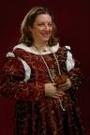
Chitra Banerjee Divakaruni is an award-winning author and poet. Her themes include the Indian experience, contemporary America, women, immigration, history, myth, and the joys and challenges of living in a multicultural world. Her work is widely known, as she has been published in over 50 magazines, including the Atlantic Monthly and The New Yorker, and her writing has been included in over 50 anthologies. Her works have been translated into 29 languages, including Dutch, Hebrew, Hindi and Japanese. Divakaruni also writes for children and young adults.Her novels One Amazing Thing, Oleander Girl, Sister of My Heart and Palace of Illusions are currently in the process of being made into movies. http://www.chitradivakaruni.com/books.... Her newest novel is Before We Visit the Goddess (about 3 generations of women-- grandmother, mother and daughter-- who each examine the question "what does it mean to be a successful woman.") Simon & Schuster.
She was born in India and lived there until 1976, at which point she left Calcutta and came to the United States. She continued her education in the field of English by receiving a Master’s degree from Wright State University in Dayton, Ohio, and a Ph.D. from the University of California, Berkeley.
To earn money for her education, she held many odd jobs, including babysitting, selling merchandise in an Indian boutique, slicing bread in a bakery, and washing instruments in a science lab. At Berkeley, she lived in the International House and worked in the dining hall. She briefly lived in Illinois and Ohio, but has spent much of her life in Northern California, which she often writes about. She now lives in Texas, which has found its way into her upcoming book, Before We Visit the Goddess.
Chitra currently teaches in the nationally ranked Creative Writing program at the Univ. of Houston. She serves on the Advisory board of Maitri in the San Francisco Bay Area and Daya in Houston. Both these are organizations that help South Asian or South Asian American women who find themselves in abusive or domestic violence situations. She is also closely involved with Pratham, an organization that helps educate children (especially those living in urban slums) in India.
She has judged several prestigious awards, such as the National Book Award and the PEN Faulkner Award.
Two of her books, The Mistress of Spices and Sister of My Heart, have been made into movies by filmmakers Gurinder Chadha and Paul Berges (an English film) and Suhasini Mani Ratnam (a Tamil TV serial) respectively. Her novels One Amazing Thing and Palace of Illusions have currently been optioned for movies. Her book Arranged Marriage has been made into a play and performed in the U.S. and (upcoming, May) in Canada. River of Light, an opera about an Indian woman in a bi-cultural marriage, for which she wrote the libretto, has been performed in Texas and California.
She lives in Houston with her husband Murthy. She has two sons, Anand and Abhay (whose names she has used in her children’s novels).
Chitra loves to connect with readers on her Facebook author page, www.facebook.com/chitradivakaruni, and on Twitter, @cdivakaruni. For more information about her books, please visit http://www.chitradivakaruni.com/, where you can also sign up for her newsletter.
Every poem in this book was a masterpiece. Chitra Divakaruni's poetry is spellbinding, every word chosen with care and placed precisely in the proper location. I especially loved "The Garland", "The Living Goddess Speaks", and "Sudha's Story", but I enjoyed them all. My one complaint, and the reason this is only receiving four stars, is that the pain was so unrelenting as to make the book an impossibly slow read. Every poem had essentially the same tone and mood, which makes this a book that is hard to ignore, but also hard to read. I found myself getting bored after three or four poems, unable to remain engaged in the agonies that Chitra Divakaruni paints, despite the virtuosity of her writing. As a test for teaching, or purely for cultural discovery, it is perfect; the message of the way these women really live, what they actually endure, is inescapable, but as a read, it becomes slow. I would recommend not reading this as a book, but having it on your bedside table and reading one poem an evening until you have read all the poems. That way every poem could be separately appreciated.
I've read and enjoyed a lot of Divakaruni's novels so I was looking forward to reading her poetry. However, although I could appreciate the language and the anger that underlies much of the collection, I found this a sobering and depressing work.
Most of the poems are focused on the darkest and worst aspects of being a women in the Indian sub-continent. It's hard to 'enjoy' such work even when one recognizes the truth behind them. There are, however, several gentler kinder pieces - my favorite was My Mother Combs My Hair which spoke to a truth that the more political pieces seemed to lack.
although I enjoyed many of the poems and in many cases felt transported to those situations I left feeling a sense disconnectedness from the individuals in the poems. Although most of them were written in the first person and also many of the situations are those which I have seen first hand I felt as though I was merely observing this situation from a distance and not experiencing it.
I would have liked this more if it didn't depress me about the state of a woman's place in certain places and practices. also she likes to use "blood" as a description of the color red, but this doesn't seem to be an accident....
some turn their minds off at 16 when they are married to fifty year old men they've not met. some are burned alive when they become widows (to honor their husband). some are worshipped until they become women. most live alone w/their husband.
Oh, this collection of poems was HARD to read. Not because it was bad (It wasn't; it was excellent) but because so many of the women in these poems face incredibly hard lives in a patriarchal sexist misoygnistic society. Still, gems of poems by the incredible Divakaruni.