The war in Heaven reaches its universe-shaking conclusion in MORNINGSTAR, the tenth volume of writer Mike Carey's celebrated series. Collecting issues #62-69, MORNINGSTAR gathers together the forces of Heaven, Hell, and everyone in between for a final battle to determine the fate of both Yahweh and Lucifer's Creations — a fate no one, not even the Lightbringer, could foresee.
Librarian Note: There is more than one author in the GoodReads database with this name. See this thread for more information. Mike Carey was born in Liverpool in 1959. He worked as a teacher for fifteen years, before starting to write comics. When he started to receive regular commissions from DC Comics, he gave up the day job.
Since then, he has worked for both DC and Marvel Comics, writing storylines for some of the world's most iconic characters, including X-MEN, FANTASTIC FOUR, LUCIFER and HELLBLAZER. His original screenplay FROST FLOWERS is currently being filmed. Mike has also adapted Neil Gaiman's acclaimed NEVERWHERE into comics.
Somehow, Mike finds time amongst all of this to live with his wife and children in North London. You can read his blog at www.mikecarey.net.
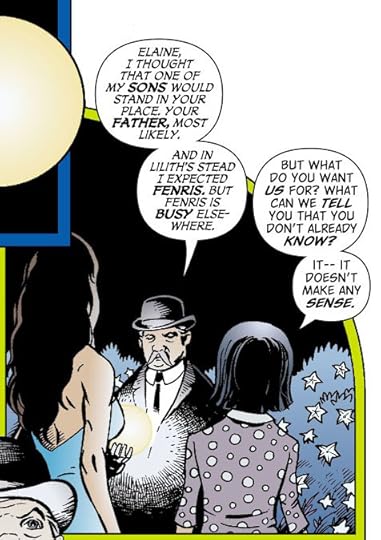
I really just love all the arcs for the side characters in this series. I mean I love Lucifer and his story line too but I appreciate that it's not just about him all the time and that we see several ordinary people going on extraordinary journeys and doing amazing things. I really love when Lilith and Elaine meet with God outside the universe in this volume and he says he was expecting Lucifer or Michael and Fenris to be there. But instead we get the first woman and the teenage girl who literally becomes God arguing for the fate of the universe. It's absolutely amazing to me. Also while I find Christopher to be kind of boring on a personal level, his story of a mortal man in hell who rises up to destroy the whole system is very inspiring as well.
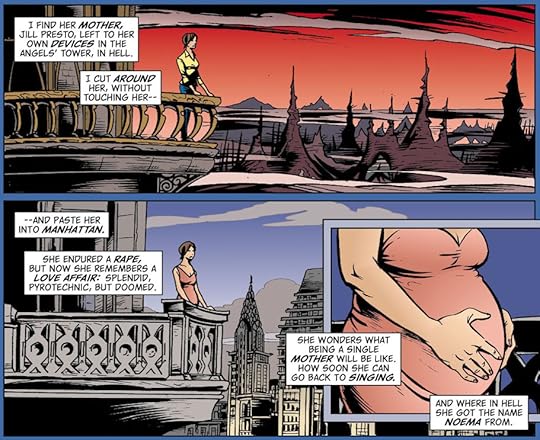
Really the only thing has ever bothered me in this whole thing is Jill Presto. I mean she has gone through some horrible things. She's been raped and forced to carry a child against her will and when she thinks she's finally gotten rid of it oh here's another one but through all of that we've been focused on HER reactions to these things and her feelings and what she wants ...and then Elaine just erases her memory and the baby's memories and puts it back inside of her, not even asking her if that's what she would want. I know her memories don't stay erased in the new series and she seems happy being a mother later on but it's still pretty awful for someone who's already had so much of their agency taken away and has been fighting it every step of the way. I get that Carey probably didn't just want to kill Noema outright but Elaine could have easily gifted her to a completely random couple who had been struggling to have a child of their own or something.
Also the random interlude issue with the guy who has that wishing doll and wants to rule hell is probably literally the only single issue in this entire series that I actively dislike and feel contributes nothing to the plot. I actually skipped it entirely the past couple times I've read this series. But despite that this volume still gets 5 stars because the rest of it really is just phenomenal in bringing together all the story lines that have been building up over this whole thing.
Some highlights:
Like ...Noema, I honestly don't know what you expected.
This part always just makes me laugh.
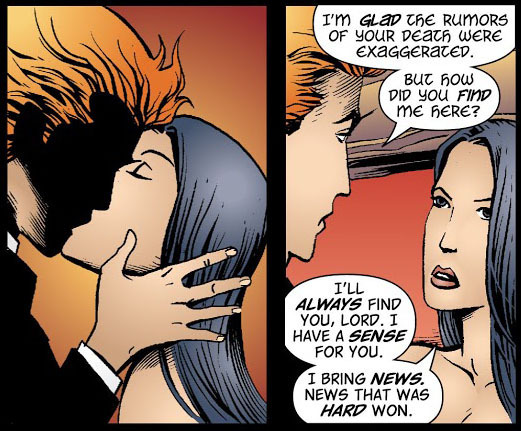
I love how Beatrice is like 'aren't you worried about Mazikeen' is Lucifer is just like 'lmao no but I'd love to watch her kill these dumbasses'.
OTP ❤
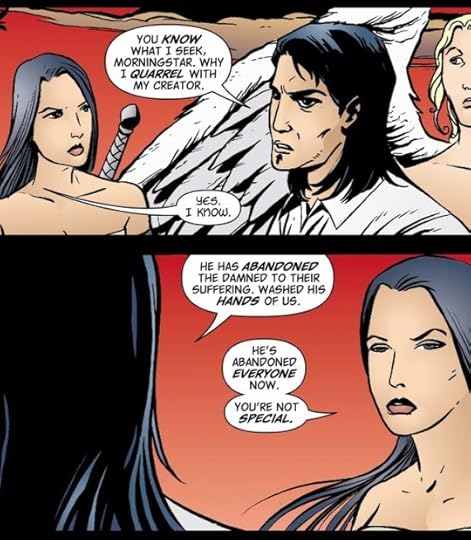
Snark FTW
I just really love this page. #TheDreamTeam lol
And again
#owned
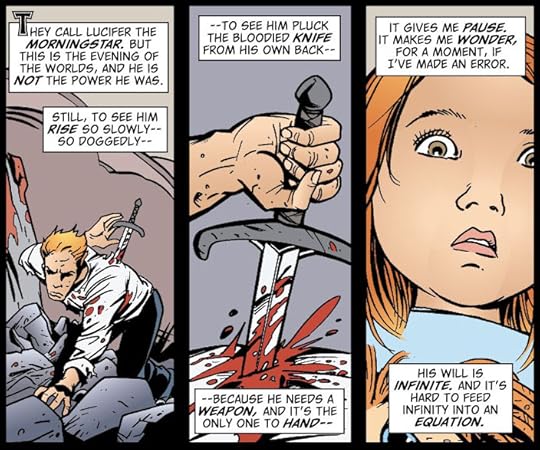
Even when he's helping he's still using you.
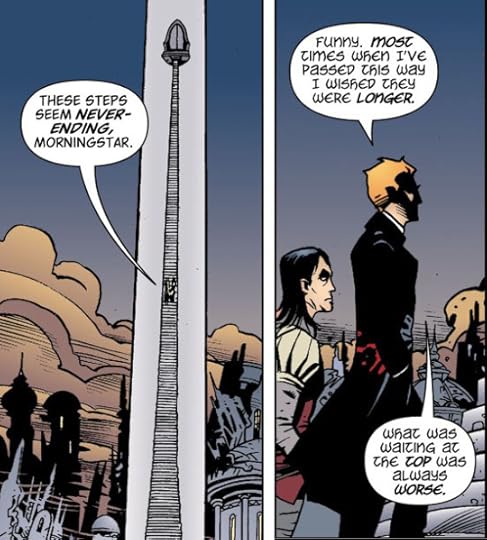
Love these panels. Also obligatory mention of will.
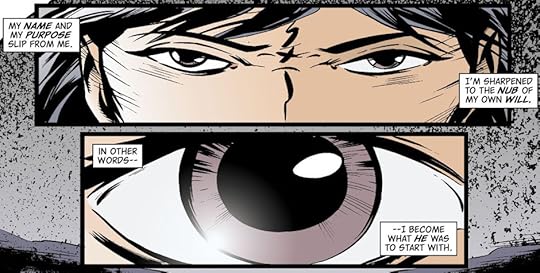
Obligatory mention of will part 2
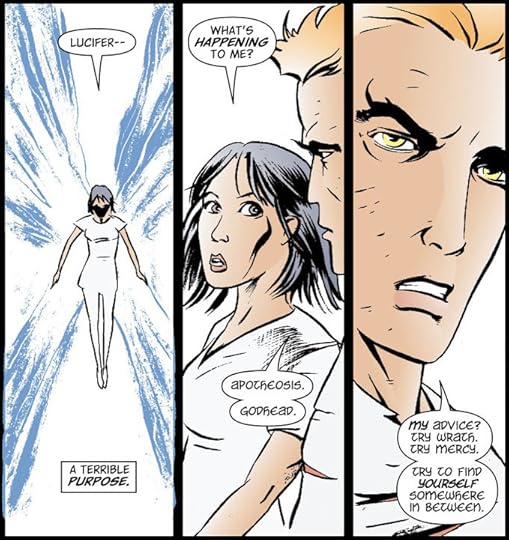
Surprisingly good advice considering who it's coming from lol
چقدر سریع این جلد رو خوندم! همینطور شماره پشت شماره از بس همه چیز جالب و جدی شده بود :) بالاخره یهوه اومد مستقیم توی داستان و کاملاً راضی بودم از همه چیزش. لوسیفر چقدر خوب بود! چه کارهایی کرد! آخرش چه میدل فینگر غیرمستقیمی به یهوه نشون داد 🤣 داشتم براش دست میزدم. دیالوگها در اوج بودن این شماره، خیلی در اوج :) یه جمله از جلد قبلی اینجا بگذارم چون حسش نیست قبلی رو ویرایش کنم :دی Three angles follow me. The bright one bleeds Power. The dark one bleeds Will.
Lucifer is called the Morningstar for a reason. Metaphorically speaking, it is the dark evening when the war on Heaven commences, and the enemies of the Devil think they finally get the upper hand. What they forget is the obvious fact that lamplighters shine brightest in the dark…
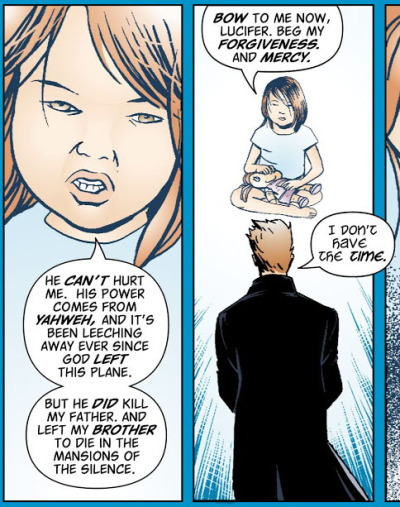
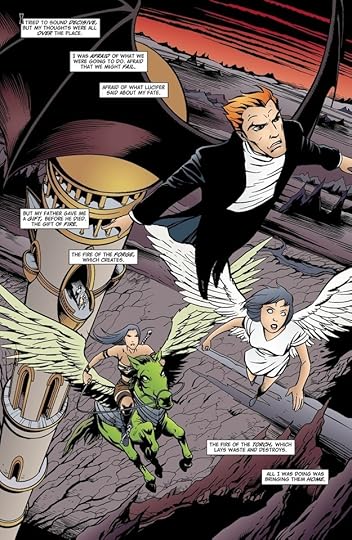
Morningstar, the tenth volume of the Lightbringer’s chronicles, is for me one of the best installments of this series. The tome zeroes in on “The Day of Reckoning”. The Lilim and a new breed of angel host join forces with the Norse wolf Fenris, their scheme centering on the annihilation of the Primum Mobile or God’s throne. Christopher Rudd launches an assault both on Heaven and Lilith’s army, in hopes of seeking a system of justice that uses no man’s soul for currency; Lucifer Morningstar, with his powers seemingly leeched because of the departure of the Divine Word, makes his haste move to protect Heaven. Meanwhile, God arranges a talk with Michael and Fenris about the destiny of the Creation, but Elaine Belloc and Lilith arrive in their stead.
I love this volume immensely. What makes it so exceptional and heartrending is that it has lots of philosophical and emotional apexes juxtaposed with the peaks of brutal action scenes. The compelling imagery—both in words and art—make it so that it reminds me of the mental images I had when I first read John Milton’s Paradise Lost for the first time. There are so many scenes that tug hard at the heartstrings, one of them being an epiphany concerning the fate of Elaine Belloc. She finally learns what she will be, and she feels a little betrayed by the Morningstar because he knows it all along; in fact this is what he is preparing her for. I feel for her, and I can almost see the looming bunch of responsibilities descending on her shoulders.
At first I think three Creations make this series a tad too crowded, but clearly Carey doesn’t like waste. That’s a clue in itself already and I will tell no more than that. :P
There are a couple of stand-alone stories here as well. The first is “The Wheels of God”, featuring the hardboiled private investigator Solomon as he formulates an equation for justice. This story brings us back the characters of Jayesh, the homosexual kid bashed in The Devil in the Gateway; and Karl, one of the guys who bashed Jayesh as induced by peer pressure and his mixed feelings of love and hate for the latter. Here, they are depicted as living together. The main point is to prove that justice can be cruel almost to a fault, but the tale also has the strong undercurrent of true love. I find this story poignant. Solomon gives Karl a mission in exchange for a truth that Jayesh has no memory of: that Karl is one of the bashers, even if in the end he calls the ambulance just in time to save Jayesh’s life. He agrees with Solomon but due to some miscalculations, the mission goes awry. When he goes home, he finds a note that says Jayesh remembers every single detail of the bashing from day one…that the boy just doesn’t see the need to hold grudges because Karl loves him anyway. The last panel of their story is heartbreaking in a quiet way.
The second short, "The Beast Can't Take Your Call Right Now,” lies in the opposite side of the spectrum as it features the fallen cherubim Gaudium and Spera in a funny, be-careful-what-you-wish-for tale. An old man tries to strike a bargain with Lucifer and summons “the most powerful demon in hell”. But because of the fight taking place in Heaven at that time, Hell is almost empty—except for Gaudium, so he's the one who lands in the old man's way. He agrees to deal with the old man with the help of the goddess Eriti. It seems that everything is going well for the old man, until his wishes go out of hand and completely brings him his doomed fate.
Overall, this is an astonishingly good volume. I’d hate to say goodbye to this series because I’ve just learned to love it, but we all come to that stage. I just wish the last installment—or the epilogue, rather—is as good as this one! Five stars!
This is a four star book but I’m giving it three stars because I HATE CHRISTOPHER RUDD!!!!! The way hes portrayed as a noble protagonist when hes literally a sleazy scumbag who betrays people is so infuriating. He’s annoying and I wish he got obliterated to nothing. Other than that decent. Good to see more of my guy Duma
(Zero spoiler review) 4.5/5 I know this isn't technically the end. That there are more issues to come, but really, I'm not sure I want there to be. Such a poignant and near perfect ending (of sorts) That anything that follows does significant risk of harming the conclusion in this issue. And whilst I haven't exactly been enamored with every arc that led to this point, it all served a purpose, rather than Carey unnaturally elongating the series for additional sales. The man had a divine plan and he stuck to it, and it was glorious. And the last two guest artists have been a marked improvement, so there is that as well. A phenomenal end (sort of) to a phenomenal series from a (formerly) phenomenal imprint. RIP Vertigo. 4.5/5
This is the volume where Lucifer's story reaches its climax. Lilith leads her children in a bitter war against Heaven which, without God, can no longer stand against them. Lucifer finds himself fighting at the gate of the Silver City once again, this time on the side of the Angels. Noema, the daughter of the Basanos' is born and immediately comes into conflict with Lucifer before taking him and Elaine to see the new state of affairs in Hell and possibly to get Rudd's help in the war.
There's also a comic interlude in the middle with Gaudium and Spera, the fallen Cherubim. This shouldn't work in the middle of such a big story, but it really does. It both breaks and holds the tension, letting you wind down a bit between large-scale stories. From his early appearance as (not very good) guardian to Elaine, I've really enjoyed wise-cracking Gaudium and his smarter sister.
This is a suitably epic conclusion for such a large-scale story, and the art doesn't let it down. It finishes with Lilith and Elaine stepping outside Creation to argue for its preservation or destruction in front of God himself. And even without being there, Lucifer has to stick his oar into things and his influence is felt.
Oh, and this book also confirms what I always knew: God is an English gentleman :).
Y ahora: El gran final. A falta del prólogo parece que aquí concluye Lucifer. No sé si es la historia que esperaba pero sí una muy entretenida. Quizás se haya enredado demasiado en el desarrollo que llevaba al final pero este tomo funciona muy bien y da la sensación de que todas las piezas estaban bien colocadas para este momento. En mi opinión le falta una pizca de sal, pero sigue siendo un cómic altamente recomendable, sobre todo me gustan esos momentos 100% hellblazer.
I found the story and art to be a not as good as the previous ones leading up to the conflict. The ending was a little dull, though I liked the army of the damned bit with Rudd.
62: The Wheels of God Solomon: "God is JUST, and his justice is a thing of TERRIBLE beauty ... It is not ENOUGH. The worlds are ending, and my work is not yet DONE."
In Lucifer, Vol. 2: Children and Monsters Jayesh got jumped by pals of the guy he loves, Karl, the secret Nazi. Jill Presto gives him some measure of revenge in Lucifer, Vol. 3: A Dalliance With the Damned, and now Karl, full of guilt, does penance by loving and caring for the now paralyzed and permanently physically impaired Jayesh, who woke up from a 8 month coma. I love how Mike Carey takes a note from Gaiman and what we think of as one off characters actually end up recurring later in the series, especially since, as a reader, I actually wanted to know what happened to Jayesh. Solomon sets in motion a plan to enact justice, but ends up misjudging a variable and everything does not work as planned. Oops! This ... this is well written. The art is interesting, very stark color breaks with heavy penciling (vs. gradients), which in itself seems to echo Solomon's black and white with no shades of grey attitude towards justice.
63, 64, 65, 67, 68, 69: Morningstar Elaine: "It's easy to say what went WRONG, but it's a lot harder to explain WHY. God -- Yahweh -- started the ball rolling when he disappeared, leaving the throne of Heaven empty. Before he went, he said GOODBYE to his sons, Michael and Lucifer. But he didn't really explain WHY he was leaving, or whether he ever intended to come BACK."
Things come to a head as Fenris, Lilith, Lucifer, Mazikeen, Noema (child of the Bastanos), Elaine and Christopher Rudd, the new King of Hell confront each other in a huge war to decide the fate of creation. The storytelling is uneven, some bits are great surprises, and others feel like a deus ex machina way to end this particular story arc.
66: The Beast Can't Take Your Call Right Now Culver: "With Yahweh gone, and the divine name ERASED from creation, the Human Soul was winding down like a clock. Was Culver Harland, the Greatest Magician of this debased age, to end like one of these? .... I stared at the fruits of my labors -- and wondered whether anyone had ever asked the devil for his MONEY back"
The Beast Can't Take Your Call Right Now: As creation slowly goes to hell in a handbasket (!!) the greatest magician of the age performs a demonic summoning, and ends up getting Gaudium! There's various levels of trickery, an infernal unanswered riddle, a Trump joke (from 2014) and ensuing hilarity as things play out, ending on a terrible joke with a good punchline. Very enjoyable even if the art is somewhat sub-par.
(these are issue summaries so they contain spoilers)
#62: Solomon does some complicated judgment calls and is scooped up by the angel Meleos - 3.5 stars
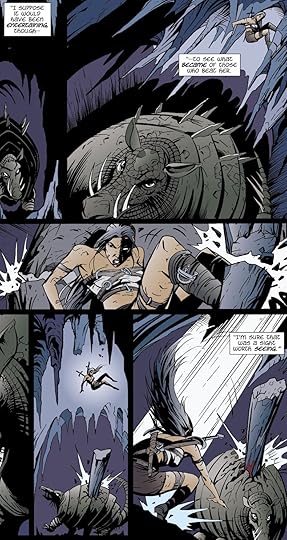
#63: Lilith destroys the Silver City and orders the Lilium to attack with the intention of destroying the throne of God. Mazikeen manages to kill Jin En Mok who tells her of this plan - four stars
#64: Noema takes Elaine, Jill, and Lucifer to Hell where he tries to convince Christopher Rudd to ride to Heaven's defense rather than destroy it. The angel Uriel kills Sandalphon (the angel who sired Lilith's host) and is in return destroyed by Fenris who appears on the field of battle - four stars
#65: The Silver City is on the point of being destroyed by the Lilith until Lucifer shows up. Things change again when Fenris throws a sword that impales Lucifer and he falls - four stars
#66: during an interlude story, a sorcerer pledges his immortal soul to Gaudium for three wishes - 3 stars
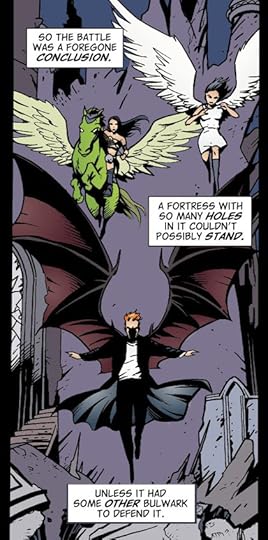
#67: Rudd's army arrives at the last minute and, with the help of Duma the angel, captures the Silver City and defeats the Lilium including Lilith who is gravely injured. Lucifer, who has been healed, heads to God's throne with Elaine, Mazikeen, and Duma. They are pursued by Fenris who is delayed by Rudd but ultimately Fenris destroys Rudd and he falls to the stairs of God's throne. In the form of lightning, Fenris destroys the throne- 4.5 stars
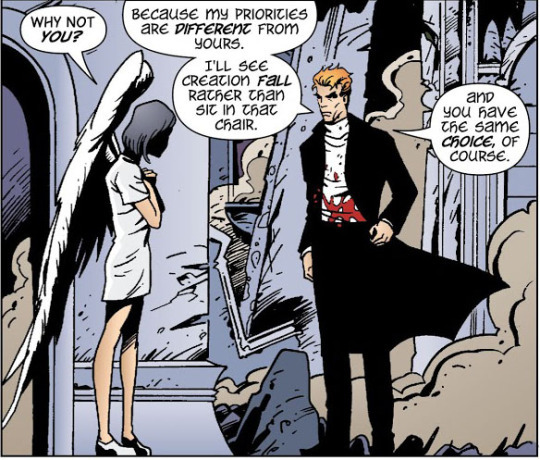
#68: Lucifer, Mazikeen, and Duma try to hold off Fenris. Lucifer, who has been reserving his power to deal with this last attack, destroys Fenris. Meanwhile, Elaine has a discussion with Yahweh who brings a dead Lilith to discuss whether he should save or destroy his universe - 3.5 stars
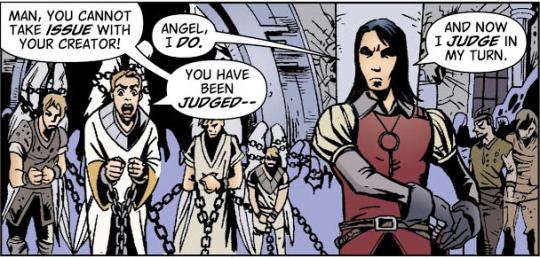
#69: With the help of Lucifer, Mazikeen, and Duma, Elaine manages to encompass God's creation and Lucifer's creation inside her own so that her will maintains them all. Elaine folds Noema back through life to become a harmless baby inside Jill's womb. Solomon judges Christopher Rudd and releases his soul from his Fenris-suffering body. Elaine begins to understand what it means to be God - 4.5 stars
Y después de que las piezas se recolocaran en el tablero en el número anterior, Encrucijada, en Estrella del Alba ha llegado el momento en el que todo estalla, hay explosiones y las cosas arden. Y no es figurado, es literal. Estrella del Alba es el tomo en el que todo lo que hemos visto hasta ahora en los nueve tomos anteriores de Lucifer, todo converge hacia una batalla final en el campo del Apocalipsis, bajo la Ciudad de Plata. Los Lilim liderados por la propia Lilith, los ángeles, los demonios liderados por el nuevo señor del Infierno (Christopher Rudd), el lobo Fenris, Berim de los Jin-en-Mok... la batalla a varias bandas por el Primum Mobile, el trono de Dios, confluye en una especie de todos contra todos, mientras Lucifer, Mazikeen, Elaine y Duma tratan de evitar que las tres creaciones se vean arrastradas a la destrucción definitiva, al mismo tiempo que tratan de dilucidar cuales son los planes para ellos de Noema, la hija de Jill Presto y los Basanos, que podría ser aliada, enemiga, o las dos cosas.
Estrella del Alba es el colofón a la serie de Lucifer, y Mike Carey desarrolla aquí todas sus artes narrativas, y lo hace demostrando que es capaz de poner todo el destino del mundo en una batalla... o en una simple conversación a tres bandas, donde uno de los participantes es, ni más ni menos, que el propio Creador, Yahveh, dispuesto a decidir el destino final de la Creación. Ah, y por supuesto, con humor, hay un interludio protagonizado por Gaudio y por Spera que es una absoluta delicia.
Unos maravillosos fuegos artificiales de (casi) despedida.
Better is the end of a thing than the beginning thereof; and the patient in spirit is better than the proud in spirit.
- Ecclesiastes 7:8
Well, in this case Ecclesiastes is half right, anyway.
Mike Carey’s sprawling tale of Heaven and Hell draws towards its close in Morningstar, the tenth volume in a series whose one constant is that its titular character refuses to take crap (or direction) from anybody. Having reached the finale, with Lilith’s armies massed outside the gates of Heaven and the entirety of Creation hanging in the balance, Lucifer battles and bleeds but never, ever bows to our expectations or to that of his Creator.
Not surprisingly, this volume is full of familiar faces – Elaine Belloc, Jill Presto, Christopher Rudd, Solomon and Meleos all have roles to play. There’s even time devoted to tying up smaller loose ends, like the story of Karl and Jayesh, which kicked off the series. (As it was in the beginning, right?) However, as charming as it was to see Gaudium again, I can’t help feeling that the arc he features in (Interlude: The Beast Can’t Take Your Call Right Now) is a bit of a waste. It must have been frustrating enough reading it as a single issue; appearing here as it does 3/4 of the way through the volume it sidetracks the narrative, derailing the steadily building tension of the story’s climax for a mediocre gag and absolutely no payoff.
Even with that glaring flaw Morningstar is glorious to behold. Beautiful and brazen, it’s everything you want in a fallen angel.
Story: Wheels of God, Morningstar, The Beast Can’t Take Your Call Right Now. Really interesting. For the past few arcs, Elaine has been the main character: she’s the one who makes mistakes, learns and grows. This volume is the culmination of everything Lucifer is about freewill, the helplessness of the created and the creator, the multiple paths that might or might not ever exist. Even the child of the Basanos makes miscalculations. Can anyone ever justify existence? What is the will of God? What if even the angels have difficulty deciphering God’s will? So many fascinating questions and themes explored in this series. Wow. Many characters meet their end in fitting manner.
The one-shot stories: Wheels of God and The Beast Can’t Take Your Call Right Now showcase the very best of the series - emotional poignancy with darkness in the former and humour with absolute wackiness in the latter. I will miss this series.
Lucifer was the best and most successful spin-off of Gaiman's Sandman series. Funny enough, I read Lucifer BEFORE I read Sandman.
This is an extremely well-down conclusion and climax to a thread Neil Gaiman started very early on, the wheels set-in-motion and Mike Carey builds his own denouement. While there are still a handful of epilogue/coda issues, this is where it's been largely leading too--and in many ways, I feel this is an ending to the Sandman mythos (with the universe being remade) rather than it feeding into the DC Universe "proper".
This is essentially the conclusion to the Lucifer series. Everything is epilogue. There is war, once again in heaven. This time it’s for Yahweh’s vacant throne. Meanwhile, outsider of Creation, Yahweh, Lilith, and the teenager Elaine debate whether they should annihilate or preserve creation.
This is a complicated story with a lot of threads. This is quite the epic conclusion. I look forward to the farewell to the characters in the final volume.
This was definitely the climax of the series. All of the characters meet for one final winner-take-all battle for existence. I appreciate how it was an ensemble effort and there is no superhero that solves everything. Lucifer stayed true to himself as well even though he could have been wiped from existence.
Mike Carey sale bastante airoso del jardín metafísico en el que se había metido. En Sandman Gaiman cierra a la perfección un ciclo básicamente porque está basado en sus propias reglas. Aquí estamos hablando de dar solución a problemas de altura: la existencia de dios, el mal en el mundo, defectos de la creación...
There's an internal logic to this series that one could almost believe applied to the whole of creation. I understand that's meant to be the point, but it's impressive how well it works. I wonder how these events might play out in our owns heavens.
Saga vrcholí. Armády Lilith útočia na strieborné mesto, anjeli im vychádzajú v ústrety do celoplošneh vojny, Christopher Rudd sa rozhoduje, na koho sa vrhnúť s pekelníkmi a zatratencami. No a nás Lucifer len z nutnosti zasahuje, aby ochránil svoj svet. Konečne tu dostane slovo Boh.
Chrochty chrocht, finále je tady a je přesně tak dobré, jak jste doufali. Žádné povrchní, zkratkovité řešení, postavy si musí konec (nebo nový začátek?) náležitě oddřít a vykoupit šanci na život krví, životem nebo ještě důležitějšími aspekty.
A solid conclusion to the events surrounding Lucifer, with no loose ends. I'm looking forward to Volume 11, where the ultimate question needs answering: What does Lucifer do with freedom?