

What do you think?

ประวัติศาสตร์ลับ หลังวังซูสีไทเฮา
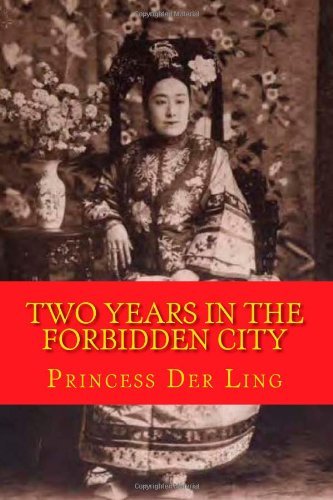
ชีวิต 2 ปีของ "เต๋อหลิง" ในฐานะนางสนองพระโอษฐ์ของพระนางซูสีไทเฮา เต๋อหลิงเป็นลูกสาวเอกอัครราชทูตจีนประจำฝรั่งเศส ที่เพิ่งเดินทางกลับมาประเทศจีนและได้เข้าไปรับใช้ในวัง เธอกลายเป็นคนสนิทที่โปรดปรานของจักรพรรดินีหม้าย ผู้ที่ทั่วโลกรู้จักแต่ในแง่มุมที่ดุร้าย แต่ในหนังสือเล่มนี้จะชี้ให้เห็นจริยวัตรด้านอื่นๆ ที่น่ารักและมีสีสันในฐานะ “หญิงชรา” คนหนึ่งที่มีเหตุผล มีธรรมชาติแบบผู้หญิงทั่วไป ไม่ใช่แต่ในมุมผู้ปกครองที่อนุรักษ์นิยมสุดกู่จนไม่ใส่ใจมองอาณาประชาราษฎร์อย่างที่เคยรับรู้กันมา นอกจากนี้ยังให้ความรู้เรื่องธรรมเนียม ประเพณีในราชสำนักจีน กิจวัตรประจำวันของชาววัง และความเชื่อต่างๆ ตลอดระยะเวลาที่รับใช้ใกล้ชิดพระยุคลบาท โดยมีฉากหลังเป็นพระราชวังฤดูร้อน "อี๋เหอหยวน" แม้ข้าราชบริพารคนอื่นต่างพากันหวาดกลัวจักรพรรดินีหม้ายผู้ทรงอำนาจ แต่เต๋อหลิงกลับบอกว่าเธอรักซูสีไทเฮา
256 pages, Paperback
First published January 1, 1911
About the author
Der Ling
67 books8 followers"Princess" Der Ling (Chinese: 德龄, pinyin: Dé Líng) (1885 – 1944) was a Han bannerwoman, the daughter of Yu Keng (裕庚). Yu Keng was a member of the Hanjun Plain White Banner Corps(正白旗) and according to his daughter was a Lord. This is of some doubt. After serving as Chinese minister to Japan he was appointed minister to the French Third Republic for four years in 1899. He was known for his progressive, reformist views, as well as for his unvarying support of the Empress Dowager Cixi. In 1905, Yukeng died in Shanghai. YuKeng's story is retold in the movie Dai noi kwan ying.
Yu Keng's daughters Der Ling and Rong Ling (1882–1973, the future Madame Dan Paochao of Beijing) therefore got a western education, having studied dance in Paris with Isadora Duncan.Upon return from France, Der Ling became the First lady-in-waiting to Empress Dowager Cixi, as well as a translator. She stayed at court until March 1905. In 1907, Der Ling married Thaddeus C. White, an American. Der Ling had a brother, Xunling (ca. 1880–1943), who studied photography in France and later took the only photographs of Empress Dowager Cixi still in existence.[1]
Using the title of princess, which would create controversy for her in both China and the United States in the future, Der Ling wrote down her unique experience in court in her memoirs Two Years in the Forbidden City, which were published in 1911, and wrote about the experience through her next seven books. "Two Years" gives historical insights into life at court and Der Ling's service to the Dowager Empress, essentially a world that has disappeared.
Yu Keng's daughters Der Ling and Rong Ling (1882–1973, the future Madame Dan Paochao of Beijing) therefore got a western education, having studied dance in Paris with Isadora Duncan.Upon return from France, Der Ling became the First lady-in-waiting to Empress Dowager Cixi, as well as a translator. She stayed at court until March 1905. In 1907, Der Ling married Thaddeus C. White, an American. Der Ling had a brother, Xunling (ca. 1880–1943), who studied photography in France and later took the only photographs of Empress Dowager Cixi still in existence.[1]
Using the title of princess, which would create controversy for her in both China and the United States in the future, Der Ling wrote down her unique experience in court in her memoirs Two Years in the Forbidden City, which were published in 1911, and wrote about the experience through her next seven books. "Two Years" gives historical insights into life at court and Der Ling's service to the Dowager Empress, essentially a world that has disappeared.
Ratings & Reviews
Friends & Following
Create a free account to discover what your friends think of this book!
Community Reviews
Displaying 1 - 30 of 45 reviews

December 7, 2022
I first heard about Der Ling when a friend mentioned that there was a Manchu “princess” who spoke English, Chinese/Manchu, and French. She was given the title “Princess” when she served as Lady-in-Waiting to Empress Dowager Cixi, and she also lived overseas for a significant period of time before and after entering the palace.
Her life is probably much more complex than the quick introduction I just gave, but it will suffice for this review. Two Years in the Forbidden Palace is a memoir by Der Ling about her time in the royal compounds and while there is cause to doubt the accuracy of all that she wrote, it’s still a fascinating look into the last royal family of China.
Two Years in the Forbidden Palace starts as Der Ling and her family arrive back in China from France, where her father had served as the Minister to France. As soon as their back, Der Ling, her mother, and her sister are quickly brought to Cixi and ‘hired’ as Lady-in-Waiting, and to hear Der Ling tell it, she soon becomes a favourite with the ruler of China.
Given how compressed the time frame for this book is, it’s no surprise that there’s not much covered in terms of history. Instead, the book largely focuses on:
Life in the palace
Gossip/tidbits about Cixi (like her favourite dog, her love of flowers, her habit of judging all the foreign ladies)
Manchu culture and customs
According to Der Ling, she was soon a favourite of Cixi’s and in fact helped to stand-in for the Dowager Empress when she was tired for sitting for her portrait (by the painter Katherine Carl). By her own account, Der Ling is a loyal lady-in-waiting, unwilling to lie to Cixi. At the same time, she’s also a surprisingly independent woman, rejecting an arranged marriage that Cixi herself recommended.
While I have no idea how accurate the book is, I found it very entertaining. Cixi is given a rather sympathetic portrayal here; while she does do some rather odd stuff like preventing the emperor and his wife from communicating directly, when it comes to state affairs, it’s her ministers that call the shots. Likewise, the Emperor is ineffective; while he enjoys practising English with Der Ling, he knows that he is just a puppet in the hands of his ministers and that Cixi holds more power than him.
Now that I've read Der Ling's account, it's time to read about her life!
This review was first posted at Eustea Reads
Her life is probably much more complex than the quick introduction I just gave, but it will suffice for this review. Two Years in the Forbidden Palace is a memoir by Der Ling about her time in the royal compounds and while there is cause to doubt the accuracy of all that she wrote, it’s still a fascinating look into the last royal family of China.
Two Years in the Forbidden Palace starts as Der Ling and her family arrive back in China from France, where her father had served as the Minister to France. As soon as their back, Der Ling, her mother, and her sister are quickly brought to Cixi and ‘hired’ as Lady-in-Waiting, and to hear Der Ling tell it, she soon becomes a favourite with the ruler of China.
Given how compressed the time frame for this book is, it’s no surprise that there’s not much covered in terms of history. Instead, the book largely focuses on:
Life in the palace
Gossip/tidbits about Cixi (like her favourite dog, her love of flowers, her habit of judging all the foreign ladies)
Manchu culture and customs
According to Der Ling, she was soon a favourite of Cixi’s and in fact helped to stand-in for the Dowager Empress when she was tired for sitting for her portrait (by the painter Katherine Carl). By her own account, Der Ling is a loyal lady-in-waiting, unwilling to lie to Cixi. At the same time, she’s also a surprisingly independent woman, rejecting an arranged marriage that Cixi herself recommended.
While I have no idea how accurate the book is, I found it very entertaining. Cixi is given a rather sympathetic portrayal here; while she does do some rather odd stuff like preventing the emperor and his wife from communicating directly, when it comes to state affairs, it’s her ministers that call the shots. Likewise, the Emperor is ineffective; while he enjoys practising English with Der Ling, he knows that he is just a puppet in the hands of his ministers and that Cixi holds more power than him.
Now that I've read Der Ling's account, it's time to read about her life!
This review was first posted at Eustea Reads

February 26, 2010
A fascinating record of a vanished world replete with details that are made even more poignant by its imminent passing: the elaborate meals, the hand-embroidered imperial gowns, the oft-flogged eunuchs who were both lackeys and powers behind the throne, the dizziness-inducing kowtows, formal court ceremonies that were contests of physical endurance, the sickly Emperor and his concubines, all which were soon to be rendered obsolete by the 1912 revolution. Der Ling's account of her two years as a court lady/translator in the Empress Dowager Cixi's court had been dismissed by some, largely because of her own questionable reputation and also because of its divergence from the widely-accepted view of Cixi as the evil witch that brought down the Qing dynasty. Der Ling might have had exaggerated her importance at court, but the little details of her account ring true --- perhaps Cixi was both a monster who poisoned her nephew/Emperor and an old lady who loved gardening and Pekingese dogs. Who knows?
4 stars for the fascinating subject, 3 stars for the somewhat artless writing.
4 stars for the fascinating subject, 3 stars for the somewhat artless writing.

April 28, 2015
“Is there a king in England? I had thought that our Empress Dowager was Queen of the world.”
So says one of the court ladies to the author.
It’s a fun book, but through all the considerable effort of the author shines the plain fact that Cixi was horrible and terrifying to be around. The power of her whim was mitigated by nothing. The author had been lucky to be her favorite – that’s all; who knows how it might have ended up for her if this little episode in her life got stretched longer than those two years.
Why does everyone hate Chinese eunuchs? I want to read more on Chinese eunuchs!
So says one of the court ladies to the author.
It’s a fun book, but through all the considerable effort of the author shines the plain fact that Cixi was horrible and terrifying to be around. The power of her whim was mitigated by nothing. The author had been lucky to be her favorite – that’s all; who knows how it might have ended up for her if this little episode in her life got stretched longer than those two years.
Why does everyone hate Chinese eunuchs? I want to read more on Chinese eunuchs!

April 1, 2025
For a Chinese history nerd, this book is a treasure trove of minute details in the court of Empress Dowager Cixi. For someone wanting an engaging story, this book has little to offer. The narration is devoid of emotion but describes the square footage of every room, the exact size shape and number of hair ornaments the empress wears each day, and number of eunuchs brought on every garden walk. A great historical record, a less great memoir.

March 4, 2013
Der Ling is a controversal figure. She was a lady in waiting for the last Dowenger Empress of China before she left the service to marry an American. After her marriage, she capitalized on her "princess" title (there is some dispute over this; the title is an honorific only within the Imperial court) and touted her friendship with the Dowenger Empress and her "influence" on the Emperor.
Taking all this into account, this "biography" reads more like a stuck-up 16 year old girl's diary than something written by a full grown woman. It's told from Der Ling's POV and she takes credit for everything good that happens (any mistakes or anything bad that happened was clearly due to all the "jealousy" that others had for her). It gets rather tiring to read (and more than a little annoying), however, it did provide great insight in the day to day activities within the last Imperial Court of China.
Just take everything she says with a grain of salt. Although it's clear that she was devoted to the last Dowenger Empress, she spends more time trying to paint herself in the most flattering light, than making the Dowenger Empress seem like a sympathetic ruler.
Taking all this into account, this "biography" reads more like a stuck-up 16 year old girl's diary than something written by a full grown woman. It's told from Der Ling's POV and she takes credit for everything good that happens (any mistakes or anything bad that happened was clearly due to all the "jealousy" that others had for her). It gets rather tiring to read (and more than a little annoying), however, it did provide great insight in the day to day activities within the last Imperial Court of China.
Just take everything she says with a grain of salt. Although it's clear that she was devoted to the last Dowenger Empress, she spends more time trying to paint herself in the most flattering light, than making the Dowenger Empress seem like a sympathetic ruler.
November 23, 2021
I wanted to know more about history when I started the book. But the author had no idea about politics or history or customs, which lead to her wrong interpretations of situations and dialogues. In the end this is a more personal memoir with strong personal opinions and little facts.
The personalities she depicted in the book were also very flat. Besides it’s quite a pain to read how she was always writing “her majesty” was so kind and at the same time writing “her majesty” was scolding and punishing the eunuchs.
The Emperor was actually imprisoned by Empress Dowager and was powerless and hopeless at the time. But none of that was mentioned or hinted in the book.
The personalities she depicted in the book were also very flat. Besides it’s quite a pain to read how she was always writing “her majesty” was so kind and at the same time writing “her majesty” was scolding and punishing the eunuchs.
The Emperor was actually imprisoned by Empress Dowager and was powerless and hopeless at the time. But none of that was mentioned or hinted in the book.

April 5, 2010
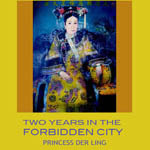
Author Der Ling, Princess, 1886-1944
Title Two Years in the Forbidden City
Language English
LoC Class DS: History: General and Eastern Hemisphere: Asia
Subject Cixi, Empress dowager of China, 1835-1908 -- Anecdotes
Subject Empresses -- China -- Anecdotes
Subject China -- Court and courtiers -- Anecdotes
EText-No. 889
Release Date 1997-04-01
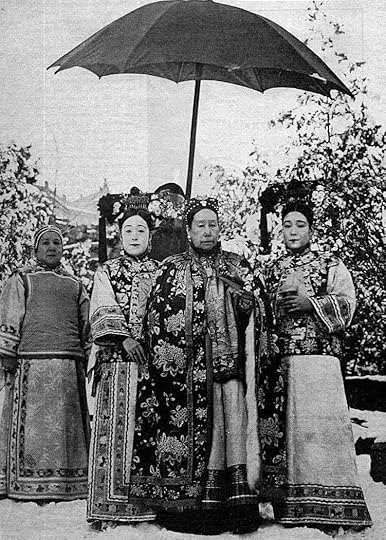
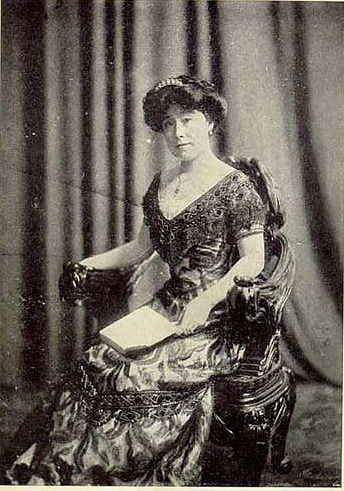
THE author of the following narrative has peculiar qualifications for her task. She is a daughter of Lord Yu Keng, a member of the Manchu White Banner Corps, and one of the most advanced and progressive Chinese officials of his generation. she became First Lady-in-Waiting to the Empress Dowager, and while serving at the Court in that capacity she received the impressions which provide the subject-matter of this book. Her opportunity to observe and estimate the characteristics of the remarkable woman who ruled China for so long was unique, and her narrative throws a new light on one of the most extraordinary personalities of modern times. Yielding to the urgent solicitation of friends, she consented to put some of her experiences into literary form, and the following chronicle, in which the most famous of Chinese women, the customs and atmosphere of her Court are portrayed by an intimate of the same race, is a result.
This entire review has been hidden because of spoilers.
June 15, 2008
The Dowager Empress Ci-Xi has proved to be a mysterious, yet infamous woman. Much has been written of her, portraying her as a ruthless & corrupt woman who had family members, including 2 emperors, her son & her nephew, murdered. However, in 1903, the western educated Lady Yu Derling, the daughter of the Chinese minister to Paris, as well as her mother, sister & brother begin serving in the dowager's court, with Derling filling the job as lady-in-waiting as well as intepreter, as she spoke French & English fluently. In fact, it was Derling's brother who took the majority of the photographs of Ci-Xi. In Derling's book, she writes of Ci-Xi, not as a ruthless old witch, but a relatively amiable, yet also temperamental woman who loved her gardens, dogs, picnics, boating, jewelry & clothes. Her writing gives us insight into the true story of Ci-Xi as well, particularly her role, or lack thereof, in the infamous Boxer Rebellion. We also get a look into the world of her nephew, the frail Emperor Guangxu, a child sick since infancy due to his parents' mistreatment of him & who was placed on the throne at the age 3 in 1875 to succeed his cousin, Ci-Xi's son, Emperor Tongzhi. She also dispells the popular myth that Ci-Xi had mistreated & imprisoned her nephew & that there was hostility between them. However, perhaps due to Derling failing to conjure up an image of Ci-Xi as a murdress, she has been somewhat unfairly derided, but her perceptions are now being vindicated & earlier this year, an author did a full biography of Derling.

December 30, 2014
Plot: C (If this was actually Der Ling's journal every interesting, political, controversial, and unflattering passage has been excised, leaving only bland descriptions of clothing, polite conversations, and pass-times.)
Writing: D (The original author, Der Ling, had excellent English, French, and Mandarin. So this edition has either been edited from English or translated from Mandarin by an editor who has very poor English. This edition was also written with the understanding that someone in the Chinese government would be censoring it [whether a hundred years ago or now], as demonstrated by incessant referrals to how wonderful the Empress was. The title is misleading, as they are only in the Forbidden City for a few pages. This book utterly lacks organization of material.)
Vocabulary: D (see above)
Level: Easy
Rating: PG (References to the Boxer Rebellion, strict court etiquette)
Worldview: Climb the social ladder.
Illustrations: C (B&W photographs lifted from WikiCommons. Should have also included colored photos & illustrations of paintings, clothing, architecture, and landscapes, which would have been much more appropriate when reading descriptions of these things that are unimaginable without actually seeing for oneself.)
I expected to enjoy this book while learning about a significant historical personage. But this edition was a waste of time!
This copy received for free courtesy of GoodReads FirstReads!
Writing: D (The original author, Der Ling, had excellent English, French, and Mandarin. So this edition has either been edited from English or translated from Mandarin by an editor who has very poor English. This edition was also written with the understanding that someone in the Chinese government would be censoring it [whether a hundred years ago or now], as demonstrated by incessant referrals to how wonderful the Empress was. The title is misleading, as they are only in the Forbidden City for a few pages. This book utterly lacks organization of material.)
Vocabulary: D (see above)
Level: Easy
Rating: PG (References to the Boxer Rebellion, strict court etiquette)
Worldview: Climb the social ladder.
Illustrations: C (B&W photographs lifted from WikiCommons. Should have also included colored photos & illustrations of paintings, clothing, architecture, and landscapes, which would have been much more appropriate when reading descriptions of these things that are unimaginable without actually seeing for oneself.)
I expected to enjoy this book while learning about a significant historical personage. But this edition was a waste of time!
This copy received for free courtesy of GoodReads FirstReads!

January 8, 2017
I loved this book. It is an intimate view into the life of Chinese noblewomen at a unique point in history. It was interesting and exciting to go through. While some points may be tedious to some readers, I found the attention to detail and minutia of court life to be fascinating. It was a highly pleasurable read that left me wanting to know more about both the time period and the authoress.

March 1, 2008
No wonder the bloody peasants revolted.

October 2, 2022
Published in 1911, 'Two Years in the Forbidden City' is the memoire of Der Ling, daughter of a prominent Manchu official, concerning her two years in the service of the cunning, conservative and rather narcissistic Dowager Empress Cixi from 1903 to 1905.
It is primarily valuable for its fascinating account of Manchu court ceremonial in the last days of its dynasty when the Dowager Empress had neutered (metaphorically speaking) the gentle and intelligent Emperor and now ruled through influence rather than policy.
Although Der Ling is at pains to emphasise her own modernising credentials, there is little practical politics in the book beyond brief accounts of the mother's earlier coup against her son, the remaining trauma of the Boxer Rebellion and passing references to the Russo-Japanese War.
Der Ling (who became an American citizen) is probably 'talking her book' on reform for her audience and remains loyal at all times to her Empress. She was by all accounts a favourite of Cixi although this did not give her much political influence beyond translating foreign journals.
More important to us is the picture of the Imperial Throne as the surprisingly impotent apex of a sclerotic traditional society aware of the threats posed by modern or modernising (Japan) foreign powers but unable to organise itself to resist them.
Cixi's loathing of the missionaries comes through but the Boxer method of dealing with such influences had proved disastrous causing one of the few political struggles of consequence - between reactionaries and conservatives - around the throne.
Instead the bulk of the book is about a closed world, an elite of immense wealth given to shuttling between palaces, court etiquette, dressing up, present exchanges, theatricals, flower growing, playing at farming and sericulture and very petty intrigue between eunuchs and 'court ladies'.
It might have gone on for ever, merely being displaced by another set of emperors when the Mandate of Heaven was withdrawn from the Manchus, if it had not been for the incursion of the West whose humiliations present an important back drop to current Chinese attitudes.
Read
December 9, 2024An account of the two years spent by 裕德齡 (Princess Der Ling) as lady-in-waiting at the court of Empress Dowager Cixi. Despite the somewhat monotonous tone maintained by the narrative, this brief memoir offers a rare glimpse into what ordinary life at the Qing court would have looked like at the turn of the 20th century—that is, a few years before the fall of the Empire and the establishment of the Republic of China. Most of the book's scope is focussed on tracing the figure of a profoundly human Empress, a portrait quite different from the one that has been passed down to later generations. The figure of a kind and motherly Cixi, who seems to have developed a special fondness towards Der Ling, contrasts sharply with that of an often moody sovereign, who easily takes offense over even the most minor infringements of court etiquette. A recurring theme throughout the book is the interaction between Cixi and Western visitors to the court, with Der Ling, thanks to her French educational background, acting as intermediary. In the few exchanges that take place between the Empress and the foreign ladies (and most notably in the whole portrait ordeal), what appears most evidently is the staunch belief, on part of Cixi, in the superiority of Chinese traditions over foreign customs. This conviction underscores her persistent resistance to introducing any element of reform—whether structural or superficial—within the Qing state.

June 8, 2026
I have to say, for readers with a Chinese cultural background, especially native Chinese readers like me, this book feels relatively low in factual reliability. More selective storytelling than a neutral account. Not surprising, as it is the memoir of a court lady, not a historical work by an academic scholar. I would describe it as half fiction, half nonfiction.
From my perspective, Der Ling built this memoir as a kind of Oriental spectacle, then sold it to Western readers more than a century ago. The stories between the Empress Dowager, the Emperor, and herself; what she saw and experienced; the details of daily life in the Qing court—all of these, in the end, seem to circle around Der Ling herself. She acts as a medium, introducing a distant and mysterious Eastern empire to a Western public that knew very little about it. Also, she rather openly displays her close relationship with the Empress Dowager as a form of social and symbolic capital. Not an outside observer. Not a particularly skilled writer. But yes, this is a memoir: full of personal emotion, repeatedly highlighting how much the Empress Dowager loved her.
Overall, if you are curious about the final scene of the Qing dynasty and its dying court, you can read this book as a minor reference. Sort of valuable. But no need to take it too seriously. Der Ling’s writing relies on plain sentences and flat accumulation: actions, objects, and court details, one after another, rarely shaped into any aesthetic landscape. She tends to use broad words that flatten objects that should have carried different textures, spaces, and ceremonial weight. Enough for a light glimpse, but far from a deep gaze into the last scene of the Qing Empire.
From my perspective, Der Ling built this memoir as a kind of Oriental spectacle, then sold it to Western readers more than a century ago. The stories between the Empress Dowager, the Emperor, and herself; what she saw and experienced; the details of daily life in the Qing court—all of these, in the end, seem to circle around Der Ling herself. She acts as a medium, introducing a distant and mysterious Eastern empire to a Western public that knew very little about it. Also, she rather openly displays her close relationship with the Empress Dowager as a form of social and symbolic capital. Not an outside observer. Not a particularly skilled writer. But yes, this is a memoir: full of personal emotion, repeatedly highlighting how much the Empress Dowager loved her.
Overall, if you are curious about the final scene of the Qing dynasty and its dying court, you can read this book as a minor reference. Sort of valuable. But no need to take it too seriously. Der Ling’s writing relies on plain sentences and flat accumulation: actions, objects, and court details, one after another, rarely shaped into any aesthetic landscape. She tends to use broad words that flatten objects that should have carried different textures, spaces, and ceremonial weight. Enough for a light glimpse, but far from a deep gaze into the last scene of the Qing Empire.

February 10, 2021
The most riveting authentic story I have ever read of, which brings us readers back to the immediate commencement of the nineteenth century, intersected with some historic issues of first-rate importance such as the Boxer Movement, things about Kang Yu Wei and Yuan Shih Kai and a lot of traditional Chinese customs and lores, viz: the meeting of gold rooster and jade rabbit.
Everyone who would really like to know the characters of Empress Dowager Cixi and the Empress, as well as the Court life and etiquette be supposed to peruse thoroughly.
The Authour Princess Derling made use of her easy, intelligible English (her second language or mother tongue?) to record her unique experience of living and attending to QUEEN of China, the Empress Dowager, Old Buddha, the actual master of the late phase of the last feudal dynasty.
Different from what the common public think as usual, the Empress Dowager cannot decide on anything of a little importance alone, but needed to consult her ministers.
Everyone who would really like to know the characters of Empress Dowager Cixi and the Empress, as well as the Court life and etiquette be supposed to peruse thoroughly.
The Authour Princess Derling made use of her easy, intelligible English (her second language or mother tongue?) to record her unique experience of living and attending to QUEEN of China, the Empress Dowager, Old Buddha, the actual master of the late phase of the last feudal dynasty.
Different from what the common public think as usual, the Empress Dowager cannot decide on anything of a little importance alone, but needed to consult her ministers.
March 18, 2021
High society's family entered to be a court ladies which their duties were to serve Her Majesty Cixi who such a really headstrong against the reform of the Boxer in 1989. A life a court were not as her expect, they hardly fought with pressure, other court ladies' tricks. This high-so family tried every way to pleased Her Majesty. They also met with the Emperor Guang-Hsu who acted like he himself was fool but actually indifferent. Life in the Court likes kind of Chinese period movies which presents about Qing's dynasty but more intense in jealousy, rumors, political lacks, and selfish eunuchs also servants girls. In this book tells many details about the last Dynasty of China that I cannot explain into words. Anyway in my opinions, this book worth reading if you are the one who obsessed in (Chinese)history.
August 27, 2020
Endless mindless descriptions of everything she sees. Very dry. Two stars for the subject matter. In case you are interested in Cixi, Empress Dowager Cixi: The Concubine Who Launched Modern China
 is a far better book.
is a far better book. 
November 1, 2017
The amazing story of a young Chinese girl raised in Paris then her account of two years living with the Princess Dowager. An awesome insight to court life in China. Having been to many of the places mentioned in the novel, it was really cool to imagine what they would've been like back when they were occupied. Just super interesting!
September 17, 2021
I've always been fascinated by live in the Forbidden city so this was a great look into how life was living there! Anyone interested would get to learn about the personality of Empress Dowager's Cixi. This is a more emotional and intimate look into how she really is according to the author, who was considered a Lady in Waiting. Overall I enjoyed it.

January 27, 2025
I found this book most interesting to see the POV from the First Lady of the empress regent Cixi during the same time period written about in the book CHINA by Edward Rutherford , I now feel that I have a more rounded perspective of the time period from both sides of the issues .

August 19, 2026
Completely apolitical, but still very interesting. Mostly day to day life in the Forbidden City and an intimate portrayal of Cixi personality, pretty crazy to see her sometimes as just this old lady and other times as the most powerfull person in the empire

September 22, 2022
A very interesting narrative by Der Ling about Empress Dowager Cixi, giving us a look into court life. I listened to the podcast-audiobook version of this
This entire review has been hidden because of spoilers.

June 28, 2024
- life in the Imperial court of Empress Cixi
- interesting information
- but very slow and dry
- interesting information
- but very slow and dry

July 5, 2026
I read around half of it before giving up. I didn't expect much but really what I did read felt like an artless gossip column and palace inventory.

December 9, 2017
**OBTAINED: FREE on Librivox.org**
Two Years in the Forbidden City, by Princess Der Ling, was an interesting glimpse into the era and offered a unique first hand account of what life had been like in company of the Dowager Empress. Der Ling, who served as an interpreter, also gives insight into the Empress' life. Of course some of the information, such as elaborate details about food and clothing, made the text a bit dry, though I felt it was still worth the read (listen). It's FREE.
[OFFICIAL RATING: 4 STARS]
Two Years in the Forbidden City, by Princess Der Ling, was an interesting glimpse into the era and offered a unique first hand account of what life had been like in company of the Dowager Empress. Der Ling, who served as an interpreter, also gives insight into the Empress' life. Of course some of the information, such as elaborate details about food and clothing, made the text a bit dry, though I felt it was still worth the read (listen). It's FREE.
[OFFICIAL RATING: 4 STARS]
May 3, 2015
I can't say I am much of a fan of the memoir genre in general. It was interesting to read about life in the Chinese court at that time, but for the length of the book I would have hoped for more depth. I enjoyed when the empress told the author a bit about her life before she was the empress and how it was that she came to power, but this was only a brief portion.
When chapter 2 ended with the sentence, "we. . . could hear the conversation between Her Majesty and the Ministers very plainly, and as my readers will see later, I made good use of this." I expected a much more significant, or more frequent, reference to this. Yet it seems we hardly ever hear specifics about such conversations. Instead the author spends more time describing what goes on behind the scenes--which I suppose was the intent of the book--but I feel I could have gotten the same picture in not so many words.
Another sentence that stuck out to me was in chapter 7, when the author says, "I told her that it was a great pleasure for me to serve her, that it had been my dream for years, and now that my dream had come true, I could not help but be satisfied." I would have liked more introspection on that comment. Did she really mean every word of that, or did she just say it to please Her Majesty? And if she did mean it, did she still feel that way at the end of two years, as well as all the intervening time? But the author seems to maintain an objective aloofness to her own story.
To summarize my feelings of the book, it could have used more subjective depth, or else I would have been content with an abridged version.
When chapter 2 ended with the sentence, "we. . . could hear the conversation between Her Majesty and the Ministers very plainly, and as my readers will see later, I made good use of this." I expected a much more significant, or more frequent, reference to this. Yet it seems we hardly ever hear specifics about such conversations. Instead the author spends more time describing what goes on behind the scenes--which I suppose was the intent of the book--but I feel I could have gotten the same picture in not so many words.
Another sentence that stuck out to me was in chapter 7, when the author says, "I told her that it was a great pleasure for me to serve her, that it had been my dream for years, and now that my dream had come true, I could not help but be satisfied." I would have liked more introspection on that comment. Did she really mean every word of that, or did she just say it to please Her Majesty? And if she did mean it, did she still feel that way at the end of two years, as well as all the intervening time? But the author seems to maintain an objective aloofness to her own story.
To summarize my feelings of the book, it could have used more subjective depth, or else I would have been content with an abridged version.
This entire review has been hidden because of spoilers.

September 29, 2013
This is an insider's view into the royal court of the Dowager Empress of China Cixi from around 1903 to 1905. The book is filled with many mundane details of daily life, which actually composes the bulk of the book. Every detail of holidays and how they were celebrated at court is covered inexhaustibly. Yet there are a few moments of that are interesting from a historical perspective, but those are limited in scope. The Empress's view of the Boxer Rebellion is insightful as is learning more about her personality. This book however is notable because it does present a unique perspective on this aspect of Chinese history. If you have an interest in the time period and want to learn more about this intriguing historical figure, this is a good book to explore. If you want to learn more about Chinese history, this wouldn't be a good book to help accomplish that goal, at least not at an introductory level.

August 27, 2015
It was an interesting book, although it won't win any literary prizes any time soon. It is beautiful in its very detailed portrayal of life at the Chinese court where old traditions and superstitions were just as strong in the 1900s as ever before. Having visited the places described in the book myself, I cannot help but relieve the whole experience through the eyes of the Empress Dowager whom I find both fascinating as well as frustrating and narrow-minded (blame it on her being caged in the Forbidden City and her old age...) The narrative is quite repetitive and dull, but overall it is a great document about Empress Cixi and her time.

August 20, 2022
An extraordinary recounting of first hand experiences of early 20th C Imperial life in the Forbidden City. Sadly, history is most often told by men, leaving out rich and salient details about what life was like for more than half the population. I was absolutely immersed in this wonderfully written memoir.
Highly recommend listening to the China Plus Production narration. The Chinese reader’s pronunciation of words in Chinese, English, and French is perfection.
Highly recommend listening to the China Plus Production narration. The Chinese reader’s pronunciation of words in Chinese, English, and French is perfection.

June 9, 2010
Fascinating book that gives a first-hand account of Imperial life towards the end of the Chinese empire. Pre-dates the events in "The Last Emperor;" the Empress Dowager in this book selected Pu Yi as Emperor while she was on her deathbed.
I see on Wikipedia that some of the author's statements are disputed. That's as may be. I didn't read anything that would give me cause to doubt what she put down in this book.
In any case, highly recommended.
I see on Wikipedia that some of the author's statements are disputed. That's as may be. I didn't read anything that would give me cause to doubt what she put down in this book.
In any case, highly recommended.
Displaying 1 - 30 of 45 reviews