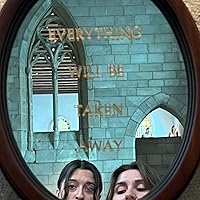
En una entrevista realizada en 1987 por el crítico norteamericano Joseph Mallia, Paul Auster afirmaba: "Toda mi obra es una unidad y el cambio a la prosa fue el último paso en una lenta evolución natural". Escrita a lo largo de la década de los setenta, la obra poética de Paul Auster inaugura y desarrolla el universo linguístico y temático que conforma su peculiar obra novelística. De una madurez y una fuerza expresiva sorprendentes, estos poemas exploran conceptos claves de su obra de ficción como son el problema del azar y la identidad, la distancia entre el lenguaje y el mundo, la disolución del yo en el discurso. Desapariciones presenta una selección de dichos poema y ésta es su tercera edición.
Paul Auster was the bestselling author of 4 3 2 1, Bloodbath Nation, Baumgartner, The Book of Illusions, and The New York Trilogy, among many other works. In 2006 he was awarded the Prince of Asturias Prize for Literature. Among his other honors are the Prix Médicis Étranger for Leviathan, the Independent Spirit Award for the screenplay of Smoke, and the Premio Napoli for Sunset Park. In 2012, he was the first recipient of the NYC Literary Honors in the category of fiction. He was also a finalist for the International IMPAC Dublin Literary Award (The Book of Illusions), the PEN/Faulkner Award (The Music of Chance), the Edgar Award (City of Glass), and the Man Booker Prize (4 3 2 1). Auster was a member of the American Academy of Arts and Letters and a Commandeur de l’Ordre des Arts et des Lettres. His work has been translated into more than forty languages. He died at age seventy-seven in 2024.
did i have a blast reading this? not particularly. Paul Auster’s writing sounds like he thinks he’s smarter and better than everyone else. i’m not really drawn in by poetry that seems like it exists just to be confusing (like plz just be straightforward sometimes, i promise it will not kill you, Paul), though i did enjoy the poems where Auster is describing nature. bro loves to be outside. regardless, though i don’t consider any of this great, getting to read “White Spaces” towards the very end made it all worth it.
Yes, this might be most interesting to see what Auster was working through just before he started writing/publishing the great prose works by which he would come to be understood.
Here he is a youngish poet, deeply influenced by French poets (and he had been living in France for several years), and it was the 1970s, when the French were overwhelmed by a suspicion of language. That suspicion and a certain gloominess that is reminiscent of Samuel Beckett dominate the first parts of this book. I must admit that they felt so much of a certain type I almost chuckled a few times. The attitudes seemed almost a cliche at times, but then I thought that it was a cliche not too many people would recognize these days.
But not too far into the 70s and the influence changed. Was it Rene Char? I wonder. Nearer the end of this Selected, in a poem entitled "Narrative" Auster gets to these lines:
Early winter: the yellow apples still unfallen in a naked tree, the tracks of invisible deer
in the first snow, and then the snow that does not stop. We repent of nothing. As if we could stand in this light. As if we could stand in the silence of this single moment
of light.
And after that he is able to go on to all the next work, maybe all the way up to the big biography of Stephen Crane he published this year!
Mon avis sera très succinct, pour deux raisons principales :
- je lis très peu de poésie, donc j’ai du mal à avoir un regard critique face à ce genre de par ma méconnaissance. Pour moi il est question de sensations et d’images évoquées, ce qui reste une réaction très subjective selon chaque lecteur.
- ce recueil est traduit de l’anglais, et je pense que forcément on perd une grande partie de la poésie des mots automatiquement de par cette traduction. Je ne sais pas si les phrases que j’ai lues et entendues ont le même impact que celles choisies par l’auteur.
Bref, j’ai plutôt bien aimé, c’est un court recueil qui se lit assez vite, et j’ai eu quelques belles images en tête. Je retiendrais surtout 4/5 poèmes. On découvre l’œuvre de Paul Auster par un prisme différent, et cela m’a redonné envie de me plonger dans sa fiction.
no son poemas fáciles, desde ya: es un libro críptico y profundamente existencialista. pero si le das una oportunidad, vas a encontrar una mirada reflexiva y valiosa acerca de la finitud de la vida y nuestro paso por ella. lo disfruté mucho y me condujo hacia un estado casi meditativo en cada poema, con el carácter etéreo de motivos naturalistas: el aire, las piedras, la tierra. también reiterativo, por momentos, con ciertas obsesiones personales (como el "muro") pero supongo que es una construcción de su cosmovisión primigenia. en resumen, lo recomiendo y es ideal para leer al caer el sol. no le teman, al leerlo quizás se encuentren más cerca de ustedes mismos.
Poëzie van Paul Auster. Ik was verrast om poëzie te vinden van Paul Auster, deels geschreven in het begin van zijn schrijverscarrière (Unearth en Dissapearances van '70 tot '77). In alle geval vind ik zijn proza beter. Deze gedichten zijn een soort metagedichten, hij heeft het vooral over taal, over haar ambigue, problematische positie tussen de werkelijkheid en onze voorstelling ervan. Hij valt daarbij in herhaling en gebruikt dikwijls dezelfde (mooie) beelden en woorden. Ik houd persoonlijk meer van poëzie die over het gewone leven gaat, over persoonlijk ervaringen van de auteur. Deze gedichten van Auster zijn allemaal nogal zwaar te verteren. Het is wel boeiend in het licht van de romans die ik reeds las van Auster. Bij City of Glass en Oracle Night had ik altijd het onbestemde gevoel dat de taal/de woorden het verhaal eerder richting gaven dan omgekeerd... Uit deze dichtbundel blijkt dat mijn gevoel geen hersenschim was.
Nomad
Nomad - till nowhere, blooming in the prison of your mouth, becomes wherever you are: you read the fable that was written in the eyes of dice: (it was the meteor-word, scrawled by light between us, yet we, in the end, had no evidence, we could not produce the stone). The die-and-the-die now own your name. As if to say, wherever you are the desert is with you. As if, wherever you move, the desert is new, is moving with you.
Edizione con proprio il minimo minimo indispensabile: la prima raccolta, Spokes/Rayons, non si degna manco di dedicare una pagina a poesia, Effigies finisce in mezzo a Fragments du froid (forse è così nella vecchia edizione americana, ma non siamo più nel 1987), mancano White Spaces e Notes from a Composition Book (stesso commento di prima, non capisco perché post 2004 in Francia non esista l'edizione completa), MANCANZA TOTALE di qualsivoglia introduzione e, soprattutto, del testo a fronte mannaggiastifrancesi. La traduzione non brilla, specialmente quando parte rendendo Unearth con Nonterre, scelta che posso comprendere ma non più di tanto. Il peggio rimane comunque la mancanza dell'originale a fronte.
Leer estos poemas de juventud de Paul Auster ha sido como asomarse a un borrador. Un borrador elegante, oscuro, contenido… pero todavía en busca de voz.
En Desapariciones ya están algunas de sus obsesiones futuras: el cuerpo, la nada, el tiempo, la desaparición del yo. Hay versos precisos, imágenes potentes y una atmósfera densa, casi hermética. Pero también hay algo rígido, como si la emoción quedara atrapada en el lenguaje. Me interesó más como mapa de lo que vendrá que como obra en sí misma.
🔹 Lo mejor: Intuir al Auster narrador en germen, con su mirada afilada y sus temas de fondo.
🔹 Lo peor: Frío. Críptico. A ratos más intelectual que poético. Una lectura curiosa si te gusta seguirle la pista a los autores que amas.