Not all wars are won on the battlefield and not all soldiers fight in combat. Some remain invisible, away from direct combat and yet risk their lives to protect the honour of their king and country. These are the faceless heroes of war—the spies—who collect classified information about the enemy, skilfully helping the ruler and the government of the land to safeguard their own territory. Packed with action, Adrishya is a collection of India's greatest spy stories. It captures the lives of spies—extraordinary men and women—through the danger, the fear and the triumphs. It narrates their heroic acts and follows them as they travel through dangerous landscapes, slip into disguises and hoodwink enemy soldiers. Starting off with India's first spy from the Mahabharata to the RAW officials of the 1971 war, this book is a collection of real spy stories which will entertain and inspire at the same time.
Book: Adrishya: Stories of Great Indian Spies Author: Epic Publisher: Rupa Publications India; 2017th edition (31 July 2017) Language: English Paperback: 224 pages Item Weight: 249 g Dimensions: 12.8 x 1.3 x 18.59 cm Country of Origin: India Price: 232/-
To gain the upper hand in war, the aptitude to know what your enemy is planning is imperative. Huge amounts of money have been spent and many lives have been lost in pursuit of this objective. From biblical times to the present day, leaders have employed espionage on and off the battlefield in the hunt for victory. Methods might fluctuate, from dirty tricks and theft to interrogation and torture, but the aim is the same - to outfox your enemy and emerge victorious.
The earliest surviving record of espionage dates from the time of Pharaoh Rameses’ war with the Hittites and the battle of Kadesh (c.1274 BC). Although spies are best known as collectors of data, they are often used to disseminate false information in order to intentionally mislead opponents.
The Hittite king Muwatallis (ruled c.1295–c.1272 BC) sent two spies into the Egyptian camp posing as deserters to convince pharaoh that the Hittite army was still quite distant. Rameses believed their story and unwittingly allowed part of his army to march into a Hittite ambush. Fortunately for the pharaoh, he captured two more Hittite spies and had his officers interrogate them. Under repeated blows, the Hittite spies revealed that an ambush had been set for Rameses’ advance troops. Rameses was therefore able to bring up reserves and avert disaster at what became known as the battle of Kadesh.
The Old Testament is a rich source of spy stories. The first mention of spies comes as early as the Book of Genesis, when Joseph accuses his brothers – who had earlier sold him into slavery – of being Canaanite spies reconnoitering for unprotected spots along the Egyptian border. Although the brothers were simply out buying grain and the accusation was Joseph’s way of scoring revenge, the story confirms that Egypt was wary of foreign spies infiltrating its borders.
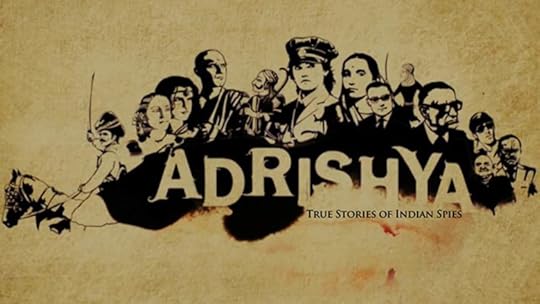
This book is based on EPIC Television’s well-liked show by the same name—‘Adrishya: True Stories of Indian Spies’.
The book features chosen stories of the greatest Indian spies from the times of the Mahabharata to RAW spies during the Bangladesh Liberation War in 1971, and many other attention-grabbing ones in between.
The author narrates the spies’ heroic acts and follows them as they travel through dangerous landscapes, slip into disguises and hoodwink the enemy. We become privy to their thoughts as they inch towards fulfilling their mission.
The book has been divided into the following chapters:
1) Kacha: The Spy of the Gods 2) Jeev Siddhi: Chanakya’s Spy 3) Chand Bardai: The Poet Spy 4) Bahirji Naik: Chhatrapati Shivaji Maharaj’s Chief Intelligence Officer 5) Sharan Kaur: The Warrior Spy 6) Aziz-Un-Nisa: The Courtesan Spy 7) Durga Bhabhi: The Revolutionary Spy 8) Noor Inayat Khan: The Unlikely Spy 9) Saraswati Rajamani: Netaji’s Spy 10) Rameshwar N. Kao and K. Shankaran Nair: RAW Spies and the 1971 War
Featuring stories from different epochs, the book begins with a lesser-known tale from the master of all epics—Mahabharata. Guru Brihaspati’s son Kacha, the spy of the gods, was sent by Lord Indra to learn mrit sanjeevani vidya from Guru Shukracharya, a knowledge which would make the gods immortal. While he achieved his mission, it came with a heavy price.
Next is Jeev Siddhi, the spy of Chanakya. He assisted his guru Chanakya in saving Chandragupta Maurya’s life and expand his kingdom by tactically defeating King Nanda’s minister, Rakshasa.
The work of a spy can be varied. They need not always be warriors. Like Chand Bardai—who served under Prithviraj Chauhan, the king of the Chauhan dynasty that ruled over Ajmer and Delhi—was a court poet, a jester and a legend of disguises. Faithful to his master, Bardai was involved in serving Chauhan’s beloved Sanyukta escape from Kannauj on the day of her swayamvar. Later, when Prithviraj Chauhan was blinded and imprisoned by Mohammad Ghori of Ghazni, Bardai plotted a way for Chauhan to exact revenge upon the pitiless Ghori.
Bahirji Naik, Chhatrapati Shivaji’s chief intelligence officer, was a master of disguises and one of the early practitioners of a form of guerrilla warfare called ‘Ganimi Kawa’ or Shiva Sutra.
Then there is Sharan Kaur, who was saved by the army of Hari Singh Nalwa, the grand commander of Maharaja Ranjit Singh. She returned the favour by becoming a warrior spy, helping Nalwa counter the fierce attacks of the Pathan tribes and their cruel leader Dost Mohammad. Sharan braved to go where no Sikh man would go.
Aziz-Un-Nisa’s and Durga Bhabhi’s stories are of consummate bravery. Aziz-Un, a courtesan, who had travelled from the cultural city of Lucknow to the gritty reality of Kanpur, just to uphold the autonomy of her choices, turned against the British and started out as a spy. But after the British killed the man she loved, she didn’t vacillate from enthusiastically participating in the planning of the uprising of 1857.
Durga Bhabhi is another revolutionary Indian spy. Married to a freedom fighter at the age of eleven, Durgavati Vohra was keenly involved in the planning and execution of several of the Hindustan Socialist Republican Army’s (HSRA) activities. She is best known for having travelled undercover with Bhagat Singh when the British police was on the lookout for him regarding the assassination of Saunders.
The story of Noor Inayat Khan is evenly appealing. A Sufi poet, a princess by birth and a children’s author, Noor, regardless of her Sufi background, becomes the solitary link between the rebel groups of France and their support system in England during World War II. How she gets into the elite secret services of Women’s Auxiliary Air Force (WAAF) accounts for a mesmerizing narrative.
Saraswati Rajamani was Netaji Subhash Chandra Bose’s spy in the Indian National Army (INA). Saraswati joined the INA at a young age and infiltrated British army ranks to gather intelligence for Netaji which helped him in his active resistance to the British Raj. The story also captures her escape when she was caught by the British forces.
The story of the formation of Bangladesh is imperfect without the mention of two Indian intelligence officers, R.N. Kao and K. Shankar Nair. While Kao planned scrupulously from Research and Analysis Wing (RAW) headquarters in New Delhi, K. Shankar Nair was on the field as the struggle in East Pakistan raged. The chapter details their heroic deed in saving countless lives and achieving freedom for India’s neighbouring country.
These myriad cases give us a peep into the hazardous lives of the unsung heroes of wars while reaffirming the importance of their roles in the safety and security of the nation. These are stories that will motivate and amuse in unison.
The information in these chapters is based on critical inputs provided by scholars and experts. In a few chapters, the spies, who are still among us, have shared their experiences too.
This book doesn’t claim to be a history book but gives us an insight into the lives of spies, told in extremely attractive story formats. Separating legend from veracity, the author traces the stories of celebrated spies, from ancient times through to the present era.
This book makes you experience life from the point of view of India’s greatest spies, living through danger and possible death, fear and anxiety, the triumphs and the captures.
In history, success stories of rulers, kings, rajas and chhatrapatis are known to all. However, history doesn’t say much about those people who have followed their masters’ strategies, worked alongside them, done the necessary groundwork and even made enormous sacrifices. Unfortunately, these are the lesser-known voices of history.
This book is based on EPIC Television’s popular show by the same name—‘Adrishya: True Stories of Indian Spies’. It features 10 heroic stories of the greatest Indian spies from the times of the Mahabharata to the last century, written by historians/ experts/ lecturer of that specified time period.
1. Kacha, the spy of the gods, was sent by Lord Indra to learn mrit sanjeevani vidya from Guru Shukracharya, a knowledge which would make the gods immortal, but it came with a heavy price.
2. Jeev Siddhi, Chanakya’s spy who assisted his guru Chanakya in saving Chandragupta Maurya’s life and expand his kingdom by strategically defeating King Nanda’s minister, Rakshasa.
3. Chand Bardai, a court poet and a jester help his king, Prithviraj Chauhan of Ajmer, in eloping princess Sanyukta of Kannauj from her Swayamvar and later when Prithviraj was blinded and imprisoned by Mohammad Ghori of Ghazni, he plotted a way for him to seek revenge from Ghori.
4. Bahirji Naik, Chhatrapati Shivaji’s chief intelligence officer, was a master of disguises and the practitioners of guerrilla warfare who helped him in killing Afzal Khan, conquering Lal Mahal from Shaista Khan & plundering Surat.
5. Sharan Kaur, who was saved by the army of Hari Singh Nalwa, the great commander of the Sikh empire, returned the favor by becoming a warrior spy, helping Nalwa counter the ferocious attacks of the Pathan tribes.
6. Aziz-Un, a courtesan of Lucknow who traveled to Kanpur just to maintain the independence of her choices, turned against the British, started out as a spy, and actively participating in the planning of the uprising of 1857.
7. Durgavati Vohra, married to a freedom fighter at an early age, was a revolutionary Indian woman spy who actively involved in the planning and execution of several of the HSRA activities and helped Bhagat Singh when the Britishers were looking for him for the murder of Saunders.
8. Noor Inayat Khan, a princess by birth and a children’s author. She despite her Sufi background, becomes the sole link between the rebel groups of France and their support system in England during World War II by working for the elite secret services of WAAF.
9. Saraswati Rajamani was Netaji Subhash Chandra Bose’s spy in the INA who at an early age infiltrated British army ranks to gather intelligence for Netaji which helped him in his active resistance to the British Raj.
10. R.N. Kao and K. Shankar Nair, 2 RAW officers - one planned meticulously from the RAW headquarters and another work from the field - save countless lives and became instrumental in the creation of Bangladesh by intercepting the West Pakistani's intelligence.
These myriad stories give us a glimpse into the dangerous lives of the unsung heroes of wars while reaffirming the importance of their roles in the safety and security of the nation. The book also contains some detailed maps, photographs, and paper cuttings. All of this not only inspire and entertain us but also informed us about our nation's history.
Among all these stories my personal favorites are Bahirji Naik, Durga Bhabhi, Saraswati Rajamani, and R.N. Kao and K. Shankar Nair. I would recommend everyone to read this book.
Adrishya is a book about spies, featuring a collection of short biographies of spies from both ancient and modern India. The narration takes the form of engaging stories.
I enjoyed all the biographies, but my favorites were:
While I appreciated each story, I felt deeply saddened reading about Saraswati Rajamani, whose incredible contributions went unrecognized by the Government of India. Noor Inayat Khan’s story, in particular, left a lasting impression—the tale of a brave woman who worked in the Gestapo and endured a tragic end in a Nazi camp was truly horrifying.
That said, the book could have been written much better. While the characters and their compelling stories kept me hooked, it was hard to ignore the numerous grammatical and spelling errors (and I’m not even a grammar purist!).
Despite its flaws, I loved this book and plan to revisit it someday.
Very short stories of Indian spies. It's entangled Mahabharata to Mukhti Bahini in single thread and shows that India was not only great civilization but has history of brilliant spies who can turn the table in any war. Bravo
Hello Readers, I just downloaded this book to read having watched parts of it on screen in EPIC channel. It has some beautiful stories talking to us over the pages of history and one can definitely get to know our rich culture and history in glimpses. Though one should have an understanding of Indian history and mythology. A very entertaining read indeed. Also, it got me looking up and searching to related links which is a bit rare these days. My opinion - You can read if you are into these things... :-)
It was a collection of brief accounts of Spies of India starting from ancient days and ending on the spies of RAW. Since the book is fashioned on a television series, all the accounts are like episodes of a anthology tv series. An average read. The chapters are as below:
1. Kacha the Spy God 2. Jeev Siddhi Chanakya's Spy 3. Chand Bardai 4. Bahirji Naik 5. Sharan Kaur 6. Aziz-un-Nisa 7. Durga Bhabhi 8. Noor Inayat Khan 9. Saraswati Rajamani 10. R.N. Kao
Well, it's a nice book ...but it could have been much much better if it would have got into the details of what the spies did and how... I think those details would have made it much more interesting along with the details of the era and the historical background provided. The concept is great and definitely got to learn a bit about various spies across generations
Interesting read, short stories of Indian spies from ancient time to modern ages, some from Indian epics. Many were women spies and we learn about their great courage and skills. I have not watched the television serial on this, but found the book interesting.
Very nicely grouped stories about the spies in Indian culture. The stories from the era of Mahabharata to the RAW spies. They are written in a total layman's language - easy to understand and relate to. I have not seen the show on the EPIC channel, but now I will try to have a look on that too.