

What do you think?

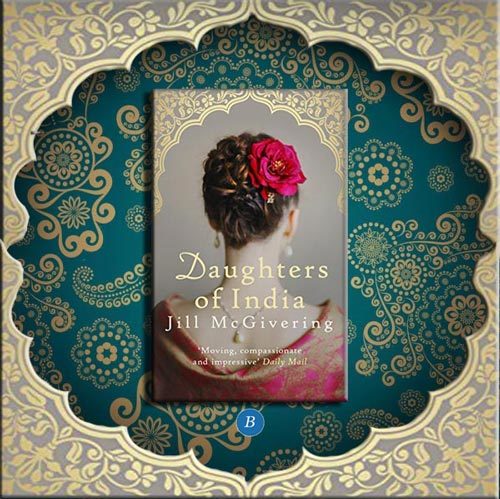
Daughters of India
Isabel, born into the British Raj, and Asha, a young Hindu girl, both consider India their home. Through mischance and accident their stories intersect and circumstances will bring them from the bustling city of Delhi to the shores of the Andaman Islands, from glittering colonial parties to the squalor and desperation of a notorious prison; and into the lives of men on opposing sides of the fight for self-government.
As the shadow of the Second World War falls across India, Isabel, caught up in growing political violence, has to make impossible choices – fighting for her love for India, for the man she yearns for, and for her childhood Indian friend, in the face of loyalty to her own country.
As the shadow of the Second World War falls across India, Isabel, caught up in growing political violence, has to make impossible choices – fighting for her love for India, for the man she yearns for, and for her childhood Indian friend, in the face of loyalty to her own country.
320 pages, Paperback
Published January 18, 2018
About the author
Jill McGivering
7 books33 followersJill McGivering has worked in journalism for 25 years. She is currently a senior foreign news journalist with the BBC having previously held the position of South Asia Correspondent (based in Delhi). Now based in London, she travels extensively for the BBC including assignments to Afghanistan and China. She has already written non-fiction, short fiction and plays. Her first novel, THE LAST KESTREL, publ Aug 2010, is set in Afghanistan. Her second, FAR FROM MY FATHER'S HOUSE, publ August 2011, is set in North-West Pakistan.
Ratings & Reviews
Friends & Following
Create a free account to discover what your friends think of this book!
Community Reviews
Displaying 1 - 30 of 30 reviews

June 21, 2017
A solid, heartbreaking and fascinating read..
Travel to the locations in the novel: Booktrail it to India
A solid, heartbreaking and fascinating read. I had to sit back and let this novel wash over me as I was reading and certainly as I read it. Never before has a destination been so well evoked in both history and two sides of the same coin – poverty on one side and richness beyond your wildest dreams but with two living on either side each in their own little prisons. For a gilded cage is still a cage.
The journey and history of the last days of the British Raj were an eye opener seen through the eyes of these remarkable women. they are the ones with the foresight and the strength to fight for what they believe in despite the objections of men and the revolutionaries. And there are some heartbreaking scenes where you can feel the tears on the page as the injustice, the brutal sense of injustice and inhumanity stain the pages. And all this on the beautiful Andaman Islands in the bay of Bengal. Where to one woman, it’s a place where the British dump their unwanted but to another it’s at first a serene island with the promise of a future. As the clouds drift over the island, and the mist clears, Jill the author doses a wonderful job of balancing the stories, allowing them to slowly wrap them selves around you until you are as caught up with the fate of these people ad the island as they are.
A really evocative and fascinating read – history and humanity shine through. I was with both women on every step of their very special and poignant journey”
Travel to the locations in the novel: Booktrail it to India
A solid, heartbreaking and fascinating read. I had to sit back and let this novel wash over me as I was reading and certainly as I read it. Never before has a destination been so well evoked in both history and two sides of the same coin – poverty on one side and richness beyond your wildest dreams but with two living on either side each in their own little prisons. For a gilded cage is still a cage.
The journey and history of the last days of the British Raj were an eye opener seen through the eyes of these remarkable women. they are the ones with the foresight and the strength to fight for what they believe in despite the objections of men and the revolutionaries. And there are some heartbreaking scenes where you can feel the tears on the page as the injustice, the brutal sense of injustice and inhumanity stain the pages. And all this on the beautiful Andaman Islands in the bay of Bengal. Where to one woman, it’s a place where the British dump their unwanted but to another it’s at first a serene island with the promise of a future. As the clouds drift over the island, and the mist clears, Jill the author doses a wonderful job of balancing the stories, allowing them to slowly wrap them selves around you until you are as caught up with the fate of these people ad the island as they are.
A really evocative and fascinating read – history and humanity shine through. I was with both women on every step of their very special and poignant journey”

September 1, 2018
Surprisingly brilliant . I’d not heard of this author before and picked this book up in a sale. I was glad I did - that’s where the gems seem to be hidden! Perfect writing style I kept turning every page and couldn’t wait to race to the end . I won’t spoil anything must a must read !

June 1, 2020
A pretty cover, right? But one that alas I feel does a bit of a disservice to the book. Put in mind of, of what; a frilly, a gentle, a romantic read? When in fact Daughters Of India is not any of these.
Set in an interesting period in India's history. Raw and gritty; the sense of inhumanity and injustice palpable.
Told through the eyes of two women, their lives intertwined and yet polar opposites ... or are they? Yes, one lives a life of privilege, the other, a life of poverty and servitude but in many ways they are similar. Both remarkable women straining against the bars of the cages that hold them, both fighting for what they truly believe in despite the constraints of the things; their sex, their race, their religion, the politics of the time that bind them.
Quickly drawn into the lives of these characters, all of whom, yes, even the most unlikable (Isabel's husband who saw no wrong in his abusing a young native servant and the socialite European woman who took scandalised delight in visiting the condemned prisoners held in the notorious Cellular Jail amongst them) are portrayed as not just 'good' or 'bad' but rather, way more complex than this, as a combination of all the things that make any individual who and what they are.
SUMMED UP IN A SENTENCE ... A compelling novel told not from the perspective of its male characters but rather from the perspective of its two female protagonists, the oppressed portrayed not just as victims but as being as capable of violence as those who seek to oppress them.
Copyright ... Felicity Grace Terry @ Pen and Paper
Set in an interesting period in India's history. Raw and gritty; the sense of inhumanity and injustice palpable.
Told through the eyes of two women, their lives intertwined and yet polar opposites ... or are they? Yes, one lives a life of privilege, the other, a life of poverty and servitude but in many ways they are similar. Both remarkable women straining against the bars of the cages that hold them, both fighting for what they truly believe in despite the constraints of the things; their sex, their race, their religion, the politics of the time that bind them.
Quickly drawn into the lives of these characters, all of whom, yes, even the most unlikable (Isabel's husband who saw no wrong in his abusing a young native servant and the socialite European woman who took scandalised delight in visiting the condemned prisoners held in the notorious Cellular Jail amongst them) are portrayed as not just 'good' or 'bad' but rather, way more complex than this, as a combination of all the things that make any individual who and what they are.
SUMMED UP IN A SENTENCE ... A compelling novel told not from the perspective of its male characters but rather from the perspective of its two female protagonists, the oppressed portrayed not just as victims but as being as capable of violence as those who seek to oppress them.
Copyright ... Felicity Grace Terry @ Pen and Paper

May 23, 2018
If I'm honest, although rh very start grabbed me, I wasn't really hooked until around 1/3 of the way into this one, and then, the plot twisted and turned quite dramatically right through the remainder of the novel.
There are two protagonists, Isabel, British but living in India in the age of the Raj, and Asha, daughter of the sweeper-wallah. These two very different women, with such very different lives, both thinking of themselves as Indian and India as their home. Told in alternating points of view from them both, we see their lives interconnect repeatedly, as WWII looms and the fight for Indian Independence turns increasingly violent.
Overall, I enjoy it, but the last 2/3s of the book were far more engaging!
There are two protagonists, Isabel, British but living in India in the age of the Raj, and Asha, daughter of the sweeper-wallah. These two very different women, with such very different lives, both thinking of themselves as Indian and India as their home. Told in alternating points of view from them both, we see their lives interconnect repeatedly, as WWII looms and the fight for Indian Independence turns increasingly violent.
Overall, I enjoy it, but the last 2/3s of the book were far more engaging!
June 12, 2018
Lots of characters that you have to remember because they all insect many times during the unfolding of this tale. You need to make a character web for this one. Two young women, one from wealth, one from poverty and how their lives influence one another in very interesting ways.

December 14, 2017
End of the Raj story told well. So good that I stayed up well into the night to finish.
One of my best books of 2017 https://culturalwednesday.co.uk/cultu...
One of my best books of 2017 https://culturalwednesday.co.uk/cultu...

July 4, 2018
Took a little time to get into but I thoroughly enjoyed it.
Fantastic view of India at a turbulent time.
I would read other books from this author.
Fantastic view of India at a turbulent time.
I would read other books from this author.
July 29, 2018
I really enjoyed the historical backdrop of the fall of Empire and the fight for self rule.
December 26, 2018
Much better than expected.
January 13, 2023
The book is carried by two female protagonists, one a privileged British wife of a government officer and secondly an underprivileged Hindu girl.
It was difficult to root for either. Isabel believes she is indian, but never stands up for any indian character in the story, except in a predictable ending, since without that the book would have been pointless to the point of spawning rage in a reader. Infact she is a mute spectator to her husband's abusive behavior to 'wretched' children in her own household. When Isabel tries to come across as a kind person the most she does is give a servant's job in her own household, believing that offering comforts is enough to connect with deep wounded humans, even if no demand for kindness was made. Through most of the book she is not able to see her 'fellow' indians in any other manner other than scattered, disorganized and poor servants to the British and only near the very arduous end does she take any action.
Asha, the second protagonists is driven by revenge, but joins a more violent fraction of the Indian freedom movement, which doesn't quench her resolve to carry forward the mission of her loved ones. She doesn't have much to lose, and her story seems to have more agency than the privileged British women around her. But once her deeds are done, the last part of her arc seems stretched and unnecessary. In the end the narrative didn't inspire me to like either characters and I literally had to drag myself through tedious pages to feel that it was worth my time to know what happened .. actually not worth anyone's time. The book emphasis also on a fraction of people who didn't represent the larger spirit of the Indian freedom movement of non-violence.
It was difficult to root for either. Isabel believes she is indian, but never stands up for any indian character in the story, except in a predictable ending, since without that the book would have been pointless to the point of spawning rage in a reader. Infact she is a mute spectator to her husband's abusive behavior to 'wretched' children in her own household. When Isabel tries to come across as a kind person the most she does is give a servant's job in her own household, believing that offering comforts is enough to connect with deep wounded humans, even if no demand for kindness was made. Through most of the book she is not able to see her 'fellow' indians in any other manner other than scattered, disorganized and poor servants to the British and only near the very arduous end does she take any action.
Asha, the second protagonists is driven by revenge, but joins a more violent fraction of the Indian freedom movement, which doesn't quench her resolve to carry forward the mission of her loved ones. She doesn't have much to lose, and her story seems to have more agency than the privileged British women around her. But once her deeds are done, the last part of her arc seems stretched and unnecessary. In the end the narrative didn't inspire me to like either characters and I literally had to drag myself through tedious pages to feel that it was worth my time to know what happened .. actually not worth anyone's time. The book emphasis also on a fraction of people who didn't represent the larger spirit of the Indian freedom movement of non-violence.

December 18, 2021
This falls into the category of an easy read that is set in a country that is both different and interesting.
It is set just before WWII and India's Independence. It focuses on two very different women both born and brought up in India.
Isabel is a colonial daughter but one who loves India and the Indians and sees that Independence is inevitable and should go ahead.
Asha whose father is a poor man, he is wrongly accused of theft and his life falls apart. He ends up in prison which makes Asha an angry and British-hating young girl.
These two women's lives cross back and forth as the war and then the fight for Independence progresses into violence.
The characters are both believable and the story kept me reading. It was an easy read and the story had a good pace. I am not sure how historically accurate it is but in truth the story doesn't rely heavily on specific events.
I have not read this author before and would happily read any others in future.
It is set just before WWII and India's Independence. It focuses on two very different women both born and brought up in India.
Isabel is a colonial daughter but one who loves India and the Indians and sees that Independence is inevitable and should go ahead.
Asha whose father is a poor man, he is wrongly accused of theft and his life falls apart. He ends up in prison which makes Asha an angry and British-hating young girl.
These two women's lives cross back and forth as the war and then the fight for Independence progresses into violence.
The characters are both believable and the story kept me reading. It was an easy read and the story had a good pace. I am not sure how historically accurate it is but in truth the story doesn't rely heavily on specific events.
I have not read this author before and would happily read any others in future.

July 31, 2022
Very well written book but...but...the first 250 pages, nothing really happened. It just plodded on and on. I mostly skimmed the last half which is unfortunate because that was the part where things did start to happen and it was probably the more interesting half but it took SO long to get there that I just wanted to finish. Mostly what I got from it was that at that time in history there wasn't much of a difference between what the "women of means" and the women in poverty were "allowed" to do. They had very little autonomy.

April 4, 2024
Audiobook: A historical fiction set in 1930s and 1940s as British India builds towards its end. The story follows two women from opposite backgrounds: Isabel, a British girl born in India, and Asha, a Hindu girl. Both view themselves as Indian, but the book looks at what that means and how that meaning changed through time. Predictably the characters plot lines interlink in increasingly unlikely manners. I didn’t really like either of them but they did help to represent the story of India. The unity and division that the cause for independence brought.
October 16, 2021
Sadness of India,s fight for Independence
It is a compelling story, well researched and seen through the eyes and family links to those personally involved. Loyalties tested and evidence of manipulation and brutality to gain control and create divisions where there were few or none before. Not simply a Colonial matter but the clash of spiritual beliefs and practices rise to the forefront with tragic consequences.
It is a compelling story, well researched and seen through the eyes and family links to those personally involved. Loyalties tested and evidence of manipulation and brutality to gain control and create divisions where there were few or none before. Not simply a Colonial matter but the clash of spiritual beliefs and practices rise to the forefront with tragic consequences.

June 18, 2020
I struggled to read this book, although I was determined to finish it. As another reviewer mentioned, there are a lot of characters, especially in Asha's story. I did prefer Isabel's story. I was kind of disappointed that we didn't get to know what happened to Edward. Don't let my review put you off though, it might just be that it is not my kind of book.

March 10, 2023
An exotic read you feel like being with the animals it gives a true picture of what India was like when it was British rule. A very intense emotional read full of twists and turns I’m glad Isabella was saved from the hangman’s noose as her family being British still were protecting the innocent Indian people.
January 11, 2025
Really enjoyed this look at the lives of two girls who both consider themselves Indian and part of the Raj. Asha is an Indian serving girl in the home of Isabel a British girl born into the Raj where her Dad and Mum are stationed. The book follows their lives through the twenties and thirties into the second world war and on to partition in 1947. Recommended!
July 17, 2017
3.5 stars
May 3, 2018
Would not recommend.
January 26, 2020
4.5 stars!! So good!

March 26, 2020
Needs a lot of historical background knowledge. I just couldn't get into it.

August 27, 2020
Surprisingly good. Full of twists and turns.

October 16, 2021
I enjoyed this book. Following the story of two girls, one Hindu and one British. Written with backdrop of India's fight for independence. Well worth a read.

May 17, 2023
Not for me
November 26, 2024
I enjoyed getting more information on India's transition to independance and loved the effortless descriptions of its atmosphere and people.
February 9, 2025
a lovely read
October 6, 2025
Really enjoyed it. I think Jill portrayed the differences between the Indians and the Europeans very well. Reading this has made me want to look into this era of India.
January 10, 2026
I absolutely loved this book. The atmosphere felt accurate and gave a true perspective of turbulent times in history.

August 25, 2021
An interesting book about the end of British rule in India, although it felt too "nice" and easy.
I just don't think that the way Isabel spoke of, and to, the natives was realistic. She was raised in a time when the British felt themselves to be truly superior and, although her being sent to boarding school was to stop her from spending so much time with local children, this didn't come through to her adulthood. It just smacked of our modern feelings and sensibilities being pushed onto the past.
That being said, the writing was good, and the way the narrative interwove between Isabel and Asha was enjoyable and for this reason I've given it 4 stars.
I just don't think that the way Isabel spoke of, and to, the natives was realistic. She was raised in a time when the British felt themselves to be truly superior and, although her being sent to boarding school was to stop her from spending so much time with local children, this didn't come through to her adulthood. It just smacked of our modern feelings and sensibilities being pushed onto the past.
That being said, the writing was good, and the way the narrative interwove between Isabel and Asha was enjoyable and for this reason I've given it 4 stars.
Read
August 2, 2018I loved this book. It gives an account of both sides, and the impact of events on both the British and Indians. It gave me an insight of what the British did in India, and how the Indians reacted. A very enjoyable read
Displaying 1 - 30 of 30 reviews