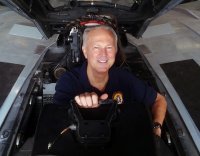
From a veteran air-refueling expert who flew missions for over two decades during the Cold War, Gulf War, and Iraq War comes a thrilling eyewitness account of modern warfare, with inspirational stories and crucial lessons for people on the battlefield, in boardrooms, and in their everyday lives.
Get a glimpse of life in the pilot’s seat and experience modern air warfare directly from a true American hero. Lt. Col Mark Hasara—who has twenty-four years’ experience in flying missions around the world—provides keen and eye-opening insights on success and failure, and emphasizes the importance of always being willing to learn.
He provides twelve essential lessons based on his wartime experience and his own personal photographs from his missions during the Cold War, Gulf War, and Iraq War. With a foreword by #1 New York Times bestselling author and radio host Rush Limbaugh, this is a military memoir not to be missed.
Great read. Thoroughly enjoyed the back story of tanker operations in support of American air power. Mark Hasara does an outstanding job of story telling that ties to life lessons.
An well-written and interesting inside look at the logistics of air power and the overlooked and often unloved but vital tanker aircraft needed to project power and implement national policy.
The theme of the book in one line: "You Can't Kick A__ Without Tanker Gas".
You'll read that line a lot in this book, and this autobiography proves it to be true. Taking you through Colonel Hasara's experiences as both pilot and refueling planner in peacetime and war you get a view from the cockpit of the end of the Cold War, both Iraq wars and numerous other conflicts where tankers served in a vital role and Hasara was in the thick of it.
The book ends each chapter with "Lessons from the cockpit" - lessons that can be applied in life and in the business world just as much as they can be applied in the military.
If you like aviation, are interested in logistics, or just want a chance to read an inside look as to how modern wars have been fought by someone who was there, this is a book for you.
Interesting look at the importance of tanker pilots. As they say, no one kicks ass without gas. There's some good stories about the Gulf War and Iraq/Afghanistan Wars, which the author flew in. I found the book a bit too long and disjointed, but still interesting if you love aviation. The pictures he took are beautiful as well.
One of the best books I’ve read in years! All very well told stories of historical events, quotes and up to date lessons of life. A view into a major logistical part of airborne forces is given by Mr. Hasara. I absolutely loved this book! Vector check, due North!
I was a KC-135 Navigator from 1971 through mid-1973 before being assigned to AC-130 gunships. I served my final year (1974-1975) in the AF as a navigator in EC-135s, flying SAC battle staff out of Offutt AFB. I flew six months in 1972 refueling F-4s and F-105s in the Vietnam War. My daughter purchased “Tanker Pilot” for me, knowing I would enjoy the read.
Frankly, after reading the first chapter I nearly tossed the book in the trash. The errors in Chapter 1 made me question the veracity of the book. Some of those errors I’ll allow to poor editing. (For example, page 12 states 317 knots are 8 miles per minute. It is 6 miles per minute.) Such errors are minor compared to the most inexcusable, egregious error: the assertion that water burns. It most assuredly does not. The picture of a “wet” MITO takeoff showing dark smoke is offered as “proof” that water burns. Why that is “proof” is baffling. I found it unconscionable that a tanker pilot had no understanding of the how his aircraft’s engines worked. Quite simply, water is used to increase the mass of the engine exhaust, thereby increasing thrust. Vaporization of liquid water injected into the engine cools the combustion chambers somewhat, resulting in an incomplete burn of the fuel. The dark smoke seen in “wet” takeoffs is the unburned fuel.
Fortunately, I did decide to continue reading “Tanker Pilot”. I’m glad I did as the book is an important chronicle on the tactical use of tankers. From Vietnam forward we would not have been able to wage any of our wars without tanker support. Lt. Col. Hasara’s refueling stories also bought back many personal mission memories.
I believe Vietnam was the first tactical use of tankers, at least on a large scale. One major item in Lt. Col Hasara’s book struck me. Many of the lessons we learned in the tactical use of tankers during Vietnam resulted in standardized procedures. This knowledge was apparently lost or archived in the “Raiders of the Lost Ark” government warehouse. In reading “Tanker Pilot” I saw that some 20 years after Vietnam, many wheels had to be reinvented. Hopefully those “wheels” are now well integrated into our tanker doctrines.
“Tanker Pilot” is well-worth the read and I recommend it to anyone with an interest in how we fight modern wars and maintain air space superiority.
I would like to thank Lt. Col. Hasara for writing an enjoyable and informative book. I would also urge Lt. Col. Hasara to spend ½ hour googling water injection in jet engines.
“Tanker Pilot: Lessons from the Cockpit” is the book you hand to someone who thinks tankers are just flying gas stations and watch their worldview explode at 30,000 feet. Mark Hasara turns the supposedly dull business of air refueling into a tense, cerebral, and often funny tour through modern air warfare, linking gas planning to grand strategy, culture, and even boardroom leadership. Hasara’s greatest trick is making the invisible architecture of air campaigns visible. Each chapter pairs a vivid vignette—from Cold War nights to Desert Storm to Iraq—with a specific “lesson from the cockpit,” like teamwork, resilience, or innovation, so the narrative always pays off with a sharp takeaway rather than just war stories. The result feels less like a traditional memoir and more like sitting in a weapons school debrief where somebody laces doctrine with dark humor and scar tissue. The operational details are catnip for anyone who’s ever stared at an ATO. Hasara walks you through cross-border tanker tracks, “fuel elevators,” and those nightmare nights when everyone is low on gas, weather is garbage, and the plan is disintegrating in real time. Yet he instinctively explains enough context for non-specialists without ever talking down to practitioners who actually live this stuff. What makes the book genuinely fascinating is how he threads human factors through every mission. You get culture and trust in multinational packages, the sickening aftermath of tragedies like Korean Air Flight 801, and the strange joy and gallows humor of a community whose perfect day is when nothing dramatic happens. His twelve essential lessons—framed around things like compassion, failure, initiative, and vision—land because you’ve just watched them play out under pressure, not because he insists they’re profound. Add in his own photographs and a foreword by Rush Limbaugh that leans into the “unsung hero” mythos of tanker crews, and you have a book that simultaneously scratches the operator itch and works as leadership literature. For airpower professionals, it’s an affirmation that logistics is strategy; for civilians, it’s a gripping introduction to the shadow network that keeps fighters and bombers lethal. Either way, you will never look at a racetrack-shaped tanker orbit on a map the same way again.
After a 24-year career flying KC-135 tankers, retired Lieutenant Colonel Mark Hasara has made a unique contribution to the field of military memoirs and aviation history. It's not too hard to stroll down the right aisle in a book store and find books by fighter and attack pilots, but you'd have a more difficult time finding one from the prospective a tanker pilot. That's a shame, because aerial refueling is critical to everything military aviation does, from combat operations to humanitarian relief. It's long past time the broader public had a chance to see what they do; and even some of us in tactical aviation will find more than a few insights into how these folks accomplish their mission.
Colonel Hasara is a gifted story teller (and a talented photographer - he could put out a book of aviation photography and based on the examples in Tanker Pilot, I'd buy that, too). Each of the chapters, mostly chronologically arranged, tell a self-contained story from a different part of his flying career. He writes in a clear and understandable way; you don't need to be a military aviator or airplane nut to be able to follow along.
That's helpful because each chapter concludes with a lesson from the story, and looking at how it might apply in the "real world." So, this isn't just a great memoir and insight into recent military history, it's also accessible by - and relevant to - the broader public. I could easily see it being part of a syllabus in a business or leadership class somewhere.
In the spirit of full disclosure, I feel compelled to mention that I happen to know the author and enjoyed watching the project come to life. That said, I'd have enjoyed it - and recommended it - regardless. I have it on good authority he's kicking around some ideas for another project, and I look forward to reading whatever he comes up with next.
Mark Hasara’s TANKER PILOT is an intense and informative volume that military aviation fans will enjoy. Loaded with technical details and behind-the-scenes insights, the book reveals what it takes to accomplish the major combat operations of the modern age. The author was involved with many high profile ops, contributing in many cases to their success, and he shares the drama, anxiety, and excitement with readers. There’s also plenty of cockpit action and a selection of great photos – who knew tanker pilots had such a great view? Mark also takes the time to translate the key points from each chapter into “Lessons from the Cockpit,” giving readers the benefit of his thoughtful analysis and lessons from his many experiences. If you’re looking for intensity and been-there authenticity, TANKER PILOT is for you.
Not only are there great stories to read this book is packed full of helpful information in life or at work. When life hits you with a “Vector Check” you can take advantage of it or fold. This book will help you take advantage of all that comes your way good or bad. There are numerous quote from famous folks to not so famous and they are all inspiring.
On just the military side I had no idea how valuable airborne tankers are. Fighter and attack aircraft get all the glory but they do not take all the risk. Most important “ nobody kicks ass without tanker gas, nobody”!
Highly technical book about Air Force air refueling during the 1990-2003 time frame. Full of jargon and stories understandable only by those who know it already--probably boring and incomprehensible by others. Good war stories with leadership lessons attached. For that reason, the book will probably survive on the Air Force reading list for awhile before it's last copy is sold in a garage sale. And,what did Rush Limbaugh contribute? The guy who gave it to me said that when I'm done...give it away to someone who might enjoy it. It brought back good memories, but that's not my world any more.
What a great book. This definitely gives you a nice perspective of our US Air Force and how important they are (speaking from service in a different branch and remember banter about how "easy they it"). I love the lessons and many of them hit home. I think this is a book many struggling veterans ought to read, as it really speaks to the heart of the veteran through impassioned jargon they/we can "get". Hasara does a good job with acronyms as well, keeping everyone in the loop.
Thank you, Mark, for your efforts as a writer, a photographer, and of course your service as a tanker pilot.
Good book telling things about what goes on the air during war that most of us never dreamed about. In the movies, planes but shoot things and bomb things not showing what it take to keep those planes flying
Military Memoir that spans from the mid 80s through 9/11. Anecdotal and would appeal to any military buff. Rush Limbaugh wrote the introduction and promoted the book before his death which was the only reason I probably bought it to read.
As a 2nd LT in the 1960’s flying F-100s & F-104s I refueled off KB-50s, KC-97s, KC-135s and, years later, in Viet Nam a Marine KC-130. This book tells it from the Pilot’s that “”Saved my Ass” many times. Many thanks to you all. Cheers, K2
An interesting look into the world of a tanker pilot. I can only hope that I’ll be able to contribute to this community as a pilot and planner in the near future.
I'm an experienced, non-USAF military pilot who struggled with all the USAF-centric acronyms in the first five chapters of this book. Then I reached chapter six in which the author wrote compellingly about KC-135 tankers that went into hostile country in order to fuel a large group of fighters returning from their mission objectives almost on fumes. (Here's a clue: aircraft don't fly on just fumes.) Every pilot can appreciate the hard-edged tension that always creeps into your being when your fuel state is low. This book is a great read if you want to learn the many, intense operational complexities behind sustaining modern aviation missions in war time.