“How was your afternoon?
“No one died, so it was a big improvement on my morning.”
I find it difficult, at times, to write a review for a book I’ve really liked. Sometimes it’s hard to pin down exactly what it is that made it such a favourite of yours – all you want to do is put down a whole lot of adjectives in shouty capital letters and be like ‘READ THIS NOW’.
Jamie Cummins and I started at Barton House the same time, I remember sitting next to him at Year Seven orientation. They must have orientated him one way, and me another, because our paths have hardly intersected since.
This is an underrated gem, people, and it needs more ratings on goodreads, stat. If you need further convincing, then let me say that this book gave me major Jellicoe feels – and you all know that’s one of my favourite books of all time. I don’t know what they have in the water Down Under, but Aussie authors seem to knock it out of the park, time and time again.
Can I say it’s not as bad as I thought it would be? Mostly, it isn’t this huge sadness. It’s a constant, sort of, hollowness in my chest. An acknowledgement of an absence.
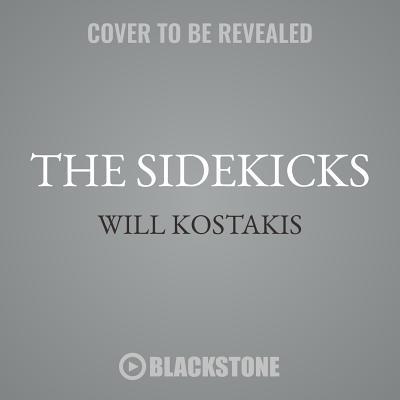
The Sidekicks consists of three novellas, each from the perspective of a different dude – friends of the now-dead Isaac. But they don’t repeat exactly the same events from a different perspective – which would be incredibly boring – but rather fill in the gaps and provide insight into each character’s grieving process and personality, while remaining true to the plot thread of the novel.
I’m the gay one now. I don’t want them to look at me and see a rainbow, but is it any better that they look at me and see a lie?
The book just manages the perfect combination of dark humour and wit amidst the more serious incident of a student’s death indirectly resulting from substance abuse, and the issues facing each of the friends he left behind. It had me cackling at some points. And it also portrayed some real heartfelt moments that punched you right in the feels, without crossing into cheesy or melodramatic territory.
Ah, Harley’s world-famous benders. He drinks for one day, but disappears for two because the myth maketh the man.
It was the small gestures that really did it; the small ways you show that you care – Harley rushing to Ryan’s home to warn him when his secret is made known to the whole school, Miles taking steps to ensure that one of Harley’s steps to penance comes about, Harley making sure that Miles gets his deserved inclusion in Isaac’s memorial tributes…
“You’re either going to be one of those billionaire media moguls, or a very successful white-collar criminal.”
“Thanks…I think?”
I loved Ryan’s mom and their relationship, her utter supportiveness. I loved Harley and his blossoming relationship with Jacs. I loved the gentle teasing of Miles’ parents.
“I think I want to become Harley’s friend.”
Mum stifles a laugh. “That’s a good thing, isn’t it?
“Harley is a Neanderthal in a private school uniform.”
“You were always hard on him.”
“He is more flammable than methylated spirits. He is a pharmacy with a pulse. His grammar is appalling.”
There were a few things that bugged me – Miles sounded a bit too much like a robot at times, Harley’s section was written the way he spoke – so “should of” instead of “should have”, which sounds petty but jarred me a bit from the reading experience. But these are minor nuisances compared to the overall brilliance of the novel. Yes, brilliance. It’s simple in its own way, a book I’d classify as “Quiet YA”, but it was cleverly done, with realistic depictions of teenage males, a diverse set of issues, and a few gut-punching moments of heartbreak, hope and humour.
“This ends now. We’re breaking bread.” The waiter gets to us before Thommo’s had time to peruse.
“Do you have bread?”
“We have croissants.”
Thommo blinks. “We’re breaking croissant.”
“One croissant?” the waiter asks.
“With three plates.”
“They’re very small.” He mimes the croissant’s size.
“Then bring small plates,” Thommo says.
***