

What do you think?

Yoko Tsuno Intégrale #1
Yoko Tsuno Integraal 1: Van de Aarde naar Vinea
Yoko Tsuno Integraal 1 bevat de herdruk van de volgende delen: Yoko Tsuno #1 Trio in het onbekende, Yoko Tsuno #3 Vulcanus' smidse en Yoko Tsuno #6 De 3 zonnen van Vinea. Aangevuld met een nooit eerder geplubliceerd dossier.
176 pages, Hardcover
First published June 7, 2006
Ratings & Reviews
Friends & Following
Create a free account to discover what your friends think of this book!
Community Reviews
Displaying 1 - 11 of 11 reviews

January 26, 2021
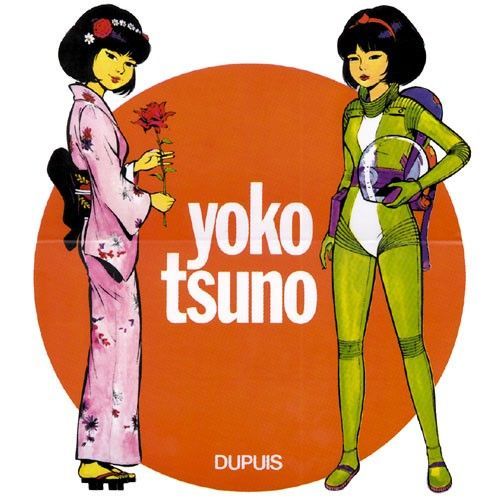
© Roger Leloup, promo poster
my dad grew up reading yoko tsuno comics back in the 70s. and then, in the 00s, he did the best thing a dad ever could do: he let me read the copies that so fondly accompanied his childhood. and lo and behold, here my dad and i both are in the 2020s, still devouring every new album that comes out.
because writer and illustrator roger leloup is still creating comics at 87 years of age, and they’re still just as lovingly detailed and full of great action like they were in the 70s.
leloup started out as an artist working with hergé (of tintin fame), focusing on complex technical backgrounds. though the first few yoko adventures are drawn in marcinelle style, the rest of them have the classic ligne claire style that so many people associate with franco-belgian comics thanks to hergé’s international fame.
yoko tsuno comics are of the action-adventure science-fiction variety, and leloup was heavily inspired by writers such as jules verne and the early sci-fi pulp after the second world war. every comic is a story of its own, with recurring characters throughout the whole series. though some are more explicitly sci-fi -- aliens, space travel, time travel -- even the ones that take place in our world are usually focused around advanced technology.

© Roger Leloup, Trio in the Unknown
you can find pretty much anything in these comics from tragic family histories to murder mysteries, and from spies and blackmail to dubious scientific experiments.
leloup’s ability to put highly realistic drawings of everyday technology to paper makes the more outlandish, journey-to-the-center-of-the-earth concepts somehow seem more believable. plenty of stories also have yoko travelling around the world, and you can bet that he’ll be including famous historical architecture in every backdrop of his panels -- so you really feel like you’re in bruges, hong kong, bali, or even a small town in germany.
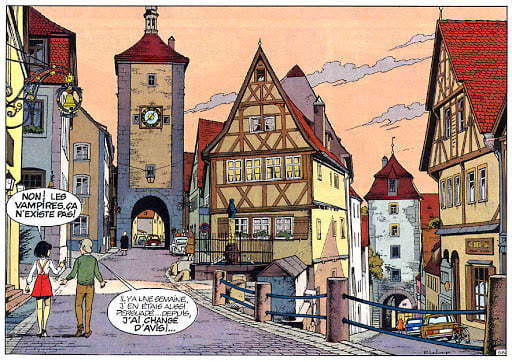
© Roger Leloup, The Edge of Life
and now, as for its most revolutionary aspect (early 70s, remember?): its protagonist, yoko tsuno herself. i’ll instantly confess: i wanted to be her so badly when i was a kid.
yoko is a japanese electrical engineer who lives in brussels, and works odd jobs by testing alarm systems and fixing people’s appliances and tech. she’s got a black belt in aikido, is pretty handy with a bow (kyūdō) and also a proficient helicopter pilot. and i would say that her bullshit detector, especially, is through the roof.
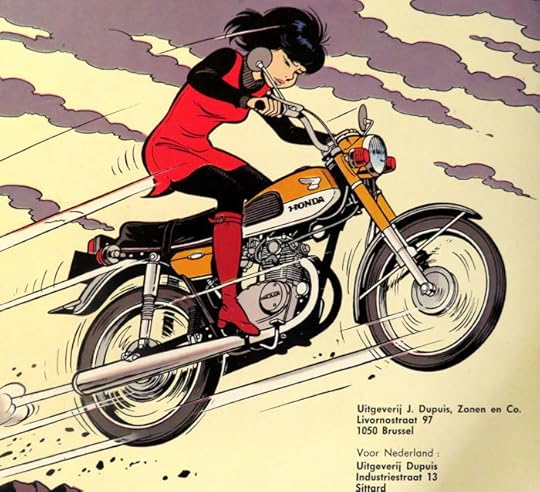
© Roger Leloup, part of a cover art piece
she is definitely a classic heroic archetype: few flaws, and there’s very little she can’t do. however, we do often get to see her at her most vulnerable, which makes her infinitely more human. thematically, a lot of the story revolves around her compassion and friendships as she builds her family across cultures, species, and even time.
when someone calls her ‘a yellow-skinned girl’ in the very first comic and attempts to attack her, yoko’s response is to block his blow while saying, “aw, he doesn’t like yellow! well... [insert tackle here] it’s actually my favorite color!” -- which should give you something of an indication of how she likes to handle things.
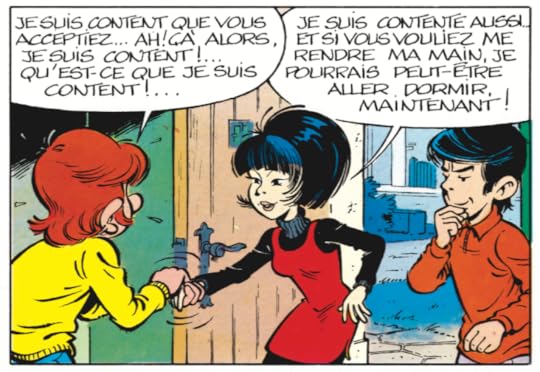
© Roger Leloup, Trio in the Unknown (Marcinelle style)
yoko is supported by vic video (dutch: ben beeld), a tv series director who hires her as an audio technician for a documentary on caves and spelunking. vic is level-headed kinda guy with a calm personality who proves a nice balance to yoko’s tendency to rush into things.
pol pitron (dutch: paul pola) is vic’s cameraman, and rounds up our recurring cast. he’s your classical comic relief and is mostly fond of Not Getting In Trouble, eating, and sleeping. he’s also surprisingly great with kids.
this first intégrale combines three comic books into an anthology with one theme: from earth to vinea, detailing how yoko and her friends get to know the alien race of the vineans and help them get back to their home planet. it also includes full-page drawings yet unpublished (which are a joy to see!) and a profile with interview excerpts and sketches from and by leloup.
★ TRIO IN THE UNKNOWN ★
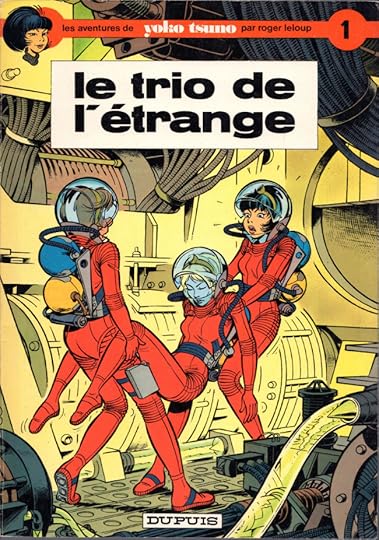
© Roger Leloup, cover art
the first comic in the series, and the one that introduces us to yoko, vic, and pol. they set out to make their cave documentary and end up accidentally uncovering an underground cave system in which an alien race -- the blue-skinned vineans -- have been living for ages.
their discovery and arrival sparks an argument between two groups amongst the vineans, and then an artificial intelligence also starts manipulating people in the background.
you can tell that this is one of leloup’s earlier stories: narratively, it moves lightning-fast and the premise is nothing short of campy pulp. but even though vic and pol remain rather flat as characters, it strongly establishes yoko as the protagonist, and it gives you a nice promise of more space adventures in the near future.
★ VULCAN’S FORGE ★
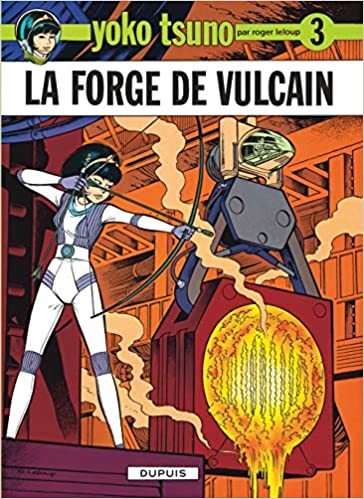
© Roger Leloup, cover art
an oil platform near martinique has been grappling with erratic storms after the discovery of a strange, magnetic ore on the seafloor. yoko, vic, and pol are instantly intrigued -- it’s made of the same materials they encountered during their first adventure with the vineans.
they book a flight to martinique and there, yoko is reunited with her vinean friend khany. she begs for yoko’s help in stopping a certain antagonist from trio in the unknown from going gaga on the earth’s crust with a ton of magma that’s building up beneath the oil platform.
this comic (the third in the series) still suffers a bit from the same sort of problems as the first -- a quick plot that might not stand up to hole-poking, and characters with little depth.
but the visuals are STUNNING. if you think the magma factory fight between anakin and obi-wan in the star wars prequels was cool, i can tell you that leloup did it first back in 1973. minus the light sabers, but yoko still has the high ground.
★ THE THREE SUNS OF VINEA ★

© Roger Leloup, cover art
yoko is once again contacted by khany for a mysterious trip to outer space -- a vinean space station near saturn, in fact. after the disasters from the previous two stories, the only option that the vineans have left to carve a space of their own in the universe is to go back to their homeplanet to see if it survived the natural disaster that forced them to leave it in the first place.
yoko, vic, and pol are asked to accompany khany to help explore and examine her old planet. using a cool-looking wormhole / dark light piercer, they’re able to travel to vinea in about two months while in cryogenic sleep.
and once there… it seems like some of the vineans survived.
this one is dramatic. khany’s family history is explored in all its messy tragedy, and of course ‘new vinea’ is being ruled by some sort of mysterious power. the premise is kind of difficult to swallow -- khany’s been away for 2.5 million years but is pretty much the same as the current vineans on the planet -- but once you manage to look past that, it’s a story about identity and family at its very core (with AMAZING space visuals).
a favorite comic for many.
★ conclusion ★
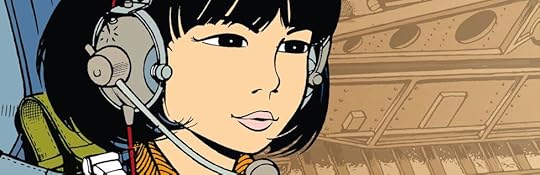
© Roger Leloup, promo image on Dupuis’ website
what can i truly say? i love this series, and i always will.
the extra content in this intégrale will be fantastic for big yoko tsuno fans. leloup’s technical skills are great, even if his writing skills require some polish in the earliest of yoko’s adventures.
read them for the awesome visuals and sci-fi adventures; not for character development or depth.
i grew up with this series, and so did my dad. we enjoyed these comics as kids, and we still very much enjoy rereading them now as adults in different age ranges (50s and 30s). and looking back, i’m actually amazed that leloup managed to create and popularize a hero like yoko way back when in a weekly comics magazine filled with mostly male heroes.
a compassionate spitfire of a woman with a career in STEM who emigrated from japan to belgium, who prefers wits and diplomacy to a fight but can dish it out if she has to. with plenty of well-written female friends all across the globe (and in space) and who is never, ever sexualized throughout the entire run of the series.
sign me up for the next campy space adventure. i’m ready. 🚀 🌠 🛸
✎ 4.0 stars.

February 10, 2021
Hieronder volgt eerst een algemene recensie van de hele reeks, daarna heb ik het even over Integrale 1 in het bijzonder.
Yoko Tsuno is ongetwijfeld een van de grote Belgische stripreeksen die begin jaren 70 het licht zag, samen met nog een paar andere. De tekeningen zijn van heel hoge kwaliteit, en krijgen eigenlijk heel snel al hun definitieve stijl: al in het tweede album heeft Yoko min of meer haar vaste uiterlijk gekregen, wat in sommige andere strips wel eens wat langer kan duren. De verhalen zijn spannend, met goede personages, waar Yoko zelf natuurlijk naar voren komt. We hebben hier een Japanse femme fatale, die superslim is, ongelooflijk dapper, met een goed gevoel voor rechtvaardigheid, vriendschap en eerlijkheid, en vliegtuigen kan besturen. In boeken zouden we haar tegenwoordig als een 'perfect' personage bestempelen, in strips kraait daar nog steeds geen haan naar, zo te merken. Misschien is ze wel te perfect en kan ze alles, maar daar is ze een stripheldin voor, denk ik maar. Ik heb daar geen problemen mee. Ik vind haar geweldig. Ook de andere personages zijn geweldig, al kan Paul soms echt wel zagen. Dat lijkt ook iets in de Dupuis-stripreeksen te zijn, soms, maar daar kunnen we ook wel mee leven. Iedereen kent wel zo iemand...
Zoals redelijk gebruikelijk bij strips (in België dan toch) zijn er dikwijls nog overblijfselen van de oude spelling en zitten er hier en daar foutjes in namen die omgewisseld worden, maar dat is allemaal niet erg storend. In boeken stoort zoiets, in strips trek ik me daar eigenlijk niks van aan - ik weet ook niet waarom. Dat geeft het een wat nostalgisch element, voor mij. Couleur historique, zeg maar.
De reeks wordt nog steeds aangevuld, maar in later jaren is de kwaliteit wat achteruit gegaan, vind ik zelf. De verhalen zijn soms heel erg technisch en moeilijk te volgen, en bovendien vormen Albums 25-28 een soort half-samenhangend geheel (met sterke linken nog naar 24) met een verhaallijn die mij niet echt meer aanspreekt. Maar tot en met Album 23 is de reeks zeker de moeite waard, een van de pareltjes van de Belgische strip, en nummer 29 is ook weer beter!
Enkele van mijn favorieten: 1 - Trio in het Onbekende, 6 - De 3 Zonnen van Vinea, 7 - De Grens van het Leven, 9 - De Dochter van de Wind, 19 - De Rheingold-Express.
De integralen bevatten telkens drie verhalen en zijn gecentreerd rond een bepaald 'thema'. Ze zijn enkel in hardcover beschikbaar en daardoor ook redelijk duur (€25), maar het is je geld waard - en in principe mag je je bij integrales aan dat soort prijs verwachten. Je krijgt er namelijk ook nog ruim twintig bladzijdes extra materiaal bij: uitleg over het ontstaan van de reeks en de strips op zich, waar Leloup zich allemaal op inspireerde, zijn teken- en schrijfproces, speciale, niet eerder gepubliceerde tekeningen enzovoorts. En ze hebben ook nog knappe covers! Voor de nostalgici - of rare gasten - onder ons is er nog een extra voordeel: Dupuis geeft zijn integralen altijd uit op van dat 'matte', een beetje stroeve papier, waar strips vroeger altijd op gedrukt werden, en niet op dat glanzende, gladde papier dat tegenwoordig voor gewone strips gebruikt wordt. Ik hou veel meer van dat stroeve papier.
Absoluut een aanrader!
In deze eerste integrale wordt gelukkig wel begonnen met het eerste verhaal, Trio in het Onbekende, waardoor je een beetje het ontstaan van Yoko en haar kameraden kunt volgen. Het enige nadeel is natuurlijk dat je misschien een beetje een verkeerd beeld krijgt van de tekenstijl: je merkt dat er nog iets meer in zit van die typische School van Marcinelle-stijl, Leloup moest zich nog een beetje losmaken en zijn eigen, realistischere Yoko Tsuno-stijl vinden. Bovendien ziet Yoko er in het eerste verhaal nog erg anders uit, met een wel heel erg gele huidskleur en nog niet echt die karakteristieke ogen van haar. Maar daarna verspringt het naar het derde album, en dan krijg je pas echt een goed beeld van hoe ze er gewoonlijk uitziet: ze heeft realistischere huidskleur en vormen gekregen en mooiere ogen. Daarnaast vind ik de haardracht van de Vineanen echt ontzettend knap en origineel (vooral die dracht die Khany heeft), en het valt ook al meteen op dat Leloup ervoor zorgt - en dat zal zo blijven doorheen de hele reeks - dat alle technologische hoogstandjes duidelijk op elkaar lijken, ze zitten op één lijn, hebben dezelfde ontwerp. Wat de sf-elementen betreft in het algemeen, is deze stripreeks bovendien ook van zeer hoog niveau!
Het enige nadeel bij deze integrale is dat er nog geen tussenbladen zijn die de drie verhalen van elkaar scheiden. Het ene verhaal eindigt, je slaat het blad om, en daar gaat het volgende al van start. In de latere integrales wordt dat wel verholpen, en dat is wel goed ook, want nu is dat een beetje verwarrend.
Yoko Tsuno is ongetwijfeld een van de grote Belgische stripreeksen die begin jaren 70 het licht zag, samen met nog een paar andere. De tekeningen zijn van heel hoge kwaliteit, en krijgen eigenlijk heel snel al hun definitieve stijl: al in het tweede album heeft Yoko min of meer haar vaste uiterlijk gekregen, wat in sommige andere strips wel eens wat langer kan duren. De verhalen zijn spannend, met goede personages, waar Yoko zelf natuurlijk naar voren komt. We hebben hier een Japanse femme fatale, die superslim is, ongelooflijk dapper, met een goed gevoel voor rechtvaardigheid, vriendschap en eerlijkheid, en vliegtuigen kan besturen. In boeken zouden we haar tegenwoordig als een 'perfect' personage bestempelen, in strips kraait daar nog steeds geen haan naar, zo te merken. Misschien is ze wel te perfect en kan ze alles, maar daar is ze een stripheldin voor, denk ik maar. Ik heb daar geen problemen mee. Ik vind haar geweldig. Ook de andere personages zijn geweldig, al kan Paul soms echt wel zagen. Dat lijkt ook iets in de Dupuis-stripreeksen te zijn, soms, maar daar kunnen we ook wel mee leven. Iedereen kent wel zo iemand...
Zoals redelijk gebruikelijk bij strips (in België dan toch) zijn er dikwijls nog overblijfselen van de oude spelling en zitten er hier en daar foutjes in namen die omgewisseld worden, maar dat is allemaal niet erg storend. In boeken stoort zoiets, in strips trek ik me daar eigenlijk niks van aan - ik weet ook niet waarom. Dat geeft het een wat nostalgisch element, voor mij. Couleur historique, zeg maar.
De reeks wordt nog steeds aangevuld, maar in later jaren is de kwaliteit wat achteruit gegaan, vind ik zelf. De verhalen zijn soms heel erg technisch en moeilijk te volgen, en bovendien vormen Albums 25-28 een soort half-samenhangend geheel (met sterke linken nog naar 24) met een verhaallijn die mij niet echt meer aanspreekt. Maar tot en met Album 23 is de reeks zeker de moeite waard, een van de pareltjes van de Belgische strip, en nummer 29 is ook weer beter!
Enkele van mijn favorieten: 1 - Trio in het Onbekende, 6 - De 3 Zonnen van Vinea, 7 - De Grens van het Leven, 9 - De Dochter van de Wind, 19 - De Rheingold-Express.
De integralen bevatten telkens drie verhalen en zijn gecentreerd rond een bepaald 'thema'. Ze zijn enkel in hardcover beschikbaar en daardoor ook redelijk duur (€25), maar het is je geld waard - en in principe mag je je bij integrales aan dat soort prijs verwachten. Je krijgt er namelijk ook nog ruim twintig bladzijdes extra materiaal bij: uitleg over het ontstaan van de reeks en de strips op zich, waar Leloup zich allemaal op inspireerde, zijn teken- en schrijfproces, speciale, niet eerder gepubliceerde tekeningen enzovoorts. En ze hebben ook nog knappe covers! Voor de nostalgici - of rare gasten - onder ons is er nog een extra voordeel: Dupuis geeft zijn integralen altijd uit op van dat 'matte', een beetje stroeve papier, waar strips vroeger altijd op gedrukt werden, en niet op dat glanzende, gladde papier dat tegenwoordig voor gewone strips gebruikt wordt. Ik hou veel meer van dat stroeve papier.
Absoluut een aanrader!
In deze eerste integrale wordt gelukkig wel begonnen met het eerste verhaal, Trio in het Onbekende, waardoor je een beetje het ontstaan van Yoko en haar kameraden kunt volgen. Het enige nadeel is natuurlijk dat je misschien een beetje een verkeerd beeld krijgt van de tekenstijl: je merkt dat er nog iets meer in zit van die typische School van Marcinelle-stijl, Leloup moest zich nog een beetje losmaken en zijn eigen, realistischere Yoko Tsuno-stijl vinden. Bovendien ziet Yoko er in het eerste verhaal nog erg anders uit, met een wel heel erg gele huidskleur en nog niet echt die karakteristieke ogen van haar. Maar daarna verspringt het naar het derde album, en dan krijg je pas echt een goed beeld van hoe ze er gewoonlijk uitziet: ze heeft realistischere huidskleur en vormen gekregen en mooiere ogen. Daarnaast vind ik de haardracht van de Vineanen echt ontzettend knap en origineel (vooral die dracht die Khany heeft), en het valt ook al meteen op dat Leloup ervoor zorgt - en dat zal zo blijven doorheen de hele reeks - dat alle technologische hoogstandjes duidelijk op elkaar lijken, ze zitten op één lijn, hebben dezelfde ontwerp. Wat de sf-elementen betreft in het algemeen, is deze stripreeks bovendien ook van zeer hoog niveau!
Het enige nadeel bij deze integrale is dat er nog geen tussenbladen zijn die de drie verhalen van elkaar scheiden. Het ene verhaal eindigt, je slaat het blad om, en daar gaat het volgende al van start. In de latere integrales wordt dat wel verholpen, en dat is wel goed ook, want nu is dat een beetje verwarrend.

October 26, 2015
En vältecknad och -berättad samling sci/fi-äventyr som starkt påminner om Spirou fast med mycket mer fokus på det rent teknologiska.
Till viss del känns det som att läsa en äldre sci/fi där "elektricitet" var ett nästan magiskt begrepp och en kraft som kunde lösa vilka problem som helst. Här har vi magnetism istället. "Magnetisk dvala" var nog det bästa påhittet jag stötte på.
Gott om action, humor, hjältemodiga hjältar och skurkaktiga skurkar. Ungefär vad man kan vänta sig från den här typen av berättelse.
Mitt enda problem med serien är nog huvudrollen själv. Har hon någon svaghet har jag inte stött på den ännu. Hon hanterar flera kampsporter, är snabbtänkt och väldigt intelligent, talar flera språk, är elektroingenjör, atletisk och har inga problem att använda sig av utomjordisk teknologi efter ett ögonkast. Visst är hon impulsiv, men inte mer än man kan förvänta sig av en hjälte och visst är hon kvinna, men inte något våp för det. På sin tid var det kanske speciellt, men idag är vi tack och lov lite mer jämlika. I berättelsen förs det bara på tal en och annan gång och hon sexualiseras inte mer än vad männen gör.
På det hela taget en fin nostalgisk sci/fi som håller än idag.
Till viss del känns det som att läsa en äldre sci/fi där "elektricitet" var ett nästan magiskt begrepp och en kraft som kunde lösa vilka problem som helst. Här har vi magnetism istället. "Magnetisk dvala" var nog det bästa påhittet jag stötte på.
Gott om action, humor, hjältemodiga hjältar och skurkaktiga skurkar. Ungefär vad man kan vänta sig från den här typen av berättelse.
Mitt enda problem med serien är nog huvudrollen själv. Har hon någon svaghet har jag inte stött på den ännu. Hon hanterar flera kampsporter, är snabbtänkt och väldigt intelligent, talar flera språk, är elektroingenjör, atletisk och har inga problem att använda sig av utomjordisk teknologi efter ett ögonkast. Visst är hon impulsiv, men inte mer än man kan förvänta sig av en hjälte och visst är hon kvinna, men inte något våp för det. På sin tid var det kanske speciellt, men idag är vi tack och lov lite mer jämlika. I berättelsen förs det bara på tal en och annan gång och hon sexualiseras inte mer än vad männen gör.
På det hela taget en fin nostalgisk sci/fi som håller än idag.

March 1, 2013
Science Fiction mit einer coolen Heldin
Yoko Tsuno ist eine coole Heldin, im wahrsten Sinne des Wortes: Sie bleibt ihrem japanischen Naturell zufolge immer kühl und gelassen, stellenweise könnte man sie schon fast eiskalt nennen.
Und das trotz der Hitze im Erdinnern - äußerst beeindruckend, wie Leloup hier die technische Bändigung der Lavamassen darstellt. Wenn man mal Leloups Zeichnungen mit denen eines anderen Zeichners, der auch für seine Darstellung von fremdartigen Maschinen bekannt ist, Jack Kirby, vergleicht, stellt man fest, dass Kirbys Maschinen immer irgendwie außerirdisch, seltsam und überaus komplex wirken. Leloups Maschinen dagegen sind realistisch, riesig und detailliert - die Menschen und Vineaner, die sie warten, wirken wie Ameisen.
Tolle und stellenweise umwerfende Zeichnungen. Leider reißen mich die Geschichten dieses ersten Sammelbandes nicht wirklich mit; sie bleiben deutlich hinter dem Eindruck der Zeichnungen zurück. Auch sind die Personen neben Yoko Tsuno nicht wirklich gelungen - Vic und Pol sind eigentlich überflüssig und stören mich mehr, als sie bringen.
Ich werde mir die weiteren Bände aber auch holen, in der Hoffnung, dass die Skripte sich irgendwann dem Niveau der Zeichnungen anpassen.
Yoko Tsuno ist eine coole Heldin, im wahrsten Sinne des Wortes: Sie bleibt ihrem japanischen Naturell zufolge immer kühl und gelassen, stellenweise könnte man sie schon fast eiskalt nennen.
Und das trotz der Hitze im Erdinnern - äußerst beeindruckend, wie Leloup hier die technische Bändigung der Lavamassen darstellt. Wenn man mal Leloups Zeichnungen mit denen eines anderen Zeichners, der auch für seine Darstellung von fremdartigen Maschinen bekannt ist, Jack Kirby, vergleicht, stellt man fest, dass Kirbys Maschinen immer irgendwie außerirdisch, seltsam und überaus komplex wirken. Leloups Maschinen dagegen sind realistisch, riesig und detailliert - die Menschen und Vineaner, die sie warten, wirken wie Ameisen.
Tolle und stellenweise umwerfende Zeichnungen. Leider reißen mich die Geschichten dieses ersten Sammelbandes nicht wirklich mit; sie bleiben deutlich hinter dem Eindruck der Zeichnungen zurück. Auch sind die Personen neben Yoko Tsuno nicht wirklich gelungen - Vic und Pol sind eigentlich überflüssig und stören mich mehr, als sie bringen.
Ich werde mir die weiteren Bände aber auch holen, in der Hoffnung, dass die Skripte sich irgendwann dem Niveau der Zeichnungen anpassen.

November 22, 2018
I thought this was something new - a manga album. Nope, French/Belgian. And as such pretty good. Some of the science is laughable, but who reads SF for facts. As long as the story and the characters propel you forward we have our "willing suspension of disbelief" to allow us to pass by the most absurd propositions. And we have both an interesting story and sympathetic characters. As a feminist I naturally enjoy finding the protagonist is a girl. Her male side-kicks are best as comic relief. Her Vinean counterpart is also female. Probably.
The drawing and art are OK. Roger Leloup seema to find extra enjoyment in drawing machines - especially large to gigantic machines of questionable utility. I may well read more in the Yoko Tsuno universe.
The drawing and art are OK. Roger Leloup seema to find extra enjoyment in drawing machines - especially large to gigantic machines of questionable utility. I may well read more in the Yoko Tsuno universe.

August 7, 2019
Ah ! Yoko Tsuno ! L’héroïne de mon enfance ! 🙂 Si, côté masculin, j’avais l’embarras du choix entre Tintin, Astérix, Lucky Luke et Boule et Bill, côté féminin, c’était Yoko. Yoko, jeune femme d’origine japonaise, électronicienne. Une héroïne qui allie donc connaissances techniques à qualités humanistes, capacités physiques (la demoiselle est ceinture noire d’aïkido) et sensibilité. Une héroïne comme on en faisait peu lorsqu’elle fut créée par Roger Leloup, dans les années 70. Une héroïne qui, pour ma part, est liée à mon enfance et à ma famille – en effet, les albums ont fait le tour de mes soeurs, je crois qu’on possèdes toutes encore tous les albums ou presque, et je suis toujours ravie de voir, à la bibliothèque où je travaille, des mères emprunter les aventures de la plus célèbres des électroniciennes pour leurs petites filles.
Vu ce succès qui dure et l’ancrage de Yoko dans le paysage de la bande dessinée franco-belge, les éditions Dupuis ont rassemblé toutes ses aventures sous forme d’intégrales. Dans chaque intégrale, trois albums sont réunis et non pas par ordre chronologique de parution, mais par arcs narratifs. Que vous connaissiez ou non les aventures de Yoko Tsuno, peu importe que vous préfériez lire dans l’ordre les albums un à un ou les intégrales. Tous les sens se valent et, à mes yeux, les intégrales l’emportent car non seulement un même arc narratif est réuni (alors qu’album par album, ce n’est pas toujours le cas, Yoko vivant parfois une aventure totalement différente avant de renouer avec un autre personnage récurrent), mais le tout est précédé d’un mini dossier où Roger Leloup lui-même s’exprime sur la genèse de telle ou telle aventure, documents de travail à l’appui. Avec à la fin, quelques illustrations pleine page, sous la forme d’un petit portfolio. Sans oublier que ces intégrales sont superbes 🙂
La première rassemble le premier arc narratif vinéen des aventures de Yoko. Vinéen ? Oui, de la planète Vinéa, d’où est originaire Khâny, que Yoko et ses compagnons vont rencontrer lors de leur toute première aventure, Le Trio de l’étrange. Dans cette histoire, on découvre d’abord Vic et Pol, qui seront par la suite les sidekicks de Yoko. Celle-ci n’apparaît qu’au bout de quelques pages mais, très vite, elle se révélera une forte tête et prendra la direction du trio. Vic et Pol, qui travaillent pour la télévision, désirent réaliser une série de reportages en commençant par le mystère d’une eau s’écoulant dans le siphon d’une grotte montagneuse sans que sa résurgence en ait été identifiée. Yoko, qui les a rejoint, est de la partie. Mais l’aventure va rapidement tourner à la science-fiction : sous terre se cachent en effet les Vinéens, peuple extraterrestre humanoïde, à la peau bleue et à la technologie très avancée. Ils sont venus se réfugier en ces lieux voici des milliers d’années, chassés de leur planète par un cataclysme cosmique. Bien vite, Yoko se liera d’amitié avec Khâny, jeune femme qui a été réveillée de son sommeil magnétique des années avant sa jumelle, Poky, désormais petite fille. Au cours de cette aventure, tous auront à faire à un ennemi glaçant, lié à la technologie vinéenne.
L’amitié de Yoko et Khâny est florissante puisque les deux amies se retrouvent ensuite dans le volume 3, La forge de Vulcain. La première aventure mettait Yoko aux prises avec les dérives d’une technologie, celle-ci repose sur la même base à ceci près que c’est l’utilisation de la technologie en elle-même qui menace l’île de la Martinique, toute proche. En effet, dans le but de révéler leur existence aux Terriens et de s’arroger le droit d’y vivre, les Vinéens ont acheminé de la lave sous un bouchon rocheux sous-marin pour le faire remonter, afin d’éviter un combat pour une terre émergée et de démontrer leur puissance. Hélas, un accident s’est produit et une dissidence s’est faite au sein du peuple vinéen : ceux qui cherchent à éviter la catastrophe et ceux qui la désirent, préférant s’emparer de terres déjà occupées par la force des éléments plutôt que d’en produire de nouvelles. L’aide de Yoko et ses amis est donc appelée afin d’éviter la catastrophe.
Suite à ces événements, les Vinéens décident de retourner sur leur planète d’origine et de découvrir ce qu’il en reste, voir d’y revivre si cela est possible. Une aventure à laquelle le trio est convié et qui nous est contée dans Les Trois soleils de Vinéa, originellement le tome 6 de la série. C’est aussi le volume qui lève le voile sur le reste de la famille de Khâny – attention, préparez vos mouchoirs ! – et qui montre, pour la première fois, le trio évoluer dans l’espace et fouler le sol d’une planète étrangère. Un volume passionnant, émouvant même – le peuple vinéen, exilé depuis des milliers d’années, ne retrouve pas sa planète d’origine sans émotion – et où les technologies futuristes (mais crédibles) ont la part belle !
Cette première intégrale est donc l’entrée idéale dans le monde de Yoko. Si Le Trio de l’étrange souffre d’un trait de crayon qui cherche encore son style et frôle la caricature, le dessin s’affine rapidement pour adopter un réalisme des plus agréables. La personnalité de Yoko se dessine dès le premier volume – forte tête mais aussi humaniste, jamais elle ne cherche à tuer et, si un méchant périt, il lui arrive de le pleurer – et c’est un plaisir de voir évoluer une héroïne alliant ses qualités.
Une BD devenue un classique, à recommander à tous, de 7 à 77 ans ! 🙂
Vu ce succès qui dure et l’ancrage de Yoko dans le paysage de la bande dessinée franco-belge, les éditions Dupuis ont rassemblé toutes ses aventures sous forme d’intégrales. Dans chaque intégrale, trois albums sont réunis et non pas par ordre chronologique de parution, mais par arcs narratifs. Que vous connaissiez ou non les aventures de Yoko Tsuno, peu importe que vous préfériez lire dans l’ordre les albums un à un ou les intégrales. Tous les sens se valent et, à mes yeux, les intégrales l’emportent car non seulement un même arc narratif est réuni (alors qu’album par album, ce n’est pas toujours le cas, Yoko vivant parfois une aventure totalement différente avant de renouer avec un autre personnage récurrent), mais le tout est précédé d’un mini dossier où Roger Leloup lui-même s’exprime sur la genèse de telle ou telle aventure, documents de travail à l’appui. Avec à la fin, quelques illustrations pleine page, sous la forme d’un petit portfolio. Sans oublier que ces intégrales sont superbes 🙂
La première rassemble le premier arc narratif vinéen des aventures de Yoko. Vinéen ? Oui, de la planète Vinéa, d’où est originaire Khâny, que Yoko et ses compagnons vont rencontrer lors de leur toute première aventure, Le Trio de l’étrange. Dans cette histoire, on découvre d’abord Vic et Pol, qui seront par la suite les sidekicks de Yoko. Celle-ci n’apparaît qu’au bout de quelques pages mais, très vite, elle se révélera une forte tête et prendra la direction du trio. Vic et Pol, qui travaillent pour la télévision, désirent réaliser une série de reportages en commençant par le mystère d’une eau s’écoulant dans le siphon d’une grotte montagneuse sans que sa résurgence en ait été identifiée. Yoko, qui les a rejoint, est de la partie. Mais l’aventure va rapidement tourner à la science-fiction : sous terre se cachent en effet les Vinéens, peuple extraterrestre humanoïde, à la peau bleue et à la technologie très avancée. Ils sont venus se réfugier en ces lieux voici des milliers d’années, chassés de leur planète par un cataclysme cosmique. Bien vite, Yoko se liera d’amitié avec Khâny, jeune femme qui a été réveillée de son sommeil magnétique des années avant sa jumelle, Poky, désormais petite fille. Au cours de cette aventure, tous auront à faire à un ennemi glaçant, lié à la technologie vinéenne.
L’amitié de Yoko et Khâny est florissante puisque les deux amies se retrouvent ensuite dans le volume 3, La forge de Vulcain. La première aventure mettait Yoko aux prises avec les dérives d’une technologie, celle-ci repose sur la même base à ceci près que c’est l’utilisation de la technologie en elle-même qui menace l’île de la Martinique, toute proche. En effet, dans le but de révéler leur existence aux Terriens et de s’arroger le droit d’y vivre, les Vinéens ont acheminé de la lave sous un bouchon rocheux sous-marin pour le faire remonter, afin d’éviter un combat pour une terre émergée et de démontrer leur puissance. Hélas, un accident s’est produit et une dissidence s’est faite au sein du peuple vinéen : ceux qui cherchent à éviter la catastrophe et ceux qui la désirent, préférant s’emparer de terres déjà occupées par la force des éléments plutôt que d’en produire de nouvelles. L’aide de Yoko et ses amis est donc appelée afin d’éviter la catastrophe.
Suite à ces événements, les Vinéens décident de retourner sur leur planète d’origine et de découvrir ce qu’il en reste, voir d’y revivre si cela est possible. Une aventure à laquelle le trio est convié et qui nous est contée dans Les Trois soleils de Vinéa, originellement le tome 6 de la série. C’est aussi le volume qui lève le voile sur le reste de la famille de Khâny – attention, préparez vos mouchoirs ! – et qui montre, pour la première fois, le trio évoluer dans l’espace et fouler le sol d’une planète étrangère. Un volume passionnant, émouvant même – le peuple vinéen, exilé depuis des milliers d’années, ne retrouve pas sa planète d’origine sans émotion – et où les technologies futuristes (mais crédibles) ont la part belle !
Cette première intégrale est donc l’entrée idéale dans le monde de Yoko. Si Le Trio de l’étrange souffre d’un trait de crayon qui cherche encore son style et frôle la caricature, le dessin s’affine rapidement pour adopter un réalisme des plus agréables. La personnalité de Yoko se dessine dès le premier volume – forte tête mais aussi humaniste, jamais elle ne cherche à tuer et, si un méchant périt, il lui arrive de le pleurer – et c’est un plaisir de voir évoluer une héroïne alliant ses qualités.
Une BD devenue un classique, à recommander à tous, de 7 à 77 ans ! 🙂
April 13, 2020
Mon héroïne de BD préférée

February 6, 2022
Även om Yoko Tsono serien har bra ingredienser över lag inklusive hjältinnan som var sällsynt på tiden då serien skapades, tyckte jag alltid att historierna om Vinea var bäst. Tydligen tyckte fler det då historierna har samlats i band efter tema och man har nu nöjet att njuta av tre historier med Vineanskt tema åt gången med extramaterial emellan.

June 5, 2025
Primo volume della riproposizione integrale di questo personaggio che a dispetto del nome non è un manga ma bensi una ennesima opera di fantascienza del fumetto bd. Inevitabilmente le tre storie presenti sono molto datate, primi anni settanta, e alcune descrizioni scientifiche lo dimostrano per la loro ingenuità. L'introduzione dei personaggi è veloce ma efficace e del resto il tempermento di Yoko prevale subito e rimane il punto di forza di tutte le storie. Altre caratteristiche positive sono i disegni sempre eccelenti sia nel delineare i personaggi che nei tecnicismi fantascientifici.

October 22, 2015
A beautiful, well designed hardcover with lost of extra material, containing three of the earliest albums in the classical Belgian science fiction series Yoko Tsuno; a groundbreaking comic in that it featured a female protagonist already in the early 1970s, but which feels too focused on the sci-fi technology rather than the characters to really capture my imagination.

June 5, 2016
Hade jag läst den här 1975 hade jag troligen tyckt att den var fantastisk :)
Displaying 1 - 11 of 11 reviews