Jump to ratings and reviews
Rate this book

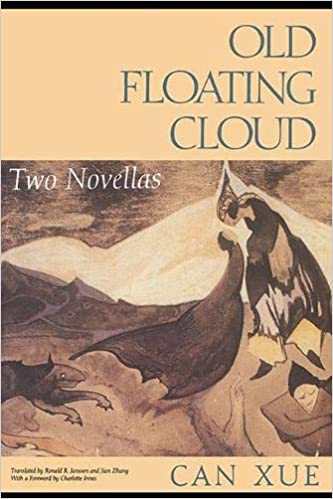
Old Floating Cloud: Two Novellas

Rate this book
Can Xue draws the reader into a world of the grotesque and the surreal, of uncertain spaces and indeterminate identities, of sexual menace and psychological disorientation. These novellas are about life in post-Mao China, but not the China of social realism or of Western fantasy. At the forefront of China's new literary trends, these two novellas--"Yellow Mud Street" and "Old Floating Cloud"--explore Chinese reality through images of the absurd, sudden and illogical juxtapositions, and the limitless transformations induced by a unique imagination.

269 pages, Paperback

First published May 1, 1992

7 people are currently reading
320 people want to read

About the author

Can Xue

92 books415 followers
残雪

Can Xue (Chinese: 残雪; pinyin: Cán Xuĕ), née Deng Xiaohua (Chinese: 邓小华), is a Chinese avant-garde fiction writer, literary critic, and tailor. She was born May 30, 1953 in Changsha, Hunan, China. Her family was severely persecuted following her father being labeled an ultra-rightist in the Anti-rightist Movement of 1957. Her writing, which consists mostly of short fiction, breaks with the realism of earlier modern Chinese writers. She has also written novels, novellas, and literary criticisms of the work of Dante, Jorge Luis Borges, and Franz Kafka. Some of her fiction has been translated and published in English.

(from Wikipedia)

Ratings & Reviews

What do you think?
Rate this book

Friends & Following

Create a free account to discover what your friends think of this book!

Community Reviews

5 stars
18 (27%)
4 stars
18 (27%)
3 stars
21 (31%)
2 stars
9 (13%)
1 star
0 (0%)
Displaying 1 - 17 of 17 reviews
Profile Image for L.S. Popovich.
Author 2 books459 followers
December 29, 2019
A rare scatological mosaic elevated to the highest levels of artistic expression. Can Xue is my favorite contender for the Nobel Prize. Rising out of humble beginnings in China to become in the space of a decade, a force to be reckoned with in world literature. A titan of disjointed, haunting, sloppy elegance. A feverish, hyperactive geezer with a child's imagination. She has published some 50 novellas, a few dozen stories and about 9 novels so far. They all partake of the same excruciatingly visceral style. The critics love comparing it to this or that author, like Kafka and Bruno Schulz and Cortazar and others, but she is entirely in her own league in my opinion.

Yellow Mud Street, the first novella in the collection, is a revolting, beautiful, contradictory summation of life in the ditch. A recounting of a fabulous town sinking into a pit of its own excrement. The bats and the centipedes, and the people and pigs, all leaking and spewing into each other, the roofs collapsing, and the hungry, sad animals beneath them called human beings, crumbling and festering in their own resentful sties. Can Xue conjures a continual excrescence of polyp-sprouting images. The characters and lunatics she peoples this scourged landscape with are hideous, Goya-esque renditions of nightmare beings, hovering between life and death and love and salvation.

So why is Can Xue doing all this? Why does she fly in the face of convention and challenge the notion of enjoyable reading and the status quo? Each moment, each gory detail, each unimaginable horror taking place is the even-toned, straight-faced, loving joke of an activist. She uses our fears and aggravations to build a castle of images, colors and flavors. Whether the Chinese government reads it or American students or Argentine professors, there is something to be gained from her intense vision. You can draw parallels to the questionable bureaucracies that spawned the human suffering she depicts in exaggerated detail. Beneath the hyperbole lie wounds of truth and blisters of history. You can find in the hairy horrors and pus-dripping walls, the squealing prostitutes and puddles bubbling with frogs, a cause and a purpose. She sees human beings as dependent creatures. Communities, when built upon mud, can only foster mud creatures. Yet in death and decay there is often found a germ of life and a sick kind of natural beauty. Can Xue excoriates our taste, and abrades our minds. She is the loving dictator of the lost hells of impoverished villages, where patches of our worst habits lurked and corrupted our ancestors.

Old Floating Cloud, the second novella, is a subtler, pointillist display of her powers. She weaves a tapestry of symbols to convey brilliant satires and memorable dreams. Plot and character development are not her main concern. The roles of family and community, the emotion and trauma we compile in our daily, animalistic existences, are her bread and butter. We are walking contradictions, all of us, and what we love, often destroys us. Our adornments are all sequins, and our blemishes are our defining characteristics. While this story is far more readable, far easier to digest, it is not as powerful as Yellow Mud Street. The sheer accumulation of her images, and the Jenga tower of her atmospheric malaise are impressive to a startling degree. Even more than her other short story collections, these two exemplar works are enough to prove to anyone that she is not afraid to expose and explode our literary refinements and the sealed bags of cultural baggage we all lug upon our shoulders like severed heads.

Can Xue may be overlooked by some now, but in the future, I think, her great artistry will continue to grow in influence.
Profile Image for Nate D.
1,653 reviews1,249 followers
September 11, 2019
Assorted odd characters encounter the arbitrary and inexplicable in a fringe area? Yep, that sounds like the Can Xue I remember from Frontier, a book which seemed to fall through my grasp like sand while I was reading it, yet gives me a warm feeling in recall.

I find I'm ready to return to Xue's singular world, even if this part of her world is a excremental mire of total decay unrivaled in modern fiction outside David Ohle's The Pisstown Chaos. Particularly in the longer first novella here, Yellow Mud Street, which details the life of a neighborhood in the process of subsiding into an open sewer in a fever of maggots and tumorous growth. Everything is compromised, but life stumbles on, amidst a chatter of officialese, direct quotations from the Cultural Revolution, and thin attempts to improve the situation that suggest subversive intent. According to the introduction, Xue managed to be the most fringe Chinese author of the 80s to continuously get her work into print, perhaps because her almost non-narrative patchwork of bizarre images and incidents completely confounded the censors.
Profile Image for Tommi.
243 reviews148 followers
August 28, 2022
Here as elsewhere in Can Xue’s writing, the author abolishes most of the narrative traditions we tend to look for in a novel, short story, or, as in this case, novella. The first of the two, Yellow Mud Street is essentially a Chinese Satantango, an absolutely nihilistic depiction of a Chinese suburb in the throes of extinction by the elements: first, the scorching sun, then the torrential rain, then the horrendous wind, all trampling the people, i.e. the earth, the mud, into nothing. How did this novella pass the Chinese censorship in the 1980s, I don’t know, and neither does the writer of this volume’s introduction. The second novella, Old Floating Cloud, is shorter but more difficult to pin down in themes and motifs – quiet, nightmarish, once again investigating the borders of the human and the non-human with strong images. Can Xue does something unique with her prose, here as elsewhere.
Profile Image for John.
Author 17 books183 followers
August 2, 2008
The Chinese fantasist Can Xue brought off these fictions, somehow, during the last decade or so of Mao's iron-fisted regime. To Western eyes, at least, these disorderly impossible conjunctions, in which intimacy suffers insect infestation and, in one memorable phrase, there's often "a nightmare circling overhead," the critique of so brutal a dictatorial regime seems undeniable. Xue makes drama of the political seeping into the personal, of the stains and sickness that transaction inculcates in the soul. Yet she works -- miraculously -- with humor and affection. Her women suffer loneliness and reach out, if in ways that recall Kafka; her families work through Dantean horrors in a mad yet engaging struggle for a better life. The two haunting longer pieces of OLD FLOATING CLOUD appeared in the US in the '80s, and won Xue some attention, if not what she deserved; a collection of shorter work appeared on a mainstream press in the late '90s, under the title THE EMBROIDERED SHOES. That collection's now out of print, a real shame. This author may lack for drama in the ordinary sense, as stories circle back around their concerns in a way that can be wearying. But she's got a nuthouse imagination, a humor that can make you... I mean this as a compliment... can make you gag. Hers is a perspective that will widen anyone's notions of what ignoble failures like ourselves can put up with, thus flashing noble in that moment.
Profile Image for Gregory Duke.
960 reviews179 followers
May 16, 2025
A novel of unceasing malodor. Not that Can Xue is often writing traditional "stories," but these two novellas feel like prolonged, atmospheric attacks on authority: the former critiquing Maoist bureaucracy/governmental fallibility in general in the face of disaster, the latter critiquing the family structure as rotten and less stable than believed. The absurdity of the language expresses an incisive, dark humor, if your sensibility proves to actually find any of this funny. Total miasmic muck.
Profile Image for Jesse Field.
843 reviews52 followers
July 10, 2010
Truth is often a tiny, dim star enveloped in thick layers of cloud and fog, quite beyond recognition by ordinary eyes. Only sophisticated yet simple and sincere creatures can "discover" it in meditation. - Can Xue, "Yellow Mud Street"

Readers need only set their imaginations free. Even if they do not always understand Can Xue, they will invariably be challenged, fascinated, and provoked. - Charlotte Innes
What is there to say about the art of the grotesque? One must taste it. Taste it:
Old Hu San was asleep under the eaves.

It was particularly hot that day. Early in the morning Hu San had a dream in which a red spider with a huge belly and long, hairy legs kept crawling onto the tip of his nose. He whisked it off five times, but it crawled back a sixth time. He was about to whisk it off again when a loud tap woke him up. Opening his eyes, he found a big water drop hanging from the tip of his nose.
***
Lying still, Old Hu San listened to the rain. It beat on the tarred street like popping beans. Streams of black water poured from the eaves. The rain soaked his clothes, then flooded on to the step where he lay. His whole back was immersed. "The rain this year is a little sticky, and a little salty, too," he thought. "Very similar to human sweat." He recalled the year when there was a rain of dead fish. The rainwater then was also salty. He had even salted two big fish.
From out of death, comes life again, but if the trauma of death is massive, the returning life will be grotesque. There is something like a cathartic juissance, a vomiting up of the bile of soul which feels so cleansing and refreshing, that makes Can Xue's descriptive writing a sickeningly addictive performance:
Lying there, they heard the autumn wind skim over the roof. A child shot stones onto the tiles with a slingshot. When they heard the last tiny cricket groaning in the tile jar, they hugged each other in terror, then separated in disgust.

"Your T-shirt smells sweaty around your armpits."

"I changed it this morning."

"Maybe, but I smell it. You told me it was a sweet odor, but you were wrong. It's a sour smell. There can't be a mountain so tall that you could catch the sun even if you were at the peak. Can you be wrong about everything?"

"But I just want to tell about these things. I have to find something to say."

"True. I love talking, too. Maybe we're both wrong. Maybe we're doing it on purpose, so we have something to talk about. For instance, you came just now smelling of sunflowers. Then we talked about sunflowers which do not exist in reality. You know that."

"My father-in-law incites his daughter to steal things for his home. They think I don't know it. They just like to put on a show."

"But you don't care at all?"

"I pretend not to have seen through their tricks and act greatly annoyed. And sometimes the funny way the old man eggs my daughter on, too, makes me feel like holing up and having a good laugh. Yesterday my daughter came and said she hates her mother bitterly and could no longer tolerate her. She claimed her mother constantly put pressure on her, hid rats under her pillow, stole and burned her letters to her friends, and forced her to dress like a beggar. When she leaves the house, she said, her mother follows her, spying to see if she flirts with anybody. While my daughter feels so humiliated, the mother boasts to her colleagues that her daughter is striving for perfection and will have a bright future. My daughter also told me that all the things that disappeared from my home were stolen by her mother and her grandpa in collaboration."

"What did you say then?"

"Me? Definitely I won't be taken in! I gave her an angry stare and yelled, 'Beat it!' I scared the wits out of her. Only after a long time did she state her grievance: 'I've come to inform against others only to get shouted at.' 'Who asked you to inform against others?' I said fiercely. 'Spying on people! Learning such tricks at your young age!' She looked at me with terror, and ran away. As I expected, my wife flew into a rage that night, saying I suspected her of being a thief! I dashed into my daughter's roomand searched her bed. I found a paper box containing half of the cat's tail. I threw the tail at my daughter, and she started to twitch immediately. These people are crazy."

"You make such a great show of being in earnest. Did you tell me you were standing at the other end of the forest at the same time? And you saw something?"

"When I was standing there, I saw long columns of smoke. The whole city was trembling in the red light. The sky was crackling. Something was crawling haltingly in the mud. Its back was cracked. Dark red bloodstains crimsoned the long path."

"The sky full of red light?"

"It made me dizzy. I regretted that the thing could never crawl to its destination. The smallest stones tipped it over. Where did it intend to go?"

"Where did it intend to go?" she echoed.
Oh well, life goes on! It will crawl, crippled. It will drink its own pee and eat insects at the bottom of the vat, with the black water. But what might be irreparable are the attachments of human beings to each other, as of parent to child, with the accompanying sense of what these human beings owe to each other. The state of nature is ammoral, non-ethical. Human attachments degrade, are reduced, and may ultimately be lost, disconnected. Then each person is the same as the fungi growing under the floorboards, the spider waiting for the fly. Can Xue's early fiction as represented in this collection closes the gap between life and the mud, food and shit, the man and the rat. She makes one hope like hell that the human experience can recover the injuries dealt it, injuries in the past, ongoing now, and to come. Sometimes hope lies in imagining the worst.
Profile Image for Andrew Sare.
253 reviews
November 12, 2024
This was described as grotesque surrealism. Of course I had to track it down to read. My preconceived idea that there is some type of Chinese censorship system that prevents political or social criticism is now shattered. I’d wondered if Mo Yan was the exception. But he is not. Incidentally I definitely felt there were similarities with Yan. Both delight in the grotesque, though this work is dryer, dirtier and more gruesome.
Profile Image for Stacey.
908 reviews28 followers
November 17, 2016
1.5
Didn't finish- weird, gross and disjointed
Profile Image for atito.
708 reviews13 followers
August 29, 2025
can xue's worlds are alive with maggots and bees and sentences. they are impenetrably moody. the characters are often stunned or angry but not at the seeming dissolution of their worlds. more so they are shocked at the continued, calcified existence of others, their speech, this invisible thinking. i felt old floating cloud delivered on the kind of chatter i had already dreamt can xue writing, some hallucinatory dialogue in which one says all by saying nothing or by coming across completely nonsensical if not dead to one's purported companion. it is the confessing of one's heart in sleep. you really have to let yourself go with this stuff. these two novellas gave me a new appreciation of frontier, which i feel i am always learning to appreciate

"Right, marriage. It came about through a basket of plums. We ate and ate, endlessly. I got so impatient that we finally married."

"Me? Oh, I can never remember you. To me you're like a shadow. You are indeed nothing. In fact, I'm the same. But I'm not troubled by this, nor do I think of changing. I'm dried up. I told you long ago that I'm full of reeds."
Profile Image for The Child.
15 reviews
April 30, 2025
An ultimate reading experience. Incredibly sensual writing.

While reading this book, I actually felt as if I had returned to the moment of first love—that soul-chafing pain, the grasping of an indescribable reality in one’s hand, toying with it, then swallowing it whole, only to spit it back out again.

Can Xue has written the reality I’ve long avoided yet always sensed. What kind of iron will and courage must one possess to dare to pick up a murderous knife and dissect herself and the world around her, raw and bleeding?

Metaphor is no longer metaphor, but a direct depiction of the real world.
The world in The Old Floating Cloud may seem ugly and filthy, yet compared to the so-called real world it corresponds to, it holds a kind of ultimate beauty—because it is unvarnished, unflinching truth.

Reading this book feels like having an intimate, private, spiritual intercourse with the author.
All I can say is: in my reading, this was a rare—perhaps singular- experience.
Profile Image for Clara  Prizont.
163 reviews1 follower
January 18, 2021
A pretty challenging read but the vivid and fantastical imagery made it worth the effort. Can Xue has a phenomenal gift for describing familiar things in starkly unfamiliar ways. She can retain the essence of an idea while stretching its form to the limit. I liked Old Floating Cloud better than Yellow Mud Street because it was shorter, revolved around a smaller circle of events and people and so was easier to follow, and it had a stronger narrative.
5 reviews1 follower
September 19, 2024
The first novella, yellow mud street, truly transports the reader to the grotesque. It also made me laugh out loud at points with absurdity. Old floating cloud seemed to have a bit more at play in terms of the fantastic, it had be for the first 70 pages, but then my attention began to drift. But with can Xue, I think that’s sometimes the point.
1,625 reviews
April 16, 2025
Two grossly humanistic novellas, reaching through criticism of dogma into the harsh realities of life and error. Astonishingly real and grotesque, like walking past it all in real life.
Profile Image for Liam.
160 reviews
September 7, 2025
Really loved what these two stories did stylistically but the stories quickly became boring
2 reviews9 followers
Read
September 7, 2016
The revolting events and atmosphere of Yellow Mud Street makes my skin crawl. I am not ready for Can Xue.
Displaying 1 - 17 of 17 reviews

Can't find what you're looking for?

Get help and learn more about the design.