Jump to ratings and reviews
Rate this book

The Tsar's Dwarf

Rate this book
Sorine, a female Danish dwarf tormented by her past, is given by the king of Denmark to Russian Tsar Peter the Great, who is smitten with the unusual combination of her freakishness and superior intellect. He takes her to St. Petersburg against her will to make her a jester in his court. Her brilliance and sarcastic wit help her forge an existence amidst the squalor and lice-ridden world of dwarves in early 18th-century Russia. After finally succumbing to the repeated sexual advances of the Tsar's favorite dwarf Lukas, she develops sincere feelings for him and her life seems bearable - at least until she is banished to live as an exhibit in the Tsar's Curiosity Cabinet, a twisted museum of human deformity.

289 pages, Paperback

First published January 1, 2006

13 people are currently reading
327 people want to read

About the author

Peter H. Fogtdal

21 books41 followers
Danish novelist. Has written 14 novels in Danish. Three are translated into French, two into Portuguese, one into English and Ukrainian (The Tsar's Dwarf, see below). Shares his time between Portland, Oregon and Copenhagen, Denmark.

Books in Danish, French, Portuguese, Ukrainian, and English:

Det store glidefald, 2017 (Denmark)
The Tsar's Dwarf, 2017 (Ukraine)
Det egyptiske hjerte, 2015 (Denmark)
The Tsar's Dwarf, 2008 (USA, Canada)
Skorpionens hale, 2008 (Danish),
La Naine du Tsar, 2008 (French),
A Anä Do Czar, 2006 (Portuguese)
Zarens dværg, 2006 (Danish),
Le Rêveur de Palestine, 2006,(French,
O Paraiso de Hitler, 2005 (Portuguese),
Jupiters time, 2004 (Danish),
Le Front Chantilly, 2004 (France)
Lystrejsen, 2003 (Danish)
Flødeskumsfronten, 2001 (Danish)
Drømmeren fra Palæstina, 1998 (Danish)

In Danish only (as Peter Fogtdal):
Pedellen, 1997 (Danish)
Roberto Massanis to liv, 1996
En Dansker Død, 1994
Frokost for dæmoner, 1993
Skabsoptimisten, 1992
Letmælksprofeten, 1991

Won Le Prix Littéraire des Ambassadeurs de la Francophonie for Le Front Chantilly in 2005.

Ratings & Reviews

What do you think?
Rate this book

Friends & Following

Create a free account to discover what your friends think of this book!

Community Reviews

5 stars
59 (22%)
4 stars
105 (40%)
3 stars
54 (20%)
2 stars
31 (12%)
1 star
9 (3%)
Displaying 1 - 30 of 47 reviews
Profile Image for Андрій Гулкевич.
Author 6 books53 followers
September 12, 2018
Це гарна книжка про справжню натуру людей, її суперечливу добру та бридку природу. Не має значення чи ти карлик, чи звичайна людина – всередині вирують ті ж емоції та бажання. Сорін не поталанило. Вона народилася карлицею, приреченою завжди дивитися на людей знизу вгору. Її життя міняється, коли король Данії Фредерік 4 вирішує подарувати карлицю російському цареві Петру І. Сорін вирушає до Росії, де бачить інший світ, жорстокіший і химерний. Проте, для такої як Сорін, кардинально нічого не міняється. Вона залишається карлицею, котра бореться за краще життя, яке намагається знайти у світі високих людей.
Profile Image for Linda Lipko.
1,904 reviews51 followers
February 6, 2017
It took awhile to write a review mainly because there is a depth to this book that is difficult to put into words.

The setting is during the reign of King Frederik IV of Denmak and the Russian Tsar Peter Alexeyevich (Alexander/Peter The "Great").

Sorien Bentsdatter is ugly, no doubt about it. Her body is that of a misshapen dwarf with limbs that are twisted, small and barely functional.

Sorien is quite a character, and her story is the glue that holds the book together. The book starts with humor as King Frederik decided to make Sorine pop out of a large cake during a welcoming ceremony for the Tsar. Smushed inside with no way to perform the task of jumping, a ladder is built. Stubbornly, the personality of Sorine is shown as she decides to stick her head out of the cake.

While all around her life is not her own, she does find ways to angrily try to have some control of her life. Given to the Tsar, she travels to Russia to the frozen country of inordinately heavy consumption of vodka, as well as harsh customs and brash manners.

Immediately, she is given a Russian name. And, thus, even her name is not hers to keep. And still, while all around is out of control, she refuses to be quiet and polite. Along the way, she finds interesting people for company. And, they too are drawn with lush and lavish description.

The writing is superb, the reader obtains a wonderful picture of both countries and their leaders. As we travel with Sorine we laugh, and cry. Sadly, some of those she meets betray her. When she ends in a tormented place of the Tsar's curiosity Cabinet, we find Sorine at her lowest when she is poked and prodded by a scientist and put on display in a dirty, circus-like environment.

This is a lush tale, rich in description with a very strong character development. While there were instances that made me want to put the book aside, still I came back to the story and Sorine.

Recommended. Four Stars.
Profile Image for ☼Bookish in Virginia☼ .
1,318 reviews67 followers
September 24, 2015
Sorine Bentsdatter had the misfortune to be born in 1684, in Europe, as a dwarf. (Dwarf was one of the better words she was called in Denmark, where she was viewed as the work of the Devil.)

We find her at the beginning of the story in a ghetto: poor, louse ridden, and full of hate. And why shouldn't she be. She is ugly and reviled, handed around like doll, and offered no dignity. Soon however, she comes to the attention of King of Denmark, and Sorine finds herself drawn into his court. But her life isn't better. Instead she is beaten and made to perform ridiculous stunts, until, on a whim she is given to the Tsar of Russia, Peter the Great, as a present. (At that time kings collected dwarves and curiosities like one might collect stamps, or beanie babies today.)

This book began as a history of Peter Alexeyevich, but soon evolved into this masterful historical fiction. It is brilliantly written, although with a translation it is hard to know who to give credit to.

The era is vividly portrayed with all its grubbiness and vulgar earthiness. The streets and gutters and the banquet halls provide the backdrop for this character driven story -- and nearly all of the characters are tragic.

There is a philosophical bent to this book. You can expect all of the serious aspects of life to be addressed: faith, the meaning of life, the nature of power, death.... But principally the focus is on Power and all of it's manifestations. Sorine, who is so small and fragile and who has less power than a child, is the perfect foil for such a study.
Profile Image for Audrey.
328 reviews42 followers
February 25, 2011
Upon finishing The Tsar's Dwarf my first thought was, "that was one weird book." Through the first one-third of the book, I wasn't sure if I liked it or not. The Tsar's Dwarf was indeed entertaining - well, in the same way you would find watching Pink Flamingos entertaining. You have a snarky, misanthropic dwarf acidly describing all of the humiliations she is subjected to as she "entertains" the European and Russian nobility. She looks upon these "fine folk" with contempt and disgust as she observes their sexual proclivities (there was one scene where Prince Menshikov was whipping some Natasha as she sighs "Daaaaaaaaa"). Sorine (the dwarf) is hilariously vulgar and complains about forever being assaulted with foul smells as she is eye-level to the groins of most people. She describes her own groin as being infested with all sorts of crotch-lice. She is stuffed inside a huge cake decorated like Muscovy church and fears for death by cake asphyxiation. She is particularly scornful of the pious - to the point where I think the first-person narrative gives the impression of her voice being too modern.

Yes, all that I just described sounds pretty awesome but these things can get uh, gimmicky fast. So when the book eventually moved away from that and focused on Sorine's misery and suffering in a less sarcastic-comedic way, and more of a existential way, I started loving the book. It wasn't until then that the fragmented, almost vignette-like narrative started working for me. Lots of desperation, agony, and hopelessness. There were some really lovely pieces of writing in there, such as the beautiful descriptions of St. Petersburg which I especially enjoyed. Even though the book is called The Tsar's Dwarf, Peter the Great wasn't a central character. He was kind of in the periphery of the story, which makes sense, as Sorine was in the periphery of his world, if not even less than that. Actually, you don't get acquainted very well with any of the other characters, as they were never in Sorine's life for very long. At first I found that problematic but I think it did make sense in the end. The ending was abrupt, though if you take into account how Sorine has made her life decisions, you probably can guess what will eventually happen to her. All in all, I did really enjoy the book. I hope Peter Fogtdal will publish more books in English.
Profile Image for Maggie.
245 reviews18 followers
July 1, 2009
By a local(ish) author and a local PDX press.

This book is all that is properly grotesque - deftly mixed repulsion and fascination. This is Sorine's story, the story of a Danish dwarf "gifted" to Peter the Great. She's angry yet tender, confused yet wise. This book is rich but handled with a delicate touch, so it's not too cloying. This is not a proper bildungsroman. Her life is ugly with moments of brightness and if you're the sort who needs a clear path and a clear plot, then it's probably best to avoid this work. But if you don't mind some ramblings through the consciousness of a fascinating human - and despite what the rest of her world seems to think, Sorine is decidedly a human being - try this. It's up there with the best I've read this year.
Profile Image for Anastasia Terendii (livie's version).
457 reviews149 followers
June 5, 2022
Як правило, влітку хочеться читати якісь легкі, позитивні книги. Але мені потрапила в руки «Царська карлиця» Пітера Х. Фогтдаля, і я зізнаюсь, що це одна з найкращих книг, які я прочитала цього року.

«Царська карлиця» розповідає нам історію Сорін – дівчини, пізніше вже старшої жінки з Данії, яка зупинилась у рості у п’ять років. Події відбуваються у XVIII столітті у Данії, Росії та Польщі. На початку книги Сорін живе у злиднях у Данії зі своїм чоловіком – Негідником. Після його смерті дівчину дарують царю Росії – Петру Олексійовичу, якому подобаються карлики та і взагалі усі люди, які фізично якось відрізняються. З цього моменту ми і починаємо спостерігати за тим, як маленька зростом дівчина намагається вижити у чужій країні.

З перших ж сторінок Сорін принижують, тому що всім все одно, що вона може щось відчувати. Ніхто не вважає Сорін справжньою людиною. Усі сприймають її лише як якусь іграшку, яку цар привіз з-за кордону. Вона стає звичайним блазнем у царському оточенні.
Хочеться попередити усіх читачів, щоб вони не очікували прочитати якийсь історичний роман з політичними інтригами серед царського двору. Перш за все, ця історія про людину, про те, як вона змінюється протягом всього життя, але водночас залишається тією ж, ким завжди була – собою.

Головну героїню не зламали жодні труднощі, які вона зустріла далеко від рідного дому. Кожного разу вона долала усі перешкода та виживала, як тільки могла. Сумним є те, що, коли Сорін хтось хоче допомогти насправді, їй складно довіритись людям, тому вона продовжує залишатись небагатослівною, продовжує замикатись у собі. Її єдиним бажанням є те, щоб її не помічали. Ні, не так, як зараз, коли її насправді не помічають. Все, чого дівчина насправді хоче, це, щоб до неї не ставились, як до карлика. Щоб люди, перш за все, помічали просто людину і не звертали увагу на її некрасиве тіло та дитячий зріст.
Складно передбачити, що відбудеться на кожній наступній сторінці роману, тому що царська карлиця не перестає дивувати ні на секунду. У Сорін, незважаючи на знову–таки невеличкий зріст, набагато більший внутрішній світ, ніж у більшості персонажів, які зустрічаються їй на надзвичайно нелегкому життєвому шляху. У цій книзі ви побачите прекрасний Петербург, сонячні ліси, жахливі злидні, суворі зими, палаюче місто, а також почуєте про холодний Сибір. Ви проживете усе життя разом з головною героїнею роману, яка ніде не почувалась вдома.

«Царська карлиця» – це не просто життєва драма. У книзі піднімаються і філософські теми. Віра, релігія, сенс життя, природа влади, смерть. Але більш за все, звичайно, увага приділяється владі. Сміховинним є те, що Сорін – доросла, але маленька, тендітна, некрасива жінка має менше влади, менше прав, ніж діти, які дивляться на неї, тикають на неї пальцями, граються, як іграшкою, і в той же час відчувають в певній мірі страх та огиду.

Незважаючи на те, що книга не залишить нікого байдужим, у ній все–таки є кілька моментів, які залишили неоднозначне враження. По-перше, єдиний персонаж, якого ми зрозуміли, якщо так можна висловитись, це Сорін. Інших персонажів автор не розкрив до кінця, тому що жодний з них не затримувався у житті Сорін на достатньо довгий період часу. Та по-друге, у книзі майже постійно зневажливо ставились до Сорін, тому різні люди часто перекидували її між собою з рук у руки. Не знаю, як іншим читачам книги, але мені трохи незрозуміло, як можна кидатись жінкою, яка, хоч і зупинилась у ф��зичному розвитку у п’ять років, та все ж мала б важити шістнадцять-двадцять кілограм.

Чи варто читати цю книгу? Безперечно. Вона западе в душу усім читачам, і після закінчення роману ви ще довго обдумуватимете усі події, які в ньому відбулись, усі наслідки цих подій. І особисто я щиро сподіваюсь, що ви задумаєтесь, чи не ставитесь ви до когось так, як майже усі люди ставились до маленької данської карлиці Сорін.
19 reviews121 followers
September 1, 2008
when i first spotted 'the tsar's dwarf' in the amazon vine product page, it struck me as a gimmicky title and a gimmicky plot device--both of which generally dissuade me from diving into a book. but, the great thing about the amazon vine program is the opportunity to read something i might otherwise not. so, i threw caution to the wind...

well, i should have trusted my initial instincts. while not a fatally flawed book, i found very little to redeem it. for starters, the prose is excessively dull and uninspired and illustrates the problems with writing in the present tense. i don't know how much of the blame lays with the source material and how much lays with the translator, but it reads very much like a rushed first draft. it's the kind of prose that desperately wants to be literary and profound in its simpleness, but more often than that not it comes across as sophomoric and pretentious. you get plenty of sentences like, 'he walked to the door,' 'she looked out the window,' 'he picked up the paper,' 'she sat down.' you even get the following: 'everything is repeated. everything is repeated.' sorry, that's just too meta, pretentous, and self-referential for my tastes. i honestly can't remember reading a single sentence and thinking, 'wow, that was great!' additionally, i highly doubt a dwarf in the early 1700s would say something like, 'you're a mama's boy.' maybe that was party of the vernacular of the day, but i highly doubt it.

secondly, sorine, the narrator, isn't in the least a compelling character or even one worth rooting for. this may have been the author's intention, but given sorine's continual complaining, condescension, contempt for everyone around her, and general bitterness i found it difficult to allow myself to get emotionally involved. it's a shame because it could've have been a much more enjoyable read were the protagonist more sympathetic. during the first 100 pages i found myself growing very tired of her constantly comparing dwarves and human and portraying humans as evil and unkind, all the while unaware of her own rottenness. again, this may have been entirely the point, but i just didn't care for it.

lastly, historical fiction requires an authoritative feel. 'the tsar's dwarf' feels anything but. it doesn't read like the author did any research, but rather guessed what like in the tsar's court would've been like in the early 1700s [and incidentally, was there really a russian stock exchange in the early 1700s??]. i'm sure the same goes for the historical figures that show up throughout the book. overall, the novel just didn't feel authentic, which, of course, just kills any credibility.

unfortunately, all these factors prevent me from recommending 'the tsar's dwarf.' as a snapshot into the tsar's court and the role of dwarves therein, i suppose it's serviceable, but it's hardly compelling and rewarding reading.
Profile Image for Miki Garrison.
45 reviews6 followers
March 29, 2010
I'll be honest -- the first 100 pages of this book were a slow read for me, and I felt more irritation than empathy for the main character. If I had just checked this book out from the library, it probably would have gone back unfinished.

Once I got past that point, though, the book started to pull me in. You begin to see a deeper level of Sørine, and you also see her become more open to changes in perspective. Rather than just hearing about all the parts of life that she hates, and about all the people who piss her off, you start to see glimpses of what truly matters to her. Over the book, Sørine goes from the slums in Denmark, performs at the king's palace, is given as a gift to the dwarf-collecting Russian tsar, is sent to a sadistic convent, is used as a museum exhibit, and stows away as a Polish nanny. Throughout, there's a lot of focus on Sørine's ever-changing internal dialogue about religion, and also about the parallel changes in how she sees being a dwarf -- is she human? Is she in the same "class" as the other dwarfs? The descriptions throughout were wonderful as well: enough so that I could truly see the book in my mind, but not so much that it kept me from seeing the story in my own way.

This is definitely literary fiction with a dark side -- so readers who feel put off by intense scenes of violence and sex probably aren't going to enjoy The Tsar's Dwarf.

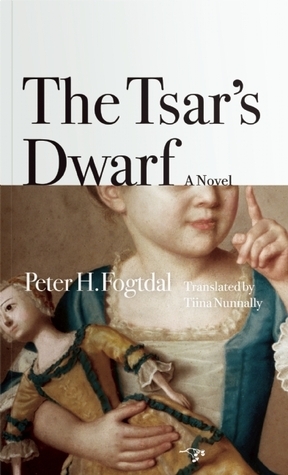
Oh, and one note about the physical book itself. It is absolutely gorgeously made -- not only a great cover, but high quality materials and thoughtfully designed in a way that just feels great in your hands. I read this book over the course of a week's bus rides to and from work, and every day people would comment on it.
Profile Image for Adelais.
595 reviews16 followers
September 23, 2022
Сорін - карлиця, на дворі початок вісімнадцятого століття, і цим майже все і описується. З Данії її дарують царю Петру Першому, бо той любить все таке незвичне, негарне і дивне. Що про це думає Сорін, нікого не цікавить, а даремно - вона розумна, зла і вміє постояти за себе, коли має таку можливість. Так вона потрапляє до Росії, знайомиться з купою придворних, царицею Катериною, нарікає на морози і загальний бардак, а іноді й потрапляє на очі до Петра, навколо якого все й крутиться. Виросла в іншій країні, вона бачить багато дивних речей і ще більше людей, в кар'єру блазнючки при дворі не виходить, та вона не дуже й пнеться, а врешті, багато років потому - через галюцинації в монастирі та навчання барських дітей - потрапляє знов до Данії і зустрічає практично єдину людину, яка до неї поставилася як до рівної. І пожежа теж буде.
Гарно написано, не відірватися, але не дуже мій стиль, не люблю комах в інтимних місцях, а тут їх чимало. Цілком вірю, що вони були, але зараз чогось симпатичнішого хочеться. Ну й переклад не з оригіналу, а з англійською, що дивно і часом призводить до помилок (навколо пожежа, а люди гукають: це Арсон, це Арсон!). Та однаково меншу оцінку рука поставити не підіймається, бо дуже захопливо.
Profile Image for Mandy Schimelpfenig.
Author 5 books23 followers
October 8, 2020
This book was difficult to get into at first, but after you are drawn into the voice of the MC, you find it's an interesting perspective on the court of Peter the Great. Would recommend to those who enjoy historical fiction, especially set in Russia.
Profile Image for Helle Vind Schultz.
59 reviews1 follower
August 4, 2019
I've never for one second considered what life was like for 1800 century's little people. This book gave me a glimpse into a world previously unknown to me and surprisingly interesting.

Sørine, who's goodness, at best, has been put on hold given her hard life as a second class citizen, does however peek through her tough exterior all through the book. Seen as a mere circus act and called an 'it' by the taller people around her she still manages to navigate her dire circumstances by never being soft, loving or fragile. She has to fight to survive.

Her life brings her to the Tzar's court and her story, as rough and heartbreaking as it is, is very compelling and did leave me with some hope for her future. Impossible as it was for her to accept friendliness and care from others, I did hope at the end of the book that she'd choose that road for herself.

Life was definitely hard for little people back in 1713, and at times the reality of it got to me, but I can warmly recommend this book, as it gives a realistic glimpse into a forgotten world. It is well written, without sentiment, but you still feel for Sørine and marvel at her strength and ability to care even though she won't admit it even to herself.
Profile Image for Katrinka Ilchuk.
68 reviews15 followers
February 21, 2018
Вісімнадцяте століття, Петро 1 приїздить до Данії з візитом до короля Фредеріка VI. Останній, знаючи про дивні вподобання московського короля, дарує йому в Копенгагені карлицю Сорін.

Данський письменник так майстерно поєднав історичні факти і художню вигадку, що під час читання постійно запитуєш себе: «То це справді було?». Події, на тлі яких Сорін розповідає про своє життя, дійсно відбувалися і це вже давно загальновідомі факти: приїзд Петра 1 до Данії, вбивство сина Олексія за наказом батька, смерть Петра 1, Копенгагенська пожежа у 1728 році, та й дивна пристрасть царя до карликів.

Сорін бачить світ на рівні людських дуп, і сприймає всі його запахи так само – на рівні статевих органів людей навколо… Карлик, ліліпут чи породження диявола? У 18 столітті вважали, що останнє: «диявол дмухнув у вуха твоїй матері, коли ти була зачата. Він стояв поруч під час твоїх пологів і завадив тобі рости. Він заповнив тебе отрутою і дав тобі нечестиві думки». Як воно – бути маленькою людиною і фізично, і по статусу у такому великому та жорстокому світі?
Profile Image for lunaboglarve.
6 reviews
November 9, 2025
Læs den for Fogtdals evne til at gøre historiske begivenheder levende og nærværende samt for interesserede af historiens skyggesider - og for at blive kloge på de bizarre og nedværdigende livsvilkår som personer med dværgvækst havde i starten af 1700tallets Danmark og Rusland.

Skriftens mangel på poetisk kvalitet forstyrrede dog til tider læsningen, kluntede formuleringer - en form for sproglig “trying too hard” forstyrrede min læseoplevelse just som Fogtdal havde formået at fange sin læsers opmærksomhed gennem et ivrigt plot. Ærgeligt for den ellers eventyrlige rejse, som læseren kommer på med Sørine, og det store historiske research arbejde, der ligger til grund for mange faktuelle detaljer.
84 reviews4 followers
January 7, 2018
Vastly entertaining, though often gruesome--as all good historical fiction is, given the disease, cruelty, religion misused for abusive purposes, stupidity, and poverty that pervade human history. Sorke is a marvelous creation, cynical but susceptible, smart and foolish, yearning for love but unable to accept it, witty; above all she sees the ablebodied people for what they are, cruel, vain and selfish. It's bracing to live inside her head for 300 pages. And it's a great novel to read on a train, plane, or sickbed.
Profile Image for Katie(babs).
1,867 reviews530 followers
June 9, 2009
The Tsar’s Dwarf is set in early to mid 18th century in Denmark and Russia seen through the eyes of Sorine, a deformed female dwarf who is a gift to Tsar Peter the Great. The first paragraph of chapter one gives us a simple overview of Sorine’s life up to the starting point of the story:

"My name is Sorine Bentsdatter, I was born in 1684 in the village of Bronshoj. My father was a pastor, my mother died in childbirth. When I turned six my body decided not to grow anymore."

Sorine’s story is a journey over a certain number of years where she goes through absolute hell because she has the misfortune of being born a dwarf. She is abused, ridiculed and spit upon by a society of buffoons who only care about their pleasures and no one else’s. Sorine spits upon them also. She calls them human beings as if being called a human being is the worst insult she can think of. Sorine doesn’t think of herself as a human but a freak of nature who doesn’t belong anywhere. She doesn’t belong with her own fellow dwarfs and she certainly doesn’t belong with normal people who are lucky enough to grow to a specific height that is acceptable for the masses. Sorine is able to survive because of her wit and sarcasm. If she can make those stupid human beings laugh, she will be able to live another day. But Sorine is not living; she is barely surviving.

Sorine is taught to perform. First she performs for the fine gentleman of Copenhagen Castle. Sorine is thought of as an “it”. She is treated in such a way that not even one would treat their pet dog. Sorine is treated worst than a dog. But Sorine is a bit superior in her intellect when it comes to the others. Sorine knows how to heal with herbs. She can read and write and knows German, Latin and some French. But again those around her only see the outer shell. And because she is a dwarf it doesn’t matter what she knows or how much. All that matter is if she can make people laugh. Laughter is very important to these various licentious gentlemen because it is an unsettling time where war could start at a moment’s notice.

Things look up for Sorine when Peter the Great, who enjoys Sorine, is given to him as a gift for his dwarf collection. Peter treats Sorine like a little doll. She is sent to live with Peter’s favorite dwarf Lukas who lives in an actual dwarf-sized house. Lukas is very different from the dwarfs Sorine has known because Lukas is quite cheerful with his lot in life. He understands how lucky he is. Sorine has never been happy and is not comfortable around Lukas. She lashes out at him at every turn and even as she allows him into her heart and bed she is haunted by demons. These demons are her parents, her old lover and dead son. Because Sorine suffers and has emotional outbursts Lukas has no choice but to send her away to exorcise these demons.

Sorine is beaten and abused greatly and finally when the devil has been beaten out of her, she is exiled to a place called the Curiosity Cabinet of the Tsar’s where freaks of science and nature are put on display. Sorine becomes one of them until Lukas comes for her and brings her home with him where she could be safe and sound for the rest of her life as his own personal exhibit. But only if she is willing to accept what he has to offer. Sorine refuses to conform even if it is in her best interests and off she goes on another adventure to find peace and salvation that is always out of her reach.

The Tsar’s Dwarf is a poignant and complex novel seen through the eyes of a character you feel pity and desperation for. I really wasn’t sure Peter’s book would work for me because it is not the typical type of book I normally read. I am biased because when Peter told me his book is much like lit-fic, I wanted to back away from the book like it was the plague. I was so very wrong.

The reason The Tsar’s Dwarf affected me so was because of Sorine. Peter has tapped into a woman’s emotions so very well. Sorine’s outlook on life is not necessarily a cold one but one where she knows all hope is lost for her but refuses to be put out to pasture or ignored. Sorine is the type of character I should not like. She should be unlikable because she is very sarcastic to the point of being rude. But the way Peter has written her is profound. She is not the type you want to take into your arms and hug all her hurts away. Instead you want to pat her on the back and say, go get them, tiger!

The conflicts and degradations Sorine goes through are beyond horrendous and sickening. And you never know what will happen to Sorine next. When you think Sorine finally finds hope, it is taken away from her or she throws it back because she can simply never be happy. She doesn’t know what being happy is.

The Tsar’s Dwarf may seem to be a depressing read but it all comes down to Sorine’s will to survive. Just like the human fools who laugh at her, she laughs at the whole world and will stomp on it her way.

The ending is very much up in the air as to what the future holds for Sorine. Peter gives the reader hope that everything will finally work out for Sorine by this simple line that means so much by the end:

"The sky is calm and enticing."

Sorine has walked through fire, has been burned and even more so and yet she carries on. All she wants is for everything around her to be calm.

Peter Fogtdal’s The Tsar’s Dwarf is a book that carried me on Sorine’s journey and is one of the most enlightened reads I have read this year.
513 reviews
October 3, 2018
Роман написано від імені данської карлиці Сорін, яка розважала короля Данії Фредеріка IV, а потім була подаровано московському царю Петру І. Реалістично описано важке життя та проблеми незвичної маленької людини, жахливі звичаї московитів, їх пияцтво. Царя Петра І змальовано як безбожника та садиста. Читається легко. Є помилки перекладача.
Profile Image for Valentyna Vzdulska.
1 review
February 3, 2018
Український переклад - не з оригіналу, а з англійської. Трапляються коректорські огріхи. Загалом - масліт про вразливу всередині й холодну ззовні жінку-психопатку в чорнушному антуражі Петербурга часів Петра Першого. Тобто доволі банально після першозразків у цьому жанрі на зразок "Парфумера".
Profile Image for Amy.
829 reviews169 followers
September 12, 2008
The Russian Tsar Peter the Great collects dwarves like some people collect stamps. So when he visits Denmark, the Danish king has a complimentary dwarf jump out of a cake for his pleasure. Only, this is an ugly little dwarf named Sorine with a mind of her own. And, to the tsar's amusement she's jumped out of the cake naked.

Sorine becomes Surinka and goes to Russia to become part of the tsars collection of dwarves. The tsar has even built a dwarf-sized house for his little pets. Sorine a.k.a. Surinka is not amused. And she decks the first dwarf that tries to get her to sleep with him in his dwarf-sized bed.

It all sounds amusing, but Sorine is far from amused with her station in life. She's grumpy, ornery, and speaks her mind. Life hasn't been good to her, but part of this is her fault for pushing away the people in her life who have tried to show her affection. As she grows older, we watch the emotional walls she's erected around herself crumble.

I found myself enjoying this book much more than I thought I would. It's a pleasant, mindless read. Some might see the story as being a dark one, but I found more humor than darkness. Besides, what's a Russian setting without morosity? And I did enjoyed the psychotic character of the tsar and the grumpy character of the dwarf quite a lot.

Also, I have to say that I wish the cover of every paperback book was made like this one with expandable French flaps that function as built-in bookmarks.

Note: While I critique both purchased and free books in the same way, I'm legally obligated to tell you I received this book free through the Amazon Vine program in return for my review. Blah blah blah.
Profile Image for Mari Juniper.
9 reviews19 followers
May 9, 2010

This is the review I've posted on my blog, which I reproduced below.

Sørine Bentsdatter stopped growing at the age of six. She's a dwarf, a small and deformed inhuman creature that has decided to hate everyone and everything, including herself.

In this historical novel we follow Sørine from Denmark, to Russia, Poland and back to Denmark, witnessing her misfortunes while transiting between filthy holes, sovereigns' courts, hideous exhibitions, and fine folk's households.

It's impossible to escape the word grotesque when describing this novel. Ugliness permeate the whole story; it's in the dwarfs' deformities, in the human beings' cruelty, and in Sørine's strange forms of love.

There's beauty in it, though. It's in the protagonist's sharp tongue and quick mind -- which made me chuckle throughout the reading -- in her peculiar tenderness, and also in her questioning mind that demands us to reassess our relationship with god, our humanity, and our self-image.

Sørine is not who or what she think she is; but aren't we often deceived by how we picture ourselves, and our actions?

Although I had a bit of a hard time adjusting to the narrative, as it's in the first person, present tense, the story flows well from the beginning to the end, so the initial discomfort eventually vanishes, much as Sørine's ghosts.

The Tsar's Dwarf is an excellent reading; it's entertaining and humorous, yet deep and challenging, making an irresistible combination.

Profile Image for Renee.
68 reviews15 followers
June 12, 2010
I'm going to give high credit to this book for being unique. It's an unusual main character at a tim that I know little to nothing about. I really should have gotten my degree in international literature because I love how culture infuses the tone and timbre of storytelling.

However, that aside, I think the book suffered a bit from being too anemic. I think that it would have been helpful for the main character, Sorine, to either: a) stay consistent in her sentiments--she loved the Tsar and wanted to be loved by him, but then next thing you know she hated him and the cruelty of his care; she despised God, then went to a cloister and found peace, Hmm? OR, b) the other thing the author could have done was show us a bit more rationale for the fluctuations of her emotions. Why did she want to be loved by the tsar? She was supposed to be feisty and independent yet she feels eagerness to please.

Sorine was in many ways a character who had a narrative of herself that she told, how she was ugly and evil, yet for the most part she acted relatively kind to people. It's okay for a character's idea of themselves to misalign with how they are to others--most famously like Esther Summerson in Bleak House--but then we should clearly see that discrepancy. She was sometimes mean, sometimes kind, but why? What was behind that? Was she rebelling against what the world said she could be as a dwarf, or was she just mean? Few of her actions made emotional sense to me, so I was intrigued but not sympathetic to the character.
Profile Image for Julie.
252 reviews14 followers
March 30, 2013
Our witty and sympathetic heroine, the Danish dwarf Sorine Bentsdatter, is given as a gift to Tsar Peter of Russia and transported on an odyssey of spectacle, opulence and suffering. Laced with religious overtones, Sorine's journey is ultimately redeeming as she moves through questions of life, death, family, faith and her unusual destiny with humor and large doses of sassy skepticism. Because of her size and lack of social status, this intelligent woman often finds herself dragged into new situations unwillingly and suddenly, as when she's charged with jumping out of the king's cake or being put on display in the tsar's Curiosity Cabinet. Sorine has events in her past she'd rather forget that color her interactions along the way with friends, lovers and overseers, including Tsar Peter, whom she both adores and despises. Squalor and heartbreak dominate Sorine's life, and parts of the book have an ominous feel, but Fogtdal manages to pluck meaning from each situation and tie them into an enjoyable whole. (As a bonus, my paperback version pictures a different herb used by Sorine and other fairy worshippers of 17th c. Europe at the start of each chapter. I take it they relate to the theme of that chapter, but I'm still working on sorting that out!)
1 review
March 15, 2009
It was, for lack of a better word, interesting. I wouldn't really recommend it, as such. I was a bit disappointed, like some others, by the lack of a solid plot. I felt like the book was building to something, but never quite got there.


Sorine is a fascinating self-loathing character, but I couldn't make myself feel anything for her. I'd like to say more about this, but I can't really describe why her honesty and black-humour doesn't quite seem to be enough to make me truly invested in where she will end up.


Despite this, there's something strangely captivating about the style of writing, though I'm not sure whether this is due to the original writing or the translation to English. There is a strange sense of foreboading that accompies every line, without ever coming to an obvious head. It makes the book both unsettling and oddly fascinating at once.

Profile Image for Lee Gingras.
298 reviews16 followers
July 5, 2011
Disappointing. This book could have been so much more than it was. It was thinly plotted, and the characterization was simply awful. In particular, Sorine's character was completely flat and I felt nothing for her...kind of unfortunate as she is the protagonist. It's even more disappointing because I thought the book sounded pretty cool, but the author just half-assed it all the way.

Honestly, it has two whole stars because I tend to reserve the ole one-star of for books that disgust me to the extent that I want to throw them, whereas this book left me feeling simply "meh". On the bright side, it was a beach read, so I didn't feel like I lost a lot when I invested my time and attention in this book.
Profile Image for katie.
44 reviews1 follower
November 10, 2008
This book is uplifting because(in Fogtdal's imagination) people 400 years ago were as miserable and cruel as they are now. I don't really believe that but that is part of the storyline you buy into in this book. Why is this uplifting? Not because this story is redeemed like so many others by goodness or love, but because of absurdity, and through that absurdity a sense of unique self is claimed by the narrator Surinka. Surinka keeps herself alive through adapting, resisting, using herbs, telling stories, and loving and hating the people in her life, (and drinking and being forced to perform).
Profile Image for Justin Matott.
Author 35 books21 followers
December 1, 2008
The writing is wonderful. The characters are well drawn and the main character is very interesting. The plot line left me wanting a bit more. The main character, the Tsar's Dwarf is the narrator and she is quite interesting, however the story basically moves from event to event and doesn't seem to tie much off or create closure. The star system here is 3 stars I liked it and 4 I really liked it, so I am in between the two.
8 reviews
October 26, 2008
I read this in Danish when it came out. In the beginning it was too dark for me, but then I started to love the fighting spirit of the heroin. It's actually a hilarious novel about a dwarf who goes through one humiliation after another but becomes a better person. The Tsar's Dwarf is not a run of the mill historical novel. It's ingenious, post modern, weird, and unpredictable.Tiina Nunnallys's translation is good. I recommend it highly.
Profile Image for Athena.
Author 8 books12 followers
January 23, 2009
Not enough novels from Denmark come across the ocean, but I'm so glad this one did. Fogtdal brings to life a dwarf in the 18th century who is given to Tsar Alexander by the Danish king. Sorine tells her story--a story of great wealth and horrid squalor, of political intrigue and base instincts, of travel and entrapment. She's a remarkable character who doesn't flinch, even at moments when most of us would collapse in despair.
63 reviews1 follower
November 3, 2009
Sort of a bizarre story about a female dwarf in Denmark who catches the eye of Tsar Peter the Great. Gives the reader a glimpse of the living conditions that many people endured during those times, and would turn the stomach of human rights advocates, had there been any at that time. I like to read books by foreign authors from time to time as they have a perspective that can be enlightening or at least very interesting.
Profile Image for عائشة توفيق.
Author 1 book14 followers
January 4, 2011
Narrated through the strong voice of a dwarf--strong enough that it enabled me to establish my own point of view on things early on in the story. The novel marries genres together in a confident manner, bringing on a unique mix of: historical, drama, thriller, magic realism, fiction. If there's anything to be said about Peter Fogtdal's style, it is: don't you dare sigh/yawn/smile...if at any point in a line/page/chapter things appear to take a romantic sense BEWARE...Its a trap!
Profile Image for Constance.
201 reviews7 followers
January 27, 2013
Absolutely the best. I would have never found this little gem had I not been a Goodreads member. I was reading comments about another book, and noticed PETER FOGTDAL'S review. Finding out he spends time in Portland OR and that this book was published in Portland was a double bonus.

I agree with Mr. Fogtdal's statement that he misses Sorine. He created such a bawdy, honest, out there character that I too, will miss her and all her adventures.

Here's hoping more will follow. Bravo!!
Displaying 1 - 30 of 47 reviews

Can't find what you're looking for?

Get help and learn more about the design.