Jump to ratings and reviews
Rate this book

Nevinson #1

Berta Isla

Rate this book
Premio de la Crítica - Premio Dulce Chacón de Narrativa Española - Premio Lettura 2018 de Il Corriere della Sera (Italia)

Mejor libro del año según Babelia (El País).

Seleccionadoentre los mejores libros del año en ABC Cultural y La Vanguardia y recomendado por El Periódico y La Razón.

Un día cualquiera, «un día estúpido», condicionará el resto de su existencia.Berta Isla es la envolvente y apasionante historia de una espera.

«Durante un tiempo no estuvo segura de si su marido era su marido. A veces creía que sí, a veces creía que no, y a veces decidía no creer nada y seguir viviendo su vida con él, o con aquel hombre semejante a él, mayor que él. Pero también ella se había hecho mayor por su cuenta, en su ausencia, era muy joven cuando se casó. »

Muy jóvenes se conocieron Berta Isla y Tomás Nevinson en Madrid, y muy pronta fue su determinación de pasar la vida juntos, sin sospechar que los aguardaba una convivencia intermitente y después una desaparición. Tomás, medio español y medio inglés, es un superdotado para las lenguas y los acentos, y eso hace que, durante sus estudios en Oxford, la Corona ponga sus ojos en él. Un día cualquiera, «un día estúpido» que se podría haber ahorrado, condicionará el resto de su existencia, así como la de su mujer.

Berta Isla es la envolvente y apasionante historia de una espera y de una evolución, la de su protagonista. También de la fragilidad y la tenacidad de una relación amorosa condenada al secreto y a la ocultación, al fingimiento y a la conjetura, y en última instancia al resentimiento mezclado con la lealtad.

O, como dice una cita de Dickens hacia el final del libro, es la muestra de que «cada corazón palpitante es un secreto para el corazón más próximo, el que dormita y late a su lado». Y es también la historia de quienes quieren parar desgracias e intervenir en el universo, para acabar encontrándose desterrados de él.

Reseñ «Una novela maravillosa. [...] Berta Isla recuerda por qué la ficción, en manos de sus mejores practicantes, sigue siendo la única forma de conocernos cabalmente.» Juan Gabriel Vásquez, Babelia

«Marías ha dado una extraordinaria vuelta de tuerca a su propia obra, alcanzando una precisión,y emoción, y misterio, como hoy uno no encuentra en buena parte de sus contemporáneos. Soberbia.» Fernando R. Lafuente, ABC Cultural

«Marías ha forjado una obra maestra [...].La gran literatura vuelve a estar escrita en español, para privilegio nuestro.» José María Pozuelo Yvancos, ABC Cultural

«Creo que Berta Isla es una de las mejores -quizá la mejor- novelas de Marías. [...] Admiro su capacidad para ahondar en lo más recóndito del ser humano.

546 pages, Kindle Edition

First published September 5, 2017

925 people are currently reading
10050 people want to read

About the author

Javier Marías

140 books2,445 followers
Javier Marías was a Spanish novelist, translator, and columnist. His work has been translated into 42 languages. Born in Madrid, his father was the philosopher Julián Marías, who was briefly imprisoned and then banned from teaching for opposing Franco. Parts of his childhood were spent in the United States, where his father taught at various institutions, including Yale University and Wellesley College. His mother died when Javier was 26 years old. He was educated at the Colegio Estudio in Madrid.

Marías began writing in earnest at an early age. "The Life and Death of Marcelino Iturriaga", one of the short stories in While the Women are Sleeping (2010), was written when he was just 14. He wrote his first novel, "Los dominios del lobo" (The Dominions of the Wolf), at age 17, after running away to Paris.

Marías operated a small publishing house under the name of Reino de Redonda. He also wrote a weekly column in El País. An English version of his column "La Zona Fantasma" is published in the monthly magazine The Believer.

In 1997 Marías won the Nelly Sachs Prize.

Ratings & Reviews

What do you think?
Rate this book

Friends & Following

Create a free account to discover what your friends think of this book!

Community Reviews

5 stars
2,825 (32%)
4 stars
3,558 (41%)
3 stars
1,702 (19%)
2 stars
421 (4%)
1 star
118 (1%)
Displaying 1 - 30 of 1,000 reviews
Profile Image for Orsodimondo.
2,457 reviews2,429 followers
September 25, 2022
VITE CHE NON SONO LA SUA


La copertina: foto di Quentin de Briey.

Ho sbagliato l’approccio di partenza perché mi è stato caldamente consigliato come libro sulle spie, argomento di cui in questo periodo sono particolarmente curioso e avido: ma non è un libro di spie, non s’impara nulla sullo spionaggio. Caso mai si potrebbe parlare di estetica dello spionaggio, fenomenologia della spia. Astrazioni, non la vera materia.


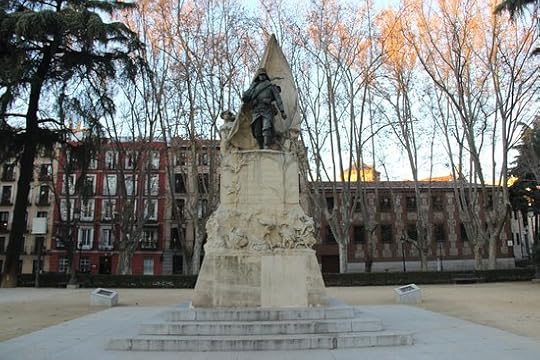
Il monumento a Cabo Noval, il soldato Luis Noval: il salotto della casa di Berta affaccia su questa piazza.

L’approccio sbagliato mi ha spinto all’impazienza e stavo per abbandonarlo dopo qualche decina di pagine. Ma ho voluto insistere, è il mio primo Marías, è un romanzo che ha goduto di ottima accoglienza (e presumo altrettante ottime vendite), abbandonarlo m’è sembrata una bestialità.


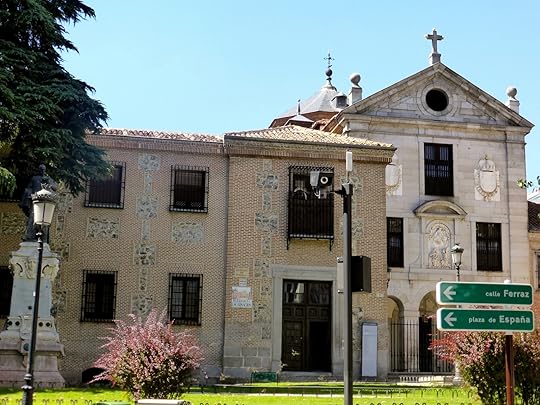
La chiesa dell'Encarnación davanti alla quale ferma sempre il taxi di Tomás.

Sono arrivato fino in fondo e ringrazio Marías d’avermi fatto rivivere qua e là le emozioni di uno dei migliori romanzi di Ian McEwan, The Innocent – Lettera da Berlino, da me amato oltre misura: la storia di un grande amore, potenzialmente eterno, che il destino avverso brucia lasciandosi dietro oceani di rimpianto.


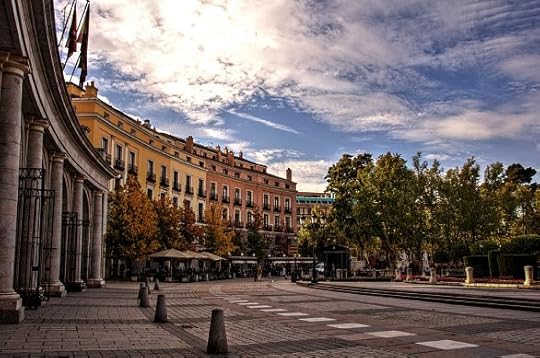
Il caffè in Plaza de Oriente nel quale Berta da appuntamento a Esteban Yanes, avventura di gioventù..

Ringrazio anche Marías per le citazioni, numerose, tutte godute, anche quelle cinematografiche.
La più bella, che per me rappresenta le pagine più belle di questo romanzo, è quella estratta da una scena dall’Enrico V di Shakespeare.


Gavin Hamilton: Priamo prega Achille di restituirgli il corpo del figlio Ettore. 1775.

Lo ringrazio meno per le tante pagine, secondo me quelle inutile sono abbondanti, per le tante parole che si sarebbe potuto risparmiare, le ripetizioni letterali, come se avesse totale sfiducia nella memoria del suo lettore.


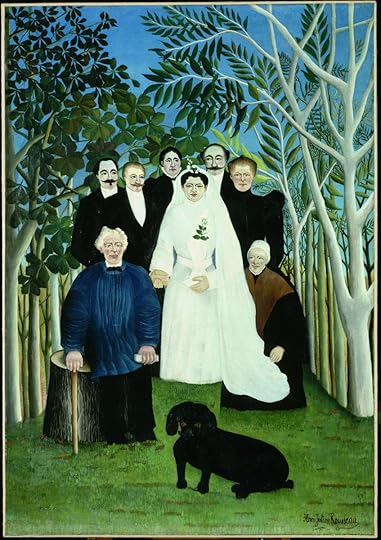
Henri Julien Félix Rousseau detto Il Doganiere: Le nozze in campagna, (1904-1905).

Lo ringrazio meno per quella sensazione di discorso alto, riflessione profonda, che a me invece ha dato spesso l’impressione d’aria fritta, consistente banalità.
Un esempio a caso, tra le decine che si potrebbero portare: Tomás Nevison è un tipo che fa riflessioni di questo genere:
la morte non assomiglia alla vita, non ha il minimo senso che una segua l’altra, e ancor meno che la sostituisca.
che possono apparire profonde e indagatrici, ma anche no. Soprattutto no.


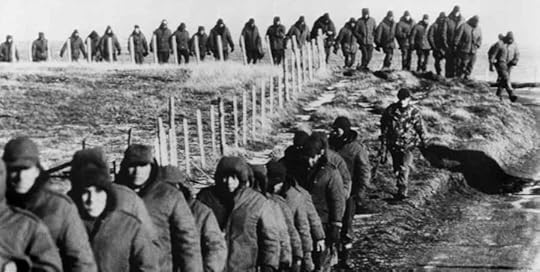
Guerra delle isole Malvinas/Falkland. 1982.

Lo ringrazio meno per due personaggi che nonostante le 480 pagine rimangono sostanzialmente in superficie.
Particolarmente grave mi pare il caso di quello femminile, la donna del titolo, Berta Isla, che per centinaia di pagine parla in prima persona (mentre lui è affidato a narratore in terza, e ne guadagna): Berta sembra vivere in un’unica dimensione, quella del mistero che avvolge prima la presenza e poi l’assenza di Tomás. Un po’ poco, un po’ troppo appiattito.


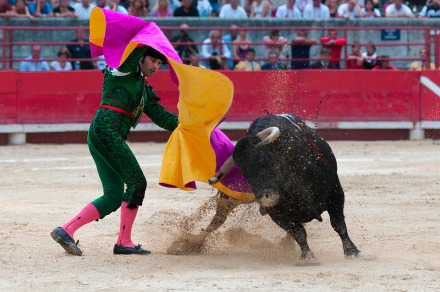
Compare un banderillero nel romanzo.

La scrittura di Marías, secondo i punti di vista, può percepirsi come piacevolmente sontuosa, elegante, sfarzosa, barocca, manieristica, oppure compiaciuta, verbosa, prolissa, ridondante.
In me si sono alternate le due percezioni, a volte ho apprezzato, altre meno.

PS
Astenersi non fumatori.


Isola Berta
Profile Image for Guille.
1,004 reviews3,272 followers
May 11, 2020
En cierta forma, “Berta Isla” no es a lo que me tenía acostumbrado el autor. Con un estilo más fluido, menos proustiano, por decirlo de alguna manera, Marías urde una trama con cierta intriga en la que incluso se permite dar un par de vueltas de tuerca sorprendentes. No obstante, las muchas cuestiones aquí planteadas son ya clásicas en la literatura del autor, y no falta ninguna de sus señas características, sus serpenteantes especulaciones, los extensos diálogos, las numerosas citas, las múltiples formas de profundizar en la misma idea, de matizarla, de abordarla, su ironía y hasta sus toques de humor y la mala leche que adorna sus diatribas sobre todo lo que le molesta de nuestros usos y costumbres actuales. También mantiene su gusto por las escenas perturbadoras en las que se recrea lenta y detalladamente, que son trituradas concienzudamente, con profundidad, incluso con saña hasta quedar reducidas a polvo, algo así como en ese verso de Eliot, uno entre los abundantes mantras, tan del gusto del autor, que aparecerán una y otra vez a lo largo de la novela: ‘El polvo suspendido en el aire señala el lugar en el que terminó una historia’.

Es esta una historia de espías y sobre la espera. El espía es Tomás Nevinson; la que espera, su mujer, Berta Isla. Pero también es una novela sobre la capacidad de dirigir nuestras vidas, sobre la huella dejada por nuestra existencia, sobre el azar.
“Qué estúpidos son los días, qué estúpido puede ser cualquier día, uno ignora cuál y se adentra festivamente en el que debería haber evitado, no hay forma de adivinar cuál será el de maldición y tajo y fuego, el de garganta del mar y el que lo quiebra todo.”
Mientras que la espera nos es contada por Berta en primera persona, todo lo referente a Tomás se narra utilizando la tercera, muy en consonancia con lo que juguetonamente nos dice Marías: al igual que los espías, el narrador omnisciente está y no está, no se le cuestiona, es necesario —al fin y al cambo alguien tiene que ser el que narre—, pero tampoco se le reconoce su papel en la mayoría de las ocasiones, incluso “determina el destino de todas sus criaturas”, pero su mejor papel es casi siempre ser invisible. A Tomás le corresponde, por tanto, que no sea su voz la que oigamos, que sean otros los que nos hagan llegar sus actos, no por nada le persigue la sensación de que le han escogido más de lo que él ha escogido. Tomás ha sido manejado, no ha tenido más opción que la de vivir otras vidas, y así, fingir amor, amistad y ganarse la confianza de los que serán engañados, de los que lo odiarán de por vida una vez cumplida la misión, de los que se tomarán venganza si está en sus manos.
“Cuántos secretos habrás arrancado a quienes llegaron a confiar en ti, cuántas muertes habrás causado, que los muertos no se esperaban y habrán afrontado con incredulidad. Qué oficio tan torcido el tuyo, por mucho bien que hagas con él.”
Un oficio tan torcido que ni siquiera será apreciado por los suyos, no solo él, siempre oculto, no solo sus acciones, necesariamente secretas, sino hasta el oficio en sí. El pueblo, “que a menudo es vil y cobarde e insensato” mirará para otro lado, se encogerá de hombros, alegará ignorancia, hasta renegará de aquellos a los que votó, a los que eligió sabiendo, por mucho que prefirieran no saber, si la situación se tuerce o acaba saliendo a la luz. Y al acabar, al final de su vida activa, sustituidos por otros más jóvenes, si no han sido ejecutados, si no han enloquecido por todo lo hecho o no evitado, verán su vida partida en dos, verán perdida “su identidad y hasta su memoria anterior”.

Siendo así, ¿por qué ser espía? ¿ansia de aventuras? ¿necesidad de ser alguien?...
“A todos nos influye el universo sin que nos sea posible intervenir en él, ni devolverle un arañazo. Pero al novecientos noventa y nueve por mil, además, lo zarandea, lo sacude, lo trata o lo mira pasar como un fardo, ni siquiera como un sujeto dotado de mínima voluntad, o de tenue capacidad decisoria… la mayoría se iguala con los que jamás importaron y es como si ninguno hubiera existido… una brizna de hierba, una mota de polvo, una vida sin origen y una guerra sin procedencia, una ceniza, una humareda, un insecto, a la vez algo y nada.”
… ¿la oportunidad de modificar la historia, aun de forma infinitesimal?
“El estado natural del mundo es el de guerra. A menudo abierta, y cuando no latente, o indirecta, o meramente aplazada. Hay grandes porciones de la humanidad que siempre tratan de dañar a otras, o de arrebatarles algo, y siempre reinan el rencor y el desacuerdo, y si no reinan se preparan y están al acecho. Cuando no hay guerra hay su amenaza, y lo que podéis hacer los dotados es mantenerla en esa fase, en la de la postergación, en la sola amenaza…Y eso es intervenir en el universo…”

Berta es el contrapunto de todo ello, Berta nos aporta en primera persona el relato de quién acepta la vida al lado de un desconocido, alguien que la deja fuera de la mitad de su vida, por mucho que esta sea impostada y temporal, alguien cada vez más distante de aquel al que decidió ligarse en su juventud y al que se mantiene leal de forma inquebrantable pese a las innumerables sospechas que su ignorancia acrecienta y envilece, y por lo que le guardará rencor hasta que muera.
“Uno descubre —la verdad, sin gran sorpresa — que hay lealtades inmerecidas e incondicionalidades inexplicables, personas con las que uno tuvo una determinación y un propósito juveniles o más bien primitivos, y que el primitivismo prevalece por encima de la madurez y la lógica, del odio de los engañados y el resentimiento.”
Esa mitad de la vida de su pareja que desconoce pero que intuye llena, para bien o para mal, es opuesta a la suya, aunque ambas sean como una vida entre paréntesis, que pasa y no pasa al mismo tiempo, incapaz de evolucionar porque toda ella es fingimiento o espera. Al igual que Tomás, pero de otra forma, Berta ha dejado de decidir su vida, la ha dejado en manos de aquel que nunca sabe si acabará volviendo.
“No hay nada mejor que creer que se ha perdido la voluntad, que está uno a merced del oleaje y del vaivén, que puede mecerse y abandonarse; o sí, todavía es mejor creer que la voluntad se ha entregado a otro, a quien ahora corresponderá decidir qué va a pasar.”
Una de esas ausencias de Tomás se alarga más de lo normal, meses, años, hasta que es dado por desaparecido y, al fin, por muerto. Una situación perversa en la que no se tiene la seguridad de lo acontecido, que paraliza: “la pérdida sin clausura ni corroboración, la que más encadena y la peor”. La esperanza, “esa puta vestida de verde”, que decía Cortázar, siempre está ahí, alargando el sufrimiento, acostumbrándonos a la espera, tanto que uno termina por no querer salir de ella, por hacer de la espera el centro de su vida.
“Quien se acostumbra a vivir en la espera nunca consiente del todo su término, es como si le quitaran la mitad del aire.”
Aun no siendo lo mejor del autor, sigo prefiriendo “Tu rostro mañana” con la que esta comparte ambiente y algunos personajes, no dejo de recomendar encarecidamente su lectura.
Profile Image for Kalliope.
738 reviews22 followers
September 22, 2019
P E R M U T A T I O N


Elements to combine:

Spies
Shakespeare
Oxford University
Circular sentences
A tad of sex
Leftist clichés
Beckettian musings


Element that does not change:

It is always the same voice - for the narrator and for all the characters.

And this for all his novels...

Also, several ingredients of the plot in this Berta Isla were unbelievable and I could guess the ending when I had read 74% of the novel.

This was a choice from my book club. I hope future books will provide more variety.
Profile Image for David.
1,682 reviews
October 23, 2020
There has been a lot of hype on this book. El país rated it as one of the best books of the year (2017) and the review came from Juan Gabriel Vasquez, an author a I admire. I had just read “Así empieza lo malo” his last book and truly loved it. So I cracked open this big book (544 pages) with anticipation.

It opens with this memorable line, “There was a time I was not sure if my husband was not my husband...” Berta Isla and Tomás Nevinson were a young couple in Madrid in the 1970s. His mother was Spanish and father was English. His father, who worked in the Foreign Service would like his son to follow in his footsteps. Tomás heads off to Oxford and Berta studies in Madrid with plans to marry when Tomás returns. Their future is secure.

Or maybe not. One can say Foreign Service is also code for spies. You know MI5 and MI6, Secret Intelligence Service. Like most spy novels, one really can’t say much without giving away too much.

Here it is in a pinch. Something happens and something happens and then something happens. You get my drift.

The heart of the book is two fold. A love story and a spy story. What would you say if your spouse went away for work and you never knew what they did. Are they a liar? Sworn to secrecy. Sworn to the Crown. Is he lying or telling the truth? What is the truth? Did that really happen? What happened to my husband? Who is my husband?

This is the politics of England, the IRA, the Falklands war, Argentina and Spain just coming out of the shadow of Franco. The Iron Curtain, Berlin and Russia. The 1970s to 1990s. An awful lot happened. And what did you say your husband does?

What I truly admire about Marías is his words. He is elegant, wistful, charming, deceiving, scheming and chatty. He leads you down the path and then the path changes. He talks about world views. He talks about marital problems. He gets under your skin like no one else. You can love him; hate him but he is a very, very good writer.

My peave was the ending. I was expecting something else but Marías chose a different path. It wasn’t bad and I could “beg to differ” but it’s his story. It is a very good story.

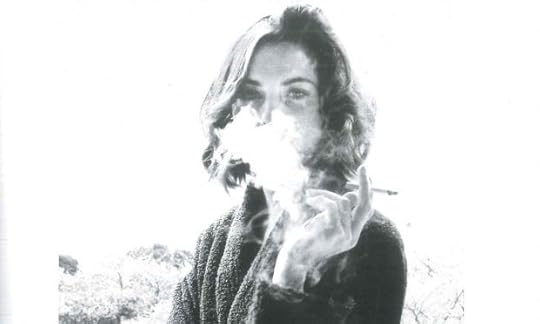
That cover photo of that woman on the cover. Shrouded in cigarette smoke, in a bathrobe on a patio overlooking la plaza de Oriente in Madrid. Alluring, mesmerizing, fragile, tough, is hiding something.

“Cuán poco he contado para ti, a lo largo de nuestra vida.” Read to find out.
Profile Image for M.  Malmierca.
323 reviews475 followers
September 14, 2021
Berta Isla (2017), de Javier Marías (1951-), es una magnífica obra de ficción, como no se podía esperar otra cosa de uno de los mejores escritores en lengua castellana en estos momentos. Lo digo sin pudor, aun a sabiendas de que algunos lectores me tachar de exagerado.

La historia de una mujer, Berta, «abandonada» por su marido incluso antes del matrimonio, está perfectamente construida y no necesita de grandes artificios formales para ser leída con un placer tranquilo. Marías narra los hechos que le suceden a estos dos personajes, su relación tan particular, pero, sobre todo, nos introduce en la confusa e indecisa mente de una mujer a la que le cuesta muchísimo comprender su situación y que en cada momento tiene que estar decidiendo si continuar con su vida o tirarlo todo por la borda. Los cambios formales entre tercera y primera persona narrativa hacen visible aún más este doble mundo externo y aventurero del marido e interno e íntimo de Berta.

No siempre reconocemos las historias de amor de los demás, ni siquiera cuando somos nosotros su objeto, su meta, su fin.

Estamos, como no podía ser menos en Javier Marías, ante una cuidada obra llena de potentes descripciones, referencias literarias (Álvaro Pombo: El regreso es la infidelidad más profunda), intensas reflexiones, frases a recordar, gran riqueza de vocabulario…, pero a la vez, y sin que resulte contradictorio, escrita con un estilo en cierto modo natural y fluido, de ritmo pausado que vuelve más amena su lectura. Cuenta también con un par de giros argumentales y un final que algunos criticarán por demasiado obvio, pero que a mí me ha parecido el resultado lógico del planteamiento de la novela.

Uno sólo regresa cuando ya no tiene donde ir, cuando ya no quedan lugares y la historia ha terminado.

En resumen, creo que Berta Isla es una buena novela para disfrutar de nuevo o acercarse por primera vez a un excelente autor español contemporáneo. Recomendable.
Profile Image for Cláudia Azevedo.
394 reviews217 followers
February 1, 2021
Javier Marías consolida-se como um dos meus autores preferidos de sempre, a cada livro que passa, com uma escrita única que se imiscui, que se aloja, que reverbera.
Recorrendo, mais uma vez, a citações de Balzac e Shakespeare, o espanhol coloca-nos na pista da vida secreta de Tomás, namorado e depois marido de Berla Isla.
Afinal, até que ponto conhecemos quem amamos e até que ponto precisamos de conhecer para que esse amor dure toda uma vida e mesmo para além da vida? E em que medida somos protagonistas das suas vidas e das nossas próprias vidas?
Profile Image for Marius Citește .
251 reviews269 followers
August 9, 2021
"Berta Isla”, un roman uluitor cu o scriitură remarcabilă, elegantă și fermecătoare, așa cum nu am mai descoperit de multă vreme.

Pe scurt, subiectul cărții este reprezentat de Berta și Tomás Nevinson, un cuplu tânăr din Madridul anilor ’70. Mama lui era spaniolă, iar tatăl englez, cu o carieră în cadrul Serviciului de Externe, și care ar dori ca fiul său să îmbrățișeze aceeași profesie. Tomás pleacă la Oxford, iar Berta studiază la Madrid cu intenția de a se căsători când Tomás se va întoarce. Viitorul lor este sigur, se vor căsători, iar Tomas va fi recrutat într-o agenție străină de spionaj, celebra MI5, MI6, căsnicia lor devenind una plină de secrete, distanțe și dispariții.

Cum ar fi ca soțul sa plece la muncă și să nu știi niciodată ce face? Minte sau spune adevărul? Cine este el cu adevărat?

Tom nu îi poate dezvălui Bertei realitatea vieții sale secrete. Ea va îndura absențele sale din ce în ce mai lungi până când într-o zi el pleacă și nu se mai întoarce, iar ea este lăsată singură împreună cu doi copii mici pe care trebuie să îi crească.

Cartea poate fi citită ca un roman de dragoste, al radiografiei unei căsnicii, dar în același timp și ca un roman de spionaj, având pe fundal evenimentele istorice din anii ’70 -’90, tensiunile dintre Anglia și Irlanda de Nord, războiul Malvinelor din insulele Falklands, Argentina, Spania tocmai ieșită de sub dictatura lui Franco, Cortina de Fier, Berlin și Rusia. Cu toate acestea, autorul nu insistă foarte mult asupra acestor aspecte, lăsând în prim plan legătura dintre cei doi.

Marias vorbește despre problemele conjugale din cuplu, făcând observații filozofice, axându-se pe gânduri și idei într-un stil lent, interminabil uneori, aproape proustian, dar care dă forță acestui roman.

Temele abordate de sunt cele legate de problema existenței noastre, cât de reale sunt lucrurile pe care le vedem, cât de bine cunoaștem oamenii de lângă noi, pe cei pe care credem că îi știm cel mai bine, cât de repede uităm, unde se termină propria realitate și unde începe a celuilalt, unde este hotarul dintre percepție și fapte.

O carte despre tăcere, secrete și trădări, despre iubirea necondiționată, chiar și în cele mai dificile circumstanțe, despre alegerile pe care le facem sau credem că le facem și mai ales dacă stă în puterea noastră să ne controlăm destinul. Totodată este observată și lumea murdară a serviciilor secrete însărcinate cu siguranța noastră, și care din umbră veghează bunul mers al lumii.

Coperta cărții este și ea un element de impact. Imaginea femeii gânditoare, învăluită într-un fum de țigară, purtând un halat de baie pe o terasă cu vedere la Plaza de Oriente din Madrid este atrăgătoare, fascinantă și denotă că ea ar ascunde ceva ori că așteaptă pe cineva.

Javier Marias este un scriitor la care mă voi întoarce cu siguranță.
Profile Image for piperitapitta.
1,050 reviews464 followers
September 27, 2018
The Dark Side Of The Moon

«Com’è facile credere di sapere e non si sapere niente, - pensai. - Com’è facile essere all’oscuro, forse è il nostro stato naturale.»

Potrebbe sembrare solo il racconto della storia di un matrimonio, quello fra Berta Isla e Tomás Nevinson, se non fosse che la storia del matrimonio fra Berta e Tomás è a sua volta contenitore e contenuto di altre storie, più grandi e più piccole, che permettono anche questa volta a Javier Marías di allargare lo sguardo (e di dissertare, disquisire, digredire come piace a lui), per poi abbassarlo fino giù in fondo in fondo e scrutare dentro ai suoi personaggi e ai loro pensieri più reconditi.
Ne nasce un romanzo in cui ancora una volta, ma una volta di più (perché con Domani nella battaglia pensa a me io mi ero annoiata proprio tanto, mentre questo… ah, che meraviglia!) la trama è forse solo la struttura (l’alibi, mi verrebbe da dire, per restare in tema) per permettere all’autore, che gioca con il lettore un po’ come il gatto fa con il topo, divertendosi a dire, negare, reiterare, nascondere, enunciare, di sostenere il complesso reticolo di idee e discettare liberamente di letteratura, di filosofia, di storia, di etica, di morale.

Succede così, che in un romanzo in cui Thomas Stearn Eliot e i suoi Quattro Quartetti sono al tempo stesso struttura e schema da seguire per l’andamento delle vicende di Berta e Tomás e pensiero fondante per dare il “la” alla vicenda, protagonisti stessi del momento in cui tutto cambierà nelle loro vite, sembrerà davvero al lettore di vedere “finire la vita”, accorgersi dell’attimo in cui la polvere, sospesa nell’aria ne indichi, irrevocabile, la fine.
Ma se quel momento, quell’attimo di sospensione, per Eliot indica la fine dell’esistenza tutta, per Tomás e Berta, si verifica in presenza di vita, a indicare, simbolicamente, lo stravolgimento della stessa, il cambiamento radicale della stessa esistenza.
Un romanzo pieno di letteratura, dicevo, in cui Eliot si dà il cambio con Shakespeare, Shakespeare con Dickens, Dickens con Flaubert, Flaubert con lo stesso Eliot, in cui la stessa aria che il giovane Tomás, madrileno come Berta, ma solo per metà - Nevinson è il cognome del padre, inglese - si troverà a respirare a Oxford durante gli studi universitari, è permeata di cultura, di storia, di gloria.


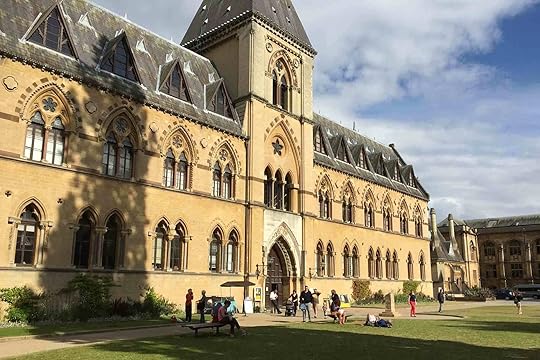
(Università di Oxford)

«Polvere sospesa nell’aria indica il punto in cui finisce una storia,” lo assalirono di nuovo quei versi*. “Qui è finita la mia. Chissà che cosa mi attende, perché sono ancora qui, e ora e sempre. Questa è la morte dell’aria“. Aveva letto al volo anche questo verso. “Però si sopravvive. Che fortuna e che disgrazia»

È un romanzo sul lato oscuro e sull’identità (individuale, collettiva, universale), sull’attesa e sull’assenza, "Berta Isla", sull’inesistenza dell’esistente, concetto che Marías ci enuncia come un mantra e ci rammenta fino allo sfinimento per accertarsi che sia stato assimilato, forse semplicemente (dove l’avverbio semplifica senza la realtà delle cose essere affatto semplice) sul lato in ombra che c'è in ogni cosa, che ogni cosa, così come la Luna fa con la Terra, cela e nasconde: Tomás a Berta, ma non solo, perché, come dicevo, non è solo la storia di un matrimonio, ma anche una spy story, semplificando ancora una volta, perché la spy story, anche lei, racconta una storia più grande, fatta di equilibri, di poteri occulti, di un Regno da proteggere con una guerra costante, sommersa, combattuta su più fronti e nel silenzio, che permette a sua volta, in tempo di pace, di scongiurare la guerra vera, quella dei popoli e delle battaglie e di decidere dei destini delle nazioni.
È su quest’equilibrio precario che si regge il mondo, è su quest’equilibrio precario che nasce il matrimonio di Berta e Tomás, sul lato oscuro che muove le cose e le trasfigura.
Finché qualcosa si incrina, finché qualcosa non va nella direzione in cui deve andare; finché iniziano a filtrare la paura, il sospetto, la luce dietro l’ombra.


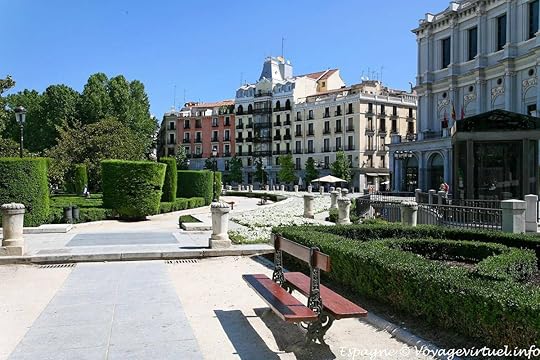
(Plaza de Oriente, Madrid)

«“Quando si convinceva che suo marito era suo marito, non era altrettanto calma e non si alzava dal letto piena di voglia di cominciare la giornata, si sentiva prigioniera di ciò che tanto a lungo aveva atteso e ora era avvenuto, chi si abitua a vivere nell’attesa non ne accetta mai del tutto la fine, è come se gli togliessero metà dell’aria. E quando si convinceva che non era suo marito passava la notte in preda all’agitazione e al sensi di colpa, avrebbe voluto non svegliarsi mai, per non dover affrontare la diffidenza verso colui che amava né i rimproveri con cui si puniva. Non le piaceva vedersi indurita come una miserabile. Nei periodi in cui decideva o riusciva a non convincersi di nulla, sentiva invece il solletico del dubbio latente, dell’incertezza cacciata via che primo o poi era destinata a tornare. Aveva scoperto che vivere nella certezza assoluta è noioso e condanna a un’esistenza sola, a un’esistenza reale che coincide con quella immaginaria, e nessuno sfugge interamente a quest’ultima. Ma anche il sospetto perenne è intollerabile, diventa estenuante osservare di continuo se stessi e l’altro, soprattutto l’altro, il più vicino, e metterlo a confronto con i ricordi, che non sono mai attendibili. Nessuno vede con nitidezza ciò che non ha più davanti, anche se è appena accaduto o aleggiano ancora nella stanza l’aroma o lo scontento di chi si è allontanato. Basta che uno esca da una porta e sparisca perché la sua immagine cominci a sfumare, basta smettere di vedere per non vedere più chiaramente, o non vedere nulla; e con l’udito è la stessa cosa, per non parlare del tatto. Come si fa, allora, a ricordare con precisione nel giusto ordine quello che è successo tanto tempo fa?»


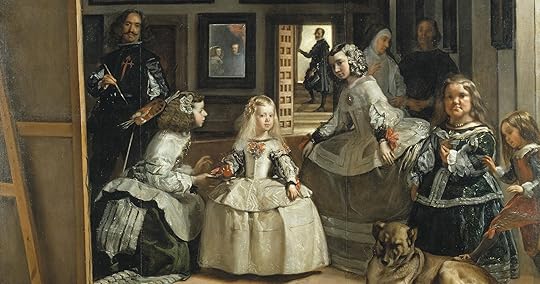
(Las Meninas di Diego Velázquez, che fu dipinto a Plaza de Oriente)


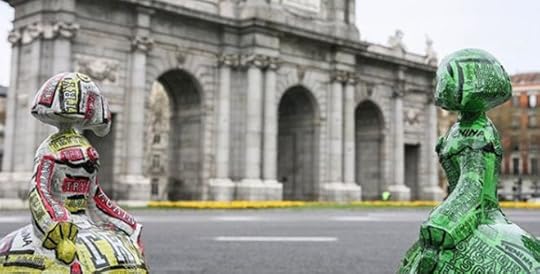
(Meninas collocate in giro per Madrid)

Nella prosa di Marías i momenti della narrazione si dilatano e attimi che nella realtà durano lo spazio di un paio di secondi, corrispondono a un’intera pagina, a volte anche due, nelle quali ogni singolo pensiero che ha attraversato la mente di Berta, o quella di Tomás, viene minuziosamente descritto e sezionato, e non lo si può leggere avendo fretta, ha bisogno dei suoi tempi e di essere assorbito, tanto è densa la scrittura e tanto sono densi gli argomenti, per quanto nella seconda metà, in un perfetto gioco di convivenza fra trama e digressioni che si rubano la scena in un capovolgimento di equilibri, la storia faccia venire voglia di correre per scoprirne gli sviluppi.

«Questo poteva essere stato [...], affondare nella nebbia di ciò che è accaduto e non è accaduto, nella nera schiena del tempo, inghiottito dalla gola del mare. E diventare questo: un filo d’erba, un granello di polvere, una raffica breve, una lucertola che corre sul muro d’estate, una colonna di fumo che finalmente si spegne; una neve che cade e non rimane.»

È un romanzo politico, molto politico, e ho scartabellato e letto con voracità commenti e recensioni sul web in cerca di qualcuno che parlasse di questo aspetto (accorgendomi, con stupore, che nessuno lo aveva fatto), di cui mi ha colpito moltissimo l’accusa, costante, sottesa, fatta al governo di Londra - non tanto perché nelle vite di Berta e Tomás il Regno Unito sia scenario coprotagonista e teatro degli eventi - quanto perché mi è sembrato di cogliere un j’accuse diretto, mirato, calibrato, al sistema politico della Corona (quello di Spagna viene accusato di inconsistenza, di incapacità, di… ma la citazione a fine commento farà capire che Marías ne ha per tutti**), alla manipolazione, costante, dei destini del mondo: dall’Ulster dei Corporal Killings alle Falkland (le pagine di storia dedicate alle due guerre sono esemplari, affascinanti, ipnotiche, sconvolgenti), da Oxford a Madrid, da Berta a Tomás.


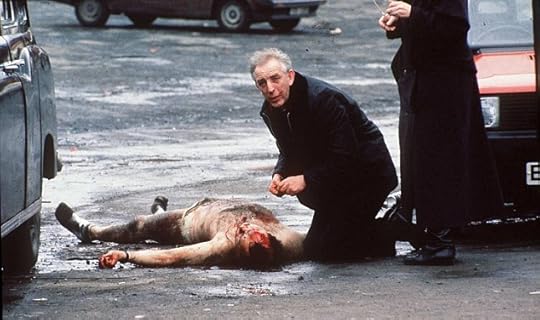
(Corporals Killings, Belfast - Father Alec Reid administers the last rites to Corporal David Howes - cit. Wikipedia)

Cinque, sì, perché la capacità di stupirsi e di cambiare idea merita di essere premiata.

«Vide la polvere nell’aria, la vide con chiarezza meridiana nella piazza sfigurata della sua resa, dal suo sfinimento, e penso: “si ritorna solo quando non sia più dove andare, quando non ci sono altri luoghi e la storia è finita.”»

*Ash on an old man’s sleeve
Is all the ash the burnt roses leave.
Dust in the air suspended
Marks the place where a story ended.
Dust inbreathed was a house -
The wall, the wainscot, and the mouse.
The death of hope and despair
The is the death of the air.
(Little Giddying, Four Quartets, T.S.Eliot)


**«Il popolo, spesso meschino e vigliacco e insensato, i politici non si azzardano mai a criticarlo, non lo si rimproverano né gli rinfacciano come si è comportato, anzi, invariabilmente lo esaltano, per quanto poco sia degno di essere esaltato, in nessun paese. Ma è stato eretto a intoccabile e ormai è come gli antichi monarchi dispotici e assoluti. Come loro, possiede la prerogativa della velleità impune, non risponde di ciò che vota né di chi elegge, di ciò che sostiene, di ciò che tace e consente oppure di ciò che impone e acclama. Che colpa ne aveva del franchismo la Spagna, come del fascismo in Italia o del nazionalsocialismo in Germania e in Austria, in Ungheria e in Croazia? Che colpa aveva dello stalinismo in Russia o del maoismo in Cina? Nessuna, mai; il popolo è sempre vittima e non viene mai punito (certo, non si punisce da sé; di sé ha compassione e pietà). Il popolo non è che il successore di certi re arbitrari e volubili, solo che ha un milione di teste, come dire che è senza testa. Ciascuna di queste teste si guarda allo specchio con indulgenza e si giustifica con un'alzata di spalle: «Ah, io non sapevo. Io sono stato manipolato, persuaso, mi hanno ingannato e fuorviato. Che cosa potevo saperne io, povera donna povero ingenuo che sono». La complicità del popolo è così largamente suddivisa che si sfuma e si diluisce, e nell'anonimato i colpevoli hanno piena facoltà di commettere nuovi delitti, non appena sia passato qualche anno e nessuno ricordi più quelli di prima.»

Tre belle recensioni.
Profile Image for Somormujo.
217 reviews173 followers
December 25, 2022
4/5
De momento, mientras subo una reseña más amplia, comentaré a modo de sumario que me ha gustado mucho el planteamiento y la trama de la novela, con reflexiones muy inteligentes. Lastima que a veces la excesiva descripción y matización de las ideas lastre el ritmo de la obra. Sin embargo, me ha parecido totalmente recomendable y no será la última obra que lea de Javier Marias.
Profile Image for Roman Clodia.
2,895 reviews4,646 followers
January 8, 2024
Or to quote Dickens - at least I think it was him - who I sometimes have to teach: '... every human creature is destined to be a profound secret and mystery to every other creature.'

This was a re-read for me ahead of getting to the companion novel Tomás Nevinson and I'm glad I went back to it slowly. Marias is so forensic, so scrupulous, so thorough in the way he writes that each thought of his characters has to be turned and turned and examined from each direction before it is carefully placed down.

In the right mood, this is mesmerising; but I do have to be in a certain frame of mind to appreciate this kind of almost obsessive formulation of elements which comprise the text. At times this is like John le Carré via Albert Camus - and then Marias surprises us with a bit of genuine plot-making!

But the sly humour like the introduction of an Inspector Morse who is investigating a murder in Oxford (natch!) is offset by a duet of haunting scenes from the Belfast 'Troubles'. As usual, elements of deceit, secrecy, sex, violence and elusive unknowability are brought into play and orchestrated with finesse - and the tension is that of how to navigate the indefinite mysteries of life for which the career of a spy is metonymy and metaphor.

(My original review is below)
-------------------------------------------
For a while, she wasn't sure her husband was her husband

You know how almost every 'domestic/psychological thriller' these days comes with the strapline 'how well do you know those closest to you?' - well, in some ways Marias asks the same question here, albeit in a more cerebral, discursive way. And it's not just that the eponymous Berta Isla loses sight of the man who is her husband, it's that Tomas, too, finds his own sense of identity fractured, provisional and fluctuating.

There's much that is intriguing here - but it's just not 532-pages-intriguing. Using the skeleton of a spy story (complete with coerced recruitment, shady dealings, and shadowy participants), really this is a meditation on deceit, secrecy, betrayal, absence, unknowability, elusiveness, fate vs. control, vulnerability. It asks how do we know what we know, and then unpicks the unreliability of evidence, the biases and gaps that shape so-called knowledge.

Some of the debates are fascinating - the strand that draws parallels between the work of MI6 and Franco's sociales, for example: why is one a 'defence of the realm' (a phrase repeated in the text), and the other the tool of fascist dictatorship? Should we judge by means or ends?

Less successful, though, are the inserted literary references that don't stand up to much scrutiny: the endless returns to that scene in Henry V where the king is in disguise (is this really an example of spying? Is disguise really a form of deception?), insertions of The Return of Martin Guerre that don't really add anything, the almost inevitable allusion to Penelope waiting for Odysseus to return from Troy (while we know he's dallying with nubile goddesses...)

The setting of the central section against the Falklands War and the 'Troubles' is interesting for the Spanish view it gives of 1980s British politics (and some nice commentary on the nastiness of Maggie Thatcher), but it's background merely.

The shifting between 3rd person (Tomas) and 1st person (Berta) feels a tad clumsy and the final section offers a tying up of ends that undermines all the disconcerting, fascinating open-endedness of Berta's story.

So a book which meanders and circles: at times this sinuous telling is absorbing and intellectually gripping, at others it collapses into longeurs which stall all movement - 3.5 stars from me.
Profile Image for Nood-Lesse.
426 reviews324 followers
April 12, 2022
Gli era piaciuta quella vita? Forse sí, in un certo senso, come a un drogato piace la sua droga, è tutto quello che gli resta

I personaggi di Marìas son sempre dotati di cultura medio alta, come potrebbero altrimenti, puntualmente, tirare in ballo Shakespeare? Credo che il Bardo compaia in tutti i libri dello spagnolo, è presente anche in Berta Isla, ma stavolta in veste di gregario all’interno di un vero e proprio dream team dove corrono Balzac, Beckett, Hemingway e un congruo numero di porta borracce.
I gradi di capitano sono cuciti sulla spalla di Thomas Stearns Eliot:

Ciò che chiamiamo il principio è spesso la fine

E giungere alla fine è cominciare dal principio…

…Polvere sospesa nell’aria indica il punto dove finì una storia


Su questi (e su altri) versi del poeta americano è montata tutta la vicenda narrata da Marìas. Il suo è uno schema collaudato, i versi vengono riproposti più volte e ogni volta ricontestualizzati. Un gioco di echi e di seduzione.
Il rimuginatore per antonomasia cataloga i pensieri e poi li inserisce nei libri attribuendoli ai suoi personaggi

..una di quelle osservazioni superflue ma persistenti che rimangono in testa finché non trovano un varco, in mezzo a questioni molto piú urgenti.

Una di quelle osservazioni che ci si interroga se sia opportuno esporre o meno. Tutta la letteratura di Marìas è basata su ciò che è accaduto e ciò che sarebbe potuto accadere. Proprio lui ha scritto che leggiamo i romanzi per esplorare le possibilità che non abbiamo concretizzato, ciò che poteva essere e non è stato per molti ha un’importanza tale da spingere ad accettare senza riserve la finzione romanzesca.

Berta Isla è agganciato alla trilogia “Il Tuo volto domani” non sono in grado di descrivere con precisione il punto perché ho abbandonato il secondo episodio di quella trilogia e ho sofferto abbastanza la parte centrale di quest’ultimo libro. Mi ha aiutato a superarla l’arrivo del colonnello Chabert (credo che pochi lettori di Marìas resisteranno alla curiosità di leggere il romanzo di Balzac qualora non l’abbiano già fatto, compariva a profusione già ne “Gli innamoramenti”). Dal suo arrivo in poi ho provato la bella sensazione di leggere un libro per scoprire come sarebbe andato a finire e non di leggerlo perché ormai lo avevo iniziato. Questo secondo genere di libri purtroppo è proporzionale alla mole di quelli che abbiamo letto e anche alla mole di quelli scritti da ogni singolo autore.

Piacerà a chi ha già avuto modo di apprezzare Marìas, rafforzerà le convinzioni di chi non lo ha mai digerito.
Profile Image for AiK.
726 reviews269 followers
September 14, 2024
Сюжетно, это современная Пенелопа, ждущая Одиссея. Правда, в условиях сексуальной революции ее верность исключительно ментальная. Хавьер Мариас - любитель литературных аллюзий, мне понравились отсылки к поэзии Джорджа Эллиота, дискуссии героев относительно трагедии Шекспира "Генрих V", все это написано интересно, без занудства, и к месту.
" … я найду умершие слова
На улицах, с которыми простился,
Покинув плоть на дальнем берегу."
Для Берты эти слова Элиота символизируют половину ее жизни, проведенную в ожидании Томаса.

Но всё-таки это шпионский и одновременно философский роман, призванный изменить, разрушить романтическо-героический ореол вокруг профессии разведчика, шпиона, секретного агента, работника спецслужб, созданный тоннами шпионских романов и тысячами шпионских фильмов, а также пропагандой самых разных государств. Автор кажется взявшим непосильную задачу, но, на мой взгляд, Хавьер Мариас смог сломать стереотипы. С присущей ему глубиной и философским осмыслением он развенчивает "благородство" целей по защите интересов государства. Главная героиня Берта Исла пытается разобраться в сути вещей, обескураженная известием о том, что ее муж является секретным агентом, "кротом", завербованным британской Ми-6, о чем ей сообщили ирландские террористы, пытавшиеся запугать возможным поджогом ее ребенка, спящего в колыбели. Кроме страха и ужаса, она не испытывала к ним иных чувств. Но не меньше ее пугала профессия мужа. Франкисткое прошлое страны и методы работы "социалов", внедрявшихся в рабочие коллективы на шахтах, судоверфях, в университеты и любые другие организации, провоцировали, "своим фальшивым радикализмом они многих толкали на преступления, которые без их нажима, без их дерзких речей и показного экстремизма никогда бы не были совершены". Берта признавала, что в диктаторской Испании "полиция была одновременно беззаконной и сервильной, то есть по сути своей коррумпированной" и думала, что в такой демократической стране, как Британия, спецслужбы свято придерживаются буквы закона, контролируются демократически выбранными политиками и честными судьями, разделение ветвей власти и независимые СМИ создают основу для справедливой деятельности. "В Англии не могут совершаться преступления, сравнимые с преступлениями “социалов”, а если подобное случится, виновные не выйдут сухими из воды, как, например, пособники Франко, почти сорок лет служившие ему каждый на своем посту и в зависимости от этого поста совершавшие более или менее тяжкие преступ��ения." Берта проштудировала библиотечные источники про жестокие операции УСО, МИ-6 и УПВ, от которых ее продирал мороз по коде. Но она разочаровывается, видя, несправедливость Фолклендской (Мальвинской) войны, у нее много вопросов без ответов по поводу ирландских террористов.
Для Берты мучительным этическим вопросом была сама суть работы мужа, основанная на неправде, предательстве тех, к кому он входил в доверие. "Но иногда меня преследовала мысль, что он совершал и дурные поступки, не мог не совершать: лицемерно входил в доверие к мужчинам, которые относились к нему по-братски, или к женщинам, которые видели в нем не только любовника, но даже любимого, а он потом их предавал, сообщал куда надо их имена, описывал внешность и, если удавалось, тайком делал снимки, раскрывал их планы и тем самым, возможно, обрекал на смерть (“И каждое действие – шаг к плахе, к огню, к пасти моря, к нечетким буквам на камне… ”). А как можно обрекать на смерть или желать смерти тому, кто стал твоим добрым другом или верным соратником, ту, что обнимала тебя в постели, того, кто был готов погибнуть, спасая тебя. Но и такое могло быть, ведь Томас умел заставить себя любить, а даже самые жестокие и безжалостные люди способны вдруг испытать к кому-то слабость, к кому-то привязаться – симпатия не зависит от нашей воли, а уж тем более любовь, даже обычное сексуальное желание не всегда ей подчиняется. Наша воля вообще-то мало что значит. Допустим, Томас поможет арестовать или провалить планы этих простаков, которые ему доверились, но в некоторых странах и в некоторых организациях мстят за свои провалы и не прощают предателей, и уж тем более кротов, внедренных вражеских агентов, сумевших их обмануть.
Я понимала, что именно в этом и состоит его работа и что именно таким образом он предотвращал некие бедствия, но ведь тут все зависит и от угла зрения: то, что для одной стороны является бедствием, для другой – великое благо. Он защищал интересы Англии, сделав выбор в ее пользу, независимо от того, справедливы эти интересы или нет; он не считал себя вправе оценивать их, его делом было подчиняться приказам и слепо их выполнять."

Берта нашла книги, в которых приводились слова главы УПВ Делмера при вербовке : "Нет таких методов, которые бы мы заранее осудили. Чем грязнее, тем лучше. Обман, подслушка, хищения, предательства, фальсификация, клевета, внесение раздора, лжесвидетельства, сфабрикованные обвинения, искажение фактов. Все что угодно. Даже настоящее убийство. "

Героине пришлось проявить много такта, терпения, логики и эрудиции, приведя в пример сцену из шекспировского "Генриха V", чтобы изменить мировоззрение мужа.
"- Солдаты у костра знают, что служат королю, – продолжала я, – хотя никогда его не видели, но готовы служить ему, как ты вот уже много лет с готовностью служишь своей дорогой Англии – так неожиданно ставшей тебе дорогой. Однако эти простые люди все же задумываются над целью боя, который завяжется на рассвете и в котором они, возможно, погибнут. И один из них говорит: “Да, но если дело короля неправое, с него за это взыщется, да еще как. Ведь в Судный день все ноги, руки, головы, отрубленные в сражении, соберутся вместе и возопиют: «Мы погибли там-то!»” На самом-то деле никто никогда не знает, столь ли хороши чужие цели, даже если они касаются нашей родины и эта родина не ведет себя постыдно, как вела себя, например, наша еще совсем недавно, хотя, пожалуй, мне теперь следует говорить “моя родина”, а не “наша”. Это ведь цели ее правителей, имей в виду, то есть персонажей всегда временных, так как обычно одни смещают и лишают власти других."

Уйти из спецслужб просто так невозможно, и Томас проделал этот долгий путь домой. А Берта ждала, подобно Пенелопе.
Profile Image for Paul Fulcher.
Author 2 books1,952 followers
May 2, 2023
Reposted as a tribute following the author’s death today.

After so great a gap in his matrimonial felicity - when his death was reckoned certain, his estate settled, his name dismissed from memory, and his wife, long, long ago, resigned to her autumnal widowhood - he entered the door one evening, quietly, as from a day's absence, and became a loving spouse till death.
...
Amid the seeming confusion of our mysterious world, individuals are so nicely adjusted to a system, and systems to one another, and to a whole, that, by stepping aside for a moment, a man exposes himself to a fearful risk of losing his place forever. Like Wakefield, he may become, as it were, the Outcast of the Universe.

from Wakefield in Nathaniel Hawthorne's Twice Told Tales

Javier Marias's latest novel, Berta Isla has been translated into English by his long-term collaborator, the impeccable Margaret Jull Costa.

In summary the story revolves around the relationship between the Anglo-Spanish highly gifted linguist Tomás Nevinson and his Spanish wife Berta Isla. At Oxford, Tomás is enveigled into joining the British intelligence services and goes on to live a double life, for periods living with Berta and their children in Madrid and working in the British Embassy, but also spending increasingly extended periods, often months, ostensibly "training" but often uncontactable and actually, as Berta comes gradually to realise, on undercover missions. And then a day comes when the months becomes years and it is unclear if he will ever return.

Berta Isla very much takes us back to familiar Marias territory, the Oxford of All Souls and Dark Back of Time and the shadowy world of the Your Face Tomorrow trilogy, albeit this novel seems a little more rooted in the more conventional world of espionage than the trilogy. And certain characters reappear: the ubiquitous don and ex-spy Peter Wheeler, the active operative (at a younger age in this novel) Bertram Tupra, even a brief cameo from a young, and unnamed in this novel, Alan Marriott who haunts second hand bookshops searching for novels of the supernatural with his (three-legged) dog (https://javiermariasblog.wordpress.co...) as well as another Oxford don, Eric Southworth, based directly on Marias's long term friend of the same name.

In literary terms, while there is the signature reference to a Shakespeare play, it is noticeable that the novel's title is not, this time, taken from it. And the Shakespeare text, here Henry V, is not the key foundation text, although the ethical implications of the scene where the King, in disguise, talks with some of his troops is discussed by Berta and Tomás, in some detail.

The honour of key text instead goes to TS Eliot's poems, particularly Little Gidding, lines from which echo throughout the novel and the characters' thoughts.

And another key reference is to the genre of stories where a husband disappears, presumed dead, only to, much later, reappear, or rather someone claiming to him reappears. Balzac Colonel Chabet and the novel (from a true life case) The Wife of Martin Guerre are mentioned explicitly but Hawthorne's Wakefield, which isn't named, plays a double role. When trying to persuade him to join the intelligence services Wheeler argues that serving his country will enable Tomás to avoid becoming an outcast of the universe. At the novel's end Tomás sees that is precisely what he has become as a result of his undercover work, which increasingly obliged him to break off all contact with Berta and his children.

Politically the novel takes us through British military history of the 1970s and 1980s, notably the Troubles in Northern Ireland and the Falklands War, as well as the ever-present backdrop of the Cold War. Although for an English readership the novel contains some unnecessary exposition here.

And while not mentioned at all, the real-life cases of figures such as Stakeknife, the British spy who infiltrated the IRA, and the undercover policeman Mark Kennedy, who infiltrated various civil protest groups and had romantic relationships with a number of activists, provide factual validity to what otherwise might seem a far-fetched story.

Overall this isn't a novel to change anyone's mind as to Marias's oeuvre. Even the blurbs refer to his previous work - one is from WG Sebald who died in 2000.

Marias's many fans, of which I am certainly one, will warm to the return to familiar territory, the nods to previous novels, and his trade mark discursive style. But equally anyone who finds him long-winded and repetitive, and who might argue the Your Face Tomorrow trilogy is just Ian Fleming padded out by cod philosophy, is not going to have their mind changed by this novel.

Overall par for Marias - which means well above a typical average novel - but it would be nice to see him try something more genuinely new.
Profile Image for Daniel Shindler.
319 reviews206 followers
December 2, 2025
These are the thoughts of Tomas Nevinson, spoken in a conversation with his wife Berta Isla:

“ There’s really no difference between before and after. Before something has happened, it hasn’t happened either, so everything is always as it was and remains exactly the same. It hasn’t happened, or rather it doesn’t happen even while it’s happening.I admit it’s not that easy to understand.”

Berta listens to Tomas’ logic and responds:

And, according to you, if it does happen, it won’t have happened.”

Welcome to the sinuous world of Javier Marias. His world is filled with characters that brood, cogitate and then brood some more.They are prone to long introspective musings tinged with circumlocution and paranoia. Marias characters withhold secrets from each other and bury secrets within themselves.They exist in a shadowy realm where emotions and time seethe and swirl.Their existence oozes with inference and innuendo. As the novel opens, we are informed that,” For a while, she wasn’t sure that her husband was her husband…” This snippet is the first clue that Berta Isla is married to a spy.

Berta Isla set her sights on Tomas Nevinson when she was a schoolgirl in Madrid. She was the daughter of a well established family. He was the son of an English father and Spanish mother.His aptitude for languages and mimicry set him apart from his peers.Berta and Tomas planned to get married once he completed his studies at Oxford. After graduation, Tomas does return to Madrid and the couple did marry. However, unbeknownst to Berta, Tomas’ linguistic ability made him an attractive and unwilling recruit into the secret world.Tomas’ vocation relegates Berta to a secondary role in Tomas’ life and defines the emotional core of their relationship.

Berta has to wait for months, and then for years while Tomas is away on assignment.Eventually, Tomas disappears completely with no communication and Berta begins a period of interminable waiting while hoping he will reappear.Berta’s struggle to endure and cope with Tomas’ absence is the heart of the novel.Despite the patina of danger surrounding Tomas’ secret world, the novel is focused on the interiority of Berta’s emotions and anxieties.The couple’s relationship evolves over a span of thirty years, encompassing events in Spain at the end of Franco’s rule, the Troubles in Ireland, the Falklands conflict, the Berlin Wall and the Iron Curtain. World events are juxtaposed with Berta’s inner isolation.Her inner world is fueled by imagining the fate of her absent husband.Berta tries to balance the things she thinks she knows with specters of things she does not want to know. She copes with mysteries that are unexplained and is consumed by the tension of what might be.

The novel tells stories of the imagination and strains arising from the shadows of the unknown.The characters in a Marias novel are designed to give voice to philosophical contemplation while they mentally wander through time.The pleasure of reading a Marias novel is not derived by arriving at a conclusion. The emphasis, instead, is how to navigate the journey to that final destination.Marias’ sentences take the reader down long swirling paths with no apparent entrances and exits. These paths are filled with rumination and littered with literary allusions.Marias poses conundrums that challenge the reader to seek answers.

Berta and Tomas have encountered a series of obstacles that have prompted both to dabble in subterfuge and espionage to manage their hearts and souls. I left them wondering about the mutability of truth while contemplating the vagaries of human behavior.
Profile Image for SCARABOOKS.
292 reviews264 followers
June 25, 2018
Se Marias piace, forse questo è uno dei suoi migliori. Se lo si considera invece verboso, noioso, banale, neppure questo (che forse lo è meno di tutti) piacerà. Appartengo alla prima categoria e quindi, per me, romanzo di pregio.

Volendo alzarsi al di sopra dei partiti, va detto che Marias a me piace perché lo vedo come una sorta di ragioniere. La sua frase con la situazione o con il personaggio che descrive deve “tornare”. Nel senso contabile del termine. Deve pareggiare al centesimo. E pareggiare significa che deve corrispondere con precisione al senso.
Ma non è solo questo. Nella contabilità ogni fatto che si registra porta delle conseguenze su più versanti. Per esempio un acquisto è una uscita di cassa, ma è anche un costo, che fa cambiare il bilancio, poco o tanto non importa, nella sua struttura. E da parte di chi vende, la stessa cosa: è maggiore liquidità, ma anche un ricavo e anche maggiori tasse e così via. Il metodo, applicato al romanzo, dà esiti che possono essere scambiati per verbosità, per banalizzazione, ma non lo sono affatto. Pochi che non siano ragionieri immaginano che strumento sofisticato e complesso di rappresentazione della realtà sia quello costruito sulla tecnica della partita doppia. Marias è un romanziere importante, che applica la partita doppia anche alle storie più complicate, fino ai limiti del surreale (anche se non è questo il caso).
La storia del matrimonio tra Berta Isla e Tomas Nevinson e il mondo dello spionaggio che sta sullo sfondo viene resa con questo tipo di strumentazione. D'altronde non c’è niente di più gustoso per un ragioniere veramente bravo che sfidare la realtà, prendendo la più complicata operazione finanziaria o commerciale o di riorganizzazione aziendale e rappresentarla contabilmente con tutta la precisione del metodo che conosce alla perfezione.

Per parlare di contenuti, è un romanzo sull’attesa e sul segreto: sull’arte difficile di gestire l’assenza delle persone che si amano e delle notizie di quella persona. E poi sul coraggio che ci vuole a coltivare e onorare il segreto che tutti, senza eccezioni, ci portiamo dentro; il proprio e quello altrui. Che è poi la chiave vera di tutte le grandi storie d'amore. Anzi, più in generale, quelle sono le qualità che contribuiscono a fare lo scheletro di tutte le personalità solide, degli uomini e delle donne con un carattere. Chi non sa coltivare e rispettare il mondo segreto proprio e altrui vive e fa vivere male. Volendo scendere ancor più in profondo, è una storia sulla irrilevanza dei destini individuali e sulla loro precarietà e intercambiabilità. Sotto tutti questi punti di vista, di contenuto intendo, tra i romanzi di Marias di sicuro è tra i più stimolanti.

Il tutto è reso con un tono narrativo da candore neutro, da fedeltà mite ai fatti, spostando i cambi di visuale da un protagonista all'altra. La storia è raccontata dai due personaggi principali con due angolazioni completamente diverse, incastrate in modo che rende molto bene anche come ritmo narrativo. E il cambio dalla prima alla terza persona funziona senza attriti e stonature.
Ulteriore merito è quello di raccontare quella che è nonostante tutto una bellissima storia d'amore, senza mai scivolare nel sentimentalismo (una cosa che non appartiene ai ragionieri). E infine riesce a tenersi lontano da un finale consolatorio; lo lavora invece, il finale dico, in modo elegante con la tecnica della dissolvenza. Scelta saggia, perché la soluzione lascia tutto lo spazio che serve per accompagnare per mano Berta e Tomás nell'immaginazione del lettore ben oltre la parola fine
Profile Image for Milly Cohen.
1,437 reviews504 followers
July 7, 2018
No sé cómo se comienza a describir lo que uno siente cuando lee una novela como ésta.

Es muy probable que los sentimientos afloren por ese amor al Marías de antaño y que de pronto regresa, cuando ya lo creías perdido.

"En los temores, una vez aplacados por cumplidos, uno puede refugiarse, porque ya no se volverán a cumplir".

Es posible que sea el momento personal que uno vive y en el que de pronto se agradece (o yo agradezco) una lectura que me permita olvidarme del aquí e irme al ahí (adentro del libro, fuera del mundo).

"No sólo la incertidumbre y la espera, también la irracional expectativa, las fantasías, se convierten esenciales para el corazón de una persona".

Lo más seguro es que la novela es muy buena, muy Javier Marías, con sus descripciones densas, con sus no-respuestas inmediatas, con sus citas maravillosas, con una trama que a mi me atrapa y con unas partes que a mi me cansan pero al final, las entiendo como partes imprescindibles del viaje.

Amé estos días, yo abstraída leyendo y Bertha Isla en mi oído susurrándome que "morimos con los que se mueren, ellos se marchan y nosotros nos vamos con ellos".

Gracias.
Profile Image for Grazia.
503 reviews219 followers
August 6, 2018
"Com’è facile essere all’oscuro, forse è il nostro stato naturale"

Supponi per assurdo che tuo marito un giorno sparisca e tu non sappia più ricostruire che fine egli abbia fatto.

Supponi che dopo un tempo considerevole, si presenti alla tua porta un tizio, che ha come unica credenziale di attendibilità il fatto di essere stato nominato da tuo marito prima della scomparsa.

Supponi che questo tizio, dopo averti scrutato con voluttà, ti dica che tuo marito probabilmente è morto, ma di questo non vi è certezza.

Segreti. Verità presunte.

Quante delle cose che diamo per assodate le conosciamo per esperienza diretta?

"Noi non assistiamo a quasi nulla, non vediamo quasi nulla, non siamo in grado di affermare quasi nulla con certezza, anche se lo facciamo di continuo. Ne consegue che non è difficile negare un fatto o l’esistenza di qualcosa quando si preferisce negarli, l’opacità del mondo e la sua pessima memoria (labile, dubbiosa, mutevole) ce ne porgono la possibilità su un piatto d’argento."

Segreti. Verità dipendenti da tempo e luogo.

Vite che appartengono a tempi e luoghi diverse pur essendo vissute dalla stessa persona fisica. E si può essere vivi e morti contemporaneamente in luoghi e tempi diversi.

“Poiché io so che il tempo è sempre tempo e il luogo è sempre luogo, e solo quello, e ciò che è reale è reale in un tempo e in un luogo solamente”.

Un' altra storia raccontata alla Marias maniera, in cui non è la trama a farla da padrone, ma i pensieri indotti dai (pochi) accadimenti della trama.

Romanzo spugna, lo definirei. O groviera. I buchi l'inviluppo dei ragionamenti che si fanno e delle sensazioni che si vivono quando accade "qualcosa" di anomalo.
Un Marias un po' più tramoso e meno ellittico. Un Marias che, come sempre, è all'antitesi della sintesi. Un Marias che una volta ancora è riuscito a tirarmi dentro ad una sua storia.
Profile Image for lorinbocol.
265 reviews433 followers
May 3, 2020
(una nuvola di fumo copre la bocca della molto affascinante figliola ritratta in copertina.
trattandosi di un romanzo dello scrittore spagnolo più verboso dai tempi del siglo de oro, potrebbe esser presa come un’involontaria metafora. di sicuro è un buon contrappasso.
una ventina d’anni dopo, ritrovo marías più o meno dove l’avevo lasciato: con le citazioni di shakespeare nell’immaginario e nel plot (più molti altri scrittori, come è stato giustamente e abbondantemente sottolineato), con le coppie che non si conoscono mai davvero, con la trama che ha maglie molto larghe perché non è sicuramente quel che all’autore interessa di più. ciao javier stammi bene, ci vediamo forse fra altri vent’anni.
piccola postilla fuori tema ma non troppo: in un’intervista fattagli qualche tempo fa a proposito di una sua ricognizione sugli scrittori del passato, lessi che marías definiva henry james un uomo prolisso anche nella comunicazione di tutti i giorni. pare che perfino per impartire un ordine alla propria domestica, il buon james non impiegasse mai meno di qualche minuto. posto che non faccio fatica a crederlo, quanto pagherei per ascoltare i dialoghi tra JM e la sua colf).
Profile Image for Ubik 2.0.
1,072 reviews294 followers
October 14, 2025
La percezione della realtà e le sue metamorfosi.

Sono arrivato tardi a questo libro, che forse avevo trascurato perché ho sempre nutrito sentimenti ambivalenti verso le opere del suo autore; tardi, ma sempre in tempo per constatare a posteriori che “Berta Isla” è un romanzo eccellente.

Il linguaggio di Javier Marias, barocco, circonvoluto, iperdescrittivo, ricco di riflessioni introspettive ed aforismi, che non pochi (me compreso, in passato…) trovano prolisso e a volte fastidioso, qui si coniuga con un effetto sorprendente a una trama che normalmente avrebbe motivato tutt’altro approccio, così da trarre in inganno chi volesse individuare fra queste pagine il carattere di una spy story.

Tuttavia, anche privato dell’assetto tipico di un romanzo spionistico, poliziesco, d’avventura, “Berta Isla” riesce ugualmente a generare nel lettore un’ansietà, un desiderio irrefrenabile di scoprire come ad ogni capitolo gli eventi andranno a svilupparsi, di identificarsi nell’uno o nell’altra della sciagurata coppia di protagonisti.

Come Marias sia riuscito a combinare un romanzo di sentimenti (l’attesa, l’incomunicabilità, la trasformazione delle passioni e delle emozioni lungo il fluire del tempo) con un substrato di storia, politica, azione, avvenimenti del secolo scorso (la guerra delle Falkland, la questione nordirlandese, la caduta del Muro di Berlino, la Thatcher, il post franchismo) suscita meraviglia e ammirazione nei confronti di un racconto allo stesso tempo così intimo e universale.

E’ un romanzo che riesce anche ad essere intriso di cultura classica, da Shakespeare a T.S.Eliot in primis, ma anche Balzac, Faulkner senza dimenticare l’Omero dell’Odissea che, a differenza degli altri autori, non ricordo se sia mai esplicitamente citato, ma resta il capostipite dei racconti sull’attesa del ritorno.

L’intensità con cui Marias sa avvincere lungo un percorso narrativo originale, vertiginoso, costellato di trappole, rimandi, spirali, dilemmi esistenziali e perfino colpi di scena, lascia il desiderio di attingere ancora alla bibliografia dell’autore, nonostante il particolare impegno e la pazienza che le innumerevoli digressioni ed elucubrazioni richiedono ma che in qualche modo rappresentano il bagaglio necessario per assaporarne appieno la lettura in tutte le sue sfaccettature, come si era soliti approcciare i classici romanzi del ‘900.
Profile Image for Evi *.
395 reviews307 followers
January 13, 2019
Non sarà come quel ricercatore russo che mentre leggevo questo romanzo, cioè nel mese di ottobre 2018, ha accoltellato il suo collega di stanza perché gli aveva rivelato il finale del giallo che stava leggendo.
Ok, i due erano in una base in Antartide completamente isolati da oltre 6 mesi e in quei frangenti si rischia di perdere definitivamente il senso della realtà; poi ho cercato, ma invano, quale potesse essere il titolo del giallo incriminato (chissà non fosse proprio Berta Isla di Javier Marias…), di sicuro non lo era perché Berta Isla non è un giallo, ma uno spoiler telefonato anche nel caso del romanzo di Marias sarebbe frustrante perché l’epilogo è aperto quasi fino alle ultime pagine, e tiene il fiato tristemente sospeso, nonostante poi il valore del romanzo sia del tutto al di là del suo epilogo.

Vorrei che provassero a leggere Berta Isla i cultori di libri di thriller o spionaggio, soprattutto coloro che si limitano al genere senza esplorare altro perché la cornice di questo romanzo è per elezione da thriller: servizi segreti britannici in uno scacchiere geopolitico mondiale solo accennato, Thomas il protagonista maschile appartiene ad un corpo militare non diplomatico né civile delle forze armate, un po’ un libro alla Greene ma decisamente più tortuoso e logorroico, diciamo che il nostro (Marias) non ha proprio il dono della sintesi, ma glielo si perdona volentieri.
E gli intrighi da spionaggio sono solo l’involucro per parlare di altro dell’assenza, di una scomparsa, dell’attesa, della fiducia tradita

Sarò chi non sono, sarò fittizio, sarò uno spettro che va e viene, che si allontana e ritorna

Per parlare di un amore che percorre i decenni, si indebolisce per l’ineluttabilità di un destino che obbliga i due protagonisti un marito e una moglie (due personaggi indimenticabili) ad una vita basata sulla finzione non per scelta, ma dove il fingere è l’unico modo per salvare l’altro e per salvare l’immagine di sé, e diventa anche responsabilità verso chi amiamo.

E il monito, il dovere o il compromesso di fermarsi di fronte a certe domande che se non le si fa è sempre meglio per tutti

Ho sempre saputo che è meglio non fare domande a cui non si riceverà risposta, o si riceverà una risposta non vera. Se ne ricavano solo frustrazioni. È meglio aspettare che l’altro racconti quando non ne potrà fare a meno, quando sarà in una situazione disperata o verrà scoperto o non riuscirà più a tacere

Un libro che mi ha veramente risucchiato in un gorgo di parole dentro le quali con Marias si rischia sempre di affogare, invischiati nelle sue frasi fiume che sono spesso di una densità irritante.
Riprendo una considerazione che Cynthia Collu ha fatto a proposito degli effetti che leggere Marias provoca, la riporto perché mi ritrova puntualmente con Lei concorde:

Ci sono due motivi diversi per cui mi ritrovo a rileggere più volte la stessa frase: o non ci ho capito niente (forse perché è troppo difficile, ma spesso perché è scritta male) o perché è talmente bella che nell'impatto il cuore mi si ferma, e allora devo indietreggiare, più e più volte, e poi ancora e ancora, finché il cuore non ritrova i suoi battiti consueti.
Profile Image for Robert.
114 reviews26 followers
January 31, 2024
Ați putea trăi alături de o persoană și să nu știți exact cu ce se ocupă ?
Ați putea să o primiți înapoi în viața voastră după doisprezece ani de absență,ca și cum nimic nu s-ar fi întâmplat ?
Acestea sunt doar două dintre sutele de întrebări cu care rămâi după ce dai și ultima pagină.
După fiecare delegație,Tom Nevinson era schimbat,atât fizic ,cât și comportamental și după fiecare delegație ,Berta se ambiționează și mai tare să afle cine este ,cu adevărat ,omul pe care îl iubește încă din copilărie.
,,Berta Isla’’ a reprezentat pentru mine primul contact cu Javier Marias și modul în care abordează relațiile de iubire mature,dar și cele adolescentine,iubirea,ca sentiment,familia,viața și nu în ultimul rând răbdarea și rolul acesteia în viața noastră.
Javier Marias reușește să jongleze cu sentimentele cititorului și să întrepătrundă filosofia și beletristica într-o carte de dimensiuni considerabile ,în care,cu siguranță ,orice om s-ar putea regăsi.
Profile Image for Enrique.
603 reviews389 followers
September 11, 2022
D.E.P. Javier Marías, de los escritores que me enseñó a distinguir la buena de la mala literatura.

Berta Isla, y en especial el personaje que crea Marías aquí, Tomás Nevison, me reconcilió un poco con el autor. Es grande Marías, pero hay veces que se hace pesado. Con Berta Isla se aleja de su lado más académico y engancha con muchos de sus antiguos lectores.
Profile Image for Xenja.
695 reviews98 followers
June 11, 2023
Da tempo non leggevo un Romanzo così perfetto. Ben ideato, ben costruito, ben sviluppato, con un principio e uno svolgimento e una fine, una direzione che va a trovare compimento in un finale vero. (È una banalità? No, fateci caso, i finali sono sempre più spesso aperti, niente di male in questo ma che diversa soddisfazione dà al lettore una storia con un finale!) Da tempo non leggevo un romanzo così lontano dalle mode, così ben scritto, con uno stile così personale e così bello, elegante, raffinato, letterario, frutto di talento ma anche di molta cultura. Frutto, anche, di una traduzione ben fatta, cosa tutt’altro che scontata oggi: qui non si trovano congiuntivi sbagliati e lessico incerto, né modernismi tipo ‘in doccia’. Questa è Letteratura.
Il soggetto non mi attirava: lo spionaggio, o meglio la vita privata di un agente segreto e soprattutto di sua moglie, Berta Isla. Lo spionaggio è l'argomento che meno mi interessa al mondo. Tuttavia Marías è talmente bravo che, qualunque sia il soggetto di cui scrive, risulta avvincentissimo. Io non so giudicare se la vicenda sia verosimile oppure no, ignorando completamente l'argomento, immagino però che Marías si sia ben documentato. E forse non è nemmeno così importante. L’idea di un matrimonio dove tutta la vita di lui è necessariamente taciuta, e tuttavia l’amore in qualche modo sopravvive, è interessante. Ma non è la sola, il romanzo è pieno di riflessioni interessanti, divagazioni sulla condizione umana che riguardano tutti noi, e non solo sui temi da lui prediletti - il matrimonio, il tradimento, il segreto, la colpa - senza mai diventare noioso, sempre rimanendo scorrevole, anzi quasi travolgente, come ai tempi di Domani nella battaglia. Mi ha colpito, per esempio, il brano in cui Tupra discetta sulla possibilità di scegliere la propria vita. Tupra è un personaggio notevole, misterioso eppure buffo, feroce eppure grottesco, disegnato in modo ironico, così come Oxford è descritta con ironia, perché dove c’è intelligenza c’è sempre ironia. Mentre lo spionaggio e le guerre sono guardate con viva, intensa drammaticità: Marías sa sempre trovare il tono giusto. Certi momenti (l’episodio dello zippo, l’episodio del museo delle cere) mi hanno fatto pensare a un altro grande, McEwan: quando Marías frena le riflessioni e ci narra un fatto cruciale, con dettagli minuziosi, quasi al rallentatore, in un magistrale crescendo di suspence, allora assomiglia a McEwan. Ma se si confronta Berta Isla a Miele, la spy story di McEwan, allora quest’ultimo può andare a nascondersi.
Conclusione: anche se personalmente preferirei che raccontasse altro, che scrivesse romanzi senza pistole, senza incidenti, senza misteri da svelare, e anche se non tutti i suoi romanzi sono ovviamente così belli, Marías resta tuttavia uno dei più bravi scrittori viventi.
Profile Image for Maria Roxana.
590 reviews
April 30, 2022
Romanul acesta este o bucurie pentru cititorii care apreciază literatura de calitate! E-adevărat că nu se parcurge ușor, la fel de adevărat este și faptul că Javier Marias este un maestru al frazelor lungi, hipnotice, amețitoare, dar la finalul experienței te simți mai bogat în perspective, în descifrarea unor nuanțe, ori poate îți oferi chiar răspunsul la niște întrebări pe care ți-a fost teamă să ți le adresezi. Pentru că dincolo de poveste, scriitorul ne pune față în față cu noi, ne pune în ipostaze pe care poate nu ni le-am fi imaginat, ne oferă o altă perspectivă a iubirii, dar și a zbuciumului interior. Poate fi privit ca pe o poveste de dragoste, poate chiar și de spionaj, dar pentru mine a fost un roman al singurătății. Scris impecabil, bogat în reflecții și trăiri interioare, dar frumos, atât de frumos!
Și da, "ce ușor e să crezi că știi și nu știi nimic."
Profile Image for Katia N.
710 reviews1,110 followers
October 12, 2018
“History is full of women who sit and wait, who gaze out at the horizon every day at dusk, trying to make out a familiar figure, and who say precisely this: “Not today, no, not today, but perhaps tomorrow, tomorrow.”

And that is what this novel is about. Marias seemed to assign himself a task to reflect how is that to spend a long chunk of your life waiting for someone dear without even knowing if he ever be back. What you would do and what would be your feelings the day after day, after day…

Before going any further, i need to make a caveat. Marias is one of my favourite writers. I’ve read the majority of his novels. And “Your Face Tomorrow”, so called spy trilogy, is my all time favourite of his. One could call “Berta Isla” a spin off from that trilogy. It even features the same MI6 agents. So if you did not like that trilogy you might not appreciate this book either. It is also not a spy novel - the plot is more or less evident from the very beginning. There are no thrills, twists or turns, or at least none of those which would attract the reader of spy novels. The spy novel form is just an effective vehicle he uses to create the architecture if his book. It is not a character driven novel either. Anyone familiar with Marias’s work probably would notice that he uses his characters quite often to convey his thoughts more than to shape a whole fictional individual. This book is not an exception. So what is then left to like?

I liked the atmosphere, the unique digressive style of writing where each word has got its purpose - he calls it “roving”, i think; i liked his literally references when a quote by TS Eliot stayed with me even after i closed the book and made me read the poem in full. There is of course Shakespeare as well with "Henry V" this time. And, most importantly, i like the themes of this novel: his more traditional ones - identity, history, literature; and the unique to this one - the role of waiting in life.

Since the eternity, people were doing just that - waiting for winter to end, for the crops to grow, for a war to end, for a ship to come to shores. More often than not it was women’s fate. Even biologically a woman needs to endure waiting for a child inside of her body. So she knows how to be patient probably better than a man. It does not mean to be passive at all. But it probably means to be loyal and to be hopeful in spite of everything.

Berta Isla and Tomas Nevinson are school sweethearts who marry in their 20s. Berta does not know that while in Oxford Tomas has been recruited by MI6, albeit not totally willingly. “He was one of those people with great abilities and qualities, but who has no idea what to do with them unless instructed and told what they are for.” But soon it becomes apparent to her that she and the family would never play more than a small part in Tomas life. She endures his long disappearances, his internal struggle and inability to share with her anything of importance due to the secrecy surrounding his job. She goes through all of this only for one day to discover his disappearance. And that is how her waiting starts. Marias poignantly leads us through the evolution of her feelings, her motivations and struggles. It is interesting how the loyalty inevitably combines in her mind with the resentment of Tomas; how honest she is with herself. It cannot be otherwise as love has to feed on something and how one cannot resent the person who left physically, but still has got such emotional hold on one’s-self…

It is a current fashion in English speaking literature to retell a myth or two. Marias, i think, would never do such a thing. He does not need to. However, Penelope from Odyssey inevitably comes to mind as there is something from the legend in Berta’s fate. “Everyone who grows accustomed to a state of constant waiting never entirely allows it to end, it’s as if half air had been taken away.”

The book reminded me of another story - the story of romance between Nikolay Rezanov and Conchita at the beginning of the 19th century. He was 42 year old Governor of Russian America; she was Concepcion Arguello, 15 year old daughter of Spanish Commandante of a Fort in North California. Rezanov visited California in 1806 for about 6 weeks. In this 6 weeks he has met the girl, they’ve fallen in love and agreed to get married. But he needed the permission of the Pope for that nuptial. On the way back to Russia, he died from pneumonia. The girl waited for him for 36 years before becoming a nun. She never got married. Some sources say she knew about his death after a few years. But main legend prevails that she did not. The story has been popularised in Russia through “Juno and Avos”, the musical. But there is also a poem written by by Francis Bret Harte Concepcion De Arguello https://www.poemhunter.com/poem/conce.... The historical account of Rezanov misadventures, is subject to Glorious Misadventures: Nikolai Rezanov and the Dream of a Russian America, very interesting micro history book by itself.

A separate thread which runs through many Marias books is the fascination by illusory quality of one’s Identity. How easy we can convince ourselves in something we would not believe otherwise in order to justify our actions. But, how later those self-imposed beliefs might take over our inner core and replace it without us noticing.

Initially, Tomas is quite realistic about the role spies perform in a society. But later he merges himself into his job.

“He, on the other hand, has been given permission to think he’s important, he’s just said as much, the sentinel always on guard, the one who wards off danger and defends the Realm, who allows others to sleep easy in their beds. How can he be so ingenious and so malleable, how has he let himself be seduced by mere verbiage? Because it is pure patriotic claptrap, although that kind of claptrap is probably never entirely without some basis in reason, built as it is on half-truths: of course there are snares, enemies, dangers. That’s why the masses are so easily led, eager for simplifications and apparent deceit.” - thinks Marta about the one of their last talks.

Amazing, how it echoes with idea from The Tobacco Keeper, a wonderful book set in Iraq, I’ve read recently:

“We must not forget ourselves entirely, even if we surrender to a role we’ve invented, even when it is incompatible with our personalities, because we have chosen to play a role. But I see that others, instead of playing their roles, are played by them. I wish I could find myself another role and stop playing myself. We often imagine that we control the game unaware that it actually controls us.”

And later, Tomas desperately trying to hold on to his loyalty to Berta as only remaining feature he left of himself-truly when everything else melted.

Historical backdrop for this novel is 70s and 80s of the last century. Specifically, it focuses on Britain this time, not Spain - Falklands War (through the eyes of a Spanish woman), Margaret Thatcher, The Troubles.

He talks about the nature of collective cruelty and tribe instincts. “I imagined the people in NI to be irascible and hate filled and more fighting that any other. Not just members of the IRA and the armed Unionists, but the population as a whole; I imagined they were as gripped by savagery and a desire for revenge as we Spaniards were in the 1930s in the last century.” As usual for him he uses a visual image to trigger his reflections. He made me Google it - it is a photo of a horrific and very symbolic scene. Surely picture tells more than the worlds on that one. Also the sentence: ”He was on the way of becoming “Somebody” straightaway reminded me of Milkman, the novel by Anna Burns I’ve read this summer which focuses on exactly this period and set in Belfast. Later I thought there were a lot of other parallels in these two novels, especially in the style and the role of tribalism in instigating the acts of violence.

As you’ve probably gathered, I loved this novel. It immensely moved me and made me think a lot. But i could foresee some people saying it is dull, very much the same as his previous novels and lacks in the plot. It was not the case or beyond the point for me.

Quotes:

“we tend not to know much about the lives lived by our parents before we were born, and they are often a matter of no interest to us until we are grown-ups ourselves and them it’s sometimes too late to ask’.

Falklands “England had suddenly childishly recovered its past and thought it was back in those distant centuries, a ghost of its lost Empire.”

Politicians never dare to criticise the people who are often base and cowardly and stupid, they never tell them off or condemn their behaviour, they invariably praise them to the skies, when there is usually very little reason to praise any people anywhere. They have become untouchable and have taken place of once despotic, absolutist monarchs. Like them, they have the prerogative to be as fickle as they please and to go eternally unpunished, and they don’t have to answer for how they vote or who they elect or who they support, or what they remain silent about to or impose or claim.

Going back is very worth infidelity.

Why make a story out of something that simply happens. Most people would insist that the opposite is true, that nothing simply happens. They are the kind who revisit and repeat until the end of days, and never let it stop happening.


Ps
I wish he would write another novel in which Bertram Tupra, the one of very unpleasant characters, meets his end.
And I liked the cover of the book very much.


Profile Image for Cynthia Collu.
Author 5 books28 followers
October 27, 2018
Questo libro parla dell’attesa, o meglio del desiderio che l’attesa non finisca mai: la sua fine potrebbe portarci solo delusione; parla del rimpianto dell’attesa quando questa poi finisce; è preferibile, quindi, continuare a vivere nell’incertezza perché diventa l’unica certezza della nostra quotidianità. Parla anche di matrimonio (Marias ne parla spesso, pur non essendosi sposato mai), o meglio di una coppia, e dell’impossibilità di conoscere la persona che ci vive accanto, quella con cui dividiamo le giornate, mangiamo, andiamo a letto. Riusciremo mai a conoscerla davvero? E’ davvero la persona che pensiamo o è qualcun altro? O è entrambe? O è ancora le mille altre che non potremo mai scoprire?
Parla quindi, Marias, del doppio; Il doppio - come un altro se stesso e come perdita d’identità - è una delle tematiche che lo hanno sempre interessato, sin dal suo capolavoro, “Domani nella battaglia pensa a me”; il doppio in quanto essere e non essere un preciso individuo, in quanto esistere perché le cose accadono e allo stesso tempo non esistere proprio perché accadono: (“Siamo qualcuno e non siamo nessuno. Ci siamo ma non esistiamo, o esistiamo però non ci siamo”). Ed è proprio in questo guazzabuglio di essere qualcuno e non esserlo allo stesso tempo che verrà intrappolato Tomas.

Siamo in Spagna, a Madrid. Berta e Tom si conoscono, s’innamorarono o forse vogliono solo innamorarsi (Berta, un giorno, dice di essere “determinata” ad amarlo). Poi succede qualcosa, un imprevisto nella vita dovuto a un tradimento di Tom (seppure un tradimento al quale nessuno dei due darebbe importanza) e la vita di entrambi cambia. Tom deve andare a Londra, ufficialmente assunto dal Foreign Office. Le sue assenze a causa del lavoro si protraggono per mesi, a volte uno, a volte due, tre. Finché ci sarà l’assenza – forse – definitiva. Tomas sparisce per anni. E inizia per Berta l’attesa, inizia la rabbia di non poter sapere nulla del marito neanche da quelli che di sicuro sono al corrente dei suoi movimenti, i capi del Foreign Office, che le negano ogni informazione per “motivi di sicurezza”. Esplode la rabbia contro Tom, che non si rivela neanche con il più pallido segnale di vita, e che la lascia nel limbo dove lei si aggira né moglie né vedova (lo sdoppiamento tanto caro a Marias). E infine ecco che arriva l’accettazione dell’incertezza, che diventa la costante delle sue giornate, una costante che rassicura e conforta, perché non sapere diventa meglio che sapere, che scoprire chissà quali orribili verità.

E’ incredibile come questo scrittore (un mostro, un genio) riesca a scrivere quattrocentosettantotto pagine facendo accadere pochissime cose: la morte di Janet, la carica del poliziotto a cavallo e la conseguente conoscenza di Berta col banderillero, la minaccia dell’accendino zip, il ritorno del banderillero (che pezzo di bravura!) poi di Tom. Pochi eventi per quasi cinquecento pagine. Il resto, sta tutto nella grandezza di Marias: dissertazioni, digressioni, brani filosofici, dialoghi che sono più che altro monologhi interiori, riferimenti storici e culturali. In queste trame interiori ed esteriori i personaggi si smarriscono e si perdono, spesso non riconoscendosi più.
E sempre per tutto il romanzo, come un mantra, si ripetono frasi che si allargano e si espandono, acquistando sempre più peso e significato. Così come in “Domani nella battaglia pensa a me” questa stessa frase, tratta dall’Enrico III di Shakespeare, si allunga sino a diventare verso la fine “Domani nella battaglia pensa a me, quando io ero mortale, e lascia cadere la tua lancia rugginosa. Che io pesi domani sopra la tua anima, che io sia piombo dentro al tuo petto e finiscano i tuoi giorni in sanguinosa battaglia. Domani nella battaglia pensa a me, dispera e muori”, così in Berta Isla è T.S Eliot a farla da padrone, e i suoi versi, tratti da Little Gidding, verranno ripetuti sino a diventare emblema dei vari accadimenti raggiungendo così la loro compiutezza narrativa e posandosi infine, su di essi, come cenere sulla manica di un vecchio che si può soffiare via.
Cenere sulla manica di un vecchio
E’ quanto rimane delle rose bruciate.
Polvere sospesa nell’aria
Segna il luogo dove finì una storia.

Un romanzo non facile, Berta Isla, come tutti i libri di Marias. Richiede impegno, e pazienza, e fiducia.
Lui, come tutti i grandi scrittori, non ci rende facili le cose. E io questo lo considero un grande omaggio all’intelligenza del lettore. Alla mia intelligenza di lettore.
Profile Image for Marc Lamot.
3,461 reviews1,970 followers
February 18, 2020
“How easy it is to be in the dark, or perhaps that's our natural state"
Again Marias delves into the world of spies, just like in his magisterial trilogy Your Face Tomorrow: Fever and Spear / Dance and Dream / Poison, Shadow, and Farewell. He even recycles some important characters from that novel: the cerebral-cunning professor Peter Wheeler and the ruthless-cynical Bertram Tupra. Again, his main character is a Spaniard who has ended up in England, the polyglot Tomas Nevinson, and is recruited by a secret service. And again this novel is full of theoretical reflections on the work of spies: their crucial role in the dark, the dirty things they have to do, but that are always denied, as if they never existed. "Someone has to be alert so that the rest can rest, someone has to detect the threats, someone has to anticipate things before it's too late."

Numerous quotes in this novel seem to have been duplicated from the aforementioned trilogy, such as this one: “What is visible, what is a spectacle for everyone, will never change anything. (…) What is decisive is never shown, not even communicated, or not at the moment itself; on the contrary, it is always horribly concealed and kept silent: it is told at most when it is no longer interesting, when it has become a distant past, and the past leaves people cold, they think that it does not concern them and that nothing changes, and they are right about the latter”. This example of Marias’ trademark, his classical Proustian style, immediately shows that this is not a James Bond story. On the contrary: the espionage itself does not come into the picture, it is suggested at most, in a very ephemeral atmosphere.

Characteristic of this novel, in contrast to "Your Face Tomorrow" is that it is not the perspective of Tomas that is central, but that of his Spanish wife Berta Isla. More than three-quarters of the novel is written from her point of view. Because she has to live with the double life of her husband, who is often away for a long time. I am not going to give away the intrigue here, but I can say that it is quite difficult for her, this existence in the shade. In his slow, discursive style, Marias spends dozens of pages on her despair, her suspicions about what Tomas would be doing at the moment, her worst fears ... "We don't know anything about the thing we are not told, nor about the things we are told, even including them." For the average reader, it may all be a bit too much and too long-winded, but it is just wonderful how Marias can dive into the tormented human soul and spread it widely over many pages.

Is this a story about unconditional love, even in the most difficult circumstances? Maybe, or better: maybe too. Yet it is the rather classic Marias’ themes that emerge: how futile is our human existence, or do we make a difference? What is appearance and what is reality? How real are the things we see, or also: how well do we know the people we think we know best? How quickly does something or someone get forgotten? And so I could go on and on.

Again, it is the endless, proustian style that makes up the spell of this novel and again works mesmerizing. And as always Marias makes clever use of a number of literary references: in this novel mainly the final poem of ‘The Four Quartets’ by T.S. Eliot (Little Gidding) plays a leading role (“And what the dead had no speech for, when living,/ They can tell you, being dead: the communication/ Of the dead is tongued with fire beyond the language of the living.”). And of course, also Shakespeare comes around again.

Yet this novel is not Marias’ best work: the intrigue is stretched just a little too long (although it’s worth to read on until the end), Marias recycles too much of his older work, and especially Berta's enduring patience borders on the incredible. All in all, even the characters of both Berta and Tomas remain fairly superficial. Anyway, it always is pleasant to traverse the universe of Javier Marias, even though many corners of it are now familiar.
Profile Image for merixien.
671 reviews664 followers
September 29, 2023
Berta Isla okumadığım son Marias kurgusu olduğundan, uzun bir süre bu kitabı görmezden gelmeye çalıştım. Ancak daha fazla dayanamayıp, belki de gizliden gizliye YKY’nin Tomas Nevinson çevirisini artık yayınlaması için totem sayarak okudum.

Berta Isla, şimdiye kadar -yalnızca birkaç tanesi hariç- bütün kitaplarında gördüğümüz ve Marias’ın etrafında gezinmeyi en çok sevdiği anlatmak, anlatamamak, anlaşılmak, “yarınki yüz”, özellikle de bir evlilikte hayatın gerçek anlamda ne kadarının ortak olduğu üzerinde yükselenen, çevirmen- dil konularına bu sefer bir de gerçek anlamda bir casusluğun eklenerek yükseldiği bir roman. “Amma da çok şey istiyoruz: insanların ille de yüreğini okumak iddiasındayız, en çok da yanımızda uyuyan, yastığımızın yanında soluk alan kişinin.”

Kitap birbirlerini henüz lise yıllarındayken “doğru kişi” olarak seçen, yarı İspanyol yarı İngiliz Tomas Nevinson ile Madridli Berta Isla’nın, Tomas’ın üniversitenin son yılında yaptığı bir tercihin ardından kırılarak ilerleyen hayatlarını “bilebildikleri” kadarıyla anlatıyor. En başında dediğim gibi kurgunun ana eksenini casusluk oluştursa da bu bir ajan romanı değil, Marias’ın İngiliz Gizli Servisi’ne duyduğu ilgiyle süslediği klasik bir romanı. Ancak yine de okurken alttan alta dikkatinizi çeken, diğerlerinden farklı bazı noktalar var bu kitapta. Normalde Franco dönemi üzerinden totaliter rejimlerin yönetimine odaklanırken, bu kitap ile totaliter rejimlerin yükselişinde halkın etkisine dair bir eleştiriyi tartışmaya açıyor. “…hiçbir yer halkının öyle yüceltilecek yanı yoktur. Ama dokunulmazlık kazanmıştır ve eski çağların despot ve mutlakiyetçi hükümdarlarının yerini tutar. Onlar gibi, aklına estiği gibi, sorumsuzca karar değiştirir ve ne attığı oydan ne seçtiği kişiden desteklediği ya da ses çıkarmadığı, onayladığı ya da dayattığı ve alkışladığı şeyden dolayı hesap vermez.” Diğer nokta ise; Kıta Avrupası kültürü ile İngiltere -ve hatta Amerika- arasındaki ayrımı-ya da üstünlüğü; vahşetten, giyime ya da hayatı algılayıp yaşamaya kadar sanırım ilk defa bu kadar açık bir şekilde dile getiriyor.merixien'in profil resmi
Aslında bu açıklık kitabın geneline de yansımış durumda. Çünkü normalde Marias’ın bütün romanları çok vurucu bir ilk sayfa ile açılır, sizi bir süre peşinden soluksuzca sürükler. Sonrasında hikayenin heyecanı, yerini Javier Marias’ın birbiri üzerine kıvrılan merdivenleri hatırlatan, asla noktaya ulaşamadığınız cümleleriyle önünüze serdiği zihninde gezinmenin keyfine bırakır. Berta Isla’da ise ilk bölümü okuduğunuzda ise bırakın heyecana kapılmayı, “ee ne oldu şimdi” diye bir kalıyorsunuz, anlatı adım adım açılıyor ama o noktadan sonra da kolay kolay kendisinden kopamıyorsunuz. Genel olarak hala Shakespeare alıntıları ile anlatma, anlatamama ve insanın anlama ihtiyacı üzerinde gezinse de bazı şeyleri artık daha açık ve net cümlelerle ifade etmeyi tercih etmiş. Belki bu kadar kitabın, sonu kaybolan cümlelerin, binlerce sayfanın ve yılların ardından kendisi de anlatma isteğine yenilmiş ve anlaşılamamaktan yorulmuştur. Bilemiyorum.

Özetle eğer Marias’ın kaleminden bir Odysseus anlatısı okumak istiyorsanız bu kitabı mutlaka okuyun. Ancak kendisi ile tanışma kitabınız olmasın. Konuya “casusluk” eklendiğinde elbette kaçınılmaz olarak aklınıza gelen Yarınki Yüzün serisi ile tanıdık yüzler var elbette Mesela benim için en unutulmaz kurgu karakterlerden birisi olan, seviyor muyum nefret mi ediyorum hala çözemediğim lanet olası Bertram Tupra ile yeniden karşılaştık. Açıkcası kişisel görüşüm Tupra ile Yarınki Yüzün haliyle tanışıp burada yeniden selamlaşmanız daha keyifli olacaktır. Ayrıca keşke bizde de iorijinal kapağı kullansalardı, zira Marias’ın muazzam tasvirleriyle benim zihnimde de canlanan Berta tam da böyle bir karakterdi.
Profile Image for Gattalucy.
380 reviews160 followers
February 11, 2019
Abbiamo tante pretese: pretendiamo di conoscere a fondo la gente, soprattutto quella che si assopisce e respira sul cuscino accanto al nostro

Mia nonna Marìas lo avrebbe definito mastica brodo, con tutto quel rimuginare mentale che non finisce mai, eppure in Berta Isla qualcosa è cambiato.
I temi cari a Marias ritornano qui tutti insieme:
-l’inganno Di quello che non ci raccontano non sappiamo nulla. Di quello che ci raccontano nemmeno. Nemmeno di quello.
-il bisogno di sapere: L’ansia di sapere è una maledizione e la massima fonte di disgrazie. La gente lo sa e l’intuisce, eppure non riesce a soffocarla
-la facilità con cui ci si lascia ingannare: Com’è facile non sapere niente. Com’è facile muoversi a tentoni, com’è facile essere ingannati
-e, preponderante qui, l’impossibilità di conoscere chi ci dorme accanto.: Ogni creatura umana è destinata a costituire un profondo e segreto mistero per tutte le altre
-E l’abbandono: di chi lascia e di chi è lasciato, uomini che nella storia se ne sono andati: per mare, per una guerra, per l’avventura, tanti Ulisse che se ne vanno lasciando una donna che non sarà mai partecipe di una parte della loro vita, tante Penelopi che dovranno farsene una ragione, per tirare grandi figli che non conosceranno i loro padri, persi dietro a ideologie, che credono di vivere vite eroiche e uniche, vite che invece “non sono le loro”, “e che tornano solo quando non hanno più un posto dove andare”. Lasciando a chi ha subito l’impostura solo il diritto al rancore, inevitabile per tutta la vita.
Vite giocate sul segreto, ma anche vite costrette in trame scritte da altri, condizionate da scelte che non hai potuto fare, o che hai dovuto subire credendo di vivere una vita diversa, con un futuro piano, e invece ti accorgi che tutto è rappresentazione, come se fossimo a teatro convinti di vivere la realtà, e non ci fossimo resi conto che si sono spente le luci e si è alzato il sipario, e che per di più siamo sul palcoscenico
Finchè tutto si svela per una coincidenza banale, che è quella che capita a tutti noi, quando il caso vuole che il raggiro venga alla luce, e alloranon c’è più niente che importi quando ormai è chiaro che la finzione è finita
Ho preferito riportare molte delle sue parole, perché qui, meglio che in altri romanzi dove il ruminare dei pensieri la faceva da padrone, in Berta Isla c’è più azione, i risvolti del racconto seguono vie tortuose e imprevedibili, e ci si possono trovare anche considerazioni “politiche” inaspettate, come quelle sul popolo blandito dai politici, o sui servizi segreti e la loro azione nella storia. Senza parlare della capacità di Marìas di esporre le diverse sensibilità tra Berta e Tomàs, due mondi destinati a non incontrarsi.
E alla fine di ogni lettura di quello che considero uno dei più grandi scrittori viventi vado sempre a rileggermi qualche pagina di Shakespeare.
Displaying 1 - 30 of 1,000 reviews

Can't find what you're looking for?

Get help and learn more about the design.