Gehetzt von den Geistern ihrer eigenen Vergangenheit, versucht Leonie trotzdem, Poe zu retten. Es gelingt ihr, Beweise für Poes Unschuld zu finden. Doch sie muss lernen, dass Beweise nicht alles sind. (Amazon.de)
The name Poe brings to mind images of murderers and madmen, premature burials, and mysterious women who return from the dead. His works have been in print since 1827 and include such literary classics as The Tell-Tale Heart, The Raven, and The Fall of the House of Usher. This versatile writer’s oeuvre includes short stories, poetry, a novel, a textbook, a book of scientific theory, and hundreds of essays and book reviews. He is widely acknowledged as the inventor of the modern detective story and an innovator in the science fiction genre, but he made his living as America’s first great literary critic and theoretician. Poe’s reputation today rests primarily on his tales of terror as well as on his haunting lyric poetry.
Just as the bizarre characters in Poe’s stories have captured the public imagination so too has Poe himself. He is seen as a morbid, mysterious figure lurking in the shadows of moonlit cemeteries or crumbling castles. This is the Poe of legend. But much of what we know about Poe is wrong, the product of a biography written by one of his enemies in an attempt to defame the author’s name.
The real Poe was born to traveling actors in Boston on January 19, 1809. Edgar was the second of three children. His other brother William Henry Leonard Poe would also become a poet before his early death, and Poe’s sister Rosalie Poe would grow up to teach penmanship at a Richmond girls’ school. Within three years of Poe’s birth both of his parents had died, and he was taken in by the wealthy tobacco merchant John Allan and his wife Frances Valentine Allan in Richmond, Virginia while Poe’s siblings went to live with other families. Mr. Allan would rear Poe to be a businessman and a Virginia gentleman, but Poe had dreams of being a writer in emulation of his childhood hero the British poet Lord Byron. Early poetic verses found written in a young Poe’s handwriting on the backs of Allan’s ledger sheets reveal how little interest Poe had in the tobacco business.
Un hombre llega a un paraje muy hermoso, se tumba en una zona de césped y queda adormilado. Una vez más, Poe se maravilla de la belleza del paisaje y, en este caso, ve hadas que van y vienen entre las sombras de los árboles. ¿Sueño o realidad?
---------------------
A man arrives at a beautiful spot, lies down on a grassy area and falls asleep. Once again, Poe marvels at the beauty of the landscape and, in this case, sees fairies coming and going in the shadows of the trees. Dream or reality?
لا ادري اذا كان تعريف "قصة" هو الوصف الدقيق لهذه القطعة الأدبية، أظنها اقرب لتأملات في الوجود بلغة رفيعة مبنية على الفلسفة الدائرية في العلاقة بين المخلوق والخالق.
The Island of the Fay is the most recent short story I have read by the legendary Edgar Allan Poe recently. It is another very well crafted story, with elements that really intrigue me and play with tension and an element of the supernatural. This one did not grip me as much as some others, but it was still enjoyable.
Al igual que en "El cottage de Landor" y "El dominio de Arnheim", Poe describe las bellezas del paisaje que lo rodea, agregándole características imaginarias. Lo más soprendente de este relato es que el narrador cuenta acostado sobre la hierba todo lo que ve, con lo cual el paisaje adquiere otro aspecto.
The first part was a little dull. Honestly I had a hard time focusing on it.
The imagery at the end was beautiful. The fairy queen moving through life was lovely symbolism.
Honestly, I'm sure I could read this and find lots of deep meaning it, but I didn't really care to go looking for it.
The latter was all one radiant harem of garden beauties. It glowed and blushed beneath the eyes of the slant sunlight, and fairly laughed with flowers.
...darkness fell over all things and I beheld her magical figure no more.
Es un relato preciosista y poético, una maravilla.
Dan ganas de salir corriendo, comprar los Cuentos completos de Edgar Allan Poe editados por Páginas de Espuma, coger un avión y pasar de las Navidades.
3 Stars. Poe is amazing. At a glance there's little here. My initial thought was that doing a review might be a challenge. First, a definition. The Free Dictionary says that "[a fay is] a small being, human in form, playful and having magical powers, .. fairy, sprite, spiritual being." Poe writes about an island in a small river inhabited by fairies in a large forest. As usual, he takes time getting into the story which evokes the title. The opening is worth looking at. He expounds on his views of nature and creation. Do these belong to Poe or to the fictitious narrator? For 1841, agree or disagree, some are extremely modern. "We are madly erring .. in believing man .. to be of more moment in the universe than that vast 'clod of the valley' which he tills." Or, "Nor is it an argument with .. God that {the universe] itself is infinite." And, "I love to regard [the valleys, rocks, and forests] as .. the colossal members of one vast and sentient whole." Walking by the water, he spots this little island - one end lush and the other gloomy. With a small fairy in a canoe continuously circling. Some say he was describing an actual work of art. Whatever, it's a magical vision. (March 2023)
Me lo leí en diciembre, y por la forma en la que está narrado me pareció más un ensayo que un relato como tal. Pero igual, el manejo de las palabras de Poe es magnífico. Aunque en ratos es un poco confuso.
this, this short story, was bliss personified. the imagery, the detail, it truly felt like i was on the island myself, and the journey was magical. again, poe does that wondrous thing of transporting his reader into the deepest depths of magic, and it's truly an unforgettable experience.
just read this portion of this story, "I love, indeed, to regard the dark valleys, and the gray rocks, and the waters that silently smile, and the forests that sigh in uneasy slumbers, and the proud watchful mountains that look down upon all - I love to regard these as themselves but the colossal members of one vast animate and sentient whole - a whole whose form (that of the sphere) is the most perfect and most inclusive of all; whose path is among associate planets, whose meek handmaiden is the moon, whose mediate sovereign is the sun; whose life is eternity; whose thought is that of a God; whose enjoyment is knowledge; whose destinies are lost in immensity; whose cognizance of ourselves is akin with our own cognizance of the animalculae which infest the brain - a being which we, in consequence, regard as purely inanimate and material much in the same manner as these animalculae must thus regard us."
Really nice what is Poe trying to say here? that the fay are a lost part of nature? Maybe a lost connection between animals and plants? At first he states dislike for every living being apart from plants, then proceeds to be in awe of the fairy.
I sense a formula to some of Poe's stories, Part 1, rambling about a certain topic Part 2, now listen to my story
La musique est le seul des talents qui jouissent de lui-même; tous les autres veulent des témoins
An obscure Edgar Allan Poe story, The Island of the Fay actually starts out as an essay. In the first paragraph, Mr. Poe explains his theories on nature. He believes that valleys, forests, mountains and other geographical features are "the colossal members of one vast animate and sentient whole." In short, he thinks that nature is alive.
The first sentence of the story, which the author wrote in his beloved French, means 'music is the only one of the talents which gives pleasure by itself; all the others need witnesses'. Poe expands on this idea in the first half of The Island of the Fay: In truth, the man who would behold aright the glory of God upon earth must in solitude behold that glory. The remarks about solitude that he makes reminded me of his poem Alone (and all I loved, I loved alone).
In the second half of the story, the protagonist comes upon a beautiful spot full of vegetation. As he lies down, he notices a small island surrounded by a rivulet. Then he sees a fairy rounding the island on a canoe. This fay gets progressively weaker each time she completes the circuit. Eventually, she disappears in the darkness and is no longer seen by the narrator. This is meant to be an allegory of the fairy's life cycle: "the Fay, now the mere ghost of her former self, went disconsolately with her boat into the region of the ebony flood; and that she issued thence at all I cannot say, for darkness fell over all things, and I beheld her magical figure no more."
"Nullus enim locus sine genio est.—Servius" Poe's opening quote for the tale which translates to—there is no place without ‘spirit.’
The first part of the piece seems to be a prelude into Poe's thoughts which he expounds upon in his writing of Eureka. The second part is a truly beautiful poetic rendering which is dreamlike in his rendering of a phantasmal island.
The Island of the Fay is one of Poe’s stories that didn’t quite work for me. It was beautifully written with some powerful lines, but I was underwhelmed by the story. I was curious to see how it would play out, what would come next, but I had expected a wee bit more of it.
All in all, an okay read that works to pass a small amount of time.
Totally not expecting something like this from Poe, a spiritual reflection on life. He begins with a discussion that by solitary reflection on music and nature we connect with God and understand where we stand in the universe. Life revolves in cycles, with their revolutions being centered on the Godhead.
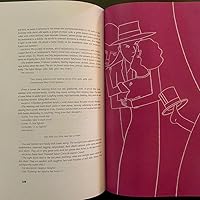
To illustrate his point, he then describes a small island in a river with a few trees at its center. One end of the island is sunny and the other is cast in the shadows of the trees. He imagines a Fay, a fairy-like creature, in a boat paddling around and around the island. Each circle represents a year of her life and eventually she is consumed in the shadows.
Beautiful imagery. Seemed to battle between grace and beauty and dark and shadowy. I would have given this a 4 if the description of the island and the fairies didn’t start halfway through the story.
This was a strange little story that appears to be about a man who becomes lost, sees some fairies, and the fairies immediately run away. I'm not sure if I was supposed to get anything more than that from this one.
Un relato mágico y poético. Un canto al ciclo de la vida, realmente es muy metafísico, creo que para captarlo no basta con una sola lectura. Otra faceta de Poe, interesante.