

What do you think?

South from Granada
Part autobiography, part travelogue, and wholly a tribute to the unspoilt beauty of southern Spain, Gerald Brenan's South from Granada includes an introduction by Chris Stewart, author of the bestselling Driving Over Lemons, in Penguin Modern Classics. Between 1920 and 1934, Gerald Brenan lived in the remote Spanish village of Yegen and South of Granada depicts his time there, vividly evoking the essence of his rural surroundings and the Spanish way of life before the Civil War. Here he portrays the landscapes, festivals and folk-lore of the Sierra Nevada, the rivalries, romances and courtship rituals, village customs, superstitions and characters. Fascinating details emerge, from cheap brothels to archaeological remains, along with visits from Brenan's friends from the Bloomsbury group - Lytton Strachey and Virginia Woolf among them. Knowledgeable, elegant and sympathetic, this is a rich account of Spain's vanished past. Gerald Brenan (1894-1987) was an English writer who spent much of his life in Spain. He is best known for The Spanish Labyrinth, a work of history on the background to the Spanish Civil War and for South From Seven Years in an Andalusian Village. He was awarded a CBE in 1982, and was much honoured in Spain If you enjoyed South from Granada, you might like Orwell's Homage to Catalonia, also available in Penguin Modern Classics. 'The best of Brenan's he has a true and proper knowledge of the culture he describes' Cyril Connolly, Sunday Times 'A brilliant interpreter of Spain to the rest of the world' The Times
320 pages, Paperback
First published January 1, 1957
About the author
Gerald Brenan
65 books22 followersEdward FitzGerald "Gerald" Brenan, CBE was an Anglo-Irish writer and Hispanist who spent much of his life in Spain.
He is best known for The Spanish Labyrinth, a historical work on the background to the Spanish Civil War, and for South from Granada: Seven Years in an Andalusian Village.
He was awarded a CBE in the Diplomatic Service and Overseas List in 1982.
Librarian Note:
There is more than one author in the Goodreads database with this name.
He is best known for The Spanish Labyrinth, a historical work on the background to the Spanish Civil War, and for South from Granada: Seven Years in an Andalusian Village.
He was awarded a CBE in the Diplomatic Service and Overseas List in 1982.
Librarian Note:
There is more than one author in the Goodreads database with this name.
Ratings & Reviews
Friends & Following
Create a free account to discover what your friends think of this book!
Community Reviews
Displaying 1 - 30 of 107 reviews

June 21, 2014
The First World War had a powerful effect on many of its participants; Gerald Brenan was one of those. Brenan came from an Anglo-Irish military family. He had the usual public school education, hated it and was bullied. He was expected to go into the army, but at 18 elected instead to walk to China with a friend John Hope-Johnstone. They made it to the Balkans, but events intervened. Brenan served in the army for the whole of the war. In 1919 he decided to move to Spain and chose the remote Alpujurras district in southern Spain. He also selected an even more remote village, Yegen. He stayed there on and off for some years and here he recounts his experiences.
Brenan was a good observer and documenter; his descriptive powers are excellent. The 1920s in Yegen were in time before the disruption of the civil war. Its very remoteness meant that modern life had not reached it and the lifestyle and culture had remained the same for centuries. Brenan wanted to write and he transported (by mule) several hundred books to his remote hideaway. His plan was to immerse himself in the classics and learn to write properly. He had a small amount of money and a small pension from the army and had to live frugally. His journey was difficult and he had no set destination, stumbling on Yegen by accident. He immerses himself in village life and is accepted by the local inhabitants; a willingness to learn the language and to be hospitable and accepting all helped. The lifestyle was agricultural and the only food imported from outside was fish from the sea, a day’s mule ride away.
It has been argued that Brenan’s choice of home and his exposition of its life and culture was an implicit criticism of what he had left behind. Unlike the reserved “my home is my castle” middle class British, everyone knew everyone else’s business and life took place on the street. The only other expat in the area was an embittered Scottish alcoholic, who despite having a Spanish wife, refused to learn the language. Although he was only nine miles away, Brenan only visited once.
Brenan was on the edge of the Bloomsbury group. He was a close friend of Ralph Partridge and had an affair with Dora Carrington. Brenan describes various visits to his new domicile. Lytton Strachey, Carrington and Partridge visited and really didn’t enjoy themselves; Strachey in particular missing “mod cons”. The Woolfs were better guests, not minding the asceticism and loving the countryside and also providing intellectual stimulus.
Brenan provides vivid portraits of local residents. He describes rather than judges; Brenan’s landlord was a particularly reprehensible character, especially in his attitude to women. There are descriptions of relationships between the sexes which depended heavily on long established ritual before and after marriage. Village society depended on the rules being kept and generally they were. There was little local justice and those who crossed boundaries tended to be the local landowners/worthies (twas ever thus). However collectively the community did force some recompenses as with one woman who had been taken advantage of who received her olive oil in larger quantities than anyone else. It is an odd story, but Brenan as he usually does, leaves the reader to make their minds up about the characters described.
Brenan also describes in detail the local plants and animals, the topography, archaeology and the perils of travelling. He describes visits to Grenada and travels in the local area. All in all it is an engaging account, written by someone who loved Spain. Brenan wrote a great deal more about his life in Spain and the civil war. He was only allowed back into Spain in 1953 because of his criticism of the Franco Regime. He lived in southern Spain for the rest of his life.
Brenan was a good observer and documenter; his descriptive powers are excellent. The 1920s in Yegen were in time before the disruption of the civil war. Its very remoteness meant that modern life had not reached it and the lifestyle and culture had remained the same for centuries. Brenan wanted to write and he transported (by mule) several hundred books to his remote hideaway. His plan was to immerse himself in the classics and learn to write properly. He had a small amount of money and a small pension from the army and had to live frugally. His journey was difficult and he had no set destination, stumbling on Yegen by accident. He immerses himself in village life and is accepted by the local inhabitants; a willingness to learn the language and to be hospitable and accepting all helped. The lifestyle was agricultural and the only food imported from outside was fish from the sea, a day’s mule ride away.
It has been argued that Brenan’s choice of home and his exposition of its life and culture was an implicit criticism of what he had left behind. Unlike the reserved “my home is my castle” middle class British, everyone knew everyone else’s business and life took place on the street. The only other expat in the area was an embittered Scottish alcoholic, who despite having a Spanish wife, refused to learn the language. Although he was only nine miles away, Brenan only visited once.
Brenan was on the edge of the Bloomsbury group. He was a close friend of Ralph Partridge and had an affair with Dora Carrington. Brenan describes various visits to his new domicile. Lytton Strachey, Carrington and Partridge visited and really didn’t enjoy themselves; Strachey in particular missing “mod cons”. The Woolfs were better guests, not minding the asceticism and loving the countryside and also providing intellectual stimulus.
Brenan provides vivid portraits of local residents. He describes rather than judges; Brenan’s landlord was a particularly reprehensible character, especially in his attitude to women. There are descriptions of relationships between the sexes which depended heavily on long established ritual before and after marriage. Village society depended on the rules being kept and generally they were. There was little local justice and those who crossed boundaries tended to be the local landowners/worthies (twas ever thus). However collectively the community did force some recompenses as with one woman who had been taken advantage of who received her olive oil in larger quantities than anyone else. It is an odd story, but Brenan as he usually does, leaves the reader to make their minds up about the characters described.
Brenan also describes in detail the local plants and animals, the topography, archaeology and the perils of travelling. He describes visits to Grenada and travels in the local area. All in all it is an engaging account, written by someone who loved Spain. Brenan wrote a great deal more about his life in Spain and the civil war. He was only allowed back into Spain in 1953 because of his criticism of the Franco Regime. He lived in southern Spain for the rest of his life.

September 14, 2014
I first read this years ago when I was reading a great deal about the Bloomsbury set (Strachey, Virginia and Leonard Woolf, Vanessa Bell et al) and became aware of Gerald Brenan as an interesting peripheral figure.
I remembered enjoying it then, and a couple of vividly described anecdotes (such as Strachey's miserable mule ride across mountain tracks to Brenan's not-very-civilised village home) stuck with me over the decades.
I found a Folio Society edition in the local second hand book shop, couldn't resist it and have so enjoyed reading it anew that I have put it under 'Favourites'.
Brenan lived in the remote village of Yegen, in the Alpujarra south of Granada, for six or seven years between 1920 and 1934, 'rebelling' he suggests, 'against English middle-class life'. He must have been a strange phenomenon to the people amongst whom he lived, but never felt anything but welcome in this poor, peasant society, where only two men apart from him had been born outside the village (and those only a few miles away).
To quote from the excellent Introduction by Philip Ziegler, South of Granada 'in its entirety ...is a hymn to a society and a way of life which seemed to him infinitely desirable. He gloried in the backwardness, the traditionalism,even the illiteracy of the peasants among whom he live; south of the Pyrenees, he believed, "one finds a society which puts the deeper needs of human nature before the technical organization that is required to tp provide a higher standard of living. This is a land that nourishes at the same time the sense for poetry and the sense for reality and neither of these accords with the utilitarian outlook"'.
Brenan's observations are acute, affectionate but not sentimental or romantic. And he observed widely, sometimes almost with an anthropologist's eye, sometimes with the eye of a naturalist, often with humour.
First published in 1957, written in the 1950s after both the Spanish Civil War (the subject of another of Brenan's books) and World War II, I feel that Brenan's analytical eye and his recall of incidental detail became clearer with time. His prose is brilliant, his imagery often brings you up short in its unexpectedness. He captures the look, smell and gestures of neighbours, mountain shepherds, gypsies, village children, cave dwellers, young courting couples. He writes of village customs and traditions, archaeology, eccentric individuals, peasant life, fairs,animals, politics, love affairs and the visits of english friends and acquaintances, including Strachey and the Woolfs.
There are a few black and white photographs and it is wonderful to be able to look up some of the villages and districts he describes to get coloured images of this vivid area of Spain.
the long gap between my starting and finishing this book on this read was that i seemed to be driven by what i 'had' to read because friends had lent me books or the book club was going to read something. and this does require some concentration. It's not something you can dip into and out of and is most rewarding when you pay it full attention.
I remembered enjoying it then, and a couple of vividly described anecdotes (such as Strachey's miserable mule ride across mountain tracks to Brenan's not-very-civilised village home) stuck with me over the decades.
I found a Folio Society edition in the local second hand book shop, couldn't resist it and have so enjoyed reading it anew that I have put it under 'Favourites'.
Brenan lived in the remote village of Yegen, in the Alpujarra south of Granada, for six or seven years between 1920 and 1934, 'rebelling' he suggests, 'against English middle-class life'. He must have been a strange phenomenon to the people amongst whom he lived, but never felt anything but welcome in this poor, peasant society, where only two men apart from him had been born outside the village (and those only a few miles away).
To quote from the excellent Introduction by Philip Ziegler, South of Granada 'in its entirety ...is a hymn to a society and a way of life which seemed to him infinitely desirable. He gloried in the backwardness, the traditionalism,even the illiteracy of the peasants among whom he live; south of the Pyrenees, he believed, "one finds a society which puts the deeper needs of human nature before the technical organization that is required to tp provide a higher standard of living. This is a land that nourishes at the same time the sense for poetry and the sense for reality and neither of these accords with the utilitarian outlook"'.
Brenan's observations are acute, affectionate but not sentimental or romantic. And he observed widely, sometimes almost with an anthropologist's eye, sometimes with the eye of a naturalist, often with humour.
First published in 1957, written in the 1950s after both the Spanish Civil War (the subject of another of Brenan's books) and World War II, I feel that Brenan's analytical eye and his recall of incidental detail became clearer with time. His prose is brilliant, his imagery often brings you up short in its unexpectedness. He captures the look, smell and gestures of neighbours, mountain shepherds, gypsies, village children, cave dwellers, young courting couples. He writes of village customs and traditions, archaeology, eccentric individuals, peasant life, fairs,animals, politics, love affairs and the visits of english friends and acquaintances, including Strachey and the Woolfs.
There are a few black and white photographs and it is wonderful to be able to look up some of the villages and districts he describes to get coloured images of this vivid area of Spain.
the long gap between my starting and finishing this book on this read was that i seemed to be driven by what i 'had' to read because friends had lent me books or the book club was going to read something. and this does require some concentration. It's not something you can dip into and out of and is most rewarding when you pay it full attention.

August 25, 2015
All I have aimed at is to entertain a few armchair travellers, who may enjoy whiling away a rainy night in reading of how people live in remote mountain villages in the serene climate of the South Mediterranean.
This book left me cold. I didn’t expect this. Early on in the book, Brenan tells us how he used to sit under an orange tree in Andalusia, reading Spinoza’s Ethics. Shortly thereafter, he moves into a little town in the Alpujarras and brings along with him hundreds of books, with the intention of educating himself. It is hard for me to think of a more promising start to a memoir. But as I turned the last page, I felt only relief that the book was over and I could move on.
Perhaps this coldness is due to the long gap between Brenan’s stay there and his writing of this book. South From Granada is an account of Brenan’s time living in Yegen, a small town in Andalusia, in the years between 1920 and 1934. The book was written about twenty years later, and published 1957. The intervening time seems to have dulled Brenan’s memories or taken some of the tang out of his experience, for I found many of the descriptions of Yegen in this book underwhelming bordering on soporific. And this, despite all of the things this book has going for it: skillful prose, an interesting story, as well as cameos from Lytton Strachey and Virginia Woolf. What went wrong?
Even though Brenan spent an awful lot of time in this village, I got the impression that he didn’t get to know most of the people all that well. His fullest portraits in this book are of his landlord, his servant, a drunken Scottish person who lived a few miles away, and his friends who came to visit him. Maybe he spent most of his time reading? (He mentions at one point that he was reading all twelve volumes of James Frazer’s The Golden Bough.) Much of the rest of the book is given over to descriptions of the countryside—very good descriptions, I might add—and other amateur interests of Brenan’s: archaeology, botany, history, poetry, folklore, and anthropology.
As that list suggests, Brenan was an exceptionally well-rounded and well-educated man. Yet he doesn’t manage to translate this into interesting or insightful writing. Each chapter is much too short and too sketchy to provide any real understanding for the reader; and besides, I often felt that Brenan wasn’t the most trustworthy person to consult in these matters, and my skepticism got in the way of my enjoyment. In the introduction, Christ Steward suggests that Brenan’s versatility is a reproach to our overly specialized age. Yet for me this book taught the opposite lesson: if you want to do serious intellectual work, you’ve got to specialize. Otherwise, you end up like Brenan, with a superficial understanding of many things but a deep understanding of nothing in particular.
Brenan’s excellent prose might have been expected to remedy this situation. And indeed, much of the book is very impressively written. Nevertheless, even here Brenan irked me a little. First was his habit of using “one” in his descriptions of the countryside:
One flies over the villages in the air, one seens their strange names on the map, one may even, if one leaves the main road, bump past them in a car, but their life remains as mysterious at that girl with the unforgettable face one caught sight of for a moment through the window of a railway carriage.
Second was his habit of using “would” to describe his routines and village life:
I would come back tired and stiff from a long expedition and, while I washed and changed my clothes, the fire would be lit and a meal brought in. My post would be waiting for me and a copy of the Nation—that ancestor of the New Statesman—and over my coffee I would read my letters and begin to answer them.
This second habit I found especially distracting, because I’ve caught myself doing the same thing in my own writing and have tried to get rid of it as much as possible.
Both of these habits—using the impersonal “one,” and frequently using “would”—reinforce the feeling of distance and coldness that I experienced. It would have been much better, I think, not to tell us of what “one” would see, but of what he saw; not to tell us of what “would” happen, but of what did happen. There are too many generalities in this book and not enough specifics; there is too much description and not enough action.
Nevertheless, the book redeems itself in several places. The first is Brenan’s description of Virginia Woolf’s visit, in which he gives us an excellent portrait of her personality and also some details about his experience in the Bloomsbury Group. I actually got the feeling that Brenan was not a little in love with Woolf, his descriptions of her are so vivid and so thoughtful. The other standout chapter was Brenan’s account of his visits to the brothels of Almeria. The brothels themselves sounded dull, but the companion Brenan takes with him was a real character. But then just as the book is ending, Brenan tells us that he won’t give an account of Bertrand Russell’s visit—which really frustrated me, since I think that would have been another great chapter.
In any case, it must be admitted that this book is probably the most readable account of a time and place that no longer exists. According to the Wikipedia article, now there is a sizeable expat community of British people living in the town, probably in part thanks to this book. Still, I can’t help being disappointed that something with so much potential came out so mediocre. Wasted potential is always vexing.

January 16, 2008
This is a classic as well it should be. Brenan lived for years in a small village in the Alpujarra region of Spain and gives us a detailed chronicle of life among the villagers and in this landscape. He is a fine observer of people, nature, himself.

March 6, 2008
Although it was first published over half a century ago, Gerald Brenan's "South from Granada" is still considered by many to be the canonical text about the Alpujarra region of Spain's Sierra Nevada, the standard against which all other work is judged. Does it deserve its exalted reputation? You'll get no argument from me.
Brenan writes intelligently and fluidly, and his account is always interesting, whether he is writing about his own personal experiences, or about his neighbors and the local customs of the Alpujarra. As he was friends with members of the Bloomsbury circle, the book also contains an account of (separate) visits by Lytton Strachey and Virginia Woolf.
The following comments on Woolf nicely illustrate Brenan's perspicacity and generosity, two of the qualities that make this memoir so enjoyable to read:
I want to emphasize Virginia's real friendliness on this occasion and the trouble she took to advise and encourage me, because her recklessness in conversation -- when she was over-excited she talked too much from the surface of her mind -- made some people think that she lacked ordinary sympathies. I was young for my age, and rather earnest. ... She on the other hand was a writer of great distinction, approaching the height of her powers. Yet she and her husband not only concealed the impatience they must often have felt, but treated me as though I was their intellectual equal.
Based on this book, I'm really looking forward to reading Brenan's writing on the Spanish Civil War.
Photos from the Alpujarra:
http://www.flickr.com/photos/gaelstat...
Brenan writes intelligently and fluidly, and his account is always interesting, whether he is writing about his own personal experiences, or about his neighbors and the local customs of the Alpujarra. As he was friends with members of the Bloomsbury circle, the book also contains an account of (separate) visits by Lytton Strachey and Virginia Woolf.
The following comments on Woolf nicely illustrate Brenan's perspicacity and generosity, two of the qualities that make this memoir so enjoyable to read:
I want to emphasize Virginia's real friendliness on this occasion and the trouble she took to advise and encourage me, because her recklessness in conversation -- when she was over-excited she talked too much from the surface of her mind -- made some people think that she lacked ordinary sympathies. I was young for my age, and rather earnest. ... She on the other hand was a writer of great distinction, approaching the height of her powers. Yet she and her husband not only concealed the impatience they must often have felt, but treated me as though I was their intellectual equal.
Based on this book, I'm really looking forward to reading Brenan's writing on the Spanish Civil War.
Photos from the Alpujarra:
http://www.flickr.com/photos/gaelstat...

January 9, 2015
There is a wonderful portrait of Gerald Brenan in the National Portrait Gallery in London, painted by Dora Carrington, a fellow member of the Bloomsbury Group. It shows a glowing, blond good-looking man, the least like a dark, swarthy man of Andalucía that can be imagined. It is clear from his writing however that he understood the Spanish people of the South. This book is set in Yegen, a village in the Alpujarras, the same mountain area south of Granada made famous at the end of the 20th century by Chris Stewart. Yegen as Brenan knows it though is set in pre-Civil War Spain in the 1920s. He writes about rural poverty, local food and customs, and the beauty of the mountain scenery interspersed with visits from Bloomsbury Group fellows such as Carrington, Lytton Strachey and Virginia Woolf.
Best of all is his description of the store-room next to the kitchen, ‘… several hundred persimmons from two trees that grew in the garden: picked after the first frost, they ripened slowly and were eaten with a spoon when they went soft and squashy. Quinces were also kept there, as well as oranges and lemons and apples, and pots of marmalade and cherry jam and green-fig jam… there were always one or two of the famous Alpujarra hams which kept through the summer if they were rubbed every week or two with salt.’
Several hundred persimmons! The birds always seem to win the race to get to our caquis as soon as they are ripe, eating them on the tree. But we enjoy bird watching, so it is an amicable trade-off.
Best of all is his description of the store-room next to the kitchen, ‘… several hundred persimmons from two trees that grew in the garden: picked after the first frost, they ripened slowly and were eaten with a spoon when they went soft and squashy. Quinces were also kept there, as well as oranges and lemons and apples, and pots of marmalade and cherry jam and green-fig jam… there were always one or two of the famous Alpujarra hams which kept through the summer if they were rubbed every week or two with salt.’
Several hundred persimmons! The birds always seem to win the race to get to our caquis as soon as they are ripe, eating them on the tree. But we enjoy bird watching, so it is an amicable trade-off.

January 1, 2015
I got this book unexpectedly as a gift from a friend--I had never heard of it or the author, but the friend thought I would like it. I did, and I'm glad I read it.
The author was an Englishman and a peripheral member of the Bloomsbury circle who, after WWI, decided to take his military stipend to live somewhere remote where he could make it last for a while and just live a quiet life. That turned out to be a village in southern Spain called Yegen, which by the author's telling was quite remote indeed--the nearby towns seem to have generally been several hours' walk away.
I found the book by turns very engaging and pretty dull. The author set himself an interesting task, because part of his motivation in coming to Yegen was to find somewhere that he could live a pleasant, non-striving, non-dramatic life. It seems that he achieved this, but as it turns out it is a difficult type of experience to write engagingly about. Brenan draws an interesting portrait of the people of Yegen, with an outsider's eye for detail and strangeness, but also with a clear love for them and for the place. He seems to be something of an amateur historian, and gives some interesting commentary on the close links between the rituals of the village and ancient pagan traditions--so much so that the nominal Catholicism of the village seems to be just a thin veneer.
In several chapters, though, Brenan departs from his own firsthand experience to talk about the pre-history and ancient history of the era, and this just came across as very boring to me. It very much seemed as though he was filling space because he only had a limited number of personal experiences he could write about.
Ultimately, my main disappointment with the book was the lack of strong characters. Brenan discusses a lot of people that he meets, but I got the feeling that he didn't know most of them all that well. Perhaps the language barrier was an issue (though it seems he spoke fairly good Spanish), or perhaps he is just not that good at imparting the characters. There are entertaining accounts of the visits of Lytton Strachey and Virginia Woolf, but neither is long enough for much character development. I can think of a couple of locals in the book whose stories are quite memorable, but they are both single-encounter characters, and not individuals who develop throughout the book. I suppose in a way I am just wishing for the book to be something other than what it is.
The author was an Englishman and a peripheral member of the Bloomsbury circle who, after WWI, decided to take his military stipend to live somewhere remote where he could make it last for a while and just live a quiet life. That turned out to be a village in southern Spain called Yegen, which by the author's telling was quite remote indeed--the nearby towns seem to have generally been several hours' walk away.
I found the book by turns very engaging and pretty dull. The author set himself an interesting task, because part of his motivation in coming to Yegen was to find somewhere that he could live a pleasant, non-striving, non-dramatic life. It seems that he achieved this, but as it turns out it is a difficult type of experience to write engagingly about. Brenan draws an interesting portrait of the people of Yegen, with an outsider's eye for detail and strangeness, but also with a clear love for them and for the place. He seems to be something of an amateur historian, and gives some interesting commentary on the close links between the rituals of the village and ancient pagan traditions--so much so that the nominal Catholicism of the village seems to be just a thin veneer.
In several chapters, though, Brenan departs from his own firsthand experience to talk about the pre-history and ancient history of the era, and this just came across as very boring to me. It very much seemed as though he was filling space because he only had a limited number of personal experiences he could write about.
Ultimately, my main disappointment with the book was the lack of strong characters. Brenan discusses a lot of people that he meets, but I got the feeling that he didn't know most of them all that well. Perhaps the language barrier was an issue (though it seems he spoke fairly good Spanish), or perhaps he is just not that good at imparting the characters. There are entertaining accounts of the visits of Lytton Strachey and Virginia Woolf, but neither is long enough for much character development. I can think of a couple of locals in the book whose stories are quite memorable, but they are both single-encounter characters, and not individuals who develop throughout the book. I suppose in a way I am just wishing for the book to be something other than what it is.
June 5, 2023
I discovered Brenan by following the Churchillian dictum that the uneducated should read books of quotations. Decades later, I finally got around to reading one of his books. I immediately felt affinity for a person who, after two years in the trenches at the Somme, Ypres and Passchendaele could write the following:
Want to know the price of a prostitute in the Andalusian village Brenan lived in? Two eggs, one if the hens weren't laying.
Brenan gives us not only an education, but with a special twist. There's a flavour to his writing which tickles the brain. It is not surprising that Virginia Woolf came to visit while he lived in this village. Here is a sample of a Brenan twist:
I took with me a good many books and a little money and the hope that I should be able to keep going for long enough to acquire something I badly needed – an education.That's what this book is: an education. From clod to clouds, from stones to stars, from mountains to mythology Brenan brings to the mix in a short but dense work.
Want to know the price of a prostitute in the Andalusian village Brenan lived in? Two eggs, one if the hens weren't laying.
I set down these particulars of village economy in the hopes that one day some learned historian, turning up this book on the shelves of a library in New Zealand or Tierra del Fuego, may find them helpful in filling the gaps of his knowledge on the change of price levels during the last decades of a vanished civilisation.I got the book from a New Zealand library.
Brenan gives us not only an education, but with a special twist. There's a flavour to his writing which tickles the brain. It is not surprising that Virginia Woolf came to visit while he lived in this village. Here is a sample of a Brenan twist:
One is a thorny shrub with white flowers of the same family as spindlewood and known as Catha europea. It is a close relation of the Catha edulis, in Arabic kat, which is cultivated in Yemen and in Abyssinia on account of its rich supplies of caffeine. A delicious drink, something between coffee and camomile tea, but with, I am told, a slight flavour of ostriches’ dung, is made from it.
September 20, 2023
This won’t be for everyone but I read it whilst travelling through this part of Spain and really enjoyed it. The style of the writing is quite old fashioned and, although chapters are grouped into themes or events e.g. superstitions, festivals etc, things don’t always link together particularly elegantly. However it’s a lovely portrait of Spain in the twenties and Andalusia before it became mainly famous for its (not exactly traditional) beach resorts. There’s the odd splash of colour as well injected by visits from a few of the Bloomsbury set - although definitely don’t read it for those alone as they are hardly the focus of the book. However there was lots that I learnt (e.g. the Sierra Nevada are actually higher than the Pyrenees (just)) and there was plenty about the differences between Andalusian Catholicism and that of more northern climes that I had no concept of at all and that I found fascinating. A great travel companion.
November 6, 2025
Leuk boekje dat ik in Granada in de boekwinkel tegenkwam. Een Engelsman - een killer bee van de Bloomsbury group - gaat na de eerste wereldoorlog van zijn soldatenpensioen in een afgelegen dorpje in de Alpajurras wonen. Een heerlijke beschrijving van het dagelijks leven in een Spaans dorpje voor de burgeroorlog. Lekker van de hak op de tak observaties over de mensen, natuur en cultuur. Erg interessant om een het verslag van een ooggetuige te lezen over zo'n pre-moderne samenleving.
October 30, 2024
Ole la Alpujarra
This entire review has been hidden because of spoilers.
November 1, 2021
Armchair travel writing from a hundred years ago by a keen young British man whose curiosity about a rural part of Spain makes for very entertaining reading! Travel writing that focuses on the aesthetics of a landscape can get boring very rapidly, and fortunately this book has only just a little of that. Gerald Brenan instead provides insights into customs and rituals of rural Spain that have been in place for hundreds of years, including the practice of prostitution! The reader gets to know a broken man whose life has been ruled by destructive vices including gambling, drink, and brothels. Supposedly the following passage is attributed to this “broken man”, though I’m suspicious that he would have been sober enough to utter these words.
“In true vice there is obsession, there is self-abandonment. You sink, you sink, you discard your pride, you let yourself go on a wave of generosity. You give up everything and hold on to nothing. You die, you destroy yourself, you come down to the last truth of things. You become as God made you. I say that there is more true religion in that life than in all the sermons you hear in churches, because there is no holding back and no hypocrisy.”
Overall a very well-written description of a culture that is probably no longer in existence. Thank goodness for authors like Gerald Brenan!
“In true vice there is obsession, there is self-abandonment. You sink, you sink, you discard your pride, you let yourself go on a wave of generosity. You give up everything and hold on to nothing. You die, you destroy yourself, you come down to the last truth of things. You become as God made you. I say that there is more true religion in that life than in all the sermons you hear in churches, because there is no holding back and no hypocrisy.”
Overall a very well-written description of a culture that is probably no longer in existence. Thank goodness for authors like Gerald Brenan!

April 15, 2017
Pretty charming.
I love the social history and anthropological elements of it (village superstitions, courting, whoring, saints and sinners) and the brief history of the region (I can't get enough of the Reconquista and Moriscos - it's such a fascinating point of flux).
The travel writing is mostly delightful, though I feel about travel writing a bit like I do about competent watercolours - they start feeling like hackwork after you've seen a few dozen of them. I don't know - whenever I read a lyrical description of clouds, part of me thinks 'I bet it didn't really look like that. I bet you added that later'. Still, hard not to like.
Oh, but Lytton Strachey sounds like a right twit. Quite the buffoon. Virginia Woolf - that's a really distinctive account of her. I could totally imagine her being sort of intense and staccato and a little bit sexy, even. Never thought of her like that before.
All told, probably essential reading for the Andalusophile. Time to Google Yegen and see the Lidl and Irish pub there.
I love the social history and anthropological elements of it (village superstitions, courting, whoring, saints and sinners) and the brief history of the region (I can't get enough of the Reconquista and Moriscos - it's such a fascinating point of flux).
The travel writing is mostly delightful, though I feel about travel writing a bit like I do about competent watercolours - they start feeling like hackwork after you've seen a few dozen of them. I don't know - whenever I read a lyrical description of clouds, part of me thinks 'I bet it didn't really look like that. I bet you added that later'. Still, hard not to like.
Oh, but Lytton Strachey sounds like a right twit. Quite the buffoon. Virginia Woolf - that's a really distinctive account of her. I could totally imagine her being sort of intense and staccato and a little bit sexy, even. Never thought of her like that before.
All told, probably essential reading for the Andalusophile. Time to Google Yegen and see the Lidl and Irish pub there.

August 24, 2017
My wife and I toured Andalusia by car recently, and while we did not visit Yegen, the scene of most of this author's reminiscences, we did visit similar mountain towns and villages in the vicinity of Granada and further south near Marbella. I found this book to be mostly of antiquarian interest, depicting as it does a Spain that no longer exists, or exists only in rare remnant form. In spite of the author's long residence in Spain and his treatment of it as his adopted country of choice, the mind-set of the colonist comes through loud and clear in his selection and treatment of characters and subjects, most of which he seems to regard as quaint, and that air of condescension infects much of the book and soured it for me. The author seems to behave and feel the way many expats do, that while the new country is nice, it really needs to adopt the ways of good ol' (fill in the blank with country of origin). I had expected more and better.
February 27, 2019
Un amor de libro. Muy bien escrito, ameno y divertido que describe con mucho gusto y respeto la esencia y la forma de vida y de pensar de las gentes que habitaban la aislada Alpujarra de aquella época. Me ha gustado ver el sur desde sus ojos y me parecen muy valientes y envidiables estas personas que deciden, de pronto dejarlo todo para instalarse en un lugar recóndito e inaccesible como eran aquellos pueblos entonces, mezclándose con las costumbres no sólo del lugar, sino de la época, hacerlas propias sin imponer nada de lo propio. Me ha encantado.
January 17, 2021
Me ha encantado leer las descripciones sobre Las Alpujarras así como su trayecto por estos lugares recónditos y, por aquel entonces, inaccesibles, desde la mirada inquisitiva e inquieta de Gerald para conservar de la forma más fehaciente posible la idiosincrasia de esta región y sus gentes que, a pesar de ser fieles a sus costumbres y rituales, jamás trataron de imponer. Preciosísimo.
November 24, 2025
Creo que va a ser muy difícil hacer una reseña de este libro, porque bàsicamente ha sido una experiencia peculiar, nunca había dejado un libro en este estado.
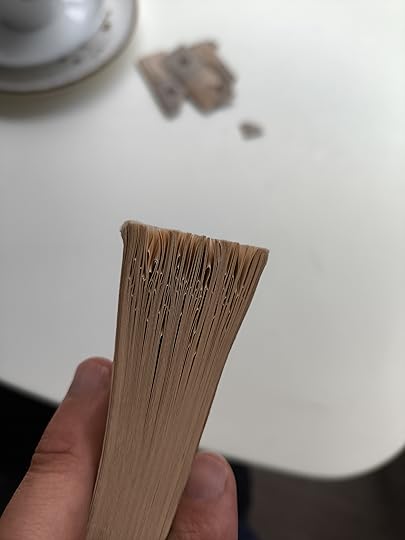
Esta reseña va a ser eterna, creo que nadie encontrará interés en ella, estas reseñas son para mi. En la primera parte voy a ponerme algo romántico y personal, en la segunda voy a reseñar aspectos del libro y en la tercera voy a ACUMULAR cosas anecdóticas sin ton ni son del libro. NO RECOMIENDO QUE LO LEAS Y MENOS SI NO ME CONOCES. En fin voy a PERPETRAR esta reseña malamente escrita
1º-Guranada y yo
Es una ciudad con la que siempre he estado muy vinculado, mi familia paterna es granaina, he vivido un par de años allí y he tenido numerosas visitas a la ciudad. Este libro… Sus descripciones de Granada y la Alpujarra, sus descripciones de Almería, la costa, la sierra, su flora, la gente de Granada y su mentalidad…
Compré este libro en 2019, aun vivia en Granada y tras una conversación con el librero de mi librería favorita de allí (Bakakai), me empujó a que me comprase este libro que me iba a gustar, era de segunda mano, barato y me fiaba mucho de su criterio.
El librero también me recomendo un documental que se podía ver online en RTVE (estoy actualmente enajenado buscándolo) en el cual un Gerald octogenario visitaba junto al equipo de TVE las alpujarras en los 70. El librero me comentaba que impresionaba ver a las mujeres con los cantaros de agua en la cabeza, a unas horas de Granada mientras la gente protestaba contra franco y hacía huelgas estudiantiles.
La alpujarra seguía teniendo un ritmo diferente.
No quiero romantizar la vivencia de una zona emprobecida económicamente. La visión de Gerald no deja de ser la visión burguesa y romántica (con una gran sensibilidad) de una persona desencantada con su realidad tras la primera guerra mundial. Refleja la pobreza, pero de una manera “rara” cierta superioridad y distancia extraña, en ocasiones la romantiza.
No conozco la alpujarra especialmente, salvo alguna ruta de montaña y un par de rutas por pueblos de la zona. Para mí es una desconocida, conozco mejor la costa tropical y la costa almeriense de las cuales también se hablan en el libro.
También adoro todo lo que tenga un puto costumbrista/etnológico y este libro derrocha eso.
Es por todo lo arriba descrito (y muchas cosas que no han pasado del borrador) que este libro me ha ahogado en nostalgia.
2º. A perpetrar la reseña
Este libro me ha absorbido y me ha encantado, pero que sin embargo es un libro que me podría haber generado un rechazo enorme, creo que he tenido suerte
En fin, un expat en las Alpujarras
El observador avezado se habrá percatado ya que este libro me ha gustado. Me ha sorprendido enormemente la visión de Gerald Brenan, obviamente en cierta medida burguesa a pesar de ello Dentro de su romanticismo habla con mucha sinceridad y mucho respeto de la realidad de Yegen y el entorno en el cual vive.
En ocasiones Gerald tiene un tono decolonial que me sorprende enormemente y una defensa de lo que otras personas consideran “bárbaro”. Por ejemplo,: explicando las casas-cueva de Guadix, hace sus descripciones con objetivididad envidiable, criticando a autores extranjeros por sus relatos llenos de clichés, falsos e incluso racistas. También critica a autores españoles como Pedro Antonio Alarcón porque su visión de las alpujarras es un retrato bucólico-folklórico alejado de la realidad que tira de tópicos.
Todo este respeto que muestra se acaba a la hora de hablar del género femenino, en los primeros capitulos se narra una agresión sexual desde cierto costumbrismo/¿comicidad? Que me hace dudar de lo fidedigno del relato “Había cumplido su deber chillando, de manera que su honor estaba a salvo”. También cuando inicia un noviazgo por aburrimiento para pasar el rato y prácticamente ridiculiza a su novia por ser bajita.
A esto hay que añadir un detalle que he descubierto a posteriori que Gerald no narra en este libro, Gerald violó a una menor de edad Juliana de 17 años que era su críada, de la violación nació una niña ilegítima que se llevó a Londres. Juliana tuvo que abandonar su pueblo y le arrebataron a su hija. En fin, no deja de ser un expat el Gerald de los cojones.
En cierto momento me hace conectar con ciertas ideas de otras obras costumbristas en las cuales “el rico” de la zona no sería nadie en la ciudad y su pobreza. Por ej.: En cañas y barro la fortuna de l’albufera lo és solo allí y en la ciudad su fortuna no es tal.
Me ha flipado el libro. He sentido la necesidad de comentarlo con alguien con conocimiento histórico/antropológico de la alpujarra, es un libro que habría devorado con mil notas al pie.
3. Acumulación de cosas
Cosas que me han gustado y detalles sin ton ni son (He eliminado muchas, el word me hacía 10 páginas) y delante de cada una hay un me encanta, me flipa, me sorprende, que horror leerlo.
METEO
-Me sorprende mucho el viento tormentoso que narra como anual en el pueblo, me encantaría una explicación metereológica al respecto.
-Me sorprende que cada 100 metros de altitud se daba un retraso de las estaciones en el trigo de 4 días y las diferencias dentro del propio pueblo o diferentes pueblos de las alpujarras con sus diferentes cultivos y riegos.
RELIGIÓN
-Me encanta cuando habla de las fiestas típicas de Yegen, Cadiar, Valor y otros pueblos. Obviamente Gerald se percata que a pesar de la pátina cristiana… Son fiestas de orígen pagano, que se asocian con fertilidad, con frutos, con fuego y eventos astronómicos “son más antiguas que el cristianismo”. En fin españa sigue siendo pagana por dentro, los santos son el politeísmo modificado, salu2.
-ME encanta como funcionaba la misa en Yegen, las mujeres estaban atentas y el grueso de hombres está en el pórtico se asoman de vez en cuando y eso ya “cuenta. Niños juegan, perros entran y salen, la gente fuma, come, bebe y jóvenes parejas se encuentran en las capillas. Me sorprende que describe que en siglo XVI esto era en general común en el grueso de poblaciones rurales en España y que es en el siglo XIX donde esto se modifica por parte del clero. En cambio la alpujarra seguía a su ritmo.
-El aspecto anticlerical del pueblo andaluz y a la vez tremendamente “capillita” preguerra civil, que bien lo capta Brenan, me impresiona especialmente como habla de las factoria creada por el Obispo de Guadix y el amor odio de la población.
-La poseia árabe sufí y como habla de Shustari maravilloso. Necesito que este señor me cuente el mundo así en general
-Toda la historia de conversiones a judios y musulmanes en las alpujarras así como las diferentes rebeliones, me flipa. También no me sorprende saber que gran parte de la alpujarra es repoblada con campesinado gallego. ¿De ahí viene esos toques páganos?. Me encanta además como habla de gran parte del campesinado de esas épocas (atraído el clero más con las ciudades con el rural) como gente que estaba menos cristianizada que los musulmanes. De verdad necesito leer este libro con mil notas al pie de página.
-Eventos sociales como la “cencerrada” cuando dos viudos se casaban, como todo el pueblo hace escarnio de ellos y si superaban ese escarnio se podían casar me resultan súper peculiares. Vaya sistema de control social tan severo, pero si aguantabas meses de escarnio no pasaba nada y se podían juntar
CLASE
-Me flipa como Brenan ve tantas cosas con tanta claridad. Cuando habla de viudas y huerfanos y sus penurías económicas acuña esta frase que me encanta “En la lucha por la mera existencia, los más finos sentimientos cuentan muy poco. Para los más pobres incluso el dolor es un lujo.”
-Brenan conoce a un escocés que vive en la alpujarra con mucho dinero, vida de excesos le consigue falsos amigos y acaba amargado en un ambiente enrarecido viviendo. Este escocés tiene una visión puramente colonial y mira a todos los alpujarreños y españolas por encima del hombro. Me encanta con que claridad Brenan refleja a ese hombre sus actitudes y sus contradicciones.
-“la segunda década del siglo XX marca una absoluta destrucción de las artes y costumbres campesinas en la europa meridional” procede a dar ejemplos buenísimos. Muy de acuerdo con esta afirmación, terrible el siglo XX
-Me encanta todo lo que menciona culinariamente, este señor habla con un respeto enorme, lees a coetaneos suyos hablando de los lugares en los que visitan/viven y es TAN diferente de como habla él. Todo es desde el sumo respeto sin caer en la admiración. Habla muy bien de las cocinas campesinas y adopta rápidamente sus costumbres mientras otros poseen actitudes de desprecio y le toman por loco.
-Como su críada María analfabeta había desarrollado su propia manera de contar y representar numeros. Como habla de ella y sus capacidades, viéndola como una persona brillante a pesar de ser analfabeta es muy bonito.
ANIMALES
-Me encanta como habla de la relación del campesino español con su ganado, animales de tiro y aves de corral. Como estos animales son dignos de la nobleza como una persona. Y sin embargo como el perro está peor tratado que en Inglaterra y ya lo que es divertidísimo es como considera al culpable de esto a los NIÑOS. Cualquier persona que haya visto a chavales cabrones en un pueblo entiende perfectamente a que se refiere.
-Me impresiona como la gente del pueblo era incapaz de matar a un burro o un mulo, si había que eutanasiarlo se tiraba por un barranco o se le dejaba morir de hambre, pero que no podían ajusticiar a este animal como si fuera ganado cuando era uno más de la familia. Yo como lector estaba igual de sorprendido que Gerald.
SOCIEDAD
-Me flipa que a este hombre se la pele la Alhambra una barbaridad
-Me encanta la descripción de la mesa camilla y la vida familar entorno a ella.
-QUE PUTA MARAVILLA, cuando unos gitanos se encuentran a inglés muy pálido en el monte haciendo una excursión, le dan una paliza y lo llevan ante el alguacil al grito de “mantequero, mantequero”, convencidos de haber atrapado al sacamantecas.
-Todo lo relativo a la gracia, el duende, los novenos hijos, la maría, etc. Me flipa la construcción de esa “magia campesina”
-La figura del padrino y el compadre, así como el sistema de “amantes” que se regía con los “señores” me encanta. Una vez más me encanta las cosas que cuenta Brenan.
-Las mujeres con el período no pueden tocar el grano, hacer pan, lavarse y si pueden ni cocinar deben. Me sorprende enormemente, cosas que asociamos a día de hoy con paises árabes, pasaba hace nada aquí.
-Las rutinas de la gente de almería desde la terraza donde se tomaba un café habitualmente.
-Como era más económico ir a la gitana que habitaba la torre de almería a darle dinero que a otro mendigo del centro. Tenías más bendición y gracia por menos limosna. Que maravilla
-Me impresiona como describe a la gente de Yegen con una “neurosis con la comida” y cuando explica en que consiste básicamente está describiendo a lo que a día de hoy se considerarían anorexias. Comer a escondidas, restricciones, comer a espaldas dentro de una familia, etc.
-Brenan en el puto estanco se encuentra que hay gente usando monedas íberas y púnicas como moneda de cambio normal ME CAGO EN DIOS. Se explica porque era una herencia de hacía dos generaciones y no sabían que hacer con ella, pero JODER.
-Es una maravilla como habla de los granainos de su malafollá, de una ciudad andaluza pero pirenáica, de un carácter hosco, es impresionante me encanta.
-Como habla de los rituales de cortejo en sevilla y málaga de como funcionan, me encanta, el tema de la reja, de ser novios formales y pasear (pensaba que todo esto era MUCHO MÁS anterior). De las calles llenas de novios en ventanas y de lo protocolizado que es todo esto. Aun así me encanta como el considera que su propio relato es una caricatura y que no ha rascado más en ello.
-Como le querían arrejuntar con una joven de la alpujarra rompiendo su romance para que ella tuviese mejor fortuna
-El capítulo del prostibulo, es tremendamente curioso. Obviamente resulta, sordido y banaliza muchas cosas desde la visión del autor. Aun así es sorprendente acceder a esa realidad y su funcionamiento. Pero es un capítulo que puede ser desagradable de leer.
-Su critica al señorito andaluz como copia/pega, como imitación entre ellos con su visión de vivir la rectitud y como “deben” las cosas. Que maravilla, hace pensar que no estamos tan lejos, se reconoce a mucha sociedad ahí. La historia es un circulo y blablabla
-Me resulta muy gracioso cuando empieza a cortejar a dos hermanas junto a un amigo y se da cuenta que al final su cortejada estaba interesada únicamente en que ganaba “capital social” respecto a otros solteros al estar él interesado en ella.
CULTURA
-Me hace mucha gracia que vaya a comprar cerámica a Fajalauza (que te sorprende Alberto)
-Cuando llega la compañía teatral a Yegen es en general muy curioso todo, pero hay un momento en que un actor espeta “Ni siquiera en las Hurdes nos habían tratado así”, me ha dejado loco esa frase.
-Me encanta como describe a los círculos literarios donde se movía, desde una admiración y una crítica devastadora. Gente a la que admira pero que vive en una torre de marfíl. También me encanta su visión de Virginia Woolf, Brenan oscila entre la admiración hacía alguien y un ¿ego? que le hace desmerecer a la gente
-Me gustan mucho los mitos árabes que tienen los pastores y como Brenan acaba decepcionado de que en una laguna no apareciera una princesa mora a seducirlo en medio de la noche.
-La etimología de puerto lobo que viene del arabe LOH, que es como franja de tierra. Que carajo me ha dejado el culo roto
-El british museum confundiendo cerámica de Nijar con cerámica egipcia y poniendola en exposición que maravilla.
-Me flipan las descripciones, el valle de lecrín, el norte de áfrica desde las alturas, la sierra…
No sé este libro ha sido un viaje etnológico muy guay
Esta reseña va a ser eterna, creo que nadie encontrará interés en ella, estas reseñas son para mi. En la primera parte voy a ponerme algo romántico y personal, en la segunda voy a reseñar aspectos del libro y en la tercera voy a ACUMULAR cosas anecdóticas sin ton ni son del libro. NO RECOMIENDO QUE LO LEAS Y MENOS SI NO ME CONOCES. En fin voy a PERPETRAR esta reseña malamente escrita
1º-Guranada y yo
Es una ciudad con la que siempre he estado muy vinculado, mi familia paterna es granaina, he vivido un par de años allí y he tenido numerosas visitas a la ciudad. Este libro… Sus descripciones de Granada y la Alpujarra, sus descripciones de Almería, la costa, la sierra, su flora, la gente de Granada y su mentalidad…
Compré este libro en 2019, aun vivia en Granada y tras una conversación con el librero de mi librería favorita de allí (Bakakai), me empujó a que me comprase este libro que me iba a gustar, era de segunda mano, barato y me fiaba mucho de su criterio.
El librero también me recomendo un documental que se podía ver online en RTVE (estoy actualmente enajenado buscándolo) en el cual un Gerald octogenario visitaba junto al equipo de TVE las alpujarras en los 70. El librero me comentaba que impresionaba ver a las mujeres con los cantaros de agua en la cabeza, a unas horas de Granada mientras la gente protestaba contra franco y hacía huelgas estudiantiles.
La alpujarra seguía teniendo un ritmo diferente.
No quiero romantizar la vivencia de una zona emprobecida económicamente. La visión de Gerald no deja de ser la visión burguesa y romántica (con una gran sensibilidad) de una persona desencantada con su realidad tras la primera guerra mundial. Refleja la pobreza, pero de una manera “rara” cierta superioridad y distancia extraña, en ocasiones la romantiza.
No conozco la alpujarra especialmente, salvo alguna ruta de montaña y un par de rutas por pueblos de la zona. Para mí es una desconocida, conozco mejor la costa tropical y la costa almeriense de las cuales también se hablan en el libro.
También adoro todo lo que tenga un puto costumbrista/etnológico y este libro derrocha eso.
Es por todo lo arriba descrito (y muchas cosas que no han pasado del borrador) que este libro me ha ahogado en nostalgia.
2º. A perpetrar la reseña
Este libro me ha absorbido y me ha encantado, pero que sin embargo es un libro que me podría haber generado un rechazo enorme, creo que he tenido suerte
En fin, un expat en las Alpujarras
El observador avezado se habrá percatado ya que este libro me ha gustado. Me ha sorprendido enormemente la visión de Gerald Brenan, obviamente en cierta medida burguesa a pesar de ello Dentro de su romanticismo habla con mucha sinceridad y mucho respeto de la realidad de Yegen y el entorno en el cual vive.
En ocasiones Gerald tiene un tono decolonial que me sorprende enormemente y una defensa de lo que otras personas consideran “bárbaro”. Por ejemplo,: explicando las casas-cueva de Guadix, hace sus descripciones con objetivididad envidiable, criticando a autores extranjeros por sus relatos llenos de clichés, falsos e incluso racistas. También critica a autores españoles como Pedro Antonio Alarcón porque su visión de las alpujarras es un retrato bucólico-folklórico alejado de la realidad que tira de tópicos.
Todo este respeto que muestra se acaba a la hora de hablar del género femenino, en los primeros capitulos se narra una agresión sexual desde cierto costumbrismo/¿comicidad? Que me hace dudar de lo fidedigno del relato “Había cumplido su deber chillando, de manera que su honor estaba a salvo”. También cuando inicia un noviazgo por aburrimiento para pasar el rato y prácticamente ridiculiza a su novia por ser bajita.
A esto hay que añadir un detalle que he descubierto a posteriori que Gerald no narra en este libro, Gerald violó a una menor de edad Juliana de 17 años que era su críada, de la violación nació una niña ilegítima que se llevó a Londres. Juliana tuvo que abandonar su pueblo y le arrebataron a su hija. En fin, no deja de ser un expat el Gerald de los cojones.
En cierto momento me hace conectar con ciertas ideas de otras obras costumbristas en las cuales “el rico” de la zona no sería nadie en la ciudad y su pobreza. Por ej.: En cañas y barro la fortuna de l’albufera lo és solo allí y en la ciudad su fortuna no es tal.
Me ha flipado el libro. He sentido la necesidad de comentarlo con alguien con conocimiento histórico/antropológico de la alpujarra, es un libro que habría devorado con mil notas al pie.
3. Acumulación de cosas
Cosas que me han gustado y detalles sin ton ni son (He eliminado muchas, el word me hacía 10 páginas) y delante de cada una hay un me encanta, me flipa, me sorprende, que horror leerlo.
METEO
-Me sorprende mucho el viento tormentoso que narra como anual en el pueblo, me encantaría una explicación metereológica al respecto.
-Me sorprende que cada 100 metros de altitud se daba un retraso de las estaciones en el trigo de 4 días y las diferencias dentro del propio pueblo o diferentes pueblos de las alpujarras con sus diferentes cultivos y riegos.
RELIGIÓN
-Me encanta cuando habla de las fiestas típicas de Yegen, Cadiar, Valor y otros pueblos. Obviamente Gerald se percata que a pesar de la pátina cristiana… Son fiestas de orígen pagano, que se asocian con fertilidad, con frutos, con fuego y eventos astronómicos “son más antiguas que el cristianismo”. En fin españa sigue siendo pagana por dentro, los santos son el politeísmo modificado, salu2.
-ME encanta como funcionaba la misa en Yegen, las mujeres estaban atentas y el grueso de hombres está en el pórtico se asoman de vez en cuando y eso ya “cuenta. Niños juegan, perros entran y salen, la gente fuma, come, bebe y jóvenes parejas se encuentran en las capillas. Me sorprende que describe que en siglo XVI esto era en general común en el grueso de poblaciones rurales en España y que es en el siglo XIX donde esto se modifica por parte del clero. En cambio la alpujarra seguía a su ritmo.
-El aspecto anticlerical del pueblo andaluz y a la vez tremendamente “capillita” preguerra civil, que bien lo capta Brenan, me impresiona especialmente como habla de las factoria creada por el Obispo de Guadix y el amor odio de la población.
-La poseia árabe sufí y como habla de Shustari maravilloso. Necesito que este señor me cuente el mundo así en general
-Toda la historia de conversiones a judios y musulmanes en las alpujarras así como las diferentes rebeliones, me flipa. También no me sorprende saber que gran parte de la alpujarra es repoblada con campesinado gallego. ¿De ahí viene esos toques páganos?. Me encanta además como habla de gran parte del campesinado de esas épocas (atraído el clero más con las ciudades con el rural) como gente que estaba menos cristianizada que los musulmanes. De verdad necesito leer este libro con mil notas al pie de página.
-Eventos sociales como la “cencerrada” cuando dos viudos se casaban, como todo el pueblo hace escarnio de ellos y si superaban ese escarnio se podían casar me resultan súper peculiares. Vaya sistema de control social tan severo, pero si aguantabas meses de escarnio no pasaba nada y se podían juntar
CLASE
-Me flipa como Brenan ve tantas cosas con tanta claridad. Cuando habla de viudas y huerfanos y sus penurías económicas acuña esta frase que me encanta “En la lucha por la mera existencia, los más finos sentimientos cuentan muy poco. Para los más pobres incluso el dolor es un lujo.”
-Brenan conoce a un escocés que vive en la alpujarra con mucho dinero, vida de excesos le consigue falsos amigos y acaba amargado en un ambiente enrarecido viviendo. Este escocés tiene una visión puramente colonial y mira a todos los alpujarreños y españolas por encima del hombro. Me encanta con que claridad Brenan refleja a ese hombre sus actitudes y sus contradicciones.
-“la segunda década del siglo XX marca una absoluta destrucción de las artes y costumbres campesinas en la europa meridional” procede a dar ejemplos buenísimos. Muy de acuerdo con esta afirmación, terrible el siglo XX
-Me encanta todo lo que menciona culinariamente, este señor habla con un respeto enorme, lees a coetaneos suyos hablando de los lugares en los que visitan/viven y es TAN diferente de como habla él. Todo es desde el sumo respeto sin caer en la admiración. Habla muy bien de las cocinas campesinas y adopta rápidamente sus costumbres mientras otros poseen actitudes de desprecio y le toman por loco.
-Como su críada María analfabeta había desarrollado su propia manera de contar y representar numeros. Como habla de ella y sus capacidades, viéndola como una persona brillante a pesar de ser analfabeta es muy bonito.
ANIMALES
-Me encanta como habla de la relación del campesino español con su ganado, animales de tiro y aves de corral. Como estos animales son dignos de la nobleza como una persona. Y sin embargo como el perro está peor tratado que en Inglaterra y ya lo que es divertidísimo es como considera al culpable de esto a los NIÑOS. Cualquier persona que haya visto a chavales cabrones en un pueblo entiende perfectamente a que se refiere.
-Me impresiona como la gente del pueblo era incapaz de matar a un burro o un mulo, si había que eutanasiarlo se tiraba por un barranco o se le dejaba morir de hambre, pero que no podían ajusticiar a este animal como si fuera ganado cuando era uno más de la familia. Yo como lector estaba igual de sorprendido que Gerald.
SOCIEDAD
-Me flipa que a este hombre se la pele la Alhambra una barbaridad
-Me encanta la descripción de la mesa camilla y la vida familar entorno a ella.
-QUE PUTA MARAVILLA, cuando unos gitanos se encuentran a inglés muy pálido en el monte haciendo una excursión, le dan una paliza y lo llevan ante el alguacil al grito de “mantequero, mantequero”, convencidos de haber atrapado al sacamantecas.
-Todo lo relativo a la gracia, el duende, los novenos hijos, la maría, etc. Me flipa la construcción de esa “magia campesina”
-La figura del padrino y el compadre, así como el sistema de “amantes” que se regía con los “señores” me encanta. Una vez más me encanta las cosas que cuenta Brenan.
-Las mujeres con el período no pueden tocar el grano, hacer pan, lavarse y si pueden ni cocinar deben. Me sorprende enormemente, cosas que asociamos a día de hoy con paises árabes, pasaba hace nada aquí.
-Las rutinas de la gente de almería desde la terraza donde se tomaba un café habitualmente.
-Como era más económico ir a la gitana que habitaba la torre de almería a darle dinero que a otro mendigo del centro. Tenías más bendición y gracia por menos limosna. Que maravilla
-Me impresiona como describe a la gente de Yegen con una “neurosis con la comida” y cuando explica en que consiste básicamente está describiendo a lo que a día de hoy se considerarían anorexias. Comer a escondidas, restricciones, comer a espaldas dentro de una familia, etc.
-Brenan en el puto estanco se encuentra que hay gente usando monedas íberas y púnicas como moneda de cambio normal ME CAGO EN DIOS. Se explica porque era una herencia de hacía dos generaciones y no sabían que hacer con ella, pero JODER.
-Es una maravilla como habla de los granainos de su malafollá, de una ciudad andaluza pero pirenáica, de un carácter hosco, es impresionante me encanta.
-Como habla de los rituales de cortejo en sevilla y málaga de como funcionan, me encanta, el tema de la reja, de ser novios formales y pasear (pensaba que todo esto era MUCHO MÁS anterior). De las calles llenas de novios en ventanas y de lo protocolizado que es todo esto. Aun así me encanta como el considera que su propio relato es una caricatura y que no ha rascado más en ello.
-Como le querían arrejuntar con una joven de la alpujarra rompiendo su romance para que ella tuviese mejor fortuna
-El capítulo del prostibulo, es tremendamente curioso. Obviamente resulta, sordido y banaliza muchas cosas desde la visión del autor. Aun así es sorprendente acceder a esa realidad y su funcionamiento. Pero es un capítulo que puede ser desagradable de leer.
-Su critica al señorito andaluz como copia/pega, como imitación entre ellos con su visión de vivir la rectitud y como “deben” las cosas. Que maravilla, hace pensar que no estamos tan lejos, se reconoce a mucha sociedad ahí. La historia es un circulo y blablabla
-Me resulta muy gracioso cuando empieza a cortejar a dos hermanas junto a un amigo y se da cuenta que al final su cortejada estaba interesada únicamente en que ganaba “capital social” respecto a otros solteros al estar él interesado en ella.
CULTURA
-Me hace mucha gracia que vaya a comprar cerámica a Fajalauza (que te sorprende Alberto)
-Cuando llega la compañía teatral a Yegen es en general muy curioso todo, pero hay un momento en que un actor espeta “Ni siquiera en las Hurdes nos habían tratado así”, me ha dejado loco esa frase.
-Me encanta como describe a los círculos literarios donde se movía, desde una admiración y una crítica devastadora. Gente a la que admira pero que vive en una torre de marfíl. También me encanta su visión de Virginia Woolf, Brenan oscila entre la admiración hacía alguien y un ¿ego? que le hace desmerecer a la gente
-Me gustan mucho los mitos árabes que tienen los pastores y como Brenan acaba decepcionado de que en una laguna no apareciera una princesa mora a seducirlo en medio de la noche.
-La etimología de puerto lobo que viene del arabe LOH, que es como franja de tierra. Que carajo me ha dejado el culo roto
-El british museum confundiendo cerámica de Nijar con cerámica egipcia y poniendola en exposición que maravilla.
-Me flipan las descripciones, el valle de lecrín, el norte de áfrica desde las alturas, la sierra…
No sé este libro ha sido un viaje etnológico muy guay
July 10, 2014
Just finished reading SOUTH FROM GRANADA - by Gerald Brennan a book group choice!
I’ve loved it! Andalucía in the 1920’s - found it utterly fascinating and learnt so much more about the history and culture. Came to understand a bit more about Spanish Carnivals and fiestas - more about Flamenco singing and dancing - but in a way that makes me want to keep discovering even more, which can’t be a bad thing! We are going to read HOMAGE TO CATALONIA now!
I’ve loved it! Andalucía in the 1920’s - found it utterly fascinating and learnt so much more about the history and culture. Came to understand a bit more about Spanish Carnivals and fiestas - more about Flamenco singing and dancing - but in a way that makes me want to keep discovering even more, which can’t be a bad thing! We are going to read HOMAGE TO CATALONIA now!

January 7, 2013
Had high hopes for this one, but the guy lost me pretty early when he talked enthusiastically about what a character his neighbor was, and proceeded to recount a story about him raping a mentally retarded woman in her home as an example of his quirkiness. As for the rest of the book, I think he does a good job of making a beautiful part of Spain seem extremely boring.

March 30, 2015
Generally a good read, but it's one of those books that could have used drastic intervention from a decent editor. It is rambling in places and badly organised, as if he has sat down at a typewriter years later and written each and every thing he wants to say in the order in which he has remembered them.

April 29, 2007
Great snapshot of life in Spain in the early 20th century. Reads like an ethnology/travelogue..

July 10, 2008
Wonderful autobiographical work by expat on early years -- pre tourist Spain.

January 12, 2011
visited Yegan while i read the book
July 16, 2012
Spent a week wandering around Andalucia this spring on a motorbike and this book makes me wish I could turn time back and go again
.
.

August 18, 2022
Gerald Brenan’s South From Granada is an impossible book to classify. Its readable, vivid descriptions of Spanish life in Andalusia in the earlier part of the twentieth century not only come alive, they seem to transport the reader into a shared experience, where tastes, smells, fauna, flora and culture seem to be real.
South From Granada is erudite, but easy to read. It is informed, but not didactic. This is a foreigners view, but we meet locals on their terms. It presents the experience of privilege, but it’s never condescending.
So what makes Graham Brenan’s South From Granada difficult? Well, in an age where genre seems to rule, how should a contemporary reader approach the book? Is it biography or is it travel writing? Is it memoir or self-discovery? Is it ethnography, anthropology, sociology of cultural studies? Is it history or politics? Well, clearly, it’s all of these and it’s literary as well. It can’t be classified.
Try this section, for instance. It’s a passage that could have been written by Marquez, or Rushdie, or any other magical realist. “Maria had a sister called Pura, who often came and sat for hours in my kitchen without saying a word. She was a widow who owned a small plot of land which she worked alone with her son. One can hardly imagine a creature more bound to Nature: she looked like a radish which has been pulled out of the ground with the earth still clinging to its rootlets. She was uncouth in every possible way - her black hair wild and uncombed, her face and body as brown as old leather, and her breasts, which hung out when she sat down because her blouse had no buttons, as long as udders. She had a peculiar earthy smell, which she left behind her when she went out of the room, and her face, though in its general features handsome, was as empty and expressionless as an earthenware jug. In herself she was a harmless creature without an interest in life but her small plot of land. At whatever time of day one passed it one would see her bent double over it with a hand-hoe. She sometimes had epileptic fit, and her son, a swarthy silent youth, would beat her to make her give him money for cigarettes. When this happened, her loud, piercing cries would be heard all over the barrio.”
And what about Mr. MacTaggart, a whiskey drinking Scot, saying: “In this country a man is either respected or he is treated like dirt. There’s no middle course. As a Britain I think it proper to see that I am respected whenever I am abroad.” One wonders how many Brexit voters think the same way within their narrow confines.
And what about reclassifying this book as a hiking book, aimed at ramblers? “During the next few years I came to know Almeria pretty well. It was so easy to reach – a mere nine or ten hours away - that I used to visit it whenever I wanted a change from village life.” And this journey was by bus. The author had walked it in about the same time during the early days of his stay, and by the time we are through the book, we too have walked most of the mountain paths nearby.
That times and cultures have changed is clear. The passage: “The querida or mistress plays a somewhat different role in southern Spain from what she does in other countries. For the married man she is a luxury - as expensive to keep as an American car, and much less satisfying because he cannot show her off his friends.” This is hardly written from the woman’s point of view, but, given the cultural mores of the era, it may well be a fair reflection of the relationship from both sides, given the society being described.
In an era that demands experience be categorized by genre, I encourage every reader to try South From Granada. It inhabits lots of boxes and ticks them all, but a search for a text based on whatever focus would surely miss this syncretic text. I accept that there is at least a hint of the Englishman abroad, the possibility of privileged status providing a lens that distorts, but throughout one can never doubt Brenan’s commitment to and interest in the Alpujarra, south of Grenada, especially the town of Yegen where he lived. I wonder if one might ascribe the same degree of interest to the British tourist who visits Spain, or whether they might just the attitudinally be more like a whiskey drinker.
South From Granada is erudite, but easy to read. It is informed, but not didactic. This is a foreigners view, but we meet locals on their terms. It presents the experience of privilege, but it’s never condescending.
So what makes Graham Brenan’s South From Granada difficult? Well, in an age where genre seems to rule, how should a contemporary reader approach the book? Is it biography or is it travel writing? Is it memoir or self-discovery? Is it ethnography, anthropology, sociology of cultural studies? Is it history or politics? Well, clearly, it’s all of these and it’s literary as well. It can’t be classified.
Try this section, for instance. It’s a passage that could have been written by Marquez, or Rushdie, or any other magical realist. “Maria had a sister called Pura, who often came and sat for hours in my kitchen without saying a word. She was a widow who owned a small plot of land which she worked alone with her son. One can hardly imagine a creature more bound to Nature: she looked like a radish which has been pulled out of the ground with the earth still clinging to its rootlets. She was uncouth in every possible way - her black hair wild and uncombed, her face and body as brown as old leather, and her breasts, which hung out when she sat down because her blouse had no buttons, as long as udders. She had a peculiar earthy smell, which she left behind her when she went out of the room, and her face, though in its general features handsome, was as empty and expressionless as an earthenware jug. In herself she was a harmless creature without an interest in life but her small plot of land. At whatever time of day one passed it one would see her bent double over it with a hand-hoe. She sometimes had epileptic fit, and her son, a swarthy silent youth, would beat her to make her give him money for cigarettes. When this happened, her loud, piercing cries would be heard all over the barrio.”
And what about Mr. MacTaggart, a whiskey drinking Scot, saying: “In this country a man is either respected or he is treated like dirt. There’s no middle course. As a Britain I think it proper to see that I am respected whenever I am abroad.” One wonders how many Brexit voters think the same way within their narrow confines.
And what about reclassifying this book as a hiking book, aimed at ramblers? “During the next few years I came to know Almeria pretty well. It was so easy to reach – a mere nine or ten hours away - that I used to visit it whenever I wanted a change from village life.” And this journey was by bus. The author had walked it in about the same time during the early days of his stay, and by the time we are through the book, we too have walked most of the mountain paths nearby.
That times and cultures have changed is clear. The passage: “The querida or mistress plays a somewhat different role in southern Spain from what she does in other countries. For the married man she is a luxury - as expensive to keep as an American car, and much less satisfying because he cannot show her off his friends.” This is hardly written from the woman’s point of view, but, given the cultural mores of the era, it may well be a fair reflection of the relationship from both sides, given the society being described.
In an era that demands experience be categorized by genre, I encourage every reader to try South From Granada. It inhabits lots of boxes and ticks them all, but a search for a text based on whatever focus would surely miss this syncretic text. I accept that there is at least a hint of the Englishman abroad, the possibility of privileged status providing a lens that distorts, but throughout one can never doubt Brenan’s commitment to and interest in the Alpujarra, south of Grenada, especially the town of Yegen where he lived. I wonder if one might ascribe the same degree of interest to the British tourist who visits Spain, or whether they might just the attitudinally be more like a whiskey drinker.

August 21, 2018
No se me ocurre una mejor introducción que las palabras de Brenan para hablar de "Al sur de Granada", les dejo con él aquí y con la reseña en el blog. Acomódense.
"Todo lo que pretendo es entretener a quienes les gusta viajar sentados en su sillón preferido y disfrutan, en las veladas lluviosas, con lecturas sobre el modo de vivir de las gentes remotas de aldeas montañosas, en el clima sereno de la zona sur del Mediterráneo. Uno ve desde el aire estas aldeas, lee sus extraños nombres en el mapa y, si abandona la carretera principal, puede incluso toparse con ellas, pero su vida permanece siempre tan misteriosa como la de la muchacha de rostro inolvidable que uno ve durante un instante por la ventanilla de un vagón de tren. Aquí se describe una de esas aldeas."
http://cuentalibros.es/al-sur-granada...
"Todo lo que pretendo es entretener a quienes les gusta viajar sentados en su sillón preferido y disfrutan, en las veladas lluviosas, con lecturas sobre el modo de vivir de las gentes remotas de aldeas montañosas, en el clima sereno de la zona sur del Mediterráneo. Uno ve desde el aire estas aldeas, lee sus extraños nombres en el mapa y, si abandona la carretera principal, puede incluso toparse con ellas, pero su vida permanece siempre tan misteriosa como la de la muchacha de rostro inolvidable que uno ve durante un instante por la ventanilla de un vagón de tren. Aquí se describe una de esas aldeas."
http://cuentalibros.es/al-sur-granada...

January 31, 2021
Un conjunto de retazos escritos e inconexos. Biografía, ensayo antropológico o libro de viajes. Se desenvuelve mejor en su descripción de la Alpujarra y flojea en exceso en el resto de apartados. Tiene mérito que su discurso no sea condescendiente proviniendo de un inglés de la metrópoli en una aldea rural tercermundista. Realmente se aprecia el cariño que tuvo hacia la población y por eso esas líneas sobresalen del resto. Hoy está algo denostado -creo que injustamente-, pero es más que recomendado, sobre todo si se busca una descripción histórica distinta, además de que llena algunas lagunas de la historia alpujarreña, tanto por geografía como por cronología.

August 21, 2022
A great read by an even greater author. I thoroughly enjoyed every detail Gerald Brenan included in his description of life in the tiny, remote village of Yegen in the 1920’s. It helped that I am somewhat familiar with the area and especially that of Almeria. I found it fascinating to try to picture these areas back in the times Gerald Brenan lived there. Highly recommended if you have any interest in the history of Spain.

May 24, 2025
Do I think the writing was particularly meaningful or beautiful? No. But I thoroughly enjoyed reading this book as it is a snapshot of life the past in an area in Spain so special to me.

February 28, 2026
Qué bonito. Lo he disfrutado mucho
Displaying 1 - 30 of 107 reviews