In 2009, musician Franz Nicolay left his job in the Hold Steady, aka “the world’s greatest bar band.” Over the next five years, he crossed the world with a guitar in one hand, a banjo in the other, and an accordion on his back, playing the anarcho-leftist squats and DIY spaces of the punk rock diaspora. He meets Polish artists nostalgic for their revolutionary days, Mongolian neo-Nazis in full SS regalia, and a gay expat in Ulaanbataar who needs an armed escort between his home and his job. The Russian punk scene is thrust onto the international stage with the furor surrounding the arrest of the group Pussy Riot, and Ukrainians find themselves in the midst of a revolution and then a full-blown war.
While engaging with the works of literary predecessors from Rebecca West to Chekhov and the nineteenth-century French aristocrat the Marquis de Custine, Nicolay explores the past and future of punk rock culture in the post-Communist world in the kind of book a punk rock Paul Theroux might have written, with a humor reminiscent of Gary Shteyngart. An audacious debut from a vivid new voice, The Humorless Ladies of Border Control is an unforgettable, funny, and sharply drawn depiction of surprisingly robust hidden spaces tucked within faraway lands.
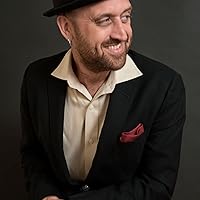
Franz Nicolay's writing has appeared in The New York Times, The Washington Post, The Wall Street Journal, Slate, The Paris Review Daily, The Kenyon Review Online, the Los Angeles Review of Books, The Ringer, Ploughshares, Threepenny Review, LitHub, Longreads, and elsewhere. He has taught at UC Berkeley and Columbia, and is currently a faculty member in music and written arts at Bard College.
His first book, "The Humorless Ladies of Border Control: Touring the Punk Underground from Belgrade to Ulaanbaatar," was named a “Season’s Best Travel Book” by The New York Times; his second, the novel "Someone Should Pay For Your Pain," was called "a knockout fiction debut" in Buzzfeed and named one of Rolling Stone's "Best Music Books of 2021" (“Finally, the great indie-rock novel"). Hua Hsu, in The New Yorker, said "Band People: Life and Work in Popular Music" “might be one of the least bacchanalian books ever published about the rock-and-roll life style, but also one of the most honest,” and it was named a Rolling Stone "Best Music Book of 2024."
An important lesson to be learned from this fun and smart book is: Just because something is recommended in The New York Times, it doesn’t mean you must avoid it.
This book passed the ultimate test, the baptism of fire for books, which is to say, it kept me amused and entertained before and during a transoceanic airplane flight. I even laughed out loud, although you couldn’t hear me over the engines’ roar.
However, if you are very square, as I am, so you don’t know Nicolay’s music already, and/or anticipate being, as I was, in a place where internet connectivity is prohibitively expensive, you may wish to do some pleasurable advance preparation by pre-listening to the music mentioned in the book, especially that written and performed by the author himself. Since the author indicates that the song “Hearts of Boston” is his standard show-opener, it seems appropriate to start off there. The long introduction that the author/performer usually gives when performing the song “Do the Struggle” is also reproduced in full in the book, so it might be a good one to have the song itself cued up for the moment you reach that stage of the book (Kindle location 695). Nicolay says his song “Jeff Penalty” (“a semi-novelty song about the replacement singer of the Dead Kennedys”) is the “rousing crowd-pleaser” with a sing-along chorus (learn it now: “Whoaoh! Whoaoh!”) that often ends the show, so it seems only appropriate to save it until you’ve turned the last page.
In addition, this travel book has interesting potted histories of almost-too-crazy-to-believe places (e.g. the short-lived “Free State of Fiume” (l. 2915)), sardonic commentary on the sad corners of the world the author feels drawn to, and well-curated quotations from the famous and the obscure, as well as a definite native talent for a well-turned sentence (“Stuff happens, but you can’t let a big thing like history ruin your day” (l. 4696)).
Worth a special trip to whatever source you use to get your reading fix.
Author travels and plays shows on the outskirts and underground of Russia Ukraine Siberia Romania Bulgaria Hungary. Playing some squats and bars and a few more upscale venues. Writer leans heavily in this toward history and some travel description and asks "why things are the way they are" as a punk, as an astute observer. Good book. With bonus listening list of cool music at end. No maps or photos.
This is a beautiful travelogues of terrible clubs populated by desperate sweethearts from ruined nations, all trying to scrape by and rebuild and be something in deference to a world political machine that wants nothing for or from its people. It's dizzying, and you really don't need to know Franz Nicolay's music to get what this book is laying down. If you wish Paul Theroux had some ulterior purpose to traveling besides just traveling, something to focus that weary lens, this is it.
Now I want him to write about the American Midwest on tour with the Hold Steady.
Yes, Nicolay is a musician, but that fact is practically irrelevant. You don't need to be familiar with his music to pick up the narrative thread; he admits as much in that he only talks at length about the performances that take him across Russia, Ukraine, Mongolia, Siberia, and every place in between only once, and in a generic, summary fashion.
This book reminds me a lot of David Byrne's "Bicycle Diaries," in which the author uses a common reference point as a gateway to take his readers into unfamiliar territory. And Nicolay takes us very far afield indeed, exploring some of the furthest reaches of a region that, for westerners, too easily falls into aged stereotypes and assumptions.
His maturity as a writer is shocking, unless you have followed his musical career and are familiar with his keen insight into the contradictions and complications that make people so intriguing. His ability to project empathy, wit, and curiosity in his songs translates into long form; when combined with the scholarly nature of his research of these regions' history, the reader can learn so much about broad swaths of the background of these nations through snapshots and passing interactions with those who dwell inside their borders.
If Nicolay is done with music, I will weep for the loss my ears will suffer. But should his gift for writing have shifted to the novel, I eagerly await any and all future projects.
And to those who disagree, may their eyes fall out.
If there is someone who is humorless, that is the author. A long and convoluted description well fluffed with all sort of "classics" in order to show his ability in trivia. Yes, I got it: Nicolay has read at least the wikipedia page for Candide. And?
Because of the useless information thrown in without much talent I got to turn pages. Only to stumble upon more crappy quotes not very relevant to the context. Than turned some more pages only to find out that somewhere in all that junk there was ONE paragraph made out ONE sentence that told me the scene has changed in a by-the-way way. If only the editor would have had the wit to put in bold the relevant text!
This is not punk. This is a poser who got up to the level of nobody in music and wanted to capitalize on his exotic trips (thanks to his wife) only to fail on that too. Sad. Ugly. Neeext!
A decisive book that takes the narrative of a folk-punk tour to investigate the socio-political reasons for the formation of punk dialectics in Eastern European and Asian countries. At times, the book is vast in scope, reaching across generations to describe the rise and fall of power dynamics in under-stated communities. Other times, Nicolay reaches into his own experiences to describe often humorous moments of cultural difference between himself and his acquaintances. Overall, I found The Humorless Ladies of Border Control to be interesting and funny, but filled with slog moments that ruined the pacing with too much unnecessary intellectualizing.
To be honest, I only got about 60% through this book. I couldn't finish it. Some of the travel observations were good and interesting, but it would often veer off into the weeds of some historical fact or the commentary of some obscure figure to the point of just being tiresome. At one point, I felt like I was reading a dissertation on Russian punk music history. If you're into punk music, this book might appeal to you. And it does have appeal if you're into travelogues, particularly of off the beaten paths type travels. But in the end, the author was just too pedantic for me and I felt no connection to him whatsoever.
The act of traveling will not automatically make one a successful travel writer. The book is simply very uneven, possibly many parts of it were written under different circumstances and edited later. Once the author gets to Serbia the narration seems to flow better. I am not familiar with the author's music and it seems that music doesn't have a role in the book and it appears that it was the intention of the author to keep his music out of it. He doesn't talk about people's reactions to his music and his concerts, he does not worry too much about pleasing his audience, he frankly has no interest in his audience at all, which, for a musician, is somewhat unusual. He also never practices for his concerts. We end up reading about organizational circumstances of his concerts, but there seems to be very little emotional connection with his art that is communicated to the reader. We finally begin to suspect that being a musician is just an excuse for travel. As an artist, or at least a thinker, the author could do better than just comment on books that have been written by travelers that visited these countries before him. He uses these books in order to agree with them, there are no attempts to question what the other western travelers saw in these countries decades and centuries ago. The writing is so uneven, there is an entire academic paper on Limonov inserted in the middle of a chapter and the style of it feels suddenly stiff and artificial we begin to suspect it was written later, or perhaps someone else wrote it. We would expect a bibliography at the end of what clearly is a term paper, but the book simply continues as if nothing happened. Factual mistakes in the book happen and copy editors could have done a better job, e.g. Maria Theresa played no part in creating the "Austro-Hungarian empire" Kharkiv is definitely not an "ex-Hapsburg" town. In addition, the author is definitely not interested in natural beauty, and only slightly (superficially?) interested in socio-politics and history. He seems to be on a lookout for adventure, but when adventures happen he is clearly annoyed by them. Is he an adult who thought that on the road he could still play a younger role? He ends up irritated more often than a young person would be. There is also a certain lack of sense of humor in the book, and, for a curious traveler, there is only limited interest in others, which likely caused by linguistic limitations. It is really difficult to say, after hundreds of pages, what was the author looking for. He seems jaded, and as he travels farther and farther he seems progressively more and more disappointed that nothing much excites him. Having said all this, I need to state that reading this book was not a total waste of time. I learned many things, I learned about Mongolia, I learned about the town Rijeka/Fiume. I was surprised to read that Romanians spray their girlfriends with perfume on Easter Monday (in other countries of that region people just sprinkle water on each other). One thing to remember, though, is that in the last 5-7 years all these countries have changed a lot. Poland, for example, has a modern highway system now. One aspect of the book that was useful to me was that the book reminded me of the content from other books that I have read in the past (Robert Kaplan, Rebecca West, Custine). It was a review of that older literature on the subject. As far as the "punk underground" I remained as ignorant as I was before reading it.
Although I'm neither a fan of The Hold Steady nor (as I found out after listening when I'd completed the book) the author's solo material, I enjoyed this travel memoir. I picked it up because it seemed like a good bookend to a year when close to the start of it I read a book about Pussy Riot and in general I enjoy hearing about punks worldwide. Mr. Nicolay is a fine writer and I also enjoyed his reading of the audio book which was unusually unpolished in small ways, which made it feel real.
There was a lot to learn from this book about Eastern Europe and coming in light of the fact that Russia interfered in the US election in order to elect a man who will likely destroy the country, the last section when the author was touring the Ukraine, was particularly interesting. He mentions at one point that the Kremlin would put out propaganda that likened the Maidan to neo-Nazis, even though Maidan was just a generic name for moderate people who protested for less-corrrupt governement and more European integration. Punks and other progressive subcultures are taken in by such propaganda and even if it doesn't get them to begin supporting Russia, it certainly reduces their commitment to the Maidan. I think that sounds a lot like what happened with the false propaganda Bernie Sanders supporters spread about Hillary Clinton. It doesn't get them to support Trump later, but it certainly puts a damper on people's commitment to Clinton. I've personally observed how much fake news my Sanders-loving friends would post on Facebook about Clinton and often they were directly from places like rt.com, not even hidden.
I remember that example because it was at the very end, but there were many illuminating details throughout about the places Nicolay visits in the book. I was shocked to learn that one can be trapped for 2 days in traffic in Paris, I had no clue. I was incredibly impressed at the amount of historical information the book provided, giving enormous context to his stories and really placing me, the reader, into the state of mind of the people in the stories. I only removed a star because it ended very abruptly. Like, I literally was surprised it was over. It didn't seem to be winding down. Also, I don't think that this guy is punk enough! That's totally OK, I'm not really very punk either. But I would have liked him to be more punk. But he's a married indie rocker dad. Having hung in both indie rock and punk scenes a great deal, I can tell you, punk is much more accepting, much easier-going, more encouragiing of each other's artistic output, more political and much more fuck you. It's fun to read about.
Franz Nicolay displays author skills on par with his considerable musical chops. A well written and insightful chronicle of Nicolay's endless tour of Russia, Ukraine, Serbia, Mongolia and some other far-off posts, the singer and multi-instrumentalist performs at a variety of dives, squats and sketchy clubs, and seeks out each locale's sights of interest with boundless curiosity and wry wit. He's a clever and nimble narrator, equally versed in Melville and Montaigne as he is in obscure hardcore punk. I would've wished for a bit more of Nicolay himself in the narrative--maybe a through line related to him wondering if he'll make it to the end, or missing family back home, or wondering if it's all worth it. But Humorless Ladies is much more travelogue than memoir, and it's a worthwhile one at that.
When reading this book, make sure you have a computer or a phone nearby. Every time a new musician is mentioned (which happens about once every other page), start their song on youtube. Every time the author moves to a new place (which happens about every 5 pages or so), google some images. It makes for a lovely and educational virtual trip!
And then you emerge on the other side of this trip with your musical tastes completely reshaped. I'm so much into gypsy punk now, and I think I may try to grow a handlebar mustache!..
This book took me an embarrassingly long time to read because I felt like it didn't have any narrative cohesion. Had it been a travel blog where Franz Nicolay posted every day, I would have loved it. As a book, it failed to keep me engaged for more than 20 minutes in one sitting. The best thing I took away from it is this toast:
To us, the beautiful! And to those who disagree, may their eyes fall out.
A musical travelogue following a musician through the eastern bloc. Provided a combination of a rock and roll story, a historical accounting of untold stories and a collection of the people that make up the day to day.
If you like punk, political satire, or post-Soviet-bloc nations, this book is for you! It's a wry, dreamy travelogue by an American punk touring on the Trans-Siberian railway. Bonus: this book gives a much richer background on Ukraine than what we're hearing in the news.
I've had the idea before to try and write a book about touring around as a solo act in far-flung parts of the world with nascent, blue-eyed music scenes (though I had my eyes on Southeast Asia instead of Eastern Europe), so when my sister gave me this book, I was slightly dismayed and very interested to read what someone else had done with the same idea.
Nicolay is a great writer who may have had too large of a scope for this book's idea: it somewhat haphazardly views countries through the eyes of other writers' travelogues, presents the beginnings of histories of some of the travel stops, examines far-right influences in some scenes, takes a look at some bands in the Eastern European scene, and says practically nothing about any of the actual shows played. Because of this, many places feel very short-changed (feels like Poland and Romania got, like, a page) and some of his historical and cultural forays feel unrelated and dull, but a lot of cool travelogue material in here as well, especially with the folk-punk wallpaper behind it.
QUOTES To those of an unsettled, anxious, or fretful temperament, a life of perpetual travel is a convenient Gordian solution. The insistent flicker of unease, the failing fluorescent bulb holding back despair, is at home a problem, even a sickness, crying for a solution: a new job, a new love, a new new, the unanswerable. But in travel, acknowledge to be at best uncomfortable and disorienting and at worst dangerous, one finds a convenient and all-encompassing skeleton key to the existential lock: “There is always gain,” said Montaigne, “in changing a bad condition for an uncertain one.”
“What we seek in traveling are proofs that we are not at home,” Custine
I try to do my best to avoid a sentimentalizing or fantastic impulse in prose recollected in leisure, but even the vaguest of border crossings can give me the vertiginous thrill, in both three and four dimensions, of looking and saying to myself, “Here is Bosnia,” or “Here is Siberia,” or “Here is Mongolia,” all implying “Here is a place where things happened that still resonate in human imagination.”
A friend once told [Limonov] that his “habit of dividing the world into failures and successes was immature and [would] only result in perpetual unhappiness.”
The train journeys were always over too soon - I always had another chapter to read, another chapter to write, another hour I wanted to sleep. The flight, though, felt endless. If the faster you travel, the slower time passes ,perhaps the slower you move, the faster you find your way to the end of the line.
“‘Til recently,” George Orwell once wrote, “it was thought proper to pretend that all human beings are very much alike, but in fact anyone able to use his eyes knows that the average of human behavior differs enormously from country to country. Things that could happen in one country could not happen in another.”
Hamell told me about a conversation he had with his label boss, Ani DiFranco. He was worried about what kind of an example the life of a marginal songwriter and performer sets for a child. “What’s it going to look like,” asked Hamell, “when I’m sixty years old and changing for the show in a beer cooler in the back of a shitty bar?” She gave him a scornful look and laughed. “It’s gonna look fucking cool.”
There was a grouchiness in the air, that kind of sour-faced solipsism that can affect nouveau hippies and travelers when, after days and weeks of anticipation of an obscure pleasure, they arrive and find only more of their own kind, everyone looking around, waiting for someone else to manifest the extraordinary happening they all came to experience.
I really liked this book. It covered a pretty unusual topic: the punk rock touring scene in many eastern bloc (formerly Communist) countries. I thought the book would be more about a punk rock history that I did not know (and there was some of that), but it was mostly about how people existed in the various places that the author played. The book was not centered on the usual scene of drugs and partying, but a narrative of the unusual ways the author had to get to where he was going, and the sometimes unusual things he discovered when he got to where he was going. (He mostly traveled by train and rides from those who booked the engagement; he often stayed at the houses of family members; harassment by government officials was prevalent wherever he went.)
I think it's fair to say that there was a political/social backdrop going on at all times. The author described the hopelessness, poverty, corruption, disorganization, and overall mistreatment of the citizenry that was happening in the various countries. He also talked about the U.S. role in relation to the eastern bloc countries, which is almost none. As a result, for most, the U.S. was a vague concept, often stereotyped, and often considered perhaps just a greedy world bully. Because of how most lived, they really didn't have a concept that their lives could be different. Thus, they simply went day-to-day doing their best to get by. Although some hoped for systemic change, most were not consumed by the thought that it could actually happen.
I was intrigued by how the author seemed to be able to so easily travel in the places that he did, and why he wanted to do so. I doubt he would have characterized his ability to travel as easy, but he did manage to get to all the countries he intended to go to and was able to return to the U.S. and write the book. The trip would be something that a journalist might decide to do and plan accordingly, but the author made it seem like he just kind of went and was winging it at points, not quite knowing what would happen.
It was also refreshing to see that the author (who appeared to be happily married and often traveled with his wife) did not write a book about the exploits of a rocker, or describe any type of his own imbibement in what might have been offered. He was a very good neutral observer who appears to be a very intelligent person. Before I listened to the book, this was not my view of someone who characterized himself as a punk rocker.
I really would like to do away with the stat system for rating but I understand it’s simplicity.
Here is a way if you are previewing this book as a possible read (and you know, so much easier to do this in hard copy, right?) is to look at the subtitle and then look at the bibliography. It is 7 pages or so long. It includes Boris Pasternak and Robert Kaplan and Mandelstam and Montaigne. There are BBC news references about Russian rock stars and Russian news sources on Siberian punk. And then Chekhov, de Tocqueville and Dostoyevsky.
As sources it makes sense that someone is reading about the places they are traveling to. But a book about a musician on a punk rock tour that even the intro has I think too many quotes embedded from these other authors makes for a disjointed read. I am sleeping somewhere tonight, he seems to be considering on the road waiting for his pick-up at a train station, and it may be over a bar where I am performing but now let me tell you what Rebecca West had to say about this place.
Maybe the book was trying to be too many things in too many places. Because the author ended up in Ukraine at a very critical time, perhaps a focus on just that country.
I bought this book on the strength of its title and because the writer included Ukraine as one of his stops on his tour. I feel like it should have been more interesting than it was, given the territory he covered - Russia, Croatia, Slovenia, Slovakia, Poland and Ukraine. Perhaps it's because I don't really follow the punk music scene, so the music stuff didn't grab me. But even in describing places I'd been (like Kyiv!), I felt like the author never quite got the essence of them. Every location sounded like a place with nothing but grotty bars and refuse on the streets. So I learned a bit, as he's clearly done his homework on these places, but I never really felt like I was there - which isn't so good for a book that's mostly about travel.
There is a good reflection in this book - travelling looks like a very interesting event, but in fact it means repeating over and over same routines: board a train, get to destination, accommodation arrangements, city viewing, meeting somebody, and again... board a train. The big plus of the book are numerous quotes of famous people about places the author visits. Chekhov, Dostoevsky. On the other hand there is a lot reflections on character and people connected to punk music. I suppose it might be very interesting for someone interested in this culture. I am not one of them.
i for some reason thought this book was fiction. it turned out to be a pretty dense non-fiction book. more history lesson than tour story, it did possess some interesting anecdotes and information. i was really surprised to discover that across eastern europe a lot of the punk kids were nationalists and that was largely the pseudo-woke counter culture. reading this while on tour with soul glo pre-europe was on the nose and interesting. i’ll be interested to see if the images this book conjured repeat in reality. (they did).
An incredible, witty sans arrogance travel writing that somehow flew under the radar of the masses. The book manages to be respectful and critical at the same time. The absolute antithesis of anything sentimental or saccharine which is the typical overdone formula of most travel writing. The content is interesting for its travel outside of major, tourist places and doesn’t apologize or exoticize anything. Brilliant work that manages to be void of vapidness or self-aggrandizement.
Deftly and wryly written! I definitely like the genre of musician autobiographies, although I liked this a great deal more than Patti Smith's newest book. This tale, in contrast, followed Franz Nicolay's multi-national/multi-year tour route and was furthermore stuffed with history and piquant anecdotes! A refreshing read that came with a playlist tucked behind the bibliography :)
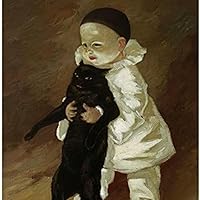
Admittedly, I chose this because of the title and the cover art. Part travelogue, part eastern European history, part glimpse into punk underground, the boom kept my attention for the most part. It’s a part of the world I’ve always been fond of, which was part of the draw. Some humor, some interesting cultural tidbits.
Not necessarily a huge fan of Franz' musical acts, but they are fine enough and being into the scene, I had to read this. Was tough at times because the book focused much more on the geopolitical aspects of the Balkans, Russia, and Eastern Europe which was interesting but totally unfamiliar. Not being able to read some of the proper nouns since I did this as an audiobook added to the complexity.
I listened to this on audiobook. It was okay. I liked the last part the best - it felt like he was just getting into the storytelling groove. Before that it felt really disjointed and didn't say a lot. Overall just not very engaging or informative.
This was definitely a bit of a convoluted read - I thought some of the insight and historical context provided was interesting, but the author often oscillated between being cynical and being patronizing. 3.5 rounded up.
I don't know anything of the music mentioned and the historical references were a bit too much, yet I still found the author's observations and stories to be very enjoyable. Didn't feel (too) disrespectful. A lot has changed in the years since though (and a lot has stayed the same)
A wonderful surprise - great writing with eccentric, poignant and meaningful observations throughout. An incredible way to understand a region and its people. Loved the Socrates quote at the end!