Jump to ratings and reviews
Rate this book

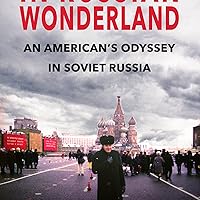
Venemaa Loomine. Gorbatšovi vabadusest Putini sõjani

Rate this book
Nõukogude Liidu lagunemise aeg oli kantud optimismist kõikjal maailmas, aga tänane Venemaa tegeleb oma vaenlaste destabiliseerimiseks aktiivselt infosõja ja meediaga manipuleerimisega. Kuidas sai riigist, mis 25 aastat tagasi vabanes ja turumajandusele üle läks, autokraatlik politseiriik, mis vastandab end jälle järsult Ameerikale? Orwelli preemia vääriliseks tunnistatud raamat läheb tagasi külma sõja pimedaimatesse aegadesse, et jutustada lugu Venemaal toimunud hiilivast ja suurel määral dokumenteerimata kontrrevolutsioonist.

Arkadi Ostrovski on Economisti kõrgelt hinnatud Moskva korrespondent, kes suudab rääkida selle loo nii osaleja kui ka vaatleja silme läbi. Tema hea informeeritus ja head kontaktid mitmete võtmetegijatega võimaldavad tal hästi seletada Vladimir Putini fenomeni – tema tõusu ja hämmastavat võimet vastu pidada, tema hübriidsõja doktriini ja rahutukstegevate mõõtmetega sõjalisi interventsioone väljaspool Venemaad.

392 pages, Hardcover

First published September 17, 2015

322 people are currently reading
4588 people want to read

About the author

Ratings & Reviews

What do you think?
Rate this book

Friends & Following

Create a free account to discover what your friends think of this book!

Community Reviews

5 stars
586 (30%)
4 stars
836 (44%)
3 stars
393 (20%)
2 stars
65 (3%)
1 star
14 (<1%)
Displaying 1 - 30 of 238 reviews
Profile Image for W.D. Clarke.
Author 3 books350 followers
April 19, 2022
Easily the most confident and stylishly-written book of the clutch of modern Russia tomes I've been trying to educate myself with. Beginning with the death of Stalin seems a bit weird at first given the subtitle, but since Putin has woven a Statist (specifically a neo-Stalinist/Imperial Russian/Mythopoeic) televisual tapestry to blanket his beloved Nation in, that is more than a propos (tho I guess I'll have to go and read The Romanovs: 1613-1918 now, too, then, not to mention work my way back to the Mongols and Byzantium)...

His thesis is that to understand the shifts from Gerontocracy to Gorbachev to Yeltsin to Putin one really needs to look at the loosening of, and subsequent "freeing" of, followed by billionaire- and then State-capture of, what orthodox Marxists call the (cultural) superstructure, specifically here the print media and then television, not much being said about less universally-consumed aspects of culture, and nothing at all about the digital realm, though of course you cannot focus on everything!

Speaking of not talking about everything, not much is said here about forces operating within the economic "base" of the pyramid-shaped base-superstructure model :) For that you'll have to turn elsewhere, and so far for me Tony Wood's Russia Without Putin: Money, Power and the Myths of the New Cold War snaps the best aerial photograph (without setting you down in the bog of actual economics) and connecting that to power relations in the Kremlin and thus the nation, for they are one and the same now.

If this book has a weakness, it's that, despite its length, it's too short. I felt well-shepherded, in a perfectly-paced way, through the 1950s, 60s, and 70s, and then thrilled to be allowed to linger over the fascinating Gorby/Yeltsin/Putin-the-First years, only to be overly rushed through the events of Georgia 2008 through Crimea/Ukraine 2014. No you can't have everything (and you have the exhaustive All the Kremlin's Men: Inside the Court of Vladimir Putin to fill in those gaps), but if I had to choose one book on modern Russia? So far, this would be it.
Profile Image for Geevee.
453 reviews340 followers
July 30, 2018
A book within a book...or it should be.

There much in this that was informative and readable but for me there were gaps and some significant absences.

The author tells the story of the USSR's evolution from Cold War power to disintegration and then with the rebirth of Russia as a nation with an infant democracy and liberal society that then reverses back to quasi Soviet Russia.

This story is told by using the media as the mouthpiece, influencer and creator of policies, moods, actions and ultimately the rule of Putin (the former KGB officer as we are told many times).

There is some useful scene setting notably from Krushchev and thru to Gorbachev. At this point we then move to the main aspect of the book with the break-up of the Soviet Union, Glasnost and Perestroika. As the walls come down - literally in Berlin - we see the media in Russia (for that is really the story) change in approach and direction, especially from the liberality given by Gorbachev.

From here Gorbachev (who it seems is dismissed unfavourably by both author and many Russians - although this point is never given to fact or wider explanation by Mr Ostovsky; and more of that later.

The real change to the media however is for the election and then presidency/prime ministership of Boris Yeltsin. It is in this period greater freedom comes and transformation (or theft) of Russian industry including the media. Oligarchs are born and take control and money. Yeltsin allows criticism of the Country, his Government and himself. TV is critical but also supportive and in its production and approach to programmes both current affairs and entertainment tries to ape the West.

Yeltsin's replacement is found and then elected; all through the strategy, influences and programmes of the media we are told. Did the Government have no media policy at all?

That replacement is Vladimir Putin.

From that moment change happens: to Russia, in Russia and to the media. Putin takes control and the media again becomes then information giver to Russian people but only in what and how Putin wants people to see.

Much of this, as I said at the start of this review, I thought good and informative. But. And it's a big but. There is little depth beneath the names of owners, reporters and oligarchs and their TV stations on how they chose to support various topics, approach campaigns and content or how they tested these to see if the messaging was effective.

The influence of Russian media (really TV in this book) is not discussed on other fledgling states freed from the USSR but remaining under its influence or indeed waiting to see how the Russian bear acts. There is no mention of the West's programming and support or otherwise (e.g. BBC foreign/world service).

Other areas are the impact and actual influence on people - there are a few mentions of opinion polls but these are not explored, nor are we told sample sizes, age groups or say social class groupings. The author at one point states that no one cared when Putin reinstated the Soviet Union's national anthem as Russia's. Yet this is patently not true as we are also told frequently of many in Russia wanting a return to some aspects of the old "Russia", and nowhere does the author prove "no one cared".

The final, and for me huge, absence in this book is the internet. There is nothing at all about the growth, access, official and social use - how did this affect or change media, people's and state behaviour. It is left inexplicably untouched. This is clearly s failing as polling, story telling, opinion and even access to other countries or individuals sources and feeds must have had influence; especially as Putin and his Government are involved in cyber operations from testing other nation states' defences to creating news and opinions facing both into and out of Russia.

Overall a useful book that presents insight and information about this fascinating country but needs more depth and wider links than just TV, oligarchs and money.
Profile Image for Bettie.
9,977 reviews5 followers
June 25, 2016


Winner of the Orwell Prize 2016

Description: By tracing the history of modern Russia from Mikhail Gorbachev to the rise of ex KGB agent Vladimir Putin, Arkady Ostrovsky reveals how the Soviet Union came to its end and how Russia has since reinvented itself.

Russia today bears little resemblance to the country that embraced freedom in the late eighties and gave freedom to others. But how did a country that had liberated itself from seventy years of Communism end up, just twenty years later, as one of the biggest threats to the West and above all to its own people?

The Invention of Russia tells the story of this tumultuous period, including the important role played by the media, and shows how Russia turned its back on the West and found itself embracing a new era of Soviet-style rule.


Dedication: To Becky
Acknowledgements
Dramatis Personae
Prologue: A Silent Procession: It was after midnight on 27 February 2015. I was making final changes to this book when I learned that Boris Nemtsov, a liberal politician once groomed to be President of Russia, had been shot four times in the back on a bridge just metres away from the Kremlin.
Part I: FIRST WAS THE WORD
Part II: IMAGE IS EVERYTHING
Epilogue: Aerial Combat
Notes
Select Bibliography
Index

Opening: The Soviet Princes: The Last Supper: Five minutes before 7pm on 25 December 1991 Mikhail Gorbachev walked briskly along a Kremlin corridor into a wood paneled room teeming with photographers, technicians and cameramen to record his last speech as president of USSR.

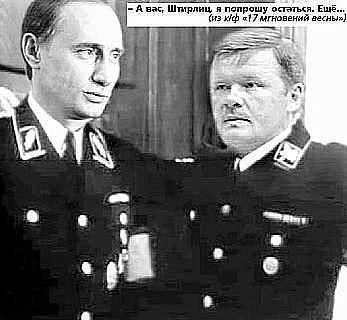
Page 247 we finally get a glimpse of Putin and his taking over of Stierlitz, the character from Seventeen Moments of Spring:

Driving a Volga, Putin 're-enacted' the last episode of the film in which Stierlitz drives his car back to Berlin. The famous theme tune and song played in the background. Putin was a perfect fit.

Profile Image for Helen.
36 reviews7 followers
September 21, 2022
This is a most informative read. And, I am left amazed by what I've read.
The author, Arkady Ostrovsky, a journalist, provides what has to be a well-researched, clear, eye-opening account of the years of change when an insular, suspicious, Soviet society traipsed from the ruins toward an open and democratic future for all and how it went so badly wrong and why it went so badly wrong. He spares no one from either side of the fence, East or West, including the journalistic media.
'The Bear' was never asleep - a misjudgment on the part of the West - and for years prior to the collapse of Soviet rule had been sniffing the coming of doomsday.
Transition from Communism, suspicious of the West from the outset, was never going to be an easy path trod when all that was offered was a sketch map and bag full of cash - a misjudgment on the part of the West.
'The Bear' was never going to slumber, whilst Western forces moved steadily east - a misjudgment on the part of the West: more especially as voices that fully understood 'The Bear' had given warning of such.
'The Bear' was never going to rest, all the time its iron-clad fist remained tight around the spoils of the land - a misjudgment on the part of the West.
Fed on disinformation from the outset - a misjudgment on the part of the West - the bear's cubs, with desolation all around, scampered in search of a brave defender of the sleuth: a strong, cool-headed, leader able to protect them from the lying, money-grabbing West: they found one.
This is a detailed account of how the Russian people were fooled into being blindly led from Gorbachev to Putin.
Profile Image for Andrew.
680 reviews248 followers
April 5, 2018
The Invention of Russia: From Gorbachev's Freedom to Putin's War by Arkady Ostrovsky is an interesting look at the development of the modern Russian state and the importance of the media in this process. The book begins by examining the declining Soviet system and the slow Liberalization of the media and entertainment sphere in the 1980's and 1990's, followed by a sudden burst of change after the Soviet Union disintegrated. Ostrovsky chronicles this pathway of change by following both events and personalities. He mostly covers the growth and decline of Russia's many Oligarchs, strongmen and politicians, as well as important figures in the media and cultural sphere of Russia.

Changes in Russia began in the Prague Spring years of 1968. Many in the USSR and satellite states saw this moment in history as a new beginning, and began to yearn for change in the rigid and authoritarian Soviet system. Instead, the Prague Spring was crushed with Russian tanks, and the Spring ended. However, the yearning did not. In Russia, change ironically came from inside the Nomenklatura system - from censors, KGB officers and important politicians and news media figures. These individuals had necessary access to Western print media and radio broadcasts - these were required in order for Soviet authorities to vet the news. However, these censors began to yearn for similar Western features in the stagnating Soviet system, and eventually, with the coming of Gorbachev, got there wish with Perestroika. This was a slow process, but was marked by the slow opening of the Russian media world, which was quickly snapped up by the powerful new Oligarchs making themselves known in Russia. After the Soviet collapse, these oligarchs would begin a wholesale promotion of Liberalism as a system, on the surface to promote freedom, but also out of self interest. They used the growing Liberal and Capitalist discourse in Russia to buy state assets at fire sale prices, and soon carved out vast business empires out of state assets - all backed by state loans, financial and regulatory protection, and there own media spheres.

Russia in the '90's was like a caricature of capitalism from Soviet times. Ruthless business men grappled for power behind the scenes, sometimes politically, and sometimes violently. Ordinary Russians were flush with the new times, but were also lacking any sort of national consciousness. Russia as a state had never really existed as it did after the Soviet collapse. A growing nationalism and a longing for importance, dignity and stability became a common theme after growing tensions between oligarchs spilled into open warfare pitting Liberal democrats and shady oligarchs against an unlikely Communist/Nationalist alliance. Although the nationalists were defeated, Russia's Liberal democrats lost ground as well. Ordinary Russian's no longer believed that rampant capitalism was the answer - a point driven home by the disastrous Asian financial crisis and Russia's debt default. This changed politics as well - Boris Yeltsin, the successor of Gorbachev slowly lost popularity and support, and his failing health was no help either. Russia's elite struggled to find a stable transition, and began to look to an outsider for help. This is where Vladimir Putin came in. A former KGB officer, Putin was young, loyal, and unknown by the public. However, he came to prominence after Yeltsin's disastrous handling of the First Chechen War, and another civil war in the oligarch camp that saw many of the '90's most prominent elite cast aside.

Putin's rise corresponded with a crackdown on media freedom. Throughout the above period, Russian Oligarchs used there media arms as political weapons, discrediting politicians, attacking rival oligarchs, publishing expose after expose, and riling up the Russian public with dark, gritty and dramatic news and programing. This constant media bombardment lent a sense of instability to Russia's public, and inadvertently led to a growing desire for national stability, a disenfranchisement from politics, and growing nostalgia for the glory days of the Soviet Empire.
This coincided with Putin's rise, and after the oligarchs fell apart, Putin seemed the only viable option. Yeltsin handed power to Putin willingly and stepped aside, and Putin tightened state control over every aspect of the public sphere. Putin used the media and entertainment business to build his brand as a tough, thoughtful and crafty politician. He was the opposite of Yeltsin, who came across as loud, good humoured, and very stereotypically "Russian." Putin on the other hand was built after (partly fictional) Soviet War hero Stierlitz - a USSR agent who infiltrated the German SS in WWII. Putin came off as very "Germanic" - stoic, macho and so on, which appealed to both the Russian masses who craved stability and calm, and the nationalists who espoused antisemitism, anti-Westernism, and Imperial nostalgia.

Putin's brand has seen Russia emerge once again as a globally ambitious player. Russia has engaged in two internal wars in Dagestan/Chechnya, has invaded both Georgia and Ukraine, and is increasingly assertive in its foreign policy. The collapse of the USSR was seen by the West as a victory, but Russia disregarded the West, both due to perceived mistreatment (the US claiming victory in the Cold War), economic instability generated by rampant Capitalism, and the failure of Liberalism and democracy as forces of stability. Instead Russia has built its own system, often characterized by Statism, Imperialist tendencies, and Soviet nostalgia. This is coupled with the rise of Putin's elites - another round of oligarchs who control most of Russia state assets, media arms and large political positions. Although in recent years Western media has increasingly covered this phenomena (Kleptocracy in Russia, Imperialism, growing Russian nationalism etc. etc.), this narrative seems naive. After the collapse of the Soviet Union, Russia's elite built these ideas slowly into the Russian system, and turned them into both a means to achieve political control, and a means to protect there own interests.

Ostrovsky's book is interesting, well sourced and brings authority to the topic at hand. This is an excellent book to read regarding Russia's internal political and cultural norms and ideologies. It is both clear eyed and soul searching, looking at both political and social ideas, as well as the details of Russia's alteration from Soviet Empires to modern state. It chronicles the collapse of Soviet ideas, the internal disputes between old system and Western system, and the emergence of the Russia we see today, warts and all. This is an excellent read, and I can easily recommend it to those interested in Russia and its history and current policies.
Profile Image for Caroline.
910 reviews310 followers
May 27, 2017
An illuminating book about the role of the media in Russian history from Perestroika through the Ukraine intervention. Hadrian has provided a good review. I just add my sigh at the gyrations of a state with so much potential and no core of belief in the institutions necessary to make it happen.
Profile Image for Sud666.
2,330 reviews198 followers
June 24, 2017
The Invention of Russia traces the development of the modern Putin- State of Russia. Written by a Russian born journalist eminently familiar with the inner working of Russian media the book looks at the way the media services were always suborned by the powers that be.
In the beginning we look at the way gradual easing of the murderous Stalin regime's supreme control of all media- from newspapers to radio, were slightly eased by his predecessors. Each succeeding leader from Krushchev to Gorbachev, slowly loosened the role of the media-though never freeing it from becoming an official organ of the Soviet State.
The nuclear disaster of Chernobyl, during Gorbachev's time, started the policies of glasnost and perestroika. In time, events (the economy mostly) caused the inevitable- inevitable because Communism and it's slightly retarded and slightly less violent brother Socialism do not work as economic systems.
After the fall of the Soviet Communists and the rise of the CIS (Commonwealth of Independent States)- for a period of almost a decade, 1990-1999, the media in Russia enjoyed the chance to become the Fourth Estate. But, sadly a series of missteps, greed, corruption and lack of democratic ideals and institutions led to the rise of the Oligarchs...and eventually a former-KGB Col and one time head of the FSB- Vladimir Putin to become President. Putin's intelligence officer instincts led him to suborn and eventually completely control the media, which has now become once again a mouthpiece of the government and its ideas. In order to cover up his kleptocracy and the dismal state of the Russian economy (based of gas exports) the Putin government uses the media to foment one "crisis" after another from Crimea, to Ukraine to now Syria.

This very readable and well written, considering many might find the topic to be rather dry, history of the role of the media in the Soviet Union/Russia deserves praise for not sugar coating the issue. While many Western liberals blithely insisting on a "reset" with the Russians are being played for fools-the book traces how the media went from becoming the official arm of propaganda to the "unofficial" mouthpiece for the FSB nation-state, aka Russia under Putin.

The book excellently indicts the ordinary people of Russia from the lower classes all the way to the oligarchs who fell prey to their won greedy instincts and then having been preprogrammed for 7 decades of brainwashing to follow their base instincts and blame the West, and of course the US, for everything that goes wrong. Their ability to be whipped into a nationalistic frenzy and their often ugly, anti-Semitic, neo-fascist (almost Neo-Nazi), xenophobic culture is not pretty to witness.

But the book does masterfully show us how each Russian government from the Communists to the Putin-state has manipulated or outright terrorized and controlled the media and by extension the brainwashed, inferiority-complex driven people of Russia itself. A must read for people in power both in the US and Europe (Of course they won't....wouldn't want to ruin their "image" of Russia) or for anyone who is curious how a nation that had throw off the shackles of the murderous Communist regime and seemed on the brink of joining the rest of Europe as a modern, functional state with much to contribute- descended first into the arms of ruthless oligarchs and now has become an authoritarian FSB police-state under a new Tsar for a new era-Putin.
Profile Image for Maryna.
107 reviews7 followers
January 11, 2023
Excellently written book on the demise of Soviet Union era and what have followed after that.

The author gives a thorough overview of what the politicians and their inner circles where like, why they thought and acted the way they did.

I also have enjoyed the depiction of how mass media was used to influence and mislead the people of soviet times and see why it is still the case in modern Russia.
Profile Image for Karel Baloun.
516 reviews46 followers
August 16, 2018
With Trump being partly a Russian asset, and possibly Russia having cyber penetrated some of our key civilian infrastructure, it is an important moment to be learning about the country and its popular culture. Ostrovsky’s book is an excellent launch point.

So Ironic that the oligarchs and Yeltsin supporters seeking liberal continuity thought they could find it in Putin. Russia is ruled by the power of men and their cliques, not by law or any institutions.

A second odd irony, is that I found myself respecting Putin for putting Russia the state first moreso than the oligarchs (and western financiers) who basically pillaged assets and stole cash flows. He kills with impunity, but hard to tell what government would suit Russian people and history.

“Without lies, the Soviet Union had no legitimacy. The Ruling elite no longer saw any reason to defend a system the constrained their personal enrichment and comforts.” Page 15

Professionally crafted by a journalist, it’s not surprising he puts media as the power fulcrum in Russian political history. The question of who succeeded the ailing Yeltsin was key to the future of democracy... and liberals failed profoundly, as the oligarchs stupidly and prematurely turned to battle each other.

Towards the last third of the book I started to feel that Ostrovsky is under representing the impact of pure power on politics, in his strong focus on the media and people he knows in media. Clearly Putin and his journalist/opponent killing lackeys have powerful agency.

The book ends in 2015, before Putin won re-election and solidified his connection to nationalism, as well as further aggressiveness of his KGB/security apparatus. It ends with optimism that Putin can be contained, and opposition could rise. In parallel with Xi consolidating his power, it now in 2018 seems at least equally likely that Putin will be Russia’s strongman indefinitely, and it is not clear whether authoritarian nationalism is best for the well being of the Russian people. What is clear is that, unlike China or Iran, and more like NK, no powerful group in Russia needs to worry about the People. Especially Ostrovsky’s hint towards regional separatism, seems even less likely under Russia’s system of strong regional control, than in China’s carefully federated local controls.

The book’s last 10 pages seems oddly prophetic with respect to the 2016-18 Russian takeover of American media and political dialog. Trump is certainly trying Putin’s playbook, in his own incompetent way.

"Just like any drug, television propaganda exploits people’s weaknesses and cravings. The main reason Russian propaganda works is that enough people want to believe it. Many of those who crave it are not poor and ignorant but affluent and well informed. The are deceived because they want to be deceived. … [almost half of the Russian population…] approves of these lies and sees them as a sign of strength. More than half think it is right for the media to distort information in the interest of the state.” p322 In the US, people actually pay real money for their own world view propaganda.

“After Nemtsov’s murder, [the liberal capitalist] Valdimir Yakovlev made a public appeal to everyone who worked in the media, […] Stop teaching people how to hate. Because hatred is already tearing the country to pieces. People live in a crazy illusion that the country is surrounded by enemies. … The information war is first and foremost destroying ourselves.” p321

Here is one haunting passage about Russian morality, though I’m not sure whether this is deeply culturally historical, or a modern media creation. Konstantin Ernst has been a key architect of Channel One’s patriotic programming, including Nochnoi Dozor (Night Watch), the first post Soviet blockbuster movie, which divides people in fictional Moscow into light and dark fighting factions. “The light ones in the film are closely connected to their Soviet part, whereas the dark ones clearly belong to the world of Russian capitalism. The two sides are fighting for the soul of a twelve year old boy who in the end chooses the dark. As the boy tells his estranged father, who is one of the light ones: You are no better than the dark. You are even worse. You lie and only pretend to be good. In his interviews Ernst explained that the dark ones for all of their aggression, do not equal evil and the light do not equal good. The dark are much freer, they let themselves be as they want to be. The light are more frustrated, they have too many duties, and they feel responsible for a lot of people. The dark have eschewed contstraints, they live for themselves, while the light are like neurotics who are trying to be good to everyone. Ernst identified himself with the dark ones.” p293.

Profile Image for Owen.
4 reviews
August 5, 2016
Ostrovsky examines the way newspapers and television have shaped modern Russian history. An interesting account of the late Soviet period and the 90s, which focuses recurrently on dramatis personae like Yakovlevs, Alexander, Yegor & Vladimir, to tease out changing moral and social attitudes.

The book is let down by its cliched canter through the Putin years, relying on unevidenced assertions and some manifest falsehoods, like the claim Russia was the aggressor during the Georgian War. The author's antipathy toward Putin also requires a kind of running apologia for the Yeltsin presidency.
Profile Image for Piker7977.
460 reviews28 followers
September 9, 2018
This is a good narrative that describes how Russia's shapeshifting media ushered in perestroika, democracy, and capitalism, then mutated into nationalist sensationalism that created the foundation for authoritarian rule predicated on imperial and strongman nostalgia while jettisoning communism. Very interesting and well written.

The large lesson is protect your institutions, rule of law, and truth. Fabrication in the media can create a lubricant in which democracy can be undermined.
Profile Image for Mike Winters.
29 reviews19 followers
August 20, 2024
I took my time with this; more accurately it took my time. When I say I found the author's account of the way of things is not the easiest to read, I recognise the author is Russian, English is not his first language.
There is a lot of interesting information in here: it's a journalist view of how Russia got to where it is. With a great deal of referenced opinion and insight. It plays, and I believe weakens the narrative somewhat, on the media's part in all that happened. I'm not saying the author is wrong in that, but find that a little too convenient a recourse.
I'm no authority so will accept I might not see the entire picture.
Gorbachev is labelled as failing to give the economy the wind it needed to fully liberalise the failed systems. My reading suggests Gorbachev was always a puppet in Russia's new destiny and having served as ordered, the reins where handed to Yeltsin who again did as he was bid, in order to hand the whip to Putin.
Again, it is informative, but not easy to digest and I think presents a view that a lack of control allowed for the eventual outcomes. I'm not too sure that is the case.
Profile Image for Mary.
85 reviews40 followers
October 4, 2025
Most informative and underlines my belief:

'From behind a curtain, a curtain maintained by control of the media, the path from the collapse of the Soviet Union to freedom for the people was managed by those who have always had their hands on the levers.'
Profile Image for Mary.
305 reviews17 followers
September 21, 2016
Ostrovsky analyzes and explains how Russia became what it is under Putin, focusing on the role of the media from Yeltsin until today. He contends the media has led the way, and been led along the way, on defining contemporary Russia. It ushered in Putin. The media went from communicating by what they omitted, standardizing the State’s narrative, reporting, explaining, instructing and defining and amplifying to helping create a virtual reality today. “… politics was replaced by political technology, citizens by spectators, reality by television.” During the annexation of Crimea “The image came first, the reality followed.” “The Ukrainian fascists were a phantom created by Russian television. Even though nobody saw them in reality, everyone in Crimea talked about their presence.” “To sustain the audience’s attention, the plot had to evolve. New virtual enemies had to be produced to raise the level of aggression and hatred…. The narrative of war has now moved beyond Ukraine to Syria and the West in general.”

In the back of my mind, I enjoyed toying with a generalized comparison of the Russian media to our US media and how ours also creates, defines and elevates and, often (unintentionally!) gets things so wrong. From my vantage point, the Russian media gets things wrong with purpose. The US media is not an arm of the White House. I get that the US and Russia are still more different than alike and I do not equate our freedoms with anything going on in Russia. Much of our media have shaky intellectual, analytical , history credentials and they strive for ratings over accuracy in order to stay employed and enjoy their perks. A lot of the stuff they get wrong is usually due to incompetence and the wearing of blinders rather than nefarious dealings. Trump is a creation who exploits and is exploited. We shall see how that works out.

Ostrovsky is Russian, seemingly well-educated with a Ph.D, has spent quality time in England and has worked for the better Western media from inside Russia. So, he’s prepared himself and has excellent perspective and cultural fluency. He does not seem intimidated by Putin and he speaks the truth plainly. His wife has a non-Russian name. I wish him dual citizenship should he need it. But more power to him if he can remain the ground. He has that magic of consuming vast and complicated material from many disciplines and spitting it out on the page cogently. I understood the entire book and I mostly agreed with him. Yeltsin comes across a tad better than my memory of him. I need to revisit Yeltsin, the leader. Ostrovsky has cultivated himself into the exact right profession, right time, right place. Hat way off. Funny that I’m mostly dissing the media yet I conspicuously respect Ostrovsky as a journalist and writer. They can’t all suck!

“Television turned Putin, an unkown KGB operative, into Russia’s president within months of his eruption into the national consciousness. His first step as he settled into the Kremlin was to take control over television; only then could he seize the commanding heights of the economy. Television has been the main tool of his power, his magic wand that substituted a counterfeit image for reality.” Trump has been interviewed for RT. We all know he’s a fan of Putin’s. I do not want to go down that road.

Ostrovsky relates that opinion polls gave Yeltsin a clear description of what was wanted for his successor. Ugh, Putin was the perfect fit. Yet another example of awesome Russian tactics with little regard for future strategy. “…Putin had to be portrayed at once as Yeltsin’s opponent but also as someone who was anointed by him.” Putin was an unknown, “he was “a man with no features, a perfect spy.” Putin and his media have evolved into something more specific today, something they have convinced viewers that they wanted.

“No enemy of Russia could have caused as much harm to the country as has been inflicted by those who have been pumping these images [phony wars, false images, Russian victimhood…] into the bloodstream of the nation.” “… that whipped up passion does not simply vanish.” “Historically Russia has often used aggression and territorial expansion as a form of defense against modernization.” “… Russia does not possess the energy or vision required for empire building—but revisionism, chaos and war. He may plunge the country into darkness, or Russia may yet rid itself of this post-imperial syndrome and emerge as a nation-state.” So where’s the strategy in that? A Ponzi scheme perpetrated upon the Russian people by the leader they deserve? Do they deserve him???
Profile Image for Antonia.
295 reviews90 followers
August 11, 2022
The book focuses extensively on the media environment in the times of Gorbachev, Yeltsin and Putin. I found the first part much more interesting and engaging, as it coincides with the birth of the liberal intelligentsia. I wish Ostrovsky gave the spotlight to Politkovskaya and other hard core journalist with the same attention and detail as he did with Yegor Yakovlev and his son Vladimir. Overall, the chapters about Putin could have been elaborated a bit further, there is plenty of material for such extension, instead they felt a bit fast-forwarded.
1,042 reviews45 followers
May 26, 2017
This is a good book on the transformation of Russia over the last 30 years, with special attention paid to the role of the media in Russia in those changes.

One thing to realize about this book is that it's more about how we got to Putin than on Putin's Russia itself. Oh, there is more than a little bit on Putin's tenure, but you get far more detail on the Gorbachev and Yeltsin years. The last two (out of ten) chapters are on the 21st century, even though that covers about as many years as the Gorby/Yeltin eras combined. Frankly, I thought the book got bogged down in the Gorbachev regime. It matters and should be talked about, but the USSR disintegrates on page 141, and the acknowledgements begin on p.329. Personally, I was more interested in hearing about the post-communist years.

Ostrovsky notes that the NTV began as a media source aiming to be more high-brow, and focusing on the ideals of free speech and a free press. They were willing to be critical of Yeltsin, but ultimately they depended on him. Ostrovsky notes that in Russia a free press existed not because of tradition or widespread desire for it but because Yeltsin desired it. Once Yeltsin won reelection in 1996, the threat of communism receded, and with that the interest many had in rallying 'round Yeltsin. Combine that with the economic problems of his second term, and Russia was ready for something different.

One key moment Ostovsky sees is a chapter he calls the Oligarchs' War, were they fought for control over television and the power that came with it, but ultimately it just hurt the credibility of all of them. He writes that they managed to do what communists and Yeltsin's opponent had failed to do: "destroy the government of liberal reforms and discredit the idea of a liberal media." The NTV became less effective than the more populist Channel One. People were sick of Yeltin and wanted someone very different - someone more low-skilled, more a bureaucrat, and sober. Putin fit that bill to a T, and thus was able to be both Yeltsin's antithesis and heir (Yeltsin agreed that the next leader should be different).

By 1998 a shift in attitude to America began. It became evident with the NATO intervention in Serbia. Thus Putin's rise was arguably an outgrowth of a trend already in place.

Under Putin, shifts continued. The sinking of the sub the Kursk began a limitation of free speech and media coverage in Russia. (In this way, it's the opposite of Chernobyl). He had government forces essentially take over the NTV, ending that era in Russian journalism. He helped promote nostalgia for the Soviet past, even bringing back the old national anthem. This was not done out of a love of communist ideology, but a reminder when the nation was more important and powerful. Nationalism was already on the rise, but Putin helped it rise more. He used it when his popularity eroded after the 2009 economic crisis hit Russia. (Putin may not like free elections, but as an old intel head he cares a great deal about public opinion). Many Russian nationalists see their nation as strong because it has Truth while the US is weak because it's all about love of money. Putin uses anti-Americanism, the main survivor of old Soviet ideology. He uses TV to achieve his ends and put out his ideas. TV was vital in the Crimea annexation in getting his approach out. Putin swept out the oligarchs and brought in an era of bureaucrat-entrepreneur who used state powers for personal enrichment. Ostovsky says they are more dangerous than the old oligarchs were.

The Ukraine in 2014 presented a threat, and opportunity. His popularity soared after Russia entered it. The new union was of nationalists and Putin's part of "crooks and thieves." (Man, I can see why Trump-ites like him). By the end, Ostrovsky concludes that Putin has put Russia in a cynical cycle of aggression and militarism. After Ukraine, they got involved in Syria.
Profile Image for Jake.
211 reviews45 followers
November 28, 2016
“So the media turned to history --not by way of a serious examination but as a form of entertainment.” ~ Arkady Ostrovsky

Putin can be viewed as a product of an environment, an environment where a Vladamir Putin was inevitable. This text is a recent history of the Russian media apparatuses role in feeding the Russian people a nostalgia for a Russia that never was, in hopes of bolstering their own power and insulating themselves from scrutiny by state censors. Lenin was used throughout this time period to defend Stalinism to defend marketization under Gorbachev. His writing can be degenerated, and were to argue any position the state apparatus wanted and the media was not only complicent in this but argued for it.

Donald Maclean, a British diplomated who spied for the KGB is quoted to have saying: “People who read Pravda every day are invincible. People who are well informed and get their information from different sources inevitably start thinking.”


The most striking section about the book is the resemblance between Russian intelligentsia and modern American progressives. The Russian liberal intelligentsia is the artist-scientist class in Russia who lived relatively well as opposed to the rest of the public and were often insulated to the struggles of the common person.

“Zhurnalist reflected all the strengths and weakness of the shestidesiatniki. Idle conversations around a kitchen table among the liberal intelligentsia all too often were a substitute for real action or work; it gave them relief, but yielded few results. It created a comfortable cocoon, but also increased the intelligentsia’s isolation from the rest of the country. The ‘cocoon’ itself, however, was growing larger in size. By the time Yegor was fired less than two years later, its circulation exceeded a quarter of a million copies.” ~ Arkady Ostrovsky

As you’re arguing for transgender rights and #BlackLivesMatter there are millions of working class conservatives who not only don’t understand what you’re talking about, but see it as an active threat to their lives. As a woman I heard talking during the 2016 election voted for Trump said, “Everything I knew growing up that was wrong, is now right.” As well meaning as progress is, there is an inconvenient fact that fascists have capitalized on our language and our positions to gain power through a populism fed on hate, xenophobia and solipsism.

“This is simply because we are WEIRD. That’s social science shorthand for Western, Educated, Industrialized, Rich, and Democratic – and nobody is WEIRDer than Americans. In the last several decades many Americans, and essentially all our elites, have internalized a worldview based on affluence, individualism, and secularism that makes us unique, globally speaking. So much so that we seem unable to comprehend that there actually are opposing viewpoints out there.” ~ John Schindler

Putin is everything that the American foreign policy establishment hates. He’s an old fashioned white guy with outdated views on gender relations, race, sexual identity, faith, the use of violence and worst of all is that he hates us. It was once said that Winston Churchill saw through the lies of Hitler because he saw the same sort of megalomaniac that he himself was staring at him from across that channel. In 2016 we have that similar relationship between world leaders, except our megalomaniac is too busy taking compliments and having his ego boosted to see through the lies of a fellow megalomaniac.

If you read nothing of this book but the prologue, you are set. It knocked me on my ass.
Profile Image for PennsyLady (Bev).
1,130 reviews
May 22, 2016
"Author, Arkady Ostrovsky is a Russian-born journalist who has spent 15 years reporting from Moscow, first for the Financial Times and then as bureau chief for The Economis.....(from book cover)

Arkady Ostrovsky proposes the answer to the question
What happened to the promise of the late 80's and early 90's Russia?
Parameters like foreign affairs, politics and economy do not
give the complete narrative.

Media was seen as a "prism for Russia's post Soviet transformation."
Idealogues and oligarchical activity promoted words, ideas and images that often conflicted with actual reality.

The television literally came first and reformation of country
was to follow.
Reading, you'll see how oligarchs, ideologues and television rebuilt Russia.
Acknowledgments, notes,"dramatis personae" and bibliography are extensive.

I found Ostrovsky's chronicle to be a clear explanation of the fall of the Soviet Union and the rise of Vladimir Putin.

5 ★

(I received this book as a Goodreads giveaway)
193 reviews46 followers
March 15, 2018
Surprisingly pretty, pretty good, especially relative to expectations. Given the reviews and the title, I was bracing for a heavy media-manipulation framing of history, but luckily the reader is spared the overt Zizekian narrative. Ostrovsky briefly covers Soviet history from Khrushchev to Andropov, spends a fair amount of time on Gorbachev and Yeltsin, and blows the last third of the book on Putin.

Very readable overall, he attempts to embed Soviet political history into Russian culture and literature, as seen through the prism of a city-dwelling, classically-liberal intellectual. Don’t expect a deep history here, but he tells a good story, with a good angle, in a punchy, compelling writing style. Recommended.

A couple broad comments and then notes to self:

One of the overarching themes is a recognition that political and economic freedoms don’t necessarily play well together, and the net outcome can be particularly sensitive to the order and the rate at which these freedoms are introduced. He often contrasts Gorbachev’s, Yeltsin’s and Putin’s policies in that context.

Ironically, when it comes to describing attempts at liberalizing Russian economy, Ostrovsky is illustrating exactly why rule of law and property rights are a precondition, rather than consequence of market economy, but a libertarian in him prevents him from reaching this conservative conclusion.

1953-64 Khrushchev Thaw , ’56 “secret speech”, destalinization. (“Paleo-Leninist” as per Martin Malia).
- Limited works of previously forbidden writers (Akhmatova, Zochenko) softly brought back. Solzhenitsyn “One Day…” to be published in Novi Mir (via Tvardovsky). Rise of Samizdat.
- ’56 revolutions in Hungary and Poland spooked Soviet orthodox communists leading to ’57 attempted coup (K saved by Zhukov).
- A few failed top-down agricultural reforms, ’62 Cuban crisis was the final straw and Khrushchev is replaced by Brezhnev in ’64.

1964-82 Brezhnev and stagnation. ’68 Dubcek and econ-political reforms of “Prague Spring”, crushed by Soviet tanks - induced further paranoia of reforms in Russia, further deepening Brezhnev’s zastoi.

Correctly frames Gorbachev as a reformer who introduced political freedoms, while still shooting for Dubcek’s “socialism with human face”.
- All previously forbidden works gradually published (Doctor Zhivago, Gulag, Life and Fate etc).
- Early oligarch privatization began under Gorbachev.
- By ’88 perestroika is visibly out of steam. Culture wars over the past. Gorbachev vacillating between hard-liners and reformers.

Yeltsin. American officials to Malashenko “he is your only democratic institution”…
- Unlike Gorbachev, he fully recognized necessity of market reform, failure of perestroika and unreformability of econ socialism.
- ’91 putsch against Gorby. ’93 coup against Yeltsin, Ostankino, Yeltsin orders tanks to fire at Parliament.
- ’93 constitution: more power to president, but parliament is lost to Zhirinovsky nationalist and communists, over Gaidar’s liberals.
- Irony of Yeltsin - media relationship. Biting the hand that feeds.

Early to mid 90s attempted transition to capitalism, Gaidar, Chubais; media;
- Shestidesyatniki vs value-free “Kommersant” 90s generation. Capitalism stripped of Weberianism, news as steb.
- ’93 NTV: Gusinsky and Malashenko. 94-96 coverage of first Chechen war, NTV almost shutdown by siloviki.
- ’96 Campaign. Y with 5 heart attacks. Campaign against nationalists/commies ran by oligarchs (e.g. Berezovsky) & media.
- 7 tycoons and “loans for shares”

Mid to late 90s. State assets, operation “successor”.
- Post-election ’96-’98: Oligarchs squabble over assets, turning against liberal gov’t, Chubais sacked.
- Gov’t discredited, budget deficits, ’98 default. Signs of cultural reversion to Soviet era symbolism and nostalgia.
- ’98-’99. Unknown Putin groomed as successor to Yeltsin, by Berezovsky. Pro Putin, anti Lyzkov/Primakov media campaign.
- 2nd Chechen war as vehicle for Putin. Young, decisive, healthy and sober.
- Cultural swing against the West: econ in shambles “following Western advice” and NATO bombing of Serbia/Kosovo as real turning point against US/West.

2000 Enter Putin.
- Further liberalize economy, growth, oil prices. Having observed the power of the media in the 90s he learns his lessons.
- Putin’s “Kukla” on NTV and arrest of Gusinsky, forced sale of Gazprom.
- 2000 Kursk disaster. Covered by NTV and Berezovsky’s Channel One. Putin “Gusinsky is an enemy, Berezovsky - a traitor”
- Both NTV and Channel One get shafted. Irony of Shestidesyantinki who smell what’s coming and come out for support of NTV, while Kommersant generation stays home.
- 2002 Nord-Ost Moscow terror, rescue gas poisoning fiaso. Last reasonable coverage by NTV.
- 2004 Beslan school siege in North Ossetia. Not covered at all by Russian media with exception of re-aired CNN reports.

2000-2017 Tail end of the book is a bit Baudrillardian, too much attention to media as reality angle, but for what it’s worth here we go:
- Surkov as a chief ideologist. Theater background. Reality is media, and media is theater; ideology is no ideology.
- First decade under Putin: oil growth, middle class 25%, consumer society. Media suppressed, Oligarchs subjugated, stay out of politics.
- 2009 Financial crisis followed by 2011 farce of Medvedev swap does result in popular protests/revolt. Navalny and anti-corruption.
- Putin regroups, having lost some support in middle class he ratchets up appeal to core nationalist-leaning electorate
- Anti-Americanism framed as nationalism becomes a fully-fledged legitimate ideology.
- 2008 Georgia War, 2014 Crimea (approval ratings rebound to 80%).
- With Donetsk/Lugansk conflict running out of steam, and hurt by sanctions and oil bust, Putin turns to Syria in 2015.
- Ostrovsky’s timeline stops here but subsequent meddling in US and European elections would be a natural extension to this arc.

Re that last point: for my money the effect on US election per se is marginal, but deliberate amplification of American culture wars has been undeniably impactful.

Putin treats media as theater but he uses it quite seriously, as a legitimate weapon under umbrella of cyberwarfare. America also treats media as a theater, but channels its anxiety over it into incessant analysis of the “Big 4” (Google, Apple, Amazon, Facebook). While American congressmen and policy analysts occasionally warn each other over dangers of cyberwarfare, Russia, unburdened by democratic guilt or institutions, is calmly and systematically developing what it needs to be effective.
Profile Image for Debbie.
Author 21 books22 followers
April 5, 2018
“Mr. Gorbachev—tear down this wall!” — Ronald Reagan, 1987. Reagan helped end the cold war with Russia via Gorbachev, and eventually communist rule. This event I had always used as a metric (naively) to view Gorbachev in a positive light. It’s why I found Ostrovsky's “The Invention of Russia: From Gorbachev’s Freedom to Putin’s War” enlightening; it reveals what happened to Russia after the collapse of the Soviet Union, how Gorbachev, despite his effort to reform Russia and improve the lives of its people, couldn’t get it done. Gorbachev today is viewed by Russians as weak; despite his initiatives for freedom. Ostrovsky writes how Gorbachev lost his power and left the country without a strategy forward. Though Gorbachev was facing the impossible—starting a democratic country from scratch. Given Russia’s history, as Ostrovsky writes in the introduction that “the soviet system rested on violence and ideology”.

The book echoes earlier ones I’ve read on the history of Russia, and it’s carried forward today where Russia is (still) ruled by people, not laws—the 'law of the land' is not in its DNA.

Most startling (and what the book is mainly about) is how the media, mostly television, was used to manipulate people, was used as a propaganda tool over and again. Television was used to boost the image of the KGB and attract young, bright recruits into a ‘glamorous’ agency (pg. 229), to elect a virtually unknown politician to power, a former KGB agent, Vladimir Putin, and was used to create a false narrative about the Ukraine, and justify a war in 2008 (pg. 298). The television networks were run by Russia’s oligarchs and eventually controlled fully by the Kremlin—with Putin at the helm. This is ultimate control, similar to what George Orwell writes about in “1984”.

Though our western media outlets are not government-controlled, Ostrovsky’s book made me view television and internet news more objectively. News is often written, scripted with words carefully chosen to create a slant, a perspective. I realize the need to challenge the message, to look behind the message--who is controlling it, what are the motives? Objectivity is not a given. In today’s era of fake news, it’s up to us.
52 reviews3 followers
February 4, 2019
Published a year before the American presidential election of 2016, this book about modern Russia foreshadows the events which have occurred in the United States over the past couple of years. The writer does an excellent job of describing in a very convincing manner the central role Russian media has played in how Russia has created and recreated itself from a reforming communist nation under Gorbachev into a nationalist, chauvinistic kleptocracy under Putin.

Implicitly, the lessons for America here are both obvious and implicit. A cynical leader who understands how important it is, first and foremost, to control the media narrative for his own corrupt, personal gain presents a challenge to the free media. How do you effectively cover a story about the president when the president and his cronies, including his media allies, are the ones creating the narrative he knows the media will pick up and run with? When deflect, deny and distract becomes the standard operating procedure of the leader of the free world, how long before freedom itself becomes jeopardized?

And when "truth" is cynically repackaged as "alt-truth," the media are accused of being the "enemy of the people" and any news stories that are critical of the president are "fake news," why is it that so many Americans remain aloof to the fact that these same tactics have been employed in Putin's Russia for many years now, and were critical to his success in killing off the fledgling democratic reforms Russia abandoned about two decades ago?

This book can be viewed as a cautionary tale of what can happen when a nation allows itself to be manipulated by the images flashing across a T.V. screen, images which may convey not what is real, but what the creators of those images understand many would prefer to be true, and how dangerous it is to uncritically succumb to those comfortable narratives which anesthetize us to the very real dangers posed by the image-makers themselves.

Therein lie the seeds of democracy's destruction, the implicit hypotheses of this important, accessible and eye-opening book.

Profile Image for Melkor  von Moltke.
86 reviews10 followers
July 22, 2017
Overall this was a very interesting and informative work that details the transition from the final years of the USSR to the rise of Putin. Ostrovsky takes a unique approach in examining the role of the media throughout the evolution of Russian politics.

As with most works involving Russian history/politics/literature there are a great deal of potentially confusing names, such as two prominent but unrelated figures named Yakovlev, but there is a handy Dramatis Personae outlining a who's who of Russian politicians, oligarchs, and media personnel.

As for the content, the work starts with an interesting overview of Soviet media, focusing on Khrushchev's thaw before branching out into Perestroika, it's leading figures, their goals, and the consequences of Gorbachev's government. The 1990s are where Ostrovsky's work shines, highlighting Russia's attempt to transition from an Authoritarian Socialist state to a liberal democracy. Ostrovsky helps his read sift through this tumultuous period as Oligarchs, Journalists, and Politicians battle for the soul of Russia.

The last third of the book dealing with Putin's presidency is a bit lacking. Instead of delving in depth into events it's mostly an overview of over a decade and a half of Putin's regime. For example the action film Brat 2 seemed to get about as much coverage as the Russian invasion of Georgia. However, this section was still good at piecing together the various themes across Russian political history.

Overall, I was quite pleased with the book and will look into Ostrovsky's other works.

I received this book for free through Goodreads Giveaways, which I believe covers the legal necessities.
Profile Image for Ron Coulter.
76 reviews11 followers
October 22, 2016
This book is especially frightening in light of what's happening in our own country. Substitute America for Russia and Trump for Putin in these quotes:
Television images work like drugs, creating a sense of elation, destroying judgment and intelligence, lowering moral barriers and suppressing inhibitions and fear. No enemy of Russia could have caused as much harm to the country as has been inflicted by those who have been pumping these images into the bloodstream of the nation. ... Just like any drug, television propaganda exploits people’s weaknesses and cravings. The main reason Russian propaganda works is that enough people want to believe it. Many of those who crave it are not poor and ignorant but affluent and well informed. They are deceived because they want to be deceived. (page 322)

[Putin] told his core, traditionalist electorate that the state was the only provider of public good and that it was surrounded by enemies.
Profile Image for Chris Rousell.
61 reviews5 followers
March 10, 2018
Introduction aside, Ostrovsky's book starts off quite slowly and ends rather abruptly. That said, once it gets going, it is absolutely magnificent. Documenting a relatively short period of history whilst being narratively compelling is no mean feat and for that, Ostrovsky Orwell Prize in 2016 for 'Invention' was richly deserved.
Profile Image for Charles Cole.
3 reviews1 follower
July 7, 2018
Good information, but this book could have been written on half the page count. Way, way too much "out in the weeds" information of the type of Ivan told Sasha that Vanya went to see Petya last week, etc. Again, good, solid information about the transition from the end of the USSR to Putin's rule, but way too wordy.
Profile Image for Olya.
570 reviews3 followers
abandoned
September 6, 2017
The media is the message? And controlling the message is key to an autocratic regime? You don't say.
Profile Image for Dmitry.
1,272 reviews99 followers
February 8, 2025
(The English review is placed beneath the Russian one)

Эта книга мне понравилась больше чем книга «Вся кремлевская рать: Краткая история современной России». Хотя прямо эти две книги сравнивать нельзя, но так получилось, что после книги «Вся кремлевская рать» я прочёл именно эту книгу Аркадия Островского. Так что, книги одновременно и похожи и не похожи.

Если книга «Вся кремлевская рать» является коротким пересказом либеральной прессы, за описываемый период времени, того, что происходило в России, т.е. короткий пересказ главных политических событий, то книга Аркадия Островского посвящена теме советских и российских средств массовой информации. Т.е. СССР и новая Россия через призму советских, а после, и российских СМИ.

Главной целью, которую поставил себе автор книги, является показать как с одной стороны, государство влияло и формировало СМИ, а с другой, как СМИ влияли и формировали общество сначала в СССР, а потом и в России. И это, несомненно, хорошо получилось у автора. Пусть Аркадий Островский и не является историком, но его обзор того, как происходило это взаимовлияние в СССР и РФ, выполнено просто великолепно. Шаг за шагом автор показывает основные баталии за влияние над СМИ, а значит, и за влияние над умами жителей СССР/РФ, которое происходило подковёрно, непублично. Мы узнаём, как формировались первые независимые СМИ или есть точнее, как формировались СМИ с иной точкой зрения, т.е. с иной точкой зрения, чем у государства. Тут есть и своя драма, ибо люди в советском союзе, которые стояли у истоков первых независимых (от Кремля) СМИ по-настоящему верили в иной выбор, верили в социализм с человеческим лицом и что этот настоящий социализм они могут построить. Романтики 60-х, до конца верившие в идеалы социализма. Именно эти люди и возглавляли перестройку и руководили СМИ, которые освещали эту самую перестройку, а также последующее противостояние Горбачёва и Ельцина и Ельцина и ГКЧП.

Наверно именно с концом существования СССР нам стоит поставить точку в существовании советской прессы, но не той провластной, типа газеты «Правда», а той, что зародилась в качестве альтернативы, цель которой было построить социализм с человеческим лицом. Это были люди, которые искренне верили в те идеалы, которые дала им Оттепель и которые были убеждены в справедливости социализма, а также были одними из последних, кто ставил вопросы идеологического пути развития России выше денежных интересов. Т.е. это были по-настоящему идейные журналисты и руководители СМИ, ибо сразу после крушения СССР, СМИ трансформируются столь радикально, что отзвуки этой трансформации мы слышим и поныне.

Итак, если первая половина книги была посвящена СМИ, которые работали в СССР, а точнее в Москве, то вот вторая половина книги, это рассказ о СМИ в Ельцинско-Путинской России. Большая часть второй половины будет, разумеется, посвящена взаимоотношениям Ельцинского правительства и новых Средств массовой информации. Зная, что случилось в 1993, 1996 и 2000 годах, можно представить пути развития и российской прессы. Как я написал выше, не только СМИ влияли на страну, на общество, но и общество влияло на СМИ. Как пишет автор, вместо романтиков, веривших в социализм, пришли их дети, верившие в рубль (или доллар, что тогда было более актуально). Пришёл «человек с рублём», т.е. человек которого интересовало и волновало финансовое благополучие, а не размышления о прошлом, идеологические вопросы и возможности построения социализма. Как общество ринулось за Лёней Голубковым, так и СМИ окунулось с головой в тему денег или точнее, как их быстро заработать. Главным героем второй части книги становится знаменитая в то время газета «КоммерсантЪ», с твёрдым знаком на конце. Собственно, о похожем напишет и Виктор Пелевин в своей знаменитой книге «Поколение П». К сожалению, отказавшись быть нравственным маяком, СМИ заложили бомбу с тикающим механизмом под себя же. Как точно замечает автор, свобода в России обеспечивалась не институтами, а желание одного единственного человека – на тот момент президента России Бориса Ельцина. Возникало ощущение, что только что появившаяся пресса забыла совсем недалёкое прошлое, и полностью исключило возможность его возвращения. Но и это было бы полбеды. Главной проблемой стало игнорированием СМИ своей общественной миссии – воспитывать и образовывать общество, доносить информацию непредвзято, а не быть инструментом в разборках олигархов друг с другом и с государственной властью, в особенности. Как пишет автор, именно постоянные баталии между Гусинским и Березовским и между олигархами и государственной властью, сделали из СМИ инструмент пропаганды, а не источник независимых новостей. В защиту такой точки зрения стоит сказать, что и на Запад нет абсолютно независимых СМИ. Но там есть то, что перестало существовать в России после прихода к власти В. В. Путина - разных точек зрения. СМИ, которые представляли бы самые разные политические позиции. Не стало СМИ, в которых открытые и яростные критики президента появлялись бы на основных телеканалах (вместо этого они были вытеснены сначала в Интернет, а потом на совсем локальные, малочисленные и отдалённые сайты, ибо множество сайтов подпало под блокировку). Так что проблема состояла не только и даже не столько в принятии СМИ идеологии «человека с рублём», а в том, что государство увидело, что в XXI веке место атомного орудия, переняли средства массовой информации. Я имею в виду, что Путин осознал в 2000 году, что реальность это не то, что происходит на самом деле, а то, что показывает и рассказывает телевидение и СМИ в целом. Именно с избранием на пост президента никому не известного, незаметного и ничем не примечательного серого чиновника, власть осознала истинный потенциал СМИ. Власть осознала, что СМИ способно из никого создать Александра Македонского, которым будут восхищаться не только внутри страны, но и за её пределами. Именно поэтому на столе перед президентом Путиным появился пульт дистанционного управления телевизором. Это очень важно для понимания сути происходившего и происходящего в России. Пульт дистанционного управления телевизором и СМИ как явление, стало тем оружием массового поражения, которое пришло на смену ядерному оружию. Нет смысла в ядерной зиме, ведь всё то же самое можно достигнуть благодаря СМИ и казус Трампа это явственно показал. Хотя, нет. Казус Путина, как президента РФ, это явственно показал. Другими словами, кто контролирует СМИ, тот контролирует саму реальность. Это больше чем обладание ядерным оружием, это обладание возможностью творить реальности. Это позиция самого Творца.

I liked this book more than the book "All the Kremlin's Men: Inside the Court of Vladimir Putin". Although it is impossible to directly compare these two books, but it so happened that after the book "All the Kremlin's Men" I read this book written by Arkady Ostrovsky. So, the books are both similar and dissimilar at the same time.

If the book "All the Kremlin's Men" is a short retelling of what was going on in Russia by the liberal press during the time period described, i.e. a short retelling of the main political events, Arkady Ostrovsky's book is devoted to the subject of the Soviet and Russian media. That is, the USSR and the new Russia through the prism of the Soviet and, afterward, the Russian media.

The main goal the author has set for himself is to show how, on the one hand, the state influenced and shaped the media, and, on the other hand, how the media influenced and shaped society, first in the USSR and then in Russia. And this is undoubtedly well done by the author. Even though Arkady Ostrovsky is not a historian, his overview of how this mutual influence occurred in the USSR and the Russian Federation is done just fine. Step by step the author shows the major battles for influence over the media, and thus for influence over the minds of Soviet/Russian citizens, which took place in a clandestine, non-public way. We learn how the first independent media were formed, or rather, how media with a different point of view, i.e. a different viewpoint than that of the state, were formed. This has its own drama, because the people in the Soviet Union who were at the origin of the first independent (from the Kremlin) media truly believed in a different choice, believed in socialism with a human face, and that they could build this real socialism. The romantics of the 60s believed in the ideals of socialism to the end. It was these people who led perestroika and ran the media that covered this very perestroika and the subsequent confrontation between Gorbachev and Yeltsin and Yeltsin and the GKChP.

Perhaps it is with the end of the Soviet Union we should mark the end of the Soviet press, but not the pro-governmental Pravda newspapers, but the alternative that emerged with the goal of building socialism with a human face. These were people who sincerely believed in the ideals that the Thaw had given them, who were convinced of the justice of socialism, and who were among the last to put issues of the ideological path of Russia's development above monetary interests. That is, they were truly ideological journalists and media leaders, because right after the collapse of the USSR, the media transformed so radically that we hear echoes of this transformation to this day.

So while the first half of the book was about the media in the USSR, or more precisely, in Moscow, the second half of the book is about the media in Yeltsin-Putin Russia. Much of the second half will, of course, focus on the relationship between the Yeltsin government and the new media. Knowing what happened in 1993, 1996, and 2000, it is easy to imagine the paths of the Russian press as well. As I wrote above, not only did the media influence the country and society, but society influenced the media. As the author writes, instead of romantics who believed in socialism, came their children, who believed in the ruble (or the dollar, which was more relevant then). A "man with a ruble" came, i.e., a man who was interested and concerned with financial well-being, not with reflections on the past, ideological questions, and the possibilities of building socialism. As society rushed after Lyonya Golubkov, the media dived headlong into the topic of money, or rather, how to earn it quickly. The protagonist of the second part of the book is the then-famous newspaper Kommersant, with a hard mark at the end. In fact, Viktor Pelevin will write about similar things in his famous book, Generation P. Unfortunately, by refusing to be a moral beacon, the media have planted a ticking bomb under themselves. As the author aptly notes, freedom in Russia was not ensured by institutions, but by the wishes of a single man, at the time Russian President Boris Yeltsin. One had the sense that the newly emerged press had forgotten all about the recent past and had completely ruled out the possibility of its return. But even that would have been half the trouble. The main problem was that the media ignored its social mission to educate and enlighten the public, to provide unbiased information, and not to be a tool in the squabbles of the oligarchs with each other and with the government, in particular. In the author's opinion, the constant battles between Gusinsky and Berezovsky, and between the oligarchs and the government, turned the media into a propaganda tool. In defense of this point of view, there are no absolutely independent media in the West either. But there is something there that ceased to exist in Russia after Vladimir Putin came to power - different points of view. The media, which would represent a variety of political positions. The media in which open and fierce critics of the president would appear on mainstream television channels was gone (instead, they were pushed first to the Internet, and then to very local, few, and remote sites, since many sites had fallen under blocking). So the problem was not only and not even so much in the media's acceptance of the "man with a ruble" ideology, but in the fact that the state saw that in the 21st century the place of the atomic weapon had been taken by the mass media. What I mean is that Putin realized in 2000 that reality is not what actually happens, but what television and the media in shows and tells. It was with the election of an unknown, inconspicuous, and unremarkable gray official to the presidency that the government realized the true potential of the media. The government realized that the media could create Alexander the Great from a nobody, who would be admired not only inside the country but also outside it. This is why the TV remote control appeared on the table in front of President Putin. This is very important for understanding the essence of what was happening and what is happening in Russia. The TV remote control and the media as a phenomenon have become the weapon of mass destruction that has replaced nuclear weapons. There is no point in a nuclear winter because the same thing can be accomplished through the media and Trump's mishap made that clear. No, though. Putin's mishap as president of the Russian Federation showed this clearly. In other words, whoever controls the media controls reality itself. This is more than the possession of nuclear weapons, this is the possession of the ability to create reality. It is the position of the Creator himself.
Profile Image for Samantha Seldon.
196 reviews2 followers
October 13, 2022
Despite the fact that this book took me over a month to finish, I really enjoyed it! Ostrovsky has a very narrow and focused scope (how Russian media didn't just influence Russian life, politics, and history, but created/invented it) and it served him well. He did not stray to talk about the influence of economics, political ideology, the personal histories of key players, geography, foreign affairs, or the KGB unless it related directly to a point he was making about the media and its effects in Russia.

I do not have enough context/background knowledge to know how "accurate" or objective his points were but choosing to only analyze the media's role in shaping contemporary Russia made his analysis more pointed and created a strong thread to connect the last 75 years of Russian history that he described. For historical non-fiction it was well paced and interesting to me (not my usual genre of choice) and I felt like I learned a lot.

Another more unique aspect was how little the US was a factor. Whatever I did know about Russian politics was mostly in the context of its relationship with the US and this book essentially disregards the US and its impact in Russian affairs (see scope). This unilateralism from a Russian point of view was refreshing and even emphasized some of the striking similarities in views and historical moments between the US and Russia. There were many Russian events described that reminded me of events in even more recent US history and the lessons from Russia's past that could be gleaned and applied to contemporary life abound.

I could go on and on about the skill of the writing and compelling incidents described in this book, but I am very tired, so I'll just say would recommend and would love to discuss!
Profile Image for Ugnė.
327 reviews44 followers
November 26, 2022
Žiauriai gerai ir net paveikia mąstyti kitaip. Tai nėra vien pasakojimas apie putlerį - ko aš jau turbūt per daug prisiskaičiau ir atrodo, kad naujų faktų niekas nedėsto - tai ir nagrinėjimas, kaip ir kodėl SSRS molinės kojos sulinko ir sudužo. Radau sau atsakymų, nors paskutinis knygos puslapis nenuteikė viltingai šiandieninėse realijose.

Skaitymas nevyksta taip greitai, kaip norėtųsi, kadangi gausu pavardžių ir peno mintims.

Dievinu Briedžio leidyklą už tokį turinį ir už tai, kad neatsiduriu tokioje situacijoje, jog reikėtų skaityti, kaip gieda vėžiai.
Displaying 1 - 30 of 238 reviews

Can't find what you're looking for?

Get help and learn more about the design.