

What do you think?

מפלצת הזיכרון
היסטוריון צעיר ושאפתן כותב ליושב ראש יד ושם ומספר על מאבקו במפלצת הזיכרון, עד לרגע שבו השתלטה על חייו.
כוכבו של הצעיר דרך בחקר המנגנונים המדויקים של התהליך התעשייתי שבו חוסלו מיליוני יהודים במחנות ההשמדה. לפרנסתו, הוא מתחיל להדריך סיורים באתרי הזיכרון שעל אדמת פולין - של תלמידים, אנשי צבא ופוליטיקאים ישראלים.
אתרי הרצח נעשים מקום העבודה שלו, והזוועה חודרת אל תוך נשמתו. הוא מנסה לחשוף ביערות ובמעבה האדמה את דמותם האבודה של הקורבנות, אך לחרדתו הוא מזהה בעצמו ובמודרכיו הערצה לכוח ולכושר הביצוע של הרוצחים. "כדי לשרוד בעולם הזה צריך להיות קצת נאצי", אומר לו תלמיד תיכון באחד המסעות. אט־אט גוברת בקרבו ההכרה שאיש מעולי הרגל אינו מעז להתייצב באמת נוכח הפשעים ומשמעויותיהם המוסריות.
בלשון בהירה ודייקנית מספר ההיסטוריון הצעיר, דרך עטו של ישי שריד, על התהליכים המפוררים והמעוותים שהתחוללו בו בעת מילוי המשימה ועל עלייתו ונפילתו כסוכן של הזיכרון - עד לנקודת השבירה הבלתי נמנעת.
כוכבו של הצעיר דרך בחקר המנגנונים המדויקים של התהליך התעשייתי שבו חוסלו מיליוני יהודים במחנות ההשמדה. לפרנסתו, הוא מתחיל להדריך סיורים באתרי הזיכרון שעל אדמת פולין - של תלמידים, אנשי צבא ופוליטיקאים ישראלים.
אתרי הרצח נעשים מקום העבודה שלו, והזוועה חודרת אל תוך נשמתו. הוא מנסה לחשוף ביערות ובמעבה האדמה את דמותם האבודה של הקורבנות, אך לחרדתו הוא מזהה בעצמו ובמודרכיו הערצה לכוח ולכושר הביצוע של הרוצחים. "כדי לשרוד בעולם הזה צריך להיות קצת נאצי", אומר לו תלמיד תיכון באחד המסעות. אט־אט גוברת בקרבו ההכרה שאיש מעולי הרגל אינו מעז להתייצב באמת נוכח הפשעים ומשמעויותיהם המוסריות.
בלשון בהירה ודייקנית מספר ההיסטוריון הצעיר, דרך עטו של ישי שריד, על התהליכים המפוררים והמעוותים שהתחוללו בו בעת מילוי המשימה ועל עלייתו ונפילתו כסוכן של הזיכרון - עד לנקודת השבירה הבלתי נמנעת.
136 pages, Paperback
First published August 1, 2017
About the author
Yishai Sarid
12 books72 followersYishai Sarid (Hebrew: ישי שריד) is an Israeli author, novelist and lawyer. His second book, Limassol, became an international best-seller. His fourth book, The Third, became a major subject of public and literary discussion in Israel and won the Bernstein literary award. Sarid works full-time as an attorney, formerly as a public prosecutor and now privately.
Ratings & Reviews
Friends & Following
Create a free account to discover what your friends think of this book!
Community Reviews
Displaying 1 - 30 of 314 reviews

January 26, 2019
ANALOGIE E DIFFERENZE NEI MECCANISMI DI STERMINIO NEI LAGER TEDESCHI

Dopo Il poeta di Gaza, in attesa di leggere Il terzo tempio, lo scrittore israeliano Yishai Sarid mi ha regalato questa lettura emozionante, un sorprendente romanzo breve che si spinge in territori rischiosi, in argomenti temerari, in una zona del tempo che è diventata geografia dell’anima: la Shoah.
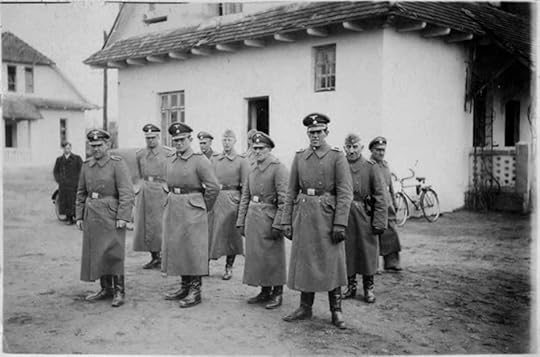
Ufficiali delle SS fotografati all'esterno del perimetro del campo di Bełżec. Lorenz Hackenholt è il terzo da destra.
E lo fa senza sconti, senza giri di parola, con scrittura concreta e priva d’orpelli, imbastendo una riflessione implacabile e straordinaria sulla percezione della stessa Shoah nella società israeliana di oggi.
Come si confronta Israele, la sua gente, con la memoria della Shoah?
Memoria mostruosa, come indica già il titolo.
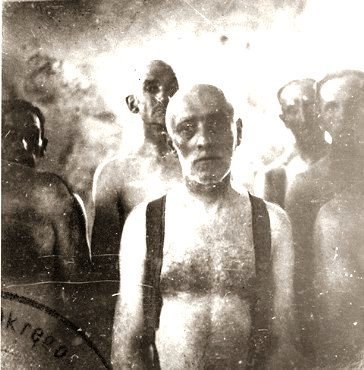
Alcuni prigionieri destinati ad entrare nei Gaswagen di Chelmno. In questo campo le camere a gas erano all’interno di autocarri trasformati, metodo di sterminio che si rivelò troppo lento, poco efficiente. In questa fase i nazisti fotogravano le vittime: quando il numero di condannati a morte aumentò, la pratica della fotografia fu abbandonata.
Sotto forma di un’unica lunga lettera al direttore dello Yad Vashem, il protagonista narratore racconta la sua esperienza di storico esperto della Shoah che per rimpolpare il conto corrente (ha moglie e figlio) si presta a guidare gruppi di studenti, politici, militari sui luoghi dell’orrore nazista: Sobibór , Bełżec, Auschwitz e Birkenau, Majdanek, Chelmno, Treblinka, i lager in terra di Polonia.

Un Gaswagen Magirus-Deutz, simile a quelli utilizzati nel campo di Chelmno.
Analogie e differenze nei meccanismi di sterminio nei lager tedeschi durante la Seconda guerra mondiale è il titolo della sua tesi di laurea. Dal che si deduce che siamo davanti a un vero esperto dello sterminio nazista, dei suoi meccanismi, della sua organizzazione, dei suoi dati statistici.
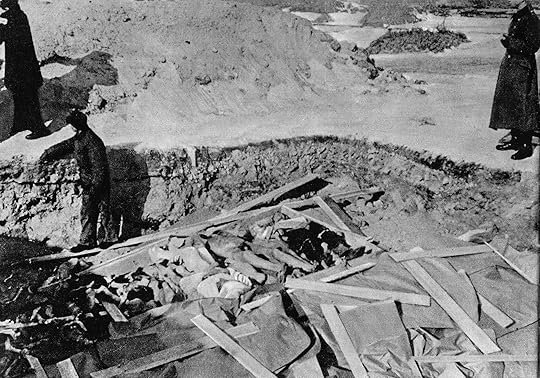
Una fossa comune a Treblinka nel 1943 in una fotografia nazista.
In un primo tempo la sua profonda e dettagliata conoscenza lo rende la guida ideale.
Ci si può proteggere dietro numeri date e dati? Si può tagliare via l’empatia ricorrendo alla scientificità della conoscenza?
Si può restare affascinati dall’efficienza della brutalità nazista?
Oggi, nel terzo millennio, vale la pena per Israele impiegare archeologi e storici, scavare (per esempio, in seguito alla rivolta e conseguente fuga dell’ottobre 1943, il lager di Sobibór fu smantellato, demolito e nascosto sotto centinaia di alberi piantati ad hoc – al suo posto venne costruita una finta fattoria, abitata da una guardia ucraina che si spacciava per un contadino), continuare a studiare, ricercare, catalogare, raccogliere dati?
Anche gli ebrei devono essere un po’ nazisti se vogliono sopravvivere?
Ecco alcune delle domande sollevate da questo breve intenso romanzo.
L'illusione chiamata uomo.
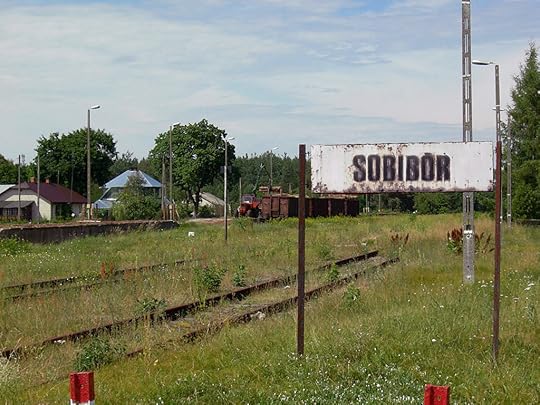
Il campo di Sobibór come si presenta oggi.
Dopo Il poeta di Gaza, in attesa di leggere Il terzo tempio, lo scrittore israeliano Yishai Sarid mi ha regalato questa lettura emozionante, un sorprendente romanzo breve che si spinge in territori rischiosi, in argomenti temerari, in una zona del tempo che è diventata geografia dell’anima: la Shoah.
Ufficiali delle SS fotografati all'esterno del perimetro del campo di Bełżec. Lorenz Hackenholt è il terzo da destra.
E lo fa senza sconti, senza giri di parola, con scrittura concreta e priva d’orpelli, imbastendo una riflessione implacabile e straordinaria sulla percezione della stessa Shoah nella società israeliana di oggi.
Come si confronta Israele, la sua gente, con la memoria della Shoah?
Memoria mostruosa, come indica già il titolo.
Alcuni prigionieri destinati ad entrare nei Gaswagen di Chelmno. In questo campo le camere a gas erano all’interno di autocarri trasformati, metodo di sterminio che si rivelò troppo lento, poco efficiente. In questa fase i nazisti fotogravano le vittime: quando il numero di condannati a morte aumentò, la pratica della fotografia fu abbandonata.
Sotto forma di un’unica lunga lettera al direttore dello Yad Vashem, il protagonista narratore racconta la sua esperienza di storico esperto della Shoah che per rimpolpare il conto corrente (ha moglie e figlio) si presta a guidare gruppi di studenti, politici, militari sui luoghi dell’orrore nazista: Sobibór , Bełżec, Auschwitz e Birkenau, Majdanek, Chelmno, Treblinka, i lager in terra di Polonia.
Un Gaswagen Magirus-Deutz, simile a quelli utilizzati nel campo di Chelmno.
Analogie e differenze nei meccanismi di sterminio nei lager tedeschi durante la Seconda guerra mondiale è il titolo della sua tesi di laurea. Dal che si deduce che siamo davanti a un vero esperto dello sterminio nazista, dei suoi meccanismi, della sua organizzazione, dei suoi dati statistici.
Una fossa comune a Treblinka nel 1943 in una fotografia nazista.
In un primo tempo la sua profonda e dettagliata conoscenza lo rende la guida ideale.
Ci si può proteggere dietro numeri date e dati? Si può tagliare via l’empatia ricorrendo alla scientificità della conoscenza?
Si può restare affascinati dall’efficienza della brutalità nazista?
Oggi, nel terzo millennio, vale la pena per Israele impiegare archeologi e storici, scavare (per esempio, in seguito alla rivolta e conseguente fuga dell’ottobre 1943, il lager di Sobibór fu smantellato, demolito e nascosto sotto centinaia di alberi piantati ad hoc – al suo posto venne costruita una finta fattoria, abitata da una guardia ucraina che si spacciava per un contadino), continuare a studiare, ricercare, catalogare, raccogliere dati?
Anche gli ebrei devono essere un po’ nazisti se vogliono sopravvivere?
Ecco alcune delle domande sollevate da questo breve intenso romanzo.
L'illusione chiamata uomo.
Il campo di Sobibór come si presenta oggi.

September 14, 2020
Heavy stuff!!!!
For Holocaust- readers - for those of us who have read many - many - stories — this book isn’t that—
Review to follow soon....
It’s frightening relevant for today.
UPDATE:
Translated from Hebrew to English this entire book is delivered in a letter format. The storyteller is a HE....married to Ruth, with one small child, named Ido—but *HE* was never named.
Ruth, *HE*, and Ido, lived in Israel. Ido was being bullied in school while *HE* was out of town giving tours to death camps.
*HE* got his PhD in Holocaust studies at the University of Perth, Australia. He studied Medieval European history —and was offered a teaching position. Ruth stayed in Israel raising their son, ( Supportive and proud of her husband’s work - which also paid their bills). So, *He* did a lot of traveling — back and forth- arrangements.
*He* studied German, and within a month was able to read official SS letters.
His dissertation was on “ Unity and Distinction in German Death Camps”. He compared processes in each camp— Chelmno, Belzec, Treblinka, Sobibor, Majdanek, and Auschwitz (of course the last two were different, being labor camps as well as death camps) —and parsed them out.
*HE* took a close-up look at the stages performed at each camp, from the moment prisoners descended from the trains, through the undressing, the collection of clothes and luggage, the first presentation given by Germans to keep their victims at ease, their hair shaving, the march to the gas chambers, the structures of gas chambers and the type of gas used, the manner of assembling people inside them, the process of extermination, the pulling of gold teeth and the cavity search, the disposal of bodies, the division of labor between different stations, and so on and so forth”.
And at some point, his diligent studies lead to him being the most sought after guide for delegations to Poland. He burst into his job like a young bull working as a tour guide— showering students with his expertise of clear facts.
*HE* harnessed himself as a memory chariot of sorts....showering the students with his knowledge. *He* had a knack for it. *He* aspired to give them a clear-cut summary of the big picture rather than bombard them with endless details. *He* explained the root of anti-Semitism, both traditional and modern, the rise of the Nazis, a bit of Hitler‘s biography and the biographies of his first emissaries, the start of the war, the negotiation of rights, imprisonment in ghettos, banishments, and exterminations.
So what went wrong?
What went right?
*He* was affiliated and working for a Chairman of the board of Yad Vashem.
In one of notes written to the Chairman, he wrote:
”I don’t know if you’ve ever tried to illustrate death to the students providing them with data and facts, numbers and names, or had them follow you around, wrapped in flags, singing the national anthem near the gas chambers, saying the Kaddish Prayer by piles of ashes, lighting candles in memory of the children in the pits, performing all sorts of made up rituals, working so hard to squeeze out a tear. I’ve asked myself so many times whether you’ve ever experienced this first-hand”.
I WONDERED TOO!
*HE* tried to present the students with magnificent culture, but the truth was the Jews who lived in Poland didn’t build cathedrals or right symphonies... most were simple people, merchants and lived in cabins.
*HE* stood before the kids trying to convey to them their suffering and heroism— never deviating right or left. ....
So what went wrong/ or right?
For starters *HE* never felt as though he truly invaded the students hearts and minds because he didn’t love them enough.
*HE* overheard whispers of kids saying they wanted to hurt Arabs and throw them to the gas chambers as the Jews were. *HE* tried not to listen, but he heard it.
*HE* wanted to make the students understand that those who survived were only a footnote. The real story was that at the immediate desk that were never marked, never registered, never tattooed. Straight to the gas chambers.
Wherever they went, the students sang the anthem.
*He* asked his teacher if they could cut down the amount—*HE* thought it sort of cheapened the anthem when they sang it to two or three times a day.
But the teacher looked at him puzzled and said that’s what comforts them.
The teacher said:
“Without it, what do we have left? Despair. We don’t want them coming home in despair. We want to fill them with hope”.
What went wrong/ what went right?
The German students took sides. They hated the Polish match more than the Germans. They thought the Germans look cool in their photos from the war.
*HE* says....
“And the last thing, which has slowly permeated me over the years, is the invisible admiration of the murder; The decisiveness and ruthlessness, the audacity, the final, focused, and cruel act, after which there is nothing but silence”.
*He* said he didn’t hate the kids rather he saw his own exposed reflection in them.
The principal at the school, told him that *HE* was telling the students more than they needed to know”.
Did he? Tell the students more than they needed to know?
*He* asked his group a question:
“If you knew that one morning you were going to wake up to find out that your eternal, most hatred enemies had been wiped off the face of the earth without any blood on your hands and without having to see a single corpse, how many of you would feel sad about it?”
“No Hands were raised”.
“The commander of the delegation, a colonel, walked over and whispered in my ear,
‘They don’t understand your question. You’re confusing them. What you’re doing is inappropriate”.
*He* didn’t mean to leave them to an alley of nightmares— later he apologized and said that he had suffered from heat stroke, and got carried away.
But....
Talking began to weigh on him. It became grating. *HE* became more and more distant and stood on the sidelines while the students conducted their flag and candle rituals.
It was as though *HE* teetered back-and-forth between his growing rage wanting to scream at the kids - for already thinking about getting back home to their own beds, their own comfortable lives - to wanting to apologize, regretting talking without really listening to them.
What went wrong/ what went right?
One student said, “ I think that in order to survive we need to be a little bit Nazi, too”...... and that sometimes there’s no choice but to hurt civilians- who were too hard to distinguish from terrorists.
“This is after all, A war of survival”.
“We brought you here, to the site of the murder. And I suppose we’ve accomplished our mission. We made you see that it’s all about power, power, power. I’m not going to play naïve or chaste. You’re right. Power. Hitting. Shooting. Annihilating the other.
Because without power we are like beasts, chickens for slaughter, dependent on the graces of others who, at any moment, and a split second decision, could chop off our head, strangle us, strip us of our clothes and honor, abuse us in anyway imaginable; make sure there’s good lighting so they can take pictures of us getting torn apart, cut, penetrated, hacked to pieces; play music in the background, turning our horrendous dismise into a bit of entertainment. Everything is conditional, and therefore worthless. Culture, fashion, conversation, smiling, friendship, opinions, letters, music, sports, food, love—they have no value. They are only a flimsy sugar coating. One spit in the face melts them away. Dear teachers, you can report back to your school that the message has been received. Only power. No conscience. No manners. No second guessing. Those only challenge the soul and harm functionality. We can’t allow ourselves even a moment of weakness, because everything will be taken away. We half to be a little bit Nazi. You finally said it. You got the point, kids, well done”.
Did they? Get the point?
Was force the only way to resist force....and be prepared to kill?
This is an incredibly thought-provoking, book. The controversy is demanding for discussions.
Written in first person, ( beautifully written prose), author Yishai Sarid gave us a very important book, raising challenging questions.
I can’t recommend it enough.
Given our current events in the United States and throughout the world right now....this book is timely .... but I also believe it’s timeless.
For Holocaust- readers - for those of us who have read many - many - stories — this book isn’t that—
Review to follow soon....
It’s frightening relevant for today.
UPDATE:
Translated from Hebrew to English this entire book is delivered in a letter format. The storyteller is a HE....married to Ruth, with one small child, named Ido—but *HE* was never named.
Ruth, *HE*, and Ido, lived in Israel. Ido was being bullied in school while *HE* was out of town giving tours to death camps.
*HE* got his PhD in Holocaust studies at the University of Perth, Australia. He studied Medieval European history —and was offered a teaching position. Ruth stayed in Israel raising their son, ( Supportive and proud of her husband’s work - which also paid their bills). So, *He* did a lot of traveling — back and forth- arrangements.
*He* studied German, and within a month was able to read official SS letters.
His dissertation was on “ Unity and Distinction in German Death Camps”. He compared processes in each camp— Chelmno, Belzec, Treblinka, Sobibor, Majdanek, and Auschwitz (of course the last two were different, being labor camps as well as death camps) —and parsed them out.
*HE* took a close-up look at the stages performed at each camp, from the moment prisoners descended from the trains, through the undressing, the collection of clothes and luggage, the first presentation given by Germans to keep their victims at ease, their hair shaving, the march to the gas chambers, the structures of gas chambers and the type of gas used, the manner of assembling people inside them, the process of extermination, the pulling of gold teeth and the cavity search, the disposal of bodies, the division of labor between different stations, and so on and so forth”.
And at some point, his diligent studies lead to him being the most sought after guide for delegations to Poland. He burst into his job like a young bull working as a tour guide— showering students with his expertise of clear facts.
*HE* harnessed himself as a memory chariot of sorts....showering the students with his knowledge. *He* had a knack for it. *He* aspired to give them a clear-cut summary of the big picture rather than bombard them with endless details. *He* explained the root of anti-Semitism, both traditional and modern, the rise of the Nazis, a bit of Hitler‘s biography and the biographies of his first emissaries, the start of the war, the negotiation of rights, imprisonment in ghettos, banishments, and exterminations.
So what went wrong?
What went right?
*He* was affiliated and working for a Chairman of the board of Yad Vashem.
In one of notes written to the Chairman, he wrote:
”I don’t know if you’ve ever tried to illustrate death to the students providing them with data and facts, numbers and names, or had them follow you around, wrapped in flags, singing the national anthem near the gas chambers, saying the Kaddish Prayer by piles of ashes, lighting candles in memory of the children in the pits, performing all sorts of made up rituals, working so hard to squeeze out a tear. I’ve asked myself so many times whether you’ve ever experienced this first-hand”.
I WONDERED TOO!
*HE* tried to present the students with magnificent culture, but the truth was the Jews who lived in Poland didn’t build cathedrals or right symphonies... most were simple people, merchants and lived in cabins.
*HE* stood before the kids trying to convey to them their suffering and heroism— never deviating right or left. ....
So what went wrong/ or right?
For starters *HE* never felt as though he truly invaded the students hearts and minds because he didn’t love them enough.
*HE* overheard whispers of kids saying they wanted to hurt Arabs and throw them to the gas chambers as the Jews were. *HE* tried not to listen, but he heard it.
*HE* wanted to make the students understand that those who survived were only a footnote. The real story was that at the immediate desk that were never marked, never registered, never tattooed. Straight to the gas chambers.
Wherever they went, the students sang the anthem.
*He* asked his teacher if they could cut down the amount—*HE* thought it sort of cheapened the anthem when they sang it to two or three times a day.
But the teacher looked at him puzzled and said that’s what comforts them.
The teacher said:
“Without it, what do we have left? Despair. We don’t want them coming home in despair. We want to fill them with hope”.
What went wrong/ what went right?
The German students took sides. They hated the Polish match more than the Germans. They thought the Germans look cool in their photos from the war.
*HE* says....
“And the last thing, which has slowly permeated me over the years, is the invisible admiration of the murder; The decisiveness and ruthlessness, the audacity, the final, focused, and cruel act, after which there is nothing but silence”.
*He* said he didn’t hate the kids rather he saw his own exposed reflection in them.
The principal at the school, told him that *HE* was telling the students more than they needed to know”.
Did he? Tell the students more than they needed to know?
*He* asked his group a question:
“If you knew that one morning you were going to wake up to find out that your eternal, most hatred enemies had been wiped off the face of the earth without any blood on your hands and without having to see a single corpse, how many of you would feel sad about it?”
“No Hands were raised”.
“The commander of the delegation, a colonel, walked over and whispered in my ear,
‘They don’t understand your question. You’re confusing them. What you’re doing is inappropriate”.
*He* didn’t mean to leave them to an alley of nightmares— later he apologized and said that he had suffered from heat stroke, and got carried away.
But....
Talking began to weigh on him. It became grating. *HE* became more and more distant and stood on the sidelines while the students conducted their flag and candle rituals.
It was as though *HE* teetered back-and-forth between his growing rage wanting to scream at the kids - for already thinking about getting back home to their own beds, their own comfortable lives - to wanting to apologize, regretting talking without really listening to them.
What went wrong/ what went right?
One student said, “ I think that in order to survive we need to be a little bit Nazi, too”...... and that sometimes there’s no choice but to hurt civilians- who were too hard to distinguish from terrorists.
“This is after all, A war of survival”.
“We brought you here, to the site of the murder. And I suppose we’ve accomplished our mission. We made you see that it’s all about power, power, power. I’m not going to play naïve or chaste. You’re right. Power. Hitting. Shooting. Annihilating the other.
Because without power we are like beasts, chickens for slaughter, dependent on the graces of others who, at any moment, and a split second decision, could chop off our head, strangle us, strip us of our clothes and honor, abuse us in anyway imaginable; make sure there’s good lighting so they can take pictures of us getting torn apart, cut, penetrated, hacked to pieces; play music in the background, turning our horrendous dismise into a bit of entertainment. Everything is conditional, and therefore worthless. Culture, fashion, conversation, smiling, friendship, opinions, letters, music, sports, food, love—they have no value. They are only a flimsy sugar coating. One spit in the face melts them away. Dear teachers, you can report back to your school that the message has been received. Only power. No conscience. No manners. No second guessing. Those only challenge the soul and harm functionality. We can’t allow ourselves even a moment of weakness, because everything will be taken away. We half to be a little bit Nazi. You finally said it. You got the point, kids, well done”.
Did they? Get the point?
Was force the only way to resist force....and be prepared to kill?
This is an incredibly thought-provoking, book. The controversy is demanding for discussions.
Written in first person, ( beautifully written prose), author Yishai Sarid gave us a very important book, raising challenging questions.
I can’t recommend it enough.
Given our current events in the United States and throughout the world right now....this book is timely .... but I also believe it’s timeless.
October 1, 2020
I do not usually read fiction about Holocaust. Everyone is entitled to his personal view on this, but I think we’ve collectively created an entertainment industry out of the biggest tragedy. Many of those books are just sensational, factually wrong, second hand rubbish. Probably there are some notable exceptions. But in my view, the accounts of the survivors and related non-fiction is more valuable than any fictional account. It is personal as well. My great grandmother and her 13 year old daughter perished in it. I’ve written a whole paragraph about this. But then, i was not sure whether to include it. So I left it out for now.
My point is, I’ve read this book in spite of all the above. Admittedly it is more about current state of our world, especially Israel than the history. It is written in a form of a letter from a Holocaust historian to the Chairman of Yad Vashem, Israel's official memorial to the victims. The narrator, who remains unnamed in the novel, has drifted into doing a PhD in the Holocaust studies. It was the easiest way in the Israeli academia to progress. He has been very good in his job and subsequently has started to work as a guide for Yad Vashem in Poland. It paid well and he needed money for his young family. He would take the high school groups and occasionally the military on the tour of the camps. He knew his stuff brilliantly and has become the expert in the subject. He tried to present the kids only with facts.
As the novel progresses, his understanding of what he does is changing. He notices more and more the reactions of the kids and the others. This gives him a lot to think about. And, in combination with his overwhelming knowledge of the past, his mind starts to struggle under the unbearable stress.
It is a polemic novel. It is impossible to discuss it without getting into the subject matter. So if you plan to read it, the next few paragraphs contain revealing quotes. However i could not hide it under "spoiler" alert as I would need to hide the whole thing. And there is much more to it than I have picked up here.
It starts with more “gentle” questions. He asks the military officers on a tour to imagine what would they do if they would find out that the part of their army is conducting the atrocities to civilians. Would they leave the army? No-one raises hands.
He contemplates himself would those people, brave young Jewish solders, resist if they would end up in a camp like this. He is not totally sure.
The kids often asked why the Jewish victims very rarely put any resistance. The narrator explains in details how all of this was organised. But he notices more and more the following reaction: the victims were Ashkenazi Jews, “left wingers” who did not know how to put up a fight. The victims become more and more blamed than perpetrators.
Even more shocking, once, he meets a Hassid in Krakow who came with the group to visit a grave of some Jewish Rabbi. This man claims a totally counterfactual stuff that “Thanks to the righteous Rabbi Elimelech not a single Jew died in that town died during the war”. He does not stop there either: unless perhaps the “heretics did - the ones you call ‘enlightened’. They may have received their punishment.” So not simply a religious Jew is denying the facts. He says that the Jews who assimilated and become secular were justly “punished”.
And the kids. They learn quickly. On observing the camps with groups, the narrator sometimes hears: “That’s what we should do to the Arabs.” His comment in the narrative: “When they see this simple killing mechanism, which can be easily recreated in any place and at any time, it inspires practical thinking. And they’re still children, it’s natural, they find it hard to stop. Adults think the same things, but they keep it to themselves”.
As logical end to all of this, one day during the debrief, a smart bespectacled boy stands up and says:
“I think in order to survive we need to be a little bit Nazi too.” ….“Sometimes there’s no choice but to hurt civilians, too. It’s hard to distinguish civilians from terrorists. A boy who’s just a boy today could become a terrorist tomorrow. This is, after all, a war of survival. It’s us or them. We won’t let this happen to us again.”
So is the purpose of “memory” achieved? That is what the narrator thinks in response to the boy’s comment. He thinks we could bring those kids to so many places; to show them museums in Paris, theatres in London or football in Barcelona… but no:
“ we brought you here, to the site of the murder. And I suppose we’ve accomplished our mission. We made you see that it’s all about power, power, power. I’m not going to play naïve or chaste. You’re right. Power. Hitting. Shooting. Annihilating the other. Because without power we’re like beasts, chickens for slaughter, dependent on the graces of others who, at any moment, in a split-second decision, could chop off our heads, strangle us, strip us of our clothes and honor, abuse us in any way imaginable; make sure there’s good lighting so they can take pictures of us getting torn apart, cut, penetrated, hacked to pieces; play music in the background, turning our horrendous demise into a bit of entertainment. Everything is conditional, and therefore worthless. Culture, fashion, conversation, smiling, friendship, opinions, letters, music, sports, food, love—they have no value. They are only a flimsy sugar coating. One spit in the face melts them away. Dear teachers, you can report back to your school that the message has been received. Only power. No conscience, no manners, no second-guessing. Those only challenge the soul and harm functionality. We can’t allow ourselves even a moment of weakness, because everything will be taken away. We have to be a little bit Nazi. You’ve finally said it. You got the point, kids, well done.”
And that passage has hurt me to the core. Because it is not only about Israel and its children. It seems to be everywhere now, to some extent. We’ve somehow managed to weaponise our history; to create “memory monster” as author calls it, a “virus injected into these children’s bodies,” . We use the history as a poison when we elect our future leaders or voting on “referendums”. We teach our kids to identify with the one group of people or another, but do not pay sufficient attention that there is a core which is the same for any human being. That “conscience and manners” must count at least as important as the sheer power. They must be the power! And that there is not many things which could be possessed by only one group of people, even the land often has to be shared and especially the history has to be shared.
How is that possible that a Monster created by the Nazis, the one that murdered so many people then, has converted into a “Memory Monster” and still kills people and sores hatred? How it is that the ancestors of the victims identify themselves more with the efficiency of the perpetrators? It is such a hard question, almost unbearable to contemplate. And that is the one of the reasons why the narrator’s mind starts to unravel.
Another interesting issue in this novel is the effect of a subject matter on a person who studies it. How something which was an abstract material at some stage becomes too real. How when dealing with these things for too long one identifies with them. And it becomes alive. During the site’s visits, the narrator starts to physically see the victims and hear they voices. But where does he stands in all of this? Did he personally start to believe that only power and force matter? That a man has to be able to kill to be taken seriously? I am not sure. The author leaves enough space for us to make our own conclusion.
The book has made me feel more emotional than i would prefer to. But it is a powerful and necessary read, a work of fiction I would definitely recommend. And I wanted to finish with a more quiet and cerebral thought by Gabriel Josipospovici’s book Forgetting:
"For what does the injunction not to forget really mean? How many of us have personal memories of those events (Shoa)? In fifty years’ time the question will not even make sense any more. How can we ask people not to forget what they have never known? Is not the word forget perhaps the wrong one? Perhaps what we mean is that people should know the history of Europe in the twentieth century well enough to deal with the rise of new forms of discrimination and violence against minorities and to refute those who deny that these events ever happened or that if they happened they were nothing like as bad as ‘people’ try to make out. But that is not quite right. It is too cold, too cerebral. No doubt a better-informed public is desirable, no doubt events such as Holocaust Memorial Day, with its large educational component, is valuable and important. But when politicians and others proclaim the mantra ‘We must not forget!’ they are thinking of something far more immediate, far more visceral, than simply the need for better schooling. But that is the problem. Uttering such slogans puts us in company we would prefer not to keep, the company of the likes of Milošević and Karadžić in the Yugoslav civil wars of the nineties and of extremist Irish Catholics and Protestants during the Troubles."
My point is, I’ve read this book in spite of all the above. Admittedly it is more about current state of our world, especially Israel than the history. It is written in a form of a letter from a Holocaust historian to the Chairman of Yad Vashem, Israel's official memorial to the victims. The narrator, who remains unnamed in the novel, has drifted into doing a PhD in the Holocaust studies. It was the easiest way in the Israeli academia to progress. He has been very good in his job and subsequently has started to work as a guide for Yad Vashem in Poland. It paid well and he needed money for his young family. He would take the high school groups and occasionally the military on the tour of the camps. He knew his stuff brilliantly and has become the expert in the subject. He tried to present the kids only with facts.
As the novel progresses, his understanding of what he does is changing. He notices more and more the reactions of the kids and the others. This gives him a lot to think about. And, in combination with his overwhelming knowledge of the past, his mind starts to struggle under the unbearable stress.
It is a polemic novel. It is impossible to discuss it without getting into the subject matter. So if you plan to read it, the next few paragraphs contain revealing quotes. However i could not hide it under "spoiler" alert as I would need to hide the whole thing. And there is much more to it than I have picked up here.
It starts with more “gentle” questions. He asks the military officers on a tour to imagine what would they do if they would find out that the part of their army is conducting the atrocities to civilians. Would they leave the army? No-one raises hands.
He contemplates himself would those people, brave young Jewish solders, resist if they would end up in a camp like this. He is not totally sure.
The kids often asked why the Jewish victims very rarely put any resistance. The narrator explains in details how all of this was organised. But he notices more and more the following reaction: the victims were Ashkenazi Jews, “left wingers” who did not know how to put up a fight. The victims become more and more blamed than perpetrators.
Even more shocking, once, he meets a Hassid in Krakow who came with the group to visit a grave of some Jewish Rabbi. This man claims a totally counterfactual stuff that “Thanks to the righteous Rabbi Elimelech not a single Jew died in that town died during the war”. He does not stop there either: unless perhaps the “heretics did - the ones you call ‘enlightened’. They may have received their punishment.” So not simply a religious Jew is denying the facts. He says that the Jews who assimilated and become secular were justly “punished”.
And the kids. They learn quickly. On observing the camps with groups, the narrator sometimes hears: “That’s what we should do to the Arabs.” His comment in the narrative: “When they see this simple killing mechanism, which can be easily recreated in any place and at any time, it inspires practical thinking. And they’re still children, it’s natural, they find it hard to stop. Adults think the same things, but they keep it to themselves”.
As logical end to all of this, one day during the debrief, a smart bespectacled boy stands up and says:
“I think in order to survive we need to be a little bit Nazi too.” ….“Sometimes there’s no choice but to hurt civilians, too. It’s hard to distinguish civilians from terrorists. A boy who’s just a boy today could become a terrorist tomorrow. This is, after all, a war of survival. It’s us or them. We won’t let this happen to us again.”
So is the purpose of “memory” achieved? That is what the narrator thinks in response to the boy’s comment. He thinks we could bring those kids to so many places; to show them museums in Paris, theatres in London or football in Barcelona… but no:
“ we brought you here, to the site of the murder. And I suppose we’ve accomplished our mission. We made you see that it’s all about power, power, power. I’m not going to play naïve or chaste. You’re right. Power. Hitting. Shooting. Annihilating the other. Because without power we’re like beasts, chickens for slaughter, dependent on the graces of others who, at any moment, in a split-second decision, could chop off our heads, strangle us, strip us of our clothes and honor, abuse us in any way imaginable; make sure there’s good lighting so they can take pictures of us getting torn apart, cut, penetrated, hacked to pieces; play music in the background, turning our horrendous demise into a bit of entertainment. Everything is conditional, and therefore worthless. Culture, fashion, conversation, smiling, friendship, opinions, letters, music, sports, food, love—they have no value. They are only a flimsy sugar coating. One spit in the face melts them away. Dear teachers, you can report back to your school that the message has been received. Only power. No conscience, no manners, no second-guessing. Those only challenge the soul and harm functionality. We can’t allow ourselves even a moment of weakness, because everything will be taken away. We have to be a little bit Nazi. You’ve finally said it. You got the point, kids, well done.”
And that passage has hurt me to the core. Because it is not only about Israel and its children. It seems to be everywhere now, to some extent. We’ve somehow managed to weaponise our history; to create “memory monster” as author calls it, a “virus injected into these children’s bodies,” . We use the history as a poison when we elect our future leaders or voting on “referendums”. We teach our kids to identify with the one group of people or another, but do not pay sufficient attention that there is a core which is the same for any human being. That “conscience and manners” must count at least as important as the sheer power. They must be the power! And that there is not many things which could be possessed by only one group of people, even the land often has to be shared and especially the history has to be shared.
How is that possible that a Monster created by the Nazis, the one that murdered so many people then, has converted into a “Memory Monster” and still kills people and sores hatred? How it is that the ancestors of the victims identify themselves more with the efficiency of the perpetrators? It is such a hard question, almost unbearable to contemplate. And that is the one of the reasons why the narrator’s mind starts to unravel.
Another interesting issue in this novel is the effect of a subject matter on a person who studies it. How something which was an abstract material at some stage becomes too real. How when dealing with these things for too long one identifies with them. And it becomes alive. During the site’s visits, the narrator starts to physically see the victims and hear they voices. But where does he stands in all of this? Did he personally start to believe that only power and force matter? That a man has to be able to kill to be taken seriously? I am not sure. The author leaves enough space for us to make our own conclusion.
The book has made me feel more emotional than i would prefer to. But it is a powerful and necessary read, a work of fiction I would definitely recommend. And I wanted to finish with a more quiet and cerebral thought by Gabriel Josipospovici’s book Forgetting:
"For what does the injunction not to forget really mean? How many of us have personal memories of those events (Shoa)? In fifty years’ time the question will not even make sense any more. How can we ask people not to forget what they have never known? Is not the word forget perhaps the wrong one? Perhaps what we mean is that people should know the history of Europe in the twentieth century well enough to deal with the rise of new forms of discrimination and violence against minorities and to refute those who deny that these events ever happened or that if they happened they were nothing like as bad as ‘people’ try to make out. But that is not quite right. It is too cold, too cerebral. No doubt a better-informed public is desirable, no doubt events such as Holocaust Memorial Day, with its large educational component, is valuable and important. But when politicians and others proclaim the mantra ‘We must not forget!’ they are thinking of something far more immediate, far more visceral, than simply the need for better schooling. But that is the problem. Uttering such slogans puts us in company we would prefer not to keep, the company of the likes of Milošević and Karadžić in the Yugoslav civil wars of the nineties and of extremist Irish Catholics and Protestants during the Troubles."

October 9, 2020
(edited today due to grammar
edited again due to punctuation. Spellcheck is ill.
Thank you Tzipora for sending me your detailed account of this book, and Elyse W. for the great review you wrote on The Memory Monster. I used them as a scale in deciding if this book was for me and you were accurate.
Having read hundreds of books on the Holocaust, going to many camps, spending numerous days and hours at Yad Vashem, I was hesitant to read this. I wanted a break from tears.
This ended up being a book quite unlike any other Holocaust book I ever read.
The translator did an outstanding job getting inside the head of the author.
The MM is written through a series of letters addressed to the Chairman of Yad Vashem by our unnamed protagonist.
Because he is nameless, I refer to him as "he/him".
The crux of the novel is why he is writing letters to the Chairman.
We meet him in Israel. He has a family and is a Ph.D with quite an impressive Holocaust Studies CV from Israel and abroad. This lands him a job as a tour guide "specialist" for the concentration camps inside Poland.
So, what is a specialist in this regard-
He knows the exact placement of where every building and barrack once stood, what ruins lie below the ground that are now covered from being plowed over by the Nazi's before they ran. He knows the footage of the train platform, and he also knows that it is exactly a one mile walking path from there to the......./
Yes, this unnamed man has earned hi reputation as being the most popular "go to guide" with travel agencies that set up tours for mostly Israeli high school students and teachers.
It has been said a "good" guide must have the ability to read his audience, remember soft skills, and to be kind to all individuals as you are inside a camp of sheer hate.
High school students act as you would expect them to. Texting, chatting on phones, joking, yet.. pay silent attention when it's time to be serious.
Except, right this second it is apparent to "him" the students and their teachers are staring at him as if something he's doing or said is very wrong. He now focuses on his group rolling their eyes at him and each other. He watches the teachers as they whisper behind his back, but doesn't understand what is happening. And just like that without any warning, he suddenly passes right out.
The Chairman of Yad Vashem has personally recommended him to a particular film director and assistant who will be flying to Poland for a tour of the camps in a few days. He is ready.
It is here we find out "why" he wrote the letters.
edited again due to punctuation. Spellcheck is ill.
Thank you Tzipora for sending me your detailed account of this book, and Elyse W. for the great review you wrote on The Memory Monster. I used them as a scale in deciding if this book was for me and you were accurate.
Having read hundreds of books on the Holocaust, going to many camps, spending numerous days and hours at Yad Vashem, I was hesitant to read this. I wanted a break from tears.
This ended up being a book quite unlike any other Holocaust book I ever read.
The translator did an outstanding job getting inside the head of the author.
The MM is written through a series of letters addressed to the Chairman of Yad Vashem by our unnamed protagonist.
Because he is nameless, I refer to him as "he/him".
The crux of the novel is why he is writing letters to the Chairman.
We meet him in Israel. He has a family and is a Ph.D with quite an impressive Holocaust Studies CV from Israel and abroad. This lands him a job as a tour guide "specialist" for the concentration camps inside Poland.
So, what is a specialist in this regard-
He knows the exact placement of where every building and barrack once stood, what ruins lie below the ground that are now covered from being plowed over by the Nazi's before they ran. He knows the footage of the train platform, and he also knows that it is exactly a one mile walking path from there to the......./
Yes, this unnamed man has earned hi reputation as being the most popular "go to guide" with travel agencies that set up tours for mostly Israeli high school students and teachers.
It has been said a "good" guide must have the ability to read his audience, remember soft skills, and to be kind to all individuals as you are inside a camp of sheer hate.
High school students act as you would expect them to. Texting, chatting on phones, joking, yet.. pay silent attention when it's time to be serious.
Except, right this second it is apparent to "him" the students and their teachers are staring at him as if something he's doing or said is very wrong. He now focuses on his group rolling their eyes at him and each other. He watches the teachers as they whisper behind his back, but doesn't understand what is happening. And just like that without any warning, he suddenly passes right out.
The Chairman of Yad Vashem has personally recommended him to a particular film director and assistant who will be flying to Poland for a tour of the camps in a few days. He is ready.
It is here we find out "why" he wrote the letters.

March 30, 2023
There are several reasons why this book isn’t an “easy read.”
"I’d often asked myself if I would have been able to handle the awful chores of extermination (removing corpses from gas chambers, cleaning the chambers after each round, pulling teeth, setting bodies on fire, grounding large bones, etc.), thus extending my life a bit longer. The memories of survivors show that most of the Sonderkommando people had adapted to the work, and the rate of suicide among their ranks was low. I therefore concluded that I would have adjusted."
This is a novel about the holocaust that took place in Europe circa 1930s-1940s. It is told in the format of a long letter from an un-named man to another man who was (at times) his supervisory academic. It follows the former’s career from his early decision to focus on this subject matter as a doctoral thesis to his work in the decades that follow.
The subject matter is laid out in great and graphic details.
The writer is neither very appealing or sympathetic and his choices are often puzzling or distasteful.
Is this a great read?
I would not have chosen this book on my own. I could not read it except in small gulps. If it weren’t for a book discussion group, I might not have finished it.
Am I a better person for having absorbed all the details of the Nazi death camps provided by the author? Having been to a number of sites in Europe, I am not sure that this additional information was essential to my perspective on what took place and why it took place. There is a “never again” subtext that creates its own disturbances.
I believe that the discussion will be more interesting than the book, and I will update this review after it takes place.
"I’d often asked myself if I would have been able to handle the awful chores of extermination (removing corpses from gas chambers, cleaning the chambers after each round, pulling teeth, setting bodies on fire, grounding large bones, etc.), thus extending my life a bit longer. The memories of survivors show that most of the Sonderkommando people had adapted to the work, and the rate of suicide among their ranks was low. I therefore concluded that I would have adjusted."
This is a novel about the holocaust that took place in Europe circa 1930s-1940s. It is told in the format of a long letter from an un-named man to another man who was (at times) his supervisory academic. It follows the former’s career from his early decision to focus on this subject matter as a doctoral thesis to his work in the decades that follow.
The subject matter is laid out in great and graphic details.
The writer is neither very appealing or sympathetic and his choices are often puzzling or distasteful.
Is this a great read?
I would not have chosen this book on my own. I could not read it except in small gulps. If it weren’t for a book discussion group, I might not have finished it.
Am I a better person for having absorbed all the details of the Nazi death camps provided by the author? Having been to a number of sites in Europe, I am not sure that this additional information was essential to my perspective on what took place and why it took place. There is a “never again” subtext that creates its own disturbances.
I believe that the discussion will be more interesting than the book, and I will update this review after it takes place.
September 14, 2020
I wrote a review on this book - it’s posted here somewhere

September 9, 2020
“What’s your job, Dad?” he asked.
“He tells them about what happened,” Ruth offered.
“What happened?” Ido widened his eyes with worry.
“There was a monster that killed people,” I said.
“And you fight the monster?” he asked, excited.
“It’s already dead,” I tried to explain. “It’s a memory monster.”
I’m torn between wanting to say so much about this short, piercing, important work and not wanting to say anything at all besides shoving it into your hands and urging you to read it.
I also confess I’m curious how it reads to someone who isn’t Jewish, who doesn’t have their own memory monster culturally, familial-ly (is that not a word?), religiously yoked upon them. It isn’t that I don’t think non-Jews will get this one but I think there’s a lot that will be missed. But I can’t help but wonder if the issue at hand has much to do with Jew vs non or more what time, culture, all the twisting tendrils of antisemeticism (including the variety responsible for things like the recent trending topic on Twitter of “Jewish privilege” amongst other things I’m biting my tongue not to pontificate on), the sheer means in which the Holocaust has been romanticized to a sickening extent (not least of which through the absurd popularity of what presently seems to make up 90% of historical fiction and 100% of what non-Jews think I’m reading when I say I read a lot of Jewish fiction.) I don’t know. I suspect the author shares a lot of my conflicting thoughts and bitterness here.
This is a Holocaust book for our time. And maybe specifically for Jews and fellow keepers of the Memory Monster (and maybe any memory monster. There are certainly parallels to be drawn to other cultural traumas though that is entirely beside the point). I as a rule, if that were not already apparent, do not read Holocaust fiction, and much as this one intrigued me and hence I requested it months ago from Net Galley, I still had to wrestle with the very idea of reading it for awhile. If you feel similarly, you are exactly who this book is most for. It is unlike any Holocaust fiction I’ve ever read. Because it isn’t about the immediate survivors or victims. It’s about a Holocaust historian in the present day, about the task of keeping alive the memory and bearing a weight that hasn’t lessened any with time and perhaps become even heavier as those around us forget about it, trivialize it, twist it. And it’s a book about what bearing that weight in today’s world does to a person.
I’m not someone who rereads books but I will be rereading this one. It’d be a good book club pick but only for the right book club (personally I don’t think it’s a book I could stomach discussing outside a setting of other Jews but to each their own.). I definitely want to discuss it. And I want others to experience it.
Easily the most personally impactful and significant book I’ve read this year. In a weird way, perhaps even exactly what I needed.

December 28, 2020
This was a difficult read for me and I'm not sure I quite understand what the author wants the reader to take with them. The narrator is a historian specializing on the Holocaust, and throughout the book gives tours of several camps to school groups and tourists, all of whom hold varying degrees of reverence, knowledge, and interest in the many Jewish people who were killed there. I don't know if the narrator lacks the ability to communicate the horror when he is present with it every day, or if his deep knowledge of the details accidentally comes across as being impressed, but there is definitely something disconcerting or uncomfortable in how he communicates with others. Sometimes it is his anger in how others want to believe it didn't happen, to move on, to capitalize on the horrors. All the while his family is back in Israel, where his son is bullied at school. Memory, memorial...
What isn't addressed of course, is the fact that the author is an Israeli, son of a prominent politician, who served in the Israeli army and worked for the government as a DA and was educated by some of the United States' top schools of government...yet the narrator says nothing about the memory monster of another people's displaced homeland, which to me is inherit and circles back to the narrator's musings on power and victory, whether or not this was his intention.
This is translated from the Hebrew by Yardenne Greenspan and is from Restless Books - a publisher I subscribe to precisely because they pull me out of my comfort zone with every read. I would check out a few more reviews because a few people are better able to comment on how this issue manifests in modern Israel and amongst groups of Jewish people worldwide.
What isn't addressed of course, is the fact that the author is an Israeli, son of a prominent politician, who served in the Israeli army and worked for the government as a DA and was educated by some of the United States' top schools of government...yet the narrator says nothing about the memory monster of another people's displaced homeland, which to me is inherit and circles back to the narrator's musings on power and victory, whether or not this was his intention.
This is translated from the Hebrew by Yardenne Greenspan and is from Restless Books - a publisher I subscribe to precisely because they pull me out of my comfort zone with every read. I would check out a few more reviews because a few people are better able to comment on how this issue manifests in modern Israel and amongst groups of Jewish people worldwide.
July 10, 2024
"There was no point in trying to get him to say more. He had made his sacrifice to the Memory Monster."
Wow. I wasn’t prepared for this. I knew only the basics of the plot: a young Israeli man doing graduate work on the Holocaust is offered, by the director of Yad Vashem (the Israeli Holocaust museum), a job as a tour guide of the concentration camps in Poland. As the book opens, he has lost the job and is writing the director a letter trying to explain himself.
The book blew me away. Intellectually, emotionally, psychologically. There are many, many books about the horrors of the Shoah (the Hebrew term for the Holocaust), some realistic, others less so. As Dara Horn observed in her latest book, many of these works trivialize the horror, turning the Holocaust into some kind of morality tale. Others tell the story more realistically in graphic, shocking detail and leave the reader shaken, wondering How and Why it happened.
These same questions and details are in "The Memory Monster" too, but in a very different way. Not chronologically, but as the narrator describes the tours he gave -- what he talked about, what questions he asked and was asked, what he was feeling. How do I explain what “The Memory Monster” is? Think about what the Holocaust has become in our minds. Not in terms of what happened, who did what, and so on, but as a massive hole in the heart of the Western world, a dark vortex of meaning and meaninglessness. Think too of the many ways in which we've processed it, responded to it: With anger, sorrow, hatred, fear, disbelief. How it challenges our notions about human nature. Prompts us to clench our fists and say “Never Again." Makes us believe that God is dead or maybe never existed in the first place. Raises unsettling questions about Evil in the world. Compels us to think about what we would have done had we been alive back then. Would we have risked our lives, the lives of our loved ones, to save strangers?
Now put all these questions together but keeping mind that the narrator is Israeli (as is the author) and he's writing to an Israeli official, and you have a sense of what “The Memory Monster” is.
The tours the narrator gives are for Israeli high school students, members of the IDF, American tourists, and even Israeli ministers. He's very good at the job. He knows all the places, has memorized the names, can even identify faces in photographs from the time. The tours keep him away from his family for months at a time, but he is in high demand and this is how he earns his living. As he tells his tour group how the camps worked, we learn a lot of history but we are inside his head (or at least his letter) and our attention is drawn to him as teller of the story. Over the course of the book we watch him change, going from not-quite-detachment to something dark and volatile. He gets frustrated, impatient, angry, says things he shouldn’t, has moments when he believes he is himself a prisoner at Birkenau. He becomes consumed by his subject. His letter to the director, his words to the students -- taken as a whole, they bring up almost all the questions the Shoah evokes. Not in any analytical manner or as questions and answers, but as part of a narrative of self-report. Through him we hear what the students are thinking and saying, what teachers say to him during and after. What he feels as he describes the Selektions (where Jews are released from railroad cattle cars and sent left or right, to die at once or to die slowly) and looks up to see the students looking at their iPhones. Or when his lecture to a busload of American tourists about the special Nazi killing squads (Einsatzgruppen) is interrupted by one of them calling out to a friend, “Check it out, there’s an IKEA here.”
The complexities of our responses to the Holocaust are held before our eyes for inspection, often in a surprising manner. An example: For all that Nazis are in our minds the epitomes of Evil, the narrator observes that "it is hard for us to hate people like the Germans. Look at photos from the war. Let’s call a spade a spade: they looked totally cool in those uniforms, on their bikes, at ease, like male models on billboards.” He even does an experiment where he Photoshops the SS insignias from a picture of Reinhard Heydrich and has the students say what they think of this unidentified man. ("He's hot," he hears one girl say.) Later we learn that the Israeli officers he meets often feel the same way: "These officers had no hatred for the Germans either. In their speeches, the murderers had no image or language. They’d just dropped out of heaven." The narrator remarks, almost as an afterthought, “We’ll never forgive the Arabs for the way they look, with their stubble and their brown pants that go wide at the bottom.”
As a tour guide, we learn, he was instructed never to use demeaning phrases like ‘lambs to slaughter’ and he scrupulously adheres to the rule. More than once, though, he overhears students belittling these Jews because they “weren’t able to protect their wives and children, collaborated with the murderers, they weren’t real men, didn’t know how to hit back, cowards, softies, letting the Arabs have their way.” Incidents like this lead resonate with particular power today. Many people have asked why the victims didn't resist, but students saying this couch the question in particularly Israeli terms: as Mizrahi (i.e., Middle Eastern) vs Ashkenazi (East European) Jews, revealing a fissure in Israeli culture. More unsettling than this exchange is when one Israeli student remarks, “I think that in order to survive we need to be a little bit Nazi, too.”
A bit of chaos ensued. Not too much, though. He was just saying to adults what they usually only say among themselves. The teacher pretended to be shocked, waiting for me to respond, to do their dirty work for them, to take care of this monster that they and their parents had nurtured… “That we have to be able to kill mercilessly,” he said. “We don’t stand a chance if we’re too soft.” A few of them voiced some meek protest, nothing more. “But you’re not talking about killing innocent people,” the principal clarified. The boy thought for a moment, calculated, taking his time… Then he said, “Sometimes there’s no choice but to hurt civilians, too. It’s hard to distinguish civilians from terrorists. A boy who’s just a boy today could become a terrorist tomorrow. This is, after all, a war of survival. It’s us or them. We won’t let this happen to us again.” Can any reader see this exchange without feeling something, wondering what he or she might have said? Add to this the fact that, as the narrator tells us, the students commonly get together after the tour, wrap themselves in Israeli flags (as if they are prayer shawls), and recite prayers.
There's more to the book than the tours. The narrator, so widely respected for his breadth and depth of knowledge, is hired to advise a software company as they develop a program designed to give an accurate picture of what the camps looked like and how they operated. It is only after a few rounds of back and forth with the developers that he realizes the program is not a teaching tool but a game. (Such games do in fact exist.) Adding a further level to the questions raised by the book, author Yishai Sarid has the narrator try the game himself and then write about it in his letter to the head of Yad Vashem: “I played the part of a Jew, then of a German… The characters were almost three-dimensional. I had wondered if they’d sent you [i.e., the director] that version too, if you had also loaded corpses into the crematorium… I couldn’t stop—their game was so wonderfully terrible.”
Later he is retained by an Israeli ministry to help stage a mock “rescue” of the camp Jews: “…a combined IDF force would be landing in helicopters at the chosen site, deploying and in fact taking it over, followed by a ceremony, speeches, songs, the entire program.” What are we meant to make of this? Is a worthy testament to survival, to the empowerment of the Jewish people? Or perhaps the opposite, something trivial and a bit pathetic. (This particular kind of thing hasn't happened in the real world, but Israel fighter jets have done flyovers above the camps.)
I found the book most powerful when the narrator confronts us with the really big questions, like God and the Holocaust. (“God wasn’t there, of that I was sure, and if He was, then He was a shit God, our Shitty Father, a great big shit"). Or when he tries to explain to students why camp prisoners were willing to become Capos and Sonderkommandos. He explains "the animalistic urge to survive at any cost," adding that even Soviet soldiers who were taken as prisoner rarely rebelled. "I would have done the same,” I told them, “and you probably would have, too. We would have all carried bodies from the gas chambers to the crematorium, pulling gold teeth from their mouths, shearing their hair to feed it into the fire if it meant staying alive one more day.
He asks touring IDF officers: If you had been serving in the German military at the time, say in the armored corps or in airplane maintenance or in personnel management or in the electronic intelligence bunker, and your beloved homeland was at war with its enemies on all borders, would you have defected if you’d found out that somewhere far off, in the east, people were doing this kind of dirty work? I guess not. I know I wouldn’t.
Students too: “Who among you would have rescued a strange, filthy boy who knocked on your door at night, putting your own life and the lives of your children at risk?” I asked them in our nightly session at the hotel. Silence. Then whispering. Their brains ground through the options. How to get out of this? “He isn’t one of your people,” I reminded them. “He’s of a different faith. You don’t even know him. You have no obligation toward him, other than being humans.” A few raised their hands. “Would you die for him?” I persisted. “Would you risk having your home set on fire with you and your children inside?” At this point the hands usually came down. How does a reader see scenes like these without asking the same questions of himself?
“The Memory Monster” provides no answers because none exist, it just puts the questions before us and invites us to wrestle with them. Not in any pedantic or abstract way, but as a story about people trying in their own ways to process events that are ultimately incomprehensible. One other key thing about the book is so prominently before our eyes, it seems to me, that we're likely to see right past it: the book is in some way itself a tour, although instead of visiting the physical sites of the Holocaust we are being asked to examine the complicated mental landscape it occupies in our thoughts and memory. I found myself uncertain how I felt about the narrator at different points of the novel. Sometimes I felt empathy, at other times revulsion. I don't believe it's possible not to put oneself in the tour guide's place, even if only to reject his words. posing the questions obliges the reader to wrestle with them too, which puts him in a difficult place emotionally, morally. Really, I can't help but think this discomfort is exactly what the author was aiming for.
Wow. I wasn’t prepared for this. I knew only the basics of the plot: a young Israeli man doing graduate work on the Holocaust is offered, by the director of Yad Vashem (the Israeli Holocaust museum), a job as a tour guide of the concentration camps in Poland. As the book opens, he has lost the job and is writing the director a letter trying to explain himself.
The book blew me away. Intellectually, emotionally, psychologically. There are many, many books about the horrors of the Shoah (the Hebrew term for the Holocaust), some realistic, others less so. As Dara Horn observed in her latest book, many of these works trivialize the horror, turning the Holocaust into some kind of morality tale. Others tell the story more realistically in graphic, shocking detail and leave the reader shaken, wondering How and Why it happened.
These same questions and details are in "The Memory Monster" too, but in a very different way. Not chronologically, but as the narrator describes the tours he gave -- what he talked about, what questions he asked and was asked, what he was feeling. How do I explain what “The Memory Monster” is? Think about what the Holocaust has become in our minds. Not in terms of what happened, who did what, and so on, but as a massive hole in the heart of the Western world, a dark vortex of meaning and meaninglessness. Think too of the many ways in which we've processed it, responded to it: With anger, sorrow, hatred, fear, disbelief. How it challenges our notions about human nature. Prompts us to clench our fists and say “Never Again." Makes us believe that God is dead or maybe never existed in the first place. Raises unsettling questions about Evil in the world. Compels us to think about what we would have done had we been alive back then. Would we have risked our lives, the lives of our loved ones, to save strangers?
Now put all these questions together but keeping mind that the narrator is Israeli (as is the author) and he's writing to an Israeli official, and you have a sense of what “The Memory Monster” is.
The tours the narrator gives are for Israeli high school students, members of the IDF, American tourists, and even Israeli ministers. He's very good at the job. He knows all the places, has memorized the names, can even identify faces in photographs from the time. The tours keep him away from his family for months at a time, but he is in high demand and this is how he earns his living. As he tells his tour group how the camps worked, we learn a lot of history but we are inside his head (or at least his letter) and our attention is drawn to him as teller of the story. Over the course of the book we watch him change, going from not-quite-detachment to something dark and volatile. He gets frustrated, impatient, angry, says things he shouldn’t, has moments when he believes he is himself a prisoner at Birkenau. He becomes consumed by his subject. His letter to the director, his words to the students -- taken as a whole, they bring up almost all the questions the Shoah evokes. Not in any analytical manner or as questions and answers, but as part of a narrative of self-report. Through him we hear what the students are thinking and saying, what teachers say to him during and after. What he feels as he describes the Selektions (where Jews are released from railroad cattle cars and sent left or right, to die at once or to die slowly) and looks up to see the students looking at their iPhones. Or when his lecture to a busload of American tourists about the special Nazi killing squads (Einsatzgruppen) is interrupted by one of them calling out to a friend, “Check it out, there’s an IKEA here.”
The complexities of our responses to the Holocaust are held before our eyes for inspection, often in a surprising manner. An example: For all that Nazis are in our minds the epitomes of Evil, the narrator observes that "it is hard for us to hate people like the Germans. Look at photos from the war. Let’s call a spade a spade: they looked totally cool in those uniforms, on their bikes, at ease, like male models on billboards.” He even does an experiment where he Photoshops the SS insignias from a picture of Reinhard Heydrich and has the students say what they think of this unidentified man. ("He's hot," he hears one girl say.) Later we learn that the Israeli officers he meets often feel the same way: "These officers had no hatred for the Germans either. In their speeches, the murderers had no image or language. They’d just dropped out of heaven." The narrator remarks, almost as an afterthought, “We’ll never forgive the Arabs for the way they look, with their stubble and their brown pants that go wide at the bottom.”
As a tour guide, we learn, he was instructed never to use demeaning phrases like ‘lambs to slaughter’ and he scrupulously adheres to the rule. More than once, though, he overhears students belittling these Jews because they “weren’t able to protect their wives and children, collaborated with the murderers, they weren’t real men, didn’t know how to hit back, cowards, softies, letting the Arabs have their way.” Incidents like this lead resonate with particular power today. Many people have asked why the victims didn't resist, but students saying this couch the question in particularly Israeli terms: as Mizrahi (i.e., Middle Eastern) vs Ashkenazi (East European) Jews, revealing a fissure in Israeli culture. More unsettling than this exchange is when one Israeli student remarks, “I think that in order to survive we need to be a little bit Nazi, too.”
A bit of chaos ensued. Not too much, though. He was just saying to adults what they usually only say among themselves. The teacher pretended to be shocked, waiting for me to respond, to do their dirty work for them, to take care of this monster that they and their parents had nurtured… “That we have to be able to kill mercilessly,” he said. “We don’t stand a chance if we’re too soft.” A few of them voiced some meek protest, nothing more. “But you’re not talking about killing innocent people,” the principal clarified. The boy thought for a moment, calculated, taking his time… Then he said, “Sometimes there’s no choice but to hurt civilians, too. It’s hard to distinguish civilians from terrorists. A boy who’s just a boy today could become a terrorist tomorrow. This is, after all, a war of survival. It’s us or them. We won’t let this happen to us again.” Can any reader see this exchange without feeling something, wondering what he or she might have said? Add to this the fact that, as the narrator tells us, the students commonly get together after the tour, wrap themselves in Israeli flags (as if they are prayer shawls), and recite prayers.
There's more to the book than the tours. The narrator, so widely respected for his breadth and depth of knowledge, is hired to advise a software company as they develop a program designed to give an accurate picture of what the camps looked like and how they operated. It is only after a few rounds of back and forth with the developers that he realizes the program is not a teaching tool but a game. (Such games do in fact exist.) Adding a further level to the questions raised by the book, author Yishai Sarid has the narrator try the game himself and then write about it in his letter to the head of Yad Vashem: “I played the part of a Jew, then of a German… The characters were almost three-dimensional. I had wondered if they’d sent you [i.e., the director] that version too, if you had also loaded corpses into the crematorium… I couldn’t stop—their game was so wonderfully terrible.”
Later he is retained by an Israeli ministry to help stage a mock “rescue” of the camp Jews: “…a combined IDF force would be landing in helicopters at the chosen site, deploying and in fact taking it over, followed by a ceremony, speeches, songs, the entire program.” What are we meant to make of this? Is a worthy testament to survival, to the empowerment of the Jewish people? Or perhaps the opposite, something trivial and a bit pathetic. (This particular kind of thing hasn't happened in the real world, but Israel fighter jets have done flyovers above the camps.)
I found the book most powerful when the narrator confronts us with the really big questions, like God and the Holocaust. (“God wasn’t there, of that I was sure, and if He was, then He was a shit God, our Shitty Father, a great big shit"). Or when he tries to explain to students why camp prisoners were willing to become Capos and Sonderkommandos. He explains "the animalistic urge to survive at any cost," adding that even Soviet soldiers who were taken as prisoner rarely rebelled. "I would have done the same,” I told them, “and you probably would have, too. We would have all carried bodies from the gas chambers to the crematorium, pulling gold teeth from their mouths, shearing their hair to feed it into the fire if it meant staying alive one more day.
He asks touring IDF officers: If you had been serving in the German military at the time, say in the armored corps or in airplane maintenance or in personnel management or in the electronic intelligence bunker, and your beloved homeland was at war with its enemies on all borders, would you have defected if you’d found out that somewhere far off, in the east, people were doing this kind of dirty work? I guess not. I know I wouldn’t.
Students too: “Who among you would have rescued a strange, filthy boy who knocked on your door at night, putting your own life and the lives of your children at risk?” I asked them in our nightly session at the hotel. Silence. Then whispering. Their brains ground through the options. How to get out of this? “He isn’t one of your people,” I reminded them. “He’s of a different faith. You don’t even know him. You have no obligation toward him, other than being humans.” A few raised their hands. “Would you die for him?” I persisted. “Would you risk having your home set on fire with you and your children inside?” At this point the hands usually came down. How does a reader see scenes like these without asking the same questions of himself?
“The Memory Monster” provides no answers because none exist, it just puts the questions before us and invites us to wrestle with them. Not in any pedantic or abstract way, but as a story about people trying in their own ways to process events that are ultimately incomprehensible. One other key thing about the book is so prominently before our eyes, it seems to me, that we're likely to see right past it: the book is in some way itself a tour, although instead of visiting the physical sites of the Holocaust we are being asked to examine the complicated mental landscape it occupies in our thoughts and memory. I found myself uncertain how I felt about the narrator at different points of the novel. Sometimes I felt empathy, at other times revulsion. I don't believe it's possible not to put oneself in the tour guide's place, even if only to reject his words. posing the questions obliges the reader to wrestle with them too, which puts him in a difficult place emotionally, morally. Really, I can't help but think this discomfort is exactly what the author was aiming for.

November 12, 2017
שריד תמיד מצליח להפחיד אותי נורא ולרתק אותי בו זמנית. הוא אחד הסופרים הגדולים של דורנו, ולדעתי אינו מקבל את תשומת הלב הראויה ליצירתו, אני משערת שמסיבות פוליטיות. ברומן הדקיק הזה הוא מביא לנו את כל אימתו של נושא זכרון השואה והשפעתו על דרכנו כחברה וכעם, וזה מפחיד. הוא מדגים כיצד ההתמקדות בתכני הזוועות ובפרטים הטכניים של ההשמדה מרעילה את נפשנו, כאשר למעשה איננו מוכנים להתמודד עם הלקחים האמיתיים, שידרשו מאיתנו התנהלות שונה לחלוטין בעולם ובתוכנו. הדגמה זאת נעשית על דמות אחת, מרצה ומדריך סיורי מחנות מטעם יד ושם, שנפשו מתערערת ככל שהוא נדרש להימנע מלדבר על הנושאים והמסרים המכאיבים והחשובים באמת, ולהתמקד בהדרכתו בעניינים קלים יותר לעיכול. לתדהמתו הוא מגלה שדווקא פרטי הזוועות קלים לשומעיו הרבה יותר מאשר הדילמות והשאלות המוסריות המתעוררות בעקבות חקר השואה. לאט לאט הצורך למתן ולסרס את דבריו אוכל כל חלקה טובה בנפשו.
הוא מסיק כי הרבה יותר קשה לנו לשנוא את הגרמנים מאשר את עצמנו ואת העמים שלצידנו, וכי אנחנו מוציאים את התסכולים של חוסר היכולת להתנגד, להשיב מלחמה או להתמודד עם שיתוף הפעולה שלנו בזמן השואה באופן של מצ'ואיזם ומיליטריזם מופרז, אלימות סמויה וגלויה ושנאה זה כלפי זה, וכלפי כל העולם כמעט. כמו ב"השלישי" שלו, גם כאן מצליח שריד להשתמש בתחבולות ספרותיות מתוחכמות כדי להעביר את תובנותיו החדות והחשובות על מה שקורה איתנו כאן ועכשיו, משימה שרבים מסופרינו מתחמקים וחוששים ממנה. אני חוששת שהספר הזה לא יגיע לידי רבים, וחבל נורא, אבל לפחות שמחה שהגיע לידי.
הוא מסיק כי הרבה יותר קשה לנו לשנוא את הגרמנים מאשר את עצמנו ואת העמים שלצידנו, וכי אנחנו מוציאים את התסכולים של חוסר היכולת להתנגד, להשיב מלחמה או להתמודד עם שיתוף הפעולה שלנו בזמן השואה באופן של מצ'ואיזם ומיליטריזם מופרז, אלימות סמויה וגלויה ושנאה זה כלפי זה, וכלפי כל העולם כמעט. כמו ב"השלישי" שלו, גם כאן מצליח שריד להשתמש בתחבולות ספרותיות מתוחכמות כדי להעביר את תובנותיו החדות והחשובות על מה שקורה איתנו כאן ועכשיו, משימה שרבים מסופרינו מתחמקים וחוששים ממנה. אני חוששת שהספר הזה לא יגיע לידי רבים, וחבל נורא, אבל לפחות שמחה שהגיע לידי.

February 28, 2026
Ogółem stronię od książek fabularyzowanych na temat Zagłady, ale o tej słyszałam z zaufanego źródła, że jest dobra. Po wydawnictwie również nie spodziewałam się niczego w stylu pop-auschwitzów. Okazało się, że tak, to jest dobra książka, objętościowa mimo niewielu stron. Szczególnie mocno wybrzmiewa w kontekście współczesnej polityki Izraela. Na miejscu olbrzymiej nienawiści, wyrasta kolejna olbrzymia nienawiść.

January 26, 2020
Il peso della memoria
Qui, in questo convoglio,
io Eva
con mio figlio Abele
Se vedrete mio figlio maggiore
Caino, figlio di Adamo,
ditegli che io
[Don Pagis - Giorno della Memoria 2020]
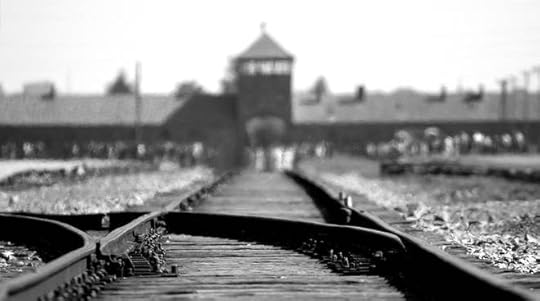
Un romanzo durissimo, disturbante, quasi scabro nella sua ossessività, ma ricco di stimoli, spunti di riflessione, suggerimenti di approfondimenti non solo di lettura.
Il protagonista, un giovane storico israeliano, per dare una svolta alla propria carriera e per assicurare alla sua famiglia benessere e un tenore di vita costanti, accetta di accompagnare in visita nei campi di concentramento e di sterminio gruppi di studenti e piccole delegazioni di politici e di militari che da Israele, ogni anno, compiono i viaggi della memoria recandosi in Polonia.
Lo scopo è anche quello di mettere a punto la sua tesi di dottorato, che si propone di identificare e confrontare “Analogie e differenze nei meccanismi di sterminio nei lager tedeschi durante la Seconda Guerra Mondiale”.
Quella del protagonista, serio, affidabile, meticoloso, rigoroso, dedito alla ricerca e all’approfondimento della sua materia di cui, in breve tempo, diviene un vero esperto, è una vera e propria discesa agli inferi, una presa di coscienza progressiva che lo porterà durante la durata di tutto il periodo che trascorrerà perlopiù in Polonia e sempre meno in Israele, a mettere in discussione non solo la validità dei viaggi della memoria, ma anche le intenzioni intime dei gruppi di visitatori, gli effetti e il peso della memoria stessa sull’intera nazione israeliana e sulla collettività ebrea, il peso devastante che grava non solo sulle vite dei sopravvissuti, ma anche di chi ne eredità idealmente il testimone, di chi accoglierà il virus e lascerà parlare dentro di sé le voci dei morti.
«Per qualche motivo a Majdanek, mentre percorrevamo le poche centinaia di metri che separano le camere a gas e dai crematori, mi era capitato di sentire ragazzi avvolti nelle bandiere parlare degli arabi, bisbigliando: “È così che si dovrebbe fare con gli arabi” dicevano. Non sempre, non in tutti gruppi, ma abbastanza spesso perché me lo ricordassi.»
La lettura, come dicevo è potente, durissima, anche se, parlando di Shoah, nonostante i riferimenti alle torture e alle pratiche assassine dei nazisti siano anche qui presenti, lo strazio e lo sgomento riguardino soprattutto il contraccolpo emotivo nel presente, siano successivi a quanto avvenuto dentro a quei campi: questa volta sembra quasi di trovarsi dietro alle quinte della tragedia, dove il palcoscenico sono sì i campi stessi, con le loro baracche, le camere a gas, le spianate dove, fra canti di uccelli e fronde, gli ebrei venivano frustati, trucidati, ammucchiati, ma dove a essere il protagonista è lo spettatore di oggi: colui che guarda senza guardare, senza capire, senza sentire, senza accorgersi del mostro della memoria che continua a devastare dentro chi quei campi li vorrebbe preservare da tutto in cerca di silenzio e rispetto, soprattutto dallo show e dalla mercificazione del turismo di massa e da un confronto con il passato che non solo schiaccia e annichilisce, ma che può finire per generare una violenza inaudita.
«Ci si oppone alla forza soltanto con la forza, e si deve saper uccidere. […] Penso che per sopravvivere dobbiamo essere anche un po’ nazisti»
È stata una lettura molto dolorosa, ma anche molto bella, e se le stelle sono quattro (quattro e mezzo) e non cinque, le motivazioni sono essenzialmente due: non mi ha esaltato l’espediente che racchiude tutta la storia in una lunga lettera in cui il protagonista racconta e confessa il suo percorso al direttore dello Yad Vashem (il museo della Shoah di Gerusalemme), e qualche perplessità sul finale che mi ha lasciato con più di qualche interrogativo, che non intaccano, però, la bellezza di tutto quanto lo ha preceduto.
«Auschwitz era una commistione fra un progetto di sterminio e un’impresa economica basata sulla schiavitù fino alla morte, scrissi. Ero soddisfatto di quella definizione. Di Treblinka dissi che era un luogo dove si soffocava e si bruciava, un inceneritore di enormi quantità di rifiuti umani, ma cancellai quelle parole dopo averle scritte e ne scelsi di più delicate. Sapevo di essere stato troppo brutale e non volevo perdere il lavoro e il cliente. Definii Sobibór, di primo acchito, il punto più estremo dell’Europa, al limite del mondo e dell’umanità, in mezzo a foreste antiche. Poi ci ripensai e diedi alla frase un taglio più concreto. Ma per chi sto scrivendo, poi? mi domandai. […] Di Bełżec scrissi che in pochi conoscevano quel lager, anche se vi era stato trucidato mezzo milione di persone. Bełżec era il massimo dell’efficienza, evidenziai in grassetto. A tal punto che meno di un anno dopo la sua costruzione non serviva già più. Tutta la popolazione destinata allo sterminio era stata eliminata, quasi senza eccezioni. Di Madjanek scrissi che era un campo di concentramento e di sterminio situato nei pressi di una grande città, visibile a tutti quelli che transitavano nella strada principale diretti a est di Lublino. Una dimostrazione concreta del nazismo.»
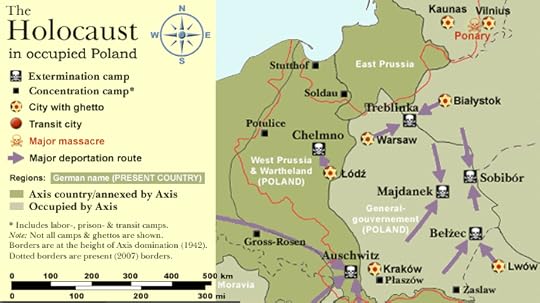
Molto interessanti, infine, anche i riferimenti ad autori e poeti di cui ho preso nota (su tutti i laceranti versi di Dan Pagis), i nomi di campi che non avevo mia sentito nominare (e la cui storia desidero approfondire), gli spunti di riflessione sul perché gli ebrei non riversino sui tedeschi tutto il proprio odio (mentre sia principalmente indirizzato nei confronti dei polacchi - e interessante in questo senso è il parallelo con i campi nazisti, che furono collocati quasi esclusivamente in Polonia, preservando di fatto esteticamente la Germania, che rimase “pulita”), le righe dedicate alla figura di Jan Karski, il partigiano polacco che si infiltrò in un campo di concentramento e che dopo averne visto l'orrore, dopo essere riuscito a evadere, inviò un rapporto a inglesi e americani per informali di quanto accadeva: la storia ci dice che nessuno dei due governi ritenne opportuno intervenire. Della storia di Karski, invece, leggerò a seguire nella graphic novel “Jan Karski L’uomo che scoprì l’Olocausto” che, per pura coincidenza, prima ancora di terminare Il mostro della memoria, avevo appena acquistato.
La bella recensione di Avvenire.
Qui, in questo convoglio,
io Eva
con mio figlio Abele
Se vedrete mio figlio maggiore
Caino, figlio di Adamo,
ditegli che io
[Don Pagis - Giorno della Memoria 2020]
Un romanzo durissimo, disturbante, quasi scabro nella sua ossessività, ma ricco di stimoli, spunti di riflessione, suggerimenti di approfondimenti non solo di lettura.
Il protagonista, un giovane storico israeliano, per dare una svolta alla propria carriera e per assicurare alla sua famiglia benessere e un tenore di vita costanti, accetta di accompagnare in visita nei campi di concentramento e di sterminio gruppi di studenti e piccole delegazioni di politici e di militari che da Israele, ogni anno, compiono i viaggi della memoria recandosi in Polonia.
Lo scopo è anche quello di mettere a punto la sua tesi di dottorato, che si propone di identificare e confrontare “Analogie e differenze nei meccanismi di sterminio nei lager tedeschi durante la Seconda Guerra Mondiale”.
Quella del protagonista, serio, affidabile, meticoloso, rigoroso, dedito alla ricerca e all’approfondimento della sua materia di cui, in breve tempo, diviene un vero esperto, è una vera e propria discesa agli inferi, una presa di coscienza progressiva che lo porterà durante la durata di tutto il periodo che trascorrerà perlopiù in Polonia e sempre meno in Israele, a mettere in discussione non solo la validità dei viaggi della memoria, ma anche le intenzioni intime dei gruppi di visitatori, gli effetti e il peso della memoria stessa sull’intera nazione israeliana e sulla collettività ebrea, il peso devastante che grava non solo sulle vite dei sopravvissuti, ma anche di chi ne eredità idealmente il testimone, di chi accoglierà il virus e lascerà parlare dentro di sé le voci dei morti.
«Per qualche motivo a Majdanek, mentre percorrevamo le poche centinaia di metri che separano le camere a gas e dai crematori, mi era capitato di sentire ragazzi avvolti nelle bandiere parlare degli arabi, bisbigliando: “È così che si dovrebbe fare con gli arabi” dicevano. Non sempre, non in tutti gruppi, ma abbastanza spesso perché me lo ricordassi.»
La lettura, come dicevo è potente, durissima, anche se, parlando di Shoah, nonostante i riferimenti alle torture e alle pratiche assassine dei nazisti siano anche qui presenti, lo strazio e lo sgomento riguardino soprattutto il contraccolpo emotivo nel presente, siano successivi a quanto avvenuto dentro a quei campi: questa volta sembra quasi di trovarsi dietro alle quinte della tragedia, dove il palcoscenico sono sì i campi stessi, con le loro baracche, le camere a gas, le spianate dove, fra canti di uccelli e fronde, gli ebrei venivano frustati, trucidati, ammucchiati, ma dove a essere il protagonista è lo spettatore di oggi: colui che guarda senza guardare, senza capire, senza sentire, senza accorgersi del mostro della memoria che continua a devastare dentro chi quei campi li vorrebbe preservare da tutto in cerca di silenzio e rispetto, soprattutto dallo show e dalla mercificazione del turismo di massa e da un confronto con il passato che non solo schiaccia e annichilisce, ma che può finire per generare una violenza inaudita.
«Ci si oppone alla forza soltanto con la forza, e si deve saper uccidere. […] Penso che per sopravvivere dobbiamo essere anche un po’ nazisti»
È stata una lettura molto dolorosa, ma anche molto bella, e se le stelle sono quattro (quattro e mezzo) e non cinque, le motivazioni sono essenzialmente due: non mi ha esaltato l’espediente che racchiude tutta la storia in una lunga lettera in cui il protagonista racconta e confessa il suo percorso al direttore dello Yad Vashem (il museo della Shoah di Gerusalemme), e qualche perplessità sul finale che mi ha lasciato con più di qualche interrogativo, che non intaccano, però, la bellezza di tutto quanto lo ha preceduto.
«Auschwitz era una commistione fra un progetto di sterminio e un’impresa economica basata sulla schiavitù fino alla morte, scrissi. Ero soddisfatto di quella definizione. Di Treblinka dissi che era un luogo dove si soffocava e si bruciava, un inceneritore di enormi quantità di rifiuti umani, ma cancellai quelle parole dopo averle scritte e ne scelsi di più delicate. Sapevo di essere stato troppo brutale e non volevo perdere il lavoro e il cliente. Definii Sobibór, di primo acchito, il punto più estremo dell’Europa, al limite del mondo e dell’umanità, in mezzo a foreste antiche. Poi ci ripensai e diedi alla frase un taglio più concreto. Ma per chi sto scrivendo, poi? mi domandai. […] Di Bełżec scrissi che in pochi conoscevano quel lager, anche se vi era stato trucidato mezzo milione di persone. Bełżec era il massimo dell’efficienza, evidenziai in grassetto. A tal punto che meno di un anno dopo la sua costruzione non serviva già più. Tutta la popolazione destinata allo sterminio era stata eliminata, quasi senza eccezioni. Di Madjanek scrissi che era un campo di concentramento e di sterminio situato nei pressi di una grande città, visibile a tutti quelli che transitavano nella strada principale diretti a est di Lublino. Una dimostrazione concreta del nazismo.»
Molto interessanti, infine, anche i riferimenti ad autori e poeti di cui ho preso nota (su tutti i laceranti versi di Dan Pagis), i nomi di campi che non avevo mia sentito nominare (e la cui storia desidero approfondire), gli spunti di riflessione sul perché gli ebrei non riversino sui tedeschi tutto il proprio odio (mentre sia principalmente indirizzato nei confronti dei polacchi - e interessante in questo senso è il parallelo con i campi nazisti, che furono collocati quasi esclusivamente in Polonia, preservando di fatto esteticamente la Germania, che rimase “pulita”), le righe dedicate alla figura di Jan Karski, il partigiano polacco che si infiltrò in un campo di concentramento e che dopo averne visto l'orrore, dopo essere riuscito a evadere, inviò un rapporto a inglesi e americani per informali di quanto accadeva: la storia ci dice che nessuno dei due governi ritenne opportuno intervenire. Della storia di Karski, invece, leggerò a seguire nella graphic novel “Jan Karski L’uomo che scoprì l’Olocausto” che, per pura coincidenza, prima ancora di terminare Il mostro della memoria, avevo appena acquistato.
La bella recensione di Avvenire.
June 17, 2021
As the Holocaust moves more and more into the past, the question arises how we should remember it. The main character of this novel is a Jewish extermination expert/tour guide of the Polish death camps, and he grows increasingly frustrated with the 'ceremonial' way in which his Israeli tour groups of high-schoolers ‘wrapped in flags, singing the national anthem over and over’ choose to approach their visit to the concentration camps. For them, their presence at the sites today is in itself a sign of victory.
But for the tour guide there is no victory at all; the raw facts, the murders that took place should be centre stage, in all their gruesome detail, so as not to forget who the killers are and make sure it does not happen again. The more time the tour guide spends in the camps, the more exposed his nerves become to the horrors that took place. But all around him the opposite appears to happen: Holocaust remembrance becomes more and more a touristy activity or a commercial or political opportunity.
This is very delicate material and sometimes difficult to read (for its subject matter and bold statements, not for the style which is very accessible), but in my opinion the author strikes the right balance - which makes it very thought provoking.
But for the tour guide there is no victory at all; the raw facts, the murders that took place should be centre stage, in all their gruesome detail, so as not to forget who the killers are and make sure it does not happen again. The more time the tour guide spends in the camps, the more exposed his nerves become to the horrors that took place. But all around him the opposite appears to happen: Holocaust remembrance becomes more and more a touristy activity or a commercial or political opportunity.
This is very delicate material and sometimes difficult to read (for its subject matter and bold statements, not for the style which is very accessible), but in my opinion the author strikes the right balance - which makes it very thought provoking.

January 29, 2019
Si può parlare della Shoah in modo asettico, da storico ebreo, sui luoghi della memoria, senza farsi raggiungere dalle voci dei tanti ebrei che lì hanno perso la vita? Sembrerebbe che per quasi tutto il libro la risposta sia sì, fino a quando non arriva un regista che sembra voglia appropriarsi di ciò che il protagonista è convinto di possedere. E tutto frana e la sovrastruttura che serviva a proteggerlo crolla. Davvero un libro che fa riflettere.

May 3, 2024
4.5. Excellent, so thought-provoking. The unnamed narrator is an Israeli historian, whose dissertation is on Polish extermination camps during the Holocaust. He is financially precarious and takes a contract job as a tour guide for Israelis visiting the camps, particularly high school groups. At the same time, to make ends meet, he takes on other projects, including working for an Israeli company that’s crafting an educational role-playing video game that gamifies life and death in the camps, and helping with planning for a big event commemorating the Wannsee Conference, by which the Israeli military will dramatically stage a triumphant ‘rescue’ of a camp. The narrator’s mastery of the perverse details of death is unparalleled, even as he becomes more and more unravelled by his knowledge and by the oddities of Holocaust tourism.
What an exploration of the impact of immersion in the horrors of the Holocaust on both a personal and a national level. The narrator struggles to connect with the high school students on his tours, many of whom who can’t help but admire the ‘hot’ Nazis, despise the ‘weak’ victims, and speculate about learning from the Germans how to deal with Arabs and left-wingers. Yet he comments approvingly when one student’s takeaway from his trip is that “in order to survive, we need to be a little bit Nazi, too.” So good, so much to unpack, so devastating.
What an exploration of the impact of immersion in the horrors of the Holocaust on both a personal and a national level. The narrator struggles to connect with the high school students on his tours, many of whom who can’t help but admire the ‘hot’ Nazis, despise the ‘weak’ victims, and speculate about learning from the Germans how to deal with Arabs and left-wingers. Yet he comments approvingly when one student’s takeaway from his trip is that “in order to survive, we need to be a little bit Nazi, too.” So good, so much to unpack, so devastating.

January 29, 2020
No sabia si posar-li un tres, però alguns fragments absolutament brillants han fet decidir-me pel quatre.
I ara he tornat al tres.
I ara he tornat al tres.

February 5, 2020
Gerade aktuell: Eine Amerikanerin schreibt über Einwanderer aus Mexiko. Und die Proteste reißen nicht ab. Warum? Weil die Autorin sich eine Perspektive aneignet, die sie nicht aus eigener Anschauung kennt. Auf ihren Kern reduziert, steht die Frage im Raum: Wer spricht? Wer äußert sich zu welchem Thema in welcher Tonart? Und steht es jedem in gleichem Maße zu, sich zu jedem Thema zu äußern? In Zeiten der vermeintlich absoluten Meinungsfreiheit, die so viele so bedroht sehen, werden die Antworten grober. Jeder sollte zu allem seine Meinung sagen dürfen, egal wie prekär das Thema, egal wie komplex der Kontext ist. Und im Grunde ist diese Haltung ja auch richtig. Sie entbehrt nur gelegentlich der Empathie, die gewisse Themen verlangen. Zugleich ist aber auch zu spüren, wie viele es leid sind, sich in die Schwierigkeiten bestimmter Standpunkte, in die Wesentlichkeit bestimmter Themen einzudenken. Einfache Standpunkte scheinen gefragt zu sein.
Yishai Sarid ist ein israelischer Autor jüdischen Glaubens. Er schreibt den Roman MONSTER (MIFLETZET HAZICHARON; Original erschienen 2017) in Form eines Rechenschaftsberichts, den ein Historiker, der regelmäßig israelische Schulklassen in die ehemaligen Todeslager in Polen begleitet, verfassen soll, weil es bei seinem letzten Auftrag – er sollte einen deutschen Regisseur begleiten, der einen Film über „Auschwitz“ zu drehen gedenkt – zu einem Zwischenfall gekommen ist. Der namenlose Berichterstatter hat den Deutschen geschlagen. Wie konnte es dazu kommen? Auf den knapp 174 Seiten versucht der Verfasser sich zu erklären. Er erklärt, wie die Reisen in die ehemaligen Konzentrationslager immer mehr an seiner Seele fraßen, wie er die Schüler wahrgenommen hat, wie er den Umgang mit den Polen wahrgenommen hat, wie die oft wochen- oder gar monatelangen Trennungen von seiner Frau und seinem Kind die Familie belasteten, wie ihm seine Arbeit und deren scheinbare Vergeblichkeit immer weiter in eine Verbitterung getrieben haben, die auch vor den eigenen Leuten, dem eigenen Volk, der eigenen Glaubensgemeinschaft nicht Halt gemacht hat. Er beschreibt, wie der Holocaust, die Shoah, mehr und mehr zu einer Art Label geworden ist, aus der jeder die für sich geeignete Position ableitet. Und zugleich muß er sich eingestehen, daß er selber nicht nur Nutznießer dieses Labels geworden ist, da ihm seine Reisen ein gutes Einkommen beschert haben, sondern daß er in eine Abhängigkeit von seinem Arbeitgeber – der Erinnerungsstätte Yad Vashem – geraten ist, die mit Dankbarkeit, aber vor allem auch mit Eitelkeit zu tun hat. Hier fand er die Anerkennung, die er sich gewünscht hat, er, der nie Historiker der Shoah werden wollte. So wurde er ein guter Erzähler des Grauens, das er nicht erleben musste, das auch für ihn ein Narrativ ist, welches sich aus Hunderten, Tausenden Seiten erlesenen Wissens zusammensetzt.
Wer spricht? Im Jahr 2000 erschien das Buch DIE HOLOCAUST-INDUSTRIE. WIE DAS LEIDEN DER JUDEN AUSGENUTZT WIRD (THE HOLOCAUST INDUSTRY. REFLECTIONS ON THE EXPLOITATION OF JEWISH SUFFERING; 2000) von Norman Finkelstein und löste eine erbitterte Kontroverse aus. Vor allem die Kernthese, daß das amerikanische Judentum den Holocaust erst spät „entdeckt“ und dann begonnen habe, daraus eine ertragreiche Industrie aus Schuld und Komplexen zu generieren, sorgte für ungeheure Aufregung und ebensolchen Unmut. Die Debatte kann man nicht neu auflegen, im Kontext mit Sarids Buch ist sie aber aufschlußreich, weil auch hier die Frage „Wer Spricht?“ maßgeblich war. Daß es mit Finkelstein ein Politikwissenschaftler jüdischen Glaubens war, dessen Angehörige ebenfalls Opfer in den Todeslagern geworden sind, machte es so schwer erträglich, eine Haltung einzunehmen. Ganz besonders für Deutsche. Finkelstein bediente teils die Narrative der Leugner der Shoah – es habe viel weniger Tote gegeben, als behauptet, war eine dieser Aussagen. Zudem stellte Finkelstein die Singularität der Shoah in Frage. Wie nicht anders zu erwarten, wurde er damit in Kreisen gewürdigt, denen er sicherlich weder nahestand, noch nahestehen wollte. Es war seine Position als Jude, die seine Haltung für alle Teilnehmer an der Kontroverse so schwierig machte. Denn es ist etwas fundamental anderes, ob ein Mensch jüdischen Glaubens oder ein Relativist aus England, wie der „Historiker“ David Irving, eine solche Behauptung aufstellt. Oder gar ein Deutscher.
Iris Hanika veröffentlichte im Jahr 2010 den Roman DAS EIGENTLICHE. Hier wurde es schon schwieriger, der Autorin in ihrem Urteil zu folgen. Man verstand sehr wohl, welches Anliegen sich hier auszudrücken anschickte, verzweifelte aber doch an der Form und dem Stil des Werks. Letztlich blieb der Eindruck, daß auch jene, die sich der Erinnerungskultur verschrieben haben, aus rein egoistischen, meist psychologisch zu erklärenden Gründen handeln. Ein wenig wurde man das Gefühl nicht los, daß hier auf eine besonders subversive Art die deutsche „Vergangenheitsbewältigung“ nicht nur in Frage gestellt, sondern schon ein wenig der Lächerlichkeit preisgegeben wurde. Und auch in Hanikas Text klingt immer wieder der Vorwurf der kommerziellen Ausbeutung eines Menschheitsverbrechens an. Doch Hanika ist Deutsche, sie ist (soweit dem Rezensenten bekannt) keine Jüdin. Und sofort steht da wieder die Frage im Raum, wer spricht? Es verwundert übrigens nicht, daß sich ihr Buch auf der Lektüreliste zu einem Seminar findet, das im Institut für Staatspolitik abgehalten wurde, jener Kaderschmiede, die der selbsternannte Vordenker der „Neuen Rechten“, Götz Kubitschek, im sachsen-anhaltinischen Schnellroda errichtet hat. Aber gut, seine Leser kann man sich nicht aussuchen.
Wozu nun dieser Exkurs? Weil auch in Sarids Roman die oben aufgeworfenen Fragen und Themen anklingen. Und man doch zugleich ein ganz anderes Ringen spürt. Ein Ringen mit der Geschichte, die nicht wirklich die eigene ist in dem Sinne, daß man erlebt hat, wovon man spricht, und doch immer die eigene bleibt, gerade dann, wenn man Hinterbliebener der Opfer ist. Aber eben auch ein Ringen damit, wie das Erinnern institutionalisiert wird, wie Bürokratie und der Alltag des Erinnerns, den es zumindest für den Erzähler gibt, das „Eigentliche“ längst überdecken. Und schließlich ein Ringen mit der Erkenntnis, wie die Erinnerung für gegenwärtige Probleme instrumentalisiert wird – auch von den eigenen Leuten. In einer der aufwühlendsten Szenen des Buches wird beschrieben, wie Schüler das, was ihren Vorfahren angetan wurde, als Blaupause nehmen, um das Verhalten Israels gegenüber seinen heutigen Gegnern und Feinden nicht nur zu rechtfertigen, sondern sogar mehr Härte einzufordern. So wird hier nicht nur das Wachhalten der Erinnerung beschrieben und hinterfragt, sondern auf schmerzliche Weise auch die Verflechtung des Geschehenen mit der Gegenwart (und Zukunft) verdeutlicht. Was den Leser unweigerlich zu der Frage bringt: Wer liest? Wie liest diesen Text ein Deutscher? Wie liest ihn ein Israeli, wie ein Amerikaner, wie ein amerikanischer Jude? Wie liest ein Palästinenser einen solchen Text?
Nüchtern, nur selten von Emotionen aufgerührt, in einem manchmal schwer erträglichen, weil fast anbiedernden Stil, versucht der Erzähler seinem Vorgesetzten in Yad Vashem zu erklären, wieso es zu jenem Schlag kam, den er gegen den deutschen Regisseur führte. Warum er selbst, am Ort jener unbegreiflichen Gewalt, zu einem gewalttätigen Mittel greifen musste. Und er musste, das macht uns dieser Text klar. Mehr, als uns lieb sein kann.
Sarids literarische Qualität liegt darin, wie es ihm gelingt, die dem Erzähler eigenen Verletztheiten, seine Zweifel und auch seine Eitelkeit nie auszustellen, gar zu denunzieren, indem er sie karikiert oder überspitzt, sondern eher in Nebensätzen anklingen, zwischen den Zeilen hindurchschimmern zu lassen. Da entsteht eine feine Textur, ein Bericht, der genaues Lesen erfordert. Es ist ein schwieriges Erzählen, weil es Fragen aufwirft, aber im Grunde nie Antworten bietet. Nur den Schmerz der Unzulänglichkeit, mit einer nie vergehenden Geschichte umzugehen, die dem nahe kommt, was man in Ermangelung eines besseren Wortes gern „das Böse“ nennt. Ist der eine Schlag gegen die Millionen Toten aufzurechnen? War er gerechtfertigt? Oder entspricht er an sich schon dem Übertreten einer roten Linie, die zu halten uns die Menschlichkeit, unser Festhalten an der Zivilisation, so desavouiert sie uns auch erscheinen mag, gebietet?
Es fällt scheinbar leichter, wenn es ein israelischer, ein jüdischer Autor ist, der diese Fragen aufwirft. Aber das täuscht. Was man vielleicht im hintersten Winkel seines Geistes als Entlastung empfinden möchte, wird durchkreuzt. Denn als nicht-jüdischer Leser wird man auch auf diesen Seiten viel zu deutlich mit der Frage der Täterschaft und der eigenen Haltung dazu konfrontiert, als daß man sich in irgendeiner Weise entlasten könnte.
Wer spricht?
Wer liest?
Yishai Sarid ist ein israelischer Autor jüdischen Glaubens. Er schreibt den Roman MONSTER (MIFLETZET HAZICHARON; Original erschienen 2017) in Form eines Rechenschaftsberichts, den ein Historiker, der regelmäßig israelische Schulklassen in die ehemaligen Todeslager in Polen begleitet, verfassen soll, weil es bei seinem letzten Auftrag – er sollte einen deutschen Regisseur begleiten, der einen Film über „Auschwitz“ zu drehen gedenkt – zu einem Zwischenfall gekommen ist. Der namenlose Berichterstatter hat den Deutschen geschlagen. Wie konnte es dazu kommen? Auf den knapp 174 Seiten versucht der Verfasser sich zu erklären. Er erklärt, wie die Reisen in die ehemaligen Konzentrationslager immer mehr an seiner Seele fraßen, wie er die Schüler wahrgenommen hat, wie er den Umgang mit den Polen wahrgenommen hat, wie die oft wochen- oder gar monatelangen Trennungen von seiner Frau und seinem Kind die Familie belasteten, wie ihm seine Arbeit und deren scheinbare Vergeblichkeit immer weiter in eine Verbitterung getrieben haben, die auch vor den eigenen Leuten, dem eigenen Volk, der eigenen Glaubensgemeinschaft nicht Halt gemacht hat. Er beschreibt, wie der Holocaust, die Shoah, mehr und mehr zu einer Art Label geworden ist, aus der jeder die für sich geeignete Position ableitet. Und zugleich muß er sich eingestehen, daß er selber nicht nur Nutznießer dieses Labels geworden ist, da ihm seine Reisen ein gutes Einkommen beschert haben, sondern daß er in eine Abhängigkeit von seinem Arbeitgeber – der Erinnerungsstätte Yad Vashem – geraten ist, die mit Dankbarkeit, aber vor allem auch mit Eitelkeit zu tun hat. Hier fand er die Anerkennung, die er sich gewünscht hat, er, der nie Historiker der Shoah werden wollte. So wurde er ein guter Erzähler des Grauens, das er nicht erleben musste, das auch für ihn ein Narrativ ist, welches sich aus Hunderten, Tausenden Seiten erlesenen Wissens zusammensetzt.
Wer spricht? Im Jahr 2000 erschien das Buch DIE HOLOCAUST-INDUSTRIE. WIE DAS LEIDEN DER JUDEN AUSGENUTZT WIRD (THE HOLOCAUST INDUSTRY. REFLECTIONS ON THE EXPLOITATION OF JEWISH SUFFERING; 2000) von Norman Finkelstein und löste eine erbitterte Kontroverse aus. Vor allem die Kernthese, daß das amerikanische Judentum den Holocaust erst spät „entdeckt“ und dann begonnen habe, daraus eine ertragreiche Industrie aus Schuld und Komplexen zu generieren, sorgte für ungeheure Aufregung und ebensolchen Unmut. Die Debatte kann man nicht neu auflegen, im Kontext mit Sarids Buch ist sie aber aufschlußreich, weil auch hier die Frage „Wer Spricht?“ maßgeblich war. Daß es mit Finkelstein ein Politikwissenschaftler jüdischen Glaubens war, dessen Angehörige ebenfalls Opfer in den Todeslagern geworden sind, machte es so schwer erträglich, eine Haltung einzunehmen. Ganz besonders für Deutsche. Finkelstein bediente teils die Narrative der Leugner der Shoah – es habe viel weniger Tote gegeben, als behauptet, war eine dieser Aussagen. Zudem stellte Finkelstein die Singularität der Shoah in Frage. Wie nicht anders zu erwarten, wurde er damit in Kreisen gewürdigt, denen er sicherlich weder nahestand, noch nahestehen wollte. Es war seine Position als Jude, die seine Haltung für alle Teilnehmer an der Kontroverse so schwierig machte. Denn es ist etwas fundamental anderes, ob ein Mensch jüdischen Glaubens oder ein Relativist aus England, wie der „Historiker“ David Irving, eine solche Behauptung aufstellt. Oder gar ein Deutscher.
Iris Hanika veröffentlichte im Jahr 2010 den Roman DAS EIGENTLICHE. Hier wurde es schon schwieriger, der Autorin in ihrem Urteil zu folgen. Man verstand sehr wohl, welches Anliegen sich hier auszudrücken anschickte, verzweifelte aber doch an der Form und dem Stil des Werks. Letztlich blieb der Eindruck, daß auch jene, die sich der Erinnerungskultur verschrieben haben, aus rein egoistischen, meist psychologisch zu erklärenden Gründen handeln. Ein wenig wurde man das Gefühl nicht los, daß hier auf eine besonders subversive Art die deutsche „Vergangenheitsbewältigung“ nicht nur in Frage gestellt, sondern schon ein wenig der Lächerlichkeit preisgegeben wurde. Und auch in Hanikas Text klingt immer wieder der Vorwurf der kommerziellen Ausbeutung eines Menschheitsverbrechens an. Doch Hanika ist Deutsche, sie ist (soweit dem Rezensenten bekannt) keine Jüdin. Und sofort steht da wieder die Frage im Raum, wer spricht? Es verwundert übrigens nicht, daß sich ihr Buch auf der Lektüreliste zu einem Seminar findet, das im Institut für Staatspolitik abgehalten wurde, jener Kaderschmiede, die der selbsternannte Vordenker der „Neuen Rechten“, Götz Kubitschek, im sachsen-anhaltinischen Schnellroda errichtet hat. Aber gut, seine Leser kann man sich nicht aussuchen.
Wozu nun dieser Exkurs? Weil auch in Sarids Roman die oben aufgeworfenen Fragen und Themen anklingen. Und man doch zugleich ein ganz anderes Ringen spürt. Ein Ringen mit der Geschichte, die nicht wirklich die eigene ist in dem Sinne, daß man erlebt hat, wovon man spricht, und doch immer die eigene bleibt, gerade dann, wenn man Hinterbliebener der Opfer ist. Aber eben auch ein Ringen damit, wie das Erinnern institutionalisiert wird, wie Bürokratie und der Alltag des Erinnerns, den es zumindest für den Erzähler gibt, das „Eigentliche“ längst überdecken. Und schließlich ein Ringen mit der Erkenntnis, wie die Erinnerung für gegenwärtige Probleme instrumentalisiert wird – auch von den eigenen Leuten. In einer der aufwühlendsten Szenen des Buches wird beschrieben, wie Schüler das, was ihren Vorfahren angetan wurde, als Blaupause nehmen, um das Verhalten Israels gegenüber seinen heutigen Gegnern und Feinden nicht nur zu rechtfertigen, sondern sogar mehr Härte einzufordern. So wird hier nicht nur das Wachhalten der Erinnerung beschrieben und hinterfragt, sondern auf schmerzliche Weise auch die Verflechtung des Geschehenen mit der Gegenwart (und Zukunft) verdeutlicht. Was den Leser unweigerlich zu der Frage bringt: Wer liest? Wie liest diesen Text ein Deutscher? Wie liest ihn ein Israeli, wie ein Amerikaner, wie ein amerikanischer Jude? Wie liest ein Palästinenser einen solchen Text?
Nüchtern, nur selten von Emotionen aufgerührt, in einem manchmal schwer erträglichen, weil fast anbiedernden Stil, versucht der Erzähler seinem Vorgesetzten in Yad Vashem zu erklären, wieso es zu jenem Schlag kam, den er gegen den deutschen Regisseur führte. Warum er selbst, am Ort jener unbegreiflichen Gewalt, zu einem gewalttätigen Mittel greifen musste. Und er musste, das macht uns dieser Text klar. Mehr, als uns lieb sein kann.
Sarids literarische Qualität liegt darin, wie es ihm gelingt, die dem Erzähler eigenen Verletztheiten, seine Zweifel und auch seine Eitelkeit nie auszustellen, gar zu denunzieren, indem er sie karikiert oder überspitzt, sondern eher in Nebensätzen anklingen, zwischen den Zeilen hindurchschimmern zu lassen. Da entsteht eine feine Textur, ein Bericht, der genaues Lesen erfordert. Es ist ein schwieriges Erzählen, weil es Fragen aufwirft, aber im Grunde nie Antworten bietet. Nur den Schmerz der Unzulänglichkeit, mit einer nie vergehenden Geschichte umzugehen, die dem nahe kommt, was man in Ermangelung eines besseren Wortes gern „das Böse“ nennt. Ist der eine Schlag gegen die Millionen Toten aufzurechnen? War er gerechtfertigt? Oder entspricht er an sich schon dem Übertreten einer roten Linie, die zu halten uns die Menschlichkeit, unser Festhalten an der Zivilisation, so desavouiert sie uns auch erscheinen mag, gebietet?
Es fällt scheinbar leichter, wenn es ein israelischer, ein jüdischer Autor ist, der diese Fragen aufwirft. Aber das täuscht. Was man vielleicht im hintersten Winkel seines Geistes als Entlastung empfinden möchte, wird durchkreuzt. Denn als nicht-jüdischer Leser wird man auch auf diesen Seiten viel zu deutlich mit der Frage der Täterschaft und der eigenen Haltung dazu konfrontiert, als daß man sich in irgendeiner Weise entlasten könnte.
Wer spricht?
Wer liest?

May 12, 2021
"What's your job dad?" he asked.
"He tells them about what happened," Ruth offered.
"What happened?" Ido widened his eyes with worry.
"There was a monster that killed people," I said.
"And you fight the monster?" He asked, excited.
"It's already dead," I tried to explain. "It's a memory monster."
"The Memory Monster" by Israeli novelist Yishai Sarid is a relentlessly fascinating tale written in the form of a report. Our unnamed narrator is a "Poland Extermination Camp Expert," which is to say he's well versed in the methods the Germans used to slaughter six million Jews — as well as plenty of others — in the Second World War.
I've never read a Holocaust book like this one. It's so unique, such a thought-provoking experience, that one can't easily forget it.
I visited Auschwitz-Birkenau back in 2018. I remember the experience well. Our guide was appropriately somber, telling of the terrible things that took place there in something like a whisper. I also remember the very loud Israeli teenagers, a few of whom were running and chasing one another down the infamous train tracks leading into the camp. Our guide just about lost his mind. He paused every few seconds between sharing the details of the camp's Jewish victims to glare at the kids, their Israeli flags fluttering behind them as they ran.
How much memory is too much? At what age are you emotionally mature enough to handle the responsibility that comes with witnessing a place where so many were killed?
While reading "The Memory Monster," I had in my mind the image of our guide as the narrator, the expert in the Nazis' tools of execution, in the 1.1 million who had been murdered at the camp. I could understand his frustration, talking to groups of kids, that they just weren't getting it. That, maybe, all of this was having the exact opposite effect that it should have.
While guiding a group of Israeli kids through the camp, our narrator says, "I heard them talking about Arabs, wrapped in their flags and whispering, The Arabs, that's what we should do to the Arabs."
Later, "On a tour of Auschwitz-Birkenau, this one fat student with mean eyes, cheeks purple with cold, began to scratch the words, 'Death to left-wingers' onto a wooden wall in the women's camp. An alert teacher intervened and didn't let him finish. His friends consoled him, promising to complete the work when they got back to Israel. They were cloaked with the national flag, wearing yarmulkes, walking among the sheds, filled with hatred—not for the murderers, but for the victims."
The Israelis being shown around the camps didn't hate the Germans, our narrator reports. They almost admired them, dressed in their Hugo Boss uniforms, looking like "models." Instead, it was the Poles, the collaborators, who they despised.
In a "what has this trip taught you?" review at the end of one particular tour, a boy stands up to reply.
"I think that in order to survive we need to be a little bit Nazi, too ... we have to be able to kill mercilessly ... we don't stand a chance if we're too soft."
"But you're not talking about killing innocent people," the principal clarified.
The boy thought for a moment, calculated, taking his time. "Sometimes there's no choice but to hurt civilians, too. It's hard to distinguish civilians from terrorists. A boy who's just a boy today could become a terrorist tomorrow. This is, after all, a war of survival. It's us or them. We won't let this happen to us again."
There is some irony in my writing this review mere days after the Israeli government's US-sponsored terrorism left dozens in Gaza dead, including at least nine children. To be "a little bit Nazi" has been the Israeli government's position for some time now, and attempting to "distinguish civilians from terrorists" hasn't appeared to be a priority in some time.
Of course, a politician here in the US can't criticize these policies without being labeled anti-semitic, which illustrates the Israeli government's success at managing to appear as a weak state, a victim, while in reality wielding outsize power in the region.
To embrace the victimhood that belongs to those who were so cruelly wiped out by Hitler's forces in order to push a narrative of oppression that ignores the fact that you're actually the oppressor is a slap in the face to memory itself, and to the memories of all those who were and continue to be murdered.
"He tells them about what happened," Ruth offered.
"What happened?" Ido widened his eyes with worry.
"There was a monster that killed people," I said.
"And you fight the monster?" He asked, excited.
"It's already dead," I tried to explain. "It's a memory monster."
"The Memory Monster" by Israeli novelist Yishai Sarid is a relentlessly fascinating tale written in the form of a report. Our unnamed narrator is a "Poland Extermination Camp Expert," which is to say he's well versed in the methods the Germans used to slaughter six million Jews — as well as plenty of others — in the Second World War.
I've never read a Holocaust book like this one. It's so unique, such a thought-provoking experience, that one can't easily forget it.
I visited Auschwitz-Birkenau back in 2018. I remember the experience well. Our guide was appropriately somber, telling of the terrible things that took place there in something like a whisper. I also remember the very loud Israeli teenagers, a few of whom were running and chasing one another down the infamous train tracks leading into the camp. Our guide just about lost his mind. He paused every few seconds between sharing the details of the camp's Jewish victims to glare at the kids, their Israeli flags fluttering behind them as they ran.
How much memory is too much? At what age are you emotionally mature enough to handle the responsibility that comes with witnessing a place where so many were killed?
While reading "The Memory Monster," I had in my mind the image of our guide as the narrator, the expert in the Nazis' tools of execution, in the 1.1 million who had been murdered at the camp. I could understand his frustration, talking to groups of kids, that they just weren't getting it. That, maybe, all of this was having the exact opposite effect that it should have.
While guiding a group of Israeli kids through the camp, our narrator says, "I heard them talking about Arabs, wrapped in their flags and whispering, The Arabs, that's what we should do to the Arabs."
Later, "On a tour of Auschwitz-Birkenau, this one fat student with mean eyes, cheeks purple with cold, began to scratch the words, 'Death to left-wingers' onto a wooden wall in the women's camp. An alert teacher intervened and didn't let him finish. His friends consoled him, promising to complete the work when they got back to Israel. They were cloaked with the national flag, wearing yarmulkes, walking among the sheds, filled with hatred—not for the murderers, but for the victims."
The Israelis being shown around the camps didn't hate the Germans, our narrator reports. They almost admired them, dressed in their Hugo Boss uniforms, looking like "models." Instead, it was the Poles, the collaborators, who they despised.
In a "what has this trip taught you?" review at the end of one particular tour, a boy stands up to reply.
"I think that in order to survive we need to be a little bit Nazi, too ... we have to be able to kill mercilessly ... we don't stand a chance if we're too soft."
"But you're not talking about killing innocent people," the principal clarified.
The boy thought for a moment, calculated, taking his time. "Sometimes there's no choice but to hurt civilians, too. It's hard to distinguish civilians from terrorists. A boy who's just a boy today could become a terrorist tomorrow. This is, after all, a war of survival. It's us or them. We won't let this happen to us again."
There is some irony in my writing this review mere days after the Israeli government's US-sponsored terrorism left dozens in Gaza dead, including at least nine children. To be "a little bit Nazi" has been the Israeli government's position for some time now, and attempting to "distinguish civilians from terrorists" hasn't appeared to be a priority in some time.
Of course, a politician here in the US can't criticize these policies without being labeled anti-semitic, which illustrates the Israeli government's success at managing to appear as a weak state, a victim, while in reality wielding outsize power in the region.
To embrace the victimhood that belongs to those who were so cruelly wiped out by Hitler's forces in order to push a narrative of oppression that ignores the fact that you're actually the oppressor is a slap in the face to memory itself, and to the memories of all those who were and continue to be murdered.

January 16, 2021
לסקירה מפורטת בעברית, קישור לבלוג שלי -
https://sivi-the-avid-reader.com/מפלצ...
https://sivi-the-avid-reader.com/מפלצ...

October 1, 2020
Since our historical records have been, proverbially, written by winners, it leaves a lot of space for interpretation. Specifically, I’m very interested in how different countries and cultures process the same events. It would be naïve at best and completely unrealistic at worst to expect the same perspectives. WWII, something objectively horrific, which affected most of the world and all of Europe, is especially traumatic for the Jewish people. This is a story of one Israeli scholar as he struggles to process and reconcile the brutality of the past with the banal indifference of the present. The scholar, who remains unnamed throughout this short yet poignant novel, makes a living out of giving tours of concentration camps, mainly to Israeli kids. And he also writes a book on the subject. Essentially, most of his life is dedicated to making the flames of rememberance burns higher and brighter, while the actual facts of the Nazis and their systemic meticulous genocide practices seem to be slowly but consistently fading from collective memories. Indeed, the more time passes, the fewer camp survivors are left to tell their tales, the fewer perpetrators are left to punish, and what remains are buildings of great evil, which now stand as tourist attractions. The scholar, surrounded by it all, gets increasingly frustrated and angry, no one seems to be taking things as seriously as he does and the past forgotten is doomed to repeat itself. The pot stirred aggressively gets to boiling when he is hired by a Deutsch documentarian to assist with the historical aspects of a movie. In fact, the dynamic proves positively incendiary. The situation ends up requiring explanation and that’s the basic structure of the book, one long elaborate missive of an explanation for the events written by the scholar to his employer, the chairman of Yad Vashem. Long for a letter, short for a novel, but positively loaded with food for thought. The apocalypse cupboard loaded. So many questions to ponder. When does one let go of the past? Do people really change so much? Is it worth is hanging on to something most would prefer to put in the back of their mind? And how does one reconcile such horrific brutality and still make their way in the world? There’s more, but also it’s a sort of thing where individual readers, depending on their personal level of misanthropy and historical knowledge, might get different things out of it. There’s no shortage of WWII fiction out there, so much of it seems to be written by American authors and highlighting some heroic events, rescue missions or love stories set against
Impossible odds, etc. There are usually long, emotionally manipulative feature easy black and white controversy free morals. This is pretty much the opposite of all that, refreshingly so. This isn’t even exactly a book about the war, it’s a book about echoes of war, the way it resonates for some more than others. The way it shouldn’t fade away. And also, somehow, not devour those who hear it. Fine balance, indeed. Fine book, indeed. Not an easy read, but certainly a worthy one. Recommended.
Impossible odds, etc. There are usually long, emotionally manipulative feature easy black and white controversy free morals. This is pretty much the opposite of all that, refreshingly so. This isn’t even exactly a book about the war, it’s a book about echoes of war, the way it resonates for some more than others. The way it shouldn’t fade away. And also, somehow, not devour those who hear it. Fine balance, indeed. Fine book, indeed. Not an easy read, but certainly a worthy one. Recommended.

February 9, 2021
4.5
"Potwór pamięci" to książka, która bardzo mocno mnie zaskoczyła. Nie tylko tym, że geograficznie odbiega od regionów literackich, do których do tej pory zapraszało mnie swoimi książkami wydawnictwo KEW. Zaskoczyła mnie na wielu poziomach, ale przede wszystkim tym, że tak "dobrze" i z tak ogromnym zaangażowaniem czytało mi się książkę o zagładzie. Nie zrozumcie mnie źle - "Potwór pamięci" jest książką bardzo ciężką tematycznie, ale jest napisana tak lekkim piórem i oferuje tak oryginalną perspektywę, formę narracyjną orz stosunek emocjonalny opowiadacza, że staje się książką rzeczywiście nieodkładalną. I jest to w moim przypadku rzecz absolutnie wyjątkowa - bo raz, że raczej unikam tematyki Holocaustu w literaturze (z różnych przyczyn), a dwa - nie spodziewałam się, że wyciągnę z tej lektury tak wiele - zarówno jeśli chodzi o fakty, jak i prostą czytelniczą przyjemność. Nie sądziłam też, że w książce o obozach zagłady i obozach pracy tyle razy będę łapać się za głowę, czuć gulę w gardle, nieprzyjemny ucisk w klatce, moje oczy będą się otwierać coraz szerzej, a moja szczęka będzie opadać coraz niżej. I to z przyczyn zupełnie innych niż mogłabym się spodziewać. Wow!
Sarid Yishai tworzy postać izraelskiego przewodnika po obozach zagłady i obozach pracy na terenie Polski, doktoranta tematyki zagłady, męża i ojca, człowieka powoli zatracającego się nieświadomie w pamięci swojej i pamięci historii. Pisze on list do dyrektora firmy, która lata temu zatrudniła go na stanowisku przewodnika i zaprosiła do udziału w innych projektach oscylujących tematycznie wokół Holocaustu. Ten list jest właśnie tą książką. Stopniowo poznajemy jego historię - od samego początku "zainteresowania" tematyką zagłady, przez spotkania z młodzieżą izraelską (którą podsłuchuje, nieświadomie prowokuje, a której opiekunów szokuje). Nie będę Wam pisać zbyt wiele na temat samej fabuły, bo nie chcę Wam odbierać przyjemności stuprocentowego obcowania z tą książką, a nie jest ona długa.
"Potwór pamięci" jest książką oryginalną, bezkompromisową, przerażającą (zarówno w odniesieniu do przeszłości, jak i teraźniejszości), zastraszająco prawdziwą, szokującą, odważną, świetnie napisaną, szalenie wciągającą. Mam wrażenie, że jest to książka, która ma szansę zachwycić zarówno osoby nieobeznane w tematyce zagłady, jak i doświadczonych czytelników tej tematyki. Zupełnie nie jestem specjalistką literatury żydowskiej. Jestem jednak pewna, że "Potwór pamięci" Was pochłonie - bez względu na Wasze zainteresowania, doświadczenie i preferencje literackie.
Szalenie się cieszę, że udało się zebrać kwotę potrzebną do wydania tej powieści w Polsce. Wydawnictwo miało nosa i świetnie, że czytelnicy wspierają takie inicjatywy. Róbmy to częściej!
"Potwór pamięci" to książka, która bardzo mocno mnie zaskoczyła. Nie tylko tym, że geograficznie odbiega od regionów literackich, do których do tej pory zapraszało mnie swoimi książkami wydawnictwo KEW. Zaskoczyła mnie na wielu poziomach, ale przede wszystkim tym, że tak "dobrze" i z tak ogromnym zaangażowaniem czytało mi się książkę o zagładzie. Nie zrozumcie mnie źle - "Potwór pamięci" jest książką bardzo ciężką tematycznie, ale jest napisana tak lekkim piórem i oferuje tak oryginalną perspektywę, formę narracyjną orz stosunek emocjonalny opowiadacza, że staje się książką rzeczywiście nieodkładalną. I jest to w moim przypadku rzecz absolutnie wyjątkowa - bo raz, że raczej unikam tematyki Holocaustu w literaturze (z różnych przyczyn), a dwa - nie spodziewałam się, że wyciągnę z tej lektury tak wiele - zarówno jeśli chodzi o fakty, jak i prostą czytelniczą przyjemność. Nie sądziłam też, że w książce o obozach zagłady i obozach pracy tyle razy będę łapać się za głowę, czuć gulę w gardle, nieprzyjemny ucisk w klatce, moje oczy będą się otwierać coraz szerzej, a moja szczęka będzie opadać coraz niżej. I to z przyczyn zupełnie innych niż mogłabym się spodziewać. Wow!
Sarid Yishai tworzy postać izraelskiego przewodnika po obozach zagłady i obozach pracy na terenie Polski, doktoranta tematyki zagłady, męża i ojca, człowieka powoli zatracającego się nieświadomie w pamięci swojej i pamięci historii. Pisze on list do dyrektora firmy, która lata temu zatrudniła go na stanowisku przewodnika i zaprosiła do udziału w innych projektach oscylujących tematycznie wokół Holocaustu. Ten list jest właśnie tą książką. Stopniowo poznajemy jego historię - od samego początku "zainteresowania" tematyką zagłady, przez spotkania z młodzieżą izraelską (którą podsłuchuje, nieświadomie prowokuje, a której opiekunów szokuje). Nie będę Wam pisać zbyt wiele na temat samej fabuły, bo nie chcę Wam odbierać przyjemności stuprocentowego obcowania z tą książką, a nie jest ona długa.
"Potwór pamięci" jest książką oryginalną, bezkompromisową, przerażającą (zarówno w odniesieniu do przeszłości, jak i teraźniejszości), zastraszająco prawdziwą, szokującą, odważną, świetnie napisaną, szalenie wciągającą. Mam wrażenie, że jest to książka, która ma szansę zachwycić zarówno osoby nieobeznane w tematyce zagłady, jak i doświadczonych czytelników tej tematyki. Zupełnie nie jestem specjalistką literatury żydowskiej. Jestem jednak pewna, że "Potwór pamięci" Was pochłonie - bez względu na Wasze zainteresowania, doświadczenie i preferencje literackie.
Szalenie się cieszę, że udało się zebrać kwotę potrzebną do wydania tej powieści w Polsce. Wydawnictwo miało nosa i świetnie, że czytelnicy wspierają takie inicjatywy. Róbmy to częściej!

May 27, 2022
This is the ultimate Holocaust novel for people who don't like Holocaust novels.
The Memory Monster is a fictional letter written by an Israeli Holocaust scholar to the head of Yad Vashem, Israel's institution for the preservation of the memory of the Holocaust, in which he explains the series of events that led his mind to unravel.
What's great about this book is that it's not about the Holocaust per se, but about the way we talk about and remember the Holocaust today. Our protagonist makes a living as a guide for groups of Israeli teenagers who are sent to the extermination camps in Poland to learn about the Holocaust, but he exasperates as, over time, he realises that the lessons being learnt are all askew. The memory of the Holocaust is more about remembering the Nazis and how they did what they did than about remembering the victims and what they suffered. This bizarrely kindles a sort of abstract admiration for the Nazis and disdain towards the victims, who are seen as being led to their deaths "like lambs to the slaughter".
As the number of Holocaust survivors in the world dwindles, we have become so detached from the events that took place that it becomes easier for every person with an agenda to instrumentalise the memory of the Holocaust for their own purposes, from Israeli government officials seeking a moral high ground to artsy film directors who turn it into a pastiche for dramatic effect. The bit about the film director reminded me of this brilliant interview where Michael Haneke disses Spielberg and Eichinger for using Hitler and the Holocaust as a source for entertainment.
Also, I don't want to end this review without mentioning the humour. This book is disturbing, even hard-hitting at times, but it's also quite darkly funny.
Absolutely recommend giving this a chance; it's one of those books that spark a discussion. You will read it and immediately want to talk about the questions it poses.
The Memory Monster is a fictional letter written by an Israeli Holocaust scholar to the head of Yad Vashem, Israel's institution for the preservation of the memory of the Holocaust, in which he explains the series of events that led his mind to unravel.
What's great about this book is that it's not about the Holocaust per se, but about the way we talk about and remember the Holocaust today. Our protagonist makes a living as a guide for groups of Israeli teenagers who are sent to the extermination camps in Poland to learn about the Holocaust, but he exasperates as, over time, he realises that the lessons being learnt are all askew. The memory of the Holocaust is more about remembering the Nazis and how they did what they did than about remembering the victims and what they suffered. This bizarrely kindles a sort of abstract admiration for the Nazis and disdain towards the victims, who are seen as being led to their deaths "like lambs to the slaughter".
As the number of Holocaust survivors in the world dwindles, we have become so detached from the events that took place that it becomes easier for every person with an agenda to instrumentalise the memory of the Holocaust for their own purposes, from Israeli government officials seeking a moral high ground to artsy film directors who turn it into a pastiche for dramatic effect. The bit about the film director reminded me of this brilliant interview where Michael Haneke disses Spielberg and Eichinger for using Hitler and the Holocaust as a source for entertainment.
Also, I don't want to end this review without mentioning the humour. This book is disturbing, even hard-hitting at times, but it's also quite darkly funny.
Absolutely recommend giving this a chance; it's one of those books that spark a discussion. You will read it and immediately want to talk about the questions it poses.

April 21, 2020
ספר חזק ודחוס שבו הקורא מלווה את דוקטור להיסטוריה של השואה ומדריך מסעות לפולין, בהתמוטטותו הנפשית כש"מפלצת הזיכרון" גוברת עליו. הספר גם מאיר את החברה הישראלית על תרבות ההערצה לכוח, המיליטרזים והעדריות. מעל מרחפת שאלת ההתנגדות לגורל וככל שהגיבור מאמץ את דמותו השואתית, כך הוא נלחם במוסכמות עד הקצה.
ישי שריד הוא מהסופרים האהובים עלי ולדעתי מחשובי הסופרים הישראלים, הוא עוסק בחומרים האפלים והקשים בלב החברה הישראלית וכאן זה הנושא האפל והקשה מכולם והספר הזה הוא הקשה לעיכול מבניהם (שני ספריו האחרים שקראתי עד כה הם: לימסול והשלישי). כמו בשלישי אני מוצא שהספר הזה מהדהד בתוכי אחרי הקריאה וזוהי גדולתם של הספר והסופר.
ישי שריד הוא מהסופרים האהובים עלי ולדעתי מחשובי הסופרים הישראלים, הוא עוסק בחומרים האפלים והקשים בלב החברה הישראלית וכאן זה הנושא האפל והקשה מכולם והספר הזה הוא הקשה לעיכול מבניהם (שני ספריו האחרים שקראתי עד כה הם: לימסול והשלישי). כמו בשלישי אני מוצא שהספר הזה מהדהד בתוכי אחרי הקריאה וזוהי גדולתם של הספר והסופר.

August 27, 2024
This Israeli novel is the story of a young historian who becomes a leading expert on the mechanics of the extermination process of the Nazi death camps, subsequently taking a job leading tours of concentration camp sites for Israeli high school students, soldiers, and important persons. The author is the son of the late Yossi Sarid, leader of the leftwing Israeli political party Meretz and a columnist for the leftwing paper Haaretz, and in my read of this he is following his father’s path of challenging Israelis about what they think has to be done in the name of security and safety, to question the path the state is on, to find a peaceful, humane way of surviving as Jews and in a Jewish nation in a hostile world. To what extent this ideal is possible is of course a weighty question for Israelis, and the debate has moved very far from the Sarid position, such that Meretz no longer exists. There’s always literature, however, a perfect tool for making moral challenges to society.
To begin with here, there’s the personal: what the constant immersion of oneself into evil can do to the psyche. The novel takes the form of the narrator’s resignation letter to his boss at Yad Vashem, and early on he writes, “I didn’t take your warnings about the emotional strain too seriously because I had never suffered true emotional turmoil in my life, and thought I was immune.” Over time however his ability to relate to the activities of normal human life is compromised and he is overtaken by despair; his decline is reflected in this passage describing one tour with students from Israel as they visit the sites of exterminated Jewish communities in Poland.
And there’s the pedagogical: what lessons does the current method of Holocaust memorialization leave people, especially young people, with. Here the narrator is again surprised by developments. Students talk of their sadness and the importance of humanity in the group reflections, but he discounts these statements as he hears what they say to each other when not being questioned by the adults.
His career as a tour leader of high school students ends when one student, in the “what have you learned” session, departs from the usually offered sentiments to say what many of them, he believes, truly think: “I think that in order to survive we need to be a little bit Nazi too.” He replies,
Everyone in the story looks away, ashamed to have it spoken aloud so clearly. The reader can clearly see Sarid’s moral attack on the direction of Israeli society from a position of moral superiority: you are acting a little bit like the Nazis, he says. You think you have to, or this is what will happen. I’m writing this so you ask yourself if this is really true, and what is the personal cost of it.
Oh, but what of the Germans, the masters of the Holocaust, the nation responsible for so much? They are put to interesting use in a sort of coda, as our narrator serves as a guide for a German film director, of “artistic and sensitive” films. The director, an antisemite, pushes the narrator around, filming him, ultimately telling him to walk off in a certain direction at a camp as he films him. Why, the narrator asks. “For memory, you do what I ask,” the filmmaker replies. What does this have to do with the Holocaust, the narrator then asks. “Oh, it’s got plenty to do with it. If you haven’t understood that yet, you haven’t understood anything.”
Obviously the subservience, up to this point, of the Jewish narrator to the German director is to suggest associations with the Holocaust victims, submissively led “like lambs to the slaughter” by the orders of Germans. On the ground of one of those extermination camps the Jew now, finally, fights back. It’s what he had to do. It seems right. Jews are different now. No longer submissive but fighters. It has everything to do with the Holocaust. But how far do we go.
Sarid is either a prophet demanding that Israelis, with all their trauma, shape up and act like the light to the nations that Jews are commanded to be, or a fool who would endanger Israelis by yearning for what cannot be, which makes for a pretty good and thought provoking piece of literature.
To begin with here, there’s the personal: what the constant immersion of oneself into evil can do to the psyche. The novel takes the form of the narrator’s resignation letter to his boss at Yad Vashem, and early on he writes, “I didn’t take your warnings about the emotional strain too seriously because I had never suffered true emotional turmoil in my life, and thought I was immune.” Over time however his ability to relate to the activities of normal human life is compromised and he is overtaken by despair; his decline is reflected in this passage describing one tour with students from Israel as they visit the sites of exterminated Jewish communities in Poland.
I listened to them singing and praying in the empty synagogues, closed my eyes, and swayed like them with devotion, trying to get carried away with them. But nothing rose from within my soul, and the image of God before my eyes resembled a tattered merchant who has gone bankrupt, his glasses sliding off his nose as he tries in vain to put order in the accounting ledgers strewn over his desk.
And there’s the pedagogical: what lessons does the current method of Holocaust memorialization leave people, especially young people, with. Here the narrator is again surprised by developments. Students talk of their sadness and the importance of humanity in the group reflections, but he discounts these statements as he hears what they say to each other when not being questioned by the adults.
Ashkenazis, I heard them saying on more than one occasion, are the forefathers of left-wingers. They weren’t able to protect their wives and children, collaborated with the murderers, they weren’t real men, didn’t know how to hit back, cowards, softies, letting the Arabs have their way… Only a few years later did I learn that hateful places breed hate.
His career as a tour leader of high school students ends when one student, in the “what have you learned” session, departs from the usually offered sentiments to say what many of them, he believes, truly think: “I think that in order to survive we need to be a little bit Nazi too.” He replies,
Dear teachers, you can report back to your school that the message has been received. Only power. No conscience, no manners, no second-guessing. Those only challenge the soul and harm functionality. We can’t allow ourselves even a moment of weakness, because everything will be taken away. We have to be a little bit Nazi. You’ve finally said it. You got the point, kids, well done.
Everyone in the story looks away, ashamed to have it spoken aloud so clearly. The reader can clearly see Sarid’s moral attack on the direction of Israeli society from a position of moral superiority: you are acting a little bit like the Nazis, he says. You think you have to, or this is what will happen. I’m writing this so you ask yourself if this is really true, and what is the personal cost of it.
Oh, but what of the Germans, the masters of the Holocaust, the nation responsible for so much? They are put to interesting use in a sort of coda, as our narrator serves as a guide for a German film director, of “artistic and sensitive” films. The director, an antisemite, pushes the narrator around, filming him, ultimately telling him to walk off in a certain direction at a camp as he films him. Why, the narrator asks. “For memory, you do what I ask,” the filmmaker replies. What does this have to do with the Holocaust, the narrator then asks. “Oh, it’s got plenty to do with it. If you haven’t understood that yet, you haven’t understood anything.”
That’s when I gave the first blow, hard, right in his face, a bone cracked, blood came gushing out of his nose, then another one, no stopping, hard, full force. It’s what I had to do.
Obviously the subservience, up to this point, of the Jewish narrator to the German director is to suggest associations with the Holocaust victims, submissively led “like lambs to the slaughter” by the orders of Germans. On the ground of one of those extermination camps the Jew now, finally, fights back. It’s what he had to do. It seems right. Jews are different now. No longer submissive but fighters. It has everything to do with the Holocaust. But how far do we go.
Sarid is either a prophet demanding that Israelis, with all their trauma, shape up and act like the light to the nations that Jews are commanded to be, or a fool who would endanger Israelis by yearning for what cannot be, which makes for a pretty good and thought provoking piece of literature.

February 12, 2023
The narrator of this short novel works as a guide for groups that visit the remnants of the WWII concentration camps. His wife and child live in Israel, but he spends most of his year in Poland where he works. It is written in the form of a letter explaining what has happened to him during his time as a guide. It relates his increasing mental instability, having been exposed on a daily basis to evidence of the Holocaust. Imagine being immersed in the details of evil and relating them to tourists (who may not want to hear them). It is one of the saddest books I have ever read.

May 12, 2019
Ein Historiker und Guide für Konzentrationslager beschreibt seinem Arbeitgeber, dem Direktor von Yad Vashem, seinen Werdegang und seine Touren mit unterschiedlichsten Gruppen, um diesen den Holocaust in seiner logistischen und organisatorischen Form näher zu bringen. Wie gehen die Gruppen aber auch der - namenlose - Guide selbst mit dem "Monster" dieser Erinnerung um?
Sprachlich klar und auf dem Punkt erzählt, erstattet der Guide in Ich-Form seinen Bericht über seine Erlebnisse. Die historischen Fragen, denen er dabei nachgeht waren spannend und haben mir auch neue Erkenntnisse geliefert. Beispielsweise wussten die Alliierten von den Konzentrationslagern, haben aber keine Schienenstränge bombardiert um die Transporte zu verhindern. Weil dieser Art von Eingriff für sie keinen Vorrang hatte und - wie der Guide zynisch bemerkt: Weil die Alliierten Juden vermutlich auch nicht besonders mochten. (siehe S. 123). Bei solchen Textstellen musste ich als Leserin kurz mal innehalten.
Auch der Hass junger Israelis auf Polen, nicht aber auf Deutsche war mir so nicht ganz klar. Immer wieder weist der Guide die Jugendlichen darauf hin, dass der Holocaust durch Deutsche, nicht durch Polen initiiert wurde. Die Lager wurden jedoch in Polen gebaut, um diese selbst nicht sehen zu müssen.
Inhaltlich war für mich das Ende etwas abrupt. Auf der anderen Seite baut es sich ganz selbstverständlich auf: Die Rolle als Experte, die immer mehr fehlende Distanz, weil er sich wieder und wieder mit dem Grauen konfrontiert sieht.
Das Buch wird mich wohl noch eine Weile beschäftigen.
Sprachlich klar und auf dem Punkt erzählt, erstattet der Guide in Ich-Form seinen Bericht über seine Erlebnisse. Die historischen Fragen, denen er dabei nachgeht waren spannend und haben mir auch neue Erkenntnisse geliefert. Beispielsweise wussten die Alliierten von den Konzentrationslagern, haben aber keine Schienenstränge bombardiert um die Transporte zu verhindern. Weil dieser Art von Eingriff für sie keinen Vorrang hatte und - wie der Guide zynisch bemerkt: Weil die Alliierten Juden vermutlich auch nicht besonders mochten. (siehe S. 123). Bei solchen Textstellen musste ich als Leserin kurz mal innehalten.
Auch der Hass junger Israelis auf Polen, nicht aber auf Deutsche war mir so nicht ganz klar. Immer wieder weist der Guide die Jugendlichen darauf hin, dass der Holocaust durch Deutsche, nicht durch Polen initiiert wurde. Die Lager wurden jedoch in Polen gebaut, um diese selbst nicht sehen zu müssen.
Inhaltlich war für mich das Ende etwas abrupt. Auf der anderen Seite baut es sich ganz selbstverständlich auf: Die Rolle als Experte, die immer mehr fehlende Distanz, weil er sich wieder und wieder mit dem Grauen konfrontiert sieht.
Das Buch wird mich wohl noch eine Weile beschäftigen.
July 24, 2026
4,5
La novela está contada en forma de una larga carta que el narrador escribe a su principal mentor, en la que cuenta como por azar eligió la Carrera de Historia y se especializó en la Historia del Holocausto, después de lo cual pasó a desempeñarse como guía para diferentes contingentes que viajan de Israel a Polonia, donde se encuentran los principales campos de concentración y exterminio.
El centro de la novela es su inmersión imperceptible en una espiral que lo lleva a un lugar oscuro, cada vez más aislado de los demás humanos. Ante su empeño en defender la fidelidad de los hechos contra la simplificación y la distorsión, choca con una creciente impotencia, al no poder controlar las reacciones, indiferentes, erróneas y hasta peligrosas de sus oyentes.
Y en su mente, cada vez más alienada, como portador y defensor de la Verdad, de un conocimiento tan específico de un tema traumático, en la que su purismo aumenta su intolerancia por la inexactitud, y va quedando cada vez más solo, casi un personaje patético. Sí sólo pudiera encontrar un interlocutor, una mente con la que compartir su agonía, podría salvarse. O tal vez no.
Una novela magnífica y perturbadora.
La novela está contada en forma de una larga carta que el narrador escribe a su principal mentor, en la que cuenta como por azar eligió la Carrera de Historia y se especializó en la Historia del Holocausto, después de lo cual pasó a desempeñarse como guía para diferentes contingentes que viajan de Israel a Polonia, donde se encuentran los principales campos de concentración y exterminio.
El centro de la novela es su inmersión imperceptible en una espiral que lo lleva a un lugar oscuro, cada vez más aislado de los demás humanos. Ante su empeño en defender la fidelidad de los hechos contra la simplificación y la distorsión, choca con una creciente impotencia, al no poder controlar las reacciones, indiferentes, erróneas y hasta peligrosas de sus oyentes.
Y en su mente, cada vez más alienada, como portador y defensor de la Verdad, de un conocimiento tan específico de un tema traumático, en la que su purismo aumenta su intolerancia por la inexactitud, y va quedando cada vez más solo, casi un personaje patético. Sí sólo pudiera encontrar un interlocutor, una mente con la que compartir su agonía, podría salvarse. O tal vez no.
Una novela magnífica y perturbadora.

February 28, 2021
"Potwór pamięci" to krótka powieść napisana w formie listu skierowanego do dyrektora Yad Vashem. Jego nadawcą jest młody mężczyzna, historyk, przewodnik po nazistowskich obozach zagłady, który tłumaczy swój punkt widzenia wydarzeń, jakie miały miejsce jakiś czas temu. Czy życie i postępowanie głównego bohatera da się w jakikolwiek sposób wyjaśnić?
To książka, która mnie zaskoczyła. Zaznaczyłam w niej tyle cytatów, że aż starł mi się cały ołówek. Nie sądziłam, że opowieść o Holokauście może być tak lekko i sprawnie napisana. Do tej pory były to raczej dość toporne pozycje, przez które ciężko było mi przebrnąć. Ta historia zawierała dużo interesujących informacji wplecionych tak naprawdę gdzieś między wiersze, gdzieś między historię zwykłego człowieka. Chyba największe wrażenie zrobiły na mnie fragmenty dotyczące izraelskiej młodzieży, ich zachowania w hotelu i podczas wycieczki objazdowej. Zabolało mnie to, że one mogłyby odnosić się także do naszej polskiej młodzieży, do moich znajomych z czasów licealnych, którzy też żartowali sobie w takich miejscach jak Oświęcim. Niektórzy wychodzili biali jak kreda, inni uśmiechali się pod nosem na widok prycz i chcieli jak najszybciej znaleźć się poza tym wszystkim, bo ich to przecież nie dotyczy.
Uważam, że "Potwór pamięci" to pozycja odważna, ponadczasowa i potrzebna na rynku wydawniczym. Pokazuje ona bowiem, jak łatwo jest zatracić się w pamięci o przeszłości, zapominając jednocześnie o tym, co tu i teraz. Cenię głównego bohatera, za to co ostatecznie zrobił i do czego doprowadziła cała ta historia. Sama chętnie bym to zrobiła. Nie można naginać faktów, nie można tej prawdy wygładzać tak, aby chciało się ją oglądać. Ona już zawsze będzie blisko nas i nie da się z tym nic zrobić. Trzeba ją po prostu zaakceptować. Trzeba uświadamiać, być może nawet szokować przez nauczanie tak jak nasz bohater oraz mówić całą prawdę prosto z mostu. Trzeba oswoić potwora. Trzeba oswoić pamięć. Trzeba oswoić potwora pamięci.
To książka, która mnie zaskoczyła. Zaznaczyłam w niej tyle cytatów, że aż starł mi się cały ołówek. Nie sądziłam, że opowieść o Holokauście może być tak lekko i sprawnie napisana. Do tej pory były to raczej dość toporne pozycje, przez które ciężko było mi przebrnąć. Ta historia zawierała dużo interesujących informacji wplecionych tak naprawdę gdzieś między wiersze, gdzieś między historię zwykłego człowieka. Chyba największe wrażenie zrobiły na mnie fragmenty dotyczące izraelskiej młodzieży, ich zachowania w hotelu i podczas wycieczki objazdowej. Zabolało mnie to, że one mogłyby odnosić się także do naszej polskiej młodzieży, do moich znajomych z czasów licealnych, którzy też żartowali sobie w takich miejscach jak Oświęcim. Niektórzy wychodzili biali jak kreda, inni uśmiechali się pod nosem na widok prycz i chcieli jak najszybciej znaleźć się poza tym wszystkim, bo ich to przecież nie dotyczy.
Uważam, że "Potwór pamięci" to pozycja odważna, ponadczasowa i potrzebna na rynku wydawniczym. Pokazuje ona bowiem, jak łatwo jest zatracić się w pamięci o przeszłości, zapominając jednocześnie o tym, co tu i teraz. Cenię głównego bohatera, za to co ostatecznie zrobił i do czego doprowadziła cała ta historia. Sama chętnie bym to zrobiła. Nie można naginać faktów, nie można tej prawdy wygładzać tak, aby chciało się ją oglądać. Ona już zawsze będzie blisko nas i nie da się z tym nic zrobić. Trzeba ją po prostu zaakceptować. Trzeba uświadamiać, być może nawet szokować przez nauczanie tak jak nasz bohater oraz mówić całą prawdę prosto z mostu. Trzeba oswoić potwora. Trzeba oswoić pamięć. Trzeba oswoić potwora pamięci.

January 2, 2021
My reading in 2021 has started off with a bang. In this powerful short novel translated from Hebrew, an unnamed historian finds that his way forward, into paying work, is to become a Holocaust expert, and his dissertation is focused on the details of the extermination process at the various concentration camps. Written as a letter to the Chairman of the Board of Yad Vashem - the World Holocaust Remembrance Center - in an attempt to explain how he has become a disgraced scholar, the narrator takes us through his life and his career as a Yad Vashem tour guide at the museum, then as a guide for Israeli teen tours to Poland and the camps, and even as a consultant for a game company creating an Auschwitz "virtual reality" simulation. The toll that total immersion in the horrors takes, how the unthinkable becomes mundane, is one of the themes. A masterful and controversial exploration of the responsibility, and the cost, of holding vigil over the past.

January 25, 2021
Íjoles, cómo te explico lo que es este libro y lo mucho que me gustó?
Es la mirada hacia el holocausto desde todos los ángulos:
los turistas que buscan turistear, el apasionado, más que apasionado guía que quiere a toda costa, no solamente recitar su discurso aprendido de memoria, sino convencer, hacer que te duela hasta el tuétano, el que quiere filmar o tomar fotografías, el que se cansa y cree que con visitar un sólo campo de concentración es suficiente, los jóvenes que se espantan y a la vez, pues son jóvenes y quieren disfrutar del viaje...
en fin, un librazo, con una perspectiva diferente, con datos dolorosos y vidas dolorosas y con la ironía propia que acompaña un acto tan desgarrador desde la mirada de un judío
me gustó y me cimbró
Es la mirada hacia el holocausto desde todos los ángulos:
los turistas que buscan turistear, el apasionado, más que apasionado guía que quiere a toda costa, no solamente recitar su discurso aprendido de memoria, sino convencer, hacer que te duela hasta el tuétano, el que quiere filmar o tomar fotografías, el que se cansa y cree que con visitar un sólo campo de concentración es suficiente, los jóvenes que se espantan y a la vez, pues son jóvenes y quieren disfrutar del viaje...
en fin, un librazo, con una perspectiva diferente, con datos dolorosos y vidas dolorosas y con la ironía propia que acompaña un acto tan desgarrador desde la mirada de un judío
me gustó y me cimbró
Displaying 1 - 30 of 314 reviews