

What do you think?

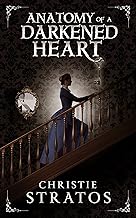
Anatomy of a Darkened Heart
Abigail Delilah is the firstborn of three Whitestone children – and she is the most regretted.
But is it really her fault?
She can’t help that the revelation of Father’s wretched secret coincides with her birth. She can’t help the fear she feels during Mother’s psychological – and physical – assaults. As the shadows grow stronger over her soul and the noose of pain tightens around her neck, Abigail will find out which is stronger: her family’s wicked assumptions about her or her true self.
Take your first step into the Dark Victoriana Collection with ANATOMY OF A DARKENED HEART.
Multi-layered with motifs, symbolism, and psychological depth, this tale of dark Victoriana will appeal to the literary reader and the leisure reader alike, combining key facets of several popular genres. And don’t be afraid to get addicted – the collection continues exploring the intertwining threads that weave together the complex tapestry of the Whitestone legacy.
But is it really her fault?
She can’t help that the revelation of Father’s wretched secret coincides with her birth. She can’t help the fear she feels during Mother’s psychological – and physical – assaults. As the shadows grow stronger over her soul and the noose of pain tightens around her neck, Abigail will find out which is stronger: her family’s wicked assumptions about her or her true self.
Take your first step into the Dark Victoriana Collection with ANATOMY OF A DARKENED HEART.
Multi-layered with motifs, symbolism, and psychological depth, this tale of dark Victoriana will appeal to the literary reader and the leisure reader alike, combining key facets of several popular genres. And don’t be afraid to get addicted – the collection continues exploring the intertwining threads that weave together the complex tapestry of the Whitestone legacy.
- GenresHistoricalAdultHorror
216 pages, Paperback
First published September 18, 2015
About the author
Christie Stratos
12 books137 followersHistorical suspense author, Victorian-era newspaper scourer, voracious reader of all genres, runs on coffee and chocolate.
*
Christie Stratos is an award-winning writer who holds a degree in English Literature. She is the author of the psychological suspense novels Anatomy of a Darkened Heart and Brotherhood of Secrets, the first two books in the Dark Victoriana Collection.

Also a poet and short story writer, Christie has been published in anthologies, literary journals, and magazines. Christie has been featured on the radio, in magazines, and on podcasts, and she has given presentations for writing organizations and at writing conferences. She owns her own editing company, Proof Positive, where she works one-on-one with authors as well as with small presses as a freelance editor, and she has enjoyed working with a rising press as an acquisitions editor.
Christie hosts the well-received podcast Writers Showcase on the Authors on the Air Radio Network. She has interviewed New York Times bestsellers, publishers, and major award-winning authors, including #1 New York Times bestselling author Peter Straub, Hugo Award winner Robert J. Sawyer, BBC correspondent Humphrey Hawksley, and Mary Higgins Clark Award winner Hank Phillippi Ryan.
Visit Christie on her website, christiestratos.com, or find her on Patreon, Facebook, Twitter, Instagram, YouTube, Pinterest, etc.
*
Christie Stratos is an award-winning writer who holds a degree in English Literature. She is the author of the psychological suspense novels Anatomy of a Darkened Heart and Brotherhood of Secrets, the first two books in the Dark Victoriana Collection.
Also a poet and short story writer, Christie has been published in anthologies, literary journals, and magazines. Christie has been featured on the radio, in magazines, and on podcasts, and she has given presentations for writing organizations and at writing conferences. She owns her own editing company, Proof Positive, where she works one-on-one with authors as well as with small presses as a freelance editor, and she has enjoyed working with a rising press as an acquisitions editor.
Christie hosts the well-received podcast Writers Showcase on the Authors on the Air Radio Network. She has interviewed New York Times bestsellers, publishers, and major award-winning authors, including #1 New York Times bestselling author Peter Straub, Hugo Award winner Robert J. Sawyer, BBC correspondent Humphrey Hawksley, and Mary Higgins Clark Award winner Hank Phillippi Ryan.
Visit Christie on her website, christiestratos.com, or find her on Patreon, Facebook, Twitter, Instagram, YouTube, Pinterest, etc.
Ratings & Reviews
Friends & Following
Create a free account to discover what your friends think of this book!
Community Reviews
Displaying 1 - 29 of 29 reviews

September 26, 2015
VIVID, COMPELLING AND BEAUTIFULLY WRITTEN
There is an overpowering feel of gloom and claustrophobia in the Whitestone household the moment Abigail is born. Mother and daughter don’t connect. Perhaps it’s those tired, weary eyes that stare back at Elizabeth with a blank expression of all-knowing, or the clock stopping at the moment of Abigail’s birth, or it could simply be disappointment the child is not female. Something about this ominous child nevertheless distances Elizabeth from Abigail at the get-go, and will overshadow their relationship. This conflict between mother and daughter, at turns sad and inflected by superstition, at other times outright abusive and cruel, is the lynchpin of this dark and beautiful neo-Victorian literary novel by award-winning Christie Stratos.
The problem of blame for this emotionally violent and dysfunctional relationship is not easy to assign. Richard, the father, taking an extreme Christian position on the failures of Elizabeth to produce a male child (something he tells her is easily within her power were she to pray hard enough), may well be the cause of everything that happens after. Richard himself, however, forms part of the stringent code of a Victorian society obsessed with religion and the belief in male heirs. Whatever the truth, the murky and maze-like circle of blame is something I love about this book. Cruelty begets cruelty, and my sympathies for each character shifted and reformed constantly as the story went on, keeping me emotionally invested to the very last page.
Moral ambiguity and psychological depth are forefront in the novel, but become particularly poignant in Abigail’s early years. There are times when the author delivers moments of sheer sadness of a tragic quality that profoundly moved me. That is not easy to achieve, whatever your talents as a writer. But it is not just Abigail who remains compelling, sympathetic and believable, all the characters (particularly Elizabeth, Richard and Mrs Hinsley), are gripping, marred as they are by questionable actions towards each other, which again made it difficult (in a good way) to know who to root for. Say what you like about the simple gift of a bird cage, here, it is conniving, vindictive, symbolically charged with meaning, and the gateway to another theme that runs throughout the book: revenge.
It’s not just the birdcage, but all the objects featured in the story have huge symbolic and expressive meaning. The grandfather clock, a key, a pearl- and gold-framed eye pin, a broken doll’s head, Indian Cress and Amaranthus flowers, and even wallpaper, all are carefully chosen and woven into the fabric of the story to exteriorise the characters’ dark emotional states.
This careful choice of objects is also reflected in the writing style itself. You can feel that every word and every sentence, gesture or action has been carefully thought out, which gives the novel real value. Most of us writers go charging into the story, smashing our way through with hammers. Not here. There is a real delicacy in the writing style. Restrained almost. Tense. Strange to remark about a novel set in America and written by an American, but the prose almost feels Japanese. I can only compare such delicacy to imagery: a dewy spider’s web trembling in a spring breeze, or gentle evening light trickling through a crystal decanter…
This is the first of five books of this new and brilliant foray into Victorian society that I strongly urge you to read. Psychologically compelling and full of depth, intelligent, beautifully written, literary but easily accessible, Anatomy of a Darkened Heart may well begin a new era of dark Victorian-era fiction.
Merged review:
VIVID, COMPELLING AND BEAUTIFULLY WRITTEN
There is an overpowering feel of gloom and claustrophobia in the Whitestone household the moment Abigail is born. Mother and daughter don’t connect. Perhaps it’s those tired, weary eyes that stare back at Elizabeth with a blank expression of all-knowing, or the clock stopping at the moment of Abigail’s birth, or it could simply be disappointment the child is not female. Something about this ominous child nevertheless distances Elizabeth from Abigail at the get-go, and will overshadow their relationship. This conflict between mother and daughter, at turns sad and inflected by superstition, at other times outright abusive and cruel, is the lynchpin of this dark and beautiful neo-Victorian literary novel by award-winning Christie Stratos.
The problem of blame for this emotionally violent and dysfunctional relationship is not easy to assign. Richard, the father, taking an extreme Christian position on the failures of Elizabeth to produce a male child (something he tells her is easily within her power were she to pray hard enough), may well be the cause of everything that happens after. Richard himself, however, forms part of the stringent code of a Victorian society obsessed with religion and the belief in male heirs. Whatever the truth, the murky and maze-like circle of blame is something I love about this book. Cruelty begets cruelty, and my sympathies for each character shifted and reformed constantly as the story went on, keeping me emotionally invested to the very last page.
Moral ambiguity and psychological depth are forefront in the novel, but become particularly poignant in Abigail’s early years. There are times when the author delivers moments of sheer sadness of a tragic quality that profoundly moved me. That is not easy to achieve, whatever your talents as a writer. But it is not just Abigail who remains compelling, sympathetic and believable, all the characters (particularly Elizabeth, Richard and Mrs Hinsley), are gripping, marred as they are by questionable actions towards each other, which again made it difficult (in a good way) to know who to root for. Say what you like about the simple gift of a bird cage, here, it is conniving, vindictive, symbolically charged with meaning, and the gateway to another theme that runs throughout the book: revenge.
It’s not just the birdcage, but all the objects featured in the story have huge symbolic and expressive meaning. The grandfather clock, a key, a pearl- and gold-framed eye pin, a broken doll’s head, Indian Cress and Amaranthus flowers, and even wallpaper, all are carefully chosen and woven into the fabric of the story to exteriorise the characters’ dark emotional states.
This careful choice of objects is also reflected in the writing style itself. You can feel that every word and every sentence, gesture or action has been carefully thought out, which gives the novel real value. Most of us writers go charging into the story, smashing our way through with hammers. Not here. There is a real delicacy in the writing style. Restrained almost. Tense. Strange to remark about a novel set in America and written by an American, but the prose almost feels Japanese. I can only compare such delicacy to imagery: a dewy spider’s web trembling in a spring breeze, or gentle evening light trickling through a crystal decanter…
This is the first of five books of this new and brilliant foray into Victorian society that I strongly urge you to read. Psychologically compelling and full of depth, intelligent, beautifully written, literary but easily accessible, Anatomy of a Darkened Heart may well begin a new era of dark Victorian-era fiction.
There is an overpowering feel of gloom and claustrophobia in the Whitestone household the moment Abigail is born. Mother and daughter don’t connect. Perhaps it’s those tired, weary eyes that stare back at Elizabeth with a blank expression of all-knowing, or the clock stopping at the moment of Abigail’s birth, or it could simply be disappointment the child is not female. Something about this ominous child nevertheless distances Elizabeth from Abigail at the get-go, and will overshadow their relationship. This conflict between mother and daughter, at turns sad and inflected by superstition, at other times outright abusive and cruel, is the lynchpin of this dark and beautiful neo-Victorian literary novel by award-winning Christie Stratos.
The problem of blame for this emotionally violent and dysfunctional relationship is not easy to assign. Richard, the father, taking an extreme Christian position on the failures of Elizabeth to produce a male child (something he tells her is easily within her power were she to pray hard enough), may well be the cause of everything that happens after. Richard himself, however, forms part of the stringent code of a Victorian society obsessed with religion and the belief in male heirs. Whatever the truth, the murky and maze-like circle of blame is something I love about this book. Cruelty begets cruelty, and my sympathies for each character shifted and reformed constantly as the story went on, keeping me emotionally invested to the very last page.
Moral ambiguity and psychological depth are forefront in the novel, but become particularly poignant in Abigail’s early years. There are times when the author delivers moments of sheer sadness of a tragic quality that profoundly moved me. That is not easy to achieve, whatever your talents as a writer. But it is not just Abigail who remains compelling, sympathetic and believable, all the characters (particularly Elizabeth, Richard and Mrs Hinsley), are gripping, marred as they are by questionable actions towards each other, which again made it difficult (in a good way) to know who to root for. Say what you like about the simple gift of a bird cage, here, it is conniving, vindictive, symbolically charged with meaning, and the gateway to another theme that runs throughout the book: revenge.
It’s not just the birdcage, but all the objects featured in the story have huge symbolic and expressive meaning. The grandfather clock, a key, a pearl- and gold-framed eye pin, a broken doll’s head, Indian Cress and Amaranthus flowers, and even wallpaper, all are carefully chosen and woven into the fabric of the story to exteriorise the characters’ dark emotional states.
This careful choice of objects is also reflected in the writing style itself. You can feel that every word and every sentence, gesture or action has been carefully thought out, which gives the novel real value. Most of us writers go charging into the story, smashing our way through with hammers. Not here. There is a real delicacy in the writing style. Restrained almost. Tense. Strange to remark about a novel set in America and written by an American, but the prose almost feels Japanese. I can only compare such delicacy to imagery: a dewy spider’s web trembling in a spring breeze, or gentle evening light trickling through a crystal decanter…
This is the first of five books of this new and brilliant foray into Victorian society that I strongly urge you to read. Psychologically compelling and full of depth, intelligent, beautifully written, literary but easily accessible, Anatomy of a Darkened Heart may well begin a new era of dark Victorian-era fiction.
Merged review:
VIVID, COMPELLING AND BEAUTIFULLY WRITTEN
There is an overpowering feel of gloom and claustrophobia in the Whitestone household the moment Abigail is born. Mother and daughter don’t connect. Perhaps it’s those tired, weary eyes that stare back at Elizabeth with a blank expression of all-knowing, or the clock stopping at the moment of Abigail’s birth, or it could simply be disappointment the child is not female. Something about this ominous child nevertheless distances Elizabeth from Abigail at the get-go, and will overshadow their relationship. This conflict between mother and daughter, at turns sad and inflected by superstition, at other times outright abusive and cruel, is the lynchpin of this dark and beautiful neo-Victorian literary novel by award-winning Christie Stratos.
The problem of blame for this emotionally violent and dysfunctional relationship is not easy to assign. Richard, the father, taking an extreme Christian position on the failures of Elizabeth to produce a male child (something he tells her is easily within her power were she to pray hard enough), may well be the cause of everything that happens after. Richard himself, however, forms part of the stringent code of a Victorian society obsessed with religion and the belief in male heirs. Whatever the truth, the murky and maze-like circle of blame is something I love about this book. Cruelty begets cruelty, and my sympathies for each character shifted and reformed constantly as the story went on, keeping me emotionally invested to the very last page.
Moral ambiguity and psychological depth are forefront in the novel, but become particularly poignant in Abigail’s early years. There are times when the author delivers moments of sheer sadness of a tragic quality that profoundly moved me. That is not easy to achieve, whatever your talents as a writer. But it is not just Abigail who remains compelling, sympathetic and believable, all the characters (particularly Elizabeth, Richard and Mrs Hinsley), are gripping, marred as they are by questionable actions towards each other, which again made it difficult (in a good way) to know who to root for. Say what you like about the simple gift of a bird cage, here, it is conniving, vindictive, symbolically charged with meaning, and the gateway to another theme that runs throughout the book: revenge.
It’s not just the birdcage, but all the objects featured in the story have huge symbolic and expressive meaning. The grandfather clock, a key, a pearl- and gold-framed eye pin, a broken doll’s head, Indian Cress and Amaranthus flowers, and even wallpaper, all are carefully chosen and woven into the fabric of the story to exteriorise the characters’ dark emotional states.
This careful choice of objects is also reflected in the writing style itself. You can feel that every word and every sentence, gesture or action has been carefully thought out, which gives the novel real value. Most of us writers go charging into the story, smashing our way through with hammers. Not here. There is a real delicacy in the writing style. Restrained almost. Tense. Strange to remark about a novel set in America and written by an American, but the prose almost feels Japanese. I can only compare such delicacy to imagery: a dewy spider’s web trembling in a spring breeze, or gentle evening light trickling through a crystal decanter…
This is the first of five books of this new and brilliant foray into Victorian society that I strongly urge you to read. Psychologically compelling and full of depth, intelligent, beautifully written, literary but easily accessible, Anatomy of a Darkened Heart may well begin a new era of dark Victorian-era fiction.

March 5, 2016
If I were to describe this work in three words, I would use the following: Elegant, Exquisite, and Dark.
As such this is among the finest books I've read in a long time. Please note how I didn't say independently published books. I said books. No distinction necessary. I had been very curious about this book for a long time and when I read the first four pages, I was surprised to see my expectations not only surpassed, but shattered.
This is not a light read. This is not a joyous journey of wonder. This is a beautifully dark exploration of how small decisions can get away from us and how the condition of being broken can be either inherited or embedded within a family.
The story takes us through the many dark crevices within the Whitestone home. How a façade of a marriage ends up setting into motions things that will affect a family for years on end. While many books have characters that are likable, this book does not bother with likableness. Richard Whitestone, Elizabeth Whitestone, Abigail Delilah Whitestone, Emma Whitestone, and even Christopher Whitestone all have attributes that you would not be fond of, and yes, that is an understatement.
Likable they are not. Fascinating they are. Unquestionably so.
Some may cite inspirations of Poe due to certain aspects like clocks, the wallpaper (which is almost a character unto itself), and other details like that, but throughout, what rings true for me is the author's love for Shakespeare. Interrelationships and how one person responds to the other are the core of this work. The human condition is a complicated maze, and sometimes good intentions (or supposed good intentions) lead to awful decisions, and worse outcomes.
The attention to detail in this book must be highlighted. Textures, symbolism, and words. Every word is placed where it has to be placed and sometimes a sentence can make you shiver or gasp.
When I heard the name of the Dark Victoriana Collection, I was curious. When I found out the concept of the novels, all set in the same setting although linked in details if not narrative, I was even more curious. Now that I have read the first entry in this collection, curiosity takes the better of me, and unlike some characters in the book, I shall see where it leads me with Miss Stratos's next offering, for which I truly cannot wait, but for now will have to.
As such this is among the finest books I've read in a long time. Please note how I didn't say independently published books. I said books. No distinction necessary. I had been very curious about this book for a long time and when I read the first four pages, I was surprised to see my expectations not only surpassed, but shattered.
This is not a light read. This is not a joyous journey of wonder. This is a beautifully dark exploration of how small decisions can get away from us and how the condition of being broken can be either inherited or embedded within a family.
The story takes us through the many dark crevices within the Whitestone home. How a façade of a marriage ends up setting into motions things that will affect a family for years on end. While many books have characters that are likable, this book does not bother with likableness. Richard Whitestone, Elizabeth Whitestone, Abigail Delilah Whitestone, Emma Whitestone, and even Christopher Whitestone all have attributes that you would not be fond of, and yes, that is an understatement.
Likable they are not. Fascinating they are. Unquestionably so.
Some may cite inspirations of Poe due to certain aspects like clocks, the wallpaper (which is almost a character unto itself), and other details like that, but throughout, what rings true for me is the author's love for Shakespeare. Interrelationships and how one person responds to the other are the core of this work. The human condition is a complicated maze, and sometimes good intentions (or supposed good intentions) lead to awful decisions, and worse outcomes.
The attention to detail in this book must be highlighted. Textures, symbolism, and words. Every word is placed where it has to be placed and sometimes a sentence can make you shiver or gasp.
When I heard the name of the Dark Victoriana Collection, I was curious. When I found out the concept of the novels, all set in the same setting although linked in details if not narrative, I was even more curious. Now that I have read the first entry in this collection, curiosity takes the better of me, and unlike some characters in the book, I shall see where it leads me with Miss Stratos's next offering, for which I truly cannot wait, but for now will have to.
December 26, 2017
man oh man, this was some journey.
I loved the way all the perspectives were written and how much we got for the fact this book is just over 200 pages.
It's dark, and eerie. It's masterfully crafted to the detail. All the insights in the family and a stunning portrayal of what mentally abusive relationships in the family can do to you, because this was like a partial dive into painful things of my childhood. But it was moor, so much moor.
It's shows what emotional trauma can do to you in 4 (or 5) different ways and makes me cry at the moment. I think I might be slightly triggered (so here's a late trigger warning for people who had emotional abusive relationships in the past), but I love the book even moor for it. Because this means Christie got her stuff right.
The writing was beautifully haunting and flowed gorgeously. What a masterpiece of a story.
I think this needs a 5 star. Just because I can give it and the fact it elicits these emotions in me.
It feels like a sequel to this story is very possible and I'd be down for that of it is written with the same beautiful depth and introspection.
I loved the way all the perspectives were written and how much we got for the fact this book is just over 200 pages.
It's dark, and eerie. It's masterfully crafted to the detail. All the insights in the family and a stunning portrayal of what mentally abusive relationships in the family can do to you, because this was like a partial dive into painful things of my childhood. But it was moor, so much moor.
It's shows what emotional trauma can do to you in 4 (or 5) different ways and makes me cry at the moment. I think I might be slightly triggered (so here's a late trigger warning for people who had emotional abusive relationships in the past), but I love the book even moor for it. Because this means Christie got her stuff right.
The writing was beautifully haunting and flowed gorgeously. What a masterpiece of a story.
I think this needs a 5 star. Just because I can give it and the fact it elicits these emotions in me.
It feels like a sequel to this story is very possible and I'd be down for that of it is written with the same beautiful depth and introspection.
April 27, 2017
An excellent tale of intrigue with wonderfully developed characters, even those you loved to hate! Abigail has a terrible childhood, so you could empathize with her, but in the end, there were other characters to tug at your heartstrings, too.

June 15, 2018
This is a very well-written tale of a Victorian family driven to the edge. The author has a meticulous attention to detail and creates highly memorable scenes and characters. Recommended for all Gothic story lovers!
October 5, 2015
OK, I should not have read this before going to bed. No way I can sleep now! A Brilliant novel. Review to follow.
edit.
Warning: DO NOT READ THIS BOOK BEFORE GOING TO SLEEP!
Wow! ‘Anatomy of a Darkened Heart’ had all my favourite things; Psychology, Darkness and the Victorian Times, and boy was this dark! But not in the way you’d expect. This is sheer awesome psychological darkness that makes you shiver, because it makes you think about whether this could happen to you!
Bringing together some of the common myths, fears and rituals of the time in which it is set, ‘Anatomy of a Darkened Heart’ is rich in historical detail, whilst making the setting seem as normal to us as our own everyday. I felt like I was there in the Whitestones’ house, and experiencing the fear and hysteria that was running rampant.
Abigail was a fantastic character that I really enjoyed getting to know. Like the rest of her family, she is deeply flawed, but it is the way in which she embodies her flaws that makes her perhaps the most terrifying of the characters. Throughout I was drawn to the thought that if her mother had loved her, not rejected her believing she was cursed, or if she had been a boy, and accepted immediately by her father, whether her life would have been so destructive. I loved how it dealt with this issue, as we see her brother and sister thrive in a place where she is constantly trampled.
Although playing with the idea of spirituality, ghosts and curses, ‘Anatomy of a Darkened Heart’ is primarily a story about the evils of humans, and that is what made me sit awake all night, jumping at sounds. It makes you nervous, it makes you think, and it makes you remember in terror.
Incredibly well written, ‘Anatomy of a Darkened Heart’ is not one to miss!
5 Stars!
edit.
Warning: DO NOT READ THIS BOOK BEFORE GOING TO SLEEP!
Wow! ‘Anatomy of a Darkened Heart’ had all my favourite things; Psychology, Darkness and the Victorian Times, and boy was this dark! But not in the way you’d expect. This is sheer awesome psychological darkness that makes you shiver, because it makes you think about whether this could happen to you!
Bringing together some of the common myths, fears and rituals of the time in which it is set, ‘Anatomy of a Darkened Heart’ is rich in historical detail, whilst making the setting seem as normal to us as our own everyday. I felt like I was there in the Whitestones’ house, and experiencing the fear and hysteria that was running rampant.
Abigail was a fantastic character that I really enjoyed getting to know. Like the rest of her family, she is deeply flawed, but it is the way in which she embodies her flaws that makes her perhaps the most terrifying of the characters. Throughout I was drawn to the thought that if her mother had loved her, not rejected her believing she was cursed, or if she had been a boy, and accepted immediately by her father, whether her life would have been so destructive. I loved how it dealt with this issue, as we see her brother and sister thrive in a place where she is constantly trampled.
Although playing with the idea of spirituality, ghosts and curses, ‘Anatomy of a Darkened Heart’ is primarily a story about the evils of humans, and that is what made me sit awake all night, jumping at sounds. It makes you nervous, it makes you think, and it makes you remember in terror.
Incredibly well written, ‘Anatomy of a Darkened Heart’ is not one to miss!
5 Stars!

October 28, 2015
In this story a with a dark psycologic theme, Elizabeth married Richard but soon she regrets for the choice she have done, he is not the husband she have thought. They live in 19th century, Victorian era. At first i supported Elizabeth but when she gave birth of her first child she changed and her behaviour went worse, especially against her daughter Abigail. Reading i convinced that was Richard the one who could complain more about this unlucky marriage.The conflict between mother and daughter get worse after the other childs were born, Emma and Christopher, this last one very desired from Richard, he would like absolutely a son for give his legacy. The author describes with perfection and rich details the Victorian era and the life style of that time, very well written and was a pleasure reading it.

May 28, 2016
Anatomy of a Darkened Heart by Christie Stratos grabbed me from the start and pulled me onward to the finish. A depiction of a Victorian family, complete with the social, moral and religious constraints of the times, the story revolves around Abigail Whitestone, the first-born child whose relationship with her parents drives the story forward. Well developed characters grow and surprise as you move to a point where putting the book down is no longer a consideration. For me, a dark story that I would not normally read is one I would recommend to anyone. If you like a psychological study, here you will find it. And without the gratuitous blood and gore. And just enough strangeness to make you want to read just another chapter. Try it, you'll like it.

October 25, 2015
This Dark Psychological Victorian brought many emotions in the sense that the characters are relatable. The rejection of a child and a father that can't even stand the thought of his wife's decisions makes the book a page turner. What happens next? You'll have to discover this roller coaster ride of emotions for yourself.

February 24, 2017
This felt like a book I would've had to read in an English Literature class in college - and I mean that in a good way. Everything about the writing and the story felt legitimately true to the period, like this was an old, classic book I'd somehow missed all these years.
The writing is phenomenal. It's not a long book, and the author makes every word count. Her descriptions are perfectly refined to give the reader exactly the amount of detail you need. The plot certainly isn't action-packed (that wouldn't fit the genre at all), but the slow build works very well as you focus on the psychological aspects of the story. I was never bored because the tension constantly increases as matters of the heart grow more and more complicated.
This book is, after all, about how these characters are "darkened." I absolutely loved how I started thinking one character was maybe an okay person, but then they grew to be terrible. And then another character did the same thing to me. And then another. Several times I said to the pages "Oh, no..." because a character would do something so evil to another character (keeping it vague here to avoid spoilers, but I literally gasped several times). But, because the author does such a good job developing these characters, everything they did felt like a natural progression of their true nature. And you STILL cared about them.
So, yeah, I recommend this one. It's not the kind of book you often see anymore, and I thoroughly enjoyed it.
The writing is phenomenal. It's not a long book, and the author makes every word count. Her descriptions are perfectly refined to give the reader exactly the amount of detail you need. The plot certainly isn't action-packed (that wouldn't fit the genre at all), but the slow build works very well as you focus on the psychological aspects of the story. I was never bored because the tension constantly increases as matters of the heart grow more and more complicated.
This book is, after all, about how these characters are "darkened." I absolutely loved how I started thinking one character was maybe an okay person, but then they grew to be terrible. And then another character did the same thing to me. And then another. Several times I said to the pages "Oh, no..." because a character would do something so evil to another character (keeping it vague here to avoid spoilers, but I literally gasped several times). But, because the author does such a good job developing these characters, everything they did felt like a natural progression of their true nature. And you STILL cared about them.
So, yeah, I recommend this one. It's not the kind of book you often see anymore, and I thoroughly enjoyed it.

March 21, 2022
An Absolutely Breathtaking Read
The nature of mankind is such that we often think we have the answers, but doubt and paranoia are powerful tools. We think we know our neighbors, or our family, but terrors can often lurk in the places where we should have the most peace.
This story is that of the Whitestones, an affluent family in a Victorian setting. At the heart of the story is Abigail, a child who's been given the short end of the stick, whose happiness is stripped from her at every opportunity, simply for the circumstance of having been born... The tragedy of the tale is found not in what results of this broken family, but in how it got there.
You keep hoping for a happy ending, for a light of some kind, but there could not be one. Sometimes, over time, the broken mind simply reveals itself. Our strengths developed through abuse become our biggest struggles, even if the abuse is purely psychosomatic... this story delves into all of these and more. We often feel that family is our safe place, but if most of us were to be honest with ourselves, blood relatives are often the worst place for us, and home carries such a different meaning altogether.
Anatomy of a Darkened Heart is by far one of the best books I've ever read. And I can't wait to read more from this amazing author.
The nature of mankind is such that we often think we have the answers, but doubt and paranoia are powerful tools. We think we know our neighbors, or our family, but terrors can often lurk in the places where we should have the most peace.
This story is that of the Whitestones, an affluent family in a Victorian setting. At the heart of the story is Abigail, a child who's been given the short end of the stick, whose happiness is stripped from her at every opportunity, simply for the circumstance of having been born... The tragedy of the tale is found not in what results of this broken family, but in how it got there.
You keep hoping for a happy ending, for a light of some kind, but there could not be one. Sometimes, over time, the broken mind simply reveals itself. Our strengths developed through abuse become our biggest struggles, even if the abuse is purely psychosomatic... this story delves into all of these and more. We often feel that family is our safe place, but if most of us were to be honest with ourselves, blood relatives are often the worst place for us, and home carries such a different meaning altogether.
Anatomy of a Darkened Heart is by far one of the best books I've ever read. And I can't wait to read more from this amazing author.

March 3, 2022
Wow! This is the first book by author, Chrisie Stratos, that I have read, and guarantee it will not be the last. What an amazing read! Set in the mid-1800s, the attention to detail in this story will take you back in time. I couldn't put this book down without wanting more and had to go to bed super early just so I could find out what happened next. Now finished, thinking about this book feels more like reminiscing over true memories than the intricately woven story of fiction Stratos penned. The characters feel like people I once knew in another lifetime, long ago. I will be ordering the second and third books in the Dark Victoriana Collection this week and will be clearing my schedule for a reading vacay when they arrive. Five plus stars on this one. Absolutely loved it!
February 14, 2021
Wonderfully written, this is an incredibly crafted tale from the Victorian era. A page turner, I read this book in just two days. It was a gripping, suspenseful and spine-tingling story of a disconnect between mother and daughter. The psychological twists and turns into a family’s dysfunctional life was fascinating and so interesting to read. Highly recommended.

August 28, 2020
4.5/5.0 Stars
Warning: some minor spoilers ahead
I went into this book not knowing anything about it except that it was set in the Victorian Era.
To say I was pleasantly surprised was an understatement! I had this book recommended to me by the author herself on a YouTube comment thread and it exceeded my expectations!
Firstly I love the mystery surrounding the Whitestone family. Elizabeth is batshit crazy almost right from the beginning, Abigail you sort of feel sorry for until about the time Mother dies and then you realise she's almost absorbed her soul and is possibly even worse than Mother ever was.
Christopher as he gets older is quite similar to father and I like that he tries to keep a level head with the issues between his sisters.
The only thing I think would have been good is if it was just a little bit longer and sort of explored Abigail's mental state leading up to her being put in the asylum a bit more.
Other than that it was a great book and I can wait for the next installment of the Dark Victoriana series!
Warning: some minor spoilers ahead
I went into this book not knowing anything about it except that it was set in the Victorian Era.
To say I was pleasantly surprised was an understatement! I had this book recommended to me by the author herself on a YouTube comment thread and it exceeded my expectations!
Firstly I love the mystery surrounding the Whitestone family. Elizabeth is batshit crazy almost right from the beginning, Abigail you sort of feel sorry for until about the time Mother dies and then you realise she's almost absorbed her soul and is possibly even worse than Mother ever was.
Christopher as he gets older is quite similar to father and I like that he tries to keep a level head with the issues between his sisters.
The only thing I think would have been good is if it was just a little bit longer and sort of explored Abigail's mental state leading up to her being put in the asylum a bit more.
Other than that it was a great book and I can wait for the next installment of the Dark Victoriana series!

December 19, 2015
There are some books that you can read and you will enjoy. There are others you will flat-out hate, Anatomy of a Darkened Heart is neither of those things. It is a book that will draw you into its Victorian-era world and it will hold you there. With all of the image and mannerisms of the old days perfectly captured, Mr. Stratos did a terrific job of building the world of Heart, “honouring the past” and making sure the relationships between the characters and their emotions were as real as those we’d encounter in life.
Stratos writes with a style of writing we have not seen for a long time and she knows how to establish characters the way they are meant to be port. This isn’t just a story, it’s the essence of life perfectly captured on page and thank god there are plenty more stories to come in this series, because I’m not ready to leave it.
Mirror, Mirror on the Wall, who’s the Darkest of them all?
Dark psychological works are one of the hardest to truly pull of and with the likes of Elizabeth and Abigail truly helped to shape this story into what it became, along with all the little details littered through-out. Nothing is in this book by chance, all of it connected, perfectly weaved together by the black widow that is the author behind it.
This is a story truly worth the read and I am please as hell I got to read it, when the delightfully charming author sent me its Arc, in exchange for an upfront review.
(So it was only fitting I read it twice.)

March 22, 2021
What I loved most about Anatomy of a Darkened Heart by Christie Stratos is how complex the characters are. Not one stood out as "good" or "bad". They are human in every way, right down to being unable to see their own hypocrisy. If you're looking for a psychological ride, read this book!

October 23, 2015
I was so impressed with this book, I’d never have known it was a debut novel. Christie Stratos’ writing is seasoned and refined, and she kept making me gasp with surprise, which isn’t easy to do. I love the symbolism throughout the book (in both objects and names – talk about attention to detail!), it adds so much to the story and gives it wonderful texture. The author clearly did a lot of research to get her facts right about many different aspects of the Victorian era, right down to details, which gives the story a believable quality and brings it to life. Frighteningly so.
This isn’t a horror story, it’s not as simple as that – this book is a dark psychological story that asks the probing question of whether people are products of their environment or whether their nature is cast in them from birth. It’s thought-provoking, eerie, and one of the best books I’ve read this year.
I’m looking forward to seeing a lot more great works from Christie Stratos; she promises that this is the first in her Dark Victoriana Collection – the next four books are in some way related to Anatomy of a Darkened Heart. I cannot wait until they’re released!
This isn’t a horror story, it’s not as simple as that – this book is a dark psychological story that asks the probing question of whether people are products of their environment or whether their nature is cast in them from birth. It’s thought-provoking, eerie, and one of the best books I’ve read this year.
I’m looking forward to seeing a lot more great works from Christie Stratos; she promises that this is the first in her Dark Victoriana Collection – the next four books are in some way related to Anatomy of a Darkened Heart. I cannot wait until they’re released!

February 11, 2016
There are endless aspects of this book to be enjoyed; to truly understand it, I had to read the first half again.
This is an extremely complex and moving story, cleverly disguised as a simple, emotionless tale. Plainly told through appropriate language of the 19th century, it is an enigma in itself.
I believe a prevalent theme of this book is nature vs. nurture; mind over matter. However, there is so much more one should pay close attention to while reading this, and it definitely should not be rushed through.
This book has the suggestion of being a truth-teller; it presents the story with very little suggestion as to who is right or wrong, because really, people are neither good nor evil. They are much more complicated than that, and in this spirit, Anatomy of a Darkened Heart is incredibly well done.
It’s a tale that satisfies you, yet you will stay awake at night thinking about the Whitestone family. It seems to me this book will end up in English Literature classes everywhere, with professors and students alike debating about it for hours on end.
It is an impressive book and truly a work of art.
This is an extremely complex and moving story, cleverly disguised as a simple, emotionless tale. Plainly told through appropriate language of the 19th century, it is an enigma in itself.
I believe a prevalent theme of this book is nature vs. nurture; mind over matter. However, there is so much more one should pay close attention to while reading this, and it definitely should not be rushed through.
This book has the suggestion of being a truth-teller; it presents the story with very little suggestion as to who is right or wrong, because really, people are neither good nor evil. They are much more complicated than that, and in this spirit, Anatomy of a Darkened Heart is incredibly well done.
It’s a tale that satisfies you, yet you will stay awake at night thinking about the Whitestone family. It seems to me this book will end up in English Literature classes everywhere, with professors and students alike debating about it for hours on end.
It is an impressive book and truly a work of art.

December 17, 2017
I read this several months ago and the memory of it has stayed with me, even though I'm late adding my review.
This book is not for the faint-hearted. The author labels this as part of a "Dark Victoriana" collection and dark is definitely the right word. The book is unrelenting - delivering an ominous and claustrophobic feel that never lets up from beginning to end. I'm sure that this will make some people uncomfortable, but the book really is a bleak masterpiece exploring the cracks that hide beneath the surface inside complex relationships. Although not gory, the story shows that horror comes in all forms.
The description of people and places is very minimal, something I typically prefer to long overblown passages, though in this instance I felt a little more might have helped. I also felt that a few "lighter" moments would have helped to break up the oppressive feel.
Not an easy read, but definitely worthwhile.
This book is not for the faint-hearted. The author labels this as part of a "Dark Victoriana" collection and dark is definitely the right word. The book is unrelenting - delivering an ominous and claustrophobic feel that never lets up from beginning to end. I'm sure that this will make some people uncomfortable, but the book really is a bleak masterpiece exploring the cracks that hide beneath the surface inside complex relationships. Although not gory, the story shows that horror comes in all forms.
The description of people and places is very minimal, something I typically prefer to long overblown passages, though in this instance I felt a little more might have helped. I also felt that a few "lighter" moments would have helped to break up the oppressive feel.
Not an easy read, but definitely worthwhile.

November 3, 2015
Dark Dickensian and deeply disturbing
The books first scene,showing a mother giving birth and rejecting her new born daughter, sets up this powerful and dark Victorian novel. Christie Stratos has perfectly captured a snapshot of Victorian society and its working. The story mainly takes place in the Whitestone house and there is an overwhelming sense of claustrophobia and pervading dread throughout the entire novel. Immensely readable and enjoyable, in fact I couldn't put it down. If you want an introduction into dark psychological Victorian drama,look no further, they don't come any better than this.
The books first scene,showing a mother giving birth and rejecting her new born daughter, sets up this powerful and dark Victorian novel. Christie Stratos has perfectly captured a snapshot of Victorian society and its working. The story mainly takes place in the Whitestone house and there is an overwhelming sense of claustrophobia and pervading dread throughout the entire novel. Immensely readable and enjoyable, in fact I couldn't put it down. If you want an introduction into dark psychological Victorian drama,look no further, they don't come any better than this.
April 11, 2016
In a wonderfully twisted way, the dark imagery from this book comes to life like no other. The setting is in the 1900's, during the Victorian era. It's obvious the author has a love for the time period as it shows in her writing. She did a masterful job of creating an atmosphere that was just as chilling as the plot of the book itself.
From the first page when the mother shows disdain for her first child through all the twists and turns that ramp up the psychological nature of the story, this story delivers just as the description said it would. It was a tough story to put down and now I'm curious to see where it goes from here.
From the first page when the mother shows disdain for her first child through all the twists and turns that ramp up the psychological nature of the story, this story delivers just as the description said it would. It was a tough story to put down and now I'm curious to see where it goes from here.
October 8, 2015
** Author provided a free copy of the book in exchange for an honest review. **
I liked this story. It wasn't as oppressively dark as I had originally anticipated but it was certainly psychologically heavy. {I did "trip up" over the flash-forward diary pages (there were two) but they could have easily have just been typographical errors in the dates.} The story flowed nicely and I could not put it down. Additionally, I'm invested enough in the characters to see what, if anything, happens next.
I liked this story. It wasn't as oppressively dark as I had originally anticipated but it was certainly psychologically heavy. {I did "trip up" over the flash-forward diary pages (there were two) but they could have easily have just been typographical errors in the dates.} The story flowed nicely and I could not put it down. Additionally, I'm invested enough in the characters to see what, if anything, happens next.

January 6, 2017
This is dark. When I say dark I mean, amazingly scary. There were times when I thought I was reading a psychopaths letters to a newspaper. I am not saying, and I am not revealing that is the book because it is not. This work just gives off that eerie feeling that makes you want to put it down but curiosity keeps you reading.
I loved it. If I had to categorize this work I would say that it is a much darker version of Alcotts work. But then again I have only read it once. I have added it to my read it again pile and will be re-reading this work later on this year.
I loved it. If I had to categorize this work I would say that it is a much darker version of Alcotts work. But then again I have only read it once. I have added it to my read it again pile and will be re-reading this work later on this year.

February 22, 2016
Very well written gothic tale with a chilling atmosphere, brings in the Victorian imagery with flair, the black and white wallpaper throughout the story is a nice touch because it adds a sense of touch and stark realism. Very well done x

July 5, 2019
‘This was a child whose father didn’t want t see her and a mother who was afraid of her’
Author Christie Stratos earned her degree in English Literature and has published poetry and short stories in important anthologies. ANATOMY OF A DARKENED HEART is her debut novel – the first installment in a promised series – The Dark Victoriana Collection.
Establishing a solid family of characters that will serve as the nidus for an ongoing collection of stories is a challenge, and placing that family (and events and symbols) in another era – here the Victorian period – adds to that challenge and is one that Christie Stratos clearly meets. The novel spans the years 1840 to 1862 and cleverly follows the birth and growth of the central character Abigail Delilah.
From her opening paragraphs – presciently dated October 31, 1840! – Christie gives birth to the theme of her story. ‘It was in the very moment of her birth that the ambiance changed. Everyone felt it. The room darkened, blackened to the point that the midwife paused, the baby still half inside her mother, to look around, frowning deeply. Elizabeth's heartbeat quickened. "The clocks…" the midwife muttered. They had stopped. There were two in the room, and they'd both stopped ticking simultaneously. The midwife looked right into Elizabeth's eyes with an expression that was half apologetic and half frightened. Clocks were only physically stopped—not supernaturally—when someone died or while mourning the deceased. But now the clocks had stopped by themselves, and nobody had died. Unless…"Is the baby all right?" Elizabeth shrieked, leaning forward as much as possible. She was covered in cold sweat and exhausted and scared. The midwife suddenly remembered to continue with the birth and gently helped the baby out the rest of the way. It made no sound. "Is it alive?" Elizabeth was frantic now. This was her first child and if it was stillborn…’
The tension created, and the atmosphere of Victorian times is established solidly, and the author offers a fine condensation for the plot: ‘Abigail Delilah is the firstborn of three Whitestone children - and she is the most regretted. But is it really her fault? She can't help that the revelation of Father's wretched secret coincides with her birth. She can't help the fear she feels during Mother's psychological - and physical - assaults. As the shadows grow stronger over her soul and the noose of pain tightens around her neck, Abigail will find out which is stronger: her family's wicked assumptions about her or her true self.’
Very skilled and sensitive writing from an author about whom we will doubtless be hearing much more. Highly Recommended!
Author Christie Stratos earned her degree in English Literature and has published poetry and short stories in important anthologies. ANATOMY OF A DARKENED HEART is her debut novel – the first installment in a promised series – The Dark Victoriana Collection.
Establishing a solid family of characters that will serve as the nidus for an ongoing collection of stories is a challenge, and placing that family (and events and symbols) in another era – here the Victorian period – adds to that challenge and is one that Christie Stratos clearly meets. The novel spans the years 1840 to 1862 and cleverly follows the birth and growth of the central character Abigail Delilah.
From her opening paragraphs – presciently dated October 31, 1840! – Christie gives birth to the theme of her story. ‘It was in the very moment of her birth that the ambiance changed. Everyone felt it. The room darkened, blackened to the point that the midwife paused, the baby still half inside her mother, to look around, frowning deeply. Elizabeth's heartbeat quickened. "The clocks…" the midwife muttered. They had stopped. There were two in the room, and they'd both stopped ticking simultaneously. The midwife looked right into Elizabeth's eyes with an expression that was half apologetic and half frightened. Clocks were only physically stopped—not supernaturally—when someone died or while mourning the deceased. But now the clocks had stopped by themselves, and nobody had died. Unless…"Is the baby all right?" Elizabeth shrieked, leaning forward as much as possible. She was covered in cold sweat and exhausted and scared. The midwife suddenly remembered to continue with the birth and gently helped the baby out the rest of the way. It made no sound. "Is it alive?" Elizabeth was frantic now. This was her first child and if it was stillborn…’
The tension created, and the atmosphere of Victorian times is established solidly, and the author offers a fine condensation for the plot: ‘Abigail Delilah is the firstborn of three Whitestone children - and she is the most regretted. But is it really her fault? She can't help that the revelation of Father's wretched secret coincides with her birth. She can't help the fear she feels during Mother's psychological - and physical - assaults. As the shadows grow stronger over her soul and the noose of pain tightens around her neck, Abigail will find out which is stronger: her family's wicked assumptions about her or her true self.’
Very skilled and sensitive writing from an author about whom we will doubtless be hearing much more. Highly Recommended!
Read
April 21, 2023This novel follows the story of Victoria, a young girl who is locked away in her father's mansion after her mother dies during childbirth. Victoria's father is obsessed with keeping up appearances and forces her to conform to his strict rules, which often involves physical and emotional abuse. As she grows older, Victoria becomes more aware of her father's dark secrets and begins to unravel the truth about her family's history. With the help of her sister and a kind servant, Victoria tries to escape her father's grasp and find a way to live a life of her own. The novel deals with themes such as family secrets, mental illness, and the struggle for independence in a society that values conformity. Its portrayal of a mentally abused young woman will keep you on your toes the entire time.
As I read this book, I admired the authors ability to portray a villain in a light that does not always make him seem as evil as his character truly is. The main protagonist, Victoria, and her sister Charlotte are fighting for survival under their fathers, Albert, brutal rule. It is both a self-discovery novel as well as a phycological thriller as you never really know what Victoria's mind will do or think. As I went through the book it challenged my own beliefs about social interaction and my stoic philosophy. Although I still tend to understand the father's viewpoint the book does a great job of showing empowerment and a young woman's ability to both be a caretaker and overcome any challenge that is thrown her way. The story also has a subtle reference to equality of society with Victoria's assistance from the mansion's servant Mr. Johns.
As I read this book, I admired the authors ability to portray a villain in a light that does not always make him seem as evil as his character truly is. The main protagonist, Victoria, and her sister Charlotte are fighting for survival under their fathers, Albert, brutal rule. It is both a self-discovery novel as well as a phycological thriller as you never really know what Victoria's mind will do or think. As I went through the book it challenged my own beliefs about social interaction and my stoic philosophy. Although I still tend to understand the father's viewpoint the book does a great job of showing empowerment and a young woman's ability to both be a caretaker and overcome any challenge that is thrown her way. The story also has a subtle reference to equality of society with Victoria's assistance from the mansion's servant Mr. Johns.

August 10, 2017
Holy s**t. Can one start a review that way? I feel I must, because that is the expression that exploded out of me repeatedly as I devoured this book. Each section built on the last leading to the stunning conclusion.
Dark. Chilling. The sensations warred like the wallpaper which highlighted the trapped condition of the family- trapped by society and worse- by each other.
Dark. Chilling. The sensations warred like the wallpaper which highlighted the trapped condition of the family- trapped by society and worse- by each other.
July 28, 2021
This book is indeed dark if that's what you're looking for and I always am. I enjoyed the story, the setting and characters. It starts out with a bang and unfolds like a black rose dripping with family dysfunction, murder, madness, morbidity and secrets. As a lover of Gothic historical fiction, it was definitely my cup of tea.
January 26, 2016
A unique world of Gothic Victorian manners
A dark, eerie, and suspenseful tale of madness, cruelty, and family, set in a richly textured Victorian milieu. An insightful journey through a tortured life. Ms. Stratos has crafted a unique world of Gothic Victorian manners that will leave the reader guessing to the very end.
A dark, eerie, and suspenseful tale of madness, cruelty, and family, set in a richly textured Victorian milieu. An insightful journey through a tortured life. Ms. Stratos has crafted a unique world of Gothic Victorian manners that will leave the reader guessing to the very end.
Displaying 1 - 29 of 29 reviews