

What do you think?

Kingdoms of Faith: A New History of Islamic Spain
A magisterial, myth-dispelling history of Islamic Spain spanning the millennium between the founding of Islam in the seventh century and the final expulsion of Spain's Muslims in the seventeenth
In Kingdoms of Faith, award-winning historian Brian A. Catlos rewrites the history of Islamic Spain from the ground up, evoking the cultural splendor of al-Andalus, while offering an authoritative new interpretation of the forces that shaped it.
Prior accounts have portrayed Islamic Spain as a paradise of enlightened tolerance or the site where civilizations clashed. Catlos taps a wide array of primary sources to paint a more complex portrait, showing how Muslims, Christians, and Jews together built a sophisticated civilization that transformed the Western world, even as they waged relentless war against each other and their coreligionists. Religion was often the language of conflict, but seldom its cause--a lesson we would do well to learn in our own time.
In Kingdoms of Faith, award-winning historian Brian A. Catlos rewrites the history of Islamic Spain from the ground up, evoking the cultural splendor of al-Andalus, while offering an authoritative new interpretation of the forces that shaped it.
Prior accounts have portrayed Islamic Spain as a paradise of enlightened tolerance or the site where civilizations clashed. Catlos taps a wide array of primary sources to paint a more complex portrait, showing how Muslims, Christians, and Jews together built a sophisticated civilization that transformed the Western world, even as they waged relentless war against each other and their coreligionists. Religion was often the language of conflict, but seldom its cause--a lesson we would do well to learn in our own time.
496 pages, Hardcover
First published January 1, 2018
About the author
Brian Catlos
16 books40 followers Brian Catlos spent over a decade living and travelling in Europe, the Americas, the Middle East, North Africa and Asia before completing his PhD (Medieval Studies, Toronto) and joining the History Department at the University of California, Santa Cruz.
He is a former President of the American Academy of Research Historians of Medieval Spain, Co-Director of the Mediterranean Seminar (www.mediterraneanseminar.org), and of the University of California Multi-Campus Research Project on Mediterranean Studies, an affiliate of the UCLA Center for Medieval and Renaissance Studies, an associate of Spain's national research council (CSIC), and a member of several journal boards. He has published extensively on religious minorities and Christian-Muslim-Jewish relations in medieval Europe and the Islamic world, and has received numerous grants and awards, including an NEH Faculty Fellowship, and a Governor-General of Canada's Gold Medal. His first academic book, The Victors and the Vanquished, was awarded two prizes by the American Historical Association, and recent articles, 'The de Reys' and 'Accursed, Superior Men', won the Bishko Prize and the Webb Prize, respectively. In 2009 he was appointed to Religious Studies at the University of Colorado, Boulder, with affiliations with Jewish Studies, History and Humanities;in 2011 he was appointed a Research Associated in Humanities at UC Santa Cruz. He appeared in the PBS documentary 'Cities of Light', and also writes travel guide books.
He is a former President of the American Academy of Research Historians of Medieval Spain, Co-Director of the Mediterranean Seminar (www.mediterraneanseminar.org), and of the University of California Multi-Campus Research Project on Mediterranean Studies, an affiliate of the UCLA Center for Medieval and Renaissance Studies, an associate of Spain's national research council (CSIC), and a member of several journal boards. He has published extensively on religious minorities and Christian-Muslim-Jewish relations in medieval Europe and the Islamic world, and has received numerous grants and awards, including an NEH Faculty Fellowship, and a Governor-General of Canada's Gold Medal. His first academic book, The Victors and the Vanquished, was awarded two prizes by the American Historical Association, and recent articles, 'The de Reys' and 'Accursed, Superior Men', won the Bishko Prize and the Webb Prize, respectively. In 2009 he was appointed to Religious Studies at the University of Colorado, Boulder, with affiliations with Jewish Studies, History and Humanities;in 2011 he was appointed a Research Associated in Humanities at UC Santa Cruz. He appeared in the PBS documentary 'Cities of Light', and also writes travel guide books.
Ratings & Reviews
Friends & Following
Create a free account to discover what your friends think of this book!
Community Reviews
Displaying 1 - 30 of 77 reviews

November 22, 2022
“The history of al-Andalus is not one of a foreign occupation. It is not an anomaly, nor is it an exception. It represents, rather, an integral part of the historical process that created not only modern Spain and Portugal but modern Europe as well. The history of al-Andalus is European history, but also Islamic history and Jewish history. Islam, Christianity, and Judaism do not represent three independent civilizations. They are all inextricably linked elements, or dimensions, of the larger venture we call ‘the West’ – the product of the ancient Near East and Hebrew, Greek, Persian, and Roman influences that combined in the Mediterranean over the course of the last few thousand years, drawing in peoples and cultures from Africa, Europe, western Asia, and beyond. Al-Andalus and the Christian Spains that subsumed it occupy a central place in this historical process…”
- Brian A. Catlos, Kingdoms of Faith: A New History of Islamic Spain
Years ago, while traveling through Portugal and Spain, I stopped in Cordoba to visit the famous Mezquita-Catedral, a former mosque that now served as the Catholic Cathedral of Our Lady of Assumption. Originally known as the Great Mosque, construction began in 786 under Abd al-Rahman I, roughly seventy-five years after the Arab conquest of Visigothic Spain. During the ninth and tenth centuries, the Great Mosque expanded in tandem with the rising power of the Caliphate of Cordoba. Following King Ferdinand III’s reconquest of Cordoba in 1236, it was converted into a cathedral, at first with only minor alterations. During the sixteenth and eighteenth century, major renovations took place, with a nave and transept being added to the mosque structure.
The architectural result is not always seamless, but it is certainly fascinating, and occasionally quite beautiful, especially the hypostyle hall. The Mezquita-Catedral stands as an obvious symbol of a time when Muslims ruled the Iberian Peninsula, and Islam, Christianity, and Judaism coexisted and compromised – not always without friction – for hundreds of years.
The civilization built by these coreligionists is at the heart of the story told in Brian A. Catlos’s Kingdoms of Faith.
***
Kingdoms of Faith begins in the year 711, with Tariq ibn Ziyad leading his forces across the Strait of Gibraltar from North Africa, where he defeated King Roderic of the Goths at the Battle of Guadalete. It ends roughly nine-hundred years later with the exile of Moriscos – descendants of Muslims who had converted to Christianity – between 1609 and 1614. That is a pretty ambitious scope, which Catlos rather elegantly distills into 431 pages of text.
For me, the most striking thing about Kingdoms of Faith is its user-friendliness. With a focus this specific, Catlos could have been forgiven for producing an academic treatise, one that expects you to have a bunch of prior knowledge before starting. Instead, he has delivered something that is inviting, and that pulses with its author’s passion for the subject.
The narrative is chronological, and broken into six parts, each covering a clearly delineated time period. There are a lot of clear and helpful maps, a glossary of Arabic and non-English terms, and a list of Umayyad Amirs and Nasrid Sultans, which helps clarify the shifting centers-of-power. There is a lot happening on every page, but these little things make it all a bit more accessible.
Each chapter begins with an outline of sorts, telling you in general terms where the tale is going. Whenever possible, Catlos latches onto a character or event to add some color to the proceedings. There is even some Grade A “dad humor” on display, with dated references to pop culture, and even a pun or two. Catlos is only funny in the sense that he’s trying way too hard to be funny, but I appreciated his willingness to not take himself super seriously. Clearly, he’s a guy who recognizes that he gets to make a living doing what he loves, and that shines through on the page.
For all Catlos’s helpfulness, there were definitely moments where I found myself out of my depth. After the fall of the Caliphate of Cordoba, for instance, over thirty independent taifa kings appeared on the stage, and it becomes a lot to keep straight. The difficulty, though, is a function of the tangled realities of the past, and not through any fault on Catlos’s part.
***
Even though this provides a fine point of entry, Kingdoms of Faith is expressly positioned as a “new” history. To that end, Catlos necessarily has to contend with the “old” histories. At the risk of oversimplifying the literature, al-Andalus has been interpreted at two ends of a spectrum. At one end, Muslim Spain has been described as a relentless clash of civilizations, while at the other, it has been help up as an example of near-paradisical tolerance.
Catlos thinks both sides are wrong, and that the truth of the matter is far more ambiguous. He constantly stresses the complexities of human motivations, and shows that while conflict certainly existed, it was often intrareligious, and that Muslims and Christians often found themselves on the same side, fighting other Muslims and Christians. More than that, he believes that the tension oftentimes had nothing to do with religion whatsoever, but with far more prosaic – and worldly – concerns.
I don’t know enough to have any opinion on the veracity of Catlos’s arguments. But I can say that they often tend to be peremptory, boiling down to little more than him dismissing a proposition, without much by way of explanation. There is no help in the endnotes, either, for Kingdoms of Faith has only two pages of notes. Thus, the scholarship here is of the “trust me I’m a professor” variety.
***
Perhaps the reasoning isn’t always super strong, but I appreciated Catlos’s ultimate point, which is to look beyond binaries, and accept that good and bad are always present, and often interlocked. His attempt to back away from viewing al-Andalus purely through the lens of religion – and religious strife – is also an attempt to de-weaponize the past, and to keep it from being used to widen the chasm between people today. Catlos’s refusal to simplify requires more intellectual lifting on the part of his readers, but is the appropriate choice. After all, simplified history isn’t history at all; it’s rhetoric.
- Brian A. Catlos, Kingdoms of Faith: A New History of Islamic Spain
Years ago, while traveling through Portugal and Spain, I stopped in Cordoba to visit the famous Mezquita-Catedral, a former mosque that now served as the Catholic Cathedral of Our Lady of Assumption. Originally known as the Great Mosque, construction began in 786 under Abd al-Rahman I, roughly seventy-five years after the Arab conquest of Visigothic Spain. During the ninth and tenth centuries, the Great Mosque expanded in tandem with the rising power of the Caliphate of Cordoba. Following King Ferdinand III’s reconquest of Cordoba in 1236, it was converted into a cathedral, at first with only minor alterations. During the sixteenth and eighteenth century, major renovations took place, with a nave and transept being added to the mosque structure.
The architectural result is not always seamless, but it is certainly fascinating, and occasionally quite beautiful, especially the hypostyle hall. The Mezquita-Catedral stands as an obvious symbol of a time when Muslims ruled the Iberian Peninsula, and Islam, Christianity, and Judaism coexisted and compromised – not always without friction – for hundreds of years.
The civilization built by these coreligionists is at the heart of the story told in Brian A. Catlos’s Kingdoms of Faith.
***
Kingdoms of Faith begins in the year 711, with Tariq ibn Ziyad leading his forces across the Strait of Gibraltar from North Africa, where he defeated King Roderic of the Goths at the Battle of Guadalete. It ends roughly nine-hundred years later with the exile of Moriscos – descendants of Muslims who had converted to Christianity – between 1609 and 1614. That is a pretty ambitious scope, which Catlos rather elegantly distills into 431 pages of text.
For me, the most striking thing about Kingdoms of Faith is its user-friendliness. With a focus this specific, Catlos could have been forgiven for producing an academic treatise, one that expects you to have a bunch of prior knowledge before starting. Instead, he has delivered something that is inviting, and that pulses with its author’s passion for the subject.
The narrative is chronological, and broken into six parts, each covering a clearly delineated time period. There are a lot of clear and helpful maps, a glossary of Arabic and non-English terms, and a list of Umayyad Amirs and Nasrid Sultans, which helps clarify the shifting centers-of-power. There is a lot happening on every page, but these little things make it all a bit more accessible.
Each chapter begins with an outline of sorts, telling you in general terms where the tale is going. Whenever possible, Catlos latches onto a character or event to add some color to the proceedings. There is even some Grade A “dad humor” on display, with dated references to pop culture, and even a pun or two. Catlos is only funny in the sense that he’s trying way too hard to be funny, but I appreciated his willingness to not take himself super seriously. Clearly, he’s a guy who recognizes that he gets to make a living doing what he loves, and that shines through on the page.
For all Catlos’s helpfulness, there were definitely moments where I found myself out of my depth. After the fall of the Caliphate of Cordoba, for instance, over thirty independent taifa kings appeared on the stage, and it becomes a lot to keep straight. The difficulty, though, is a function of the tangled realities of the past, and not through any fault on Catlos’s part.
***
Even though this provides a fine point of entry, Kingdoms of Faith is expressly positioned as a “new” history. To that end, Catlos necessarily has to contend with the “old” histories. At the risk of oversimplifying the literature, al-Andalus has been interpreted at two ends of a spectrum. At one end, Muslim Spain has been described as a relentless clash of civilizations, while at the other, it has been help up as an example of near-paradisical tolerance.
Catlos thinks both sides are wrong, and that the truth of the matter is far more ambiguous. He constantly stresses the complexities of human motivations, and shows that while conflict certainly existed, it was often intrareligious, and that Muslims and Christians often found themselves on the same side, fighting other Muslims and Christians. More than that, he believes that the tension oftentimes had nothing to do with religion whatsoever, but with far more prosaic – and worldly – concerns.
I don’t know enough to have any opinion on the veracity of Catlos’s arguments. But I can say that they often tend to be peremptory, boiling down to little more than him dismissing a proposition, without much by way of explanation. There is no help in the endnotes, either, for Kingdoms of Faith has only two pages of notes. Thus, the scholarship here is of the “trust me I’m a professor” variety.
***
Perhaps the reasoning isn’t always super strong, but I appreciated Catlos’s ultimate point, which is to look beyond binaries, and accept that good and bad are always present, and often interlocked. His attempt to back away from viewing al-Andalus purely through the lens of religion – and religious strife – is also an attempt to de-weaponize the past, and to keep it from being used to widen the chasm between people today. Catlos’s refusal to simplify requires more intellectual lifting on the part of his readers, but is the appropriate choice. After all, simplified history isn’t history at all; it’s rhetoric.

May 29, 2018
Mr. Catlos has created a very thorough history of Al-Andalus from its conquest by the Umayyads to the fall of Granada in 1492 (and a bit beyond to cover the fate of those Muslims left in "Christian" Spain). He paints a very captivating picture of medieval Spain, not as either a clash of civilizations apocalyptic destruction or as a peaceful paradise where all faiths lived in harmony. It is much more of a gray area, where faiths would fight among themselves as much as each other and cooperation depended more on convenience than tolerance.
As the above mentioned gray area suggests, "Islamic" Spain was quite complex, with plenty of court intrigues, coups, and civil wars. Since the book covers the better part of a millennium of history, there are hundreds of actors involved. While Mr. Catlos certainly knows who these figures are and is very knowledgeable about this time period, his efforts at conveying this to the reader are not always successful. So many of the characters have similar names, or in the case of royalty the same name, and often get only a short introduction before diving into their interactions with other individuals. This is compounded by jumping back and forth in the timeline a bit without much of a segue. These two difficulties combine to occasionally leave the reader a bit lost, about who betrayed who to serve who until wazir A hatched a plot to overthrow concubine 4. Mr. Catlos does admit at one point late in the book that a certain time period is poorly documented, but overall this book should have probably either been a good deal longer to elaborate these historical figures or a bit shorter and a more general overview.
One last thing before I finish the review is that Mr. Catlos inserts some odd sentences, completely out of the blue, that throw off the tone of the work. The one I thought worked the best was a discrete reference to Monty Python, but the others were just odd tonally, the following being the most egregious that stopped me in my tracks when I read it:
"The masculine culture of the Andalusi elite was ninth-century “gangsta”—a testosterone-driven culture revolving around bling, bros, and biyatches, of biting free-style wordplay and conspicuous consumption."
This is just such a weird line that seems out of place with the rest of the work.
Overall, this is generally a good book covering the history of Al-Andalus, unfortunately marred by some poor elaboration and odd turns of phrase.
As the above mentioned gray area suggests, "Islamic" Spain was quite complex, with plenty of court intrigues, coups, and civil wars. Since the book covers the better part of a millennium of history, there are hundreds of actors involved. While Mr. Catlos certainly knows who these figures are and is very knowledgeable about this time period, his efforts at conveying this to the reader are not always successful. So many of the characters have similar names, or in the case of royalty the same name, and often get only a short introduction before diving into their interactions with other individuals. This is compounded by jumping back and forth in the timeline a bit without much of a segue. These two difficulties combine to occasionally leave the reader a bit lost, about who betrayed who to serve who until wazir A hatched a plot to overthrow concubine 4. Mr. Catlos does admit at one point late in the book that a certain time period is poorly documented, but overall this book should have probably either been a good deal longer to elaborate these historical figures or a bit shorter and a more general overview.
One last thing before I finish the review is that Mr. Catlos inserts some odd sentences, completely out of the blue, that throw off the tone of the work. The one I thought worked the best was a discrete reference to Monty Python, but the others were just odd tonally, the following being the most egregious that stopped me in my tracks when I read it:
"The masculine culture of the Andalusi elite was ninth-century “gangsta”—a testosterone-driven culture revolving around bling, bros, and biyatches, of biting free-style wordplay and conspicuous consumption."
This is just such a weird line that seems out of place with the rest of the work.
Overall, this is generally a good book covering the history of Al-Andalus, unfortunately marred by some poor elaboration and odd turns of phrase.

May 24, 2019
I read this book, about the history of Spain under Muslim rule, hoping it would be less biased than Darío Fernández-Morera’s "The Myth of the Andalusian Paradise," which I found to be too polemical in its criticism of Islamic domination. This book was closer to neutral, on the other side of neutral, but the author, Brian Catlos, has taken a fascinating period of history and made it boring. It’s not that the writing is bad, it’s that he takes a kitchen sink approach that loses the reader in minutiae, with so many dramatis personae that there is no drama. Still, "Kingdoms of Faith" is useful as a reference work, and in addition, I think that the history recounted here has much to say about conversion of Muslims in lands reconquered by Christendom, past and future.
Catlos’s specialty is the medieval intersection of Christianity and Islam, so he is certainly competent to write this book. His basic premise is that to view Muslim Spain (from roughly A.D. 700 to A.D. 1492) as some kind of paradise of convivencia, where everyone got along and flourished in a wonderful, tolerant atmosphere, is completely wrong. Nor, though, was it a hellhole of constant oppression for non-Muslims, as sometimes portrayed in reaction to the myth of convivencia, as by Fernández-Morera. Rather, it was a place like any other, where many people pursued their various interests, sometimes in cooperation and sometimes in competition, violent or not. Yes, competition was always cast within a confining mold of Muslim domination and yes, religion tended to assume a primary role, but that still meant a great deal of flexibility and variance in human relations. This has the ring of truth, and comports with actual human behavior much more than the ideologically freighted descriptions of Muslim Spain, meant to have modern-day applicability, that we are usually offered.
The author begins with a brief outline of the rise of Islam (failing to bow and scrape by adding “Prophet” before every mention of Muhammad’s name, a refreshing change from most modern Western writing). He then turns to the Muslim invasion of Visigothic Spain, shortly after A.D. 700. (He notes that “Al-Andalus,” the Muslim term for the conquered lands, probably derives from the Visigothic landahlauts, meaning “inherited estate,” something I did not know.) Documentary history of this period is pretty slight and encrusted with both Christian and Muslim legend, but in short the divided Visigoths lost the only major battle and the rest of Spain was quickly mopped up by Muslim forces moving in from North Africa. Quite a few of the Visigoth nobility apparently joined up with the Muslims, beginning a pattern in Spain of religious antagonists fighting side-by-side when it was in their interests to do so. (Catlos rejects the common scholarly contention that Spain’s Jews actively assisted the Muslim conquest, deeming it a “literary trope” that pleased the imaginations and interests of later generations of Muslim and Jewish writers.) Those Visigoth lords who did not join up usually still eventually signed up as vassals of the new Muslim overlords, a common enough maneuver in medieval times, and one that benefited both conquerors and conquered. After all, as everywhere in its conquests, Islam was interested in two things: acknowledged supremacy and tax revenue. As long as those were on offer from the conquered, there was no reason to upset the apple cart, and much reason to keep it rolling. Then over time, naturally, many of the great, followed by the small, converted to Islam, for personal benefit.
Catlos describes the complex organization of the Muslim political and military forces, where the initial conquest was led, on his own initiative, by a Berber, Tariq ibn Ziyad, a protégé and client of an Arab, Musa ibn Nusayr, a protégé and client of the sixth Umayyad caliph, al-Walid, who had appointed him governor of Ifriqiya (roughly, Roman Africa). It’s not totally the author’s fault, and in part it’s due to the unfamiliarity of Muslim names to the Western ear, but at this point the book’s major fault shows up—an astonishing volume of names, a flood of names. Thousands of names, or at least well in excess of a thousand. On nearly every page several new people are introduced, most of whom are not heard from again. A professional scholar could parse these people, their importance, and their relationships, but even a well-informed amateur reader is nearly overwhelmed. Catlos should have cut this down, either by not naming everyone, or by not including everything that happened. It does not really usually matter that, in the umpteenth such instance, Ali ibn Whoever rebelled against his cousin Al- Whatever and got executed as a result. More thematic treatment and less cast of characters would have been better.
Soon after the initial conquest, by A.D. 750, the Umayyads were replaced by the Abbasids, who tried to exterminate the Umayyad line. This had notable consequences for Spain, because the sole surviving Umayyad heir, ‘Abd al-Rahman, fled to the Berbers in Ifriqiya (his mother’s people), and then organized a takeover of Muslim Spain from the Abbasid governor. As usual in early Islam, the tensions between Arabs and non-Arabs played an important role (as well as the Yamani/Qaysi distinction among Arabs) and Spain under early Islam was just as divided as it had been under the Visigoths, making al-Rahman’s task easier. These divisions also made it impossible for Islam to subdue the Christians in the mountainous north, if for no other reason they were usually bought off to keep them quiet and uninvolved in intra-Muslim disputes, but who provided the seed of the later reconquest of Spain. Ultimately successful, ‘Abd al-Rahman had the good fortune to live long enough to consolidate his reign and construct the foundations of a long-lasting monarchical system, in part based on adherence the Maliki school of Islamic law (and inaugurate widespread destruction of Christian churches).
He also set up Córdoba as his capital, a center of culture, though one about which a great deal of propaganda is told today in order to distract the eye from modern Muslim cultural desuetude by exaggerating past Muslim glory. Its best-known architectural feature was the Great Mosque, which still stands (now a church, as it was before ‘Abd al-Rahman destroyed the previous Byzantine Church of St. Vincent on the site). Only later did Córdoba adopt the sparkling guise we are told to remember it in, but its roots were set early.
As always in Muslim history, however, succession was a major problem, resulting in nearly inevitable civil wars after the death of each capable monarch. Even when the succession worked adequately, powerful lords usually took advantage to increase their own power at the new monarch’s expense. Again, name follows name, until in 822 ‘Abd al-Rahman II took the throne, great-grandson of the original ‘Abd al-Rahman. He inherited a far more Muslim Spain than his name ancestor, but also one that was facing the rise of the Franks under Charlemagne and the increasing domination of northern Spain by Christian kings—who were still, for now, mostly semi-vassal states fighting each other, but a sign of future trouble for Islam. So, gradually, Muslim Spain consolidated and became ever more monolithically Muslim, reaching its temporal apogee under ‘Abd al-Rahman III (grandson of the II), a cruel but competent monarch who took the title of caliph, the first time for a Muslim Spanish ruler. He constructed Córdoba into the Muslim capital, building a fantastic palace, Madinat al-Zahra, still a tourist attraction today. Muslims have built this palace into a place of exaggerated legend; you will often hear of the “Olympic pool-sized lakes of mercury,” which Catlos more accurately characterizes as “basins” (to catch and reflect light), though that’s eye catching enough. It’s unlikely, whatever Catlos says, that there were 400,000 books. But no doubt it was impressive and Córdoba a city of considerable brilliance.
Catlos does not make the mistake of ascribing advanced science and medicine to Islam, much less to Muslim Spain. In all of the Muslim world, including Spain, astronomy was fairly sophisticated, for religious and astrological reasons, but mathematics and medicine, and all other science, were second-order, second-rate, and even often frowned upon. (Although Catlos does not mention it, anatomical knowledge under Islam was always minimal, since unlike in Christian Europe, dissection was totally forbidden.) He discusses, for example, that the foremost pharmaceutical compendium throughout the known world in this time was written by a Greek in the first-century Roman army (Pedanius Discorides), then translated into Arabic and used throughout the Muslim world. Catlos does incorrectly ascribe a variety of minor inventions, such as the mechanical clock, to the Muslim world, and wrongly claims the Umayyads used Greek Fire, but it’s hard to avoid such errors, due to the ubiquity of propaganda on this topic.
The reason that Spain gradually became more monolithically Muslim was that there were plenty of incentives for Christians to convert, even short of the occasional organized violent persecution. (Jews converted too, though there is less documentary evidence, and Jews were more accepted by Muslims, then at least, than Christians.) Social and economic benefits to conversion were significant, and with some exceptions, it was impossible to rise high in government service or to gain political power as a Christian. As always, the Muslim focus in Spain was supremacy of Islam, not Islam being the sole acceptable religion (although only Christianity and Judaism counted as acceptable religions), so conversion was not forced. But over time it continued inexorably.
This was a two-way street, however. As the Christian Spaniards rolled south, regaining their land, the usual pattern was for the upper classes and the educated among the conquered Muslims to flee to areas still under Muslim control, either North Africa or the Middle East, despite Christian attempts to persuade them to stay. They fled not because they were afraid of persecution, but because it was intolerable, even inconceivable (and forbidden in Islam) to remain in a place where Islam was no longer the supreme authority. Still, quite a few Muslims stayed, for profit or because they had no choice, and accepted a status less formal than, but very similar to, the dhimmi status Christians had had under Islam. And those upper-class Muslims who stayed usually, over time, converted, just as had their own ancestors converted to Islam.
And so it went for the next five hundred years, even if, in Catlos’s name-heavy telling, it feels more like a thousand. Different groups come to power and then pass from the scene; innumerable alliances are formed and broken among and between Muslims and Christians. The Christians continue to rise. The Muslims fragment into small taifa kingdoms, are partially reunited under the Almoravids and the Almohads, yet are gradually ground down by the Christians, no paragons of unity themselves. By the 1200s the Christians, ascendant across the known world, had reconquered most of Spain, but it took until 1492 until the final victory, over Granada.
Once the Christian Spaniards had reconquered the whole country, the position of Muslims gradually deteriorated. Various practices associated with Islam were banned, such as “Arab-style baths,” as well as the ownership of slaves (an exclusively Muslim practice by that time, since slavery had been ended in Christian Europe centuries before), and in general, being Muslim became, over time, more and more of a debility. Most converted, especially of the upper classes, who no longer really had the option of emigration, since the so-called Golden Age of Islam had long since passed, so there was little place to go where they would have been accepted, or that was attractive. Ultimately, seen (largely correctly) as fifth columnists eager to aid Muslim raiders from North Africa, clients of the Ottomans, in 1609 all remaining Spanish Muslims were given the choice of conversion and expulsion, ending the Muslim presence in Spain (until today, when fresh invaders have been eagerly invited by the unwise, stupid, or malicious, but that is another story). This action had a practical backdrop; Spain’s rulers by 1609 had less reason to keep the Muslims happy than they had in 1492, when Muslims powered much of the Spanish economy. Gold and silver from the New World was their funding now, and the skilled crafts dominated by Muslims had been largely taken over by Christians, converts or otherwise. (One wonders why the entire Muslim world is now an economic basket case; nobody would apply “economic powerhouse” to any country with a Muslim majority. Cultural enervation? Oil? Interesting question.)
Catlos occasionally falls prey to the common problems of modern Western writers talking about Islam, but it’s not really too bad, especially in these days of philo-Muslim propaganda. True, he frequently adopts the common trope of, when describing some Muslim bad behavior towards Christians, hastily adding as a supposed parallel some comparable Christian bad behavior, but never describing Muslim bad behavior when talking about Christian bad behavior. Cruelty by Muslim rulers is surrounded by qualifying statements heightening ambiguity, such as “alleged,” “is said to have,” or “legend tells us”; cruel behavior by Christian rulers is flatly stated as fact. Mosques are “beautiful”; churches are “hulking.” On the other hand, Catlos is generally quite even-handed, noting, for example, that the violence and effect of the Spanish Inquisition is grossly exaggerated by modern propagandists. Thus, I have no real complaints about bias in this book.
So that’s Muslim Spain, neither paradise nor hellhole. What I’m interested in is what this says for the future. As I have noted before, and others have noted before me, rapid mass conversion of Muslims to Christianity has never occurred. Possibly this is attributable to the sealed nature of Islam, complete in itself and convinced of the utter and necessary superiority, temporal and spiritual, of Islam and Muslims (not to mention that apostates get killed). On the other hand, rapid mass conversion of Christians to Islam has never occurred either. What we think of as mass conversions, in formerly wholly Christian areas such as the entire Middle East, were actually gradual events taking place over many hundreds of years, spurred both by force and by the desire for gain, with mechanisms well illustrated in microcosm by Catlos. What we tend not to think about is that the same process works in reverse, from Islam to Christianity, as Catlos also illustrates. We don’t think about it because examples are fewer, and also because Christianity is less triumphalist than Islam, which holds that any land that once becomes Muslim must be Muslim forever. (That means that any devout modern Muslim believe that Spain must return to the Muslim fold, a goal towards which many Muslims are actively working.) Which religion formally dominates an area is less of a focus for Christians. In addition, the conversion processes between Islam and Christianity are not precisely a mirror image, since the attitude toward subordinate religions is structurally different in Islam and Christianity, but in practice, over time, when the ruling elite is one of those religions, whatever that religion is, it seems clear that eventually most people (at least those who stay) become that religion, if the new ruling culture is competent, vibrant, and confident, and uses some combination of carrot and stick.
Let’s run a thought experiment. We can start with two premises (which I will assume, not prove here, though I have proved them elsewhere) and see what insights into the possible future follow. First, Christianity is a superior religion. Aside from it being true, the cultures that are actively Christian are the cultures that have accomplished most in human history, and created everything good about the modern world. Second, the political future of the world is not so-called liberal democracy, which is doomed as a result of its attractive, but bogus, Enlightenment doctrines. Liberal democracy, or more accurately all political systems derived from the Enlightenment, merely awaits the knowledge of the form of its Destructor. Soon enough, it will be replaced by something, hopefully something better. My vote (not that voting, at least by the masses, is going to be important in the future) is for a return to an improved version of pre-Enlightenment Western culture, in which Christianity will be the dominant, officially approved and encouraged religion, what I have called “pluralism lite.” In such a case, a renewed society of the West, or the successor society to the West (if there is one) will continue the fight that Islam currently has with the West, since as many have pointed out Islam always has bloody borders. But likely with more success, leading to direct conquest of currently Muslim lands. In fact, let’s start with Turkey. We will call the capital, oh, “Constantinople” and the whole area “Asia Minor.” What happens then?
Well, if the conversion process Catlos outlines is still viable in the modern world, over time, Islam will decay and Christianity will rise in those reconquered lands, returning them the way they were, and the way they should be. Since Islam is, as Winston Churchill famously and acidly described, not a religion conducive to dynamism (the brief period perceived as a Muslim Golden Age was exactly that, brief, and relied mostly on the shaking up and recombination of exhausted civilizations taken over by Arab barbarians), this process of reconquest and conversion could actually proceed fairly quickly. What the effect of modern technology would be is unclear to me, however, it might accelerate the process, or it might retard it, in that local Muslims could more easily look to areas where Islam still ruled, and use technology to resist conversion and consolidation by Christians. Plus, in the modern world, the combination of Islam with modern ideologies, most in evidence in Seyyid Qutb’s blending of Kharijite Islam with Leninism, is a potent force. It is far from clear that a people under the thumb of their new Christian overlords would simply gradually acclimatize as in the past; ideology, the search for transcendence in the here and now, has proven a powerful force, the more so if combined with transcendence in the non-temporal realm. Thus, this reconversion process is not as simple as analogizing to sixteenth-century Spain; it might well not go according to plan. (Providing a society-binding outward-looking set of non-religious goals, such as space, might help.)
[Review completes as first comment.]
Catlos’s specialty is the medieval intersection of Christianity and Islam, so he is certainly competent to write this book. His basic premise is that to view Muslim Spain (from roughly A.D. 700 to A.D. 1492) as some kind of paradise of convivencia, where everyone got along and flourished in a wonderful, tolerant atmosphere, is completely wrong. Nor, though, was it a hellhole of constant oppression for non-Muslims, as sometimes portrayed in reaction to the myth of convivencia, as by Fernández-Morera. Rather, it was a place like any other, where many people pursued their various interests, sometimes in cooperation and sometimes in competition, violent or not. Yes, competition was always cast within a confining mold of Muslim domination and yes, religion tended to assume a primary role, but that still meant a great deal of flexibility and variance in human relations. This has the ring of truth, and comports with actual human behavior much more than the ideologically freighted descriptions of Muslim Spain, meant to have modern-day applicability, that we are usually offered.
The author begins with a brief outline of the rise of Islam (failing to bow and scrape by adding “Prophet” before every mention of Muhammad’s name, a refreshing change from most modern Western writing). He then turns to the Muslim invasion of Visigothic Spain, shortly after A.D. 700. (He notes that “Al-Andalus,” the Muslim term for the conquered lands, probably derives from the Visigothic landahlauts, meaning “inherited estate,” something I did not know.) Documentary history of this period is pretty slight and encrusted with both Christian and Muslim legend, but in short the divided Visigoths lost the only major battle and the rest of Spain was quickly mopped up by Muslim forces moving in from North Africa. Quite a few of the Visigoth nobility apparently joined up with the Muslims, beginning a pattern in Spain of religious antagonists fighting side-by-side when it was in their interests to do so. (Catlos rejects the common scholarly contention that Spain’s Jews actively assisted the Muslim conquest, deeming it a “literary trope” that pleased the imaginations and interests of later generations of Muslim and Jewish writers.) Those Visigoth lords who did not join up usually still eventually signed up as vassals of the new Muslim overlords, a common enough maneuver in medieval times, and one that benefited both conquerors and conquered. After all, as everywhere in its conquests, Islam was interested in two things: acknowledged supremacy and tax revenue. As long as those were on offer from the conquered, there was no reason to upset the apple cart, and much reason to keep it rolling. Then over time, naturally, many of the great, followed by the small, converted to Islam, for personal benefit.
Catlos describes the complex organization of the Muslim political and military forces, where the initial conquest was led, on his own initiative, by a Berber, Tariq ibn Ziyad, a protégé and client of an Arab, Musa ibn Nusayr, a protégé and client of the sixth Umayyad caliph, al-Walid, who had appointed him governor of Ifriqiya (roughly, Roman Africa). It’s not totally the author’s fault, and in part it’s due to the unfamiliarity of Muslim names to the Western ear, but at this point the book’s major fault shows up—an astonishing volume of names, a flood of names. Thousands of names, or at least well in excess of a thousand. On nearly every page several new people are introduced, most of whom are not heard from again. A professional scholar could parse these people, their importance, and their relationships, but even a well-informed amateur reader is nearly overwhelmed. Catlos should have cut this down, either by not naming everyone, or by not including everything that happened. It does not really usually matter that, in the umpteenth such instance, Ali ibn Whoever rebelled against his cousin Al- Whatever and got executed as a result. More thematic treatment and less cast of characters would have been better.
Soon after the initial conquest, by A.D. 750, the Umayyads were replaced by the Abbasids, who tried to exterminate the Umayyad line. This had notable consequences for Spain, because the sole surviving Umayyad heir, ‘Abd al-Rahman, fled to the Berbers in Ifriqiya (his mother’s people), and then organized a takeover of Muslim Spain from the Abbasid governor. As usual in early Islam, the tensions between Arabs and non-Arabs played an important role (as well as the Yamani/Qaysi distinction among Arabs) and Spain under early Islam was just as divided as it had been under the Visigoths, making al-Rahman’s task easier. These divisions also made it impossible for Islam to subdue the Christians in the mountainous north, if for no other reason they were usually bought off to keep them quiet and uninvolved in intra-Muslim disputes, but who provided the seed of the later reconquest of Spain. Ultimately successful, ‘Abd al-Rahman had the good fortune to live long enough to consolidate his reign and construct the foundations of a long-lasting monarchical system, in part based on adherence the Maliki school of Islamic law (and inaugurate widespread destruction of Christian churches).
He also set up Córdoba as his capital, a center of culture, though one about which a great deal of propaganda is told today in order to distract the eye from modern Muslim cultural desuetude by exaggerating past Muslim glory. Its best-known architectural feature was the Great Mosque, which still stands (now a church, as it was before ‘Abd al-Rahman destroyed the previous Byzantine Church of St. Vincent on the site). Only later did Córdoba adopt the sparkling guise we are told to remember it in, but its roots were set early.
As always in Muslim history, however, succession was a major problem, resulting in nearly inevitable civil wars after the death of each capable monarch. Even when the succession worked adequately, powerful lords usually took advantage to increase their own power at the new monarch’s expense. Again, name follows name, until in 822 ‘Abd al-Rahman II took the throne, great-grandson of the original ‘Abd al-Rahman. He inherited a far more Muslim Spain than his name ancestor, but also one that was facing the rise of the Franks under Charlemagne and the increasing domination of northern Spain by Christian kings—who were still, for now, mostly semi-vassal states fighting each other, but a sign of future trouble for Islam. So, gradually, Muslim Spain consolidated and became ever more monolithically Muslim, reaching its temporal apogee under ‘Abd al-Rahman III (grandson of the II), a cruel but competent monarch who took the title of caliph, the first time for a Muslim Spanish ruler. He constructed Córdoba into the Muslim capital, building a fantastic palace, Madinat al-Zahra, still a tourist attraction today. Muslims have built this palace into a place of exaggerated legend; you will often hear of the “Olympic pool-sized lakes of mercury,” which Catlos more accurately characterizes as “basins” (to catch and reflect light), though that’s eye catching enough. It’s unlikely, whatever Catlos says, that there were 400,000 books. But no doubt it was impressive and Córdoba a city of considerable brilliance.
Catlos does not make the mistake of ascribing advanced science and medicine to Islam, much less to Muslim Spain. In all of the Muslim world, including Spain, astronomy was fairly sophisticated, for religious and astrological reasons, but mathematics and medicine, and all other science, were second-order, second-rate, and even often frowned upon. (Although Catlos does not mention it, anatomical knowledge under Islam was always minimal, since unlike in Christian Europe, dissection was totally forbidden.) He discusses, for example, that the foremost pharmaceutical compendium throughout the known world in this time was written by a Greek in the first-century Roman army (Pedanius Discorides), then translated into Arabic and used throughout the Muslim world. Catlos does incorrectly ascribe a variety of minor inventions, such as the mechanical clock, to the Muslim world, and wrongly claims the Umayyads used Greek Fire, but it’s hard to avoid such errors, due to the ubiquity of propaganda on this topic.
The reason that Spain gradually became more monolithically Muslim was that there were plenty of incentives for Christians to convert, even short of the occasional organized violent persecution. (Jews converted too, though there is less documentary evidence, and Jews were more accepted by Muslims, then at least, than Christians.) Social and economic benefits to conversion were significant, and with some exceptions, it was impossible to rise high in government service or to gain political power as a Christian. As always, the Muslim focus in Spain was supremacy of Islam, not Islam being the sole acceptable religion (although only Christianity and Judaism counted as acceptable religions), so conversion was not forced. But over time it continued inexorably.
This was a two-way street, however. As the Christian Spaniards rolled south, regaining their land, the usual pattern was for the upper classes and the educated among the conquered Muslims to flee to areas still under Muslim control, either North Africa or the Middle East, despite Christian attempts to persuade them to stay. They fled not because they were afraid of persecution, but because it was intolerable, even inconceivable (and forbidden in Islam) to remain in a place where Islam was no longer the supreme authority. Still, quite a few Muslims stayed, for profit or because they had no choice, and accepted a status less formal than, but very similar to, the dhimmi status Christians had had under Islam. And those upper-class Muslims who stayed usually, over time, converted, just as had their own ancestors converted to Islam.
And so it went for the next five hundred years, even if, in Catlos’s name-heavy telling, it feels more like a thousand. Different groups come to power and then pass from the scene; innumerable alliances are formed and broken among and between Muslims and Christians. The Christians continue to rise. The Muslims fragment into small taifa kingdoms, are partially reunited under the Almoravids and the Almohads, yet are gradually ground down by the Christians, no paragons of unity themselves. By the 1200s the Christians, ascendant across the known world, had reconquered most of Spain, but it took until 1492 until the final victory, over Granada.
Once the Christian Spaniards had reconquered the whole country, the position of Muslims gradually deteriorated. Various practices associated with Islam were banned, such as “Arab-style baths,” as well as the ownership of slaves (an exclusively Muslim practice by that time, since slavery had been ended in Christian Europe centuries before), and in general, being Muslim became, over time, more and more of a debility. Most converted, especially of the upper classes, who no longer really had the option of emigration, since the so-called Golden Age of Islam had long since passed, so there was little place to go where they would have been accepted, or that was attractive. Ultimately, seen (largely correctly) as fifth columnists eager to aid Muslim raiders from North Africa, clients of the Ottomans, in 1609 all remaining Spanish Muslims were given the choice of conversion and expulsion, ending the Muslim presence in Spain (until today, when fresh invaders have been eagerly invited by the unwise, stupid, or malicious, but that is another story). This action had a practical backdrop; Spain’s rulers by 1609 had less reason to keep the Muslims happy than they had in 1492, when Muslims powered much of the Spanish economy. Gold and silver from the New World was their funding now, and the skilled crafts dominated by Muslims had been largely taken over by Christians, converts or otherwise. (One wonders why the entire Muslim world is now an economic basket case; nobody would apply “economic powerhouse” to any country with a Muslim majority. Cultural enervation? Oil? Interesting question.)
Catlos occasionally falls prey to the common problems of modern Western writers talking about Islam, but it’s not really too bad, especially in these days of philo-Muslim propaganda. True, he frequently adopts the common trope of, when describing some Muslim bad behavior towards Christians, hastily adding as a supposed parallel some comparable Christian bad behavior, but never describing Muslim bad behavior when talking about Christian bad behavior. Cruelty by Muslim rulers is surrounded by qualifying statements heightening ambiguity, such as “alleged,” “is said to have,” or “legend tells us”; cruel behavior by Christian rulers is flatly stated as fact. Mosques are “beautiful”; churches are “hulking.” On the other hand, Catlos is generally quite even-handed, noting, for example, that the violence and effect of the Spanish Inquisition is grossly exaggerated by modern propagandists. Thus, I have no real complaints about bias in this book.
So that’s Muslim Spain, neither paradise nor hellhole. What I’m interested in is what this says for the future. As I have noted before, and others have noted before me, rapid mass conversion of Muslims to Christianity has never occurred. Possibly this is attributable to the sealed nature of Islam, complete in itself and convinced of the utter and necessary superiority, temporal and spiritual, of Islam and Muslims (not to mention that apostates get killed). On the other hand, rapid mass conversion of Christians to Islam has never occurred either. What we think of as mass conversions, in formerly wholly Christian areas such as the entire Middle East, were actually gradual events taking place over many hundreds of years, spurred both by force and by the desire for gain, with mechanisms well illustrated in microcosm by Catlos. What we tend not to think about is that the same process works in reverse, from Islam to Christianity, as Catlos also illustrates. We don’t think about it because examples are fewer, and also because Christianity is less triumphalist than Islam, which holds that any land that once becomes Muslim must be Muslim forever. (That means that any devout modern Muslim believe that Spain must return to the Muslim fold, a goal towards which many Muslims are actively working.) Which religion formally dominates an area is less of a focus for Christians. In addition, the conversion processes between Islam and Christianity are not precisely a mirror image, since the attitude toward subordinate religions is structurally different in Islam and Christianity, but in practice, over time, when the ruling elite is one of those religions, whatever that religion is, it seems clear that eventually most people (at least those who stay) become that religion, if the new ruling culture is competent, vibrant, and confident, and uses some combination of carrot and stick.
Let’s run a thought experiment. We can start with two premises (which I will assume, not prove here, though I have proved them elsewhere) and see what insights into the possible future follow. First, Christianity is a superior religion. Aside from it being true, the cultures that are actively Christian are the cultures that have accomplished most in human history, and created everything good about the modern world. Second, the political future of the world is not so-called liberal democracy, which is doomed as a result of its attractive, but bogus, Enlightenment doctrines. Liberal democracy, or more accurately all political systems derived from the Enlightenment, merely awaits the knowledge of the form of its Destructor. Soon enough, it will be replaced by something, hopefully something better. My vote (not that voting, at least by the masses, is going to be important in the future) is for a return to an improved version of pre-Enlightenment Western culture, in which Christianity will be the dominant, officially approved and encouraged religion, what I have called “pluralism lite.” In such a case, a renewed society of the West, or the successor society to the West (if there is one) will continue the fight that Islam currently has with the West, since as many have pointed out Islam always has bloody borders. But likely with more success, leading to direct conquest of currently Muslim lands. In fact, let’s start with Turkey. We will call the capital, oh, “Constantinople” and the whole area “Asia Minor.” What happens then?
Well, if the conversion process Catlos outlines is still viable in the modern world, over time, Islam will decay and Christianity will rise in those reconquered lands, returning them the way they were, and the way they should be. Since Islam is, as Winston Churchill famously and acidly described, not a religion conducive to dynamism (the brief period perceived as a Muslim Golden Age was exactly that, brief, and relied mostly on the shaking up and recombination of exhausted civilizations taken over by Arab barbarians), this process of reconquest and conversion could actually proceed fairly quickly. What the effect of modern technology would be is unclear to me, however, it might accelerate the process, or it might retard it, in that local Muslims could more easily look to areas where Islam still ruled, and use technology to resist conversion and consolidation by Christians. Plus, in the modern world, the combination of Islam with modern ideologies, most in evidence in Seyyid Qutb’s blending of Kharijite Islam with Leninism, is a potent force. It is far from clear that a people under the thumb of their new Christian overlords would simply gradually acclimatize as in the past; ideology, the search for transcendence in the here and now, has proven a powerful force, the more so if combined with transcendence in the non-temporal realm. Thus, this reconversion process is not as simple as analogizing to sixteenth-century Spain; it might well not go according to plan. (Providing a society-binding outward-looking set of non-religious goals, such as space, might help.)
[Review completes as first comment.]

September 27, 2024
A bit tough to keep up at times with the head-spinning details but a comprehensive and compelling history of Moorish Spain.

April 26, 2021
不是很好讀的一本西班牙通史
內容是按年代逐一介紹九百年間伊比利半島上
伊斯蘭政權的興衰
只有在幾章的篇首附上簡易地圖
很快的我就迷失在人名和地名之中了
只看編年史,必須要勤作筆記才能記起來整個脈絡
相較之下紀傳體真的是偉大的發明啊
這本書很重要的一點就是破除再征服運動的神話
在讀興亡史"印加與西班牙的交錯"的時候
就有提到伊比利半島的再基督教化不是那麼一刀兩斷的
這本專門講伊斯蘭在西班牙的書
當然在各個時期都仔細講解三大一神教的互動
這九百年間三大一神教是個競合關係
與其說是寬容,不如說是容忍彼此的存在
大家各取所需,許多爭議與其說是意識形態之爭
不如說是用宗教語言包裝的利益衝突
就算到了伊斯蘭衰微的末期
基督徒君王還是會為了經濟利益
保障穆斯林臣民的安全與財產
直到半島全歸天主教統治
鄂圖曼在東邊大一統伊斯蘭世界
還有新世界的白銀湧入等等新環境
才讓哈布斯堡王朝徹底滅絕半島上的伊斯蘭-阿拉伯殘留
但說到底,古代的穆斯林君王
還是比基督教君王容忍異教得多啦
時至今日,大多數人都忘記這一點了
拿作者的結論當結尾,現代能再做到這樣,就已經很好啦
我們一向傾向於把「穆斯林西班牙」和「基督徒西班牙」
的歷史,視為因宗教差異而引起的九百年無休止衝突,但
事實上,它是可以被視為九百年無視宗教差異而發生的「
創意交流」(Creative Engagement)。光是這樣,它
便足以帶給我們所有人一點點信心。
BTW
這本書的翻譯一本正經,感覺似乎不錯
但常常出現很奇妙的誤譯
這種一見就知違反常識的誤譯
讓我對翻譯與編輯品質打了大大的問號...
隨看隨記就看到以下,沒看出來的不知道有多少:
向西推進至阿爾及利亞北部和摩洛哥的高地,
抵達位於太平洋岸邊的丹吉爾。
=>太平洋應為大西洋,拜託從北非馬格里布殺到太平洋
比蒙古人還猛啊
阿爾摩拉維人的帝國深入到中亞,而在他們治
下,曾經驅動伍麥亞哈里發國經濟的尼日三角
洲黃金流量更為增加。
=>中亞應為中非,深入中亞是當中間的東方伊斯蘭大國都塑膠?
它的中間點是內華達山脈,其最高峰穆拉森山
離海平面一萬九千公尺,北坡上坐落著格拉納達。
=>按維基,穆拉森山海拔三千四百公尺餘
一萬九千"公尺",就算用英尺來代,也相當五千七百多公尺高
譯者到底是誤譯了什麼高度單位,比聖母峰還高都沒自覺嗎???
內容是按年代逐一介紹九百年間伊比利半島上
伊斯蘭政權的興衰
只有在幾章的篇首附上簡易地圖
很快的我就迷失在人名和地名之中了
只看編年史,必須要勤作筆記才能記起來整個脈絡
相較之下紀傳體真的是偉大的發明啊
這本書很重要的一點就是破除再征服運動的神話
在讀興亡史"印加與西班牙的交錯"的時候
就有提到伊比利半島的再基督教化不是那麼一刀兩斷的
這本專門講伊斯蘭在西班牙的書
當然在各個時期都仔細講解三大一神教的互動
這九百年間三大一神教是個競合關係
與其說是寬容,不如說是容忍彼此的存在
大家各取所需,許多爭議與其說是意識形態之爭
不如說是用宗教語言包裝的利益衝突
就算到了伊斯蘭衰微的末期
基督徒君王還是會為了經濟利益
保障穆斯林臣民的安全與財產
直到半島全歸天主教統治
鄂圖曼在東邊大一統伊斯蘭世界
還有新世界的白銀湧入等等新環境
才讓哈布斯堡王朝徹底滅絕半島上的伊斯蘭-阿拉伯殘留
但說到底,古代的穆斯林君王
還是比基督教君王容忍異教得多啦
時至今日,大多數人都忘記這一點了
拿作者的結論當結尾,現代能再做到這樣,就已經很好啦
我們一向傾向於把「穆斯林西班牙」和「基督徒西班牙」
的歷史,視為因宗教差異而引起的九百年無休止衝突,但
事實上,它是可以被視為九百年無視宗教差異而發生的「
創意交流」(Creative Engagement)。光是這樣,它
便足以帶給我們所有人一點點信心。
BTW
這本書的翻譯一本正經,感覺似乎不錯
但常常出現很奇妙的誤譯
這種一見就知違反常識的誤譯
讓我對翻譯與編輯品質打了大大的問號...
隨看隨記就看到以下,沒看出來的不知道有多少:
向西推進至阿爾及利亞北部和摩洛哥的高地,
抵達位於太平洋岸邊的丹吉爾。
=>太平洋應為大西洋,拜託從北非馬格里布殺到太平洋
比蒙古人還猛啊
阿爾摩拉維人的帝國深入到中亞,而在他們治
下,曾經驅動伍麥亞哈里發國經濟的尼日三角
洲黃金流量更為增加。
=>中亞應為中非,深入中亞是當中間的東方伊斯蘭大國都塑膠?
它的中間點是內華達山脈,其最高峰穆拉森山
離海平面一萬九千公尺,北坡上坐落著格拉納達。
=>按維基,穆拉森山海拔三千四百公尺餘
一萬九千"公尺",就算用英尺來代,也相當五千七百多公尺高
譯者到底是誤譯了什麼高度單位,比聖母峰還高都沒自覺嗎???

July 11, 2022
This is the best book on the history of Islamic Spain, from Tariq bin Ziyad's foray into Gibraltar (Jabal Tariq or Mount Tariq) in 711 CE till the expulsion of the last Moriscos (Muslim-ish Christians) in the early 17th century.
Islamic Spain was not a land of idyllic tolerance as most historians wanted to potray it. Rather it was a land where the communities; Muslim, Christians and Jewish, lived together not out of tolerance but one of convenience. As long as it benefited the particular community, everything was fine. Otherwise, it's a call to arms. It is interesting to learn that the Muslim and Christians rulers were far more busy fighting rival factions within their own communities than they were fighting each other. And as it often was in human history, among the seemingly never ending conflict, there were several advancements made in the arts and sciences. This was Spain's true Golden Age (not the 'discovery' of the New World).
Highly recommended for lovers of history.
Islamic Spain was not a land of idyllic tolerance as most historians wanted to potray it. Rather it was a land where the communities; Muslim, Christians and Jewish, lived together not out of tolerance but one of convenience. As long as it benefited the particular community, everything was fine. Otherwise, it's a call to arms. It is interesting to learn that the Muslim and Christians rulers were far more busy fighting rival factions within their own communities than they were fighting each other. And as it often was in human history, among the seemingly never ending conflict, there were several advancements made in the arts and sciences. This was Spain's true Golden Age (not the 'discovery' of the New World).
Highly recommended for lovers of history.

May 9, 2024
Islamic Spain occupies a seminal position in both Spanish and Arab cultural memory. This period is sometimes quixotically idealized as the epitome of "la convivencia", a romanticized period of peaceful cohabitation among Muslims, Christians, and Jews, often employed to juxtapose the more favorable treatment of Christians and Jews under Islamic dominion with the comparatively harsher treatment of Muslims and Jews under Christian rule. Other times, it appears as though the inverse is true.
As we are slowly learning - this is somewhat an oversimplification. In his modestly titled yet profoundly engaging book, "Kingdoms of Faith," Brian Catlos presents a volume that is remarkably accessible, albeit deeply detailed that requires a somewhat careful and slow reading. His primary aim is to dismantle the pervasive myths that frame medieval Iberia either as a battleground for an inexorable "clash of civilizations" or as a utopian enclave of interfaith harmony. This objective is succinctly captured in the following excerpt from his book:
"Arab al-Andalus was no Shangri-La of open-minded tolerance, nor were the Christians and Berbers who destroyed it barbarous philistines. There were no “good guys” and no “bad guys” on the civilization level, and few on the individual level".
This position recurrently emerges as a pervasive leitmotif throughout the book, with Catlos persistently portraying a more nuanced tableau. As an exercise in revisionist historiography, it is particularly intriguing to observe his explicit repudiation of La Convivencia. The extent to which this portrayal aligns with historical veracity, however, remains beyond my capacity to substantiate or critique.
A considerable corpus of history has been devoted the particularly harrowing episodes of the Reconquista, a historical epoch culminating in the coerced expulsion of crypto-Muslim converts to Catholicism, known as Moriscos, in 1614. Conventionally, the Reconquista is depicted as an abrupt and malevolent venture, characterized by the purported malignity of Christendom in its conquest of Spain. However, Catlos offers a divergent interpretation, suggesting through Fernando I of Castile's correspondence with Banū Dhī n-Nūn that the underlying motivations were primarily anti-imperialist rather than overtly anti-Islamic:
"We…demand our land, which a long time ago you conquered and which you have inhabited for as long as had been ordained [By God]. Now He has given us victory over you on account of your wickedness. Depart to your own shores and give our land to us."
In sum, "Kingdoms of Faith" is a truly commendable synthesis of popular and academic narratives concerning the history of Islamic Spain, and a fine entry if one wishes to understand more about the "Ornament of the world".
As we are slowly learning - this is somewhat an oversimplification. In his modestly titled yet profoundly engaging book, "Kingdoms of Faith," Brian Catlos presents a volume that is remarkably accessible, albeit deeply detailed that requires a somewhat careful and slow reading. His primary aim is to dismantle the pervasive myths that frame medieval Iberia either as a battleground for an inexorable "clash of civilizations" or as a utopian enclave of interfaith harmony. This objective is succinctly captured in the following excerpt from his book:
"Arab al-Andalus was no Shangri-La of open-minded tolerance, nor were the Christians and Berbers who destroyed it barbarous philistines. There were no “good guys” and no “bad guys” on the civilization level, and few on the individual level".
This position recurrently emerges as a pervasive leitmotif throughout the book, with Catlos persistently portraying a more nuanced tableau. As an exercise in revisionist historiography, it is particularly intriguing to observe his explicit repudiation of La Convivencia. The extent to which this portrayal aligns with historical veracity, however, remains beyond my capacity to substantiate or critique.
A considerable corpus of history has been devoted the particularly harrowing episodes of the Reconquista, a historical epoch culminating in the coerced expulsion of crypto-Muslim converts to Catholicism, known as Moriscos, in 1614. Conventionally, the Reconquista is depicted as an abrupt and malevolent venture, characterized by the purported malignity of Christendom in its conquest of Spain. However, Catlos offers a divergent interpretation, suggesting through Fernando I of Castile's correspondence with Banū Dhī n-Nūn that the underlying motivations were primarily anti-imperialist rather than overtly anti-Islamic:
"We…demand our land, which a long time ago you conquered and which you have inhabited for as long as had been ordained [By God]. Now He has given us victory over you on account of your wickedness. Depart to your own shores and give our land to us."
In sum, "Kingdoms of Faith" is a truly commendable synthesis of popular and academic narratives concerning the history of Islamic Spain, and a fine entry if one wishes to understand more about the "Ornament of the world".

May 26, 2018
" ... well poised for prosperity ... disaster often seemed only one wrong-footed step away ..."
Highly informative, scholarly work (for the most part) that is accessible to the lay student of history. For those about to embark, it is a worthy starting point - a springboard - that will lead the reader on a journey covering hundreds of years of complexity, diplomacy,suppression, treachery, betrayal, conquest and assimilation - the melting pot that would ultimately become modern Spain.
Highly informative, scholarly work (for the most part) that is accessible to the lay student of history. For those about to embark, it is a worthy starting point - a springboard - that will lead the reader on a journey covering hundreds of years of complexity, diplomacy,suppression, treachery, betrayal, conquest and assimilation - the melting pot that would ultimately become modern Spain.
September 4, 2023
Kingdom of Faith by Brian Catlos is a methodical account of Islamic Spain from the first Arab invaders overwhelming the Visigoths to the expulsion of the Muslims by Ferdinand and Isabella over 800 years later.
Painstaking efforts are made to dispel the notion that this was a clash of religions or a golden age of tolerance. Instead what we have is rulers large and small focused on their own advancement and very happy to ally themselves across religious lines if this served to advance their own interests. Again and again Muslim rulers hired Christians (most notably El Cid) to fight other Muslim rulers or indeed Christian rivals. With the Catholic kings doing the same.
Somehow in the constant patchwork of rival kingdoms Muslims, Christians and Jews sometimes created flourishing centres of learning, art and poetry which served to introduce many of the embers of the Renaissance into Western Europe. Inevitably some usually coreligionist would come along and seize power for themselves. Given the day 1 to day 35,000 approach of the author it’s not always the most exciting read and I got a bit bogged down in the various Sanchos, Nasirs and the like but you couldn’t ask for a more thorough overview before launching into other more exciting thematic books on the topic.
Also being a vizir in those times was a bleak job prospect.
Painstaking efforts are made to dispel the notion that this was a clash of religions or a golden age of tolerance. Instead what we have is rulers large and small focused on their own advancement and very happy to ally themselves across religious lines if this served to advance their own interests. Again and again Muslim rulers hired Christians (most notably El Cid) to fight other Muslim rulers or indeed Christian rivals. With the Catholic kings doing the same.
Somehow in the constant patchwork of rival kingdoms Muslims, Christians and Jews sometimes created flourishing centres of learning, art and poetry which served to introduce many of the embers of the Renaissance into Western Europe. Inevitably some usually coreligionist would come along and seize power for themselves. Given the day 1 to day 35,000 approach of the author it’s not always the most exciting read and I got a bit bogged down in the various Sanchos, Nasirs and the like but you couldn’t ask for a more thorough overview before launching into other more exciting thematic books on the topic.
Also being a vizir in those times was a bleak job prospect.
May 14, 2022
For someone who styles themselves as a specialist in ethno-religious minorities in al Andalus and is an affiliate with the Jewish Studies department at his university, the author is embarrassingly ignorant of Andalusi Jewry and Judaism in general. At one point, the author says:
This statement couldn't be more wrong. One of the defining characteristics of the Karaites is their rejection of the Talmud—the defining text of Rabbinic Judaism. Even a quick glance at wikipedia would have been enough to avoid this error. Normally, I would chalk this up to a typo or some other form of mistake, but the author is so systematically uninformed about Jews that I can only conclude that he's really this unaware. He makes other bizarre and unsubstantiated claims—e.g. that Judah ha-Levi was a resident of Zaragoza, something for which there is no evidence.
And this is only when he mentions Jews at all. He claims that there is essentially no source material to draw on for Andalusi Jewry and that they're invisible to historians. Perhaps if he made any effort to look, the above issues would have been avoided.
In addition to all of this, the book is allegedly a "myth dispelling history" of al Andalus, showing that the strife and violence there wasn't religiously motivated. What it really amounts to is a claim that bigotry and political motivations are separate. For instance, he claims that pogroms targeting Jews were politically efficacious, and so were actually politically motivated rather than motivated by antisemitism. The idea that antisemitism is completely separable from politics is ridiculous and ahistorical. How such a naive position constitutes a radical, "myth dispelling" addition to the scholarship on al Andalus is beyond me.
And if you're still on the fence about whether to trust the author's ability to write a history that's sensitive to minority groups involved in the story, consider the following quote:
Overall, I would recommend looking elsewhere for a monograph covering the history of al Andalus. I'm mystified by the praise I've seen for this book.
"Karaites did not recognize any authority other than the Talmud and therefore rejected the scriptural interpretations of Rabbinical Judaism."
This statement couldn't be more wrong. One of the defining characteristics of the Karaites is their rejection of the Talmud—the defining text of Rabbinic Judaism. Even a quick glance at wikipedia would have been enough to avoid this error. Normally, I would chalk this up to a typo or some other form of mistake, but the author is so systematically uninformed about Jews that I can only conclude that he's really this unaware. He makes other bizarre and unsubstantiated claims—e.g. that Judah ha-Levi was a resident of Zaragoza, something for which there is no evidence.
And this is only when he mentions Jews at all. He claims that there is essentially no source material to draw on for Andalusi Jewry and that they're invisible to historians. Perhaps if he made any effort to look, the above issues would have been avoided.
In addition to all of this, the book is allegedly a "myth dispelling history" of al Andalus, showing that the strife and violence there wasn't religiously motivated. What it really amounts to is a claim that bigotry and political motivations are separate. For instance, he claims that pogroms targeting Jews were politically efficacious, and so were actually politically motivated rather than motivated by antisemitism. The idea that antisemitism is completely separable from politics is ridiculous and ahistorical. How such a naive position constitutes a radical, "myth dispelling" addition to the scholarship on al Andalus is beyond me.
And if you're still on the fence about whether to trust the author's ability to write a history that's sensitive to minority groups involved in the story, consider the following quote:
"The masculine culture of the Andalusi elite was ninth-century “gangsta”—a testosterone-driven, wine-fueled culture revolving around bling, bros, and biyatches, of biting freestyle wordplay and conspicuous consumption."
Overall, I would recommend looking elsewhere for a monograph covering the history of al Andalus. I'm mystified by the praise I've seen for this book.

July 15, 2020
When it comes to Al Andalus (Islamic Spain), there are two prevailing and opposing narratives: (1) that it is example of the inevitability of Islam clashing again with Christiandom, and (2) that it is an example of Muslim, Jews, and Christians living together in a prosperous harmony. Dr. Brian Catlos here puts forward a "new history," and this label is very well-placed. Throughout his book, Dr. Catlos continuously points out what historians -- whether Arabs, Spaniards, other Westerners, or otherwise -- popularly say about the immediate matter. He then proceeds to provide evidence for either why it is correct or why it is flawed. The evidence Dr. Catlos puts forth in all his remarks is most compelling and synergizes with the rest of the story of Islamic Spain to drive his main thesis: that different communities lived together in Al Andalus for the convenience of it, flourished and contributed to civilization together, and that what sparked fighting was rarely religion and almost always alliances and interests. And alliances and interests always crossed the boundaries of religion, as exemplified by the profuse instances of religious infighting, where, for example, some Muslims would seek the assistance of Christian allies to vanquish Muslim foes. Although the language of holy war was eventually adopted by Muslim and Christian leaders alike, Dr. Catlos demonstrates that these were almost exclusively used as a pretext for war in the quest for furthering interests and not to further religious geographic spread. Al Andalus, which lasted for about about 900 years, was built up slowly and collapsed very, very slowly. Dr. Catlos tells this story with utmost authority, employing an erudite and accessible writing style, artfully delving into great detail, and demonstrating a superb command of Arabic and Spanish. The narration of the audiobook, by Bob Souer, is phenomenal, and I thoroughly enjoyed it!

July 3, 2018
pretty thorough history of a fascinating part of the world. generally well-written although occasionally author makes references that are jarring and will soon sound dated (e.g. "fake news").

November 17, 2024
No he tenido la oportunidad de leer muchos libros sobre el tema al-Ándalus, sé que genera mucha polémica, pero, este libros es muy objetivo, tiene ideas interesantes y contundentes, me parece el libro más actualizado del tema, no tiene 5 estrellas porqué a veces es un poco descriptivo.
El primer capítulo empieza con el inicio de la conquista musulmana de España en el 711, cabe mencionar que ya se habían realizado cierto ejercicios de reconocimiento al sur de la península, los visigodos caerían derrotados en la batalla de Guadalete, existió poca resistencia ante los nuevos llegados aunque los musulmanes fueron muy rápidos para evitar cualquier tipo de ofensiva, la élite visigoda aceptó a los musulmanes para no ser dominados por los francos que estaban en expansión, sobre la gran derrota que sufrieron los musulmanes en Tours, es importante a destacar que esta victoria sólo fue una batalla más y no una campaña de conquista.
Al final los musulmanes se quedarían en España gracias a sus condiciones mediterráneas muy similares a donde habían venido los conquistadores desde el norte de áfrica, el objetivo de esto nunca fue conquistar toda Europa ya que no se contaban con los recursos para esto, los motivos para llevar a cabo esta empresa fueron religiosos, por el tesoro que había en España desde sus riquezas materiales hasta cultivos y esclavos y por último por supuesto estaba al colonizar esta nueva tierra.
Muchos no musulmanes ayudaron a la conquista de los musulmanes ya que tenían cierta enemistad con el rey visigodo sin la ayuda naval cristiana por ejemplo habría sido difícil la conquista de España, como se había mencionado los musulmanes aprovecharon la división que había dentro de los cristianos, ya que dentro de España había arrianos. El regreso a damasco de los conquistadores de la península ibérica demostró la división que había entre los árabes y los bereberes.
El segundo capítulo afirma que siempre se necesitó del clero y la élite local para mantener este nuevo reino, la reacción cristiana ante esta conquista fue muy neutral no se hicieron tantas descripciones negativas hacia los musulmanes como si se haría posteriormente, un nuevo gobernador musulmán sería más conciliador con los cristianos por lo que lo asesinaron al ser tan cercano ante la nueva religión, la convivencia entre las dos grandes religiones se demostró en matrimonios con familias locales y alianzas, se hicieron muy pocas conversiones forzadas.
Los judíos por su parte fueron una parte importante en la península ibérica y aunque sí acogieron con agrado la conquista musulmana no se sabe con certeza cuál papel tomaron, el autor también deja claro que los bereberes no son un solo pueblo sino que eran varios, por lo que cuando llegó el sobreviviente de la dinastía omeya estaba ante una España dividida entre árabes, bereberes y visigodos con una resistencia al norte por parte de los cristianos a los cuales los musulmanes no le prestaron mucha importancia. puesto que el peligro del califato mella era entre los propios árabes y bereberes no por los cristianos, diferentes levantamientos de los bereberes al sentirse inferiores ante los árabes llevaron a toda una oleada de protestas en el 740.
El sobreviviente de la dinastía omeya buscaba supervivencia en España debido a la lejanía que había con el califato así, lograría tomar el poder gracias al apoyo bereber desde el 756 y con ello llegaron también otros supervivientes de los omeyas, el objetivo de estos últimos era mantener unida a España bajo el islam por lo que no se usó el título de califa, había un cierto respeto aún por el gobernante de Bagdad.
El control de España no se hizo de manera completa ya que muchos caudillos se resistían, por lo que fue necesaria un gobierno de consolidación y reorganización para crear toda una burocracia y con ello una reforma fiscal para así recoger más dinero para los nuevos objetivos de los omeyas, un objetivo de estos últimos fue la creación de la gran capital córdoba en la cual se construyó una gran mezquita.
El nuevo emir, debería enfrentar a sus hermanos y otros levantamientos de antiguos linajes árabes que sentían que perdían poder ante las nuevas familias islámicas locales, pese a esto el gobierno de Hisham, fue relativamente estable, su sucesor establecería una alta cultura y mataría a su tío rebelde con lo que lograría la pacificación de Toledo, en el 818 ante sus luchas en otros territorios se llevó a cabo un levantamiento en córdoba el cual fue suprimido, el nuevo emir Abd al- Rahman II, se encontraba en un califato dividido en provincias la cual tenía abundancia en monedas de oro, plata y cobre. La cultura árabe se está arraigando cada vez más gracias a los matrimonios con los nativos de allí, también se estaba islamizado la arquitectura del lugar, por lo que para el 822 se puede hablar ya de una España islámica.
La segunda parte empieza con el avance de Carlomagno por España en torno al 785 gracias a la invitación de varios árabes como los gobernadores de Barcelona y zaragoza los cuales no estaban a gusto con el poder de los omeyas, por lo que se perdería Barcelona y se establecería una frontera estancada, Sevilla por su parte gozaría de gran prosperidad, pero ante las divisiones que se estaban causando llegaron los vikingos a España los cuales ya habían llevado a cabo incursiones antes, por lo que para el 844 se lograría una gran victoria en Sevilla contra estos nuevos invasores los cuales a decir verdad tuvieron poco impacto en España.
Lo que sí hizo estos ataques de los vikingos fue necesario que para el 844 se reforzarán las defensas y se construyera toda una flota de guerra la cual también era necesaria ante los rivales musulmanes que estaban tomando Sicilia, Bari y Malta. también gracias a esta flota se pudieron establecer contactos con los bereberes del Magreb, otro impacto importante de esta nueva armada fue el sometimiento de Mallorca y Menorca.
Con el nuevo emir se crearía todo una verdadera España islámica en la que se usaban los rebeldes a su favor y no se castigaban, se empezó a usar eunucos en la guardia para que no tomaran el poder, también se creó un servicio postal, empezó a surgir una meritocracia por el conocimiento por lo que más gente árabe podía participar en el poder, se promovió una cultura árabe, se podía acceder a las rutas de oro del Sahara gracias a las exportaciones de seda y cuero desde España, desde esta última también se exportó mucho del conocimiento hacia Europa, muchos poetas y astrólogos llegaron a la corte omeya. las mujeres también tendrían gran poder en la corte para lograr sus objetivos.
Intelectuales venidos desde oriente llegaron al califato omeya haciendo grandes aportes a la astronomía, existían mujeres cultas y sofisticadas ya que era muy bien visto dentro de la corte de estas mujeres, se lleva a cabo la introducción de músicos, postres y ropa más elaborada en el califato.
Los mártires cristianos fueron algo muy común durante la dominación musulmana ya que el cristianismo estaba en decadencia en España y más personas se convertían al islam debido al prestigio y beneficios qué otorgaba, el árabe comenzó a ser más hablado e incluido en textos religiosos por lo que los cristianos debieron acostumbrarse a las prácticas islámicas, para 850 se empezaron a llevar a cabo levantamientos en toda España, estás rebeliones serían sofocadas aunque el levantamiento de Ibn Hafsun, en el 870 sería el más importante, este contaría con el apoyo de muchas personas que se sentían excluidas por los omeyas, aunque consiguió apoyo de los cristianos su ambición era más el poder y no temas religiosos, está revuelta siempre estuvo condenada al fracaso ya que no contó con el apoyo de las ciudades las cuales eran las más importantes para la época.
Las rebeliones que se estaban gestando era por la gran centralización del poder o mecha, al norte el reino cristiano aún era muy débil para presentarle un verdadero desafío al poder musulmán, para estos últimos el norte solo era un lugar problemático por lo que los Austrias eran pobres y débiles y contaban con muy pocos recursos pero sí supieron aprovechar el periodo de desorden en la España musulmana por lo que tomaron muchos lugares donde el poder de córdoba era débil, aunque ambos reinos mantuvieron la diplomacia y matrimonios reales, de ahora en adelante o mella era muy fuerte y próspera por lo que los cristianos del norte que estaban en ciertas divisiones internas no podían hacerle frente.
El nuevo emir Abd al- Rahman III el 17 de enero de 929 se había proclamado por primera vez como califa del islam, este usaría la crueldad para convertir a la España musulmana en una verdadera potencia para ello derrotó a los rebeldes que habían asegurado así el sur, buscó afianzar su poder militar con los bereberes traídos desde el áfrica con lo cual llevó a cabo campañas militares hacia el norte esperar más de respuesta y no de conquista, con ello estabilizó las fronteras y gozó de un gran periodo de prosperidad en la que se construyeron grandes fortificaciones y se ampliaron la marina.
Era el nuevo enemigo de los omeyas serían los fatimíes ya que estos apoyan muchas veces a rebeldes dentro de España, inclusive los omeyas establecerán una cabeza de puente en Ceuta ante la amenaza de los fatimíes, el nuevo título de califa se daban una época en que la autoridad abasí era muy débil y buscaba más autoridad y reconocimiento.
Encontramos un palacio para el califa omeya en córdoba, el cual contaba con cosas enviadas por gobernantes extranjeros como los bizantinos, se nos describen todas las riquezas y ostentaciones que había en el palacio, por ejemplo, la llegada de dignatarios extranjeros al palacio eran mostrados como subordinados del califa, el gran periodo de prosperidad se vio en la gran construcción de acueductos y élites que creaban sus propias academias y bibliotecas. Existe mercado para los objetos de lujo, las ciudades gozaron de gran prosperidad inclusive había reglas urbanísticas como la no contaminación.
El anterior califa creó todo un aparato estatal burocrático en el que diversificó la corte por lo que se da una apertura de la élite a nuevos allegados según sus méritos, los esclavos eran muy importantes para llevar a cabo campañas militares y para la corte, los judíos también fueron importantes para la corte califal al punto de ser diplomáticos extranjeros, por lo que la corte califal era cosmopolita y la gran variedad se debía a que con ello habían más divisiones y no había un monopolio total del poder aunque igual habían límites para los no musulmanes.
En córdoba existía una biblioteca con conocimientos de Grecia, Roma, Persia e India ya que el conocimiento era una forma de señal de soberanía universal siempre se apoyó a los eruditos y se incentivaba la búsqueda de libros en otros lugares este recinto era también una academia que atraía a muchas personas para que pudieran aprender, en el doceavo capítulo se nos habla de la importancia y los avances de la astronomía, astrología, medicina, agronomía, literatura y claro mujeres que se incorporaron a las academias, el clero católico del norte fue el que expandió mucho este conocimiento musulmán por toda Europa, córdoba también fue unas importantes ciudad comercial en la que se encontraban comerciantes italianos.
Ibn Abi Amir, sería el nuevo usurpador del poder ante la debilidad del califa, por lo que se nos describen su subida al poder eliminando a sus rivales y legitimando su poder militar en el 977 gracias a sus victorias contra los cristianos del norte, este luego se llamaría Al- Mansur, el cual consolidaba su poder como nuevo califa omeya centrando aún más su poder y su dinastía, para ello invocó la yihad para enfrentarse a otros, empero, siguió promoviendo la cultura y las artes, usó también el matrimonio como una herramienta política de legitimidad, sus victorias contra los cristianos no era porque los odiaba era más bien por cuestiones de evitar su expansión política, tras su muerte se empezó un periodo de guerras civiles en España por las divisiones que ya habían sido creadas.
Los sucesores de este califa aunque mantuvieron bien el control del poder sería Shanjul, el que marcaría una época de inestabilidad interna a causa de su ineptitud por lo que se lleva a cabo rebeliones en córdoba a manos de omeyas sobrevivientes, por lo que en un 10 años córdoba quedó destrozada por las guerras civiles, por lo que la debilidad del poder central surgirían diferentes reinos y ciudades independientes conocidos como taifas, córdoba se volvería una república urbana que no volvería a tener su gran esplendor y serían las ciudades provinciales las que atraerán a muchos intelectuales y artistas, pese al fraccionamiento político España toda seguida gozando de cierta prosperidad económica.
Sevilla se convertiría ahora en el lugar más próspero, Córdoba, aunque se estaba recuperando aún era el hogar de muchas figuras intelectuales importantes, Sevilla lograría grandes conquistas, las guerras entre taifas no se debió a cuestiones étnicas sino más bien a políticas ya que las alianzas variaron a lo largo del tiempo, la ciudad de Sevilla traería muchos intelectuales gracias al patrocinio de su mandatario la poesía sería su mayor baluarte. Los judíos por su parte en granada tendrían un gran dominio, aunque finalmente de cierta manera eliminados del poder ya que era mal visto que no musulmanes tuvieran tanto poder, aunque igual esta religión gozó de gran prosperidad en esta región.
Las primeras expansiones cristianas eran para dominar a pueblos no musulmanes y no para expulsarlos, entre 1050 y 1060 el rey Fernando logró grandes victorias contra los musulmanes los cuales debían pagar tributo, posteriormente la ciudad de Toledo lograría grandes conquistas y consiguió frenar el avance cristiano allí volvieron a traer grandes conocimientos astronómicos, se nos cuentan un poco de la política en los reinos cristianos del norte, lo importante es que Toledo caería a manos cristianas a causa de su aislamiento por el asedio y por las promesas de seguridad y prosperidad, aunque en 1085 no significa mucho para los cristianos en la conquista de Toledo sí significó mucho para los musulmanes los cuales debieron migrar a otras taifas como lo fueron muchos intelectuales musulmanes, por lo que la reconquista en un primer momento se hizo más en términos políticos de conquista.
Zaragoza sería un centro importante de letras y literarios desde allí se empezó a gestar el neoplatonismo el cual sería la base a futuro para el renacimiento, el cid fue un héroe al principio visto como musulmán ya que luchó contra otras taifas este logró conquistar valencia y se convertiría en otro rey taifa, el objetivo de este mercenario era el de buscar fortuna y no era un fiel defensor del cristianismo muchos hombres como él cambian de bando constantemente, zaragoza en 1118 caería a manos otra vez de los principados cristianos y con ellos otra vez el exilio de musulmanes.
La destrucción de las taifas se llevó más a cabo por los propios musulmanes, ante la debilidad de los ejércitos musulmanes ya que dependían en su mayoría de mercenarios cristianos del norte su única salvación eran los bereberes de áfrica, el pueblo importante en esta región eran los almorávides los cuales desde hace tiempo protegían y atacaban caravanas que transportaban grandes riquezas por el Sáhara, estos eran grandes guerreros y querían ante todo un islam puro llegaron para 1,050 a dominar el norte de áfrica y crear su capital Marrakech, posteriormente llegarían a España debido a la presión cristiana en 1086 estos lograrían grandes victorias contra los reinos cristianos para 1090 se dieron cuenta de la mala conducta de los reyes de las taifas por lo que decidieron tomar todo el poder de España, con ello lograrían las conquistas de la mayoría de las taifas.
Los almorávides no llegaron a tomar Toledo ya que suponía un gran costo y su dominio de España aún era débil por lo que necesitaban primero asegurarlo, al igual que sus antecesores necesitaron de las élites locales para gobernar ya que muchas de las élites almorávides estaban en áfrica, pese a la creencia que los almorávides eran fundamentalistas estos rara vez persiguieron a cristianos y muchas veces los llegaron a defender, su apoyo a la cultura eso sí sólo se centró en las ciencias religiosas, con este pueblo la vida urbana y comercial siguió prosperando también gracias al gran acceso del oro de los cuales ellos tenían el control desde el Sáhara, convirtiendo su moneda como el dólar del mediterráneo occidental.
Muchos musulmanes no vieron con buenos ojos a los almorávides por lo que buscaron la protección de los reyes cristianos e iniciaron desde 1130 rebeliones contra los nuevos apoderados, ante el sentimiento anti almorávide, los príncipes cristianos aprovecharon para retomar territorio ya que también estaban los almorávides sufriendo en áfrica por los almohades. la expansión de los cristianos también se debió a la gran posibilidad de botín y de ascenso social de los nuevos llegados, para 1145 la capital almorávide caería a manos de los almohades y se iniciaría el segundo periodo de las taifas, a su vez la idea cruzada de reconquista haría que se perdieran varios puertos musulmanes españoles importantes como Lisboa.
El surgimiento de los almohades, se debió gracias a su líder educado en varias corrientes del islam Ibn Tumart, este consideraba que había una única interpretación legítima del islam, con su ascenso en el poder logró conquistar la capital almorávide en el 1147 y en el 1151 logró expansión por el Magreb, para el 1157 lograron conquistas en gran parte del sur de España.
Los nuevos enemigos de los musulmanes fueron principalmente islámicos que no se encontraban conformes con los nuevos llegados, pese a la idea de la yihad que promovieron estos nuevos bereberes también apoyaron a los cristianos en sus luchas ya que necesitaron de mercenarios cristianos para su supervivencia, prosperaron económicamente gracias al control de las rutas transaharianas que acuñaban oro, además que se establecieron colonias comerciales italianas.
Pese a que hubo ciertas conversiones forzadas no fueron consistentes en el tiempo, había cierta humillación a los no musulmanes, aunque se vio más por factores económicos, pero el fundamentalismo también se dio contra musulmanes que no compaginaba con los almohades por lo que era necesario seguir la doctrina que estos profesaban. la dependencia hacia los poderes locales tendió a reducirse, Sevilla por su parte demostró la gran riqueza de esta nueva dinastía, desde esta ciudad existe gran interés por la medicina y la filosofía e inclusive el califa mostró gran interés por Aristóteles.
El primer capítulo empieza con el inicio de la conquista musulmana de España en el 711, cabe mencionar que ya se habían realizado cierto ejercicios de reconocimiento al sur de la península, los visigodos caerían derrotados en la batalla de Guadalete, existió poca resistencia ante los nuevos llegados aunque los musulmanes fueron muy rápidos para evitar cualquier tipo de ofensiva, la élite visigoda aceptó a los musulmanes para no ser dominados por los francos que estaban en expansión, sobre la gran derrota que sufrieron los musulmanes en Tours, es importante a destacar que esta victoria sólo fue una batalla más y no una campaña de conquista.
Al final los musulmanes se quedarían en España gracias a sus condiciones mediterráneas muy similares a donde habían venido los conquistadores desde el norte de áfrica, el objetivo de esto nunca fue conquistar toda Europa ya que no se contaban con los recursos para esto, los motivos para llevar a cabo esta empresa fueron religiosos, por el tesoro que había en España desde sus riquezas materiales hasta cultivos y esclavos y por último por supuesto estaba al colonizar esta nueva tierra.
Muchos no musulmanes ayudaron a la conquista de los musulmanes ya que tenían cierta enemistad con el rey visigodo sin la ayuda naval cristiana por ejemplo habría sido difícil la conquista de España, como se había mencionado los musulmanes aprovecharon la división que había dentro de los cristianos, ya que dentro de España había arrianos. El regreso a damasco de los conquistadores de la península ibérica demostró la división que había entre los árabes y los bereberes.
El segundo capítulo afirma que siempre se necesitó del clero y la élite local para mantener este nuevo reino, la reacción cristiana ante esta conquista fue muy neutral no se hicieron tantas descripciones negativas hacia los musulmanes como si se haría posteriormente, un nuevo gobernador musulmán sería más conciliador con los cristianos por lo que lo asesinaron al ser tan cercano ante la nueva religión, la convivencia entre las dos grandes religiones se demostró en matrimonios con familias locales y alianzas, se hicieron muy pocas conversiones forzadas.
Los judíos por su parte fueron una parte importante en la península ibérica y aunque sí acogieron con agrado la conquista musulmana no se sabe con certeza cuál papel tomaron, el autor también deja claro que los bereberes no son un solo pueblo sino que eran varios, por lo que cuando llegó el sobreviviente de la dinastía omeya estaba ante una España dividida entre árabes, bereberes y visigodos con una resistencia al norte por parte de los cristianos a los cuales los musulmanes no le prestaron mucha importancia. puesto que el peligro del califato mella era entre los propios árabes y bereberes no por los cristianos, diferentes levantamientos de los bereberes al sentirse inferiores ante los árabes llevaron a toda una oleada de protestas en el 740.
El sobreviviente de la dinastía omeya buscaba supervivencia en España debido a la lejanía que había con el califato así, lograría tomar el poder gracias al apoyo bereber desde el 756 y con ello llegaron también otros supervivientes de los omeyas, el objetivo de estos últimos era mantener unida a España bajo el islam por lo que no se usó el título de califa, había un cierto respeto aún por el gobernante de Bagdad.
El control de España no se hizo de manera completa ya que muchos caudillos se resistían, por lo que fue necesaria un gobierno de consolidación y reorganización para crear toda una burocracia y con ello una reforma fiscal para así recoger más dinero para los nuevos objetivos de los omeyas, un objetivo de estos últimos fue la creación de la gran capital córdoba en la cual se construyó una gran mezquita.
El nuevo emir, debería enfrentar a sus hermanos y otros levantamientos de antiguos linajes árabes que sentían que perdían poder ante las nuevas familias islámicas locales, pese a esto el gobierno de Hisham, fue relativamente estable, su sucesor establecería una alta cultura y mataría a su tío rebelde con lo que lograría la pacificación de Toledo, en el 818 ante sus luchas en otros territorios se llevó a cabo un levantamiento en córdoba el cual fue suprimido, el nuevo emir Abd al- Rahman II, se encontraba en un califato dividido en provincias la cual tenía abundancia en monedas de oro, plata y cobre. La cultura árabe se está arraigando cada vez más gracias a los matrimonios con los nativos de allí, también se estaba islamizado la arquitectura del lugar, por lo que para el 822 se puede hablar ya de una España islámica.
La segunda parte empieza con el avance de Carlomagno por España en torno al 785 gracias a la invitación de varios árabes como los gobernadores de Barcelona y zaragoza los cuales no estaban a gusto con el poder de los omeyas, por lo que se perdería Barcelona y se establecería una frontera estancada, Sevilla por su parte gozaría de gran prosperidad, pero ante las divisiones que se estaban causando llegaron los vikingos a España los cuales ya habían llevado a cabo incursiones antes, por lo que para el 844 se lograría una gran victoria en Sevilla contra estos nuevos invasores los cuales a decir verdad tuvieron poco impacto en España.
Lo que sí hizo estos ataques de los vikingos fue necesario que para el 844 se reforzarán las defensas y se construyera toda una flota de guerra la cual también era necesaria ante los rivales musulmanes que estaban tomando Sicilia, Bari y Malta. también gracias a esta flota se pudieron establecer contactos con los bereberes del Magreb, otro impacto importante de esta nueva armada fue el sometimiento de Mallorca y Menorca.
Con el nuevo emir se crearía todo una verdadera España islámica en la que se usaban los rebeldes a su favor y no se castigaban, se empezó a usar eunucos en la guardia para que no tomaran el poder, también se creó un servicio postal, empezó a surgir una meritocracia por el conocimiento por lo que más gente árabe podía participar en el poder, se promovió una cultura árabe, se podía acceder a las rutas de oro del Sahara gracias a las exportaciones de seda y cuero desde España, desde esta última también se exportó mucho del conocimiento hacia Europa, muchos poetas y astrólogos llegaron a la corte omeya. las mujeres también tendrían gran poder en la corte para lograr sus objetivos.
Intelectuales venidos desde oriente llegaron al califato omeya haciendo grandes aportes a la astronomía, existían mujeres cultas y sofisticadas ya que era muy bien visto dentro de la corte de estas mujeres, se lleva a cabo la introducción de músicos, postres y ropa más elaborada en el califato.
Los mártires cristianos fueron algo muy común durante la dominación musulmana ya que el cristianismo estaba en decadencia en España y más personas se convertían al islam debido al prestigio y beneficios qué otorgaba, el árabe comenzó a ser más hablado e incluido en textos religiosos por lo que los cristianos debieron acostumbrarse a las prácticas islámicas, para 850 se empezaron a llevar a cabo levantamientos en toda España, estás rebeliones serían sofocadas aunque el levantamiento de Ibn Hafsun, en el 870 sería el más importante, este contaría con el apoyo de muchas personas que se sentían excluidas por los omeyas, aunque consiguió apoyo de los cristianos su ambición era más el poder y no temas religiosos, está revuelta siempre estuvo condenada al fracaso ya que no contó con el apoyo de las ciudades las cuales eran las más importantes para la época.
Las rebeliones que se estaban gestando era por la gran centralización del poder o mecha, al norte el reino cristiano aún era muy débil para presentarle un verdadero desafío al poder musulmán, para estos últimos el norte solo era un lugar problemático por lo que los Austrias eran pobres y débiles y contaban con muy pocos recursos pero sí supieron aprovechar el periodo de desorden en la España musulmana por lo que tomaron muchos lugares donde el poder de córdoba era débil, aunque ambos reinos mantuvieron la diplomacia y matrimonios reales, de ahora en adelante o mella era muy fuerte y próspera por lo que los cristianos del norte que estaban en ciertas divisiones internas no podían hacerle frente.
El nuevo emir Abd al- Rahman III el 17 de enero de 929 se había proclamado por primera vez como califa del islam, este usaría la crueldad para convertir a la España musulmana en una verdadera potencia para ello derrotó a los rebeldes que habían asegurado así el sur, buscó afianzar su poder militar con los bereberes traídos desde el áfrica con lo cual llevó a cabo campañas militares hacia el norte esperar más de respuesta y no de conquista, con ello estabilizó las fronteras y gozó de un gran periodo de prosperidad en la que se construyeron grandes fortificaciones y se ampliaron la marina.
Era el nuevo enemigo de los omeyas serían los fatimíes ya que estos apoyan muchas veces a rebeldes dentro de España, inclusive los omeyas establecerán una cabeza de puente en Ceuta ante la amenaza de los fatimíes, el nuevo título de califa se daban una época en que la autoridad abasí era muy débil y buscaba más autoridad y reconocimiento.
Encontramos un palacio para el califa omeya en córdoba, el cual contaba con cosas enviadas por gobernantes extranjeros como los bizantinos, se nos describen todas las riquezas y ostentaciones que había en el palacio, por ejemplo, la llegada de dignatarios extranjeros al palacio eran mostrados como subordinados del califa, el gran periodo de prosperidad se vio en la gran construcción de acueductos y élites que creaban sus propias academias y bibliotecas. Existe mercado para los objetos de lujo, las ciudades gozaron de gran prosperidad inclusive había reglas urbanísticas como la no contaminación.
El anterior califa creó todo un aparato estatal burocrático en el que diversificó la corte por lo que se da una apertura de la élite a nuevos allegados según sus méritos, los esclavos eran muy importantes para llevar a cabo campañas militares y para la corte, los judíos también fueron importantes para la corte califal al punto de ser diplomáticos extranjeros, por lo que la corte califal era cosmopolita y la gran variedad se debía a que con ello habían más divisiones y no había un monopolio total del poder aunque igual habían límites para los no musulmanes.
En córdoba existía una biblioteca con conocimientos de Grecia, Roma, Persia e India ya que el conocimiento era una forma de señal de soberanía universal siempre se apoyó a los eruditos y se incentivaba la búsqueda de libros en otros lugares este recinto era también una academia que atraía a muchas personas para que pudieran aprender, en el doceavo capítulo se nos habla de la importancia y los avances de la astronomía, astrología, medicina, agronomía, literatura y claro mujeres que se incorporaron a las academias, el clero católico del norte fue el que expandió mucho este conocimiento musulmán por toda Europa, córdoba también fue unas importantes ciudad comercial en la que se encontraban comerciantes italianos.
Ibn Abi Amir, sería el nuevo usurpador del poder ante la debilidad del califa, por lo que se nos describen su subida al poder eliminando a sus rivales y legitimando su poder militar en el 977 gracias a sus victorias contra los cristianos del norte, este luego se llamaría Al- Mansur, el cual consolidaba su poder como nuevo califa omeya centrando aún más su poder y su dinastía, para ello invocó la yihad para enfrentarse a otros, empero, siguió promoviendo la cultura y las artes, usó también el matrimonio como una herramienta política de legitimidad, sus victorias contra los cristianos no era porque los odiaba era más bien por cuestiones de evitar su expansión política, tras su muerte se empezó un periodo de guerras civiles en España por las divisiones que ya habían sido creadas.
Los sucesores de este califa aunque mantuvieron bien el control del poder sería Shanjul, el que marcaría una época de inestabilidad interna a causa de su ineptitud por lo que se lleva a cabo rebeliones en córdoba a manos de omeyas sobrevivientes, por lo que en un 10 años córdoba quedó destrozada por las guerras civiles, por lo que la debilidad del poder central surgirían diferentes reinos y ciudades independientes conocidos como taifas, córdoba se volvería una república urbana que no volvería a tener su gran esplendor y serían las ciudades provinciales las que atraerán a muchos intelectuales y artistas, pese al fraccionamiento político España toda seguida gozando de cierta prosperidad económica.
Sevilla se convertiría ahora en el lugar más próspero, Córdoba, aunque se estaba recuperando aún era el hogar de muchas figuras intelectuales importantes, Sevilla lograría grandes conquistas, las guerras entre taifas no se debió a cuestiones étnicas sino más bien a políticas ya que las alianzas variaron a lo largo del tiempo, la ciudad de Sevilla traería muchos intelectuales gracias al patrocinio de su mandatario la poesía sería su mayor baluarte. Los judíos por su parte en granada tendrían un gran dominio, aunque finalmente de cierta manera eliminados del poder ya que era mal visto que no musulmanes tuvieran tanto poder, aunque igual esta religión gozó de gran prosperidad en esta región.
Las primeras expansiones cristianas eran para dominar a pueblos no musulmanes y no para expulsarlos, entre 1050 y 1060 el rey Fernando logró grandes victorias contra los musulmanes los cuales debían pagar tributo, posteriormente la ciudad de Toledo lograría grandes conquistas y consiguió frenar el avance cristiano allí volvieron a traer grandes conocimientos astronómicos, se nos cuentan un poco de la política en los reinos cristianos del norte, lo importante es que Toledo caería a manos cristianas a causa de su aislamiento por el asedio y por las promesas de seguridad y prosperidad, aunque en 1085 no significa mucho para los cristianos en la conquista de Toledo sí significó mucho para los musulmanes los cuales debieron migrar a otras taifas como lo fueron muchos intelectuales musulmanes, por lo que la reconquista en un primer momento se hizo más en términos políticos de conquista.
Zaragoza sería un centro importante de letras y literarios desde allí se empezó a gestar el neoplatonismo el cual sería la base a futuro para el renacimiento, el cid fue un héroe al principio visto como musulmán ya que luchó contra otras taifas este logró conquistar valencia y se convertiría en otro rey taifa, el objetivo de este mercenario era el de buscar fortuna y no era un fiel defensor del cristianismo muchos hombres como él cambian de bando constantemente, zaragoza en 1118 caería a manos otra vez de los principados cristianos y con ellos otra vez el exilio de musulmanes.
La destrucción de las taifas se llevó más a cabo por los propios musulmanes, ante la debilidad de los ejércitos musulmanes ya que dependían en su mayoría de mercenarios cristianos del norte su única salvación eran los bereberes de áfrica, el pueblo importante en esta región eran los almorávides los cuales desde hace tiempo protegían y atacaban caravanas que transportaban grandes riquezas por el Sáhara, estos eran grandes guerreros y querían ante todo un islam puro llegaron para 1,050 a dominar el norte de áfrica y crear su capital Marrakech, posteriormente llegarían a España debido a la presión cristiana en 1086 estos lograrían grandes victorias contra los reinos cristianos para 1090 se dieron cuenta de la mala conducta de los reyes de las taifas por lo que decidieron tomar todo el poder de España, con ello lograrían las conquistas de la mayoría de las taifas.
Los almorávides no llegaron a tomar Toledo ya que suponía un gran costo y su dominio de España aún era débil por lo que necesitaban primero asegurarlo, al igual que sus antecesores necesitaron de las élites locales para gobernar ya que muchas de las élites almorávides estaban en áfrica, pese a la creencia que los almorávides eran fundamentalistas estos rara vez persiguieron a cristianos y muchas veces los llegaron a defender, su apoyo a la cultura eso sí sólo se centró en las ciencias religiosas, con este pueblo la vida urbana y comercial siguió prosperando también gracias al gran acceso del oro de los cuales ellos tenían el control desde el Sáhara, convirtiendo su moneda como el dólar del mediterráneo occidental.
Muchos musulmanes no vieron con buenos ojos a los almorávides por lo que buscaron la protección de los reyes cristianos e iniciaron desde 1130 rebeliones contra los nuevos apoderados, ante el sentimiento anti almorávide, los príncipes cristianos aprovecharon para retomar territorio ya que también estaban los almorávides sufriendo en áfrica por los almohades. la expansión de los cristianos también se debió a la gran posibilidad de botín y de ascenso social de los nuevos llegados, para 1145 la capital almorávide caería a manos de los almohades y se iniciaría el segundo periodo de las taifas, a su vez la idea cruzada de reconquista haría que se perdieran varios puertos musulmanes españoles importantes como Lisboa.
El surgimiento de los almohades, se debió gracias a su líder educado en varias corrientes del islam Ibn Tumart, este consideraba que había una única interpretación legítima del islam, con su ascenso en el poder logró conquistar la capital almorávide en el 1147 y en el 1151 logró expansión por el Magreb, para el 1157 lograron conquistas en gran parte del sur de España.
Los nuevos enemigos de los musulmanes fueron principalmente islámicos que no se encontraban conformes con los nuevos llegados, pese a la idea de la yihad que promovieron estos nuevos bereberes también apoyaron a los cristianos en sus luchas ya que necesitaron de mercenarios cristianos para su supervivencia, prosperaron económicamente gracias al control de las rutas transaharianas que acuñaban oro, además que se establecieron colonias comerciales italianas.
Pese a que hubo ciertas conversiones forzadas no fueron consistentes en el tiempo, había cierta humillación a los no musulmanes, aunque se vio más por factores económicos, pero el fundamentalismo también se dio contra musulmanes que no compaginaba con los almohades por lo que era necesario seguir la doctrina que estos profesaban. la dependencia hacia los poderes locales tendió a reducirse, Sevilla por su parte demostró la gran riqueza de esta nueva dinastía, desde esta ciudad existe gran interés por la medicina y la filosofía e inclusive el califa mostró gran interés por Aristóteles.

June 6, 2020
In the early 8th century Muslim invaders arrived in Spain and defeated it's Visigothic rulers--themselves foreign and fractious elite without particularly broad support--and for the next eight hundred years there would be Islamic kings in Al-Andalus.
At any given time in this period Spain would be a mix of of Catholic and Islamic ruled states, and there would be often dizzying webs of tributaries, vassalage, aristocracy and alliances within and across religions. It would be a vibrant mix as well as an often violent one; in the early centuries the Muslim rulers looking east to Baghdad imported artisans and thinkers to legitimize their own claims. Later native scholars, both Jews and Muslims, would produce works locally and influence European culture from the troubadors to Thomas Aquinas.
Catlos runs through these events more or less chronologically, discussing political events and then occasionally taking a step back to look into changes in culture, religion and society. It's well written, though a few analogies (as in calling the early emirate a 'gangsta rap' culture for its emphasis on poetry, women, opulent spending and masculine feats) and puns that are so glorious and groan inducing I got the feeling he was holding back a bit in print his lectures must be full of these things.
I think I understand something of the outlines of history in medieval Spain now, but only that. Despite the good writing this *was* occasionally a hard book to follow on audio given the number of names, dates, and relationships; I may go back and get a print copy at some point.
At any given time in this period Spain would be a mix of of Catholic and Islamic ruled states, and there would be often dizzying webs of tributaries, vassalage, aristocracy and alliances within and across religions. It would be a vibrant mix as well as an often violent one; in the early centuries the Muslim rulers looking east to Baghdad imported artisans and thinkers to legitimize their own claims. Later native scholars, both Jews and Muslims, would produce works locally and influence European culture from the troubadors to Thomas Aquinas.
Catlos runs through these events more or less chronologically, discussing political events and then occasionally taking a step back to look into changes in culture, religion and society. It's well written, though a few analogies (as in calling the early emirate a 'gangsta rap' culture for its emphasis on poetry, women, opulent spending and masculine feats) and puns that are so glorious and groan inducing I got the feeling he was holding back a bit in print his lectures must be full of these things.
I think I understand something of the outlines of history in medieval Spain now, but only that. Despite the good writing this *was* occasionally a hard book to follow on audio given the number of names, dates, and relationships; I may go back and get a print copy at some point.
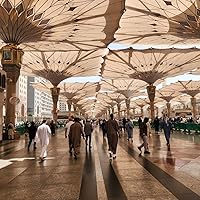
January 15, 2021
Really enjoyed this book and it's full of useful information about the Muslim history of Spain. It dispells a lot of the romantic myths many Muslims hold and clearly points out in detail that while this was a vibrant time period it was most certainly not a utopia. Nor was the conquest of Spain by Muslims religiously motivated or ever backed by the Abassid or Ottoman caliphates. The reconquest of Spain was also originally not a purely religious endeavor.
Conversions, religious identity, cross-religious alliances, and constant infighting existing simultaneously with a culture of art, learning, casual (and even deviant) sex, extremism, and cultism are themes we can all learn from today.
Conversions, religious identity, cross-religious alliances, and constant infighting existing simultaneously with a culture of art, learning, casual (and even deviant) sex, extremism, and cultism are themes we can all learn from today.

July 16, 2022
Catlos offers a very detailed and readable account of the history of Islamic Spain, including everything from court intrigues to the wider impact of Al-Andalus on both the Islamic and Christian world. The book is written in an accessible way even to those who have little or no prior historical knowledge. The main strength of Catlos' account is that he does not discard the significance of religion in explaining the history of Spain, but simultaneously does not neglect the role of hardcore realpolitik in the world of Medieval Europe. My biggest gripe with the book was the confusing and sometimes outright lacking references, especially for quotes taken from old historical primary sources.

April 21, 2019
A vivid and recently-published history of a fascinating civilization, Islamic Spain as it existed and flourished, from the arrival of the Moors under Tarik ibn-Zaid in AD 711 through its downfall to Catholic Spain in 1492 and subsequent expulsion of the Muslims. The author shows us a society that was a high center of civilization in Europe and the Mediterranean for centuries in what was otherwise known as a dark age, and tells of the contributions of its inhabitants, Muslim, Christian and Jewish, to its cultural and economic vibrancy. Highly recommend.

November 7, 2018
Excellent and Very Detailed history of pre-Columbian Spain. The names are so similar they get quite confusing, and the timelines weave in and out so every poisoning and treasonous betrayal is hard to keep straight. The glorious era of Moorish Spain had quite a dark underside.
More maps and timeline diagrams would help the poor reader keep the flow in line.
But the author has a breezy style that is quite readable. This book is important for any Spanish history buff.
More maps and timeline diagrams would help the poor reader keep the flow in line.
But the author has a breezy style that is quite readable. This book is important for any Spanish history buff.

November 6, 2022
Warta przeczytania. Ale nie rozumiem dlaczego raz imiona są spolszczone a raz nie.

May 28, 2024
"Kingdoms of Faith" covers the history of Islamic Spain from the initial conquest through the expulsions of Muslims in the 1500s and early 1600s. The book emphasizes the diverse interrelationships between Christians, Muslims, and Jews in this period, arguing that this history should not be painted with the broad brushes of either religious conflict or complete toleration. As such, Catlos presents a nuanced picture of Islamic Spain, one in which people of different religious faiths collaborated and fought each other and fought people within their own faith as much as people outside of it. While faith was important, and appropriately we can call the kingdoms of the period "kingdoms of faith," Catlos also successfully demonstrates that faith was not usually the overarching goal of historical actors in the period - as usual, political power and other dynamics prevail.
While I appreciate those lessons, I generally did not enjoy the book as much as I'd hoped and I can't really recommend the book to others. Mostly, as another goodreads reviewer has pointed out, this book was both too long and not long enough: this would have been a much better book had it been either a more concise and tightly written/clearly explained overview of the most important dynamics of the period, or alternatively, had it spent more time covering the personalities and events it described. Somehow, I ended up not learning much about any particular person or event, and yet not feeling like I had as clear an overview of the period as I would have liked. The book also lacks analytical rigor: there is almost no analysis of why events happened the way they did, how things could have turned out differently, etc. I wish there'd been more treatment of socioeconomic and political dynamics and especially clearer treatment of Islamic Spain's relationship to the wider region. Were I to start reading on this period anew, I would probably opt for another book.
While I appreciate those lessons, I generally did not enjoy the book as much as I'd hoped and I can't really recommend the book to others. Mostly, as another goodreads reviewer has pointed out, this book was both too long and not long enough: this would have been a much better book had it been either a more concise and tightly written/clearly explained overview of the most important dynamics of the period, or alternatively, had it spent more time covering the personalities and events it described. Somehow, I ended up not learning much about any particular person or event, and yet not feeling like I had as clear an overview of the period as I would have liked. The book also lacks analytical rigor: there is almost no analysis of why events happened the way they did, how things could have turned out differently, etc. I wish there'd been more treatment of socioeconomic and political dynamics and especially clearer treatment of Islamic Spain's relationship to the wider region. Were I to start reading on this period anew, I would probably opt for another book.

July 31, 2026
Brian Catlos’ Kingdoms of Faith is an excellent survey of Islamic Spain. It is at its best when interrogating some of the larger social, political, and religious processes that shaped 900 years of the peninsula’s history. Some chapters get very dense, even for the seasoned historian, simply because of the overwhelming number of names and alliances. But Catlos knows how to follow a couple good threads through this complex and lengthy period of history. Anyone interested in the history of Spain (not just Islamic Spain but Spain as an important place where civilizations met and interacted) will find this an interesting and thoughtful read. Definitely recommended.
July 13, 2026
Typical(although moderate) Modern "revisionist" history trying to whitewash non-whites and deconstruct the west. not scholarly either, few references.
June 15, 2023
Very readable, and with the help of the excellent Maps, glossary, and list of rulers, very easy to follow. This book certainly fills a need in most of our 'western' educations ... With enough detail to support the overall premise that: "Cooperation happened, infighting happened, it was brutal, but this was a history of real people, not a clash of civilizations"

August 24, 2018
An ambitious book that threads together 800 years of Islamic rule in Spain. The goal of the author was to dispel the common (exhausted?) narratives and mythologies surrounding “La convivencia” and “La reconquista”.
Catlos does a pretty decent job in weaving a fluid narrative that condenses the social, political, economic, and military history of Al-Andalus, from the initial conquest in 711 to the fall of Granada in 1492.
I think my only issue with him is that he comes at you from everywhere at once. There’s a litany of actors (major and minor) and events (significant and trivial) that I’m not sure needed to be included in the narrative. Sometimes simplicity is your best friend when it comes to building a narrative that encompasses such a long time period. At times I found myself just hurrying through paragraphs that I thought did not move the needle forward.
Besides that, I think anyone interested in the history of medieval Spain will enjoy this book thoroughly.
Catlos does a pretty decent job in weaving a fluid narrative that condenses the social, political, economic, and military history of Al-Andalus, from the initial conquest in 711 to the fall of Granada in 1492.
I think my only issue with him is that he comes at you from everywhere at once. There’s a litany of actors (major and minor) and events (significant and trivial) that I’m not sure needed to be included in the narrative. Sometimes simplicity is your best friend when it comes to building a narrative that encompasses such a long time period. At times I found myself just hurrying through paragraphs that I thought did not move the needle forward.
Besides that, I think anyone interested in the history of medieval Spain will enjoy this book thoroughly.
June 24, 2021
A long-standing view of Muslim Spain--al-Andalus--holds that Muslims, Jews, and Christians lived together in a kind of harmony, a convivencia, that was shattered with the Reconquista that eliminated the last of the Islamic states, Granada, in 1492. Another, rather contradictory, opinion is that religious conflict drove the wars between Christian and Muslim states in the Iberian peninsula, fired up by fundamentalists on both sides.
Brian Catlos's Kingdoms of Faith undermines both notions. He argues, convincingly, that the many conflicts between the Islamic and Christian states were driven far more by a politics of expansionism, which was typical of all mediaeval entities, and not in any deep way by religious conflict; as he shows, alliances between Muslims and Christians, shifting like a kaleidoscope, aimed at immediate advantage over the enemy of the moment. Islamic troops served Christian kings, and vice versa. The convivencia that did exist was fashioned out of the need each side had for the peasants whose toil in the countryside and craftsmen whose work in the cities generated the wealth Spain enjoyed--especially in the Muslim regions; when a Christian king conquered a Muslim region, he tended to support his new Muslim subjects for precisely this reason.
The shift toward a view of the other constructed on religion came to the fore after the Reconquista. Powerful religious forces, led by the Inquisition, defined Muslims as unacceptable, and after a period of post-1492 tolerance laws against them were passed and forced conversion imposed--creating the so-called moriscos, former Muslims now Christian--till in 1610 they were expelled from the Kingdom of Aragon and Castile, despite their adherence to Catholic Christianity.
Like just about any history of the European Middle Ages, much of the story is a dreary tale of assassination, betrayal, and warfare. Islamic Spain fell under the control first of the Umayyids, the first Islamic dynasty that fell in the Middle East to the Abbasids; later, two powers from the Maghrib, the Almoravids and the Almohads, invaded and took over; a period of fragmentation called the taifa kingdoms, small more or less independent states intervened; and finally the Nasrids of Granada. The politics are extremely complicated, and keeping track is not helped by the fact that many of the leading figures bear the same names, like Muhammad and Alfonso; Catlos's appendix with names of some (but not all) of these figures is helpful. He also provides an extensive glossary of Arabic and Spanish terms.
Kingdoms of Faith is largely a political history. Catlos spends some time discussing the thriving cultural and intellectual life of Islamic Spain (in contrast, the Christian kingdoms seem woefully impoverished by comparison), but he only really scratches the surface. The Islamic kingdoms supported some of the most innovative and important work in poetry, history, philosophy, and literature produced in the Islamic world, and the intellectuals who thrived there, many of whom immigrated, attracted by the commitment of the rulers to supporting a life of the mind (perhaps most famously Ibn Khaldun), maintained connections all the way to Central Asia. (For a detailed study of the intellectual history of that region, see Lost Enlightenment. Central Asia's Golden Age by S. Frederick Starr.)
If I have any criticisms, they are minor. Occasionally Catlos's sentences get a bit lost; the antecedents to pronouns are from time to time unclear. And it would have been nice to have lots more footnotes directing the interested reader to the sources for the history; for the most part the 59 notes in 430 pages just cite direct quotations. I suppose this latter was a decision of the publisher.
But these are quibbles. Kingdoms of Faith is an excellent introduction to a less known but extremely important episode in the history of both Christian and Islamic Europe. It is the go-to reference for anyone who wants to know lots about this encounter between two intermingled worlds.
Brian Catlos's Kingdoms of Faith undermines both notions. He argues, convincingly, that the many conflicts between the Islamic and Christian states were driven far more by a politics of expansionism, which was typical of all mediaeval entities, and not in any deep way by religious conflict; as he shows, alliances between Muslims and Christians, shifting like a kaleidoscope, aimed at immediate advantage over the enemy of the moment. Islamic troops served Christian kings, and vice versa. The convivencia that did exist was fashioned out of the need each side had for the peasants whose toil in the countryside and craftsmen whose work in the cities generated the wealth Spain enjoyed--especially in the Muslim regions; when a Christian king conquered a Muslim region, he tended to support his new Muslim subjects for precisely this reason.
The shift toward a view of the other constructed on religion came to the fore after the Reconquista. Powerful religious forces, led by the Inquisition, defined Muslims as unacceptable, and after a period of post-1492 tolerance laws against them were passed and forced conversion imposed--creating the so-called moriscos, former Muslims now Christian--till in 1610 they were expelled from the Kingdom of Aragon and Castile, despite their adherence to Catholic Christianity.
Like just about any history of the European Middle Ages, much of the story is a dreary tale of assassination, betrayal, and warfare. Islamic Spain fell under the control first of the Umayyids, the first Islamic dynasty that fell in the Middle East to the Abbasids; later, two powers from the Maghrib, the Almoravids and the Almohads, invaded and took over; a period of fragmentation called the taifa kingdoms, small more or less independent states intervened; and finally the Nasrids of Granada. The politics are extremely complicated, and keeping track is not helped by the fact that many of the leading figures bear the same names, like Muhammad and Alfonso; Catlos's appendix with names of some (but not all) of these figures is helpful. He also provides an extensive glossary of Arabic and Spanish terms.
Kingdoms of Faith is largely a political history. Catlos spends some time discussing the thriving cultural and intellectual life of Islamic Spain (in contrast, the Christian kingdoms seem woefully impoverished by comparison), but he only really scratches the surface. The Islamic kingdoms supported some of the most innovative and important work in poetry, history, philosophy, and literature produced in the Islamic world, and the intellectuals who thrived there, many of whom immigrated, attracted by the commitment of the rulers to supporting a life of the mind (perhaps most famously Ibn Khaldun), maintained connections all the way to Central Asia. (For a detailed study of the intellectual history of that region, see Lost Enlightenment. Central Asia's Golden Age by S. Frederick Starr.)
If I have any criticisms, they are minor. Occasionally Catlos's sentences get a bit lost; the antecedents to pronouns are from time to time unclear. And it would have been nice to have lots more footnotes directing the interested reader to the sources for the history; for the most part the 59 notes in 430 pages just cite direct quotations. I suppose this latter was a decision of the publisher.
But these are quibbles. Kingdoms of Faith is an excellent introduction to a less known but extremely important episode in the history of both Christian and Islamic Europe. It is the go-to reference for anyone who wants to know lots about this encounter between two intermingled worlds.

August 2, 2026
So faszinierend, mal einen wirklichen Deep Dive (500 Seiten ca) in die islamische Geschichte Spaniens zu machen. Werde mir definitiv nicht alle Intrigengeschichten und persönlichen Anekdoten zu den einzelnen Thronanwärtern merken, genauso wenig wohl leider die meisten der großen Daten und Fakten aber es war ein durchaus lehrreiches Stück Literatur über ein Land und eine Zeit, über die ich jeweils nicht besonders viel wusste!
Toller Humanistischer Appell :)
Toller Humanistischer Appell :)

March 30, 2025
Garbaggio. Convoluted book. Wanted unbiased I got confused

January 25, 2020
Ogromną zaletą tej książki jest to, że dobitnie uświadamia, iż historia nie jest czarno biała. Historia muzułmańskiej Hiszpanii, podboju, rozkwitu i upadku obfituje w wiele takich faktów. Nie zajmowała mnie wcześniej, o samej Rekonkwiście wiedziałem tylko to, że źli muzułmanie najechali a potem przez wieki dobrzy chrześcijanie odbijali.
Była to, oczywiście, bzdura na resorach, uproszczenie szkolne na użytek delfiny czy papka dla mięsa armatniego. :)
Fascynujące jest, jak przez wieki w muzułmańskiej Hiszpanii przenikały się swobodnie islam, chrześcijaństwo czy religia hebrajska. Do tego kwitła nauka, wymiana myśli i sztuka. Wszystko pod władzą islamu. Nie było to jednak aż tak piękne i bajkowe. Ale swobody i wolności było tam więcej niż po tym jak ostatecznie Hiszpania została zjednoczona pod berłem katolickich władców. Mimo rygorów religijnych nie było takich prześladowań, jakie zgotowali potem katolicy całej innowierczej reszcie.
A i sama rekonkwista była bardzo kolorowa: władcy muzułmańscy walczący z chrześcijańskimi w sojuszu z innymi chrześcijanami. I na odwrót: chrześcijańskie armię walczące z muzułmanami dzięki wsparciu innych muzułmańskich władców. Nie było nigdy prostego i łatwego podziału.
Łatwo dziś zapomniano o wpływie jaki na chrześcijaństwo miał islam (co i dla mnie było zaskoczeniem - dobrze uczyć się całe życie). I to znaczący, choćby "szczepiąc" chrześcijaństwo Arystotelesem, bez czego nie byłoby Tomasza z Akwinu. I tak dalej.
Opisy tej historii mogą momentami przytłaczać, choć nie nużą. Nauk z tego na przyszłość chyba nie ma co wysnuwać zbyt pochopnie. Tamtego islamu już nie ma, a i chrześcijaństwo też inne. Mimo to te 900 lat historii budzi fascynację. Dobrze opowiedziana historia.
Była to, oczywiście, bzdura na resorach, uproszczenie szkolne na użytek delfiny czy papka dla mięsa armatniego. :)
Fascynujące jest, jak przez wieki w muzułmańskiej Hiszpanii przenikały się swobodnie islam, chrześcijaństwo czy religia hebrajska. Do tego kwitła nauka, wymiana myśli i sztuka. Wszystko pod władzą islamu. Nie było to jednak aż tak piękne i bajkowe. Ale swobody i wolności było tam więcej niż po tym jak ostatecznie Hiszpania została zjednoczona pod berłem katolickich władców. Mimo rygorów religijnych nie było takich prześladowań, jakie zgotowali potem katolicy całej innowierczej reszcie.
A i sama rekonkwista była bardzo kolorowa: władcy muzułmańscy walczący z chrześcijańskimi w sojuszu z innymi chrześcijanami. I na odwrót: chrześcijańskie armię walczące z muzułmanami dzięki wsparciu innych muzułmańskich władców. Nie było nigdy prostego i łatwego podziału.
Łatwo dziś zapomniano o wpływie jaki na chrześcijaństwo miał islam (co i dla mnie było zaskoczeniem - dobrze uczyć się całe życie). I to znaczący, choćby "szczepiąc" chrześcijaństwo Arystotelesem, bez czego nie byłoby Tomasza z Akwinu. I tak dalej.
Opisy tej historii mogą momentami przytłaczać, choć nie nużą. Nauk z tego na przyszłość chyba nie ma co wysnuwać zbyt pochopnie. Tamtego islamu już nie ma, a i chrześcijaństwo też inne. Mimo to te 900 lat historii budzi fascynację. Dobrze opowiedziana historia.

January 27, 2020
In this sprawling popular account of the rise and fall of Al-Andalus, the Muslim lands of the Iberian peninsula, the author is trying to get down to basics. This means that Catlos has little use for the vision of Muslim Iberia as a paradise of tolerance; tolerance was the practice of putting up with that one could not put under one's control. Nor does Catlos buy into a vision of a clash of cultures, as the most important conflicts were often those within the relevant religious cultures. The salient point being that ethnicity and family usually triumphed over theology. What one does get is a swirling kaleidoscope of social change that, whatever else one wants to say, Catlos argues is as much part of the history of "The West" as any other region or period you might want to point to. I would recommend this book, even if this gallop through history will probably seem superficial to the specialist while still being exhausting to the novice.
Originally written: March 13, 2019.
Originally written: March 13, 2019.
April 27, 2025
My high school history teacher was keen to emphasize how important it is to learn history to prevent its repetition and to learn from mistakes. It seems Catlos desired for modern societies to learn from Spain under the rule of Islam. Catlos portrayed himself as convinced that this era in Spain’s history marked a time when people of various religions could coexist. He argued that the conflict they did have arose from non-religious matters. But he also was thorough to point out how there was not a perfect equality. Catlos’s book conveys that invasions and alliances were not largely based on religions during this era. Furthermore, conflict within was rooted in hunger for power and land. I think that Catlos successfully conveyed the complicated nature of religions in Islamic Spain. People from each religion contributed to society. They recognized that they benefitted one another. This did not always produce absolute peace. However, it seems that Catlos’ desire to portray the complexity of al-Andalus made his book hard to follow at times. Perhaps this was due to my lack of knowledge of Arabic culture and lingo. However, in an effort to incorporate more than just a history of leaders and military advances, he adds spurts of zoomed in life and cultural narratives. This demands extra close reading, but perhaps that is not a bad thing nor a fault of the author.
***
“That said, people are far too complex to be reduced to living caricatures of their religious ideologies. … They saw themselves also as members of ethnic groups, subjects of kingdoms, inhabitants of towns and neighborhoods, members of professions and collectives, seekers of knowledge, customers and clients, men and women, lovers and friends. And more often than not, these bonds of association bridged or overcame affinities individuals shared on account of religious orientations.”
I like this quote because it humanizes the individuals about whom Catlos wrote. We live in a culture that places people in boxes based on some aspect of who they are. In reality, people are more than that and should not be reduced to such. I think Catlos recognized this and has desire for our culture to embrace people as fuller beings—not just individuals of one simple identity. As a believer, I acknowledge that we are created in God’s image. This includes his physical image and his image of personality and attributes. God is nuanced and has created us to reflect that. Certainly, I believe as followers of Christ, we should find our sole identity in him. However, that does not exclude any possibility of diversity.
***
In Kingdoms of Faith: A New History of Islamic Spain, Brian A. Catlos argued that the history of Islam in Spain ought to be presented in a novel manner: through the stories of all people not just the elite. He drew from newly available and insightful research, especially from Spanish, North African, and European scholars who had not yet had their works translated to English. In 711 AD Tariq ibn Ziyad led Muslim troops into the Spanish Peninsula, defeating the ruling Visigoth king. They conquered much of the Peninsula, deeming the land al-Andalus. The first few centuries were met with political and military struggle for power between Muslim forces from different regions while defending against Christian forces to the north. Through the struggle, figures like ‘Abd al-Rahman and ‘Abd al-Rahman II stood out. The latter brought the Umayyad dynasty to al-Andalus. As it became more established, this dynasty still faced internal rebellion and the invasion of the Vikings. Notable leaders of internal rebellions were Banu Musa and Ibn Hafsun.
In the 900s ‘Abd al-Rahman III declared the Umayyad dynasty in al-Andalus its own caliphate, building a grand palace in Córdoba to portray this. His heir al-Hakam II directed al-Andalus to have cultural significance. A scuffle of power plagued al-Andalus again in the years to come. Likewise, conflict with Christian kingdoms increased around the turn of the millennium. After the caliphate fell in 1031, independent taifa kingdoms ruled Muslim al-Andalus. However, the lack of harmony within these kingdoms ensured their relatively fleeting nature. The Berber Almoravid dynasty briefly ruled in al-Andalus before the Almohad caliphate came to power. At this point, Christian rulers gained more power and land in the Peninsula. The Muslim Nasrid kingdom held onto its power in the south until the end of the 12th century. Ultimately, fragments of Islamic Spain remained until 1492 when Fernando of Castile defeated Granada.
Throughout the presence of Islam in the Iberian Peninsula, Muslims, Christians, and Jews seemed to coexist. Christians often converted for better social standing. Some held governmental positions. Hasdai ibn Shaprut was an example of a powerful Jewish diplomat and court member under ‘Abd al-Rahman III. One exception to the relative harmony of religions came with ‘Abd al-Rahman II in first second quarter of 800s who persecuted Christians. In the next century, Catlos indicated that Jews and Christians discretely built their own places of worship. When the Christian kingdoms established greater power in the 12th and 13th centuries, Muslims integrated in Christian society. Although there was tension, members of each religion benefitted each other. Following the defeat of Granada, Muslims were forced to convert or leave the Christian kingdom under Fernando and Catherine. At this point, residents of the Christian kingdoms treated converts as lesser and discriminated against their culture. Catlos finished his book with hope that societies now could embrace present religious and ethnic diversity as Muslim Spain once did.
***
“That said, people are far too complex to be reduced to living caricatures of their religious ideologies. … They saw themselves also as members of ethnic groups, subjects of kingdoms, inhabitants of towns and neighborhoods, members of professions and collectives, seekers of knowledge, customers and clients, men and women, lovers and friends. And more often than not, these bonds of association bridged or overcame affinities individuals shared on account of religious orientations.”
I like this quote because it humanizes the individuals about whom Catlos wrote. We live in a culture that places people in boxes based on some aspect of who they are. In reality, people are more than that and should not be reduced to such. I think Catlos recognized this and has desire for our culture to embrace people as fuller beings—not just individuals of one simple identity. As a believer, I acknowledge that we are created in God’s image. This includes his physical image and his image of personality and attributes. God is nuanced and has created us to reflect that. Certainly, I believe as followers of Christ, we should find our sole identity in him. However, that does not exclude any possibility of diversity.
***
In Kingdoms of Faith: A New History of Islamic Spain, Brian A. Catlos argued that the history of Islam in Spain ought to be presented in a novel manner: through the stories of all people not just the elite. He drew from newly available and insightful research, especially from Spanish, North African, and European scholars who had not yet had their works translated to English. In 711 AD Tariq ibn Ziyad led Muslim troops into the Spanish Peninsula, defeating the ruling Visigoth king. They conquered much of the Peninsula, deeming the land al-Andalus. The first few centuries were met with political and military struggle for power between Muslim forces from different regions while defending against Christian forces to the north. Through the struggle, figures like ‘Abd al-Rahman and ‘Abd al-Rahman II stood out. The latter brought the Umayyad dynasty to al-Andalus. As it became more established, this dynasty still faced internal rebellion and the invasion of the Vikings. Notable leaders of internal rebellions were Banu Musa and Ibn Hafsun.
In the 900s ‘Abd al-Rahman III declared the Umayyad dynasty in al-Andalus its own caliphate, building a grand palace in Córdoba to portray this. His heir al-Hakam II directed al-Andalus to have cultural significance. A scuffle of power plagued al-Andalus again in the years to come. Likewise, conflict with Christian kingdoms increased around the turn of the millennium. After the caliphate fell in 1031, independent taifa kingdoms ruled Muslim al-Andalus. However, the lack of harmony within these kingdoms ensured their relatively fleeting nature. The Berber Almoravid dynasty briefly ruled in al-Andalus before the Almohad caliphate came to power. At this point, Christian rulers gained more power and land in the Peninsula. The Muslim Nasrid kingdom held onto its power in the south until the end of the 12th century. Ultimately, fragments of Islamic Spain remained until 1492 when Fernando of Castile defeated Granada.
Throughout the presence of Islam in the Iberian Peninsula, Muslims, Christians, and Jews seemed to coexist. Christians often converted for better social standing. Some held governmental positions. Hasdai ibn Shaprut was an example of a powerful Jewish diplomat and court member under ‘Abd al-Rahman III. One exception to the relative harmony of religions came with ‘Abd al-Rahman II in first second quarter of 800s who persecuted Christians. In the next century, Catlos indicated that Jews and Christians discretely built their own places of worship. When the Christian kingdoms established greater power in the 12th and 13th centuries, Muslims integrated in Christian society. Although there was tension, members of each religion benefitted each other. Following the defeat of Granada, Muslims were forced to convert or leave the Christian kingdom under Fernando and Catherine. At this point, residents of the Christian kingdoms treated converts as lesser and discriminated against their culture. Catlos finished his book with hope that societies now could embrace present religious and ethnic diversity as Muslim Spain once did.
Displaying 1 - 30 of 77 reviews