In a 1969 conversation with Rolling Stone editor Jann Wenner, Bob Dylan proclaimed, “I don’t give interviews.” But in truth, he has spoken at length with print publications large and small and with broadcast media around the world, given numerous press conferences, and even answered listeners’ questions on call-in radio shows. Dylan can be as evasive and abstruse as he is witty; he can also be cranky and sarcastic. But in the right moments, he offers candid, revealing commentary about his groundbreaking music and creative process. These engrossing provide glimpses into the mind of one of the most important performers and songwriters of the last hundred years.
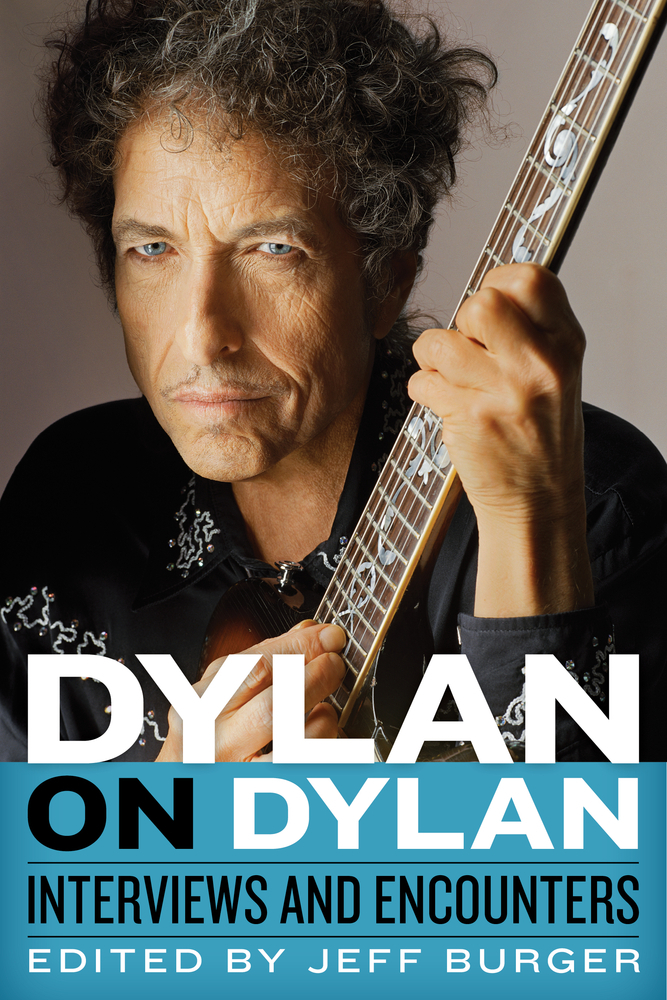
Dylan on Dylan is an authoritative, chronologically arranged anthology of interviews, speeches, and press conferences, as well as excerpts from more than eighty additional Q&As spanning Dylan’s entire career—from 1961 through 2016. The majority have not been previously anthologized and some have never before appeared in print. The material comes from renowned media outlets like Rolling Stone and TV's 60 Minutes and from obscure periodicals like Minnesota Daily, a student newspaper at Dylan’s alma mater. Interviewers include some of the top writers of our time, such as Jonathan Lethem, Douglas Brinkley, and Mikal Gilmore, as well as musicians like Pete Seeger and Happy Traum. Introductions put each piece in context and, in many cases, include the interviewer’s reminiscences about the encounter.
Jeff Burger has covered popular music for American and international magazines and newspapers for four decades and was one of the first journalists to talk with Bruce Springsteen for a national publication. He has also published interviews with such musicians as Tom Waits, Billy Joel, the Righteous Brothers, and the members of Steely Dan, as well as with public figures like Suze Orman, James Carville, Sir Richard Branson, F. Lee Bailey, Sydney Pollack, and Cliff Robertson. He has contributed to more than 75 periodicals and books, including the Los Angeles Times, Reader's Digest, Family Circle, Barron's, Creem, All Music Guide and GQ. A former consulting editor at Time Inc., he has been editor of several major consumer and trade magazines. He lives in Ridgewood, New Jersey.
Believing I had read everything I could about Bob Dylan, besides listening and watching every film regarding this great singer/songwriter, I was surprised at how much new material was in this book. Included were silly and even stupid interviews that were exhausting and disagreeable at best. But for the most part these additional early encounters with Bob Dylan add much to his still-growing oeuvre.
…experience teaches that silence terrifies people the most.
The most seriously fascinating conversation in this book occurred between Dylan and John Cohen in 1968 shortly after Dylan’s motorcycle accident and recovery from his injuries. The album John Wesley Harding had just come out and was Dylan’s first in eighteen months. Rarely is Bob Dylan reflective and serious in conversation, and absent is the typical sarcasm and distance generated due to what I have always felt was Dylan’s lack of respect for his interviewer. These two conversant troubadours seemed to immediately connect and speak the same language.
…Uncompromising, that’s what makes a good artist…
It becomes quite obvious that Bob Dylan changed quite drastically after the motorcycle accident and The Basement Tapes . For the better as well. Much more open and reflective in his rare interviews. The childish and churlish behavior missing, and thankfully so. Having a family and raising kids does seem to change some men, Dylan included. This book is quickly becoming one of my favorites and continues to be a complete surprise.
…you need to breathe the right air to make that creative process work…
The interviews keep getting better and better. The mid-seventies, after his divorce, opened Dylan up to revealing more of himself to the few pundits he chose to trust. Living and working near Malibu seemed to have a relaxing affect on the man. One interview by a college student from Minnesota was especially good and Dylan seemed to be forthcoming and sincere in his answers and remarks. Not the Bob Dylan accustomed to be portrayed in the documentary films and early recorded interviews.
Maybe on the records it’s in the lyrics, but in a live show it’s in the phrasing and the dynamics and the rhythm...
There is a good deal spoken about songwriting and the craft. Nuts and bolts I am surprised Dylan engaged himself to, sharing with his interviewer what exactly went on in his head and the impetus for composing particular songs. Hard to imagine Bob Dylan being so talkative and forthcoming. But he is. Of course, one can sense the bullshit behind every other line in their conversations, but he does it with a maturity and grace absent in the early interviews.
…Because even literature is written for an audience. Everybody’s not Kafka—sit down and write something that you don’t want anybody to see…
Through the years Dylan has proven time and again that he is not to be mediated. He is due our greatest respect. Dylan, if nothing else, stays true to himself.
…The only person you have to think about lying twice to is either yourself or to God…
Dylan certainly has no conscience in regards to lying. He obviously believes what he says.
…Art is artillery. And those guys, especially Caravaggio and Rembrandt, used it in its most effective manner…
Bob Dylan has been blowing things up for several decades now. As much as he appears on stage as an old grandpa requiring his keyboards to remain himself upright, Dylan continues to amass an oeuvre of originality in the studio. But the Never-Ending Tour could definitely end.
…OK, a lot of people say there is no happiness in this life, and certainly there’s no permanent happiness. But self-sufficiency creates happiness…
I appreciate the editor assembling this thorough collection. The fault lies in the subject, nothing is revealed. You have to love Dylan for the words and music.
Burger unearths a bunch of Dylania you might not have seen before. It;s arranged chronologically, and a lot of the early stuff is what you'd expect, with Dylan in his "don't ask me nuthin about nuthin" mode (a la "Don't Look Back"). But lots of this gives fairly intimate, unconventional glimpses of the man, and lend credence to Burger's thesis that, contrary to conventional opinion, Dylan is neither "reclusive" nor "hard to interview" (at least not always). Three that stand out for me: a 1964 feature by a college student named Jay Cocks (yep, the future rock journo and screenwriter), who spend a day with Dylan when he played Kenyon College; a transcript of a 1966 appearance on a late-night NYC radio talk show, that shows Dylan reacting to surreal inquiries from callers who might be characters from his own songs; and a 1976 feature originally written for TV Guide, of all things, in which the writer hangs out drinking beer with Dylan on the beach, and Dylan comes off as more of a regular guy than I've ever seen (the article wasn't published until 2015). The transcript format of many of the interviews makes this a bit of a slog to read at times, but it's quite rewarding for anyone who's more than a casual Dylan fan (all right, for anyone who's at least a 6 on the 1-10 Dylan fan scale).
A thoughtful birthday gift from my kids. Finished 2 days before the release of the next Bootleg Series installment from the epic Time Out of Mind sessions.
My favorite description: Surrealistic amalgam of kafkaesque menace, corrosive satire and opaque sensuality.
I created a Spotify playlist based on references in this book and have discovered some gems.
I thought I had read or heard most of his interviews, but this book was well worth the time. Great job of editing and providing context by Burger, and enough new information to keep it fresh.