Talking lions, philosophical bears, very hungry caterpillars, wise spiders, altruistic trees, companionable moles, urbane elephants: this is the magnificent menagerie that delights our children at bedtime. Within the entertaining pages of many children’s books, however, also lie profound teachings about the natural world that can help children develop an educated and engaged appreciation of the dynamic environment they inhabit.
In Beasts at Bedtime, scientist (and father) Liam Heneghan examines the environmental underpinnings of children’s stories. From Beatrix Potter to Harry Potter, Heneghan unearths the universal insights into our inextricable relationship with nature that underlie so many classic children’s stories. Some of the largest environmental challenges in coming years—from climate instability, our extinction crisis, freshwater depletion, deforestation—are likely to become even more severe as this generation of children grows up. Though today’s young readers will bear the brunt of these environmental calamities, they will also be able to contribute to environmental solutions if prepared properly. And all it takes is an attentive eye: Heneghan shows how the nature curriculum is already embedded in bedtime stories, from the earliest board books like The Rainbow Fish to contemporary young adult classics like The Hunger Games.
Beasts at Bedtime is an awakening to the vital environmental education children’s stories can provide—from the misadventures of The Runaway Bunny to more overt tales like The Lorax. Heneghan serves as our guide, drawing richly upon his own adolescent and parental experiences, as well as his travels in landscapes both experienced and imagined. Organized into thematic sections, the work winds its way through literary forests, colorful characters, and global environments.
This book enthralls as it engages. Heneghan as a guide is as charming as he is insightful, showing how kids (and adults) can start to experience the natural world in incredible ways from the comfort of their own room. Beasts at Bedtime will help parents, teachers, and guardians extend those cozy times curled up together with a good book into a lifetime of caring for our planet.
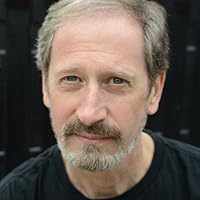
Liam Heneghan is an ecosystem ecologist working at DePaul University, where he is a professor of Environmental Science and Studies and co-director of DePaul University’s Institute for Nature and Culture. His research has included studies on the impact of acid rain on soil foodwebs in Europe, and inter-biome comparisons of decomposition and nutrient dynamics in forested ecosystems in North America and the tropics. Over the past two decades, Heneghan and his students have been working on restoration issues in midwestern ecosystems. Heneghan is also a graduate student in philosophy and an occasional poet. His interests in writing about children's literature started when his kids left home.
This is a fascinating exploration of environmental wisdom in children literature. It is beautifully written and is accessible to the general reader.
Liam Heneghan is a zoologist whose passion and love for the natural world truly shines through in the text. He argues that most, if not all, children's stories have an environmental component that young readers can learn from. Parents and educators are provided with an arsenal of tools that they can use to promote environmental literacy in young readers. Environmental themes are explored in various stories such as the Grimm fairytales, Peter Rabbit, Where the Wild Things Are, Harry Potter, Hunger Games, Calvin and Hobbes and many others. I really enjoyed going down memory lane and revisiting these childhood favourites!
As environmental calamities continue to increase, it is important that future generations have the tools and knowledge they need to be stewards of this changing world. If you instill a deep love and an empathetic connection to the natural world at a young age, this will only continue to grow.
Thanks to University of Chicago Press and Netgalley for a free copy of this book in exchange for an honest review.
Thank you University of Chicago Press and Netgalley for this ARC in return for my honest review.
I was interested in this book initially thinking it would offer bedtime stories for our family. I was mistaken, however the book I did receive was a well researched, lovingly compiled selection of storytelling and the environment elements contained within.
As the author states it is “complex knowledge contained in seemingly sparse storytelling”.
The author, a Zoologist, recollects childhood books including the Grimms Tales, Harry Potter, Where the Wild things are; to name a few and examines, through 7 sections their inter-relatedness to nature.
A great book for animal and environment lovers to meander through slowly and enjoyably.
Immense amounts of children’s literature is set in or around nature, and this book highlights both the obvious and the hidden links to nature that abound in this genre of books.
It was interesting to read about literature from a scientists point of view. Heneghan doesn’t just take a scientific and ecological look at the stories, but also a philosophical-meets-scientific look, which makes for some less than direct assumptions and conclusions in many of the essays. But overall, the collection encourages the reader to think of children’s lit as a cornerstone in environmental literacy as a whole and suggests that parents should do more to encourage this literacy beyond bedtime stories.
Split into four sections, focusing on pastoral, wilderness, islands, and urban (or lack thereof) settings, and on conservation and care of nature, each essay takes one, sometimes two, examples of prominent children’s literature ranging all levels of reading and focuses on the environmental, ecological, and/or conservation aspect of the story and how these help to shape a child’s view of nature (almost always, it’s for the better). While it will be helpful if you’ve read the book or story in question, it is not a prerequisite to know it, as Heneghan provides summaries of the important parts that pertain to the environmental thesis.
There were lots of interesting questions raised throughout the book, and the overall idea to pay more attention to the environmental wisdom in kids lit, even if it’s not obvious at first, is something I am definitely going to keep in mind when I read kids books now. However, the individual essays were hit or miss in their focus. Some directly addressed how a plot aspect or symbol conveyed an important call to nature–the Where the Wild Things Are essay concluding that “wilderness is where we are not,” for example–but others waxed more philosophically on the natural aspect of a book without really stating its importance or relevance to the thesis as a whole–the essays on how magic and natural history and knowledge tend to go hand-in-hand were interesting highlights, but didn’t really prove anything. Is nature supposed to be equivalent to magic and vice versa? Could magic not exist without nature? The conclusions on some essays were very muddled, at least for someone who was casually reading this, as opposed to reading it for an analysis. Some of the definitions used were also a bit too broad and never defined succinctly; rather the definitions were gleaned as I continued reading.
In the end though, the conclusion is one I definitely agree with: that it’s important for kids to have a balance of vicarious environment (cozying up with a good book indoors) and actual environment (getting out, playing, and being exposed to the nature that is found in the books), and that parents should help their kids to learn more about their environment and how they can appreciate it like the characters in their books do.
If you’re at all interested in children’s and/or environmental lit, there’s bound to be at least a couple of essays in here that will peak your interest and encourage you to take a second look at just how much nature there truly is in children’s lit.
Thank you to NetGalley for providing me with a free copy to review!
I have to think the author is mainly writing for himself. Quite a lot of this academic book is taken up by his recollections of books, outdoors or tales, while another large chunk is filled by reciting the plots of stories, including spoilers, from Peter Rabbit to Hunger Games, Doctor Doolittle to A Wizard of Earthsea.
In between we get some analysis of the story and the environment or animals it contains. In a chapter on islands, the whole chapter is geography on the differing types of islands. A few times the children's book author's life is described, such as Beatrix Potter. Other environments studied include pastoral scenes, gardens, wilderness, urban wildlife, 'beyond the pool of darkness'.
I see no mention of deserts, as in The Horse And His Boy and King Of The Wind, nor the arctic, as in Northern Lights/Golden Compass, apart from a glance at a Jack London book, nor undersea worlds, as in mermaids, selkies and Captain Nemo. I don't notice Australian authors, such as Mary Elwyn Pachett, Elyne Mitchell, Patricia Wrightson, Reginald Ottley. Walter Farley's Black Stallion isn't in the island section; nor is Gulliver's Travels, often seen as a children's version. The urban section doesn't contain Black Beauty, A Dog So Small, Starlight Barking. Nursery rhymes are claimed to be rural in setting almost exclusively; however Oranges and Lemons, mentioned, is about the East End church bells of London, while the not mentioned 'Boys and girls come out to play, the moon doth shine as bright as day,' recalls the Industrial Revolution of northern England, when boys and girls worked in factories all the hours of daylight, so could only get time to play by moonlight. Walter de La Mare wrote 'Then' about city nights.
So this is not a complete study but just the books that the author thinks are interesting. For instance, he dwells long on Babar and the Lorax, neither of which I have read. We also get various memories, of growing up in Ireland, studying shellfish on Dublin Bay strands, hearing Irish legends, travelling in America where the author now lives. I have no doubt he is genuine in his wish to pass on environmental interests and folk tales. But many parents will be too busy to read this book, and will just grab a children's book which seems suitable or familiar. A book themed on environmental issues would seem likely to contain more environments, more pollution and fewer plot summaries. A book aimed at academic study or booksellers would probably contain fewer memories. I would like the themes separated out into two books. If you have time though, and like to recall childhood / teen books, this can be an interesting read.
Notes on P295 - 328. Index 329 - 348. I counted 53 names which I could be sure were female, especially on studies of child psychology. I agree with the author in recommending 'Why Big Fierce Animals Are Rare' to young people. I downloaded an e-ARC from Net Galley. This is an unbiased review.
This is a lovely book! While it's technically an academic book, and you can see the author doing all the academic due diligence - advancing an argument, reviewing the literature, scattering footnotes here and there - you can tell he's really here to talk lovingly about the things he loves. So it's full of stories about his children, his own childhood, his various homes and the natural places (real and fictional) that have called to him.
It left me feeling alternately nostalgic about some childhood classic he mentioned and self-righteously enraged that some beloved book from my own childhood was not mentioned (of course, the fact that one can list dozens that aren't in the book is the point - ecology is everywhere!). And occasionally wanting to set out on a long hike in some wild-ish place (I therefore can't recommend this as morning commute reading).
The subtitle of Liam Heneghan's book, Revealing the Environmental Wisdom in Children's Literature, makes it sound like a weighty academic tome. And it certainly does advance intelligent insights about environmental themes in children's books. However, Beasts at Bedtime is also regularly spiced with engaging digressions, such as how a disastrous encounter with a Peter Rabbit ballet on the author's tenth birthday led to the raucous viewing of a violent Bruce Lee movie on his eleventh. Heneghan is a good story-teller, and he makes it a pleasure to read his work. His choice of children's literature to discuss is also eclectic, including along with Winnie the Pooh and The Little Prince, etc., such less obvious choices as R. Crumb and Calvin and Hobbes. Insightful, funny and enlightening, it's well worth your time.
Thoroughly enjoyed this book. Not only was the writing superb and at times poetic, the author’s in-depth knowledge of the natural world helped unearth, the sometimes hidden and sometimes obvious, environmental themes in children’s classic literature. It was both moving and motivating and made me wish I had the time to go back and re read many of those stories that filled my childhood days. I would highly recommend this book.
One of the best (creative?) nonfiction books / literary criticisms (or theory?) books I've ever read. I felt a great wave of nostalgia for childhood after reading this book. Also major props because it was a major source for the term paper in my Nature & Culture class this semester. I enjoyed reading this a lot.
1.5/5 Read for work. I love the premise of this book, but I honestly quite hated its execution. It could have been so very great, but it ended up seeming more like someone published one of their university assignments.
Beasts at Bedtime was my bedtime reading recently, and every night I drifted off to sleep with new images in my head! Intriguing subject matter, worthy reflections and beautifully written, this book opens your eyes wider to tales you thought you knew. What will Liam Heneghan write next? Whatever it is, I'll want to read it.
Trained as a biologist and a professor of environmental science at DePaul University in Chicago, Heneghan has written this book for a nonprofessional audience. He positions himself as a parent who read nightly to his two sons when they were children. I like the project--that parents can help provide their kids with an environmental awareness and empathy by reading ordinary children's books and having meaningful conversations about them. For me, some of the essays work better than others, and I do recommend reading the footnotes which are an important source for the reader who wants to go deeper into arguments that lie very lightly in these essays that mostly concern the stories. The author grew up in a suburb outside of Dublin, and he came to the US as a graduate student. One of the interesting things for me is that he brings to the writing the point of view of a literate Irishman. Each chapter focuses on one or more children's books, written over more than a century. It includes recent hits like Harry Potter and the Hunger Games as well as the stories of Hans Christian Anderson, Beatrix Potter and Robinson Crusoe. One of my favorites was about the comic strip, Calvin and Hobbes. The essays are a little quirky. The specifics of the stories are never overlooked in order to make a general argument--this may be a reflection of the science in which he was trained. Occasionally Heneghan takes us down unexpected rabbit holes (as in the essay asking to what extent Tolkien was influenced by the Irish landscape). While the part of my brain which looks for themes and wants to generalize was occasionally frustrated, I did not mind these excursions. Part of me wonders how he managed to get this odd book published by a major university press, and another part is glad that he did.