Jump to ratings and reviews
Rate this book

The History of Middle-Earth #11

The War of the Jewels

Rate this book
In volumes 10 and 11 of The History of Middle-earth Christopher Tolkien recounts from the original texts the evolution of his fathers work on The Silmarillion, the legendary history of the Elder Days or First Age, from the completion of The Lord of The Rings in 1949 until his death.

In volume 10, Morgoths Ring the narrative was taken only so far as the natural dividing-point in the whole, when Morgoth destroyed the Trees of Light and fled from Valinor bearing the stolen Silmarils. In volume 11, The War of The Jewels the story returns to Middle-earth, and the ruinous conflict of the High Elves and the Men who were their allies with the power of the Dark Lord.

With the publication in this book of all J.R.R. Tolkiens later narrative writing concerned with the last centuries of the First Age, the long history of The Silmarillion, from its beginnings in The Book of Lost Tales, is completed: and the enigmatic state of the work at his death can be understood.

A chief element in The War of The Jewels is a major story of Middle-earth now published for the first time, a continuation of the great saga of Tứrin Turambar and his sister Niënor, the children of Hứrin the Steadfast: this is the tale of the disaster that overtook the forest people of Brethil when Hứrin came among them after his release from long years of captivity in Angband, the fortress of Morgoth.

The uncompleted text of the Grey Annals, the primary record of the War of the Jewels, is given in full. The geography of Beleriand is studied in detail, with redrawings of the final state of the map, and a long essay on the names and relations of all the peoples shows more clearly than any writing published hitherto the closeness of the connection between language and history in Tolkiens world, and provides much new information, including some knowledge of the language of the divine powers, the Valar.

Librarian's note: an alternate cover edition
ISBN: 0261103148

470 pages, Hardcover

First published October 20, 1994

102 people are currently reading
10072 people want to read

About the author

J.R.R. Tolkien

785 books77.4k followers
John Ronald Reuel Tolkien: writer, artist, scholar, linguist. Known to millions around the world as the author of The Lord of the Rings, Tolkien spent most of his life teaching at the University of Oxford where he was a distinguished academic in the fields of Old and Middle English and Old Norse. His creativity, confined to his spare time, found its outlet in fantasy works, stories for children, poetry, illustration and invented languages and alphabets.

Tolkien’s most popular works, The Hobbit and The Lord of the Rings are set in Middle-earth, an imagined world with strangely familiar settings inhabited by ancient and extraordinary peoples. Through this secondary world Tolkien writes perceptively of universal human concerns – love and loss, courage and betrayal, humility and pride – giving his books a wide and enduring appeal.

Tolkien was an accomplished amateur artist who painted for pleasure and relaxation. He excelled at landscapes and often drew inspiration from his own stories. He illustrated many scenes from The Silmarillion, The Hobbit and The Lord of the Rings, sometimes drawing or painting as he was writing in order to visualize the imagined scene more clearly.

Tolkien was a professor at the Universities of Leeds and Oxford for almost forty years, teaching Old and Middle English, as well as Old Norse and Gothic. His illuminating lectures on works such as the Old English epic poem, Beowulf, illustrate his deep knowledge of ancient languages and at the same time provide new insights into peoples and legends from a remote past.

Tolkien was born in Bloemfontein, South Africa, in 1892 to English parents. He came to England aged three and was brought up in and around Birmingham. He graduated from the University of Oxford in 1915 and saw active service in France during the First World War before being invalided home. After the war he pursued an academic career teaching Old and Middle English. Alongside his professional work, he invented his own languages and began to create what he called a mythology for England; it was this ‘legendarium’ that he would work on throughout his life. But his literary work did not start and end with Middle-earth, he also wrote poetry, children’s stories and fairy tales for adults. He died in 1973 and is buried in Oxford where he spent most of his adult life.

Ratings & Reviews

What do you think?
Rate this book

Friends & Following

Create a free account to discover what your friends think of this book!

Community Reviews

5 stars
1,574 (41%)
4 stars
1,097 (28%)
3 stars
730 (19%)
2 stars
210 (5%)
1 star
215 (5%)
Displaying 1 - 30 of 61 reviews
Profile Image for Nikola Pavlovic.
339 reviews48 followers
May 19, 2025
To north, to north there lay the land of dread
Dungorthin, where all ways were dead
In hills, in hills of shadow bleak and cold
Beyond was deadly nighshades hold

To south, to south the wide earth unexplored
To west, to west the ancient ocean roared
To east, to east in peaks of blue were piled
The mountains of the outer world

Unsailed and shoreless, wide and wild
To east in peaks of blue were piled
In silence folded, mist enfurled
The mountains of the outer world

Beyond the tangled, woodland shade
Thorn and thicket grove and glade
Whose brooding boughs with magic hung
Were ancient when the world was young
Profile Image for Linda ~ they got the mustard out! ~.
1,894 reviews139 followers
March 23, 2023
This was the least interesting of the HoME so far. Other than a fairly elaborate story/synopsis of Húrin's wanderings after his torment and release by Morgoth, there's nothing here of note. The story of Húrin's coming to Brethil was as messed up and foreboding as you'd expect from The Silm, and it's a shame it was never fully finished and so wasn't used in the published Silm. I understand Christopher's reasonings for not including it, as there were just too many missing pieces for how to fit it into the larger story.

There's yet another annal which is delivered in one long block, and as with the other annals, they're really only of interest if you want to know what year the various events took place (roughly, of course, as the years keep changing with each revision). I was able to read these in previous volume when they were broken up into more manageable blocks, but this was 100+ pages straight, followed by 70-ish pages of notes and commentary, and I just couldn't muster the interest this time around. There's also a very elaborate section on Quendi and the Eldar at the end, which is really only of interest to those actually wanting to learn the language.

Pepper in various lists about the minute changes in to the later Quenta Silmarillion (of which none of those stories came anywhere near completion before Tolkien's death) and commentary about various technical details, and this thing was a slog. I admit, I skipped/skimmed a lot of this. It was interesting to see which of Tolkien's later changes were not incorporated in the published Silm, due largely to the stories never being finished and/or being so at odds with what was written before, but that's about it and certainly wasn't worth the 400 pages it took to convey that information.

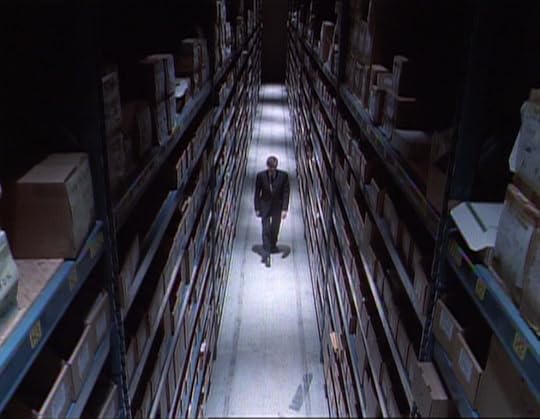
Still, boring as most of this was, I can't help but admire Christopher's dedication to bringing all this together and organizing what must be an entire warehouse worth of notes, letters, scribblings on loose pieces of papers and whatnot, and actually making it largely comprehensible. How I imagine it must have felt like for him:


😂

I have no idea what the final volume in the HoME is going to be about (we're going to back to LOTR to cover the appendices from a glance at the ToC, among other things) but I hope it's more interesting than this to finish this project up.
Profile Image for Katrin.
669 reviews7 followers
December 2, 2011
I'm very torn with giving stars to this book. If I'd rate only the content by J.R.R. Tolkien and the work Christopher has done, his passion and his patience, I would give 5 stars without even thinking about it. But this book was difficult to read. First of all there are many cross-references which can be best understood while having the Silmarillion and the Unfinished Tales next to you. Reading it this way would acquire a hell lot of time and interrupt the reading at every page. I was simply not willing to do that. I believe if you are a real fanatic and know the history of the elves and all their sub-branches plus the first Men by heart AND preferably read the 12-volume series in order of their publishing, you might get much more out of this book and actually understand everything. I love Tolkien, I have read 8 of his books or so, but I'm not one to remember everything easily. I just can't, and that's why this book was tough to get through. I still read everything and am glad I did, but I sadly can only give three stars due to the lack of joy in reading it. It was a great joy to get to know new things, to learn more about Tolkien's world and his thoughts etc., but all around those moments were countless pages with notes, explanations, footnotes etc. that just frustrated me and were tiring to get through.
Profile Image for Matias Cerizola.
571 reviews33 followers
March 20, 2022
La Guerra De Las Joyas.- J.R.R. Tolkien

"Al principio las tierras a ambos lados del Sirion estaban arruinadas y desoladas debido a la Guerra de los Poderes, pero pronto vieron el inicio de un crecimiento, mientras la mayor parte de la Tierra Media dormía en el sueño de Yavanna, porque los Valar del Reino Bendecido las habían pisado; y había bosques jóvenes bajo las estrellas brillantes."

Continuación directa del libro anterior (El Anillo De Morgoth) de esta serie de libros dedicada a la historia de La Tierra Media, La Guerra De Las Joyas nos muestra los escritos finales de J.R.R. Tolkien sobre los últimos siglos de la Primera Edad.

Dividido en cuatro partes, este nuevo libro editado por Christopher Tolkien incluye:

*- Los Anales Grises
*- El Quenta Silmarillion Posterior
*- Los Vagabundeos de Húrin
*- Los Quendi y Los Eldar

La Guerra De Las Joyas, cómo algunos de los libros que componen esta serie, es un libro de difícil lectura, con numerosas aclaraciones y notas al pie, que son absolutamente necesarias, pero que atentan contra la fluidez de la lectura (y de la paciencia del lector). Pero no todo es malo acá, el fanático de la obra del Profesor que se acerque a este 8vo libro de la serie, encontrará muchos detalles sobre los Elfos Grises, concepción de los últimos capítulos del Quenta Silmarillion, andanzas de Húrin no descriptas en el Silmarillion, diferencias entre los lenguajes elficos y un pequeño pero muy interesante texto sobre el origen de los Ents.

Solo para fanáticos y completistas de La Tierra Media. Si usted, amigo lector, no lo es, vaya a su librería amiga, compre El Silmarillion y maravillese con la imaginación del Profesor Tolkien.

🤘🤘🤘
Profile Image for Max.
939 reviews43 followers
February 10, 2019
This is part 11 of a 13-part series with the history of Middle Earth. I really love Tolkien's stories so reading this series was a bit of a necessity for me!

This one had some great stuff, but the first half was a repeat of works I read earlier. The additions and edits are so minor that I did not notice them, so I don't think this was very necessary. There's a piece on Beren and Luthien again, and also a lot about Turin and Nienor.
The Grey Annals are given here in full, and Christopher Tolkien's notes are useful for this one.

Nice stories, a little repetitive, that's why I gave it three stars instead of four. Onto the next part!
Profile Image for Kyriakos Sorokkou.
Author 6 books213 followers
Read
April 17, 2023


χρόνος ανάγνωσης κριτικής: 1 λεπτό

Αυτό το βιβλίο ξεκίνησα να το διαβάζω με το ζόρι και το τέλειωσα με το ζόρι.
Αυτό εξηγείται με το ότι ήθελα ταυτόχρονα να τελειώνω μια ώρα αρχύτερα
με την Ιστορία της Μέσης-γης αλλά
δεν είχα και καθόλου όρεξη να διαβάζω πάλι για το πόσα χειρόγραφα
έφτιαξε ο Τόλκιν για ένα μικρό επεισόδιο του Σιλμαρίλλιον το οποίο
στην τελική δεν θα γινόταν ποτέ μέρος του επίσημου Σιλμαρίλλιον.
Και στο καπάκι να τα αναλύει όλα εις διπλούν ο Τόλκιν ο νεότερος.

Γράφοντας απλά τους τίτλους των κεφαλαίων που διάβασα
θα καταλάβετε τον λόγο που νιώθω γιατί αυτός ο τόμος σε κάποιον
που δε θέλει να τον μελετήσει αλλά απλά να τον διαβάσει του είναι άχρηστος.

1. Το δεύτερο μισό των χειρογράφων του Σιλμαρίλλιον του 1951.

2. Μια επιπλέον αναφορά στα χρονικά του Μπελέριαντ
και την τραγωδία των Παιδιών του Χούριν.

3. "Quendi and Eldar" το οποίο συζητά για την εξέλιξη
των γλωσσών των ξωτικών και την σχέση τους με τις γλώσσες
των νάνων των ανθρώπων και των Ορκς.

Τέλος με ξεγέλασε το μέρος που έλεγε πως θα μιλούσε για την προέλευση
των αετών και των Εντς. Τίποτα δεν είπε.
Δυο σελίδες κεφάλαιο ήταν στις οποίες πάλι αναλώθηκε ο Κρίστοφερ Τόλκιν
να μιλάει για το τι σκόπευε να γράψει ο πατέρας του.
Μείναμε με δυο χείλη καμένα που λέμε και στην Κύπρο.

Δε θα πω άλλα διότι θα αρχίσω κι εγώ να επαναλαμβάνομαι.

Στην κριτική μου για τον επόμενο, τον 12ο και τελευταίο τόμο,
θα πω γιατί πρέπει να προσπεράσετε αυτή τη σειρά και
ποια αλλά βιβλία που ασχολούνται με την Μέση-γη πρέπει να διαβάσετε.
Profile Image for Neil R. Coulter.
1,300 reviews150 followers
July 26, 2014

Reading the History of Middle-Earth series requires skills in determining when to read closely and when to skim. I don't say that to insult the series--and I don't think Christopher Tolkien would disagree--and certainly each reader will have a different opinion on which sections are "read-closely" and which sections are "skim." Of the volumes I've read so far (only one more to go now!), The War of the Jewels was the most taxing to read, having what I considered the highest percentage of skimmable text. The first part, the Grey Annals, is a marathon of flipping between the main text section and the commentary section. By this point in the series, I feel like we've reached a point at which the changes are so small, and the layers of previous versions so dense, that it's a bit difficult to fully recall what it is that's being developed or changed in these new versions. The same was true of the next section, the final chapters of "the Later Quenta Silmarillion"--though that was followed by some fascinating new elements in the story of Hurin. The close of this volume is a section of grammar and phonological description of elvish languages. I have some experience in linguistics, and I recognize Tolkien's achievement in designing such a complex history for the languages, but I'm not interested enough to read straight through this section without a lot of skimming.

Just one volume remains, and then I'll have finished the series. I'm looking forward to the final bits that Christopher presents. In all of the volumes, I really appreciate Christopher's humility. Here is the person in the world who could swagger as much as he likes, since he is the closest to his father of any Tolkien scholar, but he consistently admits his uncertainties and possible missteps. It's a refreshing attitude in any kind of scholarship.

Profile Image for Ulysses.
263 reviews1 follower
October 23, 2018
The books in the History of Middle-Earth series are a crapshoot. The better ones, like Morgoth's Ring (Volume 10), are full of interesting insights into the development of Tolkien's "audience-facing" works (i.e. The Hobbit, LOTR, and The Silmarillion) as well as standalone rarities and outtakes that increase the reader's understanding of the Tolkien legendarium. The worse ones, like Sauron Defeated (Volume 9), are full of dry and virtually indistinguishable variations on themes that have been propounded in superior fashion elsewhere, and/or bizarre ramblings whose significance to the legendarium is minimal. This one falls somewhere in between, but closer to the Worse end of the spectrum: its core (a series of riffs on the development of the latter part of the Silmarillion) is note-heavy but body-light, and anyone interested in this content can now find it in a far more refined form in Christopher Tolkien's subsequently published The Children of Hurin, Beren and Luthien, and The Fall of Gondolin, each of which extends one of the three major themes of the latter Silmarillion to feature length. The book's new content consists mainly of a chapter on the further misadventures of the renowned warrior Hurin after the death of his children at the end of The Children of Hurin, and a lengthy dissection of Elven languages. Although fresh, the Hurin story is simply too mundane to seem worthy of inclusion, and the section on Elven linguistics is so granular as to be of interest only to someone who is actually studying the language. As such, this book has value for Tolkien scholars/historians and fantasy linguists but can be skipped otherwise.
Profile Image for Sam.
3,461 reviews265 followers
January 13, 2016
Once again this is an interesting read that hints at the extent of Middle Earth that Tolkien originally envisioned but sadly didn't finish. There is a far bit of commentary and notes for each one although this time it was more helpful as many of the stories were incomplete and needed some explanation but still would've preferred these a little shorted with longer notes to the back of the book. Despite this though the big imagination of Tolkien's original work still comes through and takes you on a journey through the wars and battles of Middle Earth.
188 reviews
October 11, 2021
this is the second of a two-part history of the development of the Silmarillion materials after the completion of the Lord of the Rings.

PART ONE: The Grey Annals

the primary history for Beleriand from the beginning of the exile of the Noldor, this gives the basis for a good chunk of the published Silmarillion. this is the final form of this entity, or close to it. enjoyable. nothing obviously new, but somehow still not boring, and i found myself trailing through large swaths of the notes & commentary more often with this one than with previous annotated texts in this series.

PART TWO: The Later Quenta Silmarillion

A largely fragmentary changelog. Some interesting bits about dwarves. Some less interesting bits about the coming of the Edain into the West.

PART THREE: The Wanderings of Húrin and other writings not forming part of the Quenta Silmarillion

I The Wanderings of Húrin

The opening salvo in what was to have been a cannon blast of melodrama narrating the travels of Húrin after... earlier... difficulties with Morgoth. As an opening chapter in such a thing, it was probably just right, but it only gets us into & out of Brethil & just past Morwen. Later events in earlier rescensions -- at Nargothrond, at Menegroth and at points further east -- were never written in this mode, which is probably one of the top three tragedies of the history of the Silmarillion.

II Ælfwine and Dírhaval

Some minor short prefatory notes on the fictional literary provenance of the Children of Húrin story. No independent narrative value.

III Maeglin

Extended discussion of discourses and divergences between Tolkien's original draft material (some as late as 1970) and the published version of the Isfin/Ëol/Maeglin story. Of little to no independent narrative value except to the deepest of process nerds.

IV Of the Ents and the Eagles

Two pages of truly trivial changelog between the original drafts and the published Silmarillion Chapter 2 (Of Aulë and Yavanna). Zero independent narrative value.

V The Tale of Years

This is it, folks: the latest written authority on the stories forming the end of the Elder Days. This document is an outline, a master tracking copy of top-tier-major events in the First Age, and as such it follows (although far more tersely) the Annals of Aman and the Grey Annals, insofar as each of those goes, and adds nothing to their more elaborate takes. But the Tale of Years is (tantalizingly and more than a little bit tragically) pretty much the only material written after the Lord of the Rings that describes the event sequence from where the Grey Annals leave off (at the end of the story of Túrin and Níniel) through the end of the First Age. Covered are Ëarendil's story; the tale of the Nauglamír and the fate of Thingol and Melian; the fate of Beren and Lúthien and their descendants; the fate of Turgon and of Gondolin; the second and third Kin-slayings; the travails of peoples displaced by war and the long exodus to the West of elves and the Fathers of Men; the origins and early lives of Elrond Half-Elven and his brother Elros, who made different choices; the acts and fates of the sons of Fëanor and the ultimate disposition of the Silmarils; the final Great Battle of the Valar for Middle-Earth; and the cosmic doom of the Dark Power.

Longer versions of these stories do exist in one form or another, but all were written before LoTR and were never brought up to date, as was planned. Narrative voice, depth of coverage, fundamental relationships between characters (beyond the bare-bones anchors listed in the Tale of Years, and probably some of those as well): all of these were on the table for potential profound change before offering them to the world, but remain forever unfinished.

This was the single saddest part of my entire experience of reading the History of Middle-Earth.

I regret nothing.

PART FOUR: Quendi and Eldar

An extended linguistic treatise. I will not pretend I read this. Surely invaluable for students of Elvish languages. Also contains the only material on the native language of the incarnate Valar.
Profile Image for Taylor Simpson.
65 reviews2 followers
January 7, 2023
Almost there: the eleventh book in the History of Middle-earth series--The War of the Jewels (WJ)--is read.

Before talking about this specific volume, the unfamiliar may appreciate a brief rundown on what the HoMe series consists of. (Those already familiar can skip down to the 'OVERVIEW COMPLETE' line.)

The premise of this series is essentially J.R.R. Tolkien’s son, Christopher, publishing the notes of his father in such a way as to show readers the progression and development of the mythology and tales of his legendarium. He started drafting what would later be known as The Silmarillion far back in the days before he even knew what a hobbit was, and worked on this larger, grander work off and on literally into the last month of his life. As a result, he left behind REAMS of notes and jottings and scribbles and letters and everything in between, spanning decades of thoughts and reconsiderations and re-reconsiderations concerning both the older myths as well as the most prominent and complete work of The Lord of the Rings. As a labor of love, Christopher Tolkien endeavored to sift through, sort, and organize (to the best of his ability) all of this information and attempt to publish it as a kind of literary history of it all (hence the title of the series).

So, the HoMe series is BASICALLY a collection of drafts of stories that we have published more fully and completely elsewhere–namely, The Silmarillion and The Lord of the Rings. I repeat this to emphasize the fact that its target audience is not only incredibly small, but also incredibly singular in their interests. THIS STUFF IS NOT FOR PEOPLE WHO JUST CASUALLY LIKE THE LORD OF THE RINGS (movies or book). Now, that isn’t to ‘gatekeep’ or anything–it’s just an attempt at honesty. Even as someone who LOVES Tolkien’s work and reads The Silmarillion for fun annually, some of the HoMe is quite dry and even boring–admittedly, I skipped a few sections here and there! That’s just how detailed and meticulous the Tolkien offspring was in compiling his father’s notes: it’s even too much for some hardcore fans!

However, HoMe does have an audience and I find myself numbered among them. Over the course of the last several years I have picked my way through this series very slowly, relative to my undying love for Tolkien’s work and the veracity with which I have devoured his more completed stuff. Nonetheless, I’ve set my face towards finishing the series and the end of the tunnel is in sight! (The inevitable, and likely much quicker, re-read is also in sight!)

-----OVERVIEW COMPLETE-------

The eleventh volume, WJ, continues the exploration of Tolkien’s re-visiting of his older Silmarillion work in the mid- and late-fifties after the publication of LotR, and stretching into the sixties as well. With that work completed and out in the wild, Tolkien needed to go back and revise the older tales in order to make them cohere with some of the new developments of the mythology discovered during the production of LotR. It wasn’t going to be a small task, but he desperately wanted the broader mythology published if at all possible. Sadly, he would pass away before he was able to complete this monumental objective, but the notes and essays he left behind that his son collected are absolutely fascinating.

A sizable chunk of WJ deals with exactly this: simply (‘simply’) a documentation of Tolkien’s re-workings of the middle and later tales in the Silmarillion accounts. Like most of the other volumes of HoMe, this section contains a lot of overlapping drafts that kind of spiral up towards what would have been a coherent final product had the author had more time to develop it. This section contains some interesting parts, but is very much like the majority of HoMe in that it’s a lot of repeated material and can at times drag because of this.

The remainder of the volume, a little over half of the book, contains a few sections of drafting and notations on the further development of the Silmarillion material, as well as several essays (in various stages of completion) dealing with an assortment of philosophical and linguistic subjects. One section, called 'The Wanderings of Húrin', zooms in on a part of The Silmarillion that is rather short and scant in detail and expands on it tremendously, revealing so many intricate details of the culture and society of Men at this time in the Histories, well beyond anything else we see in other extant writings. It's actually incredible and I didn't expect to enjoy it as much as I ended up doing.

After this large section, a few smaller chapters give some details about a smattering of minor details of things like Maeglin and the Ents and Eagles. This is followed by the final section titled 'Quendi and Eldar'--another large essay, this time dealing almost exclusively with Elvish language, specifically with the origins and meaning of particular words and elements. In all honesty, while there are some true gems of genius found in these kinds of Tolkien's work, I find myself mainly skimming these parts, stopping only at new section heading or when the format seems to indicate some kind of narrative is being laid out. Otherwise, sections like this (not uncommon over the course of HoMe) are very akin to 'real' language textbooks and reference works--dictionaries and stuff. It's fascinating on the level of 'Wow. This guy made all this up.', but most of the actual reading is pretty dry. That's totally fine with me. Actually, the coolest aspect of this kind of thing is, really, this is what Tolkien's work was all about for him. He wasn't interested in merely making a story for money or to get famous. He loved language; he loved inventing his only languages; he wanted to create a world to give his languages 'authentic' history, so as to make them more realistic and coherent AS languages. That's really the genesis of all his work. And this is showcased in a huge way in sections like the final one in WJ. While I don't (currently) feel like reading every detail about every word and element he was defining and crafting an origin for, I love the idea that I now have access to a huge swath of his original ideas about these things. It exists, and I have access to it. It's very cool, in that sense. (Also, this section ends with a short draft of the story of the first Awakening of the Elves, and it's really interesting.)

In the final analysis, the more I read of the HoMe series, the more I fall in love with it. The early volumes, when I was less familiar with the subject matter and the style of Christopher Tolkien’s documentary approach to it, were more of a slog to get through at times. Of course, there are slower and less interesting parts of the latter volumes, but there are also so many more unique gems of Tolkienian information to be mined from their pages. I won’t go so far as to say these are perfect books, or that every Tolkien fan ‘needs’ to read them, but they are so extraordinary, and I doubt there are many (if any) literary projects quite like them. I’m very much looking forward to the remainder of the series and recommend any hardcore Tolkien fan with a good deal of patience to take a look at these volumes if they have a chance.
Profile Image for Brian Gatsch.
22 reviews5 followers
June 11, 2023
So this obviously isn't a book for the casual reader, but if you've made it to volume 11, you know that already. You can't really rate this in the normal way, so instead I'll just be impressed by the sheer amount of effort that clearly went into reading and editing this pile of documents.
Profile Image for Raul Pegan.
204 reviews7 followers
October 9, 2019
Read this mainly for the Wanderings of Húrin. The story wasn’t that interesting or compelling though necessary for a complete understanding of Tolkien’s legendarium.
Profile Image for Craig Childs.
1,042 reviews16 followers
April 26, 2025
“Few words of Valarin could be fitted to Elvish speech without great change or diminution. For the tongues and voices of the Valar are great and stern, and yet also swift and subtle in movement, making sounds that we find hard to counterfeit; and their words are mostly long and rapid, like the glitter of swords.“

The 10th and 11th volumes of History of Middle Earth (subseries: The Later Silmarillion) curate all the post-Lord of the Rings material from 1949-1969. The War of the Jewels specifically focuses on First Age stories following the return of the Nolder to Middle Earth to retrieve the Silmarils from Morgoth. Much of this content is close to its final form in the published Silmarillion, and Christopher Tolkien explains how he went about selecting material for that book.

1. The Gray Annals

This is a revision of the earlier Annals of Beleriand. The Gray Annals is the sister piece to the Annals of Aman. It reflects the historical records of the Sindar (Gray Elves) who never went to Valar. It frequently alludes to both the Quenta Silmarillion and the Quenta Noldorinwa for the Noldor perspective of events.

Christopher Tolkien supplies extensive commentary about how this version of the Túrin Turambar legend relates to material previously included in Unfinished Tales.

2. The Later Quenta Silmarillion

Tolkien revised the 1937 text to bring Elvish names and the maps of Beleriand into alignment with statements made in Lord of the Rings. He also further developed Dwarvish history and physiology, as well as the histories of the three great houses of Men known as the Edain (Elf-Friends).

3. "The Wanderings of Húrin" and Other Writings

"The Wanderings of Húrin" is an extended treatment of Húrin's travels in Hithlum beyond the few sentences in Silmarillion where he buries his wife Morwen. The story starts slowly but picks up when he is put on trial for attacking Hardang, the Chieftain of Brethil.

Christopher Tolkien talks about his gut-wrenching decision to leave this material out of Silmarillion and the feeling that he gave his father's vision short thrift. To my mind, this material does not fit the tone or perspective of Silmarillion, but it should have been slotted into Unfinished Tales.

4. Quendi and Eldar

A long essay on the phonology of words that refer to Elves and Elvish names. The roots of these words are given in eight languages (PQ-Primitive Quendian, CE-Common Eldarin, CT-Common Telerin, Q-Quenya, T-Telerin, Ñ-Ñoldorin, S-Sindarin, and V-Valarin). Also included are appendices exploring the names Elves gave to the other Incarnates: Men, Dwarves, and Orcs.

This essay, although lengthy, is peppered with fascinating tidbits: Valarin contains many-syllabled words with complex sounds that lesser beings cannot reproduce. Elves once hunted Petty-dwarves for sport, believing them to be animals rather than Incarnates. Two out of every five elves chose not to march to Valar; these Dark-Elves (Avari) and their descendants are hostile, even treacherous, in their dealings with the Sindar and Ñoldor because they consider them deserters of their kin.

My evolving thoughts on the published Silmarillion:

As late as 1971, J.R.R. Tolkien was still making infrequent handwritten edits and tweaks to his typescripts and maps, but all forward momentum on the narratives themselves essentially stopped after 1969.

In rewriting his First Age legends post-LotR, the farthest he got chronologically was Hurin's Northern travels after the deaths of his wife and children. None of the legends that occur later—Mîm’s Curse, the Fall of Gondolin, the attack on the Havens, Eärendil the Mariner--were revised after the 1930's.

Christopher Tolkien came to regret, on some level, his decision to assemble a complete, integrated version of Silmarillion. He felt he had to condense some chapters too much, such as the story of Maeglin. He had to jettison whole concepts that could not be brought into alignment with earlier texts. He regretted overstepping his editorial role on “The Ruin of Doriath”, when he cherry picked elements out of three different versions of the story, none wholly satisfactory, and rewrote it in an altered form that preserved his father’s presumed intent.

I think Christopher felt that he should have just presented the legendarium as a set of interlinked but fundamentally discrete texts with no expectation of enforced consistency or perspective. This is, after all, how modern readers approach the entire canon of Greek, Roman, and Norse mythology.

I disagree. I think he did as good a job as possible curating his father's legendarium for a world audience. Tolkien's vision is better served by its existence than by the informative but overly technical 12-volume HoME. I would argue Silmarillion is the second greatest work of English fantasy, just behind Le Morte D'Arthur.

I believe the most rewarding approach is to treat Hobbit, LotR, and Silmarillion as canon; Unfinished Tales and HoME should be enjoyed as secondary, non-canonical works.

3 stars
Profile Image for Milo.
270 reviews7 followers
November 2, 2024
I take some issue with the dividing of these volumes, insofar as Christopher had access to a volumeful of annalistic and draft material, and a volumeful of essays and stories. The decision was made to cut these both in half, when perhaps wiser – to the general reader – would have been to render each category a volume of its own. It seems evident to me that the interest of the essays and stories, and the interest in the textual history of the annals need not, necessarily, overlap. Though perhaps it is a question of meat and potatoes. You can’t have one volume all carbs: one must stock the stodgy with the hearty. In any case, though somewhat less illuminating than Morgoth’s Ring, The War of the Jewels is not without its particular insight. ‘The Wanderings of Húrin’ is the jewel in its crown, a partial-narrative that seems (in its nature) to describe the way in which the Great Tales might have reformed themselves in a Late-Silmarillion. A reforging of those pivotal events at the end of the First Age into a series of expanded narratives, the each leading into the other (particularly including the unfinished Gondolin rewrite), so as to express – in consequential terms – the exact nature of apocalypse. It becomes a narrative development of specific nature, insofar as the tales become more ‘Mannish’ (definitively: the tales of Beren, Túrin, and Tuor – then Eärendil) and therefore more intimate. Those early chapters with gods and creation are conveyed wholly in the abstract; the sweep of the Elves is then one of mythic history; whereas when the tales descend to the common man they may once again take a close, psychological character, therefore inviting the reader into a certain intimacy that is (intentionally) withheld in the early courses. This unfortunate brood is our own patrimony; and through them we will arrive (via whatever legendary-historical sketches exist of the Second Age) among the likes of The Hobbit and The Lord of the Rings, each of which entirely familiar, so far as the perspective is considered. As with much in late-Tolkien, this ambition was unfinished; unlike much in late-Tolkien, perhaps it was not unfinishable by nature. Certainly, Christopher has provided some vision of what The Children of Húrin might have appeared as in this new form, if compromised. But the Wanderings of his father can only token the shadow on the wall: for as much as we have, there is ever more we have not. But there is some fragrance in Christopher’s choice of ending: a late retelling of the Elves awaking at Cuiviénen. A return, fullwise, to the very beginning of the mythos, retold in the form of a children’s story. An abstraction that seems to double its historical reality; an event so ingrained as to have a fairy-tale overlapping the actual. Even in form, it is circular: it is once again the proof of a philological experiment (an origin for the numbers, or a tool by which they might be taught) resulting in starlit narrative.
Profile Image for Richard.
599 reviews6 followers
May 10, 2022
This eleventh volume of The History of Middle-earth documents pretty much the final stages of Tolkien's post-Lord of the Rings work on the texts that would eventually be edited and published as The Silmarillion after his death. Characteristically, this work is unfinished—any readers who have made it this far into the History will probably have reconciled themselves long ago to the fact that there is no final, definitive form of the mythology, but a vast series of variations: a corpus rather than a text. Perhaps it is better so: richer but also more frustrating. The War of the Jewels leans more heavily towards the latter than most of the other volumes in the series. Much of the content here is painstaking scholarhip but painful reading either because it re-covers ground gone over many times before in the earlier drafts ("The Grey Annals" and "The Later Quenta Silmarillion") or because it is hopelessly bound up in details: the section on Maeglin is as dull as the History gets outside of the purely linguistic sections such as the notes on Adûnaic in Volume Nine and the essay on "Quendi and Eldar" here.

However, there are some gems here for the Tolkien devotee, although they are closer to mini-Arkenstones than the Silmarils to be found in Morgoth's Ring! Skimming through "Quendi and Eldar" reveals some interesting information about the Dwarves and the Valar, and the "surviving Elvish 'fairytale' or child's tale, mingled with counting-lore" that describes the first awakening of the Elves at Cuiviénen is an intriguing fragment. More substantial is the story of the wanderings of Húrin after the death of his children, which I don't think I've seen before, and which does more socio-political worldbuilding than elsewhere in Tolkien's work. Most tantalizing of all is Christopher Tolkien's explanation of his (and Guy Gavriel Kay's) attempts to make something publishable out of the contradictory fragments dealing with accounts of the Ruin of Doriath. Had J.R.R. Tolkien done more work on this, it might have made a fourth "Great Tale", with a fifth dealing with the War of Wrath and the end of the First Age. But it was not to be.

On then, to the final volume! The flame of my childhood love of Tolkien, kindled by The Hobbit, was fanned by the appendices to The Lord of the Rings, so I am looking forward to seeing how they came to be.
29 reviews1 follower
April 20, 2024
The War of the Jewels concludes the collection of Tolkien’s work on what would become The Silmarillion. As this book concerns the later stages of Tolkien’s work — some of the passages sourced from as late as 1970, three years before his death — much of it is similar to what was published. We learn, interestingly, that the Silmarillion drew heavily on what Tolkien wrote as “The Grey Annals”, an account of history from the perspective of the grey elves, the Sindar, the people of Doriath. It’s interesting how this centers their perspective in the narrative, and the primacy of Thingol and Melian. I particularly enjoyed a longer recounting of Galadriel’s guarded thoughts on the First Kinslaying, a guilt that informs her behavior in The Lord of the Rings. These passages are the first mention of Galadriel in Middle Earth in the Eldar days.

The most interesting part of this book by far is “The Wanderings of Húrin”. While I understand why Christopher Tolkien excised it from the Silmarillion (it is necessarily incomplete), it is a gem of a story which feels essential to the tragedy of Húrin. A shadow follows him as he wanders from the gates of Angband to the outskirts of Gondolin to the realm of Brethil, bringing tragedy in his wake; the evils that the freedom of Húrin achieved. This section is surprisingly dialogue-rich for a First Age tale, and is richer for it. The dialogue is clever and even funny at times, although it’s as dark as anything in the legendarium. Having read it, Children of Húrin feels incomplete without it!

The War of the Jewels also gives a more complete account of the challenging texts surrounding the Fall of Doriath. Christopher Tolkien believed that altering the story was necessary to make it publishable, but here reflects “I think now that this was a mistaken view, and that the undoubted difficulties could have been, and should have been, surmounted without so far overstepping the bounds of the editorial function.”

These books are treasures, and it’s always wonderful to get a better view not only of the narrative and lore, but the philosophy and thinking behind the texts.

“Yet verily of bliss and glad life there is little to be said, ere in endeth; as works fair and wonderful, while still they endure for eyes to see, are their own record, and only when they are in peril or broken for ever do they pass into song.”
Profile Image for Nonethousand Oberrhein.
733 reviews32 followers
October 6, 2020
Understanding Silmarillion
The revisions following the Lord of the Rings publications take us back again in the study of Beleriand annals and linguistic evolutions. A new layer of polish on a legendarium that while it gets more and more defined in its focal points, it is constantly at risk of a massive rewriting by its dissatisfied author. An interesting read (a certainty now!) that will deliver some surprises as well as some confidences about Christopher’s Silmarillion editing.

Here below my reviews to the previous volumes of the History of Middle-earth:
Vol.1: Sit down and listen
Vol.2: Heroics of a young author
Vol.3: The poet of Middle-earth
Vol.4: Sketches and Annals of the First Age
Vol.5: A glimpse of Númenor
Vol.6: When Trotter led the way
Vol.7: From Rivendell to Rohan
Vol.8: How the King returns
Vol.9: The eagles will always come at the end
Vol.10: Life, Death and Arda in-between
Profile Image for Jackson Compton.
79 reviews
January 20, 2024
Read The Wanderings of Húrin if nothing else in this book.

I’ve now read quite a few of the History of Middle Earth series (9 I believe) and not in correct order for the most part. What I’ve found is that I’m usually digging for some entirely new material. I enjoy finding the little stories that Tolkien started and never finished. However, entirely new material only makes up a portion of this series. Most of it is older versions of the same stories that are told in the final published works.

In this specific book, The Grey Annals and The Later Quenta Silmarillion made up a large part which was mostly Tolkien’s continued revising of what is in the published Silmarillion. Christopher Tolkien also airs his regrets on editing choices he made in the published Silmarillion which is usually interesting.

The Wanderings of Húrin was an absolute highlight as I mentioned. For readers that loved The Children of Húrin, this is a perfect follow-up. It’s a short and insightful story about what Húrin was up to after his release. Once again, Tolkien had a big vision here but never finished this story.

The Quendi and Eldar section at the end was much too deep into languages and I had to basically skip since it’s better read as reference material. However, I did find one small treasure: a short story about the awakening of the elves. It contained details entirely new to me and was unique in that it is supposed to be a surviving Elvish “fairytale” or child’s tale.

Overall, there were definitely highlights but not as much of interest to me if comparing this to Morgoth’s Ring, the book prior to this one in the series that in my opinion is one of the best.
Profile Image for Royce.
152 reviews
April 1, 2023
All right; I was feeling a little guilty about rating every book five stars. If any one of them is to get four, it is this one, in my opinion. --Not for any lapse in brilliance in either JRR or Christopher Tolkien, but simply because this volume contains what seems to be a lot of literary housekeeping. The earlier volumes contain the first germs of the stories, and the middle volumes some of the large changes in the accounts of the Eldar years. But this penultimate volume mainly deals with changes JRR made to the stories in view of the (now complete) Lord of the Rings. The theological debates, origins of the races, and the soul etc.. were in the last volume (10), so this volume just details the final changes to the First Age histories. For example, JRR decided to bring humans into Beleriand about 90 years earlier, so there is the documentation about how the extra generations were slipped in.
"The Quendi and Eldar" is a fascinating resource for those studying the languages. But even though it is a fascinating and fictional dictionary, it is largely ... a dictionary. But still a high point for lovers of the Legendarium, along with a short tale (perhaps not even true in-world) about the awakening of the elves and their first divisions into what would later become Vanyar, Noldor, and Teleri/Sindar.
Profile Image for Ana Campbell.
113 reviews12 followers
July 3, 2022
If you are not a fan of Tolkien or haven't read or didn't like "The Silmarillion": Do not read this book, it's going to bore you or it just won't make sense.

This book is a compilation of "Post- Lord of the Rings" writings that specially concern "The Silmarillion".
The first part of the book is basically later versions of tales mainly concerning the Turin saga.
The latter part of the book is a very interesting essay that concerns the languages of the elves. If you are not into linguistics this essay is going to be a bit tedious, but it's still worth reading if you want to know more about elvish languages.

If you feel that the commentary is just too much analysis for you, skip it! And only read the drafts that come in the book, you'll get the essential idea that C. Tolkien wanted to get across.
If you don't feel like reading the drafts, but still want to know how they evolved, read the commentary! In some parts it'll be a bit confusing, but overall you'll get to know how they essentially evolved.
Profile Image for Edin Najetovic.
112 reviews
August 11, 2025
The scholarship is still excellent and 5 stars... but! Where previous volumes were always about building where one gets the idea of a brilliant mind honing away at a diamond that only he can see but never quite cut out of the stone, this volume shows the final unravelling of Tolkien's lifework. The keys were already there, but it's become unavoidable here. Everything feels unfinished, often hard to rhyme with what came before.

I supremely respect CTolkien for distilling a workable Silmarillion, even though he seems to loathe his own editorial choices in the process of getting there. The professor himself has moved away from that which was his passion (mythology, poetry and stories) and moves into the details of metaphysics, consistency and physics - making the world more and more ephemeral and far away. I genuinely felt sad reading this sometimes.

High points:
Quendi and Eldar is a staple in Tolkienian Linguistics
Late wanderings of Hurin are a treat.
Profile Image for Thijs.
387 reviews5 followers
February 25, 2020
Another splendid part in the Complete History of Middle Earth.

Parts that stood out most were for me:
- The major upheaval of the genealogy of the Three Houses of the Edain, and the massive amount of new background that comes with it.
- The wanderings of Hurin, especially in Brethil. Oh the awefulness of Tolkien never having having reworked the Nauglamir and further! The Silmarillion will never read the same for me, alas.
- A part on linguistics that is really more an analysis of the early days of the Eldar, as such things are intrinsically linked in Tolkiens worldbuilding. Don't skip this part even if you're not into Linguistics!

This is but a small and comprised sampling of the superb edition in which Christopher overdid himself once more.
Now, Once More Unto The Breach and so on to the last part of the CHoMA.
Profile Image for Stephen Poltz.
850 reviews4 followers
November 27, 2020
This is the eleventh volume in the History of Middle Earth series by Christopher Tolkien. This one focuses on the development of the later Silmarillion works after the publication of The Lord of the Rings. This was a companion piece to volume 10, Morgoth’s Ring. Together, they cover most of the works of Tolkien’s legendarium. It is not quite as tough a read as Morgoth’s Ring, but it’s still only for the die-hard fan looking for intensive detail into the development of the stories. The only part that I had trouble with was the final chapter, which was a detailed description of roots and stems of the different Elvish languages.

Come visit my blog for the full review…
https://itstartedwiththehugos.blogspo...
Profile Image for Melissa.
1,085 reviews78 followers
December 18, 2020
I’m going to give this one a qualified pick, there were some parts that were new and I loved them...the waking up of the first elves, the origin of Ents, some new Dwarven history, including their language, a whole new side story to Húrin, but there were also parts that seemed a bit repetitive (I think because I read the later books like the Children of Húrin first), and I still found myself skimming through some of the language breakdown. I’ll also note that as much as I love the way he pieces these together and talks about the choices he made with the Silmarillion and things he’d do different now that he found more info... some of the notes with what seems to me like minor word order changes seemed a bit excessive in some parts of this one.
Profile Image for Emily.
215 reviews6 followers
December 29, 2023
I started reading Christopher Tolkien's "The History of Middle-earth" books with the 4-volume set dealing with The Lord of the Rings (vols. 6, 7, 8 and a severely foreshortened 9), and then this one, vol. 11, to read along with the Mythgard Academy study with the Tolkien Professor. So I have not gone about this in any systematic way. It has also been decades since I read The Silmarillion, so a lot of what these books discuss was a little bit over my head.

Even so, it is fascinating to watch the world-building and development of Middle-earth and the stories JRRT created to go along with his created languages, and I have learned a lot, even if I don't remember that much about the published stories.
Profile Image for Ben.
118 reviews15 followers
September 29, 2021
In the penultimate volume of the History of Middle Earth series, Christopher Tolkien presents his father's final writings that made up what would later come to be the Silmarillion. Hardcore fans will appreciate the end of a journey begun in the Book of Lost Tales, as the legendarium as we know it reaches its final stages prior to publication. Of greatest interest are the various versions of Tolkien's attempts to bring the story of Eol and Maeglin into a Quenta Silmarillion mode, the story of the literal first days of the elves upon their Awakening beside Cuivienen, and the extensive essay about various elvish word-roots and their derivation.
Profile Image for Rossrn Nunamaker.
212 reviews6 followers
August 10, 2019
The War of the Jewels, as noted in the Foreward, is a companion to Morgoth's Ring, the two together address per Christopher Tolkien, "The War of the Jewels, is an expression that my father often used of the last six centuries of the First Age: the history of Beleriand after the return of Morgoth to Middle-earth and the coming of the Noldor, until its end."

While there is much good in these pages, as a fan of Turin, I particularly enjoyed The Wanderings of Hurin.
Displaying 1 - 30 of 61 reviews

Can't find what you're looking for?

Get help and learn more about the design.