

What do you think?

Akiane: Her Life, Her Art, Her Poetry
Experience the wonder of child prodigy Akiane Kramarik’s divinely inspired artwork firsthand.
Akiane’s nonreligious parents were bewildered when their four-year-old daughter started sharing her dreams of angels, heaven, and Jesus. Her spiritual insight quickly expressed itself through impressive sketches, drawings with oil crayons, paintings, and eventually poetry, and her artwork began a conversation that brought her whole family to Christianity and to the attention of national media. Her Life, Her Art, Her Poetry shares the young artist’s story in rich detail, including
her mother’s firsthand account of Akiane’s emerging faith and artistic talent;a collection of full-color paintings created by Akiane from ages 4 to 10, along with the amazing stories that surround each piece of art; andselected poems of profound beauty and insight, authored by Akiane in her childhood.This book will encourage any who believe in the spiritual nature of art and reinvigorate the faith of those who call Jesus their savior.
Akiane’s nonreligious parents were bewildered when their four-year-old daughter started sharing her dreams of angels, heaven, and Jesus. Her spiritual insight quickly expressed itself through impressive sketches, drawings with oil crayons, paintings, and eventually poetry, and her artwork began a conversation that brought her whole family to Christianity and to the attention of national media. Her Life, Her Art, Her Poetry shares the young artist’s story in rich detail, including
her mother’s firsthand account of Akiane’s emerging faith and artistic talent;a collection of full-color paintings created by Akiane from ages 4 to 10, along with the amazing stories that surround each piece of art; andselected poems of profound beauty and insight, authored by Akiane in her childhood.This book will encourage any who believe in the spiritual nature of art and reinvigorate the faith of those who call Jesus their savior.
122 pages, Kindle Edition
First published March 7, 2006
Ratings & Reviews
Friends & Following
Create a free account to discover what your friends think of this book!
Community Reviews
Displaying 1 - 30 of 118 reviews
February 10, 2017
Personal Response:
I personally loved this book. It was such an inspiring story to build my faith. It showed some of the amazing works of God and what he can do in ordinary people's lives. Their life changes so drastically in such small periods of time; but during this time the family of Akiane drastically changed their beliefs and their overall way of life. I loved reading this amazing story about a prodigy that didn't necessarily want to be one.
Plot Summary:
This story was made to inspire others through the amazing life of Akiane. She is an artist that is self taught, or in other words "is taught by God." She is truly an amazing little girl that is drawn to God at a very young age. She tells her parents that she has seen images and has had dreams of God. He is teaching her art in these dreams so she can paint and write what she sees when she is with Him to spread the word of heaven and the world that He has made. Akiane's family were not religious whatsoever so they were very confused when Akiane had said that she has witnessed God and was in his presence. They were confused because they had never mentioned any type of religion to her and Akiane was homeschooled so she wouldn't have ever heard about this from any of her teachers or peers. However, Akiane did not stop when her parents had confronted her about her dreams. She specifically was told that she had a mission to fulfill in her lifetime and she was determined to achieve this goal. Akiane started drawing and painting when she was just 4 years old and it was rough at first during the learning process but by age 5 she was drawing and painting almost as good as a professional. She drew and painted images of her surroundings, people and their perspectives, and even herself through self-portraits. She had also started to write very sophisticated poems in languages such as Lithuanian, English, and sometimes Russian; knowing nothing about what they meant or about how to translate them. It was like God was directly speaking through her during these times of intense writing and painting. Akiane's family had struggled through this time of making ends meet so they had to move across the country multiple times to get new jobs. However, this did not affect Akiane's paintings and writing. Wherever they went in the country, she would always seem to find more and more inspiration for new ideas of what to paint or what to write about. She was sponsored by many people and has attended many art museums where they have shown multiple works. She attended art conferences and conventions where elderly, adults, and even children would come and see Akiane. She will be known as one of the most incredible child prodigies of all time.
Characterization:
There are two main characters in this story. These are Akiane and her mother.
Akiane is a little girl who has dreams of God and painting. In her dreams God is teaching her how to paint and how to draw. At this time her parents did not agree nor believed what Akiane was telling them because they are an atheist family. This however, did not affect Akiane and her paintings. At the age of 4 years old, she began to draw and paint spectacular things. Some of these images were clearly portraits of people and others were beautiful areas. As she grew older she became more and more talented in art. She drew two portraits of God himself that was very detailed, while only being in elementary school! She is known to be one of the greatest child prodigies.
Akiane's mother was very supportive of Akiane and would do whatever she needed in order for Akiane to be successful. This caused multiple problems with finances in their home due to costs on painting supplies and homeschooling for Akiane. Akiane's mother had devoted most of her life to the successes of Akiane's writing, painting, and drawing. She helped find managers and companies that wanted to sponsor Akiane. She is truly an incredible woman.
Recommendation:
I recommend this story to not just people that are religious, but to everyone that would like to be inspired. Akiane's journey was not always easy but she kept fighting through each and every hardship that had come her way. This is truly inspiring, especially hearing such maturity come from such a young child. I gave this story five out of five stars due to how interesting the story of her life is and just the amount of belief that she had carried with her throughout her life, even if someone had told her differently. I highly recommend this story.
I personally loved this book. It was such an inspiring story to build my faith. It showed some of the amazing works of God and what he can do in ordinary people's lives. Their life changes so drastically in such small periods of time; but during this time the family of Akiane drastically changed their beliefs and their overall way of life. I loved reading this amazing story about a prodigy that didn't necessarily want to be one.
Plot Summary:
This story was made to inspire others through the amazing life of Akiane. She is an artist that is self taught, or in other words "is taught by God." She is truly an amazing little girl that is drawn to God at a very young age. She tells her parents that she has seen images and has had dreams of God. He is teaching her art in these dreams so she can paint and write what she sees when she is with Him to spread the word of heaven and the world that He has made. Akiane's family were not religious whatsoever so they were very confused when Akiane had said that she has witnessed God and was in his presence. They were confused because they had never mentioned any type of religion to her and Akiane was homeschooled so she wouldn't have ever heard about this from any of her teachers or peers. However, Akiane did not stop when her parents had confronted her about her dreams. She specifically was told that she had a mission to fulfill in her lifetime and she was determined to achieve this goal. Akiane started drawing and painting when she was just 4 years old and it was rough at first during the learning process but by age 5 she was drawing and painting almost as good as a professional. She drew and painted images of her surroundings, people and their perspectives, and even herself through self-portraits. She had also started to write very sophisticated poems in languages such as Lithuanian, English, and sometimes Russian; knowing nothing about what they meant or about how to translate them. It was like God was directly speaking through her during these times of intense writing and painting. Akiane's family had struggled through this time of making ends meet so they had to move across the country multiple times to get new jobs. However, this did not affect Akiane's paintings and writing. Wherever they went in the country, she would always seem to find more and more inspiration for new ideas of what to paint or what to write about. She was sponsored by many people and has attended many art museums where they have shown multiple works. She attended art conferences and conventions where elderly, adults, and even children would come and see Akiane. She will be known as one of the most incredible child prodigies of all time.
Characterization:
There are two main characters in this story. These are Akiane and her mother.
Akiane is a little girl who has dreams of God and painting. In her dreams God is teaching her how to paint and how to draw. At this time her parents did not agree nor believed what Akiane was telling them because they are an atheist family. This however, did not affect Akiane and her paintings. At the age of 4 years old, she began to draw and paint spectacular things. Some of these images were clearly portraits of people and others were beautiful areas. As she grew older she became more and more talented in art. She drew two portraits of God himself that was very detailed, while only being in elementary school! She is known to be one of the greatest child prodigies.
Akiane's mother was very supportive of Akiane and would do whatever she needed in order for Akiane to be successful. This caused multiple problems with finances in their home due to costs on painting supplies and homeschooling for Akiane. Akiane's mother had devoted most of her life to the successes of Akiane's writing, painting, and drawing. She helped find managers and companies that wanted to sponsor Akiane. She is truly an incredible woman.
Recommendation:
I recommend this story to not just people that are religious, but to everyone that would like to be inspired. Akiane's journey was not always easy but she kept fighting through each and every hardship that had come her way. This is truly inspiring, especially hearing such maturity come from such a young child. I gave this story five out of five stars due to how interesting the story of her life is and just the amount of belief that she had carried with her throughout her life, even if someone had told her differently. I highly recommend this story.

May 31, 2013
This book is purported to be by Akiane Kramarik; it's written by her mother Foreli. After reading it I still don't know Akiane, but I feel that I do know Foreli. And what she revealed of herself was not very attractive. Someone in that family is--or tries to be--a master of self-promotion.
I like Akiane's paintings. They have a boldness and simplicity which more polished art often lacks.
Her poetry is completely opaque to me.
Not a good read, but perhaps good to look at.
I like Akiane's paintings. They have a boldness and simplicity which more polished art often lacks.
Her poetry is completely opaque to me.
Not a good read, but perhaps good to look at.

April 26, 2011
This book was another touching story about a child who's had experiences with the Lord and Heaven. A great selection to read following the book "Heaven is for Real."

May 7, 2026
A few nights ago, on May 3, 2026, I was having a very hard day. I watched an interview with Akiane, who is an artist, and it was like an answer to my prayers. She tells the story of her visions and how, at a very young age, she started having visions of Allah and the other world, and by her 8th birthday has drawn a painting far beyond the capabilities of a child, showcasing a man she titled "prince of peace". I was shocked because I had seen him too, a little bit different, with more red copper hair, but I knew him; it was Prophet Issa Jesus. And since I was a kid, I had visions too. So from one dreamer to another, I believe her. Akiane is the ocean, and Dana is a pearl. I think sea girls are connected.
I loved her spirituality and was curious to read her mother's book. It's a remarkable book, but I think it would have been more accurate if Akine had written it. However, as it consists of pages from her mother's journal, it seems historical and very honest.
I find her painting faithfulness and the vision so close to my face as a kid. And the prince of peace like my husband. It might be because we both are from the holy household of Ibrahim.
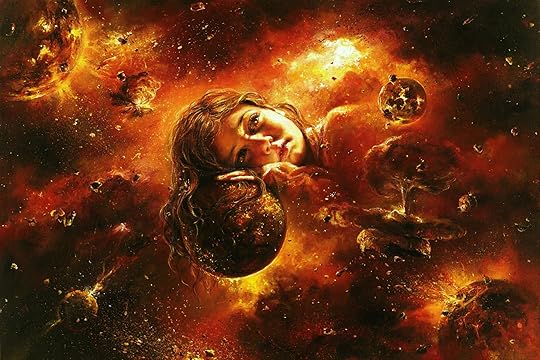
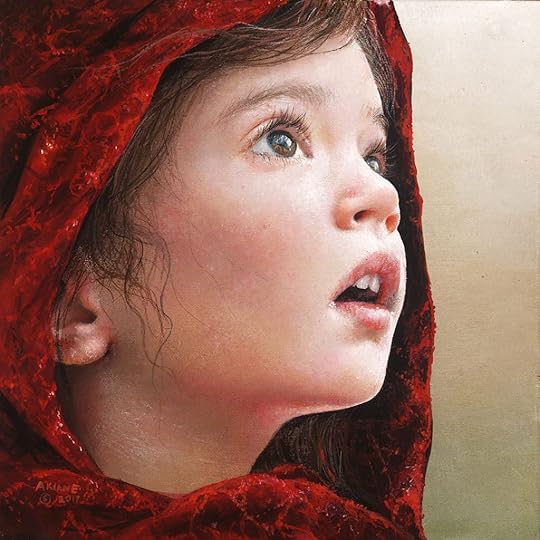
When I was a child, I too was wearing a red coat on a rainy day in the forest when something miraculous happened to me.

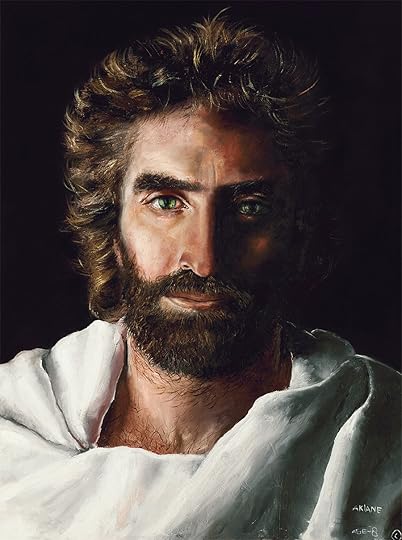
I loved her spirituality and was curious to read her mother's book. It's a remarkable book, but I think it would have been more accurate if Akine had written it. However, as it consists of pages from her mother's journal, it seems historical and very honest.
I find her painting faithfulness and the vision so close to my face as a kid. And the prince of peace like my husband. It might be because we both are from the holy household of Ibrahim.
When I was a child, I too was wearing a red coat on a rainy day in the forest when something miraculous happened to me.

April 1, 2020
This book made me google "is Akiane for real". Fascinating.

January 8, 2010
Akiane and Foreli Kramarik, Akiane: Her Life, Her Art, Her Poetry (Thomas Nelson, 2006)
In the first section of the book, Foreli Kramarik claims that Akiane “is regarded as the youngest binary prodigy in both realistic art and poetry in recorded history.” While you're mulling on that, let me tell you about a convenience store near me. It changed management and name a couple of years ago, and right afterwards they rented a billboard about half a mile away and claimed on it that they are “rated the #1 store.” Now, I'm not sure if anyone else sees something like that and does this, but when I first saw it, I said, “by who? and where?” That billboard is still there, and I still don't have the answers. Similarly, I want to know who's calling Akiane Kramarik a “prodigy” in poetry so I can laugh at him/her/them.
The piece they chose to use on the flap is representative, at least:
“I can not stop holding my brush
On the blank canvas I sign
With blindfolded balance I paint my own eyes
Blue is the color of the mind
Do God's footprints follow his footsteps
Nobody hears what I see
We cannot trespass our creator
My sight can not wait for me”
(“My Sight Cannot Wait for Me”)
I ended up going back and taking out the [sic:]s because I'd dropped so many of them in there. I mean, come on, even Helen Steiner Rice would have burned that, and she was the worst poet in history. (And what's up with “cannot” being correct in the title and wrong twice in the piece itself? Very confusing.) I'd planned on adding a sample from another poem, but there's just too much here, and all of it is this awful. Akiane is not a worse poet than Mattie Stepanek, but she's right in that area.
Having blasted the first and last sections of the book, I figure I should address the middle. There's no denying that Kramarik is a talented visual artist, one whose technique is far, far beyond her years. The paintings themselves are impressive (and the single star in the rating is attributed solely to them). But, no, I couldn't get through a section of this book without something bugging me, and that's the interpretations under the majority of the paintings. I may be assuming here, and if so I apologize, but in reading those interpretations I get the feeling that Kramarik is one of those artists whose vision leaves no room for the validity of any interpretation of a piece that would conflict with hers. That's one of my pet peeves with artists working in any medium. It annoys me even with artists of whose work I am perhaps overly fond (there's one novelist I love in particular who spouts off on this topic on a regular basis. It drives me up the wall). She's very specific about what everything in a particular painting means, and it makes me wonder what would happen if someone were to mount a different (but still valid) interpretation of one of her paintings.
The middle third of the book: interesting, if you ignore the text. The rest of it: awful. *
In the first section of the book, Foreli Kramarik claims that Akiane “is regarded as the youngest binary prodigy in both realistic art and poetry in recorded history.” While you're mulling on that, let me tell you about a convenience store near me. It changed management and name a couple of years ago, and right afterwards they rented a billboard about half a mile away and claimed on it that they are “rated the #1 store.” Now, I'm not sure if anyone else sees something like that and does this, but when I first saw it, I said, “by who? and where?” That billboard is still there, and I still don't have the answers. Similarly, I want to know who's calling Akiane Kramarik a “prodigy” in poetry so I can laugh at him/her/them.
The piece they chose to use on the flap is representative, at least:
“I can not stop holding my brush
On the blank canvas I sign
With blindfolded balance I paint my own eyes
Blue is the color of the mind
Do God's footprints follow his footsteps
Nobody hears what I see
We cannot trespass our creator
My sight can not wait for me”
(“My Sight Cannot Wait for Me”)
I ended up going back and taking out the [sic:]s because I'd dropped so many of them in there. I mean, come on, even Helen Steiner Rice would have burned that, and she was the worst poet in history. (And what's up with “cannot” being correct in the title and wrong twice in the piece itself? Very confusing.) I'd planned on adding a sample from another poem, but there's just too much here, and all of it is this awful. Akiane is not a worse poet than Mattie Stepanek, but she's right in that area.
Having blasted the first and last sections of the book, I figure I should address the middle. There's no denying that Kramarik is a talented visual artist, one whose technique is far, far beyond her years. The paintings themselves are impressive (and the single star in the rating is attributed solely to them). But, no, I couldn't get through a section of this book without something bugging me, and that's the interpretations under the majority of the paintings. I may be assuming here, and if so I apologize, but in reading those interpretations I get the feeling that Kramarik is one of those artists whose vision leaves no room for the validity of any interpretation of a piece that would conflict with hers. That's one of my pet peeves with artists working in any medium. It annoys me even with artists of whose work I am perhaps overly fond (there's one novelist I love in particular who spouts off on this topic on a regular basis. It drives me up the wall). She's very specific about what everything in a particular painting means, and it makes me wonder what would happen if someone were to mount a different (but still valid) interpretation of one of her paintings.
The middle third of the book: interesting, if you ignore the text. The rest of it: awful. *

September 2, 2012
I haven't read it properly yet, just looked at the pictures. But wow!! Just looking at the pictures is such an inspiration. I've read some reviews that say they don't believe that Akaine really painted the paintings herself, but, being a Catholic, I believe that she really was taught by God and that she did paint those paintings herself. Even if your not a Christian, I encourage you to read this book :)

February 25, 2022
Truly amazing, inspiring and beautiful! Akiane Kramarik was a young child prodigy and gifted by God. Her story and art is so wonderful. I love it. Her poems are hard for me to understand. I love this book. ♡

October 29, 2020
So beautiful! Love her art and story! What an amazing young woman.
March 15, 2019
My favourite artist is not a piano player but rather a painter of realism paintings. I'm referring to Akiane Kramarik.
I enjoy playing to a painting, trying to discover what story the painting tells but painting in another way - the way that I know how - with contemporary piano tones. I would never dare call myself a painter but I do consider myself a piano artist.
Some days I simply put up this book on my piano stand and play whatever feels right for the painting. Finding the right artist that inspired me took some time but when I came across Akiane's artwork, I knew my search was over. I'd found my visual artist. Furthermore her focus on Christ-centred artwork resonated with my own Christian beliefs. Keep painting Akiane!
I enjoy playing to a painting, trying to discover what story the painting tells but painting in another way - the way that I know how - with contemporary piano tones. I would never dare call myself a painter but I do consider myself a piano artist.
Some days I simply put up this book on my piano stand and play whatever feels right for the painting. Finding the right artist that inspired me took some time but when I came across Akiane's artwork, I knew my search was over. I'd found my visual artist. Furthermore her focus on Christ-centred artwork resonated with my own Christian beliefs. Keep painting Akiane!

November 1, 2011
This book was okay, but read with alot of disbelief. If you take her at her word then this extradroinary girl, age 8, created the huge (larger than herself) artwork, as a self-taught artist with only inspiration from God. Her family were atheists and she grew up seperated from society so supposidly there were no outside influences that could have influenced her other than her visions from God himself. Her artwork is so good it's beyond belief, if she actually did it herself. I didn't bother reading her poetry. Again, I can't believe an 8 year old did all the work. Forgive me for being such a skeptic, but I have no reason to believe that this little girl has daily visions and talks with God to give her the abilities she claims. Her family was extrememely poor and she's now selling paintings for $100k each, so I can see where they might either exploit her or not be completely truthful in order to make money. Yes, there are child prodigies in this world and she could be one. But she claims to not only have visions and dreams of God, but to talk to him, visit heaven, talk to angels, etc... on a nearly daily basis. I'm sorry, but I have trouble believing all of that. I don't care if my mother did meet Akaine herself at some point and believes it, as like many christians, my mother in particular is willing to believe anything anyone says as long as they use God's name.

October 14, 2012
Akiane's story is without a doubt amazing. The gifts she has been given are obviously being well used by her. I have to say that I do not really understand poetry though I did read everything in the book and found that there were a few lines here and there that made sense to me. Perhaps there are others like myself who may not be able to understand the poetry and that is why Akiane was also given the ability to paint as well as she does. I applaud her commitment to use her gifts and time on this earth to be able to help others. May we all find out what our special gifts and talents are and when we do, may we also use them well.
August 21, 2016
This book was passed on to me and the brief story is intriguing, if, at times, hard to swallow. It is interesting to contemplate where do we draw the line between what are considered 'normal visions' (if that is possible) and mental illness. Akaine's family has chosen to believe and present her work as being the result of her direct interactions with God. Whatever the source of her inspiration and talent, Akiane's paintings are extraordinary. I would happily go to an exhibition of her work to see them in greater detail. Many of them are quite large, which cannot be adequately captured in this book. Her poetry is much less interesting.

August 21, 2007
This is my second read. I recieved this book as a gift in the spring, and read it again this last weekend. It's an amazing story, but not necessarily a "gripping" read. The thing that continually impresses me is that this young girl can produce are of such quality and with no traditional training. The images are compelling. The poetry, however, seems to slip right past me. I can't seem to follow it.

March 9, 2015
I could read this book ten times over and still wonder and the incredible talent, wisdom, and spiritual awareness of Akiane Kramarik. It never ceases to amaze me that God worked through her at such a young age, and how much her art and poetry has impacted the world in such a short amount of time. It would be a privilege to one day meet her; but in the meantime, I will continue to read her book and view her ever-growing art collection. Thank God for such an amazing young woman.

October 10, 2011
I first saw this book at Books a Million out near Westgate. She is truly a talent, God has bless her hands. Her paintings and poetry are beautiful. I love her close relationship with God. Even as a child she realizes its not about religion but about having a connection with God and having a great love for others. God bless you Akiane, you have touch me.

January 3, 2025
The book was described as written by a 10 yo Akiane, but the book is written by her mom about Akiane. While I am fascinated with Akiane's talent for painting, I do not like that they made mix personal faith/revelations and business/chasing fame. I listened to it on Audible, narrated by her mother, and it wasn't the best narration.

June 11, 2013
Akiane is profound. I thought I knew her story, but reading this book gave me so much more information about Akiane's interesting life and innate talent. It is amazing, really... her art, her poetry, everything. And what would Akiane tell you about it? It's all from and for God.
September 1, 2013
I read and re-read this book. It gives me great peace and strengthens my faith. I have had my own miraculous experiences throughout my life, which is probably why I resonate with this book and her story. I love Akiane's love for our Creator and for life! Great art! Wonderful life!

September 27, 2007
Some of the artwork is beautiful. The story is interesting, but there's this niggling, disturbing feeling at the back of my mind that there's something not right.

July 26, 2012
I simply adored reading this book . God is moving in our lives, and we need to pay close attention. This book is a one night book. I read it in about two hours.
This girls paintings amaze me.
This girls paintings amaze me.

January 26, 2019
A child prodigy, gifted in art and poetry. God inspired.
January 14, 2024
An amazing true story. This is what it says in the book flap (all of this is quoted from the book flap):
"Today I met God."
Akiane was just four years old when she made that bold announcement to her formerly faithless family. Needless to say, their lives haven't quite been the same since.
Overwhelmed by her stories of the supernatural, yet unable to find any other explanation for her indisputable artistic ability, the atheistic Kramariks faced a dilemma: either they believe her or remain skepticism and doubt.
"Where God takes me," Akiane explains, "He teaches me to paint."
Akiane's artworkds have been in many exhibitions and sell for upwards of one hundred thousand dollars. The paintings are often created in conjunction with a poem. The depth and imagery of her poetry rivals that of a laureate and their meainings at times resound with prophecy.
While most of her time is spent painting and writing about her spiritual experiences, she remains innocently unaffected by the public recognition. Instead, she chooses to focus on her life's vision: to share God's love with the world.
"Today I met God."
Akiane was just four years old when she made that bold announcement to her formerly faithless family. Needless to say, their lives haven't quite been the same since.
Overwhelmed by her stories of the supernatural, yet unable to find any other explanation for her indisputable artistic ability, the atheistic Kramariks faced a dilemma: either they believe her or remain skepticism and doubt.
"Where God takes me," Akiane explains, "He teaches me to paint."
Akiane's artworkds have been in many exhibitions and sell for upwards of one hundred thousand dollars. The paintings are often created in conjunction with a poem. The depth and imagery of her poetry rivals that of a laureate and their meainings at times resound with prophecy.
While most of her time is spent painting and writing about her spiritual experiences, she remains innocently unaffected by the public recognition. Instead, she chooses to focus on her life's vision: to share God's love with the world.

October 4, 2021
I am a great supporter of child authors, especially artists...I was disappointed in the painting of the Black Lady. The other pieces were very surreal. I think Akiane has room to grow in her painting...sometimes when you just churn out pieces everyday the soul does not have time to enrich the paint and the result falls flat. There should be a wonder and a tincture of innocence. There is some energy in her work. I can definitely know that this is true. It is something that many artists aspire to but fall short too often.
The good news is Akiane is young yet...so she has time to grow as I stated before. I wish her well.
The good news is Akiane is young yet...so she has time to grow as I stated before. I wish her well.

June 1, 2022
Very interesting to read Akiane's history and to view her amazing paintings that she painted when only a small child. Most amazing is her painting of "Prince of Peace: The Resurrection" painted at age 8. (One should look the painting up online if they've not seen it.)
Having been born to atheist parents, she was tutored by an angel to learn of Jesus and how to paint. Her parents were amazed to see what she could do and of course became Christian.
Having been born to atheist parents, she was tutored by an angel to learn of Jesus and how to paint. Her parents were amazed to see what she could do and of course became Christian.

March 14, 2019
Her paintings are amazing. God has certainly given her a gift. I enjoyed being able to see them along with her descriptions. I did not understand her poems. I also did not care for her mother's writing.

June 6, 2020
Akiane:Her Life, Her Art, Her Poetry
Wow! This young girl is so totally blest by God. He has used her in such a powerful way, it is difficult to doubt His existence. Each picture, each poem is a gift that can only explain one facet of the gifts we have been givrn.
Wow! This young girl is so totally blest by God. He has used her in such a powerful way, it is difficult to doubt His existence. Each picture, each poem is a gift that can only explain one facet of the gifts we have been givrn.

January 6, 2021
Wowed!
Every now and then in every generation, human’s inborn spiritual blindness encounters the Light! We stop on our track and with nowhere to hide, stare open-mouthed at God’s miracles! Akiane is one of these miracles!
Every now and then in every generation, human’s inborn spiritual blindness encounters the Light! We stop on our track and with nowhere to hide, stare open-mouthed at God’s miracles! Akiane is one of these miracles!

June 25, 2017
Pending.
September 12, 2017
Interesting view of genius/ child prodigy. The photos of the art didn't perhaps capture the full impact of her work and I don't usually understand poetry too well, but worth the read
Displaying 1 - 30 of 118 reviews