

What do you think?

Kolyma Stories
This version has the first three volumes of the Kolyma Stories:
I - Kolyma Tales
II - The Left Bank
III - The spade artist
Life in a Russian gulag, based on the author's own years in the Gulag, chronicled in an epic masterpiece.
Kolyma Stories is a masterpiece of twentieth-century literature, composed of short fictional tales based on Russian writer Varlam Shalamov's fifteen years in the Gulag. This NYRB Classics edition (and an accompanying second volume forthcoming in 2019) is the first complete English translation of Shalamov's stories, based on the definitive edition of his collected works, published in Russia in 2013.
Shalamov spent six years as a slave in the gold mines of Kolyma, a far northeast region of the USSR and one of the coldest and most inhospitable places on Earth, before finding a less intolerable life as a paramedic in the prison camps. He began writing his account of life in Kolyma after Stalin's death in 1953 and continued until his own physical and mental decline in the late 1970s.
In Kolyma Stories, the line between autobiography and fiction is indistinct: Everything in these stories was experienced or witnessed by Shalamov. His work records the real names of prisoners and their oppressors; he himself appears simply as "I" or "Shalamov," or at times under a pseudonym, such as Andreyev or Krist. These collected stories form the biography of a rare survivor, a historical record of the Gulag, and, because the stories have more than documentary value, a literary work of creative power and conviction. This new complete translation of Kolyma Stories will fill a significant gap in the English-language library of Russian literature.
I - Kolyma Tales
II - The Left Bank
III - The spade artist
Life in a Russian gulag, based on the author's own years in the Gulag, chronicled in an epic masterpiece.
Kolyma Stories is a masterpiece of twentieth-century literature, composed of short fictional tales based on Russian writer Varlam Shalamov's fifteen years in the Gulag. This NYRB Classics edition (and an accompanying second volume forthcoming in 2019) is the first complete English translation of Shalamov's stories, based on the definitive edition of his collected works, published in Russia in 2013.
Shalamov spent six years as a slave in the gold mines of Kolyma, a far northeast region of the USSR and one of the coldest and most inhospitable places on Earth, before finding a less intolerable life as a paramedic in the prison camps. He began writing his account of life in Kolyma after Stalin's death in 1953 and continued until his own physical and mental decline in the late 1970s.
In Kolyma Stories, the line between autobiography and fiction is indistinct: Everything in these stories was experienced or witnessed by Shalamov. His work records the real names of prisoners and their oppressors; he himself appears simply as "I" or "Shalamov," or at times under a pseudonym, such as Andreyev or Krist. These collected stories form the biography of a rare survivor, a historical record of the Gulag, and, because the stories have more than documentary value, a literary work of creative power and conviction. This new complete translation of Kolyma Stories will fill a significant gap in the English-language library of Russian literature.
768 pages, Paperback
First published January 1, 1978
About the author
Varlam Shalamov
89 books236 followersVarlam Tikhonovich Shalamov (Russian: Варлам Тихонович Шаламов; June 18, 1907–January 17, 1982), baptized as Varlaam, was a Russian writer, journalist and poet.
Alternate spellings of his name:
Варлам Шаламов
Varlam Chalamov
Warłam Szałamow
Warlam Schalamow
V. T. Shalamov
Varlam Șalamov
Alternate spellings of his name:
Варлам Шаламов
Varlam Chalamov
Warłam Szałamow
Warlam Schalamow
V. T. Shalamov
Varlam Șalamov
Ratings & Reviews
Friends & Following
Create a free account to discover what your friends think of this book!
Community Reviews
Displaying 1 - 30 of 71 reviews

May 29, 2020
I wasn't afraid of my memories.
-Varlam Shalamov
In 1966, Irina Sirotinskaya, a young mother working for the Russian State Archives, convinced Varlam Shalamov to let her preserve his works. Upon first meeting him, after being warned of his brusque nature, she remarked how his character struck her:
My first impression of Varlam Tikhonovich? Big. There was the physique, tall and broad-shouldered, and then a clear sense of an extraordinary, formidable personality — from his first words, at first glance.
They were to develop a friendship that would last until his death in 1982. This first meeting ended better than expected, with Irina asking to return and Shalamov remarking: “Come by. I like you.” It is to this meeting, and subsequent friendship, that a debt is owed, for what was preserved is a masterpiece of 20th-Century literature.
In Kolyma, in the far northeast of Russia, the gates above the prison-camp entrance were emblazoned with the words “Labor is a matter of honor, a matter of glory, a matter of valor and heroism,” but it may as well have read “ABANDON ALL HOPE YE WHO ENTER HERE.” Hell under a different banner. Through 86-stories, most of which are short, precise, and unceasingly palpable, Shalamov writes of his experiences in the Gulag prison system. As a political prisoner sentenced under the sinister “Article 58,” he was entitled to exist in unremitting misery, where “bread was what decided things”; waking early to endure 16-hour workdays mining for gold in temperatures reaching sixty degrees below zero (Below fifty-five degrees a gob of spit freezes solid in midair); enduring beatings from the bosses, guards, foreman, and humiliations from the criminals; the never-ending search for more rations of bread, tobacco, and warmth, only to slump into a plywood bunk when the day was done, embraced by fellow prisoners to keep warm, to make it through the night for a chance of surviving to the next day. The suffering does not stop for a moment: it does not give way to religious epiphanies, it does not provide any redemption or plausible explanation as to why one man survives, while the other dies (You today, me tomorrow). Perhaps this is why Shalamov is persistent in his belief that what separates human beings from every other living species on the planet is not our greater intelligence. It is the unshakable will of humans to survive that allows resistance to death in such a place where the odds are ever in favor of the abyss. And it is certainly why Shalamov proclaimed “Every minute of camp life is poisoned.”
In the wake of each story is an elegiac tone, in which Shalamov does not once tread into sentimentality, but rather mournful respect issued from a shared trauma. It is often reiterated that there is no heroism in suffering, and it is best exemplified when Shalamov writes of the dead: “They were martyrs, not heroes.”
Kolyma Stories is not just “camp literature,” but, in my view, a supreme work of art. It is a work bereft of moralizing, judgments, lessons, resolutions, and situations that seem always to work out in the end. Though Shalamov survived the camps, it was certainly not because he was ingrained with great wisdom from his experience, and this leads to a realization that what he has produced can be viewed only in the sense of what it is. The conclusions are drawn only in the reader’s mind. Shalamov expressed his view of his works in this way:
My writing is no more about camps that St-Exupéry's is about the sky or Melville's, about the sea. My stories are basically advice to an individual on how to act in a crowd... [To be] not just further to the left than the left, but also more real than reality itself. For blood to be true and nameless.
Irina Sirotinskaya wrote of the time she spent with Varlam Shalamov. The Years We Talked recounts his decline and entrance into several nursing homes, where Irina would visit him less and less over time. When Shalamov was moved to a new nursing home in January of 1982, nude, kicking, and screaming, it would be his last tussle with the hard life he had led. He died two days later. Sirotinskaya captured what followed:
On January 17, 1982, he died. He died in the hands of strangers and no one understood his last words.
Then there was the funeral, a troublesome matter. Excited faces of strangers who wound up taking part in a sensation. They put on an entire show. I kept talking to him in my mind: “Don’t be afraid, I’m with you.” I had a clear feeling of his presence. His dead face was serene. I put in the pocket of his jacket a talisman of ours which he had given to me a long time ago (“have it on you at all times”) – a small walrus, carved from walrus tusk.
Farewell, my friend.
-Varlam Shalamov
In 1966, Irina Sirotinskaya, a young mother working for the Russian State Archives, convinced Varlam Shalamov to let her preserve his works. Upon first meeting him, after being warned of his brusque nature, she remarked how his character struck her:
My first impression of Varlam Tikhonovich? Big. There was the physique, tall and broad-shouldered, and then a clear sense of an extraordinary, formidable personality — from his first words, at first glance.
They were to develop a friendship that would last until his death in 1982. This first meeting ended better than expected, with Irina asking to return and Shalamov remarking: “Come by. I like you.” It is to this meeting, and subsequent friendship, that a debt is owed, for what was preserved is a masterpiece of 20th-Century literature.
In Kolyma, in the far northeast of Russia, the gates above the prison-camp entrance were emblazoned with the words “Labor is a matter of honor, a matter of glory, a matter of valor and heroism,” but it may as well have read “ABANDON ALL HOPE YE WHO ENTER HERE.” Hell under a different banner. Through 86-stories, most of which are short, precise, and unceasingly palpable, Shalamov writes of his experiences in the Gulag prison system. As a political prisoner sentenced under the sinister “Article 58,” he was entitled to exist in unremitting misery, where “bread was what decided things”; waking early to endure 16-hour workdays mining for gold in temperatures reaching sixty degrees below zero (Below fifty-five degrees a gob of spit freezes solid in midair); enduring beatings from the bosses, guards, foreman, and humiliations from the criminals; the never-ending search for more rations of bread, tobacco, and warmth, only to slump into a plywood bunk when the day was done, embraced by fellow prisoners to keep warm, to make it through the night for a chance of surviving to the next day. The suffering does not stop for a moment: it does not give way to religious epiphanies, it does not provide any redemption or plausible explanation as to why one man survives, while the other dies (You today, me tomorrow). Perhaps this is why Shalamov is persistent in his belief that what separates human beings from every other living species on the planet is not our greater intelligence. It is the unshakable will of humans to survive that allows resistance to death in such a place where the odds are ever in favor of the abyss. And it is certainly why Shalamov proclaimed “Every minute of camp life is poisoned.”
In the wake of each story is an elegiac tone, in which Shalamov does not once tread into sentimentality, but rather mournful respect issued from a shared trauma. It is often reiterated that there is no heroism in suffering, and it is best exemplified when Shalamov writes of the dead: “They were martyrs, not heroes.”
Kolyma Stories is not just “camp literature,” but, in my view, a supreme work of art. It is a work bereft of moralizing, judgments, lessons, resolutions, and situations that seem always to work out in the end. Though Shalamov survived the camps, it was certainly not because he was ingrained with great wisdom from his experience, and this leads to a realization that what he has produced can be viewed only in the sense of what it is. The conclusions are drawn only in the reader’s mind. Shalamov expressed his view of his works in this way:
My writing is no more about camps that St-Exupéry's is about the sky or Melville's, about the sea. My stories are basically advice to an individual on how to act in a crowd... [To be] not just further to the left than the left, but also more real than reality itself. For blood to be true and nameless.
Irina Sirotinskaya wrote of the time she spent with Varlam Shalamov. The Years We Talked recounts his decline and entrance into several nursing homes, where Irina would visit him less and less over time. When Shalamov was moved to a new nursing home in January of 1982, nude, kicking, and screaming, it would be his last tussle with the hard life he had led. He died two days later. Sirotinskaya captured what followed:
On January 17, 1982, he died. He died in the hands of strangers and no one understood his last words.
Then there was the funeral, a troublesome matter. Excited faces of strangers who wound up taking part in a sensation. They put on an entire show. I kept talking to him in my mind: “Don’t be afraid, I’m with you.” I had a clear feeling of his presence. His dead face was serene. I put in the pocket of his jacket a talisman of ours which he had given to me a long time ago (“have it on you at all times”) – a small walrus, carved from walrus tusk.
Farewell, my friend.

August 17, 2019
Varlam Şalamov ilk kez Türkçede. Bu olağanüstü kitap, Gamze Öksüz'ün Rusça aslından çevirisiyle pek yakında!

December 15, 2023
This precedes an equally hefty collection of tales, mostly but slightly fictionalized I reckon, from the Kolyma labor camps in Northern Siberia. The scenes can overwhelm, as this volume is enormous. By the end, some incidents get retold or revised. Quite a few entries segue, or take themes and examine them from varied perspectives. I'd recommend starting with Anne Applebaum's "Gulag: A History" and the abridged "Gulag Archipelago" for context, and to test whether you want more testimony.
Shalamov has the stoic, determined, and relentless character needed for survival. I can't fathom how in minus-50C with rags for boots, soaked pants, and an unraveling cotton-stuffed thin jacket anyone--no matter how well-fed, sleep-contented, and healthy in mind and body--could endure let alone overcome beatings at hard labor for 12-14 hours daily. The ability of hungry, suspicious, venal, cunning, amoral brigades to endure pain, paranoia, fear, theft, and abuse proves astonishing.
This material cannot be taken in casually: none of the accounts in this dense collection come across as lighthearted. I found myself of two minds. I was engrossed for hours on end by the inherent grim drama of the scenes. I was mentally drained, afterwards, and it's very slow going. What you realize by the last fifth or so is how stories earlier told are retold, as in a vividly related escape, or play off each other in retelling. I'm suspecting that the translator wanted to leave us with the intact, stiff corpus...a fitting word...of what Shalamov left behind, for a complete anthology, excavating agony.
Fifty years earlier, Penguin published Kolyma Tales, which with a different translator, I assume is an abridgment. That may suffice for many. (N.B. I read this in weeks after the sudden death {z'l} of my wife, which may or may not be relevant, but it certainly revealed raw perspectives on suffering.
Over ten months later, I began its sequel, after being reminded of its scope by Ian Frazier's notice in "Travels in Siberia." In the interim, I reviewed the shorter and sparer memoir "Cold Crematorium," published in translation 2023/4, by an Hungarian survivor of the Shoah, József Debreczeni. He too reveals satellites--around Auschwitz among the Reich's Polish extensions--on an "archipelago." I raise this as like Shalamov in these vignettes and subsequent "Tales from the Criminal World," you face the experiences of not those in death camps per se, at least as rapidly executed, but those who must endure the hellish infirmaries and fever wards which haven't gained as much attention, as their horrors tended to linger to demoralize or defeat, rather than lash out rapidly a fatal sentence.)
However, back to this edition: it needed more aids for those unfamiliar with the subcategories of the catchall Article 58 which sent many "politicals" to exile, punishment, and starvation. I had to look these up, and Articles 35 and 88. Let alone a comic pair whose One-Story America shtick gains no explanation. Notes document many Russian names associated with this era, but leave readers like me still at sea as to the wider ice and swamps. Shalamov addresses himself and fellow survivors of the gulags, while audiences like ours lack, naturally, insider knowledge and "lived experience," in what's become shorthand for progressives. Who like some on their opposite side of our political spectrum need schooling in dangers inherent in forcing hundreds of millions into (now-again?) top-down "identitarian" classifications of worthy vs. reviled out of ideology rather than liberation.
Shalamov has the stoic, determined, and relentless character needed for survival. I can't fathom how in minus-50C with rags for boots, soaked pants, and an unraveling cotton-stuffed thin jacket anyone--no matter how well-fed, sleep-contented, and healthy in mind and body--could endure let alone overcome beatings at hard labor for 12-14 hours daily. The ability of hungry, suspicious, venal, cunning, amoral brigades to endure pain, paranoia, fear, theft, and abuse proves astonishing.
This material cannot be taken in casually: none of the accounts in this dense collection come across as lighthearted. I found myself of two minds. I was engrossed for hours on end by the inherent grim drama of the scenes. I was mentally drained, afterwards, and it's very slow going. What you realize by the last fifth or so is how stories earlier told are retold, as in a vividly related escape, or play off each other in retelling. I'm suspecting that the translator wanted to leave us with the intact, stiff corpus...a fitting word...of what Shalamov left behind, for a complete anthology, excavating agony.
Fifty years earlier, Penguin published Kolyma Tales, which with a different translator, I assume is an abridgment. That may suffice for many. (N.B. I read this in weeks after the sudden death {z'l} of my wife, which may or may not be relevant, but it certainly revealed raw perspectives on suffering.
Over ten months later, I began its sequel, after being reminded of its scope by Ian Frazier's notice in "Travels in Siberia." In the interim, I reviewed the shorter and sparer memoir "Cold Crematorium," published in translation 2023/4, by an Hungarian survivor of the Shoah, József Debreczeni. He too reveals satellites--around Auschwitz among the Reich's Polish extensions--on an "archipelago." I raise this as like Shalamov in these vignettes and subsequent "Tales from the Criminal World," you face the experiences of not those in death camps per se, at least as rapidly executed, but those who must endure the hellish infirmaries and fever wards which haven't gained as much attention, as their horrors tended to linger to demoralize or defeat, rather than lash out rapidly a fatal sentence.)
However, back to this edition: it needed more aids for those unfamiliar with the subcategories of the catchall Article 58 which sent many "politicals" to exile, punishment, and starvation. I had to look these up, and Articles 35 and 88. Let alone a comic pair whose One-Story America shtick gains no explanation. Notes document many Russian names associated with this era, but leave readers like me still at sea as to the wider ice and swamps. Shalamov addresses himself and fellow survivors of the gulags, while audiences like ours lack, naturally, insider knowledge and "lived experience," in what's become shorthand for progressives. Who like some on their opposite side of our political spectrum need schooling in dangers inherent in forcing hundreds of millions into (now-again?) top-down "identitarian" classifications of worthy vs. reviled out of ideology rather than liberation.

May 29, 2020
A very important, extraordinarily important period was beginning in my life. I could sense that with my whole being. I now had to prepare for life, not for death. And I didn’t know which was harder.
Kolyma Stories is a collection of tales depicting the horrors of labor camp life in the Soviet Union. Relentless and unforgiving. Shalamov masterfully recreates his life experiences in the Gulag with harrowing detail. As Shalamov poignantly states:
There are no lessons to be learned from Kolyma. The camps are a negative school of life in every possible way.
We had learned to be meek; we had forgotten how to be astonished. We had no pride, no self-esteem or self-respect, while jealousy or passion seemed to us to be something only Martians might feel and, in any case was nonsense. It was far more important to learn the skills needed to button up your trousers in sub-zero winter temperatures. Grown men would weep when they found they could not do that. We realized that death was no worse than life and we were afraid of neither. We were in thrall to total indifference.
Kolyma Stories is a collection of tales depicting the horrors of labor camp life in the Soviet Union. Relentless and unforgiving. Shalamov masterfully recreates his life experiences in the Gulag with harrowing detail. As Shalamov poignantly states:
There are no lessons to be learned from Kolyma. The camps are a negative school of life in every possible way.
We had learned to be meek; we had forgotten how to be astonished. We had no pride, no self-esteem or self-respect, while jealousy or passion seemed to us to be something only Martians might feel and, in any case was nonsense. It was far more important to learn the skills needed to button up your trousers in sub-zero winter temperatures. Grown men would weep when they found they could not do that. We realized that death was no worse than life and we were afraid of neither. We were in thrall to total indifference.

August 30, 2018
A manuscript page from Shalamov's story "The Apostle Paul"
Introduction, by Donald Rayfield
Book One: Kolyma Stories
--Trampling the Snow
--On the Slate
--At Night
--Carpenters
--A Personal Quota
--The Parcel
--Rain
--Pushover
--Field Rations
--The Injector
--The Apostle Paul
--Berries
--Tamara the Bitch
--Cherry Brandy
--Children's Pictures
--Condensed Milk
--Bread
--The Snake Charmer
--The Tatar Mullah and Clean Air
--My First Death
--Auntie Polia
--The Necktie
--The Golden Taiga
--Vaska Denisov, Pig Rustler
--Serafim
--A Day Off
--Dominoes
--Hercules
--Shock Therapy
--The Dwarf Pine
--The Red Cross
--The Lawyers' Conspiracy
--The Typhus Quarantine
Book Two: The Left Bank
--The Procurator of Judea
--Lepers
--In the Admissions Room
--The Geologists
--Bears
--Princess Gagarina's Necklace
--Ivan Fiodorovich
--The Academician
--The Diamonds Map
--Unconverted
--The Highest Praise
--The Descendant of a Decembrist
--Poorcoms
--Magic
--Lida
--Aortic Aneurysm
--A Piece of Flesh
--My Trial
--Esperanto
--Special Order
--Major Pugachiov's Last Battle
--The Hospital Chief
--The Secondhand Book Dealer
--On Lend-Lease
--Maxim
Book Three: The Spade Artist
--A Heart Attack
--A Funeral Speech
--How It Began
--Handwriting
--The Duck
--The Businessman
--Caligula
--The Spade Artist
--RUR
--Bogdanov
--The Engineer Kiseliov
--Captain Tolly's Love
--The Cross
--Courses: First Things First
--The First Secret Policeman
--The Geneticist
--To the Hospital
--June
--May
--In the Bathhouse
--Diamond Spring
--The Green Prosecutor
--The First Tooth
--An Echo in the Mountains
--AKA Berdy
--Artificial Limbs, Etc.
--Chasing the Locomotive's Smoke
--The Train
Notes
Introduction, by Donald Rayfield
Book One: Kolyma Stories
--Trampling the Snow
--On the Slate
--At Night
--Carpenters
--A Personal Quota
--The Parcel
--Rain
--Pushover
--Field Rations
--The Injector
--The Apostle Paul
--Berries
--Tamara the Bitch
--Cherry Brandy
--Children's Pictures
--Condensed Milk
--Bread
--The Snake Charmer
--The Tatar Mullah and Clean Air
--My First Death
--Auntie Polia
--The Necktie
--The Golden Taiga
--Vaska Denisov, Pig Rustler
--Serafim
--A Day Off
--Dominoes
--Hercules
--Shock Therapy
--The Dwarf Pine
--The Red Cross
--The Lawyers' Conspiracy
--The Typhus Quarantine
Book Two: The Left Bank
--The Procurator of Judea
--Lepers
--In the Admissions Room
--The Geologists
--Bears
--Princess Gagarina's Necklace
--Ivan Fiodorovich
--The Academician
--The Diamonds Map
--Unconverted
--The Highest Praise
--The Descendant of a Decembrist
--Poorcoms
--Magic
--Lida
--Aortic Aneurysm
--A Piece of Flesh
--My Trial
--Esperanto
--Special Order
--Major Pugachiov's Last Battle
--The Hospital Chief
--The Secondhand Book Dealer
--On Lend-Lease
--Maxim
Book Three: The Spade Artist
--A Heart Attack
--A Funeral Speech
--How It Began
--Handwriting
--The Duck
--The Businessman
--Caligula
--The Spade Artist
--RUR
--Bogdanov
--The Engineer Kiseliov
--Captain Tolly's Love
--The Cross
--Courses: First Things First
--The First Secret Policeman
--The Geneticist
--To the Hospital
--June
--May
--In the Bathhouse
--Diamond Spring
--The Green Prosecutor
--The First Tooth
--An Echo in the Mountains
--AKA Berdy
--Artificial Limbs, Etc.
--Chasing the Locomotive's Smoke
--The Train
Notes
December 6, 2020
"The same cold that turned saliva to ice in midair had gotten to the human soul."
A massive 800-page collection of stories both brusque and pithy. Shalamov was a political prisoner during the Stalin era in the Kolyma region of Russia, one of the most remote and inhospitable places on the planet, where he worked as a miner and then a medical attendant in various prisons. Thus, you'll know what to expect from these stories (mostly) about prison life. What will surprise you is their terse beauty and succinct art. Shalamov, whose works were largely unknown to the wider world until recently, brings out the obvious barbarity of prison life, but what surprises the reader the most is the ever-present palpable humanity that weaves in and out of all the horrors. Guards, foremen, even officials pop up with tiny kindnesses among the grueling verve of barracks gangsters. There's a lot of ground covered here, a given given the volume's girth (there is another volume, too), and not all the stories are camp-related. A middle section of other, wandering themes is just as good, and less bleak, but most deal with the titular hell.
A massive 800-page collection of stories both brusque and pithy. Shalamov was a political prisoner during the Stalin era in the Kolyma region of Russia, one of the most remote and inhospitable places on the planet, where he worked as a miner and then a medical attendant in various prisons. Thus, you'll know what to expect from these stories (mostly) about prison life. What will surprise you is their terse beauty and succinct art. Shalamov, whose works were largely unknown to the wider world until recently, brings out the obvious barbarity of prison life, but what surprises the reader the most is the ever-present palpable humanity that weaves in and out of all the horrors. Guards, foremen, even officials pop up with tiny kindnesses among the grueling verve of barracks gangsters. There's a lot of ground covered here, a given given the volume's girth (there is another volume, too), and not all the stories are camp-related. A middle section of other, wandering themes is just as good, and less bleak, but most deal with the titular hell.

October 3, 2019
I think this book pretty interesting. It's 86 short, autobiographical stories, snapshots the Soviet Gulag in the Kolyma Region of eastern Siberia where gold and coal were mined using the slave labor of political and criminal prisoners serving unbelievably long sentences. Shalamov himself experienced what he wrote about, serving 15 years there.
I was impressed by the stories. First, Shalamov offers more variety than you'd think possible about men considered "human refuse" and "human slag" who're worked to the limits of their endurance, and often to death, in conditions of extreme weather while provided only starvation rations. I thought almost every story interesting in its own way. I'd read a gloss of the book which complained of the sameness of the stories, and even Donald Rayfield's "Introduction" hints at tedium, but I found none. Secondly, I thought the stories more hopeful than I expected. I'd recently reread Richard Flanagan's The Narrow Road to the Deep North about Australian prisoners of war being forced to build a railroad through Thailand for the Japanese. Shalamov wrote of harsh conditions and slave labor which included random killing and yet his stories didn't strike me with the same tenor of suffering that Flanagan's POWs faced. The prisoners of Kolyma are a hardy lot. These stories cover every facet of their lives, how and what they ate, how they bathed, how they dressed, how they tried to manipulate the system, the importance of bread, and much more. Stories of deprivation, fear, and cruelty, sure, but stories of the unassailable human spirit, too.
Not all the stories can be classed as rigorously fictional. Shalamov sometimes wrote pieces which told how things were rather than telling a story, though they still carry characters. Those describing the conditions under which they lived and worked and the functioning of the Gulag system were for me among the most interesting. One story's about how and why prisoners were killed, another about how equipment was obtained. There's a long one describing many attempted escapes. "Maxim" is about the pleasant relief a lend-lease bulldozer brings to a work site. Especially these, but all the stories, ring with plausibility because you know Shalamov lived the moments of danger and wretchedness he wrote about.
Sketches of the Criminal World: Further Kolyma Storie will be published in January in a matching NYRB edition to complete Shalamov's stories of the Gulag. I'll be tempted.
I was impressed by the stories. First, Shalamov offers more variety than you'd think possible about men considered "human refuse" and "human slag" who're worked to the limits of their endurance, and often to death, in conditions of extreme weather while provided only starvation rations. I thought almost every story interesting in its own way. I'd read a gloss of the book which complained of the sameness of the stories, and even Donald Rayfield's "Introduction" hints at tedium, but I found none. Secondly, I thought the stories more hopeful than I expected. I'd recently reread Richard Flanagan's The Narrow Road to the Deep North about Australian prisoners of war being forced to build a railroad through Thailand for the Japanese. Shalamov wrote of harsh conditions and slave labor which included random killing and yet his stories didn't strike me with the same tenor of suffering that Flanagan's POWs faced. The prisoners of Kolyma are a hardy lot. These stories cover every facet of their lives, how and what they ate, how they bathed, how they dressed, how they tried to manipulate the system, the importance of bread, and much more. Stories of deprivation, fear, and cruelty, sure, but stories of the unassailable human spirit, too.
Not all the stories can be classed as rigorously fictional. Shalamov sometimes wrote pieces which told how things were rather than telling a story, though they still carry characters. Those describing the conditions under which they lived and worked and the functioning of the Gulag system were for me among the most interesting. One story's about how and why prisoners were killed, another about how equipment was obtained. There's a long one describing many attempted escapes. "Maxim" is about the pleasant relief a lend-lease bulldozer brings to a work site. Especially these, but all the stories, ring with plausibility because you know Shalamov lived the moments of danger and wretchedness he wrote about.
Sketches of the Criminal World: Further Kolyma Storie will be published in January in a matching NYRB edition to complete Shalamov's stories of the Gulag. I'll be tempted.

July 8, 2019
I am quitting after 500 pages of this 708 page book of short stories based on the author's 15 years spent in a Soviet gulag. These stories are harsh and hard to stomach, each one filled with misery, treachery and starvation. 300 pages would have been plenty. 700 pages is too much.

March 26, 2024
"There is a lot in the camps that a man must not know or see, and if he does see it, he is better off dead."
After serving three terms between 1929 and 1951 - then staying on for another couple of years as a civilian worker - there aren't many authors, if any, with more experience than Varlam Shalamov to discuss their experience in Stalin's notorious Siberian prison camps. Shalamov broke his experience into several short stories, really more like vignettes, that show the brutal lives and deaths endured by the criminals and political prisoners who were exiled to the Gulags, where their humanity was methodically stripped from them by starvation rations, freezing temperatures, and sadistic beatings, and their souls were chipped away a piece at a time. Although the result is unquestionably an important historical document of its time and place, reading this volume is depressing and, at 700+ pages, exhausting, especially when you consider that there is an equally imposing companion volume - Sketches of the Criminal World: Further Kolyma Stories - with most of the rest of Shalamov's stories awaiting.
"Not a lot of flesh was left on my bones. This flesh sufficed only for malice, the last human feeling to go. Not indifference but malice was the last human feeling, it was the closest to the bone."
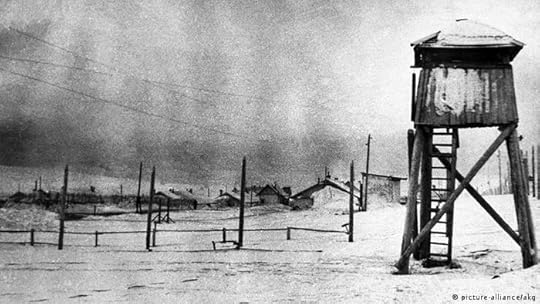
After serving three terms between 1929 and 1951 - then staying on for another couple of years as a civilian worker - there aren't many authors, if any, with more experience than Varlam Shalamov to discuss their experience in Stalin's notorious Siberian prison camps. Shalamov broke his experience into several short stories, really more like vignettes, that show the brutal lives and deaths endured by the criminals and political prisoners who were exiled to the Gulags, where their humanity was methodically stripped from them by starvation rations, freezing temperatures, and sadistic beatings, and their souls were chipped away a piece at a time. Although the result is unquestionably an important historical document of its time and place, reading this volume is depressing and, at 700+ pages, exhausting, especially when you consider that there is an equally imposing companion volume - Sketches of the Criminal World: Further Kolyma Stories - with most of the rest of Shalamov's stories awaiting.
"Not a lot of flesh was left on my bones. This flesh sufficed only for malice, the last human feeling to go. Not indifference but malice was the last human feeling, it was the closest to the bone."

January 18, 2019
Did you know spit freezes in midair at 50 degrees below zero?

Want to Read
March 25, 2024Available to read online: https://archive.org/details/kolymatal...

January 24, 2019
A very difficult book to read; a collection of short stories describing the many unimaginable horrors of Soviet hard labor camps in Siberia. The author spent 17 years in Kolyma and experienced the most inhuman treatment possible. Most of the stories were absolutely depressing but all of them were beautifully written. I especially loved the 4 last stories of this book.

September 16, 2018
Want to read 700+ pages about life in the 'Gulag Archipelago?' This is your book, and it will have a twin next year too. This supplements and deepens my understanding of life in the far extremities of Soviet Russia, where I learned that 'Trotskyists' rarely had anything to do with Trotsky, and where a child rapist was considered a 'friend of the people' compared to the loathsome politicals. Lots of beautiful writing herein and indeed wisdom regarding the nature of the human condition to match anything you might find in, for instance, Elie Wiesel's Night.
SECOND READING - the only thing I will say against this book is that there's a fair bit of repetition. I would judge that it could probably be edited down to 500 pages from 700. Otherwise, it's about the most important book you or I are ever likely to read.
SECOND READING - the only thing I will say against this book is that there's a fair bit of repetition. I would judge that it could probably be edited down to 500 pages from 700. Otherwise, it's about the most important book you or I are ever likely to read.

February 24, 2024
Great stories. Better than Solzhenitsyn as literature, though nothing compares with the Gulag Archipelago as history or overall moral indictment of the Soviet experiment.

Read
September 30, 2018Observations and episodes from the six years the author spent in the most far flung of the Soviet gulags. Beautiful observations about the natural environment of his distant prison, bleak depictions of the reality of gulag life, a scathing but sincere moral viewpoint, I guess you can figure out why it’s considered a classic.
December 11, 2019
Shalamov has a slightly different perspective from Solzhenitsyn, and a more matter-of-fact writing style. I enjoyed these stories and expect to come back to them again.

June 21, 2021
Honestly brilliant, I have no complaints with this one at all. This was absolutely fascinating, written in such a casual way that was no less devastating for it. It was almost conversational, like I might be sitting on a train listening to someone telling me their story. It's blunt, it's bleak, it's filled with so much information that would have been lost had the author not decided to commit it to paper. It's an absolutely irreplaceable piece of both literature and history, blended together so smoothly that anyone could pick up even a single story from this collection and come away knowing something about the horror that occurred in those camps.
This collection is made up of stories written over the course of many years, ranging from a single page to 40+ pages. Occasionally characters reoccur, primarily the author himself or a pseudonym he's using; sometimes events reoccur as well, explored from a different angle or including more detail. Even when this happens, the story is not repetitive. The way that these stories are written is simply so compelling that the same scene or the same theme can be repeated over and over, yet its new context or the author's different frame of mind when writing makes it almost an entirely new story. Every aspect of the author's life in the camp is covered here, from the mundane to the unbelievable, and put all together it's probably the most complex personal account out there. The fact that it's so wonderfully readable is impressive: the book is over 700 pages long, yet at no time did I feel my attention even remotely wavering.
I can honestly see why this is one of Those Books in the subject. This really is a must-read for anyone even remotely curious about life in the labour camps, especially if the straightforward non-fiction books seems intimidating in terms of history or context. You'll come out of this book knowing just as much as I've picked up reading more straightforward academic materials.
This collection is made up of stories written over the course of many years, ranging from a single page to 40+ pages. Occasionally characters reoccur, primarily the author himself or a pseudonym he's using; sometimes events reoccur as well, explored from a different angle or including more detail. Even when this happens, the story is not repetitive. The way that these stories are written is simply so compelling that the same scene or the same theme can be repeated over and over, yet its new context or the author's different frame of mind when writing makes it almost an entirely new story. Every aspect of the author's life in the camp is covered here, from the mundane to the unbelievable, and put all together it's probably the most complex personal account out there. The fact that it's so wonderfully readable is impressive: the book is over 700 pages long, yet at no time did I feel my attention even remotely wavering.
I can honestly see why this is one of Those Books in the subject. This really is a must-read for anyone even remotely curious about life in the labour camps, especially if the straightforward non-fiction books seems intimidating in terms of history or context. You'll come out of this book knowing just as much as I've picked up reading more straightforward academic materials.

March 5, 2020
It took me well over a year to read this amazing account of Kolyma. The cruelty and suffering was too horrendous to keep reading night after night. Sometimes people ask me why I read literature like this, so depressing and so awful, and my answer is that I want to know what happened to people, to honor what they endured, to remember and know what they experienced. This book is more than a historic account, though, as it is wonderfully written.
Two quotes: Shalamov is speaking to a companion about the ending to one of the stories:"That version is no good either, " I said. "Then I'll let the first version stand. Even if you can't get it into print, it's easier when you've written it. If you write it down, you can let go of what happened...."
Of course...., Shalamov most likely never would be able to let go.
While waiting for the train to Moscow," --it was like having a recurring dream, and then I woke up. I was frightened, and cold sweat broke out on my skin. I was frightened by that terrible human strength, the desire and the ability to forget. I saw I was ready to forget everything, to erase twenty years from my life. And what years they were! When I realized this, I mastered myself. I knew that I would not let my memory wipe out all that I had seen. And I calmed down and went back to sleep."
Two quotes: Shalamov is speaking to a companion about the ending to one of the stories:"That version is no good either, " I said. "Then I'll let the first version stand. Even if you can't get it into print, it's easier when you've written it. If you write it down, you can let go of what happened...."
Of course...., Shalamov most likely never would be able to let go.
While waiting for the train to Moscow," --it was like having a recurring dream, and then I woke up. I was frightened, and cold sweat broke out on my skin. I was frightened by that terrible human strength, the desire and the ability to forget. I saw I was ready to forget everything, to erase twenty years from my life. And what years they were! When I realized this, I mastered myself. I knew that I would not let my memory wipe out all that I had seen. And I calmed down and went back to sleep."
May 17, 2026
Shalamov is writing his life in Kolyma during Stalin's time as a series of short stories. You see millions dying in the mines and horrible living conditions in the background of these stories. The author focuses on his experiences and the struggle survive day by day against an authority with no mercy intended on killing them. You will see how everyone becomes so selfish in such circumstances.
After reading Solzhenitsyn's books, these stories gives you a much detailed description of the life in Russian concentration camps in far east. While Solzhenitsyn wrote novels based on his experiences, Shalamov decided to convert his experiences into a series of short stories.
After reading Solzhenitsyn's books, these stories gives you a much detailed description of the life in Russian concentration camps in far east. While Solzhenitsyn wrote novels based on his experiences, Shalamov decided to convert his experiences into a series of short stories.

May 5, 2024
Shocking, immediate, intimate glimpses of the degrading Hell that Kolyma was, by a man who lived through nearly the worst (because the worst, obviously, could not be lived through). With some reflection on the society outside the camps, too - the ones who benefited and those who "only" turned their heads away and pretended it all had nothing to do with them.
Would give five stars, if not for some stumbles in the translation and editing (two misnombered footnotes, stuff like that). Absolutely worth reading.
Would give five stars, if not for some stumbles in the translation and editing (two misnombered footnotes, stuff like that). Absolutely worth reading.
July 31, 2026
Absolute must read
Overleven van Siberische Gulag ten tijden van Stalin
Steunen van de Trotski politiek was voldoende voor 5 jaar werkkampen in goudmijnen bij temperaturen van -50°C. Deze werden na afloop straf telkens verlengd, want politieke gevangenen worden nooit beschouwd als reformed.
Bij werkkampen, lees concentratiekamp maar dan zonder gaskamer.
Enige hoop op vrijlating is dat Stalin toch ooit wel komt te sterven.
Tijdens deze struggle leert het hoofdpersonage vele andere mensen te kennen. Ook deze verhalen werden opgeschreven. Waarvoor ze veroordeeld werden, welke taken ze in het kamp moeten uitvoeren, op welke manier ze het al dan niet langer dan gemiddeld (4-6 maand) slagen te overleven, en veelal ook hoe ze komen te streven.
Overleven van Siberische Gulag ten tijden van Stalin
Steunen van de Trotski politiek was voldoende voor 5 jaar werkkampen in goudmijnen bij temperaturen van -50°C. Deze werden na afloop straf telkens verlengd, want politieke gevangenen worden nooit beschouwd als reformed.
Bij werkkampen, lees concentratiekamp maar dan zonder gaskamer.
Enige hoop op vrijlating is dat Stalin toch ooit wel komt te sterven.
Tijdens deze struggle leert het hoofdpersonage vele andere mensen te kennen. Ook deze verhalen werden opgeschreven. Waarvoor ze veroordeeld werden, welke taken ze in het kamp moeten uitvoeren, op welke manier ze het al dan niet langer dan gemiddeld (4-6 maand) slagen te overleven, en veelal ook hoe ze komen te streven.
December 8, 2021
Kolyma Stories is perhaps one of the best stories writing about the infamous Russian Gulags. Don't get me wrong, there are plenty of good non-fiction stories that do well. But I personally have always been attracted to fiction.
Kolyma Stories is written by Varlam Shalamov. The book is a collection of short stories, written like a fiction. Many of the characters are fictitious, but are based off of what Shalamov witness/heard about.
The stories are based in the Kolyma Region, which was perhaps the worst region of the gulags, infamous for the brutality of the camps and the extremely low temperatures.
I'll start with the prose first, which is perhaps my favorite. For the general stories, the prose is beautiful, but relatively easy to read and not bogged down. But, occasionally, Shalamov writes some stories with absolutely mesmerizing prose. Even then, those passages aren't slow and still feels smooth. Most of the prose involves either the harsh (but beautiful) landscape of Kolyma. Or Shalamov will go darker with his prose, talking about the evidence of all the deaths in Kolyma are hidden beneath stone, where all the bodies are buried, which will not rot because of the cold and the stone preserving them.
The story is also bleak, even if you aren't familiar with gulag history, you'll get the sense of all the innocent lives wasted and abused years ago. Being a fiction book heavily based on real events, there are no happy endings. There are no heroes, no shining light for the prisoners. Even in the end, when Shalamov writes about his eventually release from Kolyma (having been there for 17 years) I still feel a sense of doom knowing so much of that history got repressed for so long.
The stories are interesting for detailing the life and culture within the camps. Specifically the Thieves in Law, which I rather enjoyed reading about. A notorious gang of criminals that lived within the gulags, which would eventually become the mafia. The Thieves were different compared to the political prisoners. Given free reign to do whatever they wanted to prisoners, the Thieves and the guards had almost a non-spoken agreement to make the prisoners lives a living hell. There were some sections that dealt with prisoners trying to defend themselves from all sorts of abuses, and would severely face the consequences.
My only gripe with the story comes with the translation itself. While it is smooth and poetic, there are some parts I found Donald made poor decisions in changing from the original manuscript.
For example, the first story details a man walking through undisturbed snow. His footsteps cause a trail, which is a metaphor for writing. The snow will then get further trampled by tractors and farmers, which are riden on by readers, while writers walk, which are metaphors for the reader.
Shalamov's example:
Of those following the tracks, each, even the smallest, the weakest, has to walk on a piece of fresh snow, not in someone else’s tracks. On tractors and horses it is readers, not writers, who ride.
Donald Rayfield's translation:
Of all the men following the trailblazer, even the smallest, the weakest must not just follow someone else’s footsteps but must walk a stretch of virgin snow himself. As for riding tractors or horses, that is the privilege of the bosses, not the underlings.
Personally, I would have preferred Shalamov's. Not that Donald's is bad, this is purely my own opinion. I just think the way Shalamov writes it has a more poetic spin. Perhaps it's my specific love for the word writer and readers, compared to bosses and underlings (which has a denser and blunter feel to it). A lot of people compare Rayfield's translation on this passage puts more focus on the authoritarian regime and not the prisoners and readers, but I'm considering the poetics more. I just think it Shalamov's was cooler.
Kolyma Stories is a brutal book on the reality of the gulags so many died in, but so poetically written it almost makes you forget what you're reading. If you can stomach the brutal reality of that world, I'd give it my recommendation. It may not only be a good read, but perhaps an important read for those that perished in Kolyma.
A second story, Sketches of the Criminal World, is the sequel of this book, featuring more short stories Shalamov wrote. It apparently dives deeper into the world of the Thieves and Shalamov considering his life after being released. Both I'm very curious about exploring.
Kolyma Stories is written by Varlam Shalamov. The book is a collection of short stories, written like a fiction. Many of the characters are fictitious, but are based off of what Shalamov witness/heard about.
The stories are based in the Kolyma Region, which was perhaps the worst region of the gulags, infamous for the brutality of the camps and the extremely low temperatures.
I'll start with the prose first, which is perhaps my favorite. For the general stories, the prose is beautiful, but relatively easy to read and not bogged down. But, occasionally, Shalamov writes some stories with absolutely mesmerizing prose. Even then, those passages aren't slow and still feels smooth. Most of the prose involves either the harsh (but beautiful) landscape of Kolyma. Or Shalamov will go darker with his prose, talking about the evidence of all the deaths in Kolyma are hidden beneath stone, where all the bodies are buried, which will not rot because of the cold and the stone preserving them.
The story is also bleak, even if you aren't familiar with gulag history, you'll get the sense of all the innocent lives wasted and abused years ago. Being a fiction book heavily based on real events, there are no happy endings. There are no heroes, no shining light for the prisoners. Even in the end, when Shalamov writes about his eventually release from Kolyma (having been there for 17 years) I still feel a sense of doom knowing so much of that history got repressed for so long.
The stories are interesting for detailing the life and culture within the camps. Specifically the Thieves in Law, which I rather enjoyed reading about. A notorious gang of criminals that lived within the gulags, which would eventually become the mafia. The Thieves were different compared to the political prisoners. Given free reign to do whatever they wanted to prisoners, the Thieves and the guards had almost a non-spoken agreement to make the prisoners lives a living hell. There were some sections that dealt with prisoners trying to defend themselves from all sorts of abuses, and would severely face the consequences.
My only gripe with the story comes with the translation itself. While it is smooth and poetic, there are some parts I found Donald made poor decisions in changing from the original manuscript.
For example, the first story details a man walking through undisturbed snow. His footsteps cause a trail, which is a metaphor for writing. The snow will then get further trampled by tractors and farmers, which are riden on by readers, while writers walk, which are metaphors for the reader.
Shalamov's example:
Of those following the tracks, each, even the smallest, the weakest, has to walk on a piece of fresh snow, not in someone else’s tracks. On tractors and horses it is readers, not writers, who ride.
Donald Rayfield's translation:
Of all the men following the trailblazer, even the smallest, the weakest must not just follow someone else’s footsteps but must walk a stretch of virgin snow himself. As for riding tractors or horses, that is the privilege of the bosses, not the underlings.
Personally, I would have preferred Shalamov's. Not that Donald's is bad, this is purely my own opinion. I just think the way Shalamov writes it has a more poetic spin. Perhaps it's my specific love for the word writer and readers, compared to bosses and underlings (which has a denser and blunter feel to it). A lot of people compare Rayfield's translation on this passage puts more focus on the authoritarian regime and not the prisoners and readers, but I'm considering the poetics more. I just think it Shalamov's was cooler.
Kolyma Stories is a brutal book on the reality of the gulags so many died in, but so poetically written it almost makes you forget what you're reading. If you can stomach the brutal reality of that world, I'd give it my recommendation. It may not only be a good read, but perhaps an important read for those that perished in Kolyma.
A second story, Sketches of the Criminal World, is the sequel of this book, featuring more short stories Shalamov wrote. It apparently dives deeper into the world of the Thieves and Shalamov considering his life after being released. Both I'm very curious about exploring.
January 7, 2025
Catch me out in January Shalamov’n
May 27, 2021
The suffering endured in the gulags is boggling. Really any systemized, mass violence eludes reason or imagination. Often, we view these events through a historical context in which numbers of victims, sheer volume of horror, are the point of contact and define the atrocities. This book cannot truly explicate on the magnitude of suffering created in the gulag system. The reality may be that there is no proper reckoning with it. Suffering in Kolyma Stories is personal, the forces which control for ones life are vague and outcomes arbitrary. Perhaps this is the only way you can accurately approach an atrocity. At the very least, if we typically focus on the number of victims, this book ensures that we also know and don't lose sight of the monstrous degree to which an oppressive regime can bear its power with crushing force on one person. Kolyma Stories is a strident illustration of what it means to suffer, and, through absolute deprivation demonstrates what is truly valuable for life.

June 21, 2022
"Kolyma, Kolyma, faraway planet / Twelve months winter, the rest summer"
Homo Homini Lupus might be. But no animal in the whole animal kingdom would ever behave in such a bestial way, as man, given the opportunity, behaves towards his fellow human beings.
Brutally honest, bleak, devastating, first hand testimony about the horrors of Gulag.
Not a far cry of a long gone era, unfortunately, but as actual today, in 2022, as ever.
Homo Homini Lupus might be. But no animal in the whole animal kingdom would ever behave in such a bestial way, as man, given the opportunity, behaves towards his fellow human beings.
Brutally honest, bleak, devastating, first hand testimony about the horrors of Gulag.
Not a far cry of a long gone era, unfortunately, but as actual today, in 2022, as ever.

February 2, 2019
This is such a hard book to rate, the subject matter is grim and the structure is disjointed. They are short stories but they are also connected but there’s just no time line which I really struggled with. I liked the parts where he wrote about the landscape and the nature around them. It’s an interesting, challenging read and I definitely want to read more Russian literature.

February 28, 2021
No special salvation for the Gulag prisoners, no neat sentimental endings, justice is rare like angel dust..it is the lower pit of hell and Shalamov's narrators try to convey how one survives and keeps something essential of one's humanity..Or rather, what is the only kind of humanity that can perist in hell

July 2, 2018
An exceptional Russian classic! This is a very tough read, but well worth the effort. One of the most important books written in the 20th century. Highly recommended.

November 21, 2019
One of the best books I've read in my life. I recommend it unconditionally.
(Yes it's better than Solzhenitsyn)
(Yes it's better than Solzhenitsyn)
November 2, 2023
finished part 1 for class! will not be reading more because these stories are too depressing - though a very good & engaging introduction to russian prison camp literature
Displaying 1 - 30 of 71 reviews