“D. Foy is an American hero and this book will slay you.” —Sarah Gerard “Pure, mind-blowing enchantment.” —Nelly Reifler “Gyrates seamlessly between the hilarious and profound.” —Augustus Rose “Full of extraordinary, richly-drawn characters in supremely memorable situations.” —Christine Sneed "Its bawdy characters will enchant you; the vitality of D. Foy’s prose will make you weep." —Courtney Maum It’s 1973, and a thirty-something widow has been cajoled by a young hippie parasite into financing their vacation to a nudist colony in the Northern California mountains. The night before their departure, however, she arrives home to learn that she and this man will be accompanied by the stripper on his lap. At Camp Freedom Lake, the trio meet a womanizing evangelist, a bumbling Zen gardener, and a pair of aging drug-addled swingers from Holland. Together, they’re catapulted through one improbable event after the other, each stranger than the last, until finally the woman who was dominated by her fear of past and future finds herself reveling in the great here and now. D. Foy’s Absolutely Golden is a radical departure from his two previous novels, Made to Break and Patricide . It’s comic, ebullient, magic, light, gently surrealistic. It’s rollicking, effervescent, slyly profound. But more, this brisk tale offers a kaleidoscopic look at parts of the 1970s we haven’t often seen in fiction—nudism, New Age philosophy, Eastern religion, the occult, swingers culture, California culture, and then some. Best of all, Foy tells his story in the guise of a woman obsessed with the notion that she’ll never find another man until she’s rid of what she believes to be a mysterious curse. As if written in the marriage of Vladimir Nabokov, Renata Adler, and Anaïs Nin, her words transport us from doubt, despair, and dread into states of increasing wonder and euphoria.
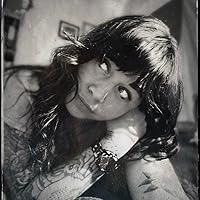
D. Foy is the author of the novels Made to Break, Patricide, and Absolutely Golden. His stories, poems, and essays have appeared in Guernica, Literary Hub, Salon, Hazlitt, Post Road, Electric Literature, BOMB, The Literary Review, and the Georgia Review, among many others, and have been included in the books Laundromat, A Moment’s Notice, and Forty Stories: New Writing from Harper Perennial. Visit him at dfoyble.com.
Absolutely Golden strikes me as more style than story, in that D. Foy has penned a protagonist with a sanguine temperment swimming in ridiculously lovely prose. His sentences are either abruptly short or languorously lengthy, drizzled with commas and packed with so much emotion they shine like the sun, so bright we must shield our eyes lest they themselves get burned. You can feast on his writing:
"We suffer, we people, we do. We carry secrets we know nothing of, and harbor them even, and sometimes even nurture for life. And we keep this torment because we deserve it, or believe we do, because, really, nearly always, we feel guilty."
"The sun was rising, thought still the mountains hid it. My room lay covered with that hazy pall of brass-colored light that with each day's coming makes the world seem everything's good, and yet I hadn't slept but for the haphazard snatch. And when actually I did catch a wink, it was to be assaulted by disfigured cherubs, their hair aflame, and defecating gressils, and jackals and crones, and enless piles of hacked-off limbs. Tranquility, in short, had been a distant song."
"It was so quiet, in fact, you could hear the friction of smoke on the gathering dark, of its rising from the pits, slither, slither, thither and thence, the steady trudging as well of anys in their line in the soil between a crack in the stones on the path, the motes of earth beneath their constant legs, the sound even, above, of the night itself, settling down like the breath of a woman on her sweetheart's eyes."
Keep in mind this takes place in the 70's at a nudist colony, where our narrator - a thirty something widow named Rachel - has reluctantly agreed to follow her hippy deadbeat boyfriend and his 'cousin' Jenny, chasing a much needed break in her rather stuffy, boring life.
There is much drugging and drinking and swinging (both of the dancing penises and switching of partners kind). The characters are eccentric, almost overwhleming so, and are prone to fits of fabulous story telling, regaling their audience with tales that often send the reader on multi-page-long diversions that eventually, and perfectly, weave themselves right back into the here and now (or then and there?).
I've read early reviews that refer to this book as comedic, the reviewers admitting to moments of actually laughing out loud. The back cover even refers to it as comic. Perhaps the author's sense of humor was lost on me? Perhaps I was just more strongly drawn towards D. Foy's hypnotic prose and the sheer awkwardness of our middle-aged sun-burned goddess, trying to make her square self fit into the star-shaped hole of Camp Freedom Lake?
Whatever its intent, I found Absolutely Golden to be a bright and fascinating trip back to a simpler, if not necessarily sanier, time.
I’ve been a fan of D.Foy’s writing since I saw him read from his first novel, Made to Break. His voice is entirely authentic in that he doesn’t force you into adapting to the environment he’s created on the page. Rather, it is more like accepting an invitation and riding on the waves of sound the lines make up - because he is a musician after all, and that is really what distinguishes his writing from others today; his capacity to tell stories timelessly.
The short version: “Absolutely Golden” is a story about triumph in the face of loss.
The longer version: “Absolutely Golden” is a story about a woman entering her middle age phase following the loss of her husband. In the wake of her loss, she welcomes the company of a hippie tweaker who’s really just an insecure boy looking for love, specifically with a sexually promiscuous woman referred to as Jenny or The Ecdysiast. Our heroine, Rachel, in spite of feeling reasonably cautious, seeing as how sexually liberated they both are (with each other), accepts the invitation to join them on a new wave hippie retreat.
What occurs is a bit of sun poisoning, some penis flailing, a hilariously awkward orgy, A LOT of psychotropics (obviously), some romantic love making, and LOVE oh my goodness, so much love the kind of which you are meant to experience when you join a hippie retreat - especially if you dye your hair blonde for the occasion.
It is a story that asks the question, is it too late to live and love the life you’re living? Or when you look in the mirror, are you truly seeing what's in front of you or projecting what you believe to be true?
Overall, this book is FUN and timeless despite it taking place in the early 70’s. D.Foy’s capacity to tell stories of the past and make them applicable in the present comes out of his love and dedication to tell stories authentically. It’s the voice(s) we return to for solace, to laugh or look away from ourselves long enough to be enlightened by what we find, when next we meet our reflections.
*Absolutely Golden,* D. Foy’s exuberant satire, belongs to the quixotic literary tradition of opening a window in time and space to find that the characters we thought had disappeared are all still there. It is we in the present, especially the American present, who’ve been the butt of the joke, left, as Foy’s narrator, Rachel Hill, says, “screwy-eyed and helpless, slowly to gurgle on the blood from the gashes at our throats.”
Rachel is a widowed schoolteacher whose hippie boyfriend tells her she needs to loosen up. It is 1973. It is California. Everything is beautiful. He and his stripper “cousin” Jenny are heading up to a nudist colony for the summer. Rachel-baby should come, Jack says, and by the way, wouldn’t she be even more “righteous,” and “au naturel” without her “Uncle Sam hair” ?
So Rachel lets down her hair, long and curly and blonde as a child of the sun.
And then she gets naked.
At Camp Freedom Lake, Rachel is in for a major journey of self-discovery, not just in her own soul, not just in the realities of all-over sunburn, but also in sleazy Jack’s designs on his stripper “cousin,” and finally, the biggest con of all—in the revelation that her late husband, Clarence, was not the man she thought he was.
Badly burned inside and out, Rachel takes to her cabin, where she draws a crew of lovable buffoons into her golden orbit of self-realization. Her unexpected incandescence surprises no one so much as herself. And yet while *Absolutely Golden* belongs to Foy’s investigation into the “impotent rage” of American masculinities—Jack exemplifies this dilemma, among so much else—it does so only in, um, part.
Because it is golden girl Rachel—her very American unmasking, her ordinary and urgent desire for a soul that no movement, cult, or con can take away—who is at the center of this surreal and sunny universe of nipples and ping pong (“Jack used his penis to serve, and the crowd went wild”) and shrooms and lies. Rachel is no one, and she is everyone.
Did I mention the lols? This book is funny, but in a deliberately quaint, Mark Twain-meets-Melville kind of way. The trippy dialogue, the casually creepy summer camp set-up in collision with the orgiastic yet puritanical con of the ’70s, the frequent detour into tall-tale urban myth and absurdism—set within the compressed microcosm of Camp Freedom Lake, it all reads much Melville using the Fidele to stage his immortal satire, and is played for similarly dark laughter. As with his previous two novels, *Made to Break* and *Patricide,* Foy’s language is both traumatizing and curiously healing. Absolutely Golden is as tremulously controlled and as well-wrought as an urn thrown by a buck-naked Emily Dickenson, assisted by the ghost of Whitman in all his iconoclastic glee, “one by one…yielding to this screwball night.”
This was one of those books that made me laugh all the way through, but also contained a lot of profound insight that was, by turns, poignant and thought provoking. It reminded me a bit of Katherine Dunn’s classic Geek Love, in which all the characters are so over-the-top and absurd, but also so human and caught up in everything that comes with it, that they can’t help but reveal hard life truths even as they stumble hilariously through a comically entertaining plot.
The setting for D. Foy’s novel is a far-out nudist camp in 1970s California, but the characters and their desperate attempts to find love, enlightenment, closure, and fulfillment could have been set anywhere and at any time. These are eternal themes of human striving and suffering that everyone goes through, but that are, also, almost impossibly difficult to describe to someone else. I was madly impressed by D. Foy’s ability to translate the nebulous terrain of human relationships into a story that wasn’t only addictive to read, but also gave me much to think about afterwards.
Absolutely Golden is a book I’ll be recommending to all my lit nerd friends, and to anyone else interested in how we navigate that confusing road toward loving ourselves, and others.
A book review by weird speculative fiction author Ted Fauster
It’s the summer of 1973. No cellphones. No Internet. No worries.
And no clothes…
ABSOLUTELY GOLDEN follows the slow but steady cosmic awakening of Rachel, a mousy, middle-aged schoolteacher who, years after the numbing death of her husband, has allowed herself to be drawn into the parasitic orbit of obnoxious hedonist, Jack, a disgustingly charming character written so perfectly by Foy I could not divorce myself from the thought of Jeff Bridges carrying its weight. A bit of a stick in the mud, Rachel agrees to attend Camp Freedom Lake, a nudist colony in Northern California with Jack, and his ecdysiast “cousin” Jenny.
For me, Sharon Tate took on the persona of this demure woman turned radiant folk hero. Understandably apprehensive but emboldened, Rachel begins her journey by dying her hair a magnificent shade of gold. Little does she know, her entire world is about to be transformed.
This book shines, capturing the Magnavox gleam of the early ’70s in all its daft and sometimes dippy grandeur. Up at camp, a quirky cast of comedic perfection appears from out of the woodwork, plying for the attention of the radiant new goddess that is Rachel. Still uncomfortable in this new role, but willing to try it on, Rachel finds herself growing and transforming into an entirely different creature, while coming to grips with some stark realities hidden beneath the crusted veneer of her previous life.
It become clear, early on, that Rachel herself feels invisible, pushed along by tidal forces beyond her control and slowly drifting out to sea. All she wants is to be wanted. And, for once in her life, to be truly seen:
[…This went on, like some diabolical Mobius strip, until one Oakland night–one very hollow West Oakland night, I might add–a man in a bar walked right through me, the way ghosts are said to walk through walls. Finally, I understood….]
ABSOLUTELY GOLDEN is a Shakespearean odyssey, gifted with a bounteous amount of Dickensian dialogue and inner monologue that drips like honey:
[…”There was once a man,” he said, “whose love went unrequited for years. He’d tried everything to win his beloved, from serenading her in the moony light to sending her gifts of silver and gold and other shiny things….”]
It also has its fair share of pulp ’70s denim chic:
[…”And that’s cool, too, man, he’s pretty funky for an old jive-ass cat like that you know, duck, I mean, what with his going around without any pants and that….”]
This book is heavily dosed with all sorts of off-the-wall good humor, as well. And it would be a crime to take it too seriously. But maybe, like, that’s whole point, man!
For what’s its worth, this is one righteous read, and I am down, Charlie Brown. And I do mean, I can really dig it.
D. Foy souffre et irradie, flambe au centre de sa belle Rachel, et tel un cheval de Troie qu’il a fait entrer au royaume hippie, éreinte les peaux bronzées de ses personnages pour en faire sortir le jus du malheur, du chagrin, de la solitude, de la jalousie ; puis lorsque les corps sont tannés par son style bestial, parfois aboyé ou gémi, envoyé au galop, haché, absolument étranger, il en révèle comme par accident les cœurs bruts, la sérénité arrachée, vaille que vaille, à la brutalité de l’existence. La paix, non négociable. Il faut avoir creusé loin et être revenu du gouffre pour se livrer, nu, au-dessus, absolument doré. Un texte peu comparable, qui suscitera tour à tour agacement et empathie, qui n’ira pas, bien léché, vous séduire immédiatement, mais vous demandera de faire l’effort de le rejoindre où il se trouve, lui. Et il se trouve chez les grands brûlés.
Many of Foy’s sentences are like Lutz on good ludes in a trailer hidden in a state park overlooking a shore. Parts of this book were like the best Steppenwolf jams. There’s just something about these scabrous turns he unearths from under Suttree’s banks - nobody else does it like this.
A good-humored, well-written, enjoyable read. The 70s vernacular is just hilarious (I kept hearing 'Spill the Wine' in the back of my head). It didn't quite put me over the edge because, well, maybe it's all a little TOO happy? I'm curious to read his darker novels.
I had to put this down and suddenly it had been a little too long to pick it back up. It's not anything that's wrong with the book. The writing is great - thick, lush sentences and quite a dark sense of humor which is usually my thing. I think I just got distracted and lost my groove with it. I'll definitely pick it back up at another time.