In this memoir in twenty-four essays, Blanchfield focuses on a startling miscellany of topics – Foot Washing, Dossiers, Br’er Rabbit, Housesitting, Man Roulette, the Locus Amoenus – that begin to unpack the essayist himself and his life’s rotating concerns: sex and sexuality, poetry and poetics, and his upbringing in working-class, Primitive Baptist, North Carolina.
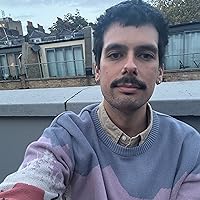
Brian Blanchfield is a poet and essayist whose most recent book is Proxies: Essays Near Knowing—a collection equal parts cultural studies and dicey autobiography, published by Nightboat Books and winner of a 2016 Whiting Award in Nonfiction. His first two books, both poetry, are Not Even Then (University of California Press) and A Several World (Nightboat), which received the 2014 James Laughlin Award. His essays and poetry have appeared in Harper’s, BOMB, The Nation, The Paris Review, Brick, StoryQuarterly, Lana Turner, and other publications; and two long sequences—one poetry, one prose—are available as chapbooks: The History of Ideas, 1973-2012 (Spork Press, 2013) and Correction. (Essay Press, 2016). A 2014-15 Howard Foundation Fellow, he is an editor of Fence, a guest editor this year of the PEN Poetry Series, and host of Speedway and Swan, a biweekly poetry and music show on KXCI Community Radio in Tucson.
I loved when Brian Blanchfield got vulnerable with us. I felt riveted when he wrote about his former lover coming out to him as HIV positive in another friend's house, the intimate and now-embarrassing games he used to play with his mother, and the insecurity and upstream battles he has fought as a creative writer in academia. These essays contain a lot of intellect - from queer theory to linguistic analysis to literary allusion - but they shine most when Blanchfield inserts himself, the tender and sometimes angsty moments of his life.
That said, Proxies often came across as too cerebral for my taste. In several essays, Blanchfield begins to discuss a personal event, but he cuts off the story to form an intellectual point or critique. While I often appreciate and admire writers who blend memoir and analysis (two of my favorite books that do this super well include Appetites by Caroline Knapp and The Empathy Exams by Leslie Jamison), Blanchfield did not hit the right mix for me. I wanted more of his own voice, to read more about his relationship with John, what he gained and lost by moving around the country so much, and his own reflections on Frank and the fraught relationship he had with his mother.
Overall, I feel grateful that Blanchfield wrote this collection of essays, as we need more queer voices in creative nonfiction and more men writing memoir. I would recommend it if you want your brains stimulated, with some personal bits on the side.
My friend Dan and I backpacked together for a few months after college and invented a game called Toss. I'd offer him a topic, and then Dan would free associate until his well ran dry. Then I'd go until I finished, at which point Dan would toss me a new word. We found the most generative topics were ones like urinal -- things of the everyday that are rarely discussed.
PROXIES has the same format, and I loved it. It's a poet's essay collection. Associative, vulnerable, wonderful. I think Maggie Nelson calls it erudite, too -- which is spot-on. Some favorite chapters on: propositionizing, man roulette, the leave, frottage ("I can't bring myself to rhyme it with cottage..."), the understory, and the near term. I will definitely be working with PROXIES with college writing students.
An instant (queer) classic. I can't get over how damn good this was. Blanchfield is a modern, American, less obtuse Barthes. Proxies is a stunning, delicate memoir of a middle-aged gay man disguised as a collection of essays elucidating and exploring various topics and ideas. Intricately and precisely written, it packs more onto a single page than most books hold between their covers. I look forward to re-reading this many, many times in the years to come.
Blanchfield positions his distrust of intellect and memory, two aspects of the mind that readily fail, as his guiding light. I cannot recall a book that so honestly eschews the need for context to be correct. To not look up the 'facts' until after the book was written is a defiant act, and draws focus to the development of individual intellect outside of research, outside Google and Wikipedia. Proxies also airs the incongruity of academia, the placeholder aspect of queerness, and of being a cultural and metaphorical stand-in. I hope Blanchfield gets a great teaching job after this book. He deserves it.
Admittedly I read this as a writer with an eye to seeing what Blanchfield was attempting to do with the essay form. His life as a gay man in early middle age, with a fundamentalist Baptist background and the complicated family of origin issues that carry over do take a centre stage in many of the essays, but there is much more here. An intelligent, engaging exercise in free form essay writing. See my full review here: https://roughghosts.com/2016/08/04/in...
To be perfectly frank, Blanchfield and I are in some kind of erotic humiliation relationship. I keep returning to him and he keeps making me feel stupid and useless. What kind of mind writes this way? From his poetry to his essays, I am obsessed. But, I never fully get any of it. Constantly in awe. Spank me!
what a delightful book, why isn't everyone reading this book and talking about it? why are all my favorite nonfiction books by poets? some of these lil essays were just fun explorations of words and time, all starting somewhere and ending in a completely different part of Brian's brain and life. his particular queer experience was so importantly depicted, although this was not a book purposefully about identity or activism. the tougher the exploration, the more successful the proxy. prodding deep down, and we feel like we are realizing with the author as he writes. i definitely cried reading this book. every sentence was crafted with such care. gossipy/intellectual/personal/critical nonfiction is SO real to me. using all the real names of places and people, with no fear of them "finding out" he wrote about them. the bravery of it all blows my mind. i would love to hear brian blanchfield read or speak sometime.
Strong collection of essays exploring a diverse array of topics, always hovering near the beating heart of memoir. Definitely in conversation with Maggie Nelson's Argonauts and Leslie Jamison's Empathy Exams (also Roland Barthes' short essays) and shares their comingling of the confessional and critical theory. At times loses itself in academese, but clearly, Blanchfield is a deep thinker. The portions that weave in his personal history as a gay man are the most poignant and moving.
Genuinely astounding. Comparable to Barthes, but interior -- focused on a raw, honest history of the self, and of growing up gay in rural North Carolina. Having also grown up gay in rural North Carolina, I struggled to extricate myself from the text; sometimes it felt like reading a funhouse mirror, what my life would have been like if I were male. Really incredible prose and a novel, genius concept. Utter brilliance.
Beautiful is not a word I thought I'd ever use to describe an essay collection, a book of essays on topics as diverse and sometimes cold sounding as Foot Washing, Dossiers, Housesitting and Man Roulette. But written without the internet and without reference material, this book is not about these things but rather the author's interaction with them. The book purposefully rejects objective information and even fact in preference of the subjective. Not "what is there to know about X", but "what do I know about X". And what does "what I know" say about who I am.
The book's subtitle (in the UK) is Essays Permitting Shame, Error and Guilt, Myself the Single Source (aka any fault here is mine and mine alone). Quickly the reader finds that the truth is largely irrelevant and the author himself is the real topic here, and he is so open and honest and forthcoming and brave that it's impossible not to get sucked into this book. Because instead of talking about Owls or Tumbleweed or whatever the essay claims to be about, we are instead learning about the author's AIDS scare, his transient academic career, his mother, his father, his step-father - and suddenly through the lens of these diverse essays what we find instead a wonderful kind of memoir.
Of course writing essays in this way leads to inaccuracies, but by the time one reaches the corrections, (the last 15% or so of the book) you finds yourself not caring about them, or about the truth at all.
I heard Blanchfield read "On House Sitting" at the Queer Heart panel at the &Now conference a few years back and have been eager to read this collection. The last essay starts there, actually (at the conference), a meditation on queer love in uncertain times. All of these essays are tightly constructed yet airy with rumination and allowing for errata. I especially appreciated the ways Blanchfield writes about the South and also the academic job market for creative writers. Favorites, in addition to the aforementioned: "On Tumbleweed"; "On Confoundedness"; "On the Leave"; "On Peripersonal Space"; "On Frottage".
i recognized a lot of myself in these essays. the way i recognized myself in genet, in maggie nelson, in Rimbaud. memories & feelings are given a shape, a name: flotsam turns to shore, sand gives way to seashells, and you can just lay there, because the sun doesn't feel as hot & vertiginous as it did before.
Blanchfield leaves room for the reader to sojourn in these Proxies. between the gentle simplicity of the incantation that begins each return to a past representation of himself & the ruthless translucent thread that traces the shadow of their outermost limits, i recognized myself in his "near knowing", his proximity to "the kind of place where all looking is onlooking."
Fidelity to a broken looking-glass. It's the detachment Blanchfield keeps among the cracks and uneven surfaces of his memories that reflects the unwavering sense of intimacy i felt reading them. maybe "detachment" isn't the right word to use. maybe, through the clarity of his recollections, or thru his re-mapping of images and signifiers dispersed across semiotic canyons that echo their own correction, it's acceptance i'm looking for.
There is a lot to like in this erudite collection, which ranges from the personal into the abstract and devotional and back. Kudos to the especially demoralizing essay about the academic job market. Whether Blamchfield is writing about frottage after the AIDS crisis or reflecting on the struggles in his relationship with his mother, he is relentlessly intelligent and interesting.
Each vignette of Blanchfield's Proxies fascinates, focuses the readers mind on a pattern of association or map of thought, that is intensely detailed and yet does not proscribe interpretation. Instead they bring together drives of longing, curiosity and an interpretation of life as undelimited texts that point continuously beyond themselves, unwinding the knotted nature of their energies and coincidences to achieve a stillness of acceptance, appreciation, and beauty in repose.
I'll need to keep dipping in and out of these to begin to fathom their depths.
The privilege of reading this book for the first time is immense. The privilege of Brian Blanchfield IRL is even better. Kindness and gentleness never outpaces his brilliance, which is less a testament to the smallness of his brilliance, but rather the greatness of his kindness. Great book
Demands to be read twice, but who has time for that? Either way, half the pleasure is in reading the corrections. It's more personal than the gimmick suggests, and that's the source of its power; some details will mark you indelibly. Flirts with gobbledygook at points, but (thankfully) never jumps into bed with it.
On “This American Life” you hear Ross Gay and fall in love with his Book of Delights. In his magnanimity, Gay turns you on to Proxies, an essay collection by the poet Brian Blanchfield, who calls it a book that is braver than he, told in the course of time that needs doing, spoken as if by his representative shepherd.
You fall in love anew. These essays demand interrobangs in lengthening, enlarging snakes. Each line reveals in mastery its truth, and the following holds truer still. You’re invited to a game of sardines, a hide-and-seek variant that “builds into the familiar format the stirring new elements of conspiracy, refuge, betrayal, gratification deferral, cultural assimilation, and sustained bodily contact.” You’re ferried on a voyage of discovering as though remembering, to the place “behind the construct of the idyll.” You’re lured into an “overburdened pair of briefs” and instructed “by transgressing the sacrosanct to leave be.”
How does one extract the choicest morsels from a book for which the only fitting excerpt is the book itself? Your need to integrate each paragraph into your examined clutch subsumes and eclipses all others and redefines necessity. The author points, and you recognize this as “the act that sends the gaze of others in a direction referenced by an outstretched arm and indicating finger.” You read. You gaze. You turn the page.
You feel strapped to a Procrustean bed in which a part of you cannot escape its grip before consuming every word while another aims to stretch each phrase across eternity. At the onset of your confinement you feel “lucky if you can read the script you’re acting out.” Slowly you surrender, allow the text to bear down and to rearrange your parts. In so doing you come to understand “the thought of the world whereby it is experienced is better than the world” and that “openness happens in the midst of being,” and you relent in full, as does the bed. Conveyed by life, you find, is narrative advance and the quest to make it mean.
You read a book by Brian Blanchfield, a series of black marks on paper, and exit it altered. Its name is Proxies. Evoked in its totality: a godmade boulder so replete that even its creator strains to lift it.
And to think you nearly skipped it because its cover is so plain.
***
Restantes
“All my childhood and youth I thought to be confounded meant only to be confused. But I knew the hell of it.”
“Confoundedness and revelation, waywardness and prodigal return.”
“I have leaned back yes into excessive leaning.”
“If before tonight there had been a script there was with each other a thrill in ditching it.”
“Any image can be a map and any map can be a gameboard.”
One less star due to the vast stretches of this book that were not intelligible to me. The concept of this book is as important as the content - in style, you could certainly draw parallels to Maggie Nelson, though in form you could also nod to Sarah Manguso's Ongoingness. These are essays that draw strongly from the self and process of thought, and as noted at the very beginning, research was not a part of this book - except, after it was done, to include afterward notes containing clarifications and corrections. The grand experiment of this book to begin with is the very process of thought itself.
Each of these essays contained, unsurprisingly, multitudes - like a tree branch with endless spindly offshoots. There's a lot of intellectual tangling being mined and uncombed before you, paired with some moments of gorgeous storytelling: "Our first date was on Election Day, 2010. Or, it's truer to say, we were dating by the end of that day, a day on which we had set out early from Missoula across the Lolo pass into Idaho, where we hiked six miles into the woods; John knew about a series of stepped natural hot springs. It was an eventful hike--newts and pheasants and dizzy spells and falls into the creek. We walked out after dusk--dark enough we needed the car's headlights to change into dry socks. We kissed in the beams, which made the little globes on the ghostberry bush galactic. We mark our anniversary out from there, and we tell everyone every year we re-elect each other. Campaign comes from the Latin campus. Open country. And country from contra. All the area out in front of you, facing you. No term limits. The queer heart."
At first, I was like I don’t need this man to talk at me like he knows things I don’t, but then I realized he knew things I didn’t. So ultimately I did enjoy it, but there is definitely an esoteric tone that can be exhausting and confusing. I do love certain stories, especially ones about queerness and love.
The professor that served as the chair of my graduate thesis committee (CNF) recommended this book to me after writing a review for it on Rumpus, and I wasn't even halfway through when I emailed him back to gush about how much I loved it. This collection embodies everything I love about "the essay." It explores, it discovers, it's a "loose sally of the mind." The topics touched upon and made touching comprise are comprised of rich language and original perspectives. For me, this book achieves (in a whole new way) that innate desire to understand people and be understood ourselves. I was left both awed and inspired in my own writerly endeavors.
An excellent collection of biographical essays showcasing the queer mind at work. Blanchfield jumps from the mundane to the profound with ease and grace, often blurring any distinction between the two.