

What do you think?
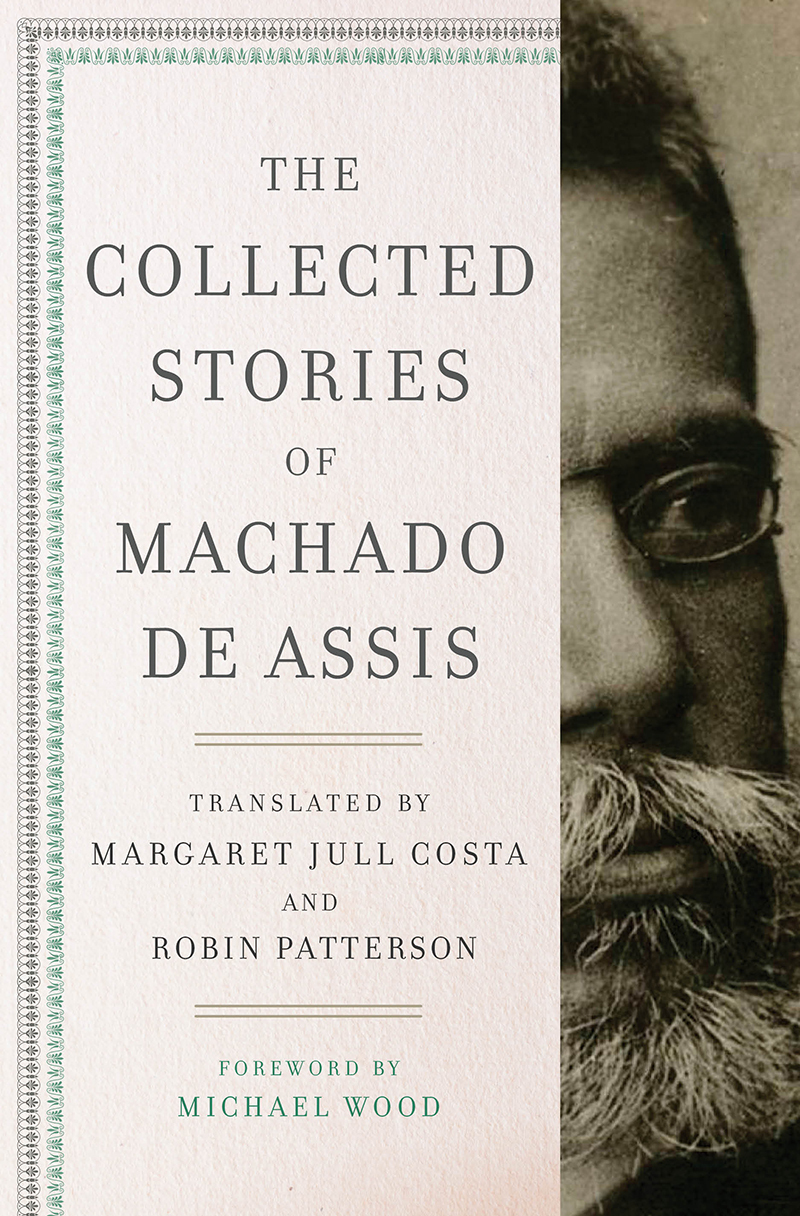
The Collected Stories of Machado de Assis
A landmark event, the complete stories of Machado de Assis appear in English for the first time in this extraordinary new translation.
A progenitor of twentieth-century Latin American fiction, Joaquim Maria Machado de Assis (1839-1908), was hailed in his lifetime as Brazil’s greatest writer. This majestic translation combines all his short-story collections appearing in his lifetime and reintroduces de Assis as a literary giant who must be integrated into the world literary canon.
A progenitor of twentieth-century Latin American fiction, Joaquim Maria Machado de Assis (1839-1908), was hailed in his lifetime as Brazil’s greatest writer. This majestic translation combines all his short-story collections appearing in his lifetime and reintroduces de Assis as a literary giant who must be integrated into the world literary canon.
960 pages, Hardcover
Published June 12, 2018
About the author
Machado de Assis
1,203 books2,635 followersJoaquim Maria Machado de Assis, often known as Machado de Assis, Machado, or Bruxo do Cosme Velho, (June 21, 1839, Rio de Janeiro—September 29, 1908, Rio de Janeiro) was a Brazilian novelist, poet, playwright and short story writer. He is widely regarded as the most important writer of Brazilian literature.
Machado's works had a great influence on Brazilian literary schools of the late 19th century and 20th century. José Saramago, Carlos Fuentes, Susan Sontag and Harold Bloom are among his admirers and Bloom calls him "the supreme black literary artist to date."
Machado's works had a great influence on Brazilian literary schools of the late 19th century and 20th century. José Saramago, Carlos Fuentes, Susan Sontag and Harold Bloom are among his admirers and Bloom calls him "the supreme black literary artist to date."
Ratings & Reviews
Friends & Following
Create a free account to discover what your friends think of this book!
Community Reviews
Displaying 1 - 22 of 22 reviews

April 19, 2019
I've rated this book 5 stars, how else would you rate Brazil's greatest writer? Assis is to Brazil as Borges is to Argentina and Marquez to Columbia. You can find evidence of the fabulist and the beginnings of magical realism in his work (publishing 1870 - 1906). Not only a medical doctor, he was a highly literate man, fluent in a number of languages and widely read. Literary references abound, and I find influences ranging from Dickens to Poe, if not in subject matter then surely in his narrative voice.
The edition of his work that I've read is a handsome, sewn, hardbound book, and a good thing, for I've taken nearly eight months to read it. There are some 74 stories, plus two excellent introductions by the translators. The stories range in length from a handful of pages to nearly 50 pages.
For the most part, the stories feature middle or upper class characters, preoccupied with romance and their social position. Be forewarned that slaves appear frequently in the stories as minor characters, and Assis treats with them with a casualness that one should expect from a writer from this period.
The edition of his work that I've read is a handsome, sewn, hardbound book, and a good thing, for I've taken nearly eight months to read it. There are some 74 stories, plus two excellent introductions by the translators. The stories range in length from a handful of pages to nearly 50 pages.
For the most part, the stories feature middle or upper class characters, preoccupied with romance and their social position. Be forewarned that slaves appear frequently in the stories as minor characters, and Assis treats with them with a casualness that one should expect from a writer from this period.

October 2, 2018
de Assis is truly a fabulous writer (assuming the translators were excellent), but the stories are a bit dated and geographically/culturally challenging. However, there are a lot of universal truths, which kept me going throughout. Highly recommended if you want to try a really different read from your typical American/European literature.

January 25, 2021
Collected short fictions by the Brazilian writer originally published in newspapers 1870–1906. Most concern courting, love, marriage, and obsession. Dated but pleasant reading, broad but not very deep.

July 19, 2026
Slavery looms in the background of this story as the institution, legal in Brazil for most of the 19th Century, that makes the class system function, that creates the wealth that allows people to fall in love, go into debt, pursue rivalries, and nurture generational grievances. It's not until close to the end of this collection does de Assis, the son of freed slaves, take the question of slavery with the story "Father Against Mother," a tale of a fugitive slave hunter who struggles to support his family.
August 16, 2018
So many stories! and most of them wonderful. I wanted to read these slowly, in between other books to enjoy them more.

October 6, 2021
As I read the various collections …
Collected Pages and Relics from an Old House **** -- These are the last collections of Machado’s stories. I started with these because I thought they’d be the most experimental. For the fin-de-siecle Western storytelling, they are modern in subject and style, but the form is generally straightforward, though Machado does like to put his stories in some interesting narrative frames.
The stories are funny, strange, sad and absurd – sometimes all at once. But they are generally realistic/naturalistic. Machado eyes everything rather coolly and amorally. He has no causes and expounds no propaganda nor political leanings. The grandson of a slave has a rather cool, pragmatic view of slavery. The only thing of apparent value in his stories is love, though most of the stories revolve around failed love.
I particularly like The Wanderer, Canary Thoughts, and Father Against Mother.
The writing is straightforward and unfailingly precise. He’s not trying to fool readers. But he is a great stylist and storyteller. I highly recommend this collection for people who enjoy good fiction. (10/21)
Collected Pages and Relics from an Old House **** -- These are the last collections of Machado’s stories. I started with these because I thought they’d be the most experimental. For the fin-de-siecle Western storytelling, they are modern in subject and style, but the form is generally straightforward, though Machado does like to put his stories in some interesting narrative frames.
The stories are funny, strange, sad and absurd – sometimes all at once. But they are generally realistic/naturalistic. Machado eyes everything rather coolly and amorally. He has no causes and expounds no propaganda nor political leanings. The grandson of a slave has a rather cool, pragmatic view of slavery. The only thing of apparent value in his stories is love, though most of the stories revolve around failed love.
I particularly like The Wanderer, Canary Thoughts, and Father Against Mother.
The writing is straightforward and unfailingly precise. He’s not trying to fool readers. But he is a great stylist and storyteller. I highly recommend this collection for people who enjoy good fiction. (10/21)

September 24, 2020
This was my first encounter with Machado de Assis, and it was a feast. His wry sense of humor, insight, and experimental nature made these pages come to life. I may have preferred a more tightly curated collection for my introduction, but it gave me the opportunity to consider the translation process as well.
This is an excellent translation! Costa and Paterson are exception writers as well, and their interpretations were crisp and lively. I'm interested in reading more of their work.
I will definitely seek out more work by Machado de Assis as well!
This is an excellent translation! Costa and Paterson are exception writers as well, and their interpretations were crisp and lively. I'm interested in reading more of their work.
I will definitely seek out more work by Machado de Assis as well!

July 14, 2024
I got this one to read the Alienist, but wound up reading The Woman in Black, and The Devil’s Church. I liked them. I can’t help but think how weird it is that these were written in the late 1800s. I originally wanted to read some of it because I was watching a TV series where two kids were getting into a fight about the race of this author. A lot of his stories have slaves in the background, but are never really addressed even though he was a black man. Anyway maybe just because Trump got shot in the ear but all of these stories I related to him.

October 23, 2022
Although Machado de Assis sported 5-star facial hair, I'm sorry to opine that his stories are mainly mediocre and unmemorable. Of the 76(!) stories in this volume, I would probably rate ten of them as 4 stars, and none of them reach the level of Epitaph of a Small Winner.
September 20, 2026
Machado de Assis is one of the great observers of humanity in literature. His writing is a window into the Brazil of his time: the propriety, the impropriety, the piousness and impiousness of a young nation and its people.
If you read one of his short stories, make it "Miss Dollar", in which the reader's played around with and teased by the author's descriptions of who Miss Dollar might be until the story gets into gear.
If you read one of his short stories, make it "Miss Dollar", in which the reader's played around with and teased by the author's descriptions of who Miss Dollar might be until the story gets into gear.

August 12, 2021
He’s One of Brazil’s Greatest Writers. Why Isn’t Machado de Assis More Widely Read?
In life, he played the role of the bland bureaucrat but in the strange world of his fiction, everyone is slightly insane.
A man's eye serves as a photography to the invisible, as well as his ear serves as echo to the silence.
Machado de Assis
In life, he played the role of the bland bureaucrat but in the strange world of his fiction, everyone is slightly insane.
A man's eye serves as a photography to the invisible, as well as his ear serves as echo to the silence.
Machado de Assis

July 8, 2022
Machado de Assis's stories offer a slice of life of 19th century Brazil with brilliant characters, imaginative storylines, as well as deep character self-introspection -- offering an insight into the human psyche all through the prism of his sparkling wit.
The rare 900+ page book, that you're truly sad when it's over!!!
The rare 900+ page book, that you're truly sad when it's over!!!
February 23, 2023
I’m not going to finish this now because it’s a BIG collection of short stories and novellas and it’s due back at the library and I have some other things I want to read but it is a lot of fun and I hope to get back to it soon.

January 28, 2022
It is always gratifying to read a book written by Machado de Assis. His writing is comparable to the best western writers of all time.

February 27, 2022
Life is the one on my Kindle- impossible to finish.
March 11, 2022
Substantial and satisfying collection of the master’s stories.

September 21, 2022
Sweet, interesting, funny and introspective stories. This is my first time reading the author and it was a good experience.

January 31, 2023
Unexpectedly great, these stories of this totally underrated genius.

Read
April 4, 2023Phew! The most definitive Assis. Full dose of his imagination. Half of the stories are only half formed but the other half make up for it
April 13, 2024
I really enjoyed this collection of stories which talk about life in late 1800s Brazil

August 21, 2024
Borges and Chekov are merely yapping compared to de Assis.
Okay not really, but if you want all of the amazing uniqueness of Latin boom authors, but the calculation of Henry James or Flaubert applied ingeniously to the tumultuous society like some closeted Marxist Balzac then you need this collection. The Alienist alone is worth the price. A tale one would expect from a reader of Deleuze and K Dick, not a state laureate to a constitutional monarchy.
You'll be sure to see discussion of de Assis' having a mature and light phase. The attempt to draw distinction beyond the demure use of first person in his early career is admirable, but it might distract from the subtlety of this writer. The introduction makes sure to tell us much of what is written is for the readers conscious reflection, however, some may take the instance of slave abuse and reflect on de Assis' contra today and our emotions. What may be more fruitful and allow one who is waning on the earlier stories to regain footing is to find a way to understand the historical context and analyze not from pathology and historian fallacy but from a dialectic of theories of mind.
Try that on and if you still don't see it, go watch the movies
Okay not really, but if you want all of the amazing uniqueness of Latin boom authors, but the calculation of Henry James or Flaubert applied ingeniously to the tumultuous society like some closeted Marxist Balzac then you need this collection. The Alienist alone is worth the price. A tale one would expect from a reader of Deleuze and K Dick, not a state laureate to a constitutional monarchy.
You'll be sure to see discussion of de Assis' having a mature and light phase. The attempt to draw distinction beyond the demure use of first person in his early career is admirable, but it might distract from the subtlety of this writer. The introduction makes sure to tell us much of what is written is for the readers conscious reflection, however, some may take the instance of slave abuse and reflect on de Assis' contra today and our emotions. What may be more fruitful and allow one who is waning on the earlier stories to regain footing is to find a way to understand the historical context and analyze not from pathology and historian fallacy but from a dialectic of theories of mind.
Try that on and if you still don't see it, go watch the movies
Displaying 1 - 22 of 22 reviews