A cartoonist’s wry and bloody romp through Roman history. A work of cartoon history with a touch of Edward Gorey’s dark wit, Et Tu, Brute? is an irreverent, illustrated compendium of the deaths of all the Roman emperors, from Augustus to Romulus Augustulus. Here in all their glory are Nero (stabbing himself in the throat), Tiberius (smothered in his sleep by his successor), Caligula (killed by his own praetorian guard), Claudius (fed poisonous mushrooms by his wife), Commodus (strangled by his wrestling partner), Antoninus (died of a surfeit of cheese), and many more. 100 illustrations
"Being an emperor in ancient Rome was a dangerous business..."
Murder, warfare, poisonings, suicide, plague, tramplings - Novak's morbidly funny cartoons give a 2-page spread to each Roman Emperor showing their demise. He admits that for lack of evidence, he completely made up a few of the deaths... So not a historically accurate report, but an entertaining one.
Can you have a favorite death? ☠️ If so, mine would be Antoninus Pius in 161 AD: "Died after gorging on cheese. The last word he uttered was 'Equanimity' ".
Artist Jason Novak takes a look at the history of the Roman Emperors and chronicles their deaths in a series of rapid-pace short cartoons.
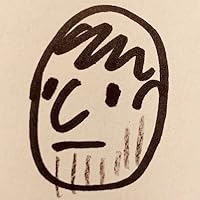
Novak's cartoon style reminds me of the 1950's stylized cartoons. Take a look at the cover as depicted above ... that's straight from the book (with a touch of color added). I personally really like this look and I think it served well to tell this gruesome history.
And there is some history that will be learned here!
Mostly I learned that I couldn't imagine why anyone wanted to be a Roman Emperor as they seemed to meet bloody ends at the height of their power. Not all, but many! I also didn't realize how many emperors there were through the period. That alone made it worth reading!
It was fun (as fun as a series of deaths/murders can be, anyway) and informative. I can't say I'm likely to flip through this a second time, but I'd definitely want to share it and pass it on to a friend who might find it interesting.
Looking for a good book? Et Tu, Brute? by Jason Novak is a history of Roman Emperors, their deaths told in a series of cartoons, that proves to be just the right way to tell this story.
I received a digital copy of this book from the publisher, through Edelweiss, in exchange for an honest review.
Novak is able to wring some pretty dark gallows humor out of a simple concept: illustrate the death of each emperor of the Western Roman Empire. It's a quick read, with each two-page spread featuring a year of death on the left, and, on the right, a single sentence and illustration of the death.
And boy are many of the deaths quite ignoble. Being the boss isn't all it's cracked up to be, especially when you're surrounded by a lot of surly people with swords. And spears. And knives. And tree stumps?
A (very) quick, illustrated look at how each of Rome's emperors died. Which accomplished the expected - it made me want to go back and read more Roman history.
Everyone needs an illustrated guide to the deaths of the Roman Emperors, whether to marvel at the creativity of some of the deaths, be struck by the often rapid turnover in the post, or as a guide to reading more on Wikipedia. A fun way to spend an hour.
This rating/review is based on an ARC I got from work.
This is a fun and quick illustrated guide to the deaths of the Roman emperors. I enjoyed the ones that happened in quick succession (which was most, actually), especially the ones where the successor was the cause of death and they inevitably perished shortly after. I plan to pass this on to a friend who loves Latin and Roman history, but it doesn't have nearly the appeal of other historical comics like Hark! A Vagrant or The Thrilling Adventures of Lovelace and Babbage.
I was reading a couple of the reviews after finishing and I was surprised how some were mad by inaccuracy of some deaths? If you had read the introduction, the author states that he was unable to find the cause of death of some emperors, so, he created his own death. The book was made for fun and while I have zero knowledge on emperors, or Rome generally, this was a very interesting read.
I liked that it was quick-paced and straight to the point. I wasn't a huge fan of the font, as I found it hard to read sometimes. But otherwise, it was exactly what it says it is.
Surprisingly quirky and informational. I appreciate Novak's silly sense of humor, and the creative liberties he took with some of his illustrations (read his Introduction and you'll see what I mean). Recommended for fans of the ancient Rome, or for anyone who is looking for something quick and different to read.
It's exactly what the subtitle says. There's an introduction and then it lists the year the Roman Emperor dies and on the next page is a silly illustration of how the emperor died (he made up drawing for the one whose deaths aren't listed) and a sentence about how they died. It's a quick read and fun for people who like Roman history or have a quiz on the subject coming up.
That was really entertaining! You'll literally be done in 20 min and you'll feel like you lived a hundred lifetimes that was totally worth it. Seriously. Read this book and you will be amazed at how alive you feel by the end.
...it wasn't difficult to get past the winded six and a half page introduction : ) you will enjoy Novak's illustrations about the ultimate demise of a few good and some awful characters...
A hilarious short read! Also a good reminder that a majority of these emperors died of conditions that would be easily treated with vaccines or antibiotics.
This was mediocre. The art looked like scribbles, there was no real plot to speak of, and there weren't any details given. I understand conceptually what he was trying to do, but he did literally that and nothing else. If you are looking for a timeline on which poorly-sketched cartoons of dead Roman emperors are drawn with one line of what the image is depicting, this is the book for you.
A modern, humorous version of what might be considered the perfect coffee table book. Some of the history is true, while other facts fabricated and bound up with great illustrations and a sense of humor.