

What do you think?

Dark Nights Saga #1
Dark Nights: Metal
The Dark Multiverse is coming, and nothing will ever be the same! One of the biggest events in DC history is here in the shocking, action-packed epic Dark Nights: Metal from critically acclaimed author Scott Snyder and Greg Capullo, reuniting after their smash-hit Batman series.
Beyond our universe there is the Multiverse...and beneath the Multiverse is a nightmare realm where every fear that has ever been felt on our Earth becomes reality. Now an evil force as old as time wants to drag us down into the shadows, into the realm of never-ending terror.
But when the door between worlds opens, it's not just any nightmares that come spilling out. They call themselves the Dark Knights. Each one is a twisted version of Batman from a world where one of his worst fears has come true.
With the invasion underway and Batman trapped in the Dark Multiverse, the Justice League must undergo an impossible quest to find the mysterious metals capable of repelling the Dark Knights and their master, the fearsome Barbatos. If they fail, everything they've ever known will be plunged into eternal darkness. But the true horror is...what if they're already too late?
Collects Dark Nights: Metal #1-6.
Beyond our universe there is the Multiverse...and beneath the Multiverse is a nightmare realm where every fear that has ever been felt on our Earth becomes reality. Now an evil force as old as time wants to drag us down into the shadows, into the realm of never-ending terror.
But when the door between worlds opens, it's not just any nightmares that come spilling out. They call themselves the Dark Knights. Each one is a twisted version of Batman from a world where one of his worst fears has come true.
With the invasion underway and Batman trapped in the Dark Multiverse, the Justice League must undergo an impossible quest to find the mysterious metals capable of repelling the Dark Knights and their master, the fearsome Barbatos. If they fail, everything they've ever known will be plunged into eternal darkness. But the true horror is...what if they're already too late?
Collects Dark Nights: Metal #1-6.
216 pages, Hardcover
First published June 12, 2018
About the author
Scott Snyder
1,778 books5,440 followersScott Snyder is the Eisner and Harvey Award winning writer on DC Comics Batman, Swamp Thing, and his original series for Vertigo, American Vampire. He is also the author of the short story collection, Voodoo Heart, published by the Dial Press in 2006. The paperback version was published in the summer of 2007.
Ratings & Reviews
Friends & Following
Create a free account to discover what your friends think of this book!
Community Reviews
Displaying 1 - 30 of 669 reviews

August 5, 2018
I picked this one as part of a Second Chance buddy read some of my friends and I are doing.
For me, this one is giving both Scott Snyder and Batman a second chance. Because, honestly, I thought Snyder went off the rails toward the end of his epic New 52 Batman run, and by the time it was over, I couldn't stand the sight of either of them.
So.
Okey-dokey.
In the foreword, Snyder sounded so earnest and sweet. He even said he was wary of events, so I figured maybe this wouldn't be as bad as it looked. I will admit it made me a bit nervous when he went on to say that ,"at their core, events are joyous things", because we all know that's a load of smelly, wet cat-shit. But it seemed as though he was speaking with nostalgia about the comic events of his childhood. Anyway. Second chances.
BRING ON THE METAL!

Sadly, but not shockingly, I wasn't very far into this when the first wave of cringe hit in the form of Carter Hall. Here's the thing: I just assume that something is going to be bad when they base the entirety of it around Hawkman and that fucking Nth metal. Let me say that again.
The story hinges on HAWKMAN and the NTH metal.
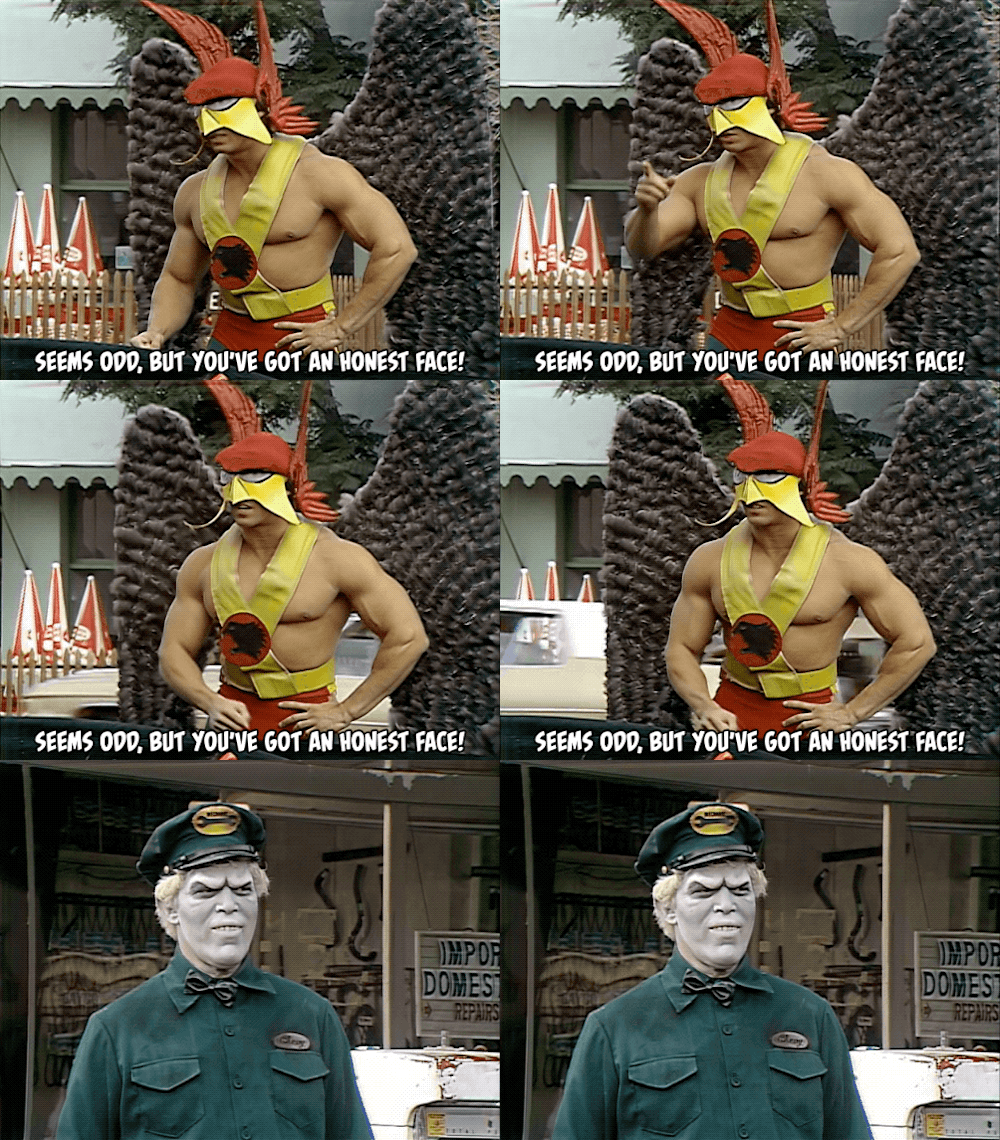
Oh, and not just his metal.
Nope. There are five of these special as fuck metals.
Nth Metal, Promethium, Dionesium, Electrum, and finally, Batman-ium.
Batman-ium? <--Are you fucking joking?! That doesn't even...whatever.
Ok, so what exactly do these metals do and how does that translate into an event?
Warning: Potential Spoilers Ahead
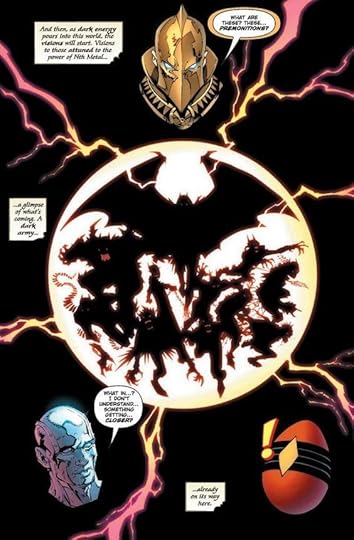
Alright. First, let me say that this was nowhere near as bad as I thought it would be after seeing Hawkturd show up. Yes, it was weird, trippy, and incoherent in a lot of spots, and there were some problems with the way the book was put together. The most glaring chunk missing out of this Deluxe Edition was the conclusion to the opening scene. The Justice League gets eaten by some sort of evil Transformer (<--don't worry, all part of Batman's master plan!), but we never see what actually happens. The conclusion to that scene at the end of the book skips merrily past the good stuff, opens with Whee! We did it, guys!, and concludes with Party at Wayne Manor, y'all!

Now, I've read nothing else Batman related for a long time, so I've no idea what happened in previous storylines to kick this event off. However, it was somewhat explained in this that Batman had been investigating some dark conspiracy in his history that went all the way back to Final Crisis. You know, when he died/time traveled because Darkseid shot him in the face with his Omega Beams?

Spoilery things happen because of that and now Batman is on the radar of some sort of evil monster that plans to use him as a gateway to Earth. And this dark being has been prepping him to be a doorway by getting him to imbibe these metals in sneaky ways over the years. Bruce has to save the Earth from the nightmare reality that has been partially unleashed, and the Superfriends have to save Batman or else the world will sink into an antimatter (or some other fakey, pseudo-scientific sounding) universe.
Now, toss in a whole bunch of evil versions of Batman and a few nods to the heavy metal music genre on top of that, and you might kinda get an inkling of the level of insanity this plot just marinates in.

But the thing I wasn't expecting was this almost childlike joy in Snyder's storytelling. Like, yeah, it's over the top and absolutely stupid, but you could feel his love for this character coming through. And it sounds crazy, but that kept me from outright loathing it.

In the end, I didn't love it. It was too stupid and nonsensical for me to really get behind the plot. But I didn't hate it, either. Mainly because it reminded me that one of the reasons I love superhero comics so much is that you get to set aside your boring reality and go live in a place where nightmares turn into villains, friendship is literally magical, and lunatic billionaires wearing capes are part of the mundane landscape. Now, that doesn't mean I would go around recommending this one - it's off the wall, odd, and probably isn't going to appeal to everyone.
But. It was...different.
For me, this one is giving both Scott Snyder and Batman a second chance. Because, honestly, I thought Snyder went off the rails toward the end of his epic New 52 Batman run, and by the time it was over, I couldn't stand the sight of either of them.
So.
Okey-dokey.
In the foreword, Snyder sounded so earnest and sweet. He even said he was wary of events, so I figured maybe this wouldn't be as bad as it looked. I will admit it made me a bit nervous when he went on to say that ,"at their core, events are joyous things", because we all know that's a load of smelly, wet cat-shit. But it seemed as though he was speaking with nostalgia about the comic events of his childhood. Anyway. Second chances.
BRING ON THE METAL!
Sadly, but not shockingly, I wasn't very far into this when the first wave of cringe hit in the form of Carter Hall. Here's the thing: I just assume that something is going to be bad when they base the entirety of it around Hawkman and that fucking Nth metal. Let me say that again.
The story hinges on HAWKMAN and the NTH metal.
Oh, and not just his metal.
Nope. There are five of these special as fuck metals.
Nth Metal, Promethium, Dionesium, Electrum, and finally, Batman-ium.
Batman-ium? <--Are you fucking joking?! That doesn't even...whatever.
Ok, so what exactly do these metals do and how does that translate into an event?
Warning: Potential Spoilers Ahead
Alright. First, let me say that this was nowhere near as bad as I thought it would be after seeing Hawkturd show up. Yes, it was weird, trippy, and incoherent in a lot of spots, and there were some problems with the way the book was put together. The most glaring chunk missing out of this Deluxe Edition was the conclusion to the opening scene. The Justice League gets eaten by some sort of evil Transformer (<--don't worry, all part of Batman's master plan!), but we never see what actually happens. The conclusion to that scene at the end of the book skips merrily past the good stuff, opens with Whee! We did it, guys!, and concludes with Party at Wayne Manor, y'all!
Now, I've read nothing else Batman related for a long time, so I've no idea what happened in previous storylines to kick this event off. However, it was somewhat explained in this that Batman had been investigating some dark conspiracy in his history that went all the way back to Final Crisis. You know, when he died/time traveled because Darkseid shot him in the face with his Omega Beams?
Spoilery things happen because of that and now Batman is on the radar of some sort of evil monster that plans to use him as a gateway to Earth. And this dark being has been prepping him to be a doorway by getting him to imbibe these metals in sneaky ways over the years. Bruce has to save the Earth from the nightmare reality that has been partially unleashed, and the Superfriends have to save Batman or else the world will sink into an antimatter (or some other fakey, pseudo-scientific sounding) universe.
Now, toss in a whole bunch of evil versions of Batman and a few nods to the heavy metal music genre on top of that, and you might kinda get an inkling of the level of insanity this plot just marinates in.
But the thing I wasn't expecting was this almost childlike joy in Snyder's storytelling. Like, yeah, it's over the top and absolutely stupid, but you could feel his love for this character coming through. And it sounds crazy, but that kept me from outright loathing it.
In the end, I didn't love it. It was too stupid and nonsensical for me to really get behind the plot. But I didn't hate it, either. Mainly because it reminded me that one of the reasons I love superhero comics so much is that you get to set aside your boring reality and go live in a place where nightmares turn into villains, friendship is literally magical, and lunatic billionaires wearing capes are part of the mundane landscape. Now, that doesn't mean I would go around recommending this one - it's off the wall, odd, and probably isn't going to appeal to everyone.
But. It was...different.

June 23, 2018
I loved this story. As much as I did not enjoy the Road to Metal graphic novel as apart from the Forge and Casting the majority of that was back issues of story lines I did not particularly enjoy in the first place so re reading them was not much fun however here I see how threads of them have been used to create this masterpiece.
No question Batman is my favourite superhero. Despite standing in the shadow of overpowered superbeings like Superman and Wonder Woman, most obviously, he is usually the one who comes up with the strategy of the final blow for the win. I was glad that was the case in this graphic novel straight from the start.
However:
"Explore too far, and you just become the villain of your own story."
Here, Batman's greatest attribute mix with the darker sides of his personality, his single mindedness, and un-trusting personality are what the big bad guys have been counting on all along. What if he was not destined to be the hero at the end but the cause of final destruction. Also, the nightmare versions of him, who have conquered worlds.
However, again, I was also glad to see another side of Batman's personality that is overlooked most of the time. This is Hope.
If I had one complaint about this book it is I wish it was longer. It did feel a bit rushed at the end, I would have been happy with another couple of issues, and the final fights made longer and in more detail, but you can have everything. It's always a good sign when a comic/book leaves you being for more.
It is a huge story that features heroes from the DC universe. I wish it was longer to give more of the other characters more feature time or more detailed action panels. However, the artwork is good and fits the story perfectly. The story itself is awesome and leaves big possibilities to come from this. There is a full page of the cover of each issue at the start of all six chapters, then a cover gallery at the end featuring the variant covers. All in all, awesome more, please.
No question Batman is my favourite superhero. Despite standing in the shadow of overpowered superbeings like Superman and Wonder Woman, most obviously, he is usually the one who comes up with the strategy of the final blow for the win. I was glad that was the case in this graphic novel straight from the start.
However:
"Explore too far, and you just become the villain of your own story."
Here, Batman's greatest attribute mix with the darker sides of his personality, his single mindedness, and un-trusting personality are what the big bad guys have been counting on all along. What if he was not destined to be the hero at the end but the cause of final destruction. Also, the nightmare versions of him, who have conquered worlds.
However, again, I was also glad to see another side of Batman's personality that is overlooked most of the time. This is Hope.
If I had one complaint about this book it is I wish it was longer. It did feel a bit rushed at the end, I would have been happy with another couple of issues, and the final fights made longer and in more detail, but you can have everything. It's always a good sign when a comic/book leaves you being for more.
It is a huge story that features heroes from the DC universe. I wish it was longer to give more of the other characters more feature time or more detailed action panels. However, the artwork is good and fits the story perfectly. The story itself is awesome and leaves big possibilities to come from this. There is a full page of the cover of each issue at the start of all six chapters, then a cover gallery at the end featuring the variant covers. All in all, awesome more, please.

May 5, 2018
Demonic Batmen from the Dark Multiverse invade the regular Multiverse to kill everything because that’s what bad guys do. The Justice League stop them because that’s what heroes do. I mean, they have to stop them. But you know they stop them. Anyway the real struggle is remaining awake while reading this boring drivel! I wonder if a dark Scott Snyder kidnapped the good Scott Snyder and that’s why we’ve been getting utterly shite Snyder comics since the end of Zero Year?
Large chunks of the story are incomprehensible. Batman is being controlled by the evil bat god Barbatos to act as a portal for his demonic Batmen to invade our universe. Ok - how long has Batman been controlled for and in what way does that even work? Why does Barbatos want to invade - what are he and his Batmen looking for? The story seems to hinge on Nth metal; which is… ? I think it’s 8th metal but what does that mean? There’s also a 9th metal - no idea what that is either. How many kinds of metal are there and why should we care? Also, once Batman becomes the portal to the Batmen, what happens to him? Why is he suddenly old - or is that another Batman? Why is Superman captured along with him?
There’s no protagonist but a slew of characters splinter to gather up the remaining Nth metal in the world to defeat Barbatos and co - the Nth metal is the only material that can hurt them apparently - by using them to make music or something? And reading about these characters’ quests is not in the least bit interesting. You know what’s less interesting? Reading Hawkman’s journal on Nth metal. Is anyone ever jazzed about seeing this dumbass - why can’t DC just keep him dead?!
Several characters cameo to no effect before disappearing forever. I won’t spoil one of them but if you’re a Vertigo fan there’s a surprising guest star in this story though his only role is to deliver up heaping globs of tedious exposition. There’s some nonsense about tribes - it’s so muddled.
I barely got through this one. I was never once interested in what was happening, not least because I didn’t know but also because Snyder didn’t give me a reason to be. He seems to have lost the ability to tell a coherent, even half decently-written comic and thinks that non-stop action - the more chaotic, the better - is what people want. And it’s such boring crap to read.
Why isn’t this book a total fail? Greg Capullo’s art. The only benefit to Snyder’s batshit script is the uniquely weird stuff Capullo gets to draw (none of which has any bearing on the plot) like Joker dragons, zombie Robins (who all say “Crow” because birds and subversion?), and a Justice League-themed Megazord! Barbatos looked so damn cool as did the giant Hawkman avatar and the numerous incarnations of Batman, though really I found most pages to look impressive. The Batman Who Laughs’ design though looks like a complete rip-off of Dredd’s Judge Death.
Visuals aside, Dark Nights: Metal is another worthless event comic and the kind of dull convoluted mess that is Snyder’s speciality these days. Hot garbage that’s a chore to read from first page to last - don’t do it!
Large chunks of the story are incomprehensible. Batman is being controlled by the evil bat god Barbatos to act as a portal for his demonic Batmen to invade our universe. Ok - how long has Batman been controlled for and in what way does that even work? Why does Barbatos want to invade - what are he and his Batmen looking for? The story seems to hinge on Nth metal; which is… ? I think it’s 8th metal but what does that mean? There’s also a 9th metal - no idea what that is either. How many kinds of metal are there and why should we care? Also, once Batman becomes the portal to the Batmen, what happens to him? Why is he suddenly old - or is that another Batman? Why is Superman captured along with him?
There’s no protagonist but a slew of characters splinter to gather up the remaining Nth metal in the world to defeat Barbatos and co - the Nth metal is the only material that can hurt them apparently - by using them to make music or something? And reading about these characters’ quests is not in the least bit interesting. You know what’s less interesting? Reading Hawkman’s journal on Nth metal. Is anyone ever jazzed about seeing this dumbass - why can’t DC just keep him dead?!
Several characters cameo to no effect before disappearing forever. I won’t spoil one of them but if you’re a Vertigo fan there’s a surprising guest star in this story though his only role is to deliver up heaping globs of tedious exposition. There’s some nonsense about tribes - it’s so muddled.
I barely got through this one. I was never once interested in what was happening, not least because I didn’t know but also because Snyder didn’t give me a reason to be. He seems to have lost the ability to tell a coherent, even half decently-written comic and thinks that non-stop action - the more chaotic, the better - is what people want. And it’s such boring crap to read.
Why isn’t this book a total fail? Greg Capullo’s art. The only benefit to Snyder’s batshit script is the uniquely weird stuff Capullo gets to draw (none of which has any bearing on the plot) like Joker dragons, zombie Robins (who all say “Crow” because birds and subversion?), and a Justice League-themed Megazord! Barbatos looked so damn cool as did the giant Hawkman avatar and the numerous incarnations of Batman, though really I found most pages to look impressive. The Batman Who Laughs’ design though looks like a complete rip-off of Dredd’s Judge Death.
Visuals aside, Dark Nights: Metal is another worthless event comic and the kind of dull convoluted mess that is Snyder’s speciality these days. Hot garbage that’s a chore to read from first page to last - don’t do it!

June 25, 2019
Big superhero comic mega events are a little bit like Michael Bay movies. Sometimes they’re sharply cut, high-octane spectacles that feature indelible performances; other times, they’re utter and incomprehensible dreck that substitutes volume for quality and mistakes misogynistic machismo for character development. In all cases, however, they’re big, over-the-top, shiny action fests that suggest subtlety is something other people do and those people are not welcome here.
(Note: I get that some of you are going, “Michael Bay has movies that feature indelible performances?” Well, yeah—I submit Bad Boys as the first example, and, for my money, the chemistry between Nic Cage and Sean Connery in The Rock makes Cagney and Lacey look like peanut butter and dried boogers. You can disagree, but you’d be wrong.)
Whether or not a particular mega event lands well for an individual reader is a function of a variety of factors, including their personal feelings about the characters and creators involved, obviously. But, one of the most important of those factors, at least for me, is the point in life at which you encounter a given event.
The first such event I read was Infinity Gauntlet at the tender age of 10. Ever since, it’s been the standard by which I judge all others, and I’ve never been able to figure out if it’s because it’s particularly good or if it’s just because it was my first bite at the apple (insert virgin joke here, though I’m like the Wilt Chamberlain of comics reading even if I’m like the A.C. green of sex having).
Look, there’s no way to do an event comic that’s not a giant, sprawling mess of excess. That’s not necessarily a bad thing, though—as long as you go in being okay with that, they can be delightful good fun when well executed (see, for examples, the X-Men Age of Apocalypse series, though, again, I’m not sure if that’s because of the age at which I originally read it or the quality and surprisingly high degree of creativity and coherence it evinces despite approximately 7,439,823 creators being involved). Sometimes, though, they’re such utter, contrived messes of horse feces that all you can do is curse them out for getting stuck to your shoe and mucking with the continuity of the regular books they disrupted for no apparent narrative reason and every apparent mercenary reason.
And, finally, I get to the point—where does Metal land on that spectrum? Squarely in the middle.
Snyder completely leans into and owns the absurdity, freely acknowledging that the goal is to be over the top and doing everything he can to get this tale of Batman, Superman, Wonder Woman, and other Justice League luminaries questing for mysterious, physics-defying metals in order to stave off not only the end of the world, but the end of existence universally, to that point. As a result, the action, emotion, and pathos are dialed up to 11, and there’s more corn here than at an Iowa county fair and more cheese than at a Wisconsin wedding.
It’s undoubtedly fun; it’s also occasionally baffling. On the Bay scale, it’s Transformers—kind of a hot mess, but when you hear the dramatic tones of Peter Cullen giving life to Optimus Prime, well, you can’t help but get a chill here and there.
We’ll round up from 3.5 based on Snyder’s high degree of self-awareness and unselfconscious embrace of event excess.
(Note: I get that some of you are going, “Michael Bay has movies that feature indelible performances?” Well, yeah—I submit Bad Boys as the first example, and, for my money, the chemistry between Nic Cage and Sean Connery in The Rock makes Cagney and Lacey look like peanut butter and dried boogers. You can disagree, but you’d be wrong.)
Whether or not a particular mega event lands well for an individual reader is a function of a variety of factors, including their personal feelings about the characters and creators involved, obviously. But, one of the most important of those factors, at least for me, is the point in life at which you encounter a given event.
The first such event I read was Infinity Gauntlet at the tender age of 10. Ever since, it’s been the standard by which I judge all others, and I’ve never been able to figure out if it’s because it’s particularly good or if it’s just because it was my first bite at the apple (insert virgin joke here, though I’m like the Wilt Chamberlain of comics reading even if I’m like the A.C. green of sex having).
Look, there’s no way to do an event comic that’s not a giant, sprawling mess of excess. That’s not necessarily a bad thing, though—as long as you go in being okay with that, they can be delightful good fun when well executed (see, for examples, the X-Men Age of Apocalypse series, though, again, I’m not sure if that’s because of the age at which I originally read it or the quality and surprisingly high degree of creativity and coherence it evinces despite approximately 7,439,823 creators being involved). Sometimes, though, they’re such utter, contrived messes of horse feces that all you can do is curse them out for getting stuck to your shoe and mucking with the continuity of the regular books they disrupted for no apparent narrative reason and every apparent mercenary reason.
And, finally, I get to the point—where does Metal land on that spectrum? Squarely in the middle.
Snyder completely leans into and owns the absurdity, freely acknowledging that the goal is to be over the top and doing everything he can to get this tale of Batman, Superman, Wonder Woman, and other Justice League luminaries questing for mysterious, physics-defying metals in order to stave off not only the end of the world, but the end of existence universally, to that point. As a result, the action, emotion, and pathos are dialed up to 11, and there’s more corn here than at an Iowa county fair and more cheese than at a Wisconsin wedding.
It’s undoubtedly fun; it’s also occasionally baffling. On the Bay scale, it’s Transformers—kind of a hot mess, but when you hear the dramatic tones of Peter Cullen giving life to Optimus Prime, well, you can’t help but get a chill here and there.
We’ll round up from 3.5 based on Snyder’s high degree of self-awareness and unselfconscious embrace of event excess.

September 18, 2018
Metal, all night!
I bought this in its single comic book issues, but I’ve chose this TPB edition to be able of making a better overall review.
This metal-foil dustcover hardcover TPB edition features “Dark Knights: Metal” (the main event) #1-6.
Creative Team:
Writer: Scott Snyder
Illustrator: Greg Capullo
ROCK YOUR MULTIVERSE
As I learned about Scott Snyder and his run on Batman, he’s superb conceiving new characters and premises (The Court of Owls, Zero Year), he does an entertaining development,…
…BUT…
…he sucks delivering the ending of the arc story! (if you don’t agree with this assesment, don’t bother posting a complain about it (I’ll deleting them and blocking the user anyway)).
Oh, and he just doesn’t know how to use The Joker (I have to admit that he used him a little better here, but still he just doesn’t have the balls to exploit him in all his murdering potential).
And about that, it was quite disappointing having seven murdering powerful dark batmen (bes tones ever conceived) and…
…nobody important died and at least in the main event (I still have to read The Resistance at the moment that I did this review), you can’t enjoy a decent fight between the evil dark knights and the Justice League, sure, you have splashes on the narrative, but nothing truly inspired or “cinematic” gorgeous to admire, just your usual overwhelming battles with zillions of characters involved in the same scene.
And about the corny elements, Snyder is just a miss-or-hit thing, without a steady balance, since while you have truly cool corny stuff like the Hall of Justice or the Hall of Doom…
…in other awful corny moments, you have “batmanium” (I struggled a lot of not laughing out loud and not in a good way) or Swamp Thing with bowtie (for not saying that is in a party) (as fan of Alan Moore (like me) I just can’t forgive that. You can’t got away with that without being punished with at least one star away of the rating (the other star was for the poor use of the evil dark knights)).
Oh, and involving The Sandman (well, Daniel, the current one), just to “tell a story” to Superman and Batman? A pointless and useless story. Nope, please don’t try to look clever, playing of Neil Gaiman, because you aren’t, by far.
Why bother to have an editor? If the writer will do any stupid thing that he/she thinks of, in the story, without any censorship (trust me, I say this in benefit of the image of the writer).
Also, I just hated the whole deal with Barbatos angle.
I think that the evil dark knight of the dark multiverse were pleny enough to have a top snotch solid event…
…they joined forces, they cross to our reality, they beat the crap out of our heroes, conquered Earth, and later the heroes come back and having an epic battle. Nuff’ said! I’d be really happy if things would play out that way…
…but nope, Snyder had to mess things up, having Barbatos, involving “music”, introducing zillions of types (levels?) of rare metals, where when you think that you touch top, nope, there isn’t any limitation to invent just another one…
…and not giving enough scene time to the dang evil dark knights that they are the whole reason to read the dang event! Geez!
Still, I have high hopes for The Resistance, the poor TPB that DC Comics had the clumsy decision of not publishing in metal-foil dustcover hardcover, geez! Since, maybe that one will give me just what I was looking for in this event (beside the sublime Dark Knights Rising).
Because, certainly, it wasn’t here in the “main event” arc.
I bought this in its single comic book issues, but I’ve chose this TPB edition to be able of making a better overall review.
This metal-foil dustcover hardcover TPB edition features “Dark Knights: Metal” (the main event) #1-6.
Creative Team:
Writer: Scott Snyder
Illustrator: Greg Capullo
ROCK YOUR MULTIVERSE
As I learned about Scott Snyder and his run on Batman, he’s superb conceiving new characters and premises (The Court of Owls, Zero Year), he does an entertaining development,…
…BUT…
…he sucks delivering the ending of the arc story! (if you don’t agree with this assesment, don’t bother posting a complain about it (I’ll deleting them and blocking the user anyway)).
Oh, and he just doesn’t know how to use The Joker (I have to admit that he used him a little better here, but still he just doesn’t have the balls to exploit him in all his murdering potential).
And about that, it was quite disappointing having seven murdering powerful dark batmen (bes tones ever conceived) and…
…nobody important died and at least in the main event (I still have to read The Resistance at the moment that I did this review), you can’t enjoy a decent fight between the evil dark knights and the Justice League, sure, you have splashes on the narrative, but nothing truly inspired or “cinematic” gorgeous to admire, just your usual overwhelming battles with zillions of characters involved in the same scene.
And about the corny elements, Snyder is just a miss-or-hit thing, without a steady balance, since while you have truly cool corny stuff like the Hall of Justice or the Hall of Doom…
…in other awful corny moments, you have “batmanium” (I struggled a lot of not laughing out loud and not in a good way) or Swamp Thing with bowtie (for not saying that is in a party) (as fan of Alan Moore (like me) I just can’t forgive that. You can’t got away with that without being punished with at least one star away of the rating (the other star was for the poor use of the evil dark knights)).
Oh, and involving The Sandman (well, Daniel, the current one), just to “tell a story” to Superman and Batman? A pointless and useless story. Nope, please don’t try to look clever, playing of Neil Gaiman, because you aren’t, by far.
Why bother to have an editor? If the writer will do any stupid thing that he/she thinks of, in the story, without any censorship (trust me, I say this in benefit of the image of the writer).
Also, I just hated the whole deal with Barbatos angle.
I think that the evil dark knight of the dark multiverse were pleny enough to have a top snotch solid event…
…they joined forces, they cross to our reality, they beat the crap out of our heroes, conquered Earth, and later the heroes come back and having an epic battle. Nuff’ said! I’d be really happy if things would play out that way…
…but nope, Snyder had to mess things up, having Barbatos, involving “music”, introducing zillions of types (levels?) of rare metals, where when you think that you touch top, nope, there isn’t any limitation to invent just another one…
…and not giving enough scene time to the dang evil dark knights that they are the whole reason to read the dang event! Geez!
Still, I have high hopes for The Resistance, the poor TPB that DC Comics had the clumsy decision of not publishing in metal-foil dustcover hardcover, geez! Since, maybe that one will give me just what I was looking for in this event (beside the sublime Dark Knights Rising).
Because, certainly, it wasn’t here in the “main event” arc.

April 2, 2018
Dark Nights: Metal is the latest DC event from superstar creators Scott Snyder and Greg Capullo, and it's about... fuck if I know. I've read this nearly 200-page, 6-issue series and I honestly can't even tell you what was the premise. Something about some fucking metals. Of which there are at least ten. Batman is involved. There are also evil versions of Batman. Of which there are also at least ten?...
Look, I usually try to write my reviews with a little more substance rather than just saying "what the fuck did I just read". But this is literally the only thing I can say about Metal. Maybe it's my fault for not waiting until a collected edition with all the tie-ins comes out, because maybe all the story happens in those rather than in the main event. Maybe I'm just not too versed on all the DC comics lore, because I definitely am not — I don't know shit about Hawkman, I still haven't read Final (or any other) Crisis, I only vaguely remember Multiversity and I didn't even bother with Convergence, Flashpoint and most of Geoff Johns'... let's say output. Maybe it's my fault. Maybe I will re-read the entire thing in a year or so and fall in love with it.
Or maybe this book is just shit. Maybe Scott Snyder have finally lost it, because I swear, I haven't read a decent comic of his ever since Zero Year. Maybe Greg Capullo's 90's comics influence has finally corrupted poor Scott, and now all he can write is this kind of superfluous bullshit meant only to showcase the artist's talents, not caring about the story's coherence and readability at all. Maybe giving Snyder a Justice League title is a bad idea after all.
I honestly don't know. That's why I'm not giving this book a rating for now. I used to love Snyder, and his Batman run actually got me into DC comics in the first place. So I still have hope that maybe I am at fault here for not understanding any of this. I am going to re-read Metal if and when DC decides to release a book which collects all the relevant tie-ins together with the main event, but for now, yeah, I'm not a fan.
P.S.:
Am I the only one who looks at this variant cover by Jim Lee...
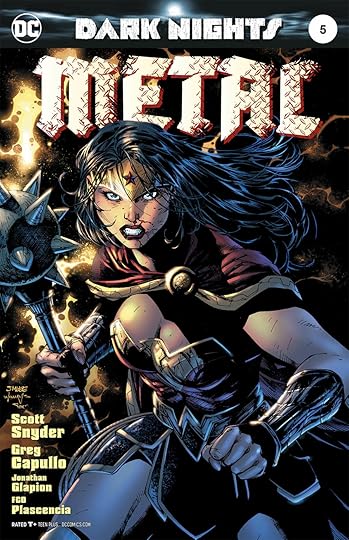
...and thinks of this?
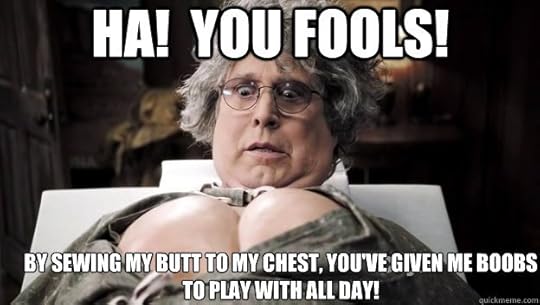
Update after a re-read: nope, I was right. It's still incomprehensible shit that is more interested in telling you how smart and original the author is instead of telling a good story. Fuck this book.
Look, I usually try to write my reviews with a little more substance rather than just saying "what the fuck did I just read". But this is literally the only thing I can say about Metal. Maybe it's my fault for not waiting until a collected edition with all the tie-ins comes out, because maybe all the story happens in those rather than in the main event. Maybe I'm just not too versed on all the DC comics lore, because I definitely am not — I don't know shit about Hawkman, I still haven't read Final (or any other) Crisis, I only vaguely remember Multiversity and I didn't even bother with Convergence, Flashpoint and most of Geoff Johns'... let's say output. Maybe it's my fault. Maybe I will re-read the entire thing in a year or so and fall in love with it.
Or maybe this book is just shit. Maybe Scott Snyder have finally lost it, because I swear, I haven't read a decent comic of his ever since Zero Year. Maybe Greg Capullo's 90's comics influence has finally corrupted poor Scott, and now all he can write is this kind of superfluous bullshit meant only to showcase the artist's talents, not caring about the story's coherence and readability at all. Maybe giving Snyder a Justice League title is a bad idea after all.
I honestly don't know. That's why I'm not giving this book a rating for now. I used to love Snyder, and his Batman run actually got me into DC comics in the first place. So I still have hope that maybe I am at fault here for not understanding any of this. I am going to re-read Metal if and when DC decides to release a book which collects all the relevant tie-ins together with the main event, but for now, yeah, I'm not a fan.
P.S.:
Am I the only one who looks at this variant cover by Jim Lee...
...and thinks of this?
Update after a re-read: nope, I was right. It's still incomprehensible shit that is more interested in telling you how smart and original the author is instead of telling a good story. Fuck this book.

July 29, 2018
This is a batshit crazy apocalyptic event, like if Morrison’s Multiversity was weirder and Batman-themed. While enjoyable for its creative reckless abandon and nightmare fantasy, it’s sometimes hard to follow, and I couldn’t connect to the “how weird can we make it?” story or any of the characters. Perhaps too much hyperbole lacking humanity, but fun nonetheless.

November 25, 2019

First half was good, a mistery spanning DC history but my knowledge of this universe was mostly limited to Batman comics so probably not enough to fully appreciate it.
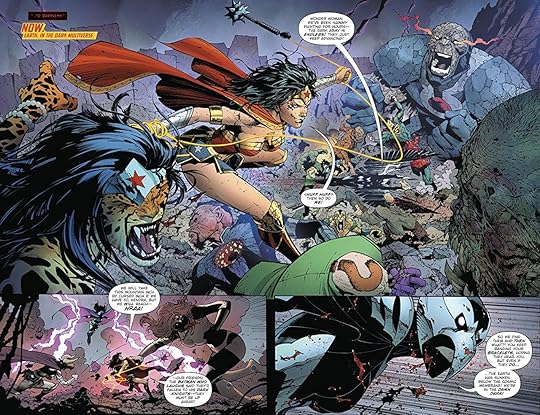
Some moments like the elseworlds Bat-Men splash-page and the Clark-Bruce bromance were really good and I always loved Capullo's artworks.

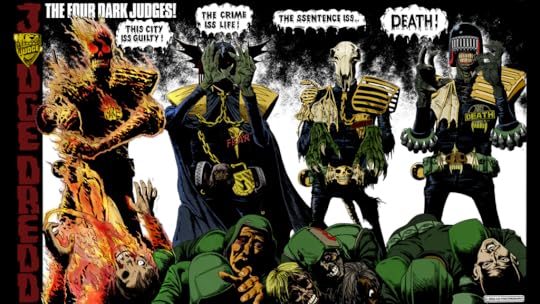

Sadly second half of the volume was a confusing battle-royale and... main storyline and evil Bat-Men from the Dark Universe characters are just a cheap imitation of Judge Death and the Dark Judges ones from 2000 AD Judge Dredd comics... oh good grief.

Not a bad event but that's all.

July 4, 2018
I loved how much of DC's history has been folded into this. Elements going back through most of DC's cosmic events all the way back to Crisis make an appearance. Unfortunately, if you haven't read DC comics for 30 years you may be a little lost. I cheered for some of the characters Snyder brought back who've been absent since Flashpoint. Snyder really opens the DC universe for some new stories at the end of this.
Greg Capullo's art! Holy shit, he just went all kinds of crazy with all those character designs. The Dark Knights were Batman seen through the prism of heavy metal album covers.
The pacing was off in the last half of the book. Lots of story elements were glossed over in a couple of panels. Maybe they are covered in the spin-offs, but this is how DC packaged it, so that's how I'm reading it. This series would have been better had it been expanded to 8 issues. I still don't get the importance of these metals. Snyder did a very poor job of explaining why I should care about them.
All in all, a pretty great event. I also like how it didn't break the flow of the monthly books and kept itself kind of self contained.
Greg Capullo's art! Holy shit, he just went all kinds of crazy with all those character designs. The Dark Knights were Batman seen through the prism of heavy metal album covers.
The pacing was off in the last half of the book. Lots of story elements were glossed over in a couple of panels. Maybe they are covered in the spin-offs, but this is how DC packaged it, so that's how I'm reading it. This series would have been better had it been expanded to 8 issues. I still don't get the importance of these metals. Snyder did a very poor job of explaining why I should care about them.
All in all, a pretty great event. I also like how it didn't break the flow of the monthly books and kept itself kind of self contained.

Read
August 3, 2024Overall, this event had great issues, it had bad issues, it was too long at certain points, the tie ins made sense and didn't make sense at points.
But overall, do I like the idea behind this? Yes absolutely, I think DC needed this, and I think it just helped to expand their universe more and give the potential to make tons of stories about the dark universe.
But overall, do I like the idea behind this? Yes absolutely, I think DC needed this, and I think it just helped to expand their universe more and give the potential to make tons of stories about the dark universe.

April 13, 2018
You can find my review on my blog by clicking here.
Hearing Scott Snyder and Greg Capullo were to get back together for one of DC’s greatest epic event is a dream come true. Sparked by an idea, Scott Snyder has been building this up for a couple of years and has finally drawn the curtains for fans to gaze upon one of his biggest project yet. Without a single drop of hesitation, Greg Capullo, who has also worked with Scott Snyder in the past to give us one of the best, if not the best, Batman comic book run, decided to tag along and bring to life what would normally be of the order of nightmares.
Coated with a desire to turn their world into the chaos that they once were plunged in, evil creatures as old as time join forces under the wings of the great Barbatos to bring the full force of destruction upon the all the heroes of Earth. While Batman’s actions drags him into a trap that seems dictated by forces beyond his control, the Justice League find themselves on a journey to obtain a mysterious metal that might be their only source of hope left for humanity. Darkness however shrouds their whole reality and leaves them to believe that the only road paved in front of them is one straight to doom. What the heroes of Earth do about it will all come down to what they truly believe in, even when looking up from the deepest abyss they’ve ever been in.
Heavy in references and drawing upon some of DC’s greatest lore, this Batman-centered epic cosmic event is bound to blow your mind. Lunatic, psychedelic and daring in every way possible, the story continuously finds ways to surprise you. Even with only six issues, it was able to reach new heights by not only plunging the universe into darkness, but also expanding the DC universe in new directions. Scott Snyder is far from being afraid to take our heroes onto a ride that they’ll never forget and give them the greatest threat they’ll have ever faced. What seems to be a hopeless future for our heroes is what will invite them to investigate uncharted territories and give everything they’ve got left in the tank to save their home from imminent death.
Filled with breathtaking moments and fantastic dialogues, this is a story about both friendship and exploration, and it is most rewarding when you reach the ending. The first couple of issues made me question everything I thought this event was going to be, but in Snyder, I trust. His vision is phenomenal, and to enjoy this particular story, you’ll have to keep an open mind. Every panel is supercharged with energy and is shocking in its own right. The way Scott Snyder ties in canon story material from the DC Universe to build a mystery of this scale is astonishing. It might heavily revolve around Batman, but once you start flipping through the pages, you’ll quickly understand that the Justice League are just as important in understanding the development of this event.
If anything, the trippiness of this story was such a refreshing look at comic book stories that it quickly became impossible to hate anything about it. This is what we need more of, and it is good to know that there is still original content that can be given birth to. Dark Nights: Metal easily became one of my favourite stories and will undoubtedly be known as a classic in due time.
Together, these two creative masterminds, Scott Snyder and Greg Capullo, are a duo to not mess around with. The show they put on is always revolutionary, but what Dark Nights: Metal was is nothing short of hardcore.
Yours truly,
Lashaan | Blogger and Book Reviewer
Official blog: https://bookidote.com/
_______________________
Hearing Scott Snyder and Greg Capullo were to get back together for one of DC’s greatest epic event is just a dream come true. The show they put on is always revolutionary, but what Dark Nights: Metal was is nothing short of hardcore.
Heavy in references and drawing upon some of DC’s greatest lore, this Batman-centered epic cosmic event is bound to blow your mind. Lunatic, psychedelic and daring in every way possible, the story continuously finds ways to surprise you. Even with only six issues, it was able to reach new heights by not only plunging the universe into darkness, but also expanding the DC universe in new directions.
Filled with breath-taking moments and fantastic dialogues, this is a story about both friendship and exploration, and it is most rewarding when you reach the ending. The first couple of issues made me question everything I thought this event was going to be, but in Snyder, I trust. His vision is phenomenal, and to enjoy this particular story, you'll have to keep an open mind.
If anything, the trippiness of this story was such a refreshing look at comic book stories that I just couldn't hate anything about it. We need more of this.

Yours truly,
Lashaan | Blogger and Book Reviewer
Official blog: https://bookidote.com/
Hearing Scott Snyder and Greg Capullo were to get back together for one of DC’s greatest epic event is a dream come true. Sparked by an idea, Scott Snyder has been building this up for a couple of years and has finally drawn the curtains for fans to gaze upon one of his biggest project yet. Without a single drop of hesitation, Greg Capullo, who has also worked with Scott Snyder in the past to give us one of the best, if not the best, Batman comic book run, decided to tag along and bring to life what would normally be of the order of nightmares.
Coated with a desire to turn their world into the chaos that they once were plunged in, evil creatures as old as time join forces under the wings of the great Barbatos to bring the full force of destruction upon the all the heroes of Earth. While Batman’s actions drags him into a trap that seems dictated by forces beyond his control, the Justice League find themselves on a journey to obtain a mysterious metal that might be their only source of hope left for humanity. Darkness however shrouds their whole reality and leaves them to believe that the only road paved in front of them is one straight to doom. What the heroes of Earth do about it will all come down to what they truly believe in, even when looking up from the deepest abyss they’ve ever been in.
Heavy in references and drawing upon some of DC’s greatest lore, this Batman-centered epic cosmic event is bound to blow your mind. Lunatic, psychedelic and daring in every way possible, the story continuously finds ways to surprise you. Even with only six issues, it was able to reach new heights by not only plunging the universe into darkness, but also expanding the DC universe in new directions. Scott Snyder is far from being afraid to take our heroes onto a ride that they’ll never forget and give them the greatest threat they’ll have ever faced. What seems to be a hopeless future for our heroes is what will invite them to investigate uncharted territories and give everything they’ve got left in the tank to save their home from imminent death.
Filled with breathtaking moments and fantastic dialogues, this is a story about both friendship and exploration, and it is most rewarding when you reach the ending. The first couple of issues made me question everything I thought this event was going to be, but in Snyder, I trust. His vision is phenomenal, and to enjoy this particular story, you’ll have to keep an open mind. Every panel is supercharged with energy and is shocking in its own right. The way Scott Snyder ties in canon story material from the DC Universe to build a mystery of this scale is astonishing. It might heavily revolve around Batman, but once you start flipping through the pages, you’ll quickly understand that the Justice League are just as important in understanding the development of this event.
If anything, the trippiness of this story was such a refreshing look at comic book stories that it quickly became impossible to hate anything about it. This is what we need more of, and it is good to know that there is still original content that can be given birth to. Dark Nights: Metal easily became one of my favourite stories and will undoubtedly be known as a classic in due time.
Together, these two creative masterminds, Scott Snyder and Greg Capullo, are a duo to not mess around with. The show they put on is always revolutionary, but what Dark Nights: Metal was is nothing short of hardcore.
Yours truly,
Lashaan | Blogger and Book Reviewer
Official blog: https://bookidote.com/
_______________________
Hearing Scott Snyder and Greg Capullo were to get back together for one of DC’s greatest epic event is just a dream come true. The show they put on is always revolutionary, but what Dark Nights: Metal was is nothing short of hardcore.
Heavy in references and drawing upon some of DC’s greatest lore, this Batman-centered epic cosmic event is bound to blow your mind. Lunatic, psychedelic and daring in every way possible, the story continuously finds ways to surprise you. Even with only six issues, it was able to reach new heights by not only plunging the universe into darkness, but also expanding the DC universe in new directions.
Filled with breath-taking moments and fantastic dialogues, this is a story about both friendship and exploration, and it is most rewarding when you reach the ending. The first couple of issues made me question everything I thought this event was going to be, but in Snyder, I trust. His vision is phenomenal, and to enjoy this particular story, you'll have to keep an open mind.
If anything, the trippiness of this story was such a refreshing look at comic book stories that I just couldn't hate anything about it. We need more of this.
Yours truly,
Lashaan | Blogger and Book Reviewer
Official blog: https://bookidote.com/

March 30, 2018
So Metal is over. The big Batman event that shook the foundation of the DC Universe. It's amazing right? Well...
Batman is once again a big cause of most of the problems in his life. He decides he needs to face Barbados alone, or whatever is coming from him, and he tricks all the Justice League so they don't stop him. Then, when it all comes down to it, he can't do that obviously. So out comes the Dark Knights. The evil versions of Batman, and they begin to wreck havoc everywhere! Batman and Superman out of commission, the world in trouble, how can they stop the evil dark knights from taking over?
Good: Loved moments in here. I mean there's a great moment of Batman and Supes being bros. Watching Damien never giving up hope on his father is nice. Batman and a unlikely ally teaming up to face joker-batman, and a few more great moments throughout. There's also some fun dialog bouncing from each character. Plastic man gets a .5 for him being him alone.
Bad: Ugh some of the fighting goes on too long. The story is big, and in it, there's a ton of characters. Sadly some of them are dull as fuck. I also think the ending sets up a lot but it feels entirly to rushed. The final battle is a huge let down IMO where it feels only half done.
Overall it's decent. It's over-bloated, big, and confusing at times. It also has some great moments sprinkled throughout and setting up the future for new directions. It's all half and half, so with that I'll give it a 2.5. I'll bump it up to 3 for the art alone was really good.
Batman is once again a big cause of most of the problems in his life. He decides he needs to face Barbados alone, or whatever is coming from him, and he tricks all the Justice League so they don't stop him. Then, when it all comes down to it, he can't do that obviously. So out comes the Dark Knights. The evil versions of Batman, and they begin to wreck havoc everywhere! Batman and Superman out of commission, the world in trouble, how can they stop the evil dark knights from taking over?
Good: Loved moments in here. I mean there's a great moment of Batman and Supes being bros. Watching Damien never giving up hope on his father is nice. Batman and a unlikely ally teaming up to face joker-batman, and a few more great moments throughout. There's also some fun dialog bouncing from each character. Plastic man gets a .5 for him being him alone.
Bad: Ugh some of the fighting goes on too long. The story is big, and in it, there's a ton of characters. Sadly some of them are dull as fuck. I also think the ending sets up a lot but it feels entirly to rushed. The final battle is a huge let down IMO where it feels only half done.
Overall it's decent. It's over-bloated, big, and confusing at times. It also has some great moments sprinkled throughout and setting up the future for new directions. It's all half and half, so with that I'll give it a 2.5. I'll bump it up to 3 for the art alone was really good.

June 18, 2020
I will rate this book much higher, but the points given by this reviewer are still very much spotted on.
https://www.goodreads.com/review/show...
Rating: 4.8 stars. It feels like the author had gone off to a fucking drug trip and I like it. Plus Baby Darkseid! Yeah! I also have to admit the Joker is kind of hot in his purple suit. XD
The Batman Who Laughs = Batman plus Joker plus the Marilyn Manson's makeup+outfit treatment...how can I resist...?
TBWL = 'Batman freed of his codes expects one: Batman always wins.' That sounds so fucking cool! At least in theory!
......although, turns out I must admit TBWL isn't as scary as I'd hoped.
I like this volume, but I do think the reason for Bruce Wayne/Batman to be the center of the whole world-end-level conspiracy is really, really forced.
Plus...how can Superman serve as the super-powerful-battery for the villains when I don't think there is a yellow sun to supply Superman's power in the middle of the Dark Multiverses?
PS: is the book cover a nod to the infamous Ozzy Osbourne's bat-act from 1982? LOL
https://www.goodreads.com/review/show...
Rating: 4.8 stars. It feels like the author had gone off to a fucking drug trip and I like it. Plus Baby Darkseid! Yeah! I also have to admit the Joker is kind of hot in his purple suit. XD
The Batman Who Laughs = Batman plus Joker plus the Marilyn Manson's makeup+outfit treatment...how can I resist...?
TBWL = 'Batman freed of his codes expects one: Batman always wins.' That sounds so fucking cool! At least in theory!
......although, turns out I must admit TBWL isn't as scary as I'd hoped.
I like this volume, but I do think the reason for Bruce Wayne/Batman to be the center of the whole world-end-level conspiracy is really, really forced.
Plus...how can Superman serve as the super-powerful-battery for the villains when I don't think there is a yellow sun to supply Superman's power in the middle of the Dark Multiverses?
PS: is the book cover a nod to the infamous Ozzy Osbourne's bat-act from 1982? LOL

March 18, 2021
Reread: 23/07/2024
This is always so fun to reread. Its like one of the best events easily and in hindsight I enjoy it more every time I reread it and well you see so many cool moments as I mentioned before but if you read the tie-ins like I did now, it makes the experience so much better and epic and I love how so many ideas went into this event and the art is just epic and the continuity is awesome and I am getting nostalgic now remembering when the event came out and the hype around it! Love it!
_____________________________________________________________________
Reread: 26/10/2021
Its still an epic read. Collecting: Batman Forge and casting, Metal 1-6 and Batman Lost
It starts off pretty well with Batman trying to find out about the case and how Hawkman is connected to it all and the history of Bird tribes and I love the revelations that Snyder builds using old characters but in new ways and then the epic sprawling saga of Batman vs JL, then the coming of Barbatos and Dark knights and well them taking over the world and the team splitting into missions and all that. And I love the way Snyder uses all of the heroes and gives each of them an epic moment especially Clark, Bruce and Diana and
Its epic the whole story and revelations of world forger and barbatos and how heroes even after darkness seeps in fights them back and win in the end though the ending seemed rushed but knowing whats coming its just the beginning of an epic sprawling saga. Plus the art of Capullo is godsend and so god. Makes the writing so much better. A must read!
___________________________________________________________________________________________
Probably one of the greatest events ever, it starts off with Batman being mantled by various beings to act as the gateway for Barbatos by court of owls and more but before that we have a battle with Mongul, Justice mecha, meeting with Kendra on Blackhawk Island, Batman on the run from JL, then we have Barbatos and Dark Knights coming from the Dark multiverse and so much and so forth, the world is plunged into the dark and it falls on Clark to save Bruce and the various members of the league to get answers about whats happening and the lore behind it, we find about the forge of worlds and the legends there and when all is down, everyone needs to gather strength and fight one final time and push back this darkness and spread the message of unity and coming together to fight this ultimate darkness and what happens after is just.. Metal!! One of the greatest events DC has done and its set up nicely and has big payoffs and new legends introduced and good moments for everyone and Hawkman gets a massive spotlight here with the return of MM back into the league and a great villain in BWOL and Barbatos and the epilogue is so well done and sets up the next wave of books to come brilliantly!
This is always so fun to reread. Its like one of the best events easily and in hindsight I enjoy it more every time I reread it and well you see so many cool moments as I mentioned before but if you read the tie-ins like I did now, it makes the experience so much better and epic and I love how so many ideas went into this event and the art is just epic and the continuity is awesome and I am getting nostalgic now remembering when the event came out and the hype around it! Love it!
_____________________________________________________________________
Reread: 26/10/2021
Its still an epic read. Collecting: Batman Forge and casting, Metal 1-6 and Batman Lost
It starts off pretty well with Batman trying to find out about the case and how Hawkman is connected to it all and the history of Bird tribes and I love the revelations that Snyder builds using old characters but in new ways and then the epic sprawling saga of Batman vs JL, then the coming of Barbatos and Dark knights and well them taking over the world and the team splitting into missions and all that. And I love the way Snyder uses all of the heroes and gives each of them an epic moment especially Clark, Bruce and Diana and
Its epic the whole story and revelations of world forger and barbatos and how heroes even after darkness seeps in fights them back and win in the end though the ending seemed rushed but knowing whats coming its just the beginning of an epic sprawling saga. Plus the art of Capullo is godsend and so god. Makes the writing so much better. A must read!
___________________________________________________________________________________________
Probably one of the greatest events ever, it starts off with Batman being mantled by various beings to act as the gateway for Barbatos by court of owls and more but before that we have a battle with Mongul, Justice mecha, meeting with Kendra on Blackhawk Island, Batman on the run from JL, then we have Barbatos and Dark Knights coming from the Dark multiverse and so much and so forth, the world is plunged into the dark and it falls on Clark to save Bruce and the various members of the league to get answers about whats happening and the lore behind it, we find about the forge of worlds and the legends there and when all is down, everyone needs to gather strength and fight one final time and push back this darkness and spread the message of unity and coming together to fight this ultimate darkness and what happens after is just.. Metal!! One of the greatest events DC has done and its set up nicely and has big payoffs and new legends introduced and good moments for everyone and Hawkman gets a massive spotlight here with the return of MM back into the league and a great villain in BWOL and Barbatos and the epilogue is so well done and sets up the next wave of books to come brilliantly!

June 17, 2018
HELL YEAH!
Scott Snyder & Greg Capullo demonstrate that their chemistry on Batman extends to the rest of the DCU! This is a wild and fun tour of the DC multiverse and universe through Snyder's unique vision, brought to life by Capullo's more than capable line work.
In this six-issue event (a welcome respite from giant, 10-issue long event maxi series), Snyder manages to take the cosmology established by Grant Morrison's Multiversity and throw it on its head. It turns out that, in addition to the 52 worlds of the multiverse, there's an underbelly, or "Dark Multiverse", that contains characters made of our heroes' worst nightmares. It's absolutely bananas stuff that works because Snyder and Capullo go all-in on the absurdity.
There's all the tropes of any good event: an insurmountable odd is met with equally implausible deus ex machina. There's too many characters and, barring Superman, Batman, and Wonder Woman, few characters have a solid arc. Of course, you can dig into the tie-ins to gain a greater appreciation of the event (which I'm considering, so let me know what you liked if you read the event).
In the end, I had a lot of fun catching up with the DC universe and being reminded about what had me hooked all those years ago. Snyder has such an excellent grasp on what makes DC unique, and even the set-up for more content seems exciting and unknown. I'll definitely be following up with Snyder's new Justice League title in collected editions.
Scott Snyder & Greg Capullo demonstrate that their chemistry on Batman extends to the rest of the DCU! This is a wild and fun tour of the DC multiverse and universe through Snyder's unique vision, brought to life by Capullo's more than capable line work.
In this six-issue event (a welcome respite from giant, 10-issue long event maxi series), Snyder manages to take the cosmology established by Grant Morrison's Multiversity and throw it on its head. It turns out that, in addition to the 52 worlds of the multiverse, there's an underbelly, or "Dark Multiverse", that contains characters made of our heroes' worst nightmares. It's absolutely bananas stuff that works because Snyder and Capullo go all-in on the absurdity.
There's all the tropes of any good event: an insurmountable odd is met with equally implausible deus ex machina. There's too many characters and, barring Superman, Batman, and Wonder Woman, few characters have a solid arc. Of course, you can dig into the tie-ins to gain a greater appreciation of the event (which I'm considering, so let me know what you liked if you read the event).
In the end, I had a lot of fun catching up with the DC universe and being reminded about what had me hooked all those years ago. Snyder has such an excellent grasp on what makes DC unique, and even the set-up for more content seems exciting and unknown. I'll definitely be following up with Snyder's new Justice League title in collected editions.

June 23, 2019
I remember when Batman was just a really good scary detective. Turning him into the lynchpin of all reality, the nexus of plans tens of thousands of years in the making, mostly just because he's basically the most popular DC superhero, doesn't really work.
This wasn't particularly well-written otherwise, either. It has too many characters to give a spotlight, it cheerfully wrecks far too much of the world for me to be invested - because we know it's all just going to be reset the way it was with nothing really sticking - and the main villain is just another cosmic destroyer in the way of Anti-Monitor. What, anti-matter not scary enough? Have some super-anti-matter!
All just an arbitrary prop to raise the stakes even higher, without actually having it mean anything.
This wasn't particularly well-written otherwise, either. It has too many characters to give a spotlight, it cheerfully wrecks far too much of the world for me to be invested - because we know it's all just going to be reset the way it was with nothing really sticking - and the main villain is just another cosmic destroyer in the way of Anti-Monitor. What, anti-matter not scary enough? Have some super-anti-matter!
All just an arbitrary prop to raise the stakes even higher, without actually having it mean anything.

December 6, 2020
Well okay, this was too much. I am not implying it was badly written, I didn’t lose sight of the story which is a good sign but the pace was off the charts and therefore we got barely any moments to breathe /digest what was going on, which made this a tiresome read.
I am not even going to attempt writing anything resembling a summary of this…
Snyder did a great job knitting this big mess together, still all this noise and big scale stuff is hardly a good replacement for a simple good story. Not trying to be rude here but it feels like someone with ADHD wrote this.
Dark Nights Metal has its moments and was overall interesting but stressful. 3.5 out of 5 stars
I am not even going to attempt writing anything resembling a summary of this…
Snyder did a great job knitting this big mess together, still all this noise and big scale stuff is hardly a good replacement for a simple good story. Not trying to be rude here but it feels like someone with ADHD wrote this.
Dark Nights Metal has its moments and was overall interesting but stressful. 3.5 out of 5 stars

February 3, 2019
Very cool, except for the awful red on black lettering which knocks the whole thing down by one star.

February 16, 2021
If you'd like a nice introduction to the DC Universe, this isn't it.
If you'd like an epic cosmic showdown of the Justice League traveling across the multiverse fighting hellish versions of Batman in an over-the-top dystopia with incredible art inspired by metal album covers, then this is a very successful approach to that.
Dark Nights: Metal, if you try to make sense of it, kind of requires a lot of continuity. Even post New 52, which was supposed to simplify everything, you are expected to be pretty up on writers Grant Morrison and Scott Snyder's various mythos's (Final Crisis, Multiversity, Court of Owls...) with an emphasis on contemporary Batman in particular. Oh, AND there's Neil Gaiman's Sandman.
But this isn't the noir Batman of those cartoons you grew up with. This is as cosmic as it gets, with a heavy dose of Hawkman's Nth Metal thing thrown in there. Snyder and fantastic artist Greg Capullo have upped their Batman run with a Justice League epic that certainly feels sufficiently ambitious for one of those big mega crossovers. I dare say it's better than anything of the like Marvel has come up with lately.
Again: the art is really, really, really good. Capullo doing his whole Spawn thing but with these classic characters is such a treat.
It does feel fresh. 'The Batman Who Laughs' and his extremely evil horde is villain worthy of threatening all those many universes. Different than Geoff Johns' more sentimental take on DC. Why it's even darker than the movieverse. This can be a good or bad thing depending on one's tastes. Either way, it is rather tricky to keep track of what the hell is going on in this book. Whatever. It's a crazy ride it is.
The author of this review must admit he hasn't been as on top of DC as he'd like to be lately, and that was a hinderance, yet still made the effort to get as much as possible out of this storyline in order to keep up my cred as a geek. Well, can't say I wasn't entertained, so it was pretty much worth the read.
If you'd like an epic cosmic showdown of the Justice League traveling across the multiverse fighting hellish versions of Batman in an over-the-top dystopia with incredible art inspired by metal album covers, then this is a very successful approach to that.
Dark Nights: Metal, if you try to make sense of it, kind of requires a lot of continuity. Even post New 52, which was supposed to simplify everything, you are expected to be pretty up on writers Grant Morrison and Scott Snyder's various mythos's (Final Crisis, Multiversity, Court of Owls...) with an emphasis on contemporary Batman in particular. Oh, AND there's Neil Gaiman's Sandman.
But this isn't the noir Batman of those cartoons you grew up with. This is as cosmic as it gets, with a heavy dose of Hawkman's Nth Metal thing thrown in there. Snyder and fantastic artist Greg Capullo have upped their Batman run with a Justice League epic that certainly feels sufficiently ambitious for one of those big mega crossovers. I dare say it's better than anything of the like Marvel has come up with lately.
Again: the art is really, really, really good. Capullo doing his whole Spawn thing but with these classic characters is such a treat.
It does feel fresh. 'The Batman Who Laughs' and his extremely evil horde is villain worthy of threatening all those many universes. Different than Geoff Johns' more sentimental take on DC. Why it's even darker than the movieverse. This can be a good or bad thing depending on one's tastes. Either way, it is rather tricky to keep track of what the hell is going on in this book. Whatever. It's a crazy ride it is.
The author of this review must admit he hasn't been as on top of DC as he'd like to be lately, and that was a hinderance, yet still made the effort to get as much as possible out of this storyline in order to keep up my cred as a geek. Well, can't say I wasn't entertained, so it was pretty much worth the read.

June 1, 2018
[Read as single issues]
I hope you've been reading everything Scott Snyder has ever written at DC, because it's all been leading to this. The Dark Multiverse is on its way, and not even the Justice League can stop it. With the God Barbatos threatening everything as we know it, with an army of twisted Batmen from across time and space to fight for him, can Earth's heroes unlock the secrets of Metal in order to save everything?
Oh boy. This one is absolutely insane. It's balls-to-the-wall right from the word go, and it doesn't let off the accelerator until the last page of the last issue. Scott Snyder has a lot of ideas at play here, and it can be a bit dense at times, but never to the point of a Grant Morrison story where you have no bloody idea what's going on anymore. The seeds he has sown over the past 5 or so years come to fruition, and it all meshes fantastically well. This is a Batman story at it's heart, but there's room for everyone else, usually in unexpected combinations too, which may be where the idea for Justice League: No Justice came from.
Greg Capullo throws everything including the kitchen sink into the art as well; there are crowd scenes with thousands of characters, interdimensional battles, nightmare Batmen, and a Joker dragon at one point, and he just smashes all of them out of the park. He and Snyder work perfectly after a 50 odd issue run on Batman, and this is the peak of their collaboration.
Dark Nights: Metal isn't perfect, but it's such a rollicking good time that any flaws it might have aren't even worth mentioning. A Justice League story for the ages.
I hope you've been reading everything Scott Snyder has ever written at DC, because it's all been leading to this. The Dark Multiverse is on its way, and not even the Justice League can stop it. With the God Barbatos threatening everything as we know it, with an army of twisted Batmen from across time and space to fight for him, can Earth's heroes unlock the secrets of Metal in order to save everything?
Oh boy. This one is absolutely insane. It's balls-to-the-wall right from the word go, and it doesn't let off the accelerator until the last page of the last issue. Scott Snyder has a lot of ideas at play here, and it can be a bit dense at times, but never to the point of a Grant Morrison story where you have no bloody idea what's going on anymore. The seeds he has sown over the past 5 or so years come to fruition, and it all meshes fantastically well. This is a Batman story at it's heart, but there's room for everyone else, usually in unexpected combinations too, which may be where the idea for Justice League: No Justice came from.
Greg Capullo throws everything including the kitchen sink into the art as well; there are crowd scenes with thousands of characters, interdimensional battles, nightmare Batmen, and a Joker dragon at one point, and he just smashes all of them out of the park. He and Snyder work perfectly after a 50 odd issue run on Batman, and this is the peak of their collaboration.
Dark Nights: Metal isn't perfect, but it's such a rollicking good time that any flaws it might have aren't even worth mentioning. A Justice League story for the ages.

March 29, 2018
Sooooo good!
World: Wow the art by Cappulo what can I say, he’s be so good since New52 and his characters have so much emotion and the book is bright and beautiful and there is an otherworldly edge here that most ‘hard core gritty’ artists don’t have (Tony Daniels comes to mind…zzzz). The world building is insane for this series, I can’t express how much of the DCU that this book takes and also much like Johns and Morrison changes and turns it around a makes something fresh and new for readers. I’m surprised and I’m happy and all the other emotions I had reading this book was so good. The sense of nostalgia, the sense of wonder, the sense of awe are all so great. I won’t say anything more but wow.
Story: This event is paced incredibly well, there is the sense that Snyder knows what’s he doing! He’s a great writer! Yes I love his books and I’ve loved it since ‘Gates of Gotham’ and this is his culmination of all the Batman stories he’s written the last couple of years and how it bleeds into the rest of the DCU in an amazing way. The idea of Metal is so creative and so ingrained in DCU lore that how it plays out leaves me at awe. The characters we see, the pieces he uses and the outcome and the payoff and the consequences and fallout are staggering. I don’t want to spoil it but if you want a journey into the DCU through a SF, horror, fantasy lens this is for you. That end, the fallout and what happens after, holy shit my brain exploded.
Characters: The Nightmare Batmen are amazing, the characters are amazing, the entire cast is amazing. This is a terrible review, I know and it’s vague but I don’t want to spoil anything for readers. This is a character piece at the core and the two DC characters that are are the heart of the story is so beautiful and so long missed, Snyder knows how to handle them and all the other characters in the universe and it’s beautiful.
Astounding in scope, execution and consequence, this is one of the best events I’ve read in a long long time.
Onward to the next book!
*read individual issues*
World: Wow the art by Cappulo what can I say, he’s be so good since New52 and his characters have so much emotion and the book is bright and beautiful and there is an otherworldly edge here that most ‘hard core gritty’ artists don’t have (Tony Daniels comes to mind…zzzz). The world building is insane for this series, I can’t express how much of the DCU that this book takes and also much like Johns and Morrison changes and turns it around a makes something fresh and new for readers. I’m surprised and I’m happy and all the other emotions I had reading this book was so good. The sense of nostalgia, the sense of wonder, the sense of awe are all so great. I won’t say anything more but wow.
Story: This event is paced incredibly well, there is the sense that Snyder knows what’s he doing! He’s a great writer! Yes I love his books and I’ve loved it since ‘Gates of Gotham’ and this is his culmination of all the Batman stories he’s written the last couple of years and how it bleeds into the rest of the DCU in an amazing way. The idea of Metal is so creative and so ingrained in DCU lore that how it plays out leaves me at awe. The characters we see, the pieces he uses and the outcome and the payoff and the consequences and fallout are staggering. I don’t want to spoil it but if you want a journey into the DCU through a SF, horror, fantasy lens this is for you. That end, the fallout and what happens after, holy shit my brain exploded.
Characters: The Nightmare Batmen are amazing, the characters are amazing, the entire cast is amazing. This is a terrible review, I know and it’s vague but I don’t want to spoil anything for readers. This is a character piece at the core and the two DC characters that are are the heart of the story is so beautiful and so long missed, Snyder knows how to handle them and all the other characters in the universe and it’s beautiful.
Astounding in scope, execution and consequence, this is one of the best events I’ve read in a long long time.
Onward to the next book!
*read individual issues*

July 10, 2018
This was just way too big and massive in scope for its own good. Really cool artwork which suited the story. Snyders writing was a tad slow in some places and tbh did at stages bore me. However a solid new beginning to a series. I do prefer my Batman when hes dealing with more crime style villains and not the godlike style. Has set up an interesting premise for DC right now, will be fun to see where they go from here.

October 7, 2018
Holy Metal, Batman! The story and art in this book is awesome! The Dark Universe is coming and the Earth will sink into darkness if our Super Heroes can’t save it. This book pulls out all the stops and uses all the DC Super Heroes in a nonstop fight to save our universe.

July 15, 2018
Damn, this was creepy as hell but damn good at the same time. Loved all the dark versions of Batman. Loved the story overall. Just a great series so far.

March 28, 2018
What did I just read? Why did I read it? So if you have seen some of my recent reviews of the Metal single issues, you will know I did not like this event! The story is a bit complicated to explain but basically there's different metals throughout the multiverse, one being the Nth Metal that grants the user powers, however this did not originate from the multiverse but from the dark multiverse, which is somehow connected to Batman. Then a portal opens up and these dark twisted versions of Batman come out, all of them being hybrids of Batman + another Justice League member, (e.g. a batman with the speedforce, one with Aquaman's powers etc...).
So lets get into what I did like, I will say right off the bat I did like the whole Dark Multiverse concept with the evil batmen. Basically every nightmare Bruce Wayne has ever had, (e.g. Alfred dying, Superman going evil etc...), that nightmare becomes a dark reality along with it an evil Batman with no moral codes. And ya I like the evil Batmen, its like the Crime Syndicate in Forever Evil, its just a brilliant concept! Plus some of the evil Batman are very cool, like The Red Death, The Dawnbreaker; but the best being The Batman Who Laughs (I think that one is self explanatory). And all around, the artwork is fantastic, mostly done by Greg Capullo but other great artists as well!
Now lets get into what I didn't like; to put it plainly the story is freaking boring! I mean ya it has exciting moments I will give it that, but a lot of the in between is just characters spouting exposition, with long speech bubbles that made me want to fall asleep. To me, story and dialogue is the most important aspect in any story whether it be comics, movies, games etc... And I'm sorry but the overall story and dialogue was just weak here for me aside from the exciting moments I mentioned earlier. Other then that the story slogs especially towards the end; at that point I was wandering what I was reading, and when can I read something else. I know a lot of people think of this as masterfully crafted and smartly written; I just think its pretentious and abstract! And ya, the evil batmen are cool, but even they get boring after a while. The Batman Who Laughs is a great villain, but after a while I wish he would shut up as he spouts on and on with exposition; some of his dialogue is menacing and cool to read, but the other 80% he sounds like every other villain. Going off topic: The tie in issues, while some of them cool, a lot of them left a lot to be desired and aren't really worth the extra money (Although they were written by other writers, so I don't blame Snyder for it).
But overall I'm obviously not trying to hate on Snyder, I just was not a fan of this one. As a Crisis story this is can fit in with all the others, but as a Batman story, I just want a solid straight forward story and books like Batman: White Knight deliver on that way better.
So lets get into what I did like, I will say right off the bat I did like the whole Dark Multiverse concept with the evil batmen. Basically every nightmare Bruce Wayne has ever had, (e.g. Alfred dying, Superman going evil etc...), that nightmare becomes a dark reality along with it an evil Batman with no moral codes. And ya I like the evil Batmen, its like the Crime Syndicate in Forever Evil, its just a brilliant concept! Plus some of the evil Batman are very cool, like The Red Death, The Dawnbreaker; but the best being The Batman Who Laughs (I think that one is self explanatory). And all around, the artwork is fantastic, mostly done by Greg Capullo but other great artists as well!
Now lets get into what I didn't like; to put it plainly the story is freaking boring! I mean ya it has exciting moments I will give it that, but a lot of the in between is just characters spouting exposition, with long speech bubbles that made me want to fall asleep. To me, story and dialogue is the most important aspect in any story whether it be comics, movies, games etc... And I'm sorry but the overall story and dialogue was just weak here for me aside from the exciting moments I mentioned earlier. Other then that the story slogs especially towards the end; at that point I was wandering what I was reading, and when can I read something else. I know a lot of people think of this as masterfully crafted and smartly written; I just think its pretentious and abstract! And ya, the evil batmen are cool, but even they get boring after a while. The Batman Who Laughs is a great villain, but after a while I wish he would shut up as he spouts on and on with exposition; some of his dialogue is menacing and cool to read, but the other 80% he sounds like every other villain. Going off topic: The tie in issues, while some of them cool, a lot of them left a lot to be desired and aren't really worth the extra money (Although they were written by other writers, so I don't blame Snyder for it).
But overall I'm obviously not trying to hate on Snyder, I just was not a fan of this one. As a Crisis story this is can fit in with all the others, but as a Batman story, I just want a solid straight forward story and books like Batman: White Knight deliver on that way better.

June 6, 2018
Watching Avengers: Infinity War, you are basically witnessing the cinematic equivalent of the event comic, on how it was the culmination of everything Marvel Studios was building towards after ten years of universe-building. However, for those who read comics regularly, it’s fair to say most event titles published by Marvel and DC don’t leave the best impression; longtime readers can become upset by creators’ numerous attempts of shaking up the universes. Dark Nights: Metal falls very much into that category.
Please click here for my full review.
Please click here for my full review.

March 6, 2020
In my opinion, Dark Nights: Metal is the best big DC event since the likes of Infinite Crisis or Blackest Night. It's gigantic in its scope, enormous in its ideas, and dire in its stakes, just as a big event should be, with all reality at risk! Scott Snyder did a great job here, crafting a clever epic that is special because it's also grounded in very personal character drama. This event is also happens to be one of the most balls-to-the-wall bonkers things I've read in a while.
Snyder went all out with no fear on this one and it's all the better for it! If you've ever wanted to read an adventure where Batman not only rides a dinosaur but also rides a flying Joker dragon, where Batman carries around a baby version of Darkseid in a backpack; if you've ever wanted to read a story that features a fight over the AntiMonitor’s brain, with connections to Neil Gaiman’s Sandman universe, and witness a race through the multiversal bleed in an extra-dimensional boat made of living music and powered by caged baby universes, this is the story for you! I think it's safe to say that Scott Snyder's epic really lives up to its name. It's the most METAL comic book story ever told.
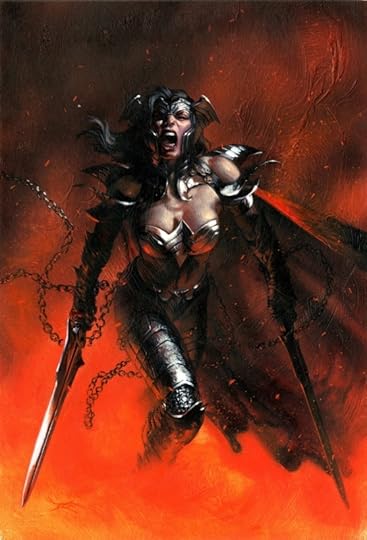
This is all incited after it's revealed that Batman has been meddling in shit he shouldn't be meddling with and investigating the origin of the mysterious Nth metal that powers many key items in the DC universe. This leads to a discovery of a "Dark Multiverse" existing on the underside of our known multiverse, and the dark forces that plan to make their way to our world and drag all of reality down into the darkness. I don't want to give away too much but the scope is huge! I'd like to think that I at least have a Master's degree in DC comixology, but, man, you need several PHD's to really comprehend everything. It's important to be familiar with Scott Snyder's New 52 Batman series as it further explores ideas with the Court of Owls and the Joker that were developed there. But it's also pretty important to be familiar with Geoff Johns's Hawkman work and Grant Morrison's deep cut work at DC, including Multiversity, Final Crisis, and his Return of Bruce Wayne miniseries. There are moments where it turns into a real love letter to the DC universe and its history, and I really enjoyed that. There's also a moment here with The Joker that fucking rocks and actually had me jumping out of my seat!!
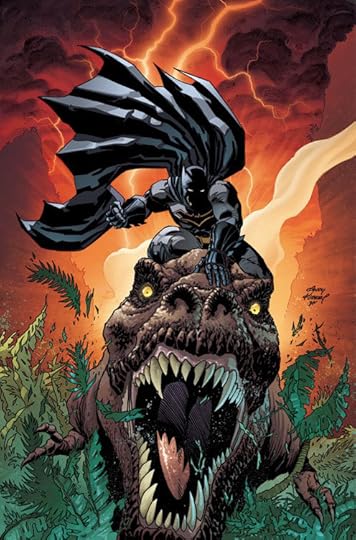
I love how the story isn't just superhero throw-downs or wacky sci-fi ideas, and it's very emotionally driven, not only through Hawkman's journal entry narration, but especially with Batman, who through this story has to face insecurities and literally confront his regrets, paranoia, and what would happen if his morals wavered even slightly. The Dark Multiverse is filled with Batman's failure, and it's all spilling out onto our world, and Bruce has to reckon with that.
Something else that makes this event really stand out is that the tie-ins are very essential here. It's important to read it in a particular reading order as they aren't just throw-away side stories. So far the entire event is presented in four separate books that aren't in the best order, but hopefully they'll release an omnibus with all the issues in order. Here is a really good reading order (spanning three other books) that I recommend using:
Dark Days: The Road to Metal
1) Dark Days: The Forge
2) Dark Days: The The Casting
Dark Nights: Metal
3) Dark Nights: Metal #1 - found in Dark Nights: Metal
4) Dark Nights: Metal #2 - found in Dark Nights: Metal
5) Teen Titans #12 - found in Dark Nights: Metal - The Resistance
6) Nightwing #29 - found in Dark Nights: Metal - The Resistance
7) Batman: The Red Death - found in Dark Nights: Metal - Dark Knights Rising
8) Batman: The Murder Machine - found in Dark Nights: Metal - Dark Knights Rising
9) Batman: The Dawnbreaker - found in Dark Nights: Metal - Dark Knights Rising
10) Batman: The Drowned - found in Dark Nights: Metal - Dark Knights Rising
11) Suicide Squad #26 - found in Dark Nights: Metal - The Resistance
12) Green Arrow #32 - found in Dark Nights: Metal - The Resistance
13) Batman: The Merciless - found in Dark Nights: Metal - Dark Knights Rising
14) Dark Nights: Metal #3 - found in Dark Nights: Metal
15) The Flash #33 - found in Dark Nights: Metal - The Resistance
16) Justice League #32 - found in Dark Nights: Metal - The Resistance
17) Batman: The Devastator - found in Dark Nights: Metal - Dark Knights Rising
18) Hal Jordan and the Green Lantern Corps #32 - found in Dark Nights: Metal - The Resistance
19) Justice League #33 - found in Dark Nights: Metal - The Resistance
20) Batman: Lost - found in Dark Nights: Metal - The Resistance
21) Batman: The Batman Who Laughs - found in Dark Nights: Metal - Dark Knights Rising
22) Dark Nights: Metal #4 - found in Dark Nights: Metal
23) Hawkman: Found - found in Dark Nights: Metal - The Resistance
24) Dark Nights: Metal #5 - found in Dark Nights: Metal
25) Dark Knights Rising: The Wild Hunt - found in Dark Nights: Metal - Dark Knights Rising
26) Dark Nights: Metal #6 - found in Dark Nights: Metal
Snyder went all out with no fear on this one and it's all the better for it! If you've ever wanted to read an adventure where Batman not only rides a dinosaur but also rides a flying Joker dragon, where Batman carries around a baby version of Darkseid in a backpack; if you've ever wanted to read a story that features a fight over the AntiMonitor’s brain, with connections to Neil Gaiman’s Sandman universe, and witness a race through the multiversal bleed in an extra-dimensional boat made of living music and powered by caged baby universes, this is the story for you! I think it's safe to say that Scott Snyder's epic really lives up to its name. It's the most METAL comic book story ever told.
This is all incited after it's revealed that Batman has been meddling in shit he shouldn't be meddling with and investigating the origin of the mysterious Nth metal that powers many key items in the DC universe. This leads to a discovery of a "Dark Multiverse" existing on the underside of our known multiverse, and the dark forces that plan to make their way to our world and drag all of reality down into the darkness. I don't want to give away too much but the scope is huge! I'd like to think that I at least have a Master's degree in DC comixology, but, man, you need several PHD's to really comprehend everything. It's important to be familiar with Scott Snyder's New 52 Batman series as it further explores ideas with the Court of Owls and the Joker that were developed there. But it's also pretty important to be familiar with Geoff Johns's Hawkman work and Grant Morrison's deep cut work at DC, including Multiversity, Final Crisis, and his Return of Bruce Wayne miniseries. There are moments where it turns into a real love letter to the DC universe and its history, and I really enjoyed that. There's also a moment here with The Joker that fucking rocks and actually had me jumping out of my seat!!
I love how the story isn't just superhero throw-downs or wacky sci-fi ideas, and it's very emotionally driven, not only through Hawkman's journal entry narration, but especially with Batman, who through this story has to face insecurities and literally confront his regrets, paranoia, and what would happen if his morals wavered even slightly. The Dark Multiverse is filled with Batman's failure, and it's all spilling out onto our world, and Bruce has to reckon with that.
Something else that makes this event really stand out is that the tie-ins are very essential here. It's important to read it in a particular reading order as they aren't just throw-away side stories. So far the entire event is presented in four separate books that aren't in the best order, but hopefully they'll release an omnibus with all the issues in order. Here is a really good reading order (spanning three other books) that I recommend using:
Dark Days: The Road to Metal
1) Dark Days: The Forge
2) Dark Days: The The Casting
Dark Nights: Metal
3) Dark Nights: Metal #1 - found in Dark Nights: Metal
4) Dark Nights: Metal #2 - found in Dark Nights: Metal
5) Teen Titans #12 - found in Dark Nights: Metal - The Resistance
6) Nightwing #29 - found in Dark Nights: Metal - The Resistance
7) Batman: The Red Death - found in Dark Nights: Metal - Dark Knights Rising
8) Batman: The Murder Machine - found in Dark Nights: Metal - Dark Knights Rising
9) Batman: The Dawnbreaker - found in Dark Nights: Metal - Dark Knights Rising
10) Batman: The Drowned - found in Dark Nights: Metal - Dark Knights Rising
11) Suicide Squad #26 - found in Dark Nights: Metal - The Resistance
12) Green Arrow #32 - found in Dark Nights: Metal - The Resistance
13) Batman: The Merciless - found in Dark Nights: Metal - Dark Knights Rising
14) Dark Nights: Metal #3 - found in Dark Nights: Metal
15) The Flash #33 - found in Dark Nights: Metal - The Resistance
16) Justice League #32 - found in Dark Nights: Metal - The Resistance
17) Batman: The Devastator - found in Dark Nights: Metal - Dark Knights Rising
18) Hal Jordan and the Green Lantern Corps #32 - found in Dark Nights: Metal - The Resistance
19) Justice League #33 - found in Dark Nights: Metal - The Resistance
20) Batman: Lost - found in Dark Nights: Metal - The Resistance
21) Batman: The Batman Who Laughs - found in Dark Nights: Metal - Dark Knights Rising
22) Dark Nights: Metal #4 - found in Dark Nights: Metal
23) Hawkman: Found - found in Dark Nights: Metal - The Resistance
24) Dark Nights: Metal #5 - found in Dark Nights: Metal
25) Dark Knights Rising: The Wild Hunt - found in Dark Nights: Metal - Dark Knights Rising
26) Dark Nights: Metal #6 - found in Dark Nights: Metal

June 22, 2020
WARNING: THE FOLLOWING REVIEW CONTAINS STRONG LANGUAGE.

Well this was... a book... I guess...
What’s it about?
Good question.
Pros:
The art is nice and suits the book as a whole pretty well.

There’s some fun superhero action on a pretty exciting and epic scale, that’s always good.
There’s some horror elements that while I didn’t entirely care for the execution of some of it (more on that later in the review) it often looks creepy.
Cons:
The... story... if you can call it that. So Snyder can be a good writer (I loved all of American Vampire) but in this instead of focusing on coming up with a story he came up with “wouldn’t it be cool if...” and wrote a list. Joker dragons, a Judge Death rip-off, Batman being old but becoming young again somehow, Dream from The Sandman being there for little-to-no reason, giant demonic Hawkman thing, Plastic Man being an egg for some reason, a Justice League Megazord, etc. What the fuck was this book even about? Some shit to do with Batman symbols in ancient times, the multiverse shit gets more convoluted, they need some magic metal for some reason, some villain versions of superheroes keep talking about Barbatoss (which I’m still not sure what that is), some book is burning, some people have to escape space-jail, the superheroes have to climb a mountain... WHAT WAS ANY OF THIS!?! When the 2 main things you mutter to yourself while reading a comic are “Huh” or “Are you fucking kidding me right now” that’s a sign of poor storytelling.
The characters. So a thing I’ve noticed with superheroes is I mostly only care about them if I’m into the plot and/or they’re very well written even if I consider myself a fan of said superheroes. This is a good example. While they all seemed mostly true to the character I didn’t care about them, there wasn’t any real reason to.
Despite being confusing the parts of the story that made any real sense were predictable.
The dialogue is not very good. There’s just some pretty cringeworthy lines and a lot of stupid monologuing. At one point regarding The Batman Who Laughs, the Joker says “The Batman who talks is more like it” and yeah, I find myself actually agreeing with Joker... holy shit, there’s so much not very well written blabbing.
Speaking of villains... (sigh)... the fucking villains. My main problem was The Batman Who Laughs... (sigh) so I already ranted about how DCeased (which unlike this still managed to get a 3-star rating from me) basically copies a lot from and toned down Crossed but made it not as interesting. Well The Batman Who Laughs is basically a toned-down, not as good version of Judge Death (from the Judge Dredd comics for those of you who don’t know) in both concept and design. It becomes more evident in another character (I don’t remember his name) designed almost exactly like Judge Fear so unlike DCeased I don’t think there’s a possible coincidence I think it’s just a straight up ripoff. So yeah great, now DC can just take something, add minor differences and apparently it gets great reception from fans... Also why do the weird demon-esque Robins keep chanting “crow” because I know that it’s meant to be that they’re crows instead of robins since they eat corpses and all that but it’s not like Robin just chants “robin” every time he does anything. There’s some more uninteresting villains here too but The Batman Who Laughs is one I especially wanted to talk about here, I am glad that a lot of fans have the same complaint so I’m not the only one this time.
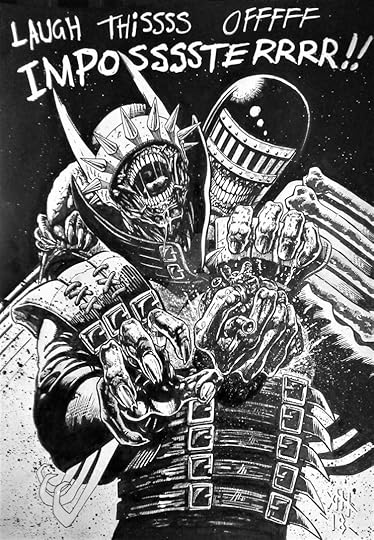
(Okay, I don’t know who made this but I want a shirt of it)
The ending is meh.
Mixed thoughts:
The comic relief is a bit hit or miss. Some of it is actually kinda clever but then there’s other stuff that is just a bit annoying.
Overall:
I recently read and reviewed the audiobook edition of American Gods by Neil Gaiman. While not necessarily a book I particularly recommend it was a good example of an author talking some ideas and putting them into an interesting plot. Unfortunately all Snyder seemed to have here were ideas.
I can maybe see why some younger readers who are just getting more into comics might like this as it is pretty exciting and has solid artwork. I may have liked this book myself more when I was around 12 or 13 and if you’re older and like this comic, great, I’m glad you had fun and enjoyed it.
For me, everything interesting about this book was cosmetic stuff. Don’t get me wrong: the art, making sure the comic is exciting and all that are important but so is having a plot, well written dialogue and something more unique to offer than something Judge Dredd did better decades ago.
Not recommended.
2/5
Well this was... a book... I guess...
What’s it about?
Good question.
Pros:
The art is nice and suits the book as a whole pretty well.
There’s some fun superhero action on a pretty exciting and epic scale, that’s always good.
There’s some horror elements that while I didn’t entirely care for the execution of some of it (more on that later in the review) it often looks creepy.
Cons:
The... story... if you can call it that. So Snyder can be a good writer (I loved all of American Vampire) but in this instead of focusing on coming up with a story he came up with “wouldn’t it be cool if...” and wrote a list. Joker dragons, a Judge Death rip-off, Batman being old but becoming young again somehow, Dream from The Sandman being there for little-to-no reason, giant demonic Hawkman thing, Plastic Man being an egg for some reason, a Justice League Megazord, etc. What the fuck was this book even about? Some shit to do with Batman symbols in ancient times, the multiverse shit gets more convoluted, they need some magic metal for some reason, some villain versions of superheroes keep talking about Barbatoss (which I’m still not sure what that is), some book is burning, some people have to escape space-jail, the superheroes have to climb a mountain... WHAT WAS ANY OF THIS!?! When the 2 main things you mutter to yourself while reading a comic are “Huh” or “Are you fucking kidding me right now” that’s a sign of poor storytelling.
The characters. So a thing I’ve noticed with superheroes is I mostly only care about them if I’m into the plot and/or they’re very well written even if I consider myself a fan of said superheroes. This is a good example. While they all seemed mostly true to the character I didn’t care about them, there wasn’t any real reason to.
Despite being confusing the parts of the story that made any real sense were predictable.
The dialogue is not very good. There’s just some pretty cringeworthy lines and a lot of stupid monologuing. At one point regarding The Batman Who Laughs, the Joker says “The Batman who talks is more like it” and yeah, I find myself actually agreeing with Joker... holy shit, there’s so much not very well written blabbing.
Speaking of villains... (sigh)... the fucking villains. My main problem was The Batman Who Laughs... (sigh) so I already ranted about how DCeased (which unlike this still managed to get a 3-star rating from me) basically copies a lot from and toned down Crossed but made it not as interesting. Well The Batman Who Laughs is basically a toned-down, not as good version of Judge Death (from the Judge Dredd comics for those of you who don’t know) in both concept and design. It becomes more evident in another character (I don’t remember his name) designed almost exactly like Judge Fear so unlike DCeased I don’t think there’s a possible coincidence I think it’s just a straight up ripoff. So yeah great, now DC can just take something, add minor differences and apparently it gets great reception from fans... Also why do the weird demon-esque Robins keep chanting “crow” because I know that it’s meant to be that they’re crows instead of robins since they eat corpses and all that but it’s not like Robin just chants “robin” every time he does anything. There’s some more uninteresting villains here too but The Batman Who Laughs is one I especially wanted to talk about here, I am glad that a lot of fans have the same complaint so I’m not the only one this time.
(Okay, I don’t know who made this but I want a shirt of it)
The ending is meh.
Mixed thoughts:
The comic relief is a bit hit or miss. Some of it is actually kinda clever but then there’s other stuff that is just a bit annoying.
Overall:
I recently read and reviewed the audiobook edition of American Gods by Neil Gaiman. While not necessarily a book I particularly recommend it was a good example of an author talking some ideas and putting them into an interesting plot. Unfortunately all Snyder seemed to have here were ideas.
I can maybe see why some younger readers who are just getting more into comics might like this as it is pretty exciting and has solid artwork. I may have liked this book myself more when I was around 12 or 13 and if you’re older and like this comic, great, I’m glad you had fun and enjoyed it.
For me, everything interesting about this book was cosmetic stuff. Don’t get me wrong: the art, making sure the comic is exciting and all that are important but so is having a plot, well written dialogue and something more unique to offer than something Judge Dredd did better decades ago.
Not recommended.
2/5

July 28, 2018
I received this from Edelweiss and Netgalley in exchange for an honest review.
This was very... busy. And convoluted? Yeah, that's a good word for this book.
Bad guys doing bad guy things ("today, we take over the world!", a la Pinkie and the Brain), and good guys doing good guy things ("here we come to save the day!"). And through it all, groan-inducing dialogue on both sides, and hard-to-read red-on-black font throughout.
The last few pages of this mess tell us (again) that this crisis, like all the ones before, have changed the DC universe in ways we can't imagine. Because, why not?
This was very... busy. And convoluted? Yeah, that's a good word for this book.
Bad guys doing bad guy things ("today, we take over the world!", a la Pinkie and the Brain), and good guys doing good guy things ("here we come to save the day!"). And through it all, groan-inducing dialogue on both sides, and hard-to-read red-on-black font throughout.
The last few pages of this mess tell us (again) that this crisis, like all the ones before, have changed the DC universe in ways we can't imagine. Because, why not?

November 4, 2018
Dark Nights Metal as an entire event was actually very entertaining with lots of thought provoking exploration into the current DCU multiverse. However, this book, which supposedly compiles the main storyline of the series, is such a disjointed mess, mostly because it is missing so many of the key events integral to the overall main-event, that it is actually quite difficult to understand, and is ultimately too frustrating to enjoy on its own.
Do yourself a favour and pick up all the volumes of the Dark Knights Metal event and read them as individual issues in order of publication. Don’t try to read them as collections.
This collection gets a 2.5/5.
The entire Dark Knights Metal event gets a 4/5
Do yourself a favour and pick up all the volumes of the Dark Knights Metal event and read them as individual issues in order of publication. Don’t try to read them as collections.
This collection gets a 2.5/5.
The entire Dark Knights Metal event gets a 4/5
Displaying 1 - 30 of 669 reviews