At last, the complete Krynn source book that contains all the information necessary for limitless campaigning in the world of DRAGONLANCE saga! Provides all-new information on the character classes, races, artifacts, andpowers that are unique to the fascinating world of Krynn
"...For in ages past, beyond memory and word, in the first blush of the world, Dragons terrible and great made war on this world of Krynn."
For DRAGONLANCE saga enthusiasts and AD&D game players everywhere, here is the latest information on the world shattered by dragons and their armies. The backgrounds for Knights of Solamnia, the wizards of High Sorcery, tinker gnomes, kender, and much more are detailed along with their AD&D game system rules. The struggle for the fate of Krynn awaits
NYT Best-selling fantasy authors Tracy Hickman, with his wife Laura, began their journey across the 'Sea of Possibilities' as the creators of 'Dragonlance' and their voyage continues into new areas with the 'Drakis' trilogy, 'Wayne of Gotham', a Batman novel for DC Comics and his 'Dragon's Bard' collector's series. Tracy has over fifty books currently in print in most languages around the world. A record of both Tracy and Laura's DNA currently orbits on the international space station and he is the writer and editor of the first science-fiction movie actually filmed in space. Follow us on Facebook or, of course, right here!
It’s fascinating to analyze the stark difference that comes with 30 years of game development and sourcebook layout advances. There were some seriously odd choices made in the creation of this book, and the lack of a strong editorial hand seems evident. The sections don’t seem to be laid out in a fashion to carry us through easily. The content most useful to running a campaign is buried intermittently in the back parts, while a lot of chaff is front-loaded. Another example, there are two separate entries on tinker gnomes in two separate “chapters” of the book. To add insult to injury, the first section includes extensive mechanics on gnomish devices and how they’re doomed to fail, directs GMs to discourage anyone from playing tinker gnomes and how to punish those players if they persist.
To be above board, I haven’t deducted any points here for this sourcebook being first edition AD&D. It was the best at the time, but it’s still not a good system. No this book earned every black mark on its own merits. This sourcebook starts out really strange. The introductory paragraph is a little vignette about Fizban.
Right after that, we open the rules introduction with a theology and morality discussion. This includes mechanisms for punishing your player characters for failing to adhere to their alignment (and how to hide their transgressions and punishment from them). Add to that, a new “High God” is added on top of the Dragonlance pantheon. Since this sourcebook came out three years after the first novel, the pantheon was clearly established so we can’t handwave this divergence away with an excuse of the setting not being fleshed out yet. A High God overseeing the other 18 actually works directly against the setting’s theme of balance. And considering this is the *first* thing in the book, the writer’s morality is given priority over both the setting and over this being a game book. This is authorial insert didactism at its worst.
The very next section is about transporting characters from other settings. Maybe this is a relic from 30 years or more ago, but the transportability of characters from one published setting to another to another just hasn’t been that common in my experience. I played Spelljammer a time or two, but we never flew a magic spaceship from Greyhawk to Dragonlance (or any other published settings). I did have a character sucked over to Ravenloft, but the premise of that setting is you get pulled in and can never escape – if you somehow manage to, that’s the culmination of the campaign. So dedicating something like four pages with lots of text and minimal pictures to let people know that half their characters from other settings won’t have access to their abilities or become hunted pariahs seems like an odd choice. I can’t see any reason why someone would want to bring over their character from another setting since they’ll be heavily penalized for doing so. The only explanation that makes sense to include so many columns on this topic is to provide another opportunity for the gamemaster to screw with their players. And again, this is immediately after the didactic lecture and how to punish them for moral transgressions.
Then straight into a history lesson about the Knights of Solamnia (and the necessary 30-day / 500-mile quest to get initiated into the knighthood between 2nd and 3rd level). The mythology around the Knights seems off, as there’s an implication that they only exist covertly in Solamnia, and the legend of Soth is modified in such a fashion to gut the tragedy – did y’all read your own books? Oddly enough, the off-worlders make another appearance, being explicitly barred from joining the Knights of the Rose.
One of the first really useful sections is on the magic system and how the three moons modify magical power, as well as guidance on The Test. But this was the first place where I saw a message akin to “Want to know more about the Towers of High Sorcery? Go read the novels!” Pushing us to the novels for information about one of the core classes is kinda garbage. I could suggest several other sections to excise by pointing people to the novels instead.
It’s a shame that two of the more unique races for the setting, the Irda and the Minotaurs, got way less space in the book than classes like the Tinker Gnome, which the book instructs the GM to punish players who chose to run one. One of the spots that got me thinking about etymology, I suspect the name of the deep sea elves, the Dargonesti, comes more Dagon. But they’re good (leaning neutral), so it’s difficult to tell without additional data.
I won’t make this all kvetching. The section on magical items was excellently crafted with all sorts of story hooks strewn throughout – it succeeded in rising above what could have just been a fanservice listing of everything in the novels (and, granted, there was a fair amount of this, but not oppressively so.)
I can’t recommend this for current GM’s looking for useful background information to incorporate into their campaigns. This is mostly a curiosity.
In the 80's, the Dragonlance saga gave an impressive boost to fantasy and was one of the most popular series of that time; translated into many languages and even originating a cartoon series. Associated from the first minute with TSR the authors Hickman and Weis wrote dozens of books that fleshed out Krynn and created this adaptation of their universe to AD&D first edition in 1987. This review will include some spoilers so if you’re a player stop right here. This is for your DM’s eyes only.
This book allows players to get involved in the epic fights in Krynn during several different epic periods. It has an impressive amount of content that will be essential to role-players but it will also be interesting to fans of the saga.
It describes the particular rules of the universe (Good redeems its own, Evil feeds upon itself and Both Good and Evil must exist in contrast); Rules for travelers from other planes (and their disadvantages; e.g. the clergy have no powers whatsoever) and accepted character classes. Alignment change rules and their penalties are also an important feature in this setting.
Of course that one of the main dishes must be the Knights of Solamnia, their heroic history and how they were considered incapable of solving the problems caused by the Kingpriest of Istar (some knights even tried to profit from the cataclysm); how they are currently organized in chapters (some hidden from the forces of evil); how they behave and obey the Oath and the Measure; their different factions of Knights of the Crown, Sword and Rose are described with text and tables, progression and powers.
There is a new class - the Tinkerer Gnomes - which is quite good for comic relief but not particularly powerful; gnomes are divided into guilds and the ones considered crazy are the only really mentally healthy ones; the tinkerers never repeat a machine and the bigger they are and with more redundancies, the better; rules for creating items are a bit confusing although it has several interesting devices as examples (with great sense of humor) including stewmatic, fargab, whooshwagon or the Irongnome.
Wizards of High Sorcery and their dependence on the 3 Moons (Solinari, Nuitari, Lunitari) are also described in detail, including the different tables and powers of the White, Red and Black robed wizards. Also included you’ll find info regarding the Conclaves and towers of high Sorcery – Wayreth and Palanthus.
Holy order of the stars - the clerics of Krynn - just like wizards they have different tables for different alignments; the same logic applies (the evil ones rise faster but have lower limits to their powers). The gods of Krynn’s astrological pantheon include: Paladine, Majere, Kiri-Jolith, Mishakal, Habbakuk, Branchala, Solinari / Gilean, Sirrion, Reorx the forge, Chislev, Zivilyn, Shinare, Lunitari / Takhisis, Sargonnas, Morgion, Chemosh, Zeboim, Hiddukel, Nuitari. The description of their Avatar’s capabilities are absurdly exaggerated; basically the authors should just abstain of providing stats if they wanted to insert the ones provided.
The races of Krynn are not exactly balanced in this first edition of AD&D. But there are quite interesting additions including the gnomes (that must be Tinkerers) and the fascinating Kender which are extremely curious and without concepts of ownership (not thieves…they are handlers), fearless and somehow behaving like “adult children”. Elves are kind but very arrogant and dislike mixtures, especially the Silvanesti (high elves); the Qualinesti were once part of the Silvanesti but being more open minded they had relationships with other races; the Kagonesti are extremely strong, robust and agile but dumb as a rock being enslaved by the Silvanesti (they are basically the “house servitor”); there are also the Sea Elves (Dargonesti and Dimernesti) more suited to aquatic campaigns due to huge disadvantages out of water; Dark Elves are Outcasts and Half-Elves are often frowned upon by other elves and humans. The dwarven races include the Mountain Dwarves in their old mountain dwellings, the Hill Dwarves who stayed out of the cities during the cataclysm (having great resentment to the other dwarves) and the pathetic Gully Dwarves. High Ogres - Irda are kind and powerful (Intelligence, Dexterity and Charisma may reach 20); Krynn's Minotaur is a playable character race with huge strength and constitution bonuses and can have those attributes at 20, being possibly one of the best fighter classes in AD&D 1st edition.
Some extra proficiencies are detailed including Dragon Riding (Dex, uses 2 slots) and Astrology (Int, uses 2 Slots).
There is also a wealth of new monsters, including the characteristic Draconians, born from the eggs of good-natured dragons: Aurak; Baaz, Bozaks, Kapaks, Sivaks; Other monsters include the Dreamshadows, Dreamwraiths, Fetch, Ice bears, Bloodsea minotaurs, Shadowpeople, Spectral Minions, Thanoi (Evil Walrus Man) and of course the mighty Dragons.
The ages of Krynn - Age of Dreams, age of light, age of might, age of Dragons are also mentioned in passing with a chronological chart using the material from Astinus, the mysterious eternal copyist.
It Includes summary stats from NPC's of different eras including Huma the Knight of Solamnia and his Silver Dragon; Magius the Red Robe Wizard; the treacherous magician Fistandantilus; Astinus of Palanthus (980 HP !!!!); Reorx (Dougan Redhammer); The Kingpriest of Istar; Arack master of the games; Raag; Steeltoe the half-Ogre bandit.
Magic items specific to this setting are detailed, including the potion Istar's Truth; Staff of Striking / Curing, Diviner of Life, Brooch of Imog, Medallion of Faith, Flute of Wind Dancing; Glasses of the Arcanist; Golden Circlet; Keys of Quinarost; Singing Statue; Webnet; Dragonarmor; Plate of Solamnus; Shield of Huma (+ 3 / + 5 against Dragons, 1/2 or no damage against Dragon breath), Solamnic armor (traditional KoS equipment, plate +1 and shield +1 AC 0), Dragonlance (the most powerful items, especially if the character is mounted on a dragon), Frostreaves (battle Axe +4), Mantooth, Nightbringer (Verminaard’s Mace +3, ST vs spell or blind 2d6 turns), Wyrmsbane (2HS + 2 and double damage against dragons) and Wyrmslayer.
Special items and artifacts are also described, such has: Icon of truth, Orb of Dragonkind, Hammer of Kharas, Silver arm of Ergoth Staff and Dagger of Magius, Bupu's Emerald, Bloodstone of Fistandantilus, Device of Time Journeying, Dalamar's Bracelet of Magic Resistance, ring of healing wand of lightning ; Tasslehoff's magic mouse ring and his Rabbitslayer; nightjewel, Warbringer, Helm of Griffon mane.
It also Includes Pre-Cataclysm and Pos War Ansalon maps; control areas for each faction, including Red, Blue, White, Black, Green Dragonarmies, Minotaurs, Kinights of Solamnia, Elves and Dwarves; climate map; table of nations with products, capital, etc.
This book has information about several Dragon Age Personalities, including the following: Thakisis; Fizban the fabulous; Raistlin Majere; Lord Soth; Kitiara; Duncan; Kharas; Reghar Fireforge; Amothus Palanthus; Cleric of Paladine Elistan; WizardS W Par-Salian, R Justarius, B Ladonna, Kar Thon Pirate Maquette; Bas-Ohn Koraf; Dalamar; Crysania; Caramon Majere; Tasslehoff Burrfoot; Tika Waylan Majere; Tanis Half-Elven.
Other stuff that players and Dungeon masters might find useful are the character Alignment tracking chart, Races of Krynn table, unified Ansalon monster chart Stats range table, Gnome Mishap table and complexity level of devices; Lists of spells allowed by deity and also spheres of influence of sorcerers and summary of spells.
If it were not for the severe imbalance of classes and races; less divine nonsense and if it included more detailed information about geography and specific locales, this would be the perfect expansion background setting for the first edition of Advanced Dungeons and Dragons. You will also need other first edition books such as Unearthed Arcana, Dungeoneers survival guide due to frequent references to those rules.
Review first published on Amazon.com
Note: This is the Campaign book for the first edition of AD&D, not the recently released for 5E.
The original sourcebook for the Dragonlance World 30 August 2013
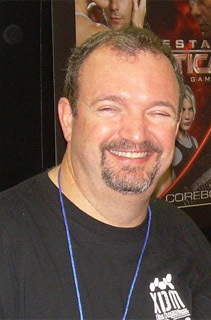
Okay, for those who do not know, this is Tracy Hickman:
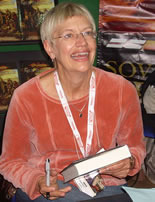
Yes, the Dragonlance series were not written by two woman but a man and a woman, and for those who do not believe me, here is a picture of Margaret Weiss:
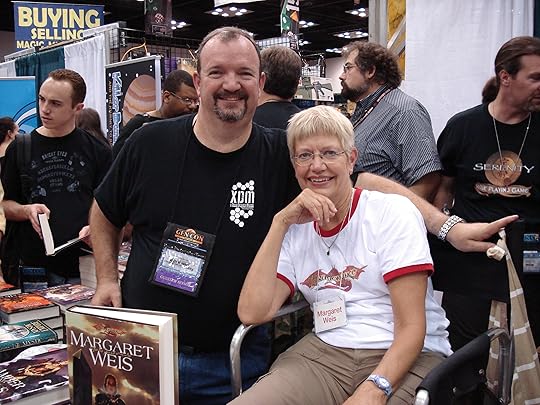
And here are both of them at a book signing:
Actually, they are at Gen-Con, but what would they be doing at Gen-Con other than signing books? I don't know, I have never been to Gen-Con (and am unlikely to do so because that would involve me travelling to America – I would rather go to Paris, sit in a cafe, and do an Ernest Hemingway). Anyway, I probably should make a comment on this book. There, done it. No this is not because I am tired and it is pushing twelve midnight, but rather because there is absolutely nothing about this book that I really want to comment on. I did like the Dragonlance setting once – when I was 13 – but not any more. In fact, unless I am writing a commentary on a Dragonlance book, I generally do not even think about it. Instead, I rather post pictures of stuff – like this bull mastiff.
The 1st D&D rpg book I bought and played... Long before I knew any of the game's actual rules. Still have it safe on my book shelf; a true treasure of my childhood!
I was never as big of a fan of Dragonlance as I was of some other D&D settings. I did enjoy some of the novels when I was younger, but the setting itself didn't really hit me: it felt like a fairly generic retread of fantasy, nothing new compared to Forgotten Realms which I'd already come to know and love. Which is ironic, because Forgotten Realms itself is hardly the epitome of fresh and new. Maybe if I'd gotten to Dragonlance first, my opinions might have flipped?
But as I grew older, and delved deeper into the game, its various editions and system intricacies, I not only found a few unique and even likeable bits of the setting, but also learned a better reason to dislike it on the whole. On one hand, I found the concept of the Towers of High Sorcery, the arcane tests, and such things, rather intriguing and exciting at a time - even taking the opportunity to snatch a couple Forgotten Realms characters across the planes just to put them through some tests of my own devising. I also remember liking the various Knightly Orders of Solamnia, and at one point pondering of stealing those into something of my own devising, but nothing ever came out of it. (Although now that I think about it, I have a similar tiered knightly order in my own setting, so maybe I'll give it another look after all?) Of all the often deplored new races offered in the game, the draconians were a lot of fun, and the seafaring minotaurs a new perspective to the usually such a savage maze-dwelling monster. And finally, the frankly rather hilarious detail of high-level characters being literally kicked out of the setting would, in theory, make for an amusing way to turn a long-term campaign into planar adventures, Planescape perhaps. On the other hand, the timing at which all of this was brought into the fold of D&D had a lot to do with how fantasy developed as a genre, and worse still, how the game itself grew from here. The novels being some of the first big fantasy hits, as well as being heavily associated with the most important and revolutionary fantasy game in the market at the time, greatly inspired a new generation of authors into following on their footsteps, creating tales of the same mold. And the adventure modules for the time were some of the worst and tightest railroads ever published under the standard of Dungeons & Dragons, and likely prompted a whole lot of later focus towards the story-based gaming that we're suffering even today. Suffice to say, I'm not a fan.
Also, everyone knows about the kender, but the setting really is rather full of races that no one would miss. Gully dwarves and tinker gnomes are both about on the same level of gimmicky and annoying: it was only to their benefit that they ended up relegated to the sidelines by comparison, and receiving not nearly as much spotlight, else we might collectively despise them just as much as the kenders. (I actually once had an "ancient evil", locked away in the center of a dark demonic dungeon, end up revealed to be a small pack of kenders. Turns out "borrowing" spellbooks and holy symbols can bring you dangerously close to a total party kill. "What does this say here? F-I-R-E-B-A-")
I have come across Dragonlance throughout my dalliances with fantasy literature, yet I had not read anything specific from the setting. This book was the perfect introduction. Light on statistics and heavy on lore, it summarizes the early story and character arcs of the series upto 1987. I found it easy and fun to read and it tied together all the various Dragonlance bits I had picked up over the years.
Putting all this information about Krynn together in one place kind of exposes how goofy of a world it is, and as a late-1E product this is somewhat burdened with clunky rules concepts which were better handled in 2E. Full review: https://refereeingandreflection.wordp...
Fantastic AD&D Book for the Dragonlance setting. It has always been my favorite Dungeon & Dragons setting. it realley has got my juices flowing to run a Dragonlance game. So many great ideas and adventure seeds from this great book.
I've read this cover to cover multiple times, and I enjoy every page. This is exactly what a campaign setting ought to be: this has history, details about races, gods, dragons, and even how to deal with players from another setting entering the realm of Krynn. It's hugely complete, and yet it's only 100-ish pages.
The setting is a good one, partly because it's such a classic, but also because it is so richly detailed in other material. I've heard people say that they're not sure, sometimes, how to deal with the fact that there is so much story in the Dragonlance series (or in the Forgotten Realms, for that matter), but I see the stories as an excuse to get to know the setting. If Krynn is a world you want to play in, then there's plenty of material out there for you to explore until you feel at home there. And continuity is less important than one might at first believe. Dragonlance is rich in history - even the first Dragonlance book itself drops the reader into an adventuring party reuniting after 5 years apart. You can drop into Krynn at any point and discover a rich, satisfying world to explore.
This book is a good read, regardless of whether you want to visit or settle in Krynn. It's a great read because it spells out a complete fantasy setting in relatively few pages, and I think it's a great model for anyone building a world for their own game.
I read this when I first started to play AD&D (and even before I read those Dragonlance novels), and it was actually incredibly fascinating to me, both because D&D-type statistics were new to me, as well as the story world. Later, after we played for a while, we found that a lot of their custom classes were not very playable, especially the wizards and clerics, but it would probably still be fun to browse through if I still had it.
This book defined my young adult years. I spent an infinite amount of hours living in this world, either through role-playing or reading the saga. I was fortunate enough to have my wife take me to GenCon 2012 for our one year anniversary, where I got this book autographed by both Mr. Hickman and Mrs. Weis.
Really enjoyed this book. I didn't think I would but it had a really nice ending. I did get annoyed when it waffled but I realised that's how kender see the world and it then just became hilarious when an argument happened in the story.
A good overview I think. I'd not encountered - though had heard of - the setting before. But generally a good overview, and gives some background and so forth that could be moved outside the D&D mechanics as well
This is excellent. It captures the feel of the novels perfectly, it includes everything you need, and it's even well laid out. A "must have" if your a D&D player that enjoys Krynn.