

What do you think?

The Earls of Mercia #2
Viking Enemy
It’s the second Viking Age in England, and King Æthelred II reigns. Five ealdormen represent him in the old Saxon kingdoms – united now for fifty years. But battles are still being fought against the Viking raiders looking to plunder England for her wealth.
Leofwine is the ealdorman of the Hwicce and has proved himself in the Battle of Strathclyde. But the spectre of Swein, King of Denmark, the man who partially blinded him five years before while on a diplomatic mission, has suddenly become a harrowing reality with the death of King Olaf of Norway at his hands. As the Viking raids intensify under Swein’s command, conflict at the King’s Witan and amongst his councillors is growing.
Leofwine finds himself treading a difficult path between loyalty and the twisted self-interests of the men the King insists on surrounding himself with. The sychophants are winning as an impressionable monarch replaces unsuitable men with those who are even more ineffectual. Leofwine knows a great battle is looming and doubts whether the King is up to the task of ridding the land of the raiders.
Can Leofwine weather more storms and grow his own power base? Will his King, once and for all, lose patience with his damaged ealdorman? Will Swein exact his final revenge on Leofwine? Can Leofwine put a stop to the Viking menace once and for all?
Viking Enemy is the second novel in the epic Earls of Mercia series, charting the final century of the Anglo-Saxon kingdom from 994-1071 through the eyes of the magnificent House of Leofwine, the only family to maintain its position for such a long period of time, outlasting even the mighty House of Godwine, akin only to the long-ruling family of the House of Wessex. The first book in the series is Viking Sword.
About the author…
M J Porter is an author of Anglo-Saxon historical fiction, bringing to life long-forgotten characters from the period before the Norman Conquest. He has a BA and MA in History with an emphasis on primary source materials and the way information is transmitted through time. He also writes fantasy based on Viking Age Iceland – the Dragon of Unison series – and has recently branched out into the YA market with the Unknown series and the short story Blue Diamond.
Leofwine is the ealdorman of the Hwicce and has proved himself in the Battle of Strathclyde. But the spectre of Swein, King of Denmark, the man who partially blinded him five years before while on a diplomatic mission, has suddenly become a harrowing reality with the death of King Olaf of Norway at his hands. As the Viking raids intensify under Swein’s command, conflict at the King’s Witan and amongst his councillors is growing.
Leofwine finds himself treading a difficult path between loyalty and the twisted self-interests of the men the King insists on surrounding himself with. The sychophants are winning as an impressionable monarch replaces unsuitable men with those who are even more ineffectual. Leofwine knows a great battle is looming and doubts whether the King is up to the task of ridding the land of the raiders.
Can Leofwine weather more storms and grow his own power base? Will his King, once and for all, lose patience with his damaged ealdorman? Will Swein exact his final revenge on Leofwine? Can Leofwine put a stop to the Viking menace once and for all?
Viking Enemy is the second novel in the epic Earls of Mercia series, charting the final century of the Anglo-Saxon kingdom from 994-1071 through the eyes of the magnificent House of Leofwine, the only family to maintain its position for such a long period of time, outlasting even the mighty House of Godwine, akin only to the long-ruling family of the House of Wessex. The first book in the series is Viking Sword.
About the author…
M J Porter is an author of Anglo-Saxon historical fiction, bringing to life long-forgotten characters from the period before the Norman Conquest. He has a BA and MA in History with an emphasis on primary source materials and the way information is transmitted through time. He also writes fantasy based on Viking Age Iceland – the Dragon of Unison series – and has recently branched out into the YA market with the Unknown series and the short story Blue Diamond.
200 pages, Kindle Edition
First published January 29, 2014
About the author
M.J. Porter
120 books273 followersI'm an author of historical fiction (Early English/Saxon, Vikings and the British Isles as a whole before the Norman Conquest, as well as five 20th-century historical mysteries) and historical romantasy.
I was born in the old Mercian kingdom at some point since 1066. Raised in the shadow of a strange little building, told from a very young age that it housed the bones of long-dead kings of Mercia and that our garden was littered with old pieces of pottery from a long-ago battle, it's little wonder that my curiosity in Early England ran riot. I can only blame my parents!
I like to write. You've been warned!
Not sure where to start your journey through Saxon/Early England? The Dark Ages trilogy will take readers back to the very beginnings of Saxon England before the creation of Mercia and the other kingdoms. The Eagle of Mercia Chronicles featuring our reluctant hero, Icel, will introduce you to the best Saxon kingdom of all, Mercia! Storm of Mercia is the latest release.
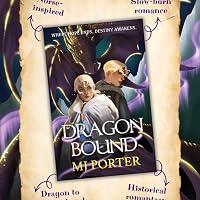
Looking for my historical fantasy/romantasy? Dragonbound, the first book in the Ice and Fire series, will be available from September 2026.
Looking for my 20th-century mysteries? The Erdington Mysteries and Cragside, a standalone 1930s murder mystery, are the titles for you.
My first non-fiction book, The Royal Women Who Made England, is now published by Pen and Sword in hardback and ebook.
Happy reading:)
Find me at
www.mjporterauthor.com or at www.mjporterauthor.blog where I blog about books and films and sometimes, writing! I also have an online store for signed paperbacks and a few others goodies at mjporterauthor.co.uk.
https://linktr.ee/MJPorterauthor
https://mjporterauthor.sumupstore.com
You can join my monthly subscriber newsletters and gain access to the restricted page on my blog at the same time.
https://BookHip.com/MGWHLDC (Saxon stories)
https://BookHip.com/THPKCKP (mysteries only)
(I have odd reading tastes - there's no need to notice though!!) I'm also exceedingly anti-social - that you may notice but must accept!
I was born in the old Mercian kingdom at some point since 1066. Raised in the shadow of a strange little building, told from a very young age that it housed the bones of long-dead kings of Mercia and that our garden was littered with old pieces of pottery from a long-ago battle, it's little wonder that my curiosity in Early England ran riot. I can only blame my parents!
I like to write. You've been warned!
Not sure where to start your journey through Saxon/Early England? The Dark Ages trilogy will take readers back to the very beginnings of Saxon England before the creation of Mercia and the other kingdoms. The Eagle of Mercia Chronicles featuring our reluctant hero, Icel, will introduce you to the best Saxon kingdom of all, Mercia! Storm of Mercia is the latest release.
Looking for my historical fantasy/romantasy? Dragonbound, the first book in the Ice and Fire series, will be available from September 2026.
Looking for my 20th-century mysteries? The Erdington Mysteries and Cragside, a standalone 1930s murder mystery, are the titles for you.
My first non-fiction book, The Royal Women Who Made England, is now published by Pen and Sword in hardback and ebook.
Happy reading:)
Find me at
www.mjporterauthor.com or at www.mjporterauthor.blog where I blog about books and films and sometimes, writing! I also have an online store for signed paperbacks and a few others goodies at mjporterauthor.co.uk.
https://linktr.ee/MJPorterauthor
https://mjporterauthor.sumupstore.com
You can join my monthly subscriber newsletters and gain access to the restricted page on my blog at the same time.
https://BookHip.com/MGWHLDC (Saxon stories)
https://BookHip.com/THPKCKP (mysteries only)
(I have odd reading tastes - there's no need to notice though!!) I'm also exceedingly anti-social - that you may notice but must accept!
Ratings & Reviews
Friends & Following
Create a free account to discover what your friends think of this book!
Community Reviews
Displaying 1 - 13 of 13 reviews
March 8, 2019
Hard going
I find the author's writing style a tad too flowery for my taste but great content non the less and worthy of 5 stars for that alone
I find the author's writing style a tad too flowery for my taste but great content non the less and worthy of 5 stars for that alone

November 17, 2017
This is the 2nd book of a series; the first book is pretty short. Leofwine was a real person, though not much has been written about him. The large amount of unknowns with the lesser characters in this period of history offers an opportunity for an author to develop the characters with more freedom, but there isn't a lot of depth with anyone in this story, nor does there seem to be much of a plot. As the book went on, I started to see more and more grammar and word usage errors. There is use of possessive punctuation when it should just be plural nouns ("son's" when it should be "sons") and the errors are repeated so it's not just a typo. There are also some incorrect words used, like "access" when it should have been "assess," "vain" for "vein," and the dreaded "loose" when it should be "lose." The author also over uses and misuses the word "chill" for some reason; it's sometimes used as an adjective just as it is, rather than "chilly," which would have been the proper term. It's kind of bizarre & makes the writing seem very teenager-ish. It started out, in the first book, much better, but the author doesn't seem to be able to maintain a quality style of writing. I think the author has promise, but some remedial English grammar & vocabulary classes are needed.

January 27, 2026
King Æthelred is relying on sycophants and Leofwine is falling further away from his inner circle. Especially after the death of Queen Elfrida, he is overlooked and ignored by the king. Slowly Leofwine sees that he’s only useful as a soldier and nothing more. But Leofwine is loyal to Mercia and will do as asked.
However there are others who seek to undermine the king and get in his good graces. These are men Leofwine must be wary of and keep his eye on them.
There’s some fighting but mostly the battle is inside the king’s court. There’s main battle is very exciting and you can envision the steps the warriors take to confront the Raider forces. Æthelstan, the king’s first son, and Northman, Leofwine’s first son, are sizing up to be very good leaders and warriors.
In addition there is more family life depicted here than in most of Porter’s books. It makes Leofwine more well rounded and shows a softer side to him. Although we see how much he loves his hounds especially Hunter.
We are left with questions which will bring us to the next part of Leofwine’s journey.
However there are others who seek to undermine the king and get in his good graces. These are men Leofwine must be wary of and keep his eye on them.
There’s some fighting but mostly the battle is inside the king’s court. There’s main battle is very exciting and you can envision the steps the warriors take to confront the Raider forces. Æthelstan, the king’s first son, and Northman, Leofwine’s first son, are sizing up to be very good leaders and warriors.
In addition there is more family life depicted here than in most of Porter’s books. It makes Leofwine more well rounded and shows a softer side to him. Although we see how much he loves his hounds especially Hunter.
We are left with questions which will bring us to the next part of Leofwine’s journey.

July 13, 2018
Excellent story and narrative... Hooked for the duration!
Excellent story teller i am hooked for the duration of the series ...... Author does a great job of keeping you interested
Excellent story teller i am hooked for the duration of the series ...... Author does a great job of keeping you interested
April 4, 2018
Easy reading
While it was a pleasant read,the battle scenes almost an afterthought. The amount of time spent on describing politics takes away any real gripping excitement.
While it was a pleasant read,the battle scenes almost an afterthought. The amount of time spent on describing politics takes away any real gripping excitement.

May 29, 2018
Exciting action circa 1000
This second in the series is a much improved novel based on historical events available which cover this millennial period
This second in the series is a much improved novel based on historical events available which cover this millennial period
October 31, 2022
THE ENGLISH LANGUAGE'S ENEMY: M. J. PORTER
I may as well repeat most of my review for Book One of this series since nothing's changed except for more execrable editing:
"From homophone abuse to outright orthographic savagery, mystifying non-sequiturs, faulty pronoun references, absurd punctuation faux-pas, and endless sentence constructs that leave the reader nonplussed and irritable, this piece of swill must be the worst demonstration of proofreading on record. It was a supreme effort to read this tripe through to the end. Porter or Kindle or the Publisher is responsible for this exercise in literary delinquency and should be ashamed that this travesty ever saw the light of day. Somewhere within this labyrinth of errors lies a good story, but genuine anger at the editing prevents the reader from finding it!
I may as well repeat most of my review for Book One of this series since nothing's changed except for more execrable editing:
"From homophone abuse to outright orthographic savagery, mystifying non-sequiturs, faulty pronoun references, absurd punctuation faux-pas, and endless sentence constructs that leave the reader nonplussed and irritable, this piece of swill must be the worst demonstration of proofreading on record. It was a supreme effort to read this tripe through to the end. Porter or Kindle or the Publisher is responsible for this exercise in literary delinquency and should be ashamed that this travesty ever saw the light of day. Somewhere within this labyrinth of errors lies a good story, but genuine anger at the editing prevents the reader from finding it!

November 23, 2016
Another good book.
September 8, 2025
First rate story
I've found a winner of a series. The Earls of Mercia, is an excellent series. The story of the Ealdorman, Leofwine of Mercia is exciting and interesting in all the best ways. The struggles of the Saxons to protect their peoples and lands from the Raiders from the north is told in a way that reminds us that real people lived the history of England. Its easy to recognize that they were brave and intelligent, or cowardly and weak, lived, loved, fought and died depending on each other. Well worth a read.
I've found a winner of a series. The Earls of Mercia, is an excellent series. The story of the Ealdorman, Leofwine of Mercia is exciting and interesting in all the best ways. The struggles of the Saxons to protect their peoples and lands from the Raiders from the north is told in a way that reminds us that real people lived the history of England. Its easy to recognize that they were brave and intelligent, or cowardly and weak, lived, loved, fought and died depending on each other. Well worth a read.
January 11, 2025
The Saga continues
This is the second part of an amazing adventure set in the second Viking age. The detail of the political process and the battle movements are believable and keep you reading long into the night.
This is the second part of an amazing adventure set in the second Viking age. The detail of the political process and the battle movements are believable and keep you reading long into the night.
Read
September 20, 2024A riveting read
Once again M J Porter opens up Anglo Saxon England so well. You feel you a part of story, the highs and the lows.
Once again M J Porter opens up Anglo Saxon England so well. You feel you a part of story, the highs and the lows.
sff-ok-bx
December 1, 2025bx,Rokp (1.99)
December 23, 2013
REVIEW FROM AMAZON
Having read and enjoyed book 1 of this series I got this to see how the story continued. I wasn't disappointed. The people and the setting - Anglo Saxon England at the time of the Viking raids - seemed to come alive and I could almost imagine that I was there. The battle scenes aren't too gory (thank goodness) but the details of the people, how they lived and died, the nature of kingship at that time and just the details of day to day life in an Ealderman's home were suburb. I usually either love or loathe historical novels. I love this one and can't wait for the next one - I doubt it could be left as it is without another book to follow.
A minor thing, is that occasionally plurals appear in the text as 's, eg boy's rather than boys but it easy to make typing errors when you're working on something this vast. Also the author uses the word besides when beside would have done. Don't know if this is a throwback to the style of writing of that time or the author's way of proving the work is theirs. Neither of these spoil what is essentially a jolly good ripping yarn.
Having read and enjoyed book 1 of this series I got this to see how the story continued. I wasn't disappointed. The people and the setting - Anglo Saxon England at the time of the Viking raids - seemed to come alive and I could almost imagine that I was there. The battle scenes aren't too gory (thank goodness) but the details of the people, how they lived and died, the nature of kingship at that time and just the details of day to day life in an Ealderman's home were suburb. I usually either love or loathe historical novels. I love this one and can't wait for the next one - I doubt it could be left as it is without another book to follow.
A minor thing, is that occasionally plurals appear in the text as 's, eg boy's rather than boys but it easy to make typing errors when you're working on something this vast. Also the author uses the word besides when beside would have done. Don't know if this is a throwback to the style of writing of that time or the author's way of proving the work is theirs. Neither of these spoil what is essentially a jolly good ripping yarn.
Displaying 1 - 13 of 13 reviews