

What do you think?

Les Solariens
Disséminés sur des centaines de mondes, les hommes mènent une guerre désespérée contre les cruels Doglaaris. La lutte est inégale.Mais la riposte semble imminente : pour construire la plus terrifiante des armes, une partie de l'humanité a trouvé refuge durant trois cents ans sur Sol, la légendaire planète des origines. Les Solariens sont de retour. Et avec eux l'espoir d'une victoire définitive. Mais à quel prix ?
220 pages, Mass Market Paperback
First published January 1, 1966
About the author
Norman Spinrad
385 books229 followersBorn in New York in 1940, Norman Spinrad is an acclaimed SF writer.
Norman Spinrad, born in New York City, is a graduate of the Bronx High School of Science. In 1957 he entered City College of New York and graduated in 1961 with a Bachelor of Science degree as a pre-law major. In 1966 he moved to San Francisco, then to Los Angeles, and now lives in Paris. He married fellow novelist N. Lee Wood in 1990; they divorced in 2005. They had no children. Spinrad served as President of the Science Fiction and Fantasy Writers of America (SFWA) from 1980 to 1982 and again from 2001 to 2002.
Norman Spinrad, born in New York City, is a graduate of the Bronx High School of Science. In 1957 he entered City College of New York and graduated in 1961 with a Bachelor of Science degree as a pre-law major. In 1966 he moved to San Francisco, then to Los Angeles, and now lives in Paris. He married fellow novelist N. Lee Wood in 1990; they divorced in 2005. They had no children. Spinrad served as President of the Science Fiction and Fantasy Writers of America (SFWA) from 1980 to 1982 and again from 2001 to 2002.
Ratings & Reviews
Friends & Following
Create a free account to discover what your friends think of this book!
Community Reviews
Displaying 1 - 30 of 39 reviews

April 16, 2012
I have to say, I really enjoyed this re-read of a cult classic sci-fi short story from 1966. I'm a nerd who happens to be the child of nerds, you see, who back in the 60s and 70s collected together a veritable library of sci-fi and fantasy books which, as a child, I perused with wide-eyed eagerness. The Solarians was one such book that stood out in my mind. It was written by Norman Spinrad; later giant of sci-fi and even writer for Star Trek (yes, the original series) and he's still kicking them out today like a boss. But The Solarians was his very first book.
So is it any good then? Yes, and no. I should explain this statement. The language is pretty functional and pedestrian, the story makes use of sci-fi tropes common to the era in which it was written, and the world-building and antagonists (and even, possibly, the protagonists) are rather thinly sketched. None of that really matters, however.
For one, the book is a pleasure to read as a historical artefact. There's nothing quite so enlightening as looking back on what people in the past guessed the future would be like. Spinrad, quite correctly, envisioned the enormous importance of computers, but didn't foresee touchscreens or digital media. The bright new society represented in the Solarians themselves is clearly a direct product of 1960s communes and free love and the family unit is obsolete.
More importantly, there are two amazing things about this book. First, the Nine Planets drink. I love the idea of this drink. There ought to be a cocktail recipe somewhere on the internet of it. If you're reading this, Mr. Spinrad, give the fans the Nine Planets drink we want! Second - it doesn't really matter that the Confederation implausibly gives up all notion of ingenuity in military tactics, something no commander worth their salt would endorse. The setting, and even the plot, is really just the vehicle for an observation that Spinrad gets very, very right. And that is the imperative that Humanity's future is out there, that Earth, 'home', is something that despite our fondest urges, we are going to have to leave behind. The cradle is a peerless paragon of beauty, but we confront what awaits us, to progress and evolve and forge our future, the only path is ahead. It's a truism even today, and what we're all working towards. Wonderful insight. Good job, Mr. Spinrad.

December 11, 2020
2.4⭐
Spinrad's first published novel and it shows. It's a fairly conventional tale of bat-eared, genocidal aliens threatening humanity. The human diaspora ( "the Commonwealth") and the mythic "Fortress Sol"-Earth and its solar system ( the eponymous Solarians) must find a way to counter the aliens' numerical and technological superiority. Things look grim until Earth ends it's long isolation and comes up with a secret plan for victory. Written before Spinrad got good and weird with his experiments with language and style, not to mention pushing the bounds of current good taste, all in the service of creativity. Even in this early effort Spinrad telegraphs his signature interest in alternative societies. A key plot element is what would now be called a group marriage, with some ESP thrown in for good measure. Naturally, there are mind/mood altering drugs- it's all very 60's(1966). His attempt to predict technology is pretty dated. Computers play a key role but only in a macro sense- his future is analogue. I liked that he has the theremin as a popular musical instrument but my favorite is the "smell organ" combining odors and octaves, as it were. It's like a long episode of the original Star Trek (Spinrad wrote the classic ' Doomsday Machine' episode). Fine if you like that stuff.
Spinrad's first published novel and it shows. It's a fairly conventional tale of bat-eared, genocidal aliens threatening humanity. The human diaspora ( "the Commonwealth") and the mythic "Fortress Sol"-Earth and its solar system ( the eponymous Solarians) must find a way to counter the aliens' numerical and technological superiority. Things look grim until Earth ends it's long isolation and comes up with a secret plan for victory. Written before Spinrad got good and weird with his experiments with language and style, not to mention pushing the bounds of current good taste, all in the service of creativity. Even in this early effort Spinrad telegraphs his signature interest in alternative societies. A key plot element is what would now be called a group marriage, with some ESP thrown in for good measure. Naturally, there are mind/mood altering drugs- it's all very 60's(1966). His attempt to predict technology is pretty dated. Computers play a key role but only in a macro sense- his future is analogue. I liked that he has the theremin as a popular musical instrument but my favorite is the "smell organ" combining odors and octaves, as it were. It's like a long episode of the original Star Trek (Spinrad wrote the classic ' Doomsday Machine' episode). Fine if you like that stuff.

February 26, 2013
Solarians is a nice first novel from Spinrad. This is the kind of novel that wants to be experimental but to get published some standard conventions were still followed. Hero, conflict, victory, standard stuff. But Spinrad managed to slip in some "idea" content such as sexual mores, utopian ideals, and the most interesting part of the book, the role of logic and technology in future development. How wonderful for a piece of genre sf to have a premise of the dehumanizing aspects of technology. The 4 stars are more for the ideas than the actual writing: the narrator couldn't be dumber and the plotting is fairly pedestrian. This is the first novel I've read of Spinrad and I look forward to the rest.

December 28, 2008
Very talky: the characters tended to get into expository conversations to explain their war, their culture, their enemy, their technology, and their plan (sometimes in hindsight). This in combination with a resolution that was telegraphed from the very beginning made it hard for me to justify finishing it.

July 28, 2015
To learn about people from a SF novel was surprising to me. I did not expect this. At least not at this level. One of the best quotes from the book, which really touched me: "I think that one of the most vital and yet most perverse needs of human beings is their need to be judged, their need to know others' opinions"

February 7, 2016
A great Space Opera style SiFi book along the lines of E. E. "Doc" Smith's Lensmen books. Very good and engaging read. Very recommended

December 24, 2018
4/10. Media de los 4 libros leídos del autor : 4/10
De los libros suyos que he leído salvo "Agente del Caos", con un 7/10. El resto, olvidables.
De los libros suyos que he leído salvo "Agente del Caos", con un 7/10. El resto, olvidables.

June 1, 2024
I don’t think this is particularly well-written, but the ideas being described are genius. classic 1960s sci-fi. it’s clearly all very imaginative, and i’m excited to see what spinrad’s later work looks like.
I enjoyed the premise more than anything else. to publish this in 1966 (before even the moon landing!) and to write about ideas that are still prevalent in today’s society — computer automation vs men, colonizing mars, etc — well, that’s what sci-fi’s all about!
I enjoyed it, if only as both a relic of a time since passed and a reminder of what really is constant. my personal favorite parts included the dumb idiot human narrator encountering a six-person alien polycule and battling with the morals of it all, and the idea that what makes us all human is our illogicality. fuck yeah. also, the power of friendship
I enjoyed the premise more than anything else. to publish this in 1966 (before even the moon landing!) and to write about ideas that are still prevalent in today’s society — computer automation vs men, colonizing mars, etc — well, that’s what sci-fi’s all about!
I enjoyed it, if only as both a relic of a time since passed and a reminder of what really is constant. my personal favorite parts included the dumb idiot human narrator encountering a six-person alien polycule and battling with the morals of it all, and the idea that what makes us all human is our illogicality. fuck yeah. also, the power of friendship

November 29, 2022
Me ha parecido un libro con una historia genial, y un claro ejemplo de cómo una idea que funciona, bien llevada, puede convertirse en una historia inolvidable.
Me encanta cómo Spinrad describe los sentimientos y los mundos, y he terminado el libro fascinada por la historia. Las descripciones finales son un regalo de este autor a cualquier alma apasionada por el espacio y por la vida misma.
Sólo ha habido una cosa que no me ha gustado nada y es cómo en el último tramo del libro el protagonista, lejos de haber madurado, parece más tonto.. y me da la sensación de que como lectora te toman por tonta (no sé explicarlo mejor, me ocurre a veces con algunos libros). Pero dejando atrás esto, que quizá tenga que ver también con mi estado de ánimo al leerlo, y aunque se me haya hecho un final agridulce por mezclarse con una historia bellísima, creo que es un gran libro.
No sé cómo de conocido es pero me da la impresión de que no lo suficiente. Aunque no pueda ponerle 5 estrellas por lo que he comentado, creo que se ha ganado un hueco entre mis libros favoritos. (He leído las últimas páginas con el disco The Voyager de Mike Oldfield, recomendadísimo el combo)
Me encanta cómo Spinrad describe los sentimientos y los mundos, y he terminado el libro fascinada por la historia. Las descripciones finales son un regalo de este autor a cualquier alma apasionada por el espacio y por la vida misma.
Sólo ha habido una cosa que no me ha gustado nada y es cómo en el último tramo del libro el protagonista, lejos de haber madurado, parece más tonto.. y me da la sensación de que como lectora te toman por tonta (no sé explicarlo mejor, me ocurre a veces con algunos libros). Pero dejando atrás esto, que quizá tenga que ver también con mi estado de ánimo al leerlo, y aunque se me haya hecho un final agridulce por mezclarse con una historia bellísima, creo que es un gran libro.
No sé cómo de conocido es pero me da la impresión de que no lo suficiente. Aunque no pueda ponerle 5 estrellas por lo que he comentado, creo que se ha ganado un hueco entre mis libros favoritos. (He leído las últimas páginas con el disco The Voyager de Mike Oldfield, recomendadísimo el combo)

March 16, 2024
Maybe 2 1/2 stars...
While this was not a bad book and the writing was very nice in patches... In other ways it was both dated and... just... not really that great. I found that immensely disappointing as I remember Norman Spinrad very fondly from another book. The Solarians is, apparently, his first book published in 1966 so maybe he just improved a lot.
Spinrad's later work is said to be controversial (maybe that was what I liked about it), The Solarians though is a mainstream generic space opera featuring space battles, faster-than-light spacedrives, and an alien enemy, the Duglaari. The plot of the novel concerns a fleet commander named Palmer who is caught up in a mission by the Solarians. The Solarians in question are NOT another race as some descriptions would have it, but rather humans from the Solar System and planet Earth who, after a couple of hundred years of isolation have conceived a plan to defeat the Duglaari.
It is kind of naf that the species of alien trying to eradicate mankind have a name that is shortened to Doogs. Spinrad did a good job with his alien race, I will give him that. They are well described both physiologically and psychologically and both elements combined showcase a species where it makes sense for them to want to eradicate aliens (us, that is). Spinrad did less well with humans than he did with aliens.
The story starts with a space battle, and it is a really good one - this book is consistently good with space battles, space travel, tactics and descriptions. Humanity are represented by the human Confederation who are battling the alien Duglaari Empire and since they are bent on eradication of humanity, justification for war is not needed in the book. It is hard to argue with fighting back when you are fighting for your life as a species.
Fleet Commander Jay Palmer is our introduction into the story,
; he is the commander of the battle and he has a sneaky plan to gain an advantage, his plan works but the battle still goes awry. I liked the way the battle was used to introduce the relative military reach of both armies, of how it told the reader without using an infodump, all about the use of computers and logic in BOTH species.
Home after the battle, Palmer is reporting on how the battle went (which was, not well) to his commander when they learn that a space ship from Sol is approaching. Or 'fortress Sol' as they call it. I disliked the Solarians, instantly. They are written as arrogant a-holes completely and utterly marinading in their own sense of superiority and if that is what humanity has evolved into – I am team Alien right there.
This arrogance is consistent with the human-o-centric view that was often the case in classic sci-fi and older American novels, I am kind of used to it and can usually ignore it, but here it is acute, indigestible and gets worse throughout the book. I am pretty sure Spinrad loved these characters though, I have no doubt that they are meant to be admirable 'future of evolved humanity' shtick and the fact that they are written as they are dates this book badly and makes it hard to read.
After contact with the Solarians, who scoop Palmer up (after humiliating him for no reason) with little explanation, on a weird mysterious mission to the Dooge home world, the Solarians take every opportunity to mock and belittle Palmer about how much less evolved than them he is. Palmer, in his turn raves like a lunatic, explodes like a child regularly and basically behaves like he is off his meds. I can only imagine that Spinrad is trying to belabour the difference between Palmer and his pet 'evolved' supermen. However, later in the book the Solarians tell him he was selected by their telepaths as being an open minded individual... well, really all you can do is roll your eyes at that. Between the über alles Solarians and the flat, childish Palmer, the characterisation is poor.
The telepaths. Do, please, remind us once a paragraph there are telepaths and other 'talents'. Just because Palmer forgets this every two lines does not mean that I, the reader, have done so.
We get to the Dooge home world, the Soalrians pull a fast one, Palmer screams and shouts...
It many ways is not a bad plot and not a bad book, at least when it concentrates on the aliens, the battles and the space travel it is a great read. These can be exiting, meticulously plotted and fun to read. NOT fast to read, this little book took me a week... But the two character groups make it a little hard to read because they are so unconvincing and unsympathetic.
spoilers? Maybe not - I don't think you CAN spoiler this; it is so obvious that Palmer is being fooled, over and over. NOTHING happens that is unpredictable and I say that - Me who cannot even predict an Agatha Christie whodunnit ending... I need to wait for the great reveal in the library. And you know what, I don't care, I don't try to predict things I just enjoy the journey. Herehowever, the great reveal is so telegraphed, so blatant that it is practically spelled out. I defy anyone not to predict the whole ending, every bit of it.
Well, when we get to the solar system with the predictable invasion of the Doogs following right behind our nasty space ship of theoretical heroes, the predictable invasion of the Solar system occurs. Palmer screams and shouts as usual about how the Solarians are traitors. You would think he would learn from the last ten times he did this routine, but noooo...
We get a ringside seat as the Dooges destroy the solar system, planet by planet, moon by moon. There is some truly spectacular writing there! Descriptive, lush exciting and imaginative there are some great scenes, only ruined by Palmer and the Solarains banging on. The human superman that is the leader of the Solarians monologues for a while about how humans had to get rid of Sol to expand blah blah blah...
This ending really annoyed me.
The notion that humans are the only important thing in the universe, is not my perspective.
What about the rest of the inhabitants of Earth? Had they already killed them all off?
The Greenland sharks? The Quokkas? The whales, the Coral reefs and giant redwoods and dwarf mangroves...
All of those don't matter and can be wasted without tears because humans are all that is important: And by now I was getting serious Anthropocentrism vibes. The anthropocentric perspective is that humankind is separate from nature and superior to it, that other entities and materials (animals, plants, minerals, etc.) are resources for humans to use. This is a perspective I have no sympathy with. I was also getting, maybe, Ayn Rand objectivism which is the belief that human beings are the central or most important entity on the planet. The term can be used interchangeably with humanocentrism, and some refer to the concept as human supremacy. Notice that I am not mentioning religious fundamentalist - notice how much I am not mentioning it...!
This rotter of an emotionally stunted book has made me doubt my earlier love for The Void Captain's Tale? Was I just young and angsty? If I re-read it will I despise all the characters and their world views as much as I do the humans in the Solarians?
While this was not a bad book and the writing was very nice in patches... In other ways it was both dated and... just... not really that great. I found that immensely disappointing as I remember Norman Spinrad very fondly from another book. The Solarians is, apparently, his first book published in 1966 so maybe he just improved a lot.
Spinrad's later work is said to be controversial (maybe that was what I liked about it), The Solarians though is a mainstream generic space opera featuring space battles, faster-than-light spacedrives, and an alien enemy, the Duglaari. The plot of the novel concerns a fleet commander named Palmer who is caught up in a mission by the Solarians. The Solarians in question are NOT another race as some descriptions would have it, but rather humans from the Solar System and planet Earth who, after a couple of hundred years of isolation have conceived a plan to defeat the Duglaari.
It is kind of naf that the species of alien trying to eradicate mankind have a name that is shortened to Doogs. Spinrad did a good job with his alien race, I will give him that. They are well described both physiologically and psychologically and both elements combined showcase a species where it makes sense for them to want to eradicate aliens (us, that is). Spinrad did less well with humans than he did with aliens.
The story starts with a space battle, and it is a really good one - this book is consistently good with space battles, space travel, tactics and descriptions. Humanity are represented by the human Confederation who are battling the alien Duglaari Empire and since they are bent on eradication of humanity, justification for war is not needed in the book. It is hard to argue with fighting back when you are fighting for your life as a species.
Fleet Commander Jay Palmer is our introduction into the story,
; he is the commander of the battle and he has a sneaky plan to gain an advantage, his plan works but the battle still goes awry. I liked the way the battle was used to introduce the relative military reach of both armies, of how it told the reader without using an infodump, all about the use of computers and logic in BOTH species.
Home after the battle, Palmer is reporting on how the battle went (which was, not well) to his commander when they learn that a space ship from Sol is approaching. Or 'fortress Sol' as they call it. I disliked the Solarians, instantly. They are written as arrogant a-holes completely and utterly marinading in their own sense of superiority and if that is what humanity has evolved into – I am team Alien right there.
This arrogance is consistent with the human-o-centric view that was often the case in classic sci-fi and older American novels, I am kind of used to it and can usually ignore it, but here it is acute, indigestible and gets worse throughout the book. I am pretty sure Spinrad loved these characters though, I have no doubt that they are meant to be admirable 'future of evolved humanity' shtick and the fact that they are written as they are dates this book badly and makes it hard to read.
After contact with the Solarians, who scoop Palmer up (after humiliating him for no reason) with little explanation, on a weird mysterious mission to the Dooge home world, the Solarians take every opportunity to mock and belittle Palmer about how much less evolved than them he is. Palmer, in his turn raves like a lunatic, explodes like a child regularly and basically behaves like he is off his meds. I can only imagine that Spinrad is trying to belabour the difference between Palmer and his pet 'evolved' supermen. However, later in the book the Solarians tell him he was selected by their telepaths as being an open minded individual... well, really all you can do is roll your eyes at that. Between the über alles Solarians and the flat, childish Palmer, the characterisation is poor.
The telepaths. Do, please, remind us once a paragraph there are telepaths and other 'talents'. Just because Palmer forgets this every two lines does not mean that I, the reader, have done so.
We get to the Dooge home world, the Soalrians pull a fast one, Palmer screams and shouts...
It many ways is not a bad plot and not a bad book, at least when it concentrates on the aliens, the battles and the space travel it is a great read. These can be exiting, meticulously plotted and fun to read. NOT fast to read, this little book took me a week... But the two character groups make it a little hard to read because they are so unconvincing and unsympathetic.
spoilers? Maybe not - I don't think you CAN spoiler this; it is so obvious that Palmer is being fooled, over and over. NOTHING happens that is unpredictable and I say that - Me who cannot even predict an Agatha Christie whodunnit ending... I need to wait for the great reveal in the library. And you know what, I don't care, I don't try to predict things I just enjoy the journey. Herehowever, the great reveal is so telegraphed, so blatant that it is practically spelled out. I defy anyone not to predict the whole ending, every bit of it.
Well, when we get to the solar system with the predictable invasion of the Doogs following right behind our nasty space ship of theoretical heroes, the predictable invasion of the Solar system occurs. Palmer screams and shouts as usual about how the Solarians are traitors. You would think he would learn from the last ten times he did this routine, but noooo...
We get a ringside seat as the Dooges destroy the solar system, planet by planet, moon by moon. There is some truly spectacular writing there! Descriptive, lush exciting and imaginative there are some great scenes, only ruined by Palmer and the Solarains banging on. The human superman that is the leader of the Solarians monologues for a while about how humans had to get rid of Sol to expand blah blah blah...
This ending really annoyed me.
The notion that humans are the only important thing in the universe, is not my perspective.
What about the rest of the inhabitants of Earth? Had they already killed them all off?
The Greenland sharks? The Quokkas? The whales, the Coral reefs and giant redwoods and dwarf mangroves...
All of those don't matter and can be wasted without tears because humans are all that is important: And by now I was getting serious Anthropocentrism vibes. The anthropocentric perspective is that humankind is separate from nature and superior to it, that other entities and materials (animals, plants, minerals, etc.) are resources for humans to use. This is a perspective I have no sympathy with. I was also getting, maybe, Ayn Rand objectivism which is the belief that human beings are the central or most important entity on the planet. The term can be used interchangeably with humanocentrism, and some refer to the concept as human supremacy. Notice that I am not mentioning religious fundamentalist - notice how much I am not mentioning it...!
This rotter of an emotionally stunted book has made me doubt my earlier love for The Void Captain's Tale? Was I just young and angsty? If I re-read it will I despise all the characters and their world views as much as I do the humans in the Solarians?
November 19, 2015
Le texte souffre de la traduction Marabout SF.
Sinon, l'histoire est intéressante, tout comme les rebondissements. Certains éléments placés pour provoquer la réflexion ont mal vieilli. Même si nos moeurs n'ont pas tant changé, la dualité logique-émotion, tout comme la défense - quoique faible - du couple ouvert a une odeur un peu hippie.
Les scènes de batailles galactiques sont ingénieuses et repose sur une logique que l'auteur applique avec cohérence.
Enfin, les Solariens s'expriment avec un peu trop de condescendance, trop de paternalisme, et cela diminue notre sympathie envers eux. On se surprend que le personnage principal ne leur lance pas un poing au visage! Aussi, le texte aurait pu être plus long, pour étoffer un peu mieux les changements psychologiques qui adviennent sur un certain temps, oui, mais rapidement tout de même au plan narratif. Cela crée une certaine dissonance.
Sinon, l'histoire est intéressante, tout comme les rebondissements. Certains éléments placés pour provoquer la réflexion ont mal vieilli. Même si nos moeurs n'ont pas tant changé, la dualité logique-émotion, tout comme la défense - quoique faible - du couple ouvert a une odeur un peu hippie.
Les scènes de batailles galactiques sont ingénieuses et repose sur une logique que l'auteur applique avec cohérence.
Enfin, les Solariens s'expriment avec un peu trop de condescendance, trop de paternalisme, et cela diminue notre sympathie envers eux. On se surprend que le personnage principal ne leur lance pas un poing au visage! Aussi, le texte aurait pu être plus long, pour étoffer un peu mieux les changements psychologiques qui adviennent sur un certain temps, oui, mais rapidement tout de même au plan narratif. Cela crée une certaine dissonance.
September 20, 2021
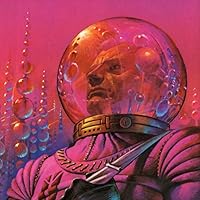
This edition has a beautiful Jeffrey Jones cover.

March 3, 2022
URMA să fie iarăşi o bătălie inegală. Patru la trei, acesta era raportul de forţe; în cazul de faţă lupta se desfăşura în sistemul planetar Sylvanna. Palmer avea de înfruntat o flotă de optzeci de nave negre ca moartea, care se apropia acum de orbita planetei plasată în punctul cel mai exterior; o flotă dispusă în formaţie conică, cu baza în faţă şi nava-comandă în vârful din spate.
Jay Palmer, comandantul Flotei a Unsprezecea Umane, îşi dispusese navele în formaţie de disc, în şiruri de câte trei, nava-comandă aflându-se în rândul al treilea.
Era instalat pe scaunul de comandant din nava lui amiral; avea în faţă Ecranul de Reprezentare care-i înfăţişa flota Duglaari sub chipul unui con de luminiţe roşii; propria lui flotă Umană, inferioară numericeşte, apărea sub chipul a şaizeci de luminiţe aurii, iar Sylvanna, un astru G-5, se vedea ca un glob verde; în stânga, Tabelul de Control al Pierderilor înfăţişa în clipa de faţă şaizeci de lumini, toate verzi, reprezentând totalitatea navelor lui în linie de bătaie (o lumină chihlimbarie ar fi însemnat o navă deteriorată dar capabilă încă să se susţină, iar o lumină albastră semnifica o carcasă moartă, sau şi mai rău); în dreapta lui se aflau Ecranele Computerelor.
Era îmbrăcat într-un costum-salopetă verzui, lipsit de însemnele rangului, deschis la gât şi foarte confortabil. Misiunea lui, în calitate de comandant, era aceea de a se identifica, de a se contopi cu flota, sau, mai bine zis, de a considera fiecare navă ca pe o extensie a spiritului său, o parte din el însuşi. Un bun comandant îşi priveşte flota ca pe un organism integrat: navele sunt mădularele, pseudopodele, nava-comandă, nava-computer, creierul; iar el e inima, ego-ul, sufletul.
În fiecare dintre urechi avea înfiptă câte o cască separată. Casca din dreapta îi stabilea contactul direct cu comandantul Centrului de Computerizare şi evaluare a situaţiei. Cea din stânga asigura circuitul de comandă: vocile celor şaizeci de căpitani individuali.
Un microfon de gât îi fusese fixat pe mărul lui Adam. În mâna dreaptă ţinea un dispozitiv cu un comutator cu două poziţii – împins în faţă, stabilea contactul cu comandantul Centrului de Computerizare – împins în spate asigura legătura cu cei şaizeci de căpitani. În mâna stângă ţinea un dispozitiv similar, dar cu trei poziţii: în faţă pentru manevrarea căştii legate de Centrul de Computerizare, în spate pentru circuitul de comandă, la mijloc pentru contactul concomitent cu ambele.
— Evaluare, mormăi Palmer, confirmaţi numărul!
Jay Palmer, comandantul Flotei a Unsprezecea Umane, îşi dispusese navele în formaţie de disc, în şiruri de câte trei, nava-comandă aflându-se în rândul al treilea.
Era instalat pe scaunul de comandant din nava lui amiral; avea în faţă Ecranul de Reprezentare care-i înfăţişa flota Duglaari sub chipul unui con de luminiţe roşii; propria lui flotă Umană, inferioară numericeşte, apărea sub chipul a şaizeci de luminiţe aurii, iar Sylvanna, un astru G-5, se vedea ca un glob verde; în stânga, Tabelul de Control al Pierderilor înfăţişa în clipa de faţă şaizeci de lumini, toate verzi, reprezentând totalitatea navelor lui în linie de bătaie (o lumină chihlimbarie ar fi însemnat o navă deteriorată dar capabilă încă să se susţină, iar o lumină albastră semnifica o carcasă moartă, sau şi mai rău); în dreapta lui se aflau Ecranele Computerelor.
Era îmbrăcat într-un costum-salopetă verzui, lipsit de însemnele rangului, deschis la gât şi foarte confortabil. Misiunea lui, în calitate de comandant, era aceea de a se identifica, de a se contopi cu flota, sau, mai bine zis, de a considera fiecare navă ca pe o extensie a spiritului său, o parte din el însuşi. Un bun comandant îşi priveşte flota ca pe un organism integrat: navele sunt mădularele, pseudopodele, nava-comandă, nava-computer, creierul; iar el e inima, ego-ul, sufletul.
În fiecare dintre urechi avea înfiptă câte o cască separată. Casca din dreapta îi stabilea contactul direct cu comandantul Centrului de Computerizare şi evaluare a situaţiei. Cea din stânga asigura circuitul de comandă: vocile celor şaizeci de căpitani individuali.
Un microfon de gât îi fusese fixat pe mărul lui Adam. În mâna dreaptă ţinea un dispozitiv cu un comutator cu două poziţii – împins în faţă, stabilea contactul cu comandantul Centrului de Computerizare – împins în spate asigura legătura cu cei şaizeci de căpitani. În mâna stângă ţinea un dispozitiv similar, dar cu trei poziţii: în faţă pentru manevrarea căştii legate de Centrul de Computerizare, în spate pentru circuitul de comandă, la mijloc pentru contactul concomitent cu ambele.
— Evaluare, mormăi Palmer, confirmaţi numărul!
May 15, 2026
Los solarianos me ha parecido una lectura de lo más entretenida para los amantes de la ciencia ficción de la vieja escuela, aunque considero que se queda en un terreno algo modesto al tratarse de una obra primeriza. Por un lado, valoré positivamente su potente premisa estratégica; esa idea de una humanidad que está perdiendo una guerra galáctica y cuya última esperanza reside en el regreso de unos humanos aislados en el sistema solar me transmitió el auténtico sentido de la maravilla. Disfruté de cómo Norman Spinrad plantea la parte técnica del conflicto contra los alienígenas y de la espectacular fuerza visual que tiene el concepto de la fortaleza humana en el Sol. Sin embargo, sentí que a la novela le falta madurez en la construcción de los personajes, ya que la mayoría se comportan de forma plana y arquetípica, sirviendo únicamente como herramientas para avanzar la trama. Además, su estilo directo carece de sofisticación y el desenlace me resultó algo apresurado y simplista para la gran magnitud de la guerra galáctica que se nos presenta. En conclusión, es una novela ágil, corta y muy digna sobre la astucia humana, ideal para ver los inicios del autor pero lejos de la maestría que alcanzaría en sus trabajos posteriores.
April 10, 2025
This is Norman Spinrad's first published novel. A space opera, retro sci-fi that begins with a space battle and evolves into a diplomatic mission between human beings and Solarians to save their races against the Duglari, their common enemy.
I enjoyed reading it and it included some important point of views. For example if you have to sacrifice something very important and historical for the greatest good you have to.
The book, however, had some mistakes. Paragraphs could end and then but not the scene and it would continue on the next one.
This and the policy if the two races considering important decisions, in the beginning, could be the author's mistake since it was his first book.
But i highly recommend to those who like those sci-fi books from the golden age!
I enjoyed reading it and it included some important point of views. For example if you have to sacrifice something very important and historical for the greatest good you have to.
The book, however, had some mistakes. Paragraphs could end and then but not the scene and it would continue on the next one.
This and the policy if the two races considering important decisions, in the beginning, could be the author's mistake since it was his first book.
But i highly recommend to those who like those sci-fi books from the golden age!

February 1, 2026
Uhm. C'est difficile parce que le livre est vraiment très bien écrit. Norman Spinrad est un excellent écrivain, ses histoires sont souvent surprenantes, ses personnages fascinants et ses thèmes sont toujours d'actualité. Mais... ça a un peu vieilli quand même. Je suis désolée mais on est en 2026 et la libération sexuelle n'est plus scandaleuse depuis un moment, je ne suis pas choquée par le mariage de groupe (ceux que je lis généralement ont des loups-garous) et l'idée que les femmes servant à table est "un retour aux lois naturelles" me fait soupirer.
On ne peut pas demander à un auteur des années 60 d'avoir les sensibilités des années 2000, j'imagine.
Bon livre, je ne rec pas parce qu'il ne changera pas votre vie mais c'est une bonne histoire très bien écrite.
On ne peut pas demander à un auteur des années 60 d'avoir les sensibilités des années 2000, j'imagine.
Bon livre, je ne rec pas parce qu'il ne changera pas votre vie mais c'est une bonne histoire très bien écrite.

June 15, 2026
Surprisingly not as bad as one might expect from the cover. I thought it would be pure alien fighting pulp. In essence it kind of is just that, but there is more to the story. The humans have been fighting the Doogs for many centuries, by the book, and are consistently loosing planets. The doogs are purely logical in their tactics and use giant computers to plan their battles. After a dramatic loss for the humans, the solarians pay a visit after 3 centuries of isolation. They come with special mind powers and a plan to take care of the doogs. The biggest problem is that it is hard to trust them, because they never completely give their true plan.
It's pretty fun overall. I would rate it 3.5 if GR would allow it.
It's pretty fun overall. I would rate it 3.5 if GR would allow it.
September 4, 2021
Traducerea in romana pentru editia Nemira 1992, lasa de dorit. Pe langa traducere sunt si multe greseli de tipar. Probabil pe vremea aia nu se facea proof reading inainte de tiparire.
Nu am mai citit alte carti traduse de doamna Antoaneta Ralian, dar se pare ca genul SF nu este aria ei forte. Un exemplu, care m-a determinat sa las acest review: A tradus Sol(Soarele) ca "planeta Sol". Really, Soarele este o planeta?!?!
Trecand peste aceste neajunsuri, cartea e usor de citit, are descrieri ample de-ti pun imaginatia in miscare si te transpun in universul pus pe hartie de autor. Din pacate deznodamantul e destul de previzibil, ceea ce m-a determinat sa-i acord 4 stele
Nu am mai citit alte carti traduse de doamna Antoaneta Ralian, dar se pare ca genul SF nu este aria ei forte. Un exemplu, care m-a determinat sa las acest review: A tradus Sol(Soarele) ca "planeta Sol". Really, Soarele este o planeta?!?!
Trecand peste aceste neajunsuri, cartea e usor de citit, are descrieri ample de-ti pun imaginatia in miscare si te transpun in universul pus pe hartie de autor. Din pacate deznodamantul e destul de previzibil, ceea ce m-a determinat sa-i acord 4 stele
April 28, 2019
Interesting, literate, humorous sci-fi about an uneasy alliance tacking a deadly menace. Well thought out story to the end.
The sci-fi element involves future weaponry and societies, but about the same level of technicality as early Star Trek (unsurprisingly it was written in 1966). What keeps it interesting are the warring factions trying to outhink each other in complex, evolving strategies, and the advanced open-minded society of Earth in the future (reflecting sixties’ alternative thinking).
The sci-fi element involves future weaponry and societies, but about the same level of technicality as early Star Trek (unsurprisingly it was written in 1966). What keeps it interesting are the warring factions trying to outhink each other in complex, evolving strategies, and the advanced open-minded society of Earth in the future (reflecting sixties’ alternative thinking).
April 28, 2022
Spinrad’s first published novel. Though written in 1966, it has the feel of something from the 1940s in it’s flat characters and meagre grasp of basic science. All writers, even the most accomplished ones, likely have a stinker or two in a desk drawer that they hammered out as they learned their craft. Spinrad somehow managed to have one of his published.
May 17, 2019
Passable read if you keep in mind the context (his first book, early 70s sci-fi in general...) and interesting for the politics/social dynamics. You can start see the broad Spinard themes starting to emerge.

February 19, 2024
Story with more than 50 years old and you feel all of them. I have read a translation, which, I believe, does not make full justice to the story (also fifty years old), but, at the end, not a great novel, just decent
March 17, 2024
I guessed the ending.
A great novel by Norman spinrad, before we expected greatness. A good culture clash novel with a few twists to keep you guessing! I am proud I guessed the ending!
A great novel by Norman spinrad, before we expected greatness. A good culture clash novel with a few twists to keep you guessing! I am proud I guessed the ending!

July 1, 2017
A classic of its kind and time.

November 12, 2017
un classique dont le thème même a mal vieilli (l'intelligence émotionnelle est passée par là...). Mais le traitement est du grand Spinrad...

March 1, 2018
aggiornamento vecchio libro letto chissà quando

March 14, 2019
Amazing book, I'm starting to like Spinrad. Definitely worth it!!!

January 7, 2024
2.5/5
A short, adventurous, and mediocre space opera from Spinrad's early days. The plot, which takes up the large majority of the book, revolves around a centuries old war between humanity and the Duglarri, a calculating species of furry humanoids that value reason and logic above all else. The humans have been losing the war since the start due to a deficiency in numbers and an over reliance on computer analysis, but remain hopeful because of the humans that remain on Earth itself. They separated themselves during the onset of the war to work on a novel solution to war. Jay Palmer, a seasoned commander in the human confederation, witnesses the return of a group of the Solarians, and gets wrapped up in helping them enact their plan for victory.
If that sounds pretty basic and pulpy, it's because it is. It reads more as something from the golden ages of the pulp magazines than something published in 1966. This was Spinrad's first published work, so it makes sense that he would rely on the tried and true motifs of the genre, writing something that was similar in a lot of ways to the stuff he read when he was growing up. The plot itself is insanely predictable. I grew bored reading it, in spite of it's razor slim size, because you can see the way the plot is heading from the first 30 pages. I found myself just waiting around to see to what degree I was correct. The characters tend to be paper thin, serving mostly to emote about plot events and give lenghty soliloquies about Spinrad's cultural bugaboos. The obsession over why computers are bad feels extremely outdated.
Nevertheless there are some redeeming qualities here. While not the most novel story, Spinrad writes clearly and keeps a decent pace. He writes a good example of what would now be seen as a polyamorous relationship, something that he calls the 'organic group'. The relationship between the group of Solarians is surprisingly nuanced, especially for it's time. It doesn't feel like Spinrad writes it from a lecherous or gross perspective, which is an achievement for the time it was written. This was perhaps the one aspect that the book took from the new wave generation that surrounded it. I also enjoyed the concept of a psychotic dictator programming the mega-computer that runs an entire society to choose his successors based on how similar they are to him, ultimately turning everyone into carbon copies of himself. Just some weird schlocky fun.
Overall, pretty forgettable. While I enjoyed it enough to finish it, and there's nothing objectively awful about it, I can't see myself ever re-reading it. I really just don't have that much to say about it. It doesn't inspire a lot of critical thought or opinion.
A short, adventurous, and mediocre space opera from Spinrad's early days. The plot, which takes up the large majority of the book, revolves around a centuries old war between humanity and the Duglarri, a calculating species of furry humanoids that value reason and logic above all else. The humans have been losing the war since the start due to a deficiency in numbers and an over reliance on computer analysis, but remain hopeful because of the humans that remain on Earth itself. They separated themselves during the onset of the war to work on a novel solution to war. Jay Palmer, a seasoned commander in the human confederation, witnesses the return of a group of the Solarians, and gets wrapped up in helping them enact their plan for victory.
If that sounds pretty basic and pulpy, it's because it is. It reads more as something from the golden ages of the pulp magazines than something published in 1966. This was Spinrad's first published work, so it makes sense that he would rely on the tried and true motifs of the genre, writing something that was similar in a lot of ways to the stuff he read when he was growing up. The plot itself is insanely predictable. I grew bored reading it, in spite of it's razor slim size, because you can see the way the plot is heading from the first 30 pages. I found myself just waiting around to see to what degree I was correct. The characters tend to be paper thin, serving mostly to emote about plot events and give lenghty soliloquies about Spinrad's cultural bugaboos. The obsession over why computers are bad feels extremely outdated.
Nevertheless there are some redeeming qualities here. While not the most novel story, Spinrad writes clearly and keeps a decent pace. He writes a good example of what would now be seen as a polyamorous relationship, something that he calls the 'organic group'. The relationship between the group of Solarians is surprisingly nuanced, especially for it's time. It doesn't feel like Spinrad writes it from a lecherous or gross perspective, which is an achievement for the time it was written. This was perhaps the one aspect that the book took from the new wave generation that surrounded it. I also enjoyed the concept of a psychotic dictator programming the mega-computer that runs an entire society to choose his successors based on how similar they are to him, ultimately turning everyone into carbon copies of himself. Just some weird schlocky fun.
Overall, pretty forgettable. While I enjoyed it enough to finish it, and there's nothing objectively awful about it, I can't see myself ever re-reading it. I really just don't have that much to say about it. It doesn't inspire a lot of critical thought or opinion.

March 7, 2017
Its themes of logic and organic social organisation recall Heinlein, and Spinrad shows good intentions and application, but he wastes his talents with the story: a quite ridiculous space opera, you understand how it's going to end thousands of kilometers before the main character.

February 17, 2014
First, not every book has to be a masterpiece to deserve a good rating. Second, it is a mistake to read a book without some consideration of the period in which it was written.
However having said that, "The Solarians" is well worth reading. First of all, the settings and characters are, in my opinion, deliberate exaggerations, almost caricatures used to make the author's point. Also interesting is that this is Norman Spinrad's first novel.
[Warning - possible spoilers]
First the setting. Man has spread out into space. They meet an alien species, the Duglaari, and a territorial war breaks out. In response, mankind becomes increasingly militarised and organised in a strict military war economy and society. And they are loosing.
But the birthplace of Humankind, the Sol system, has closed itself off from the rest of mankind using advanced technology without any explanation. Increasingly desperate, rumours and almost legends spread that the "Solarians" are working on a superweapon, one that will defeat the Duglaari permanently.
[Much bigger spoilers]
The Story:
Finally, a single ship from Earth comes out from the Sol system, and everyone waits breathlessly for their saviours to arrive. But the Solarians are strange. They wear no uniforms, and seem to rely upon human capabilities rather than technology. Worse still, they bring no weapon with them. Instead, they declare that they intend to negotiate with the Duglaari. They allow a single non-Solarian to go along. Commander Palmer is selected. To reveal any more would be spoil the book.
But and important theme of the book is the controlling, militaristic culture of the colonial humans. Disturbingly, it becomes obvious that it is not all that different from that of the bat-like Duglaari. The contrast with the humanistic Solarians is stark, as if they were spawned from a different history and culture. Which, as the story will reveal, is not too far from the truth.
There is action, intrigue, massive betrayal, and a satisfying conclusion. Taken at face value, the book looks like a 60's SF film, but it holds surprising depths for those willing to postpone their sneers and giggles and let the author tell his story.
Give it a try.
However having said that, "The Solarians" is well worth reading. First of all, the settings and characters are, in my opinion, deliberate exaggerations, almost caricatures used to make the author's point. Also interesting is that this is Norman Spinrad's first novel.
[Warning - possible spoilers]
First the setting. Man has spread out into space. They meet an alien species, the Duglaari, and a territorial war breaks out. In response, mankind becomes increasingly militarised and organised in a strict military war economy and society. And they are loosing.
But the birthplace of Humankind, the Sol system, has closed itself off from the rest of mankind using advanced technology without any explanation. Increasingly desperate, rumours and almost legends spread that the "Solarians" are working on a superweapon, one that will defeat the Duglaari permanently.
[Much bigger spoilers]
The Story:
Finally, a single ship from Earth comes out from the Sol system, and everyone waits breathlessly for their saviours to arrive. But the Solarians are strange. They wear no uniforms, and seem to rely upon human capabilities rather than technology. Worse still, they bring no weapon with them. Instead, they declare that they intend to negotiate with the Duglaari. They allow a single non-Solarian to go along. Commander Palmer is selected. To reveal any more would be spoil the book.
But and important theme of the book is the controlling, militaristic culture of the colonial humans. Disturbingly, it becomes obvious that it is not all that different from that of the bat-like Duglaari. The contrast with the humanistic Solarians is stark, as if they were spawned from a different history and culture. Which, as the story will reveal, is not too far from the truth.
There is action, intrigue, massive betrayal, and a satisfying conclusion. Taken at face value, the book looks like a 60's SF film, but it holds surprising depths for those willing to postpone their sneers and giggles and let the author tell his story.
Give it a try.
Displaying 1 - 30 of 39 reviews