

What do you think?
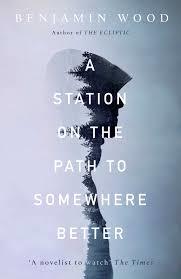
A Station on the Path to Somewhere Better
For twenty years, Daniel Hardesty has borne the emotional scars of a childhood trauma which he is powerless to undo, which leaves him no peace.
One August morning in 1995, the young Daniel and his estranged father Francis – a character of ‘two weathers’, of irresistible charm and roiling self-pity – set out on a road trip to the North that seems to represent a chance to salvage their relationship. But with every passing mile, the layers of Fran’s mendacity and desperation are exposed, pushing him to acts of violence that will define the rest of his son’s life.
One August morning in 1995, the young Daniel and his estranged father Francis – a character of ‘two weathers’, of irresistible charm and roiling self-pity – set out on a road trip to the North that seems to represent a chance to salvage their relationship. But with every passing mile, the layers of Fran’s mendacity and desperation are exposed, pushing him to acts of violence that will define the rest of his son’s life.
368 pages, Hardcover
First published June 28, 2018
About the author
Benjamin Wood
22 books661 followersBenjamin Wood was born in 1981 and grew up in Merseyside. He is the author of five novels, the latest of which, SEASCRAPER, won the Nero Book Award for Fiction and the Winston Graham Historical Prize, and was longlisted for the Booker Prize in 2025. His first book won France's Prix du Roman Fnac and Prix Baudelaire in 2014. His other works have been shortlisted for a number of awards, including the Sunday Times Young Writer of the Year, the Costa First Novel Award, the CWA Gold Dagger Award, the European Union Prize for Literature, the Commonwealth Book Award, and the RSL Encore Award. He is a Senior Lecturer in Creative Writing at King's College London, where he founded the PhD in Creative Writing programme. He lives in Surrey with his wife and sons.
Ratings & Reviews
Friends & Following
Create a free account to discover what your friends think of this book!
Community Reviews
Displaying 1 - 30 of 133 reviews

March 25, 2018
Incertitude
A Station on the Path to Somewhere Better is a deeply psychological story with creative twists that shock and captivate. Daniel Jarrett (previously Hardesty) narrates the story in reflection, starting in 1995 as he is due to leave on a road trip with his estranged father, Francis (Fran) Hardesty. They plan to visit the film set of ‘The Artifex’ where Fran claims he works. Daniel is obsessed with the TV series, and it is only because of her son’s fixation with anything Artifex, that his mother, Kath, allows Fran to take Daniel on this trip to see the film-set and meet the actors. Even with 12-year-old Daniel’s limited interaction with his father, he knows not to set his expectations too high.
Fran is an incurable womanising opportunist that has managed to destroy his marriage to Kath and consequently has been absent for most of Daniel’s life. As the narrative progresses the veil is lifted on a totally unreliable and erratic person, prone to mood swings and broken promises.
Quite surprisingly those events do not bring the story to a conclusion and the remaining 20% of the book takes us on a psychological exploration of memory, frustration and irresolution. How and why do we remember things the way we do? Why do we all remember events slightly differently?
In the latter stages of the novel, Daniel is an adult, obsessively trying to reconstruct those dramatic events from memory, witness statements, and video evidence. He struggles with the omissions, the perceptions and the tenuous connections of events. Why are there fissures in the substance of what people say? Are omissions deliberate, self-preserving, accidental, or a lapse of awareness? He torments himself with this and on trying to apportion which parent is responsible for which personality trait.
It felt a little strange dealing with a climactic scene well before the end of the book and the latter part felt a little jarred even though it was also quite interesting. A thoughtful story with frightful moments. Well worth a read!
I would like to thank Simon and Schuster UK Publishing and NetGalley for an ARC version of the book in return for an honest review.
A Station on the Path to Somewhere Better is a deeply psychological story with creative twists that shock and captivate. Daniel Jarrett (previously Hardesty) narrates the story in reflection, starting in 1995 as he is due to leave on a road trip with his estranged father, Francis (Fran) Hardesty. They plan to visit the film set of ‘The Artifex’ where Fran claims he works. Daniel is obsessed with the TV series, and it is only because of her son’s fixation with anything Artifex, that his mother, Kath, allows Fran to take Daniel on this trip to see the film-set and meet the actors. Even with 12-year-old Daniel’s limited interaction with his father, he knows not to set his expectations too high.
Fran is an incurable womanising opportunist that has managed to destroy his marriage to Kath and consequently has been absent for most of Daniel’s life. As the narrative progresses the veil is lifted on a totally unreliable and erratic person, prone to mood swings and broken promises.
“He seemed to spend each new day of his life promoting compensation for the day before.”Sometimes the bubbling undercurrent of impending violence felt like rambling, but at a point, you realise you’re totally enraptured in the development of the plot. I didn’t have a lot of empathy for the characters, but the expectation of an inevitable shock waiting to pounce had me transfixed. The narrative is subtle and gradually reveals the relationship between father and son, and between the other characters. The road trip culminates in a startling series of events that will leave you stunned, as the complete breakdown of a person has serious consequences.
Quite surprisingly those events do not bring the story to a conclusion and the remaining 20% of the book takes us on a psychological exploration of memory, frustration and irresolution. How and why do we remember things the way we do? Why do we all remember events slightly differently?
In the latter stages of the novel, Daniel is an adult, obsessively trying to reconstruct those dramatic events from memory, witness statements, and video evidence. He struggles with the omissions, the perceptions and the tenuous connections of events. Why are there fissures in the substance of what people say? Are omissions deliberate, self-preserving, accidental, or a lapse of awareness? He torments himself with this and on trying to apportion which parent is responsible for which personality trait.
It felt a little strange dealing with a climactic scene well before the end of the book and the latter part felt a little jarred even though it was also quite interesting. A thoughtful story with frightful moments. Well worth a read!
I would like to thank Simon and Schuster UK Publishing and NetGalley for an ARC version of the book in return for an honest review.

July 7, 2022
I rarely come back to books once I’ve decided against them, but occasionally my instincts tell me to give something another chance. That happened with this book, and I’m so glad it did. Honestly, reading someone who writes this well felt like breathing a huge sigh of relief.
With that said, I can see why I gave up on it the first time. This is a story charged with unpleasant energy, and I’m not sure you could get a trigger warning big enough to cover everything that happens in A Station on the Path to Somewhere Better (a horribly ironic title, especially once you know in what context that phrase is used). The plot follows 12-year-old Daniel and his volatile father, Francis, on a road trip of sorts. Francis creates props for TV shows and has promised to take Daniel to visit the set of his favourite programme, a fantasy tale called The Artifex. But Francis is an unstable man and when the visit doesn’t go to plan, devastating chaos ensues.
It unfolds with all the gravity of a factual story; so many of the details somehow have the sickening ring of truth about them. In particular, Daniel’s love of The Artifex – and his reliance on an audiobook of the story during the trip – acts as an anchor during scenes that are otherwise hard to endure. The plot of The Artifex parallels Daniel’s journey, a device that might seem trite in less skilled hands, but here the elements are balanced perfectly. There is the sense that this is a story Daniel must tell. It’s imbued with a terrible urgency that sweeps the reader along with it.
(I actually didn’t like the concluding part of the book, ‘side four’, at all. I found it disappointing, unsuitable for the character, a little too neat, perhaps a little implausible. But... I didn’t like it because it wasn’t what I wanted, not because it was badly written. And of course Daniel had to be given some sort of ending. So I refuse to dock any stars for that. This is still one of the most finely crafted, powerful novels I have read all year.)
TinyLetter | Linktree
With that said, I can see why I gave up on it the first time. This is a story charged with unpleasant energy, and I’m not sure you could get a trigger warning big enough to cover everything that happens in A Station on the Path to Somewhere Better (a horribly ironic title, especially once you know in what context that phrase is used). The plot follows 12-year-old Daniel and his volatile father, Francis, on a road trip of sorts. Francis creates props for TV shows and has promised to take Daniel to visit the set of his favourite programme, a fantasy tale called The Artifex. But Francis is an unstable man and when the visit doesn’t go to plan, devastating chaos ensues.
It unfolds with all the gravity of a factual story; so many of the details somehow have the sickening ring of truth about them. In particular, Daniel’s love of The Artifex – and his reliance on an audiobook of the story during the trip – acts as an anchor during scenes that are otherwise hard to endure. The plot of The Artifex parallels Daniel’s journey, a device that might seem trite in less skilled hands, but here the elements are balanced perfectly. There is the sense that this is a story Daniel must tell. It’s imbued with a terrible urgency that sweeps the reader along with it.
(I actually didn’t like the concluding part of the book, ‘side four’, at all. I found it disappointing, unsuitable for the character, a little too neat, perhaps a little implausible. But... I didn’t like it because it wasn’t what I wanted, not because it was badly written. And of course Daniel had to be given some sort of ending. So I refuse to dock any stars for that. This is still one of the most finely crafted, powerful novels I have read all year.)
TinyLetter | Linktree

June 17, 2020
Это книга для тех, кому понравились Tony and Susan: путешествие с папой, которое так неплохо начиналось и сулило двенадцатилетнему герою множество радостных событий, превращается в золотую жилу для психотерапевтов.
Из всего романа мне понравился только конец, где взрослый Дэниэл живет в Нью-Йорке и знакомится с будущей женой на бухгалтерских курсах, где он преподаёт pro bono.
P.S. Немного обидно стало в очередной раз за русскую орфоэпию (пер. М. Извековой)
«В тот день мы вполне мирно позавтракали, я сварил овсянку и, по обыкновению, передразнил, как она произносит: «афсянка».
(Хочется спросить, кто из носителей нормативного русского произношения произносит по-другому)
В оригинале, если что, такой пример:
“The day started with a pleasant enough breakfast: I made a pan of porridge and, as usual, teased her for the way that she pronounced it, pordge.”
Из всего романа мне понравился только конец, где взрослый Дэниэл живет в Нью-Йорке и знакомится с будущей женой на бухгалтерских курсах, где он преподаёт pro bono.
P.S. Немного обидно стало в очередной раз за русскую орфоэпию (пер. М. Извековой)
«В тот день мы вполне мирно позавтракали, я сварил овсянку и, по обыкновению, передразнил, как она произносит: «афсянка».
(Хочется спросить, кто из носителей нормативного русского произношения произносит по-другому)
В оригинале, если что, такой пример:
“The day started with a pleasant enough breakfast: I made a pan of porridge and, as usual, teased her for the way that she pronounced it, pordge.”

September 29, 2021
1995, twelve-year-old Daniel is waiting for his father, who promised to take him to the set of "The Sorceress", the boy's favorite TV series, where he works as a decorator. And maybe, if it lucky, he'll even introduce you to the female lead. Waiting is not quite the right word, because Francis Hardesty did not give any reason to think of himself as a person on whom it makes sense to rely.
Contrary to expectations, he appears on time and they go, sticking the first part of the book "The Sorceress" in the cassette player. And nothing foreshadows the horror that everything will turn out to be. For the characters a nightmare, for the reader an exciting thriller, now slow, then accelerating, then again fading into a dreary hopeless irreversibility. And all this time, Maxine's voice is with him in the headphones of the player, telling a dark fairy tale that will become an anchor that will not allow the boy to fall into the depths of madness.
Беги от него, пока не поздно
Он лжет каждым своим словом.
Стивен Кинг "Колдун и кристалл"
1995 год, двенадцатилетний Дэниэл ждет отца, который обещал отвезти его на съемочную площадку "Кудесницы", любимого сериала мальчика, где работает декоратором. И может быть, если повезет, он даже познакомить с исполнительницей главной роли. Ждет не совсем подходящее слово, потому что оснований думать о себе, как о человеке, на которого имеет смысл полагаться, Фрэнсис Хардести не давал.
Потому родители и расстались. Из-за его загулов, вранья и ненадежности. Но Фрэнсис безумно обаятелен, авторитетно и со знанием дела рассуждает обо всех вещах. И он отец, а дети любят своих отцов, какими бы те ни были. А еще "Кудесница" Дэнни вряд ли узнал бы о сериале, если бы не отец, но уже с первого выпуска история заворожила его, места и герои показались родными.
Все это словно бы жило в нем с самого начала как мушка в янтаре, и теперь он смотрит и пересматриваеит эту историю в записи. А еще, мама купила аудиокнигу на четырех кассетах, начитанная звездой сериала Мэксин Ладлоу. Мама не хотела бы отпускать его с Фрэнсисом, но он так любит эту историю, а кроме того, она прогрессивных взглядов и понимает, как важно для мальчика общение с отцом.
Против ожиданий, тот появляется вовремя и они едут, воткнув в кассетник первую часть книги. И ничто не предвещает той жути, которой все обернется. Для героев кошмаром, для читателя захватывающим триллером, то тягучим, то ускотряющимся, то снова замирающим в тоскливой безнадежной необратимости. И все это время с ним голос Мэксин в наушниках плеера, рассказывающий мрачную сказку, что станет якорем, который не позволит мальчику упасть в пучины безумия.
Сказку, которую он возненавидит с той августовской недели до такой степени, что в нынешней своей жизни преуспевающего консультанта по слияниям и поглощениям станет посвящать часть досуга удалению любых упоминаний о сериале из Всемирной сети. По-настоящему страшная история, с которой есть, над чем подумать.
Contrary to expectations, he appears on time and they go, sticking the first part of the book "The Sorceress" in the cassette player. And nothing foreshadows the horror that everything will turn out to be. For the characters a nightmare, for the reader an exciting thriller, now slow, then accelerating, then again fading into a dreary hopeless irreversibility. And all this time, Maxine's voice is with him in the headphones of the player, telling a dark fairy tale that will become an anchor that will not allow the boy to fall into the depths of madness.
Беги от него, пока не поздно
Он лжет каждым своим словом.
Стивен Кинг "Колдун и кристалл"
1995 год, двенадцатилетний Дэниэл ждет отца, который обещал отвезти его на съемочную площадку "Кудесницы", любимого сериала мальчика, где работает декоратором. И может быть, если повезет, он даже познакомить с исполнительницей главной роли. Ждет не совсем подходящее слово, потому что оснований думать о себе, как о человеке, на которого имеет смысл полагаться, Фрэнсис Хардести не давал.
Потому родители и расстались. Из-за его загулов, вранья и ненадежности. Но Фрэнсис безумно обаятелен, авторитетно и со знанием дела рассуждает обо всех вещах. И он отец, а дети любят своих отцов, какими бы те ни были. А еще "Кудесница" Дэнни вряд ли узнал бы о сериале, если бы не отец, но уже с первого выпуска история заворожила его, места и герои показались родными.
Все это словно бы жило в нем с самого начала как мушка в янтаре, и теперь он смотрит и пересматриваеит эту историю в записи. А еще, мама купила аудиокнигу на четырех кассетах, начитанная звездой сериала Мэксин Ладлоу. Мама не хотела бы отпускать его с Фрэнсисом, но он так любит эту историю, а кроме того, она прогрессивных взглядов и понимает, как важно для мальчика общение с отцом.
Против ожиданий, тот появляется вовремя и они едут, воткнув в кассетник первую часть книги. И ничто не предвещает той жути, которой все обернется. Для героев кошмаром, для читателя захватывающим триллером, то тягучим, то ускотряющимся, то снова замирающим в тоскливой безнадежной необратимости. И все это время с ним голос Мэксин в наушниках плеера, рассказывающий мрачную сказку, что станет якорем, который не позволит мальчику упасть в пучины безумия.
Сказку, которую он возненавидит с той августовской недели до такой степени, что в нынешней своей жизни преуспевающего консультанта по слияниям и поглощениям станет посвящать часть досуга удалению любых упоминаний о сериале из Всемирной сети. По-настоящему страшная история, с которой есть, над чем подумать.

June 22, 2018
I got a review copy from NetGalley in return for an honest review.
4.5 Stars.
I devoured this in one long afternoon. I simply couldn't put it down. This book is like a punch to the gut. It wrecked me. It stayed with me. It's utterly visceral and unnerving.
I loved every second of it.
This is one of those books that should be experienced blind. A sense of doom and tragedy seeps through the pages from the very beginning.
The book is told from the point of view of twelve year old Daniel, who is on a road trip with his father, travelling north to visit a film set his father works at. Thanks to this series Daniel has formed a bond with his estranged father, and he's obsessed with it. That's why his mother reluctantly agreed to this road trip. Slowly, the author reveals the relationship between the characters and unveils the father's erratic, unreliable and unpredictable personality.
Benjamin Wood's prose is beautiful; the style is detailed, poetic. He excels at writing with the voice of a twelve year old boy, and the book is tense and chilling throughout, with just the right amount of foreshadowing.
A Station on the Path to Somewhere Better is dark, violent and it depicts trauma accurately. Recommended to anyone who thinks the premise sounds interesting.
4.5 Stars.
I devoured this in one long afternoon. I simply couldn't put it down. This book is like a punch to the gut. It wrecked me. It stayed with me. It's utterly visceral and unnerving.
I loved every second of it.
This is one of those books that should be experienced blind. A sense of doom and tragedy seeps through the pages from the very beginning.
The book is told from the point of view of twelve year old Daniel, who is on a road trip with his father, travelling north to visit a film set his father works at. Thanks to this series Daniel has formed a bond with his estranged father, and he's obsessed with it. That's why his mother reluctantly agreed to this road trip. Slowly, the author reveals the relationship between the characters and unveils the father's erratic, unreliable and unpredictable personality.
Benjamin Wood's prose is beautiful; the style is detailed, poetic. He excels at writing with the voice of a twelve year old boy, and the book is tense and chilling throughout, with just the right amount of foreshadowing.
A Station on the Path to Somewhere Better is dark, violent and it depicts trauma accurately. Recommended to anyone who thinks the premise sounds interesting.

August 30, 2021
"How is it possible that a few short days of misery can corrupt a lifetime? How is it that we let ourselves be so defined by other people's sins? All I know is, from the moment I was old enough to recognise his absence, my father had the most peculiar hold on me."
Benjamin Wood is a new one to me. If it hadn't had been for Europa Editions publishing this, I most likely would've never come across his work.
'A Station on the Path to Somewhere Better' is long name for a book by today's standards since so many are constructed of mononyms that attempt to burst out, to grab the attention of that person in the bookstore or in the library. Read me now!
After reading this over 3 or 4 days, I believe it is aptly named. Daniel Jarrett (nee Hardesty) can honestly say he's had it bad. Throughout the 300 or so pages he not only shares his loss, but also the aftermath. As his story unfolds, you don't really find the suspense that is promised on the cover, but more of a sadness for him. His parents marriage is obviously broken and as a 12 year old, he is trying to reach out for the love of his father. He is proud of him for reasons he naively thought were true.
"I can't pretend to understand what all my parents arguments were about, or who was to blame for starting them. Hindsight makes it easy to link every problem in their marriage to my father, bur perhaps this is too simplistic a view to take -- because, despite what happened in the end, and all his cruelty, can it really be that he was responsible for each defective moment in their life together?"
As I personally know, when divorce hits when you're 12 years old, you really don't know how to act. You find yourself trying to give advice to a parent when you, yourself, aren't old enough to understand what you're saying.
You never know what goes on behind closed doors. You hear the screaming and cursing and then the doors open and then smiles aplenty.
Daniel wants his father to be who he thinks he is. In tragedy, his father is who he could never imagine.
Without spoiling anything, the book trudges along until it explodes halfway and brings you upon a scene of devastation and the aftermath can only be lived on through the mind. Daniel is heading in the right direction away from his past, but he knows that his father could be within him.
Benjamin Wood is a new one to me. If it hadn't had been for Europa Editions publishing this, I most likely would've never come across his work.
'A Station on the Path to Somewhere Better' is long name for a book by today's standards since so many are constructed of mononyms that attempt to burst out, to grab the attention of that person in the bookstore or in the library. Read me now!
After reading this over 3 or 4 days, I believe it is aptly named. Daniel Jarrett (nee Hardesty) can honestly say he's had it bad. Throughout the 300 or so pages he not only shares his loss, but also the aftermath. As his story unfolds, you don't really find the suspense that is promised on the cover, but more of a sadness for him. His parents marriage is obviously broken and as a 12 year old, he is trying to reach out for the love of his father. He is proud of him for reasons he naively thought were true.
"I can't pretend to understand what all my parents arguments were about, or who was to blame for starting them. Hindsight makes it easy to link every problem in their marriage to my father, bur perhaps this is too simplistic a view to take -- because, despite what happened in the end, and all his cruelty, can it really be that he was responsible for each defective moment in their life together?"
As I personally know, when divorce hits when you're 12 years old, you really don't know how to act. You find yourself trying to give advice to a parent when you, yourself, aren't old enough to understand what you're saying.
You never know what goes on behind closed doors. You hear the screaming and cursing and then the doors open and then smiles aplenty.
Daniel wants his father to be who he thinks he is. In tragedy, his father is who he could never imagine.
Without spoiling anything, the book trudges along until it explodes halfway and brings you upon a scene of devastation and the aftermath can only be lived on through the mind. Daniel is heading in the right direction away from his past, but he knows that his father could be within him.

March 4, 2021
“Until that dismal week in August, when every plan he made was an attempt to cancel every word he spoke was a version or lie, I believed my father was a good man, someone whose blood was fit to share.”
Right from the very first line, the reader is on guard. Before we read another word, we know this will be the story of a toxic—perhaps dangerous—father and the disillusionment of a young son. We know something will happen and it won’t be pretty.
That is the genius of Benjamin Wood. He lets us in on the arc of the story right away yet he still rachets up the tension and suspense so tightly that at times, it’s next to impossible to exhale. This is a psychological character study, a story of a boy—now a man—who went on a journey with his father, estranged from the family, with the hope that he will prove his constancy, and instead, finds himself in a situation that few sane people could hope to endure.
Their one shared interest is a children’s TV program—The Artifex—which, no coincidence, centers around a child who has greater insights and innate powers than others of his age. That child almost succumbs to an asthma attack until he is lifted into the air by a strange and exotic being from another world. She promises to make him feel brand-new and he mutters to her, “Thank you for saving me.”
It is up to the reader to uncover the connection. The father—Fran—works on the set and his son, Daniel, knows every script by heart. Daniel is promised access to the set—a magical promise to a young boy. But instead, Daniel becomes party to a real-life horror show that his young mind, years later, has trouble understanding. Who to believe? Is the memory of a child—for that matter, the memory of anyone—the key to the truth?
This is a hold on tight to your seat, make sure your schedule is cleared kind of book. I had already read this author previous novel, The Ecliptic, so I knew I was in for a treat. The prose is powerful and masterfully paced, the characters are real, and the author manages to bridge the gap between writing a harrowing thriller and a subtle inward-diving tale. Many thanks to one of my favorite publishers, Europa Edition, for sending me this book in return for an honest review.
Right from the very first line, the reader is on guard. Before we read another word, we know this will be the story of a toxic—perhaps dangerous—father and the disillusionment of a young son. We know something will happen and it won’t be pretty.
That is the genius of Benjamin Wood. He lets us in on the arc of the story right away yet he still rachets up the tension and suspense so tightly that at times, it’s next to impossible to exhale. This is a psychological character study, a story of a boy—now a man—who went on a journey with his father, estranged from the family, with the hope that he will prove his constancy, and instead, finds himself in a situation that few sane people could hope to endure.
Their one shared interest is a children’s TV program—The Artifex—which, no coincidence, centers around a child who has greater insights and innate powers than others of his age. That child almost succumbs to an asthma attack until he is lifted into the air by a strange and exotic being from another world. She promises to make him feel brand-new and he mutters to her, “Thank you for saving me.”
It is up to the reader to uncover the connection. The father—Fran—works on the set and his son, Daniel, knows every script by heart. Daniel is promised access to the set—a magical promise to a young boy. But instead, Daniel becomes party to a real-life horror show that his young mind, years later, has trouble understanding. Who to believe? Is the memory of a child—for that matter, the memory of anyone—the key to the truth?
This is a hold on tight to your seat, make sure your schedule is cleared kind of book. I had already read this author previous novel, The Ecliptic, so I knew I was in for a treat. The prose is powerful and masterfully paced, the characters are real, and the author manages to bridge the gap between writing a harrowing thriller and a subtle inward-diving tale. Many thanks to one of my favorite publishers, Europa Edition, for sending me this book in return for an honest review.

September 16, 2021
Full of dread and unease. Part thriller, part painful reminiscence of severely ineffectual parenting, trauma, and lingering grief. I really liked the way this was written, but could've done without the last 30-40 pages, the "aftermath," which answered every question, and in doing so diffused all that wonderful tension the previous 300 pages had built up. Why can't writers resist the temptation to keep books going long after the natural ending?

July 20, 2018
Wood writes using Daniel as narrator, looking back to himself as a 12 year old in 1995. From the outset the story has a sense of doom and tragedy as young Daniel takes a trip with the father, whom he has barely seen since he left the family years earlier, to his place of work, the Yorkshire TV studios in Leeds.
Much of the novel is a road trip, with its climax set in the Lake District, highly appropriate backdrops.
The small group of characters, Daniel and his parents, his grandparents, and his father’s work acquaintances are wonderfully well drawn and play a large part in making the story so readable.
Most of all though, Wood’s skill is the subtlety and compassion in his writing and the gradual reveal; for much of the first half the reader is lured along, intrigued by what might happen next.
Morley’s Elmet was a surprise Booker nomination last year, and hopefully this might make next Tuesday’s longlist. I can certainly recommend it.
Much of the novel is a road trip, with its climax set in the Lake District, highly appropriate backdrops.
The small group of characters, Daniel and his parents, his grandparents, and his father’s work acquaintances are wonderfully well drawn and play a large part in making the story so readable.
Most of all though, Wood’s skill is the subtlety and compassion in his writing and the gradual reveal; for much of the first half the reader is lured along, intrigued by what might happen next.
Morley’s Elmet was a surprise Booker nomination last year, and hopefully this might make next Tuesday’s longlist. I can certainly recommend it.

March 15, 2019
2.5 stars? A bit of a disappointment after The Ecliptic. This is well written, but I felt the story was overly dragged out. I don't really think there was enough to it for a full length novel. It starts slow, then hits you in the gut when the "incident" finally occurs, then drifts back into nothingness... While it did hit me emotionally in parts, I can't help questioning what it was all for. I'm glad I didn't know what the "incident" was before I got to it (please, be careful when reading reviews), and that section was definitely the novel's strongest, even with how pointless and sad it seemed.

May 22, 2020
Долгая, нудная, сопливая история, которую я осилила с большим трудом и упорством. Тем не менее, кому-то эта книга наверняка зайдет — тому, кто любит и может долго выслушивать чужие проблемы.
Пожалуй, лишь от парочки сцен у меня по спине бежал холодок, но не могу сказать, что это заслуга автора.
Во-первых, детская наивность и вера в святых родителей, которые оказываются мудаками и наносят детям психологические травмы — это ужасно само по себе. Это встречается на каждом шагу, и нужно быть черствым сухарём, чтобы не проникнуться.
Во-вторых, сам по себе твист, когда твой близкий человек оказывается маньяком/предателем/психопатом (нужное подчеркнуть) и на твоих глазах рушится идеальная картинка — это тоже само по себе пугает. И даже очень сильно, не спорю. Но чтобы история мне зашла, вокруг этих двух сюжетов должно быть... Не знаю... Что-то еще?
Здесь главный герой всю книгу равномерно наматывает сопли на кулачок... а затем и на взрослый кулак. Его жалко. После такого люди легко едут кукухой и живётся им несладко. При этом главный герой периодически ломает четвертую стену и наседает с вопросами: понимаешь? веришь мне? что думаешь? Из-за этого приёма мне всё время хотелось запаковать пацана вместе с его исповедью и направить прямиком в дурку, минуя сочувствующих зрителей.
Автор с помощью подробнейших диалогов очень старается погрузить читателя в атмосферу. Моя проблема в том, видимо, что давление там оказалось слишком высокое, так что я долго не продержалась и не прочувствовала того, чего надо было бы.
В общем, это история, полная ужасных страданий. Страдал мальчик, страдали жертвы преступления, страдали окружающие. Но самое страшное — от скуки страдала я.
PS: Объясните мне, вставки из "Кудесницы" хоть что-то символизировали? Я явно что-то упускаю(
Пожалуй, лишь от парочки сцен у меня по спине бежал холодок, но не могу сказать, что это заслуга автора.
Во-первых, детская наивность и вера в святых родителей, которые оказываются мудаками и наносят детям психологические травмы — это ужасно само по себе. Это встречается на каждом шагу, и нужно быть черствым сухарём, чтобы не проникнуться.
Во-вторых, сам по себе твист, когда твой близкий человек оказывается маньяком/предателем/психопатом (нужное подчеркнуть) и на твоих глазах рушится идеальная картинка — это тоже само по себе пугает. И даже очень сильно, не спорю. Но чтобы история мне зашла, вокруг этих двух сюжетов должно быть... Не знаю... Что-то еще?
Здесь главный герой всю книгу равномерно наматывает сопли на кулачок... а затем и на взрослый кулак. Его жалко. После такого люди легко едут кукухой и живётся им несладко. При этом главный герой периодически ломает четвертую стену и наседает с вопросами: понимаешь? веришь мне? что думаешь? Из-за этого приёма мне всё время хотелось запаковать пацана вместе с его исповедью и направить прямиком в дурку, минуя сочувствующих зрителей.
Автор с помощью подробнейших диалогов очень старается погрузить читателя в атмосферу. Моя проблема в том, видимо, что давление там оказалось слишком высокое, так что я долго не продержалась и не прочувствовала того, чего надо было бы.
В общем, это история, полная ужасных страданий. Страдал мальчик, страдали жертвы преступления, страдали окружающие. Но самое страшное — от скуки страдала я.
PS: Объясните мне, вставки из "Кудесницы" хоть что-то символизировали? Я явно что-то упускаю(

May 16, 2026
The story of a young boy who takes a trip with his deadbeat, lying father goes from light hearted to extremely dark. So much so I decided against finishing it! Hard to fathom this is the same author who wrote Seascraper! If you enjoy dysfunctional characters who are willing to murder, lie and ignore their conscience you might want to read this.
February 27, 2018
I really enjoyed Benjamin Wood's previous two novels, The Bellwether Revivals and The Ecliptic, but I think this is his best so far. In it, Daniel thinks back to 1995, when he was twelve years old, and went on a road trip with his estranged father, the dishonest, womanising, yet charming Fran. The trip would end in tragedy and trauma, and Daniel attempts to deconstruct and analyse the events and his responses to them, with hindsight. At the time, Daniel lived alone with his mother in a small village, Fran having been kicked out due to his lying and cheating. But Fran promised Daniel that he'd take him to Leeds, where he worked as a set carpenter on the children's TV series The Artifex, with which Daniel was obsessed. Fran assured Daniel that he'd be able to go on to the set and meet the cast. Even though Daniel knew that his father couldn't be trusted, he chose to believe him, and this faith is reflected in the story of The Artifex itself - which is about a boy in the 1950s who befriends a woman he believes is an alien, but who is probably mentally ill. This is a well-written tale, which is full of foreboding, as you know from the beginning that something terrible is going to happen, and yet you can't help hope, like Daniel, that it will be averted. Very easy to read, and very satisfying, albeit with a deeply disturbing subject matter.

August 19, 2020
A Station on the Path to Somewhere Better
by Benjamin Wood (Scribiner London 2018)
I’ve been wanting to read the newish kid on the block for sometime. I’d noticed him when he was short-listed for the Costa First Novel Award in 2012, with his debut, The Bellwether Revivals, but, like a lot of short-listed stuff, I never got the book. Then in 2014 his second novel, The Ecliptic, came out to acclaim and he was shortlisted for the Sunday Times Young Novelist of the Year Award, and described by them by ‘a writer to watch'. In his early forties, he’s moved from the north-west of England to the south-east, where he lives with his family. He teaches at King’s College London.
A Station on the Path to Somewhere Better came out two years ago and I’ve had his name on my ‘must read’ list since reading the review. But it was only after the libraries came out of lockdown that he arrived in a pile of ordered books, in hardback, and I opened it with relish, and enthusiasm. The book starts off like any family drama, a steady rise in tension showing the aftermath of a family break-up. I imagined it would be about a twelve-year-old boys assent into manhood, where he learnt the facts of growing up when he took a trip in1995 with his estranged father. Daniel’s father, Francis Hardesty (a fantastically pertinent family name), is described on the opening page (pg 3) by his son, ‘I believed my father was a good man, somebody whose blood was fit to share.’ That might have been clue enough that things were going to take a dreadful turn, but I didn’t catch on that quickly. It was at the end of the chapter, where Wood takes a huge risk in the writing and breaks a well-known rule…never tell the reader what is going to happen at the start of the story… I read the words that end chapter one; As we drove off, [Mum] was smiling at herself, a limp hand spread across her heart. It was the last I ever saw of her. (pg 14)
What’s the writer doing? I had to ask. This is a dangerous tactic, only to be used when you’re hugely confident it’s the right approach. By the time I was a third into the novel, I could see his rational. The gentle, steady incline up the tension stakes was tempered with vulnerability and behind this is the allure of those earlier words. I still couldn’t see just why he’d never see his Mum again. Okay, Fran Hardesty was clearly a liar, and a cheapskate; he’d cancelled the nice hotel Daniel’s Mum had made him promise to book, and now Dan’s sleeping above a pub, while his dad has sex with a singer in the ensuite. Okay, he’s promised Dan a trip to somewhere special and it’s becoming clear this isn’t going well. Okay, we can see that Fran is someone who hates being backed into a corner where he might have to admit a failing.
As they travel, we see the landscape develop. They’re heading towards the Lake District, but as the story moves through this beautiful landscape, it becomes a place of blood and terror. In Fran’s presence, it’s beauty is replaced by a ragged, tattered, chaotic, menacing. The seedy pub, the rusty gates, the cluttered interior of the Volvo’s boot.
Fran sucks his friend, QC, and an ex-girlfriend, Chloe, into his deceit and Dan has to watch – finally duct-taped to the carseat, as his father’s anger heats into rage and violence.
No one is going to survive this story, and for a while I was sure Dan would be one of those who would perish at his father’s hands.
This is the sort of book that, as you put it down at the end of a chapter, you’re panting. And, until you pick it up again, you’re constantly haunted by the story. It became woven into my brain. If I could have helped Dan, if I could have shouted at him ‘run, Daniel, run!’ I would have. Outloud, across my bedroom. The entire scenario was so real, I was there inside it the nightmare.
Throughout the book we hear extracts from a children’s novel called The Artifex Appears, a science fantasy which became a popular kid’s TV programme, staring Maxine Laidlaw. Dan listens to the cassette, read by Maxine, as they travel north towards the TV studio, where Dan’s been promised a look around the set and the chance to meet the stars. Fran works for the studio, he says, painting scenery. I think the story of the Artifix was the hardest part for me to gel with in this dramatic and, finally, nail-biting novel. I wanted to know how it could fit, this story of a young boy who suffers an asthma attack in a forest and is rescued by alien who appears like a batty old women using alien words and cooking strange potions. She’s sure Albert is from her planet, because normally people can’t see or hear her, and Albert can do both. As Dan and Fran get closer and closer to the TV studio, I started wondering what this had to do with their story – I searched my mind for a link that was symbolic of the horror Dan will experience. And then that horror is over, the story told, but we’re still more than 50 pages away from the end. This is where we learn what happened to Dan after the events of that weekend. He’s thrown himself into his studies, gone to LSE, ended up on Wall Street, loves a girl who understands him, marries her. But he’s not whole. He drugs his nights up with sleeping tablets, he’s cold with other people and too wedded to his job. And one day he gets into a fight and feels his father’s rage inside him.
And that’s when I realised how the symbolism of The Artifex works in this novel. Daniel has become alien to the world he's living in. He is Albert, walking through the normal world after experiencing a totally different, frightening, scarring perspective on it. At the end of the novel, Dan is trying to become healed from his trauma and we learn just why he’s telling us this story – a story that will remain with me for a long time.
by Benjamin Wood (Scribiner London 2018)
I’ve been wanting to read the newish kid on the block for sometime. I’d noticed him when he was short-listed for the Costa First Novel Award in 2012, with his debut, The Bellwether Revivals, but, like a lot of short-listed stuff, I never got the book. Then in 2014 his second novel, The Ecliptic, came out to acclaim and he was shortlisted for the Sunday Times Young Novelist of the Year Award, and described by them by ‘a writer to watch'. In his early forties, he’s moved from the north-west of England to the south-east, where he lives with his family. He teaches at King’s College London.
A Station on the Path to Somewhere Better came out two years ago and I’ve had his name on my ‘must read’ list since reading the review. But it was only after the libraries came out of lockdown that he arrived in a pile of ordered books, in hardback, and I opened it with relish, and enthusiasm. The book starts off like any family drama, a steady rise in tension showing the aftermath of a family break-up. I imagined it would be about a twelve-year-old boys assent into manhood, where he learnt the facts of growing up when he took a trip in1995 with his estranged father. Daniel’s father, Francis Hardesty (a fantastically pertinent family name), is described on the opening page (pg 3) by his son, ‘I believed my father was a good man, somebody whose blood was fit to share.’ That might have been clue enough that things were going to take a dreadful turn, but I didn’t catch on that quickly. It was at the end of the chapter, where Wood takes a huge risk in the writing and breaks a well-known rule…never tell the reader what is going to happen at the start of the story… I read the words that end chapter one; As we drove off, [Mum] was smiling at herself, a limp hand spread across her heart. It was the last I ever saw of her. (pg 14)
What’s the writer doing? I had to ask. This is a dangerous tactic, only to be used when you’re hugely confident it’s the right approach. By the time I was a third into the novel, I could see his rational. The gentle, steady incline up the tension stakes was tempered with vulnerability and behind this is the allure of those earlier words. I still couldn’t see just why he’d never see his Mum again. Okay, Fran Hardesty was clearly a liar, and a cheapskate; he’d cancelled the nice hotel Daniel’s Mum had made him promise to book, and now Dan’s sleeping above a pub, while his dad has sex with a singer in the ensuite. Okay, he’s promised Dan a trip to somewhere special and it’s becoming clear this isn’t going well. Okay, we can see that Fran is someone who hates being backed into a corner where he might have to admit a failing.
As they travel, we see the landscape develop. They’re heading towards the Lake District, but as the story moves through this beautiful landscape, it becomes a place of blood and terror. In Fran’s presence, it’s beauty is replaced by a ragged, tattered, chaotic, menacing. The seedy pub, the rusty gates, the cluttered interior of the Volvo’s boot.
Fran sucks his friend, QC, and an ex-girlfriend, Chloe, into his deceit and Dan has to watch – finally duct-taped to the carseat, as his father’s anger heats into rage and violence.
No one is going to survive this story, and for a while I was sure Dan would be one of those who would perish at his father’s hands.
This is the sort of book that, as you put it down at the end of a chapter, you’re panting. And, until you pick it up again, you’re constantly haunted by the story. It became woven into my brain. If I could have helped Dan, if I could have shouted at him ‘run, Daniel, run!’ I would have. Outloud, across my bedroom. The entire scenario was so real, I was there inside it the nightmare.
Throughout the book we hear extracts from a children’s novel called The Artifex Appears, a science fantasy which became a popular kid’s TV programme, staring Maxine Laidlaw. Dan listens to the cassette, read by Maxine, as they travel north towards the TV studio, where Dan’s been promised a look around the set and the chance to meet the stars. Fran works for the studio, he says, painting scenery. I think the story of the Artifix was the hardest part for me to gel with in this dramatic and, finally, nail-biting novel. I wanted to know how it could fit, this story of a young boy who suffers an asthma attack in a forest and is rescued by alien who appears like a batty old women using alien words and cooking strange potions. She’s sure Albert is from her planet, because normally people can’t see or hear her, and Albert can do both. As Dan and Fran get closer and closer to the TV studio, I started wondering what this had to do with their story – I searched my mind for a link that was symbolic of the horror Dan will experience. And then that horror is over, the story told, but we’re still more than 50 pages away from the end. This is where we learn what happened to Dan after the events of that weekend. He’s thrown himself into his studies, gone to LSE, ended up on Wall Street, loves a girl who understands him, marries her. But he’s not whole. He drugs his nights up with sleeping tablets, he’s cold with other people and too wedded to his job. And one day he gets into a fight and feels his father’s rage inside him.
And that’s when I realised how the symbolism of The Artifex works in this novel. Daniel has become alien to the world he's living in. He is Albert, walking through the normal world after experiencing a totally different, frightening, scarring perspective on it. At the end of the novel, Dan is trying to become healed from his trauma and we learn just why he’s telling us this story – a story that will remain with me for a long time.

October 11, 2025
Another really fabulous book by Benjamin Wood. He has a great talent to say so much in simple words, it feels artless and yet it is fiction (at least I hope it is). Cannot recommend this writer enough. Can’t wait to read the next one, already concerned I’m running out.

February 18, 2019
Melodramatic. Would probably be bought and adapted into a mid-budget BBC mini series. Too much padding with the ‘book within a book’ conceit.

June 11, 2018
The back cover of my proof of this doesn’t give much away: merely the names and relationship of our two protagonists, Francis and Daniel Hardesty, father and son, and the promise of a road trip that ends in an explosion of violence, which continues to haunt Daniel twenty years after the fact. Given the road trip element of the book, I was expecting a darker version of Let Go My Hand. What I got was, indeed, dark, but there is no question of redemption or forgiveness in A Station On the Path… In Francis Hardesty, a man whose temper, capacity for manipulation, and sense of entitlement drive him ever further towards acts of intimidation and murder, Benjamin Wood has created the scariest literary father since Daddy, of Fiona Mozley’s Elmet, or Martin Alveston of My Absolute Darling.
It’s not particularly easy to talk about this book in a critical way without some significant plot spoilers, so if you intend to read it and you don’t want to know specifically what happens, look away! If you don’t think you’ll read it but you want my opinions on it anyway, for some reason, or if you don’t mind knowing some details of the promised violence before opening the book, read on.
Wood effectively creates a manipulative, shitty ex-husband and self-centered absentee father in Francis Hardesty; the opening pages, where he arrives to collect Daniel for a road trip whose purpose is, for a while, unclear, cement his unreliability in our minds. The fact that Daniel’s mother doesn’t trust him to enter the house speaks volumes. There’s a bit of heavy-handed retrospection as they drive away: “That was the last time I saw her,” Daniel tells us, narrating from the future. Several more of these ominous sentences are scattered through the book; it’s not the gravest of authorial sins, but it’s never been a strategy I particularly like. If you’re going to foreshadow, do it implicitly. Otherwise, build an atmosphere of menace and let that do the talking.
The atmosphere of menace is, in itself, top-notch. Daniel and Francis are driving towards Leeds, where Francis is a carpenter on a television show called The Artifex, about the friendship between a young boy and a strange woman who says she’s an alien, but who may just be mad. (More of this parallel wouldn’t have gone amiss: the point is that the show is about not just the line between reality and fantasy, but that between fantasy and insanity. That line is one that Francis Hardesty tightrope-walks for the first half of the book, then falls off of spectacularly in the second half. If we take the metaphor at face value, though, it pushes us towards the interpretation that Francis is deceiving himself as much as he deceives his son and everyone who comes into his orbit. That would make him a pitiful figure, but he is instead terrifying, capable of inventing a complicated lie within seconds and always poised to verbally or physically attack the skeptical.) As inconsistencies mount up – Francis keeps them in a pub waiting for a contact instead of taking them straight to the studio; the contact is very late; the initial approach to the studio is furtive and, ultimately, unsuccessful – Daniel becomes aware that his father is not just unreliable, but teetering on the brink of something that cannot be walked back from. Because the reader lacks Daniel’s need for love and acceptance from Francis (and is also an adult, not a child), we’ve come to this realisation earlier, but watching Daniel get there is nail-biting.
If I have a major issue with A Station On the Path, it’s that it seems to be reaching for a moral weight with which to invest its horrors that doesn’t appear warranted. Francis Hardesty murders four people and himself. Whether he does it because of deep-seated psychotic rage, a sense of entitlement, a combination of the two, or something else entirely isn’t ever made clear, and doesn’t really need to be. There’s a final section where we see Daniel as an adult, with a beloved partner, and realise that the book has been driving, all along, towards the question of whether he can bear to be a father, whether it is irresponsible for him to taint a child with the bloodline of a mass murderer. That is a weighty moral issue, and had Wood spent longer in that place, narratively, it would have made more sense. But as it is, the bulk of the book is spent describing the horrible events of the past, and there can be no particular reason to treat those events as though they’re special. Angry men kill people all the time. If Wood had let Daniel acknowledge the sheer banality of his father’s evil, it would have made for a stronger book.
It’s not particularly easy to talk about this book in a critical way without some significant plot spoilers, so if you intend to read it and you don’t want to know specifically what happens, look away! If you don’t think you’ll read it but you want my opinions on it anyway, for some reason, or if you don’t mind knowing some details of the promised violence before opening the book, read on.
Wood effectively creates a manipulative, shitty ex-husband and self-centered absentee father in Francis Hardesty; the opening pages, where he arrives to collect Daniel for a road trip whose purpose is, for a while, unclear, cement his unreliability in our minds. The fact that Daniel’s mother doesn’t trust him to enter the house speaks volumes. There’s a bit of heavy-handed retrospection as they drive away: “That was the last time I saw her,” Daniel tells us, narrating from the future. Several more of these ominous sentences are scattered through the book; it’s not the gravest of authorial sins, but it’s never been a strategy I particularly like. If you’re going to foreshadow, do it implicitly. Otherwise, build an atmosphere of menace and let that do the talking.
The atmosphere of menace is, in itself, top-notch. Daniel and Francis are driving towards Leeds, where Francis is a carpenter on a television show called The Artifex, about the friendship between a young boy and a strange woman who says she’s an alien, but who may just be mad. (More of this parallel wouldn’t have gone amiss: the point is that the show is about not just the line between reality and fantasy, but that between fantasy and insanity. That line is one that Francis Hardesty tightrope-walks for the first half of the book, then falls off of spectacularly in the second half. If we take the metaphor at face value, though, it pushes us towards the interpretation that Francis is deceiving himself as much as he deceives his son and everyone who comes into his orbit. That would make him a pitiful figure, but he is instead terrifying, capable of inventing a complicated lie within seconds and always poised to verbally or physically attack the skeptical.) As inconsistencies mount up – Francis keeps them in a pub waiting for a contact instead of taking them straight to the studio; the contact is very late; the initial approach to the studio is furtive and, ultimately, unsuccessful – Daniel becomes aware that his father is not just unreliable, but teetering on the brink of something that cannot be walked back from. Because the reader lacks Daniel’s need for love and acceptance from Francis (and is also an adult, not a child), we’ve come to this realisation earlier, but watching Daniel get there is nail-biting.
If I have a major issue with A Station On the Path, it’s that it seems to be reaching for a moral weight with which to invest its horrors that doesn’t appear warranted. Francis Hardesty murders four people and himself. Whether he does it because of deep-seated psychotic rage, a sense of entitlement, a combination of the two, or something else entirely isn’t ever made clear, and doesn’t really need to be. There’s a final section where we see Daniel as an adult, with a beloved partner, and realise that the book has been driving, all along, towards the question of whether he can bear to be a father, whether it is irresponsible for him to taint a child with the bloodline of a mass murderer. That is a weighty moral issue, and had Wood spent longer in that place, narratively, it would have made more sense. But as it is, the bulk of the book is spent describing the horrible events of the past, and there can be no particular reason to treat those events as though they’re special. Angry men kill people all the time. If Wood had let Daniel acknowledge the sheer banality of his father’s evil, it would have made for a stronger book.

January 9, 2021
A slow, painful read. Not putting into bookclub. 2⭐️⭐️ because the writing was good, the lack of the other 3 because it was like trying to walk through treacle, a sad slightly pointless plot, unlikeable characters.
A reliably morose narrator.
Why didn’t I connect with Daniel more? Why didn’t I feel the utmost compassion for the trauma he endured?
Because he doesn’t let you. What is the purpose of his recollection? To elicit sympathy? To help him face his demons?
I couldn’t help feeling that Dan had no intention of getting rid of his demons. They are at the very heart of his identity. They define him. I didn’t hold out much hope for him playing happy families into his American future. To do that he would have to lay down him victim hood, not bloody likely as Fran would say.
Not a satisfying book, more a long, painful slog on the path to nowhere happy 🙁
A reliably morose narrator.
Why didn’t I connect with Daniel more? Why didn’t I feel the utmost compassion for the trauma he endured?
Because he doesn’t let you. What is the purpose of his recollection? To elicit sympathy? To help him face his demons?
I couldn’t help feeling that Dan had no intention of getting rid of his demons. They are at the very heart of his identity. They define him. I didn’t hold out much hope for him playing happy families into his American future. To do that he would have to lay down him victim hood, not bloody likely as Fran would say.
Not a satisfying book, more a long, painful slog on the path to nowhere happy 🙁

May 18, 2018
3.5 stars
I enjoyed the first person narrative,looking back and admitting this may not be as things we're,but this is how I remember them.
The build up in the first half of the book had me slightly on edge reading,just waiting for the bad thing to happen. When it did,the story continued on a while being tense as Dan tried to make sense of what happened.
By the final quarter though I felt it lost the momentum, and the book dragged a bit.
Liked the light relief of the book within the book.
This is the second book I've read by Mr Wood.wont be the last.
I enjoyed the first person narrative,looking back and admitting this may not be as things we're,but this is how I remember them.
The build up in the first half of the book had me slightly on edge reading,just waiting for the bad thing to happen. When it did,the story continued on a while being tense as Dan tried to make sense of what happened.
By the final quarter though I felt it lost the momentum, and the book dragged a bit.
Liked the light relief of the book within the book.
This is the second book I've read by Mr Wood.wont be the last.

August 20, 2020
Rambling and dragged out with excrutiating padding; in particular, the interminable excerpts from the dreary children's sci-fi story that the young protagonist is obsessed with - thank you for putting these in italics so I knew when to start skimming. I found myself checking the % marker on the Kindle with every page in the hope that I was nearing the end. Would-be enigmatic characters held no interest and pivotal events were lost in the mire. There's a good book in there somewhere but the whole thing needs pruning and paring back for it to emerge.

February 11, 2022
Да, есть, что-то от "Сияния" Кинга. Но тут более в психологию уклон. На что способен нарц-психопат, насколько быстро ломается линия характера и какие стрессовые ситуации могут спровоцировать взрыв животного адреналина толкающего на бесчеловечные поступки.

May 20, 2021
Мрачная история путешествия от невинного детства к бесконечным походам к психиатрам.

April 29, 2026
Truly unforgettable. This is an amazing book you will always remember. If you have kids this is a must-read. If your relationship w your dad is complicated then read this …. So damn well-written.

April 22, 2021
Holy Cow! The beginning of “A Station on the Path to Somewhere Better”, by Benjamin Wood, starts with dire foreshadowing and then whams you with a punch that absolutely requires that you keep reading this gripping psychological suspense novel.
It’s a stereotype, I know, to associate elegant prose with British writers, but so be it; Wood’s prose flows beautifully and is perfectly-paced for optimum suspense. Impossible not to become entranced with the story told by first person narrator Daniel, of the trip he took with his largely-absent father, Francis, in 1995 when Daniel was twelve.
The narrative is heavily foreshadowed with calamity. If a writer foreshadows doom too much, the ultimate pay-off can disappoint, but in this case it doesn’t. By the time Daniel recounts the worse I was gripping the book with both hands like I was afraid it would fly out of my grasp!
It’s a stereotype, I know, to associate elegant prose with British writers, but so be it; Wood’s prose flows beautifully and is perfectly-paced for optimum suspense. Impossible not to become entranced with the story told by first person narrator Daniel, of the trip he took with his largely-absent father, Francis, in 1995 when Daniel was twelve.
The narrative is heavily foreshadowed with calamity. If a writer foreshadows doom too much, the ultimate pay-off can disappoint, but in this case it doesn’t. By the time Daniel recounts the worse I was gripping the book with both hands like I was afraid it would fly out of my grasp!

September 11, 2019
It's a long journey, but hang in there. Little breadcrumbs and hooks ensure you can't put this book down even though the 'incident' doesn't happen until halfway through the book, about p170! But it is fascinating to watch how the characters evolve, break and in some cases, start over. Ideal for readers who like a thoughtful, well-written book to immerse themselves in.

October 3, 2020
Еслиб автор начал книжку с последних глав это был бы хит! Пару раз думала бросить посередине. Немного растянуто. Конец дает смысл книге. Книга о том как живется детям людей совершившим ужасное преступление.

May 14, 2021
A solid 3.5. Engaging- but such a slow burn and such a dissatisfying wind down. I wanted either less of the end or more. No spoilers but it wasn’t what I expected after reading the first 3/4ths of the book.
Loved the MC voice tho- it was very smart and engaging.
Loved the MC voice tho- it was very smart and engaging.

June 3, 2026
3.5 stars.
Okay, what the hell did i just read?! That was a crazy ride (pun intended). I had zero expectations for this book, I didn't know the premise, I simply picked this up and read. I could not put it down. You know pretty early on that something is awry and you just along for the ride. The first 2 thirds of the book were gripping, and you can feel the tension rising as it goes on. The last third is more reflective, Dan comes to terms with what his dad did, how it affected him, and how his life pans out as a result. This was for sure a gripping read. My heart is still in my throat!
Okay, what the hell did i just read?! That was a crazy ride (pun intended). I had zero expectations for this book, I didn't know the premise, I simply picked this up and read. I could not put it down. You know pretty early on that something is awry and you just along for the ride. The first 2 thirds of the book were gripping, and you can feel the tension rising as it goes on. The last third is more reflective, Dan comes to terms with what his dad did, how it affected him, and how his life pans out as a result. This was for sure a gripping read. My heart is still in my throat!

March 27, 2019
From its bucolic Buckinghamshire beginnings, to its bloody be-bop near-denouement, A Station on the Path to Somewhere Better simply will not let you go. Ostensibly a teeth-grinding, nerve-rattling thriller, albeit one that dips occasionally into nostalgia for a lost childhood that never was, via an almost inevitable predilection for a particular type of British children’s science fiction, now long deceased; and one that also features a lengthy road trip, encompassing a profound psychogeography of the English landscape and its highway system, almost redolent of the 1990s schlock thrill-kill indie movie Butterfly Kiss – its real purpose is to serve as a meditation on the persistence and unreliability of memory, particularly in relation to trauma, of being owned by your past: and the plugging of the gaps of such with convenient and tortuous fictive nuggets, delicious for those of us who wish to punish ourselves above all else, and the notion that the indescribability of experience will trump the facts every time, because the facts leave holes. Make no mistake, as a thriller and a tense murder mystery – we are informed from the outset that our protagonist will never see his mother again – A Station on the Path to Somewhere Better is scarcely beatable, its plotting immaculate, and it will keep you on the edge of your seat throughout. Each scene is a negotiation, and a tense one, but it is so much more than that. Five stars.

August 8, 2019
This book had a gripping first half; the build up to the major incident was packed with suspense and tight writing, and although slow moving, this rammed up the intensity and urged me to read on. Once the incident itself happened, however, I felt that the book lost momentum, drifting along before eventually petering out altogether. Whilst I appreciate that the story doesn’t end at the key event, but explores the aftermath and effect on our narrator’s life, the tone changed, morphing into a more prosaic and factual recount of many years.
There were other plot choices that I felt hadn’t been made the most of - for example, scattered throughout the story were excerpts from a children’s book, and whilst they had a literal place in the plot, I hoped the author would make more of them - there are some core similarities between our narrator’s story and that of this other book, but I hoped that would be explored in more detail - instead, it seemed to suddenly cut off towards the end, as though the author wasn’t entirely sure what to do with that strand.
For the first hundred or so pages, I was convinced that this would be a highly rated book for me, but the lacklustre second half ultimately held it back.
There were other plot choices that I felt hadn’t been made the most of - for example, scattered throughout the story were excerpts from a children’s book, and whilst they had a literal place in the plot, I hoped the author would make more of them - there are some core similarities between our narrator’s story and that of this other book, but I hoped that would be explored in more detail - instead, it seemed to suddenly cut off towards the end, as though the author wasn’t entirely sure what to do with that strand.
For the first hundred or so pages, I was convinced that this would be a highly rated book for me, but the lacklustre second half ultimately held it back.
Displaying 1 - 30 of 133 reviews