

What do you think?
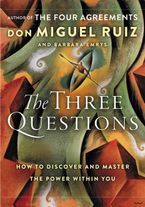
The three questions
The beloved spiritual teacher builds on the message of his enduring New York Times and international bestseller The Four Agreements with this profound guide that takes us deeper into the tradition of Toltec wisdom, helping us find and use the hidden power within us to achieve our fullest lives.
In The Four Agreements, Don Miguel Ruiz introduced seekers on the path to enlightenment to the tenets of Mesoamerican spiritual culture—the ancient Toltec. Now, he takes us deeper into Native American practice, and asks us to consider essential questions that drive our lives and govern our spiritual power. Three eternal questions can help us into our power and use it judiciously:
Who am I?
What is real?
How do I express love?
At each stage in our lives, we must ask these simple yet deeply profound questions. Finding the answers will open the door to the next stage in our development, and eventually lead us to our complete, truest selves. But as Don Miguel Ruiz makes clear, we suffer if we do not ask these questions—or if we fail to pay attention to their answers—because we either never act on our power or use it destructively. Only when power is anchored in our identity and in reality will it be able to be in synch with the universe—and be of true benefit to ourselves and to others.
The three questions provide a practical framework that allows readers to engage with Ruiz’s transformative message and act as a vehicle for overcoming fear and anxiety and discovering peace of mind. An essential guide for all travelers pursuing self-knowledge, understanding, and acceptance, The Three Questions is the next step in our unique spiritual metamorphosis.
In The Four Agreements, Don Miguel Ruiz introduced seekers on the path to enlightenment to the tenets of Mesoamerican spiritual culture—the ancient Toltec. Now, he takes us deeper into Native American practice, and asks us to consider essential questions that drive our lives and govern our spiritual power. Three eternal questions can help us into our power and use it judiciously:
Who am I?
What is real?
How do I express love?
At each stage in our lives, we must ask these simple yet deeply profound questions. Finding the answers will open the door to the next stage in our development, and eventually lead us to our complete, truest selves. But as Don Miguel Ruiz makes clear, we suffer if we do not ask these questions—or if we fail to pay attention to their answers—because we either never act on our power or use it destructively. Only when power is anchored in our identity and in reality will it be able to be in synch with the universe—and be of true benefit to ourselves and to others.
The three questions provide a practical framework that allows readers to engage with Ruiz’s transformative message and act as a vehicle for overcoming fear and anxiety and discovering peace of mind. An essential guide for all travelers pursuing self-knowledge, understanding, and acceptance, The Three Questions is the next step in our unique spiritual metamorphosis.
198 pages, Hardcover
First published June 26, 2018
About the author
Miguel Ruiz
244 books5,690 followersMiguel Ángel Ruiz Macías is a Mexican author known for his teachings on Toltec spirituality and neoshamanism. Best known for his 1997 bestseller The Four Agreements, Ruiz's work is embraced by the New Thought movement and has influenced many seeking spiritual enlightenment. His books, including The Mastery of Love and The Voice of Knowledge, have helped spread Toltec wisdom worldwide. Ruiz was named one of the Watkins 100 Most Spiritually Influential Living People in 2018. He also co-authored The Fifth Agreement with his son José Ruiz and has continued to write and teach on personal freedom and love.
Ratings & Reviews
Friends & Following
Create a free account to discover what your friends think of this book!
Community Reviews
Displaying 1 - 30 of 207 reviews

August 2, 2018
While I have been a fan of other works by Ruiz, this one latched on to an analogy about body as a government that I couldn't appreciate. Found this one repetitive and unhelpful.

October 10, 2018
When I first learned about "The Three Questions," I immediately added it to my to-read list. I imagined that the book would be quite a resource, much like that of "The Four Agreements". When I got my hands on a copy, I dived in immediately. While the book is just shy of 200 pages and could technically be finished in one setting, I took a few days to take notes and really feel what Ruiz was talking about, with regard to going deeper within ourselves to master the power that each of us individually have.
This book is about awareness and identification. It answers the essential drive us:
1. Who am I?
2. What is real?
3. What is love?
Before we can begin to answer these question, Ruiz urges the reader to consider:
1. Who you are not.
2. What is not real.
3. What love is not.
Unlike most self-help books, this like much of Ruiz' work is about a continuing pursuit of knowledge and understanding and can be key to those who are either beginning their journey or those who are eager to conquer their fears and harness the power within.
One of my favorite excerpts:
"What we are is pure energy, the force of life. Nothing else is real. We don't have to prove our worth. We forget that, thinking we have to fight, for recognition and then fight to maintain it. We fight for attention. We fight over personal ideas and personal opinions at the expense of our emotional health. We fight to understand ourselves, and we fight to be understood."
Happy Reading!
This book is about awareness and identification. It answers the essential drive us:
1. Who am I?
2. What is real?
3. What is love?
Before we can begin to answer these question, Ruiz urges the reader to consider:
1. Who you are not.
2. What is not real.
3. What love is not.
Unlike most self-help books, this like much of Ruiz' work is about a continuing pursuit of knowledge and understanding and can be key to those who are either beginning their journey or those who are eager to conquer their fears and harness the power within.
One of my favorite excerpts:
"What we are is pure energy, the force of life. Nothing else is real. We don't have to prove our worth. We forget that, thinking we have to fight, for recognition and then fight to maintain it. We fight for attention. We fight over personal ideas and personal opinions at the expense of our emotional health. We fight to understand ourselves, and we fight to be understood."
Happy Reading!

January 16, 2020
This is one of those books that really allows you to absorb the meaning of life and ask yourself simple, but very important questions. In doing so, you will discover what you really are and who you are not. It teaches you how to love yourself again as you did when you were a child and to love unconditionally.
3 questions:
1. Who I am?
2. What is real?
3. What is love?
In order to answer these questions properly we need to know:
1. Who we are not
2. What is not real
3. What is not love.
3 questions:
1. Who I am?
2. What is real?
3. What is love?
In order to answer these questions properly we need to know:
1. Who we are not
2. What is not real
3. What is not love.

August 19, 2018
A nice follow up to the four agreements.
As with all books of Don Miguuel Ruiz I know I will get more out of it on the follow up reads. His books are definitely not read one time books. The more you read and study them the more their truth comes to light. Of course this is true of any wisdom based information, you gain more from it the more you read it.
As with all books of Don Miguuel Ruiz I know I will get more out of it on the follow up reads. His books are definitely not read one time books. The more you read and study them the more their truth comes to light. Of course this is true of any wisdom based information, you gain more from it the more you read it.

December 31, 2023
Moudrá kniha, která člověku pomůže zamyslet se sám nad sebou, nad ostatními kolem sebe, nad svou myslí, tělem, životem... Mám ji polepenou lístečky, protože jsem v ní našla spoustu hezkých myšlenek a úryvků k zamyšlení.
"Obdivujeme inteligenci stromů a křehkost dešťových kapek. Cítíme, že moře a obloha vědí něco, co my ne, a že příroda má nějakou tajnou moc, kterou my nemáme."
"Obdivujeme inteligenci stromů a křehkost dešťových kapek. Cítíme, že moře a obloha vědí něco, co my ne, a že příroda má nějakou tajnou moc, kterou my nemáme."

June 20, 2018
At the heart of The Three Questions is the theme of identity - how to know who you are, how to live true to what you find, and how to continually evolve while staying true to your discovery. This is a book that is meant to shake the foundations of whatever you think you believe in and look at the world with unique eyes - your eyes, free of superstition and limiting beliefs.
WHO WOULD ENJOY IT?
People who enjoyed the bestselling The Four Agreements would like this too, though I think this book does not hold a candle to the searing sentences of the four agreements.
Even if you are not familiar with the author's past work, you can still enjoy this if you admire toltec traditions and love exploring different truths of different cultures.
WHAT I LOVE ABOUT IT
The book itself is simple to read and straight-forward with its messages. There is a bit of repetition, but that does not get too unbearable. There are good passages within that crystallises the essence of the book, but they are few and far in between. All in all, it is a good book, but a bit of a slog to get through.
MEMORABLE PASSAGE
Desire guides our passion and inspiration; inspiration leads to creativity. Desire can also drive us over a cliff—it can lead to obsession. Putting the full power of attention on one object of desire makes us fanatical—meaning we want something so much that we can’t see anything else. This goes way beyond a passion for football or a love for punk rock. Who hasn’t been enthralled by an idea, a philosophy, or a person? In time, nothing else matters. We could be desperately hooked on drugs or alcohol, ignoring countless warnings and offers to help. However we become fixated, we risk losing touch with the ones who love us—and our own power is squandered and misused.
How do we tell whether our desires are inspired or obsessive? Inspiration leads us to create new things and new realities; obsession leads to many types of destruction. When we’re obsessed, we can’t see clearly and we can’t react.
The Three Questions by Don Miguel Ruiz and Barbara Emrys is published by HarperOne.
Many thanks to HarperOne for review copy.
WHO WOULD ENJOY IT?
People who enjoyed the bestselling The Four Agreements would like this too, though I think this book does not hold a candle to the searing sentences of the four agreements.
Even if you are not familiar with the author's past work, you can still enjoy this if you admire toltec traditions and love exploring different truths of different cultures.
WHAT I LOVE ABOUT IT
The book itself is simple to read and straight-forward with its messages. There is a bit of repetition, but that does not get too unbearable. There are good passages within that crystallises the essence of the book, but they are few and far in between. All in all, it is a good book, but a bit of a slog to get through.
MEMORABLE PASSAGE
Desire guides our passion and inspiration; inspiration leads to creativity. Desire can also drive us over a cliff—it can lead to obsession. Putting the full power of attention on one object of desire makes us fanatical—meaning we want something so much that we can’t see anything else. This goes way beyond a passion for football or a love for punk rock. Who hasn’t been enthralled by an idea, a philosophy, or a person? In time, nothing else matters. We could be desperately hooked on drugs or alcohol, ignoring countless warnings and offers to help. However we become fixated, we risk losing touch with the ones who love us—and our own power is squandered and misused.
How do we tell whether our desires are inspired or obsessive? Inspiration leads us to create new things and new realities; obsession leads to many types of destruction. When we’re obsessed, we can’t see clearly and we can’t react.
The Three Questions by Don Miguel Ruiz and Barbara Emrys is published by HarperOne.
Many thanks to HarperOne for review copy.

January 2, 2019
The book is packed with richness and self worth. This is one of those books that really allows you to absorb the meaning of life and ask yourself simple, but very important questions. In doing so, you will discover what you really are and who you are not. Imagine relearning how to love yourself all over again. This book was very relatable and will go on my shelf as a must read over and over again. It will be like going to that one friend you can count on to get you back in shape with who you really are. One of the most important things I got out of reading this book is that is ok to tell someone, "I really don't know." I felt so much relief after reading just that one statement. I recommend this self-help book for anyone who finds themselves in a funk or a down mood. I gave it 5 stars.
June 5, 2018
I received this book, for free, in exchange for an honest review.
This is one of Don Miguel Ruiz's better books. Some of his other recent works felt a bit hollow, but not this one. With "The Three Questions" Ruiz is back in true form, whittling down the truth into digestible chunks and presenting them well. This book is a bit short and less dense than I'd like but there was definitely some wisdom in here which was new to me (a ravenous reader of similar books).
This is one of Don Miguel Ruiz's better books. Some of his other recent works felt a bit hollow, but not this one. With "The Three Questions" Ruiz is back in true form, whittling down the truth into digestible chunks and presenting them well. This book is a bit short and less dense than I'd like but there was definitely some wisdom in here which was new to me (a ravenous reader of similar books).

February 7, 2024
Really enjoying the self help books!! Such a reminder that we are capable beings to find a higher version of ourselves. To be aware at all times. The more I listen and read these books the more I will learn and remember that my trauma does not define me from this life or my past. Although It is my duty to heal ✨

January 5, 2023
Audible version narrated by Christian Barillas
The Three Questions gets stuck in the analogy about our bodies and minds as compared with branches of government and I just could not get engaged. I found my mind wandering more than I was listening. Its repetitive and unhelpful.
The Three Questions gets stuck in the analogy about our bodies and minds as compared with branches of government and I just could not get engaged. I found my mind wandering more than I was listening. Its repetitive and unhelpful.
January 25, 2019
I just couldn't get into this. Not sure why. Made several attempts, but no joy.

August 21, 2020
Una ha sido sembrada, ahora es el deber de quién la encuentre despejarla.
January 10, 2024
"The freedom that really counts is the freedom we grant ourselves."
Ruiz elaborately draws out an analogy between the mind and society, inviting us to break free of our own designs, question our perceived reality, and ultimately, open the door to true self-discovery.
It's giving tabula rasa.
Only giving it an 4/5 because it could have been shorter/more succinct. Did not need 198 pages to get these points across.
Ruiz elaborately draws out an analogy between the mind and society, inviting us to break free of our own designs, question our perceived reality, and ultimately, open the door to true self-discovery.
It's giving tabula rasa.
Only giving it an 4/5 because it could have been shorter/more succinct. Did not need 198 pages to get these points across.

December 20, 2018
A little help finding your way. I got this:
“Say ‘I love you,’ to your body. Say it often, and say it out loud. Say it because it’s true. Say it when you start your day. As you settle into bed at night, place your hand on your head and say how much you love your brain and everything connected to the brain. “I love my brain, my ears, my eyes, my nose. “ move your hand down to the mouth, the neck, the chest, the shoulders. Name every part of your body as you go, and give thanks to the parts you can’t name. Go all the way down to the feet, to the toes. This ritual doesn’t take very long, and it’s effects are powerful.”
“ Unconditional love for ourselves is the definition of paradise - we begin there. ..”
“ The solution to all conflict is respect. Respect means the end to war, to abuse, and to the kinds of crimes you routinely commit against yourself. Respect brings peace to your world. Self-respect will eventually rewrite the laws that hurt your body. “
“Respect means you honor the right of every country, or body, to exist - beginning with your own.”
“Say ‘I love you,’ to your body. Say it often, and say it out loud. Say it because it’s true. Say it when you start your day. As you settle into bed at night, place your hand on your head and say how much you love your brain and everything connected to the brain. “I love my brain, my ears, my eyes, my nose. “ move your hand down to the mouth, the neck, the chest, the shoulders. Name every part of your body as you go, and give thanks to the parts you can’t name. Go all the way down to the feet, to the toes. This ritual doesn’t take very long, and it’s effects are powerful.”
“ Unconditional love for ourselves is the definition of paradise - we begin there. ..”
“ The solution to all conflict is respect. Respect means the end to war, to abuse, and to the kinds of crimes you routinely commit against yourself. Respect brings peace to your world. Self-respect will eventually rewrite the laws that hurt your body. “
“Respect means you honor the right of every country, or body, to exist - beginning with your own.”
August 7, 2018
I have been waiting for a book like this to come along. It is based on a simple foundation yet complex in answering the questions. Since I read other self help philosophy spiritual based books I knew what I wanted help with. It's not as good as the Four Agreements, but as a follow-up it works in well with what I've been working on through Mike Dooley's The Matrix. The still waters run deep and that's where the big thoughts are.

March 24, 2019
I thoroughly enjoy everyone of their books. This book probed in-depth about the three questions that challenge all individuals: Who are you, what is real, and what is love? Miguel used these questions to leave us to our inner power (spirit), a connection to God that extends beyond any external validation or opinions. I highly recommend reading this book as a supplement to the other book, The Four Agreements.
Dr. James Arthur Williams
www.unmaskytp.com
Dr. James Arthur Williams
www.unmaskytp.com
July 11, 2018
The book delivers a great message. Understanding that the personality or one's identity is just an agreed upon role that's habituated over time and can be changed with awareness is the beginning of freedom. Once you really get that true change can take place. Miguel and Barbara wrote this book for "me".

May 25, 2018
I received an ARC from a Goodreads giveaway. This is a quick read but it is though provoking and interesting.

August 12, 2024
Om antwoord te vinden op de drie belangrijke vragen 'Wie ben ik?' 'Wat is echt?' en 'Wat is liefde?' moet je eerst ervaren wie je niet bent, wat de werkelijkheid niet is en wat liefde niet is. Wat alledrie gemeen hebben is dat het niet onze overtuigingen en ideeën erover zijn. Wij zijn niet het verhaal dat we over onszelf vertellen in ons hoofd.
Uiteindelijk zijn wij, de Werkelijkheid en de Liefde hetzelfde: het leven, de levenskracht of de energie die alles animeert.
Interessant geschreven, hoewel het wel veel herhaling bevat, maar dat is ook wel logisch als het antwoord op elke vraag het leven zelf is.
Uiteindelijk zijn wij, de Werkelijkheid en de Liefde hetzelfde: het leven, de levenskracht of de energie die alles animeert.
Interessant geschreven, hoewel het wel veel herhaling bevat, maar dat is ook wel logisch als het antwoord op elke vraag het leven zelf is.

October 22, 2019
NGL I had a hard time paying attention to this audiobook. It was like meditating - my mind would wander away, and I would catch it, and bring it back to focus on the book. But! That said, there was good advice in here. The three questions are valuable. I haven't listened to The Four Agreements yet, so I'll probably give that a go soon.

October 15, 2025
I will preface this by saying I think this is a me problem. I felt like there were so many nuggets of wisdom but I could not process them or retain them after listening. I can tell you I felt an understanding and a knowing when I heard it but if you asked me now what I just read I literally have no clue.

January 28, 2021
“Your body is the love of your life. The relationship you have with your body affects all relationships. Loving yourself, without conditions, can heal the biggest divisions in your world. It can reconnect you to the force of energy that made your world possible.”
Excerpt From: don Miguel Ruiz. “The Three Questions.” Apple Books.
Excerpt From: don Miguel Ruiz. “The Three Questions.” Apple Books.

August 9, 2020
Pas trop abouti. Des réflexions intéressantes et qui font réfléchir mais trop de moralité malheureusement. Ça semblait bien plus magique.

April 23, 2021
3.7/5 🌟
October 10, 2022
4.5 stars
Difficult to remain engaged with audiobook. Would like to read again in paper book form.
Difficult to remain engaged with audiobook. Would like to read again in paper book form.

May 4, 2023
3.5 ⭐️

August 4, 2019
Not bad but not great. I got the message of the book but there was a disconnect.

June 19, 2019
Three differences question, one single answere...
Actually i like the essence of this book
But i dont like the way hes style of writing, very bad analogy, and to much unimportant words
Fav quotes
“Close your eyes and the world disappears. Open them again and everything you see is a miracle”
Actually i like the essence of this book
But i dont like the way hes style of writing, very bad analogy, and to much unimportant words
Fav quotes
“Close your eyes and the world disappears. Open them again and everything you see is a miracle”

July 7, 2026
Having gotten used to his previous jaw-dropping books, this one did not pack any kind of a punch. Makes me wonder if it's actually written by Don Miguel Ruiz, the style is so very different.

June 29, 2019
I LOVED 'The Four Agreements' and really liked this book. I'm glad I read 'The Four Agreements' first, and wouldn't recommend 'The Three Questions' unless you have read the other. 'The Three Questions' challenges me in ways that 'The Four Agreements' did not. This book leaves me with lingering questions-but in a good way. It leaves me with ideas and concepts that prompt me to challenge beliefs- but in a good way. However, challenging beliefs is not an overnight process so the lingering questions will be with me for a while.
Displaying 1 - 30 of 207 reviews